Your bedroom should feel like the best part of your day. Not just a place to sleep, but a space that wraps around you the moment you walk in — warm, calm, and completely yours. If your room currently feels more “blank rental” than “cozy sanctuary,” you’re not alone.

A bedroom aesthetic cozy enough to actually look forward to doesn’t require a full renovation or a designer’s budget. Most of the time, it comes down to layering the right textures, choosing warmer tones, and making a few intentional choices about light and furniture placement.

In this guide, you’ll find 22 practical, style-specific ideas that work whether you love rustic farmhouse vibes, modern minimalism, or something in between.
1. Layer Your Bedding with Mixed Textures
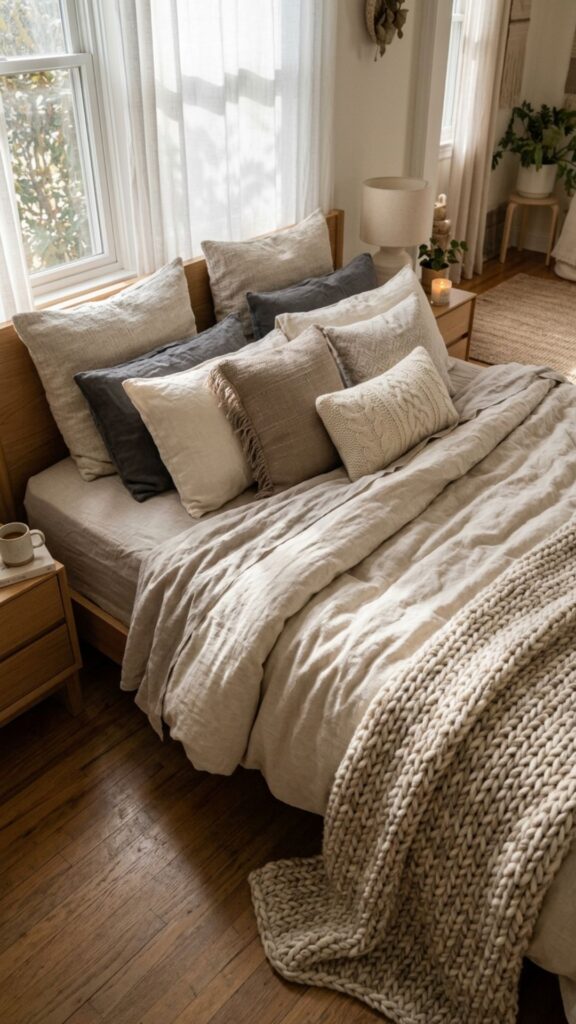
Nothing signals cozy faster than a bed piled with layers. Start with a fitted sheet, add a quilt or duvet, then drape a chunky knit throw across the foot of the bed. Mix materials — cotton, linen, velvet, and wool all work together surprisingly well.
The key is variation in weight and weave. A smooth linen duvet feels elevated next to a waffle-knit blanket. Don’t overthink color coordination — stick to a palette of two or three tones and let texture do the heavy lifting.
2. Swap Overhead Lighting for Warm Lamps

Harsh overhead lighting is one of the biggest enemies of a cozy bedroom aesthetic. Replace it — or at least supplement it — with table lamps, floor lamps, or plug-in sconces that cast a softer, warmer glow.
Look for bulbs in the 2700K–3000K color temperature range. These mimic candlelight and give your room that golden-hour feel even at midnight. Positioning lamps at different heights around the room creates depth and eliminates that flat, clinical look.
3. Add a Reading Nook Corner
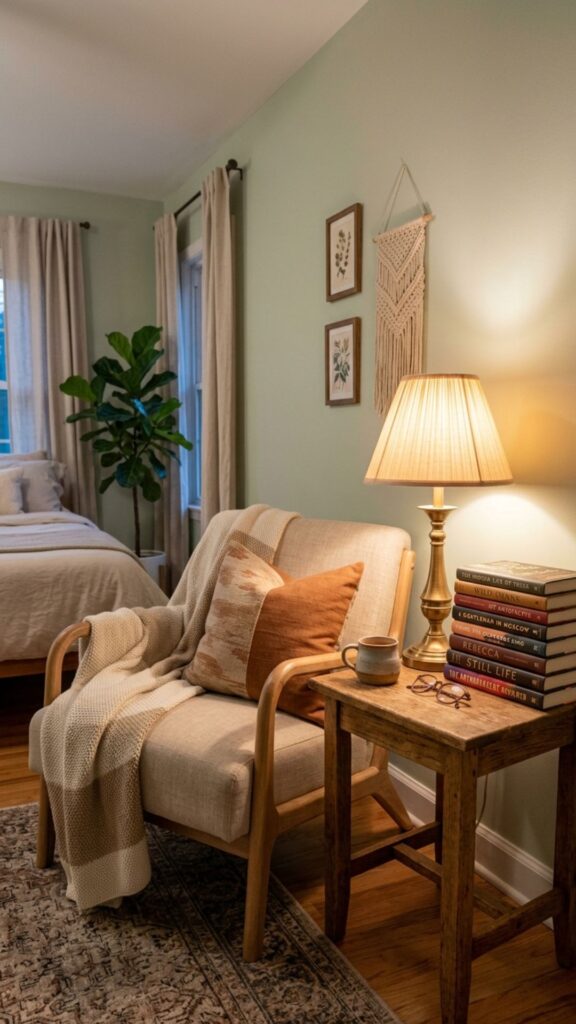
A dedicated reading corner, even in a small bedroom, immediately elevates the cozy factor. All you need is a comfortable chair or floor cushion, a small side table, and a lamp. Tuck it into an underused corner or beside a window.
Add a small bookshelf or a stack of your current reads, and the corner becomes a destination rather than dead space. This kind of intentional zone makes a bedroom feel curated and personal rather than purely functional.
4. Use Warm, Earthy Color Palettes
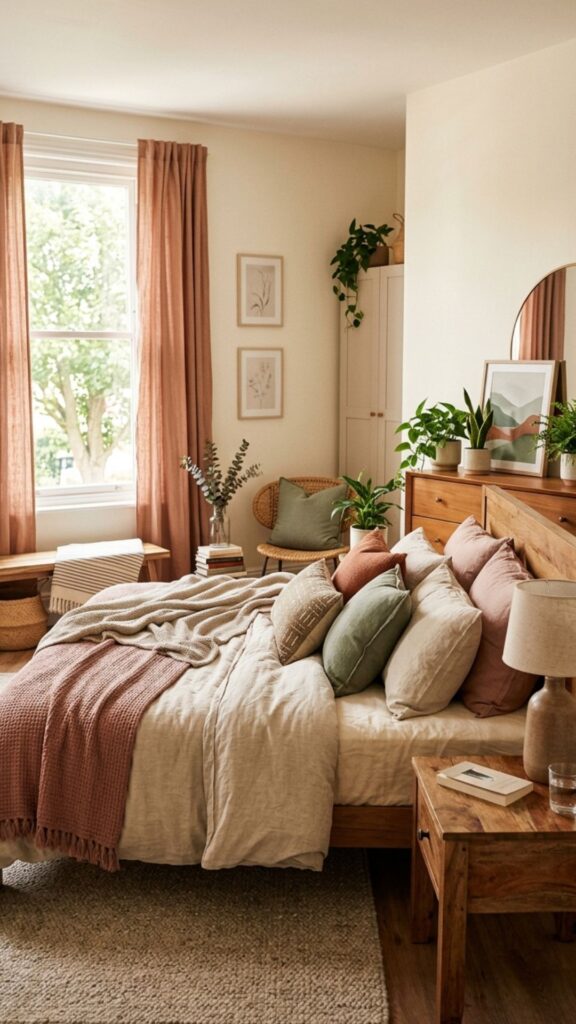
Cool grays and stark whites look clean but rarely feel warm. Shifting toward earthy tones — terracotta, warm beige, caramel, dusty rose, or sage green — changes the entire mood of a room without a single piece of new furniture.
You don’t have to repaint everything. A rust-colored throw pillow, a warm-toned rug, or even a few amber-glass vases can shift the palette significantly. These colors reflect light in a way that feels soft and grounded rather than sterile.
5. Bring in Natural Wood Elements
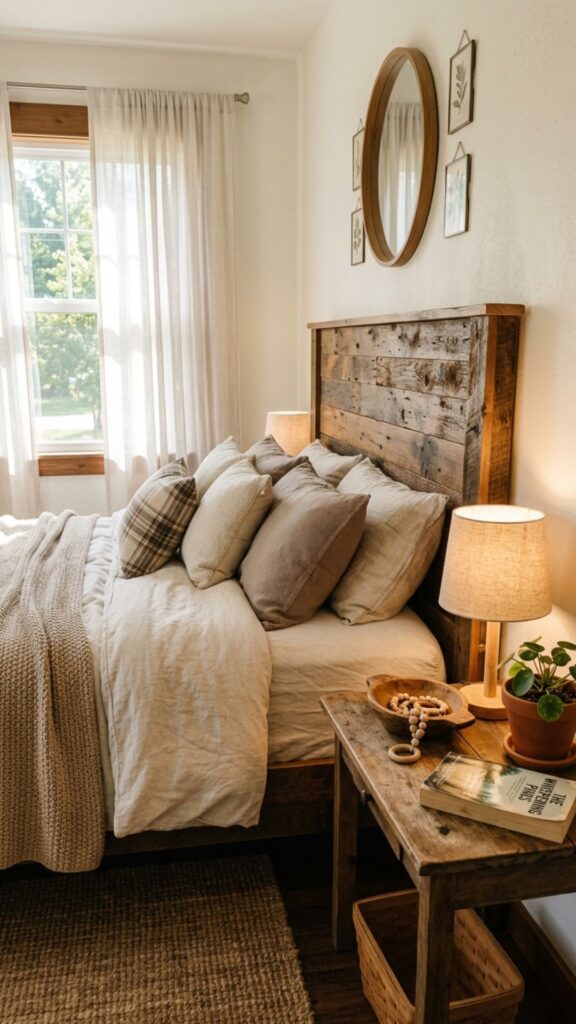
Wood brings an organic warmth that synthetic materials simply can’t replicate. A wooden bedside table, a reclaimed wood headboard, or even a simple wooden tray on your dresser adds texture and natural character to the space.
If your bedroom already has white or neutral walls, wood tones act as a natural anchor. Mixing different shades of wood — light oak with darker walnut, for example — adds richness without feeling overdone.
6. Hang Curtains High and Wide
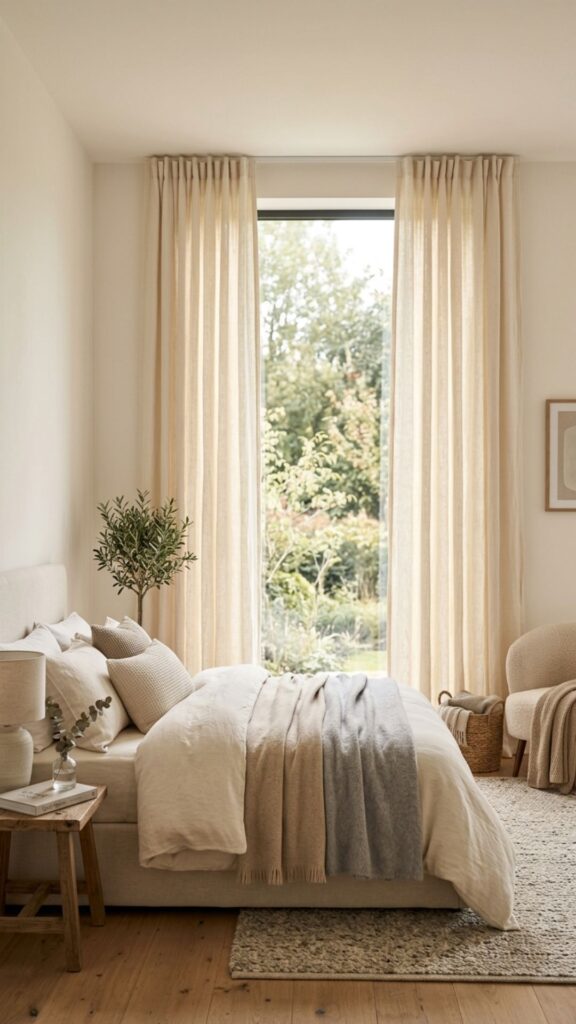
Most people hang curtains too low and too narrow, which makes windows look small and rooms feel cramped. Hang your curtain rod as close to the ceiling as possible and extend it well beyond the window frame on both sides.
Floor-to-ceiling curtains in a heavyweight linen or velvet fabric add softness and drama simultaneously. Warm tones like mustard, rust, or cream amplify the cozy bedroom aesthetic, while blackout lining keeps early light from disturbing your sleep.
7. Layer Rugs for Extra Warmth
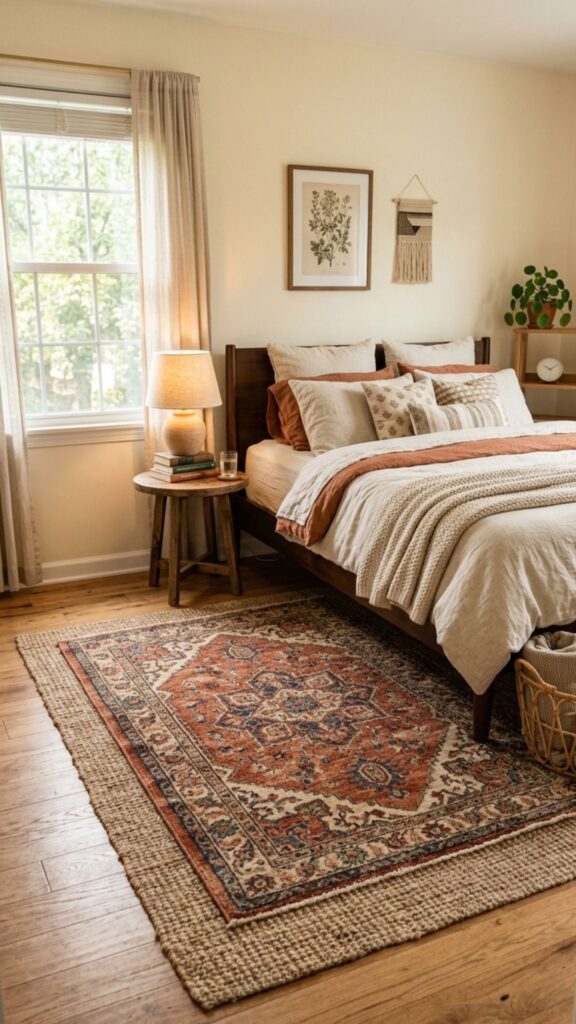
A single rug is functional. Two rugs layered on top of each other? That’s cozy. Try placing a smaller patterned rug over a larger neutral jute or sisal base. The combination adds visual interest and tactile warmth underfoot.
In colder months, swapping out a flat-weave rug for a plush, high-pile option makes the room feel noticeably warmer. Stepping onto a soft rug first thing in the morning sets a very different tone than cold hardwood.
8. Display Personal Items and Meaningful Objects

Generic decor keeps a room feeling anonymous. Meaningful objects — a framed photo from a trip, a ceramic piece you love, a book that changed your perspective — make a room feel genuinely lived in and personal.
A small gallery wall above the bed or a simple shelf with a curated collection of objects tells a story. These details are what separate a styled space from a staged one, and they’re what make a bedroom feel truly yours.
9. Try a Canopy or Draped Fabric Over the Bed

A canopy doesn’t require a four-poster bed frame. You can drape sheer fabric from a ceiling hook above the headboard to create the look of an enclosed, intimate sleeping space — which is basically the definition of cozy.
Lightweight linen or muslin works beautifully and softens the whole corner of the room. For a more bohemian bedroom aesthetic cozy feel, try layering multiple fabrics in complementary tones. For something cleaner, go with a single white or cream drape.
10. Invest in a Quality Headboard
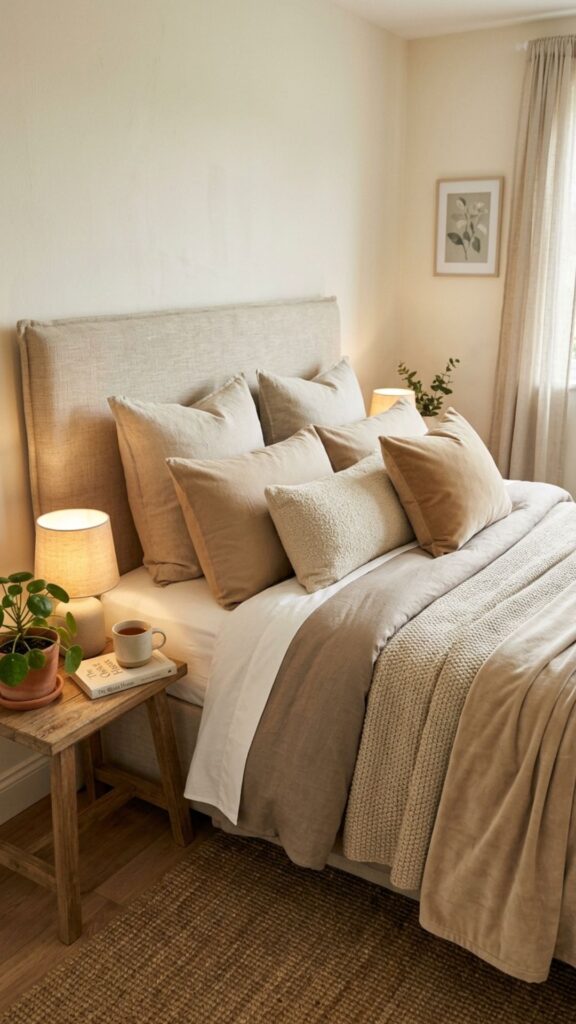
A headboard gives the bed — and the whole room — a sense of structure. An upholstered headboard in a warm fabric like boucle, velvet, or linen adds softness and visual weight that an unframed bed simply can’t match.
If a full upholstered headboard is out of budget, consider a DIY option using plywood, foam, and fabric. Even a simple wood plank headboard stained in a warm walnut tone makes a significant difference to how finished and inviting the space feels.
11. Use Mirrors to Reflect Warm Light
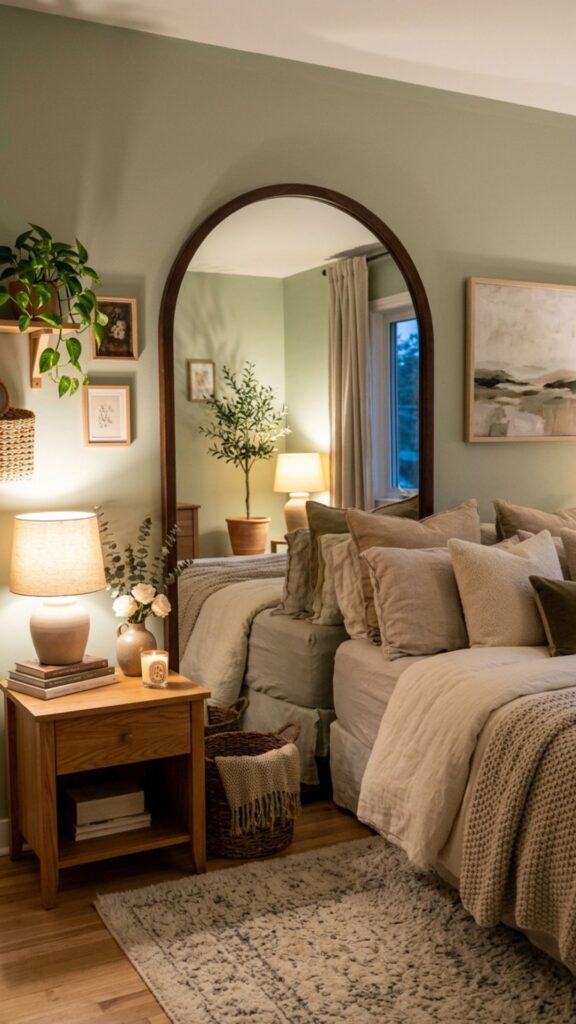
Mirrors are a well-known trick for making spaces feel larger, but their effect on light is equally valuable. A mirror placed across from a lamp or beside a window bounces warm light around the room rather than letting it fall flat.
Lean a large floor mirror in a corner for a relaxed, modern look, or hang an arched mirror above the dresser for something more classic. Either way, the reflected glow adds to that cozy, luminous quality that makes a bedroom feel welcoming.
12. Add Plants for Life and Texture
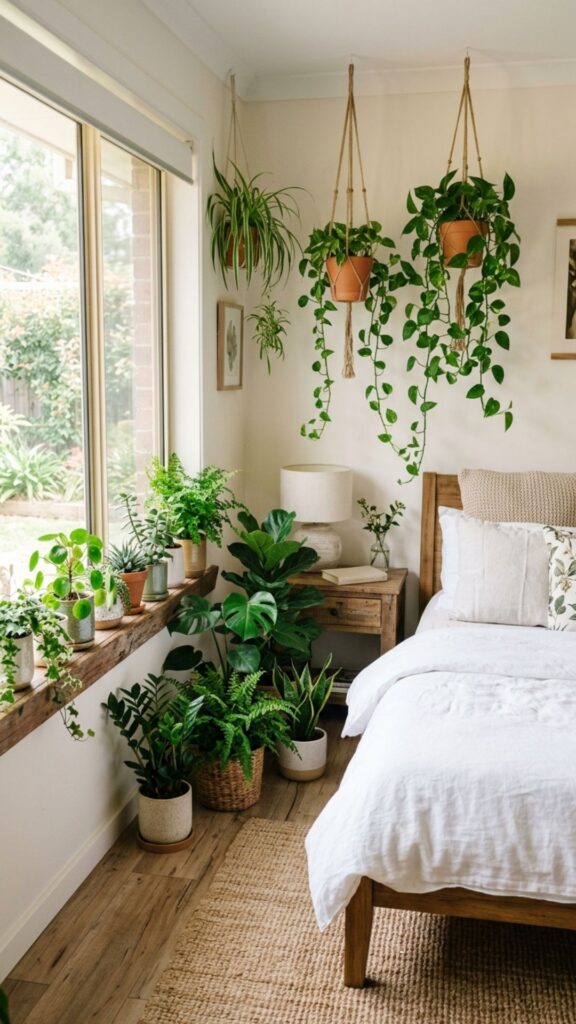
Plants bring movement, color, and a sense of life to a bedroom that no object can quite replicate. Low-maintenance options like pothos, snake plants, or ZZ plants thrive in bedroom conditions and require minimal care.
Place a trailing plant on a high shelf for visual drama, or group a few small plants on the windowsill for a simpler look. Even a single eucalyptus stem in a vase adds greenery and a subtle natural scent that enhances the overall mood.
13. Create Ambiance with Candles or Diffusers
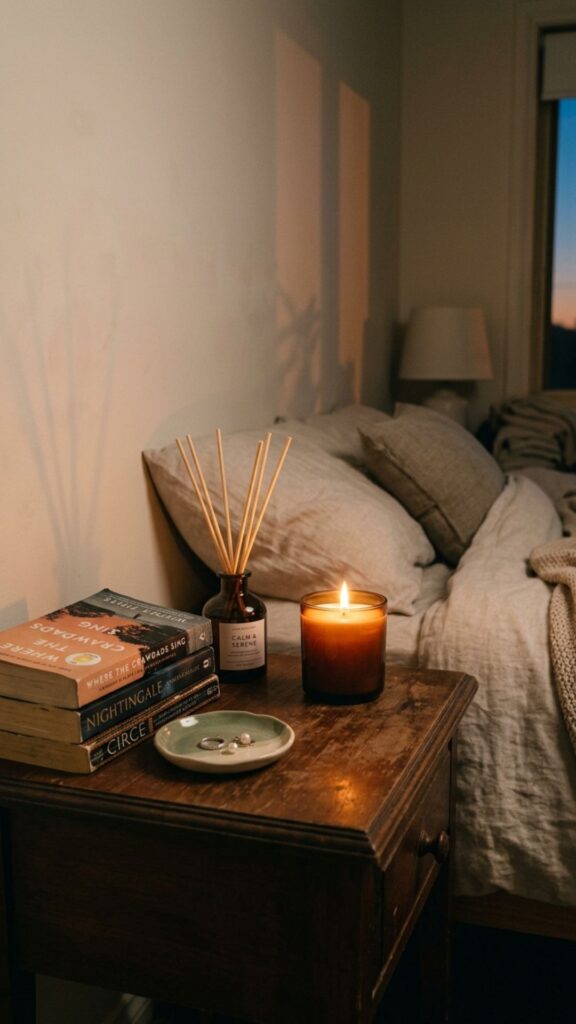
Scent is one of the most underrated elements of a cozy bedroom aesthetic. A vanilla, sandalwood, or cedarwood candle burning in the evening does more for the mood of a room than most decorative changes.
If open flames aren’t an option, a reed diffuser or an ultrasonic essential oil diffuser works just as well. Scents like lavender promote sleep, while warmer spice-based scents feel particularly suited to cooler months.
14. Style Your Nightstand Thoughtfully
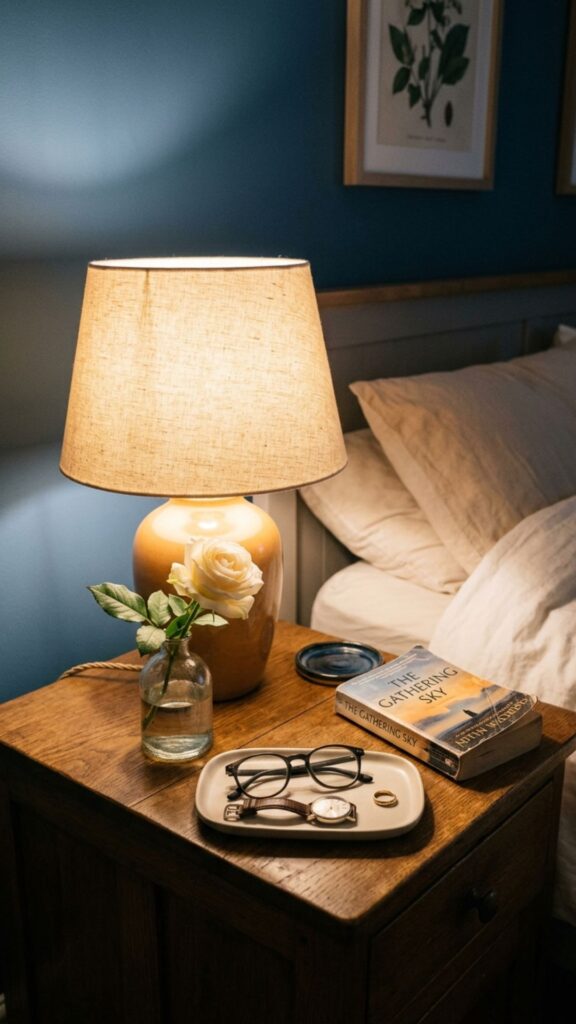
A cluttered nightstand feels chaotic. A thoughtfully styled one feels intentional. Keep it to a few items: a lamp, a small plant or vase, a coaster, and whatever you’re currently reading or listening to.
Add a small tray to corral items and prevent surface creep. A nightstand with a drawer helps, too — what’s out of sight stays out of mind. The calmer your nightstand looks, the calmer the whole room feels.
15. Use Wallpaper or an Accent Wall for Depth
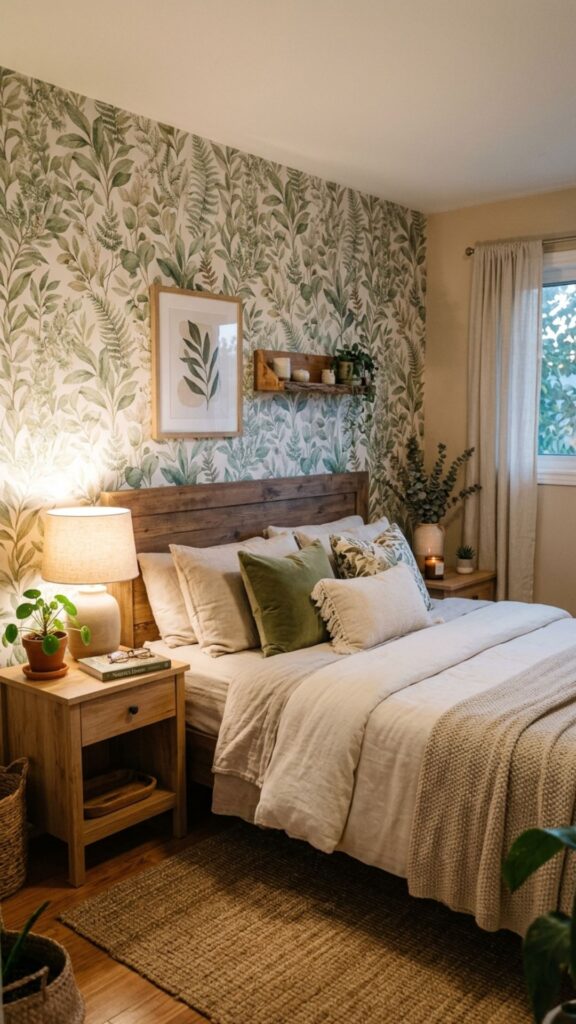
A single accent wall in a warm wallpaper pattern or a deeper paint color adds enormous depth without overwhelming the room. Earthy botanicals, warm geometric patterns, or textured grasscloth wallpaper all work well.
If you’re renting, peel-and-stick wallpaper has come a long way — there are genuinely beautiful options that install easily and come off cleanly. Even painting just the wall behind your bed in a warm terracotta or forest green changes the room completely.
16. Incorporate Vintage or Secondhand Pieces
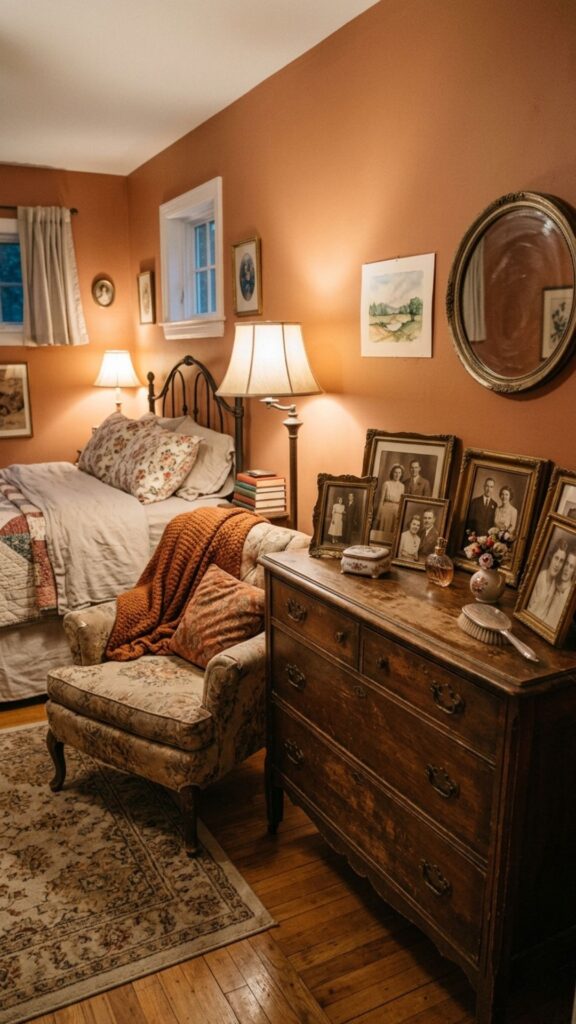
New furniture often feels stiff and uniform. A vintage dresser, a secondhand armchair, or a set of mismatched antique frames brings character that new pieces rarely offer. Thrift stores, estate sales, and online marketplaces are full of options.
These pieces also tend to be built from solid wood and better materials than many modern alternatives, which means they age better and feel more substantial. The imperfection of vintage items adds to the warmth of a space rather than detracting from it.
17. Maximize Closet Storage to Reduce Visual Clutter
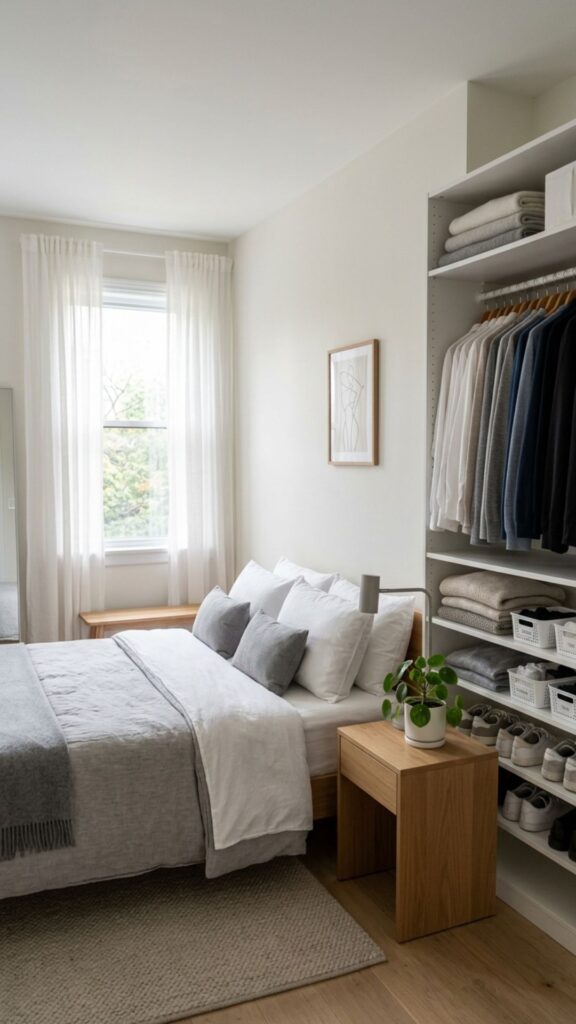
Clutter kills coziness faster than anything. If your bedroom surfaces are overwhelmed with items that have no home, adding some internal closet organization — simple shelves, slim hangers, a few bins — can transform how the room feels.
When your space has a place for everything, the visible surfaces stay calmer. That visual quiet is a big part of what makes a room feel restful and cozy rather than overwhelming.
18. Choose Soft, Tactile Decor Accessories
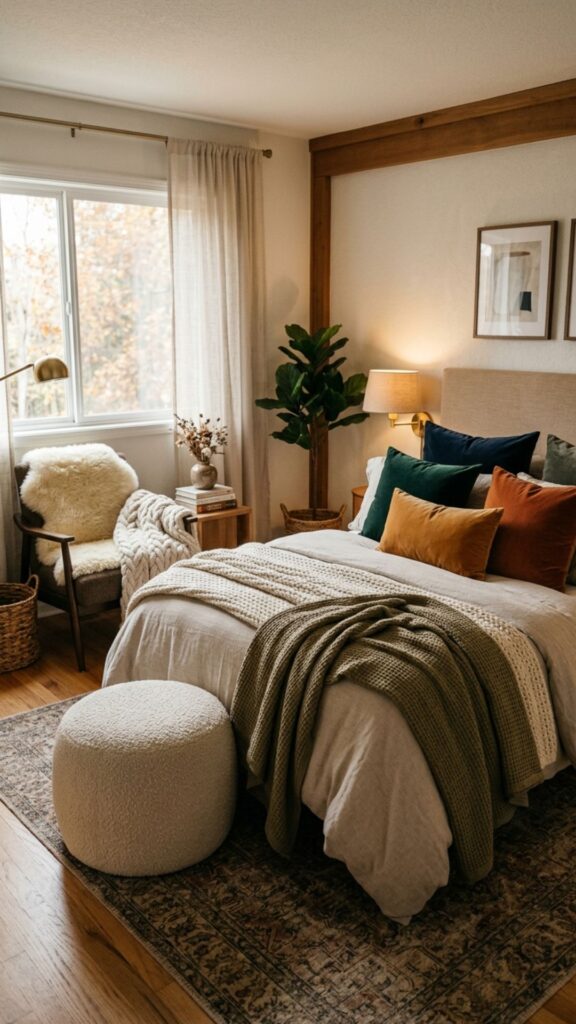
Velvet throw pillows, a sheepskin draped over a chair, a boucle pouf at the foot of the bed — these kinds of accessories invite you to touch them, and that tactile quality is central to what makes a space feel genuinely cozy.
Mix textures deliberately. Hard surfaces (wood, metal) balanced by soft ones (fabric, fur) create rooms that feel layered and considered. The ratio should lean toward soft in a bedroom, where comfort is the whole point.
19. Use Floating Shelves to Display and Store
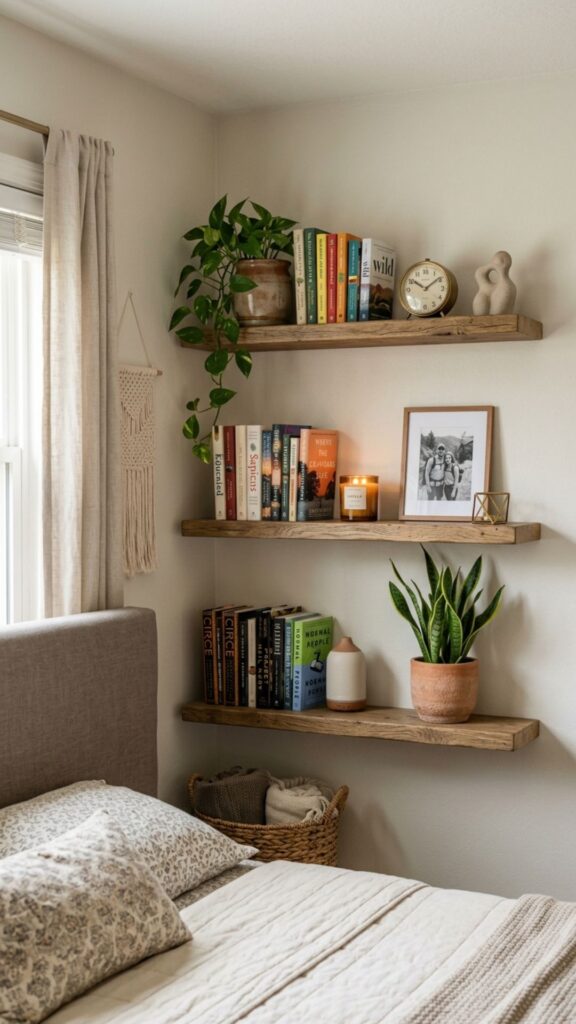
Floating shelves do double duty: they provide storage and create a display opportunity. Styled with a mix of books, small plants, candles, and personal objects, a set of shelves brings personality to any blank wall.
Keep the arrangement intentional — don’t overfill them. Leave some breathing room between objects. A sparse, curated shelf looks far more cozy and considered than one packed end to end.
20. Add a Bench or Ottoman at the Foot of the Bed
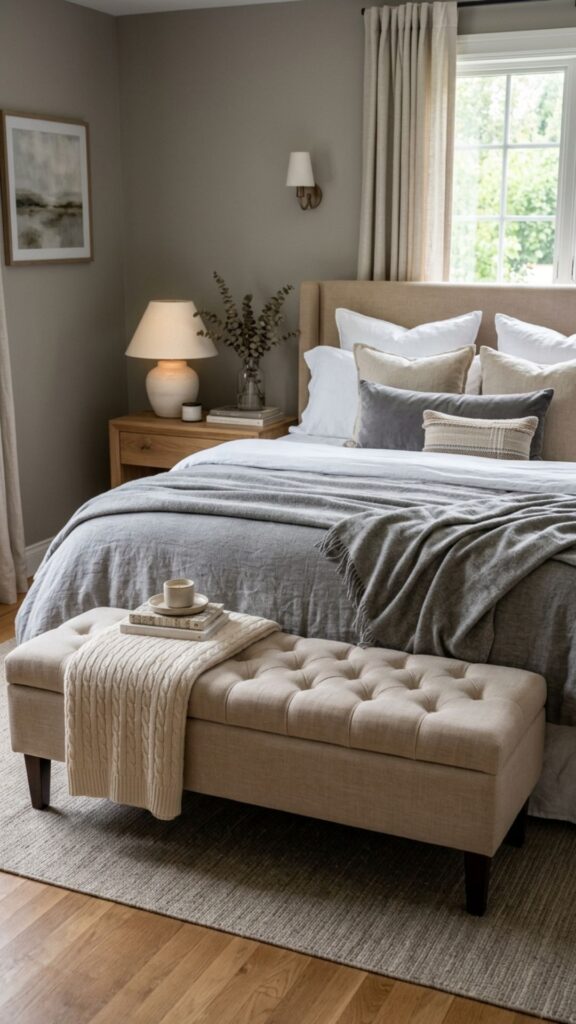
A bench or upholstered ottoman at the foot of the bed completes the room in a way that’s hard to explain until you try it. It adds a layer of furniture that makes the bedroom feel more like a full, considered space.
Practically, it’s useful for sitting while you put on shoes or laying out tomorrow’s outfit. Aesthetically, it grounds the bed and fills the space between the bed and the wall or window without adding visual heaviness.
21. Embrace Dim Switches and Lighting Control
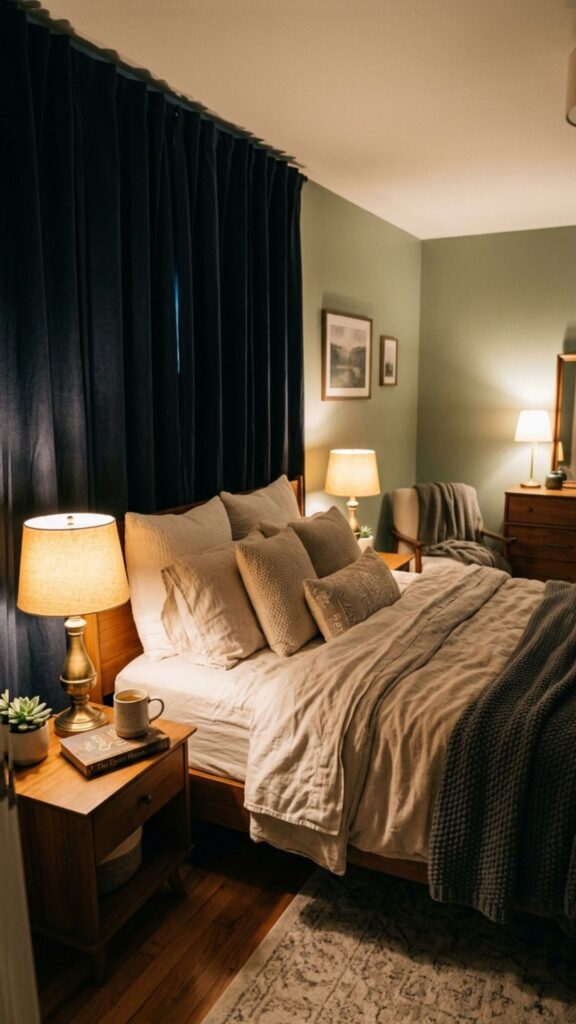
Dimmable lighting might be the single highest-impact change you can make to create a bedroom aesthetic cozy enough to actually unwind in. Being able to dial the light down in the evening signals to your brain that it’s time to slow down.
Smart bulbs or a simple dimmer switch retrofitted to your existing lamp give you that control. Pair it with blackout or room-darkening curtains, and you have full command over the light environment — which matters more for sleep quality than most people realize.
22. Keep the Color Palette Cohesive Throughout
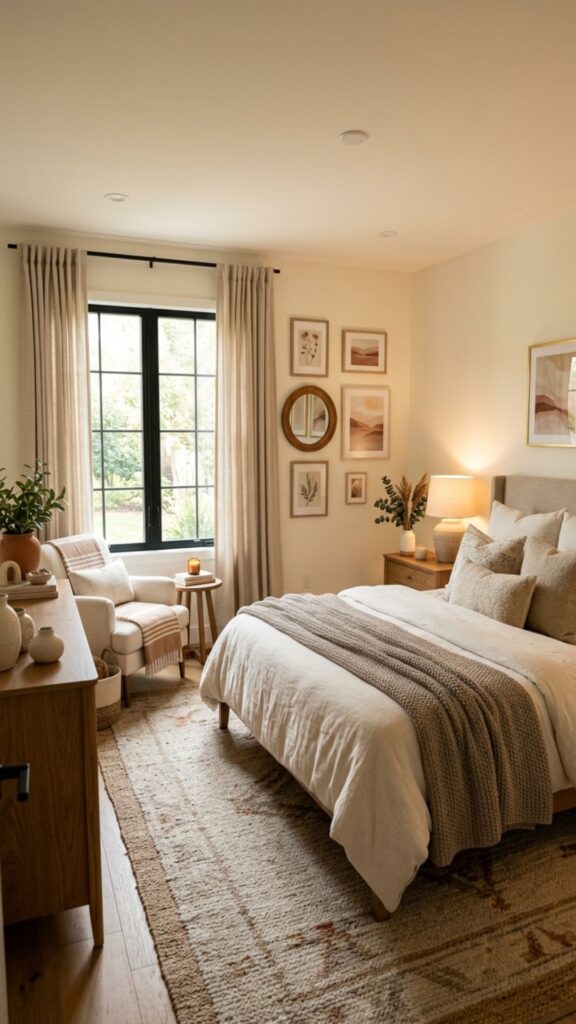
Even the coziest individual elements will feel scattered if the room has no visual thread. Choose a palette of three to four colors — one dominant tone, one or two supporting tones, and one accent — and stick with it across bedding, rugs, curtains, and accessories.
This doesn’t mean everything needs to match perfectly. Cohesion comes from intentionality. When the colors in your room feel like they belong together, the space automatically feels more settled, more calm, and more inviting.
Conclusion
Creating a warm, cozy bedroom aesthetic doesn’t happen all at once, and it doesn’t require a complete overhaul. Most of the ideas here are small, affordable, and reversible — which means you can start today with what you already have.
Pick two or three ideas from this list that resonate with your style and your current space. Add a lamp. Layer a throw blanket. Style your nightstand. Small moves add up faster than you’d expect, and each one brings you closer to a bedroom you genuinely love being in.
Ready to transform your bedroom? Start with one change this week and see how it shifts the whole feel of the room.
What makes a bedroom feel cozy?
A cozy bedroom typically combines warm lighting, layered textures, a calm color palette, and personal touches that make the space feel lived-in and intentional. The most important factors are soft lighting, comfortable bedding, and reducing visual clutter.
How do I create a cozy bedroom on a small budget?
Focus on high-impact, low-cost changes: swap lightbulbs for warmer ones, add a throw blanket or extra pillow, rearrange furniture to improve flow, and declutter surfaces. Thrift stores and secondhand marketplaces are great sources for affordable cozy decor.
What colors work best for a cozy bedroom aesthetic?
Warm, earthy tones tend to create the coziest feel — think terracotta, warm beige, caramel, sage green, and dusty rose. Avoid very cool or bright colors, which tend to feel energizing rather than restful.
Can a small bedroom still feel cozy?
Absolutely. In fact, smaller rooms often feel cozier by default because the space wraps around you more closely. Use floor-to-ceiling curtains to add height, keep furniture scaled appropriately, and lean into the intimacy of a compact space rather than fighting it.
How many throw pillows are too many?
There’s no universal rule, but a practical guide is: enough to look layered and intentional, not so many that you spend five minutes removing them before bed. For a queen bed, four to six pillows in varying sizes typically hits the sweet spot.