A bedroom should feel like yours — not just a place to sleep, but a space that actually reflects your personality. Yet so many bedrooms end up looking plain, forgettable, or just like every other room in the house. If that sounds familiar, a bedroom accent wall might be exactly what you need.

An accent wall is a single wall treated differently from the rest — through color, texture, material, or pattern. It draws the eye, anchors the room, and gives your space a focal point without requiring a full renovation. Done right, it can make a small room feel bigger, a plain room feel polished, and a cold room feel genuinely warm.

In this post, you’ll find 21 creative bedroom accent wall ideas covering everything from paint techniques and wallpaper to wood panels and fabric installations. Whether you’re renting, redecorating on a budget, or planning a full bedroom refresh, there’s something here for every style and skill level.
1. Bold, Deep-Toned Paint
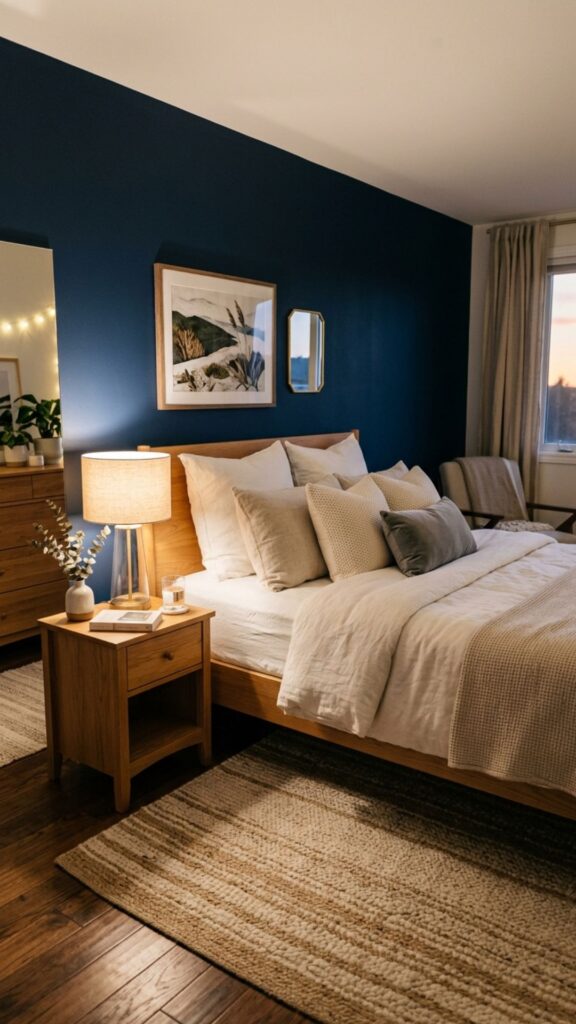
Painting one wall in a deep, rich color — like charcoal, forest green, or navy — instantly adds depth to a bedroom. Place it behind your bed to create a natural focal point, and the rest of the room will feel more intentional without you touching another wall.
Choose a matte finish to keep the look sophisticated and avoid glare. Pair the wall color with lighter bedding and wood furniture to balance the intensity. A single weekend and one can of paint can genuinely transform how the room feels.
2. Geometric Wall Murals
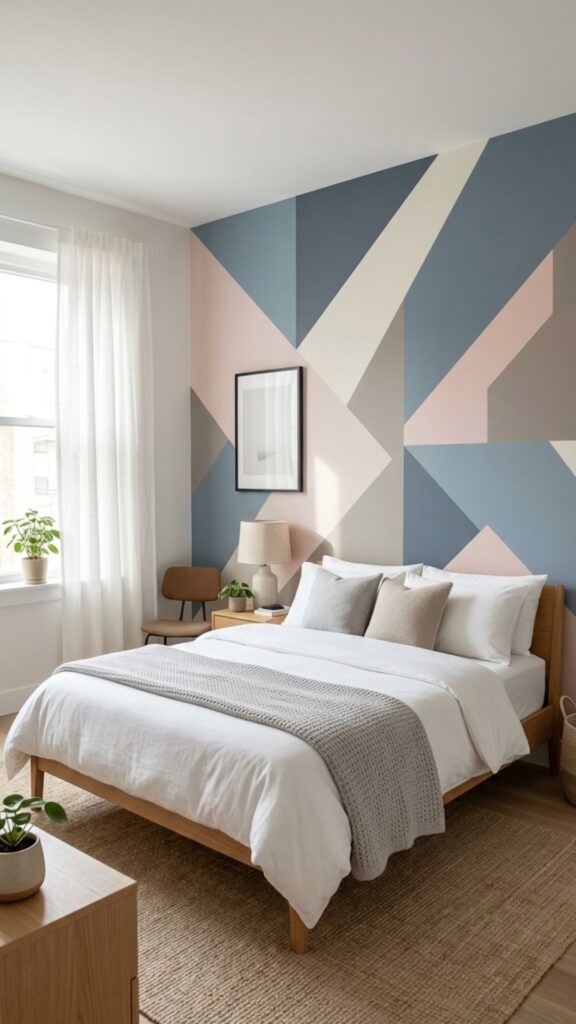
A hand-painted or stenciled geometric mural turns a plain wall into a piece of art. Triangles, hexagons, and diamond patterns work especially well in modern or Scandinavian-style bedrooms. You don’t need to be an artist — wall stencils are widely available and easy to use.
Use two complementary shades from your existing palette to keep the design cohesive. This approach adds visual interest without introducing a new color scheme, which makes the room feel pulled together rather than chaotic.
3. Peel-and-Stick Wallpaper
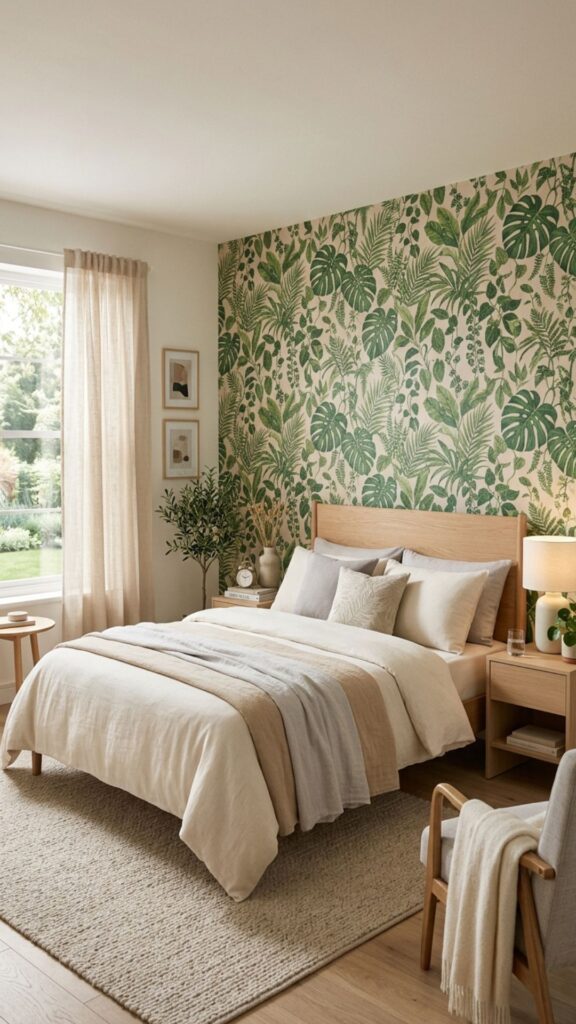
Renters, this one’s for you. Peel-and-stick wallpaper has improved dramatically in quality and variety over the last few years. You can find options mimicking linen, marble, botanical prints, and vintage patterns — all removable without damage.
Apply it to the wall behind your headboard for maximum impact with minimum commitment. Take your time aligning the first strip; every panel that follows depends on it. Most people can complete a standard bedroom accent wall in two to three hours.
4. Shiplap Wood Paneling
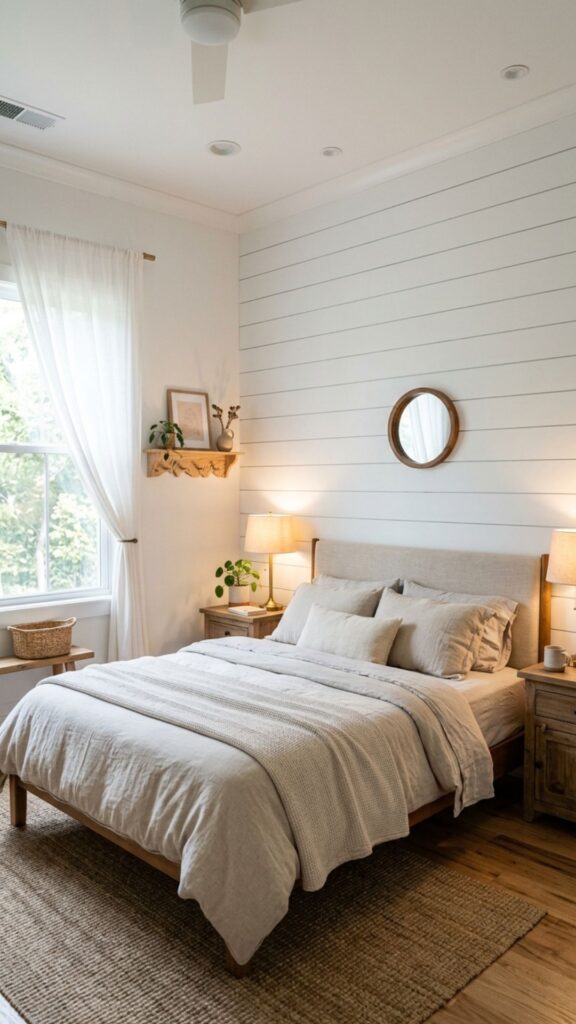
Shiplap brings a cozy, cabin-like warmth that works in both rustic and contemporary bedrooms. The horizontal lines also make a room appear wider — a useful trick in narrower spaces. You can find real shiplap boards or lightweight MDF alternatives at most home improvement stores.
Paint it white for a bright, airy look, or leave it natural for more texture and warmth. Either way, it pairs well with linen bedding, warm lighting, and natural wood furniture. The installation is manageable as a weekend DIY project with basic tools.
5. Gallery Wall Arrangement
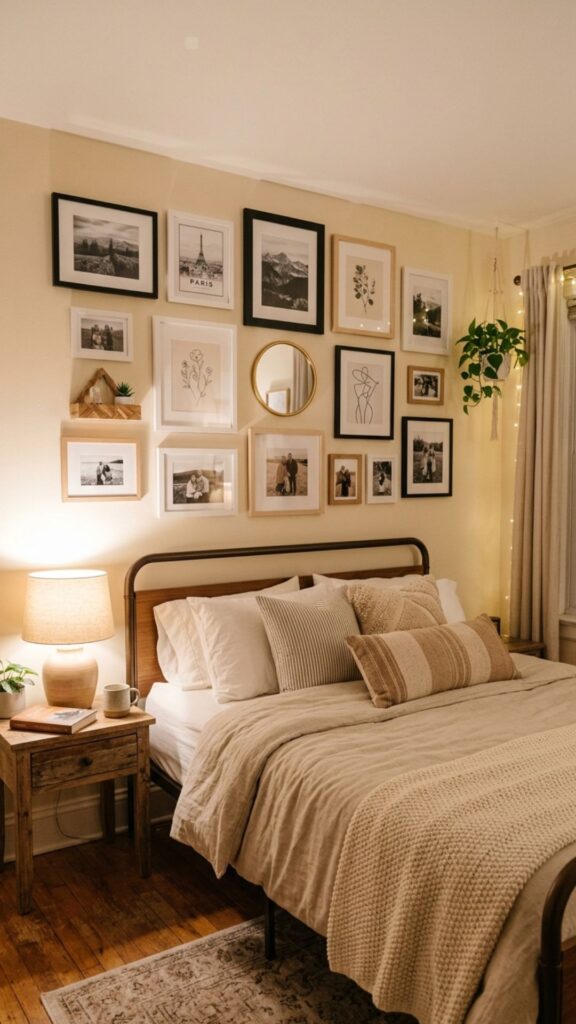
A curated gallery wall is one of the most personal bedroom accent wall ideas you can create. Mix framed photos, art prints, and small mirrors in coordinating frames to tell a visual story behind your bed.
Plan your layout on the floor before putting a single nail in the wall. Stick to a consistent frame color or metal finish to avoid a cluttered look. A well-arranged gallery wall feels collected over time, which makes it feel authentic rather than staged.
6. Vertical Shiplap or Board-and-Batten
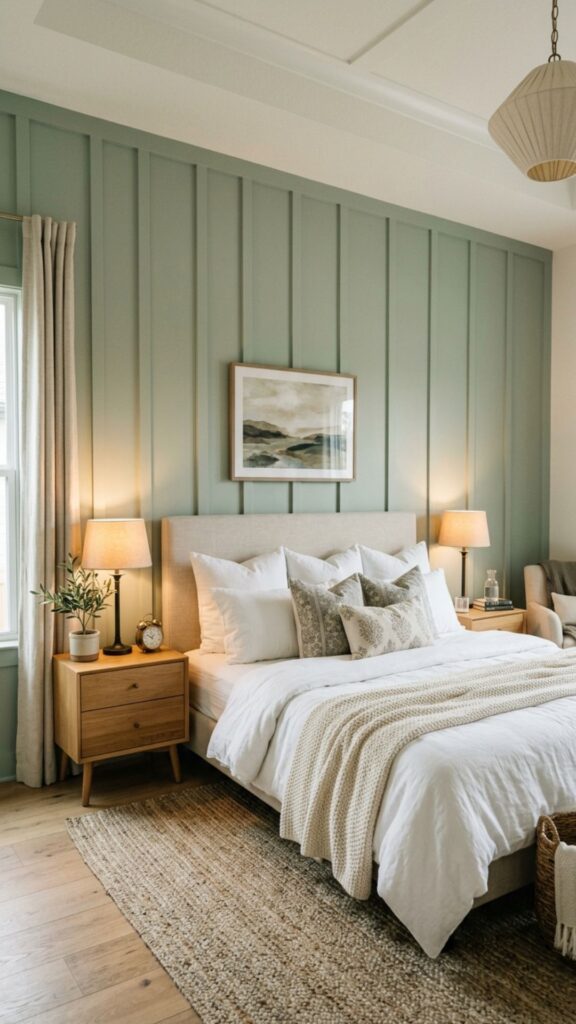
While horizontal planks widen a space, vertical boards make ceilings feel higher. Board-and-batten paneling — vertical strips topped with a flat rail — is a classic architectural detail that adds elegance to even the most basic bedroom.
Paint it the same color as the wall for a subtle, tonal effect, or choose a contrasting shade for more drama. This style works particularly well in traditional and farmhouse-inspired bedrooms and holds up well over time.
7. Textured Plaster Finish
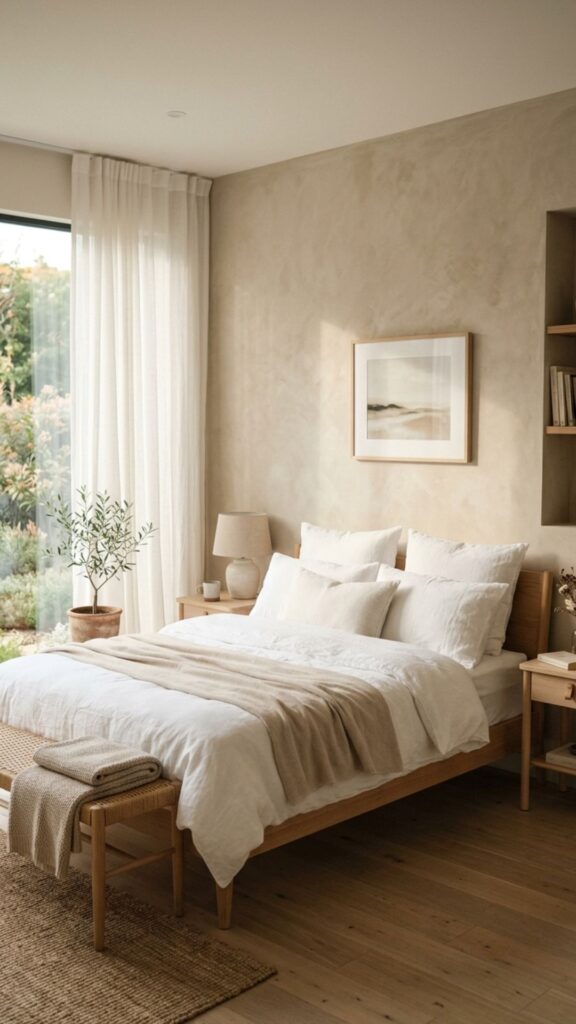
A limewash or Venetian plaster finish creates a soft, layered look that catches light beautifully throughout the day. The texture varies as light shifts, giving the wall a living, organic quality that flat paint simply can’t replicate.
You can apply limewash paint yourself — it’s more forgiving than traditional plaster techniques. Start with a base coat and apply the limewash in loose, overlapping strokes with a natural-bristle brush. The result looks artisanal and expensive without the matching price tag.
8. Fabric-Wrapped Wall Panels
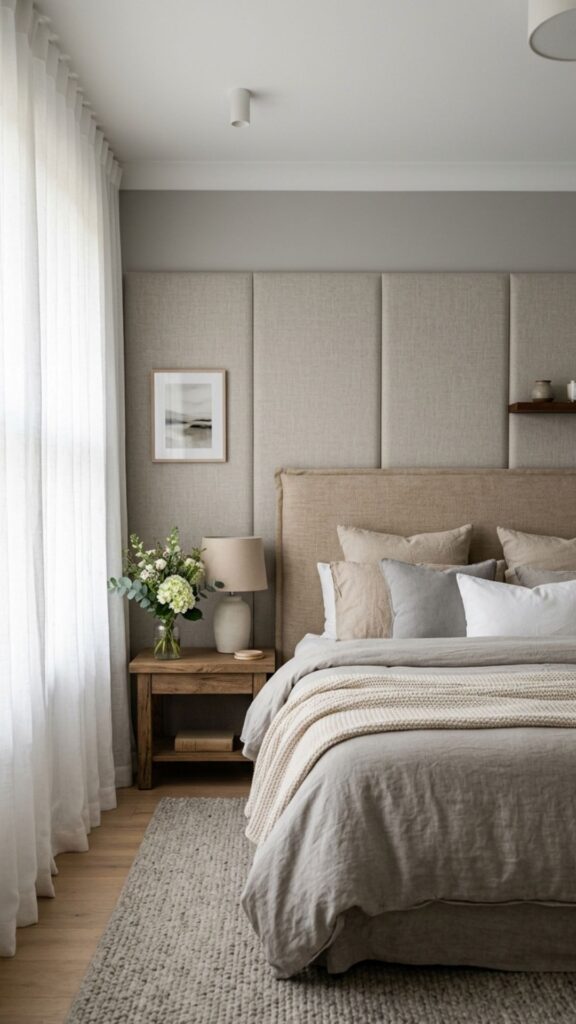
Upholstered or fabric-wrapped panels add sound absorption alongside visual softness — a combination that makes bedrooms feel noticeably quieter and more relaxed. Stretch a piece of linen, velvet, or boucle fabric over a lightweight frame and mount it directly to the wall.
You can create a single large panel behind the headboard or arrange a series of smaller ones in a grid pattern. This is a particularly good solution for bedrooms with echo problems or thin walls. The fabric can be swapped out seasonally without replacing the entire installation.
9. Exposed Brick or Faux Brick Panels
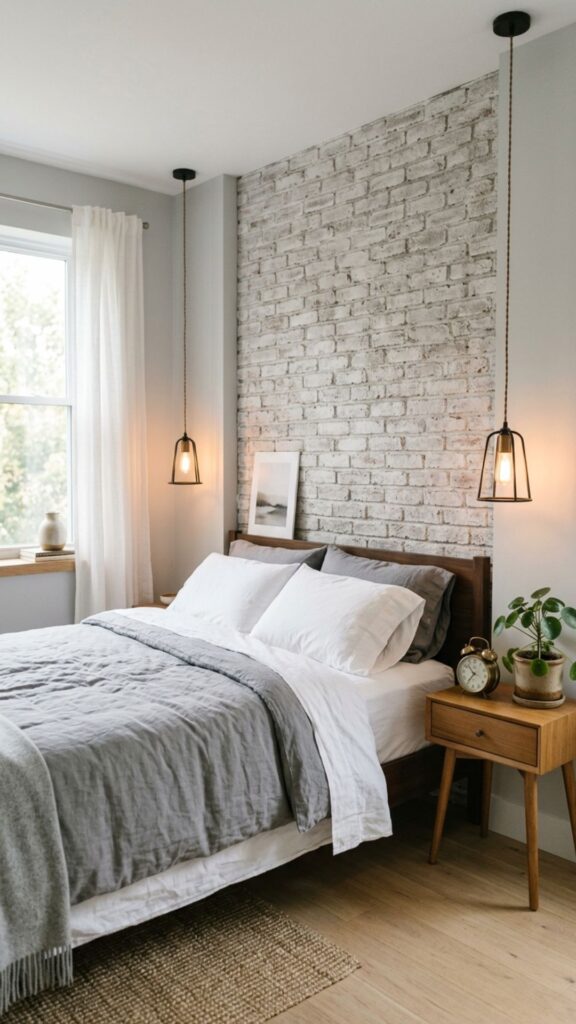
A real exposed brick accent wall has undeniable character, but most of us don’t have access to one. Faux brick panels — lightweight and paintable — give you the same industrial or rustic effect without demolition.
Leave the faux brick in its natural terracotta tone, paint it white for a loft-style look, or go dark gray for something more moody. The texture alone adds enough visual interest that you can keep the rest of the room relatively minimal.
10. Wallpaper with Large-Scale Botanicals
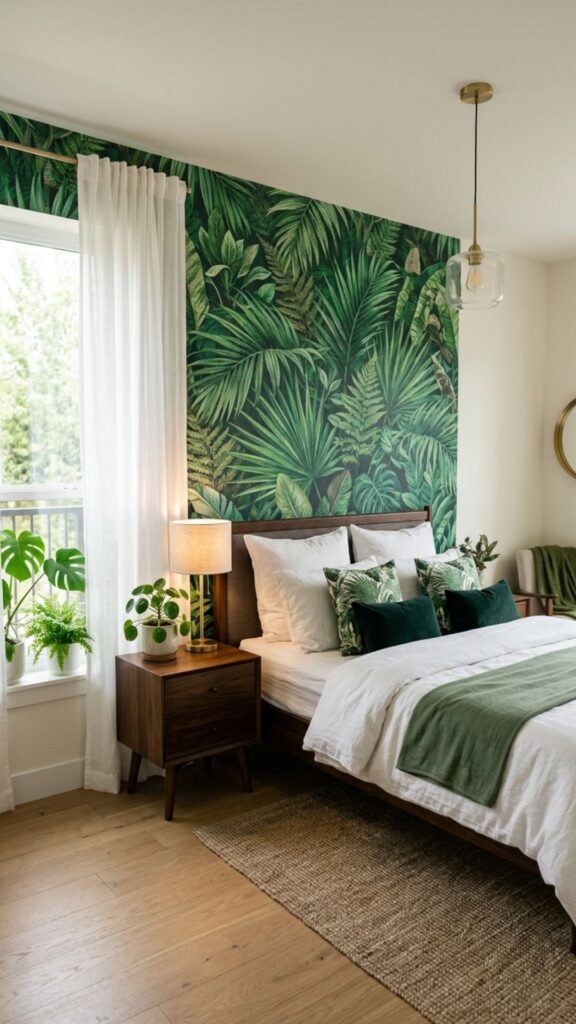
Oversized leaf, floral, or tropical prints make a bedroom feel lush and layered. This style of bedroom accent wall works especially well in rooms that feel too sparse or visually flat. The large scale of the print fills the space without cluttering it.
Choose a pattern with a background color that already exists somewhere in your room — in your rug, throw pillows, or curtains. This connects the wall to the rest of the space so it looks designed, not random.
11. Painted Arch or Curved Panel
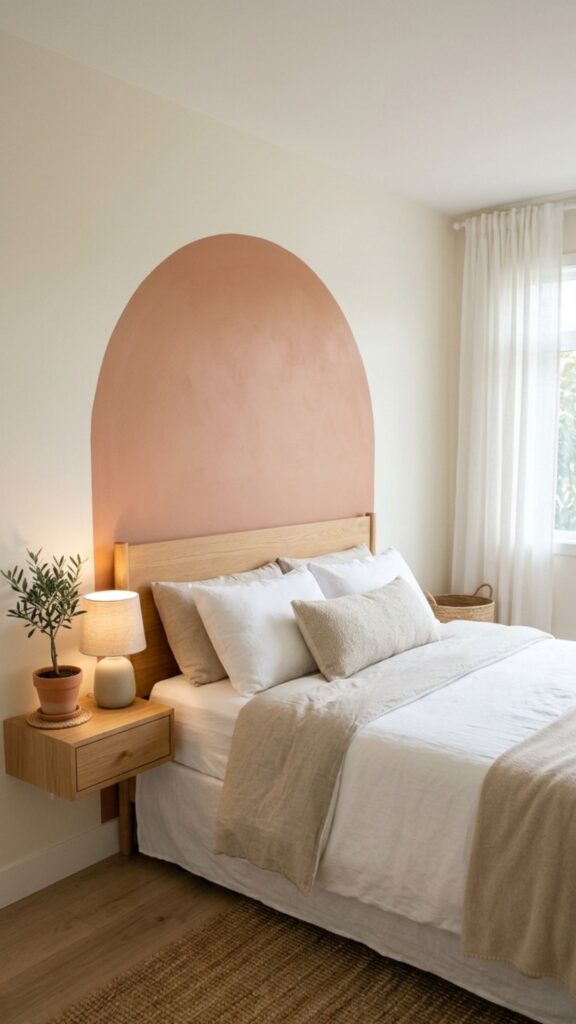
A painted arch is a softer alternative to a full-wall treatment. Paint a curved arch shape directly onto the wall behind your bed in a contrasting color. It frames the headboard and creates a focal point with minimal paint and zero materials.
Use painter’s tape and a flexible plastic strip to get a clean, smooth curve. The arch shape references traditional architectural details, which adds a sense of craftsmanship even when the execution is simple.
12. Reclaimed Wood Feature Wall
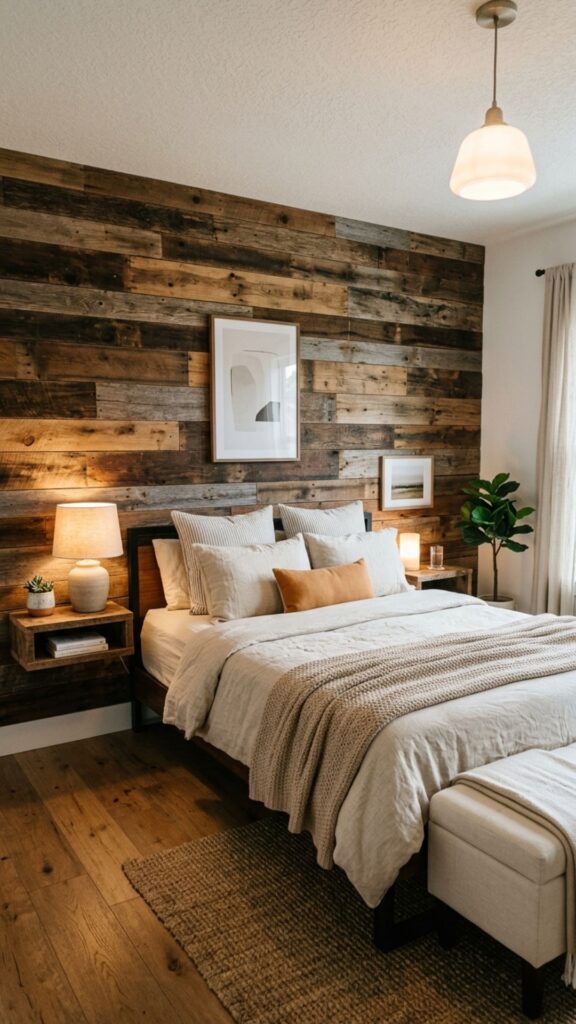
Reclaimed wood planks bring warmth, history, and texture to a bedroom in a way that manufactured materials rarely match. Each board is slightly different in color and grain, which gives the wall a richly varied surface.
Source reclaimed wood from architectural salvage shops or repurpose old pallets with some sanding and preparation. Seal the wood once installed to prevent dust and splinters. The result looks effortlessly warm and significantly more expensive than it typically costs.
13. Wainscoting with a Contrasting Upper Half
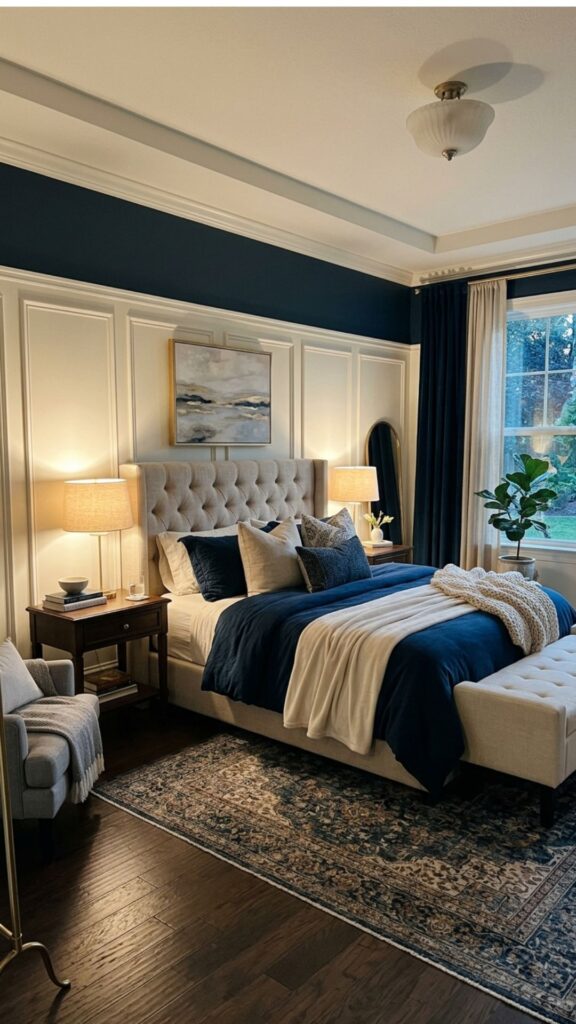
Traditional wainscoting — wood paneling on the lower portion of the wall — looks refined and adds visual weight to a bedroom. Pair it with a deeper wall color on the upper half for a layered, formal effect that still feels approachable.
This treatment works in both classic and transitional bedroom styles. It’s also a smart solution for walls with minor imperfections, since the paneling covers the lower third entirely. Keep the color palette tight — two or three tones maximum — for the best result.
14. Mirror Tiles or Mirrored Panels
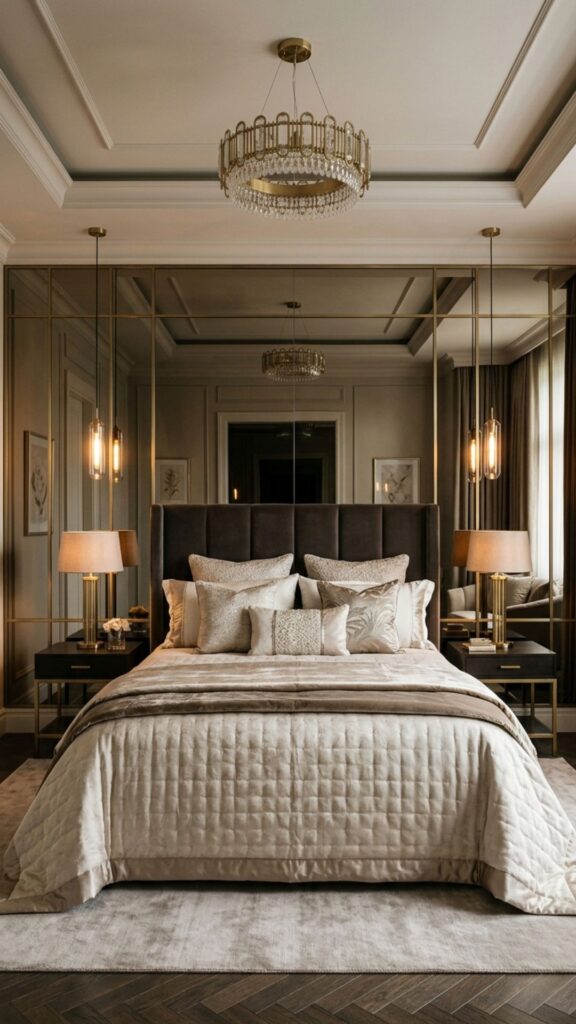
Mirrored surfaces reflect light and make a bedroom appear larger than it actually is. A full panel or a grid of mirror tiles behind the bed creates a glamorous, hotel-like effect that’s particularly effective in smaller rooms.
Use smoked or antiqued mirror tiles rather than clear ones if you want less reflectivity and more visual softness. They add dimension without making the room feel like a dressing room. Secure them firmly — mirror tiles are heavier than they look.
15. Ombre Paint Effect
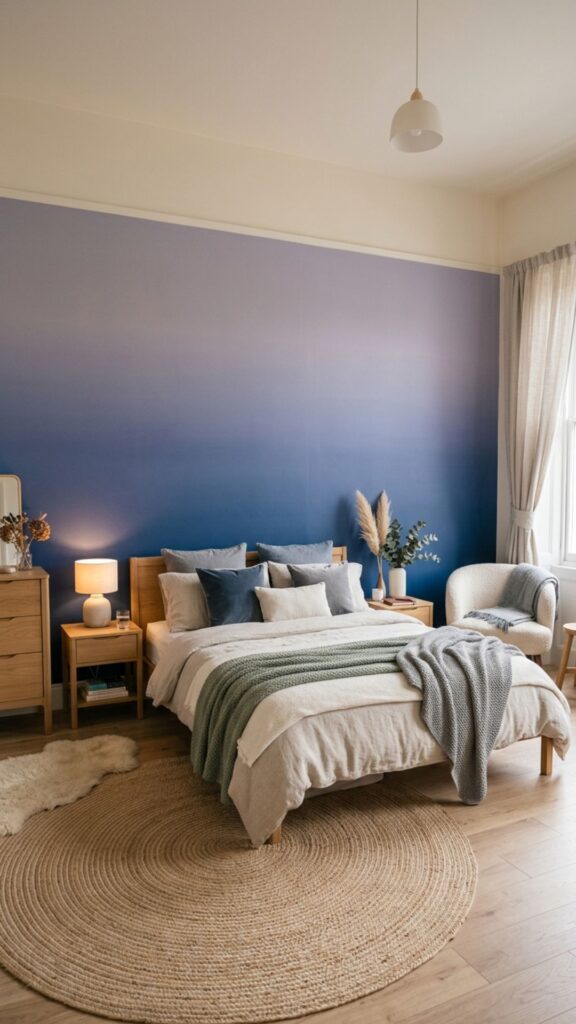
An ombre wall transitions from one color to another — typically from deeper at the bottom to lighter at the top, which draws the eye upward and creates a sense of height. It’s a paint technique that looks complex but is surprisingly achievable with a good brush and some patience.
Use two shades from the same color family and blend them in a wide middle band while the paint is still wet. Keep the bottom shade no darker than two to three steps from the top tone for a gradient that reads as intentional, not accidental.
16. Pegboard Feature Wall
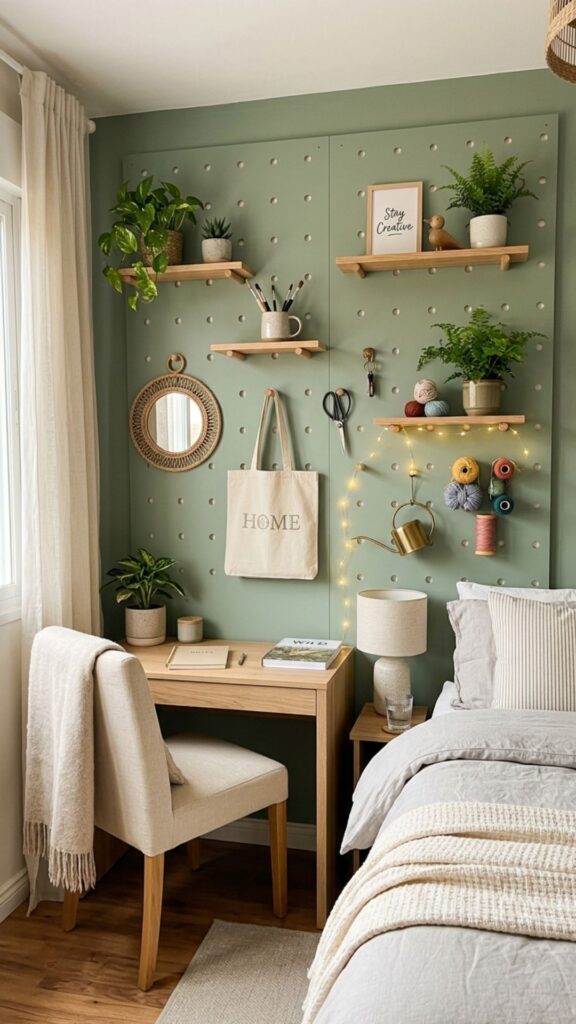
Pegboards aren’t just for garages. Painted in a matching or contrasting color, a pegboard accent wall adds both texture and function to a bedroom. Use it behind a desk nook, dressing area, or reading corner to hang accessories, plants, and small shelves.
Choose a powder-coated metal pegboard for durability and a cleaner look than the traditional beige pressed board. Mount it flush to the wall on a frame so there’s space to insert pegs and hooks from behind. It’s a practical bedroom accent wall that changes with your needs.
17. Painted Color Blocking
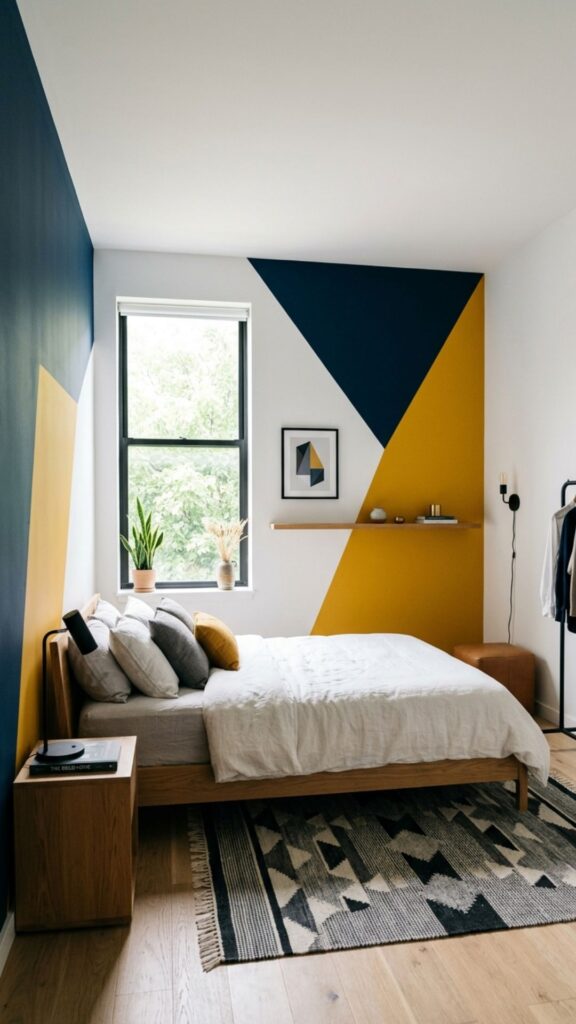
Color blocking uses two or more solid colors in geometric sections — no stencils, no patterns, just clean lines of contrasting paint. It’s bold, modern, and surprisingly easy to execute with painter’s tape and a steady hand.
A common approach is to paint the upper two-thirds of the wall one color and the lower third another, or to split the wall vertically. This creates a graphic, intentional look that works well in minimalist and contemporary bedrooms.
18. Macramé or Woven Wall Hanging
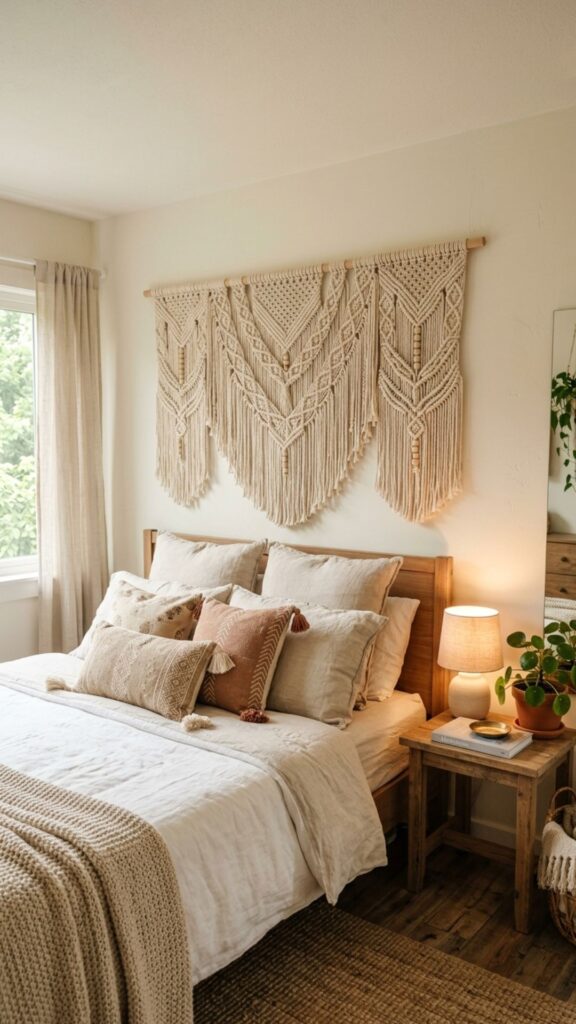
If you’d rather avoid paint and tools entirely, a large macramé or woven textile hanging can serve as a soft, textural accent wall. Position it centered above the headboard so it spans most of the wall’s width.
Choose natural fibers like cotton rope or jute for a relaxed, organic look, or go for a more graphic weave in black and white for something bolder. This approach is renter-friendly, easy to swap out, and adds genuine warmth to the room.
19. Chalkboard or Blackboard Paint
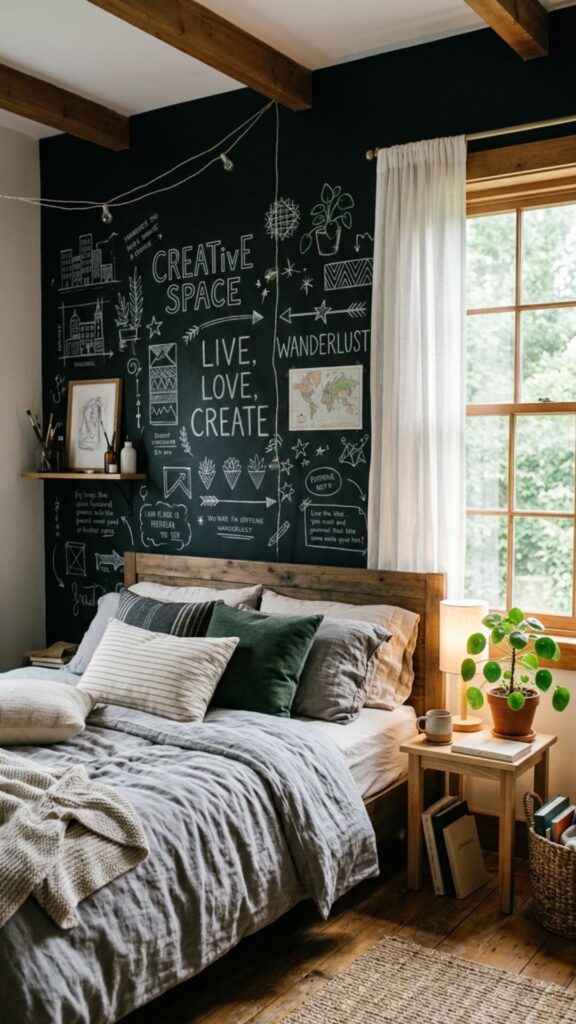
A chalkboard paint accent wall is surprisingly versatile. In a bedroom, it becomes a space for sketching ideas, writing quotes, or letting kids personalize their own space. It also functions as a practical surface without looking purely utilitarian.
Use chalkboard paint in a matte finish and properly season the surface before first use — rub the flat side of chalk across the entire wall, then erase it. This prevents ghost images from permanently marking the surface.
20. Tile-Inspired Stencil Patterns
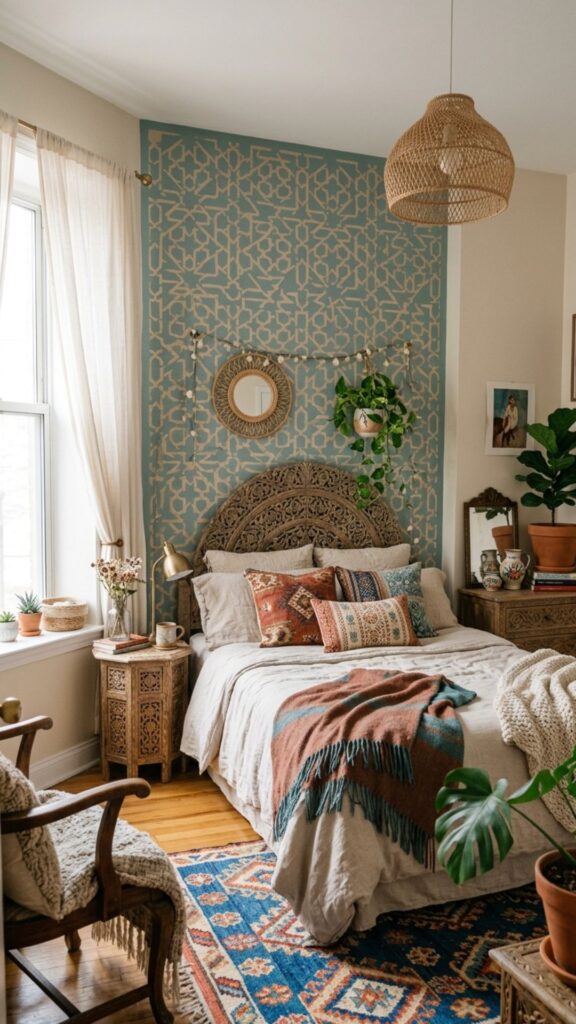
Stencil patterns that replicate Moroccan tiles, Portuguese azulejos, or encaustic cement tiles look intricate but are achievable with a repositionable stencil and two colors of paint. The result is a highly decorative accent wall that feels global and curated.
Work methodically from one corner to avoid pattern drift. Use a dense foam roller rather than a brush to get clean, even coverage through the stencil openings. A tile-inspired pattern works particularly well in eclectic, bohemian, or Mediterranean-style bedrooms.
21. Acoustic Felt Panels
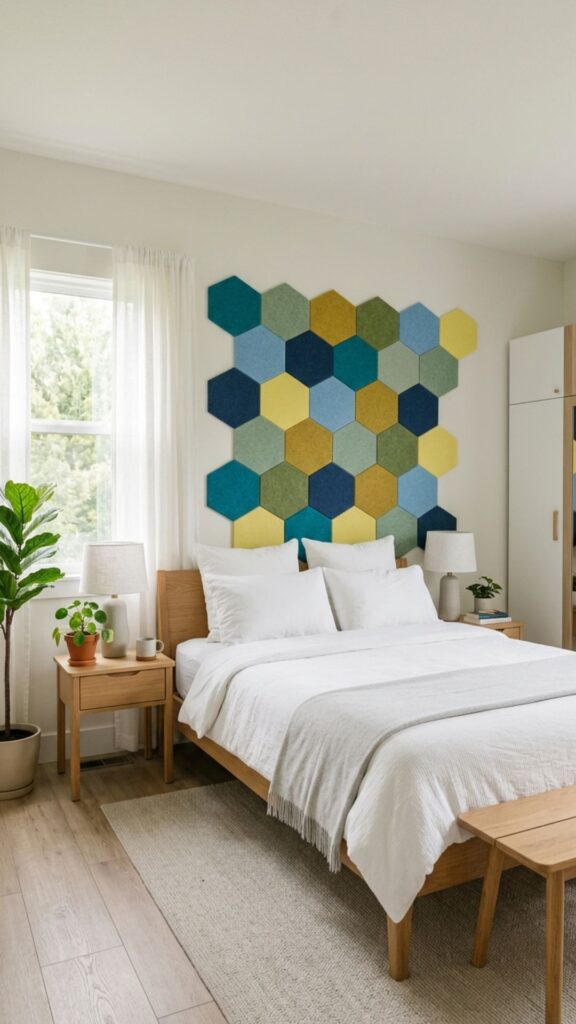
Acoustic felt panels are trending in both home studios and bedrooms for good reason — they absorb sound, come in dozens of colors, and add a distinctly modern, textured look. Arrange them in a grid, an asymmetrical layout, or a gradient of tones for different effects.
They mount easily with adhesive strips or small hardware and can be repositioned without significant wall damage. Beyond the visual impact, the acoustic improvement in a bedroom creates a noticeably calmer, quieter environment — which makes them one of the most functional bedroom accent wall options on this list.
Conclusion
A bedroom accent wall doesn’t require a large budget, professional help, or weeks of work. As these 21 ideas show, you can create something genuinely beautiful with a few cans of paint, some panels, or even a well-placed textile. The key is choosing a treatment that fits your existing space and reflects how you actually want your room to feel.
Start with the idea that excites you most — whether that’s a deep green paint, a shiplap installation, or a peel-and-stick botanical print — and commit to one wall. Your bedroom will feel like a completely different space, and you’ll wonder why you waited so long.
Pick one idea from this list today and gather your materials. Your cozy bedroom makeover is closer than you think.
What wall should be the accent wall in a bedroom?
The wall behind your bed — the headboard wall — is almost always the best choice for a bedroom accent wall. It’s the first thing you see when you walk in, and it naturally frames the room’s focal point. Avoid accent walls with doors or windows if possible, as these interrupt the visual effect.
Do bedroom accent walls make a room look smaller?
Not necessarily. Dark colors on a single wall can actually create depth and make a room feel more intimate without shrinking it visually. Using lighter or reflective materials — like mirror panels or light-toned shiplap — can even make a small bedroom feel larger. The key is to treat one wall, not all four.
What is the easiest bedroom accent wall to DIY?
Peel-and-stick wallpaper and painted accent walls are the easiest for beginners. Both require minimal tools, little preparation, and no special skills. Peel-and-stick wallpaper is especially beginner-friendly and renter-safe since it removes cleanly without damaging the surface underneath.
How much does a bedroom accent wall typically cost?
Costs vary widely. A painted accent wall can cost as little as $20–$50 for paint and supplies. Peel-and-stick wallpaper typically runs $30–$80 depending on coverage. Wood paneling, tile, or professional installations cost more — anywhere from $200 to over $1,000. Most DIY options sit comfortably in the $30–$150 range.
Can I create a bedroom accent wall if I’m renting?
Yes. Peel-and-stick wallpaper, removable fabric panels, large macramé hangings, and pegboards are all renter-friendly options. They create significant visual impact without permanent changes to the walls, and most can be removed cleanly when you move out.