Storage is always the first thing to go when a dining room is small. You end up with table clutter, no place for extra dishware, and a room that never quite feels pulled together — no matter how carefully you arrange it.
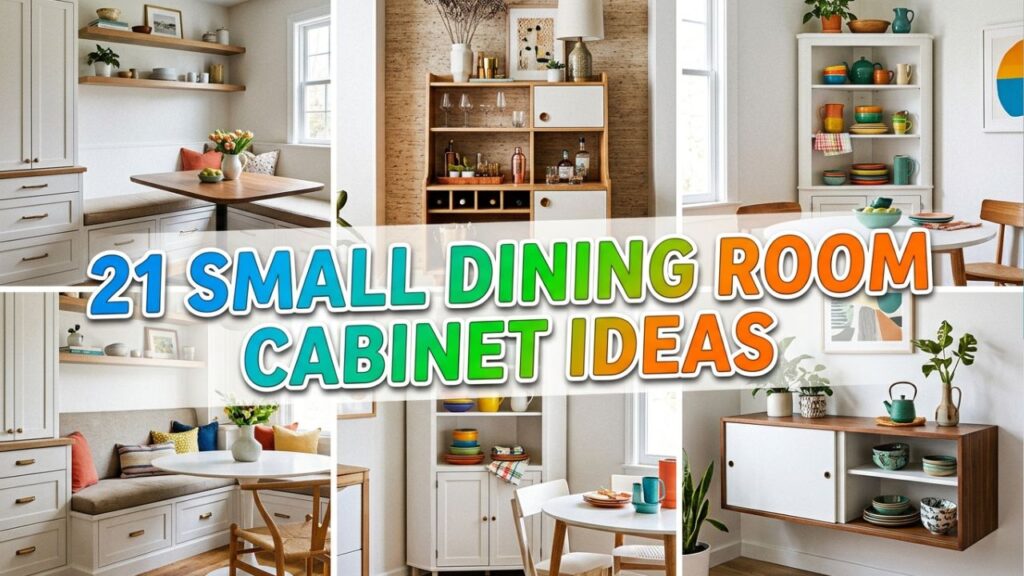
A well-chosen dining room cabinet solves that problem without swallowing your square footage. In this guide, you’ll find 21 specific cabinet ideas designed for compact spaces, each with practical advice on what to buy, how to style it, and what to avoid.
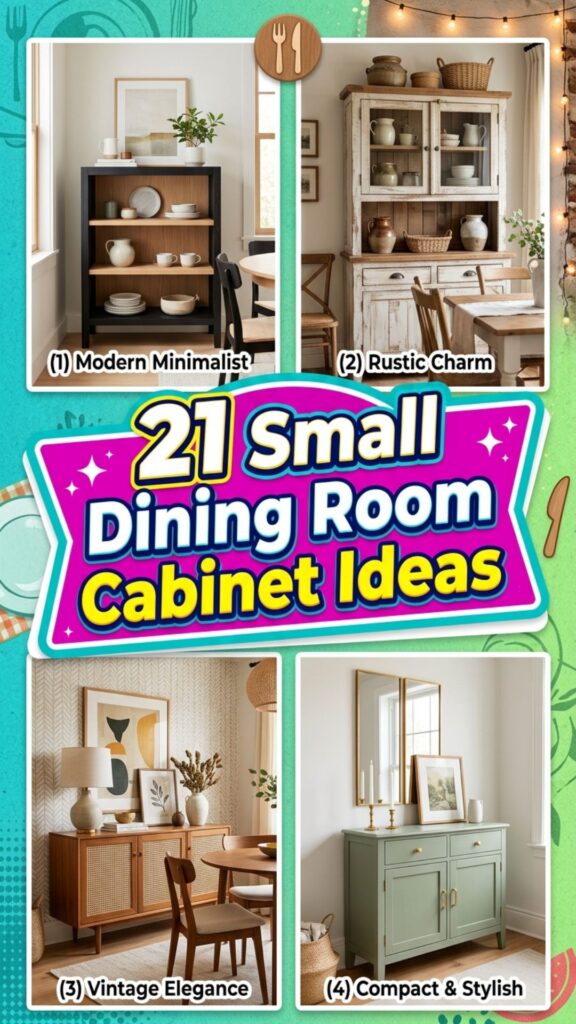
Whether you’re working with a narrow alcove, a combined kitchen-dining area, or a small dedicated dining room, there’s a smart storage solution here for you.
1. Slim Sideboard Against the Wall
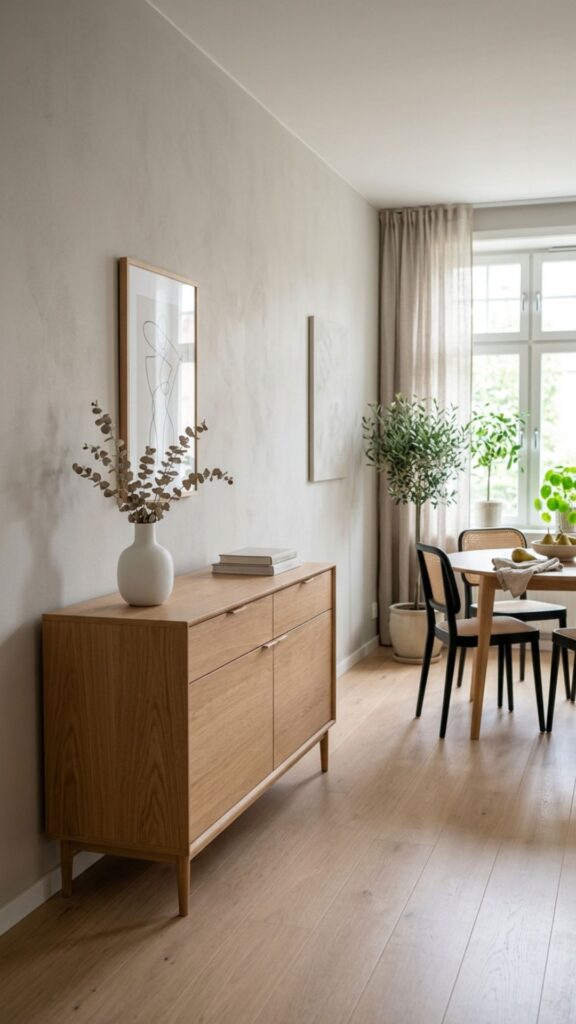
A slim sideboard — typically 12 to 15 inches deep — gives you meaningful surface and storage space without projecting far into the room. Look for one with drawers on top and cabinet doors below so you can store both everyday items and overflow serveware in the same piece.
Position it on the longest uninterrupted wall in your dining room, ideally opposite the table. This keeps the walkway clear and makes the piece feel intentional rather than squeezed in. A sideboard in a light wood finish or matte white will keep the room feeling open.
2. Wall-Mounted Floating Cabinet
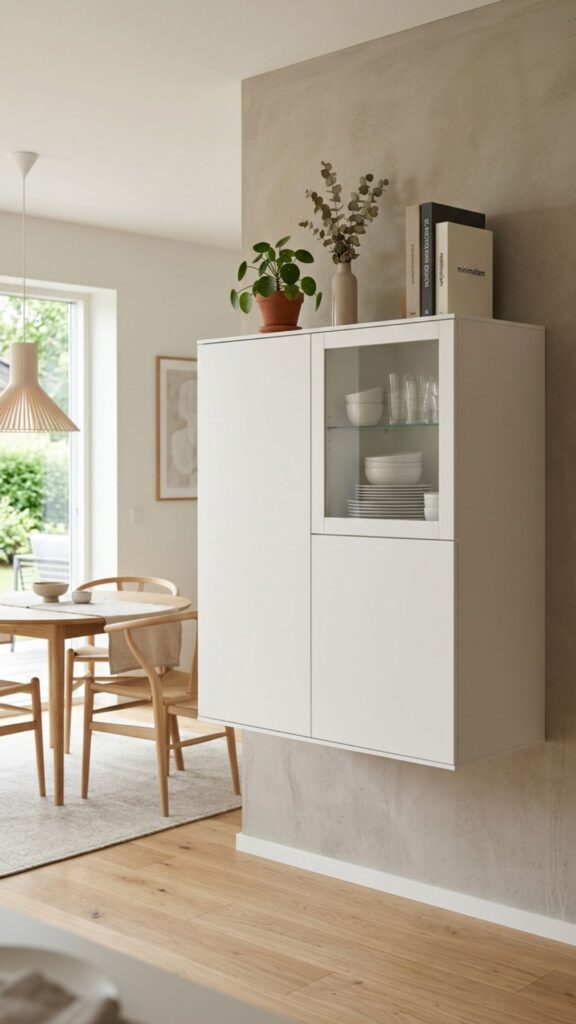
A floating dining room cabinet — mounted directly to the wall with no legs — is one of the best choices for a tight space. It keeps the floor visible, which makes the room feel larger, and puts storage at a comfortable height without taking up any floor real estate.
Choose a floating cabinet with push-to-open doors for a clean, handle-free look. A depth of 10 to 12 inches is enough for stacked plates, glasses, and serving pieces. Mount it at around 48 to 54 inches from the floor so it doubles as a display surface for plants, art, or decorative objects.
3. Corner Cabinet
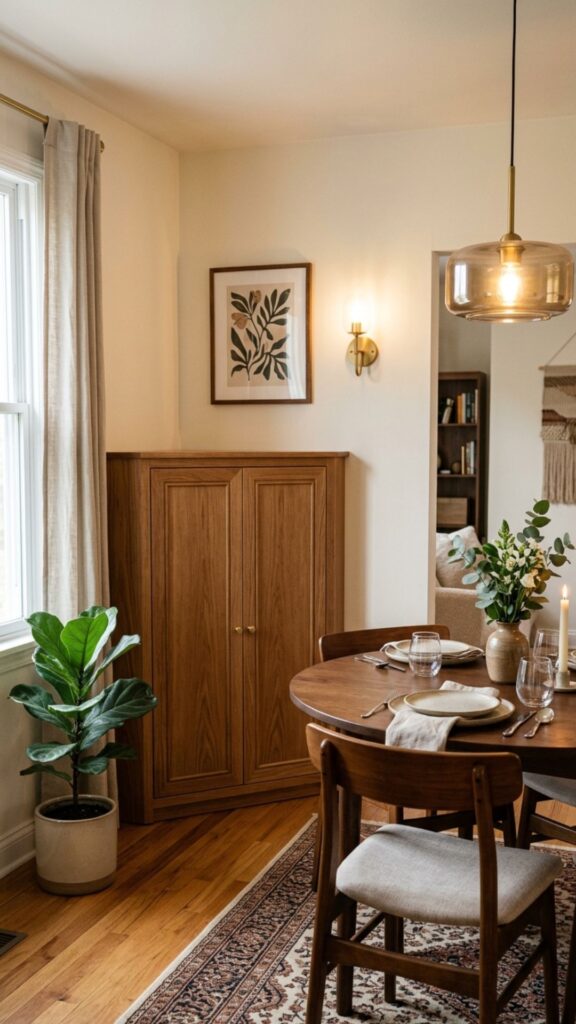
Corners are almost always wasted in small dining rooms. A corner cabinet — either a freestanding unit or a built-in style — turns that awkward space into practical, enclosed storage without touching the main wall space you need for furniture.
Triangular corner cabinets fit flush into right-angle corners and come in both tall and half-height versions. The taller versions add vertical storage for items you don’t need every day; the lower ones double as a corner serving surface during meals or gatherings.
4. Hutch with Upper Glass Doors
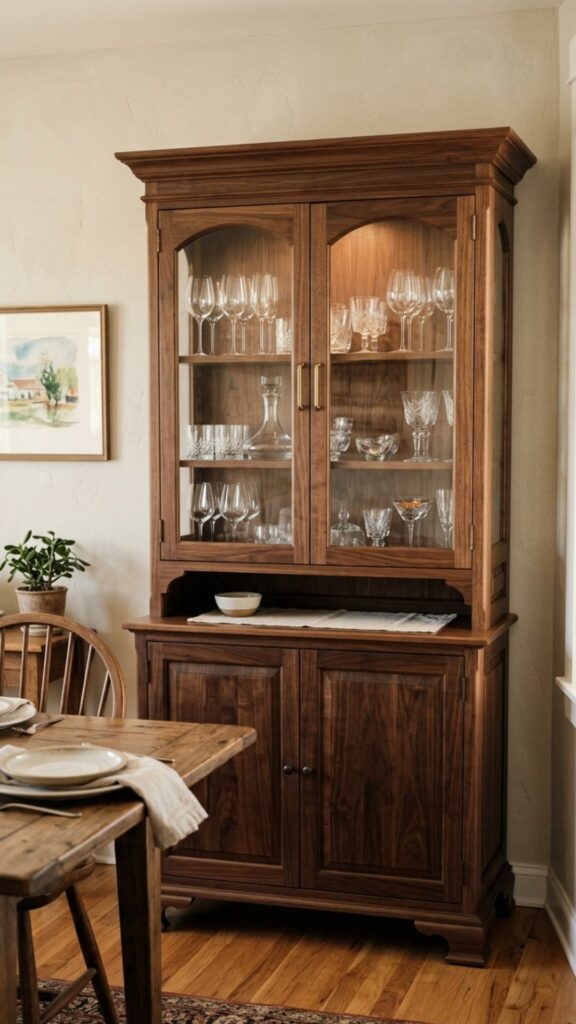
A dining room hutch pairs a lower cabinet with an upper display section — often with glass-fronted doors — and does serious storage work in a compact footprint. The glass panels keep the upper section from feeling heavy, and the combination of open display and closed storage gives you flexibility.
Use the closed lower cabinet for bulky or less attractive items — extra linens, serving platters, appliances — and the upper section for glassware, china, or anything worth showing off. A hutch that’s 36 inches wide fits comfortably even in modest dining rooms.
5. Built-In Banquette with Hidden Storage
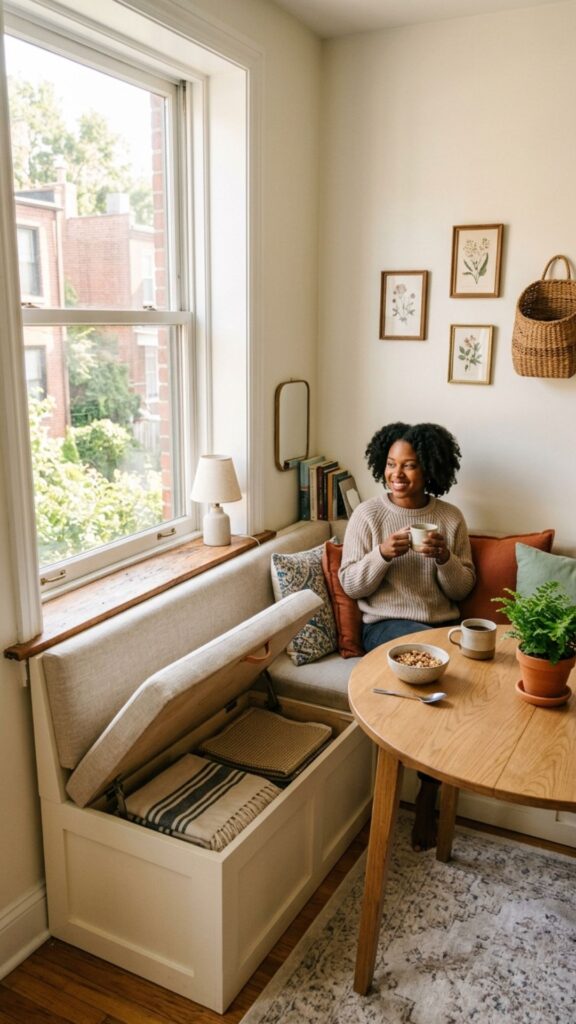
If your small dining room includes bench seating, that bench can double as a dining room cabinet. Built-in banquettes with lift-up seats or pull-out drawers underneath offer a surprising amount of storage in a footprint you’re already using.
This works especially well in kitchen-dining combinations where every inch of dedicated storage counts. Store placemats, napkins, candles, and extra table accessories inside — items you reach for regularly but don’t need out on display.
6. Narrow Tall Cabinet
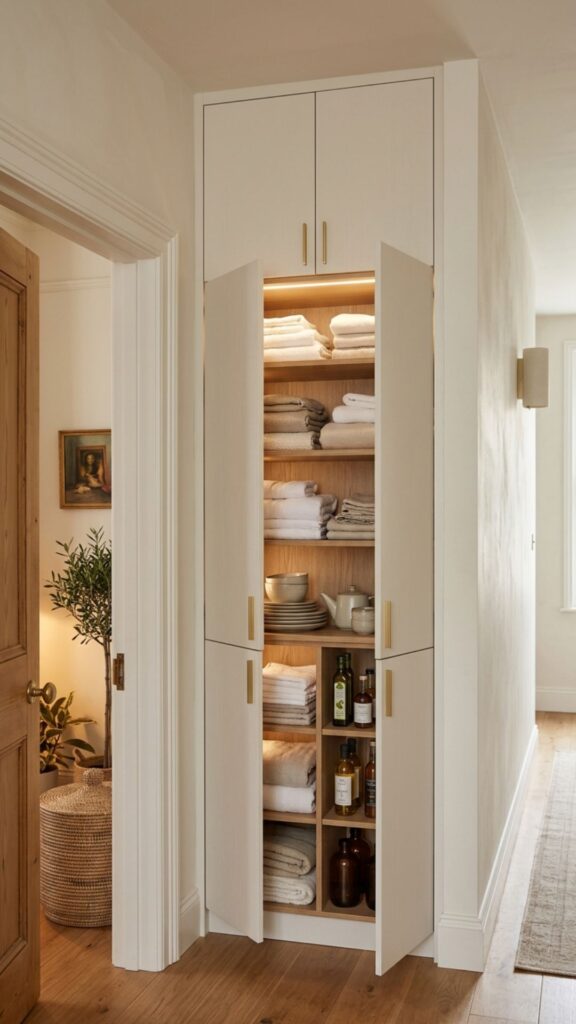
A tall, narrow cabinet — sometimes called a pantry cabinet or accent cabinet — stores a lot in a small floor area. At 12 to 18 inches wide and 70 to 80 inches tall, it uses vertical space efficiently and can hold everything from wine bottles to serving dishes to table linens.
Look for adjustable interior shelves so you can reconfigure the space as your needs change. Position it beside a doorway or in a shallow alcove where it won’t interrupt the natural flow of the room. Painted in the same color as your walls, it virtually disappears while still doing its job.
7. Buffet Table with Cabinets Below
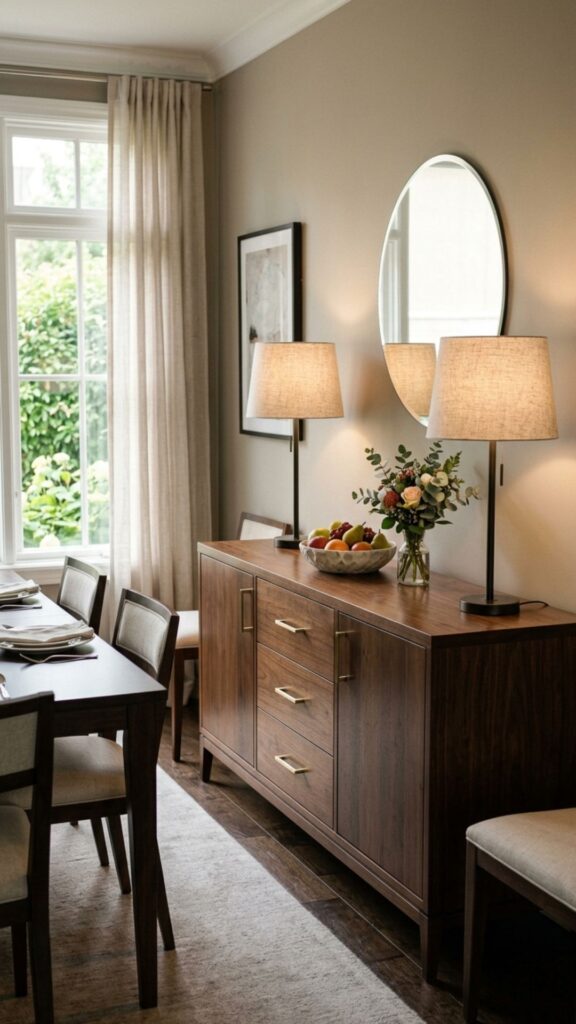
A buffet is a lower, longer version of a sideboard — typically 32 to 36 inches tall — that’s specifically designed for dining rooms. The low profile keeps sightlines open across the room, and the cabinet space below the surface handles overflow storage with ease.
Choose one with at least two cabinet doors and a couple of shallow drawers. The surface works perfectly for serving food during gatherings, displaying a vase or lamp, or laying out drinks at a dinner party. At 30 inches deep or less, it fits in most dining rooms without blocking movement.
8. Open Shelving Unit
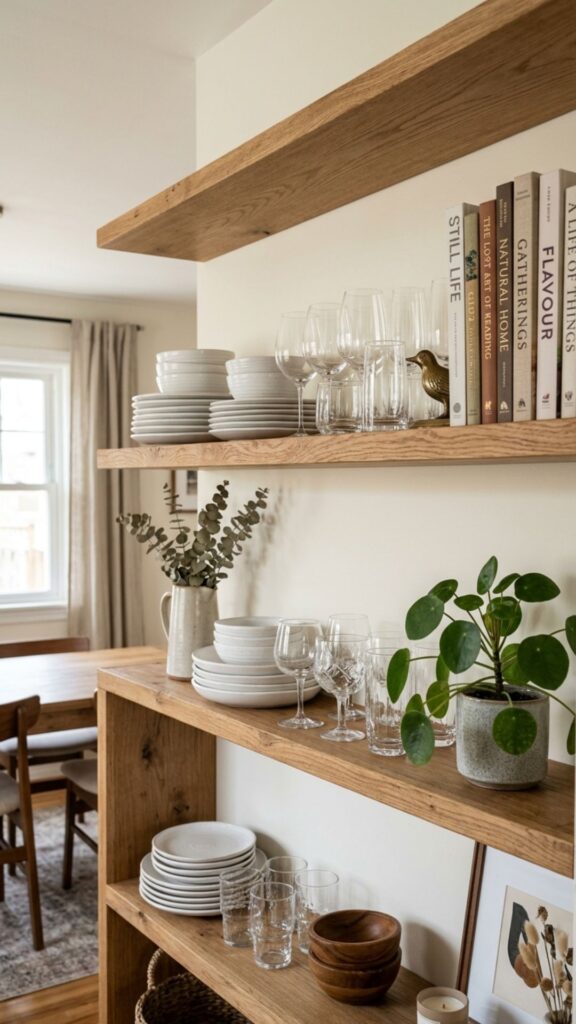
Open shelves aren’t technically a cabinet, but a shelving unit styled well functions just like one — with the added benefit of making the room feel more open and airy. In a small dining room, a tight grouping of open shelves holds as much as a closed cabinet while keeping the walls from feeling heavy.
Style shelves with a mix of practical items and decorative ones: stacked plates, glassware, a small plant, a few books. Keep the arrangement tight and deliberate — open shelving in a small room shows everything, so editing what you display matters.
9. Cabinet with Mirror Backing
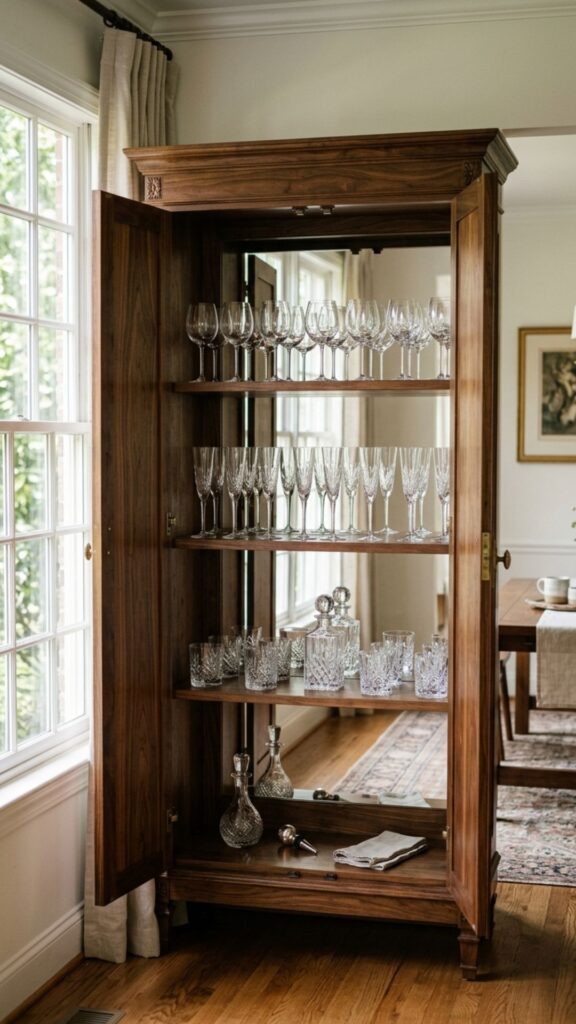
A dining room cabinet with a mirrored back panel reflects light and makes the room feel twice as large. This works particularly well for open-fronted cabinets or hutch-style pieces where the back is visible.
You can add adhesive mirror panels to the back of an existing open cabinet as an inexpensive upgrade. The effect is especially dramatic when the cabinet sits opposite a window — the reflected natural light bounces through the space and lifts the entire room.
10. Rolling Bar Cart as a Mini Cabinet
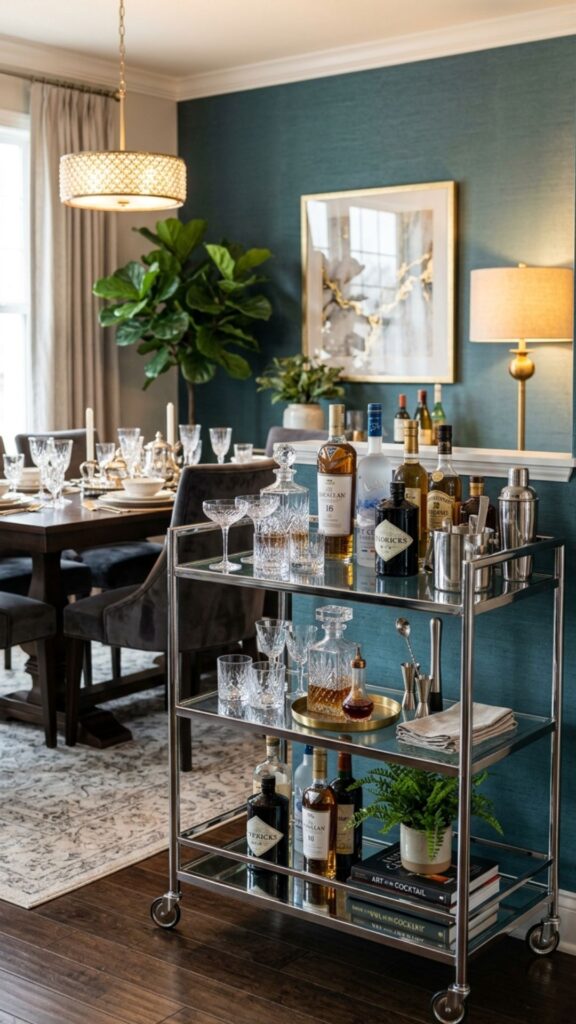
A bar cart on casters functions as a mobile dining room cabinet — one you can roll to wherever it’s needed and tuck away when it’s not. It stores bottles, glassware, and serving accessories while taking up very little permanent floor space.
Choose a two- or three-tier cart with a rail around the edges to keep items from sliding. A matte black or brass finish reads as polished and intentional rather than makeshift. When you’re not entertaining, park it in a corner or behind the dining table where it stays accessible but out of the way.
11. Recessed Alcove Cabinet
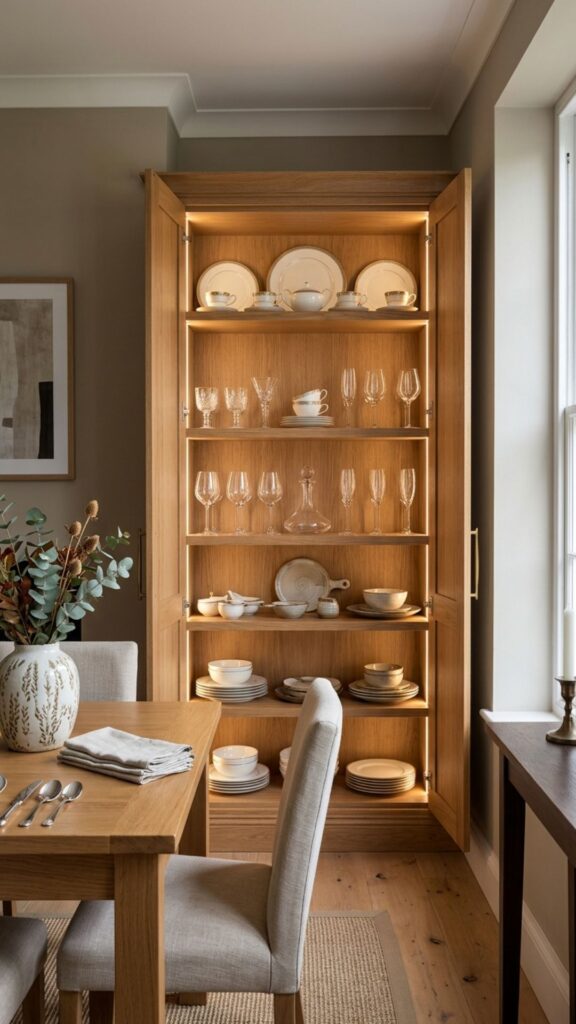
If your dining room has an existing alcove or recessed wall niche, fitting a custom or semi-custom cabinet into that space is one of the most space-efficient moves you can make. The cabinet sits flush with the surrounding walls, so it takes up zero usable floor area.
Even a shallow 10-inch-deep alcove cabinet holds a significant amount. Add interior lighting — a simple plug-in LED strip works well — and the cabinet becomes a feature of the room rather than just a storage solution.
12. Fold-Down Wall Cabinet
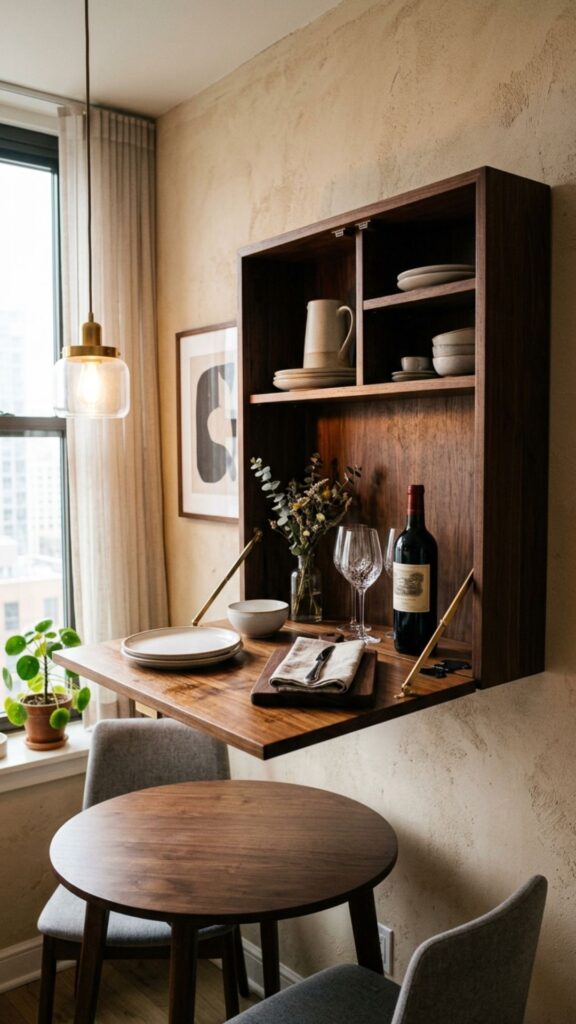
A fold-down cabinet mounts flush to the wall when closed and opens outward to create a small shelf or serving surface. It’s the storage equivalent of a Murphy bed — compact when not in use, surprisingly functional when open.
These work best in very tight dining rooms or kitchen-dining combinations where permanent furniture isn’t practical. Use the folded-down surface for serving during meals and fold it back up to reclaim the wall space afterward. Look for models with interior storage behind the door panel.
13. Under-Stair Cabinet
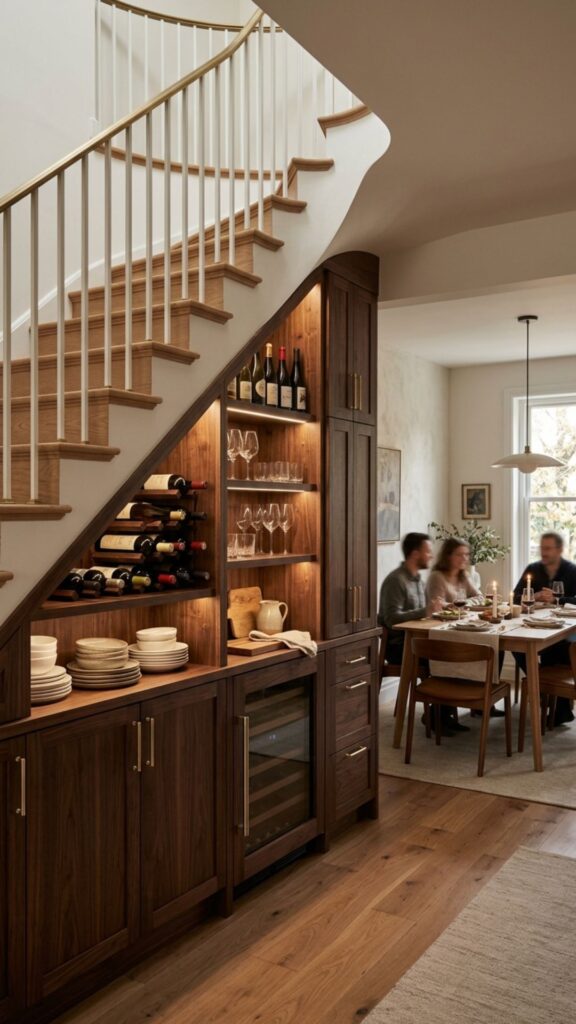
If your dining room sits adjacent to a staircase, the space beneath the stairs is prime real estate for a built-in dining room cabinet. Customized cabinetry can follow the slope of the stairs exactly, using every cubic inch of that otherwise wasted space.
Even without a full custom build, freestanding cabinets sized to fit the tallest part of the under-stair space work well. Store wine, extra crockery, or table accessories there — it keeps the main dining room surfaces clear and gives you significant storage without touching the room’s usable floor space.
14. Display Cabinet with Closed Base
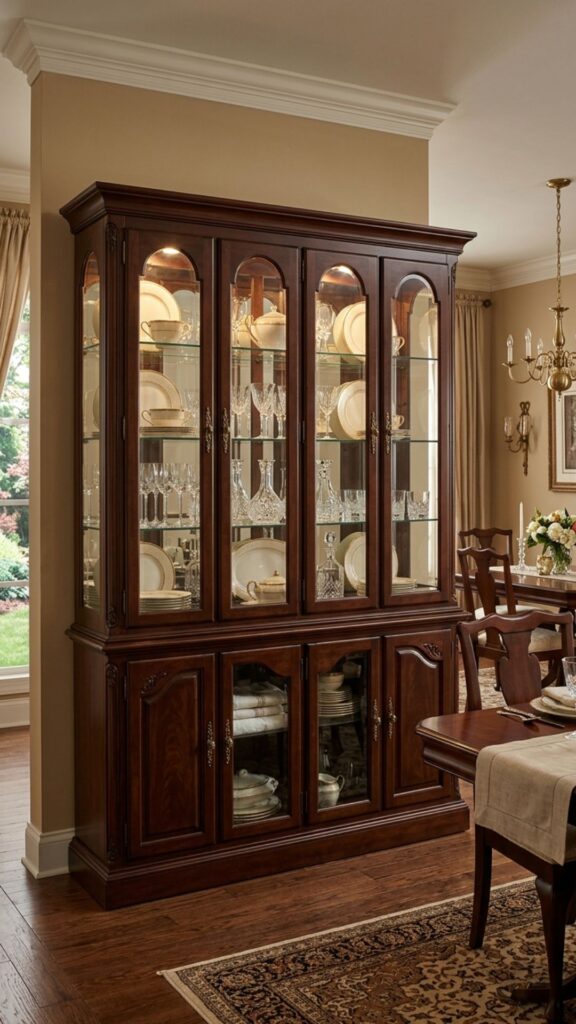
A display cabinet with glass-fronted upper doors and solid lower cabinet panels is a refined, practical choice for small dining rooms. The glass top section shows off your best pieces; the closed lower section hides what doesn’t need to be seen.
Choose a cabinet no wider than 36 to 42 inches if space is limited — this keeps it from overwhelming the wall. A cabinet in a warm wood tone or painted in a deep, saturated color can become the visual anchor of the room without demanding extra floor space.
15. Repurposed Bookcase as a Cabinet
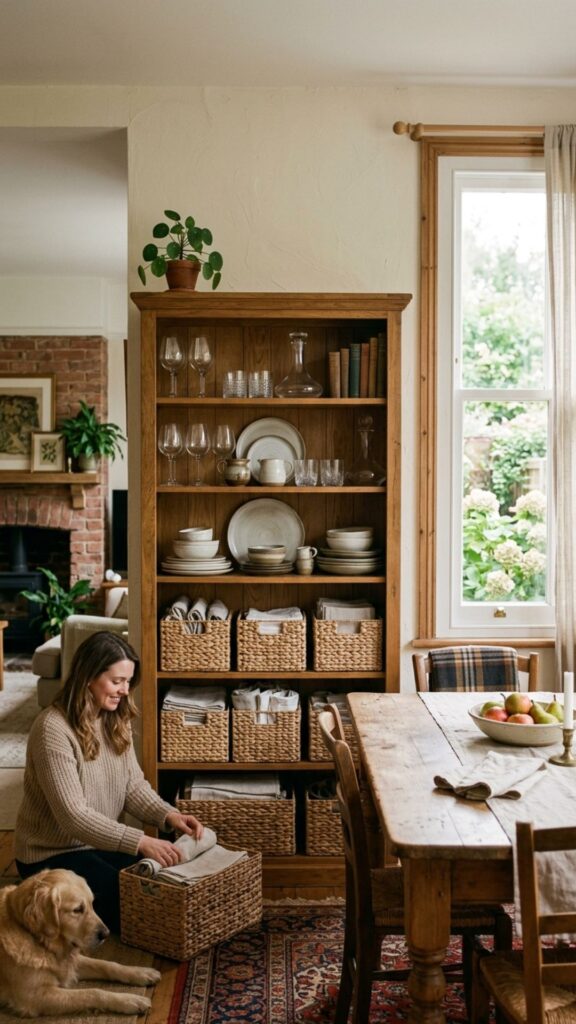
A standard bookcase — repurposed for dining room storage — is one of the most affordable ways to add cabinet-style storage to a small space. Add baskets or bins to the lower shelves to create closed storage; leave the upper shelves open for display.
An IKEA Billy bookcase with Oxberg doors is a popular and practical option that costs a fraction of purpose-built dining room cabinetry. Paint it to match your walls for a built-in effect, or use it as-is if you prefer a more casual, layered look.
16. Credenza with Tapered Legs
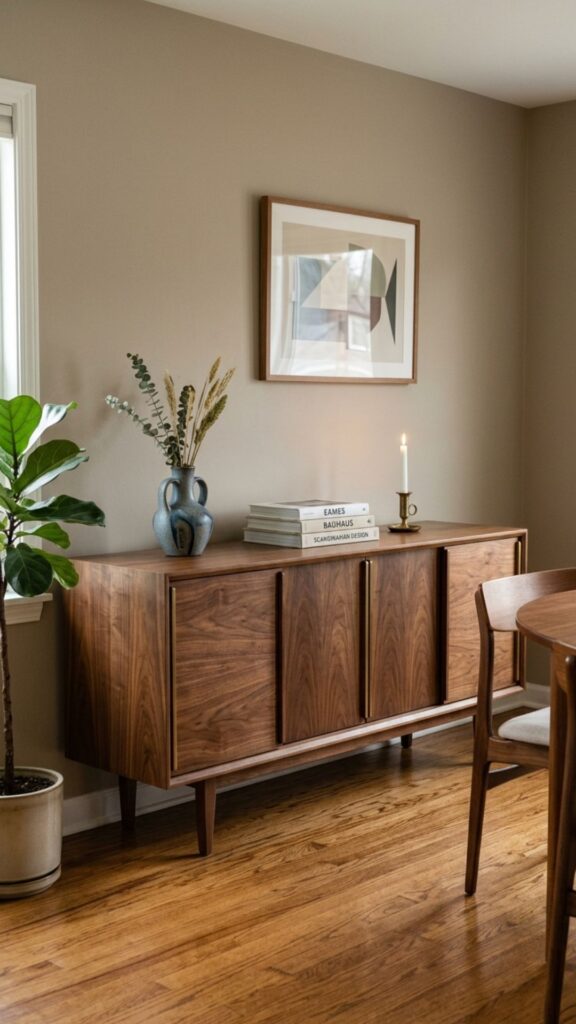
A mid-century credenza sits lower to the ground — typically 24 to 30 inches — and rests on tapered or hairpin legs that lift it off the floor visually. That visible gap between the base and the floor makes the piece feel lighter and the room feel larger.
Look for a credenza with a mix of drawer and cabinet storage. The long, low profile makes it ideal for dining rooms where wall height is limited or where you want to keep the overall furniture scale low and unobtrusive. It also works as a TV stand if your dining and living areas share a room.
17. Pegboard Cabinet Panel
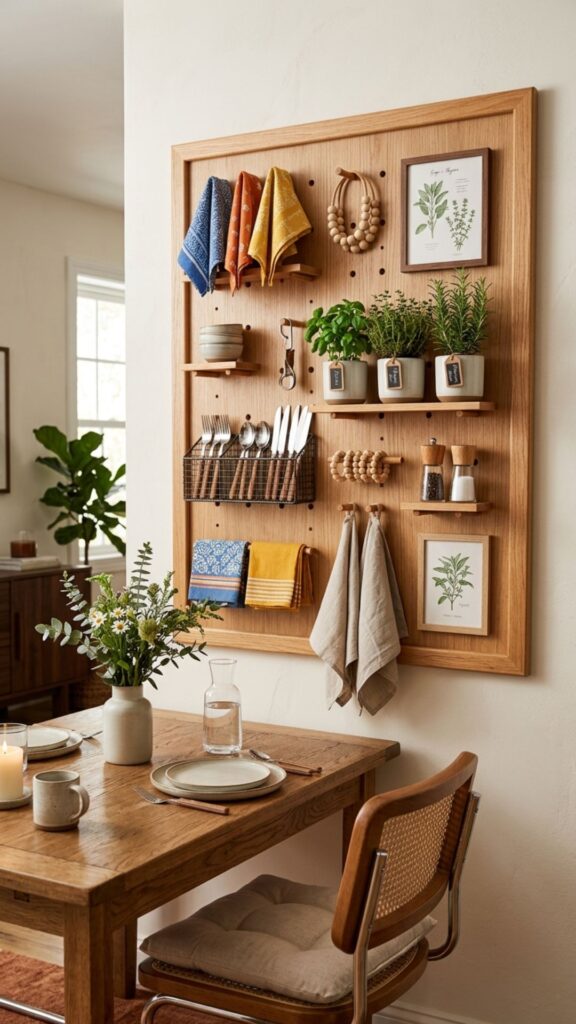
A pegboard mounted on the wall and fitted with hooks, small shelves, and bins acts as a flexible open cabinet system. In a small dining room, a pegboard panel can hold everything from wine glasses to serving utensils to decorative pieces — all without taking up floor space.
Frame the pegboard with simple wood trim and paint it a single color to make it look more intentional and less workshop-like. Rearrange hooks and shelves as your storage needs change — the flexibility is one of its biggest practical advantages.
18. Ottoman with Tray Top
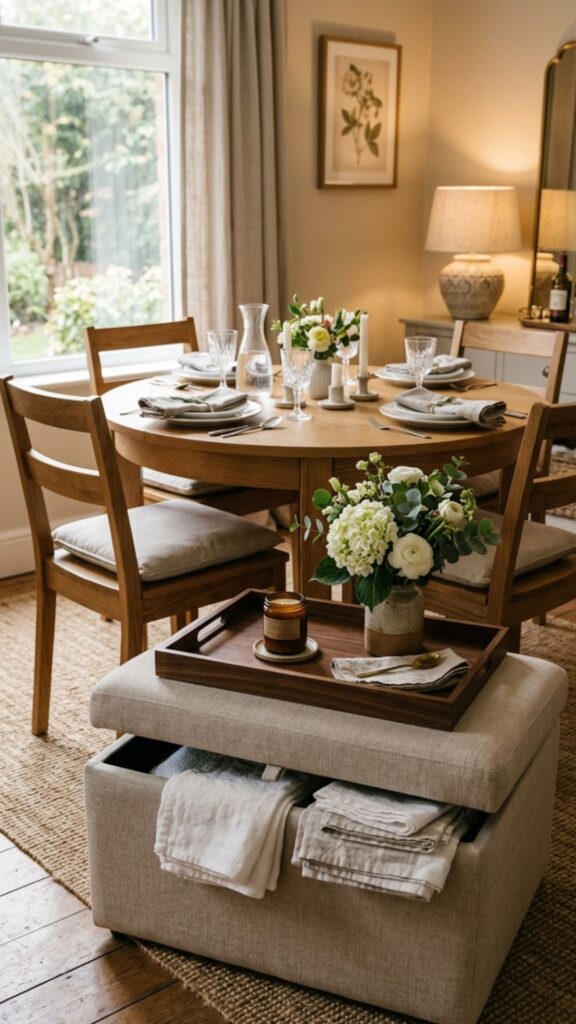
An upholstered ottoman with a removable tray top serves as both extra seating and a small surface cabinet in dining rooms that double as multipurpose spaces. Inside the ottoman, you store linens, candles, or anything table-related; the tray top holds items during use.
This works best in open-plan spaces where the dining area shares square footage with a sitting area. Choose an ottoman in a fabric that complements both zones — a neutral linen or a textured boucle reads equally well at a dining table and in a living room setting.
19. Two-Tone Cabinet for Visual Interest
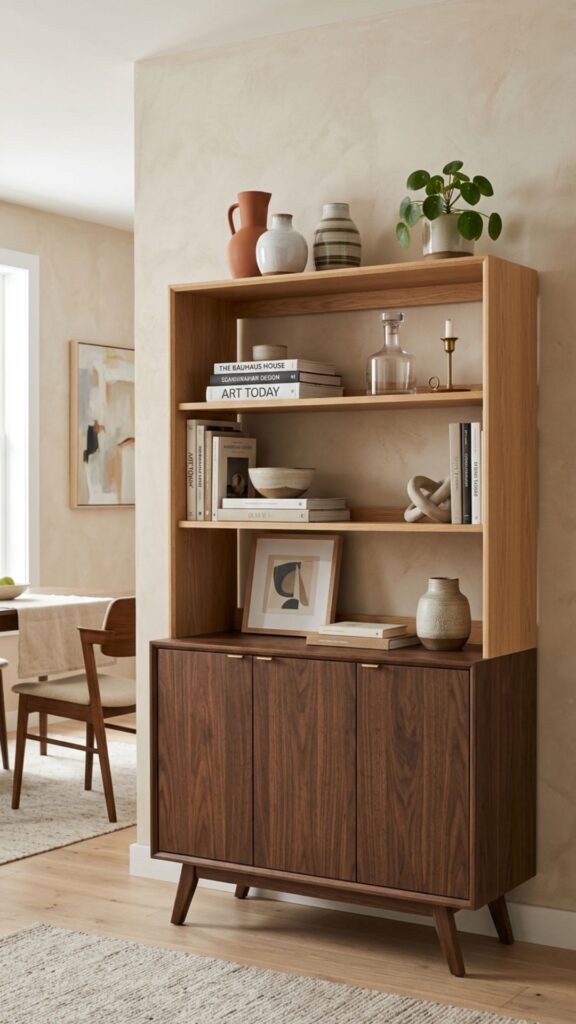
A dining room cabinet painted in two tones — a darker base and a lighter upper section, or vice versa — draws the eye and adds depth to a small room without adding visual bulk. The color contrast makes the cabinet feel more like a piece of furniture and less like a box of storage.
Try a cabinet with navy or forest green lower doors paired with natural wood upper shelving. This keeps the piece grounded at the bottom while staying light at the top — a combination that suits small rooms particularly well. The two-tone effect also works with wallpaper-backed upper sections if you want more pattern.
20. Mirrored Cabinet Door Panels
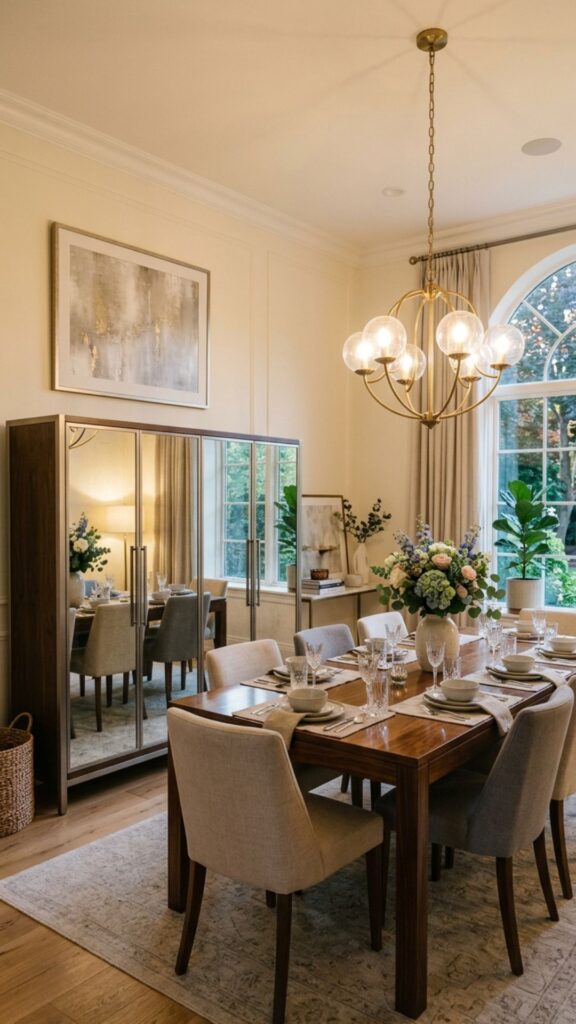
A dining room cabinet with mirrored door panels does double storage-and-design duty. The closed doors hide clutter while the mirror faces out, reflecting the room and amplifying whatever light is available — natural or artificial.
This is a smart upgrade for small dining rooms that lack windows or feel dim. Choose mirrored panels with a beveled edge or aged finish for a more elegant result; flat, frameless mirrors can look clinical in a dining context. Pair with warm lighting nearby to maximize the reflective effect.
21. Multi-Function Console Cabinet
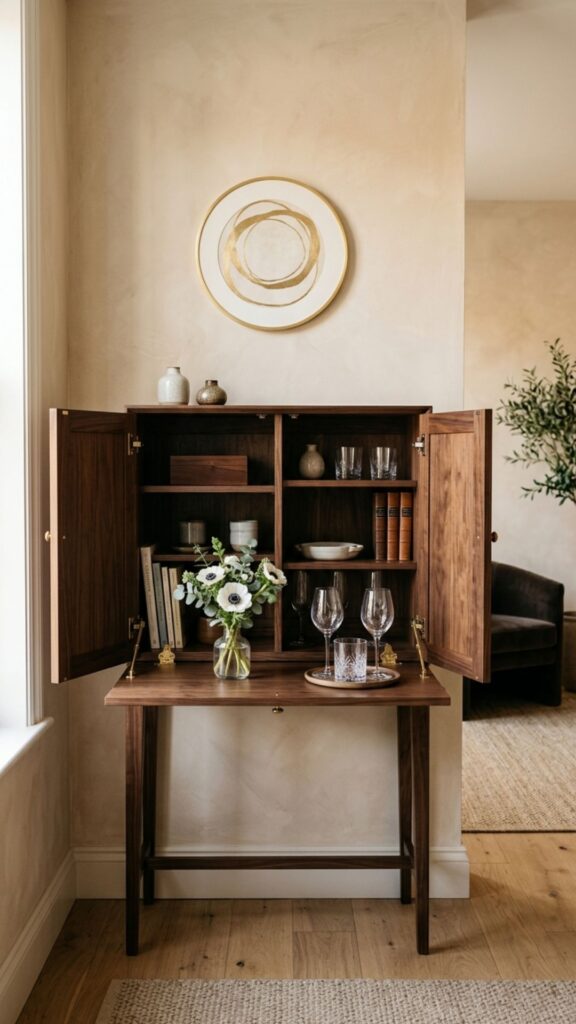
A console cabinet — tall and narrow, with doors and possibly a fold-out interior surface — combines the footprint of a side table with the storage of a small wardrobe. In a compact dining room, it tucks into a corner or against a wall and stores a surprising amount.
Some console cabinets include a fold-down shelf that creates a temporary serving surface when the doors open — useful if you don’t have a sideboard. At 14 to 16 inches deep, these pieces clear most doorways and furniture without creating pinch points in a tight room.
Conclusion
A small dining room doesn’t have to mean limited storage. The right dining room cabinet — whether it’s a slim sideboard, a wall-mounted floating unit, or a corner hutch — adds function without shrinking the space further. The key is matching the cabinet’s scale and depth to your room, not just its style.
Start by measuring your available wall space and noting your ceiling height. Then pick two or three ideas from this list that match your room’s layout and your storage priorities. If you entertain regularly, prioritize surface space. If you need enclosed storage, lean toward hutches or cabinets with solid doors. The right choice is always the one that solves your specific problem — not just the one that looks best in a catalog.
What size dining room cabinet works best in a small space?
For small dining rooms, look for a cabinet that’s no deeper than 15 to 18 inches and no wider than 42 inches. A depth of 12 inches is sufficient for most dining storage needs — plates, glasses, and serving pieces — and keeps the piece from projecting too far into the room.
What’s the difference between a sideboard, a buffet, and a hutch?
A sideboard and a buffet are similar — both are low, wide storage pieces for dining rooms, though buffets tend to be slightly lower and longer. A hutch adds an upper section with shelves or glass-fronted doors on top of a lower cabinet base, giving you more total storage in the same floor footprint.
How do I make a dining room cabinet look built-in without a renovation?
Paint the cabinet the same color as your walls and extend the color slightly onto the wall behind and beside it. Add crown molding along the top to connect it visually to the ceiling. These two moves — color matching and molding — make a freestanding piece look intentionally built-in at a fraction of the cost.
Can I use a dining room cabinet in an open-plan space?
Yes — a dining room cabinet works well in open-plan spaces when it defines the dining zone. Position it along the wall that backs the dining table, so it visually anchors the eating area within the larger floor plan. Choose a piece whose finish relates to both the dining furniture and the adjacent living furniture to keep the overall space cohesive.