Picking the right floor for your bathroom feels harder than it should. You want something that looks great, handles splashes without complaint, and won’t turn slippery the moment you step out of the shower.
After years of helping homeowners renovate their spaces, I’ve seen which materials hold up and which ones disappoint within a season.
This guide walks you through 21 bathroom flooring ideas worth considering. You’ll learn which options resist water best, which ones feel warm underfoot, and how to match a floor to your budget and style. By the end, you’ll know exactly where to start.
1. Porcelain Tile for Everyday Durability
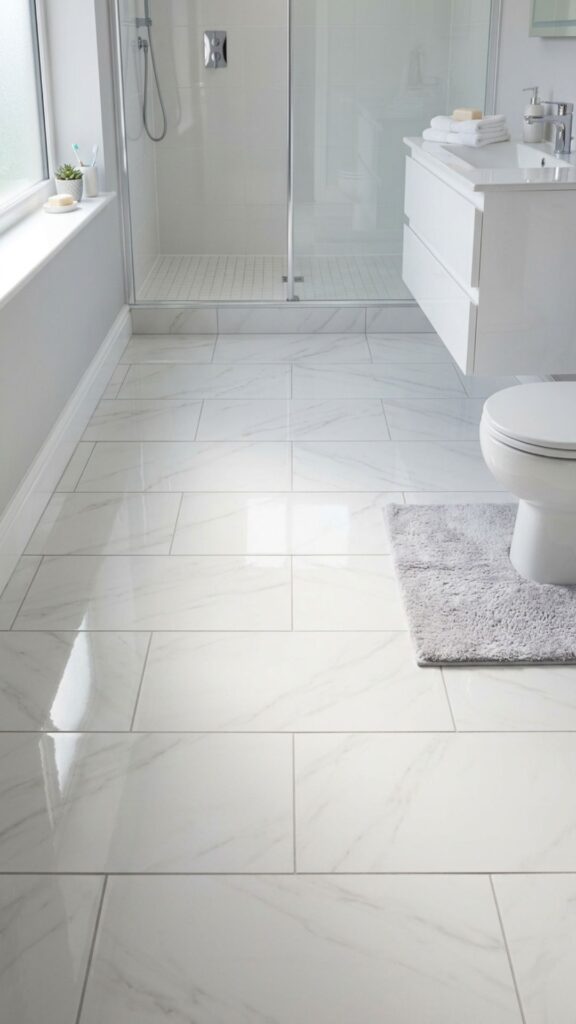
Porcelain tile remains the gold standard in bathrooms, and for good reason. It’s fired at high temperatures, which makes it denser and less porous than ceramic. That means water rolls right off, stains struggle to set in, and the surface shrugs off daily wear.
You’ll find porcelain in nearly endless finishes, from polished marble looks to matte concrete tones. If you have kids or pets, the low maintenance alone makes it worth a closer look. A quick mop keeps it spotless for years.
2. Ceramic Tile on a Budget
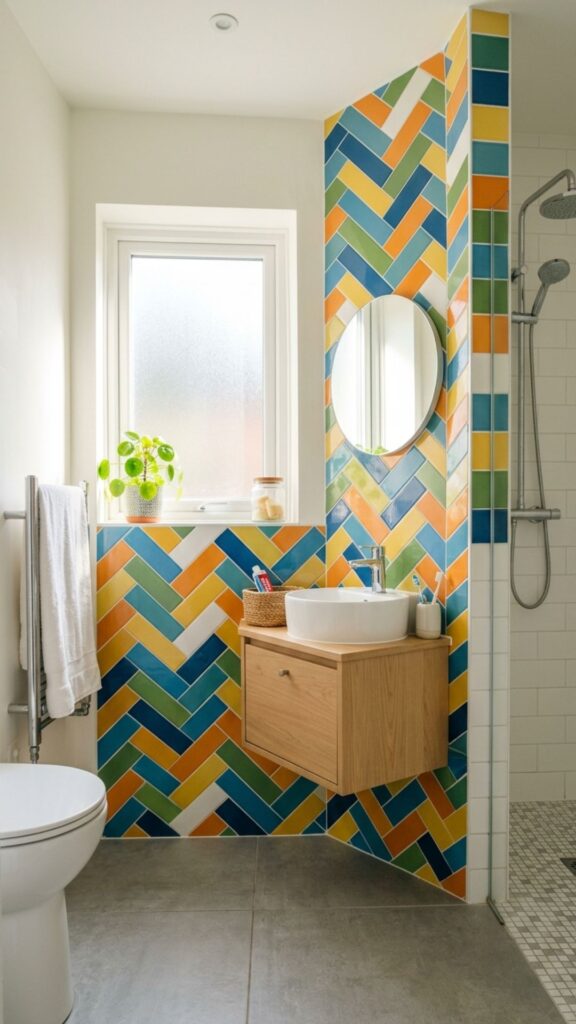
Ceramic tile gives you a similar tiled look for less money. It’s softer than porcelain and a touch more absorbent, so it suits guest bathrooms or powder rooms better than a busy family bath. Still, properly glazed ceramic handles moisture well.
The real win here is variety. You can mix colors, play with patterns, and create a custom look without stretching your wallet. Just seal the grout lines and you’ll avoid most upkeep headaches.
3. Luxury Vinyl Plank That Mimics Wood
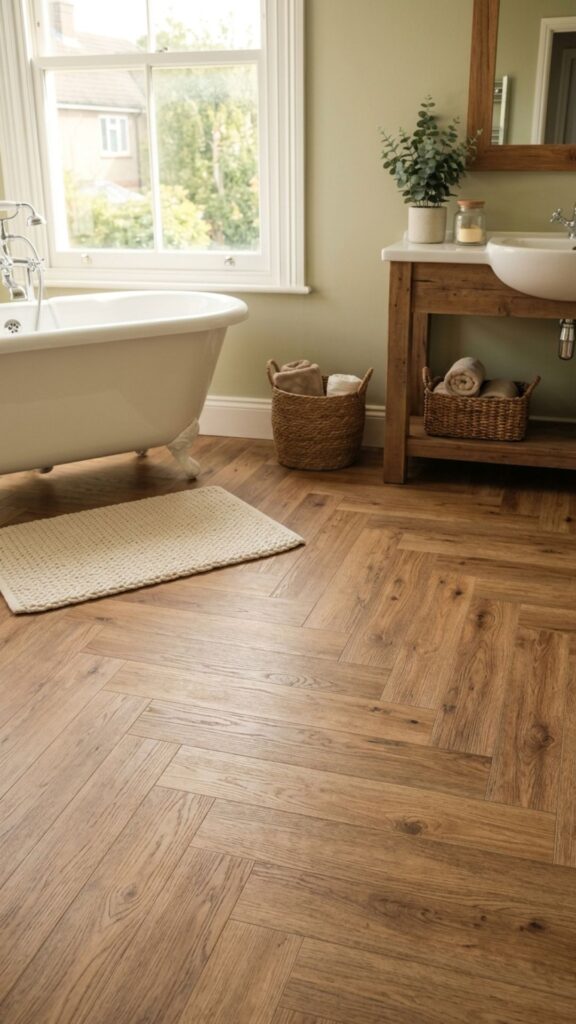
Luxury vinyl plank (LVP) has changed the game for people who love the warmth of wood but fear water damage. These planks click together over a waterproof core, so spills and steam don’t faze them. Up close, the wood-grain texture is surprisingly convincing.
LVP also feels softer and warmer underfoot than tile, which is a small comfort on cold mornings. Installation is forgiving enough that confident DIYers can handle it over a weekend.
4. Sheet Vinyl for Seamless Protection
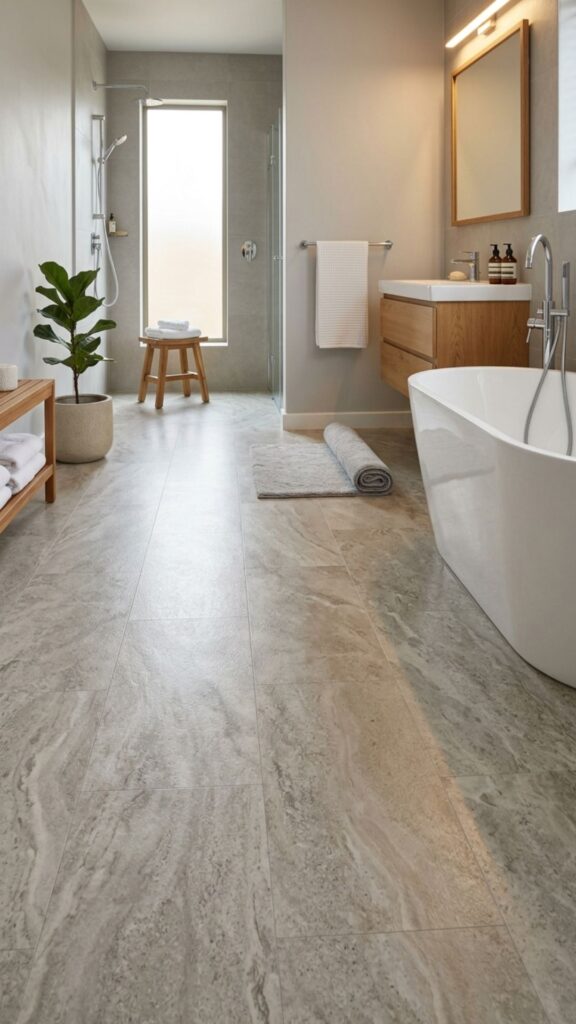
Sheet vinyl comes in large rolls, which means fewer seams for water to sneak through. That makes it one of the most reliable choices for full bathrooms and laundry areas. It’s also one of the most affordable.
Today’s sheet vinyl looks nothing like the dated styles of decades past. You’ll find realistic stone, tile, and wood prints that hold up beautifully. For a quick, practical refresh, it’s hard to beat.
5. Natural Stone for Timeless Elegance
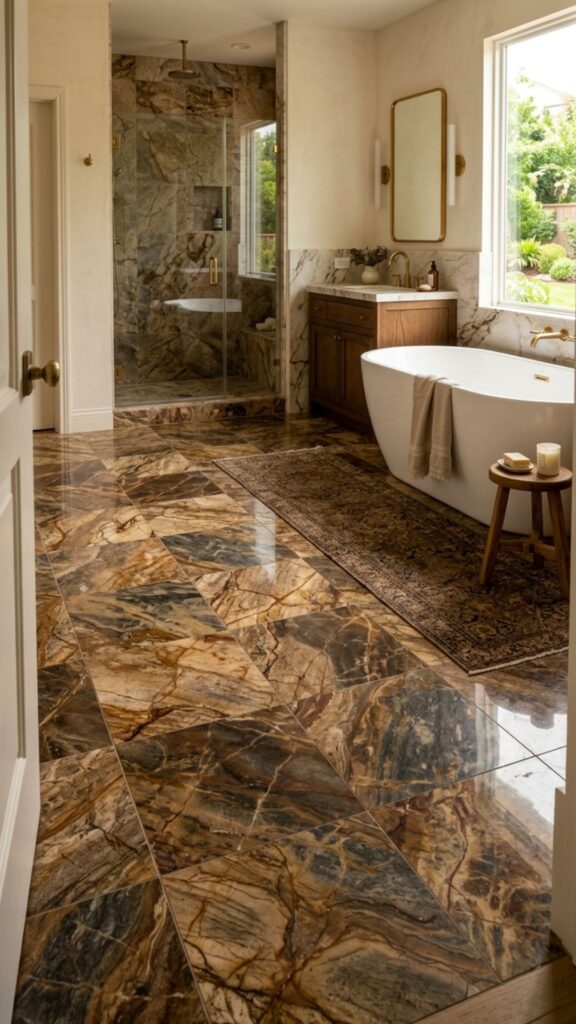
Natural stone like marble, travertine, or slate brings a richness no manufactured material quite matches. Each tile carries its own veining and color, so your floor becomes one of a kind. It instantly elevates the feel of a space.
Keep in mind that stone is porous and needs regular sealing to resist water and stains. The upkeep is real, but many homeowners decide the look is worth the extra care.
6. Slate Tile for a Slip-Resistant Surface
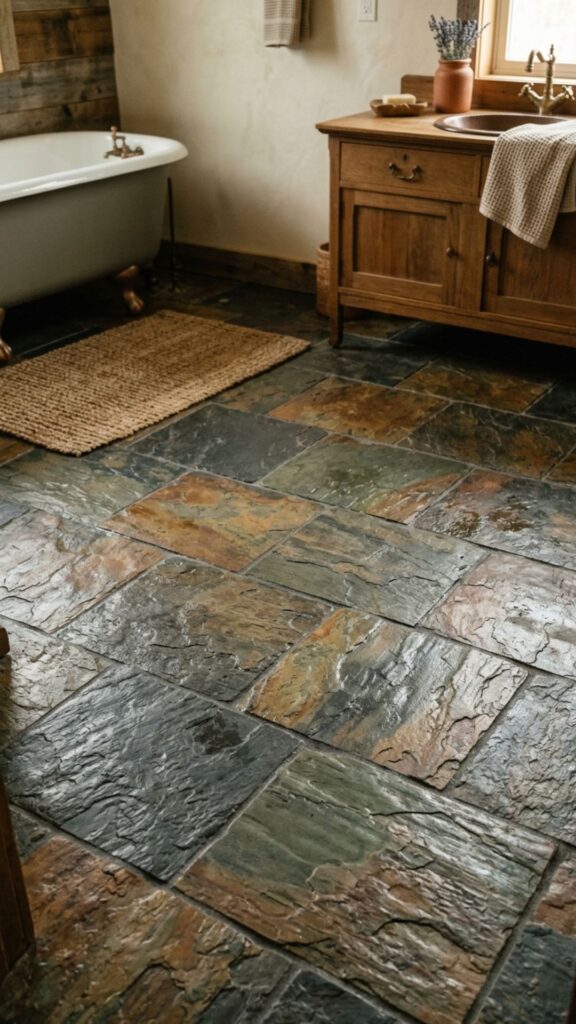
Slate stands out for its naturally textured surface, which offers better grip when wet. That’s a meaningful safety perk in a room where slipping is a genuine risk. The earthy gray, green, and rust tones add warmth too.
Like other stone, slate benefits from sealing. Once that’s done, it shrugs off moisture and lasts for decades. It pairs especially well with rustic and modern farmhouse designs.
7. Marble Tile for Spa-Like Luxury
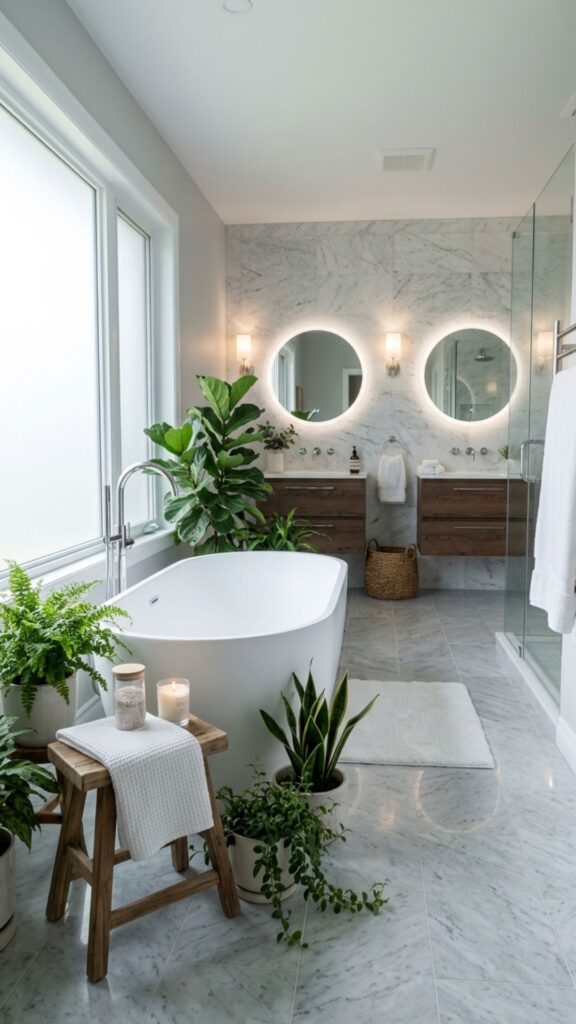
Marble turns an ordinary bathroom into a retreat. Its soft veining and cool surface feel undeniably high-end, which is why luxury hotels lean on it so often. A marble floor signals quality the moment you walk in.
It does demand attention. Marble scratches and etches from acidic products, so you’ll want to seal it and wipe spills quickly. If you treat it kindly, the payoff is a floor that looks stunning for years.
8. Pebble Tile for Underfoot Texture
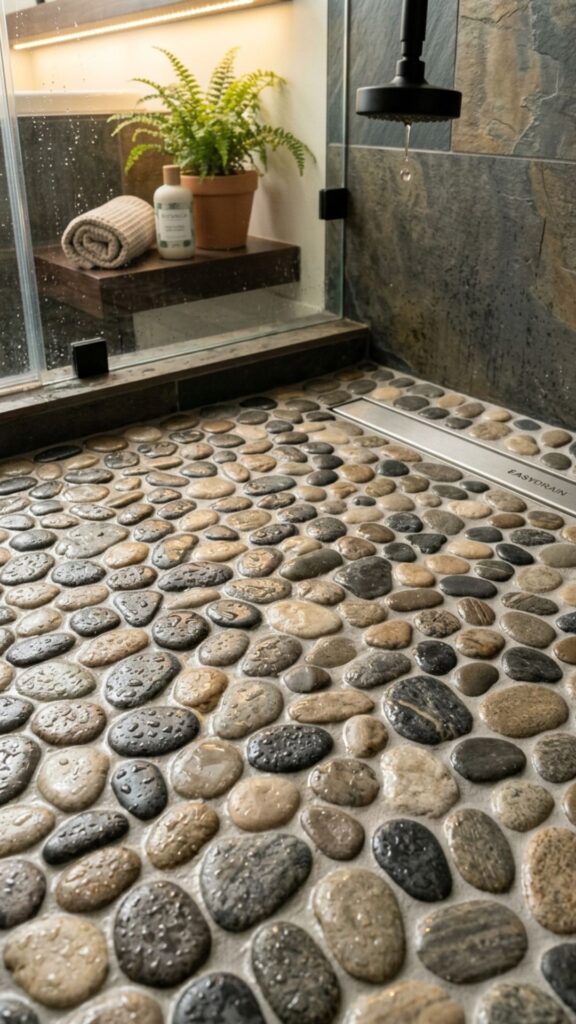
Pebble tile mounted on mesh sheets creates a riverbed feel that’s both beautiful and functional. The rounded stones massage your feet and provide solid traction in wet areas. Many people use it inside shower floors specifically.
The grout-heavy surface needs thorough sealing to stay clean, but the spa-like vibe is worth it. Pair it with neutral wall tile to let the texture shine.
9. Mosaic Tile for Detailed Style
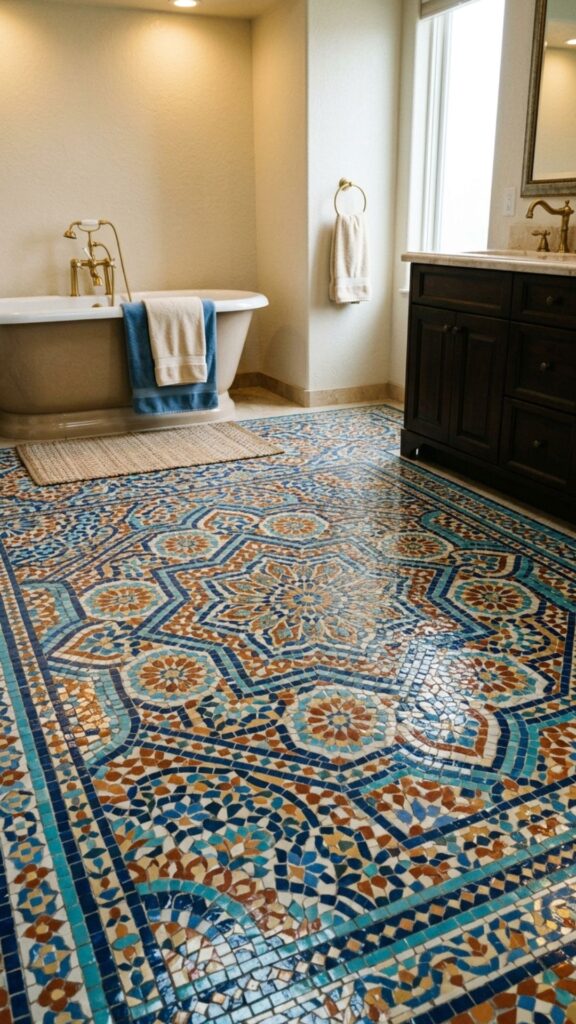
Mosaic tile lets you get creative with color, pattern, and shape. Small pieces follow contours easily, which makes them ideal for shower floors and decorative borders. You can go bold or keep things subtle.
Because mosaics include so many grout lines, they grip well underfoot. Choose a stain-resistant grout and the maintenance stays manageable. It’s a smart way to add personality without overhauling the whole room.
10. Engineered Hardwood With a Protective Finish
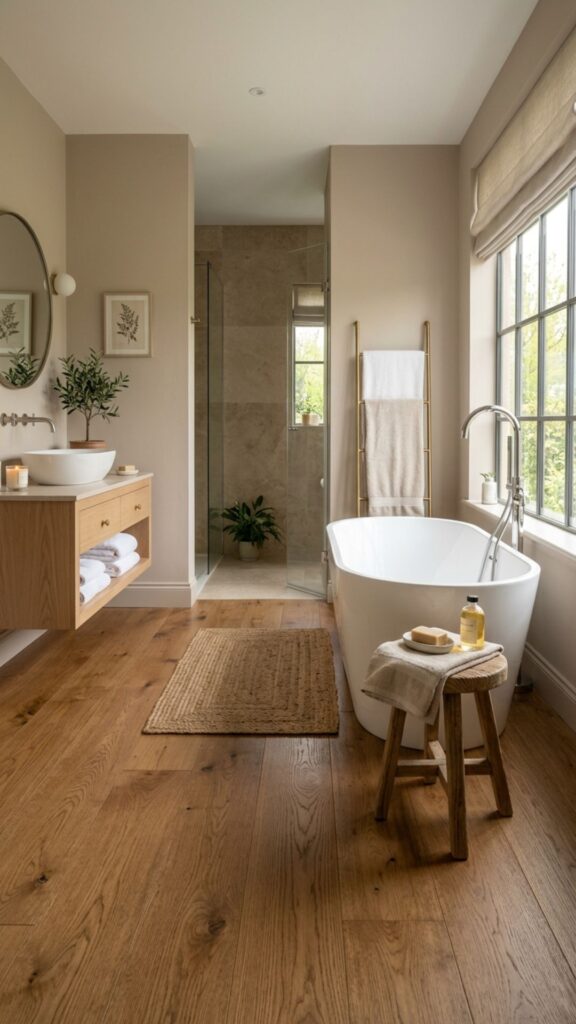
Engineered hardwood layers real wood over a stable plywood base, which handles humidity better than solid planks. In a well-ventilated bathroom, it brings genuine warmth and natural beauty that vinyl only imitates.
You’ll still want to manage moisture carefully and wipe up standing water fast. It’s best suited to half baths or larger bathrooms with strong ventilation rather than steamy, high-traffic spaces.
11. Cork Flooring for Warmth and Comfort
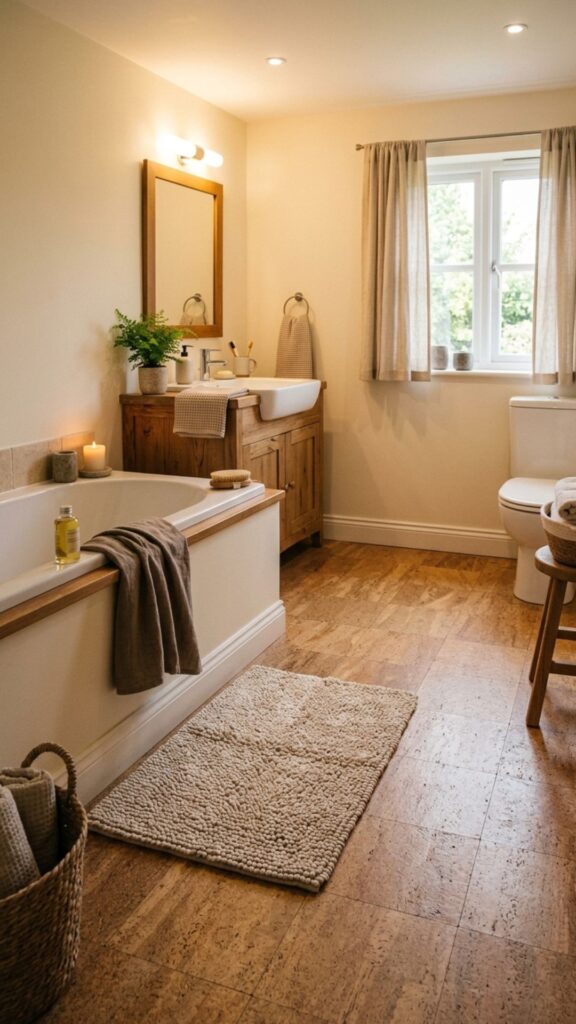
Cork is soft, warm, and naturally cushioned, which makes standing at the sink far more comfortable. It also resists mold and mildew thanks to a compound called suberin. That’s a real advantage in a damp room.
Cork does need a quality sealant to keep water out, and you’ll reseal it periodically. Once protected, it offers a cozy, eco-friendly surface that’s gentle on your joints.
12. Bamboo for an Eco-Friendly Choice
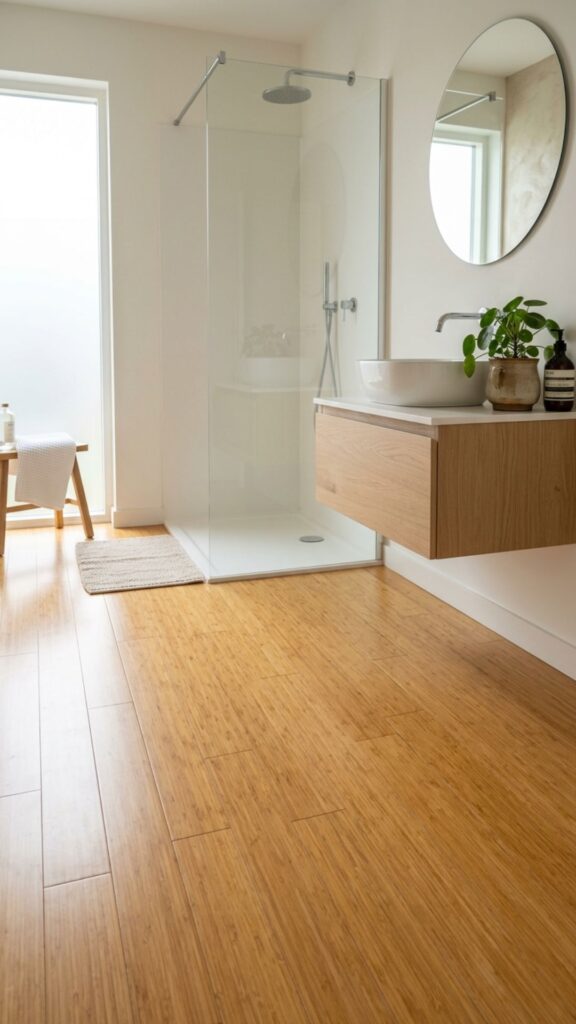
Bamboo grows quickly and renews fast, so it appeals to anyone watching their environmental footprint. Strand-woven bamboo is impressively hard and stable, holding up well to foot traffic.
Like wood, bamboo handles humidity best in ventilated spaces, and a strong finish is essential. Choose a reputable manufacturer to avoid lower-grade products that warp. Done right, it’s both sustainable and striking.
13. Polished Concrete for an Industrial Look
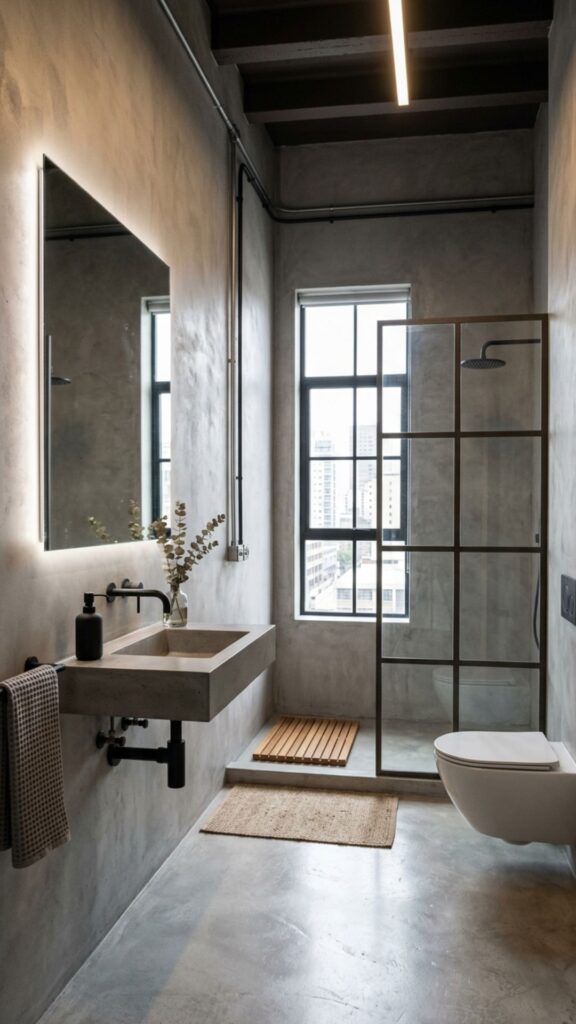
Polished concrete suits modern and industrial designs beautifully. It’s seamless, incredibly durable, and waterproof once sealed properly. There’s nothing for water to seep into, which simplifies cleaning.
You can stain or dye concrete in custom colors, so the look is more flexible than people expect. It does feel hard and cold, though, so many owners pair it with a heated underlay or soft bath mats.
14. Terrazzo for a Speckled Statement
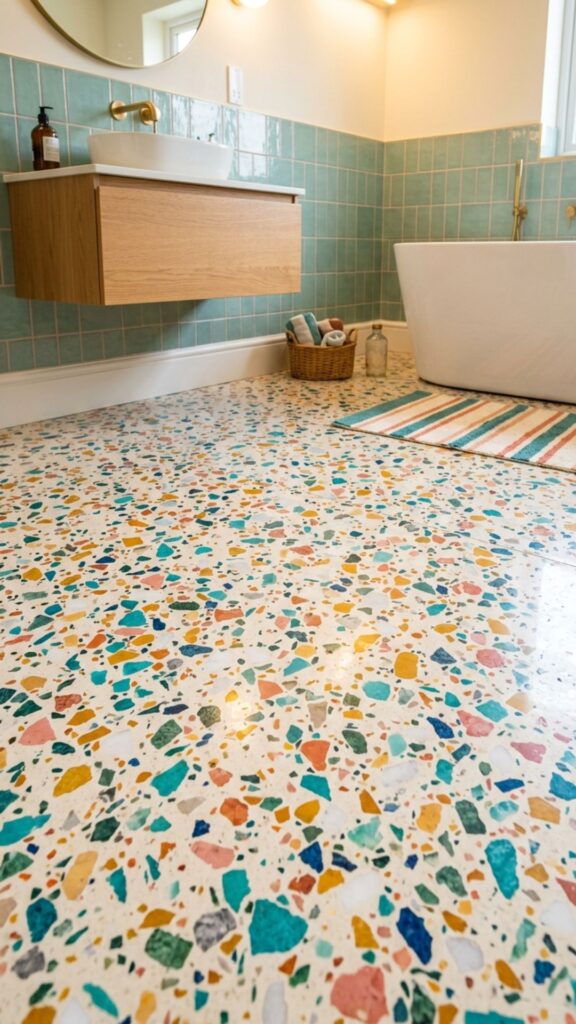
Terrazzo mixes chips of marble, glass, or quartz into a polished base, creating a playful speckled pattern. It’s making a major comeback in design-forward homes. The effect is fun, retro, and surprisingly versatile.
Beyond looks, terrazzo is tough and water-resistant when sealed. It hides minor dirt thanks to its busy surface, which keeps maintenance light. It’s a confident choice for anyone who wants something distinctive.
15. Patterned Encaustic Tile for Character
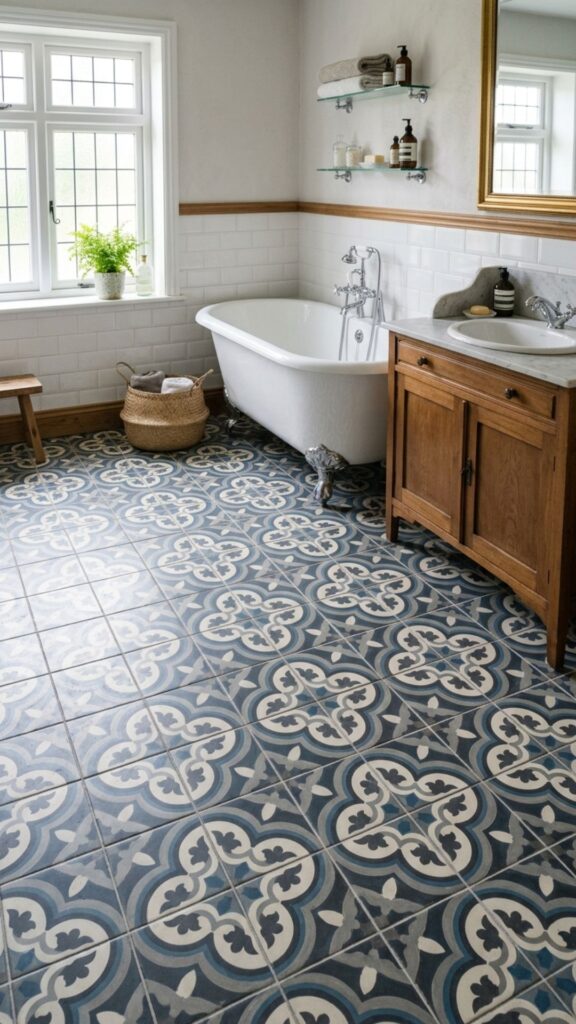
Encaustic tiles feature patterns made from colored cement rather than surface glaze, so the design runs deep into the tile. That means the bold geometric or floral motifs won’t wear away. They add instant personality.
These tiles are porous and need sealing, but they reward you with vintage charm few materials match. Use them on the floor as a feature, or extend them up a wall for a cohesive look.
16. Large-Format Tile for Fewer Grout Lines
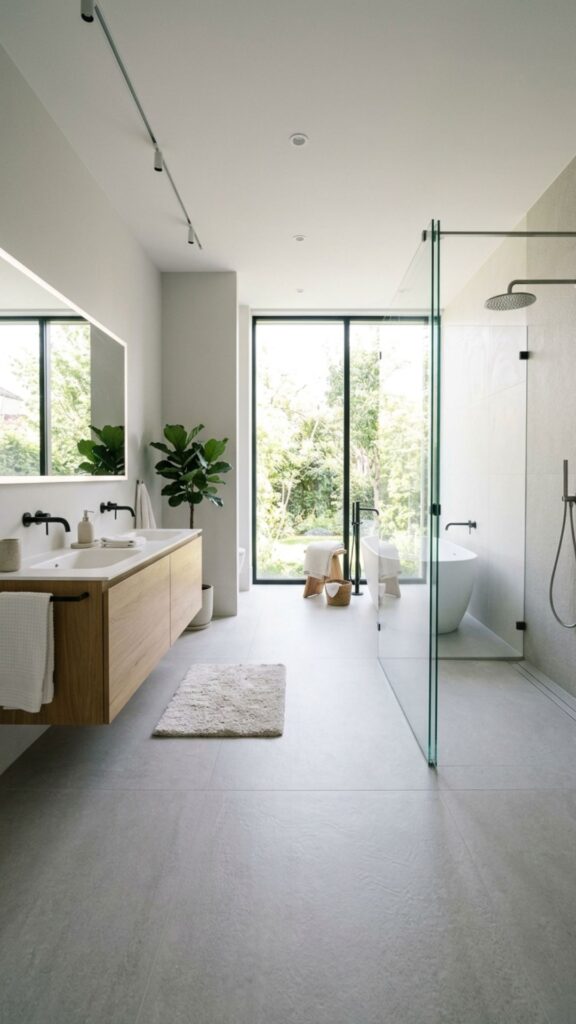
Large-format tiles, often 24 inches or bigger, reduce the number of grout lines dramatically. Fewer lines mean less cleaning and a sleeker, more open appearance. Small bathrooms can actually look bigger as a result.
They require a perfectly flat subfloor to install correctly, so professional help often pays off here. The clean, continuous surface delivers a calm, modern feel that’s hard to achieve otherwise.
17. Hexagon Tile for a Modern Twist
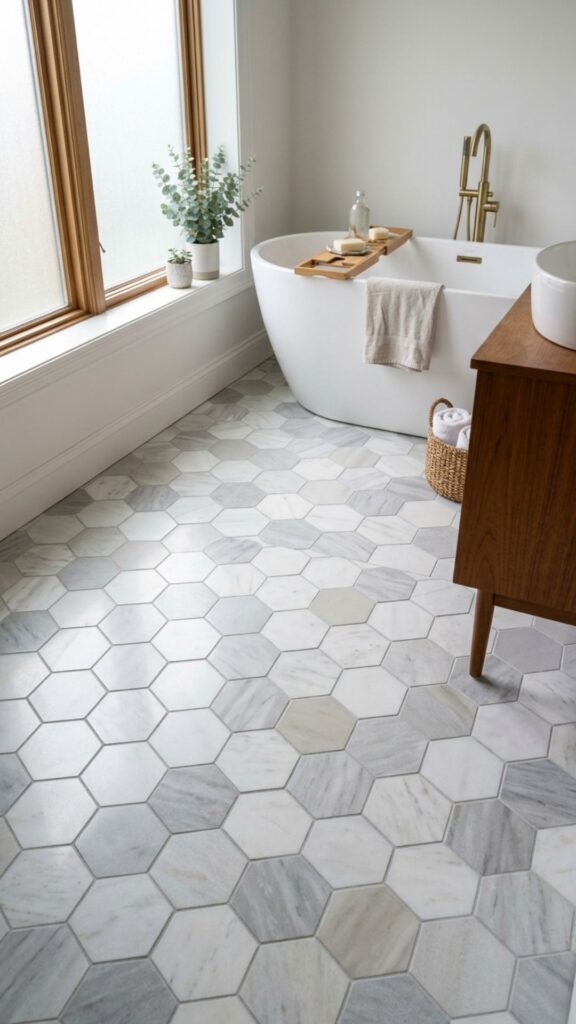
Hexagon tile adds geometric interest while staying timeless. Tiny hex tiles read as classic and vintage, while larger hexagons feel fresh and contemporary. The shape works in nearly any color palette.
Because hex tiles come in porcelain and ceramic, you get durability alongside style. They’re a smart pick if you want something a little different without going over the top.
18. Wood-Look Tile for the Best of Both Worlds
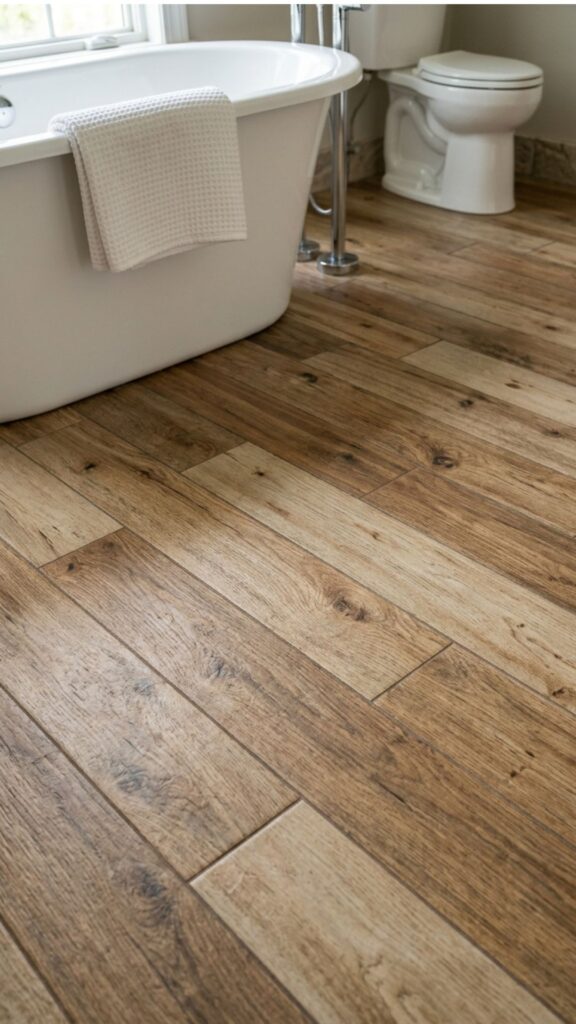
Wood-look porcelain tile gives you the appearance of hardwood with the waterproof toughness of tile. Modern printing makes the grain remarkably realistic, right down to the knots and texture. From a few feet away, most people can’t tell.
This option solves the classic bathroom dilemma: wanting warmth without risking water damage. It’s an easy recommendation for anyone torn between aesthetics and practicality.
19. Rubber Flooring for Comfort and Grip
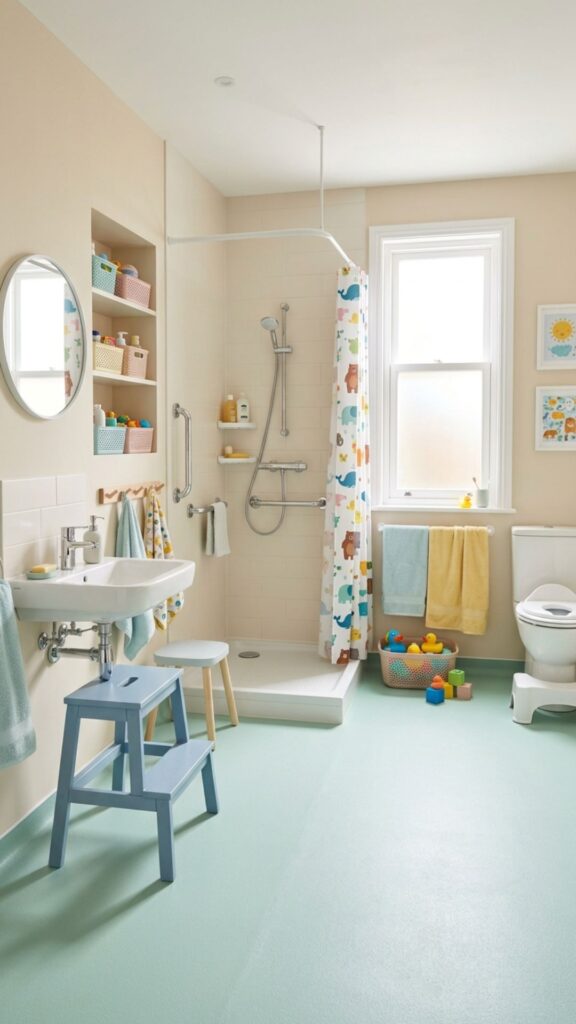
Rubber flooring isn’t just for gyms. It’s soft, slip-resistant, and completely waterproof, which makes it practical for family bathrooms and accessible designs. It also cushions falls, an underrated safety benefit.
You’ll find it in tiles and sheets in many colors. The look is more casual than stone or tile, so it suits playful or utilitarian spaces. Cleaning is as simple as a damp mop.
20. Laminate With Waterproof Backing
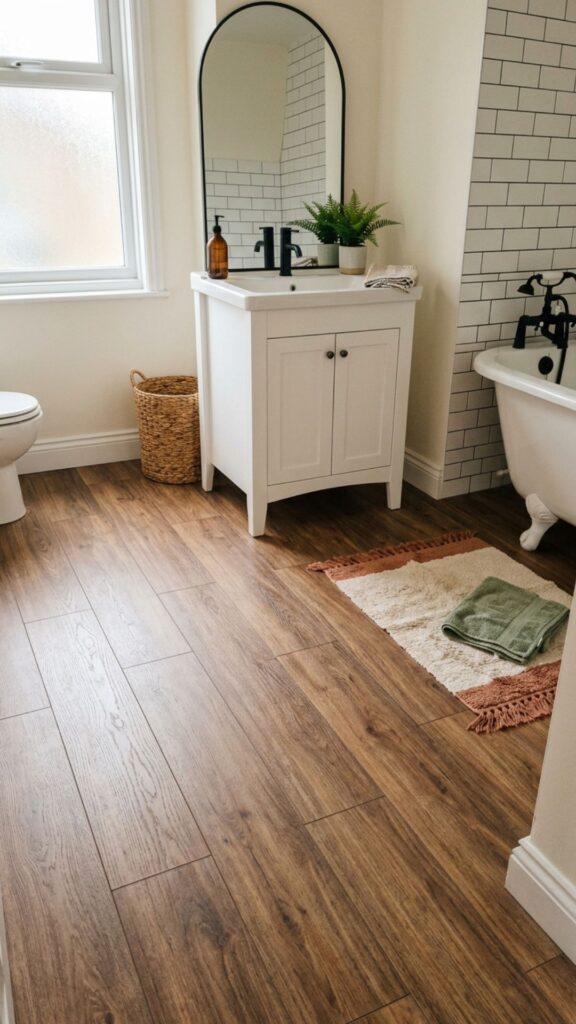
Today’s waterproof laminate addresses the old complaint that laminate swells when wet. New cores and tight seams keep moisture out far better than older versions. You get a wood look at a friendly price.
It’s still wise to seal seams and avoid standing water in heavy-use baths. For guest bathrooms and budget renovations, waterproof laminate delivers solid value and easy installation.
21. Heated Tile Floors for Year-Round Comfort
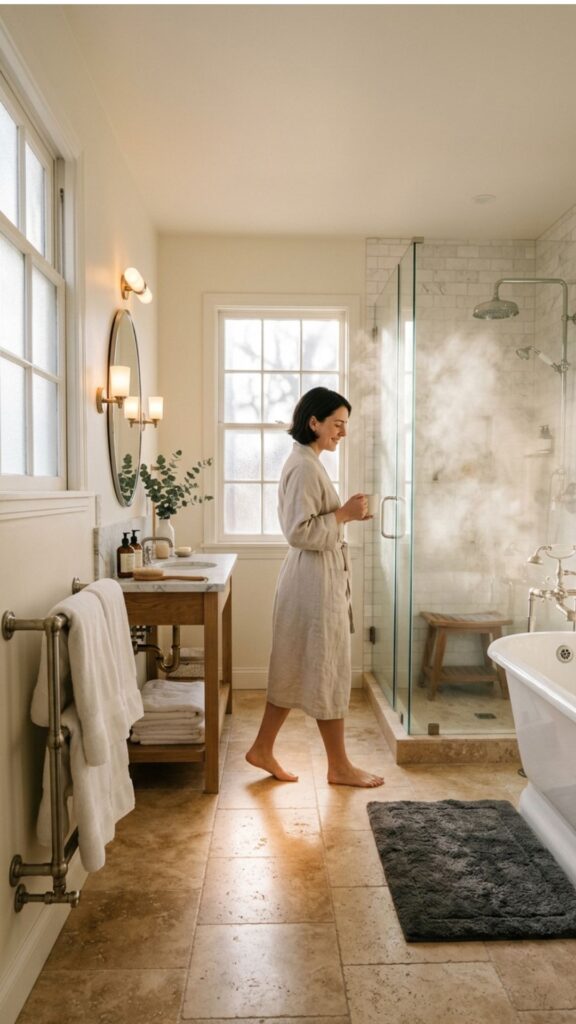
Adding radiant heat beneath tile transforms cold mornings. Electric mats or hydronic systems warm the floor evenly, so stepping out of the shower feels luxurious instead of shocking. It also helps the room dry faster.
The upfront cost is higher, and you’ll want a pro to install the heating element. But many homeowners say it’s the upgrade they’d never give up. Pair it with porcelain or stone for the best results.
Conclusion
The right bathroom floor balances three things: looks, water resistance, and how it feels underfoot. Porcelain and luxury vinyl cover most needs affordably, while stone, marble, and heated tile deliver that premium touch. Match the material to how the room is used, then factor in maintenance you’ll realistically keep up with.
Ready to move forward? Pick your top two options from this list, measure your space, and request samples so you can see them in your own light. Then bring those samples to a trusted flooring supplier or contractor to confirm what fits your budget and subfloor before you commit.
What is the best flooring for a bathroom?
Porcelain tile is widely considered the best all-around bathroom flooring. It’s waterproof, durable, low-maintenance, and available in countless styles. For warmth and comfort at a lower cost, luxury vinyl plank is a strong runner-up.
What flooring is the most water-resistant for bathrooms?
Porcelain tile, sheet vinyl, luxury vinyl, and polished concrete are the most water-resistant options. They keep moisture out almost entirely when installed and sealed correctly, making them ideal for showers and high-splash areas.
Can I install bathroom flooring myself?
Yes, several options are DIY-friendly. Luxury vinyl plank, sheet vinyl, and waterproof laminate are designed for easier installation. Tile, stone, and heated floors usually call for a professional to ensure a watertight, level result.
How do I make my bathroom floor less slippery?
Choose textured surfaces like slate, pebble tile, matte porcelain, or rubber flooring. More grout lines and matte finishes improve grip. You can also add slip-resistant bath mats in the wettest zones for extra safety.
What is the cheapest bathroom flooring option?
Sheet vinyl and ceramic tile are typically the most budget-friendly choices. Both resist water well and come in styles that mimic pricier materials, giving you a fresh look without a high cost.