The bathroom is one of the most-used rooms in any home, yet its electrical setup often gets overlooked. We focus on tiles and fixtures while forgetting that good wiring, smart lighting, and safe outlets make the space genuinely better to use. A flickering vanity light or a single outlet behind the sink can turn your morning routine into a daily frustration.
Good news: small electrical changes can deliver big results. After years of working alongside electricians and remodeling pros, I’ve seen how the right bathroom electrical ideas transform a dull, dim space into something bright, functional, and safe.
Below, you’ll find 21 practical upgrades, from layered lighting to GFCI protection, that improve how your bathroom looks and works. Let’s dig in.
1. Install Layered Lighting for a Balanced Glow
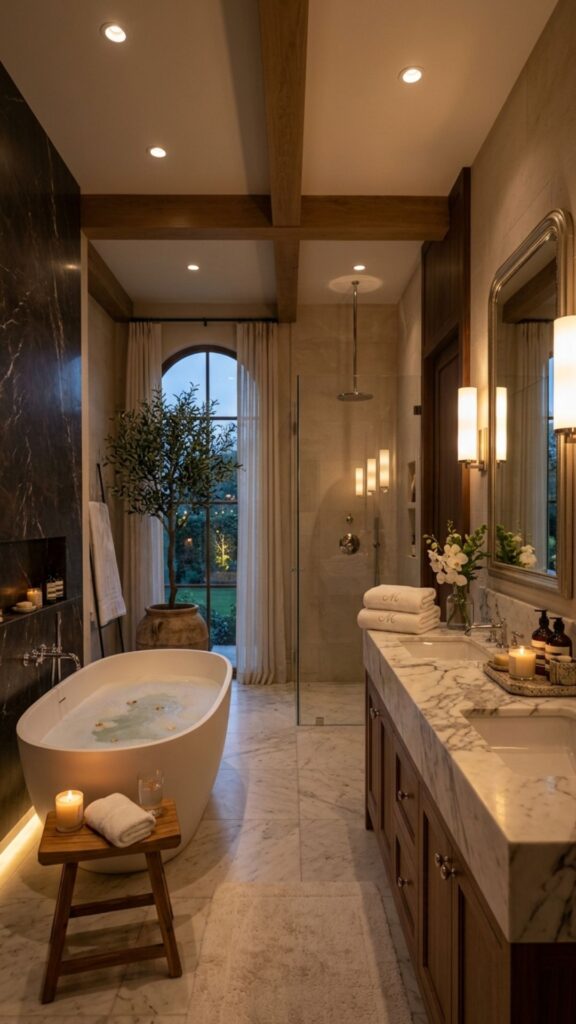
A single ceiling light rarely does the job. Bathrooms need layers: ambient light for general brightness, task lighting at the mirror, and accent lighting for mood. When you combine these three, shadows disappear and the room feels larger and warmer.
Start with a flush-mount or recessed fixture for ambient light. Then add vanity lighting around the mirror and maybe a small accent light near a tub or niche. This layered approach gives you control, so you can flood the room when getting ready or dim things down for a relaxing soak.
2. Add Sconces on Both Sides of the Mirror
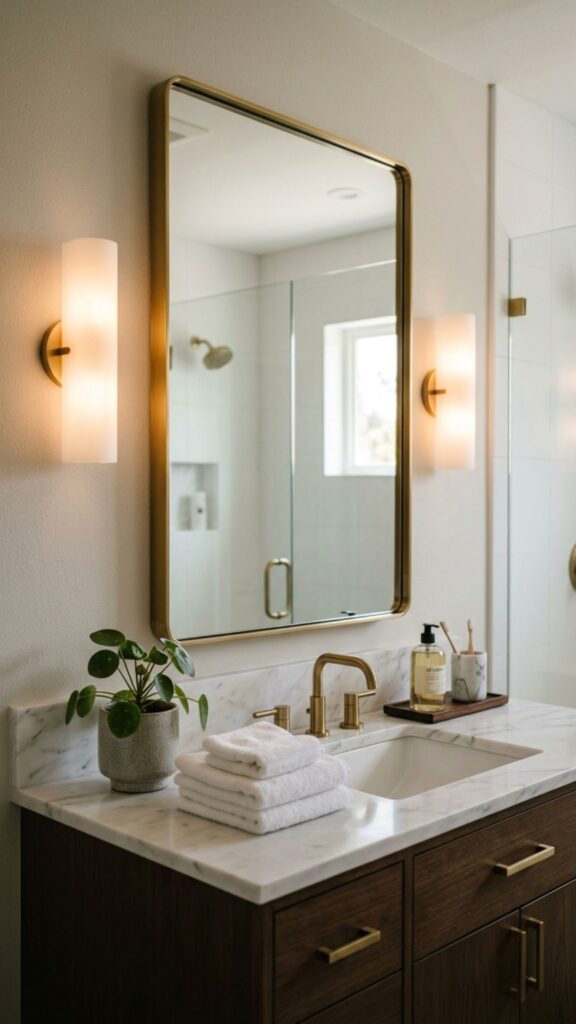
Overhead lights cast unflattering shadows under your eyes and chin. Wall sconces placed on either side of the mirror solve this by lighting your face evenly. This is the single best lighting trick for shaving, applying makeup, or skincare routines.
Mount the sconces around eye level, roughly 60 to 66 inches from the floor, with about 28 to 40 inches between them. Choose fixtures with frosted shades to soften the light and cut glare. The difference in your reflection is honestly remarkable.
3. Use Dimmer Switches for Flexible Moods

Dimmers are one of the cheapest upgrades with the biggest payoff. They let you brighten the space for cleaning or dial it down for a calm bath at the end of a long day. They also extend bulb life and trim your energy bill.
Make sure your dimmer matches your bulb type. LED bulbs need LED-compatible dimmers, or you’ll get flickering and buzzing. It’s a quick swap for an electrician, and the everyday comfort it adds is worth every penny.
4. Upgrade to GFCI Outlets for Safety
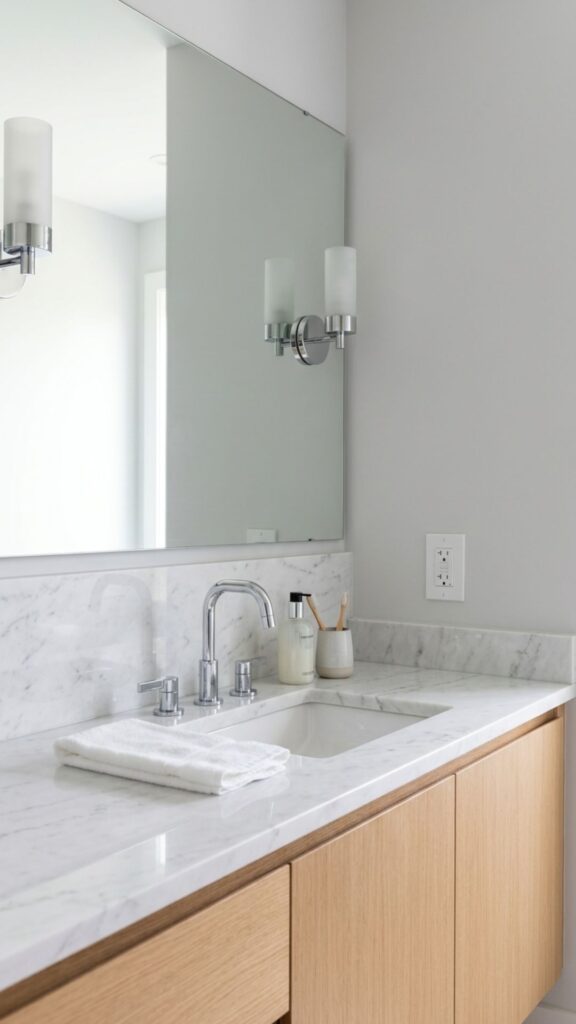
Water and electricity are a dangerous mix, which is why GFCI (Ground Fault Circuit Interrupter) outlets are required in bathrooms by modern code. These outlets cut power in milliseconds if they detect a fault, protecting you from shock.
If your bathroom still has standard outlets, replace them right away. Test your GFCI outlets monthly by pressing the “test” and “reset” buttons. This is non-negotiable safety, and it’s the foundation of any solid bathroom electrical plan.
5. Add USB and USB-C Charging Outlets
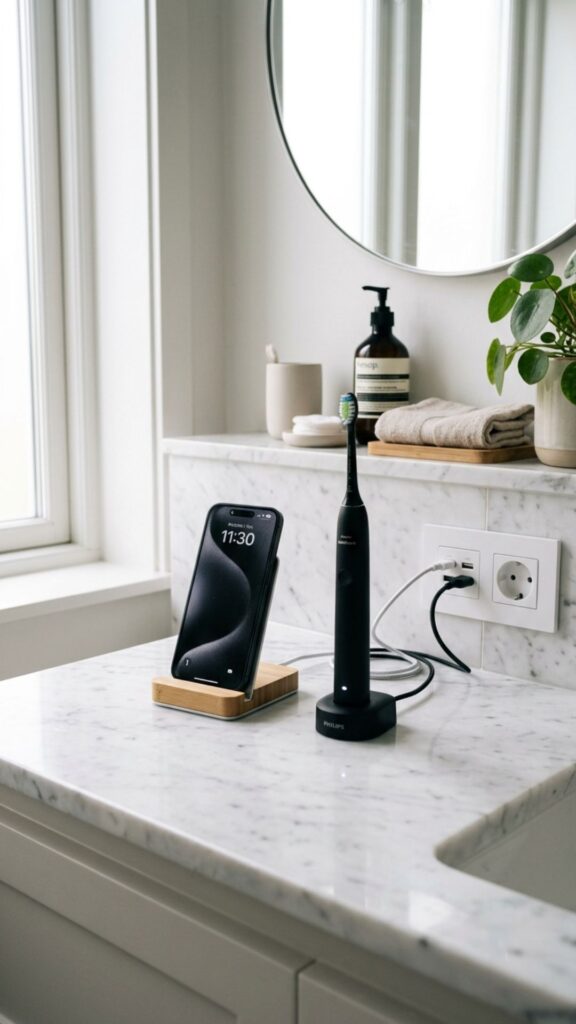
Most of us check our phones in the bathroom, so why fight over adapters? Outlets with built-in USB and USB-C ports keep your devices charged without cluttering the counter with bulky plugs.
Place one near the vanity for charging phones or electric toothbrushes. Look for tamper-resistant models with GFCI protection. It’s a small touch that makes the space feel modern and genuinely convenient.
6. Install Recessed Lighting in the Ceiling
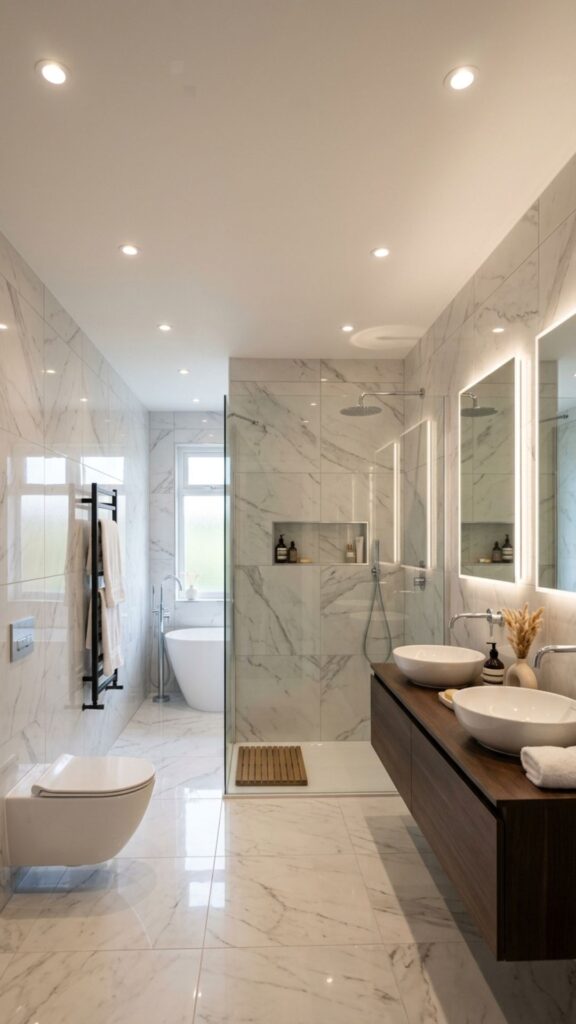
Recessed lights, or “can lights,” sit flush with the ceiling and give clean, even coverage without taking up visual space. They work beautifully in small or low-ceilinged bathrooms where a hanging fixture would feel cramped.
Use wet-rated recessed fixtures over showers and tubs, since these areas need moisture-resistant ratings. Space them evenly across the ceiling for consistent light. The result is a sleek, uncluttered look that feels distinctly upscale.
7. Light Up the Shower Properly

Showers are often the darkest corner of a bathroom. A dedicated shower light, properly rated for wet locations, makes the space safer and far more pleasant to use. No more squinting to find the shampoo.
Choose a sealed, wet-rated recessed light to keep moisture out. If you have a steam shower, the rating matters even more. Good shower lighting also helps you spot mold or grime early, making cleaning easier.
8. Add a Motion-Sensor Light for Nighttime
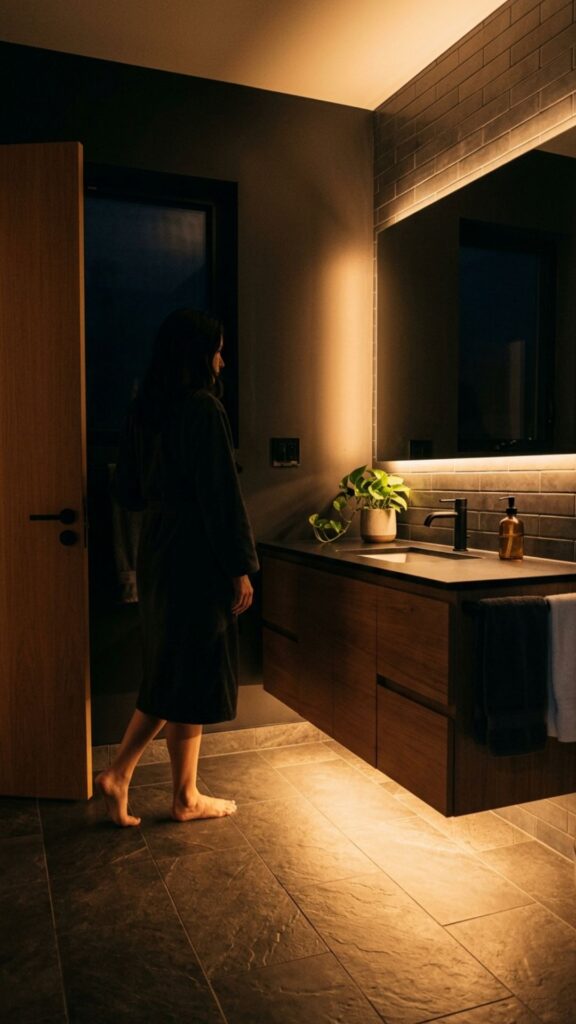
Stumbling to the bathroom at 2 a.m. is no fun. A motion-sensor light, or even a soft toe-kick light under the vanity, turns on automatically when you walk in. No fumbling for the switch, and no harsh brightness waking you fully.
These sensors also save energy by switching off when the room is empty. They’re especially handy for kids, older family members, or guests who don’t know your light switches. Comfort and safety in one simple upgrade.
9. Install an Efficient Exhaust Fan
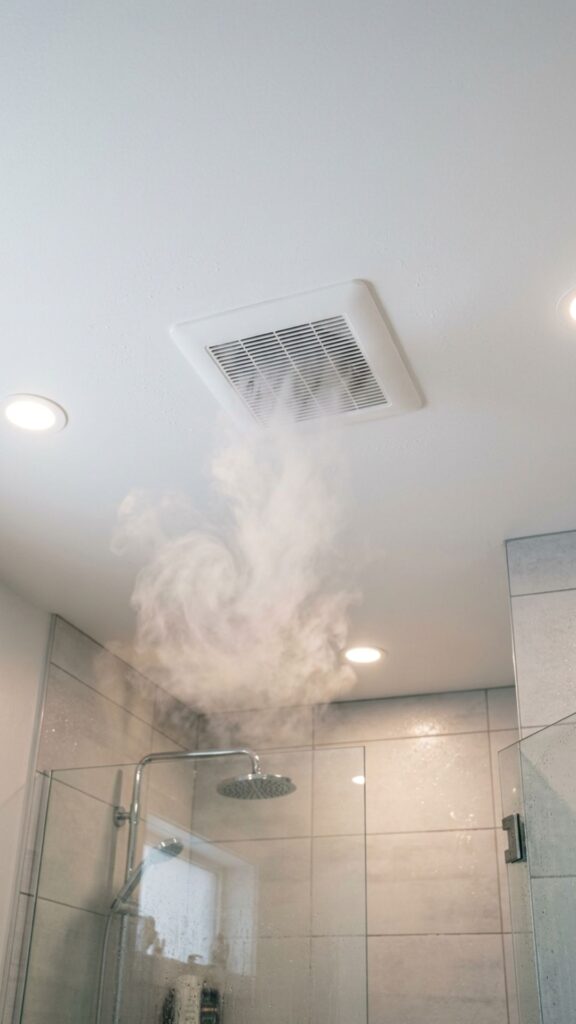
A good exhaust fan isn’t glamorous, but it protects your bathroom from moisture damage, mold, and peeling paint. Choosing the right one is partly an electrical decision, since it ties into your wiring and switches.
Size the fan to your room: a rough rule is one CFM (cubic feet per minute) per square foot of floor space. Quieter models rated under 1.0 sones won’t disturb you. Wiring it to a timer switch ensures it runs long enough after a shower to clear the air.
10. Use a Timer Switch for the Fan
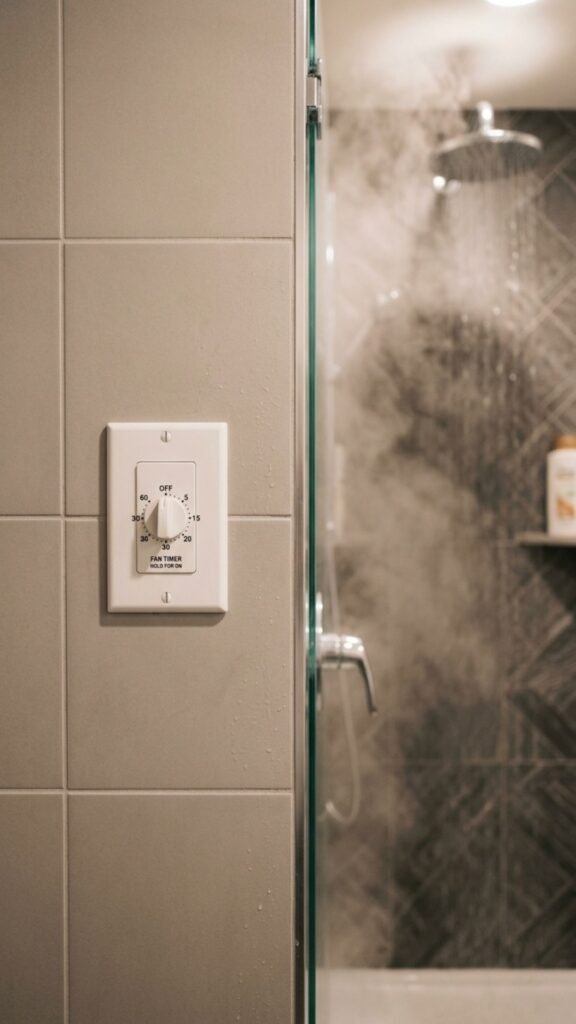
People forget to turn fans off, wasting energy, or turn them off too soon, leaving moisture behind. A timer switch fixes both problems by running the fan for a set period, then shutting it down automatically.
Set it for 20 to 30 minutes after showers to fully clear humidity. Some models offer countdown dials or digital settings. It’s a small, smart addition that keeps your bathroom dry and your energy use in check.
11. Add Heated Floor Wiring

Stepping onto cold tile is a rough way to start the day. Electric radiant floor heating uses thin heating mats installed under the tile, warming the surface gently and evenly.
This upgrade works best during a remodel when the floor is already up. It runs on its own thermostat, so you control the warmth. Many homeowners say it’s their favorite bathroom feature, blending comfort with quiet luxury.
12. Install a Towel Warmer

A heated towel rack turns an ordinary bathroom into a spa-like retreat. Electric models simply plug in or hardwire into the wall, warming towels so they’re cozy when you step out of the shower.
Hardwired versions look cleaner since there’s no visible cord. Pair one with a timer or smart switch so it heats up before your morning routine. It’s affordable luxury that also helps towels dry faster, cutting down on mildew.
13. Place Outlets Inside Vanity Drawers
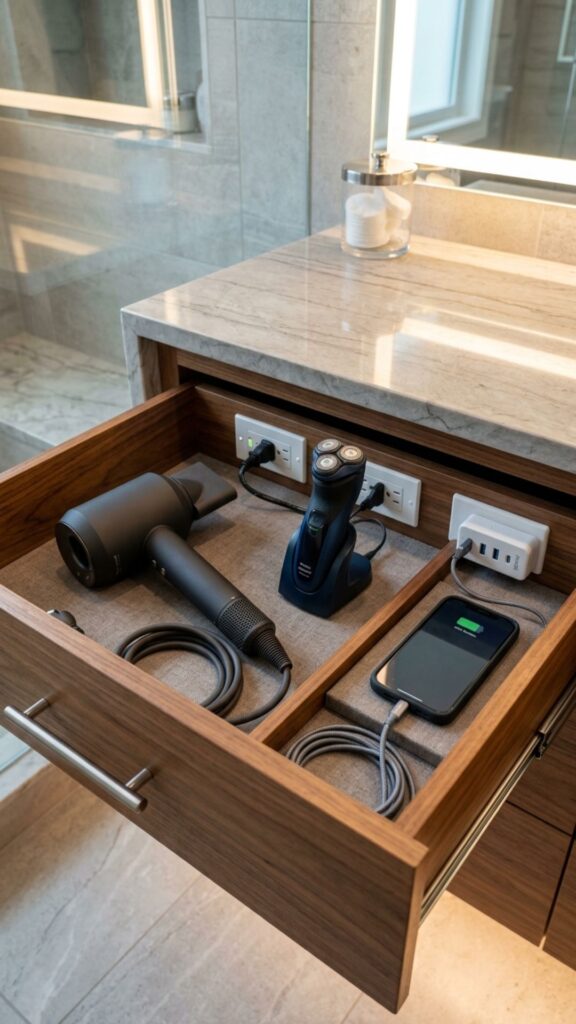
Cluttered countertops kill a clean look. Hidden outlets inside vanity drawers or cabinets let you charge and store hair dryers, straighteners, and electric razors out of sight, with cords tucked neatly away.
This keeps your counter clear and reduces cord tangles. It also keeps appliances safely away from water near the sink. Plan these during a remodel, since they need wiring routed into the cabinetry.
14. Add Mirror Defogger Pads

Nothing’s worse than a foggy mirror after a hot shower. A defogger pad installs behind the mirror and gently heats the glass, keeping a clear patch ready the moment you step out.
These pads wire into your lighting circuit, so they turn on with the lights. They use very little energy and require zero maintenance once installed. It’s a quiet upgrade that solves a daily annoyance.
15. Choose an LED Backlit Mirror
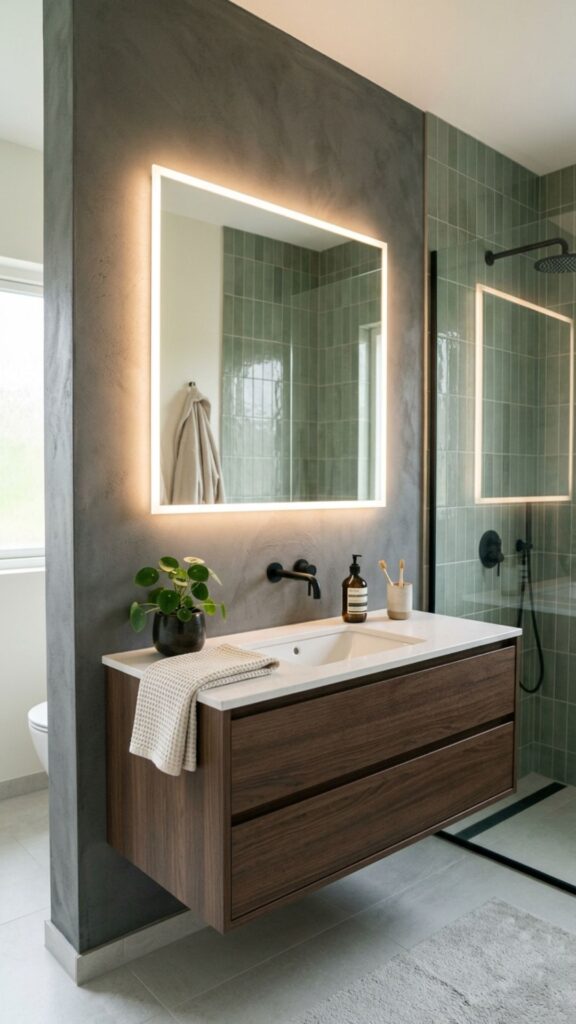
A backlit LED mirror combines function and style in one piece. The soft glow behind the glass provides even, flattering light while adding a modern, floating look to the wall.
Many models include built-in defoggers, dimming, and adjustable color temperature. You get task lighting and ambient lighting from a single fixture, which is great for small bathrooms. It’s a statement piece that earns its place fast.
16. Match Color Temperature to the Room
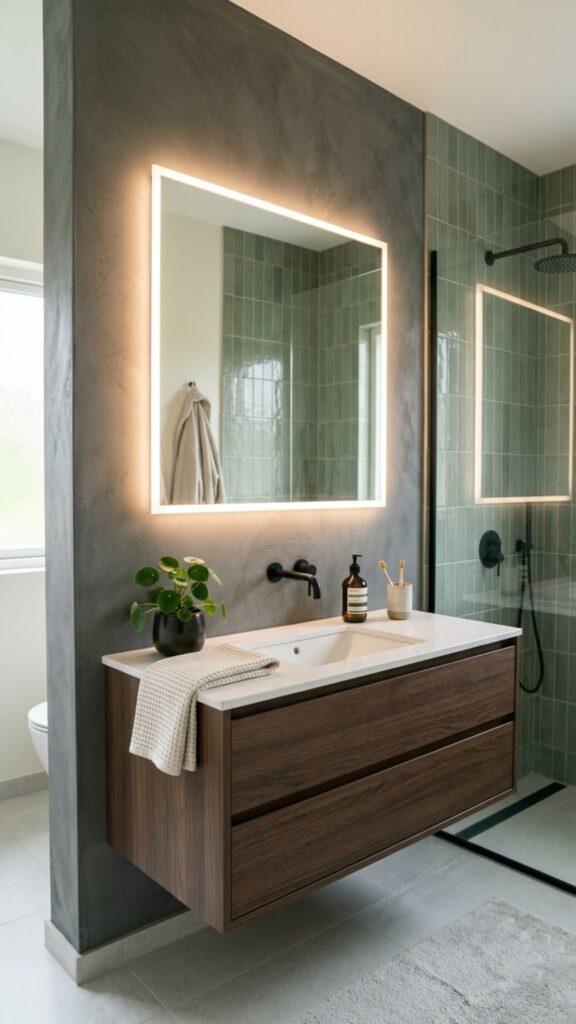
Bulb color changes everything. Warm light (around 2700K) feels cozy and relaxing, while cooler light (around 3500K to 4000K) feels crisp and energizing, which helps with grooming tasks.
A smart middle ground works well in most bathrooms. Some fixtures and bulbs let you adjust the temperature on demand, giving you warm light for baths and cool light for getting ready. Consistent color across fixtures keeps the space feeling polished.
17. Install Under-Cabinet or Toe-Kick Lighting
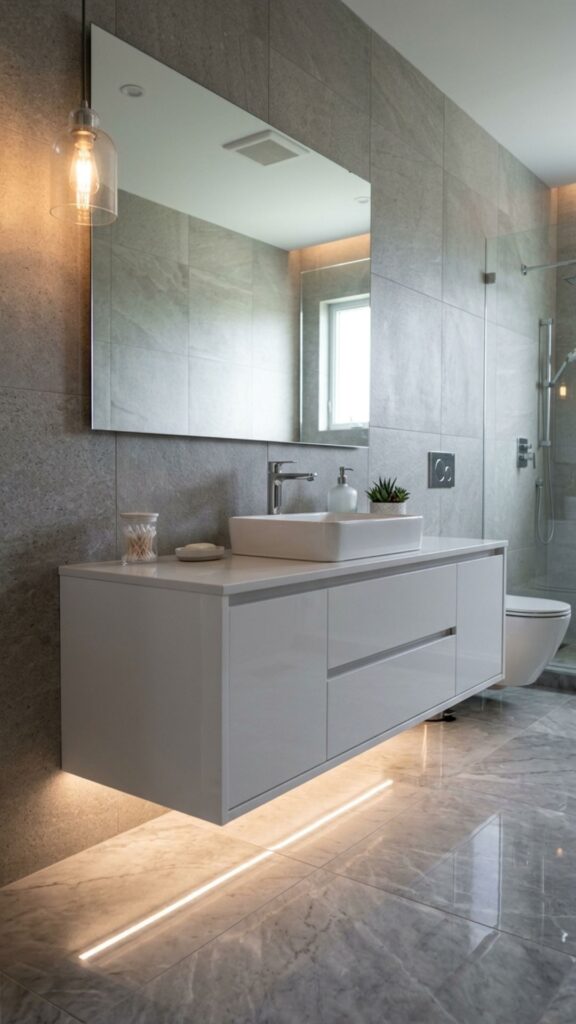
A thin strip of LED light under the vanity adds a soft, floating glow that feels high-end. It doubles as a gentle nightlight and highlights your flooring, making the room feel bigger.
These strips are low-voltage and easy to wire into a switch or motion sensor. Choose a warm tone for a relaxing feel. It’s an affordable detail that delivers serious style and a touch of everyday function.
18. Add a Dedicated Circuit for High-Draw Appliances
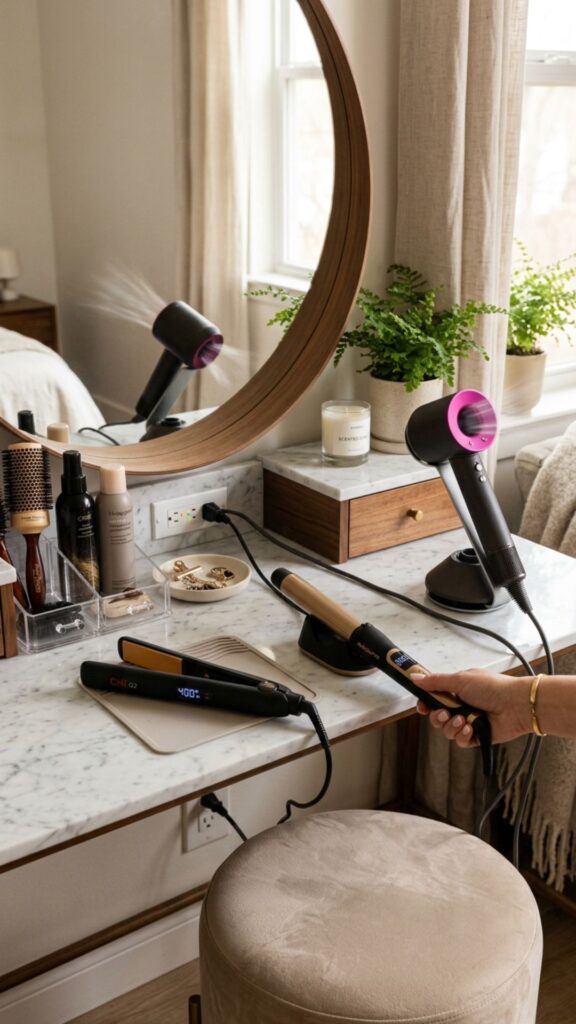
Hair dryers, space heaters, and curling irons pull a lot of power. Running them on a shared circuit can trip breakers or, worse, strain old wiring. A dedicated bathroom circuit handles the load safely.
Most modern codes require at least one 20-amp circuit for bathroom outlets. If your breaker trips when you use the hair dryer, that’s a sign to call an electrician. Proper circuits are quietly one of the most important bathroom electrical ideas for safety.
19. Use Smart Switches and Voice Control
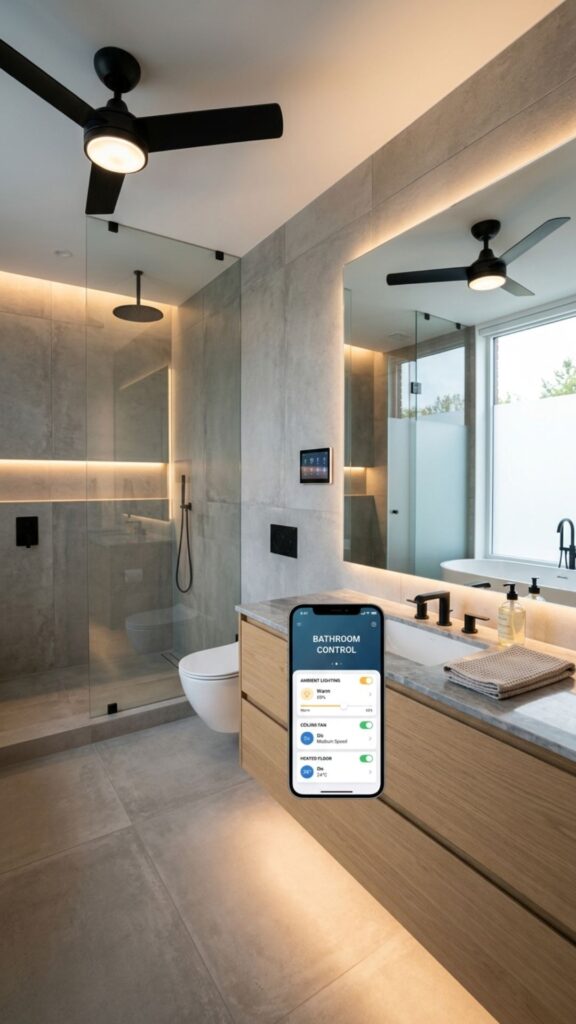
Smart switches let you control lights, fans, and heaters from your phone or with a voice command. Set schedules so the fan runs each morning or the floor heat kicks on before you wake.
This is great for accessibility and convenience alike. You can turn off lights you forgot about from bed, or dim them hands-free with wet hands. Choose switches rated for damp environments and you’re set.
20. Plan Waterproof and Wet-Rated Fixtures
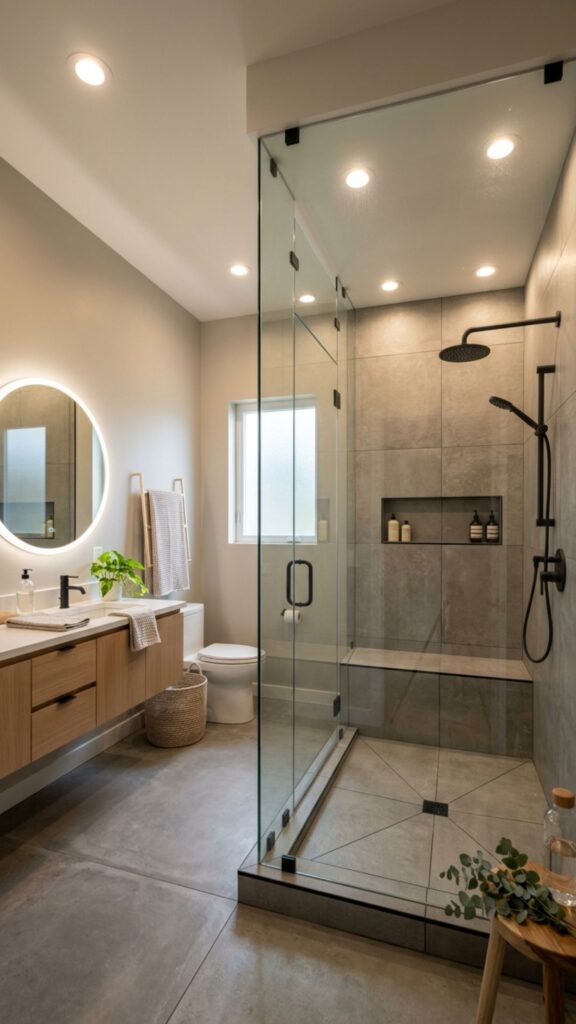
Every fixture in a bathroom needs the right moisture rating for where it sits. Areas inside or near the shower require wet-rated fixtures, while the rest of the room can use damp-rated ones. Mixing these up is a real safety risk.
Always check the label before buying. An electrician can confirm which zones need which ratings based on your layout. Getting this right protects your fixtures from corrosion and protects you from electrical hazards.
21. Hire a Licensed Electrician for Major Work
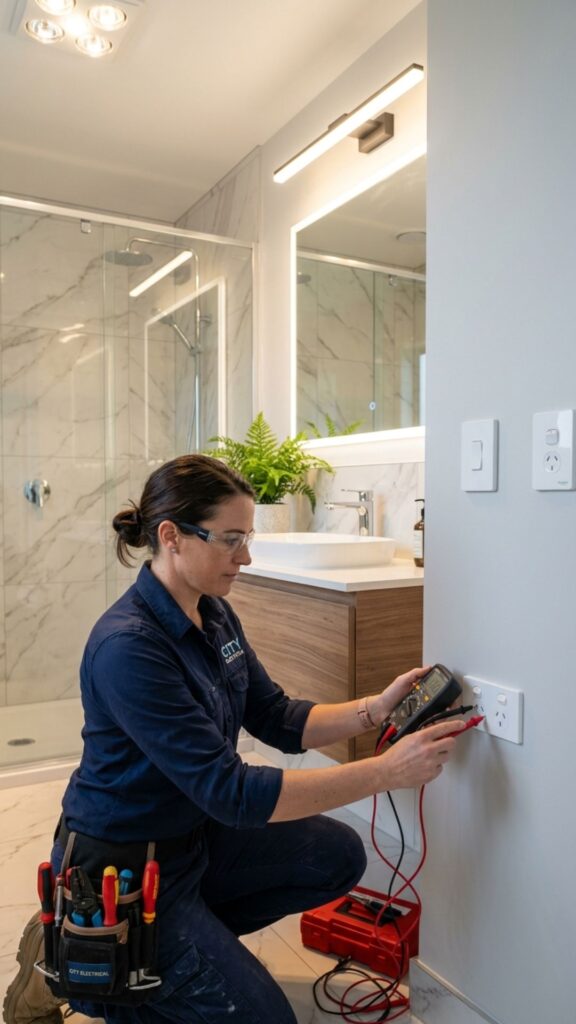
Some upgrades, like swapping a bulb, are easy DIY. But anything involving new circuits, outlet relocation, or wiring inside walls should go to a licensed electrician. Bathroom electrical work falls under strict codes for good reason.
A professional ensures your work passes inspection and meets local code, which matters for both safety and resale value. The cost is worth the peace of mind. When water and wiring share a room, expert hands make all the difference.
Conclusion
Your bathroom deserves more than an afterthought when it comes to electrical planning. From layered lighting and dimmers to GFCI outlets, heated floors, and smart switches, these bathroom electrical ideas blend safety, comfort, and real style. You don’t have to tackle them all at once. Even a few simple upgrades, like sconces and a timer fan, can transform how the room feels every single day.
Ready to upgrade your space? Start by listing the changes that matter most to you, then consult a licensed electrician to plan the work safely. A smarter, brighter, safer bathroom is closer than you think, so take the first step today.
Do bathroom outlets need to be GFCI protected?
Yes. Modern electrical codes require all bathroom outlets to have GFCI protection. These outlets cut power instantly if they sense a fault, protecting you from shock in a room where water is always nearby.
What is the best lighting for a bathroom?
Layered lighting works best. Combine ambient ceiling light, task lighting with sconces beside the mirror, and accent lighting for mood. This setup removes shadows and gives you flexible brightness for any activity.
Can I install bathroom electrical upgrades myself?
You can handle simple swaps like LED bulbs or dimmer switches if you’re comfortable. However, new circuits, outlet relocation, and in-wall wiring should be done by a licensed electrician to meet code and stay safe.
How many circuits does a bathroom need?
Most codes require at least one dedicated 20-amp circuit for bathroom outlets. High-draw appliances like hair dryers and space heaters benefit from this to prevent tripped breakers and protect your wiring.
What color light is best for a bathroom mirror?
A neutral white around 3000K to 3500K is ideal for vanity lighting. It’s bright enough for grooming tasks while still feeling flattering and natural, avoiding the harsh blue tone of cooler bulbs.