Cold weather doesn’t have to send everyone indoors. With the right setup, your patio can stay just as fun in January as it is in July. I’ve spent years testing different heating methods in my own backyard, and I’ve learned that a little warmth goes a long way toward making outdoor spaces feel welcoming.

Below you’ll find 20 winter patio heating ideas that range from budget-friendly quick fixes to bigger investments.
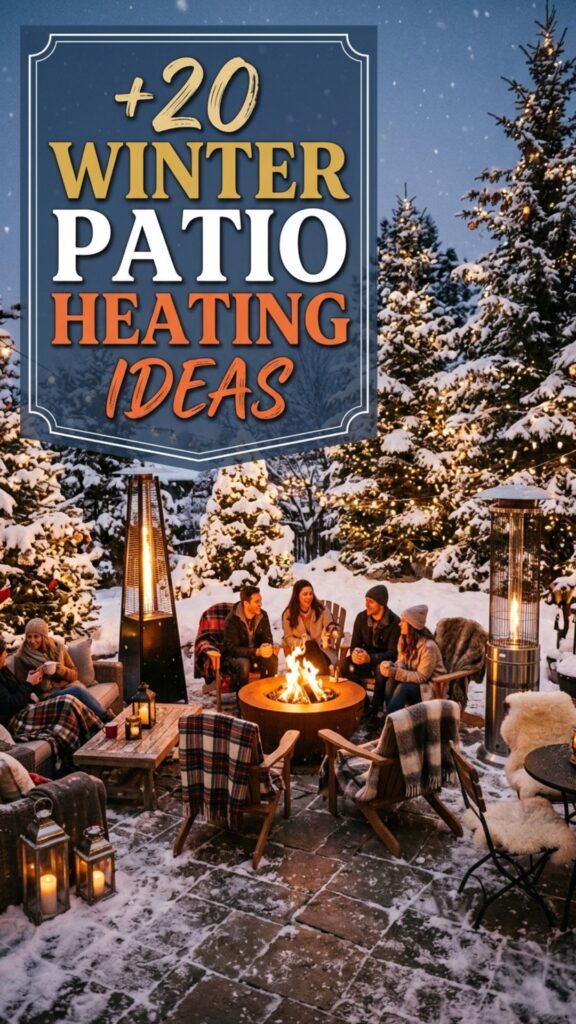
Whether you want a crackling fire, a sleek electric heater, or clever ways to trap heat, there’s something here for every space and wallet. Let’s turn your chilly patio into a place everyone wants to gather.
1. Install a Freestanding Propane Patio Heater
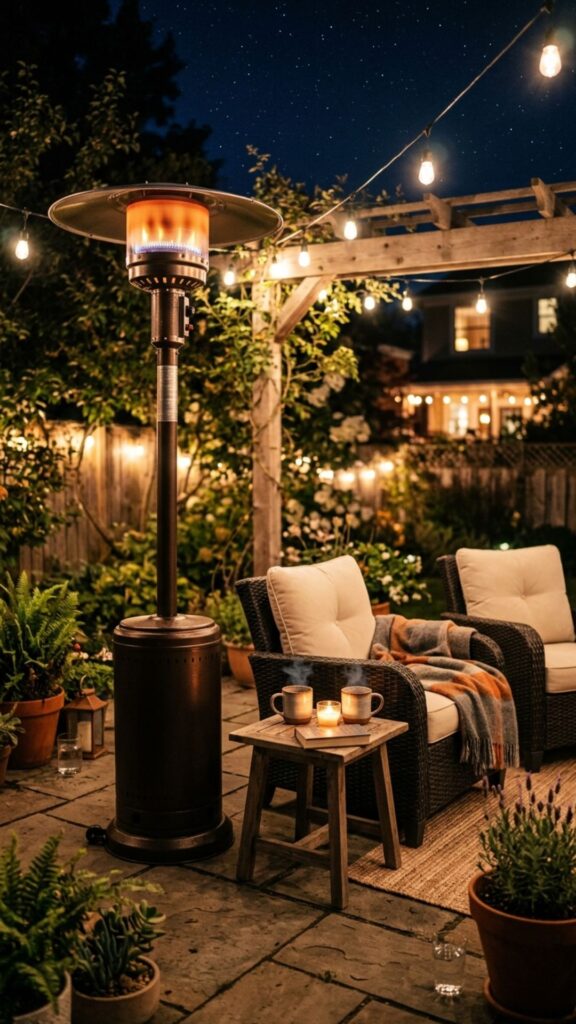
Freestanding propane heaters are the workhorses of outdoor heating. Standing around seven feet tall, they push warmth downward and outward, covering a radius of up to 20 feet. They’re the same models you’ve probably seen outside restaurants, and there’s a reason those spots rely on them.
Setup takes minutes: attach a propane tank, ignite, and adjust the flame. One tank typically lasts about 10 hours on medium heat. If you entertain often, these give you reliable warmth without any wiring or permanent installation.
2. Build a Classic Wood-Burning Fire Pit
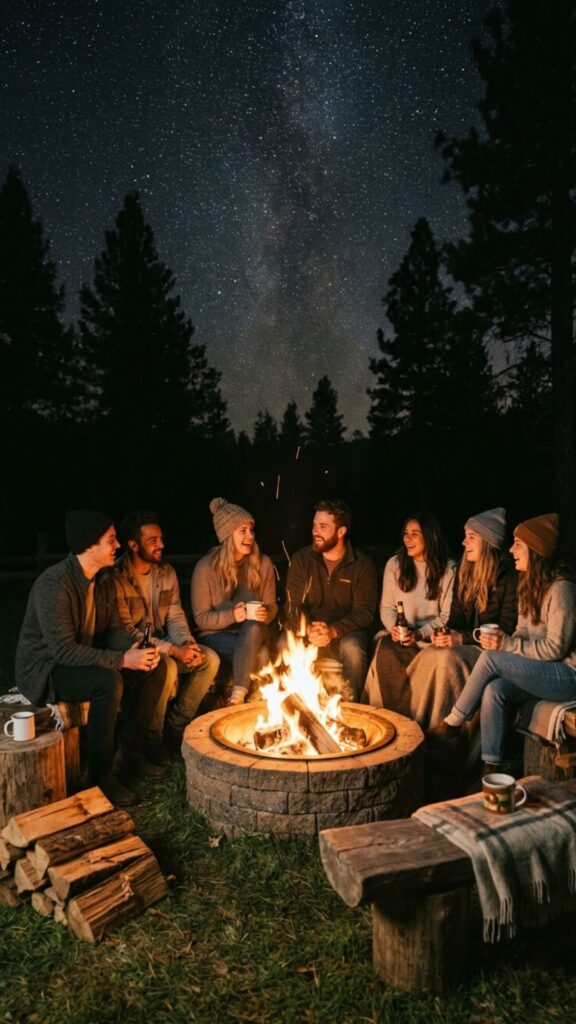
Nothing beats the smell of burning wood and the glow of real flames. A wood-burning fire pit becomes the natural gathering point on any patio, drawing people in to talk, roast marshmallows, and stay warm.
You can go with a portable steel bowl or build a permanent stone ring. Just check your local fire regulations first and keep the pit at least 10 feet from your house and any overhanging branches. Always have a bucket of water or sand nearby for safety.
3. Add a Gas Fire Table
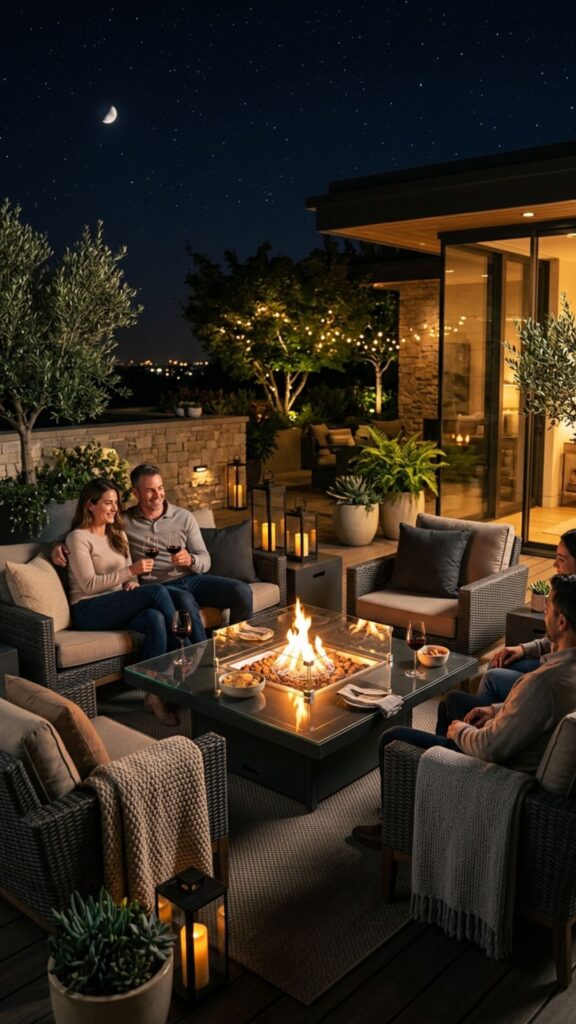
A gas fire table blends the beauty of open flames with the convenience of a flip-on switch. Fueled by propane or natural gas, these tables offer steady heat without smoke, sparks, or ash to clean up afterward.
Many models double as coffee tables, with a hidden burner that lights up when you need it. They come in styles that suit modern and rustic patios alike, so you get both function and a design centerpiece in one piece.
4. Mount Infrared Electric Heaters
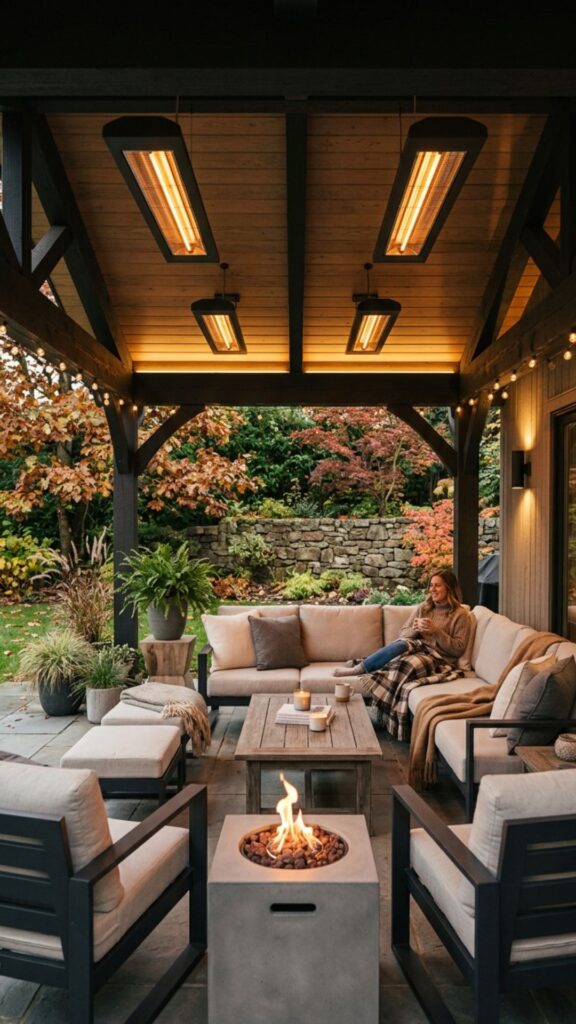
Infrared heaters warm objects and people directly rather than heating the air, which makes them ideal for windy or open patios where warm air escapes fast. They react instantly, so you feel the heat the second you switch them on.
You can mount them on walls or ceilings to save floor space, and they run quietly with no fumes. They’re a smart pick for covered patios, pergolas, or porches where you want targeted, efficient warmth.
5. Install an Outdoor Fireplace
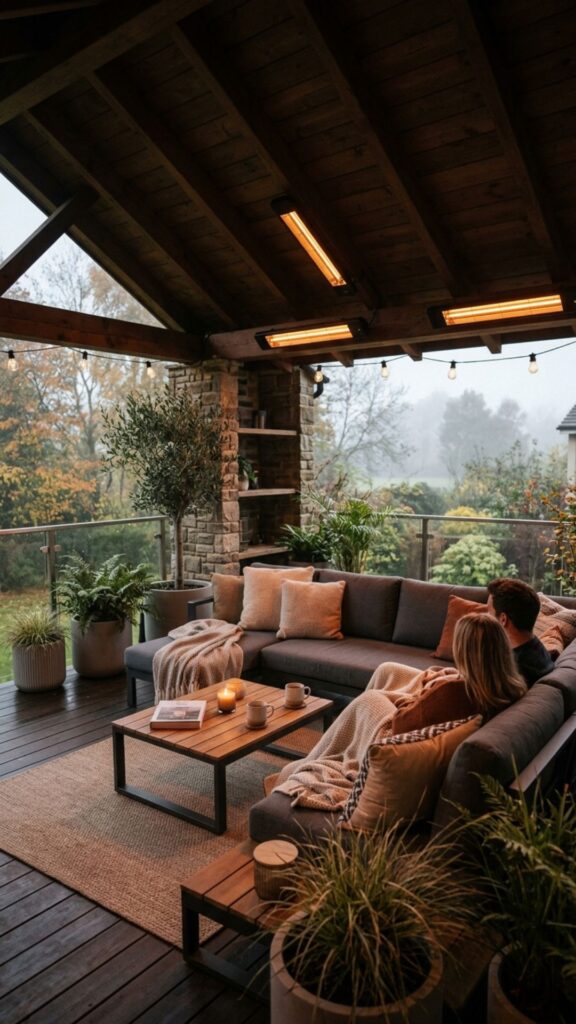
An outdoor fireplace is the upgrade that transforms a patio into a true outdoor room. Built from stone, brick, or stucco, it acts as both a heat source and a striking architectural feature that boosts your home’s value.
Because it directs smoke upward through a chimney, you get the ambiance of a fire without the haze. Pair it with built-in seating and you’ve created a cozy destination that draws family together even on the coldest nights.
6. Use a Chiminea for Focused Warmth
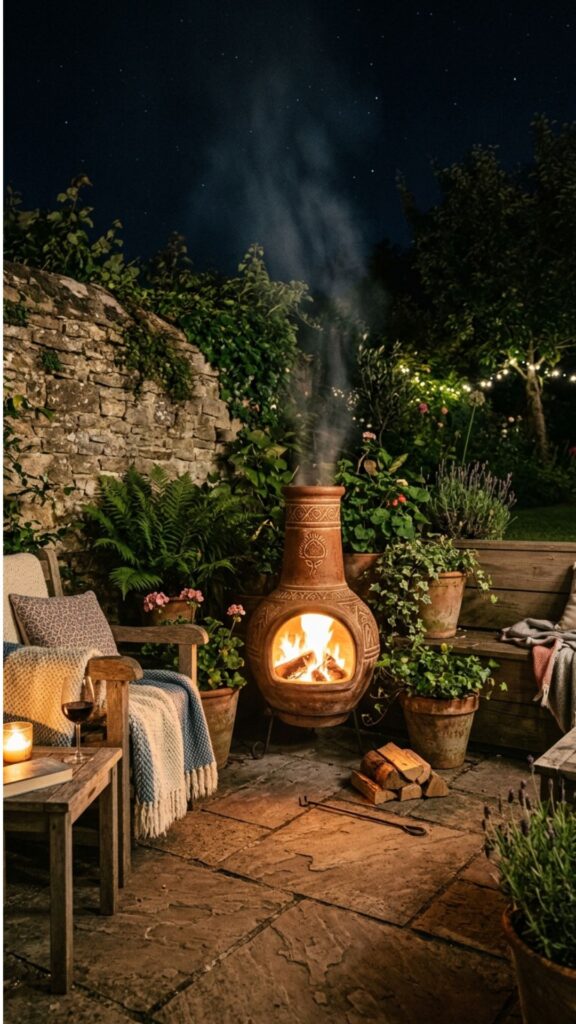
A chiminea is a freestanding, front-loading fireplace with a bulbous body and a tall chimney. Its shape channels smoke up and away while radiating steady heat from the front opening, making it great for smaller gatherings.
Traditionally made from clay, modern versions come in cast iron and steel for better durability. They’re portable enough to reposition and add rustic charm to any patio corner.
7. Hang Radiant Ceiling Heaters Under a Pergola

If you have a pergola or covered patio, radiant ceiling heaters are a space-saving winner. Mounted overhead, they warm the area below without taking up any ground space or blocking your view.
Electric models plug in easily and heat up fast, while some come with remote controls and adjustable settings. They keep the warmth right where your guests sit, which is exactly what you want on a frosty evening.
8. Set Up a Portable Tabletop Heater
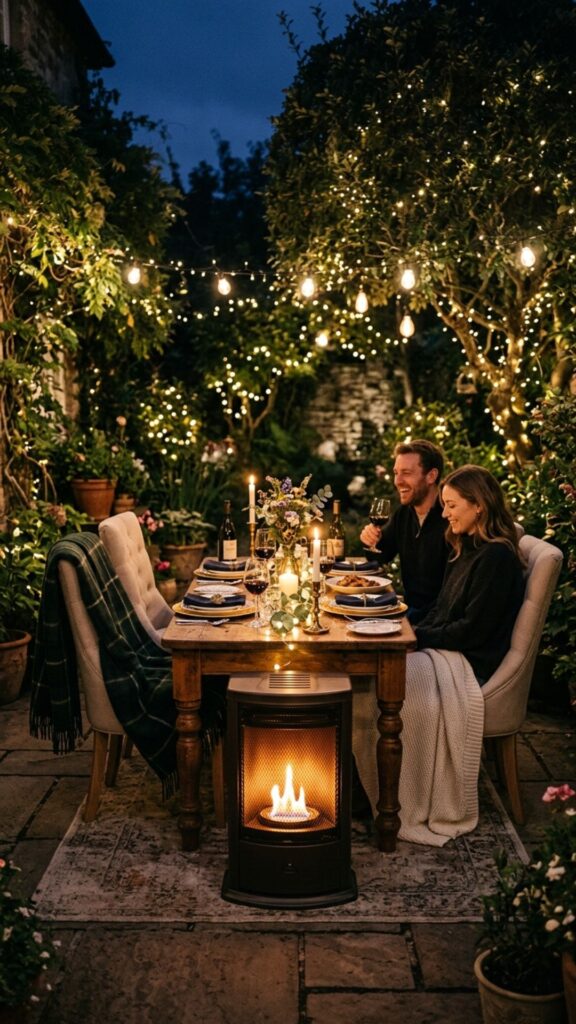
Tabletop heaters bring warmth right to where people gather without dominating the space. These compact units sit on a dining table or side table and radiate gentle heat toward everyone seated nearby.
They’re perfect for intimate dinners or small patios where a full-size heater feels like overkill. Many run on small propane canisters or electricity, giving you flexible placement wherever you need a warm spot.
9. Add Cozy Outdoor Blankets and Throws
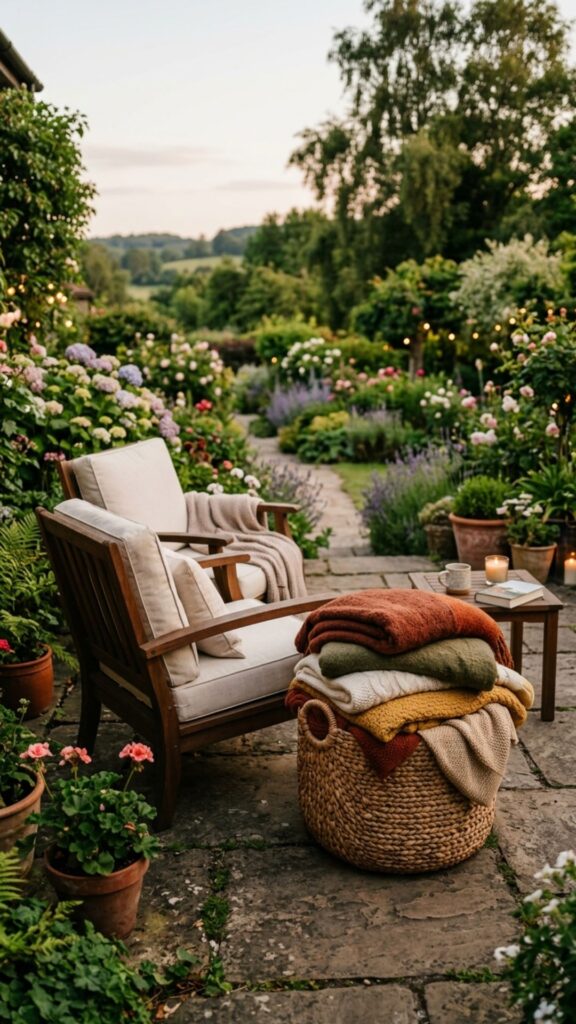
Sometimes the simplest solution works beautifully. A basket of thick, weatherproof blankets invites guests to wrap up and settle in, adding both warmth and a homey touch to your patio.
Choose materials like fleece or wool that hold heat well and resist moisture. Keep them in a waterproof storage bench so they stay dry and ready whenever the temperature drops.
10. Install Heated Outdoor Furniture
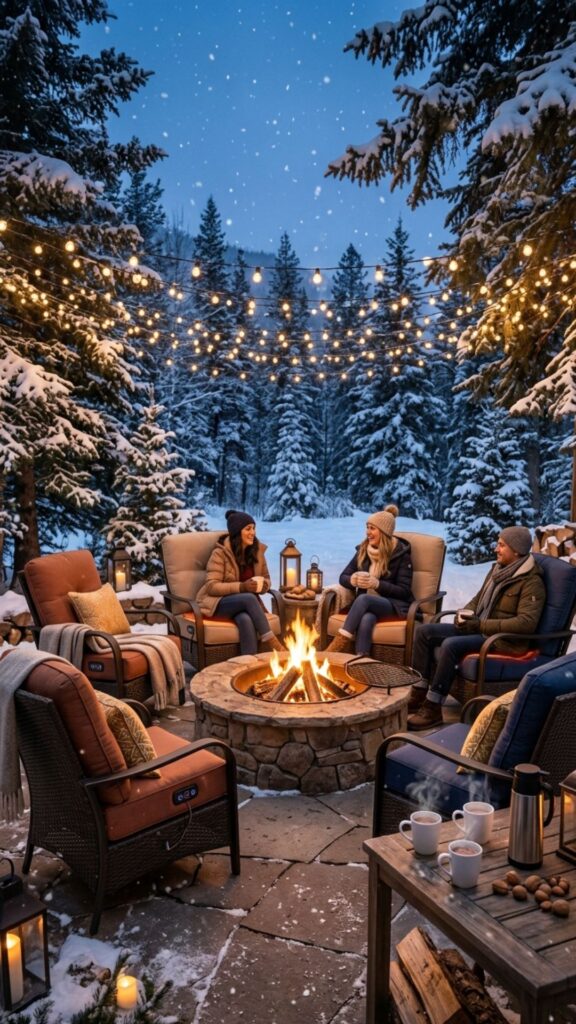
Heated cushions and chairs are a newer option that delivers warmth exactly where you feel the cold most. Built-in heating elements warm the seat and back, similar to heated car seats, so you stay comfortable from below.
These work great alongside overhead or ambient heaters, giving you toasty comfort from multiple directions. Look for weather-resistant, battery-powered or plug-in models designed for outdoor use.
11. Create Windbreaks with Screens or Curtains

Wind steals warmth faster than almost anything else, so blocking it makes your existing heat sources far more effective. Outdoor curtains, glass panels, or lattice screens create a barrier that keeps cold gusts out.
Heavy weatherproof curtains hung around a pergola can trap warm air and add privacy at the same time. Even a simple folding screen positioned against the prevailing wind makes a noticeable difference.
12. Use a Patio Heat Lamp
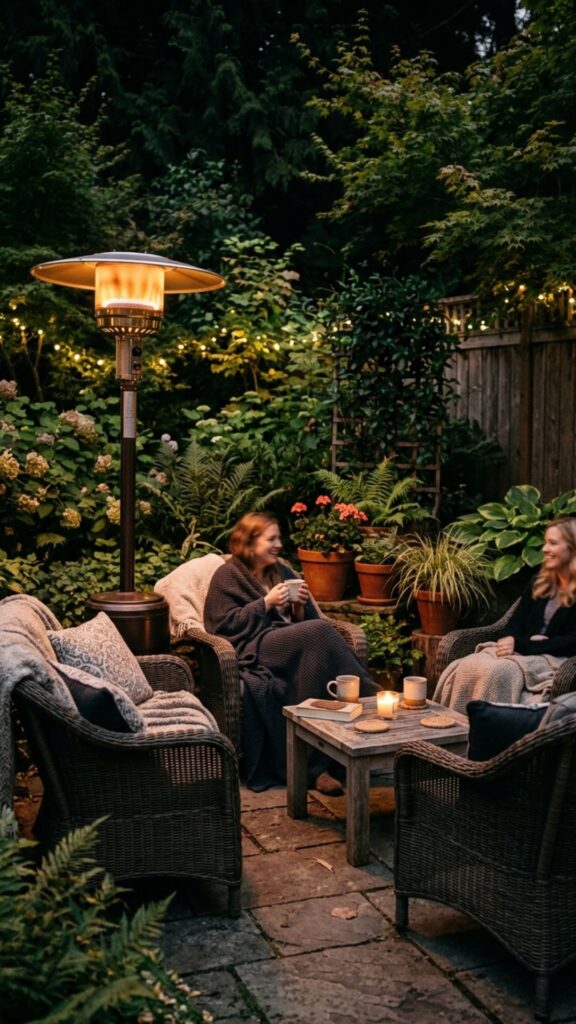
Heat lamps deliver instant, focused warmth in a compact form. Whether hanging or standing, they cast a warm glow that suits patios, entryways, and outdoor bars where you need quick heat in a specific spot.
Their bright, cozy light doubles as ambient lighting, so you get two benefits at once. They’re affordable and easy to move, making them a flexible addition to any winter setup.
13. Add String Lights for Ambient Warmth
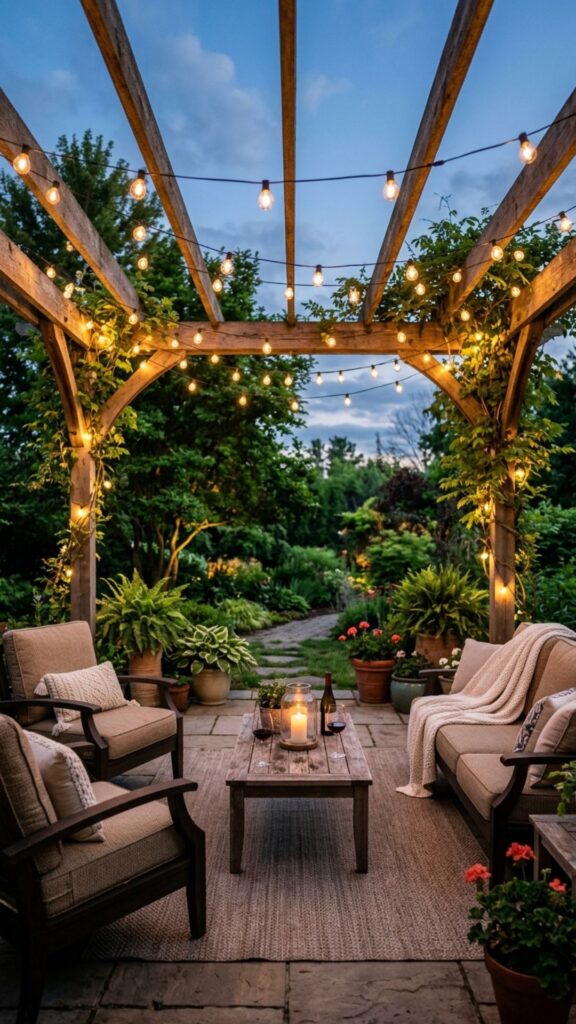
String lights won’t crank up the temperature much, but they create a feeling of warmth that changes how a space feels. Warm-white bulbs cast a soft glow that makes even a cold patio feel inviting and intimate.
Drape them across a pergola, wrap them around railings, or crisscross them overhead. Combined with real heat sources, they complete the cozy atmosphere that keeps people lingering outside longer.
14. Install a Fire Pit Table with Seating
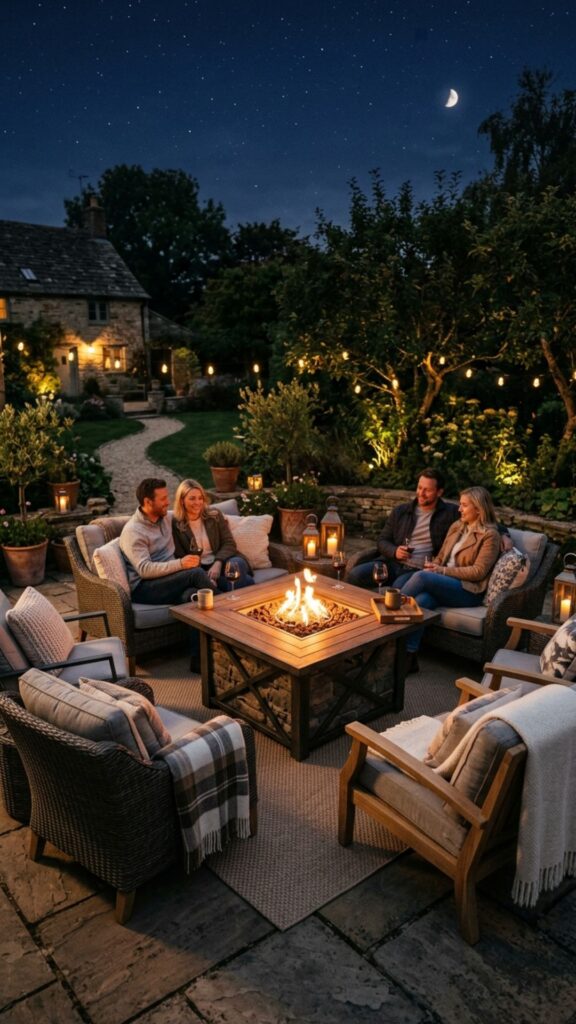
A fire pit table surrounded by built-in or arranged seating creates a natural circle of warmth. Everyone faces the flames and each other, which makes conversation flow and keeps the whole group comfortable.
Position weather-resistant chairs or a curved sofa around the pit for the best effect. Add some cushions and you’ve got a winter hangout spot that rivals any indoor living room.
15. Use a Propane Radiant Tube Heater

Radiant tube heaters offer commercial-grade warmth for larger patios. They spread heat evenly across a wide area, which is why you’ll spot them at outdoor cafes and event venues.
Mounted overhead, they free up floor space and keep the heat consistent even in breezy conditions. If you regularly host bigger groups, this is a powerful, efficient option worth considering.
16. Add an Outdoor Rug for Insulation

Cold concrete and stone floors pull heat away fast, and your feet feel it first. A thick outdoor rug adds a layer of insulation underfoot while defining your seating area with style.
Choose a rug rated for outdoor use so it handles moisture and cleans easily. It’s a small change that makes standing or sitting on your patio noticeably more comfortable in winter.
17. Enclose Your Patio with a Sunroom or Screen Room
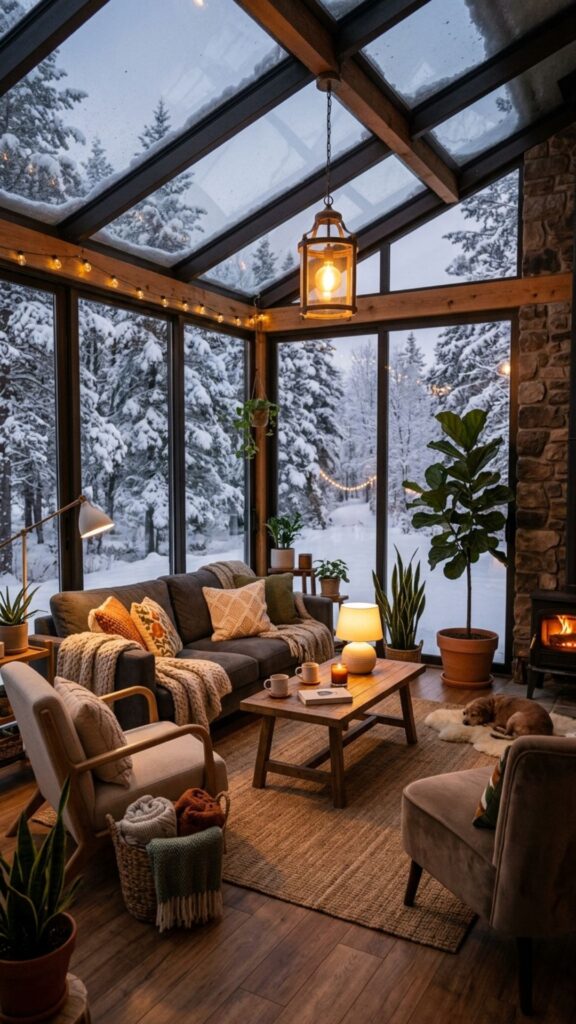
For year-round use, enclosing your patio is the ultimate solution. A screen room, sunroom, or even a temporary plastic enclosure traps heat and blocks wind, snow, and rain entirely.
Combined with any heater, an enclosed space warms up quickly and holds that warmth. This bigger investment pays off if you want to enjoy your outdoor space no matter what the weather does.
18. Set Up a Portable Electric Space Heater
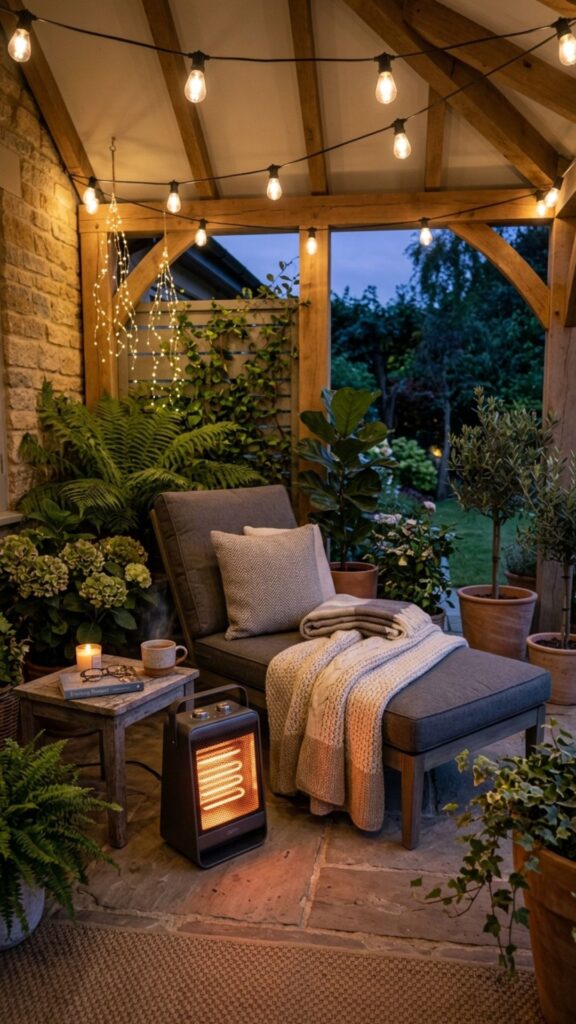
Outdoor-rated electric space heaters are affordable, easy to move, and don’t require fuel tanks. Just plug them in and point the warmth wherever you need it most.
They’re ideal for covered patios with access to an outlet. Always choose a model specifically designed for outdoor conditions and follow safety guidelines to keep cords away from moisture.
19. Build a Cozy Nook with a Fire Feature
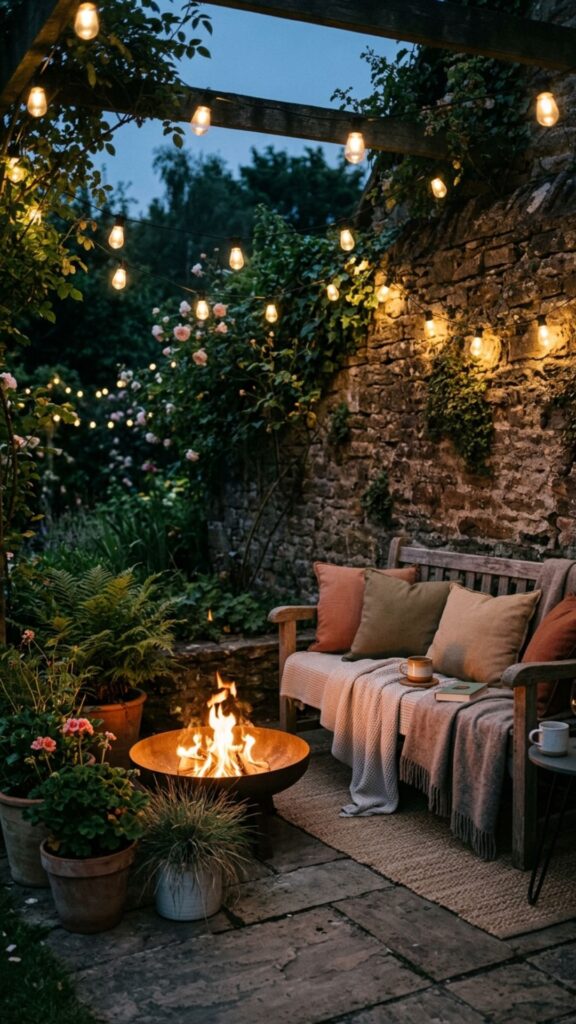
Carve out a dedicated warm zone by pairing a fire feature with sheltered seating tucked against a wall or corner. This creates a pocket of warmth that feels protected and intimate.
Add a small fire bowl, some weatherproof furniture, and a few blankets, and you have a retreat within your patio. It’s the kind of spot that becomes everyone’s favorite place to unwind.
20. Combine Multiple Heat Sources Strategically
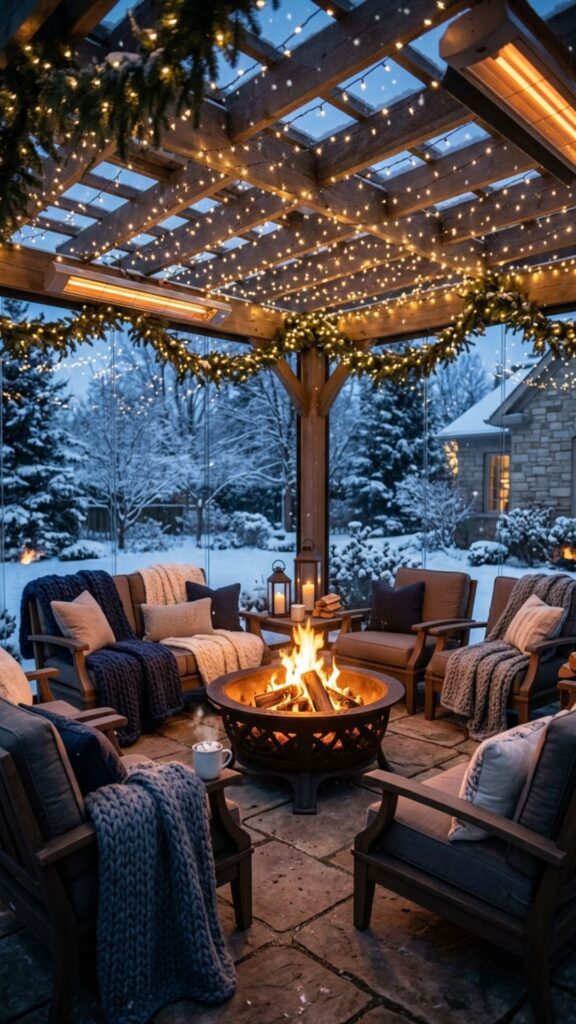
The best winter patio heating ideas often work together. Layering a fire pit for ambiance, an overhead heater for consistent warmth, and windbreaks for protection creates comfort no single source can match.
Think about how people move and gather in your space, then place heaters, lighting, and seating to support that flow. A thoughtful combination keeps every corner of your patio warm and welcoming all season.
Conclusion
Turning a cold patio into a cozy retreat is easier than you might think. From roaring fire pits to sleek infrared heaters and simple tricks like blankets and windbreaks, these winter patio heating ideas give you plenty of ways to stay warm outdoors. The right mix depends on your space, budget, and how you like to entertain.
Ready to reclaim your backyard this winter? Pick one or two ideas from this list and start small, then build your setup over time. Your patio can be a warm, inviting gathering spot every month of the year, so grab a blanket, light the fire, and enjoy the season outside.
What is the most efficient way to heat a patio in winter?
Infrared and radiant heaters are the most efficient options because they warm people and objects directly instead of heating the air. This makes them especially effective on open or windy patios where warm air escapes quickly.
Are propane or electric patio heaters better?
Propane heaters produce more heat and work anywhere without an outlet, making them ideal for large open spaces. Electric heaters cost less to run, produce no fumes, and suit covered patios with easy access to power. Your choice depends on your space and setup.
How can I heat my patio cheaply?
The cheapest ways to warm a patio include using a portable fire pit, adding outdoor blankets, laying an insulating rug, and setting up windbreaks like curtains or screens. These low-cost solutions trap and add warmth without a big investment.
Is it safe to use a patio heater under a covered patio?
Yes, but only if you follow clearance guidelines. Electric and infrared heaters are safest for covered areas, while gas heaters need adequate ventilation and proper distance from the ceiling. Always check the manufacturer’s safety instructions before use.
How much space does a patio heater cover?
A standard freestanding propane patio heater warms a radius of about 10 to 20 feet, depending on the model and wind conditions. For larger patios, using multiple heaters or combining heat sources gives the most even coverage.