There’s something special about a kitchen that feels lived-in and loved. An antique-inspired island can do exactly that. It brings warmth, history, and a bit of soul to a room that often ends up feeling cold and clinical.
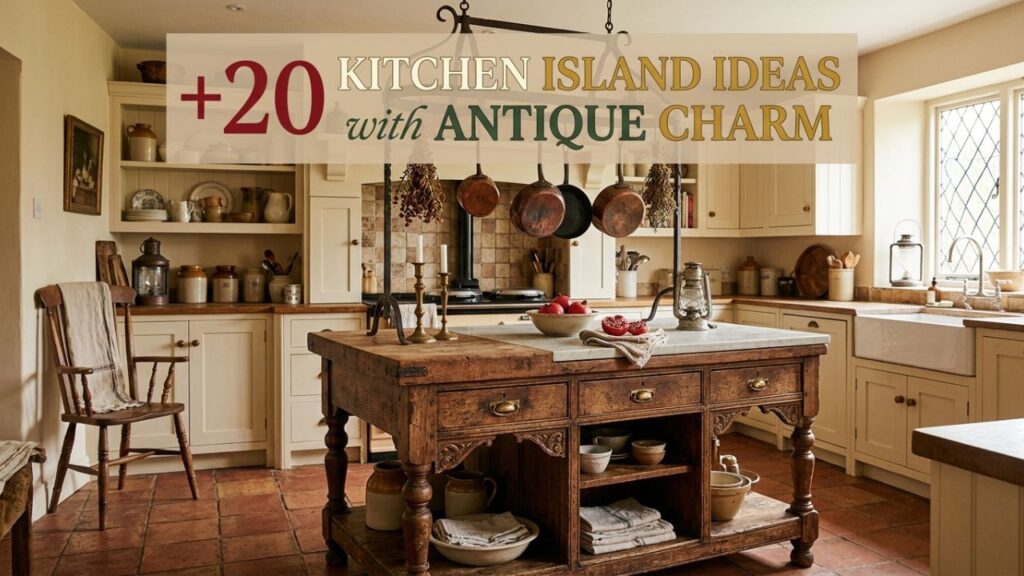
After years of helping homeowners rework their kitchens, I’ve seen how one well-chosen piece can shift the entire mood of a space.
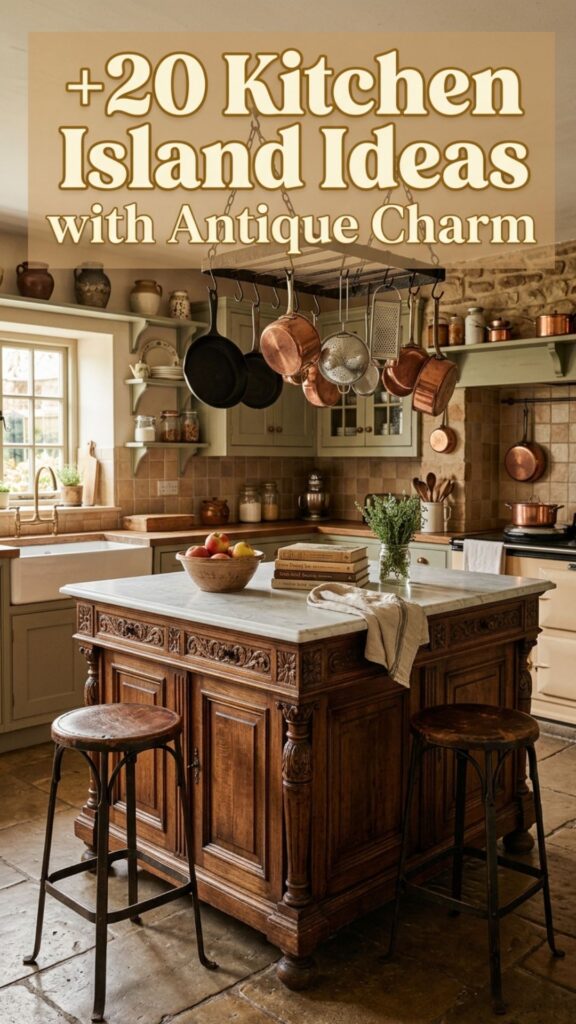
If you’re hunting for kitchen island ideas antique lovers actually swoon over, you’re in the right place. Below you’ll find 20 practical, beautiful options, from repurposed furniture to salvaged materials. Some are budget-friendly weekend projects. Others are statement pieces worth investing in. Let’s dig in.
1. Repurpose an Old Farmhouse Table
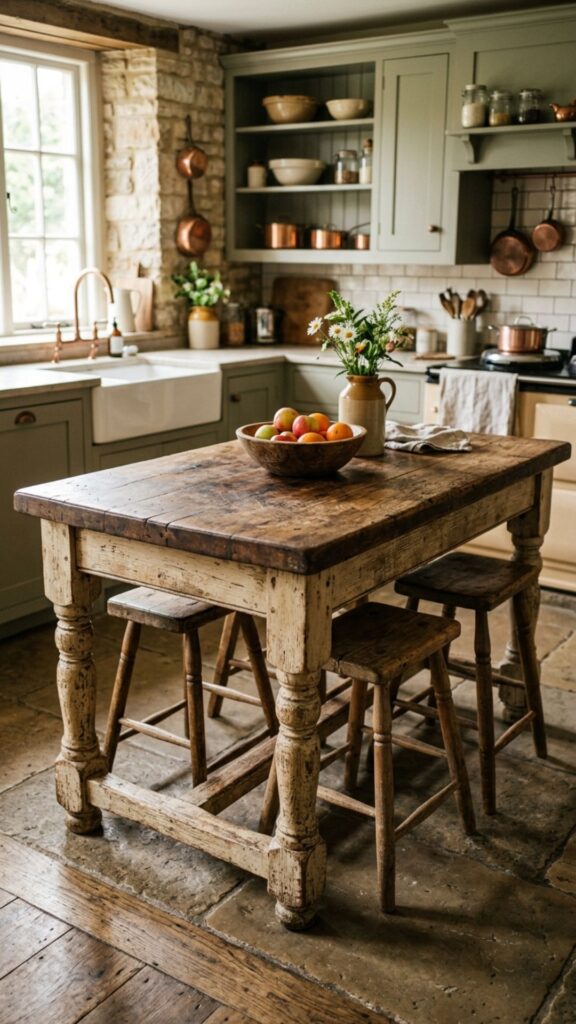
A weathered farmhouse table makes an instant island with almost zero effort. The worn top, chunky legs, and honest wear tell a story you simply can’t fake with new furniture. Look for oak or pine tables at estate sales, where prices tend to be far kinder than antique shops.
Add a couple of stools underneath and you’ve got casual seating too. If the height feels low for prepping, put the legs on discreet risers or swap in taller feet. The goal is to keep that original character while making it work for daily life.
2. Convert a Vintage Dresser or Sideboard
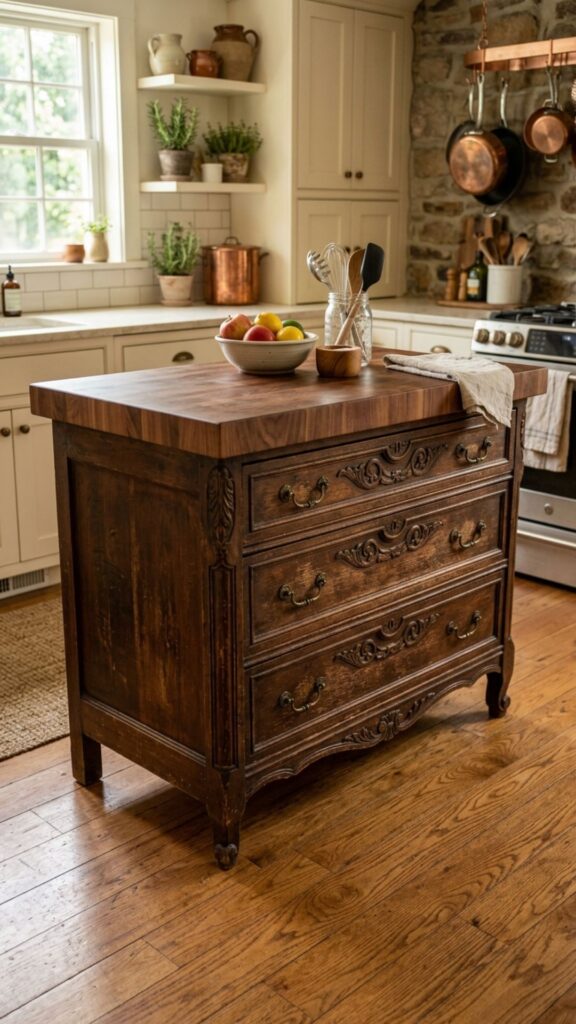
An old dresser gives you something most islands lack: real storage with charm. Those deep drawers hold pots, linens, and baking gear beautifully, and the carved details add personality no flat-pack cabinet can match. Sideboards work especially well because they’re already counter height.
Top it with a slab of butcher block or salvaged marble for a durable prep surface. I’ve done this in my own home with a 1920s buffet, and guests always ask where I bought it. The answer, of course, is a dusty barn sale for next to nothing.
3. Use Reclaimed Barn Wood
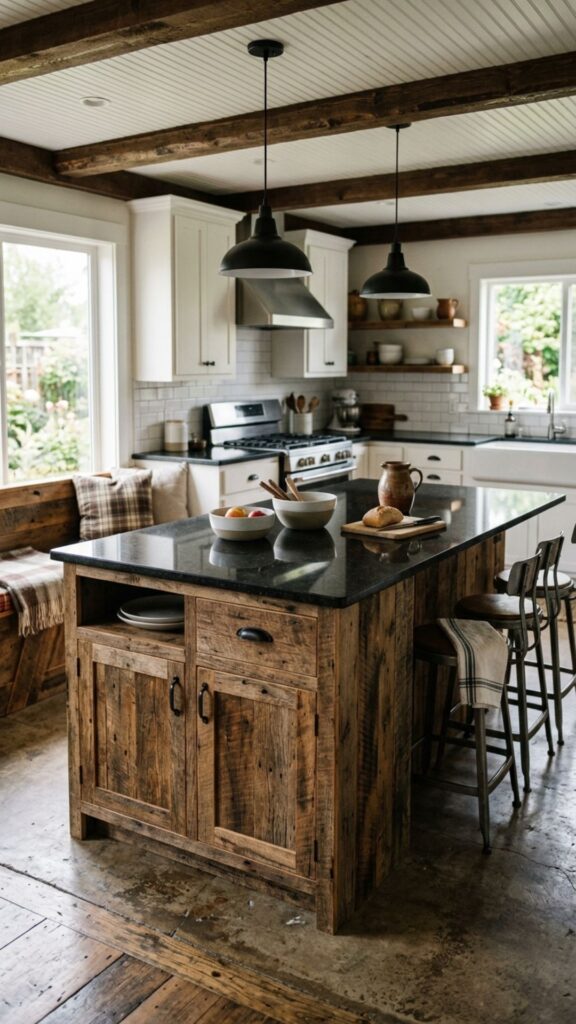
Reclaimed barn wood carries a texture and patina that new lumber takes decades to earn. Building an island base from these boards gives you rugged, rustic appeal that anchors a farmhouse or country kitchen. The nail holes and grain variations are features, not flaws.
Pair the wood base with a smooth countertop to balance rough and refined. Reclaimed wood also happens to be an eco-friendly choice, since you’re saving material from the landfill. That mix of sustainability and beauty is hard to beat.
4. Add Turned Legs for Old-World Detail
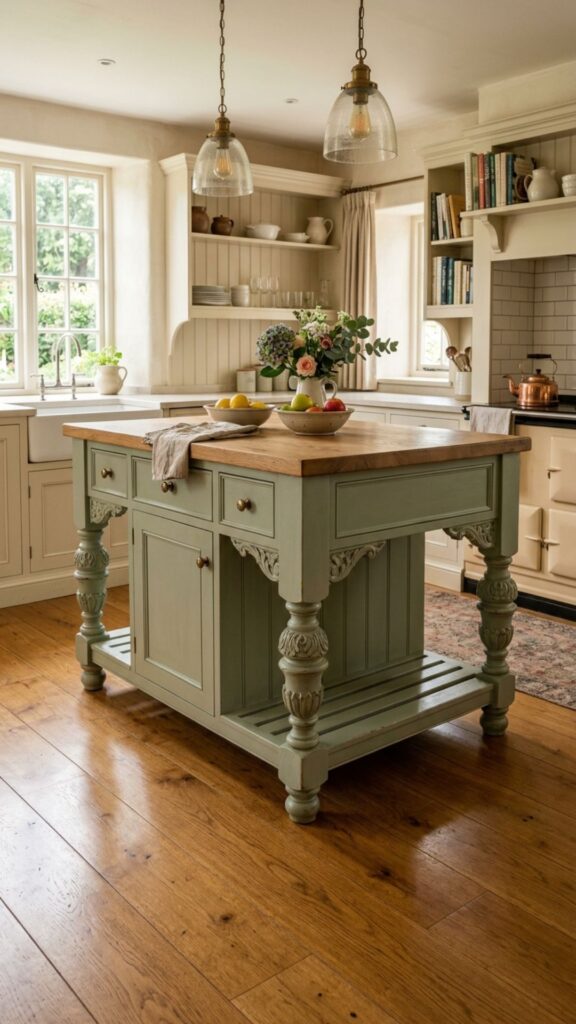
Turned legs instantly signal antique craftsmanship. These spindled, curved supports were a hallmark of furniture from earlier eras, and adding them to a plain island base transforms the whole look. You can buy reproduction turned legs or salvage originals from broken tables.
Paint them a soft chalky color to highlight the detailing. Creamy white, sage green, or muted blue all play nicely with vintage themes. The contrast between simple cabinetry and ornate legs creates that curated, collected-over-time feel.
5. Install a Vintage Butcher Block Top
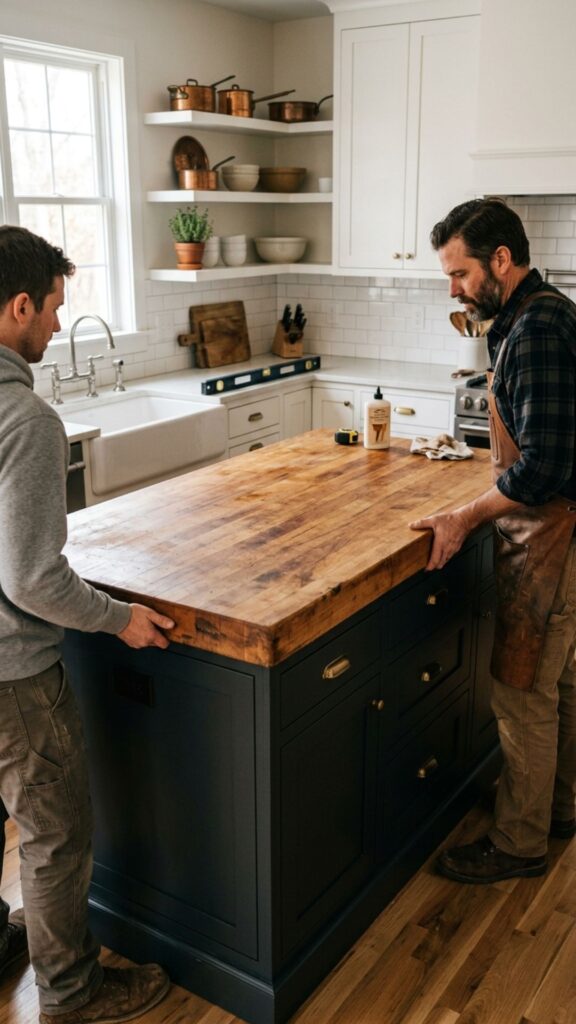
Nothing says old-fashioned kitchen quite like a scarred, well-oiled butcher block. These thick maple tops were built for real cooking, and the marks they collect only add to their charm. Salvaged commercial blocks from old butcher shops carry serious character.
Sand and re-oil the surface to bring it back to life, then let it patina naturally over time. It’s functional, food-safe, and warm underfoot to work at. This is one of those kitchen island ideas antique fans return to again and again for good reason.
6. Go for a Distressed Painted Finish
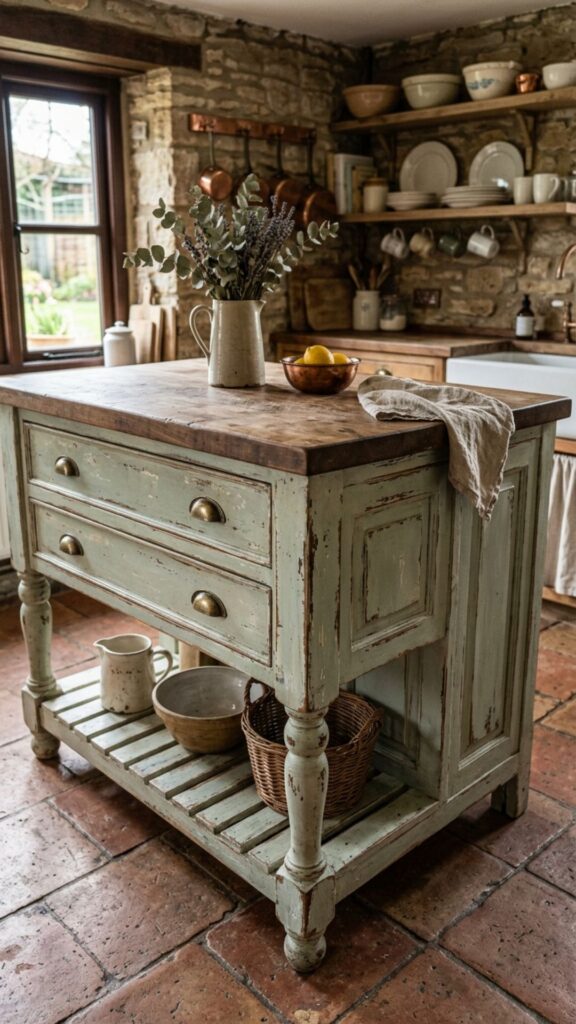
A distressed paint job fakes decades of gentle wear in a single afternoon. Sand through the edges and corners after painting to reveal wood or a base color underneath. This technique works on almost any island, new or old.
Chalk paint makes distressing especially easy since it clings well and sands smoothly. Choose layered colors, like cream over a warm gray, for depth. The result looks like a piece that’s been handed down for generations.
7. Feature an Antique Iron Base
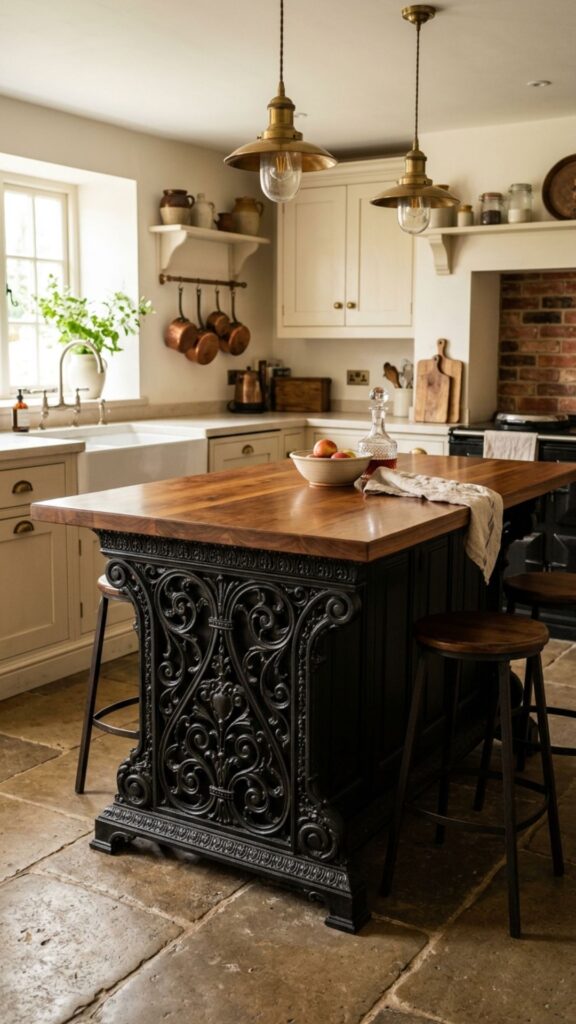
An ornate cast-iron base brings industrial-meets-vintage flair. These heavy, scrolled frames once supported everything from sewing tables to café counters. Topped with wood or stone, they make a striking, sturdy island.
The dark metal grounds a bright kitchen and pairs beautifully with brass hardware. Look for salvaged bases at architectural reclamation yards. They’re often overlooked, which means you can snag one for a reasonable price.
8. Incorporate Salvaged Corbels
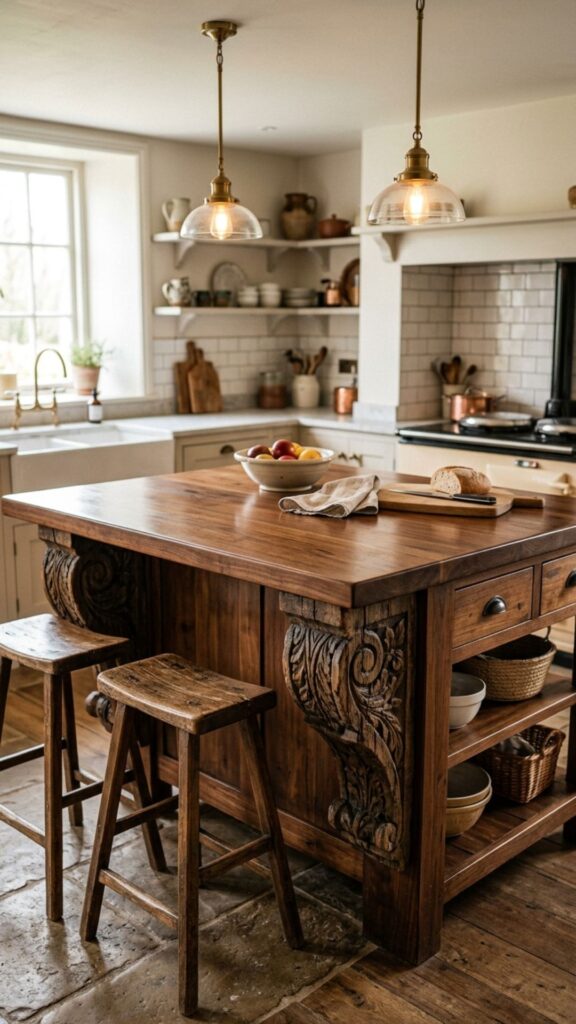
Corbels are those decorative brackets you see under shelves and mantels. Mounting a few under your island’s overhang adds instant architectural richness. They’re small details, but they make a big difference.
Reclaimed wood or plaster corbels look most authentic. Stain them to match your top or paint them to blend with the base. This trick works wonders when you want antique charm without rebuilding the whole island.
9. Try a Repurposed Workbench
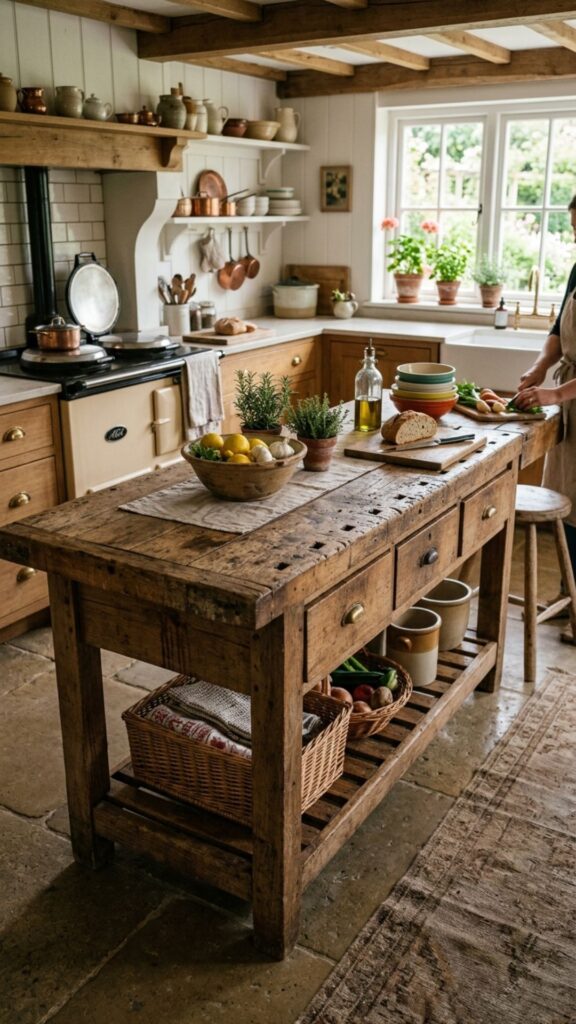
Old workbenches were built to last, and that sturdiness makes them ideal islands. The thick tops handle heavy prep, while built-in vises and drawers add quirky character. Industrial workshops and garages are goldmines for these.
Clean them up but resist over-restoring. Those dings and stains are the whole point. A repurposed bench feels honest and hardworking, exactly the vibe a vintage kitchen wants.
10. Mix in Wrought Iron Details
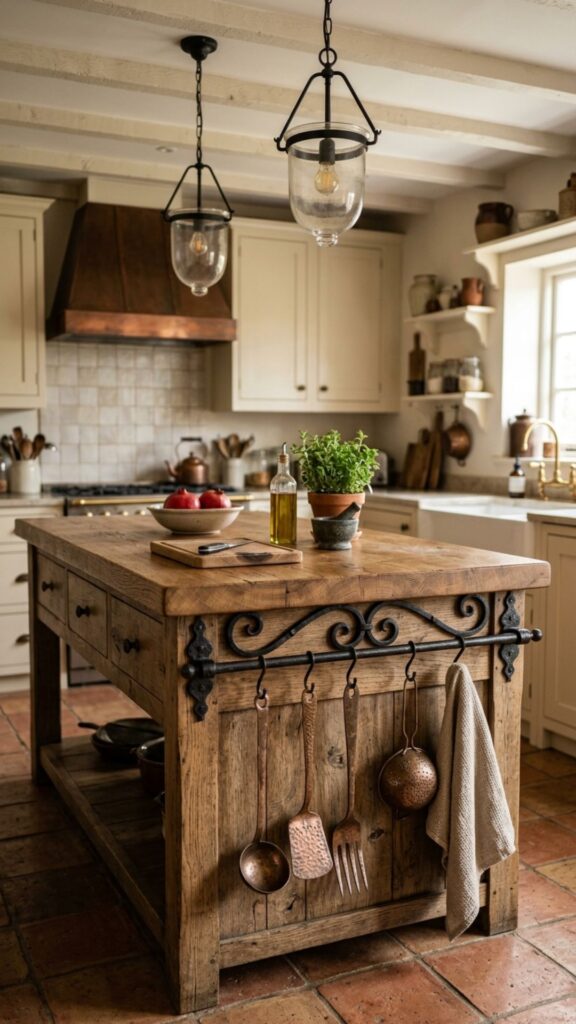
Wrought iron accents, like towel bars, hooks, or decorative panels, layer in old-world texture. These handmade-looking elements evoke blacksmith craftsmanship from centuries past. Even a few pieces shift the whole feel.
Hang antique utensils or a small pot rack from the iron for both function and display. The dark metal contrasts nicely against painted or natural wood. Little touches like these are what make a space feel genuinely collected.
11. Choose a Zinc-Topped Island
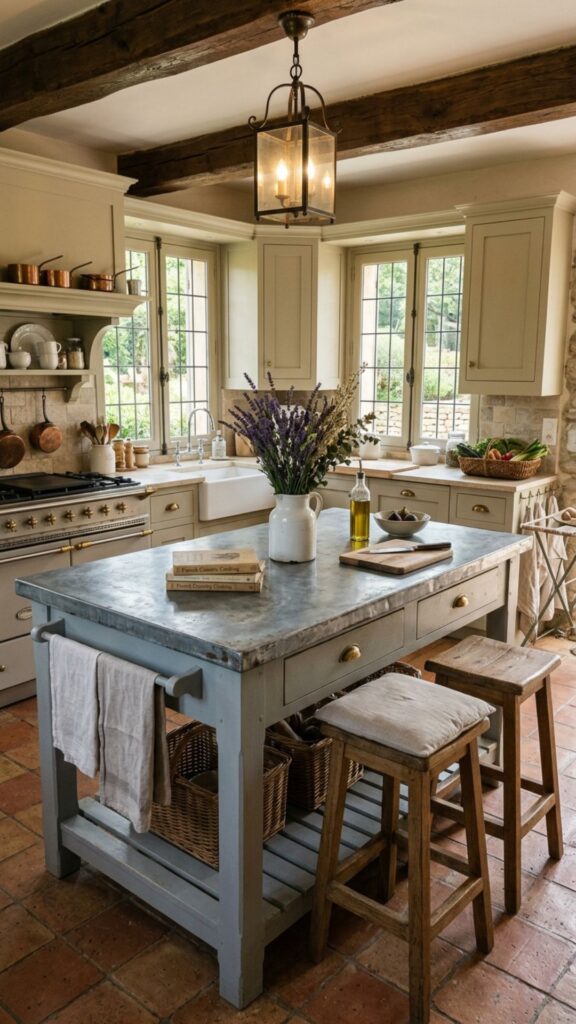
Zinc counters have graced European kitchens for over a century. The soft metal develops a living patina, shifting through blues and grays as it ages. That evolving surface gives your island real depth and history.
Zinc pairs especially well with painted wood bases in French country kitchens. It’s a splurge, yes, but the character it develops is genuinely one of a kind. Every scratch simply adds to the story.
12. Build Around a Vintage Baker’s Cabinet
Old baker’s cabinets, or Hoosiers, were the original all-in-one kitchen workstations. With their flour bins, pull-out surfaces, and clever storage, they’re practically islands already. Restoring one preserves a piece of everyday history.
Roll it into the center of the room and let it shine. The enamel work surfaces and glass canisters bring genuine nostalgia. These pieces are increasingly collectible, so grab one if you find it in good shape.
13. Add Open Shelving with Antique Brackets
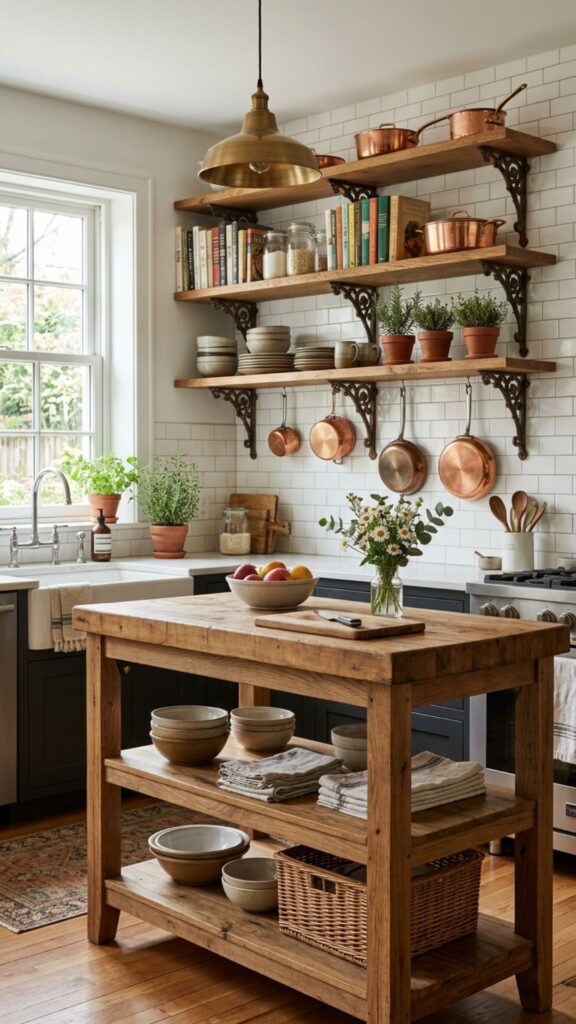
Open shelves on the end of an island invite you to display treasures. Mount them with ornate antique brackets to lean fully into the vintage look. Stack them with old crockery, cookbooks, or copper pots.
This approach keeps the island feeling airy rather than boxy. It also gives you a spot to show off flea-market finds. The mix of function and display feels warm and personal.
14. Use Recovered Beadboard Panels
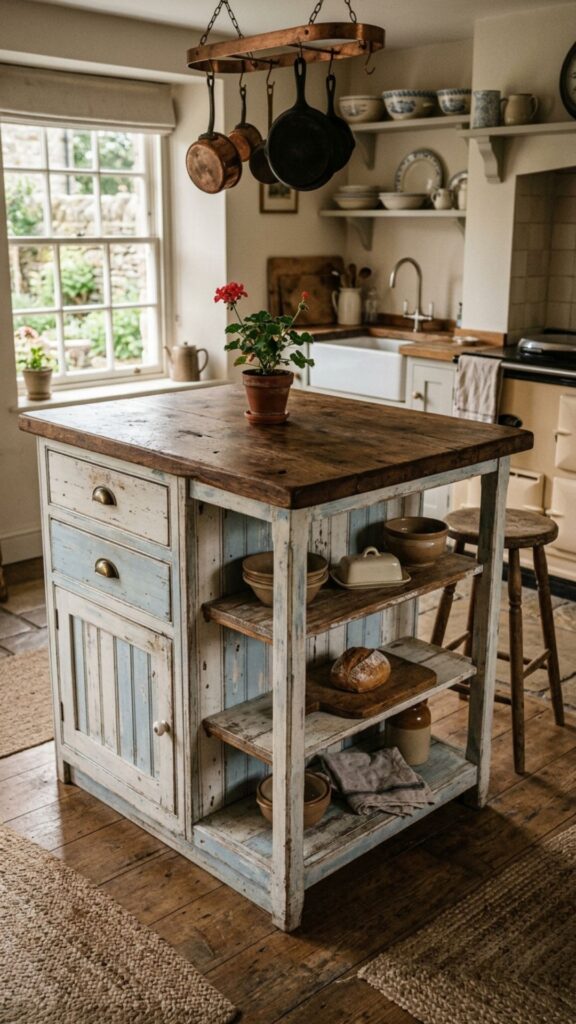
Beadboard adds cottage charm to any island base. Salvaged panels with their original paint bring authentic age you can’t replicate. Wrap them around a plain island for instant character.
Paint them a soft, muted shade to keep the look cohesive. Beadboard also hides minor construction flaws, making it forgiving for DIYers. It’s a small change with a big charming payoff.
15. Feature a Marble Slab Remnant
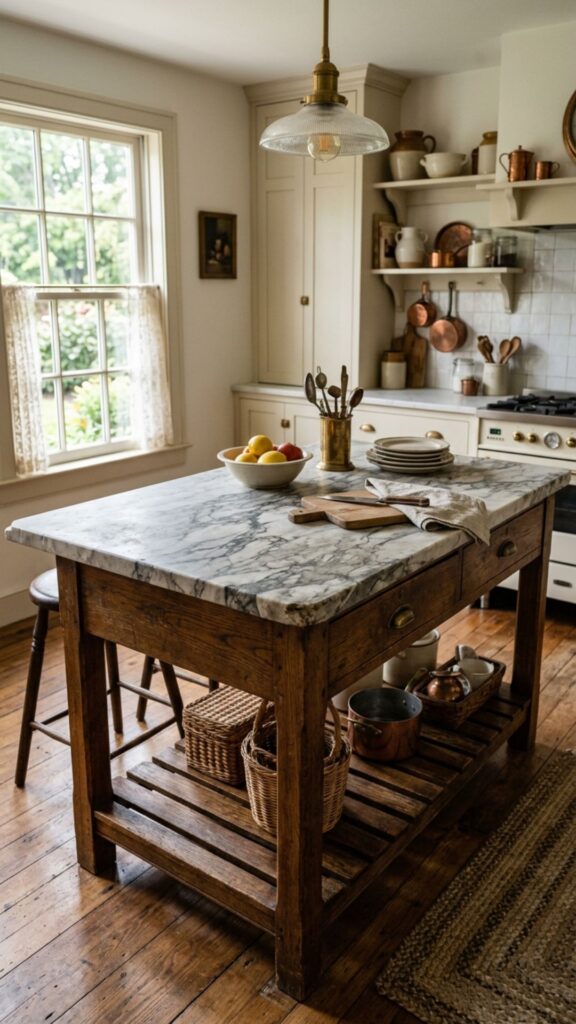
Salvaged marble carries elegance and history in equal measure. Old marble from renovated buildings often shows beautiful veining and gentle wear. A remnant slab makes an affordable, luxurious island top.
Marble is ideal for bakers thanks to its cool surface. Yes, it stains and etches, but that softening only adds vintage character over years of use. Embrace the patina rather than fighting it.
16. Repurpose a Piano or Organ Base
For a truly unexpected piece, an old piano or organ frame makes a conversation-starting island. The carved wood and unusual shape stand out dramatically. This works best in eclectic or maximalist kitchens.
Remove the internal mechanics and top it with a custom counter. It’s a labor of love, but the result is genuinely irreplaceable. No one else will have anything quite like it.
17. Incorporate Antique Enamelware Accents
Vintage enamelware, in creamy whites with colored trim, adds nostalgic pops of charm. Use enamel canisters, pitchers, or basins as styling on your island. They’re both practical and pretty.
Hang enamel colanders or pots from a rail for a working display. These pieces are widely available and affordable at markets. They tie an antique theme together without any construction at all.
18. Choose Weathered Gray Wood Tones
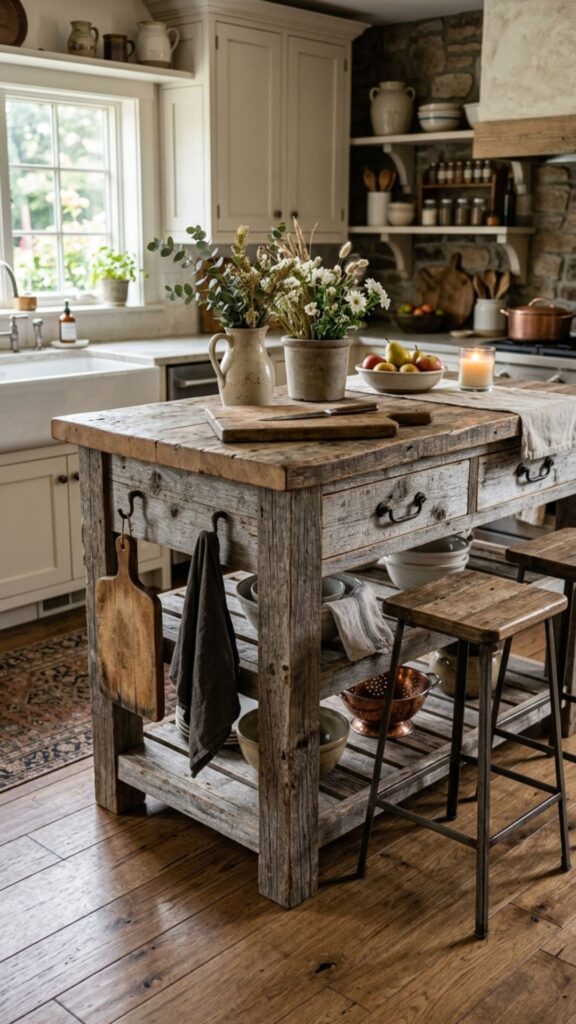
Silvery, weathered wood evokes driftwood and old barns. This finish suits coastal, farmhouse, and rustic kitchens alike. You can achieve it with gray wash stains or by aging wood naturally.
The muted tone plays well with almost any palette. It reads as timeless rather than trendy, which matters for a lasting kitchen. Weathered wood feels calm, grounded, and genuinely old.
19. Add a Vintage Overhead Pot Rack
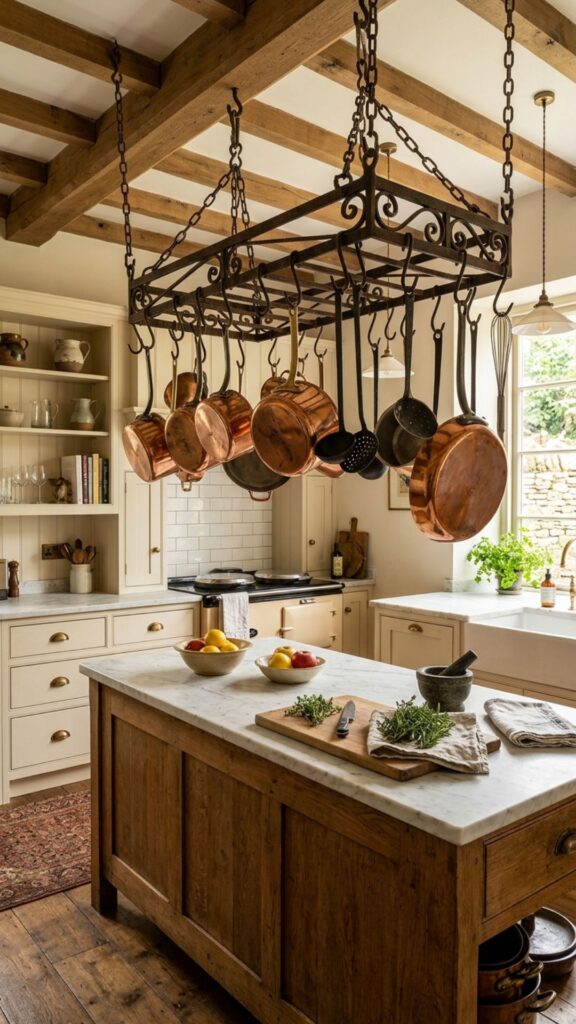
Suspend an antique iron or copper pot rack above your island and the whole space gains old-kitchen character. It frees cabinet space while turning your cookware into decor. Copper pots especially catch the light beautifully.
Salvaged racks often have more personality than new ones. Look for handwrought hooks and aged finishes. This overhead detail draws the eye up and completes the vintage story.
20. Restore an Old General Store Counter
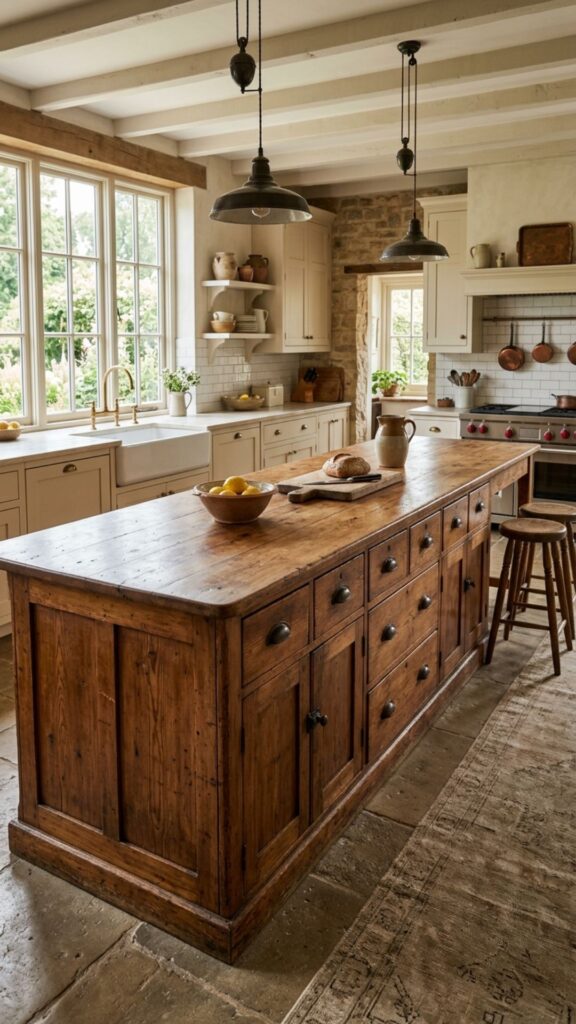
Salvaged store counters bring serious history and scale. These long, sturdy pieces were built to handle constant use, making them perfect islands for large kitchens. The worn tops and built-in drawers are full of character.
Reclamation yards and antique dealers sometimes carry them. They’re a splurge and a hunt, but nothing else delivers the same authentic, storied presence. It’s the kind of piece a kitchen gets built around.
Conclusion
Bringing antique charm into your kitchen doesn’t require a full renovation or a huge budget. Whether you repurpose an old dresser, salvage barn wood, or simply add turned legs and a butcher block top, small choices add up to a space full of warmth and story. The best kitchen island ideas antique enthusiasts love all share one thing: genuine character earned over time.
Ready to start? Pick one idea that fits your space, then hit local estate sales, reclamation yards, and flea markets this weekend. Snap photos, measure carefully, and trust your eye. Your dream vintage island is out there waiting to be found.
What makes a kitchen island look antique?
An antique look comes from aged materials, distressed finishes, turned legs, salvaged wood, and vintage details like corbels or iron hardware. Repurposing old furniture, such as dressers or farmhouse tables, is the easiest way to achieve authentic charm.
Can I turn old furniture into a kitchen island?
Yes. Dressers, sideboards, workbenches, and baker’s cabinets all convert into islands beautifully. Add a durable countertop like butcher block or marble, adjust the height if needed, and seal the wood to handle kitchen use.
Are antique kitchen islands practical for daily use?
They can be very practical. Choose pieces with sturdy construction and add functional surfaces like butcher block or zinc. Proper sealing and a bit of maintenance keep vintage materials working well for years.
How much does a vintage kitchen island cost?
Costs range widely. A repurposed flea-market find might run $100 to $400, while a restored general store counter or custom salvaged piece can cost several thousand. DIY projects using reclaimed materials keep budgets low.
Where can I find antique pieces for a kitchen island?
Try estate sales, flea markets, architectural salvage yards, antique shops, and online marketplaces. Reclamation yards are especially good for barn wood, iron bases, corbels, and salvaged countertops.