There’s something deeply appealing about a bedroom that feels layered, warm, and full of character — the kind of space that looks like it was put together over time rather than ordered in one online shopping session.
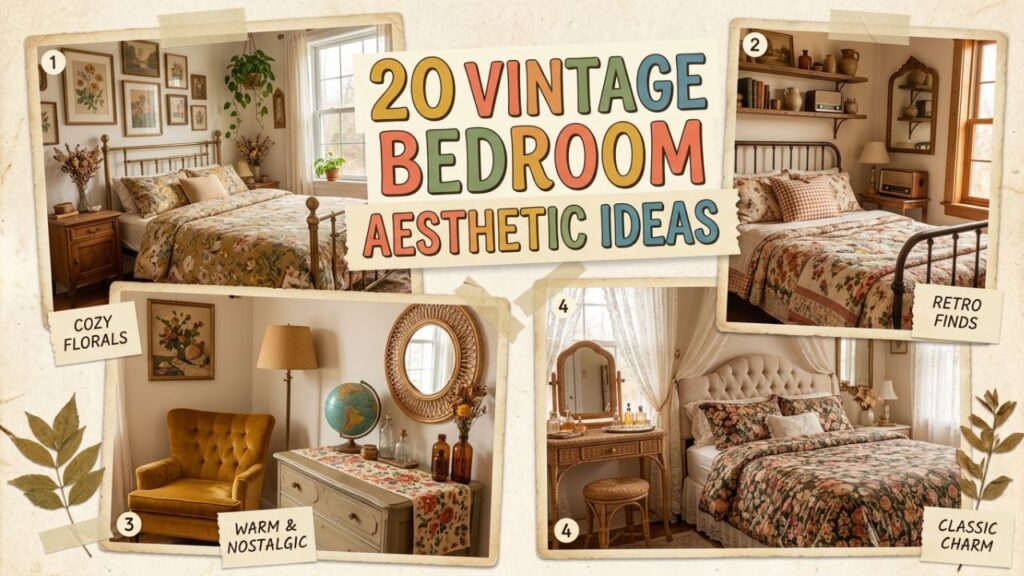
That’s exactly what a bedroom aesthetic vintage style delivers. It draws on the past without being stuck there, mixing antique finds with modern comfort to create something that feels personal and genuinely inviting.
Whether you’re starting from scratch or just looking to add more depth to a room that already works, this guide gives you 20 concrete ideas to build a vintage bedroom that feels timeless rather than themed.
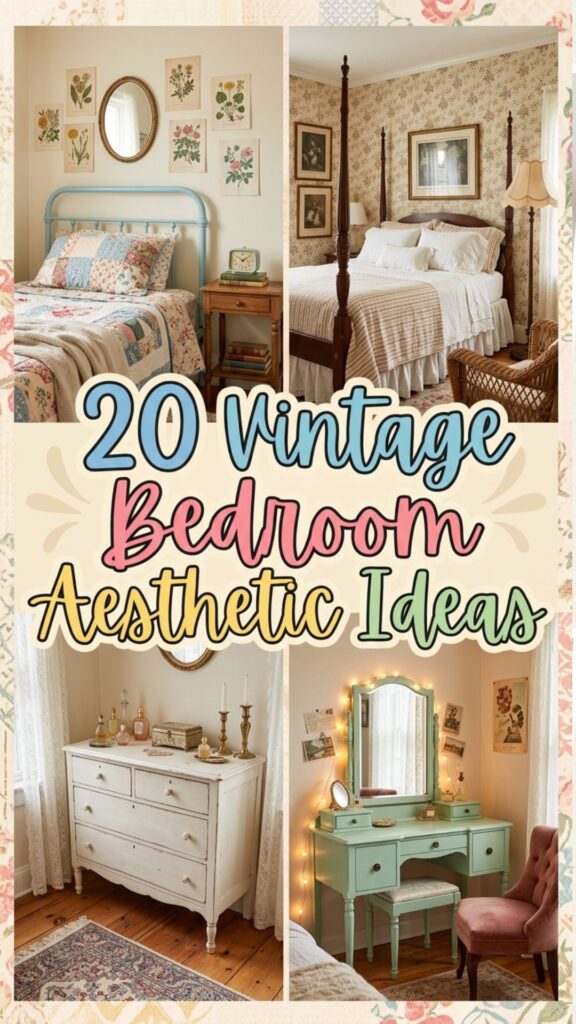
You’ll find tips on furniture, color palettes, textiles, lighting, and small details that make a big difference — all written with real rooms in mind, not just Pinterest boards.
1. Start With a Wrought Iron or Brass Bed Frame
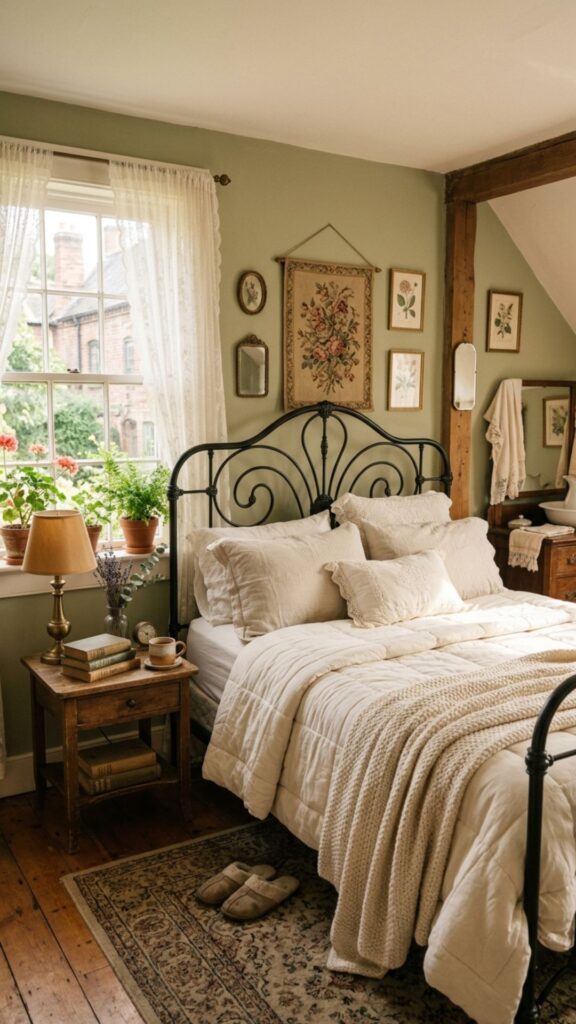
The bed frame is the anchor of any bedroom, and nothing sets a vintage aesthetic more immediately than the right one. A wrought iron frame with simple curved detailing or a brass frame with knob finials signals the style before anything else in the room has a chance to register. Both materials age well and develop a patina that only adds to the look over time.
If a full vintage frame is outside your budget, look for modern reproductions in the same materials — many are well-made and far more affordable than sourced antiques. Pair with white or ivory bedding to let the frame stand out rather than compete with a busy pattern.
2. Layer Vintage-Inspired Bedding
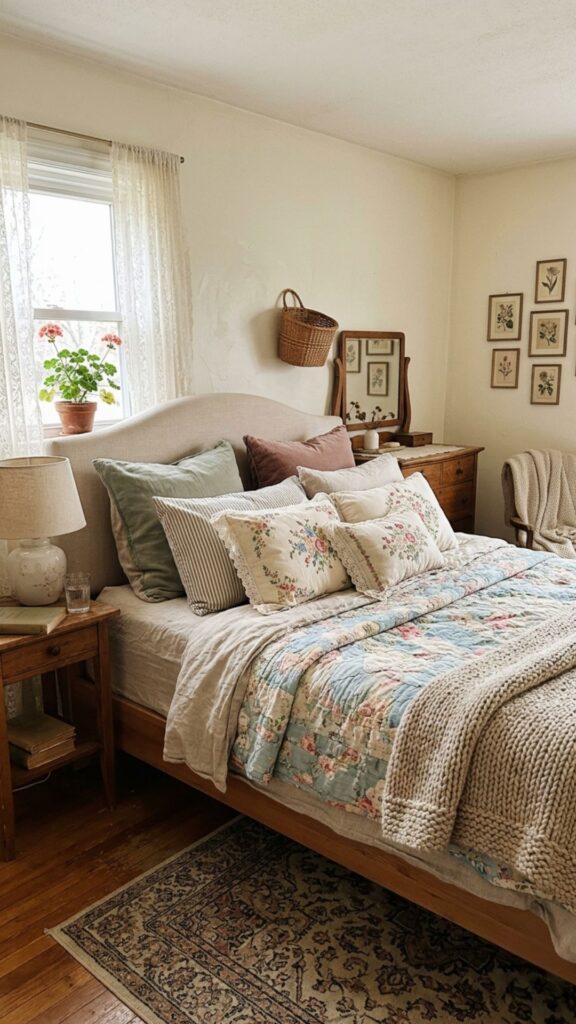
Bedding is the biggest visual surface in a bedroom, which makes it one of the most powerful tools for establishing a bedroom aesthetic vintage feel. Look for quilts with traditional patterns — patchwork, floral, or geometric — in faded, muted tones. Washed cotton and linen both age beautifully and give bedding that lived-in softness that new polyester blends can’t replicate.
Layer a flat sheet, a quilt, and a chunky knit throw at the foot of the bed for warmth and texture. Mismatched pillowcases in coordinating florals or stripes are very much in keeping with the vintage style and are far easier to pull off than a perfectly matched set.
3. Incorporate an Antique Dresser
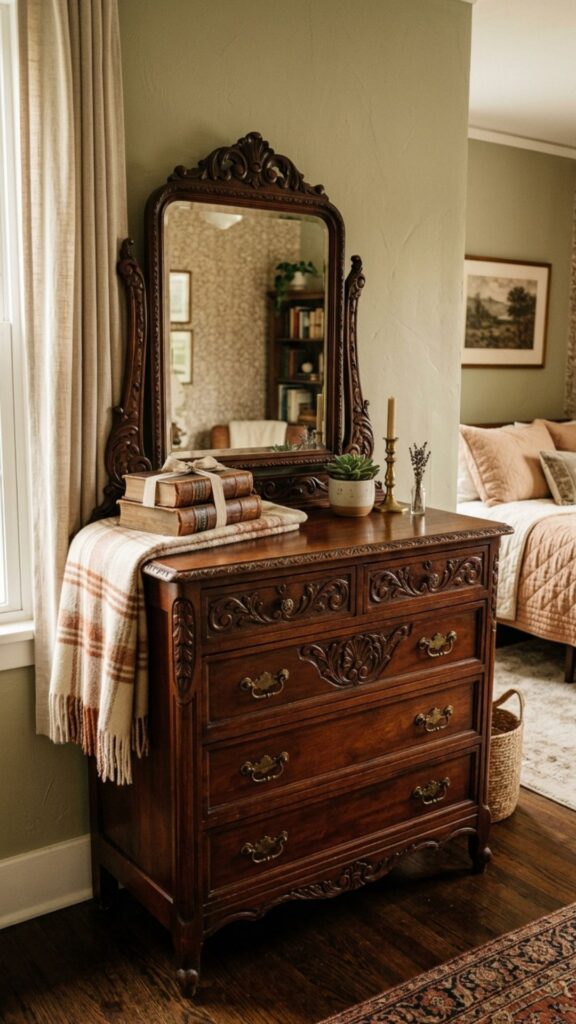
An antique dresser — whether sourced from a thrift shop, estate sale, or inherited — brings immediate authenticity to a vintage bedroom. Look for solid wood pieces with dovetail joints, original hardware, and any interesting details like carved panels or a curved front. These are the signs of genuine craftsmanship that modern flat-pack furniture simply doesn’t offer.
If the piece needs work, a light sand and fresh coat of chalk paint in a muted tone like sage, cream, or warm grey can revive it without erasing its character. Swap out the hardware for aged brass or ceramic pulls for an easy upgrade that costs very little.
4. Use a Warm, Muted Color Palette
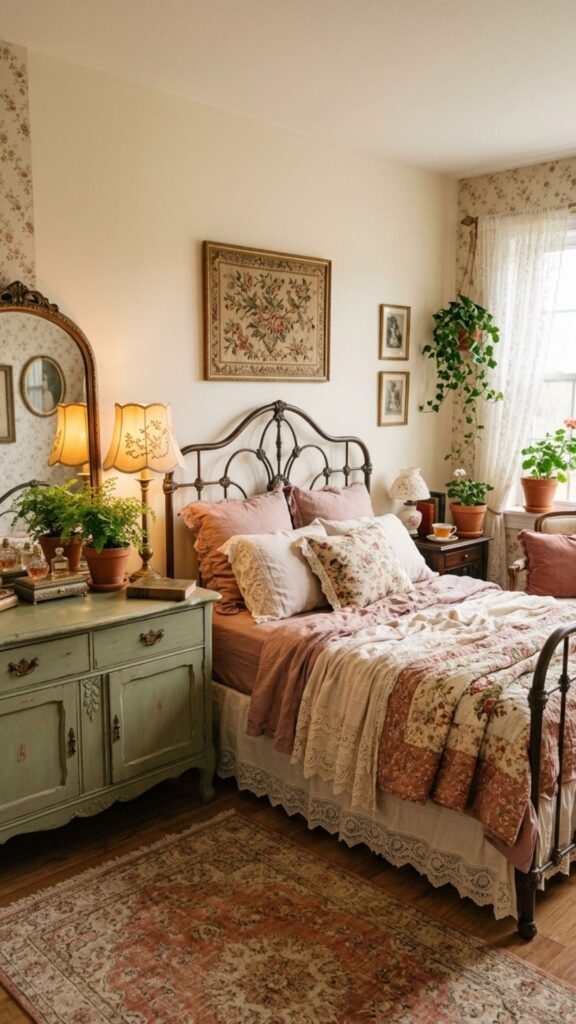
Color is one of the fastest ways to shift a room toward a vintage aesthetic. Think dusty rose, warm cream, sage green, terracotta, and soft mustard — tones that feel warm and slightly faded rather than bright and saturated. These colors work in combination or on their own, and they tend to photograph well in natural light.
Avoid stark white or cool grey, which read as contemporary rather than vintage. If you’re not ready to repaint, bring in the palette through textiles, wallpaper, and accessories — a dusty rose throw, sage green curtains, or terracotta pots can shift the mood of a room without a single drop of paint.
5. Add Vintage Floral Wallpaper
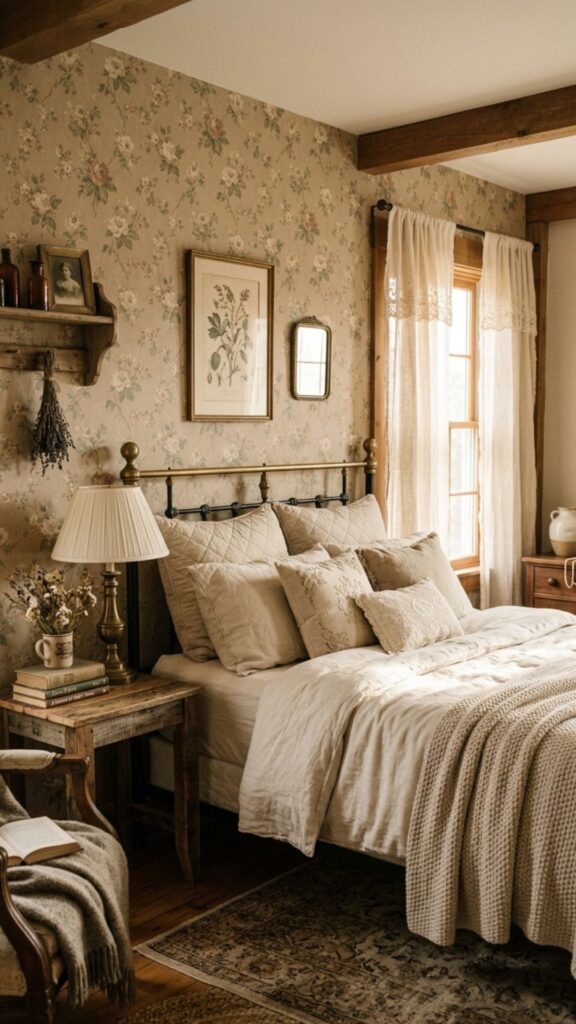
Floral wallpaper is one of the most defining features of a vintage bedroom aesthetic, and it’s more versatile than it might seem. A small-scale print in muted tones works in compact rooms without overwhelming the space, while a larger, bolder pattern suits rooms with higher ceilings and more floor area to balance it out.
If full wallpaper feels like too much commitment, use it on a single accent wall — behind the headboard is the most effective placement because it frames the bed and adds depth to the most-looked-at wall in the room. Removable wallpaper options make this even easier to try without a long-term commitment.
6. Hang Vintage-Style Curtains
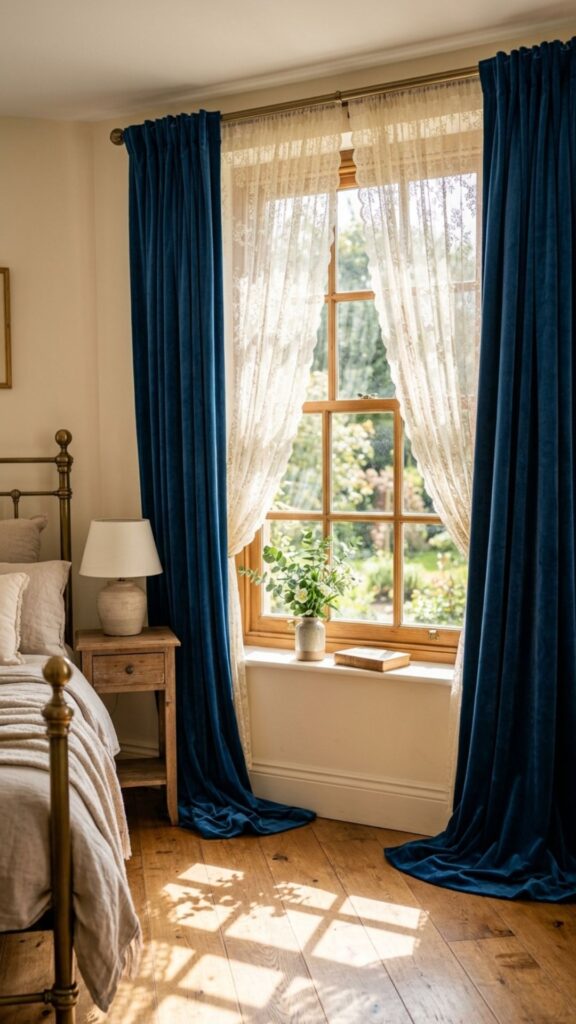
Curtains frame the window and connect the room visually, so choosing a vintage-appropriate fabric makes a meaningful difference. Lace panels, voile with a subtle print, or heavyweight velvet in a deep jewel tone all align well with a bedroom aesthetic vintage direction. The fullness of the panel matters too — curtains that pool slightly at the floor look more considered than ones that hang straight and stop short.
For a practical approach, layer a sheer panel with a heavier outer curtain. This gives you control over light throughout the day while adding the kind of layered richness that defines the vintage style.
7. Include a Vintage Vanity Table
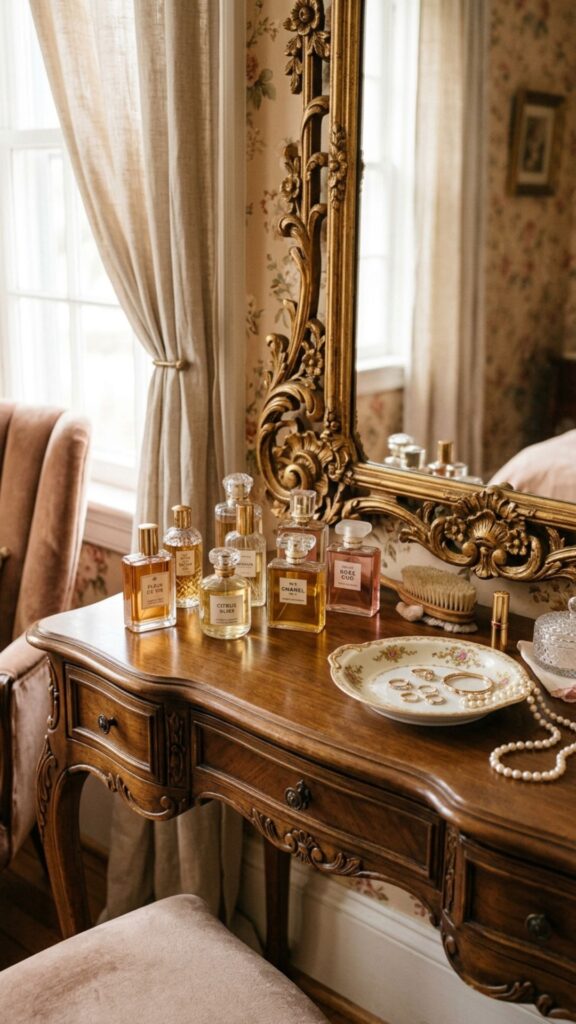
A vanity table with a mirror is both functional and deeply characteristic of vintage bedroom design. It creates a dedicated grooming space that adds purpose to a corner of the room that might otherwise go unused. Look for pieces with a center mirror flanked by smaller side mirrors, ornate carved legs, or a kidney-shaped top — all hallmarks of mid-century and earlier vanity design.
If you can’t find an original, a reproduction in the same style works well when combined with genuinely vintage accessories like a silver-handled brush set, a cut-glass perfume bottle, or an old-fashioned ring dish. The accessories do a lot of the authenticating work.
8. Display Vintage Artwork and Prints
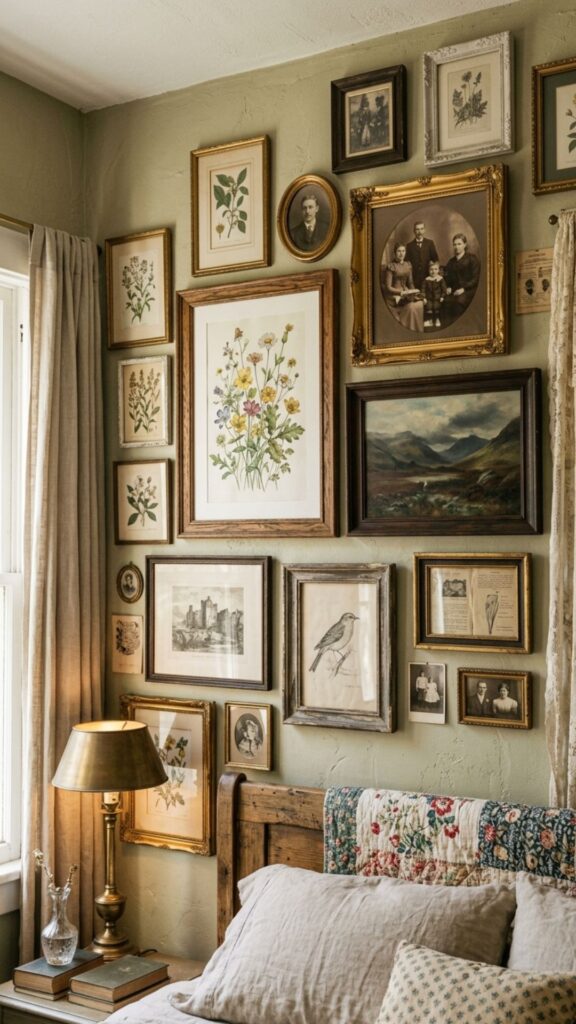
Art is one of the most personal bedroom accessories, and vintage prints give a room both visual interest and a sense of history. Botanical illustrations, Art Deco travel posters, old portrait paintings, and landscape prints from earlier decades all suit the vintage bedroom aesthetic. Look for original prints at flea markets and antique fairs, or opt for high-quality reproductions in vintage-style frames.
Frame choice matters here. Ornate gilded frames, dark wood frames with a distressed finish, and simple oval frames all carry a vintage sensibility. A single large print above the bed makes a strong statement; a loosely arranged gallery wall of smaller pieces in mixed frames adds the layered, personal feel that’s central to the vintage look.
9. Introduce a Persian or Oriental Rug
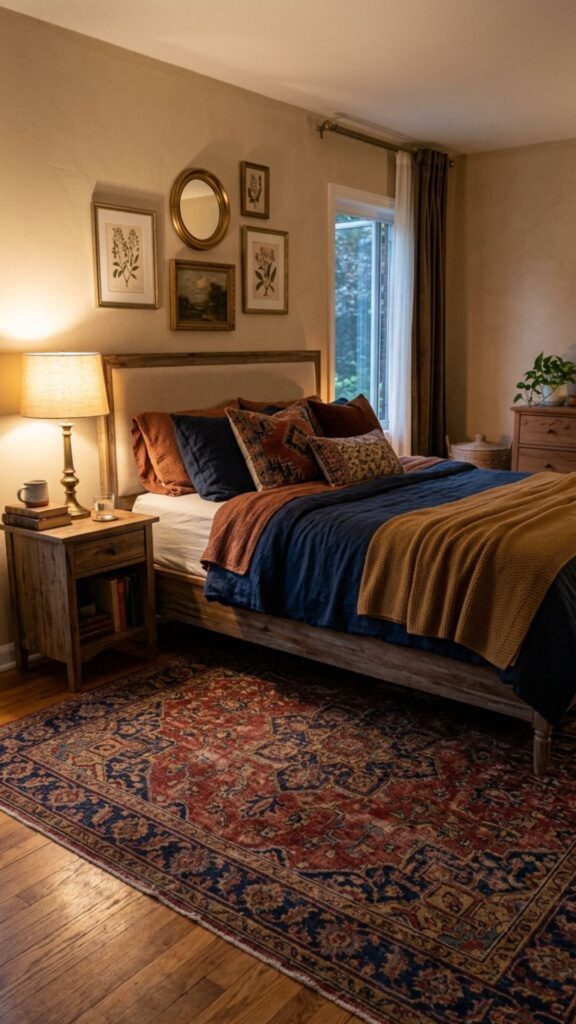
A vintage or vintage-style rug is one of the single most effective ways to ground a bedroom in a timeless aesthetic. Persian and Oriental patterns in deep reds, navy, and warm gold tones add richness and warmth underfoot and tie together furniture pieces that might not otherwise feel connected.
You don’t need an authentic antique rug to get the effect — many modern reproductions are very convincing, and worn or distressed versions are widely available at accessible price points. Size it generously so that it extends at least 18 inches beyond both sides of the bed for a grounded, intentional look.
10. Use Edison Bulb or Candelabra Lighting
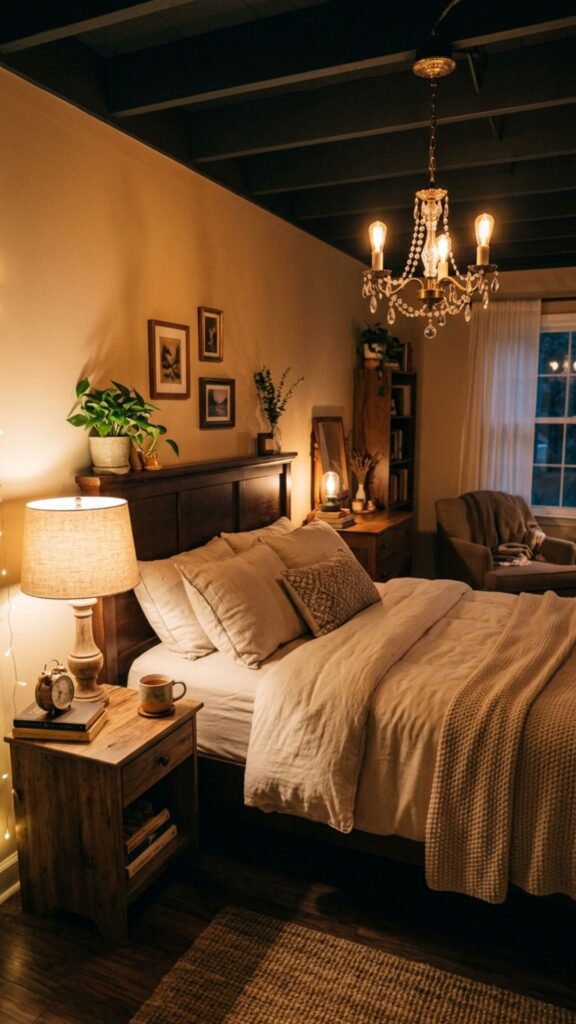
Lighting shapes the mood of a room more than almost any other element, and the vintage bedroom aesthetic depends heavily on warm, soft light sources. Edison bulbs in exposed filament styles emit a warm amber glow that enhances the cozy, time-worn quality of vintage interiors. Use them in a bedside lamp with a fabric shade or in an exposed-bulb wall sconce.
Candelabra-style fixtures — whether a small chandelier above the bed or a table lamp with multiple arms — add a sense of grandeur that suits the vintage style without requiring a large space to carry it off. Avoid cool white or LED daylight bulbs in a vintage room; they undermine the warmth the rest of the décor is working to create.
11. Add a Cheval or Ornate Standing Mirror
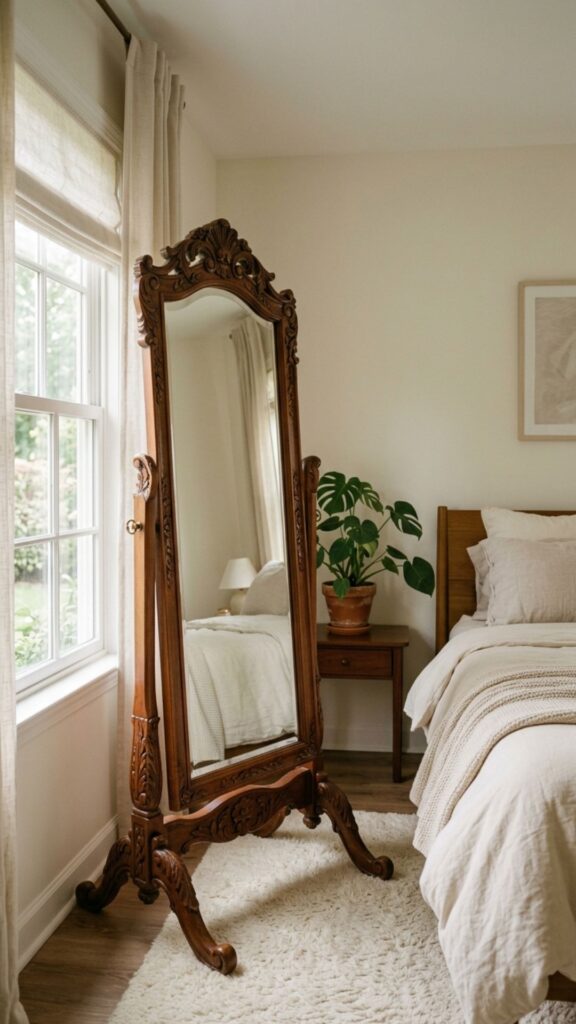
A cheval mirror — the kind that pivots in a frame and stands on its own — is one of those bedroom pieces that’s both functional and immediately evocative of an earlier era. It’s practical for getting dressed, but it also adds height and visual interest to a corner of the room that might otherwise feel bare.
Look for one with a carved wood frame, turned legs, or an aged brass pivot mechanism. Full-length mirrors reflect light and make the room feel larger, which is an added practical benefit on top of the aesthetic contribution.
12. Incorporate Open Shelving With Vintage Objects
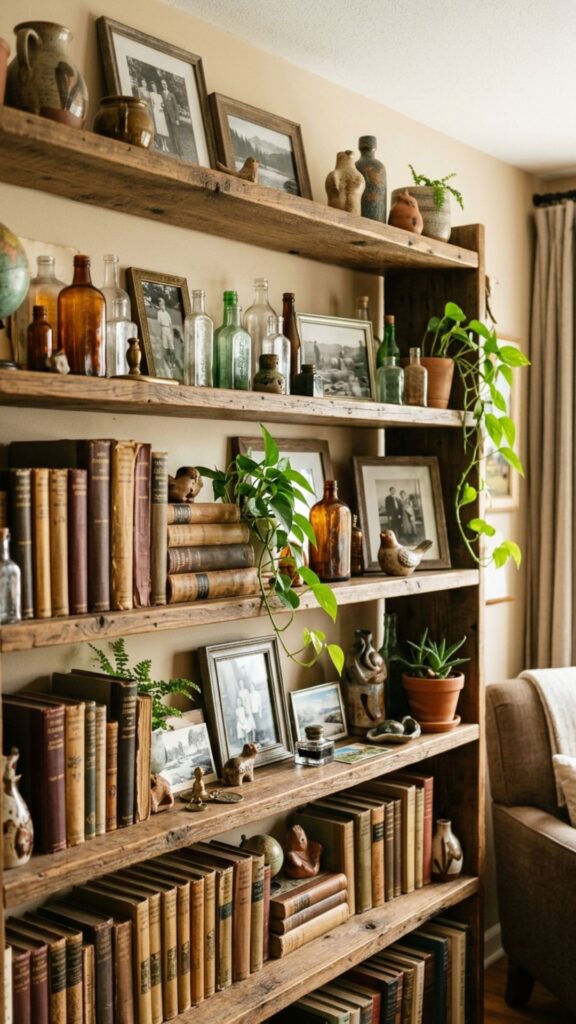
Open shelving gives you a space to display the objects that make a bedroom feel personal — and in a vintage bedroom, those objects do real decorative work. Old books with worn spines, glass bottles, ceramic figurines, a wooden clock, framed photographs, and small plants all contribute to the layered, collected quality that defines the vintage aesthetic.
Avoid the urge to over-style shelves into perfect symmetry. The vintage look benefits from a slightly informal arrangement where things appear to have accumulated naturally over time. Keep the overall palette consistent — mostly warm neutrals with a few color accents — so the display feels curated rather than cluttered.
13. Choose Furniture With Visible Wood Grain
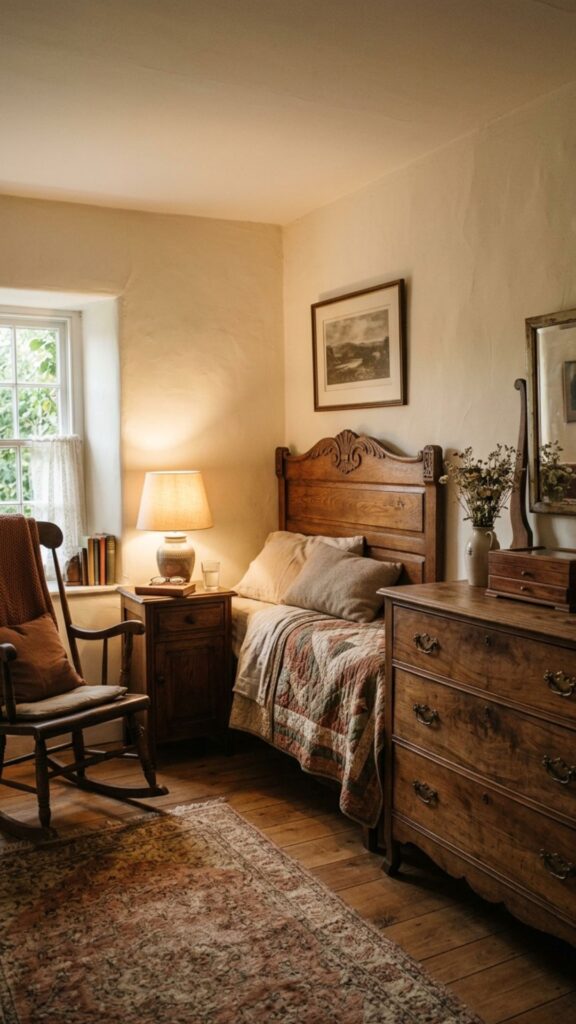
In a vintage bedroom, furniture speaks through its material as much as its form. Solid wood pieces with a visible grain — oak, walnut, cherry, or pine — carry a warmth and authenticity that laminate or painted surfaces can’t match. Look for furniture with joinery details, slight variations in color, and any signs of handwork.
If you’re buying vintage or antique furniture, some wear and minor imperfections are part of the appeal — they confirm that the piece has a history. If you’re buying new, look for furniture made from solid rather than engineered wood, and consider aging a lighter piece with a wax or oil finish to deepen the grain.
14. Layer Textiles Throughout the Room
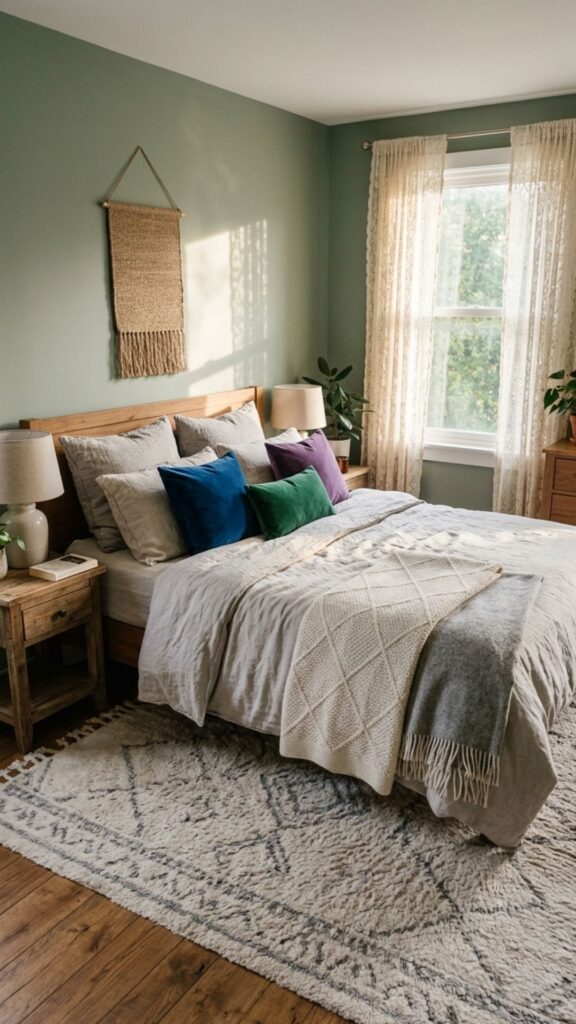
The bedroom aesthetic vintage style is built on texture and layering. A room with a single flat fabric — just a bedspread, bare curtains, and a hard rug — doesn’t read as vintage regardless of the furniture. You need multiple textile layers: a quilted bedspread over linen sheets, velvet cushions against cotton pillowcases, a woven throw beside lace curtains.
Focus on natural materials — cotton, linen, wool, velvet, and silk — rather than synthetics, which tend to look flat and don’t develop the softness that natural fibers gain over time. Even a single velvet cushion or wool throw can shift the feel of an entire bed in the right direction.
15. Add a Vintage Trunk or Blanket Chest
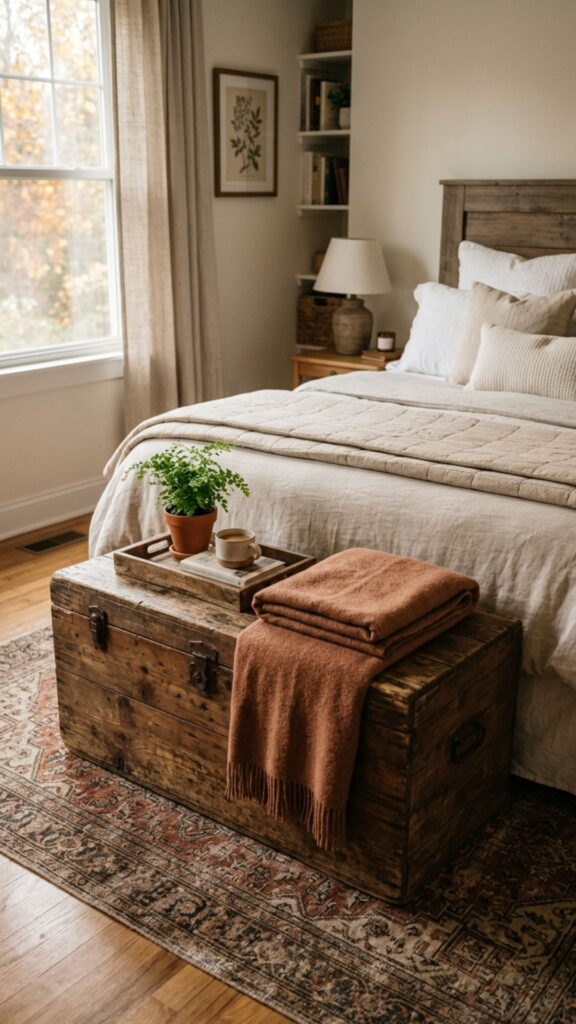
A vintage trunk at the foot of the bed is one of the most practical and visually effective bedroom accessories available. It provides hidden storage for extra blankets, off-season clothing, and anything else you want out of sight, while adding a substantial design element that most modern furniture pieces can’t replicate.
Leather-bound trunks, wooden blanket chests with iron hardware, and wicker storage trunks all fit the vintage aesthetic depending on whether your room leans toward more formal, rustic, or bohemian vintage. Use the top as a display surface with a small tray, a plant, and a folded throw for a finished look.
16. Hang a Vintage Clock on the Wall
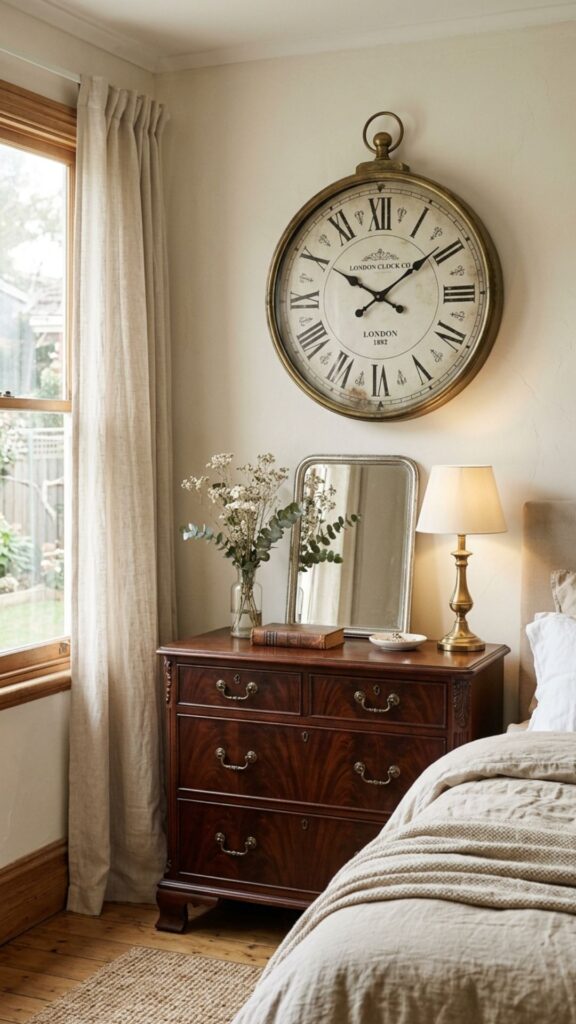
A wall clock does more than tell the time — in a vintage bedroom, it’s a decorative focal point that signals the era without being heavy-handed about it. A large round clock with Roman numerals and an aged face, a pendulum clock mounted on the wall, or a simple schoolhouse-style clock all suit the vintage bedroom aesthetic well.
Position it above a dresser or on the wall opposite the bed so it’s visible from multiple angles. If you’re a light sleeper, choose one with a quiet or silent movement — the classic tick is charming during the day but less appealing at 3 a.m.
17. Use Botanical or Nature-Inspired Accents
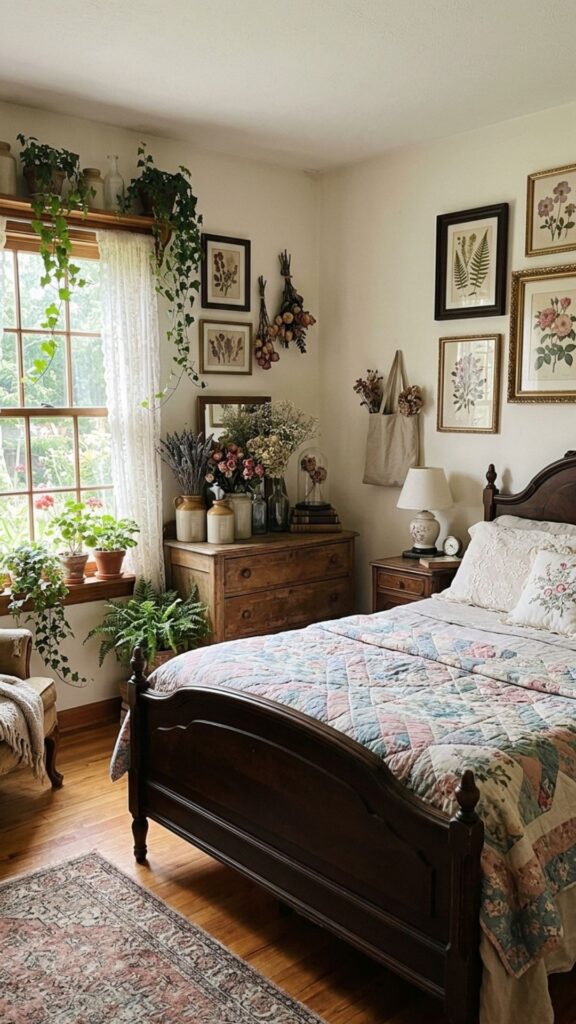
Nature has always been a central theme in vintage interior styles, from Victorian botanical prints to mid-century houseplant culture. Dried flower arrangements, pressed botanical prints in simple frames, potted ferns, trailing ivy, and ceramic vases filled with dried grasses all add organic warmth to a vintage bedroom.
Dried flowers in particular are having a strong moment — they require no maintenance, last for years, and add texture and muted color that fresh flowers can’t sustain. Hang a dried lavender bundle or a small wreath above the headboard, or display a loose arrangement in a vintage glass vase on the dresser.
18. Repurpose Vintage Objects as Decor
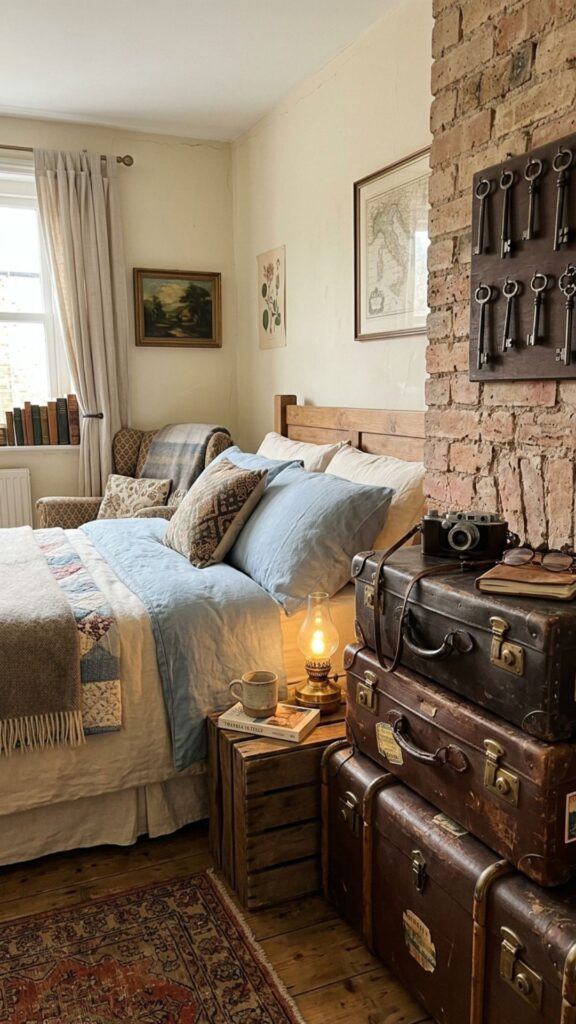
One of the hallmarks of a genuinely interesting vintage bedroom is the presence of objects that weren’t originally designed as décor but have been repurposed thoughtfully. A wooden crate used as a bedside table, a vintage suitcase stacked as a side table, an old camera displayed on a shelf, or a collection of antique keys hung on a hook — these details add personality that manufactured accessories simply can’t.
Flea markets, estate sales, charity shops, and online marketplaces are excellent sources for this kind of find. The key is restraint — a few well-chosen repurposed objects feel intentional; too many feel like a storage problem.
19. Install Picture Rail Molding or Crown Molding
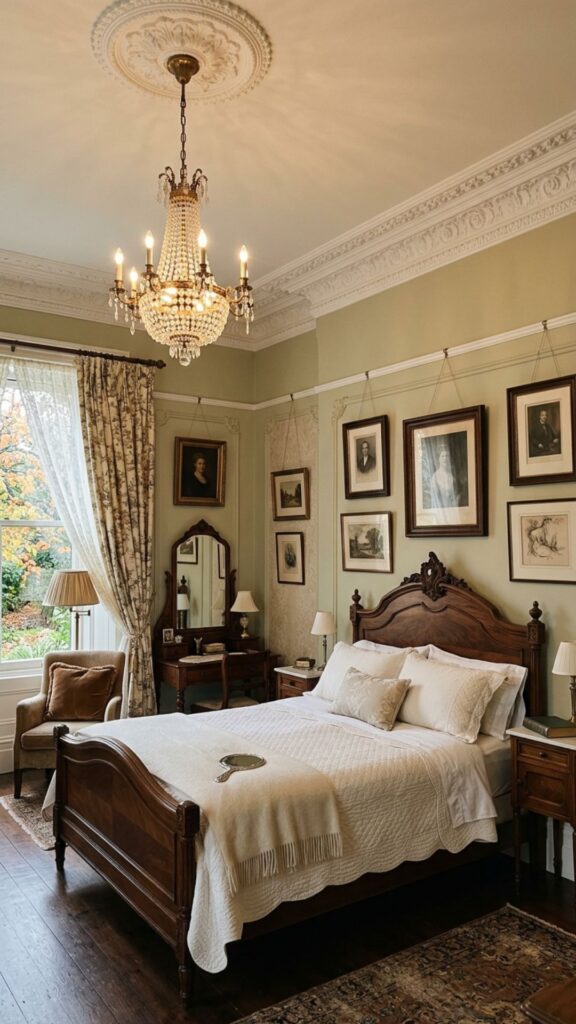
Architectural details matter in a vintage bedroom because they provide the structural context that makes the furniture and accessories feel at home. Picture rail molding — a narrow wooden rail installed near the ceiling from which artwork can be hung using hooks and wire — is both practical and authentically vintage. It allows you to rearrange and add artwork without making new holes in the wall.
Crown molding at the ceiling-wall junction adds formality and depth to a room, making it feel more substantial. If your room already has these features, work with them rather than concealing them. If it doesn’t, adding them is a relatively affordable upgrade that pays off significantly in the overall feel of the room.
20. Keep the Room Edited and Intentional
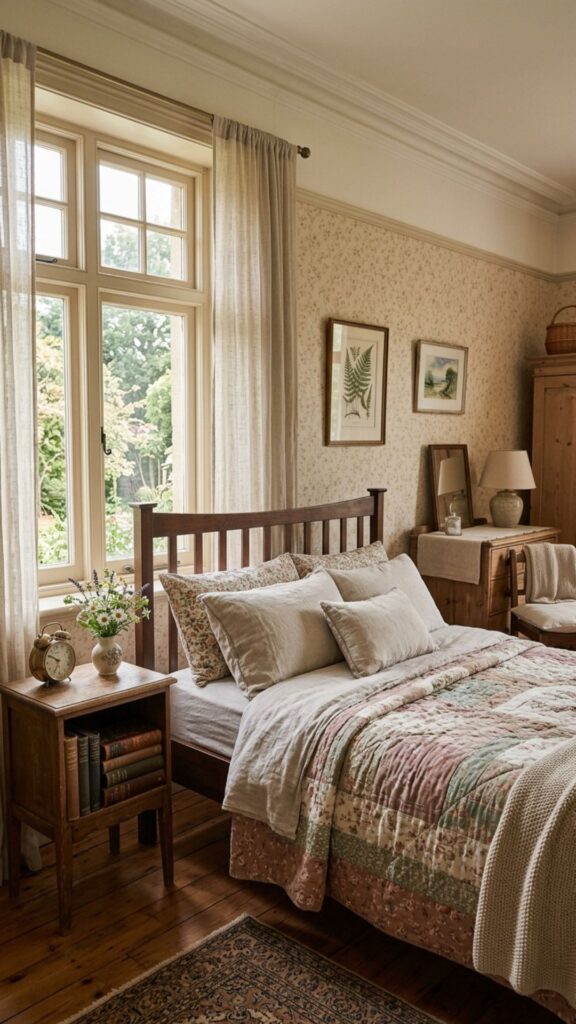
The vintage bedroom aesthetic is at its most effective when every element feels chosen rather than accumulated by default. That means editing regularly — removing anything that doesn’t contribute to the overall feel and resisting the urge to fill every surface. A vintage room that’s too full tips from “layered and curated” into “cluttered and overwhelming.”
Do a regular walk-through and ask whether each item earns its place. The best vintage bedrooms feel like they’ve developed naturally over time, but behind that apparent informality is almost always a deliberate eye. The space should feel full of character, not full of stuff.
Conclusion
Creating a bedroom aesthetic vintage style isn’t about recreating a specific decade or filling a room with antiques. It’s about choosing pieces and details that feel warm, personal, and timeless — and arranging them in a way that makes the room feel genuinely lived in rather than staged.
Start with one or two changes from this list — a new bed frame, a vintage rug, or a piece of artwork — and let the room develop from there. The vintage aesthetic rewards patience and a thoughtful eye more than a big budget. Pick the ideas that resonate most and put them into action this week. Your bedroom should feel like it belongs to you, and these ideas will help get you there.
What defines a bedroom aesthetic vintage style?
A vintage bedroom aesthetic combines furniture, textiles, lighting, and accessories that reference earlier design eras — typically pre-1980s — to create a warm, layered, and timeless feel. Key elements include natural materials, muted and warm color palettes, antique or antique-inspired furniture, botanical and floral motifs, and soft ambient lighting. The goal is a room that feels collected and personal rather than matched and brand new.
How do I create a vintage bedroom on a budget?
Focus on thrift shops, estate sales, Facebook Marketplace, and charity stores for furniture and accessories. Vintage-look items like lace curtains, patchwork quilts, brass hardware, and dried florals are often very affordable. Repaint or update existing furniture with chalk paint rather than replacing it. Small changes — a vintage-style lamp, a framed botanical print, a Persian-style rug — make a significant visual difference without requiring a large investment.
What colors work best for a vintage bedroom?
Muted, warm tones work best for a vintage bedroom: dusty rose, warm cream, sage green, terracotta, soft mustard, navy blue, and warm grey. Avoid bright, saturated colors or stark cool whites, which tend to read as contemporary. Combining two or three tones from this palette — one dominant, one secondary, one accent — creates a cohesive look without being rigid.
Can I mix vintage pieces with modern furniture?
Yes — in fact, a room made up entirely of vintage pieces can sometimes feel more like a museum than a bedroom. Mixing vintage and modern works well when you keep the palette consistent and let the vintage pieces be the focal points. A modern, clean-lined wardrobe paired with an antique dresser, vintage bedding, and warm lighting reads as vintage without feeling costume-like.
What’s the easiest way to start a vintage bedroom transformation?
Begin with textiles and lighting — these two elements have the biggest impact on how a bedroom feels and require no structural changes. Swap your current bedding for a quilted or linen vintage-style option, add warm-toned bedside lamps, and introduce one or two textile layers like a throw and a velvet cushion. These changes alone will shift the mood noticeably and give you a foundation to build on.