Your front yard doesn’t have to be just a patch of grass you mow every weekend. With a little planning, that space can feed your family, welcome your guests, and turn heads on your street.
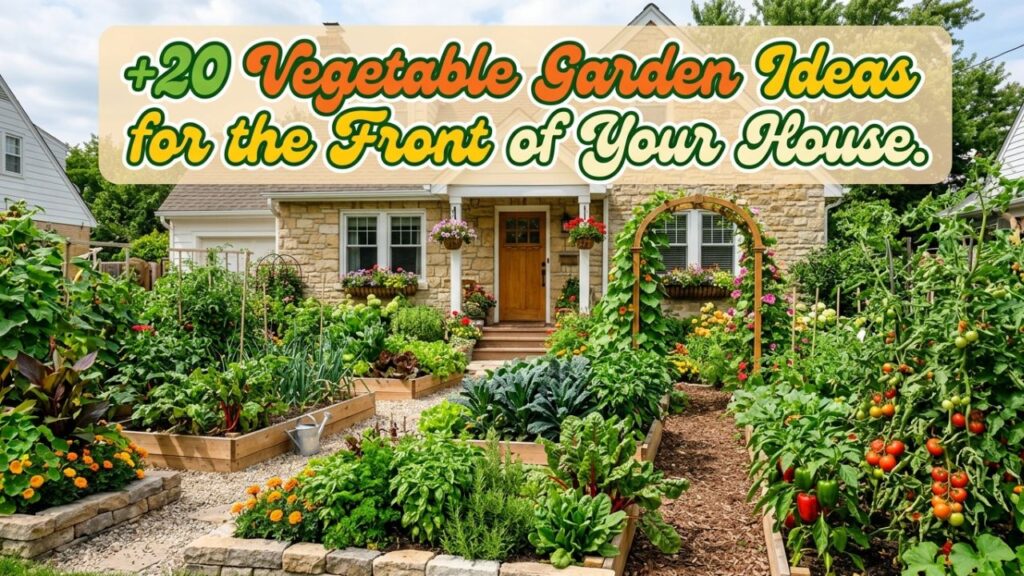
After more than a decade of designing edible landscapes and growing food in tight suburban lots, I’ve learned that the front of your house is often the sunniest, most underused spot on your property.
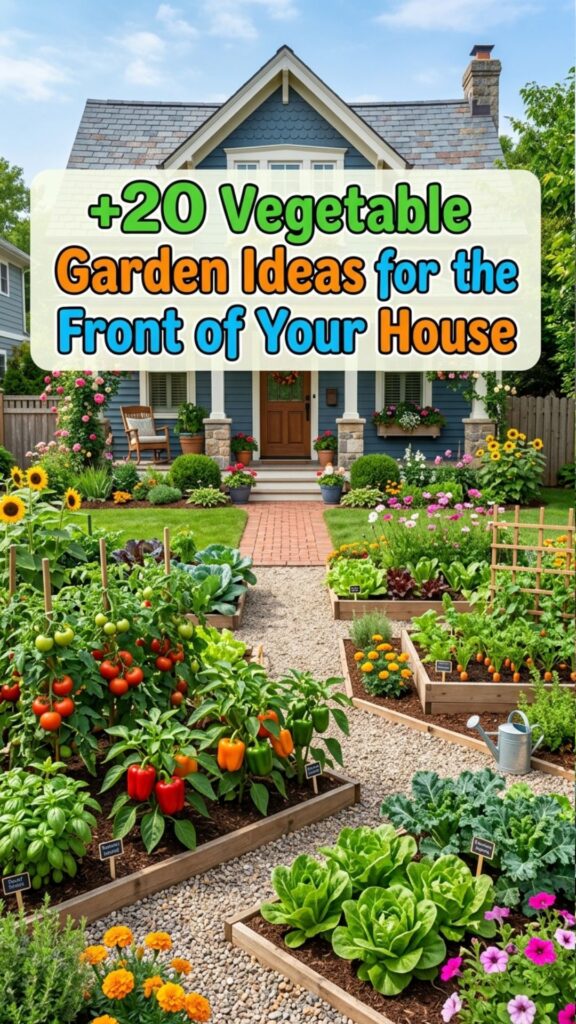
Below you’ll find 20 practical vegetable garden ideas for the front of your house. Each one balances beauty with function, so your garden looks intentional rather than messy. Whether you have a tiny stoop or a wide open lawn, there’s something here you can put to work this season.
1. Frame Your Walkway With Raised Beds
Raised beds along both sides of your front path create instant structure and a tidy look that neighbors appreciate. Build them from cedar, stone, or corrugated metal to match your home’s style, and fill them with lettuce, herbs, and compact peppers.
Because the beds sit above ground level, they warm up faster in spring and drain well after heavy rain. You get an earlier harvest and healthier roots, plus the raised edges keep soil off your walkway. It’s one of the cleanest ways to grow food out front.
2. Grow a Living Border of Leafy Greens
Swap out ornamental edging plants for rows of kale, Swiss chard, and mustard greens. Their ruffled leaves and deep colors look just as striking as any decorative border, and you can snip a salad whenever you need one.
Rainbow chard, with its bright pink and yellow stems, is a favorite of mine for this exact purpose. It stays productive for months, tolerates cool weather, and rewards you with color long after summer flowers fade. Cut the outer leaves and the plant keeps giving.
3. Add a Vertical Trellis Wall
If floor space is limited, grow upward. A trellis mounted against your porch or fence lets you train cucumbers, pole beans, and small melons vertically, freeing the ground for other plants.
Vertical growing also improves air flow, which cuts down on disease. A green wall of climbing vines gives your entrance a lush, cottage-garden feel while producing a surprising amount of food in just a few square feet.
4. Plant a Herb Spiral Near the Door
A herb spiral is a raised, coiled bed that packs many plants into a small footprint. Build one near your front door with stacked stones or bricks, then plant thyme, rosemary, basil, and oregano along the curve.
The spiral shape creates microclimates: drought-loving herbs go on top where it’s dry, while thirstier ones sit near the base. Having fresh herbs steps from your kitchen makes cooking easier, and the sculptural shape doubles as a focal point.
5. Use Decorative Containers on the Porch
Not ready to dig up the lawn? Start with pots. Large ceramic or fabric grow bags on your porch can hold tomatoes, eggplant, or a cluster of herbs without touching your existing landscaping.
Containers give you total control over soil quality and let you move plants to chase the sun. Group pots in odd numbers and vary the heights for a designer look that feels welcoming rather than cluttered.
6. Mix Vegetables Into Flower Beds
Edible landscaping shines when you tuck vegetables among your flowers. Plant purple basil beside marigolds, or slip curly parsley in front of your existing shrubs. Visitors won’t even realize half the bed is edible.
This approach, sometimes called “foodscaping,” keeps your yard looking traditional while quietly feeding you. It also confuses pests, since mixed plantings make it harder for bugs to find their favorite crop.
7. Build a Keyhole Garden Bed
A keyhole garden is a round raised bed with a small notch cut into one side so you can reach the center. This design maximizes planting area while keeping every plant within arm’s reach.
Many keyhole beds include a central composting basket, so kitchen scraps feed the soil directly. It’s an efficient, low-maintenance option that looks like an intentional garden feature rather than a random vegetable patch.
8. Line the Driveway With Container Crops
The strip along your driveway often bakes in the sun, making it perfect for heat-loving vegetables. Line it with pots of peppers, cherry tomatoes, and bush beans for a productive edge that softens all that concrete.
Choose self-watering containers here, since the reflected heat dries soil quickly. This spot works especially well if the rest of your yard is shaded, letting you grow sun-hungry crops you’d otherwise skip.
9. Create a Formal Potager Garden
A potager is a French-style kitchen garden built around geometry and symmetry. Divide the space into neat quadrants with gravel or brick paths, then plant each section with a mix of vegetables, herbs, and edible flowers.
The tidy layout makes a front-yard vegetable garden feel deliberate and elegant. Even neighbors who prefer manicured lawns tend to admire a well-kept potager, since it reads as a design choice rather than a food plot.
10. Install Window Boxes You Can Eat
Window boxes aren’t just for petunias. Fill them with compact lettuces, radishes, and trailing cherry tomatoes for a charming, edible display right at eye level.
Because window boxes sit close to the house, they’re easy to water and harvest without stepping into the yard. They’re ideal for renters or anyone with almost no ground space to spare.
11. Grow Rainbow Carrots as Ground Cover
Carrots have feathery, fern-like tops that make a lovely low border. Plant a thick band of them along a bed edge, and you’ll enjoy the greenery above ground while colorful roots develop below.
Rainbow varieties in purple, yellow, and orange add a fun surprise at harvest. Since carrots don’t take up much room, they slip easily into gaps between larger plants without crowding anything out.
12. Set Up a Strawberry Patch by the Steps
Strawberries make an excellent front-yard ground cover. Their low, spreading habit fills space quickly, and the white blooms followed by red fruit look cheerful beside a walkway or stairs.
Plant them in a tiered strawberry pot or a low raised bed to keep the berries clean and easy to pick. Just be ready to share a few with the birds, or drape netting during peak fruiting.
13. Try a Straw Bale Garden
Straw bale gardening lets you grow vegetables directly in conditioned bales of straw, no digging required. Line up a few bales along the front of your house, and you’ve got instant raised beds with zero soil prep.
This method works wonders where your native soil is poor, rocky, or compacted. The bales hold moisture well and slowly break down into compost, feeding your plants as the season goes on.
14. Feature a Statement Tomato Cage Cluster
Tomatoes can be the star of your front garden when you give them tall, attractive supports. Use decorative obelisks or powder-coated cages instead of flimsy wire, and group three or four plants for impact.
Choose determinate varieties if you want a compact, bushy look, or indeterminate types for towering vines. Either way, a healthy tomato display signals a gardener who knows what they’re doing.
15. Edge the Lawn With Bush Beans
Bush beans stay short and neat, making them a natural choice for lining the front of a lawn or bed. Plant a double row and you’ll get a steady harvest without any staking or trellising.
They also fix nitrogen in the soil, quietly improving the ground for whatever you plant next. Succession sow every two weeks and you’ll pick fresh beans right up until frost.
16. Dedicate a Corner to Pollinator-Friendly Crops
Set aside a sunny front corner for squash, cucumbers, and flowering herbs like borage and dill. These plants draw bees and butterflies, which boosts pollination across your whole garden.
A buzzing pollinator patch adds life and movement to your yard while improving your harvest. It’s also a great teaching spot if you have kids who love watching bees at work.
17. Use Hanging Baskets for Trailing Vegetables
Free up ground space by hanging baskets from your porch beams or a sturdy hook. Tumbling cherry tomatoes, trailing nasturtiums, and compact cucumbers all thrive in these overhead planters.
Hanging baskets keep fruit off the ground and away from many pests. Rotate them occasionally so all sides get sun, and check moisture daily since elevated pots dry out fast.
18. Plant a Salad Bar Bed
Dedicate one raised bed to everything you’d toss in a salad: loose-leaf lettuce, arugula, radishes, spinach, and green onions. Arrange them in tidy rows or blocks for a clean, kitchen-garden look.
A salad bed is one of the fastest-producing front-yard gardens you can grow. Many greens are ready in 30 days, and cut-and-come-again varieties keep producing for weeks with minimal effort.
19. Add Edible Flowers for Color and Function
Nasturtiums, calendula, and violas bring bright color to your front garden and happen to be edible. Scatter them among your vegetables to soften rows and attract beneficial insects.
Their peppery, mild petals dress up salads and look beautiful on a plate. Best of all, they blur the line between ornamental and edible, so your garden pleases both flower lovers and food growers.
20. Grow a Compact Espalier Fruit Feature
While not a vegetable, an espaliered fruit tree makes a stunning backdrop for a front-yard edible garden. Train an apple or pear tree flat against a sunny wall or fence to save space and create living art.
This classic technique produces fruit in a footprint just inches deep. Paired with your vegetable beds below, an espalier turns the front of your house into a complete, productive edible landscape.
Conclusion: Start Small and Grow From There
The front of your house holds real potential as a productive, beautiful space. You don’t need to tackle all 20 ideas at once. Pick one or two that fit your sunlight, space, and style, then build from there as your confidence grows.
Ready to dig in? Choose your favorite idea from this list, grab a few seed packets, and plant something this week. Your future self, and your dinner plate, will thank you. Share your progress with a neighbor, and you might just inspire the whole street to grow food out front.
Is it legal to grow vegetables in my front yard?
In most places, yes. However, some homeowners associations (HOAs) and local ordinances have rules about front-yard landscaping. Check your HOA guidelines and municipal codes before you start, and lean toward tidy, well-maintained designs to avoid complaints.
What vegetables grow best in the front of a house?
Compact, attractive crops work best, including lettuce, kale, Swiss chard, peppers, cherry tomatoes, herbs, and bush beans. These stay neat, produce quickly, and blend easily with ornamental plants for a polished look.
How much sun does a front-yard vegetable garden need?
Most vegetables need at least 6 hours of direct sunlight per day. Leafy greens and herbs can tolerate a bit less, around 4 hours, while fruiting crops like tomatoes and peppers want full sun for the best harvest.
How do I keep my front vegetable garden looking neat?
Use raised beds or containers for clear structure, mulch to suppress weeds, and harvest regularly so plants don’t overgrow. Adding edging, gravel paths, or symmetrical layouts helps the garden read as intentional design.
Will a front-yard vegetable garden attract pests?
It can, but smart planting keeps problems low. Mixing vegetables with flowers and herbs confuses pests, while pollinator-friendly plants draw beneficial insects that keep harmful bugs in check. Regular tending catches issues early.