Your kitchen floor takes more abuse than almost any other surface in your home — spills, foot traffic, dropped pots, and daily scrubbing. Yet it’s also one of the most powerful design elements in the room. The right kitchen floor design can anchor your entire space, making it feel cohesive, bright, or boldly personal.
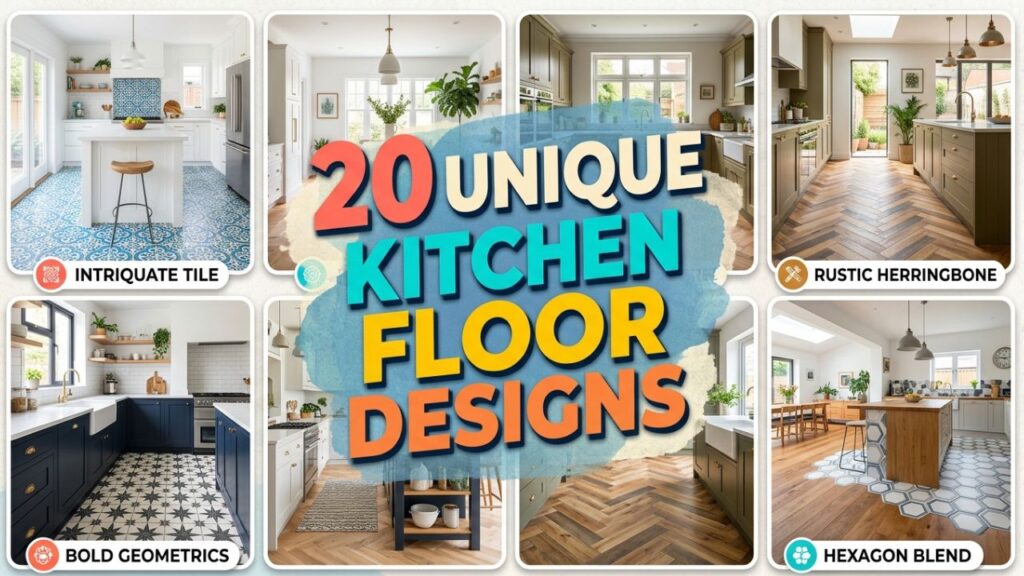
In this post, you’ll discover 20 creative kitchen floor design ideas to inspire your next renovation or refresh. Whether you’re working with a tight budget, a rented space, or a full gut renovation, there’s something here for every style and situation. We’ll cover:
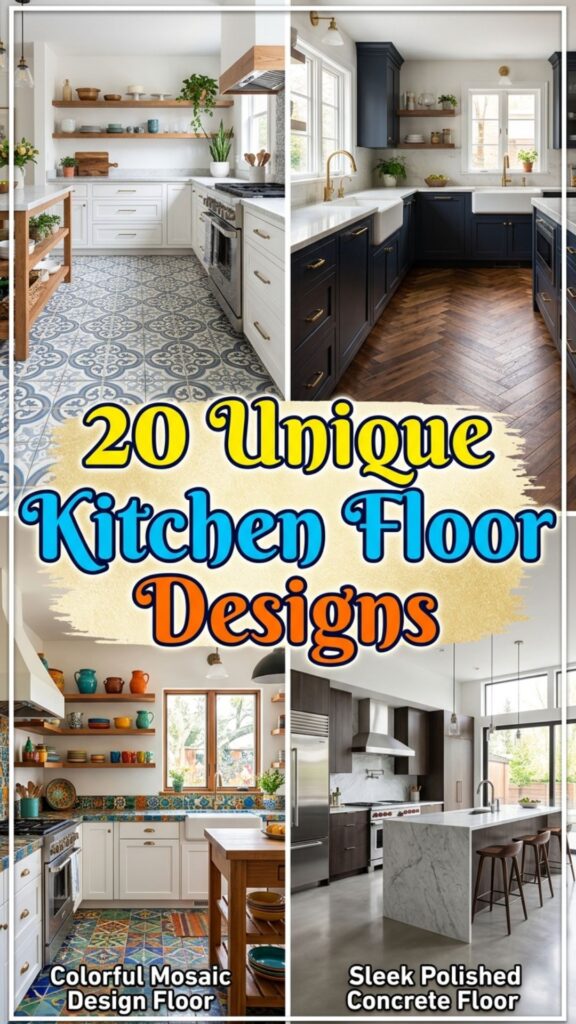
- Classic options that never go out of style
- Bold, modern choices for a dramatic effect
- Practical picks that balance beauty and durability
- Budget-friendly alternatives that look high-end
Let’s get into it.
1. Classic Black and White Checkerboard Tile
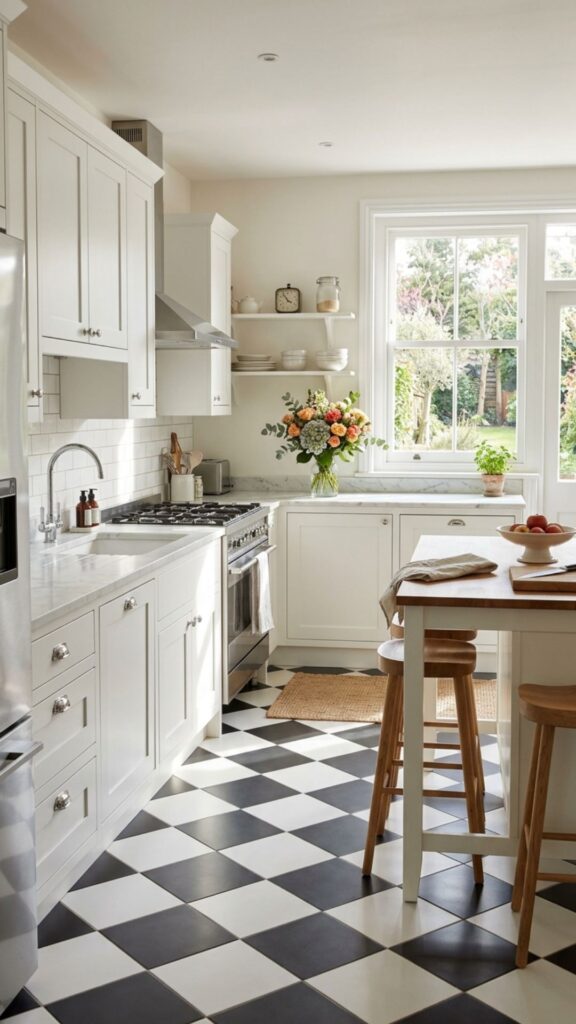
Few kitchen floor designs are as timeless as the black and white checkerboard pattern. It works equally well in farmhouse kitchens, retro diners, and sleek modern spaces — the key is scale. Larger tiles feel contemporary, while smaller ones lean vintage.
This pattern is especially effective in compact kitchens because the contrast draws the eye across the floor, making the room feel wider. Pair it with white cabinetry and brushed nickel hardware for a clean, classic look that holds its value over decades.
2. Warm Wood-Look Luxury Vinyl Plank
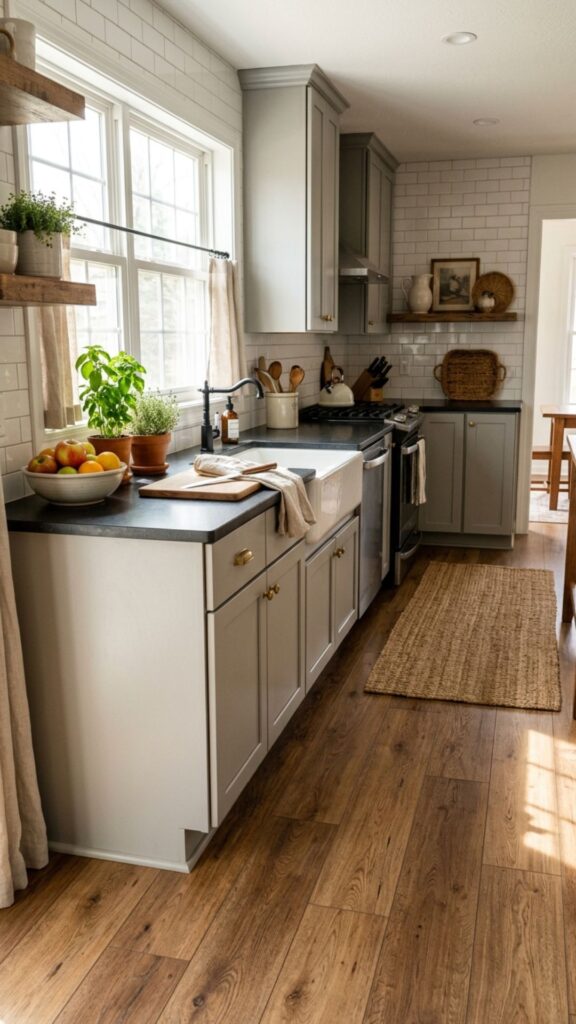
Hardwood floors in the kitchen look stunning, but real wood and moisture don’t always mix well. Luxury vinyl plank (LVP) gives you the warmth and grain of wood without the worry. Modern LVP is virtually indistinguishable from real hardwood and comes in dozens of species and stain colors.
It’s waterproof, scratch-resistant, and comfortable underfoot — a big plus if you spend long hours cooking. Choose a medium-toned oak or walnut finish to complement white or gray cabinetry, and install it in a long, horizontal direction to visually widen the space.
3. Large-Format Concrete-Look Porcelain Tiles
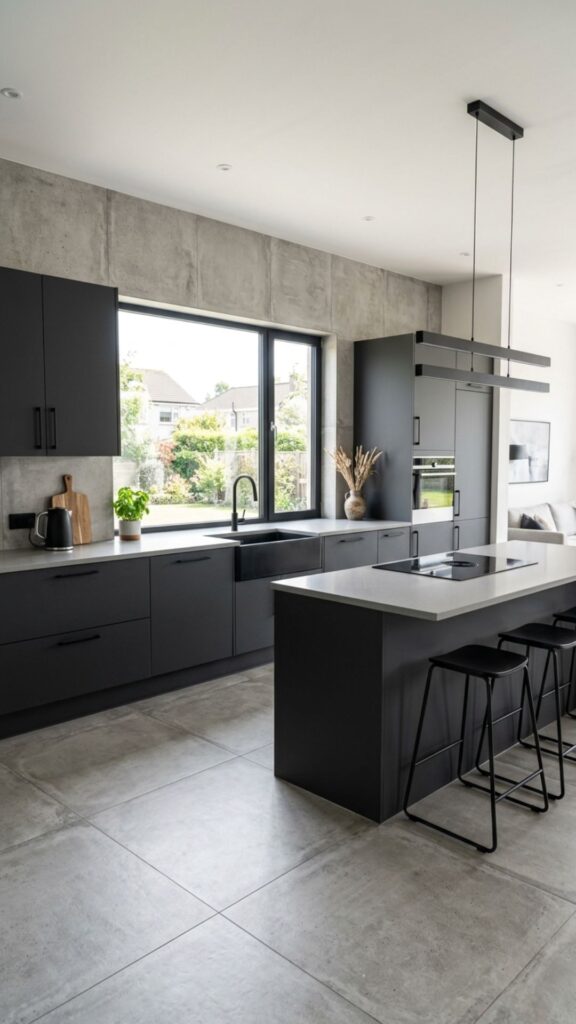
Concrete floors have an undeniable cool factor, but the real thing is porous and hard to maintain in a kitchen. Concrete-look porcelain tiles capture that industrial aesthetic without the upkeep. Large-format tiles — think 24×24 inches or bigger — minimize grout lines, giving the floor a sleek, continuous look.
This kitchen floor design pairs beautifully with matte black fixtures, open shelving, and bold cabinet colors like deep navy or forest green. It also photographs exceptionally well, making it a popular choice among interior designers working on modern and minimalist spaces.
4. Terracotta Tile for Mediterranean Warmth
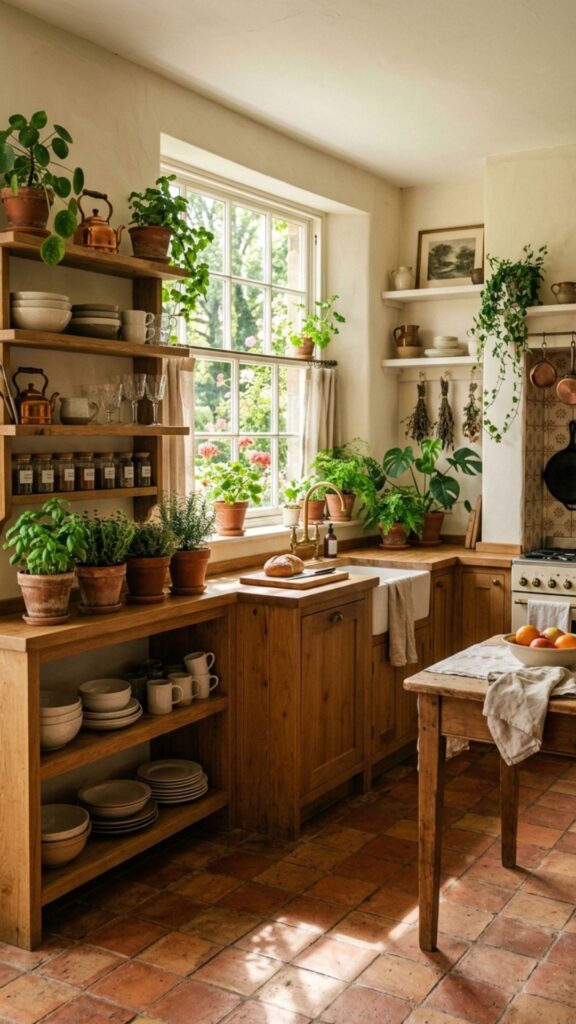
Terracotta tiles bring immediate warmth and earthiness to a kitchen. Their reddish-orange hue adds color without demanding bold paint choices on the walls. Traditional handmade terracotta has beautiful natural variation, though sealed machine-made versions offer easier maintenance.
Seal them properly to prevent staining, and pair with cream-colored walls, wooden open shelves, and plenty of plants for a Mediterranean or Tuscan-inspired kitchen. This look is gaining renewed popularity as homeowners move away from all-white interiors toward warmer, more grounded palettes.
5. Herringbone Pattern in Neutral Tones
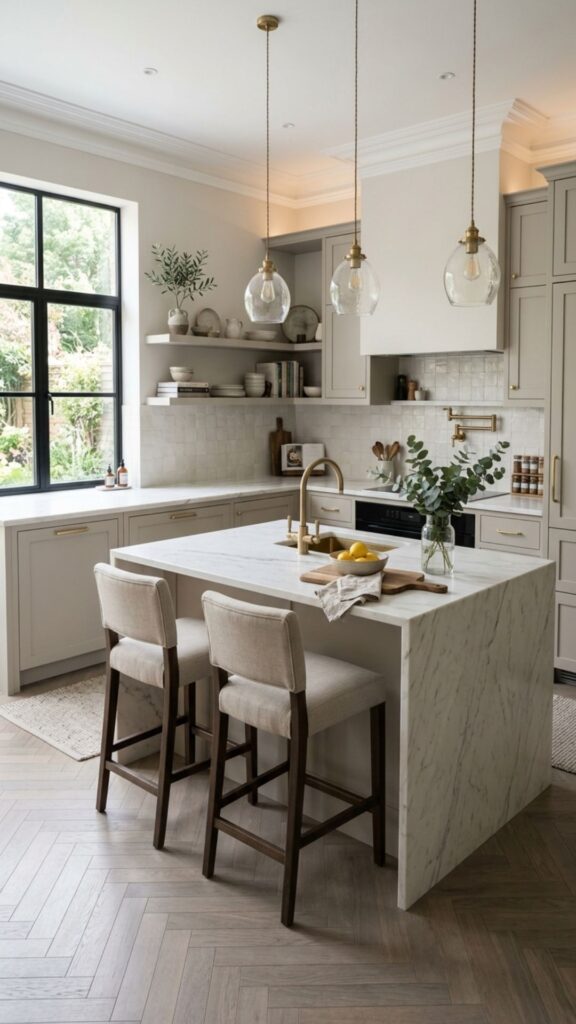
The herringbone pattern adds instant visual sophistication to any kitchen floor. By setting rectangular tiles or wood planks at 45-degree angles, you create movement and texture without overwhelming the space. In neutral tones — cream, greige, or soft gray — it stays elegant rather than busy.
This works especially well in narrow galley kitchens where visual interest on the floor can distract from the tight layout. Use a consistent grout color close to the tile shade to keep the look refined rather than graphic.
6. Bold Encaustic Cement Tiles
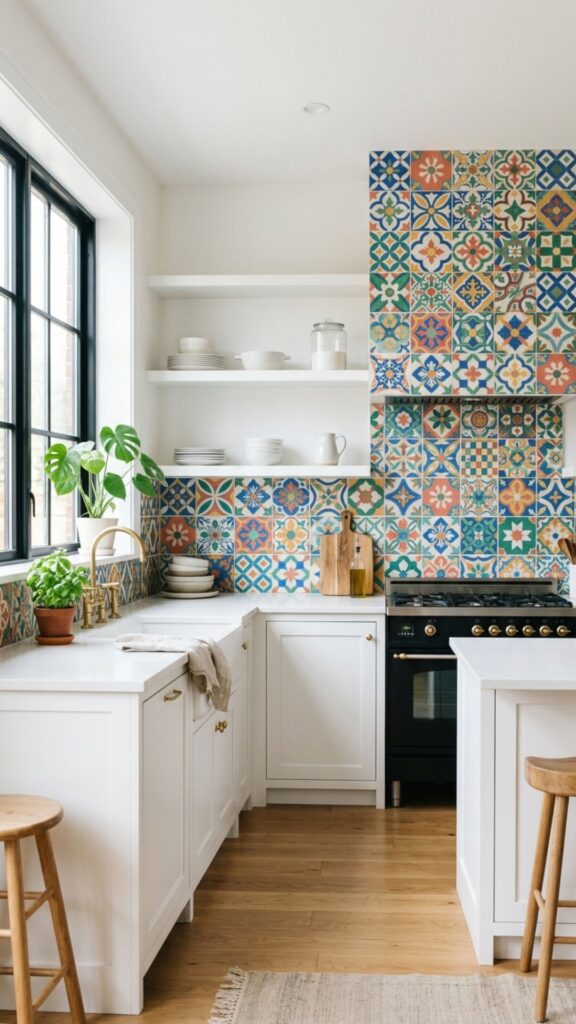
Encaustic cement tiles are handmade with intricate patterns baked into the surface — no glaze on top. They’re bold, artistic, and completely unique. Common motifs include geometric stars, Moroccan lattices, and floral medallions in rich blues, greens, and terracottas.
Because they make such a strong statement, keep the rest of the kitchen relatively restrained. Simple white subway tile backsplash, plain cabinetry, and minimal hardware let the floor be the focal point. Seal them annually to protect the surface from oil and water penetration.
7. Penny Round Mosaic Tiles
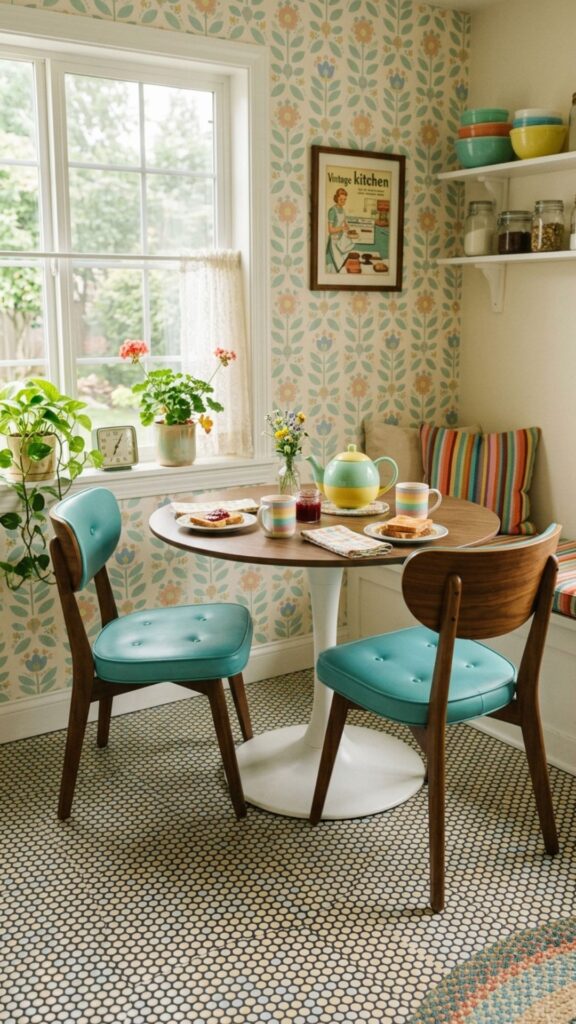
Penny rounds are small, circular tiles — typically one inch in diameter — arranged on mesh backing. They bring a playful, artisan feel to a kitchen floor and work beautifully in areas like a butler’s pantry, kitchen nook, or powder room adjacent to the kitchen.
The many grout lines actually improve slip resistance, making them a practical as well as decorative choice. Try a two-tone combination — white penny rounds with a dark gray grout — for a look that’s both retro and surprisingly modern.
8. Slate Tile for Rustic Character
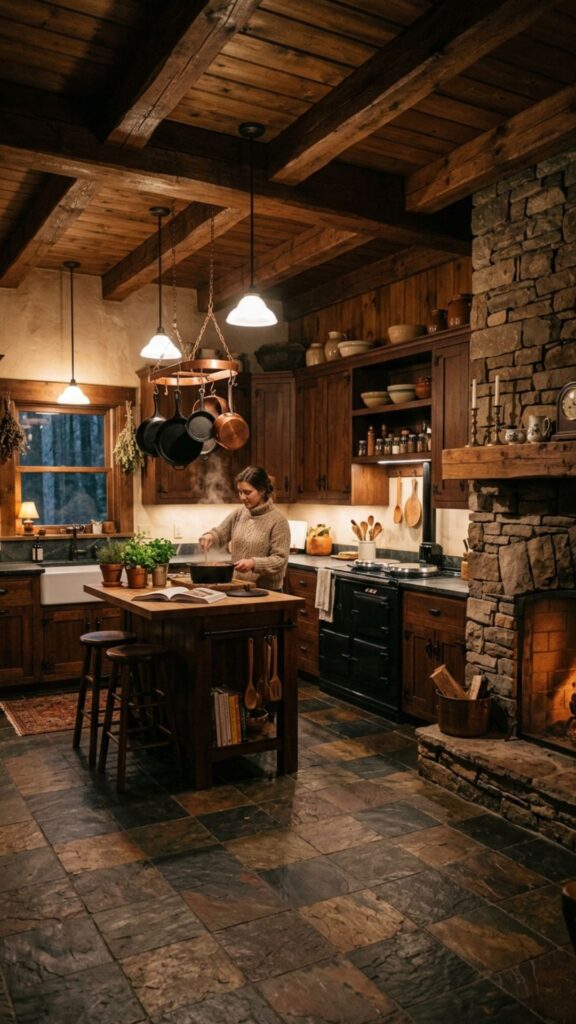
Natural slate tiles have a rugged, layered texture that adds real depth to a kitchen floor design. Each tile is slightly different in color and surface, ranging from charcoal gray and deep green to purple-toned blacks. That variation makes the floor look rich and organic.
Slate is naturally slip-resistant, which is a practical bonus in a busy kitchen. Seal it with a penetrating stone sealer to protect against stains, and pair with dark wood cabinetry or exposed brick for a cozy, cabin-like kitchen atmosphere.
9. White Marble-Look Porcelain
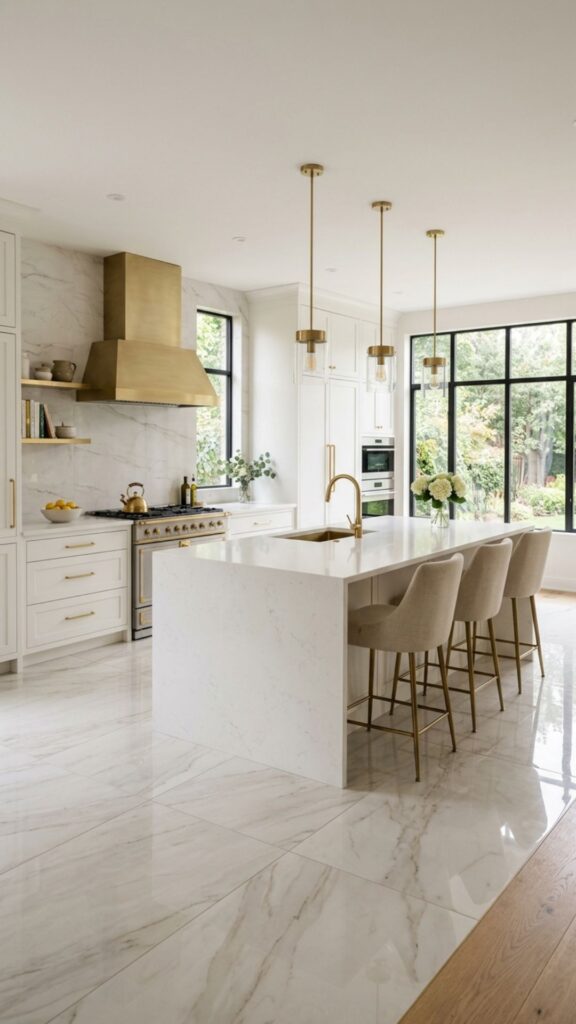
Marble floors are luxurious, but natural marble is expensive, porous, and easily scratched. Marble-look porcelain solves all three problems. Modern printing technology makes these tiles strikingly realistic, complete with natural-looking veining in gray, gold, or soft taupe.
This kitchen floor design brightens smaller kitchens dramatically. Use large tiles with thin grout lines to maximize the effect. Pair with brass fixtures and soft white cabinetry for a high-end look at a fraction of the cost of real stone.
10. Graphic Black and White Hex Tiles
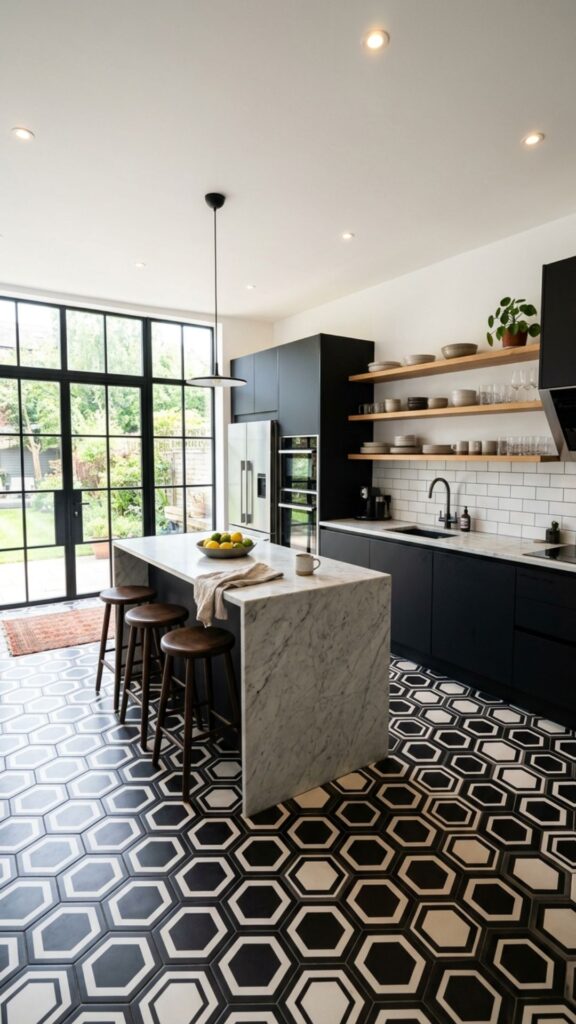
Hexagonal tiles arranged in bold black and white patterns offer more personality than plain subway or square tiles. You can go full graphic with a honeycomb pattern, or use black accent tiles to create a flower or starburst shape within a white field.
This design works best in kitchens with clean-lined, simple cabinetry — the floor does the talking. It’s a particularly strong choice for retro, eclectic, or art deco-inspired kitchens where personality is part of the brief.
11. Stained Concrete Floors
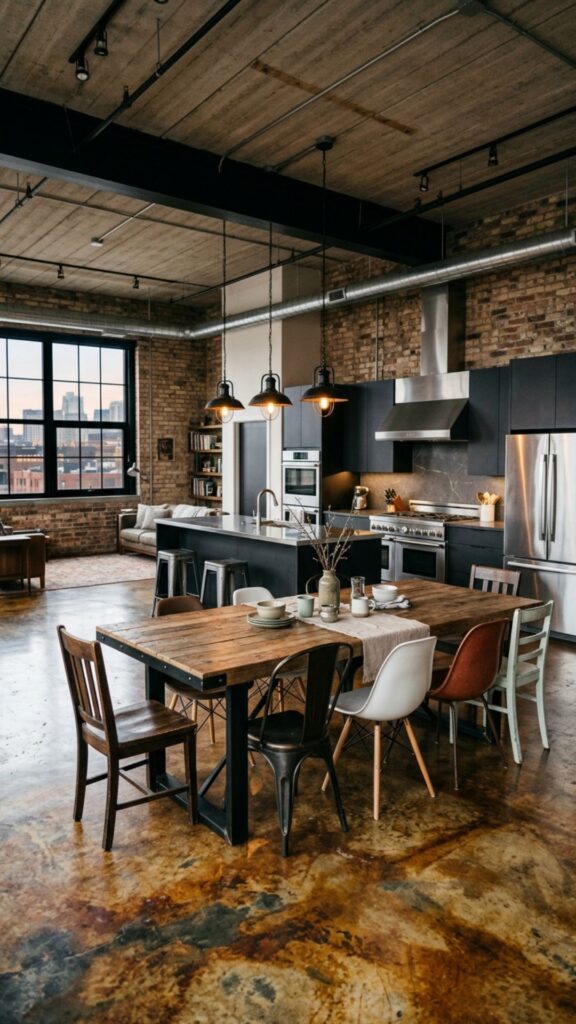
If you’re renovating a home with an existing concrete slab, staining it is an affordable and striking option. Acid stains create mottled, variegated color effects that look genuinely organic — no two floors are exactly alike. Colors range from amber and tan to deep brown and charcoal.
Coat the finished floor with a polyurethane or epoxy sealer for durability and easy cleaning. Stained concrete is especially popular in industrial-style lofts and open-plan homes where the kitchen flows into the living area.
12. Wide-Plank Oak Hardwood
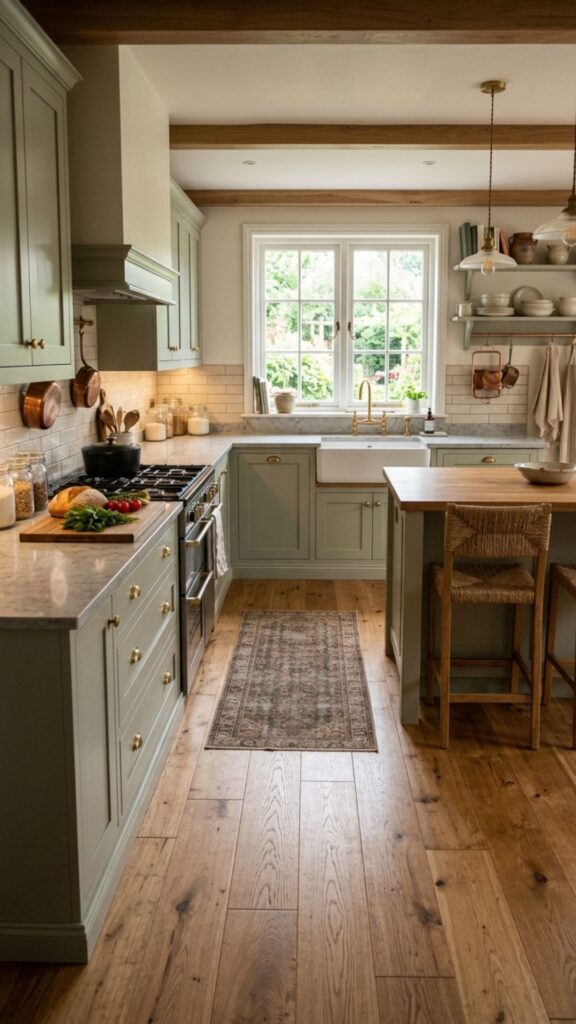
If you’re set on real hardwood and your kitchen has excellent ventilation and low humidity, wide-plank oak is a stunning choice. Planks of five inches or wider show off the wood’s natural grain beautifully and give the kitchen a warm, lived-in feel.
Choose a matte or satin finish rather than high-gloss — it hides scratches and looks more natural. White oak with a light, cool-toned stain is particularly popular right now, pairing seamlessly with Shaker-style cabinetry and stone countertops.
13. Geometric Zellige Tile
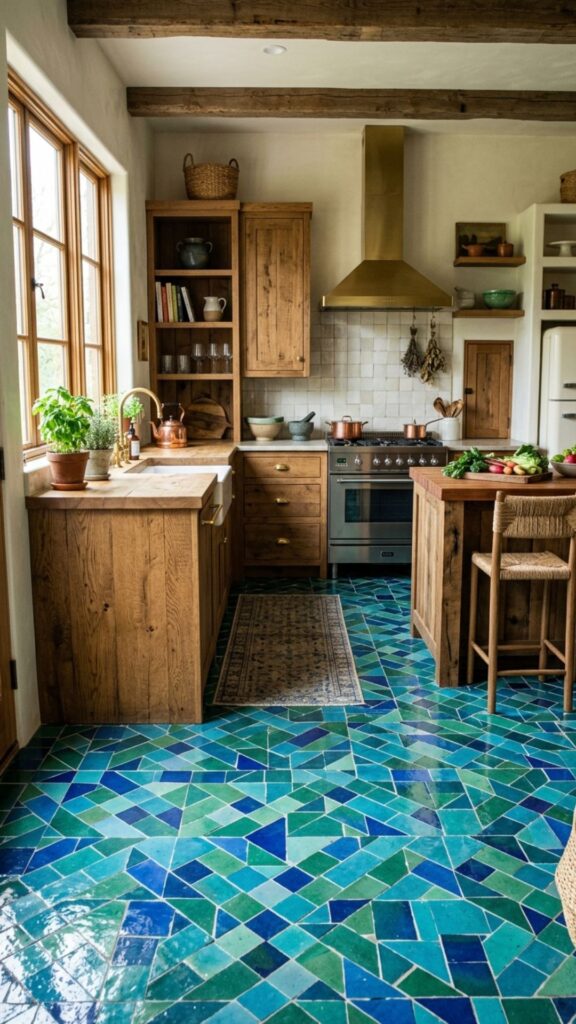
Zellige tiles are hand-chiseled Moroccan clay tiles with a slightly uneven, reflective glaze. On the floor, they catch light differently throughout the day, creating a surface that’s almost alive. Their irregular edges and variations in color — even within a single tone — make every installation unique.
Use them in a single color like cobalt blue or sage green for a cohesive but highly textured look. This kitchen floor design elevates even the most basic kitchen layout into something that feels curated and artisanal.
14. Cork Flooring for Warmth and Comfort
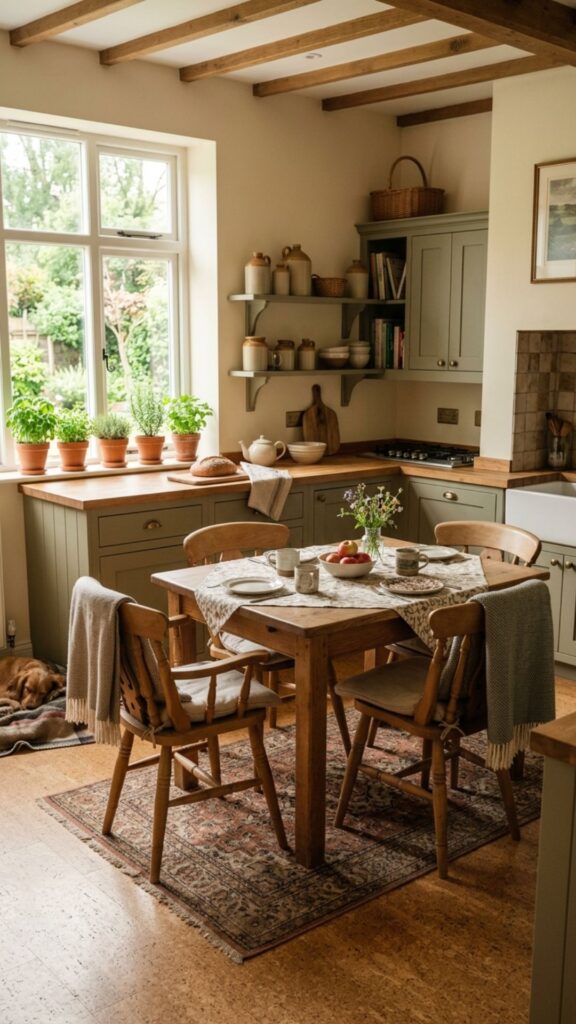
Cork is one of the most underrated kitchen floor materials. It’s soft underfoot, naturally antimicrobial, and provides excellent thermal and acoustic insulation. Modern cork flooring comes in tiles or planks, often with realistic wood or stone surface prints.
It’s a great choice for households where people stand at the stove for long periods — it reduces fatigue noticeably compared to tile or stone. Seal it well to prevent water damage, and avoid dragging heavy appliances across the surface.
15. Striped Wood Inlay Borders
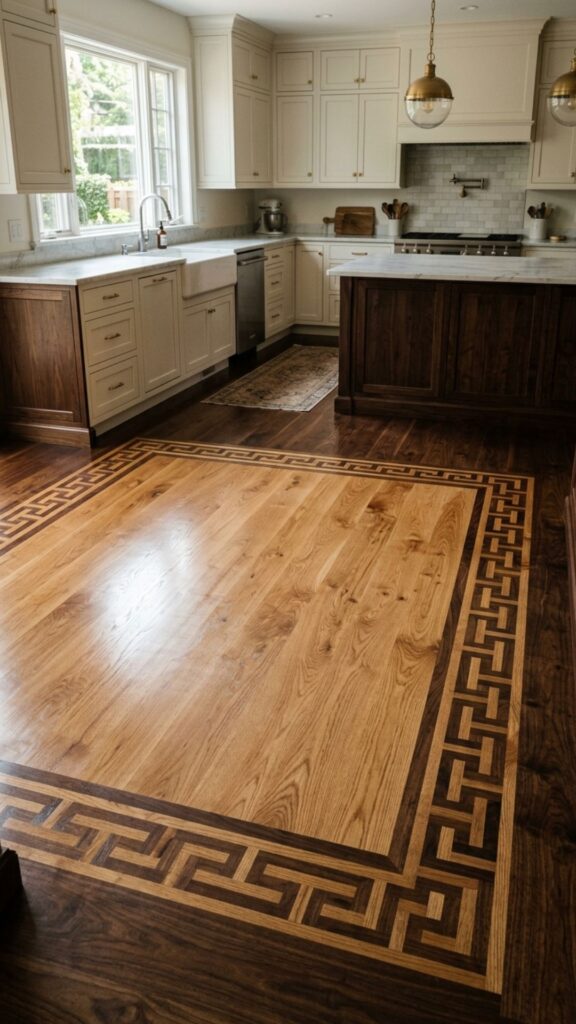
A striped or contrasting wood inlay border along the perimeter of the kitchen floor adds a custom, furniture-like quality to the space. This works beautifully with solid hardwood or high-quality LVP installations where a darker wood tone borders a lighter field, or vice versa.
It’s a subtle but powerful design move that signals craftsmanship and attention to detail. It also helps define the kitchen zone in open-plan spaces without the need for walls or room dividers.
16. Two-Tone Tile in a Grid Pattern
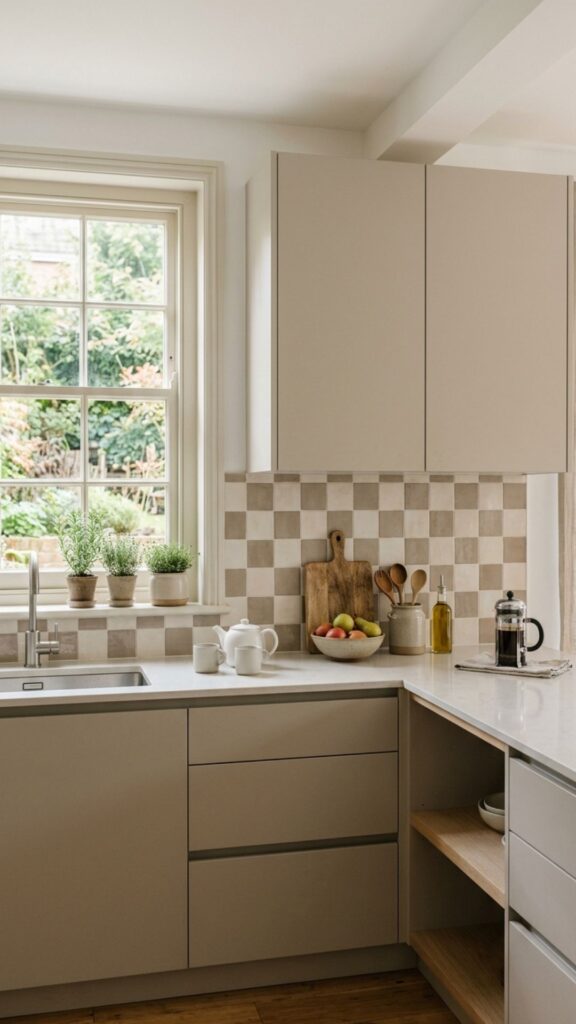
Instead of using a single tile color, a two-tone grid creates depth and visual rhythm. Think soft cream paired with warm taupe, or pale gray with white. The effect is quieter than a bold checkerboard but far more interesting than a plain single-color floor.
This approach works with almost any cabinet color and hardware finish, making it a safe but smart choice for people who want a little more character without committing to a dramatic statement floor.
17. Polished Concrete with Embedded Aggregate
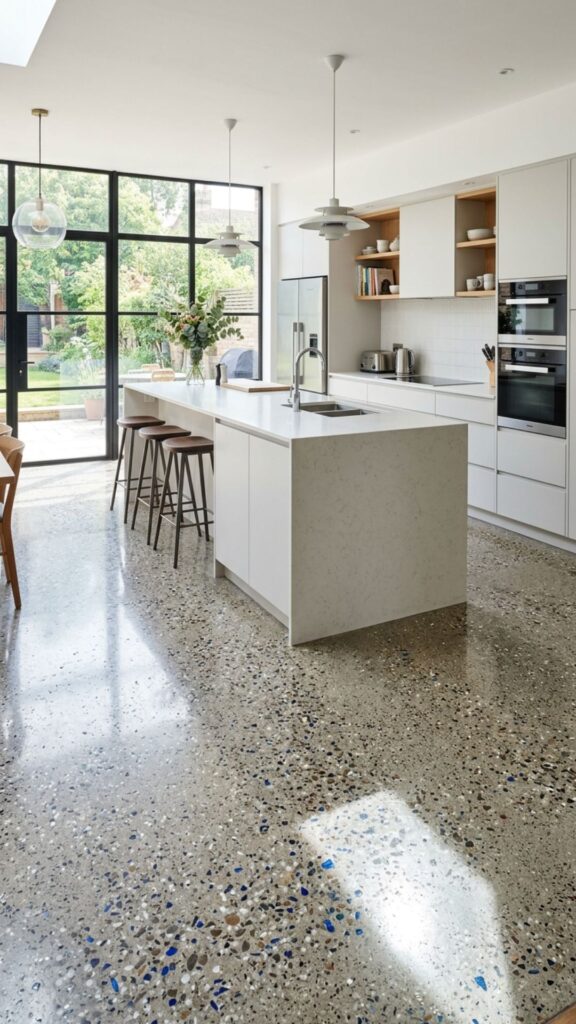
Polished concrete floors with embedded stones, glass, or shell fragments create a truly bespoke kitchen floor design. The aggregate catches light and adds texture, while the polished surface is smooth and easy to clean.
This is a specialty finish best handled by a professional concrete contractor. The upfront cost is higher, but the result is a completely one-of-a-kind floor that’s also extremely durable. It suits industrial, contemporary, and even coastal kitchen styles depending on the aggregate choice.
18. Cobblestone-Look Porcelain Pavers
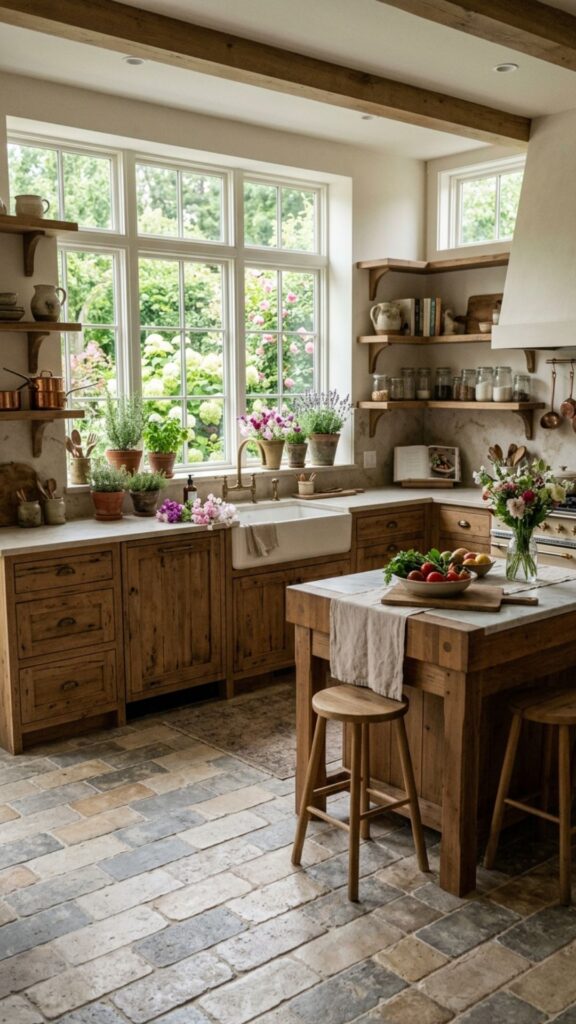
For a garden-meets-kitchen aesthetic, cobblestone-look porcelain pavers bring the charm of European courtyards indoors. These are typically irregular in shape and come in aged stone finishes — creams, grays, and tawny browns.
They work especially well in kitchen extensions or conservatory-style kitchens where the boundary between indoors and outdoors feels intentionally blurred. Grout them in a warm putty tone to soften the contrast between tiles and enhance the organic look.
19. Reclaimed Brick Flooring
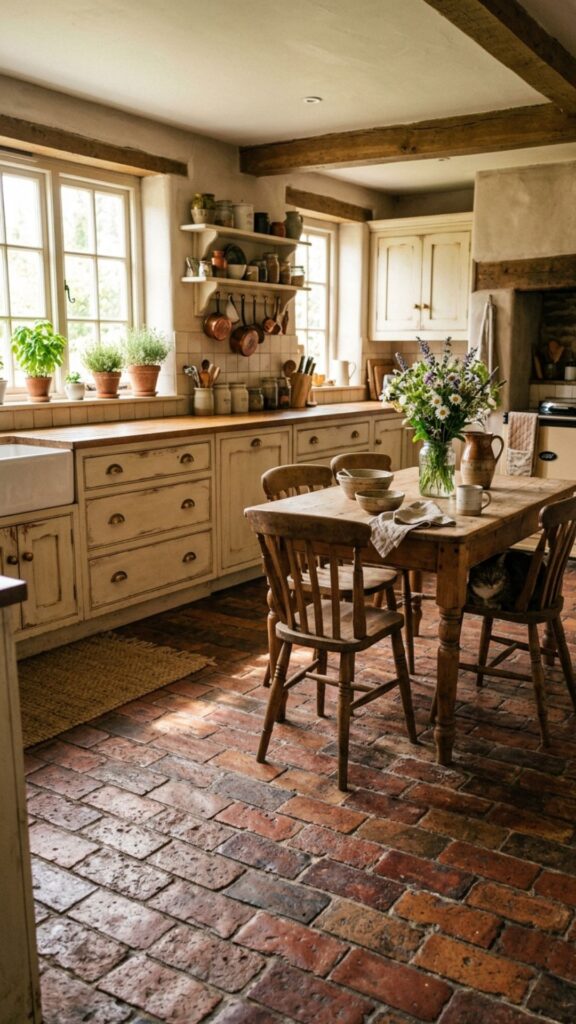
Reclaimed brick flooring gives a kitchen instant history and soul. Each brick carries slight color variation, texture, and character that new materials simply can’t replicate. Laid in a running bond or basketweave pattern, it looks warm, grounded, and beautifully imperfect.
Seal the bricks to prevent staining from oil and food, and use a flexible grout to accommodate any natural movement. This kitchen floor design suits farmhouse, industrial, and eclectic kitchens particularly well — and it’s a conversation starter every single time.
20. Color-Pop Resin or Epoxy Floors
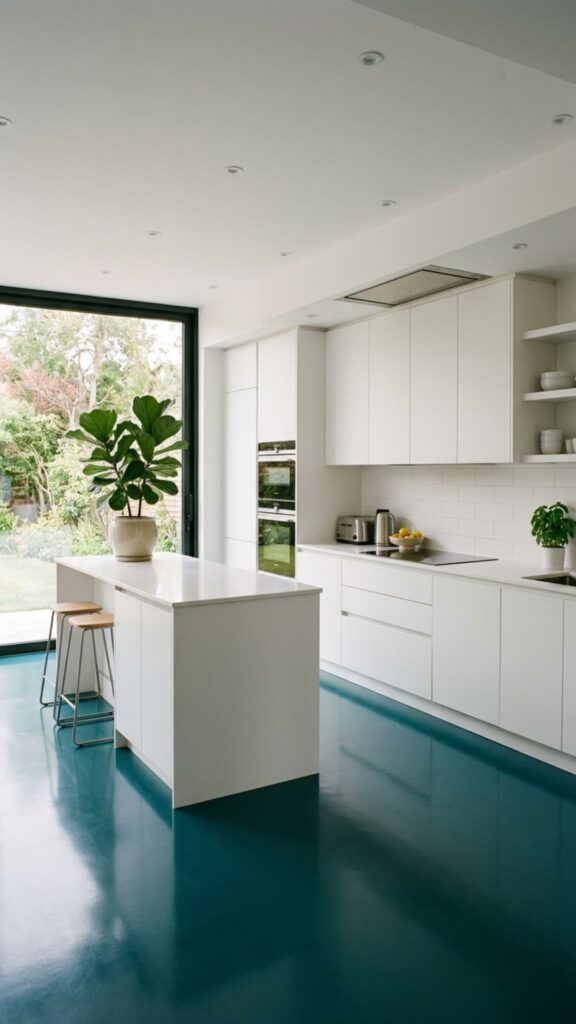
Epoxy and resin floors are typically associated with garages, but they’ve made a serious entry into residential kitchens. A bold color — deep teal, terracotta orange, or even a rich burgundy — applied as a seamless resin floor creates a striking, completely unique kitchen environment.
Because the floor is seamless, there are no grout lines to clean, making maintenance simple. This is the most daring choice on this list, but in the right kitchen — especially one with white walls and minimal décor — a color-pop resin floor can be genuinely spectacular.
Conclusion
Your kitchen floor is more than just a surface — it sets the tone for the entire room. From timeless checkerboard tile to daring color-pop resin, the right kitchen floor design can make your space feel pulled together, personal, and genuinely standout.
Start by identifying your priorities: durability, aesthetics, comfort, or budget. Then pick a design direction that excites you. Don’t be afraid to mix the practical with the beautiful — the best kitchen floors do both.
Ready to transform your kitchen? Start by requesting tile samples or LVP swatches from your local flooring supplier, or consult with an interior designer to bring your vision to life.
What is the most durable kitchen floor design?
Porcelain tile is widely considered the most durable option for kitchen floors. It’s waterproof, scratch-resistant, and holds up well under heavy foot traffic. Large-format porcelain in concrete or stone looks combines longevity with style.
What kitchen flooring is easiest to clean?
Luxury vinyl plank and polished porcelain tile are the easiest to clean. Both surfaces resist staining, wipe down easily, and don’t require special sealers or cleaning products. Avoid highly textured surfaces if easy maintenance is your top priority.
Is hardwood flooring a good choice for kitchens?
Real hardwood can work in kitchens with proper ventilation and low humidity, but it’s more vulnerable to water damage than tile or vinyl. Wide-plank white oak with a matte finish is a popular choice when hardwood is desired — just seal it well and wipe up spills promptly.
How do I choose the right kitchen floor design for a small kitchen?
Light-colored tiles in large formats with minimal grout lines visually expand a small kitchen. Avoid small, busy patterns that can make the space feel cluttered. Running planks or tiles lengthwise along the longest wall also helps the room feel larger.
How much does a new kitchen floor installation typically cost?
Costs vary widely depending on material and labor. Luxury vinyl plank typically runs $3–$8 per square foot installed. Porcelain tile averages $7–$15 per square foot. Natural stone and custom finishes like polished concrete or resin floors can range from $15 to $40+ per square foot depending on complexity and location.