When the sun turns your backyard into an oven, spending time outside feels less like a treat and more like a chore. I’ve spent years helping homeowners in the Southwest and Gulf regions reclaim their outdoor spaces, and the secret always comes down to one thing: smart shade.
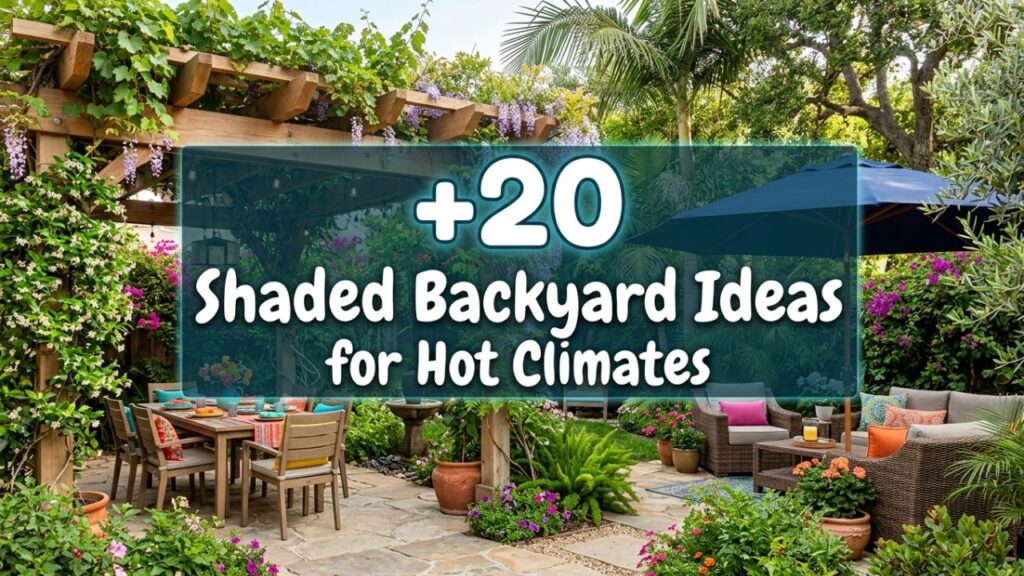
The good news? You don’t need a full renovation to cool things down. With the right mix of structures, plants, and clever design tricks, you can turn a scorching patio into a comfortable retreat.
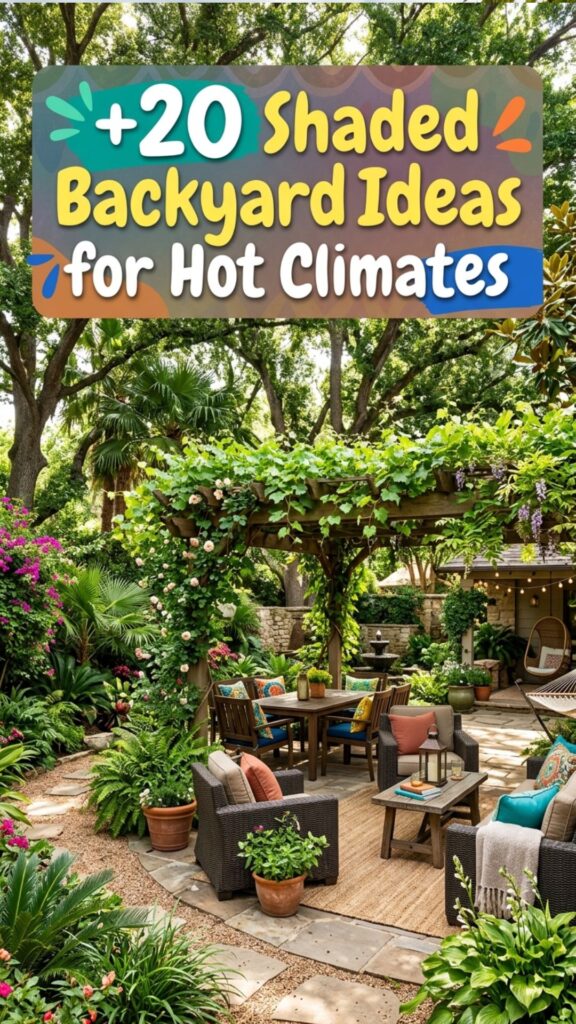
Below you’ll find 20 shaded backyard ideas for hot climates, complete with practical tips on what works, what to avoid, and how to make each option look great. Let’s get your yard ready for those long, hot afternoons.
1. Build a Classic Pergola
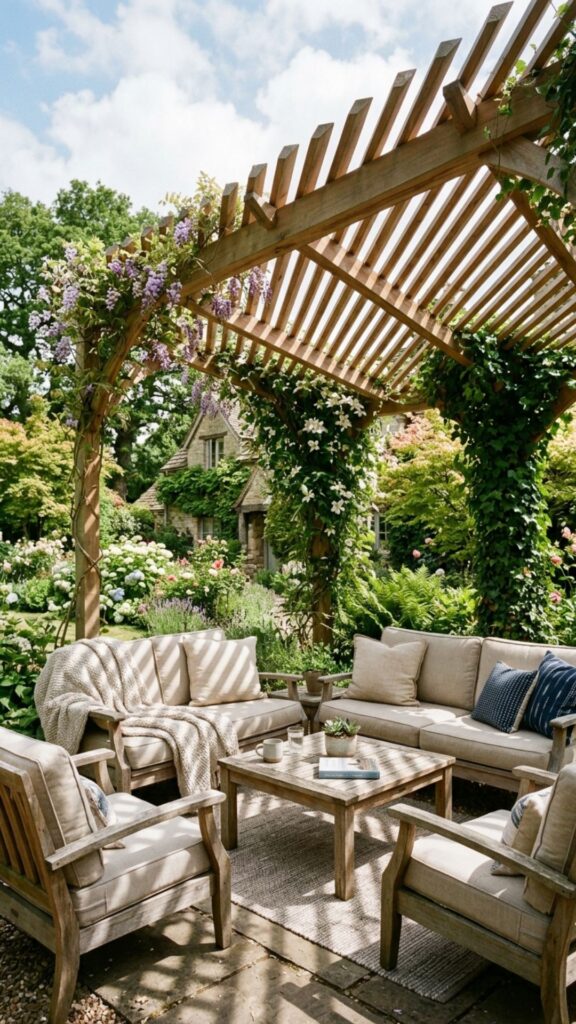
A pergola is the workhorse of backyard shade. Its open slatted roof blocks the harshest overhead sun while still letting a breeze pass through, which matters a lot when temperatures climb past 95°F. Cedar and aluminum both hold up well, though aluminum won’t warp or split over years of heat exposure.
To boost the cooling effect, angle the slats to match your sun’s path or add a retractable canopy on top. I’ve seen a simple pergola drop the temperature underneath by 10 to 15 degrees, especially when paired with climbing vines. It’s a solid starting point for almost any yard.
2. Install Triangle Shade Sails
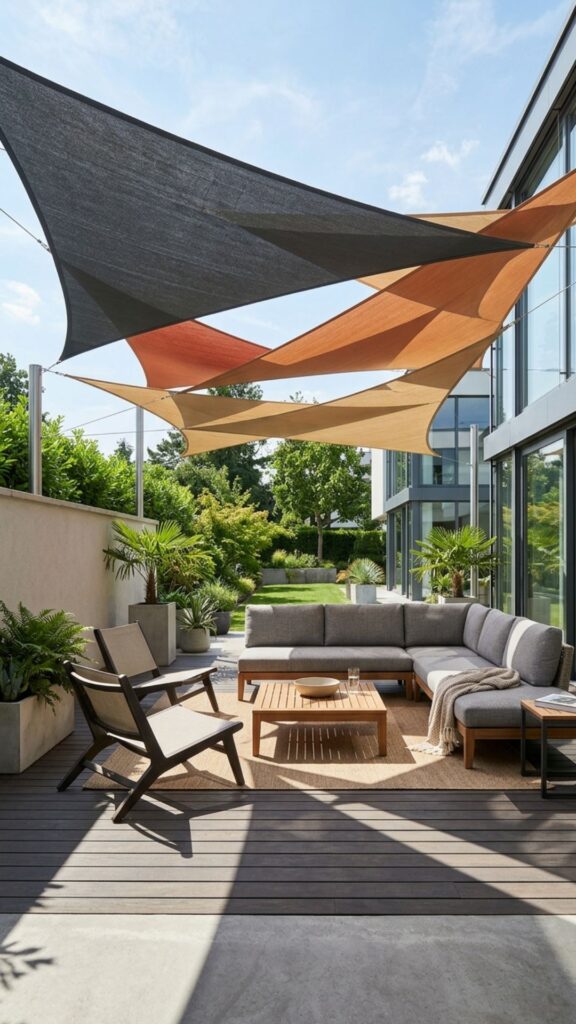
Shade sails are affordable, modern, and surprisingly effective. These stretched fabric panels anchor to posts, walls, or existing structures, and their overlapping shapes create bold visual interest. Choose a high-density polyethylene fabric rated for UV blocking of 90% or more.
The trick with sails is tension and angle. Mount them at a slight tilt so rainwater runs off and air can circulate underneath. Layering two or three sails at different heights looks striking and covers a wider area than a single flat panel.
3. Plant Fast-Growing Shade Trees
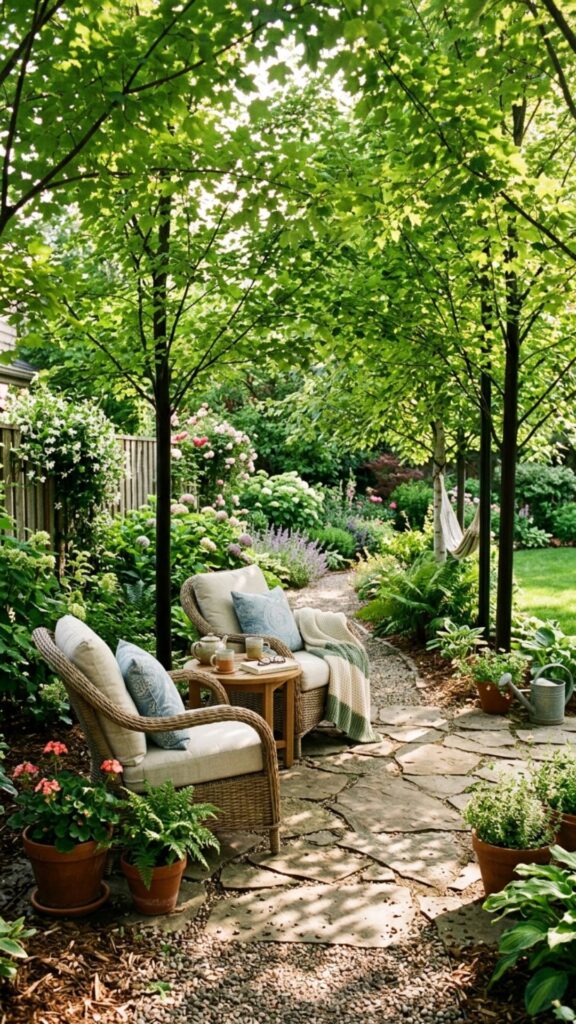
Nothing beats a mature tree for natural, cooling shade. Trees cool the air through evaporation, not just by blocking sun, so the temperature difference feels dramatic. For hot climates, look for drought-tolerant options like desert willow, live oak, or Chinese pistache.
The catch is patience. Trees take years to fill in, so plant them now and use temporary shade in the meantime. Position them on the south and west sides of your yard, where afternoon sun hits hardest, for the biggest payoff.
4. Hang Outdoor Curtains
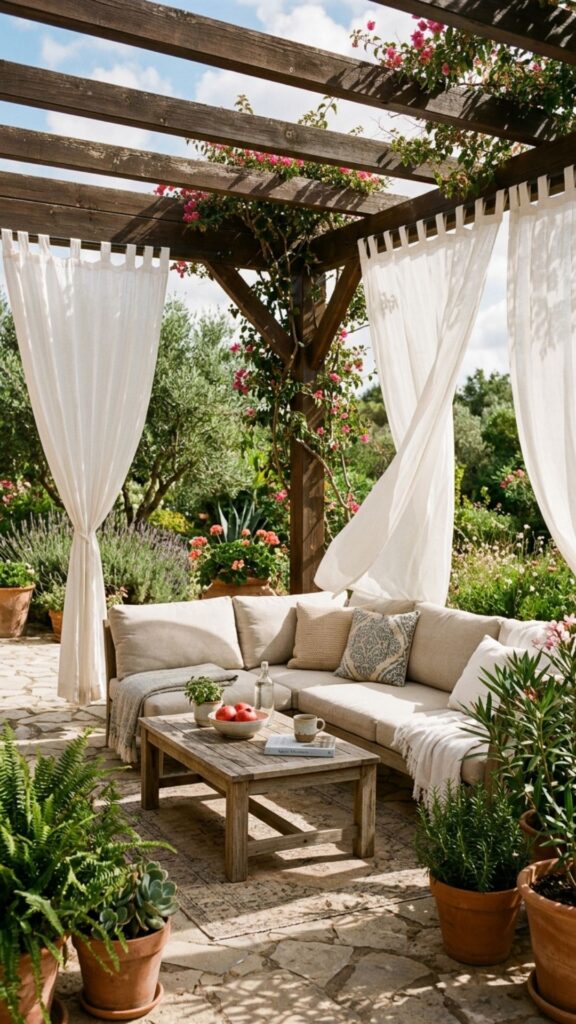
Outdoor curtains soften a space while blocking low, slanting sun that a roof can’t stop. They’re perfect for pergolas, patios, and gazebos where afternoon glare sneaks in sideways. Weather-resistant fabrics like Sunbrella resist fading and mildew even in humid heat.
Beyond function, curtains add privacy and a resort-like feel. Tie them back on breezy days and draw them closed when the sun dips low. Weighted hems keep them from flapping around in the wind.
5. Set Up a Retractable Awning
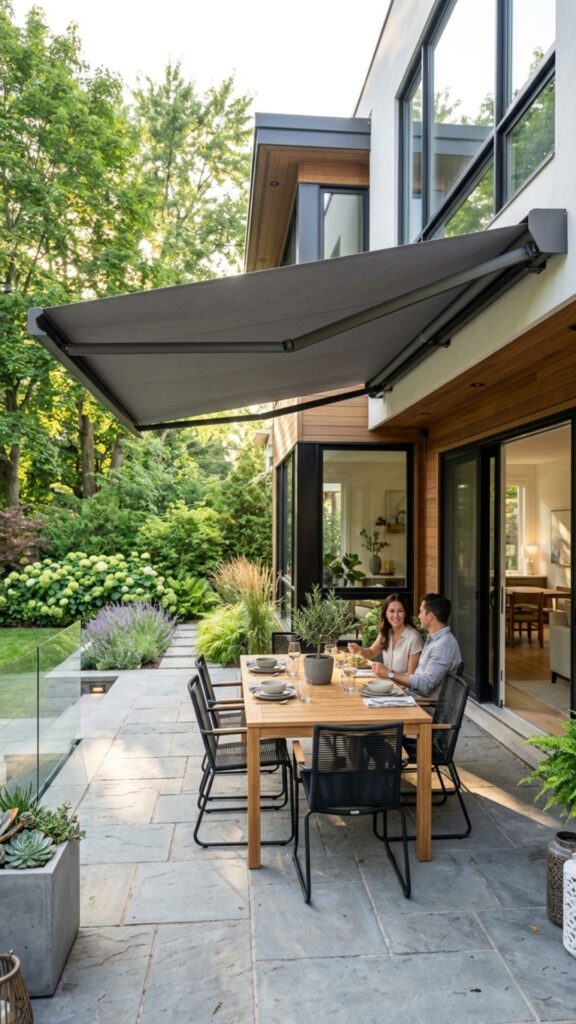
Retractable awnings give you control over shade on demand. Extend them during peak heat and roll them away when you want open sky. Modern motorized versions operate with a remote or even a sun sensor that reacts automatically.
These work especially well against the house, shading windows and cutting indoor cooling costs at the same time. Look for models with a wind sensor, since sudden gusts can damage an extended awning in exposed yards.
6. Create a Covered Patio
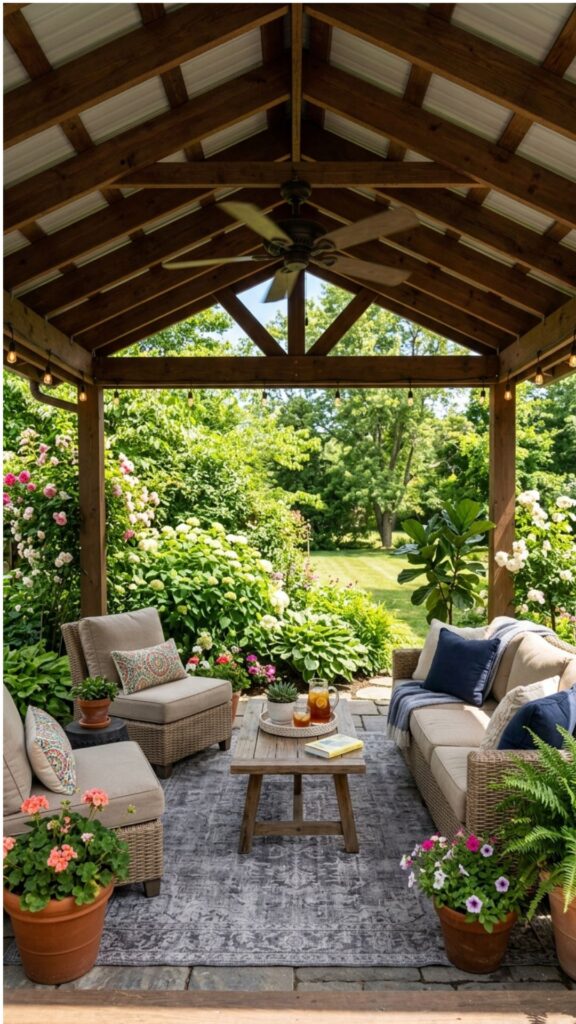
A permanent roofed patio is the ultimate hot-climate upgrade. It offers full protection from sun and rain, letting you use the space year-round. An insulated roof panel reflects heat rather than trapping it, keeping the area below noticeably cooler.
Add a ceiling fan underneath and you’ll feel the difference instantly. Moving air makes even 90-degree afternoons bearable. This is a bigger investment, but it transforms a patio into a true outdoor room.
7. Grow a Living Vine Canopy
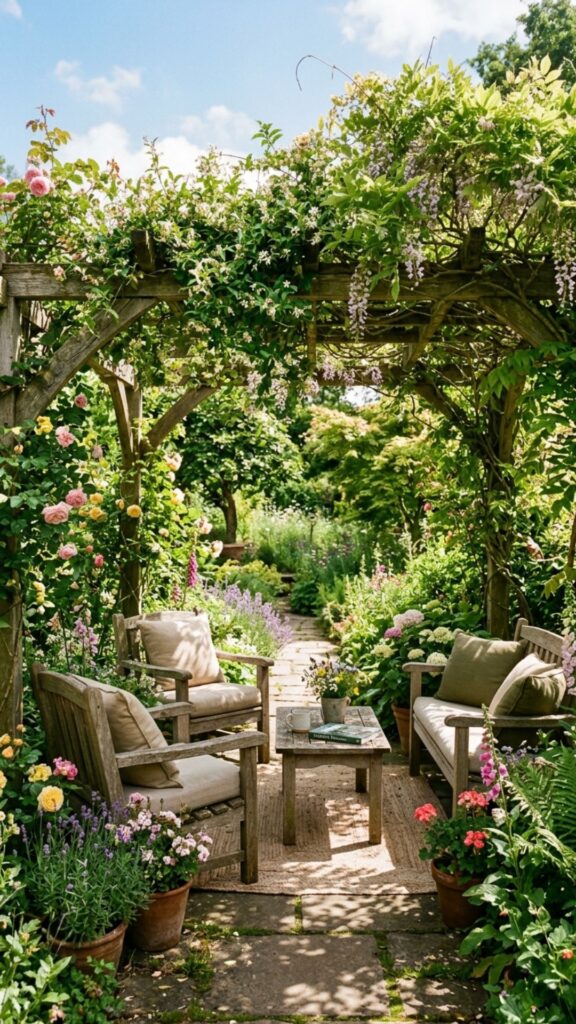
Climbing vines turn any structure into a green, breathing shade source. Grapevines, wisteria, and trumpet vines cover a pergola or trellis within a couple of seasons. The leaves absorb sunlight and release moisture, cooling the air naturally.
Vines do need some upkeep, including pruning and training. But the reward is a lush, living roof that gets better each year. Deciduous varieties drop their leaves in winter, letting warm sun through when you actually want it.
8. Add a Freestanding Gazebo
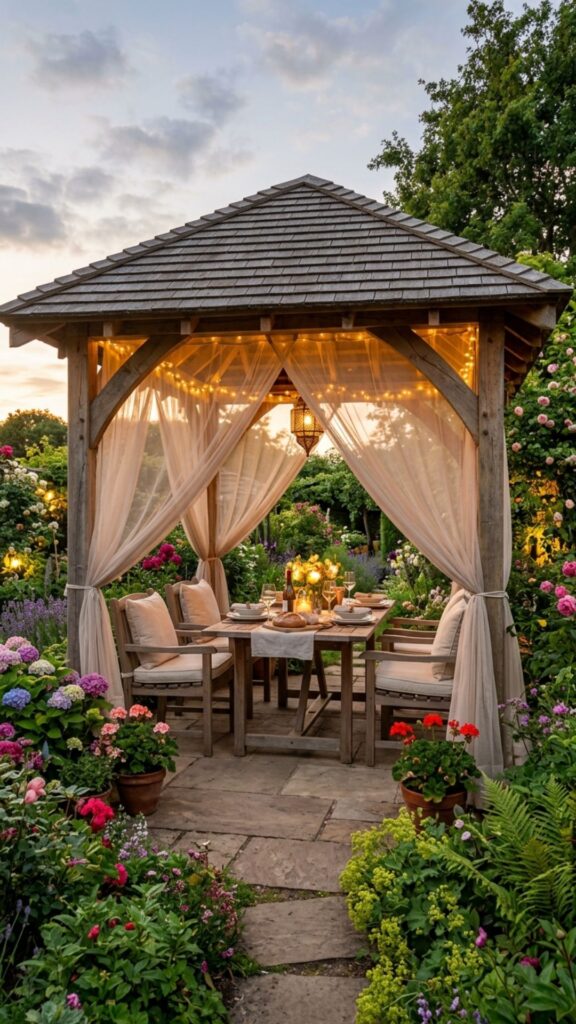
A gazebo delivers instant shade with a defined, cozy footprint. Its solid roof blocks sun completely, making it ideal for dining sets or a lounge corner. Many come as kits you can assemble in a weekend.
Choose one with open sides to keep air flowing, since a fully enclosed gazebo can trap heat. Pair it with mosquito netting for evening use, and you’ve got a comfortable spot from morning coffee to sunset drinks.
9. Use a Cantilever Umbrella
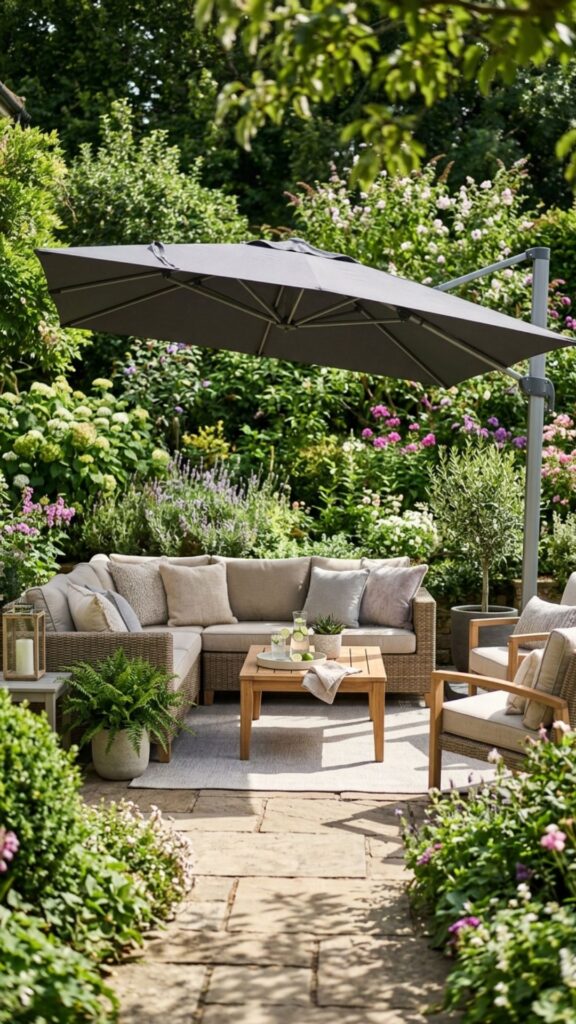
Cantilever umbrellas offer big coverage without a center pole getting in your way. The offset arm lets you position shade exactly where you need it, then rotate it as the sun moves. Look for a canopy of at least 10 feet for real coverage.
Stability is key in hot, windy regions. Use a weighted base filled with sand or water, and always close the umbrella when you leave. A quality cantilever model with a vented top handles gusts far better than budget versions.
10. Build a Slatted Privacy Screen
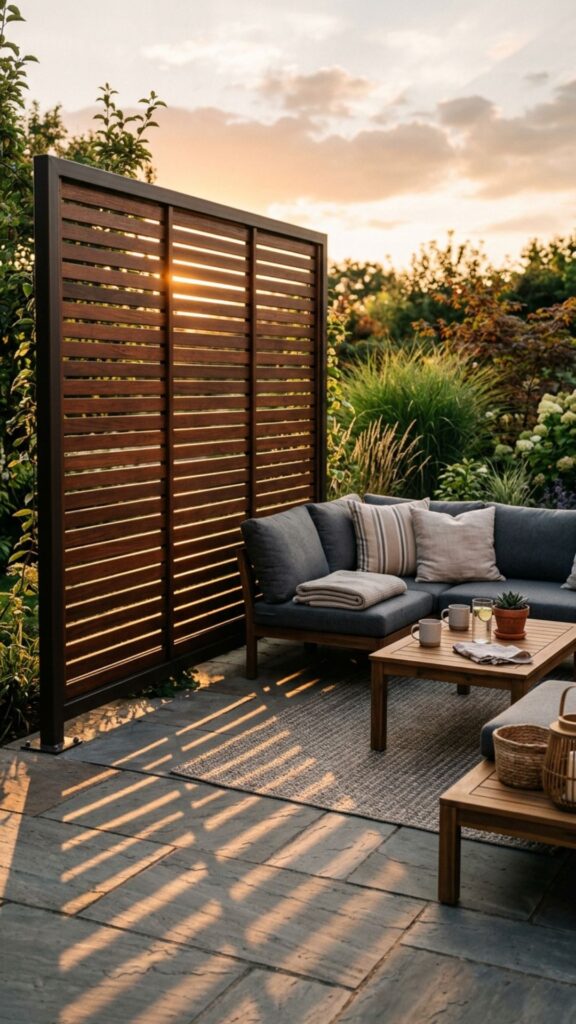
A vertical slatted screen blocks low western sun while adding structure and style. Unlike a solid wall, the gaps let air pass through so heat doesn’t build up behind it. Wood, composite, or metal all work depending on your look.
These screens double as privacy barriers and backdrops for climbing plants. Place one along the hottest exposure to cut glare on your seating area. The striped light-and-shadow effect looks fantastic in photos too.
11. Plant a Bamboo Barrier
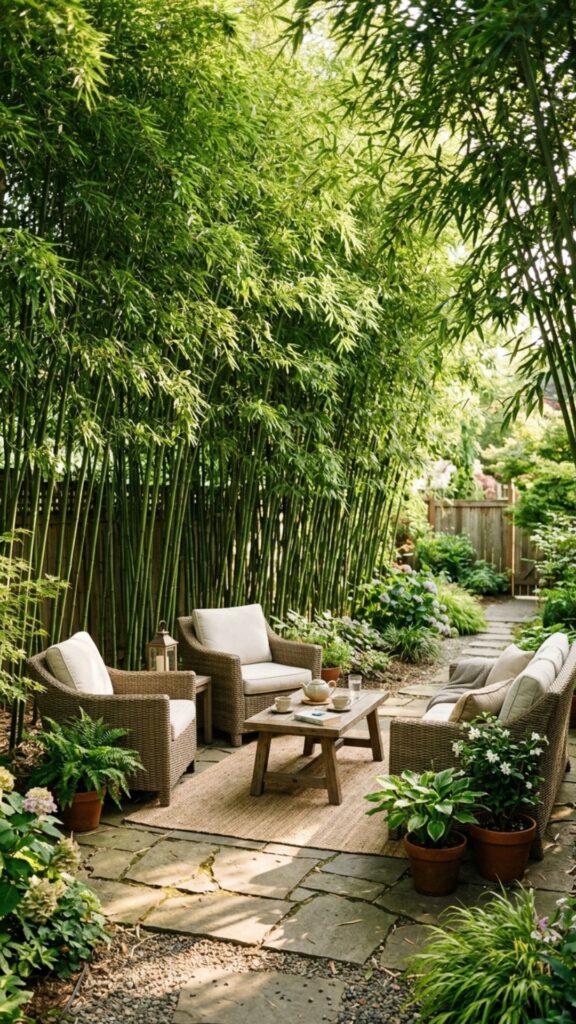
Bamboo grows fast and tall, creating a dense green wall that filters harsh sun. Clumping varieties stay contained and won’t spread out of control like running types. Within a year or two, you’ll have a natural privacy and shade screen.
The rustling sound and swaying stalks add a calming, tropical vibe. Plant bamboo in containers or install a root barrier to keep it tidy. It thrives in heat and needs little care once established.
12. Hang a Bamboo or Reed Roll
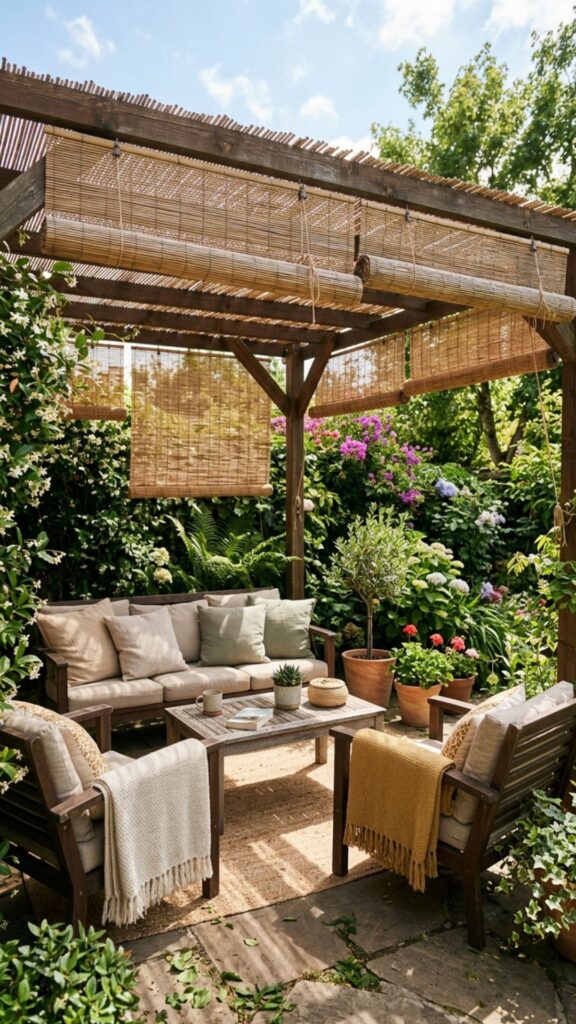
For a quick, budget-friendly fix, roll-up bamboo or reed screens attach to fences, pergolas, and railings in minutes. They diffuse sunlight into soft, dappled light and bring a laid-back, natural texture to your yard.
These screens won’t last as long as permanent structures, but they’re easy to replace every few seasons. Mount them where you need seasonal shade or extra privacy. They’re a great way to test a spot before committing to something bigger.
13. Install an Outdoor Pergola With a Louvered Roof
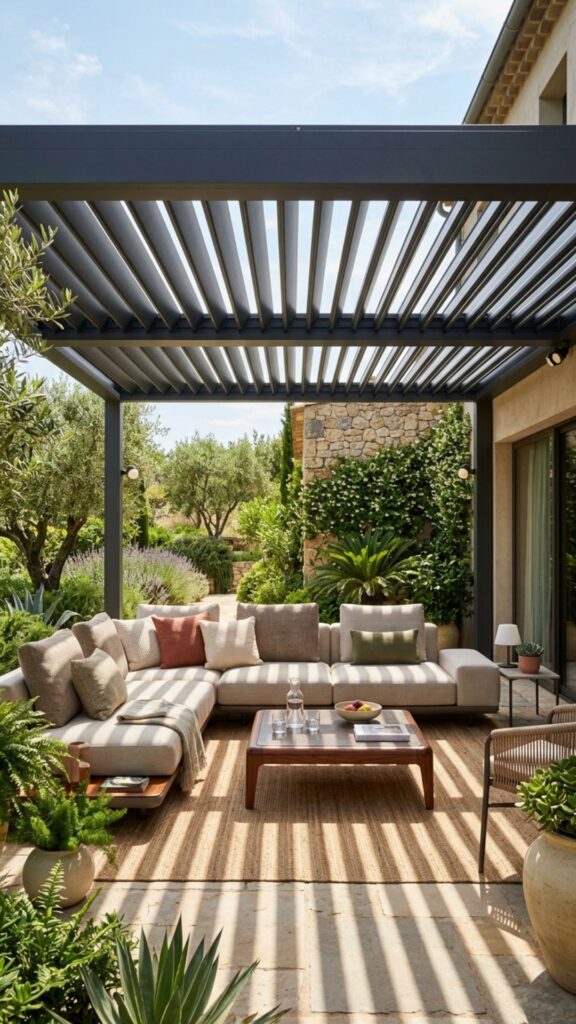
Louvered pergolas take the classic design up a notch. Adjustable slats let you dial in exactly how much sun or shade you want, and many close fully to keep out rain. It’s the flexibility of an awning with the sturdiness of a permanent structure.
I recommend these for homeowners who want control without fuss. Motorized versions adjust with the push of a button, and some include rain sensors that close automatically. It’s a premium option, but the year-round usability is worth it.
14. Set Up a Cabana or Daybed With a Canopy
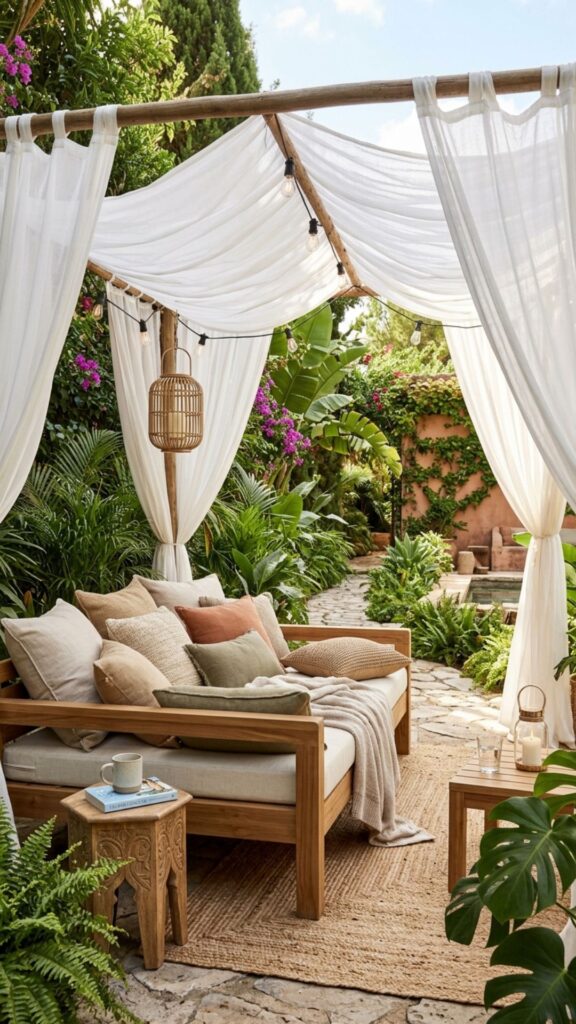
A cabana creates a shaded lounge zone that feels like a private getaway. The draped canopy blocks direct sun while the open design keeps air moving. Add cushions and you’ve got the perfect spot for an afternoon nap.
Place your cabana near a pool or garden focal point to anchor the space. Lightweight, water-resistant fabrics dry fast and resist fading. It’s an easy way to bring vacation vibes home.
15. Grow Tall Ornamental Grasses
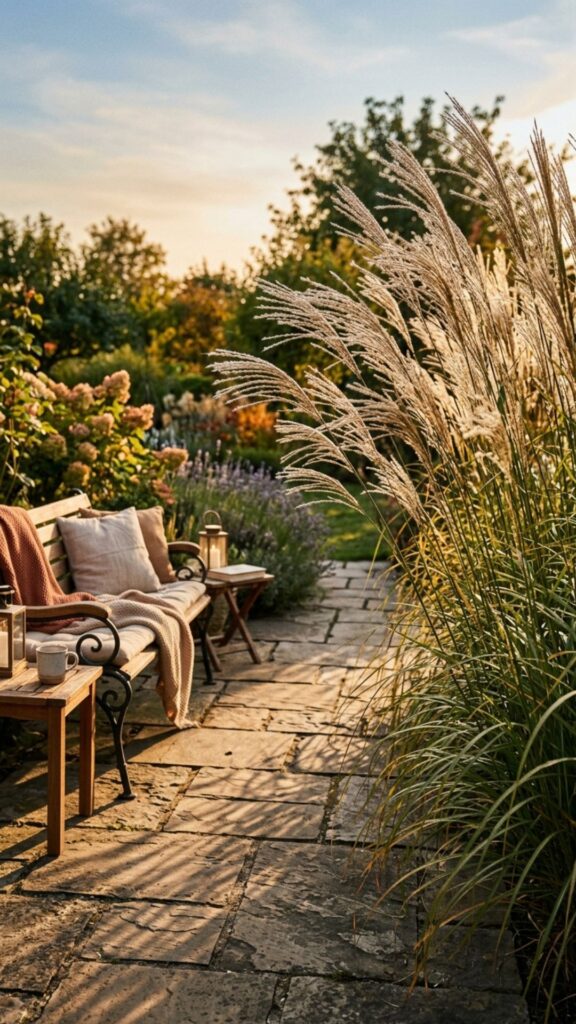
Ornamental grasses like maiden grass and pampas grass grow tall enough to shade seating areas and block low sun. They sway in the breeze, tolerate heat and drought, and require almost no maintenance once established.
Cluster them in groups for a fuller effect and better coverage. Beyond shade, they add movement, texture, and softness to hardscaped yards. Cut them back once a year and they’ll return stronger each spring.
16. Add a Ceiling Fan to Covered Areas
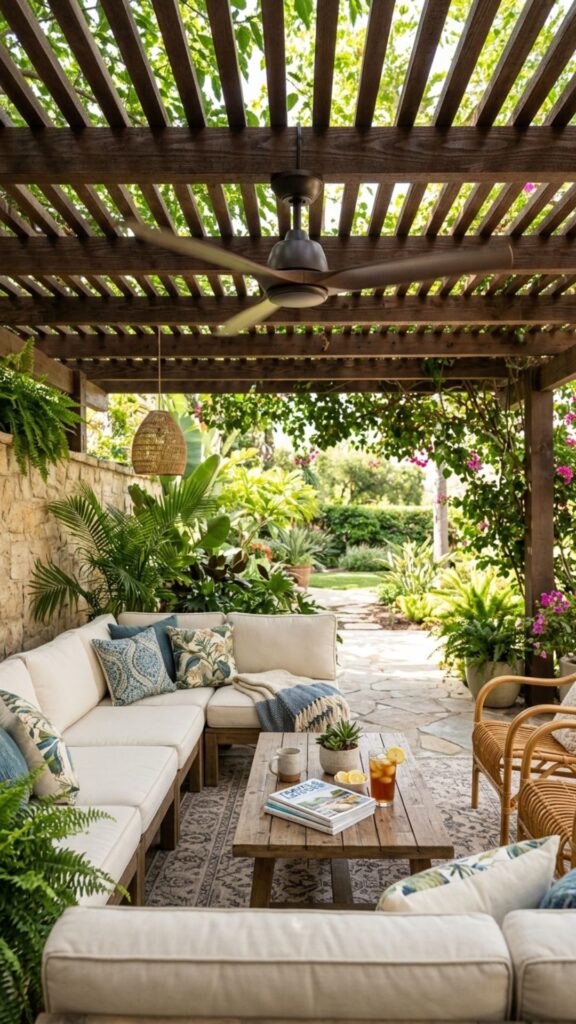
Shade blocks sun, but moving air is what truly cools your skin. An outdoor-rated ceiling fan under any covered structure makes a huge comfort difference on still, sticky days. Damp-rated or wet-rated models stand up to humidity and rain.
Combine a fan with your pergola, patio, or gazebo for maximum effect. The breeze can make a shaded 92-degree afternoon feel closer to the low 80s. It’s an affordable upgrade that punches well above its cost.
17. Use Potted Trees and Large Planters
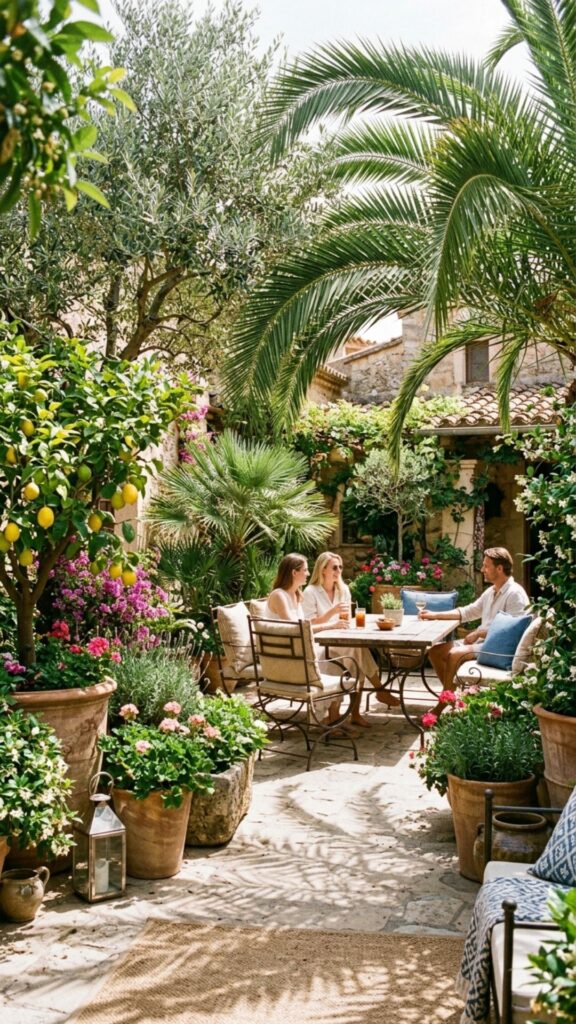
Potted trees offer flexible shade you can move as the sun shifts. Olive trees, citrus, and dwarf palms thrive in containers and handle heat beautifully. Cluster several pots to create a shaded pocket wherever you need one.
This approach suits renters and small yards where planting in the ground isn’t an option. Water containers more often, since they dry out faster than garden beds. Rearrange them seasonally to chase or block the sun.
18. Build a Green Wall or Vertical Garden
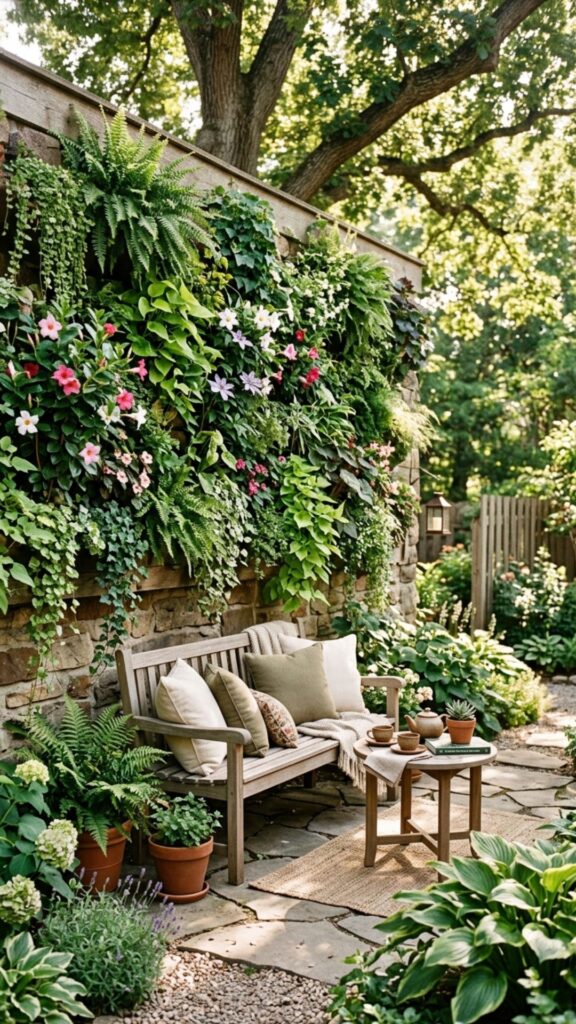
A living green wall cools your yard while turning a bare fence into a lush focal point. Plants absorb heat and release moisture, lowering the temperature nearby. Vertical gardens save ground space, which matters in compact yards.
Use drought-tolerant succulents or trailing vines with a built-in drip system to keep watering simple. Position the wall along a hot exposure to shade seating below. It’s as much a design statement as a cooling tool.
19. Create a Shaded Water Feature Zone
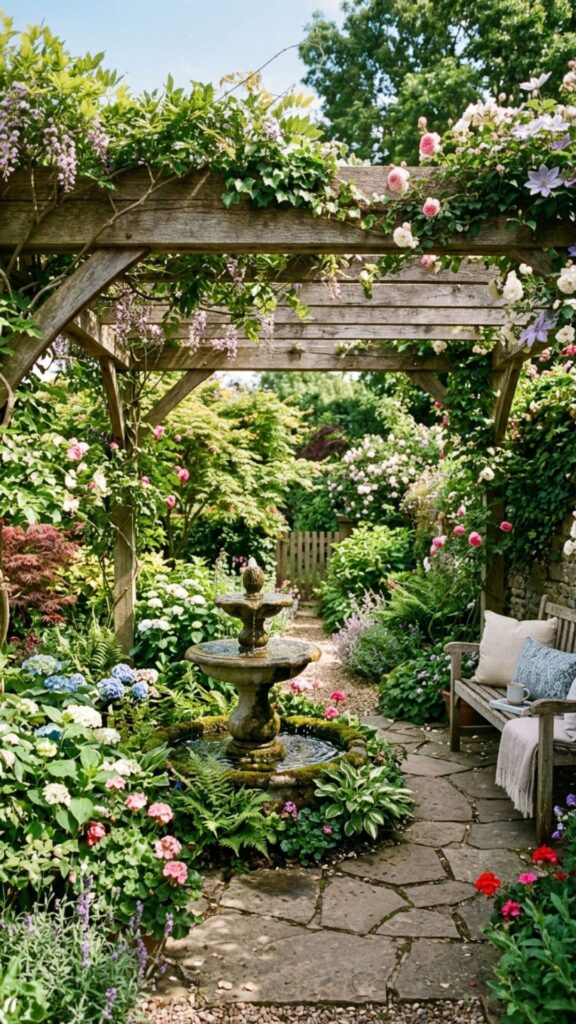
Pairing shade with water amplifies the cooling effect. A fountain, pond, or small waterfall under a pergola or tree lowers the perceived temperature through evaporation and sound. The gentle trickle also masks street noise.
Keep the feature in partial shade to slow algae growth and reduce water loss. Even a small tabletop fountain adds a refreshing touch. Combined with overhead shade, it turns a hot corner into your favorite retreat.
20. Layer Multiple Shade Sources
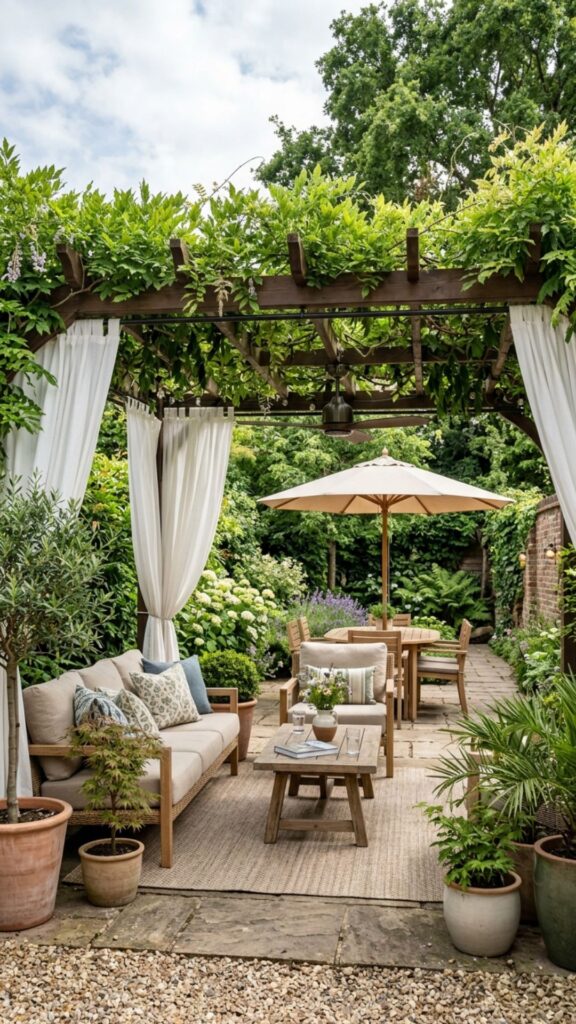
The best shaded backyard ideas for hot climates rarely rely on one solution. Layering a pergola with vines, curtains, and a fan tackles heat from every angle: overhead sun, low glare, and stagnant air. Each element covers what the others miss.
Start with your biggest problem spot and build out from there. Combine a permanent structure with flexible pieces like umbrellas and potted trees. This layered approach gives you comfortable, usable space no matter where the sun sits.
Conclusion
Beating the heat doesn’t mean giving up your backyard all summer. From quick fixes like shade sails and outdoor curtains to lasting investments like louvered pergolas and covered patios, there’s a solution for every yard and budget. The key is combining shade structures, cooling plants, and good airflow so your space stays comfortable even on the hottest days.
Pick one or two ideas from this list that fit your space, then build from there. Ready to reclaim your outdoor space? Start with a single shade project this weekend and enjoy a cooler, more inviting backyard all season long.
What is the best way to shade a backyard in a hot climate?
The best approach combines a permanent overhead structure, like a pergola or covered patio, with cooling plants and an outdoor ceiling fan. This layered method blocks direct sun, filters low glare, and keeps air moving for real comfort.
What is the cheapest way to add shade to a backyard?
Shade sails, roll-up bamboo screens, and outdoor umbrellas offer the most shade for the lowest cost. A quality shade sail can cover a large seating area for a fraction of the price of a built structure.
Which trees provide the best shade in hot climates?
Drought-tolerant trees like live oak, desert willow, Chinese pistache, and olive trees offer excellent shade while surviving heat and dry spells. Plant them on the south and west sides of your yard for maximum afternoon coverage.
Do shade structures actually lower the temperature?
Yes. A well-designed pergola or awning can reduce the temperature underneath by 10 to 15 degrees. Adding plants and a ceiling fan boosts that effect through evaporation and airflow.
How can I make my patio cooler without a roof?
Use a cantilever umbrella or shade sail for overhead coverage, add potted trees or tall grasses for natural shade, and place a fan nearby to keep air circulating. Outdoor curtains also block low, angled sun.