Most dining rooms have the same problem: not enough storage. Tablecloths pile up in closets, extra dishes crowd kitchen cabinets, and candles get stuffed into drawers that weren’t meant for them. A dresser in the dining room solves all of that — and when you choose the right one, it looks completely intentional.

This guide covers 20 dining room dresser ideas that blend smart storage with real style.
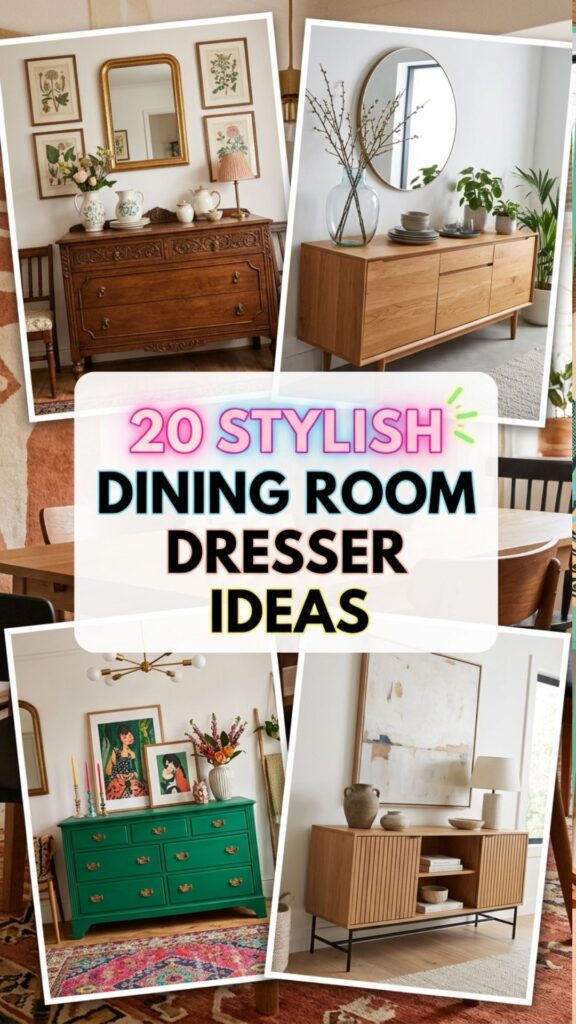
You’ll find options for formal dining rooms and casual ones, small spaces and larger layouts, renters and homeowners. Whether you’re working with a vintage find or something brand new, there’s an approach here that fits what you actually need.
1. Use a Credenza as a Sleek Sideboard Alternative
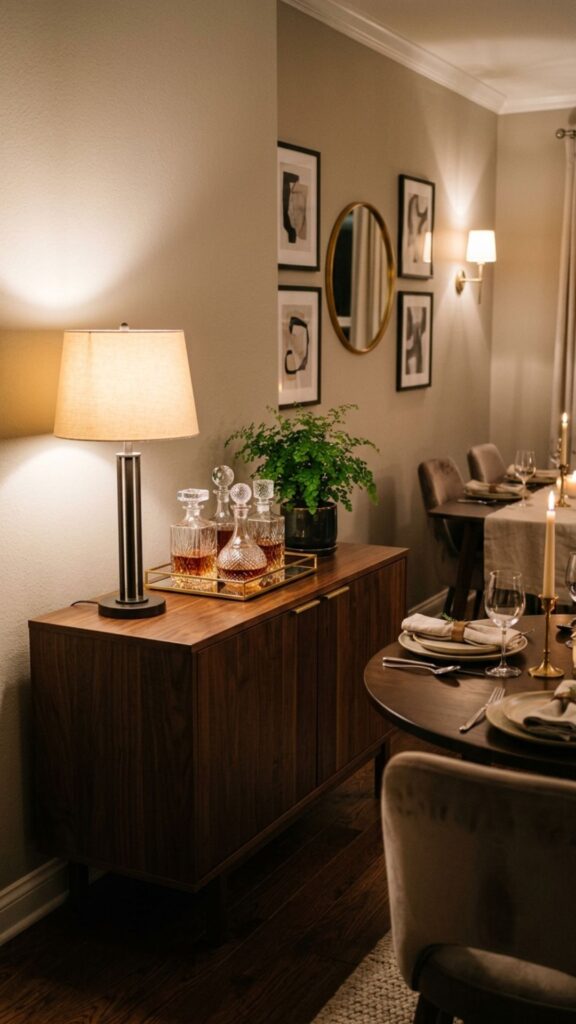
A credenza is essentially a low-profile dresser built for dining rooms, and it’s one of the most versatile pieces you can bring into the space. It typically sits about 30 inches tall, offers a mix of drawers and cabinet doors, and keeps the room feeling open rather than heavy.
Place it along a blank wall opposite the table and use the top surface for a lamp, a tray with decanters, or a simple plant. The drawers underneath handle everything from cloth napkins to serving utensils — all out of sight, easy to access when you need them.
2. Repurpose a Vintage Dresser for Character and Storage
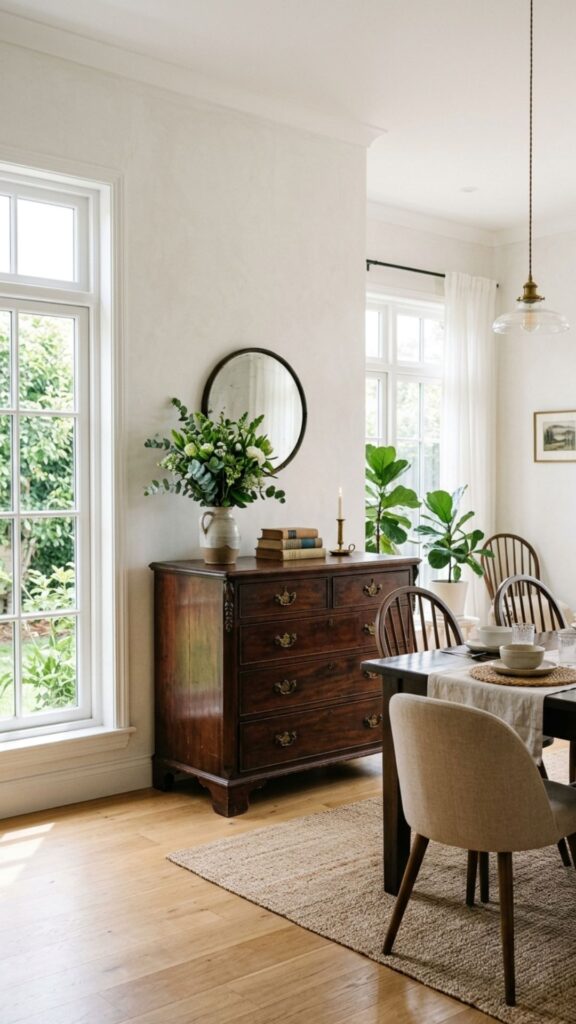
A secondhand dresser can become the most interesting piece in your dining room if you choose the right one. Look for solid wood construction with deep drawers that can handle the weight of table linens, heavier servingware, or placemats stacked neatly.
A vintage piece in a contrasting finish — say, dark walnut in a light, neutral room — adds character that new furniture rarely matches. Sand and refinish it if the surface is worn, or paint it in a matte color that ties into your existing palette for a cohesive, curated look.
3. Style the Dresser Top Like a Curated Display
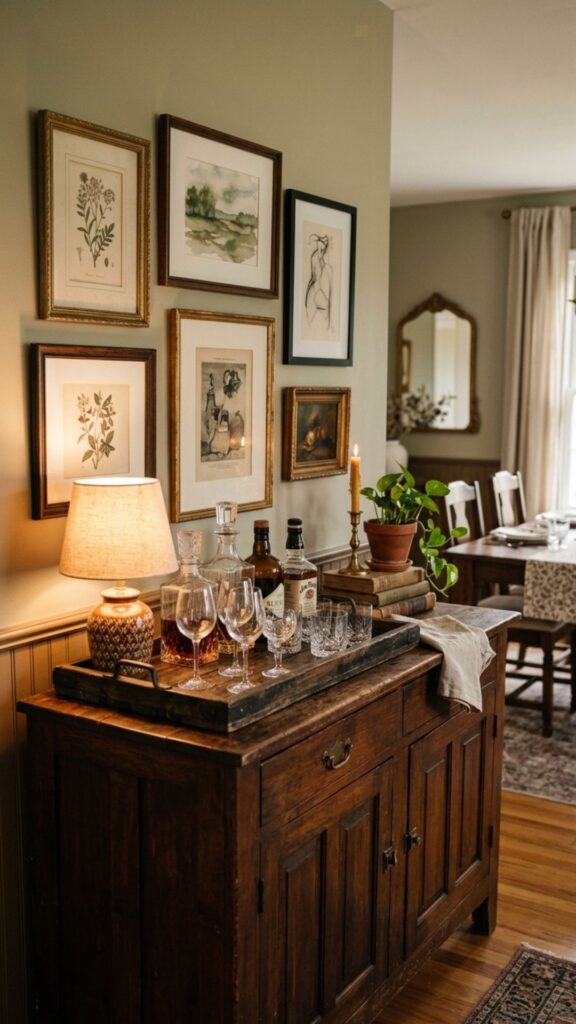
Storage doesn’t have to stay hidden. The top of a dining room dresser is prime real estate for styled displays that also serve a function. A wooden tray corrals bottles and glasses, a small lamp adds ambiance, and a framed print or two finishes the vignette.
Keep the top from getting cluttered by applying the same rule used in retail displays: group items in odd numbers, vary heights, and leave breathing room between objects. An intentional arrangement signals style; a crowded surface signals overflow.
4. Choose a Dresser with Linen Drawer Dividers
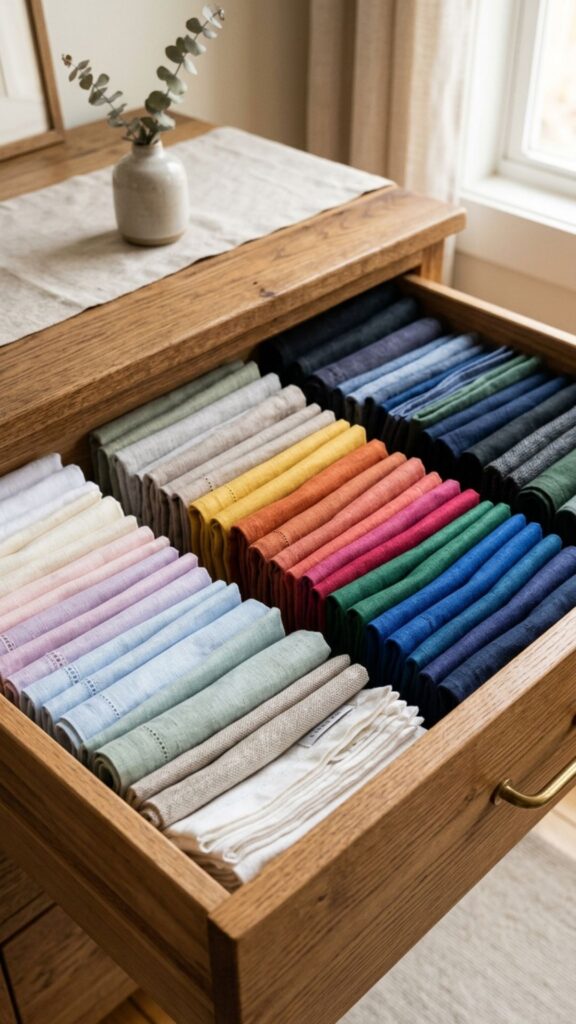
If storing table linens is your primary goal, choose a dresser with wide, shallow drawers that let you fold tablecloths and napkins flat without cramming them in. Narrow drawers work fine for smaller items but make retrieving linens frustrating.
You can also add dividers inside existing drawers using inexpensive bamboo or wood organizers. Separating napkins by color, placemats by size, and tablecloths by occasion makes setting the table faster and keeps your drawer from turning into a fabric pile.
5. Paint a Budget Dresser to Match Your Dining Room
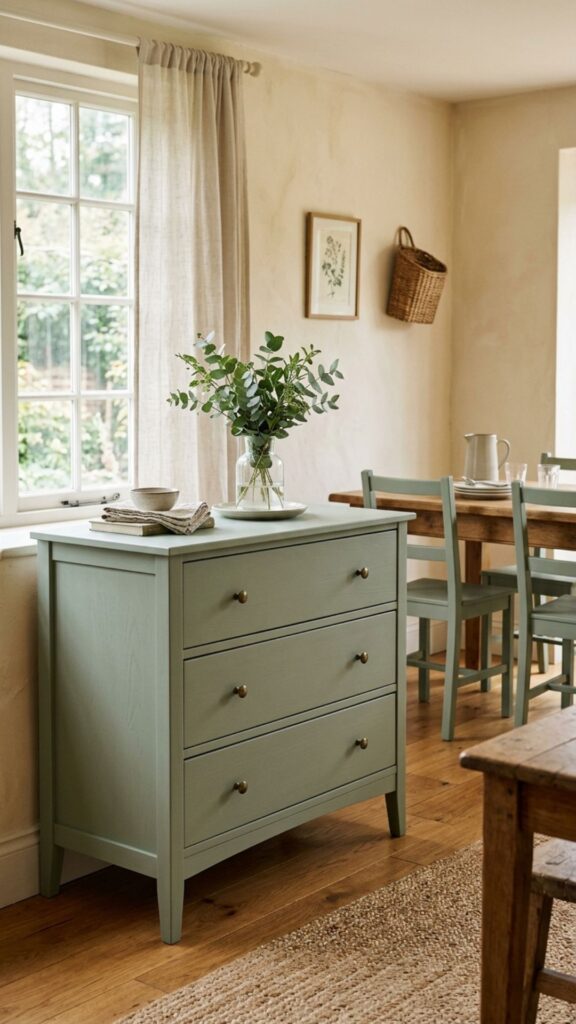
If you already own a dresser or find one at a thrift store, painting it is the fastest way to make it look like it belongs in the dining room. A coat of matte furniture paint in a color pulled from your dining room’s palette transforms a mismatched piece into a cohesive one.
Soft sage, warm white, deep navy, and matte black are all reliable choices that work across a range of dining room styles. Use a satin or semi-gloss finish on the top surface so it stands up to occasional spills and the weight of decorative objects.
6. Add Brass or Matte Black Hardware for an Instant Upgrade
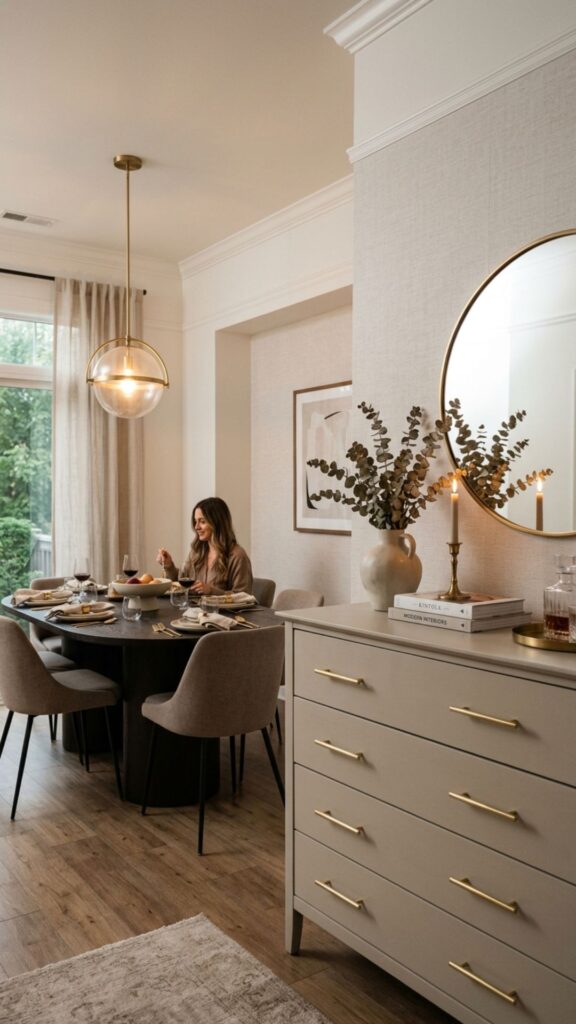
Swapping out drawer pulls and knobs on a plain dresser costs very little but makes a significant visual difference. Hardware is the jewelry of a piece of furniture — it shifts the entire tone from dated to deliberate.
Brass hardware warms up wood tones and pairs well with earthy, organic dining room palettes. Matte black works in modern and industrial settings. If your dining room already has metal accents in the lighting or chair frames, match the hardware to those for a pulled-together look.
7. Use a Tall Dresser in a Room with Limited Wall Space
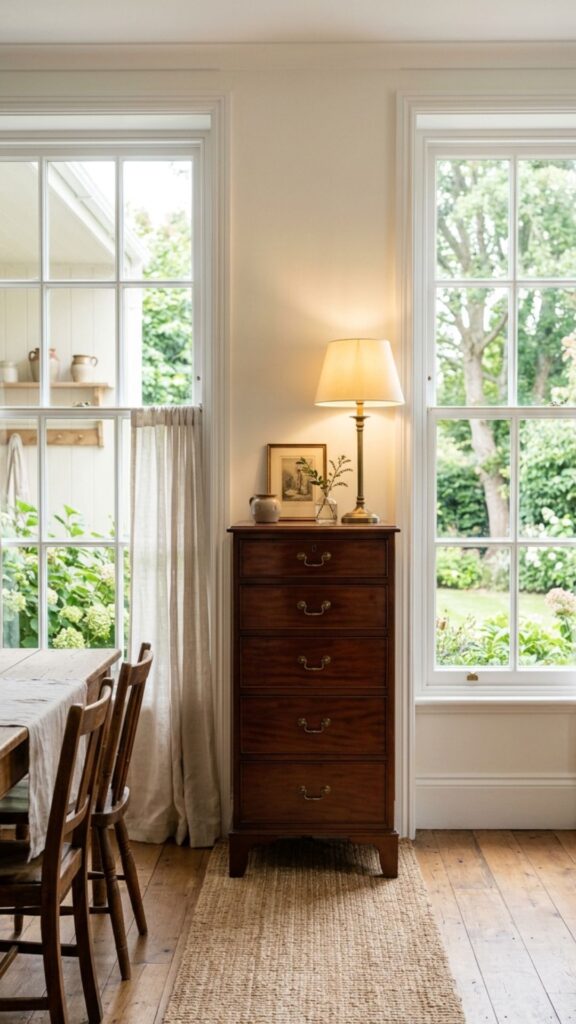
Not every dining room has a long, empty wall for a low credenza. In rooms with windows, doorways, or architectural features interrupting the walls, a taller, narrower dresser takes up less horizontal space while still offering substantial storage.
A five- or six-drawer tall dresser in a slim profile can hold a surprising amount: linens in the bottom drawers, candles and accessories in the middle, and smaller entertaining items at the top. Style the top with a single plant or lamp to keep it from looking like a bedroom transplant.
8. Float a Dresser Below a Mirror for a Formal Look
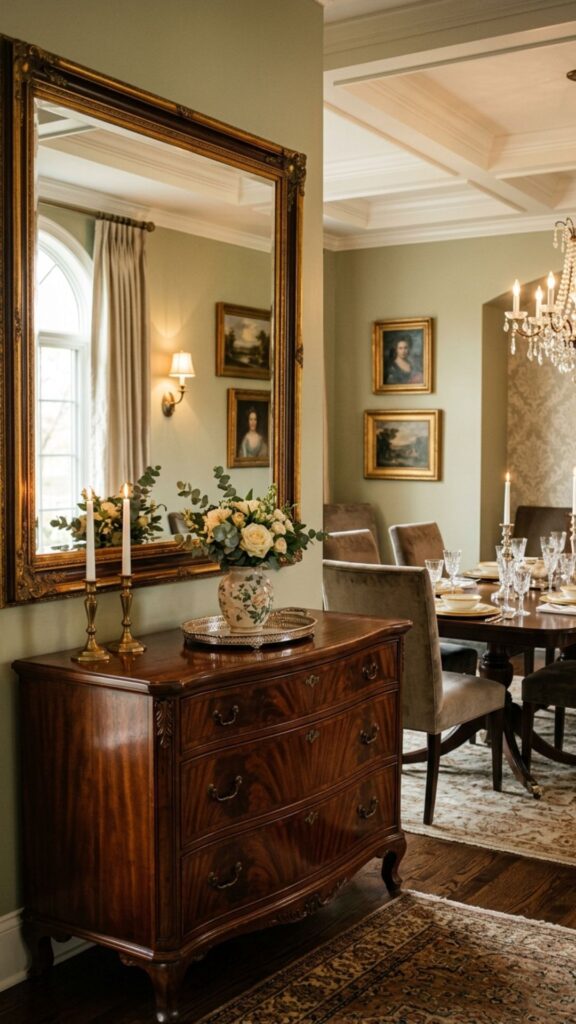
Pairing a dresser with a large mirror mounted directly above it is one of the most classic dining room dresser ideas — and for good reason. It adds visual weight to a plain wall, opens the room up with reflected light, and creates the kind of composed, formal look that makes a dining room feel finished.
Choose a mirror with a frame that complements the dresser’s finish rather than matching it exactly. A gold-framed mirror above a white dresser, for example, adds contrast and warmth that two identical finishes wouldn’t achieve.
9. Try a Mid-Century Modern Dresser for a Timeless Feel
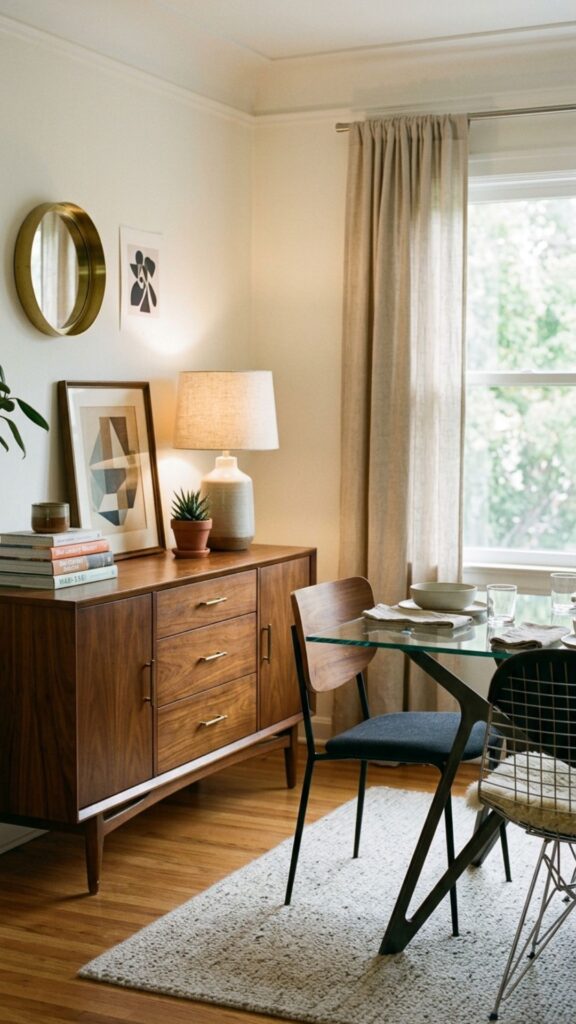
Mid-century modern dressers — low, long, with tapered legs and clean drawer fronts — look right at home in a dining room. Their horizontal lines echo the shape of a dining table, and the exposed legs keep the visual weight light, which is valuable in smaller rooms.
Look for pieces with wood grain fronts or subtle cane detailing for texture. The tapered leg design is especially practical in dining rooms because it lets you see the floor underneath, which makes the room feel more spacious than a piece that sits flush to the ground.
10. Create a Bar Station on Top of the Dresser
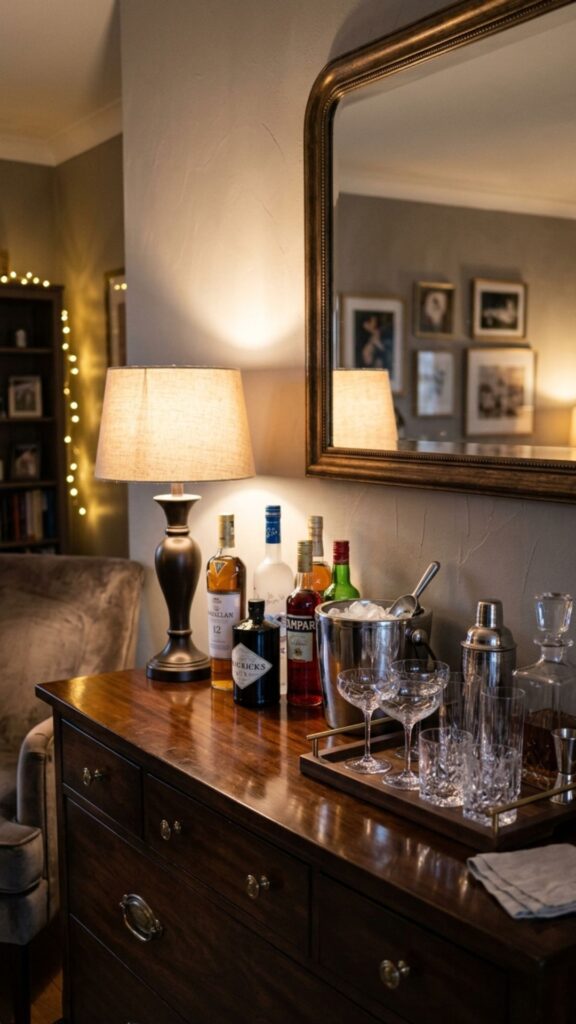
If you entertain regularly, dedicating a dresser to drink storage is a genuinely useful setup. Store wine, spirits, and glassware inside the drawers and cabinets, and use the surface to arrange bottles, a small ice bucket, and glasses in a way that looks inviting.
A tray on top keeps everything contained and easy to move when you need the surface for something else. Add a small lamp or a few candles nearby to make the setup feel warm and intentional rather than improvised.
11. Go with a White Dresser for a Clean, Versatile Look
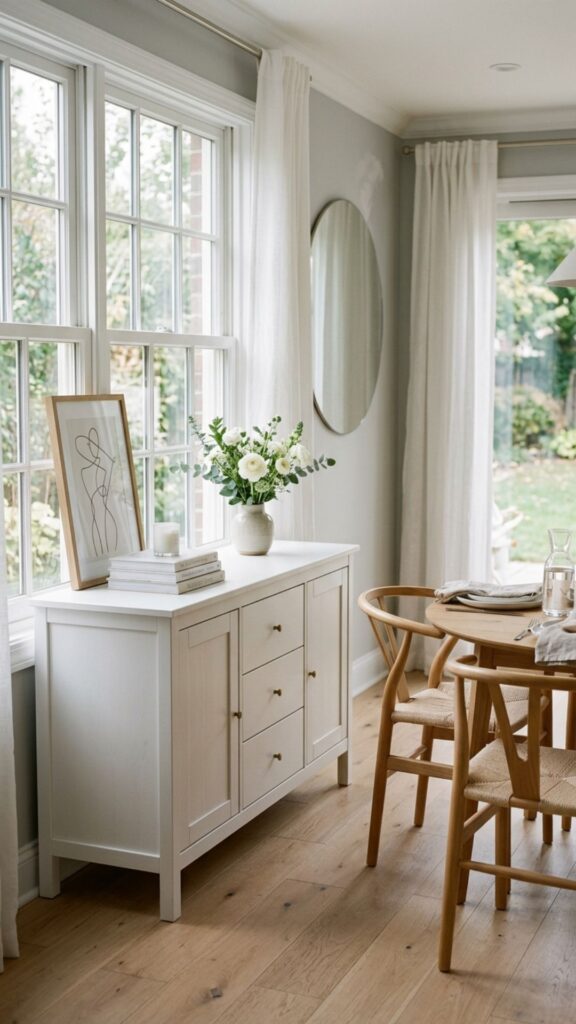
A white dresser in the dining room is one of the most forgiving choices you can make. It fits virtually any color palette, brightens a dark wall, and maintains a clean, uncluttered appearance even when the drawers are stuffed full.
Opt for an off-white or linen tone rather than a stark, bright white if your dining room has warm-toned wood furniture or natural textiles. Stark white can clash with warm tones, while softer whites blend in naturally and feel more refined.
12. Use Open Shelving Above the Dresser for Display
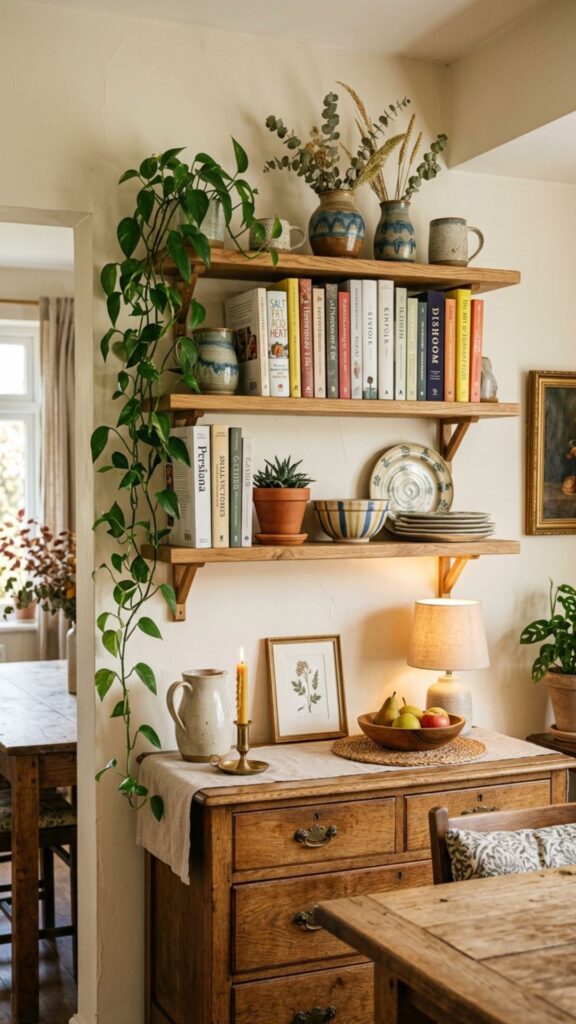
Mounting a shelf or two directly above a dresser doubles your storage and display capacity without adding any floor footprint. The dresser handles everyday functional items, while the shelves above hold things you actually want to see — cookbooks, decorative ceramics, a trailing plant.
Keep the shelves visually lighter than the dresser below. If the dresser is solid and substantial, use open shelves with simple brackets so the wall still shows. This balance prevents the arrangement from feeling too heavy or enclosed.
13. Match the Dresser to Your Dining Table’s Wood Tone
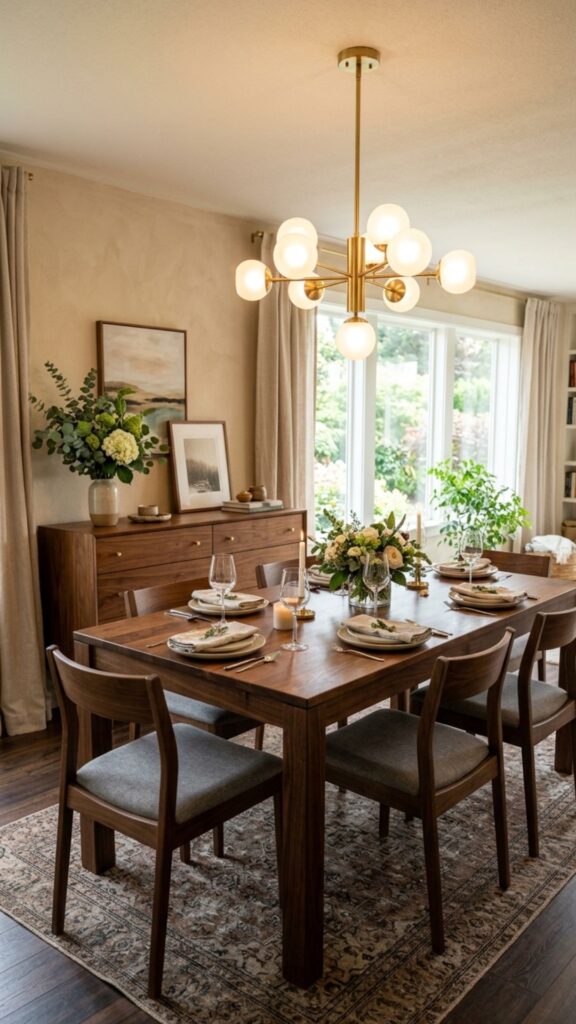
When a dresser’s wood finish closely matches the dining table, the two pieces read as intentional companions rather than mismatched finds. It’s one of the simplest ways to make a dining room feel designed rather than assembled piece by piece over time.
You don’t need a perfect match — similar undertones and grain direction are usually enough. A medium walnut dresser beside a walnut-toned table, for instance, unifies the room without requiring you to buy a matching set from the same collection.
14. Add Baskets to Open Dresser Shelving for Flexible Storage
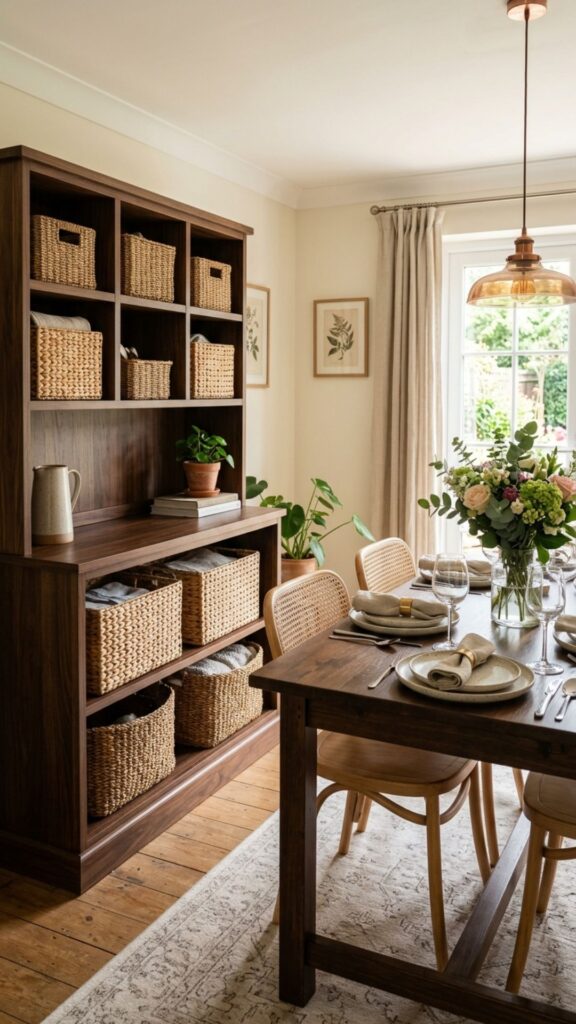
Some dressers include open shelf compartments alongside drawers. These sections are ideal for woven baskets that hold items in bulk — cloth napkins, extra candles, seasonal table runners — without requiring you to fold everything perfectly every time.
Natural fiber baskets in seagrass, rattan, or hyacinth work especially well in dining rooms because they add texture and warmth while looking purposeful. Label them with small tags if the contents change regularly, or simply keep each basket dedicated to one category.
15. Place a Dresser in an Awkward Alcove or Corner
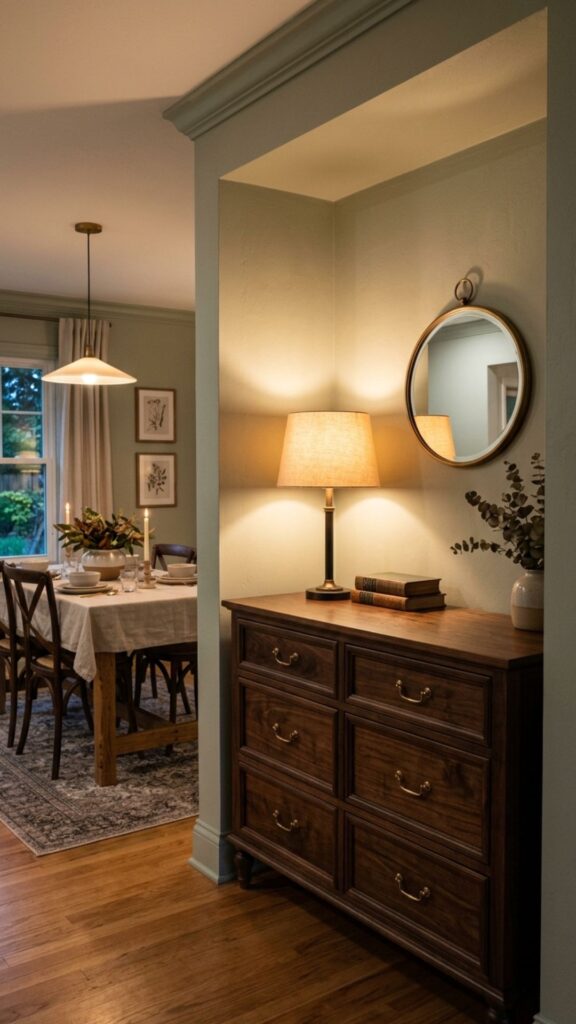
Alcoves and corners are some of the most underused spaces in a dining room. A dresser fitted into one of these spots turns an awkward architectural quirk into a storage feature that also grounds the layout.
Measure the alcove carefully before shopping, and look for a dresser that fills about 80 percent of the width — too-tight fits make drawer access difficult, and too-small pieces look lost. Add a lamp on top to illuminate the corner and make the piece feel like it was placed there on purpose.
16. Repaint a Dark Dresser to Brighten a Small Dining Room
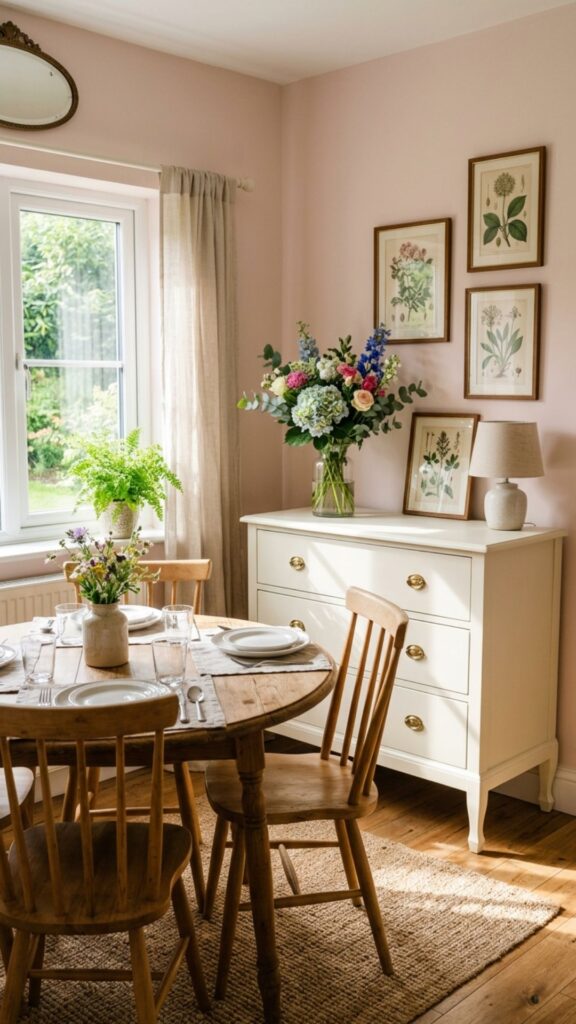
Dark wood dressers can absorb a lot of light in a small dining room, making the space feel heavier than it needs to. Repainting in a lighter color — creamy white, warm beige, or soft sage — instantly lifts the room without replacing the piece entirely.
This is one of the most cost-effective dining room dresser ideas if you already own a heavy, dated piece. Sand the surface lightly, use a good primer, and apply two coats of furniture-grade paint. The transformation typically takes a weekend and costs far less than buying new.
17. Use a Dresser with Cabinets on the Bottom for Bulkier Items
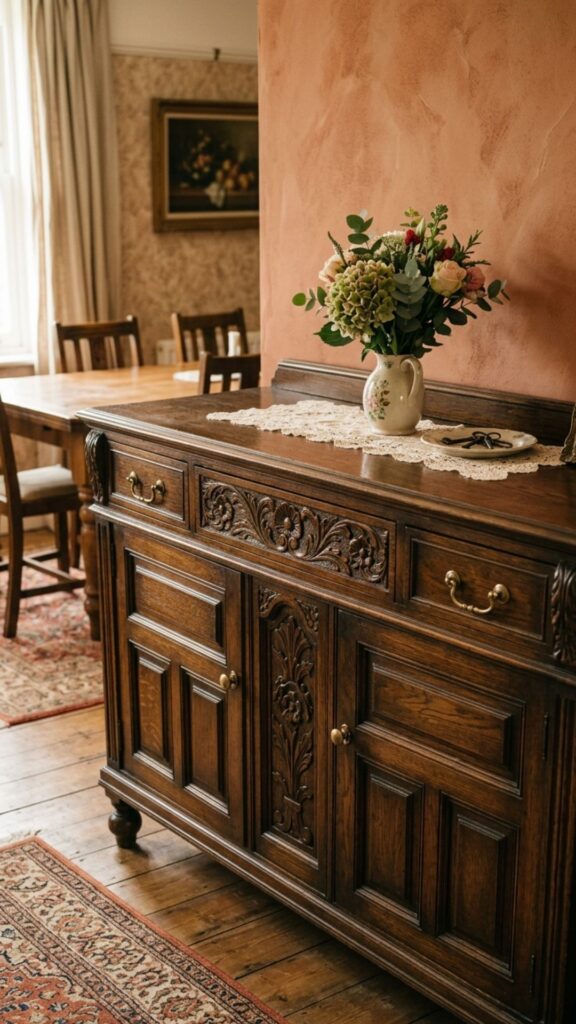
Drawers are ideal for flat, foldable items, but some dining room storage needs more height — wine bottles, serving bowls, a stand mixer, or a stack of board games if the dining room doubles as a family gathering space. A dresser with cabinet doors on the lower half handles these items far better than drawers alone.
Look for pieces that combine two or three drawers on top with a double-door cabinet section below. The drawers remain accessible for linens and utensils while the cabinet hides bulkier, less attractive items entirely.
18. Decorate the Dresser Seasonally to Keep the Room Fresh
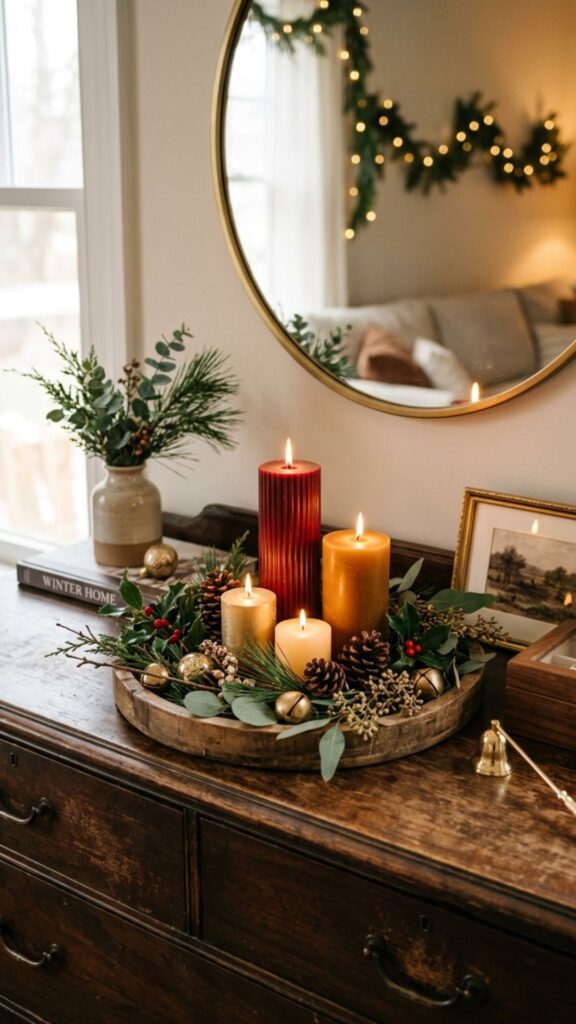
One practical advantage of a dresser in the dining room is the top surface — it gives you a natural spot to rotate seasonal décor without committing to permanent changes. In fall, a grouping of small gourds and warm-toned candles. In winter, evergreen stems and a set of glass votives.
Keeping a seasonal rotation simple and contained to the dresser top prevents the rest of the room from feeling overdone. A small tray or wooden board corrals the display and makes swapping items in and out quick and tidy.
19. Lay a Runner Across the Dresser Top for a Polished Finish
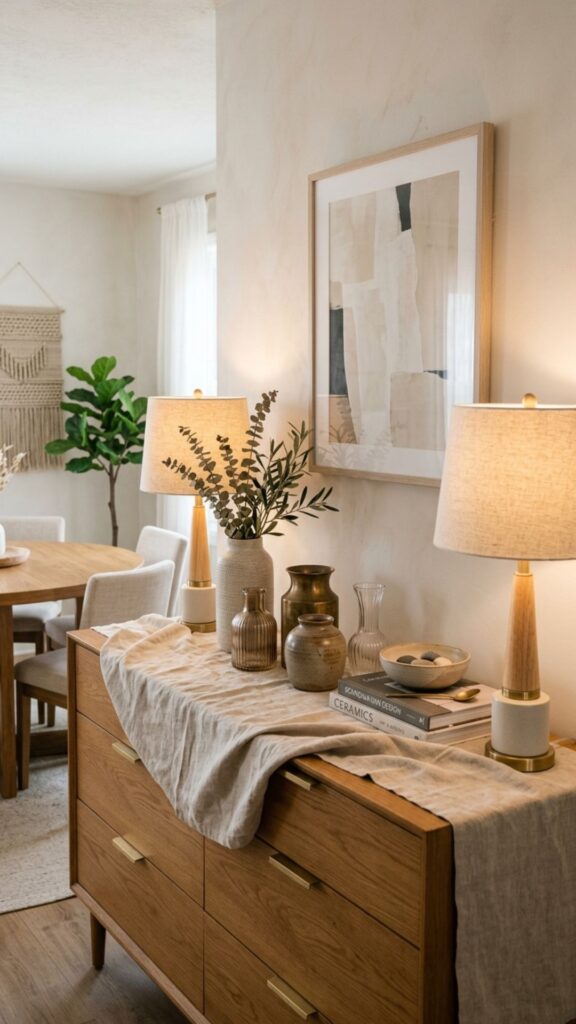
A table runner laid across the top of a dresser does the same thing it does on a dining table — it defines the surface, adds color and texture, and makes the arrangement on top look more intentional. It also protects the surface from small scratches caused by decorative objects.
Choose a runner in a natural material like linen, jute, or cotton for a casual look, or a more refined woven textile for formal dining rooms. The length should leave a few inches of the dresser visible on each end rather than hanging over the sides.
20. Keep It Edited — Less Is More on a Dining Room Dresser
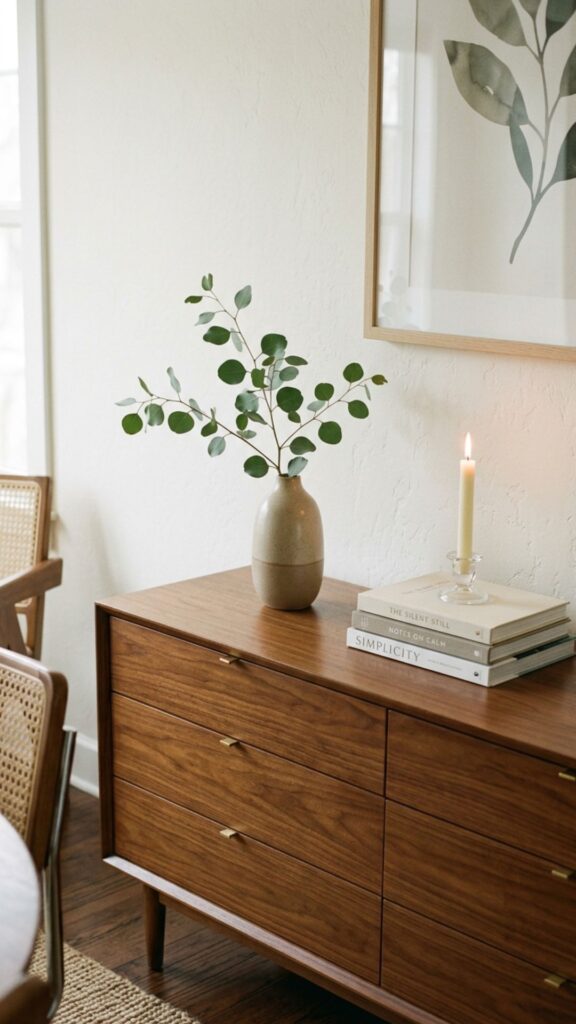
A dining room dresser works best when the top surface is curated rather than covered. The more items you stack on top, the more the dresser reads as overflow rather than intentional décor. A good rule: no more than five to seven objects on the surface at once, grouped with purpose.
Everything else belongs inside the drawers. When the storage function is doing its job — linens folded, accessories organized, tableware contained — the top becomes a canvas for whatever makes the room feel like yours. That balance is what makes a dresser feel like a natural fit in a dining room rather than a piece borrowed from another room.
Conclusion
A dresser is one of the most practical and underrated pieces of furniture you can bring into a dining room. It solves the storage problem that most dining rooms have, and when it’s styled well, it adds character and warmth that purpose-built sideboards often lack.
Start with what you need most — whether that’s linen storage, a display surface, or a bar station — and let that drive your choice. Once the right piece is in place, the rest falls into place around it.
Pick one idea from this list and take action this week. Your dining room has more potential than you’re currently using, and a well-chosen dresser is often the piece that unlocks it.
Can you use a regular dresser in a dining room?
Yes, absolutely. A standard bedroom dresser works well in a dining room as long as the scale fits the space and the finish coordinates with your existing furniture. Deep drawers are especially useful for storing table linens, placemats, and entertaining accessories.
What is the difference between a dresser and a sideboard for a dining room?
A sideboard is specifically designed for dining rooms — typically lower, wider, and with a mix of drawers and cabinet doors. A dresser is taller and designed for bedroom use, but it functions equally well in a dining room and often offers more drawer storage for the price.
How do I style the top of a dining room dresser?
Keep it simple and intentional. Use a tray to group items, vary heights with a lamp or tall vase, and leave space between objects. Limit the display to five to seven pieces and replace anything that doesn’t serve a decorative or functional purpose.
What size dresser works best in a dining room?
For most dining rooms, a low to mid-height dresser between 30 and 42 inches tall works best. It keeps the piece proportional to the table and leaves wall space above for a mirror or artwork. In rooms with limited wall space, a taller, narrower dresser is a practical alternative.