A dining room buffet is one of those pieces that earns its place twice over. It solves a real storage problem — extra dishes, linens, serving pieces — and it gives you a surface to style. Done well, it can become the most polished element in your dining room.
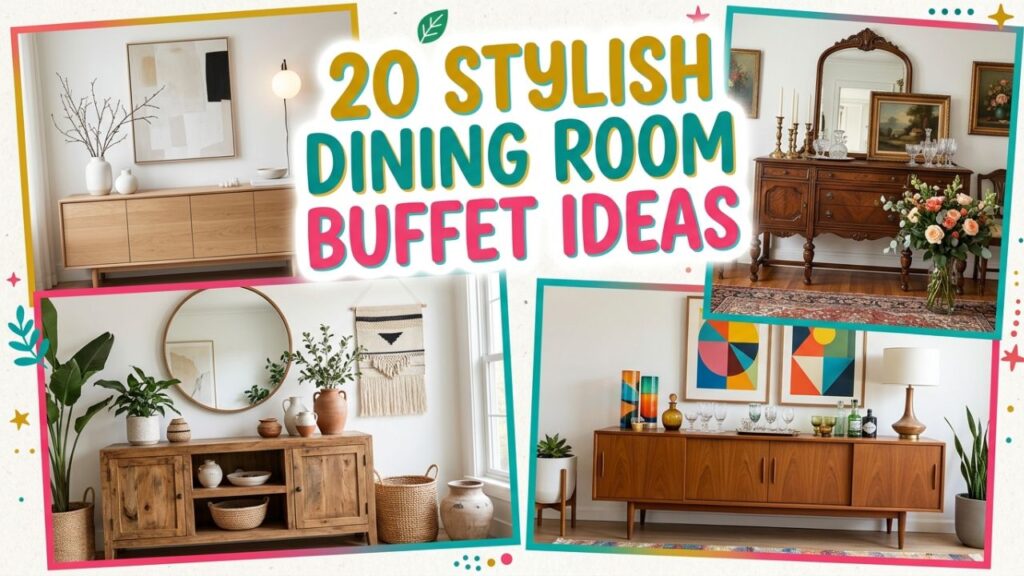
The challenge is knowing where to start. With so many styles, finishes, and sizing options out there, it’s easy to end up with something that looks generic or feels out of place.
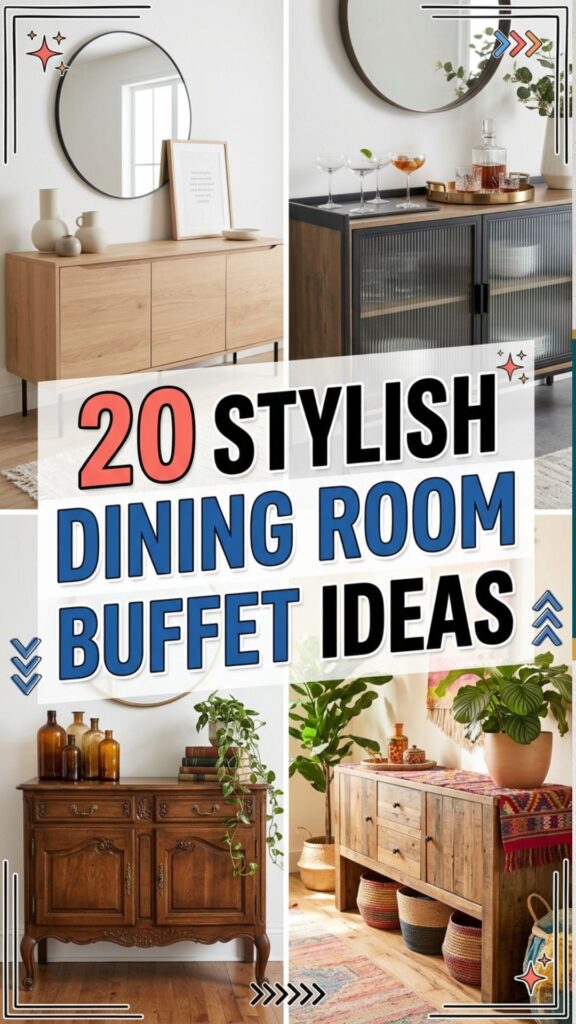
This guide covers 20 practical, design-forward dining room buffet ideas to help you find the right approach for your home. Whether you’re working with a small space, a traditional aesthetic, or a budget, there’s something here for you.
1. Choose a Warm Wood Buffet for a Classic, Timeless Look
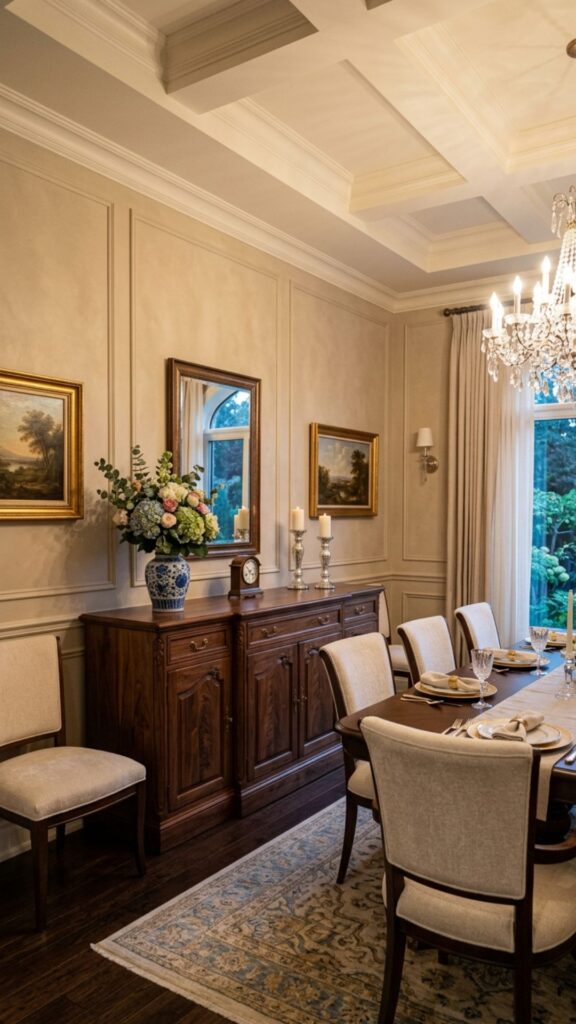
A buffet in warm walnut, oak, or cherry wood brings immediate richness to a dining room. These finishes work across traditional, transitional, and even mid-century modern spaces, which makes them one of the most versatile choices you can make.
If your dining table is already a dark wood, pick a buffet in the same family but a slightly lighter tone. This creates cohesion without making the room feel monotone. Look for solid wood construction over veneer — it holds up better and tends to look more substantial.
2. Go for a Sideboard-Style Buffet with Tapered Legs
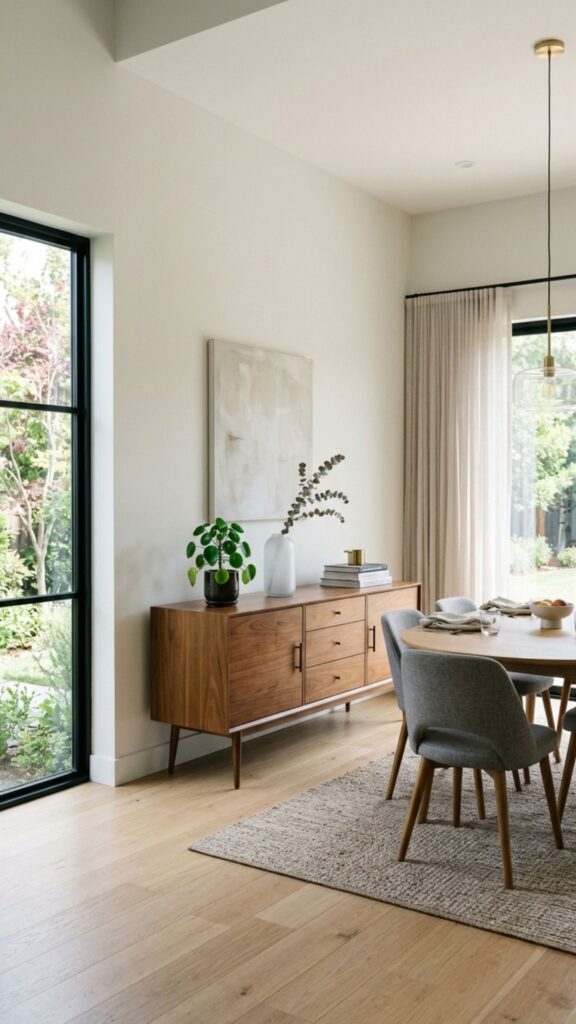
The tapered-leg sideboard has roots in mid-century modern design, but it reads as fresh and clean in almost any contemporary dining room. The elevated profile keeps the room from feeling heavy, which is a genuine advantage in smaller spaces.
Choose a buffet with two to three drawers plus enclosed lower cabinets. This gives you flexible storage — drawers for cutlery and linens, cabinets for larger items. Finishes in matte black, walnut, or natural white oak are widely available and age well.
3. Paint an Old Buffet a Deep, Moody Color
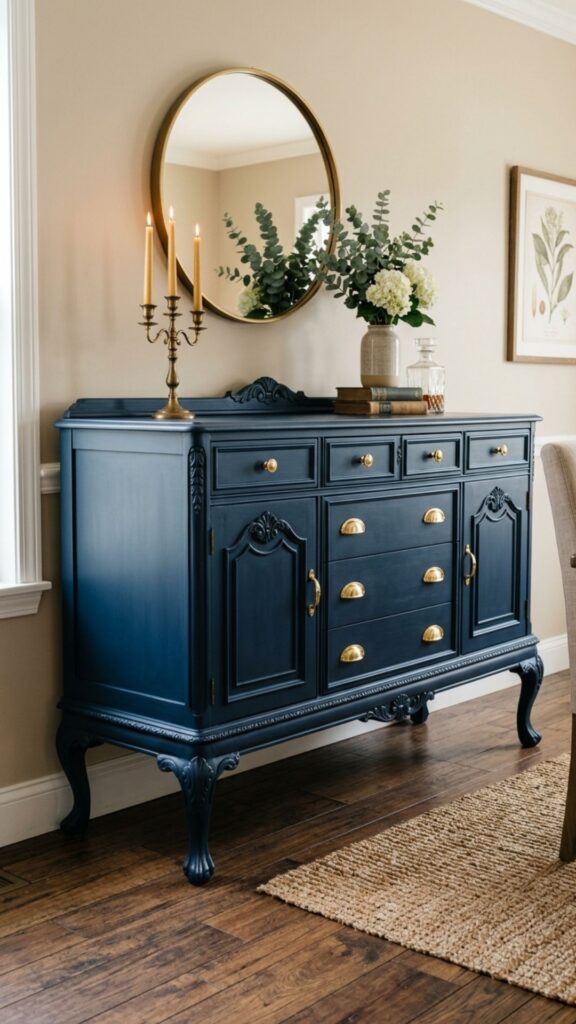
If you already own a buffet that feels dated, painting it is one of the most cost-effective ways to give it a second life. Deep navy, forest green, and charcoal are particularly effective — they make a buffet look intentional and expensive.
Use a chalk or mineral paint for a matte finish that’s easy to apply and durable. Replace the original hardware with brushed brass or matte black pulls to complete the transformation. The total cost is usually under $100, and the result looks custom.
4. Style the Top of Your Dining Room Buffet Like a Vignette
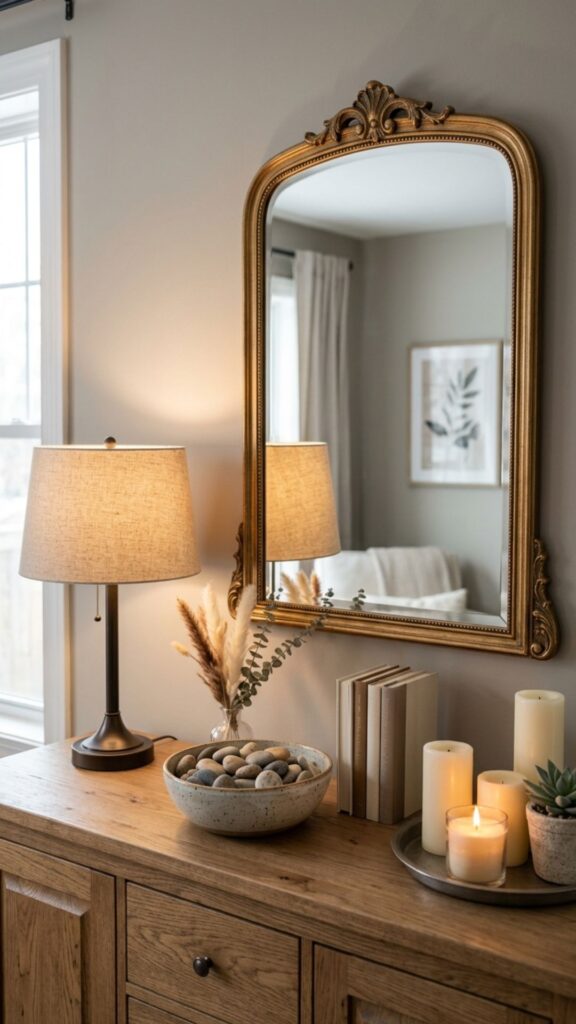
The surface of a dining room buffet is prime real estate. Instead of treating it as overflow storage, approach it like a styled shelf. Start with one large anchor piece — a mirror, artwork, or a tall lamp — then layer in a few smaller objects.
A practical formula: one tall item (lamp or vase), one medium item (framed print or bowl), and one low item (candles or a small tray). Keep negative space between objects. Crowded surfaces look cluttered; edited ones look curated.
5. Use a White or Cream Buffet to Brighten a Dark Dining Room
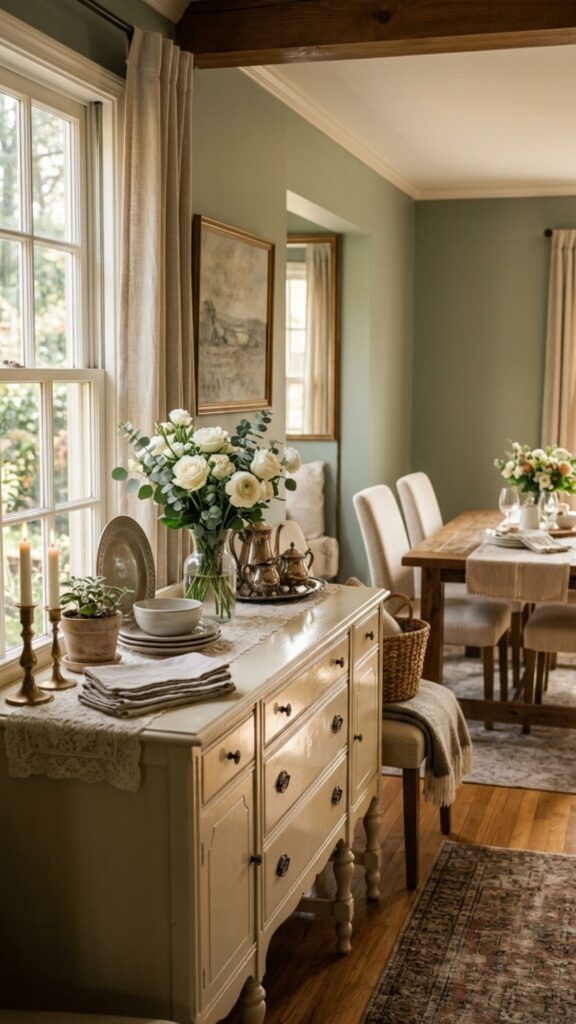
In a dining room with limited natural light, a white or cream buffet reflects light and opens the space up. It also creates a clean backdrop that makes styled objects and artwork stand out more clearly.
Look for an antique white finish if you want warmth, or a crisp white for a more contemporary feel. Pair it with natural linen textiles and warm-toned accessories to prevent the look from feeling too cold or sterile.
6. Add a Mirror Above the Buffet for Depth and Light
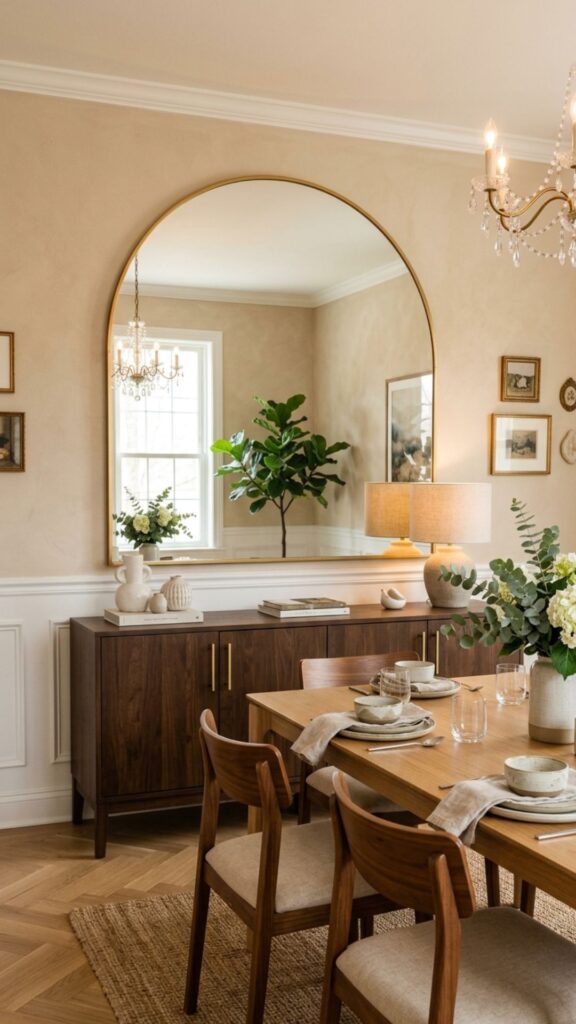
Hanging a mirror above your dining room buffet is one of the most effective styling moves available. Mirrors reflect light, make rooms feel larger, and add a decorative layer that artwork alone doesn’t provide.
For proportions, aim for a mirror that’s roughly two-thirds the width of the buffet below it. A rectangular or arch-shaped mirror works well in most spaces. Lean it against the wall rather than hanging it if you prefer a more relaxed, layered look.
7. Try a Black Buffet for High-Contrast Drama
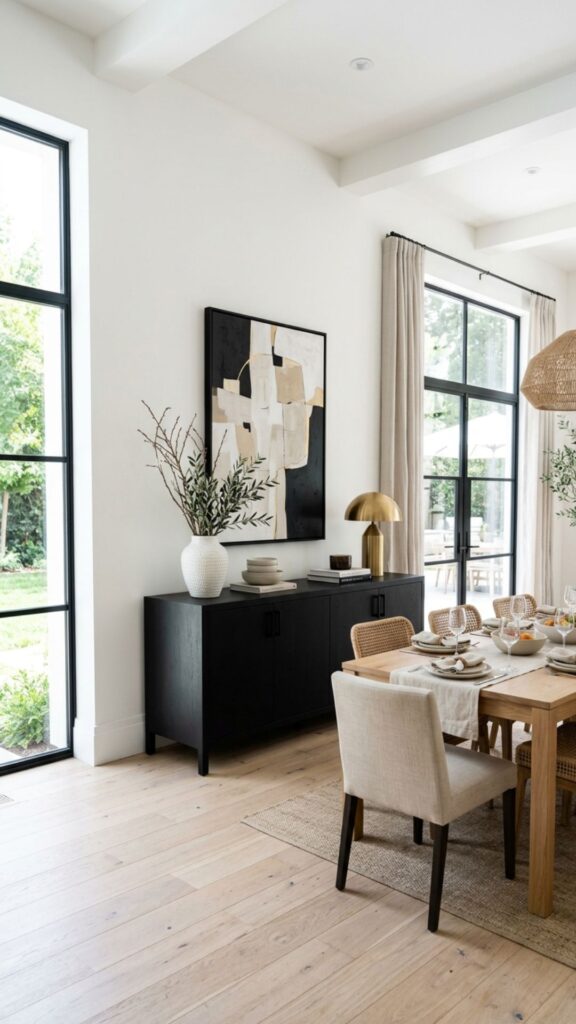
A black buffet creates immediate contrast in a dining room, especially against light walls or flooring. It anchors the space and gives the room a sense of structure without requiring major renovations.
Style the top with white or light-toned objects — cream candles, marble accessories, white ceramics — to keep the contrast intentional. Black buffets in lacquer or matte finishes both work, though matte tends to be more forgiving with fingerprints and day-to-day use.
8. Incorporate Open Shelving Into Your Buffet Design
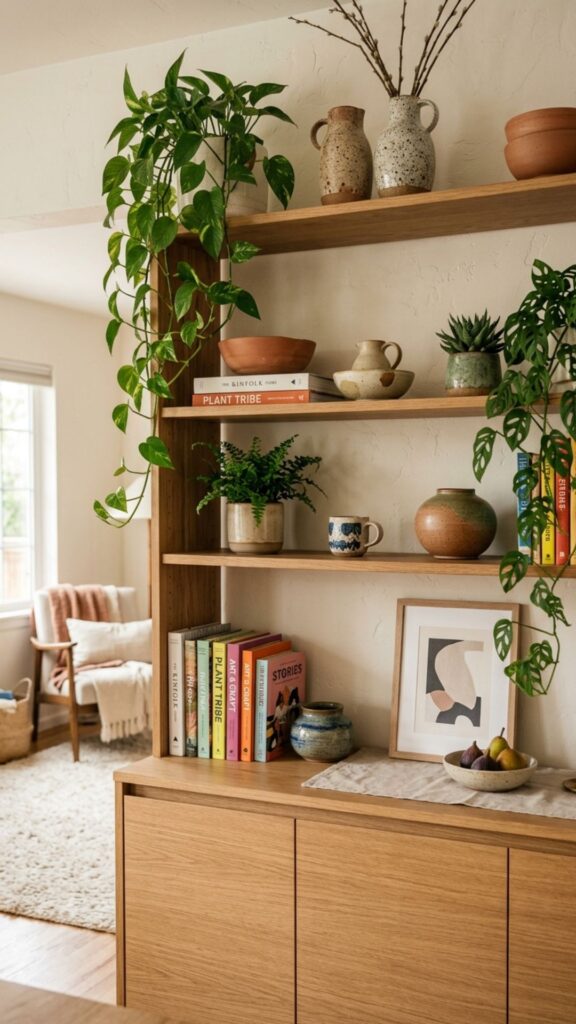
Some dining room buffets combine enclosed lower cabinets with open upper shelves or cubbies. This hybrid format gives you the best of both worlds — hidden storage for the things you don’t want to display, and open space for the things you do.
Style open shelves with a mix of books, ceramics, plants, and objects in a consistent color palette. Vary heights and textures to keep the arrangement from looking flat. Resist the urge to fill every inch — breathing room is what makes open shelving look designed rather than packed.
9. Use a Long, Low Buffet in Open-Plan Dining Areas
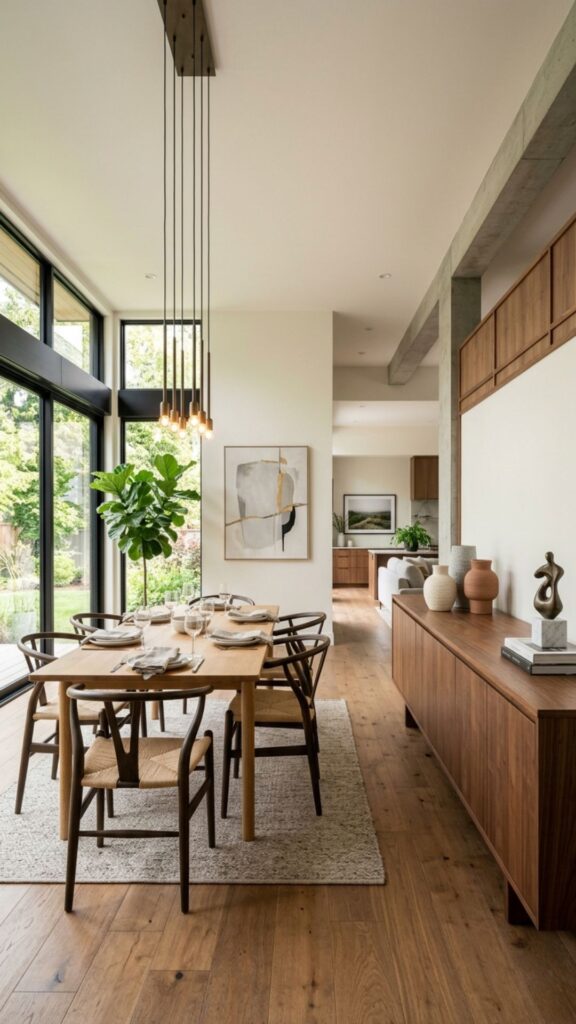
In an open-plan space, a long, low buffet helps define the dining zone without blocking sightlines. A buffet that runs 60 to 72 inches wide feels substantial without overwhelming the room, and the low profile keeps the space feeling airy.
This format also works as a visual room divider between a dining area and a living room. Place it with its back to the living space and style both sides — the dining-facing side as a serving surface, the reverse as a subtle shelf display.
10. Layer Artwork Above the Buffet Instead of a Single Print
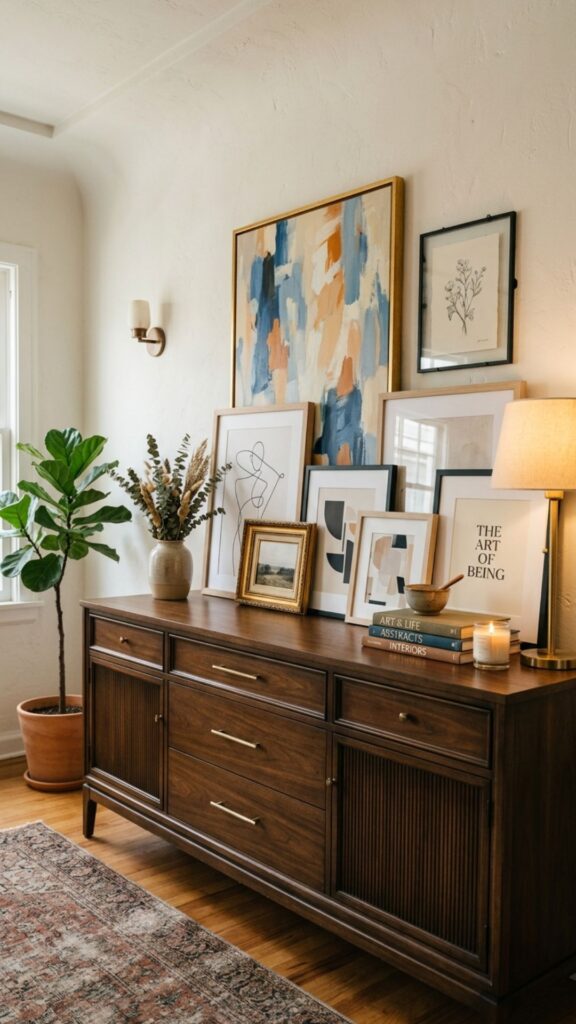
Rather than centering one print above your dining room buffet, try a stacked arrangement — two or three pieces layered against the wall at varying heights. This creates a dynamic, collected feel that looks less staged than a single centered piece.
Mix frame finishes (black, wood, brass) to add depth. Keep the imagery consistent in theme or palette so the grouping reads as intentional. Lean frames rather than hanging them if you’re renting or prefer flexibility.
11. Choose a Buffet with Built-In Wine Storage
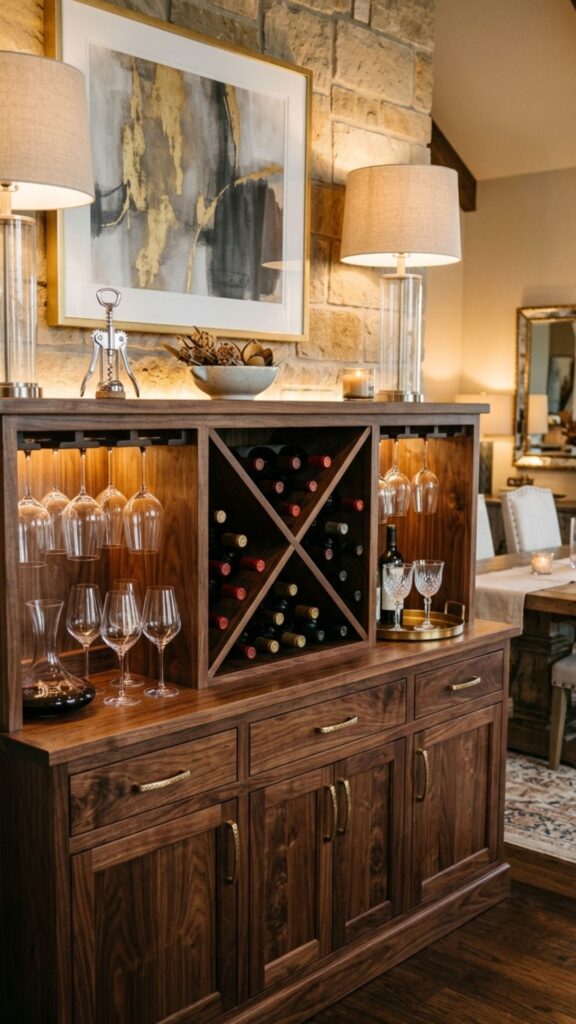
A dining room buffet with a wine rack or dedicated wine storage combines function with a natural conversation piece. It keeps bottles accessible during meals and reduces the need for a separate wine cooler or rack elsewhere in the room.
Look for buffets with a center wine rack flanked by closed cabinets on either side. This layout looks balanced and provides storage for both bottles and glassware. Wood finishes in dark walnut or espresso pair particularly well with wine storage details.
12. Go Minimal with a Sleek, Handle-Free Buffet
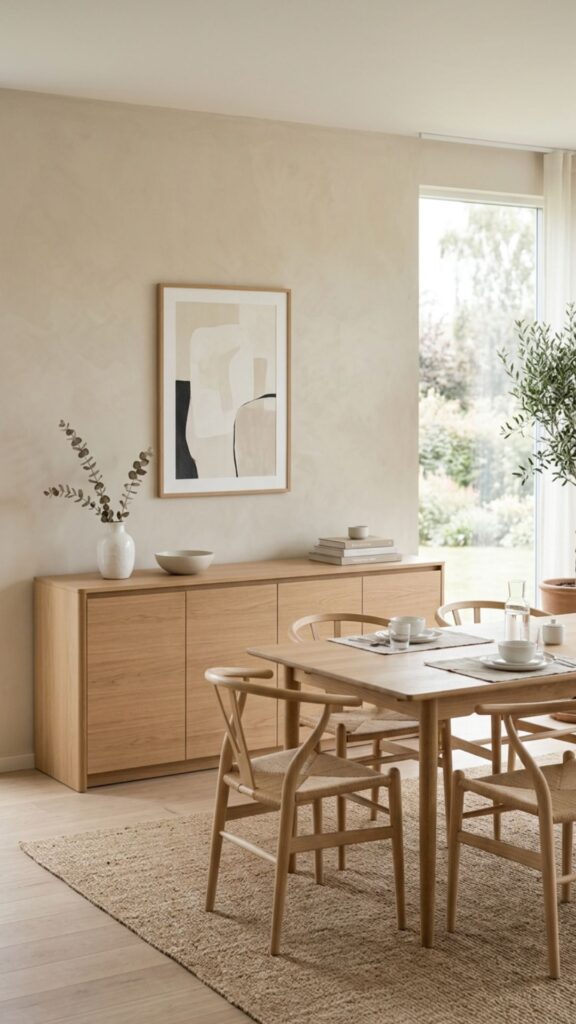
Push-to-open or handle-free buffets suit modern and Scandinavian-inspired dining rooms well. The clean, uninterrupted front surface feels calm and intentional, especially in smaller rooms where visual noise adds up quickly.
These designs typically come in white, light grey, or natural wood finishes. They work best when the surrounding space is equally uncluttered — paired with simple pendant lighting, a clear dining table, and a single piece of wall art.
13. Repurpose a Dresser as a Dining Room Buffet
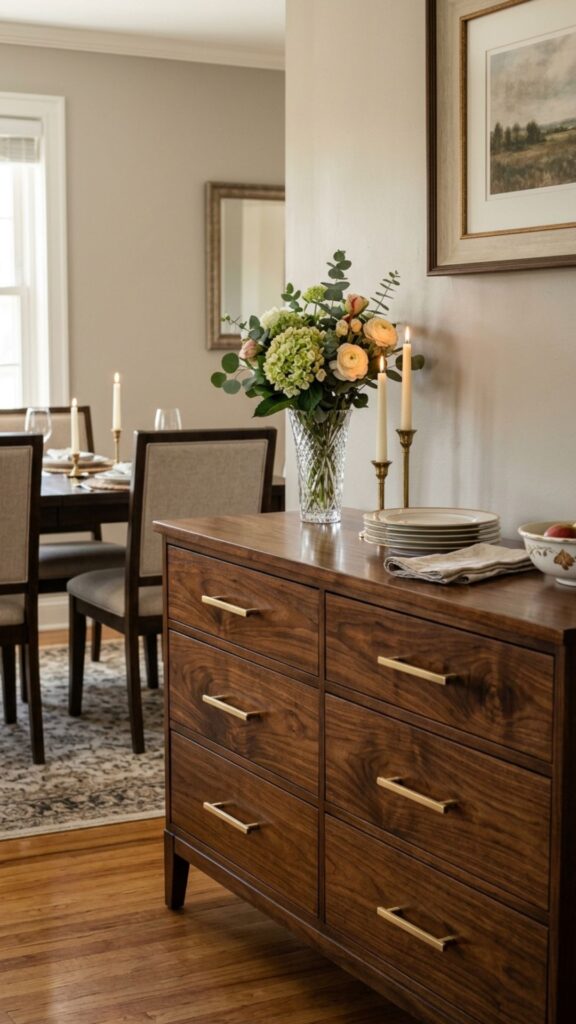
A wide dresser with four to six drawers functions beautifully as a dining room buffet. It offers generous drawer storage for linens, cutlery, and table accessories, often at a lower price point than purpose-built buffets.
Look for dressers at secondhand stores, estate sales, or on marketplace apps. A solid piece in good structural shape can be sanded, painted, and fitted with new hardware for a fraction of the cost of buying new. The result often has more character than off-the-shelf options.
14. Add Task Lighting Above or on Your Buffet
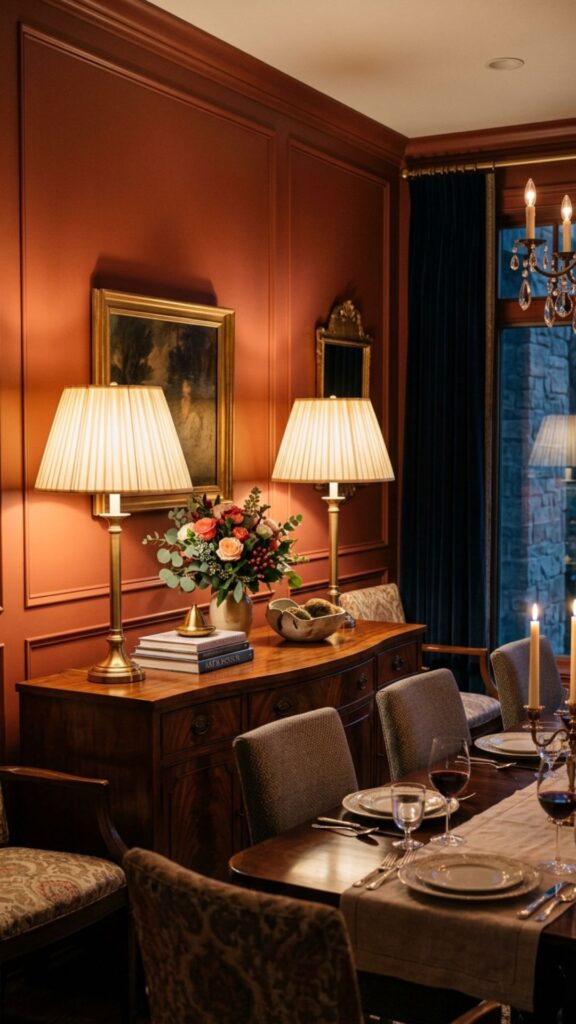
Lighting transforms a dining room buffet from functional furniture to a true design feature. A pair of matching buffet lamps on either end of the surface creates symmetry and warm ambient light during evening meals.
Alternatively, install a small picture light above artwork hung over the buffet, or add under-cabinet LED strips if the buffet has an upper hutch section. Warm white bulbs (around 2700K) give a softer, more inviting glow than cool white.
15. Match Your Buffet Hardware to Other Metal Tones in the Room
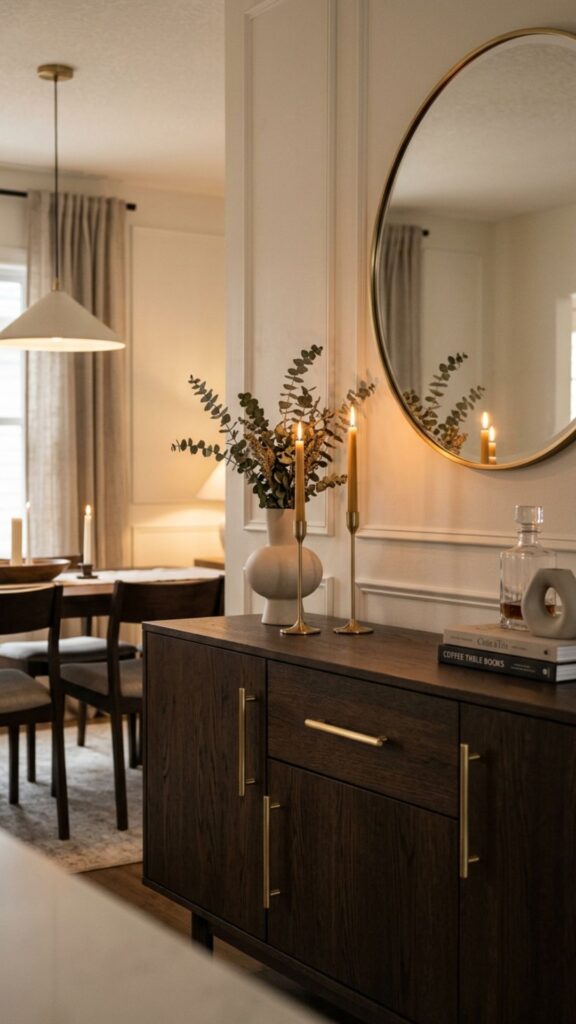
Hardware is a small detail that has a disproportionate impact on how polished a dining room looks. If your dining room features brass pendant lights or gold-toned candle holders, pull hardware in a matching brushed brass finish ties the space together.
Matte black hardware suits contemporary and industrial spaces. Brushed nickel reads as clean and neutral. Antique brass or bronze adds warmth to traditional or transitional rooms. The key is consistency — mixing too many metal finishes can make a room feel unresolved.
16. Style the Buffet Seasonally to Keep the Room Fresh
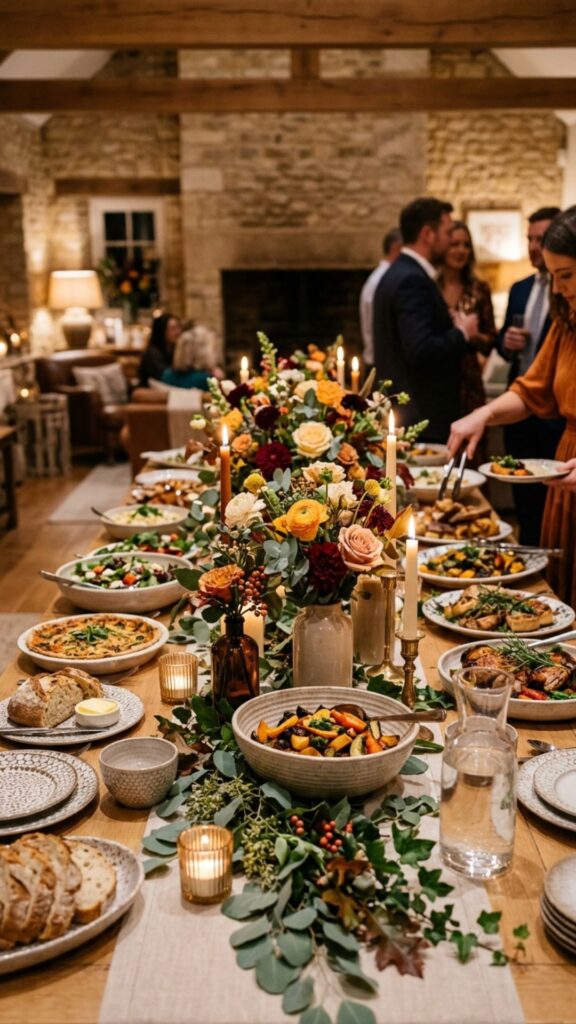
One advantage of a dining room buffet is that it gives you a dedicated place to rotate seasonal decor. Swap out styling objects every few months without changing any furniture or paint.
In autumn, use terracotta vessels and dried botanicals. In winter, lean into candles, greenery, and warm metallics. In spring and summer, bring in fresh flowers, lighter ceramics, and natural linen. Seasonal updates take 20 minutes and cost almost nothing if you work with what you already own.
17. Use a Hutch Buffet for Maximum Storage
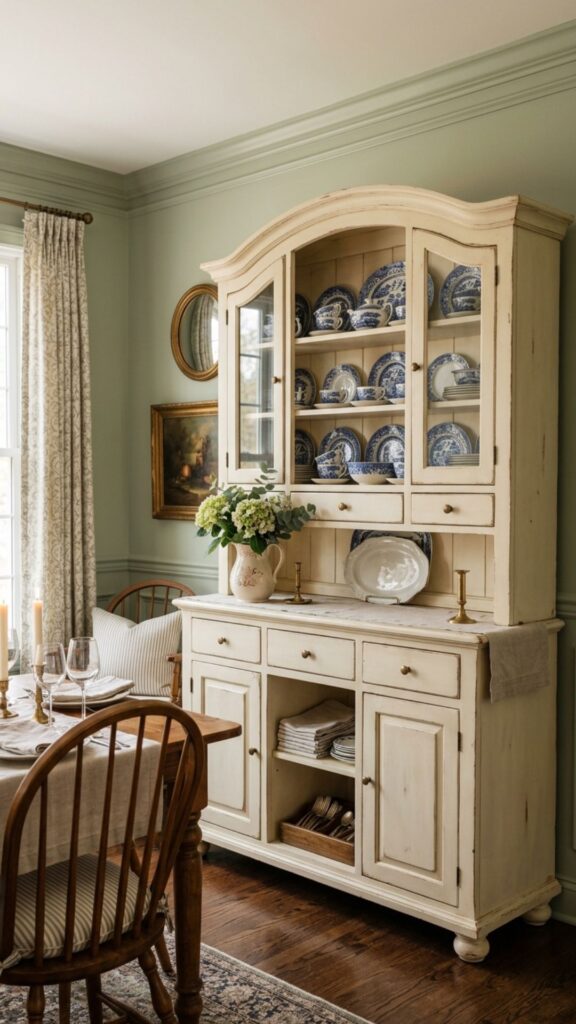
A hutch-style buffet combines a lower cabinet section with an upper open display unit. It’s the most storage-efficient option available and works particularly well in traditional or farmhouse dining rooms.
The upper section is ideal for displaying formal china, glassware, or decorative objects you want to show off. Keep the lower cabinets for everything you need close to the table but don’t need to display. A hutch in white or antique cream is a classic choice that holds its appeal across decades.
18. Keep It Cohesive with a Matching Dining Set
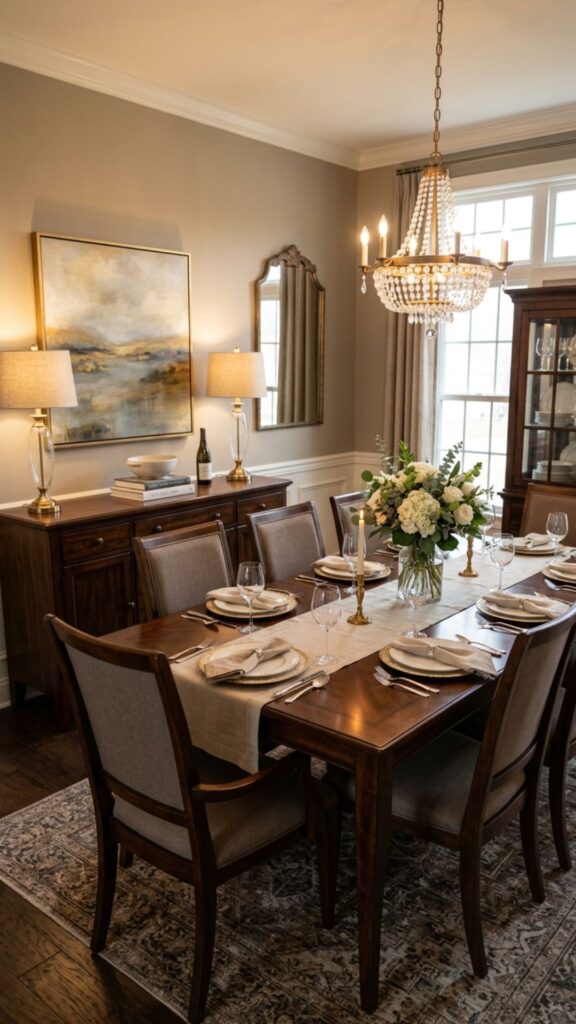
If you’re starting a dining room from scratch, buying a buffet that matches your dining table and chairs creates immediate cohesion. Many furniture collections offer a coordinating buffet, which takes the guesswork out of matching wood tones and leg styles.
The risk with matching sets is that they can feel too uniform. Break it up by introducing contrast through textiles, lighting, and wall decor. A perfectly matched set with varied accessories looks considered rather than catalog-fresh.
19. Float the Buffet Away from the Wall in a Large Room
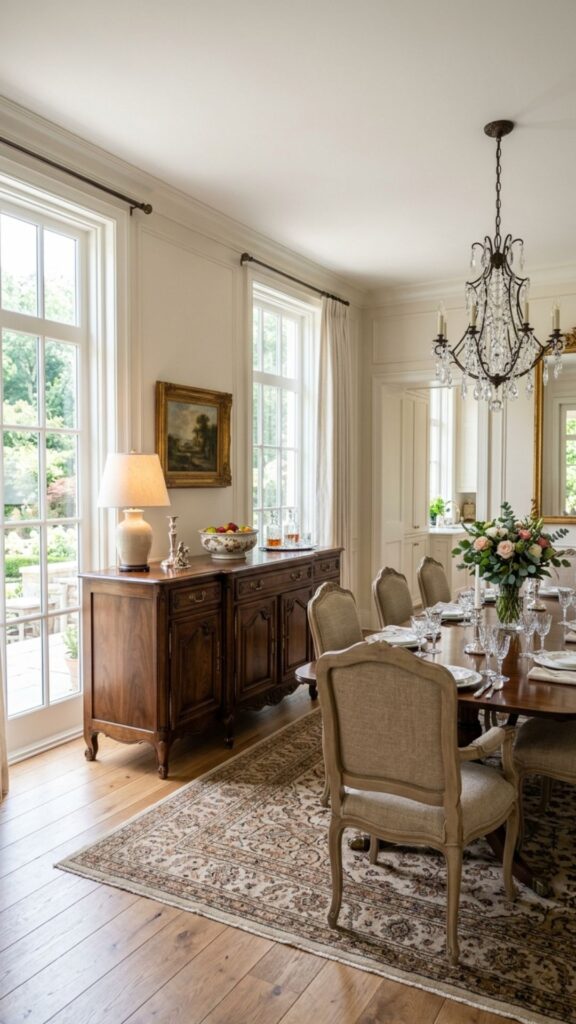
In a generously sized dining room, pulling the buffet a few inches away from the wall creates a built-in feel without the commitment of actually installing it. The gap allows for electrical cords to run cleanly and gives the piece a more architectural presence.
You can also tuck a slim console or narrow bench behind the buffet for extra display or seating in a pinch. This approach works best in rooms where the buffet won’t obstruct traffic flow.
20. Use the Buffet as a Dedicated Serving Station
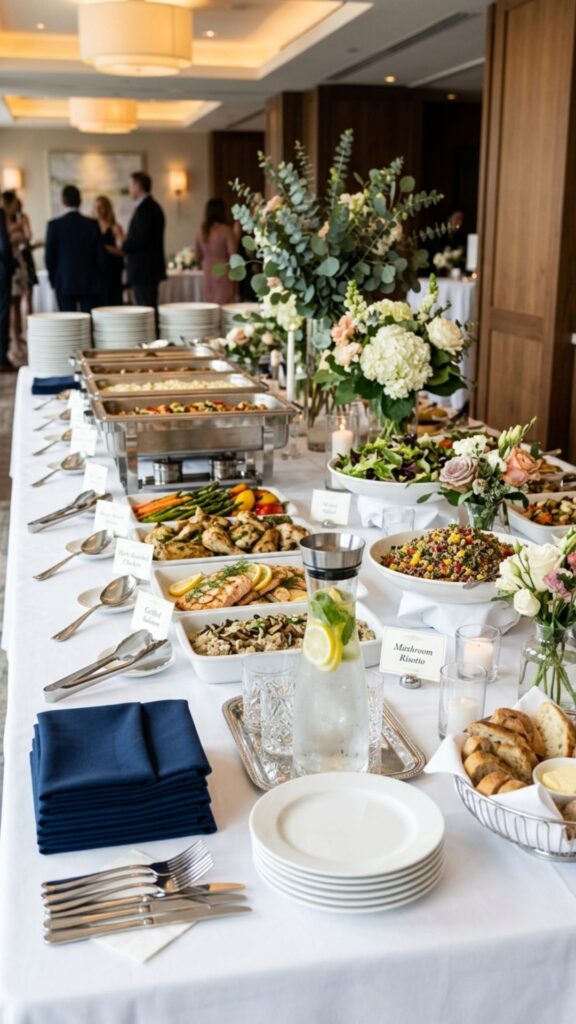
One of the most practical dining room buffet uses is as a permanent serving station. Keep it stocked with everything you need for hosting — extra napkins, a bread basket, serving utensils, a water carafe — so the table stays clear during meals.
A tray corral system on top keeps small items organized and makes the surface look styled even on busy nights. This functional approach means your buffet earns its keep every single day, not just when guests come over.
How to Choose the Right Dining Room Buffet for Your Space
Before buying, measure your available wall space carefully. A buffet that’s too wide will crowd the room; one that’s too narrow will look like an afterthought. Standard buffet depth runs 16 to 20 inches, which works against most walls without blocking traffic.
Consider your storage needs honestly. If you have a lot of table linens and serving pieces, prioritize enclosed cabinet storage. If you mostly want a display surface, a sideboard with one or two drawers may be enough. Match the buffet height to your wall space — taller hutch styles need ceiling clearance, while lower sideboards suit rooms with artwork or windows above.
Conclusion
A well-chosen dining room buffet adds storage, style, and a clear focal point to your dining space. The 20 ideas above cover the full range — from quick paint transformations to thoughtful furniture investments — so there’s a realistic starting point no matter your budget or design preference.
Pick one or two ideas that fit your current space and commit to them. Style the surface with intention, match your hardware to the rest of the room, and treat the buffet as a design feature rather than just a storage solution. Small, deliberate choices add up to a dining room that feels genuinely elegant.
What is a dining room buffet used for?
A dining room buffet is a low, wide cabinet used for storing dining essentials — linens, cutlery, tableware, and serving pieces — while also providing a surface for decorative styling or food service during meals. It combines storage and display in a single, furniture-forward piece.
What’s the difference between a buffet and a sideboard?
The terms are often used interchangeably, but traditionally a buffet is slightly taller and deeper, designed for food service, while a sideboard is lower and used primarily for storage and display. In practice, most modern pieces serve both purposes, and the distinction matters less than the piece’s proportions and storage layout.
How do I style the top of a dining room buffet?
Start with one tall anchor piece — a mirror, lamp, or large vase — then add one or two medium-sized objects and one low element like candles or a tray. Leave negative space between objects. A styled buffet top should look edited, not full.
What size buffet do I need for my dining room?
A buffet should be roughly two-thirds the length of your dining table for balanced proportions. Standard depth is 16 to 20 inches, and standard height ranges from 34 to 36 inches. Always measure your wall space and confirm clearance for doors and drawers before buying.
Can a buffet work in a small dining room?
Yes. In a small dining room, choose a buffet with tapered legs to keep the profile light and avoid visual heaviness. Stick to a lighter finish — white, natural wood, or light grey — to reflect light. A compact sideboard in the 48 to 55-inch range offers meaningful storage without dominating the room.