If you’ve ever tried to squeeze one more chair around a dining table, you already understand the appeal of a bench. It seats more people in the same space, it adapts to guests of different sizes, and — done right — it can be the most interesting piece of furniture in the room.

What is a dining room bench, and how do you choose one? A dining room bench is a backless or low-backed seat that runs along one or both sides of a dining table, offering flexible, space-efficient seating for everyday meals and gatherings.

The right bench depends on five things: the size of your table, the height of your dining chairs, the room’s overall style, how many people you typically seat, and whether storage is a priority. Getting these proportions right makes the difference between a bench that looks intentional and one that just looks like an afterthought.
In this guide, you’ll find 20 bench ideas that cover everything from compact apartment solutions to large family dining setups — with honest advice on what works, what to watch out for, and how to style each option well.
1. Classic Wooden Bench
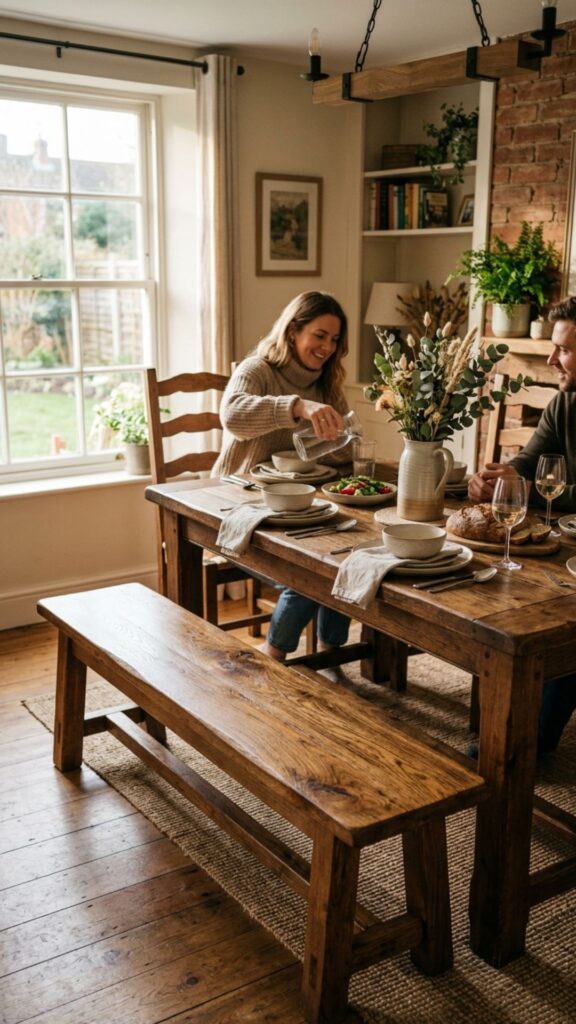
A solid wood bench is the most timeless option available. Oak, pine, and walnut all age beautifully, and their natural grain adds warmth to any dining room without requiring much effort to style around. A simple rectangular bench with straight legs works in farmhouse, traditional, and Scandinavian-influenced spaces alike.
When buying solid wood, check the joinery. Mortise-and-tenon or dowel construction holds up better under daily use than benches assembled with screws alone. A well-built wooden bench will last decades — and the minor dents and scratches it picks up along the way tend to improve its character rather than diminish it.
2. Upholstered Bench with Fabric Seat
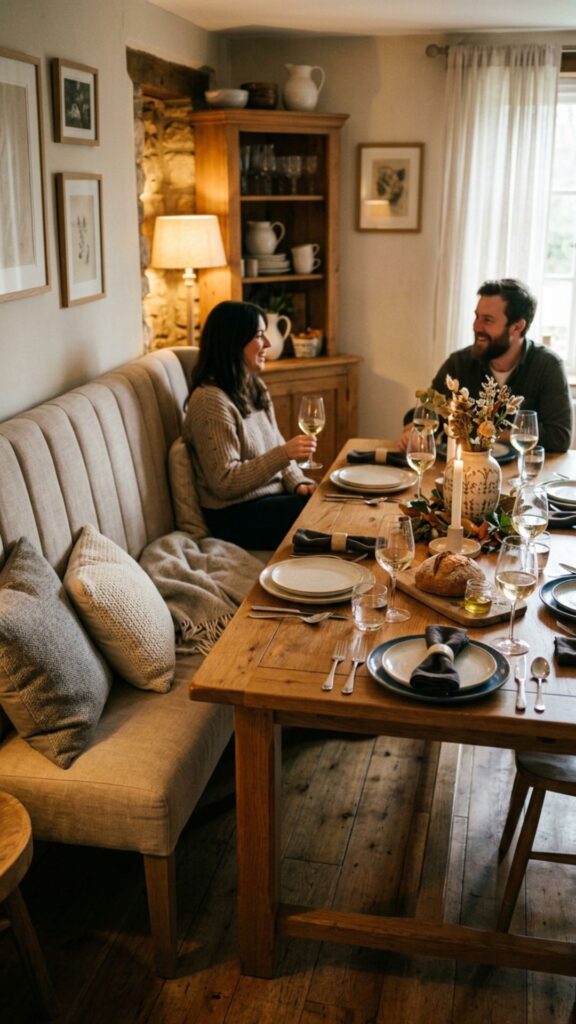
An upholstered dining room bench makes long meals noticeably more comfortable. A padded seat — even a modest two-inch cushion — removes the pressure points that make hard benches tiring after thirty minutes. For family dinners or dinner parties that linger, this matters.
Choose a performance fabric like velvet-weave polyester or treated linen if the bench will see regular use. These resist staining better than untreated natural fabrics and are much easier to spot-clean. For a cohesive look, match the bench fabric to your dining chairs or pick a complementary tone from the same color family.
3. Storage Bench
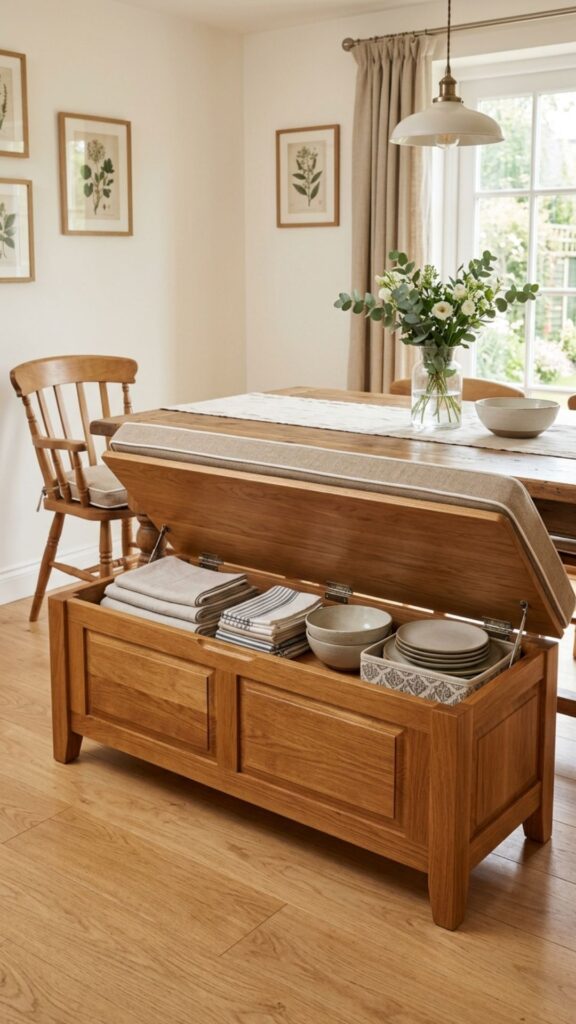
A storage bench combines seating with concealed space beneath the seat — useful in smaller dining rooms where linen, placemats, or seasonal tableware need a home. Lift-up lid designs are the most accessible; drawer configurations tend to look more furniture-like.
Measure carefully before buying. The bench needs to fit the length of your table without protruding awkwardly at either end, and the seat height should sit within an inch or two of your chair height for visual consistency. A storage bench in a dining-kitchen combination is particularly practical — it keeps everyday items close without cluttering counter space.
4. Backless Bench for Space Saving
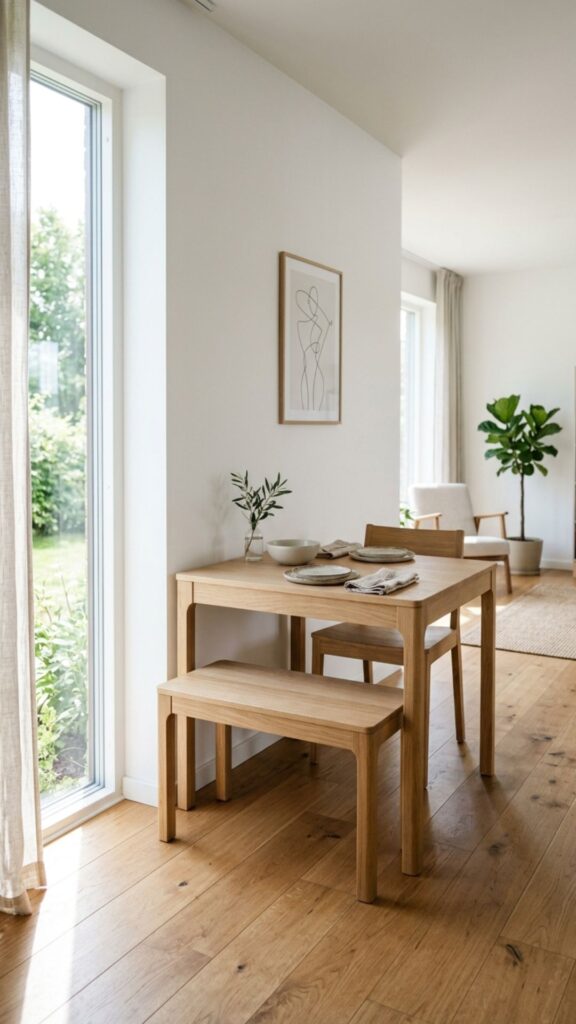
A backless bench slides fully under the table when not in use, which is one of the most effective ways to reclaim floor space in a small dining room. When the table is pushed against a wall, a backless bench on the wall side disappears almost completely.
This is the go-to choice for apartment dining areas, narrow kitchen-diners, and rooms that serve multiple purposes. The tradeoff is support — backless benches work better for shorter meals or younger household members. Adding a cushion with ties keeps comfort reasonable without needing a back panel.
5. Industrial Metal Bench
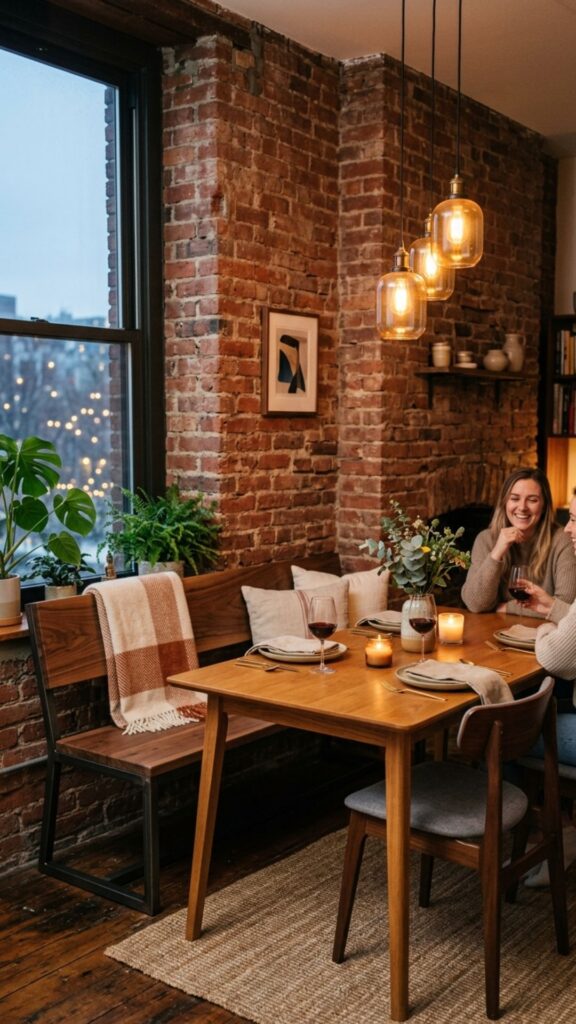
A metal-framed bench — particularly in powder-coated steel or raw iron — brings an industrial edge that suits loft apartments, urban homes, and modern interiors. The contrast between a cool metal bench and a warm wooden dining table is one of the more versatile style combinations available.
Look for welded rather than bolted frames, which hold up better over time. Many metal dining benches have a slatted wood seat on a steel frame, which softens the look and improves comfort. This hybrid approach works well in spaces that mix warm and industrial materials — concrete floors, exposed brick, painted cabinetry.
6. Bench with Back Support
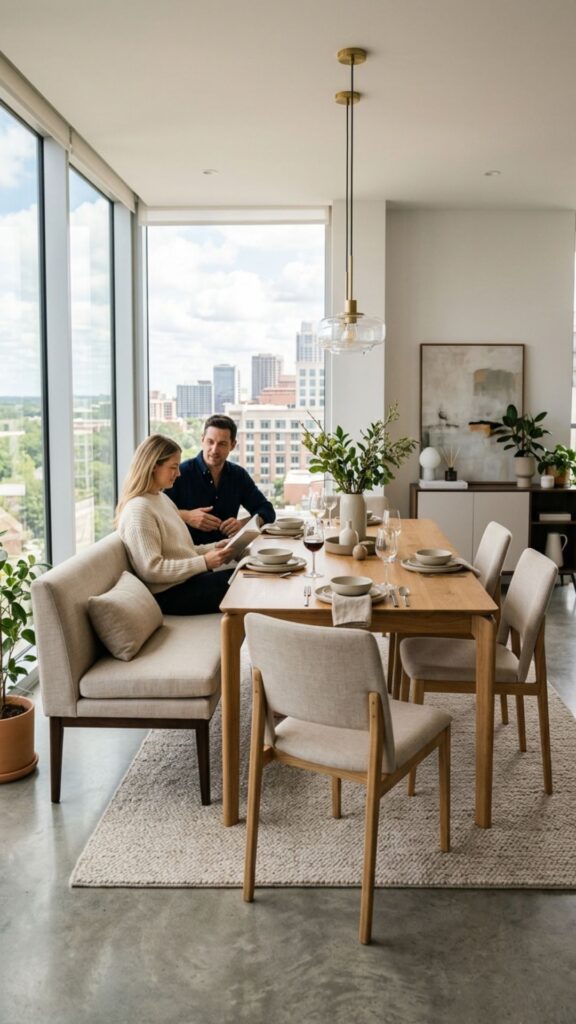
A dining bench with a low back provides the comfort and support of a chair with the flexibility and seating capacity of a bench. It’s a good middle ground for households where comfort is important but space for individual chairs is limited.
Low-backed benches tend to suit more contemporary interiors, while versions with slightly higher backs and curved profiles lean traditional. Check the back height against your table — if the back is too tall, it will look cramped when the bench is pulled in. Most backed benches work best with tables that have a clearance of at least ten inches from seat to tabletop.
7. Built-In Bench Seating
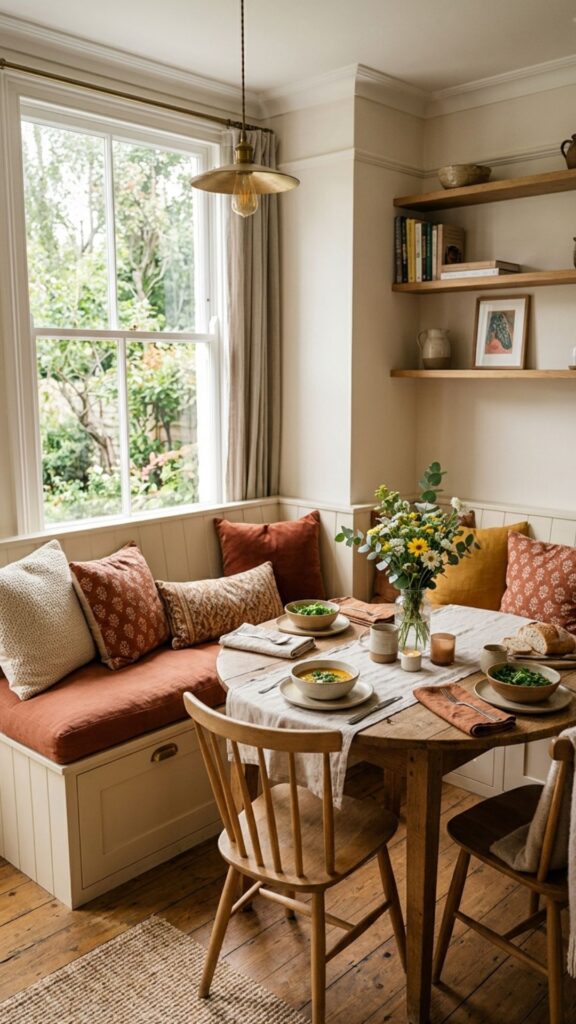
A built-in bench — constructed as part of the room’s architecture — is one of the most space-efficient dining setups you can create. It typically runs along two walls in a corner configuration, with the table positioned in the corner and chairs filling the remaining sides.
Built-in seating requires more commitment than freestanding furniture, but it rewards you with a seamless, considered look and often substantial under-seat storage. It’s particularly well-suited to awkward dining spaces with angled walls, low ceilings, or irregular footprints that make standard furniture arrangements difficult.
8. Bench with Turned Legs
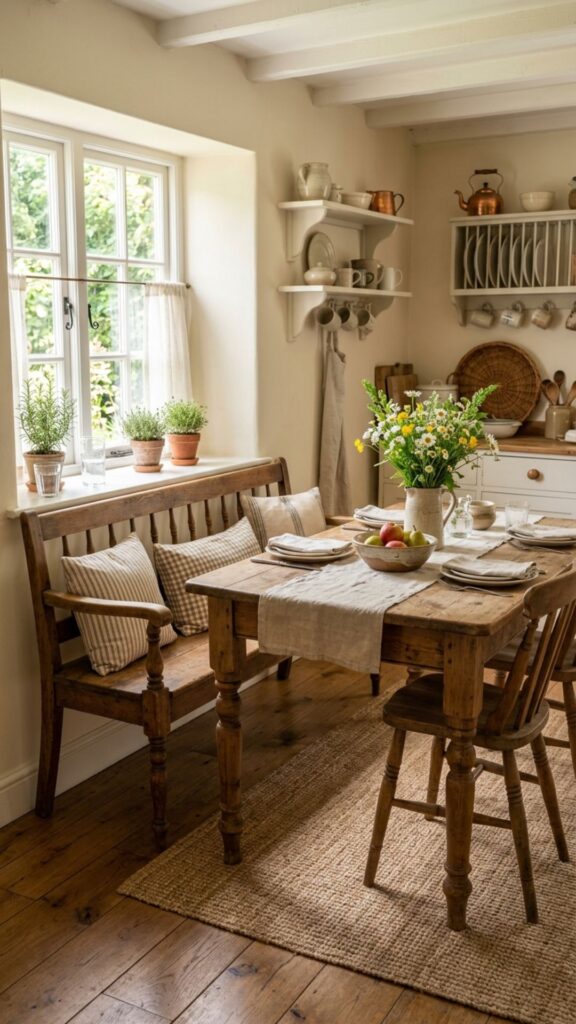
Turned legs — the spindle-shaped, lathe-formed legs associated with traditional furniture — give a dining room bench a classic, finished look that suits period homes and country-style interiors. The detail doesn’t add significantly to cost but lifts the overall impression of quality.
Turned leg benches pair well with farmhouse tables, painted kitchen cabinetry, and Windsor-style dining chairs. If your dining room has traditional architectural details — coving, dado rails, sash windows — a bench with turned legs respects that language in a way that plain block legs don’t.
9. Leather or Faux Leather Bench
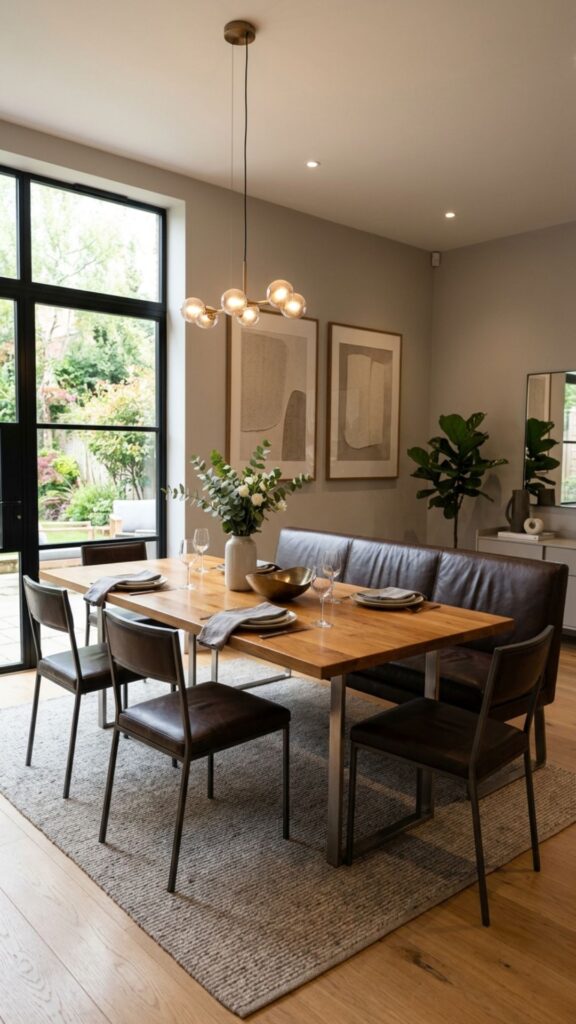
A leather or faux leather upholstered bench is the easiest option to keep clean, which makes it a practical choice for households with young children. Spills wipe off immediately without absorbing into the fabric, and the surface doesn’t hold food odors the way some fabrics do.
Genuine leather ages well and develops a patina that improves with use. Faux leather has improved dramatically and is now a reasonable alternative at lower cost — look for PU leather with a soft backing rather than a stiff plastic finish. Both options suit contemporary, mid-century modern, and transitional dining rooms.
10. Bench in a Contrasting Color
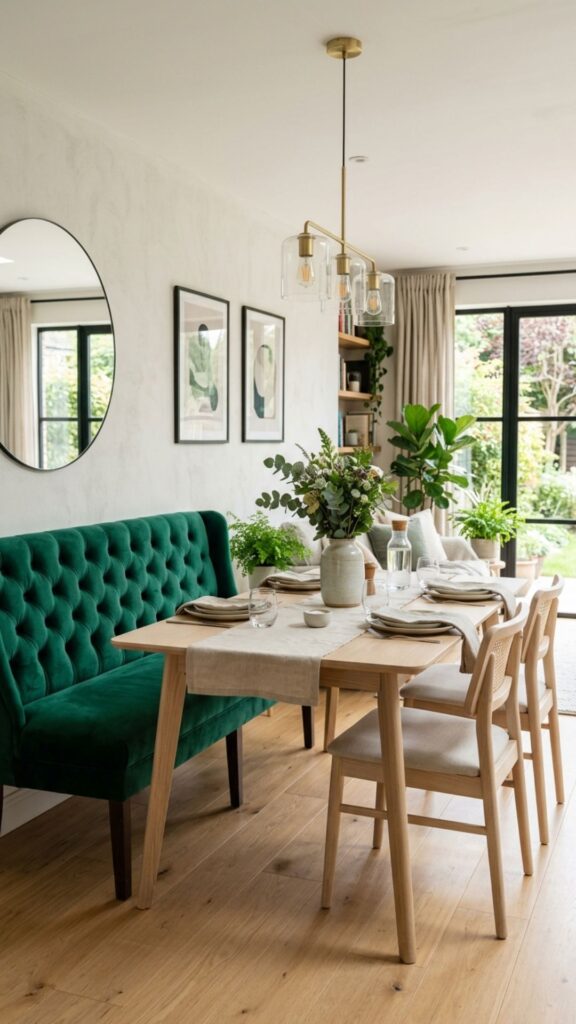
Using a bench in a color that contrasts with the dining table is one of the quickest ways to add personality to a neutral dining room. A deep navy bench alongside a light oak table, or a terracotta seat against a white-painted trestle, creates a focal point without requiring a full redecoration.
Keep the contrast considered rather than random — pull the bench color from something already in the room, such as a rug, artwork, or kitchen cabinetry. This anchors the choice and makes the space feel coordinated rather than assembled from separate decisions.
11. Bench for a Rectangular Table

Most dining room benches are designed for rectangular tables, where a long bench on one or both sides makes efficient use of the straight edge. The rule of thumb is to match the bench length to the table length minus six to eight inches on each end — this leaves comfortable leg room at the corners.
If you’re placing benches on both sides, ensure there’s enough room to pull both out simultaneously when guests are seated. A minimum clearance of thirty-six inches between the bench back and the nearest wall keeps the setup functional rather than cramped.
12. Rattan or Cane Bench
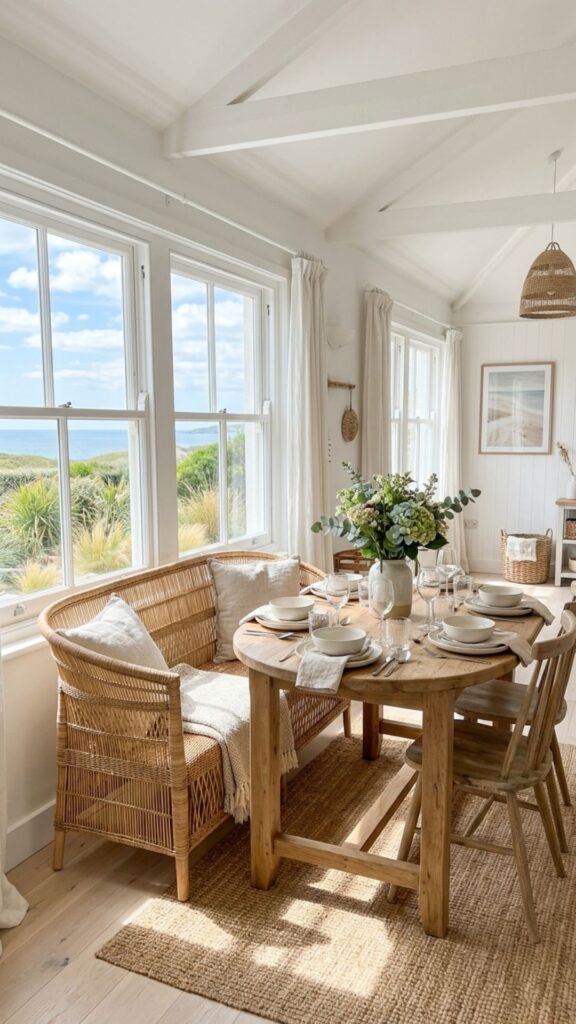
Rattan and cane benches bring a relaxed, natural texture to a dining room that wooden or upholstered options rarely achieve. The open weave of cane panels and the organic warmth of rattan frames suit coastal, boho, and tropical-inspired interiors particularly well.
These materials are lighter than solid wood and generally easy to move, which is useful in dining rooms that double as entertaining spaces. Add a fitted cushion for comfort — most rattan seats benefit from one — and choose a cushion cover in a washable fabric for practical maintenance.
13. Minimalist Bench for Modern Dining Rooms
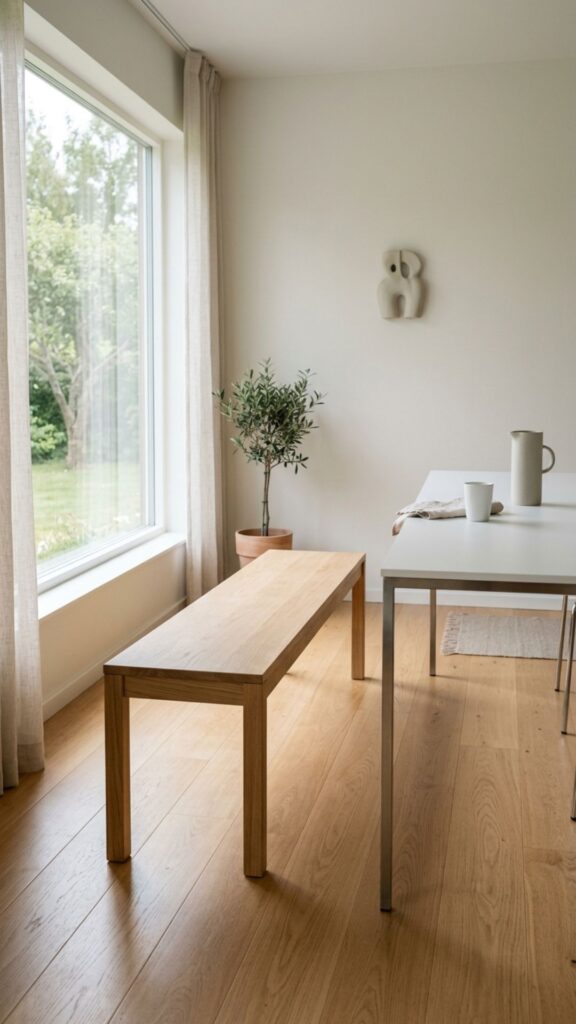
A minimalist bench — plain seat, straight legs, no ornamentation — suits contemporary and Scandinavian dining rooms where restraint is a deliberate design choice. The simplest versions in white-lacquered wood, pale birch, or concrete-effect laminate disappear into the room rather than competing with it.
The key is proportion. A minimal bench should be well-made and correctly sized — thin, spindly frames look cheap even in a modern space. Choose a bench that has visual weight appropriate to your table, and keep the bench-to-table height ratio within the standard range of twelve inches for comfortable seating.
14. Bench for a Farmhouse Kitchen Table
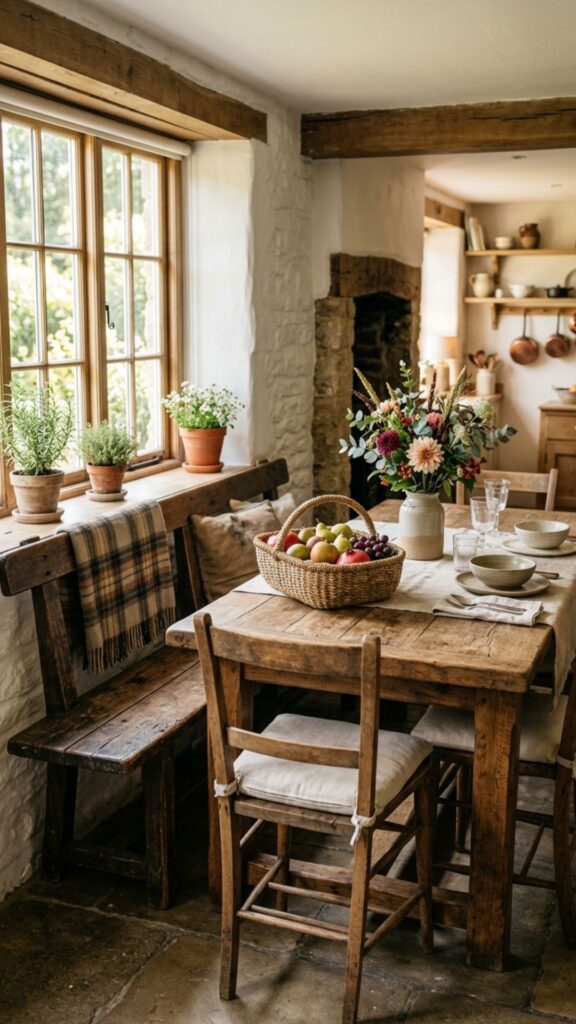
A rustic bench alongside a farmhouse or refectory table is one of the most classically English dining setups. The combination references the long tables of working farmhouses and suits kitchens with Aga-style ranges, painted cabinetry, flagstone floors, and exposed ceiling beams.
For the most authentic look, choose a bench with a plank-style top rather than a single flat board — the visible joint between two planks adds visual interest and references traditional joinery. A slight distressed finish on the bench also works well here; it doesn’t need to look factory-new to look intentional.
15. Bench at the Head or Foot of the Table
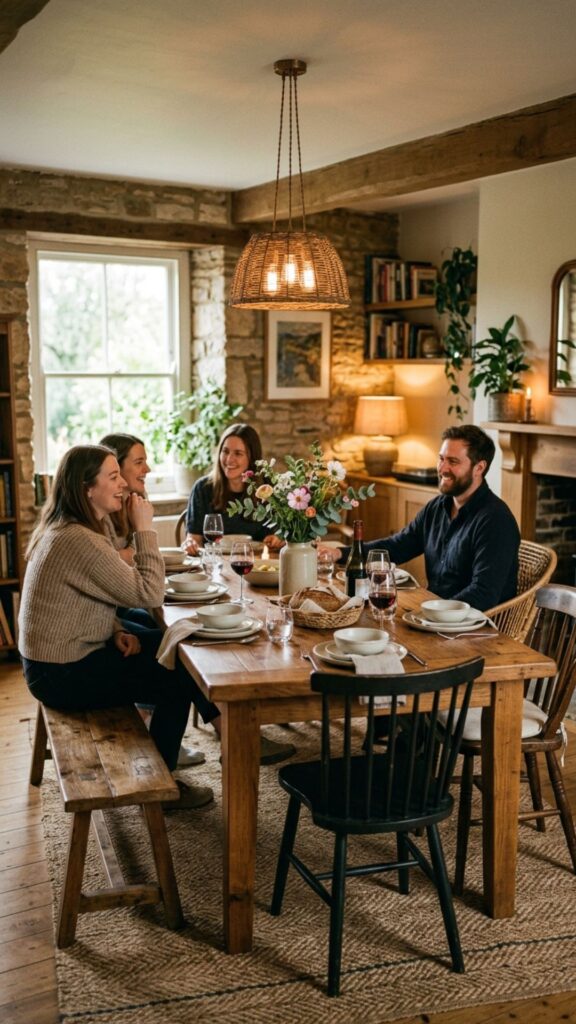
Placing a bench at the head or foot of a rectangular table rather than along the side is a less common arrangement but a genuinely useful one. It creates a relaxed, communal end to the table and can seat two or three people in a space that would otherwise take one chair.
This works particularly well at a long table in a narrow room, where pulling chairs out at the ends would block circulation. A shorter bench — around three feet — is typically the right length for an end placement. It keeps the arrangement feeling natural rather than squeezed.
16. Outdoor-Indoor Bench
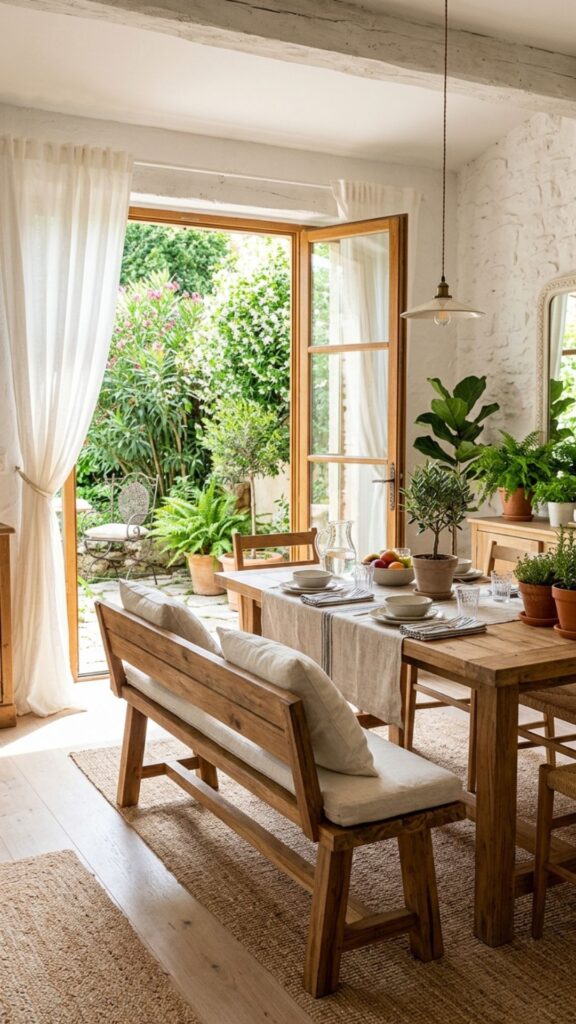
Benches designed for outdoor use — in weather-resistant teak, powder-coated metal, or composite materials — can work equally well indoors, especially in dining rooms that open onto a garden or terrace. The visual language of outdoor furniture indoors has become a genuine interior trend rather than an oversight.
The durability of outdoor-grade materials is a real advantage in dining rooms with children. Teak, in particular, is dense, resistant to moisture and staining, and develops a distinguished silver-grey patina when left untreated. A teak bench with white walls and simple linen chairs is one of the more effortless dining room combinations.
17. Bench with Hairpin Legs
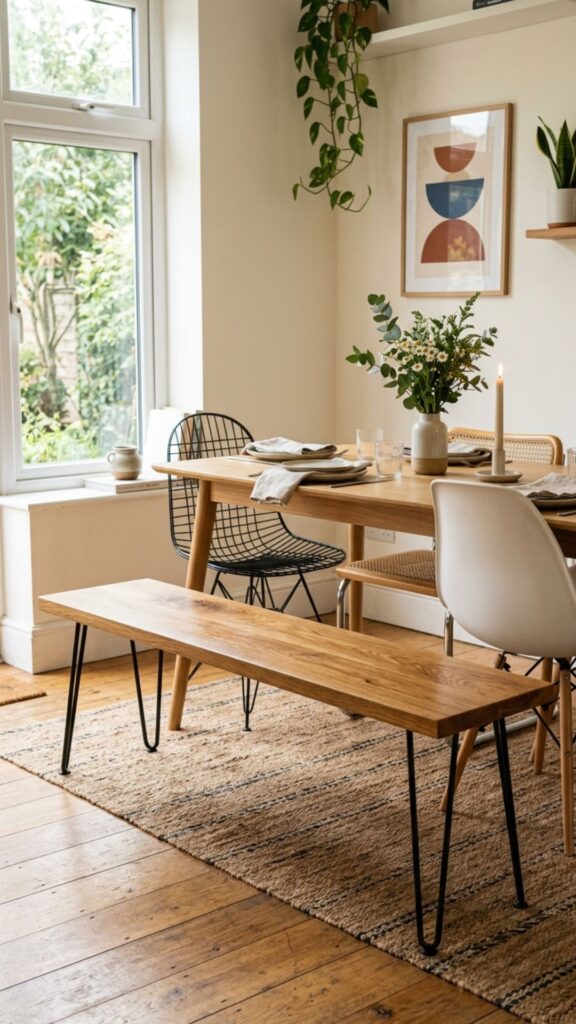
Hairpin legs — the slender, two-rod metal legs associated with mid-century modern furniture — give a dining room bench a light, graphic quality that suits retro-influenced and contemporary interiors. The metal legs contrast with a timber seat in a way that feels deliberately modern without being aggressive.
Hairpin legs are available as retrofit components, which means you can build or commission a simple wooden bench top and add the legs yourself — a cost-effective way to get a custom look. Choose legs in black, brass, or copper depending on the metal tones elsewhere in the room.
18. Bench for Small Dining Rooms
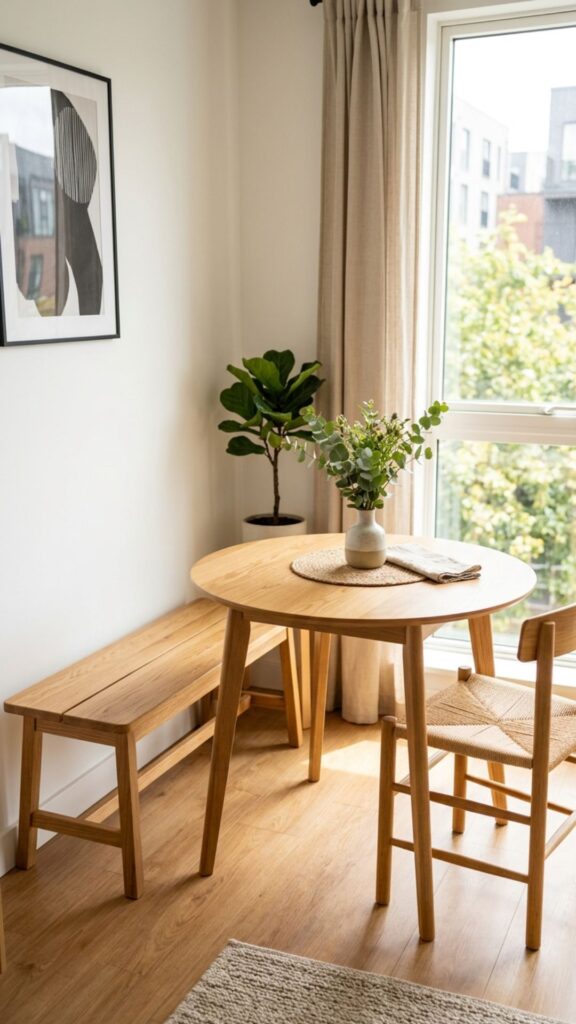
In a small dining room, the bench is the most space-efficient seating solution available. It eliminates the dead space that chair backs create, allows more people to sit along a single side, and creates a less visually cluttered room when pulled up to the table.
For very small rooms, consider a bench that doubles as a hallway seat or console when not in use at the table. A bench with clean lines and no visible storage hardware can move between functions without looking out of place in either context.
19. Two-Tone Bench
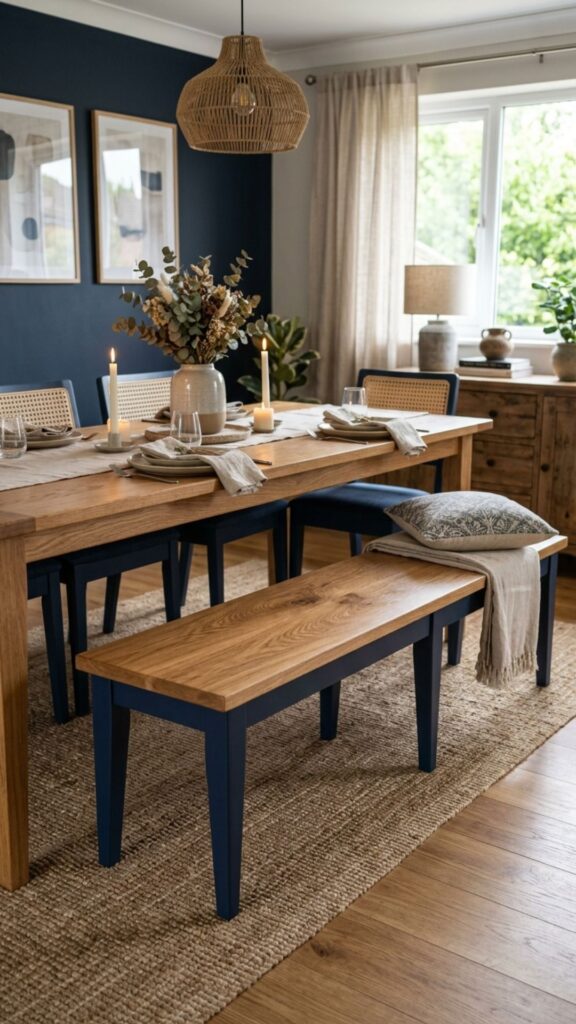
A two-tone bench — typically a painted or lacquered base with a natural wood seat, or a wood frame with an upholstered seat pad in a contrasting fabric — adds detail without complexity. It’s a subtle way to tie a bench to different elements of a room at the same time.
For example, a bench with a white-painted base echoes the dining chairs while the natural oak seat connects to the tabletop. This kind of quiet coordination is what makes a room feel considered rather than random. It requires no additional cost — just attention to what materials are already present.
20. Bench That Matches the Dining Chairs
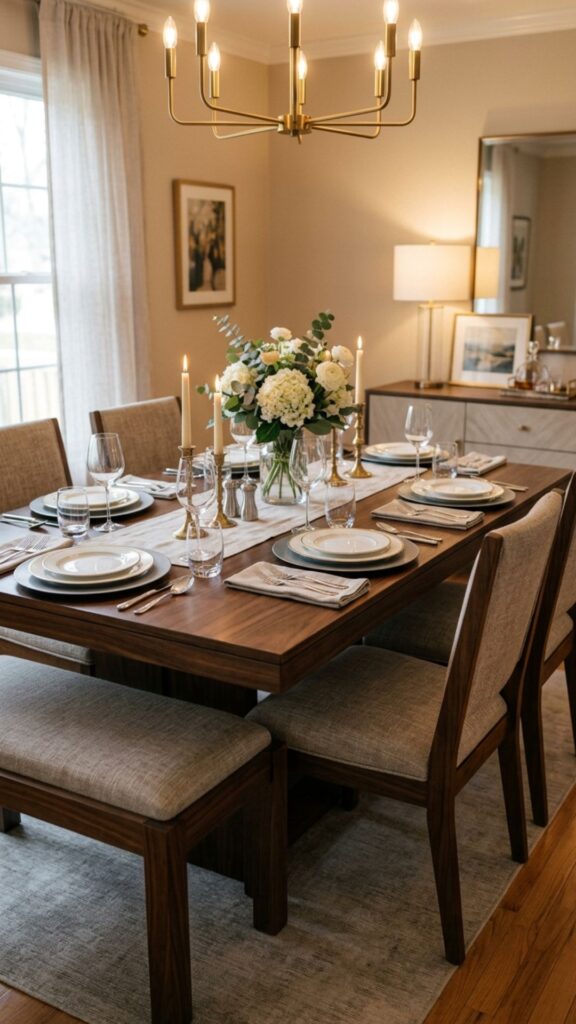
Matching the dining room bench to the existing chairs — in finish, material, or upholstery — creates the most cohesive, complete-looking setup. Many furniture ranges now include a bench as a standard piece alongside their chair collection, which removes the guesswork.
If you’re mixing rather than buying as a set, focus on matching one element: the leg finish, the seat height, or the fabric. Full matching isn’t necessary — in fact, a bench in the same wood finish as the chairs but with a different seat treatment can look more interesting than an exact match. What matters is that the relationship between the pieces feels intentional.
Choosing the Right Bench for Your Dining Room
A dining room bench is one of the more impactful changes you can make to a dining space — it shifts the entire atmosphere of a room and solves practical problems that chairs alone can’t address. Whether you’re working with a compact apartment kitchen, a generous farmhouse dining room, or something in between, there’s a bench on this list that fits.
Start with function: how many people do you need to seat, and how much floor space can you spare? Then consider comfort and cleaning requirements. From there, style is the easy part. Take your time with proportions — measure before you buy and compare the bench height against your existing chairs and table. Most suppliers offer free returns, which takes the risk out of ordering online.
Pick the idea that genuinely solves a problem in your space, and your dining room bench will earn its place every single day.
What size bench do I need for my dining table?
As a general rule, choose a bench that is six to eight inches shorter than the table on each end — this leaves comfortable leg room at the corners. For a six-foot table, a bench between four and five feet long is typically right. Seat height should be within one to two inches of your dining chairs for visual consistency.
Is a bench or chairs better for a dining room?
It depends on the space and how you use it. Benches seat more people along the same length of table, slide fully under when not in use, and are generally more affordable than a full set of chairs. Chairs offer more individual comfort and back support. Many households use a bench on one side and chairs on the other — a combination that gives you flexibility without committing entirely to either.
How do I make a dining room bench more comfortable?
Add a seat cushion — even a two-inch pad makes a significant difference for longer meals. Cushions with ties or non-slip backing stay in position without moving during use. If comfort is a priority, consider a bench with built-in upholstery or one with a low back, both of which provide more support than a plain wooden seat.
How do I clean a dining room bench?
Cleaning method depends on the material. Solid wood and metal benches wipe down easily with a damp cloth and mild detergent. Upholstered benches need a fabric-appropriate cleaner — spot-treat stains promptly and vacuum regularly to prevent buildup. Leather and faux leather are the most low-maintenance options and typically need only a quick wipe after meals. Avoid soaking any bench seat in water, as prolonged moisture can damage both wood and upholstery.