Concrete has quietly become the backbone of great outdoor kitchens. It shrugs off rain, resists heat from grills, and takes on almost any shape you can dream up. If you’ve been searching for outdoor kitchen ideas concrete can bring to life, you’re in the right place.
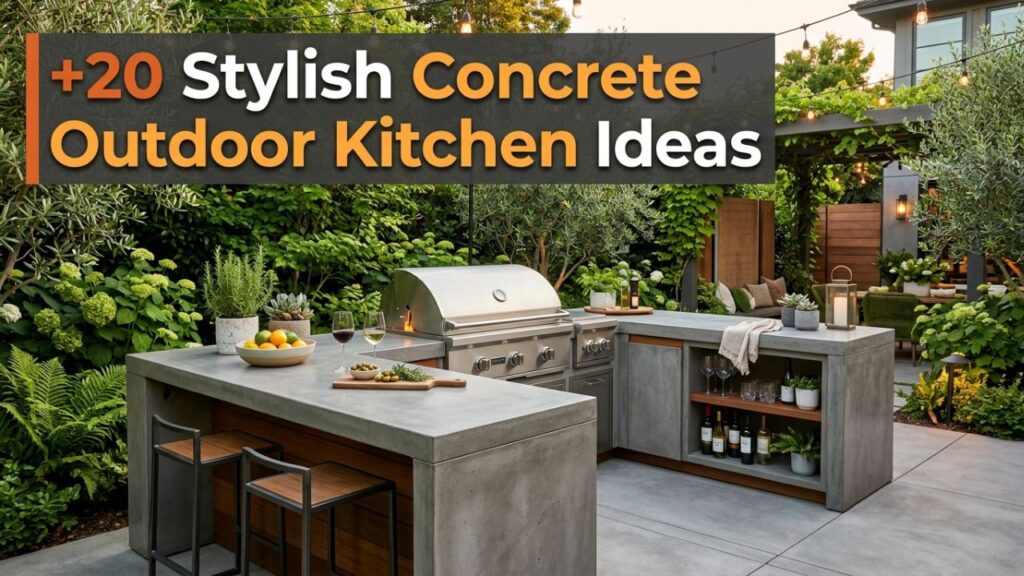
I’ve spent years helping homeowners plan backyard cooking spaces, and concrete comes up again and again for one reason: it works. It’s tough, affordable compared to natural stone, and endlessly customizable.
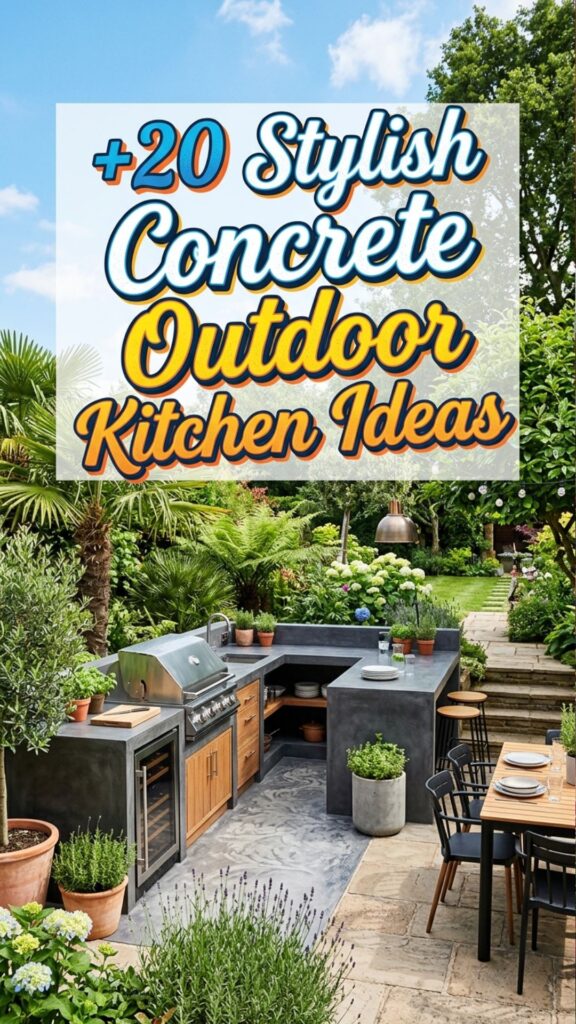
In this guide, you’ll find 20 real, doable ideas—from full countertops to small design touches—plus answers to the questions people ask me most. Let’s build something you’ll actually want to cook in.
1. Poured-in-Place Concrete Countertops
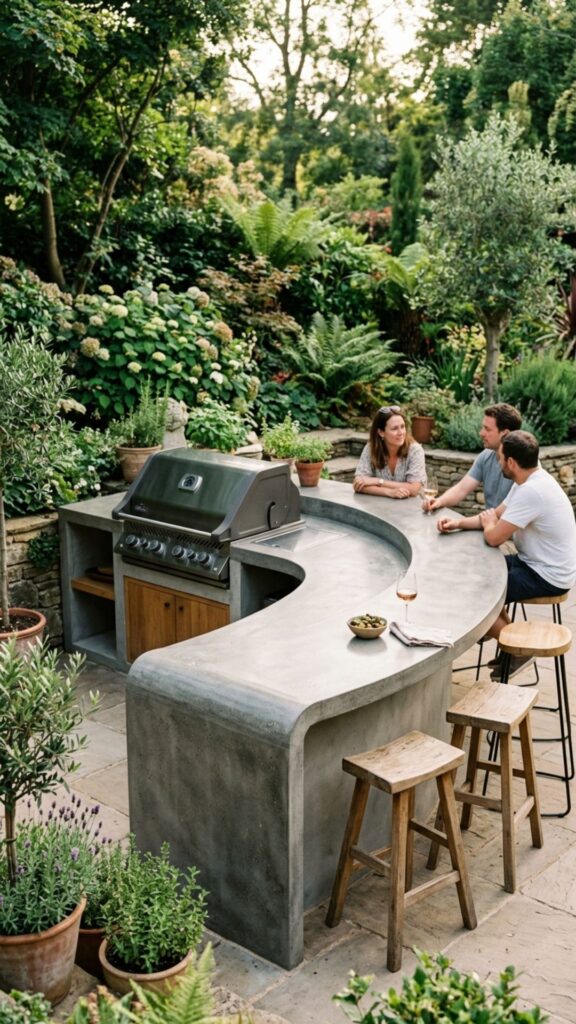
A poured-in-place countertop gives you a seamless, custom surface that fits your grill layout perfectly. Because it’s formed right on site, you can add curves, extended overhangs for seating, or integrated drainage channels near the sink. It’s the option pros reach for when they want a truly one-of-a-kind look.
Keep in mind that poured-in-place work needs experienced hands. The forms must be level, and the mix has to cure slowly to avoid cracking. If you go this route, seal the surface with a food-safe penetrating sealer and reapply it every year or two. Done right, this countertop will outlast most of your appliances.
2. Precast Concrete Slabs for Easy Installation
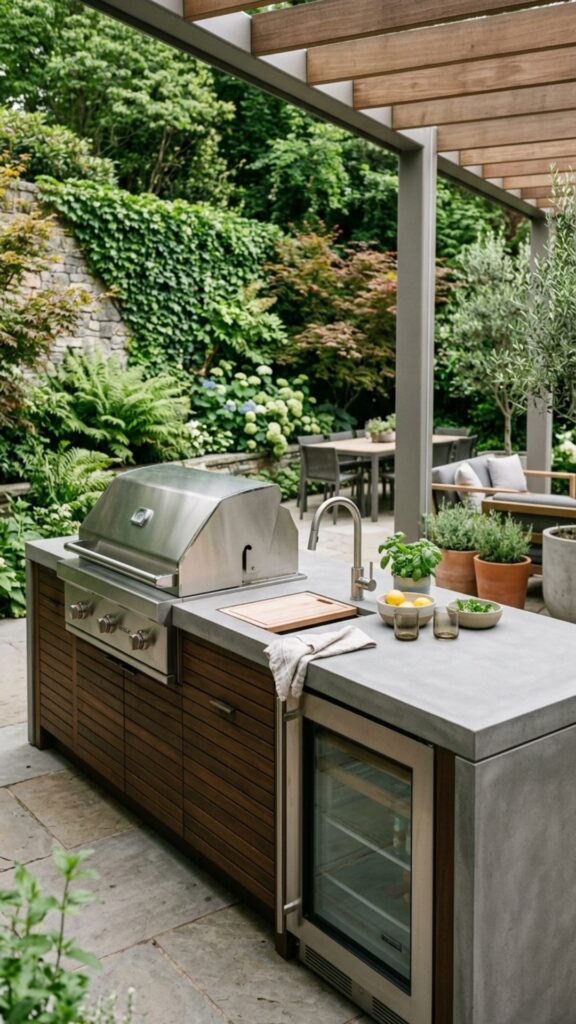
Precast slabs are cast in a shop, cured under controlled conditions, then delivered to your yard. This means fewer surprises, tighter tolerances, and a smoother finish than most on-site pours. If you want the concrete look without a messy job site, precast is your friend.
The trade-off is weight and delivery logistics. A large slab can weigh several hundred pounds, so you’ll need help—or a small crew—to set it in place. Measure twice before ordering, since precast pieces can’t be trimmed like wood. When the fit is right, installation can take a single afternoon.
3. Board-Formed Concrete Bases
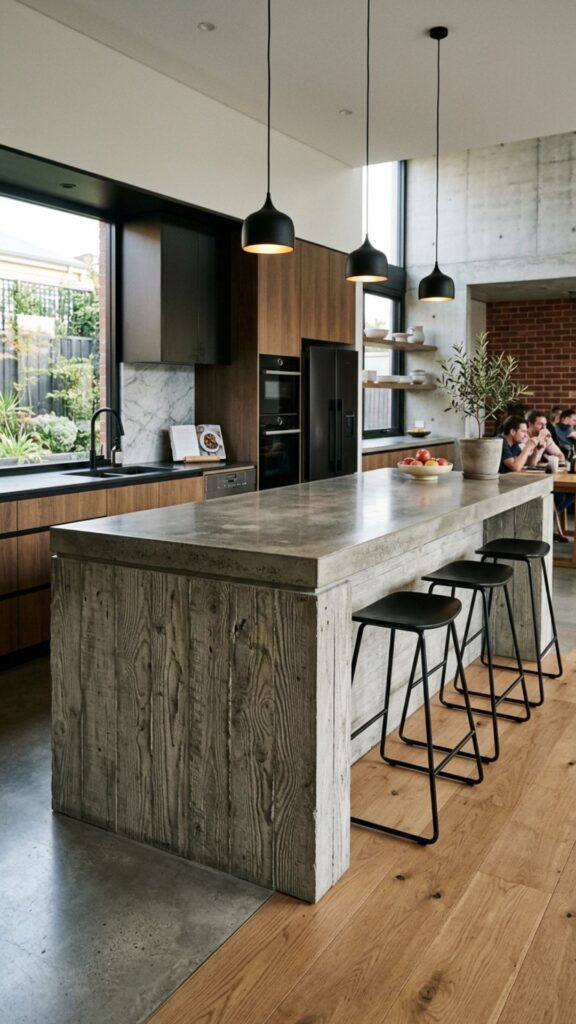
Board-formed concrete presses the grain of real wood planks into the surface as it cures. The result is a warm, textured finish that softens the industrial edge concrete sometimes has. It looks especially good on the vertical faces of islands and bar fronts.
To get this look, the crew lines the forms with rough-sawn lumber before pouring. Each board leaves its own fingerprint, so no two walls match exactly. Pair board-formed bases with a smooth countertop above for a pleasing contrast between rough and refined.
4. Polished Concrete Countertops with a Glossy Finish
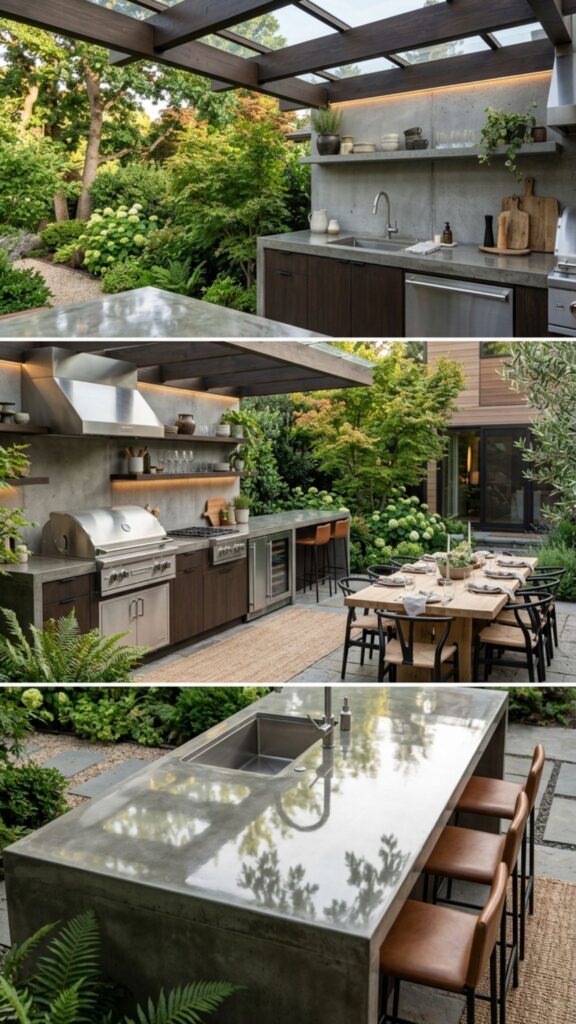
Polishing takes cured concrete and grinds it to a mirror-like shine. You get a sleek, modern surface that reflects light and makes small kitchens feel bigger. It’s a favorite for contemporary homes with clean lines and stainless appliances.
Polished tops need a quality sealer to stay stain-resistant, since gloss can highlight water spots and oil marks. Wipe up spills quickly and keep a soft cloth handy. In exchange, you get a countertop that feels almost like stone at a fraction of the cost.
5. Concrete Block Kitchen Islands
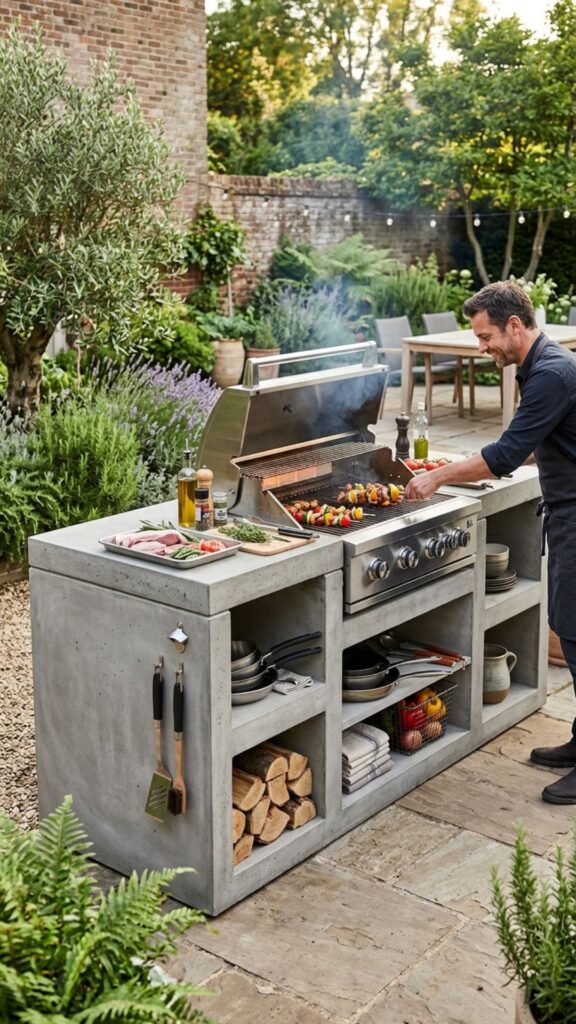
Cinder or CMU blocks make a fast, budget-friendly frame for an outdoor island. You stack them, fill the cores with rebar and grout for strength, then finish the exterior however you like. This is one of the most DIY-friendly outdoor kitchen ideas concrete offers.
Cover the blocks with stucco, tile, or a thin stone veneer to hide the raw look. Inside, leave openings for a mini-fridge or storage cabinet. Because block construction is modular, you can plan the layout on graph paper before laying a single course.
6. Stained Concrete for a Colorful Twist
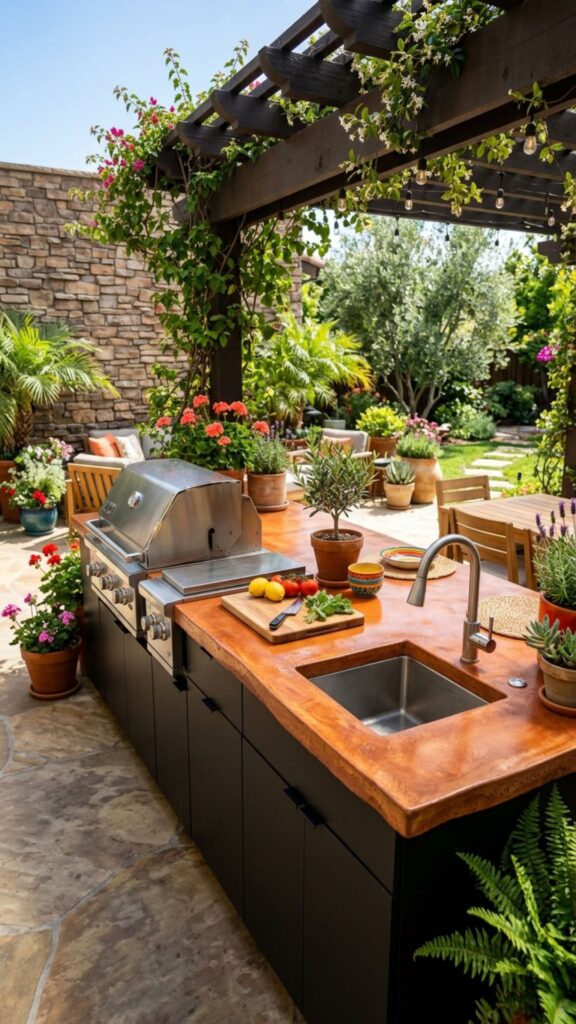
Acid or water-based stains let you push concrete far beyond plain gray. Earthy browns, deep blues, and warm terracotta tones all pull the material into new territory. Staining is a smart way to match your kitchen to existing patio or landscape colors.
Acid stains react with the concrete to create mottled, marble-like variation, while water-based stains give more uniform, predictable color. Test a small area first, because results depend on the concrete mix and moisture. Seal after staining to lock in the shade and protect against fading.
7. Exposed Aggregate Countertops
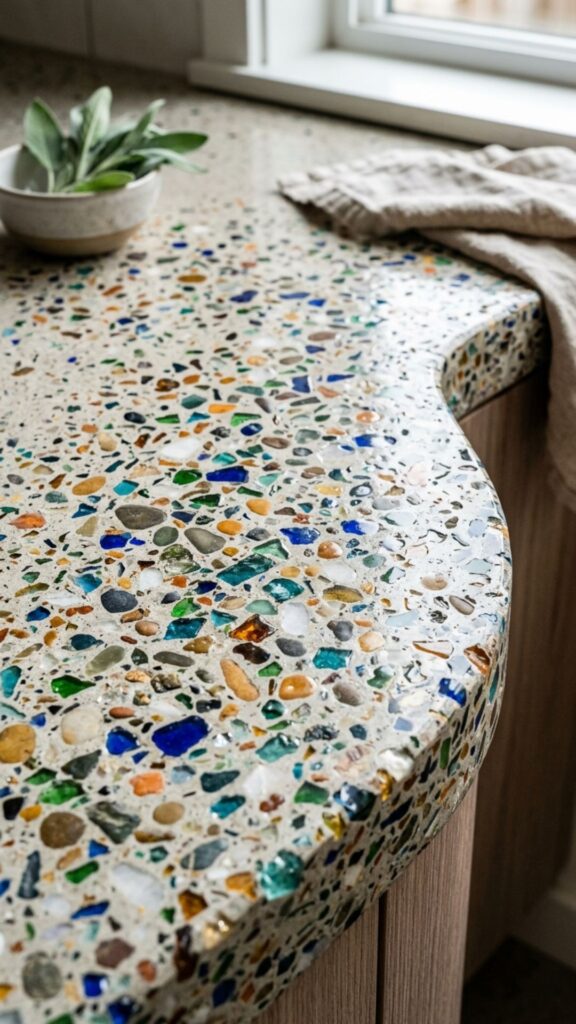
Exposed aggregate reveals the pebbles, glass, or crushed shells mixed into the concrete. By grinding away the top layer, you expose these bits for a speckled, terrazzo-style surface. It hides everyday wear beautifully, which makes it practical for busy families.
You control the look by choosing your aggregate. Recycled glass adds sparkle; river stones give an organic feel. This finish also improves grip on countertops and steps, a small but welcome bonus around a wet outdoor sink.
8. Built-In Concrete Grill Surrounds
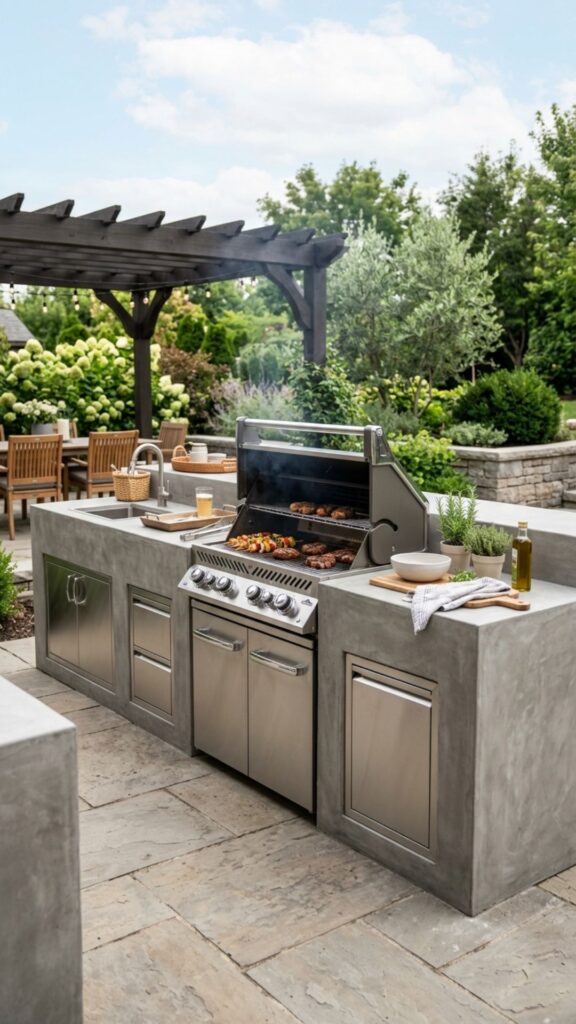
A concrete surround wraps your grill in a fireproof, weatherproof frame. Unlike wood, it won’t scorch or warp near the heat, so it’s a safe long-term home for your cooking gear. It also creates a tidy, finished look that ties the whole kitchen together.
Leave proper clearance around the grill and add ventilation gaps as the manufacturer recommends. I always advise clients to plan the surround around their specific grill model, not a generic size. That way the fit is snug and the counters line up cleanly.
9. Concrete Pizza Oven Stations
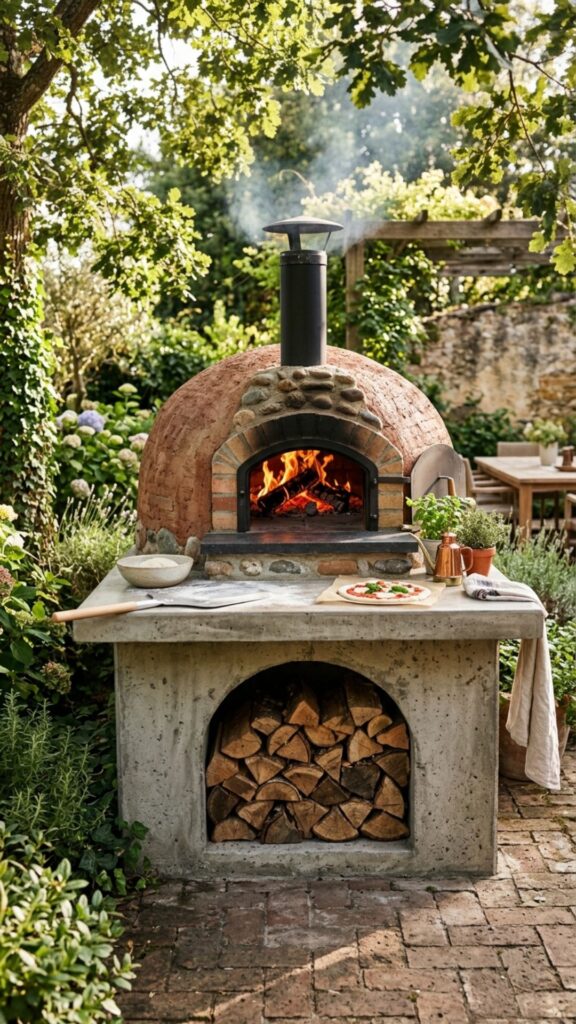
A concrete base is the ideal platform for a wood-fired or gas pizza oven. It handles serious heat and gives the heavy oven a stable, level footing. Add a small concrete prep ledge beside it for shaping dough and sliding pizzas in and out.
Build in a niche below the oven for stacking firewood, and you’ve created a focal point guests gather around. Pizza nights become the reason friends keep coming back. Just make sure the base can carry the oven’s full weight—these units are no lightweights.
10. Floating Concrete Bar Counters
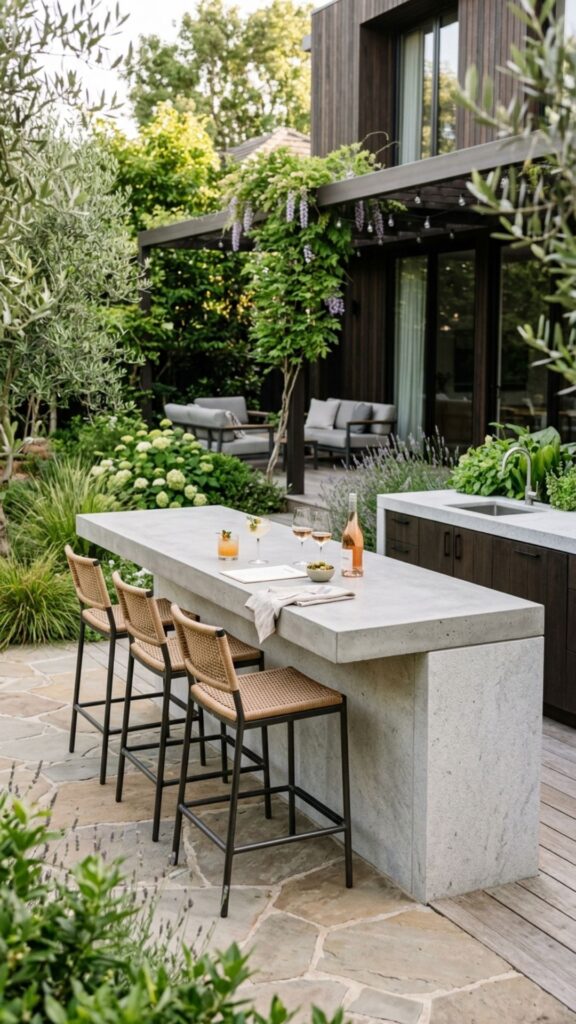
A floating bar counter cantilevers out from the island with no visible legs beneath it. Concrete’s strength makes this dramatic overhang possible, giving you a spot for stools without bulky supports getting in the way of knees. It’s clean, modern, and social.
Reinforce the slab with rebar or steel rod so the overhang stays rock-solid. Limit the cantilever to about 10 to 12 inches unless you add hidden brackets. Top it with a couple of weatherproof stools and you’ve got the best seat in the yard.
11. Integrated Concrete Sinks
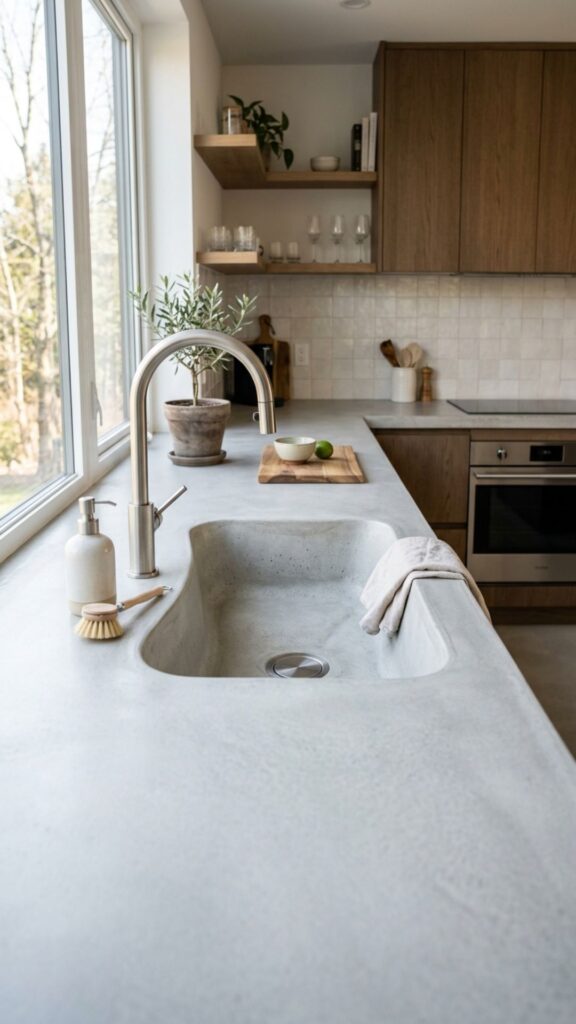
Casting a sink directly into the countertop removes seams where grime loves to collect. Water flows straight from prep area to basin with nothing to snag it. This integrated look feels custom and high-end, even in a modest setup.
Slope the base of the basin toward the drain so it empties fully and dries out. A slightly rough interior finish helps prevent slips when you’re rinsing vegetables. Seal the sink well, since it takes the most water exposure of anything in the kitchen.
12. Concrete Countertops with Embedded LED Lighting
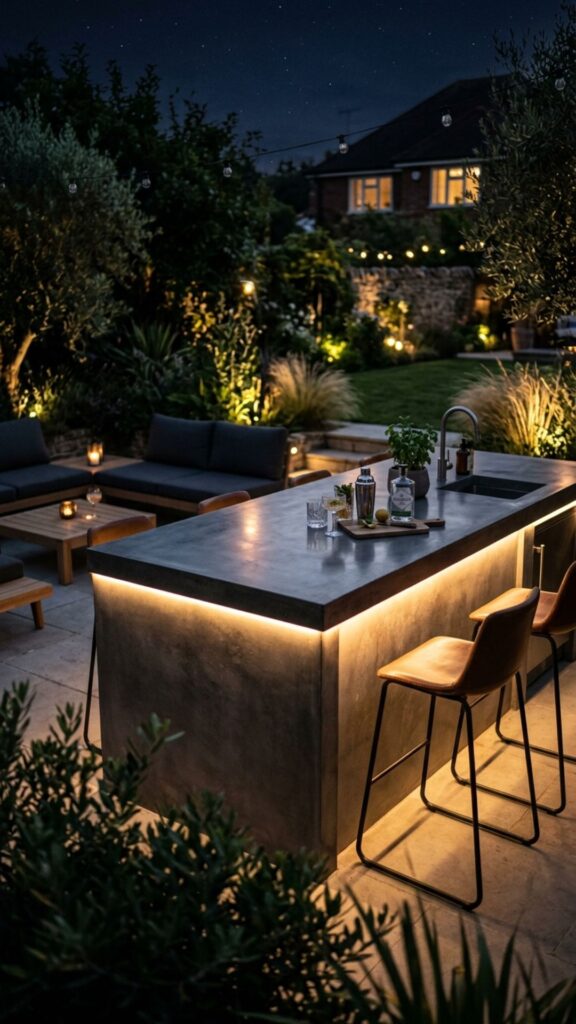
Embedding thin LED strips into a channel along the counter’s edge adds a soft glow for evening cooking. The light traces the outline of your workspace and doubles as gentle ambient lighting for the whole patio. It’s a subtle upgrade with a big nighttime payoff.
Run low-voltage, weatherproof LEDs and hire an electrician for the connections. Warm-white strips feel cozy, while color-changing ones bring the party. Plan the wiring path before the pour, because retrofitting light channels into cured concrete is a headache.
13. Rustic Concrete and Reclaimed Wood Combos
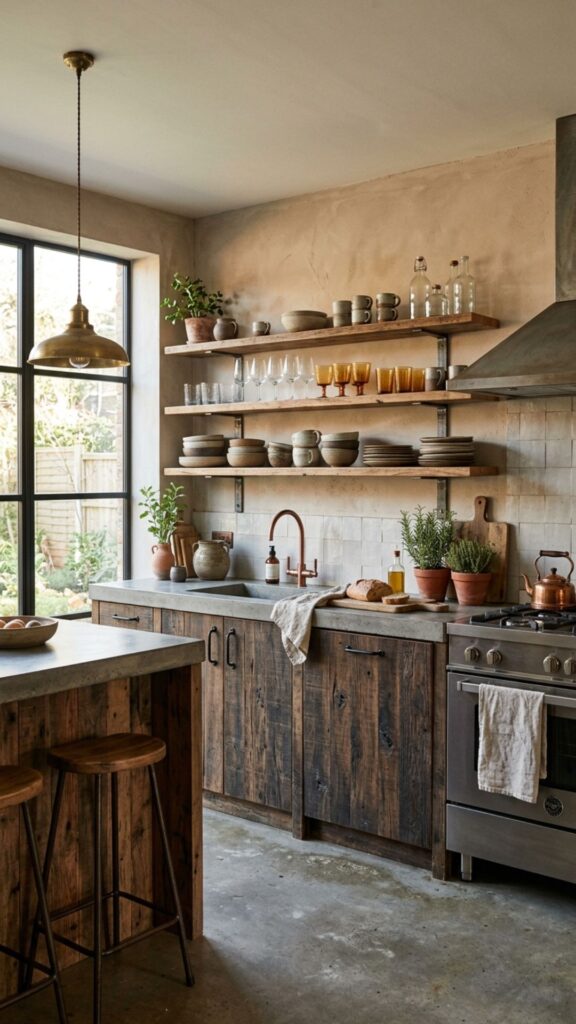
Pairing gray concrete with weathered reclaimed wood creates a balanced, lived-in look. The wood warms up the space while concrete handles the hardworking surfaces. This combo suits farmhouse, coastal, and mountain-cabin styles alike.
Use wood for shelving, doors, and accent panels where it won’t take direct grill heat or standing water. Seal the timber against moisture and expect a little more upkeep than concrete alone. The mix of textures is what gives the kitchen its character.
14. Compact Concrete Kitchens for Small Patios
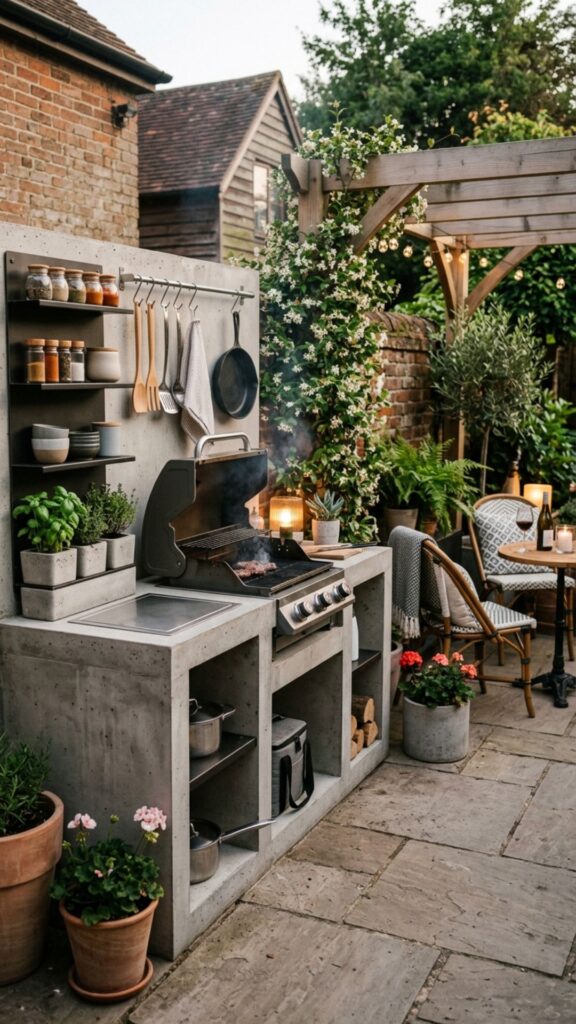
Short on space? A slim concrete counter with a built-in grill and a single storage cabinet fits along a wall or in a tight corner. You don’t need a sprawling yard to enjoy outdoor cooking, just smart planning.
Go vertical with a tall backsplash that holds hooks and shelves for tools. Choose a compact grill and a bar-depth counter to save every inch. These small builds prove that some of the best outdoor kitchen ideas concrete inspires work in the tiniest of spaces.
15. L-Shaped Concrete Kitchen Layouts
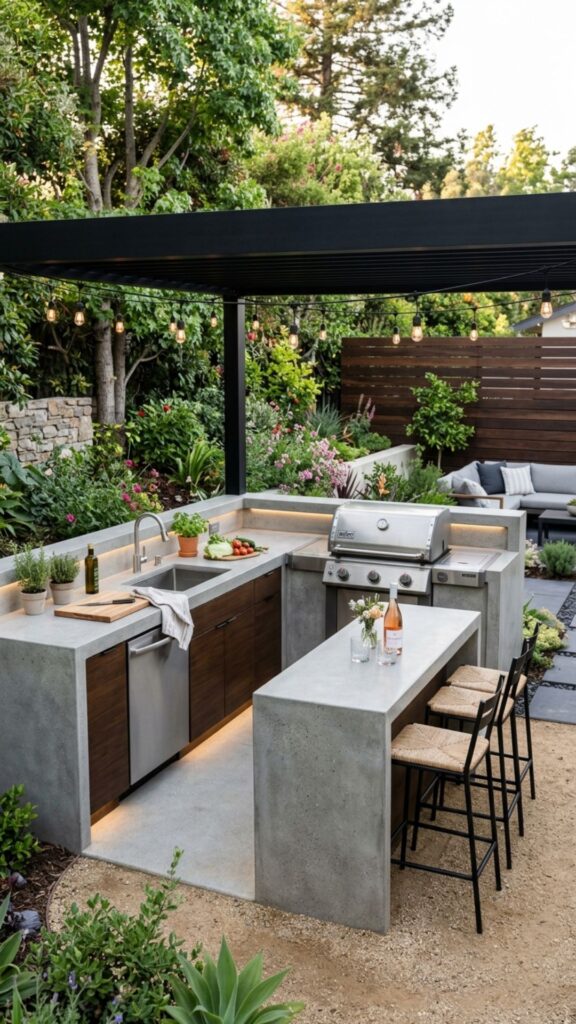
An L-shaped layout wraps counters around a corner, separating your cooking zone from your prep zone. This shape keeps hot appliances on one leg and clean work on the other, which makes hosting smoother. It also frames a natural gathering spot.
Concrete’s flexibility shines here, since you can pour a continuous surface that turns the corner without a seam. Add bar seating on the outside edge of one leg. The result feels like a proper kitchen that happens to be outdoors.
16. U-Shaped Concrete Cooking Zones
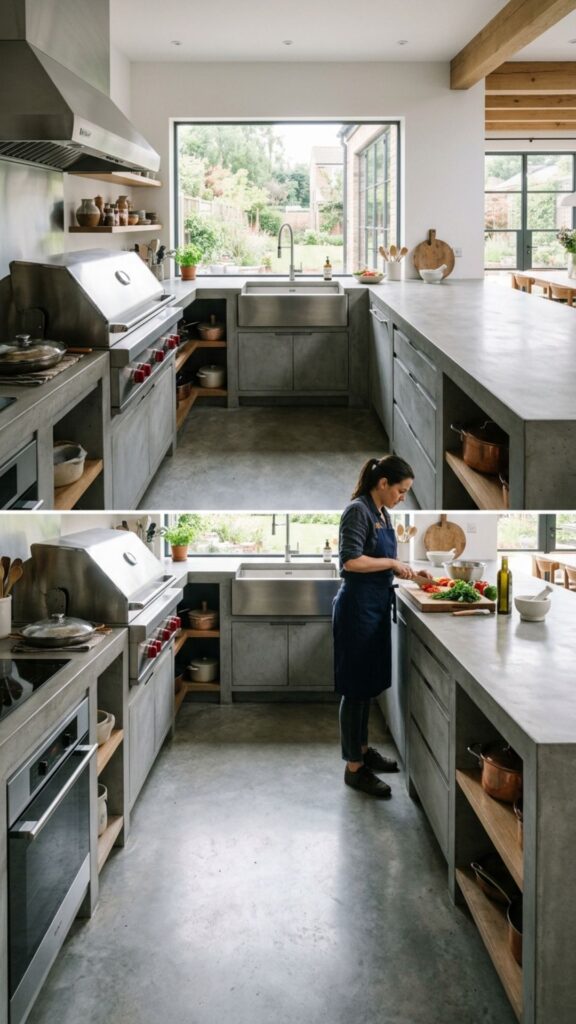
A U-shaped design surrounds the cook on three sides, putting the grill, sink, and prep space all within arm’s reach. It’s the layout serious backyard chefs dream about because everything is right where you need it. There’s plenty of counter for big-batch cooking too.
This design needs more room and more material, so budget accordingly. Leave a wide enough opening to move freely and avoid feeling boxed in. If you host large gatherings often, the extra investment pays off every weekend.
17. Concrete Fire Pit and Kitchen Combinations
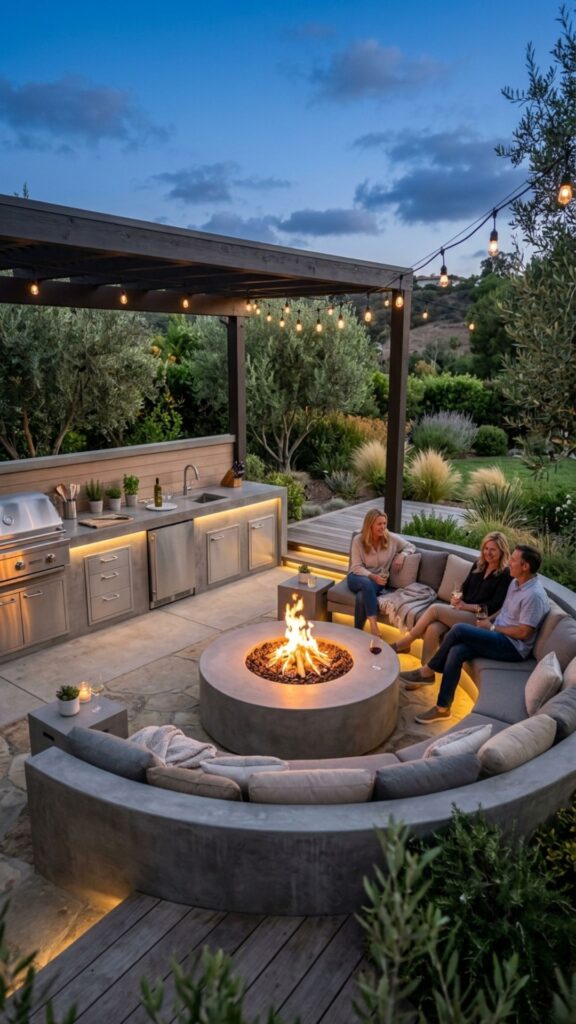
Placing a concrete fire pit near your kitchen extends the evening well past dinner. Guests drift from the grill to the fire without leaving the space. Match the pit’s finish to your counters for a cohesive, planned look.
Keep a safe distance between the fire and any propane or cooking area, and check your local codes on open flames. A ring of concrete seating around the pit gives everyone a place to land. This pairing turns a kitchen into an all-night hangout.
18. Colored Concrete with Integral Pigments
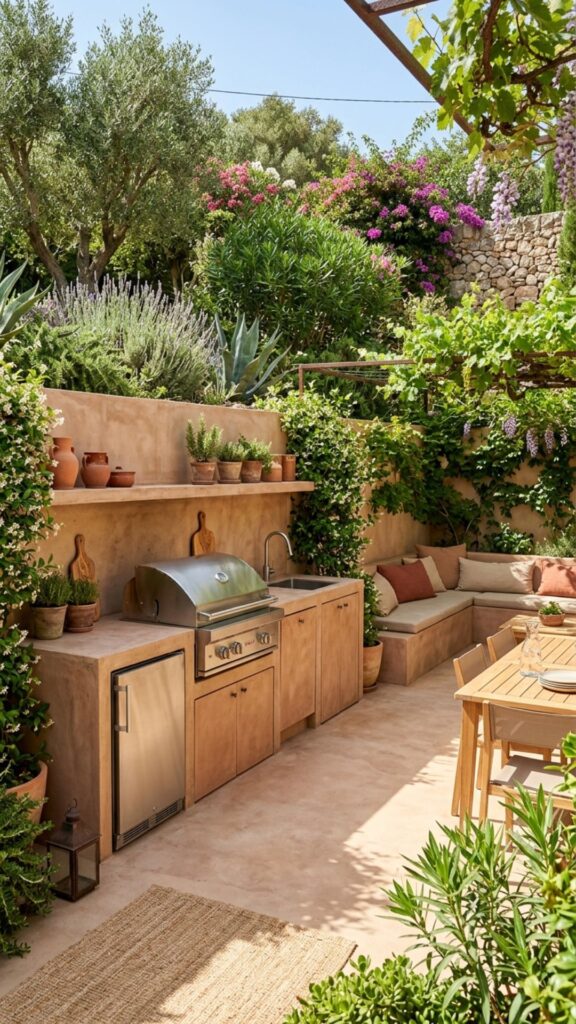
Instead of staining the surface, integral pigment is mixed into the concrete before it’s poured. The color runs all the way through, so chips and scratches never reveal a gray layer underneath. It’s the most durable way to add color.
Choose earthy tones that hide dust and pollen for lower maintenance. Because the pigment is uniform, you’ll get consistent color across every slab you pour on the same day. Order all your material at once to avoid slight batch-to-batch shifts.
19. Concrete Countertops with Tile Backsplashes
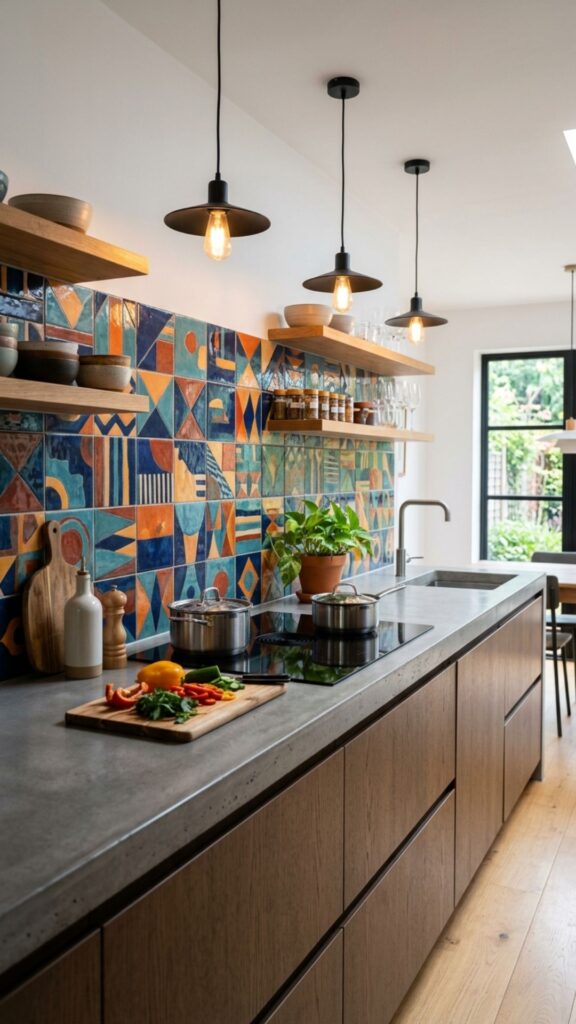
A concrete counter topped by a tiled backsplash blends toughness with a splash of personality. The tile protects the wall from grease and water while letting you inject pattern and color. Handmade or mosaic tiles pop against a plain concrete surface.
Pick outdoor-rated, frost-proof tile so it survives winter and hot summer sun. Use a flexible, weatherproof grout to handle temperature swings without cracking. This is an easy way to make a simple build feel designed and finished.
20. Minimalist Monolithic Concrete Kitchens
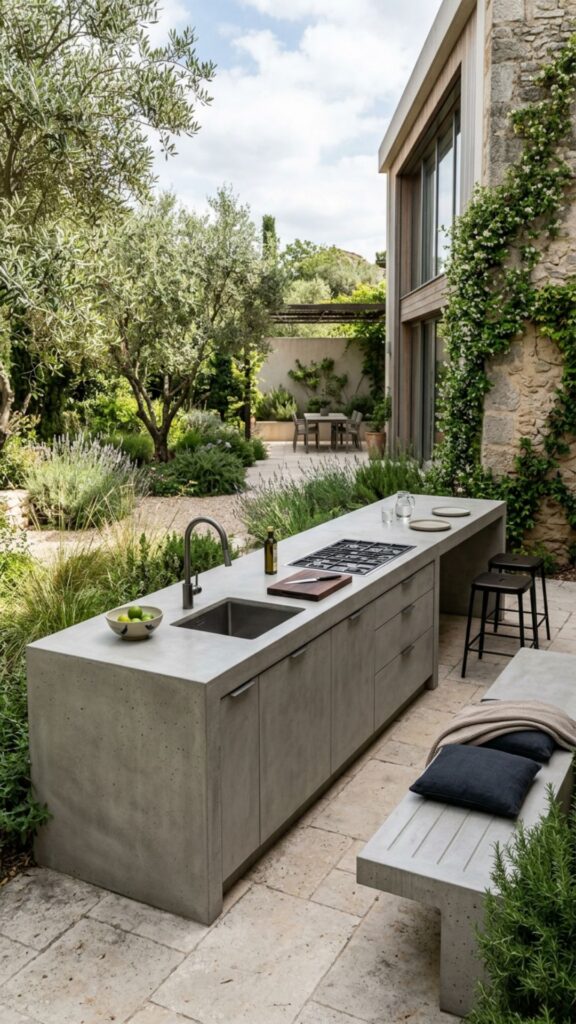
A monolithic design treats the entire kitchen—base, counter, and even seating—as one continuous concrete form. The effect is bold, sculptural, and unmistakably modern. It looks like the kitchen grew straight out of the patio.
This style demands careful planning and skilled formwork, so it’s best left to experienced installers. Keep the palette simple and let the concrete’s texture be the star. In the right setting, a monolithic kitchen becomes the centerpiece of the whole yard.
Bringing Your Concrete Outdoor Kitchen to Life
Concrete gives you a rare mix of strength, style, and freedom to customize. Whether you want a compact corner setup or a sprawling U-shaped cooking zone, there’s a concrete approach that fits your space and budget. The 20 ideas above are proven starting points, not rigid rules—mix and match them to suit how you cook and entertain.
Ready to start? Pick two or three ideas from this list that fit your yard, sketch a rough layout, and set a budget before you buy anything. If you’re pouring more than a simple counter, get quotes from a local concrete contractor with outdoor kitchen experience. Your future backyard dinners are worth the planning.
Is concrete good for an outdoor kitchen?
Yes. Concrete is durable, heat-resistant, and weatherproof, making it one of the best materials for outdoor kitchens. When properly sealed, it resists stains, moisture, and temperature swings for many years.
How much does a concrete outdoor kitchen cost?
A basic concrete outdoor kitchen typically ranges from $3,000 to $8,000 for a small build, while larger custom designs with premium appliances can run $10,000 to $20,000 or more. Costs vary by size, finish, and whether you hire a contractor.
Do concrete countertops crack outdoors?
Small hairline cracks can appear over time, but proper reinforcement with rebar or mesh, a good concrete mix, and slow curing keep them minimal. These fine cracks are usually cosmetic and don’t affect the counter’s strength.
How often should I seal a concrete outdoor kitchen counter?
Reseal your concrete counter every one to two years, or whenever water stops beading on the surface. Use a food-safe penetrating sealer and wipe up spills promptly to protect the finish between applications.
Can I build a concrete outdoor kitchen myself?
You can build simpler projects like concrete block islands or precast slab counters as a DIY job. However, poured-in-place countertops and monolithic designs are best handled by experienced installers to avoid cracking and leveling issues.