A tiny backyard doesn’t mean tiny harvests. I’ve spent years coaxing tomatoes, beans, and leafy greens out of cramped patios and postage-stamp lawns, and I can tell you that limited space forces you to get creative in the best way possible. When you plan smart, a small plot can outproduce a sprawling one that’s poorly used.
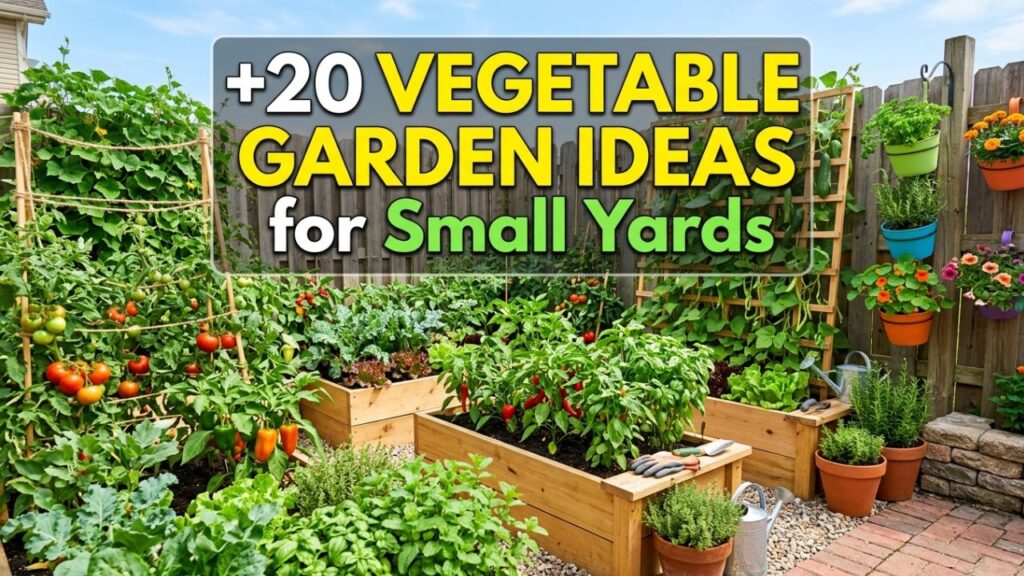
Below you’ll find 20 practical vegetable garden ideas for small yards, from vertical towers to hidden pockets of soil you never knew you had.
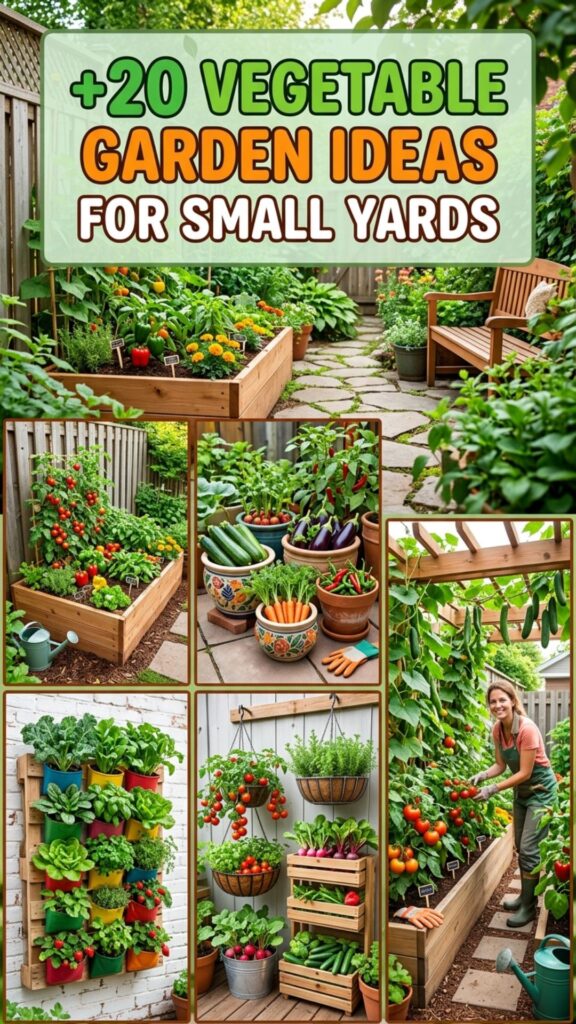
Each one comes with real steps you can put to work this weekend. Whether you’re growing on a balcony, a shady side yard, or a slim strip of grass, there’s something here to help you grow more food in less room.
1. Build a Vertical Trellis for Climbing Crops
Growing up instead of out is the single best trick for small spaces. A simple trellis made from wood, wire, or bamboo lets you train cucumbers, pole beans, peas, and even small squash to climb skyward. This frees up ground space and keeps foliage off the soil, which cuts down on rot and pests.
Anchor your trellis against a fence or wall to save even more room. I like to lean an A-frame trellis over a raised bed so I can plant lettuce or herbs in the shady space underneath. That double-layer approach doubles your yield without adding a single square foot.
2. Use Stackable Container Towers
Stackable planters let you grow a dozen plants in the footprint of one pot. These tiered towers are perfect for strawberries, herbs, and compact greens like spinach and arugula. You water from the top, and moisture trickles down to every level.
Place your tower where it gets six or more hours of sun, and rotate it every few days so each side gets equal light. If you rent, these towers are a smart pick because they move easily and leave no trace behind.
3. Hang Planters From Walls and Railings
Empty vertical wall space is gold in a small yard. Mount a row of pockets, rail planters, or repurposed gutters to grow shallow-rooted crops like lettuce, chives, and radishes. Balcony railings work especially well for hanging containers that spill over with cherry tomatoes.
Choose lightweight potting mix so your fixtures don’t strain the mounts. Water these more often than ground beds, since raised containers dry out fast in wind and heat. A quick morning check keeps them thriving.
4. Try Square-Foot Gardening
Square-foot gardening divides a raised bed into a grid of one-foot squares, with each square holding a set number of plants. This method squeezes maximum harvest from minimal space and makes crop rotation simple. A single 4×4 bed can feed a small household through the season.
Fill your grid with a mix of fast and slow growers. Plant sixteen radishes in one square and a single tomato in another. As you harvest quick crops, replant the empty squares right away to keep production rolling.
5. Grow in Raised Beds Along Fences
A narrow raised bed hugging a fence turns dead border space into productive ground. Beds just two feet wide give you easy reach from one side and leave your central lawn or patio open. The fence doubles as a natural trellis for climbers.
Build beds at least twelve inches deep for root crops like carrots and beets. Line the bottom with cardboard to smother grass and weeds. Good soil in a defined space means fewer weeds and less bending over.
6. Plant a Herb Spiral
A herb spiral is a compact, spiraling mound of soil that packs many microclimates into a few square feet. The top stays dry and sunny for Mediterranean herbs like rosemary and thyme, while the base holds moisture for mint and parsley. It’s both functional and beautiful.
Build yours with stacked stones or bricks, then fill with soil in a rising spiral. You’ll fit ten or more herbs in a circle just three feet across. It’s one of my favorite vegetable garden ideas for a small yard because it looks like art.
7. Use Hanging Baskets for Trailing Vegetables
Hanging baskets aren’t just for flowers. Cherry tomatoes, trailing cucumbers, and strawberries thrive when they cascade over the edges. Hanging them from a pergola, hook, or bracket keeps them out of reach of slugs and rabbits.
Water baskets daily in hot weather, as they dry quickly. Mix in a slow-release fertilizer at planting time so your trailing crops stay fed through the season. The overhead space you use is space that would otherwise sit empty.
8. Try Window Box Gardening
Window boxes bring food production right to your walls. They’re ideal for shallow-rooted crops like lettuce, green onions, spinach, and compact herbs. A row of boxes along a sunny wall turns bare siding into a mini farm.
Secure boxes firmly and use quality potting soil with good drainage. Because they warm up early, window boxes let you start greens a bit sooner in spring. Snip what you need and the plants keep producing.
9. Grow Vegetables in Grow Bags
Fabric grow bags are cheap, foldable, and perfect for tight spots. They breathe better than plastic pots, which means healthier roots and fewer overwatering problems. Potatoes, tomatoes, and peppers all do wonderfully in them.
When the season ends, empty and fold your bags flat for storage. Move them around your yard to chase the sun or dodge shade from a growing tree. That flexibility is a huge win for small, awkward spaces.
10. Make a Pallet Garden
A reclaimed wooden pallet stood upright becomes an instant vertical garden. Line the back and shelves with landscape fabric, fill with soil, and plant greens and herbs in each row. It leans against any wall and takes up almost no ground space.
Make sure your pallet is heat-treated and not chemically treated, marked with an “HT” stamp. Let it lie flat for a couple weeks after planting so roots settle before you tip it upright. Then enjoy a living wall of vegetables.
11. Use Tiered Plant Stands
A tiered plant stand stacks pots at different heights so each gets sunlight without crowding. These stands work beautifully on patios, decks, and balconies where floor space is scarce. You can mix herbs, greens, and dwarf peppers on one frame.
Look for stands with sturdy shelves that hold the weight of wet soil. Position taller plants on the back tiers and shorter ones up front. This layered look keeps everything visible and easy to harvest.
12. Grow Dwarf and Compact Varieties
Plant breeders have created bush and dwarf versions of nearly every popular vegetable. Bush beans, patio tomatoes, and mini bell peppers deliver full flavor in a fraction of the space. Look for words like “compact,” “patio,” or “bush” on seed packets.
These varieties do especially well in containers, so they pair perfectly with the ideas on this list. You get the same harvest as full-size plants without the sprawl. Read the mature-size details before buying to match plants to your pots.
13. Interplant Fast and Slow Growers
Interplanting means tucking quick crops between slower ones so no soil sits idle. Sow radishes or lettuce between young tomato plants; you’ll harvest the greens before the tomatoes need the room. This technique keeps every inch working.
The key is knowing your harvest windows. Fast growers like radishes finish in about four weeks, long before slower neighbors mature. It’s a simple way to double the output of a small bed.
14. Create a Keyhole Garden
A keyhole garden is a round raised bed with a notch cut in for access and a central composting basket. You feed the compost bin, and it nourishes the surrounding soil as you water. This design thrives in small yards and dry climates.
The circular shape gives you plenty of planting edge in a compact circle, usually about six feet wide. Build the walls from stone, brick, or logs. It’s a self-feeding system that keeps your soil rich year after year.
15. Use Railing and Balcony Planters
Balcony dwellers can grow real food with planters that hook over railings. These slim containers hold herbs, salad greens, and even compact peppers without eating into your standing space. They turn an unused edge into a productive shelf.
Pick planters with built-in drainage trays so water doesn’t drip on neighbors below. Group sun-lovers on the brightest side and shade-tolerant greens elsewhere. A single railing can host an entire salad bar.
16. Grow Root Crops in Deep Containers
Carrots, beets, and radishes need depth, not width, which makes tall containers a great fit for small yards. A single deep pot or bucket produces a surprising harvest of roots. Just be sure to drill drainage holes.
Loose, stone-free soil is essential for straight roots, so use a fine potting mix rather than heavy garden dirt. Thin seedlings early to give each root room to swell. Deep containers stack neatly in corners you’d otherwise waste.
17. Set Up a Vertical Hydroponic System
If soil space is truly at a premium, a vertical hydroponic tower grows plants in stacked slots using nutrient-rich water instead of dirt. These systems produce leafy greens and herbs fast in a tiny footprint, often indoors or on a balcony.
They cost more upfront but use less water than traditional gardening and skip weeding entirely. Start with easy crops like lettuce and basil to learn the rhythm. Once you’re comfortable, the yield per square foot is hard to beat.
18. Repurpose Everyday Containers
Almost anything that holds soil and drains water can become a planter. Old buckets, colanders, wooden crates, and even sturdy tote bags all work. Repurposing saves money and keeps usable items out of the landfill.
Always add drainage holes and give containers a good clean before planting. Match the container size to the crop, using deeper vessels for tomatoes and shallow ones for greens. Creative containers add charm and personality to any small garden.
19. Use Companion Planting to Maximize Beds
Companion planting pairs crops that help each other, letting you pack more into one bed. Basil planted near tomatoes can improve flavor and deter pests, while marigolds ward off harmful insects across the whole plot. Smart pairings mean healthier plants in less space.
The “three sisters” combo of corn, beans, and squash is a classic space-saver, with each plant supporting the others. Research which crops grow well together before you plant. Thoughtful pairings reduce pests naturally and cut your need for extra room.
20. Add an Arch or Arbor Walkway
An arch spanning a path becomes a productive tunnel when you train climbing crops over it. Beans, squash, and cucumbers dangle down for easy picking while the ground below stays open for walking. It’s a beautiful, functional use of vertical air space.
Set your arch over an existing path so you don’t sacrifice any planting area. Guide young vines up both sides until they meet at the top. In peak season, you’ll walk through a living archway heavy with food.
Conclusion
Small yards hold enormous growing potential once you start thinking vertically and using every pocket of space. From trellises and grow bags to keyhole gardens and companion planting, these ideas prove that square footage never limits a determined gardener. Start with one or two that suit your space, then build on your success next season.
Ready to transform your tiny plot into a food-producing powerhouse? Pick your favorite idea from this list, grab a few seeds, and plant something this weekend. Your future harvests start with the first small step you take today.
What vegetables grow best in a small yard?
Compact, high-yield crops grow best in small yards, including lettuce, spinach, cherry tomatoes, bush beans, peppers, radishes, and herbs. Choose dwarf or bush varieties and climbing plants that grow vertically to make the most of limited space.
How much space do I need to grow vegetables?
You can grow vegetables in as little as a few square feet. A 4×4-foot raised bed, a handful of containers, or even a sunny balcony railing is enough to produce a steady supply of greens, herbs, and small crops throughout the season.
How do I grow vegetables when I have little sunlight?
Focus on shade-tolerant crops like lettuce, spinach, kale, chard, and many herbs, which grow well with four to six hours of sun. Use reflective surfaces like light-colored walls, and place containers where they catch the brightest available light.
Are containers or raised beds better for small yards?
Both work well, and the best choice depends on your space. Containers offer flexibility and are ideal for patios, balconies, and renters, while raised beds hold more soil and suit longer root crops. Many small-yard gardeners use a mix of both.
How often should I water a small-yard vegetable garden?
Containers and vertical planters dry out faster than ground beds and often need daily watering in hot weather. Check the soil with your finger; water deeply when the top inch feels dry, usually once a day in summer and less in cooler months.