Creating a useful home office does not require a spare bedroom. A quiet corner, unused wall, hallway nook, or even part of your living room can become a comfortable place to work when you plan it carefully.
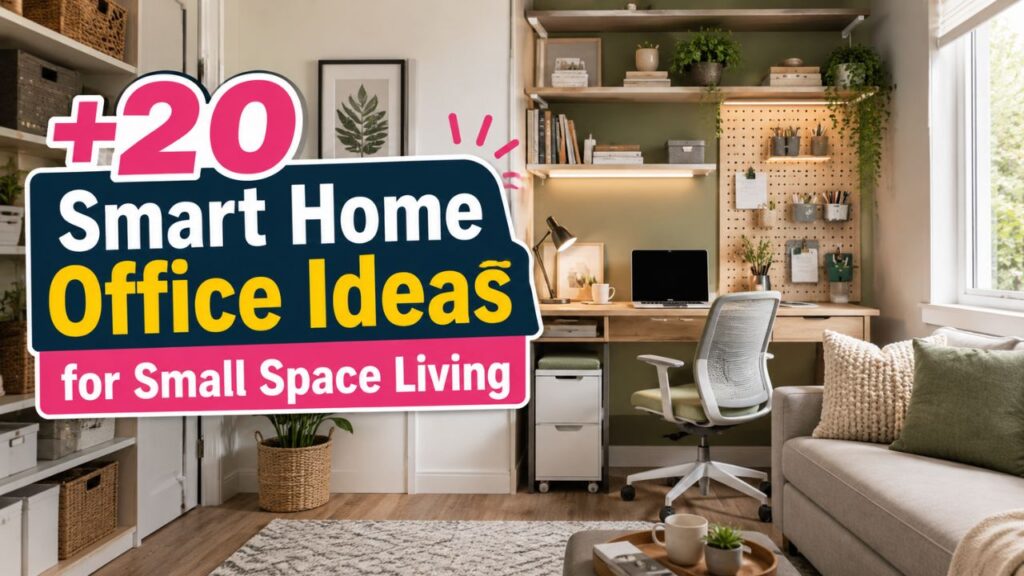
The challenge with a small home office is making everything you need fit without making the room feel crowded. Your desk, chair, lighting, storage, cables, and work supplies all compete for limited space. The smartest solution is not simply choosing smaller furniture. It is making every part of the room work harder.
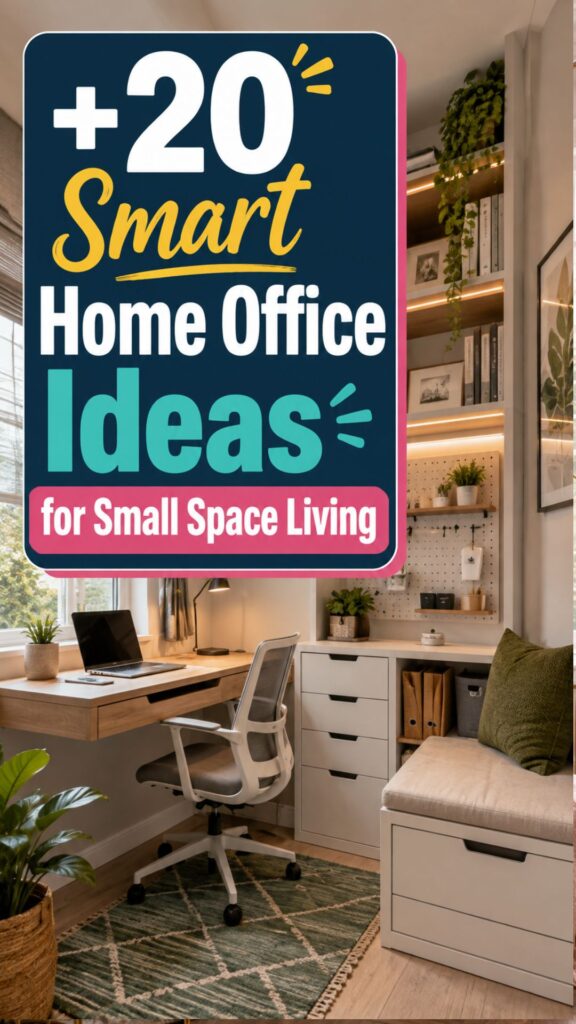
These home office ideas for small space living focus on practical layouts, flexible furniture, vertical storage, and simple design choices. Whether you work remotely every day or only need a spot for occasional emails, these ideas can help you create a workspace that feels organized, comfortable, and separate from the rest of your home.
1. Turn an Empty Corner Into a Compact Office
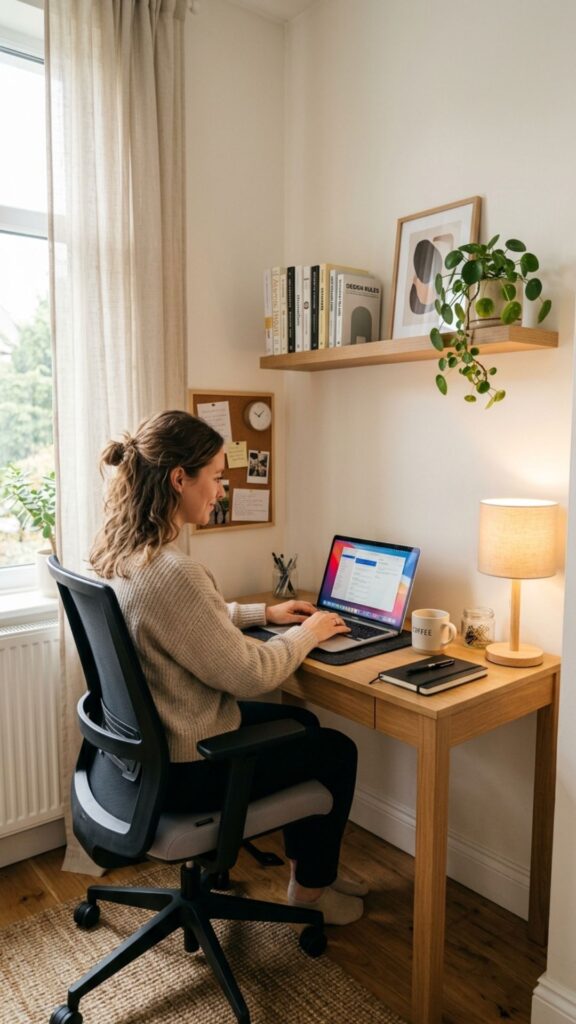
An unused corner is one of the easiest places to create a home office without changing the entire room. A small desk placed against two walls provides enough room for a laptop, notebook, and basic office supplies while keeping the main floor area open.
Choose a slim desk rather than a deep executive-style model. Add a wall shelf above it for books, folders, and decorative items. A corner office works especially well in bedrooms and living rooms because it creates a clear work zone without taking over the space.
2. Choose a Floating Wall-Mounted Desk
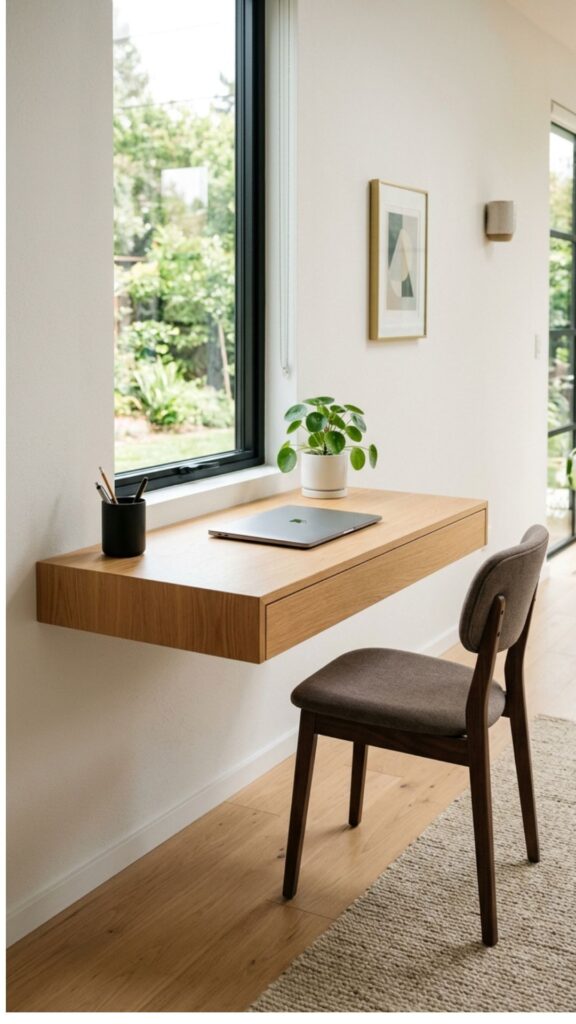
Floating desks are among the most useful home office ideas for small space apartments because they require almost no floor space. They attach directly to the wall and can be installed at a comfortable working height.
Some floating desks include drawers or folding surfaces that close when you finish working. Pair the desk with a lightweight chair that can slide underneath it. This setup keeps the room visually open while giving you a dedicated workstation whenever you need one.
3. Use a Fold-Down Desk
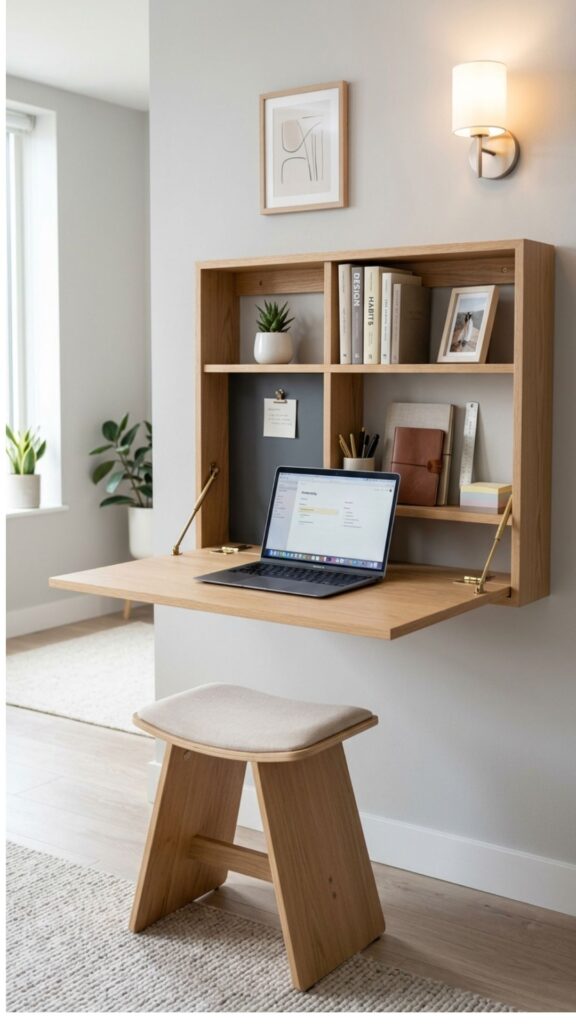
A fold-down desk is ideal when your office needs to disappear after working hours. The surface folds against the wall when not in use, leaving valuable walking space free.
Install one in a bedroom, dining room, or hallway. Many designs also include shallow shelves inside the unit for chargers, stationery, and notebooks. It is a practical option for anyone who wants a workspace without permanently dedicating part of the room to office furniture.
4. Create an Office Inside a Closet
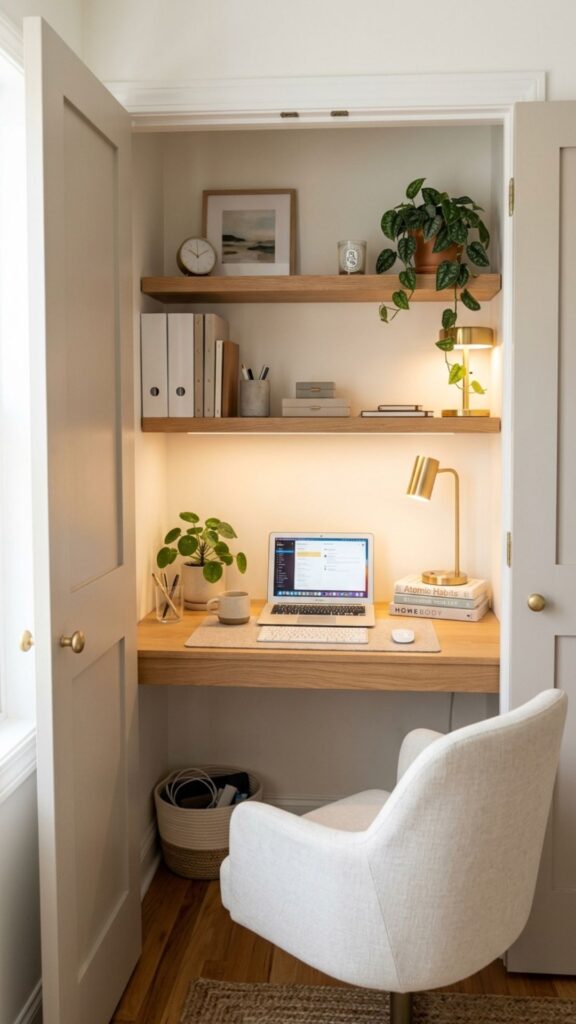
A closet can become a surprisingly functional small office. Remove unnecessary hanging rails, place a desk or worktop inside, and use the upper shelves for office storage.
You can keep the doors if you want the workspace hidden at the end of the day. Good lighting is especially important here, so add an LED strip, wall lamp, or compact desk light. This approach is often called a “cloffice” and works well in apartments where separate rooms are limited.
5. Install Shelves Above Your Desk
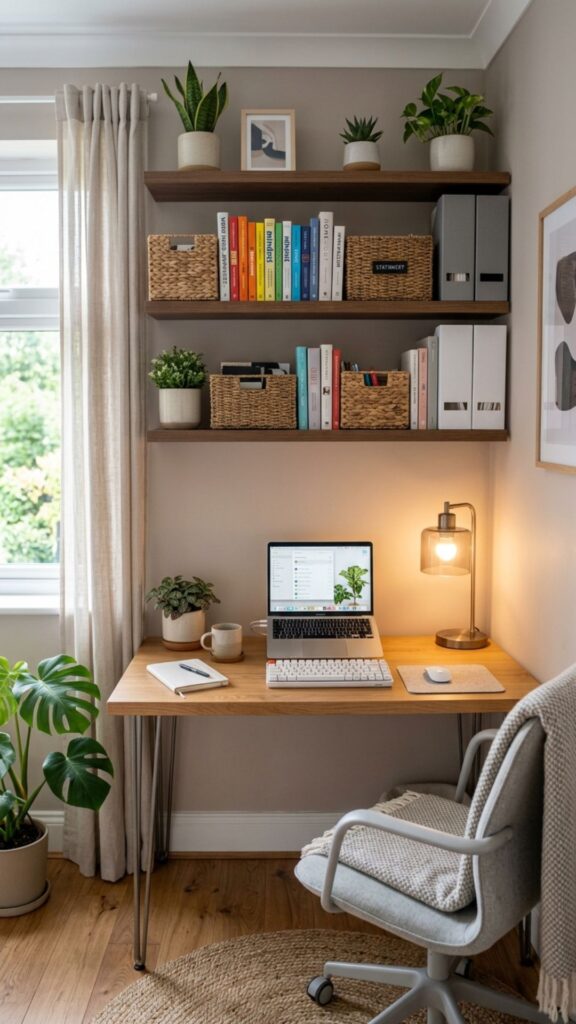
When floor space is limited, look upward. Vertical storage gives you room for office supplies without requiring larger furniture.
Install two or three shelves above your desk for folders, books, baskets, and small plants. Keep frequently used items on the lowest shelf and less-used supplies higher up. Leaving some empty space between objects will prevent the area from looking overcrowded.
6. Use a Narrow Console Table as a Desk
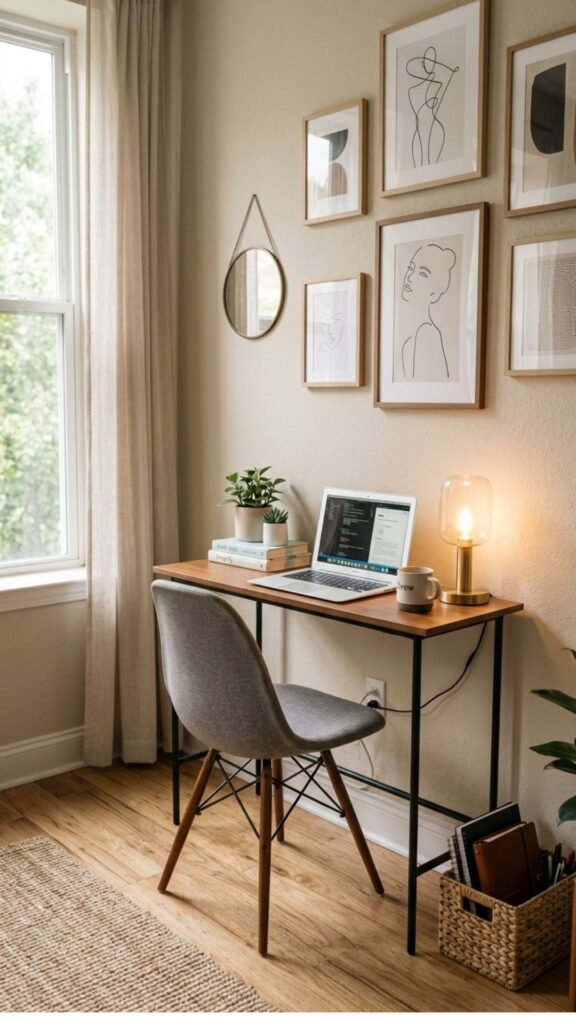
A console table can double as a slim home office desk. Because these tables are usually much narrower than traditional desks, they fit comfortably along walls, behind sofas, and inside hallways.
Choose one deep enough for your laptop and basic work accessories. Add a compact chair or stool that fits underneath. This is one of the simplest home office ideas for small space layouts when you need a workstation that blends naturally with your existing furniture.
7. Position Your Desk Near a Window
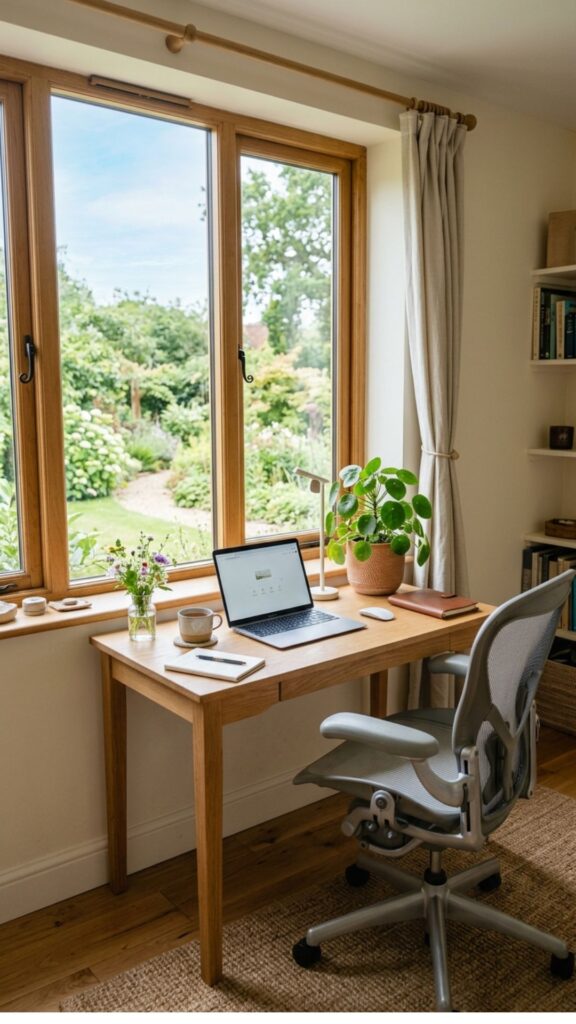
Placing a desk near a window can make even a tiny workspace feel more comfortable. Natural light helps reduce the closed-in feeling that small rooms sometimes create.
Position the screen so direct sunlight does not cause glare. If the window faces your desk, use adjustable blinds or curtains to control brightness. A view outside can also make long working sessions feel less restrictive, especially when your office occupies only one corner of a room.
8. Choose Furniture With Built-In Storage
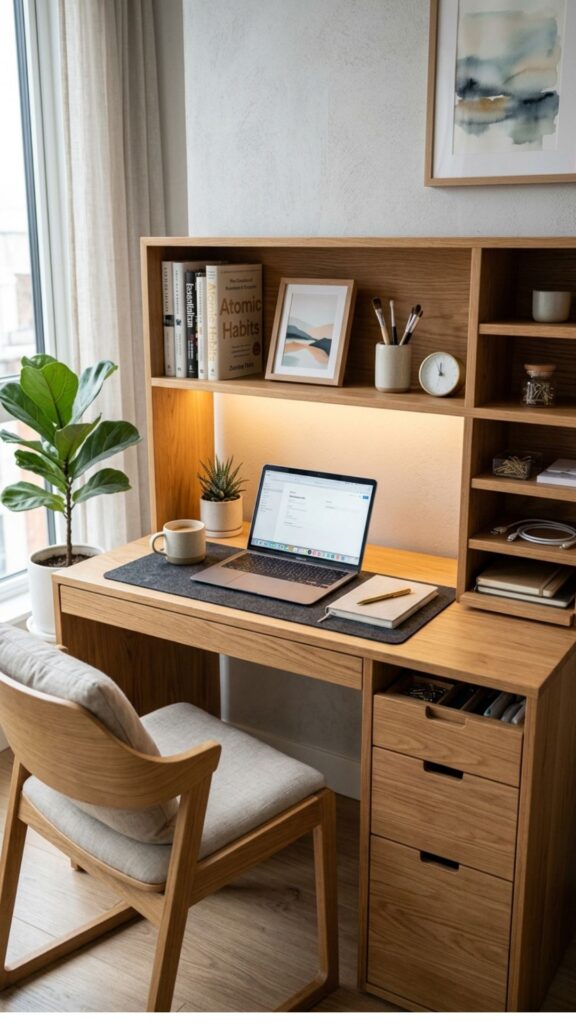
Furniture that performs more than one job is valuable in small spaces. Look for desks with drawers, shelving underneath, or built-in compartments for office supplies.
Instead of adding a separate filing cabinet, use the storage already incorporated into your desk. This reduces the number of furniture pieces in the room and keeps important items close at hand. Keep the desktop mostly clear to create a calmer, more spacious appearance.
9. Use a Ladder Desk
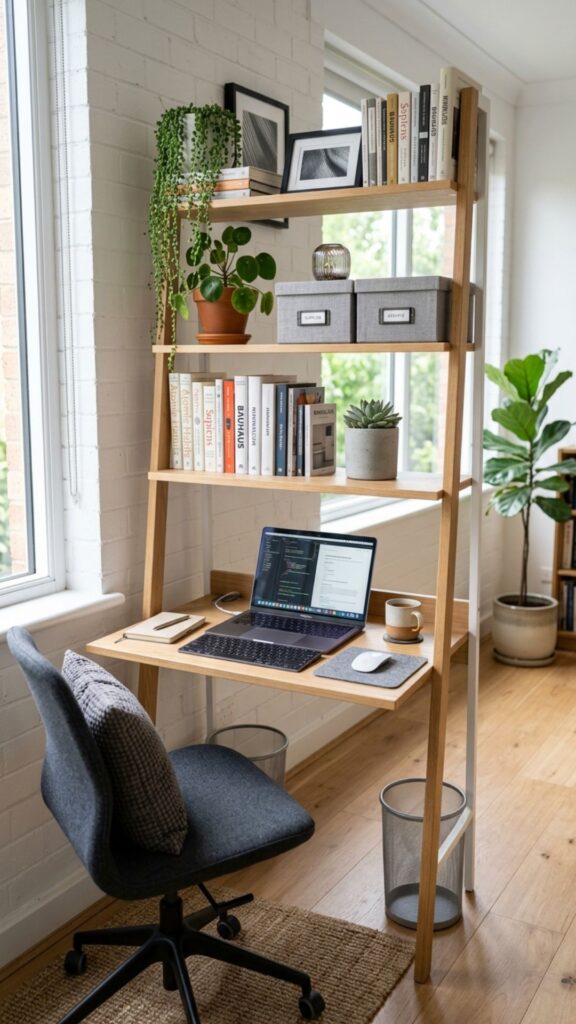
A ladder desk combines a narrow work surface with vertical shelving. Its slim shape makes it suitable for bedrooms, apartments, and small living rooms.
Use the desktop for your computer while keeping documents, storage boxes, and decorative pieces on the upper shelves. Because the design draws the eye upward, it can make the room appear taller rather than wider and more crowded.
10. Create a Workspace Behind the Sofa
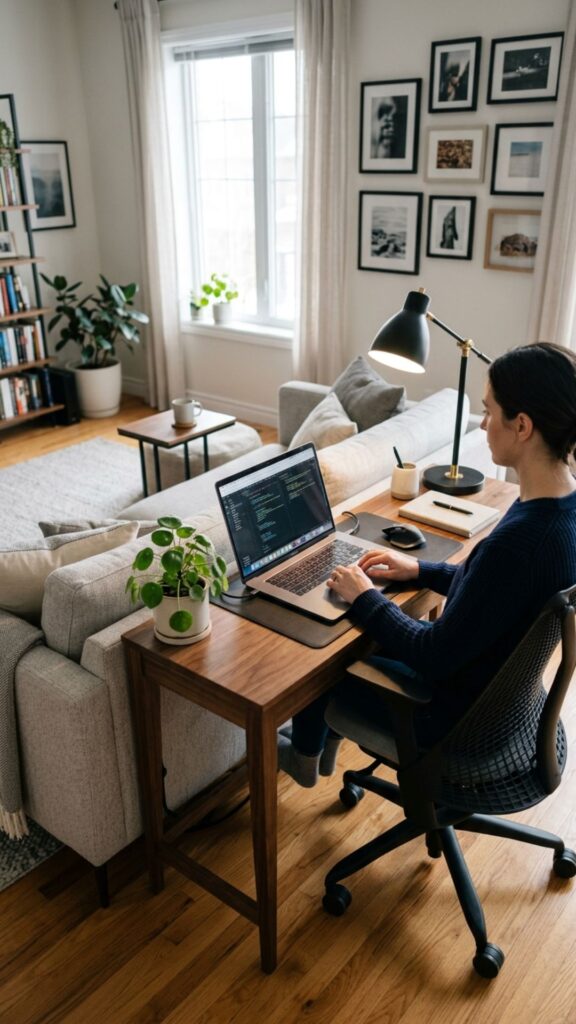
The area behind a sofa is often left unused. A narrow desk placed there can create a useful work zone without requiring another room.
Choose a desk close to the height of the sofa back so the furniture feels visually connected. Keep cables organized and avoid filling the surface with too many items. This setup works particularly well in open-plan apartments where the living room needs to support several activities.
11. Build a Home Office Under the Stairs
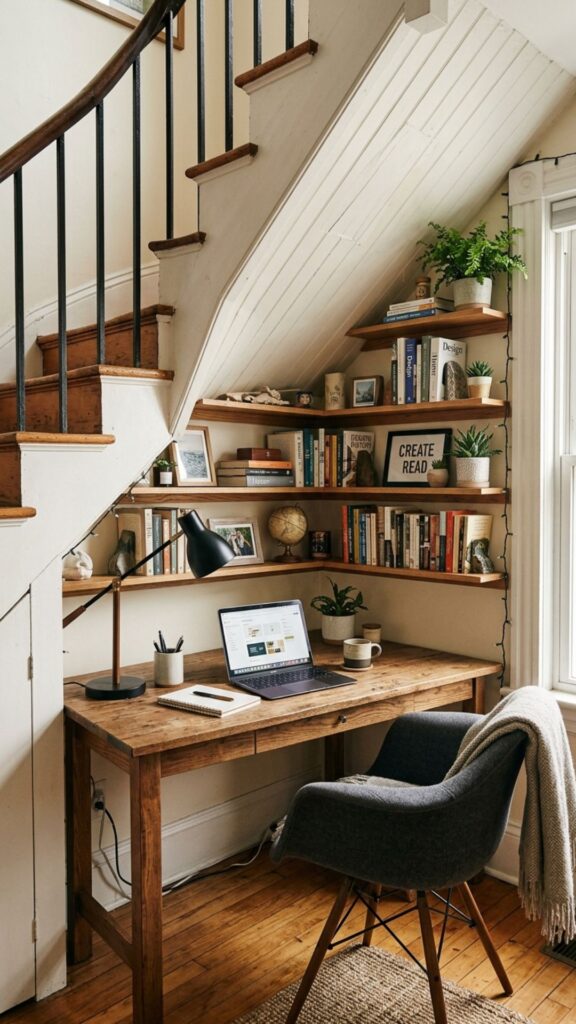
The space beneath a staircase often has enough room for a desk, chair, and a few shelves. Turning it into an office gives an overlooked area a practical purpose.
Measure the height carefully before choosing furniture. Wall-mounted shelves can follow the angle of the staircase and provide additional storage. Add focused lighting because under-stair areas often receive less natural light than other parts of the home.
12. Replace a Large Monitor With a Mounted Screen
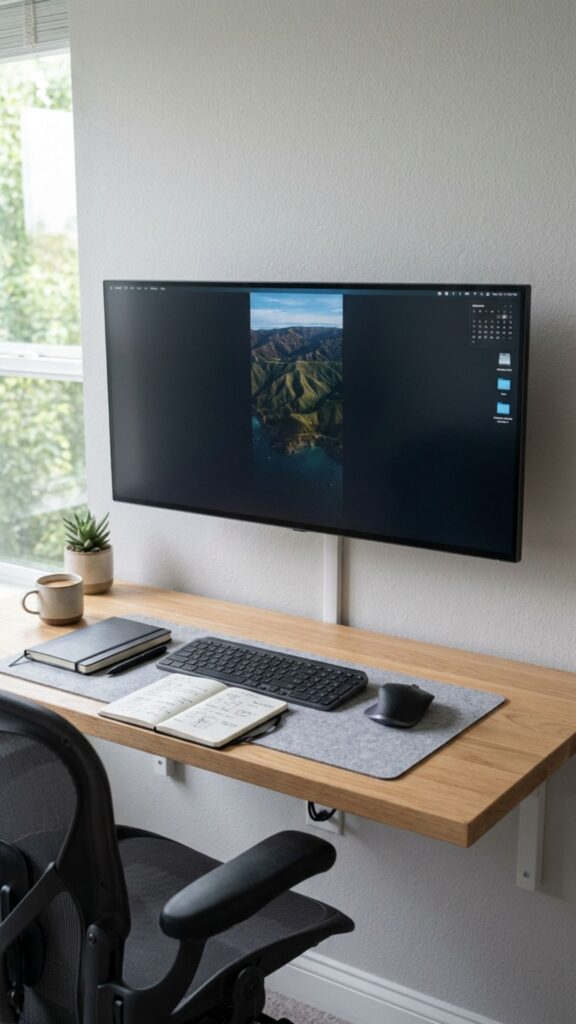
A large monitor stand can take up a surprising amount of desktop space. Mounting your monitor on the wall or using an adjustable monitor arm can free up that area.
Once the monitor is elevated, you can use the space below it for a keyboard, notebook, or small organizer. Keeping your screen at approximately eye level may also encourage a more comfortable working position during longer sessions.
13. Use Pegboards for Flexible Wall Storage
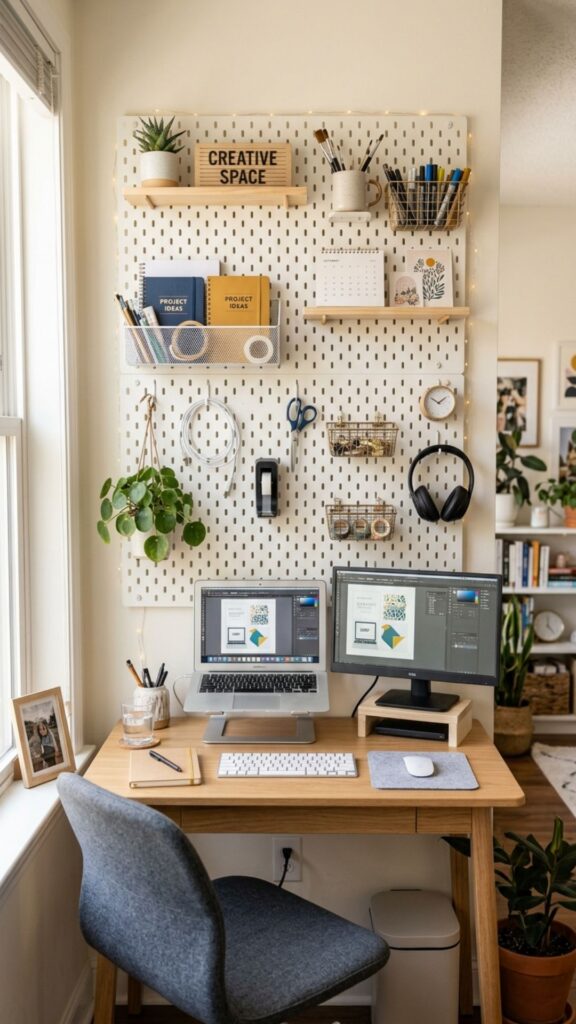
Pegboards provide adaptable storage without requiring drawers or cabinets. You can attach small shelves, baskets, hooks, stationery holders, and accessories wherever they are needed.
They are particularly useful when experimenting with home office ideas for small space rooms because the arrangement can change as your needs change. Keep the most-used tools within easy reach while placing decorative items higher on the board.
14. Choose a Chair That Slides Under the Desk
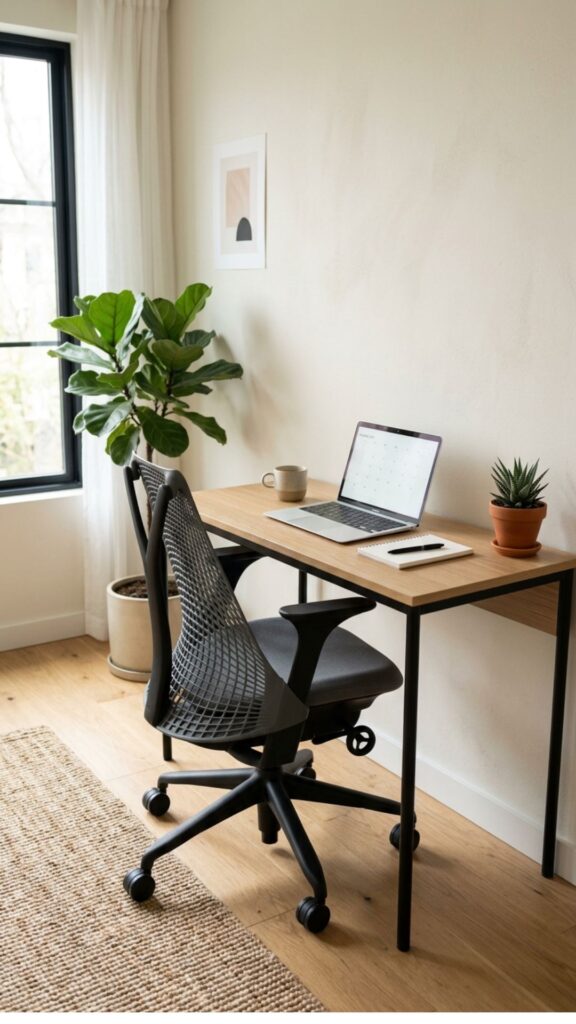
A large office chair can dominate a small room even when you are not working. Look for an ergonomic chair with a compact frame that can slide completely or mostly underneath your desk.
Comfort should still come first. Check seat height, back support, and desk clearance before buying. A well-fitted chair saves space while helping your workstation remain practical for daily use.
15. Hide Cables to Reduce Visual Clutter
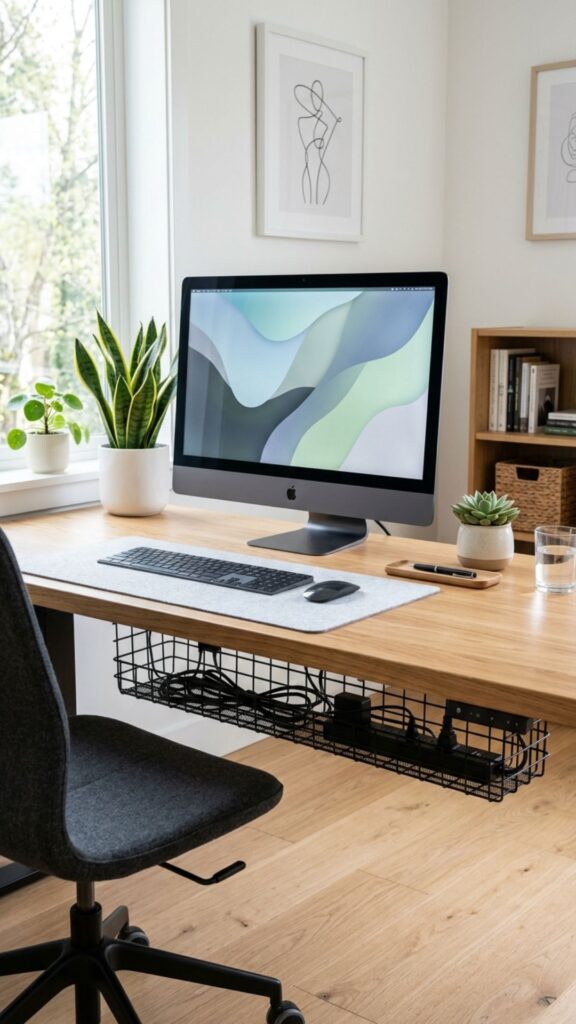
Loose chargers, extension cords, and computer cables can make a small office feel more cluttered than it actually is. Cable management creates an immediate visual improvement.
Use adhesive cable clips, under-desk trays, sleeves, or reusable ties to group wires together. Keep power strips underneath or behind the desk rather than on top. A cleaner setup makes the workspace easier to maintain and creates more usable desktop space.
16. Use Light Colors to Make the Workspace Feel Bigger
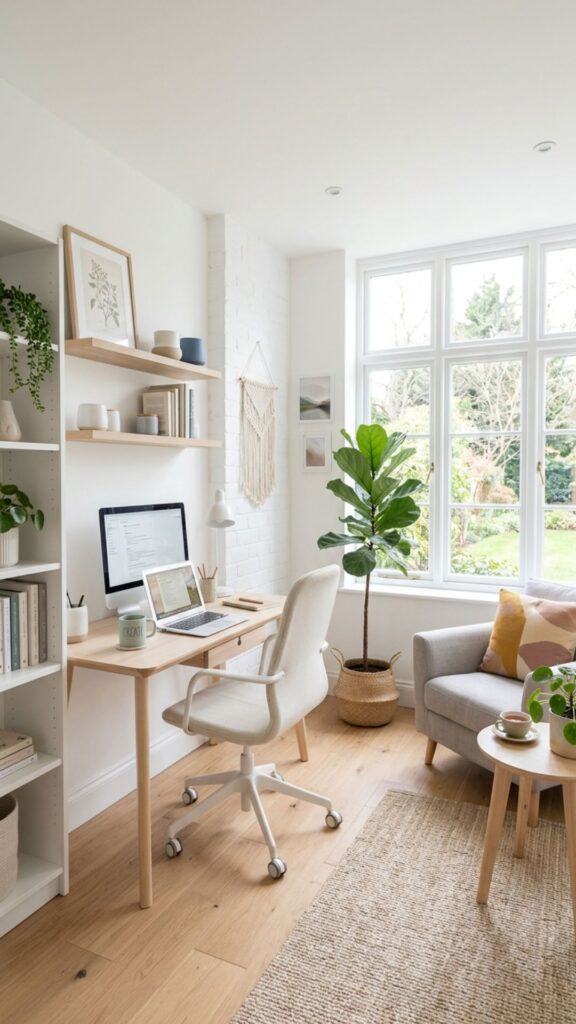
White, cream, pale gray, soft beige, and other lighter shades can help a compact work area feel more open. You do not need to make the entire room neutral, but keeping larger surfaces light can reduce visual heaviness.
Add personality through smaller elements such as artwork, desk accessories, plants, or a colorful chair cushion. A controlled palette allows your home office to feel interesting without becoming visually busy.
17. Use a Room Divider to Separate Work and Relaxation
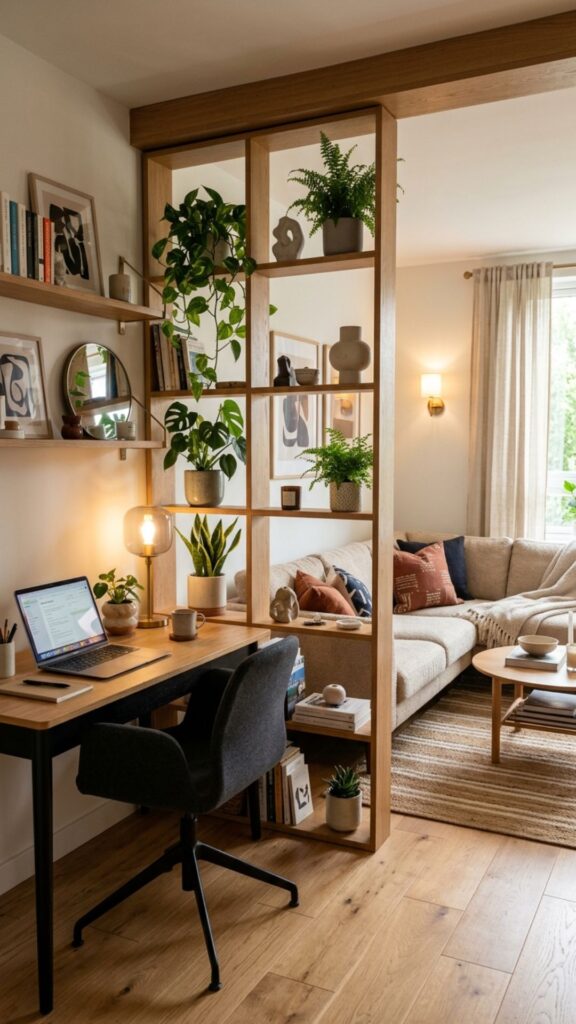
When your home office shares space with a bedroom or living room, creating a visual boundary can make it easier to switch between work and personal time.
A narrow bookshelf, folding screen, curtain, or open shelving unit can act as a divider without requiring construction. Choose an option that allows some light to pass through so the room does not feel smaller. Even a subtle division can make the office feel more intentional.
18. Create a Desk Inside a Built-In Cabinet
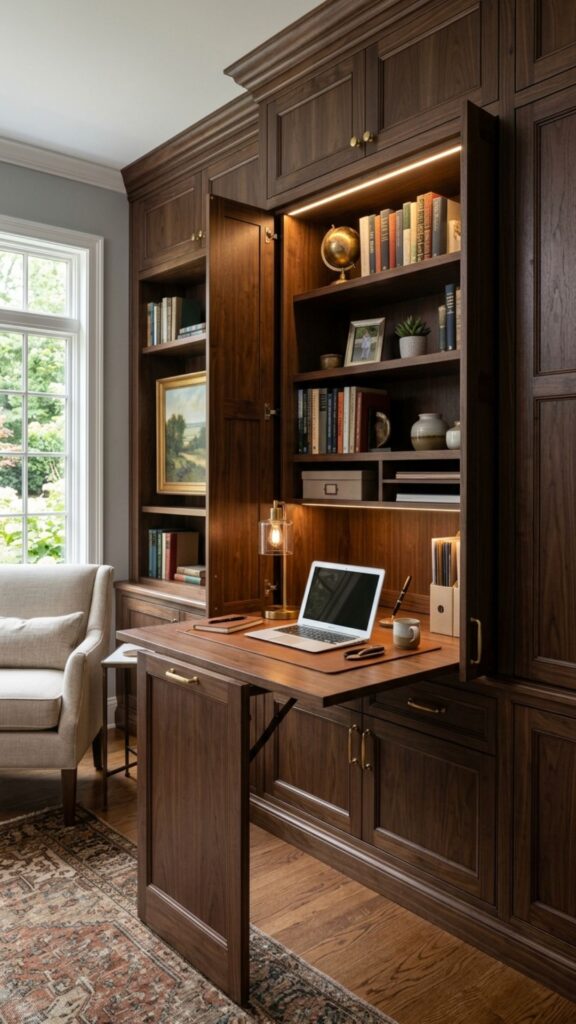
Built-in cabinets can hide an entire workspace behind doors. Inside, you can include a desk surface, shelves, electrical outlets, lighting, and storage.
When work ends, close the doors and the office disappears. This is especially useful when the desk is located in a living or dining area. Custom cabinetry can be expensive, but similar results can be achieved using modular cabinets or affordable storage units.
19. Keep Your Desktop Minimal
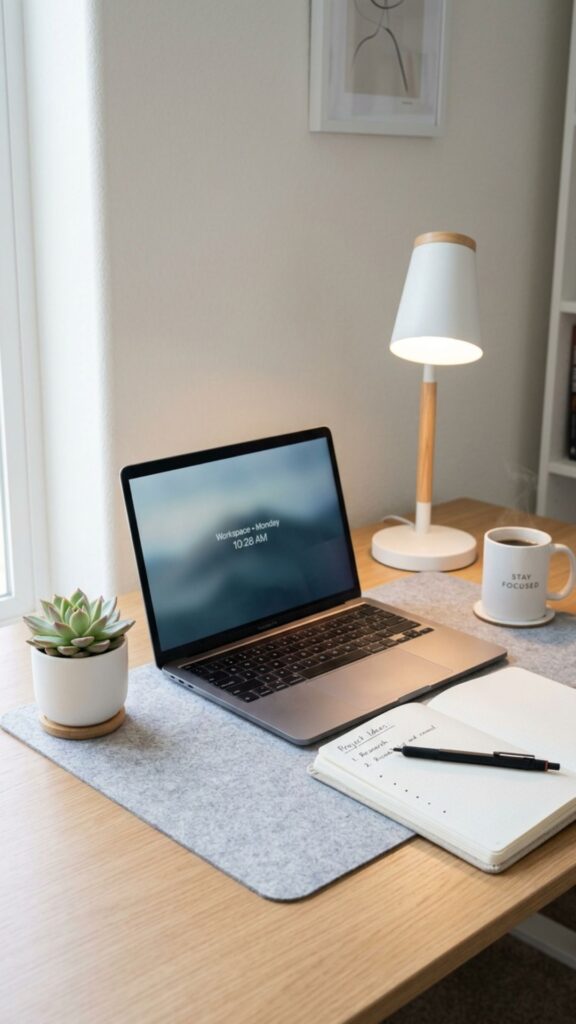
Limited surface area makes organization especially important. Keep only the tools you use regularly on your desk, such as your computer, notebook, lamp, and perhaps one personal item.
Move extra stationery, paperwork, and equipment into drawers, baskets, or wall storage. A simple five-minute reset at the end of each workday prevents clutter from building up and helps your small home office stay functional.
20. Design the Office Around Your Actual Work Routine
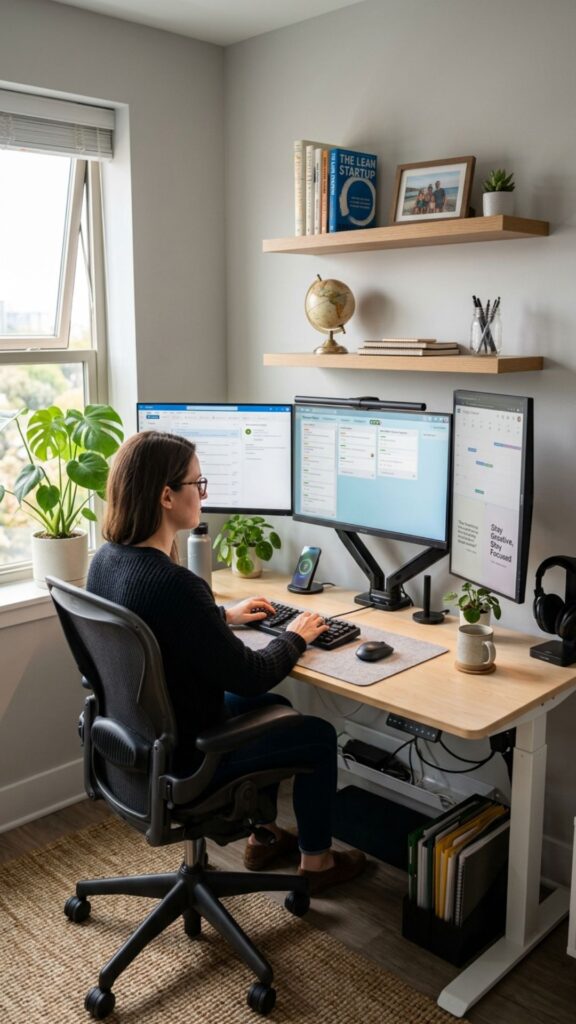
The best small home office is not necessarily the most stylish one. It is the workspace that supports what you do each day. Before buying furniture, think about your normal tasks.
For example, someone working entirely from a laptop may need only a narrow desk. A designer using multiple screens needs more surface area. Someone dealing with paperwork may benefit from vertical filing storage. Choosing furniture around your real routine prevents unnecessary items from consuming valuable space.
Conclusion: Create a Small Office That Works for You
Small homes can still support productive and comfortable workspaces. The key is using your available space intentionally rather than trying to recreate a large traditional office.
From floating desks and closet workstations to wall storage and multifunctional furniture, these home office ideas for small space living prove that thoughtful design matters more than square footage.
Start by identifying one underused area in your home. Measure it carefully, decide what equipment you genuinely need, and build your workspace around those essentials. Even a few simple changes can transform an awkward corner into a home office you will actually enjoy using.
Ready to improve your workspace? Choose one idea from this guide and start creating a smarter, more organized home office today.
What is the best desk for a small home office?
A floating desk, narrow writing desk, fold-down desk, or compact desk with built-in storage usually works best. The right choice depends on your available wall and floor space.
Where should I put a home office if I do not have a spare room?
Consider an empty bedroom corner, living room wall, hallway, closet, space behind a sofa, or area under the stairs. Look for underused spaces rather than trying to create an entirely separate room.
How can I add storage without making my office feel crowded?
Use walls instead of adding more floor furniture. Floating shelves, pegboards, wall organizers, and tall narrow shelving units provide storage while preserving valuable floor space.
How can I make my small home office look professional?
Keep the desk organized, hide cables, use consistent storage containers, improve lighting, and limit unnecessary decorations. A simple background can also create a cleaner appearance for video meetings.
Can a small home office still be comfortable for full-time work?
Yes. Focus on ergonomics rather than office size. Choose a supportive chair, place your screen at a comfortable height, provide enough legroom, and use appropriate lighting. A compact office can work well for full-time use when these essentials are planned properly.