Small homes come with a familiar challenge — too many functions, not enough room. When your front door opens directly into or beside your dining area, it can feel awkward, cluttered, and hard to manage. But a well-planned dining room entryway combo isn’t a compromise. Done right, it’s one of the smartest space decisions you can make.
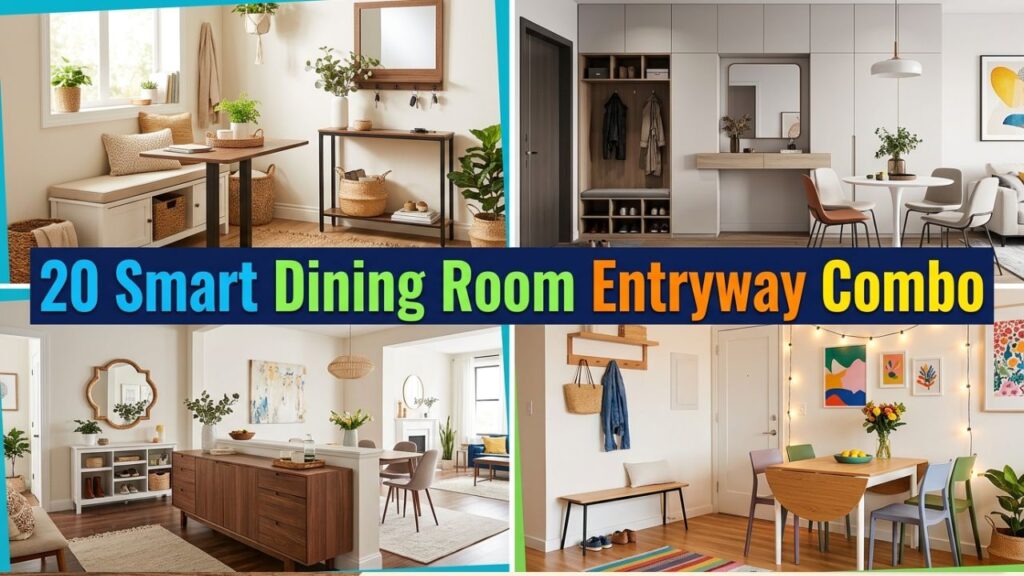
This guide covers 20 practical ideas for combining your dining room and entryway into a space that works harder without feeling smaller.
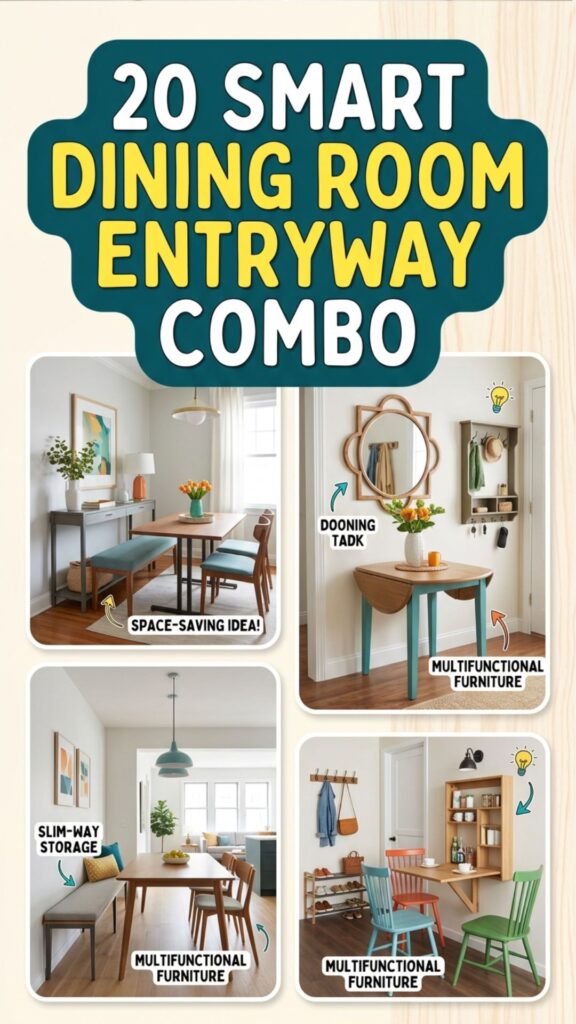
Whether you’re dealing with an open-plan layout, a narrow hallway that bleeds into the dining area, or a studio apartment where everything shares the same four walls, you’ll find ideas here that are specific, actionable, and genuinely useful.
1. Use a Console Table as a Dual-Purpose Entry and Dining Buffer
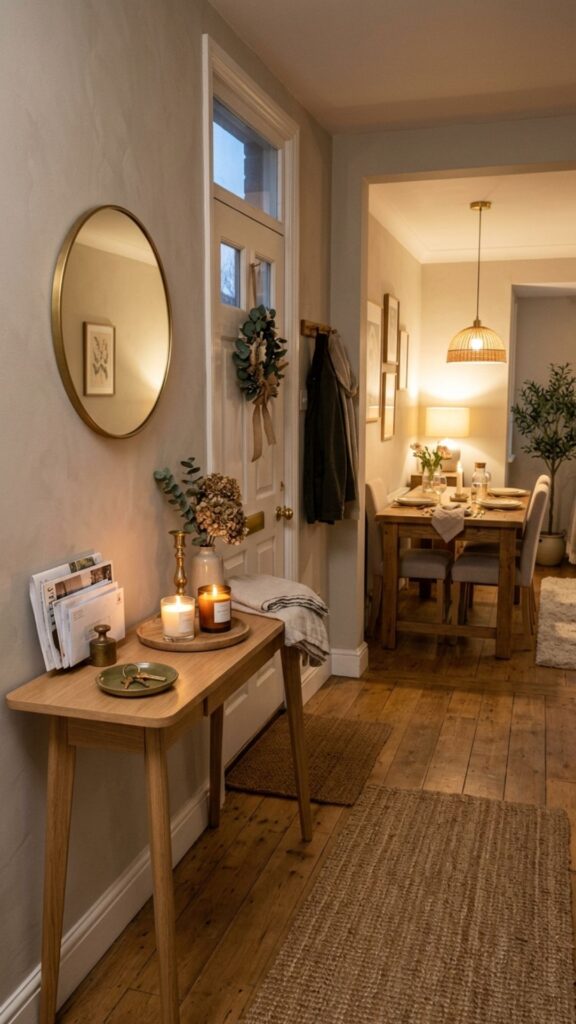
A slim console table placed just inside the front door creates an instant visual boundary between the entryway and dining area. It gives you a surface to drop keys and mail while also acting as a serving station or bar cart extension for the dining table nearby.
Choose a console with a lower shelf or built-in drawers to maximize storage. A wooden console with a warm finish can echo the tones in your dining furniture, making the two zones feel connected rather than squeezed together. This is one of the simplest ways to define a dining room entryway combo without building anything new.
2. Install a Floating Bench with Hidden Storage
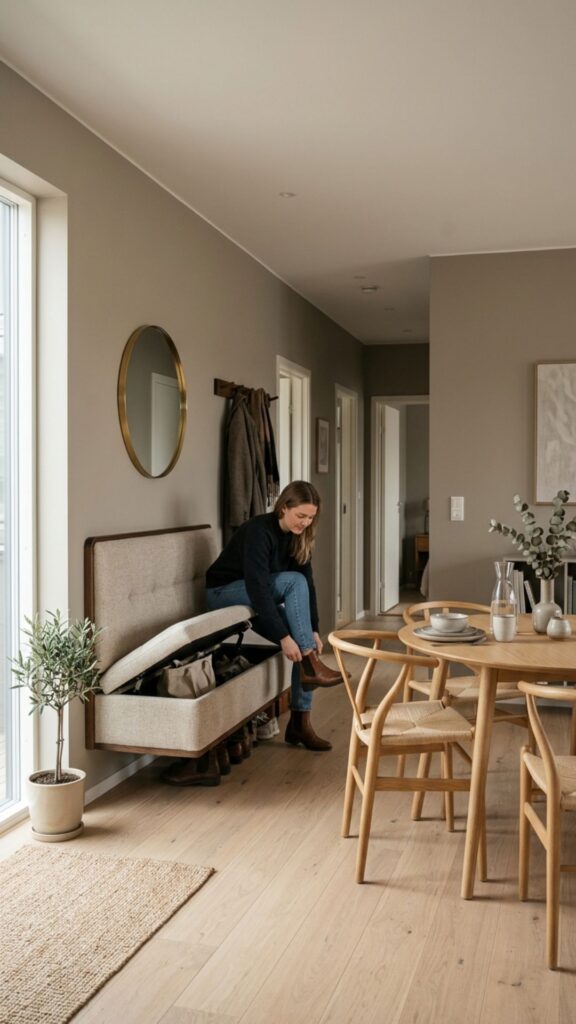
A floating bench mounted to the wall near the entry serves multiple roles in a combined space. It gives guests somewhere to sit while removing shoes, stores items inside a hinged seat, and takes up zero floor space beyond its seat depth — which matters enormously in small homes.
Position it so it also works as occasional overflow seating for the dining table. When you have extra guests, pull the bench up to the table end. Upholster it in a fabric that complements your dining chairs so the transition between zones feels deliberate rather than accidental.
3. Define Zones with a Narrow Area Rug
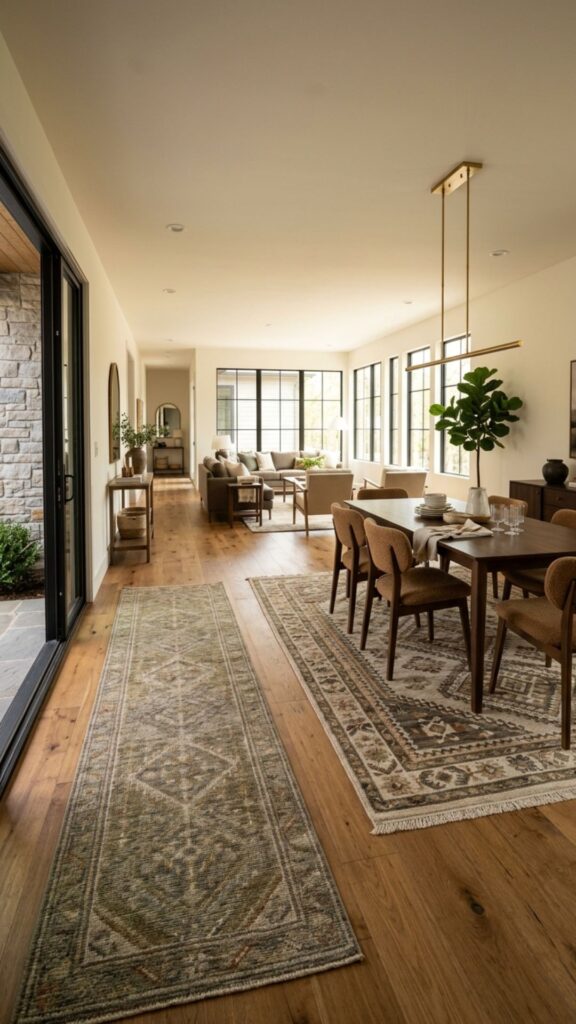
One of the most effective ways to signal “this is the entry” and “this is the dining room” without walls or dividers is to use rugs. A narrow runner rug near the door and a larger area rug under the dining table visually separate the two functions while keeping the floor plan open.
Choose rugs that share a color or tone so they feel like part of the same scheme. A jute runner by the door and a printed cotton rug under the table — both with warm beige tones — will read as cohesive rather than mismatched. This technique costs very little but does a lot of organizational work in a combined space.
4. Mount Hooks and Shelves Above Eye Level
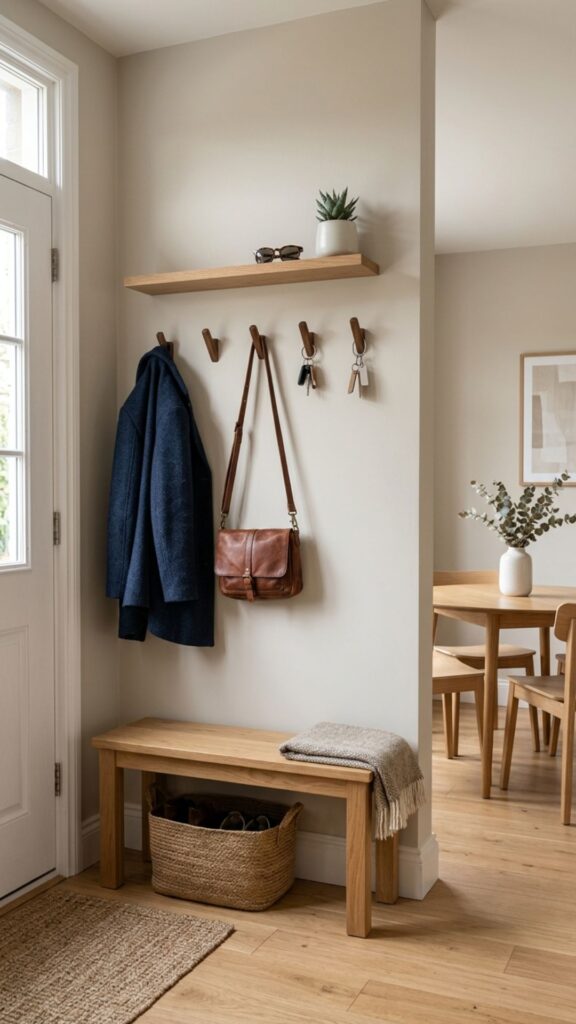
In a dining room entryway combo, wall space is one of your greatest assets. A row of wall-mounted hooks above a bench or console keeps coats, bags, and hats off the floor and furniture. Pair them with a floating shelf above for keys, sunglasses, and everyday items that need a home.
Keep the hardware simple and consistent with the rest of the room’s style. Matte black hooks in an industrial space, brass hooks in a warmer traditional setting — the right finish makes utility feel intentional. Avoid hooks that protrude too far from the wall, especially in narrow spaces where clearance matters.
5. Use a Tall Bookcase as a Room Divider
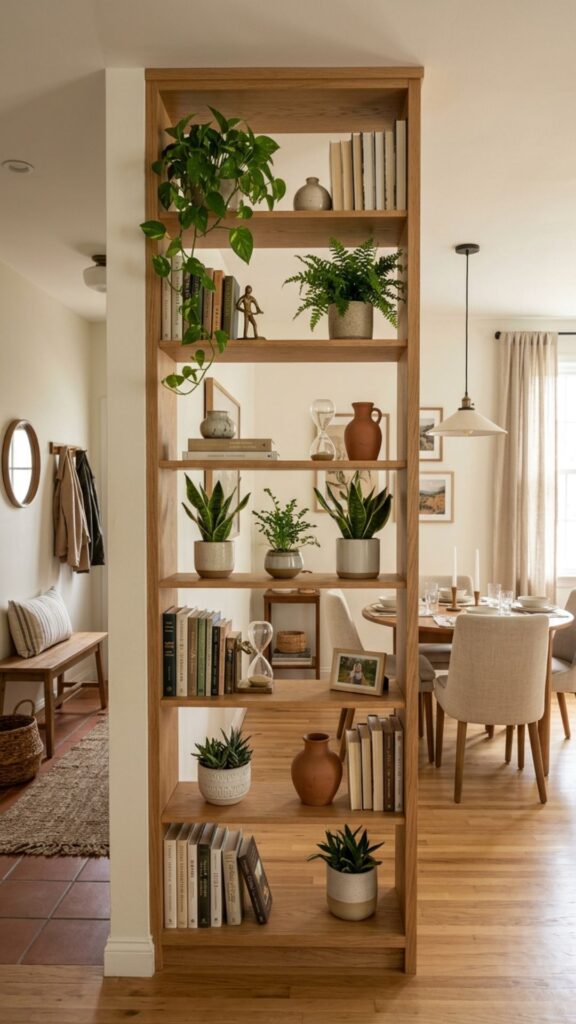
A freestanding bookcase positioned perpendicular to the wall can separate the entry from the dining area without blocking light or making the space feel boxed in. Choose an open-back unit so light passes through from both sides, maintaining the airy quality of a small home.
Style the shelves with a mix of books, small plants, and decorative objects that suit both zones. This creates a visual buffer that feels designed rather than improvised. In a dining room entryway combo, this kind of soft division is far more effective than a solid partition wall in most small home layouts.
6. Choose a Drop-Leaf or Extendable Dining Table
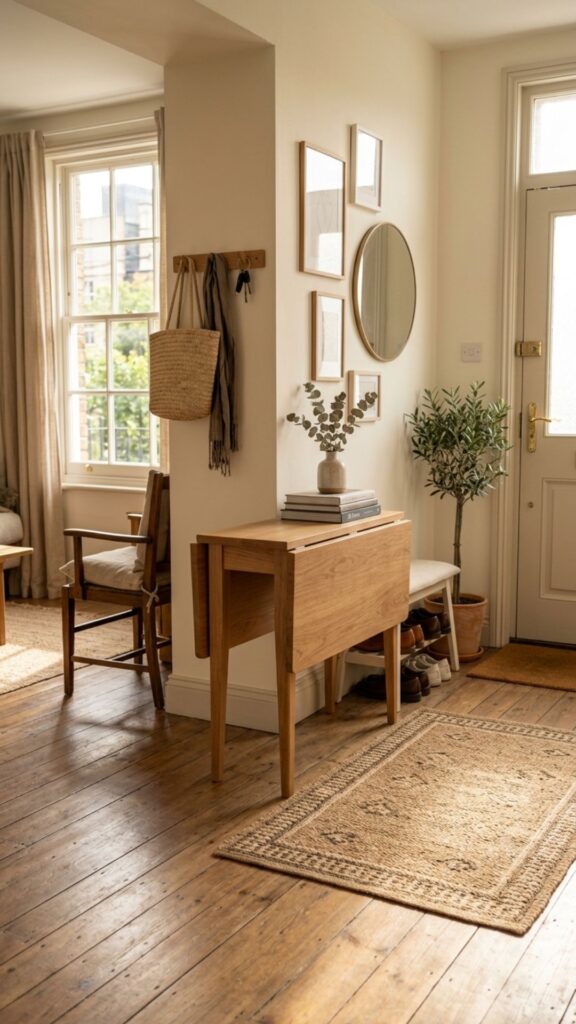
When your dining table is also close to the front door, its size directly affects how easy it is to move around the space. A drop-leaf table lets you keep one or both sides folded down on ordinary days and extend them fully when you have guests — giving the entryway more breathing room in everyday use.
Wall-mounted drop-leaf tables are an even more compact option. They fold completely flat against the wall when not in use, freeing up the combined zone to function purely as an entry. This works especially well in studio apartments and very small open-plan spaces where every square foot counts.
7. Add a Mirror to Expand the Visual Space
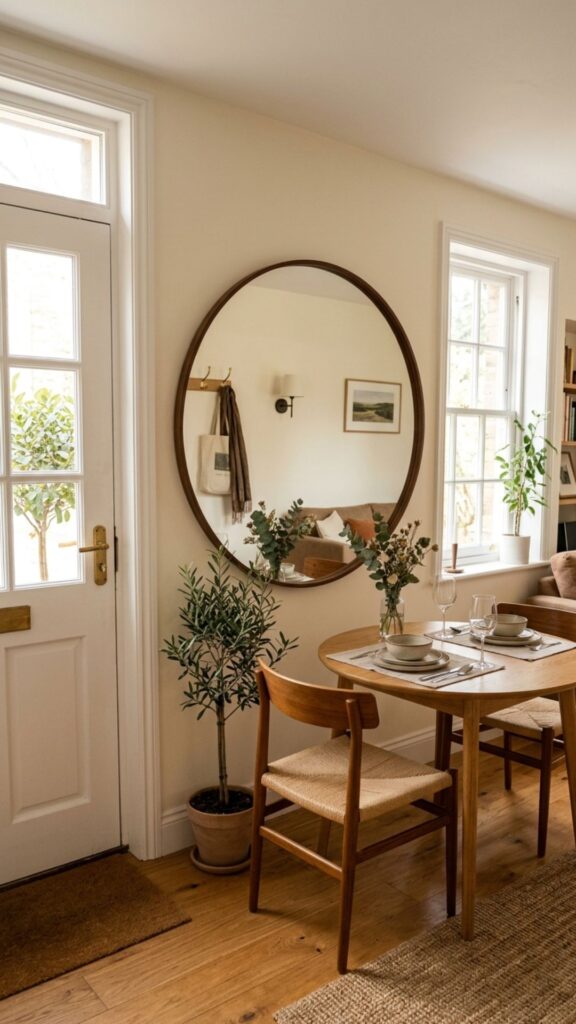
A large mirror positioned in the entryway section of the combined space serves two purposes. It reflects light deeper into the room — useful when the front door doesn’t get much natural light — and it creates the illusion of depth that makes small spaces feel considerably larger.
Choose a shape that adds interest: a round arch mirror, a tall rectangular leaner, or a sunburst style all work well. Mount it at eye level or lean it against the wall if you prefer flexibility. In a dining room entryway combo, a mirror near the door also functions as a last-look spot before heading out, which guests and family members will use constantly.
8. Use Pendant Lighting to Mark Each Zone
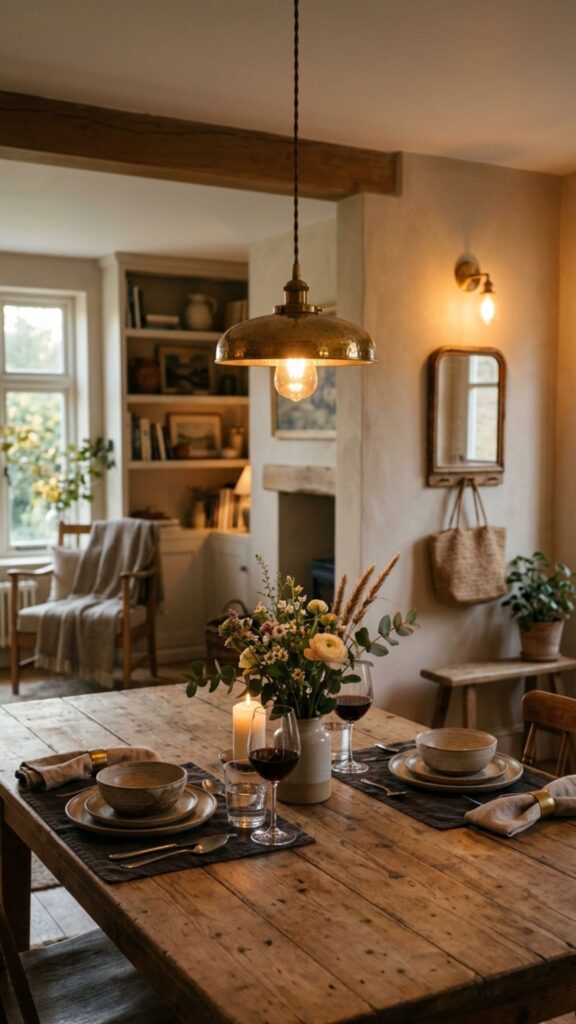
Lighting is one of the clearest ways to separate two functions within one shared space. A pendant light directly above the dining table anchors the eating zone, while a wall sconce or smaller ceiling light near the door marks the entry. The distinction in light sources does the work that walls and dividers can’t always do.
Dimmable pendants give you flexibility — bright for family dinners, low and warm for evening entertaining. If the ceiling height allows, drop the dining pendant lower than standard to make the dining zone feel more intimate and clearly defined within the larger open space.
9. Create a Landing Zone with a Tray and Basket System
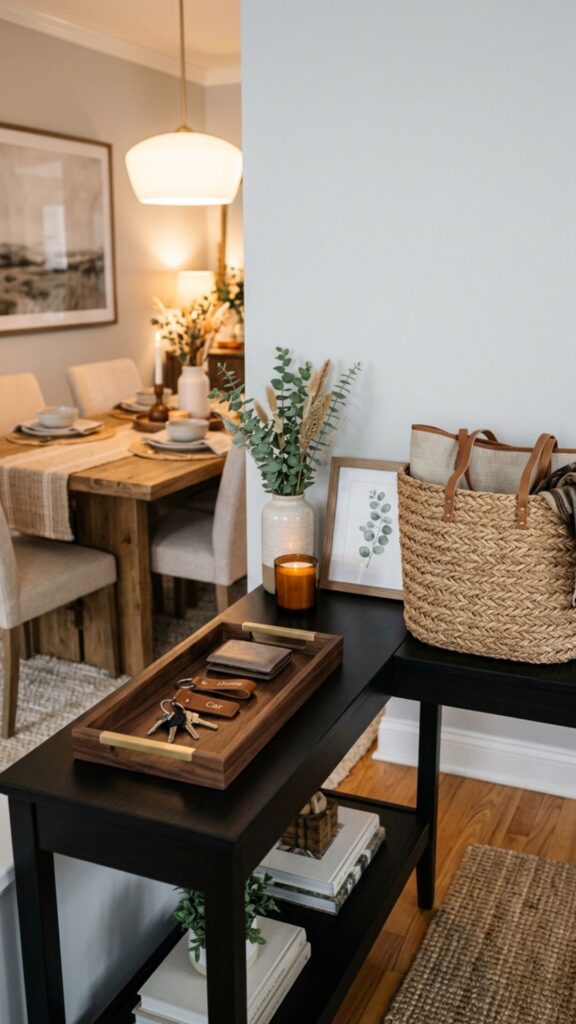
The biggest functional problem in any entry — but especially in a dining room entryway combo — is stuff accumulating on surfaces. A designated landing zone with a tray for keys and a basket for bags makes it easy to keep the entry portion tidy without needing a full mudroom.
Place the tray on your console table or bench shelf and be consistent about using it. The dining table nearby will naturally attract clutter if the entry doesn’t have its own clear system. This small organizational habit makes the combined space feel much more controlled and intentional on a daily basis.
10. Paint the Entry Wall a Different Color
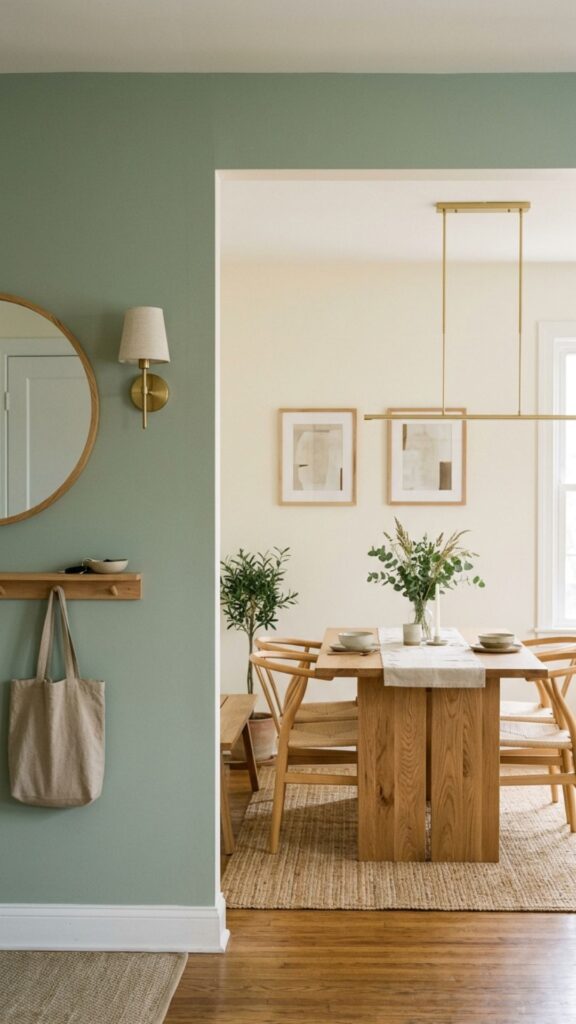
A single wall painted in a different shade from the rest of the room is a low-cost, high-impact way to mark the boundary between the entryway and dining zones. It doesn’t require any furniture changes — just a deliberate color decision that tells anyone entering the space where one area ends and another begins.
Choose colors that complement each other rather than clash. A muted sage green entry wall against warm cream dining walls, or a deep charcoal entry accent against soft grey throughout — these combinations feel cohesive while still providing useful visual separation in a combined space.
11. Opt for Slim, Wall-Hugging Furniture Throughout
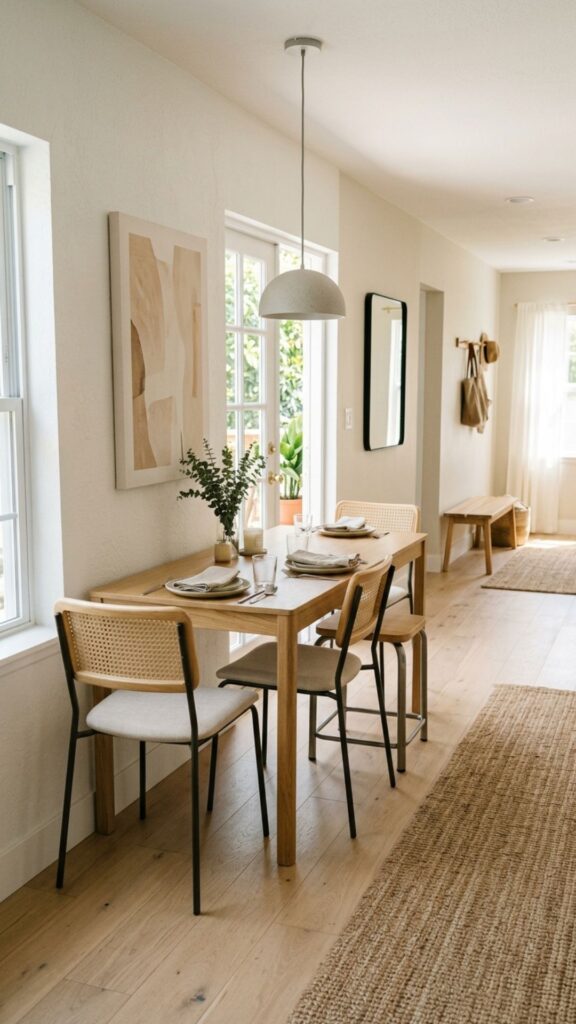
In a small home where the dining area and entry share space, bulky furniture is the enemy. Every piece should hug the wall as closely as possible to preserve the walkway and make both functions feel comfortable. Look for dining chairs with tapered legs, benches without arms, and tables with narrow profiles.
Nesting stools are another useful option — they can tuck under a console when the entry needs more floor space and pull out when extra dining seats are needed. The more flexible your furniture, the better the combined space will function as daily life shifts and guest numbers change.
12. Use Vertical Storage to Keep Floors Clear
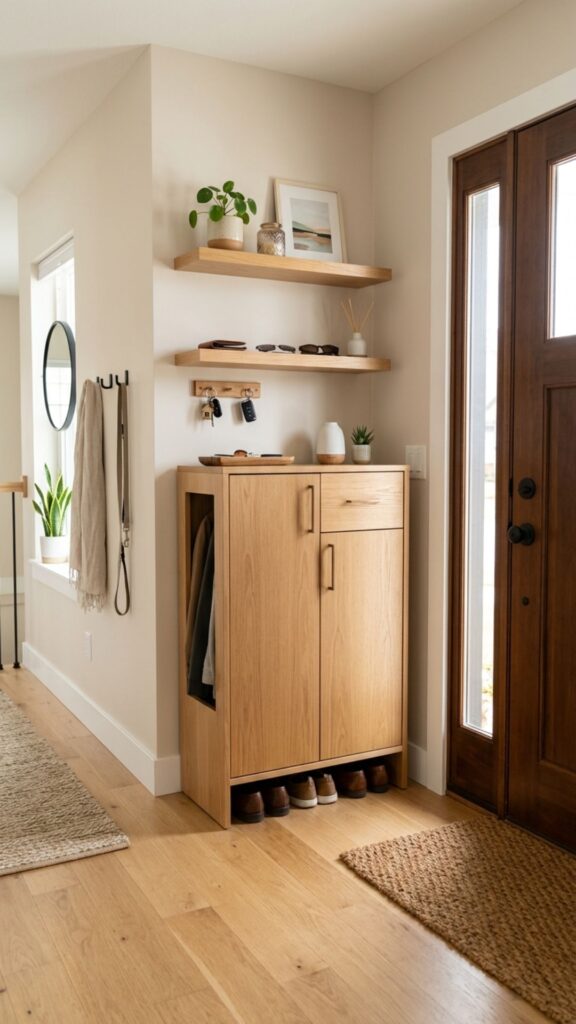
In a dining room entryway combo, floor clutter is the fastest route to a space that feels chaotic. Vertical storage — tall cabinets, wall-mounted shelving systems, pegboards — keeps items off the floor and frees up the visual field at eye level, which makes a small space feel more open.
A tall narrow cabinet near the door with hooks inside for coats and a shelf for shoes keeps the entry portion organized without taking up meaningful floor space. Paint it the same color as the wall to make it visually recede and avoid the heavy feeling that standalone furniture can bring to tight areas.
13. Incorporate a Sliding Curtain or Sheer Divider
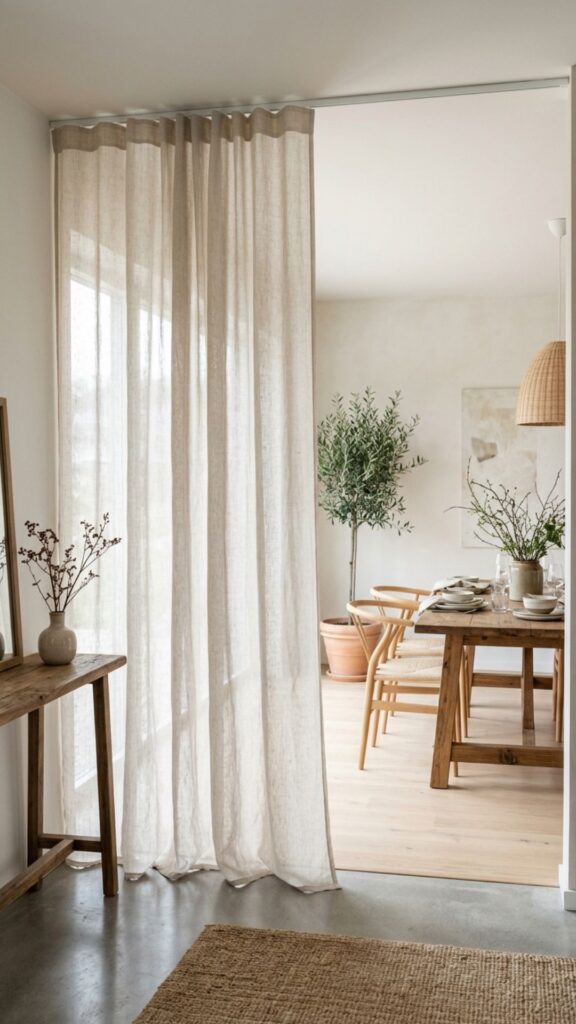
A ceiling-mounted curtain track with a lightweight linen or sheer panel gives you the option of separating the entryway from the dining area when needed — and opening it back up completely when you don’t. This is especially practical in rental homes where permanent changes aren’t possible.
Choose a fabric that suits the room’s overall tone. A white or natural linen panel will diffuse light while softening the division. When the curtain is open and stacked to one side, it adds a decorative element without interrupting the flow. This simple solution gives a dining room entryway combo far more flexibility than most fixed dividers allow.
14. Place a Small Cabinet or Credenza Along One Wall
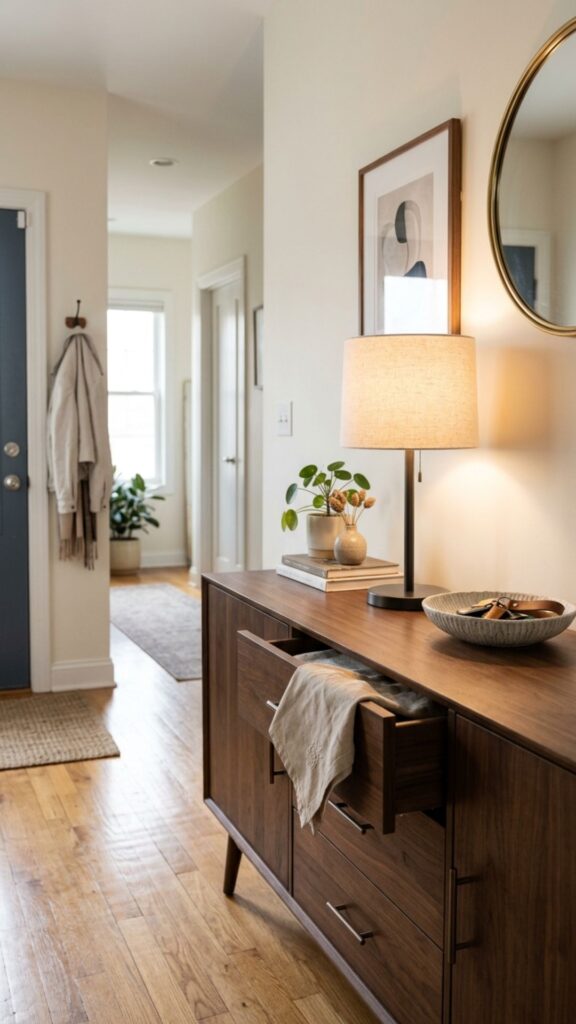
A low credenza or sideboard along the wall between the entry and dining zones is one of the hardest-working pieces of furniture you can add. It provides storage for dining essentials like placemats and napkins while also offering a surface for entry items like mail and bags.
The top surface can be styled as a decorative vignette — a lamp, a small plant, a bowl for keys — that makes the space feel finished and welcoming. This dual-function positioning is the heart of a smart dining room entryway combo: each piece of furniture earns its place by serving more than one purpose.
15. Use the Same Flooring Throughout to Unify the Space
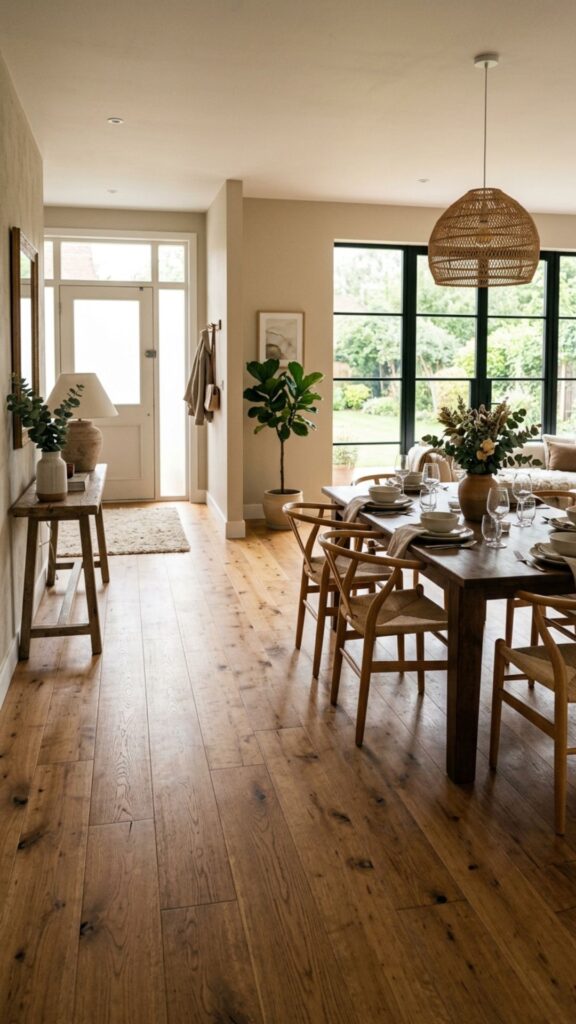
Keeping the same flooring material across both the entry and dining areas is one of the easiest ways to make a combined zone feel intentional rather than cramped. When floors change — tile to wood, for example — the transition can make a small space look chopped up and smaller than it is.
If you’re renovating, choose a durable, easy-to-clean floor material that works well for both an entry (where dirt and moisture come in) and a dining area (where spills happen). Large-format tiles and wide-plank hardwood both look generous in scale and visually expand the floor plan.
16. Add a Plant or Two to Signal a Welcoming Entry
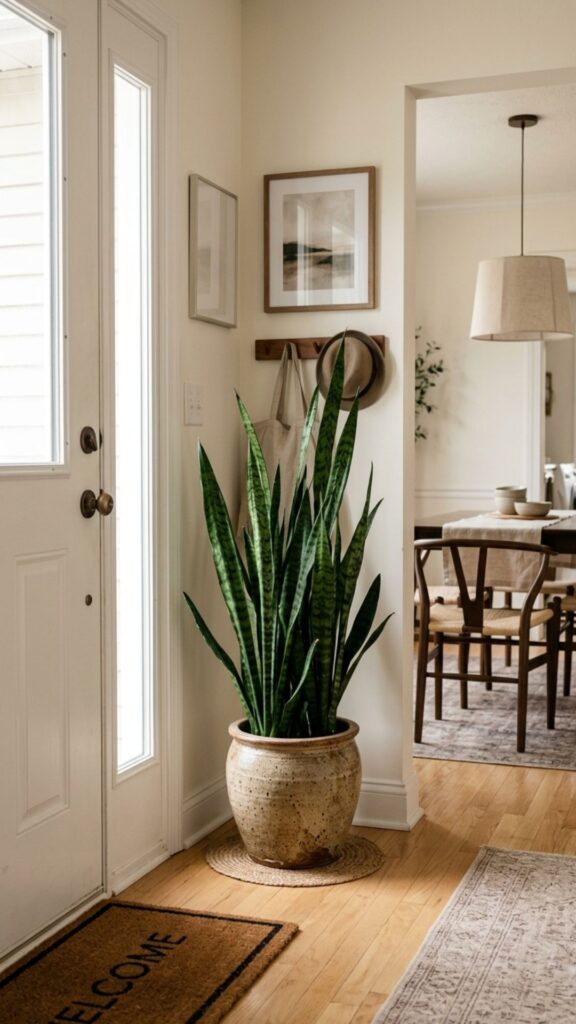
A plant near the front door in a dining room entryway combo immediately softens the space and signals welcome — both to the people arriving and to the room itself. A tall snake plant or olive tree in a large pot occupies vertical space rather than horizontal space, making it ideal for tight areas.
Greenery also helps break up the visual line between the two zones in a way that feels natural rather than forced. A plant cluster can informally mark the transition from entry to dining without any hard boundaries. Choose low-maintenance varieties if the entry doesn’t get much natural light.
17. Keep the Color Palette Consistent Across Both Zones
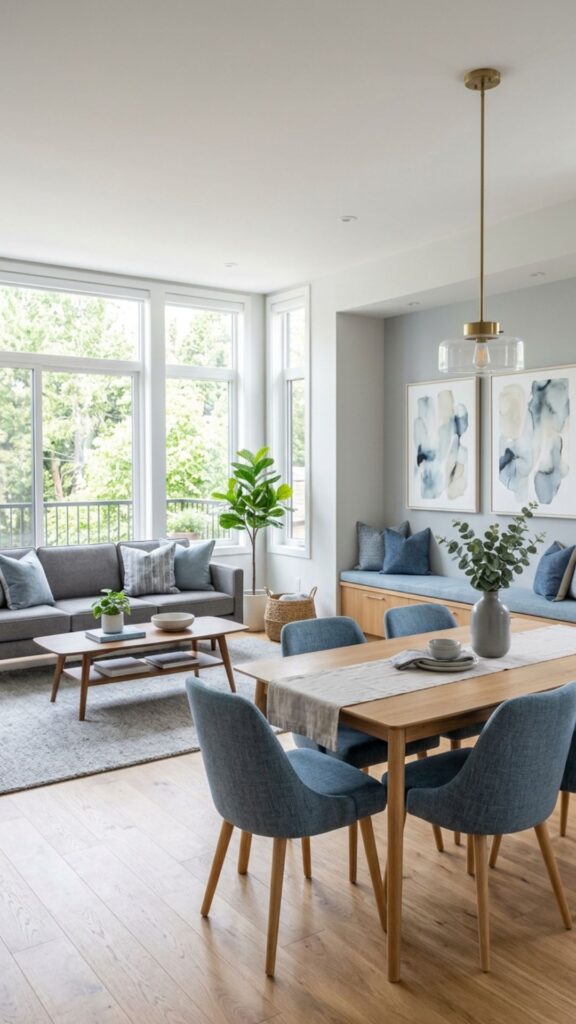
One of the most common mistakes in a combined dining room entryway combo is using mismatched colors in each zone, which makes the space feel fragmented. A consistent palette — even if it uses different tones and textures — ties both areas together and makes the room feel larger and more considered.
Pick two or three colors and use them across furniture, walls, textiles, and accessories in both zones. If your dining chairs are a warm terracotta, bring that color into a cushion on the entry bench or a pot on the console table. These repeating touches create the visual flow that makes small spaces feel seamlessly designed.
18. Use Glass or Lucite Furniture to Reduce Visual Weight
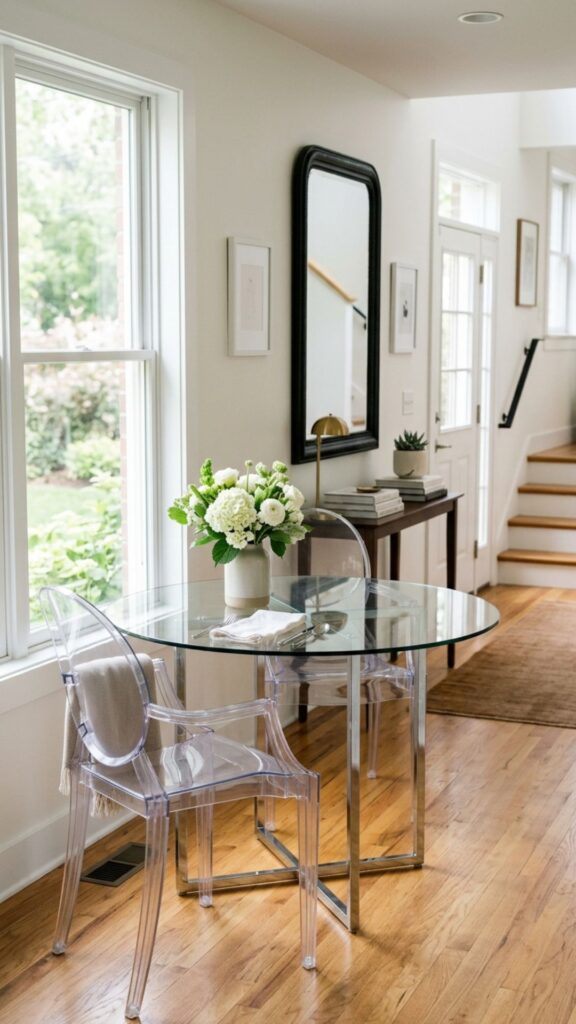
Clear or acrylic furniture — a Lucite dining chair, a glass-top table, a transparent side table — is a practical tool in any small space, and it works particularly well in a dining room entryway combo. Because you can see through the piece, it takes up almost no visual space even when it occupies meaningful square footage.
Pair one or two transparent pieces with more solid, textured furniture to avoid a cold or clinical feel. A glass dining table with upholstered chairs, for example, keeps the dining zone visually light while still feeling warm and livable. This is a useful trick for spaces where the entryway and dining area feel too tight together.
19. Create a Seasonal Refresh System for the Entry
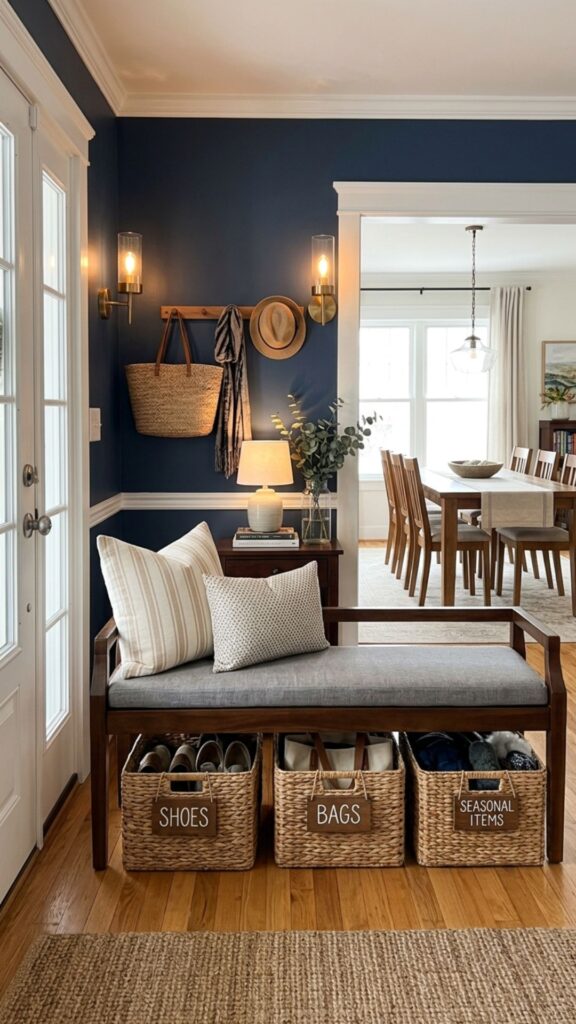
In a combined space, the entryway portion can easily become a dumping ground — especially through coat season or rainy weather. Building a simple seasonal refresh system means regularly swapping what’s stored in the entry to match what’s actually needed, rather than letting items accumulate year-round.
A set of matching baskets on a bench shelf, labeled by family member, keeps shoes and bags organized without looking chaotic from the dining side. At the start of each season, spend thirty minutes editing what’s stored in the entry portion of the combo. This habit alone keeps the combined space functional rather than frustrated.
20. Work With a Designer for One Session to Maximize the Layout
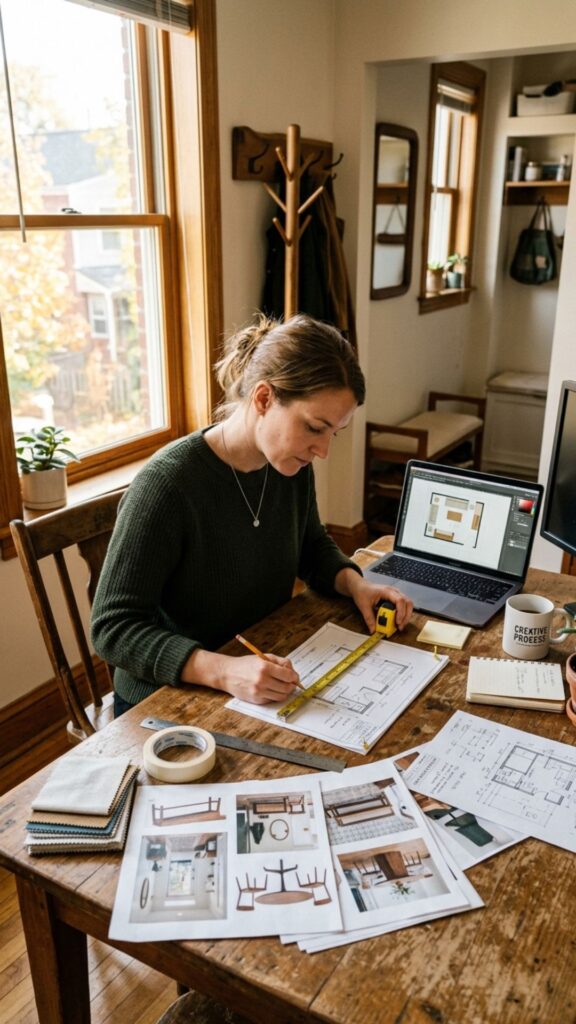
Sometimes the most valuable investment in a dining room entryway combo isn’t a new piece of furniture — it’s a single consultation with an interior designer or space planner. A trained eye can spot layout possibilities that aren’t obvious from the inside, especially in small homes where the margin for error is slim.
Many designers offer single-session consultations at a fixed rate. Bring photos, measurements, and a list of what’s not working. You’ll likely leave with a furniture arrangement, a few specific product recommendations, and a clearer sense of direction than hours of online browsing could provide. It’s one of the most efficient uses of a home improvement budget in a tight space.
Conclusion
A dining room entryway combo doesn’t have to feel like a compromise. With the right furniture, a consistent color palette, deliberate zone separation, and smart storage habits, a combined space can actually outperform two separate areas in livability and style.
Start with two or three ideas from this list that address your biggest pain points right now. Add a mirror, define your entry landing zone, or swap your dining table for an extendable version. Small, specific changes build up quickly — and before long, your combined space will feel like a design choice rather than a limitation.
What is a dining room entryway combo?
A dining room entryway combo is a shared space where the home’s entry point and dining area occupy the same or directly adjacent areas. This is common in small homes, apartments, and open-plan layouts where separate rooms for each function aren’t possible. The goal is to make both functions work comfortably within a unified design scheme.
How do I separate a dining area from an entryway without walls?
The most effective methods include using area rugs to define each zone, positioning furniture like a bookcase or console table as a soft divider, using different pendant or sconce lighting in each area, and applying a distinct paint color or wallpaper to the entry wall. These techniques create visual boundaries without closing off the space.
What furniture works best in a dining room entryway combo?
Slim, dual-purpose pieces work best — console tables with storage, floating benches with hinged seats, drop-leaf or extendable dining tables, and low credenzas that serve both zones. Avoid large or bulky furniture that blocks walkways or makes the space feel crowded. Transparent or glass pieces are useful for reducing visual weight in tight layouts.
How do I keep a combined dining and entryway space from looking cluttered?
Use a designated landing zone with a tray and baskets to contain entry items, choose furniture with built-in storage, mount hooks and shelves on walls to keep floors clear, and edit the space regularly. A consistent color palette across both zones also reduces visual noise and makes the space feel more organized even when it’s in use.
Can a dining room entryway combo work in a studio apartment?
Yes — in fact, studio apartments are one of the best environments for this approach because the open floor plan makes zone-defining techniques like rugs, lighting, and furniture placement especially effective. A wall-mounted drop-leaf table is particularly useful in studios since it disappears completely when not in use, giving the entry zone full use of the floor.