A small living room doesn’t have to feel cramped. After a decade of helping homeowners rework tight floor plans, I’ve learned that color does more heavy lifting than any piece of furniture.
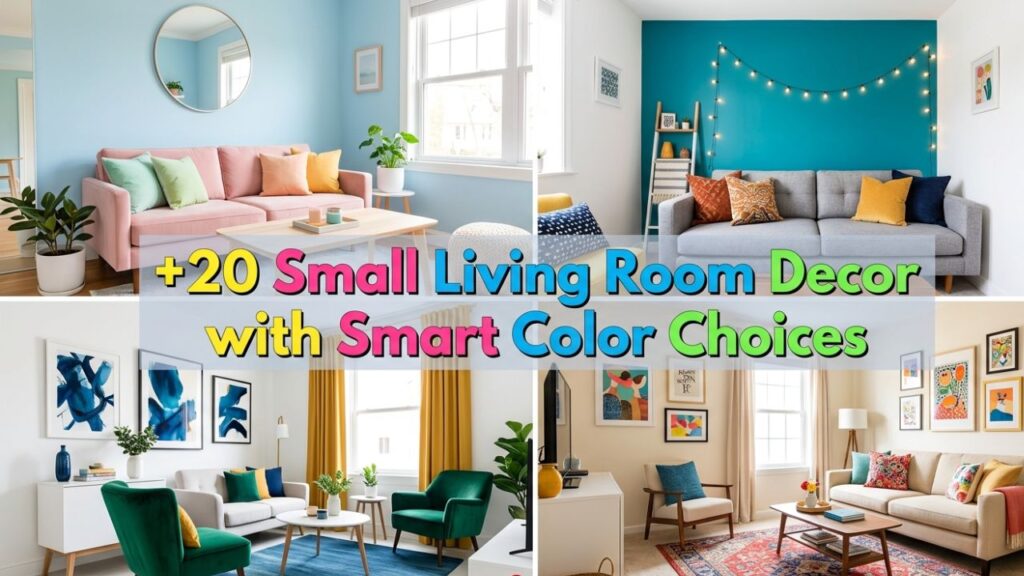
The right shade can push walls back, lift low ceilings, and pull a whole room together.

This guide walks you through 20 small living room decor ideas with color at the center of every choice. You’ll learn which tones open up space, how to layer them, and where a bold splash actually helps instead of hurts. Let’s get into it.
1. Start with a Soft White Base
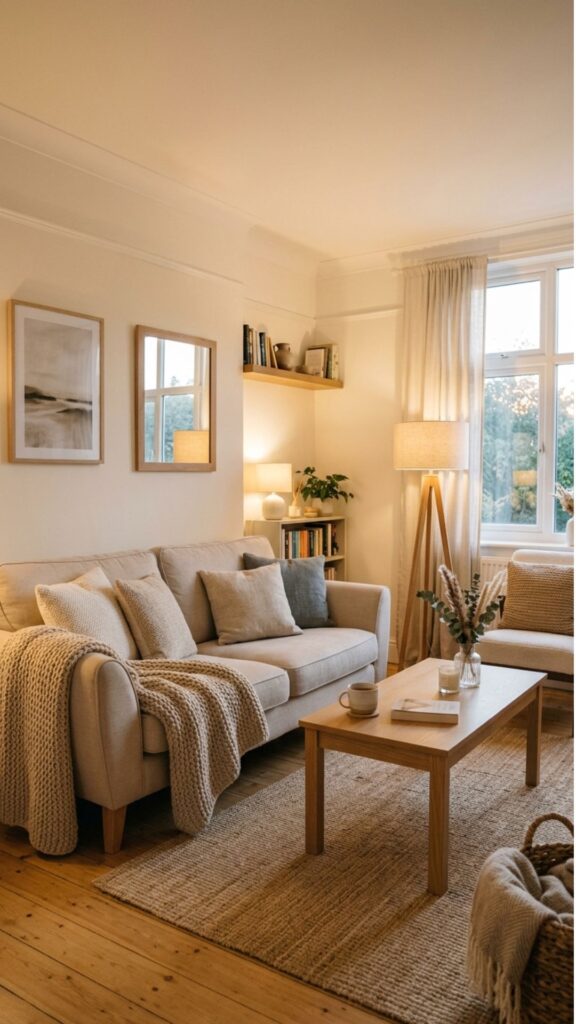
White is the classic move for tight spaces, and there’s a reason it still works. Soft whites reflect natural light and bounce it around the room, which tricks the eye into seeing more square footage. Skip the stark, clinical white and reach for warmer tones like off-white or creamy alabaster.
Paint your walls, trim, and ceiling in the same soft white for a seamless look. When the edges of a room blur together, the space feels larger and calmer. Add texture through fabrics and wood so the neutral base never reads as boring.
2. Try a Monochromatic Color Scheme
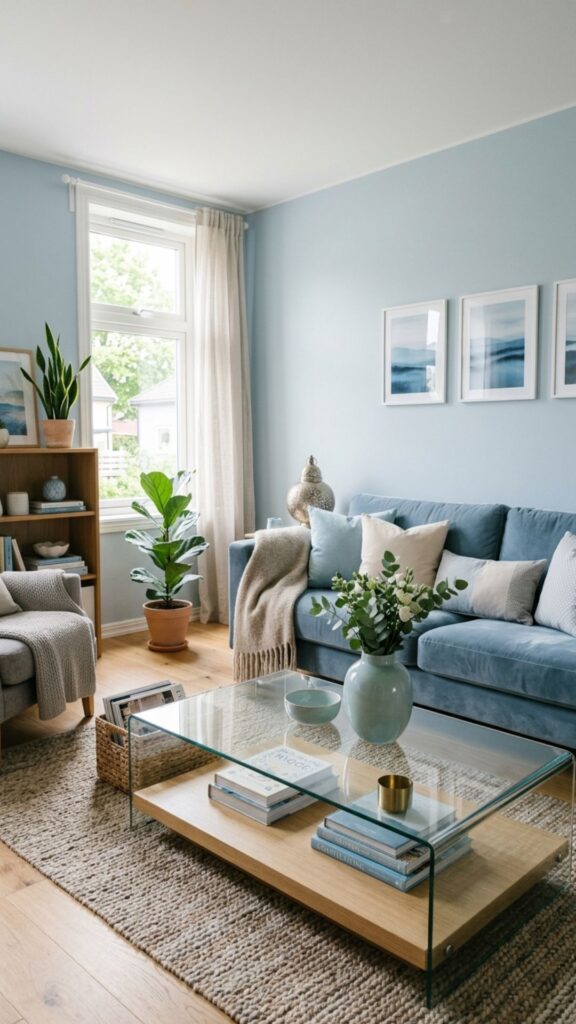
Sticking to one color in different shades keeps a small room from feeling busy. Choose a base hue you love, then build with lighter and darker versions of it. A room done in soft blues, from powder to slate, feels cohesive and roomy.
The trick is variety in texture, not color. Pair a matte wall with a glossy vase, a nubby throw with smooth cushions. This keeps things interesting while your eye moves smoothly across the room without stopping.
3. Use Cool Blues to Push Walls Back
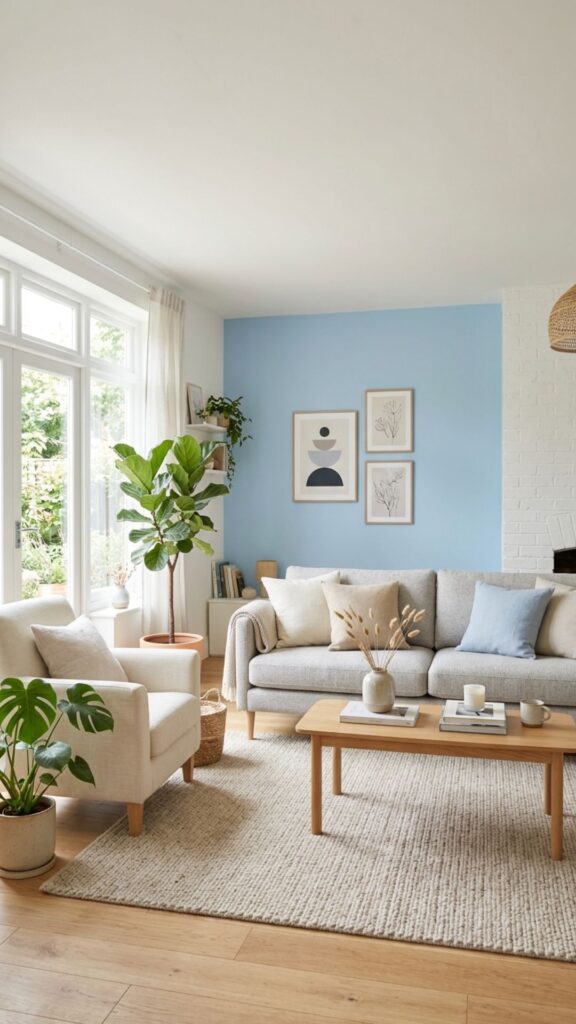
Cool colors recede, which is exactly what you want in a snug space. Soft blue and blue-gray shades create the illusion of depth, almost like the walls are stepping away from you. This is one of the most reliable small living room decor ideas with color.
Try painting the wall behind your sofa a gentle sky blue and keep everything else light. The result feels airy and open. If full walls feel like too much, test the shade on a single accent wall first.
4. Brighten Corners with Pale Yellow
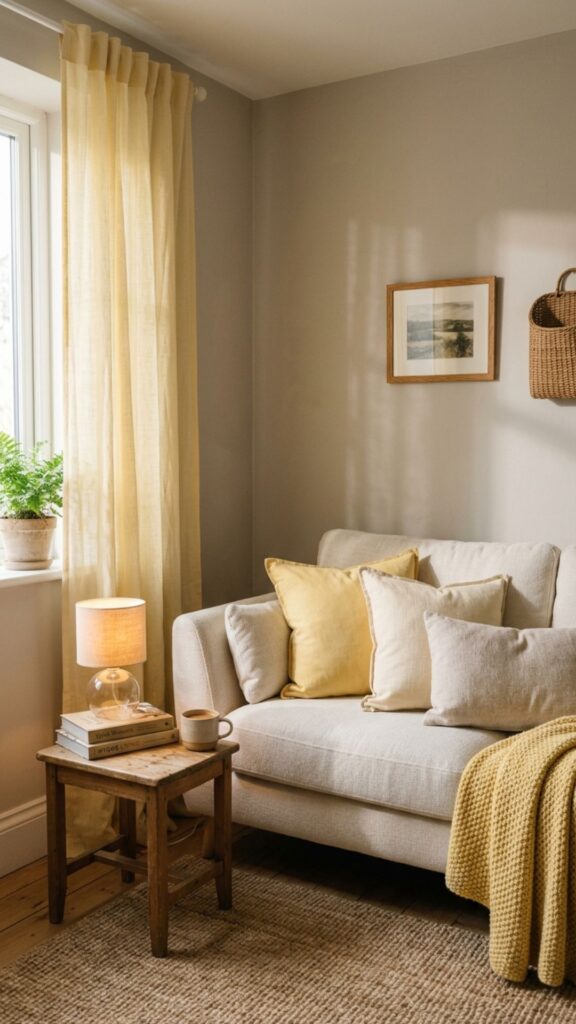
Dark corners make a room feel smaller. Pale yellow catches and holds light, so it’s perfect for spots that miss the sun. A buttery yellow throw pillow or a soft lemon curtain can instantly warm up a shadowy nook.
You don’t need much. A few well-placed yellow accents against a neutral backdrop add cheer without overwhelming the space. This works especially well in rooms that face north and get cooler light.
5. Anchor the Room with One Bold Accent
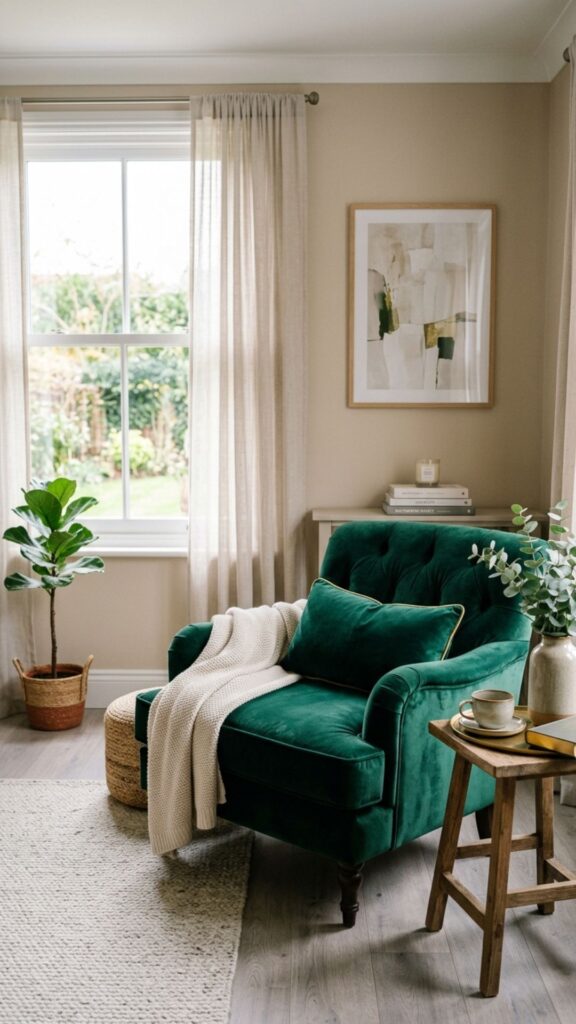
Small rooms can handle bold color when you use it with restraint. Pick one statement piece, like a deep emerald armchair or a rust-colored ottoman, and let it own the space. The contrast draws the eye and adds personality.
Keep the rest of the palette quiet so your bold choice shines. One rich accent against neutrals feels intentional and designed, not chaotic. Repeat that color once more in a small detail to tie everything together.
6. Paint the Ceiling to Add Height
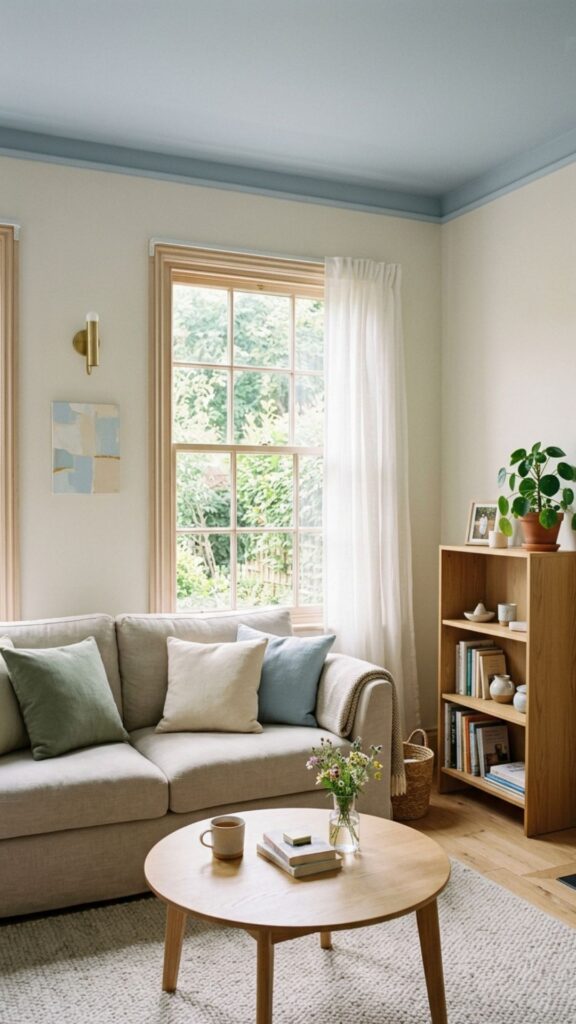
Most people forget the ceiling, but it’s your fifth wall. Painting it a shade lighter than your walls draws the eye upward and makes the room feel taller. In a small living room, every inch of perceived height counts.
For a dramatic twist, try a very pale blue ceiling. It mimics the sky and gives the impression of open air above you. Just keep it soft, since anything too saturated will feel like it’s pressing down.
7. Go Green for a Fresh, Open Feel
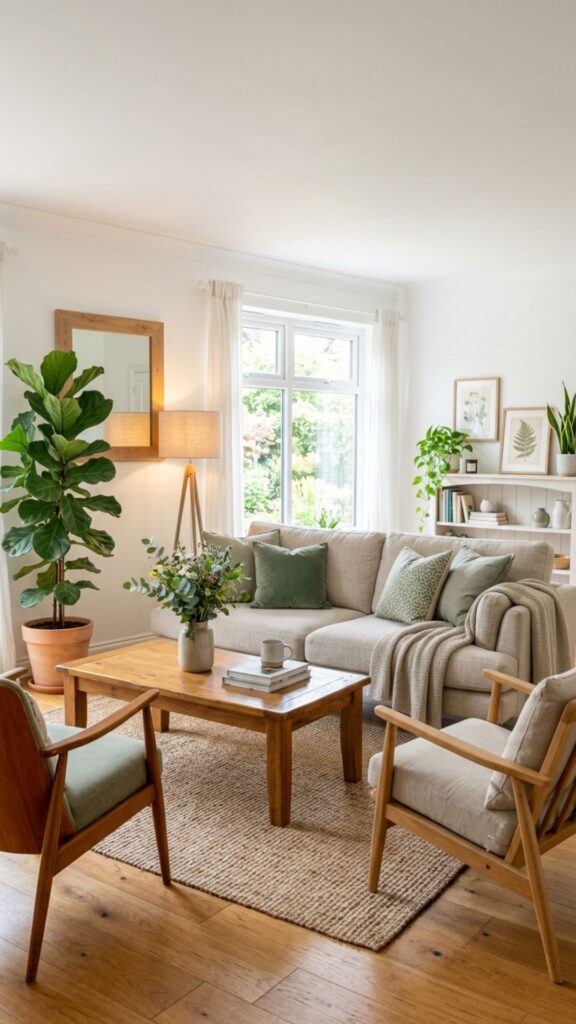
Greens borrowed from nature make a room feel restful and expansive. Sage, mint, and soft olive all pair beautifully with wood and white. These tones connect the indoors to the outdoors, which naturally opens up a space.
Bring the color in through walls, cushions, or real plants. A leafy fig tree in the corner adds both color and life. Green is forgiving too, working with nearly every other shade in your palette.
8. Layer Neutrals for Depth
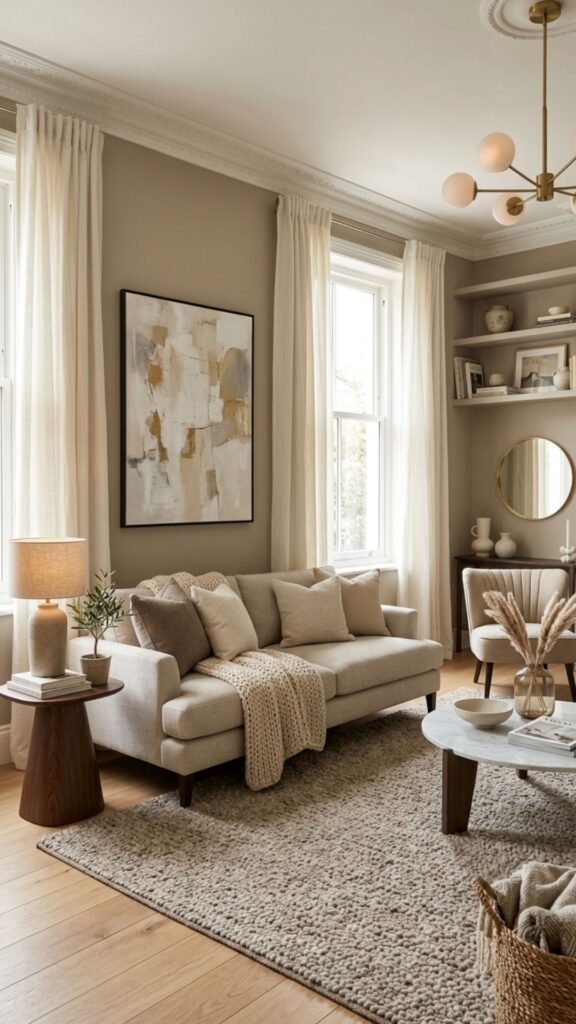
Neutrals aren’t just beige. Mix warm taupes, cool grays, and creamy whites to build a layered, sophisticated look. This depth keeps a neutral room from feeling flat while still expanding the space visually.
Think of it like building an outfit. Combine a stone-colored sofa with a mushroom rug and ivory curtains. The subtle shifts in tone add richness that a single flat color simply can’t match.
9. Add Drama with a Dark Accent Wall
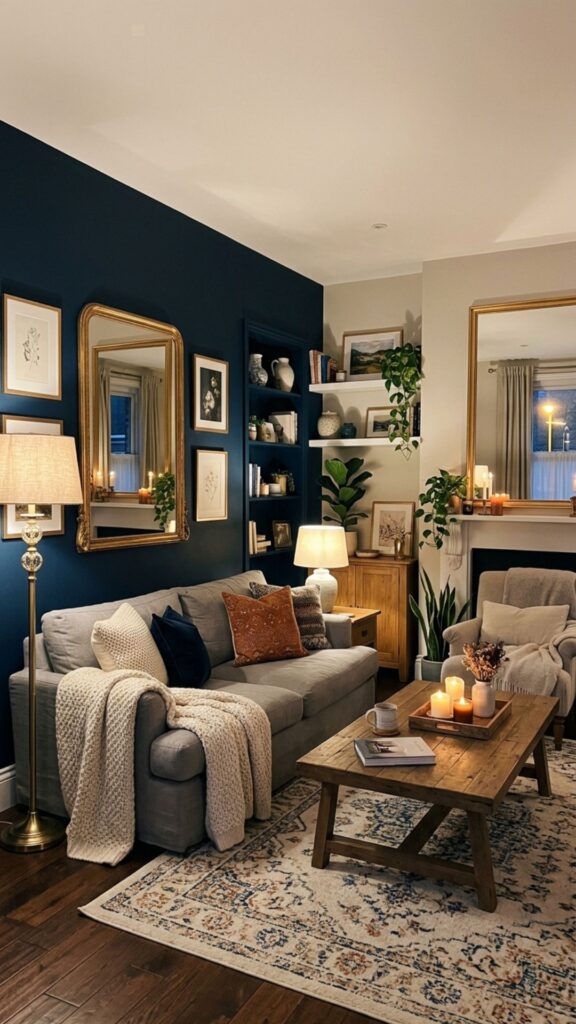
It sounds backward, but a single dark wall can actually make a small room feel deeper. A charcoal or deep navy wall recedes into shadow, blurring the boundary and adding a sense of mystery and space beyond.
Balance it carefully. Keep the other three walls light and add a mirror or two on the dark side to bounce light around. This creates contrast and depth without shrinking the room.
10. Choose Blush Pink for Warmth
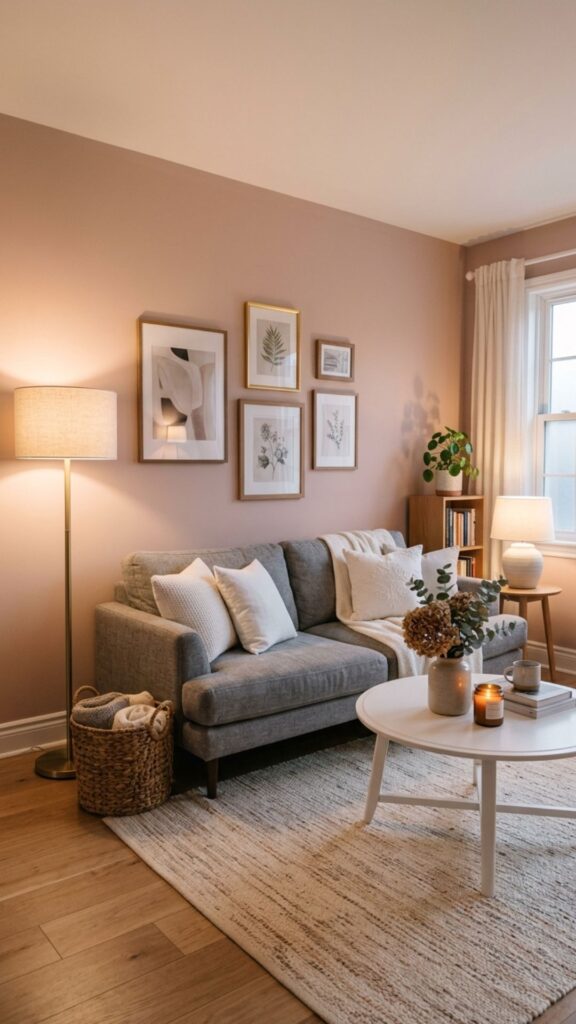
Blush pink has quietly become a neutral. It’s soft, warm, and pairs with almost anything, from brass to deep green. In a small living room, a dusty pink wall adds a cozy glow without feeding the room energy that feels loud.
Use it on walls or through soft furnishings like a velvet cushion. Blush reads as sophisticated when kept muted. Combine it with gray and white for a grown-up look that never feels juvenile.
11. Match Furniture to Walls
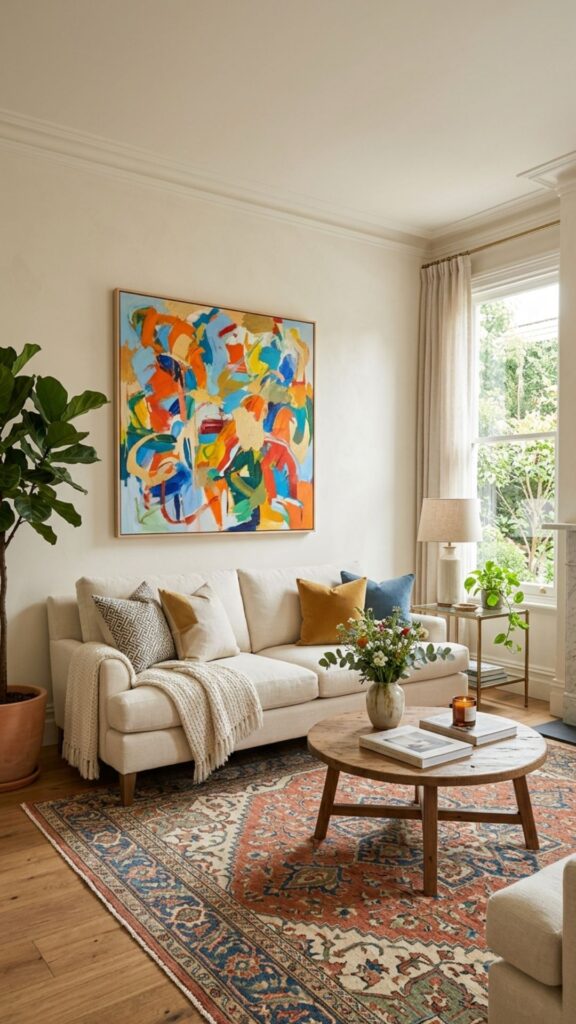
When your sofa and walls share a similar color, the furniture practically disappears. This visual trick removes hard lines and makes a room feel more open. A cream sofa against cream walls creates one flowing surface.
This approach works best in truly tight rooms where bulky furniture dominates. By blending the two, you free up visual space. Add contrast through smaller items like a patterned rug or colorful art.
12. Use Warm Terracotta for Coziness
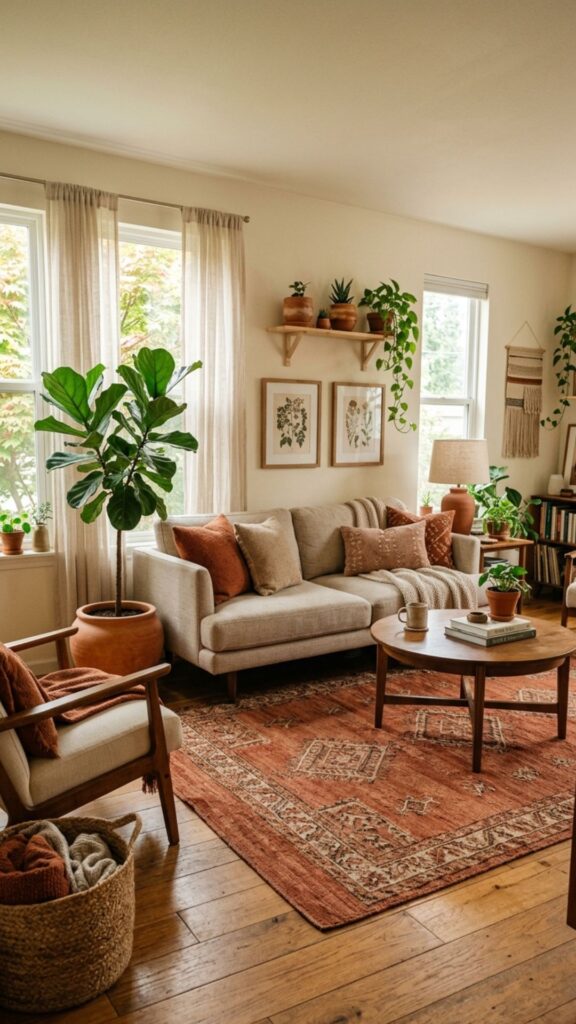
Terracotta brings earthy warmth that makes a room feel welcoming. This rusty orange-brown pairs wonderfully with cream, wood, and greenery. It adds a sun-baked, Mediterranean feel that instantly cozies up a compact space.
Introduce it through a rug, pottery, or a single accent wall. Terracotta is bold but grounded, so it rarely overwhelms. Balance its warmth with cooler neutrals to keep the room feeling balanced and roomy.
13. Reflect Color with Strategic Mirrors
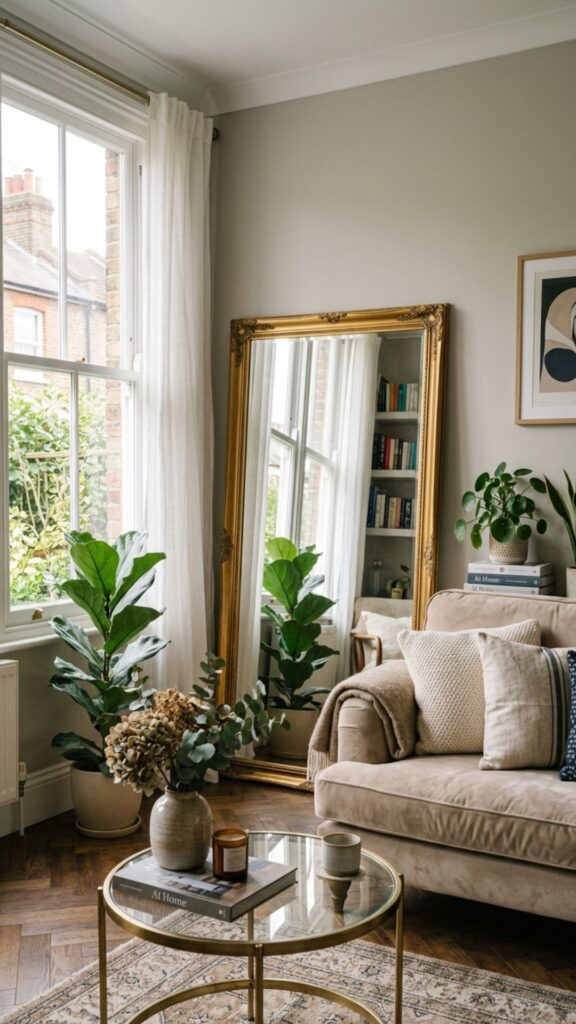
Mirrors don’t add color themselves, but they multiply it. Place a large mirror across from a window or a colorful wall, and it reflects both light and shade back into the room. This effectively doubles your best features.
A mirror in a warm gold frame also adds a hint of color on its own. Lean a tall one against the wall to stretch the room upward. It’s one of the cheapest ways to make a small space feel larger.
14. Create Flow with a Cohesive Palette
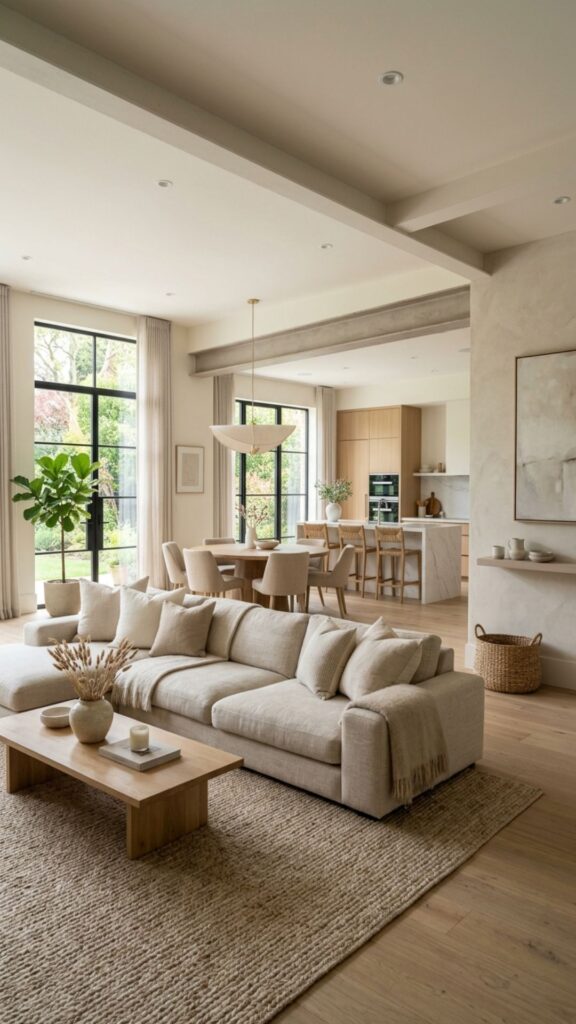
If your living room opens into another space, carry your colors through. A cohesive palette across connected rooms makes both feel bigger. The eye reads the whole area as one continuous space rather than several cramped ones.
Pick three or four core colors and repeat them throughout. You don’t need to match everything exactly. Just echo the same family of tones so the transitions feel smooth and deliberate.
15. Lighten Flooring for Openness
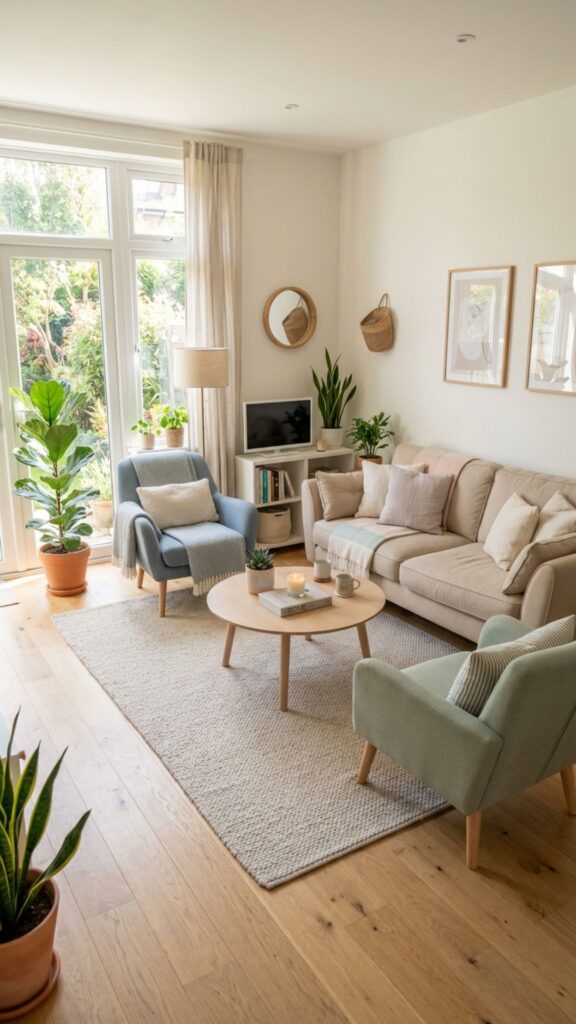
Dark floors can weigh a small room down. Light wood, pale rugs, or soft neutral carpet keep the base of the room airy. A light floor reflects more light and makes the whole space feel grounded yet open.
If replacing floors isn’t an option, a large light-colored rug does the trick. Choose one big enough that furniture legs sit on it. This defines the space while keeping the palette bright underfoot.
16. Add Personality with Colorful Art
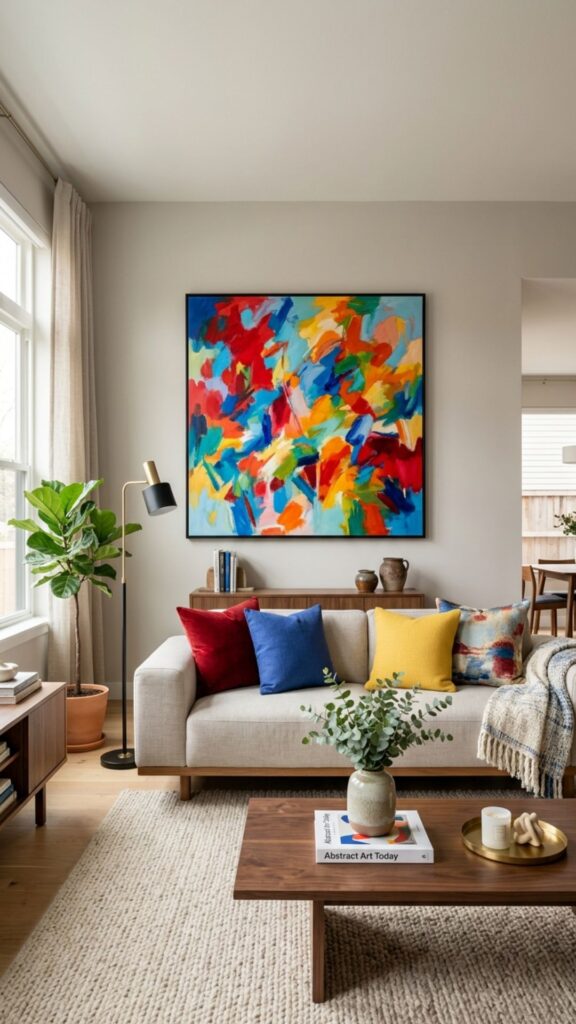
Art is your chance to add color without commitment. A single vibrant painting becomes the focal point and injects personality into a neutral room. It draws the eye up and out, adding a sense of scale.
Pull an accent color from the art and repeat it in a cushion or vase. This ties the piece to the rest of the room. Bold art works especially well above a plain sofa where it has room to breathe.
17. Soften the Look with Pastels
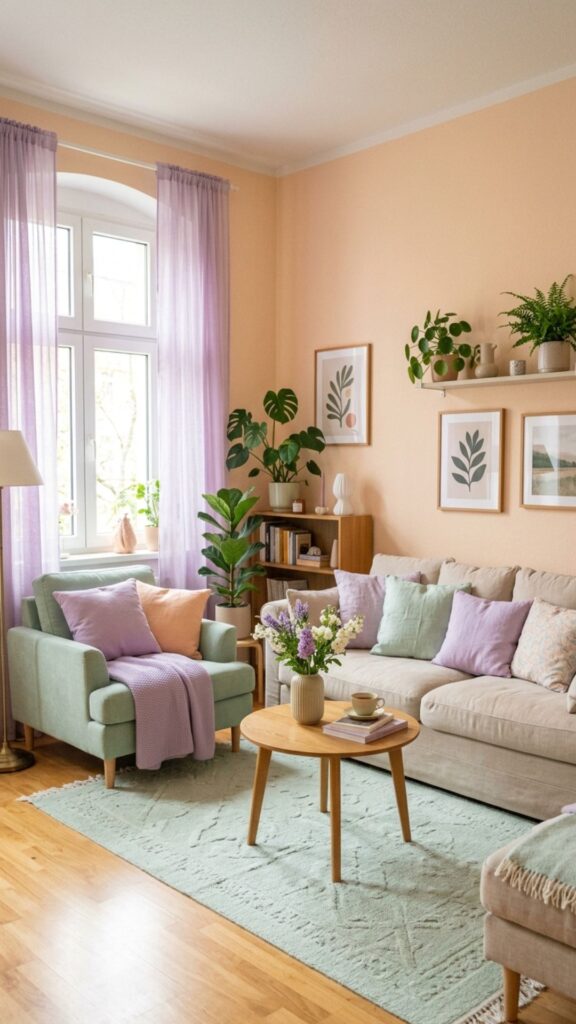
Pastels feel light and airy, which suits small spaces perfectly. Soft lavender, pale peach, and gentle mint reflect light while adding a whisper of color. They keep a room feeling fresh without any visual heaviness.
Use pastels on walls or through layered textiles for a dreamy, calming effect. These shades work well in rooms meant for relaxing. Combine two pastels for a playful yet still restful palette.
18. Use Vertical Color Stripes
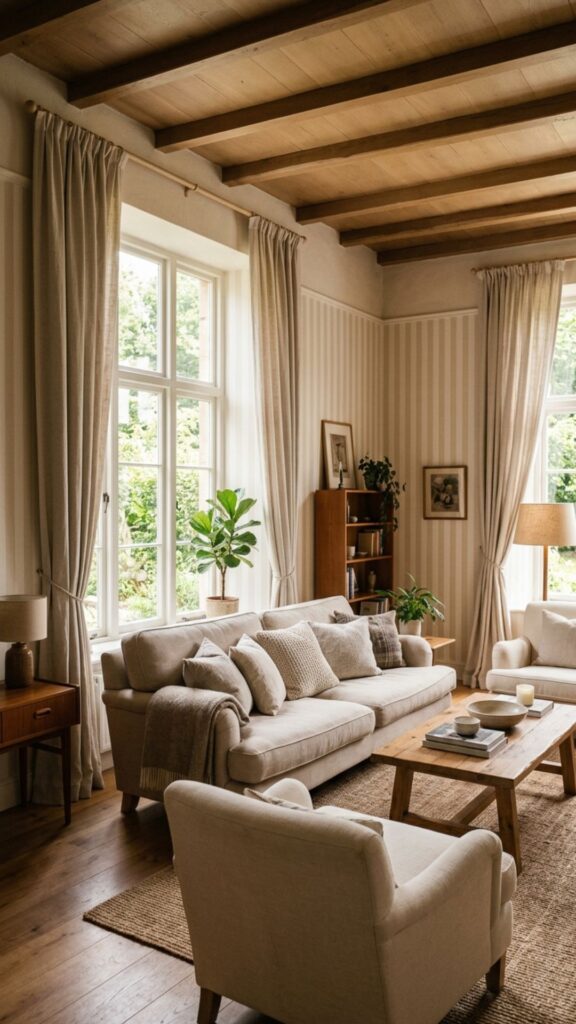
Vertical stripes trick the eye into seeing taller walls. A subtle two-tone stripe in soft colors adds height and interest without shrinking the space. Keep the contrast gentle so the effect feels elegant, not loud.
You can achieve this with paint, wallpaper, or even tall floor-length curtains in a striped pattern. Hang curtains close to the ceiling for extra lift. This is a smart way to fix rooms with low ceilings.
19. Warm Up with Wood Tones
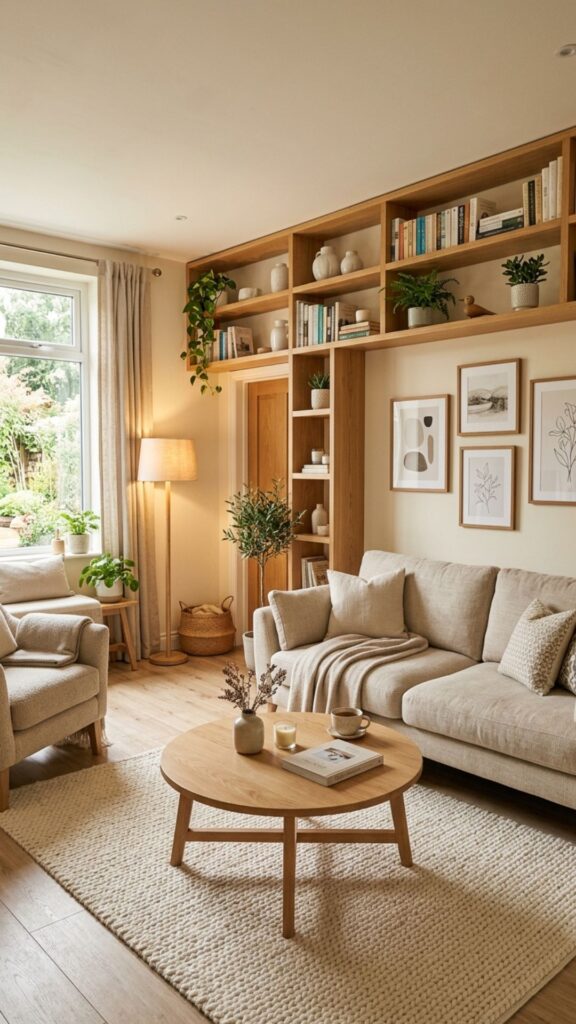
Wood counts as color, and it adds instant warmth. Honey oak, walnut, and light ash bring natural texture that keeps neutral rooms from feeling cold. Wood pairs with nearly every palette on this list.
Mix a couple of wood tones for depth, but keep them in the same warm or cool family. A wooden coffee table, floating shelves, or a frame all add cozy character. Natural materials always make a space feel more inviting.
20. Finish with Metallic Accents
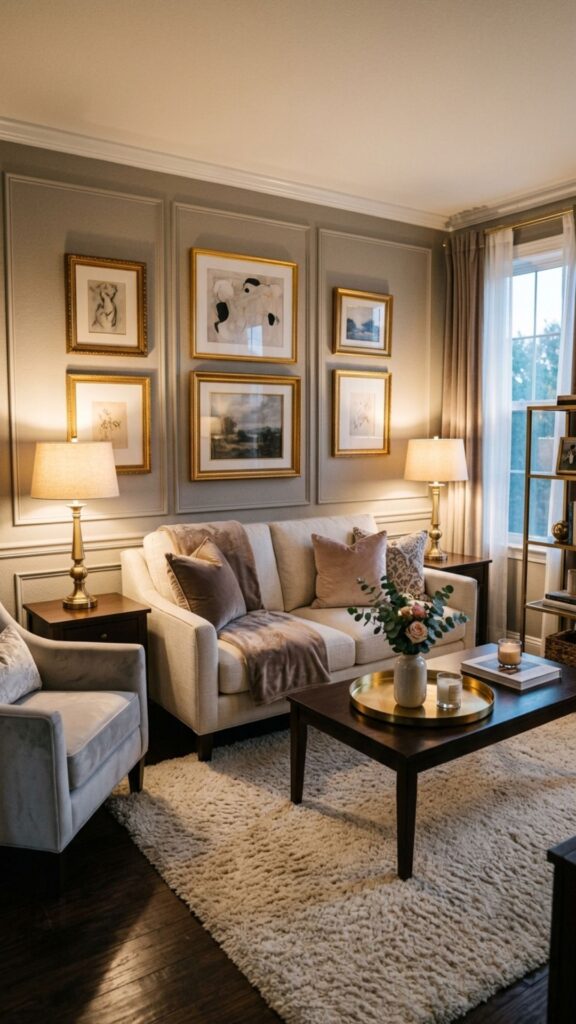
A touch of metallic adds subtle color and reflects light beautifully. Brass, copper, and gold warm up a room, while chrome and silver keep things crisp and modern. Small metallic details catch the eye and add polish.
Use them sparingly through lamp bases, picture frames, or a tray. Too much metal feels flashy, but a few pieces feel luxe. Metallics work as the finishing jewelry that pulls your whole color scheme together.
Conclusion
Color is the smartest tool you have for making a small living room feel bigger, brighter, and more like you. Whether you lean into soft neutrals, cool blues, or a single bold accent, the goal stays the same: use color to create light, depth, and flow. Start with one or two ideas from this list and build from there.
Ready to transform your space? Pick your favorite palette, grab a few paint samples, and test them on your walls before you commit. Your small room has big potential, so start experimenting today.
What colors make a small living room look bigger?
Light, cool colors make a small living room look bigger. Soft whites, pale blues, and gentle grays reflect light and create the illusion of depth, making walls feel further away and the room more open.
Can you use dark colors in a small living room?
Yes, you can use dark colors in a small living room. A single dark accent wall in navy or charcoal adds depth and makes the room feel deeper. Just balance it with light walls, mirrors, and good lighting.
How many colors should a small living room have?
Stick to three or four colors in a small living room. Use one main color, one or two supporting tones, and a single accent. This keeps the space cohesive and prevents it from feeling cluttered or busy.
What is the best paint color for a small living room?
Soft, warm whites and pale neutrals are the best paint colors for a small living room. They maximize natural light and pair easily with any decor, giving you flexibility to add color through accents.
Do bright colors work in small spaces?
Bright colors work in small spaces when used as accents rather than on every wall. One bold piece, like a colorful chair or a vibrant painting, adds personality without overwhelming the room.