You don’t need a massive budget or a sprawling plot to get more from your kitchen. A well-planned small extension can completely transform how you cook, eat, and live — adding space where it matters most and turning a cramped room into one of the best in the house.
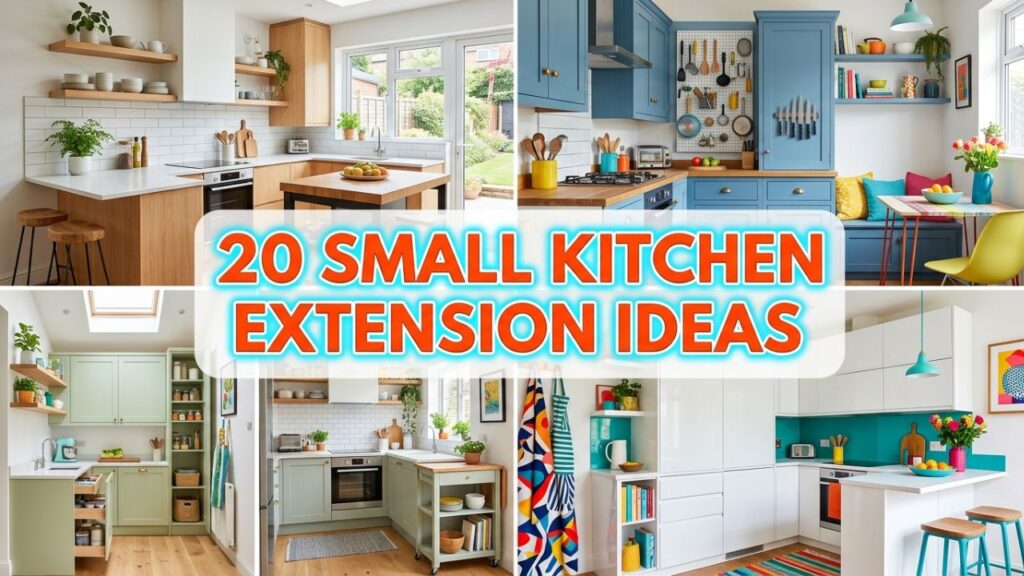
Whether you’re dreaming of an open-plan dining area, a brighter cooking space, or just a few extra square feet to breathe, this guide covers 20 kitchen extension ideas that deliver real results. We’ll walk through layout choices, lighting tricks, storage solutions, and design details that make small extensions feel anything but small.
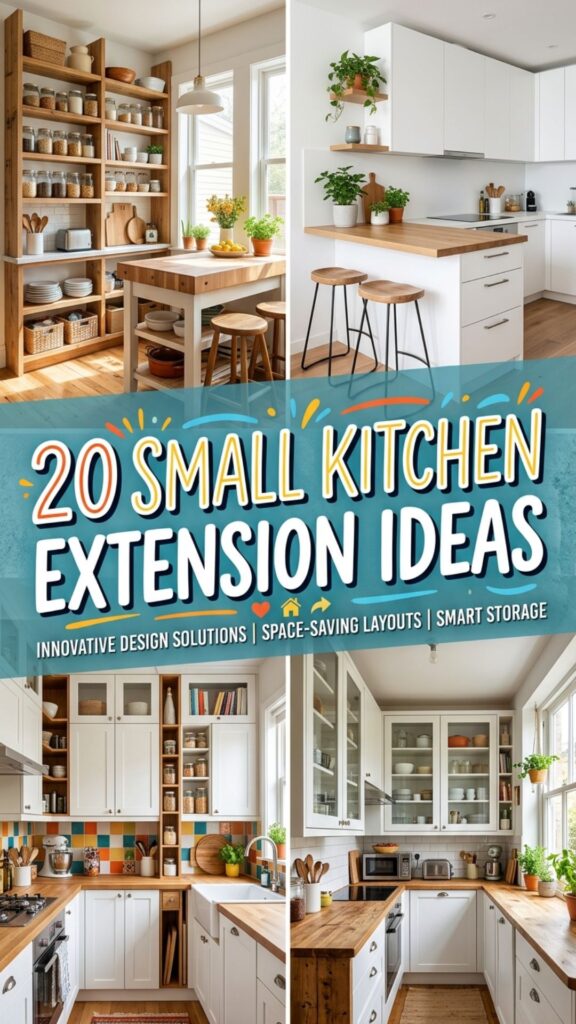
Quick Answer: The best small kitchen extension ideas combine smart layout planning, natural light, and multifunctional design to maximize every square foot. Popular approaches include rear infill extensions, side-return conversions, bi-fold door additions, skylights, and open-plan layouts that merge kitchen and dining areas.
Small Kitchen Extension Ideas That Maximize Space
1. Side-Return Extension
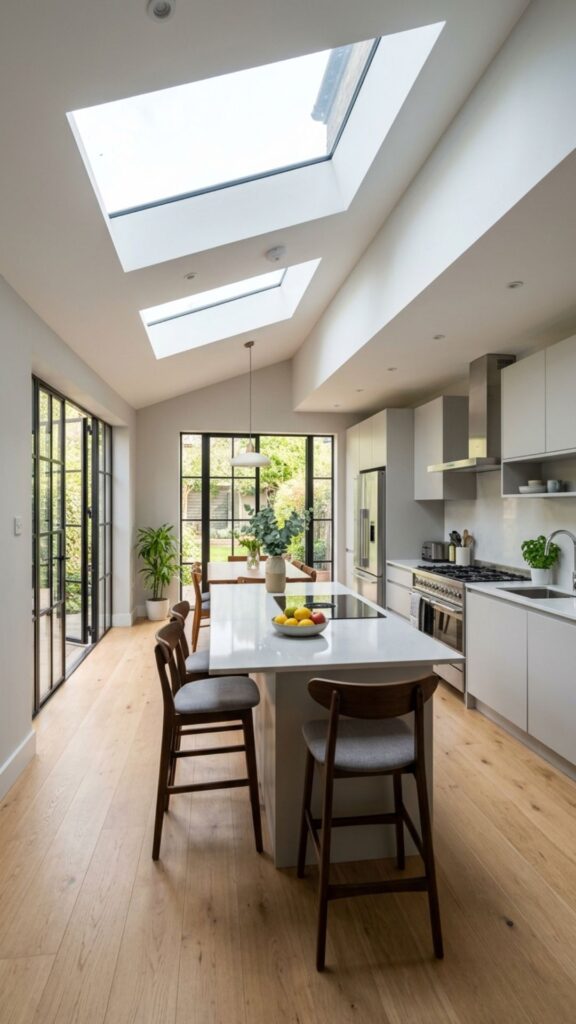
The side-return is one of the most popular kitchen extension ideas for terraced and semi-detached homes. That narrow strip of unused land running alongside your kitchen can be converted into extra floor space — typically adding between 6 and 12 square feet — which makes a significant difference in how the room functions.
With the extra width, you can add an island, extend your worktop run, or create a proper dining zone within the kitchen itself. Many homeowners use this space to relocate appliances, freeing up the main kitchen wall for better workflow. It’s a cost-effective extension because the structural work is relatively straightforward.
2. Rear Infill Extension
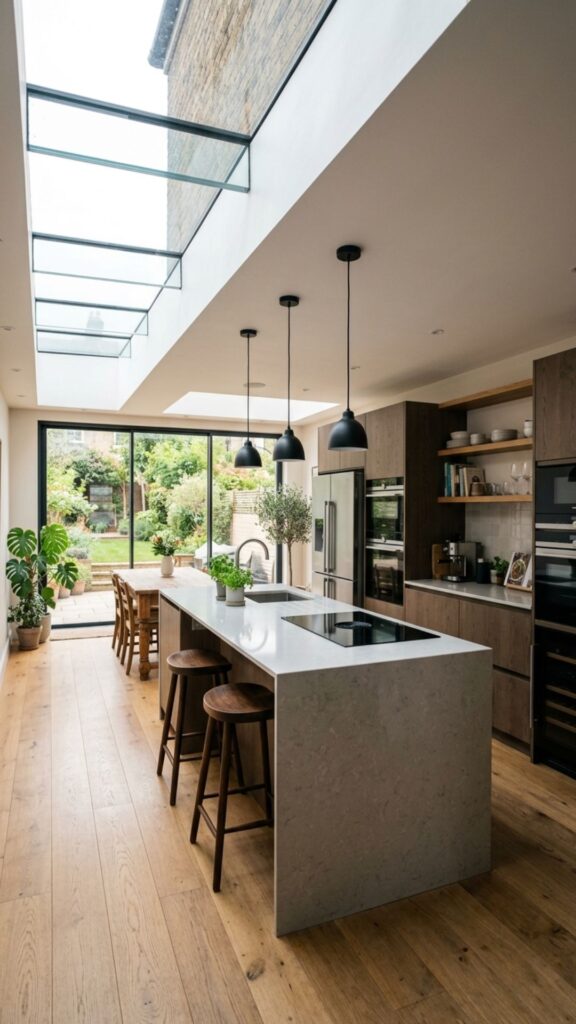
A rear infill fills in an awkward corner or recess at the back of your home, often where an old lean-to or outbuilding once stood. It’s a low-disruption way to gain usable kitchen floor space without a full-scale building project.
Because infill extensions use the existing walls for support, they tend to be quicker and cheaper to build. The result is a cleaner, more rectangular kitchen footprint — much easier to plan around than an irregular L-shaped room.
3. Open-Plan Kitchen and Dining
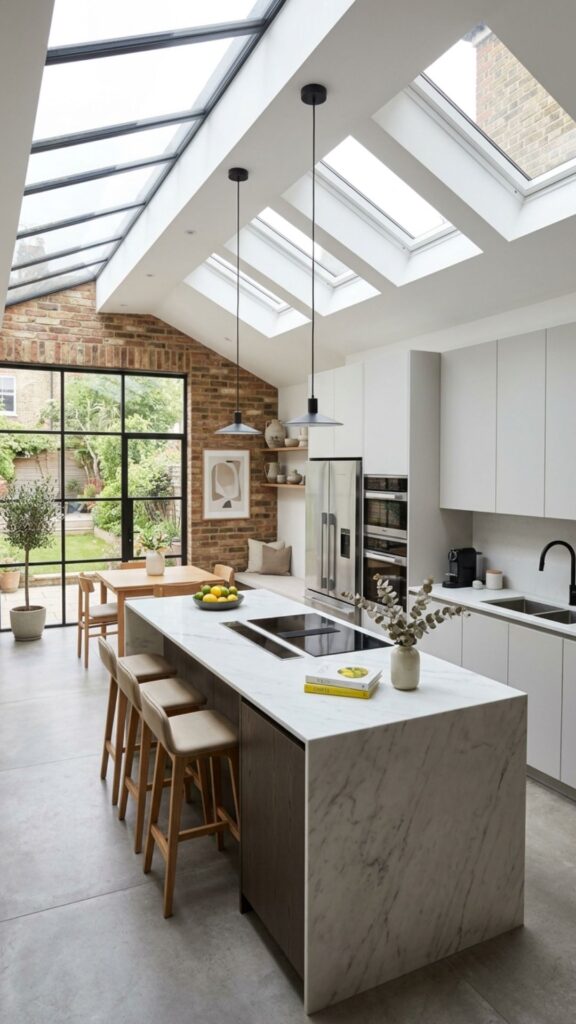
Removing the wall between your kitchen and dining room is one of the most impactful kitchen extension ideas available. Combined with even a modest rear extension, it creates a spacious, sociable area that feels far larger than the individual rooms ever did.
Open-plan layouts work especially well in period terraced houses where small, segmented rooms make the ground floor feel dark and disconnected. A single open space with one well-positioned skylight or bi-fold door can completely change how light moves through your home.
4. Single-Storey Rear Extension
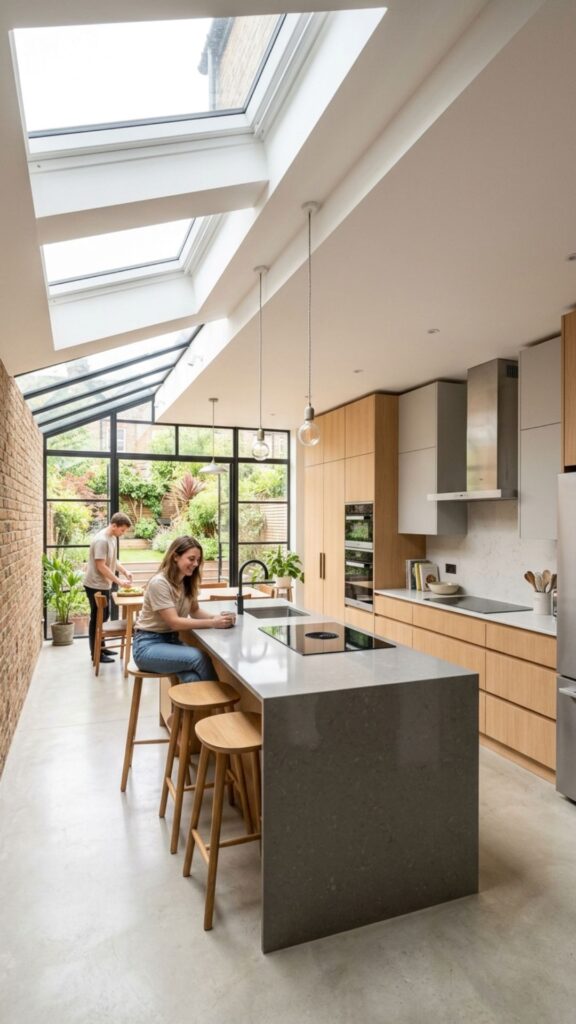
A single-storey rear extension is the classic approach for small kitchen upgrades. You push the back wall out by 3 to 6 meters (staying within permitted development rules in many cases) and instantly gain a dedicated cooking, dining, or living zone.
Keep the footprint modest and the design simple to control costs. A lean-to or flat-roof profile tends to be the most budget-friendly option and still delivers a clean, modern result when paired with large glazing.
Kitchen Extension Ideas That Bring in More Light
5. Roof Lantern or Skylight
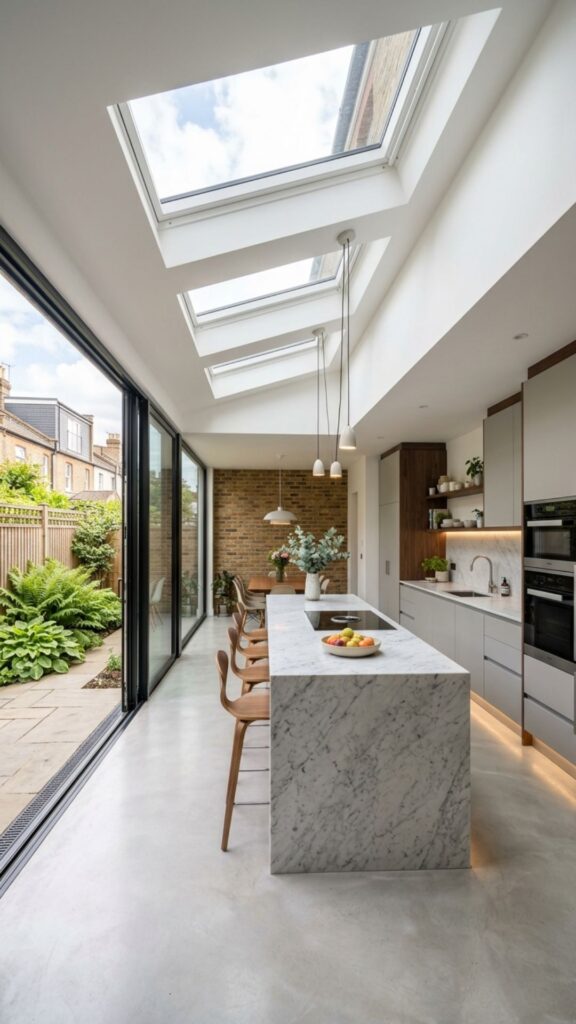
Adding a roof lantern to a flat-roof extension floods the space with natural light from above — something you simply can’t achieve through side windows alone. Even a single 1m x 1m rooflight can transform a dark extension into a bright, welcoming room.
Rooflights are also cost-effective glazing options. They avoid the need for structural changes to side walls and are available in fixed or opening versions, the latter providing useful ventilation during cooking.
6. Full-Width Glazed Roof
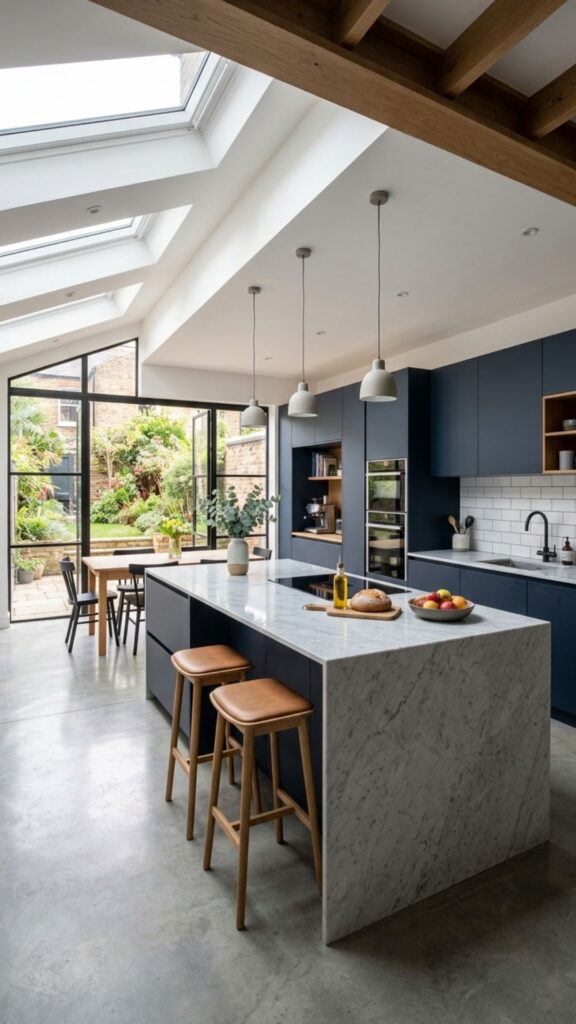
A glazed or glass roof across the full width of your extension is a statement feature that makes even a compact space feel generous. It’s particularly effective in north-facing extensions where standard windows might not catch much sun.
Thermally broken aluminum frames and double or triple glazing keep the space comfortable year-round. Many homeowners pair this with underfloor heating to offset any heat loss during winter months.
7. Bi-Fold or Sliding Doors
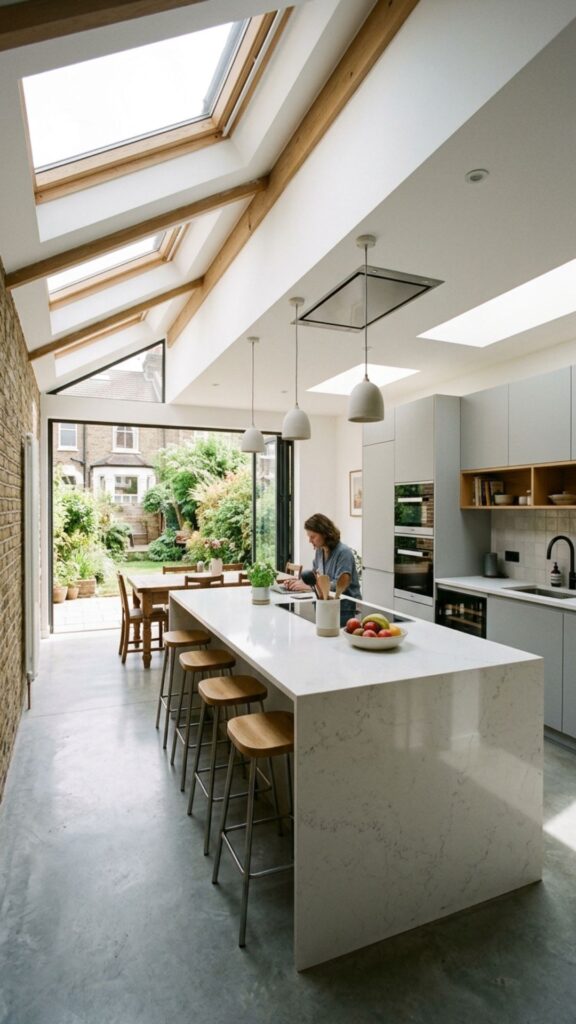
Bi-fold and sliding doors on the rear elevation blur the boundary between inside and outside, making your kitchen feel larger even when the doors are closed. When open, they create an almost seamless connection to the garden — ideal for entertaining.
From a practical standpoint, these doors do a better job of bringing in light than traditional windows because the glazed panels extend from near floor to ceiling. Choose thermally efficient units to keep energy bills manageable.
8. Clerestory Windows
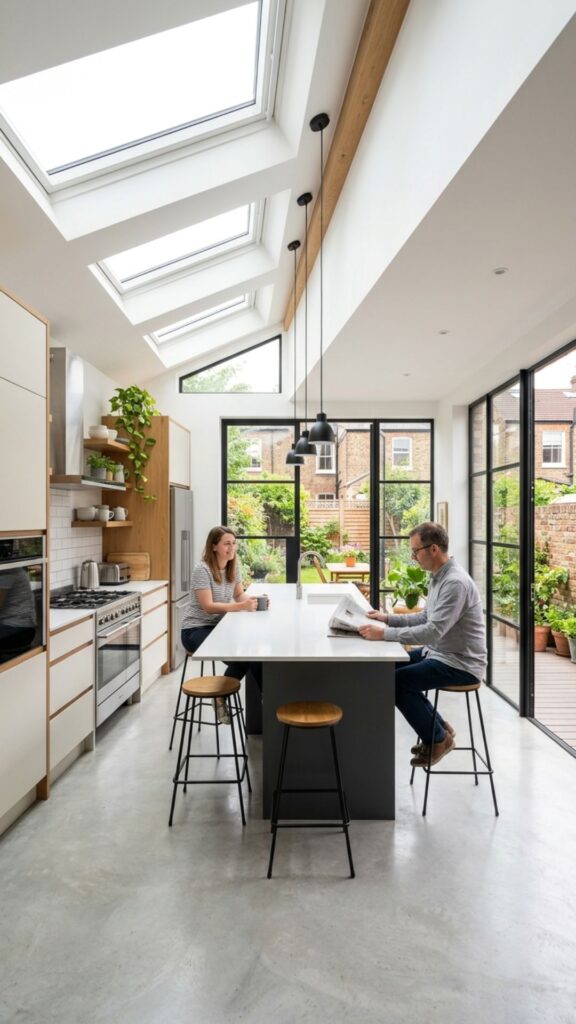
Clerestory windows sit high on the wall, above eye level, and draw light deep into the room without sacrificing wall space for cabinets below. They’re a smart solution when you need both natural light and plenty of storage.
They also offer privacy — you get sunlight without losing any sense of enclosure from neighbors. In a small kitchen extension where every inch of wall matters, clerestory glazing is one of the cleverest tools available.
Layout and Flow: Kitchen Extension Ideas That Work Harder
9. Kitchen Island Addition
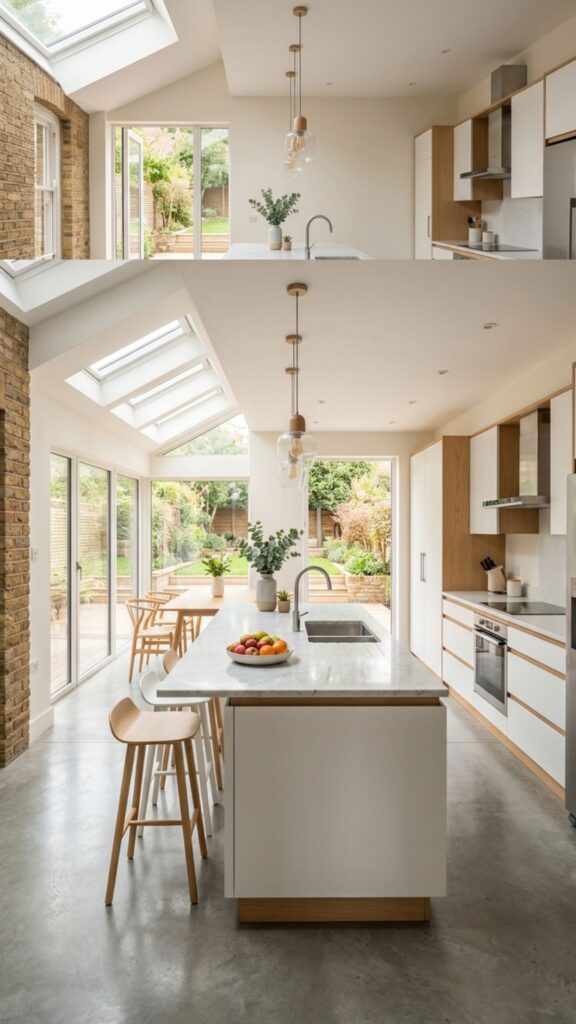
Adding an island is one of the most requested kitchen extension ideas because it delivers so much in one go — extra prep space, additional storage, a casual dining surface, and a natural gathering point for family and guests.
Even a modest extension of 1.5 to 2 meters can accommodate a small island with knee-room on all sides. Choose a design with integrated storage underneath, and you’ve essentially added the equivalent of several extra cabinets to your kitchen.
10. L-Shaped Layout
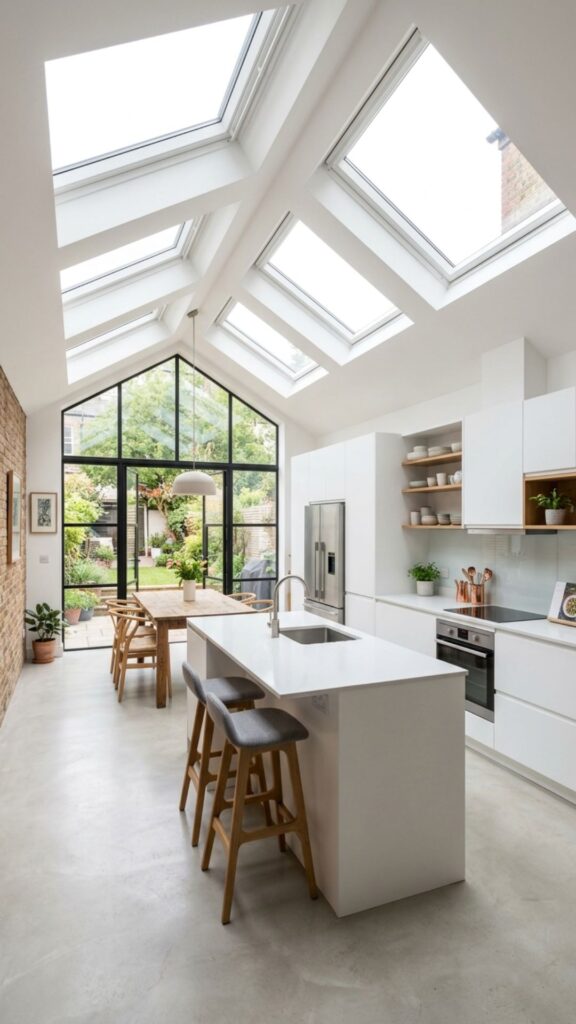
An L-shaped kitchen layout is particularly efficient in an extended space because it puts everything within easy reach while keeping a clear zone for movement and dining. It works well in both open-plan and enclosed kitchen extensions.
If you’re extending a straight galley kitchen, an L-shape immediately solves the problem of limited counter space and poor workflow. Position your hob on one arm of the L and your sink on the other to create a practical work triangle.
11. Wrap-Around Extension
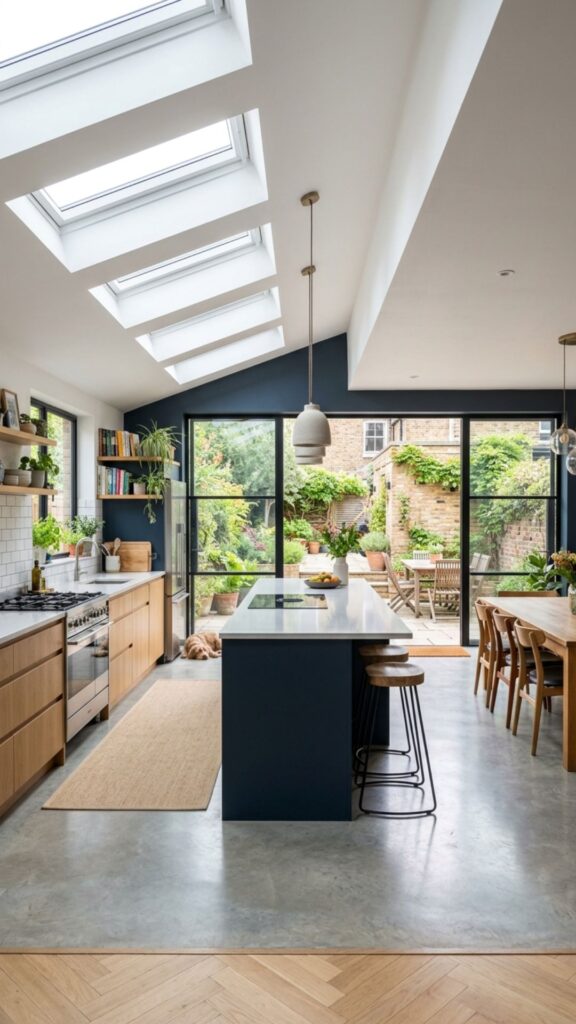
A wrap-around extension combines a rear and side-return extension into one continuous project. It’s a bigger investment but delivers a dramatic increase in floor area and gives you far more flexibility in how you design the kitchen layout.
The wraparound is ideal for corner plots or properties with an accessible side passage. Because you’re working on two sides of the house simultaneously, build costs per square meter are often lower than doing the two extensions separately.
12. Boot Room or Utility Annexe
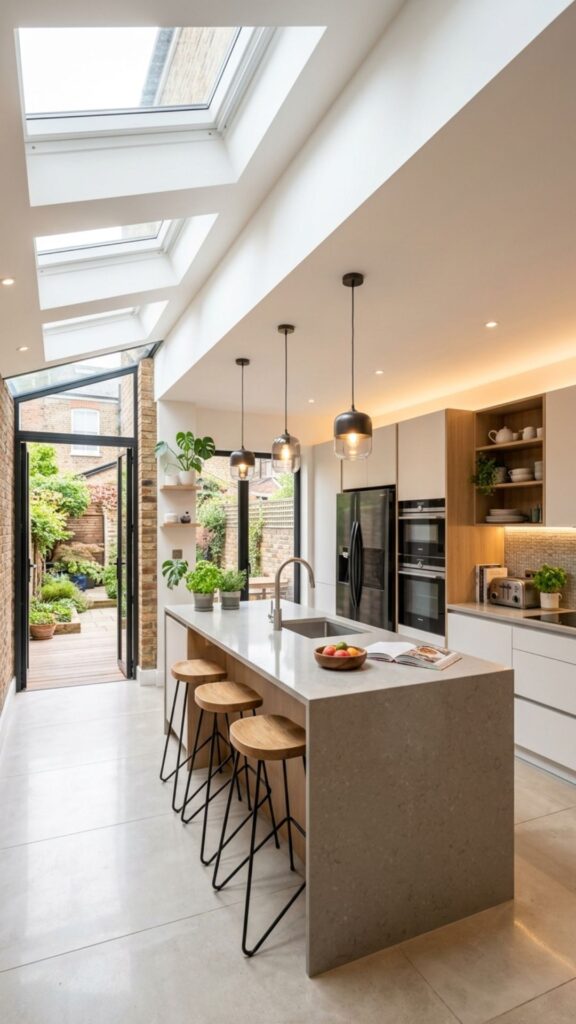
Adding a small utility area or boot room as part of your kitchen extension takes the pressure off the main kitchen space. Relocating the washing machine, tumble dryer, and coats clears the kitchen for proper cooking and dining.
Even a 2-meter-deep utility extension makes a real practical difference. It’s often an overlooked kitchen extension idea, but the impact on daily life — less clutter, a more streamlined kitchen — is hard to overstate.
Budget-Friendly Small Kitchen Extension Ideas
13. Lean-To or Conservatory Conversion
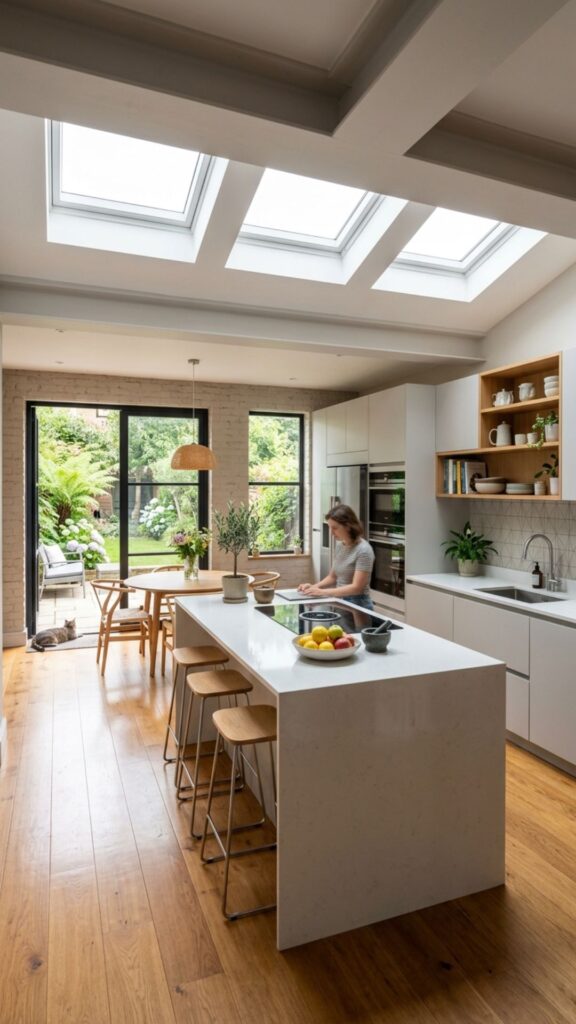
A lean-to or old conservatory can often be converted into a proper kitchen extension with insulated roofing, better glazing, and upgraded flooring. It avoids the cost of demolition and new footings and is far quicker to complete.
Check that the existing structure is sound before investing in upgrades. If the foundations are adequate, a lean-to conversion can be completed for a fraction of the cost of a new build extension — often under £20,000 depending on specification.
14. Permitted Development Extensions
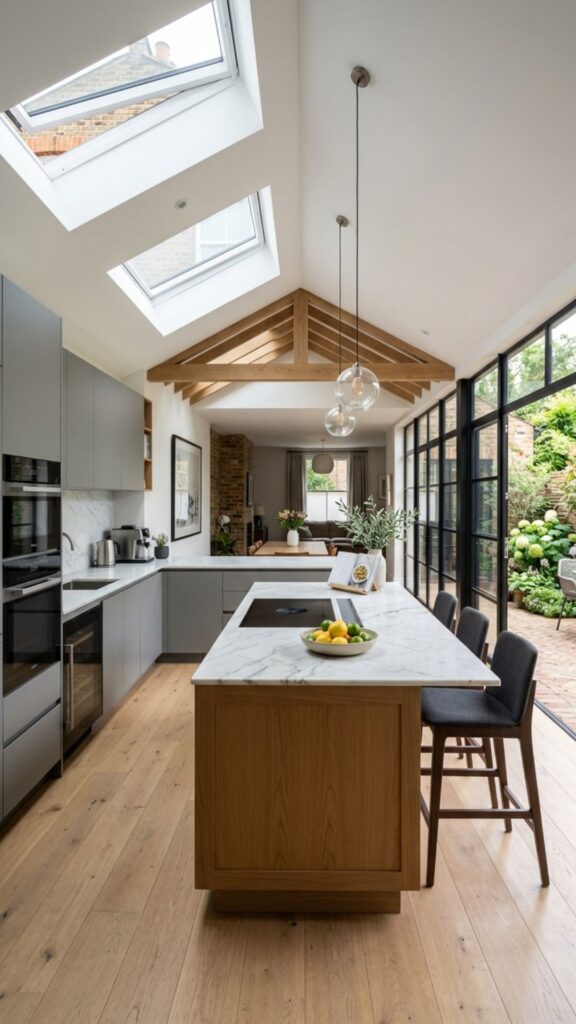
In the UK, most single-storey rear extensions up to 4 meters deep (detached houses) or 3 meters deep (semi-detached and terraced) fall under permitted development rights, meaning no planning permission is required.
Staying within permitted development limits keeps the project simpler, faster, and cheaper. It removes the uncertainty of a planning application and typically cuts several weeks off the project timeline. Always verify your specific permitted development rights with your local planning authority before work begins.
15. Modular or Prefabricated Extension
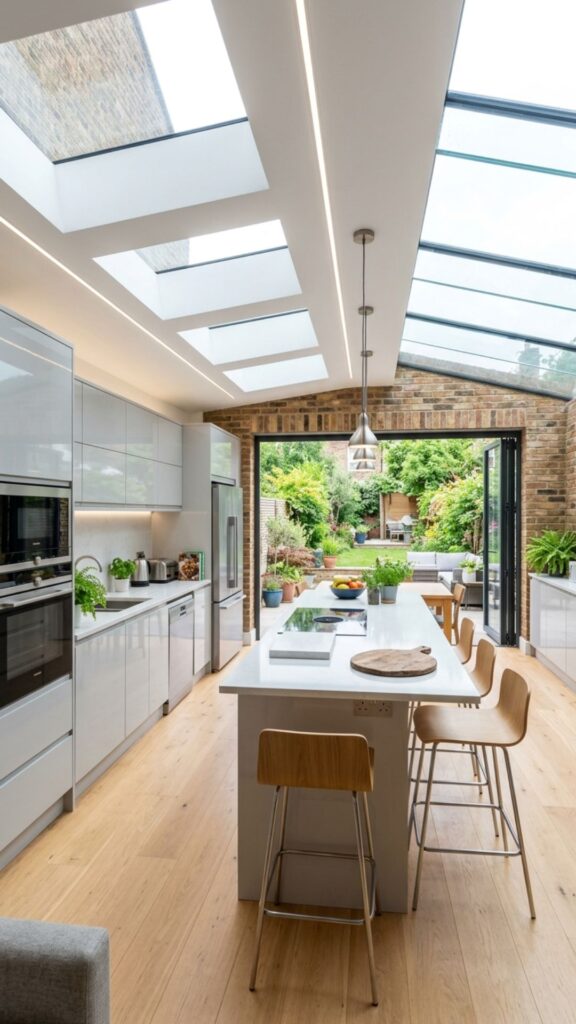
Modular extensions are built off-site and craned into position, dramatically reducing on-site construction time. They’re increasingly popular as a cost-effective alternative to traditional brick-and-block builds.
Quality has improved significantly in recent years, and many modular extensions are visually indistinguishable from traditional construction. Lead times are predictable, disruption is minimized, and the finished result can be just as durable and well-insulated as a conventionally built extension.
Smart Design Details That Make Small Extensions Feel Bigger
16. Continuous Flooring Throughout
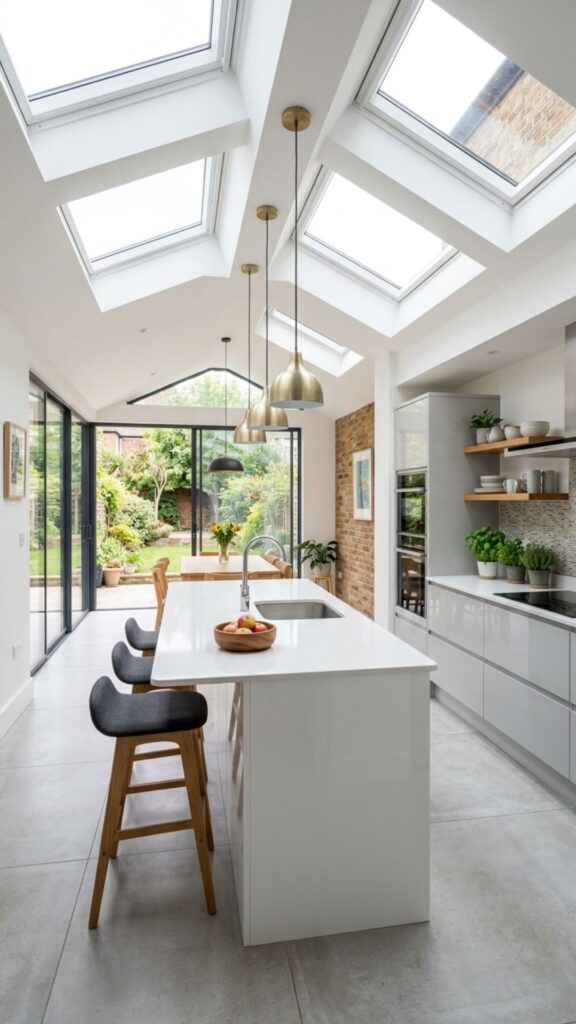
Running the same floor material from your existing kitchen into the extension removes visual barriers and tricks the eye into reading the entire space as one large, unified room. Porcelain tile, engineered oak, and polished concrete all work well for this effect.
Choose a lighter tone to reflect more light and keep the space feeling open. Avoid switching flooring materials at the threshold between old and new — it’s a small detail that makes a surprisingly big visual difference.
17. Handleless Cabinetry and Integrated Appliances
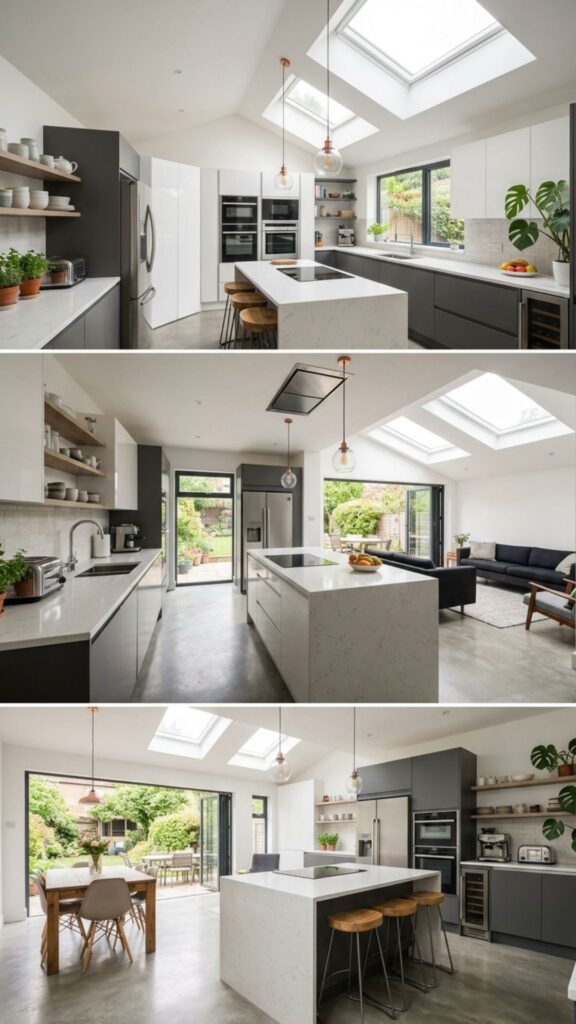
In a compact extension, kitchen clutter is your biggest enemy. Handleless cabinet doors create clean, uninterrupted sightlines, and integrated appliances — dishwasher, fridge, oven — tuck neatly behind cabinet panels for a calm, streamlined look.
This approach doesn’t have to be expensive. Many mid-range kitchen ranges offer handleless options, and integrating appliances you’re already buying doesn’t add significantly to the overall kitchen cost.
18. Pocket or Barn Doors
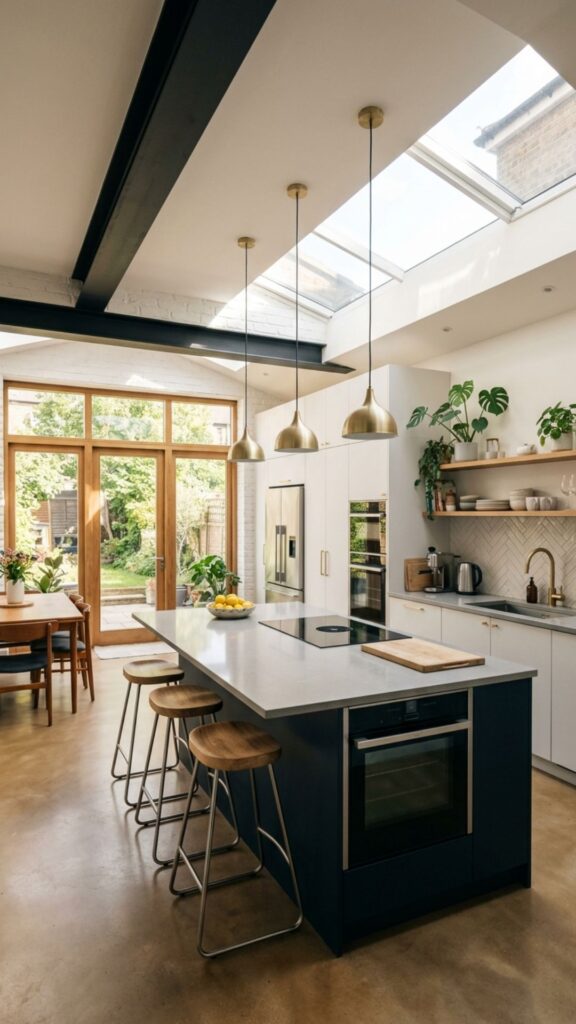
Internal pocket doors slide into the wall cavity and disappear completely when open, freeing up swing space that would be lost with a conventional hinged door. In a small kitchen extension, that saved space can make a real difference to how the room feels and flows.
Barn doors (which slide along an external rail) are an easier retrofit if wall thickness doesn’t allow a pocket door installation. Both options look intentional and stylish rather than like a compromise.
19. Built-In Banquette Seating
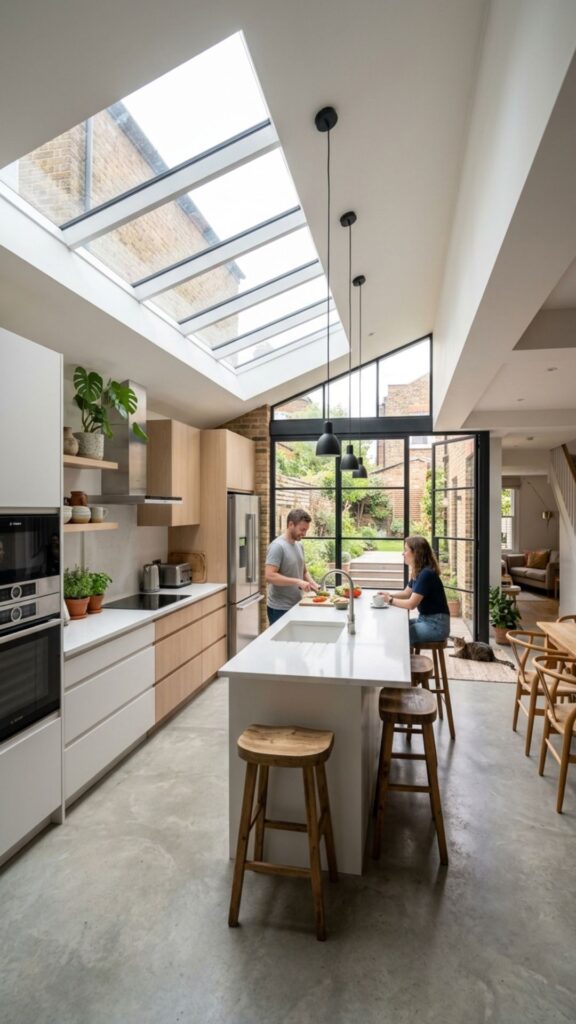
A built-in bench along one wall or in a corner creates a dedicated dining area without consuming the floor space a table-and-chairs setup demands. Banquette seating can also incorporate under-seat storage — a practical bonus in a compact kitchen.
Pairing a built-in bench with a wall-mounted or fold-down table takes this even further. When you don’t need the dining surface, it folds flat against the wall and the full floor area of the kitchen is available again.
20. Outdoor Kitchen Connection
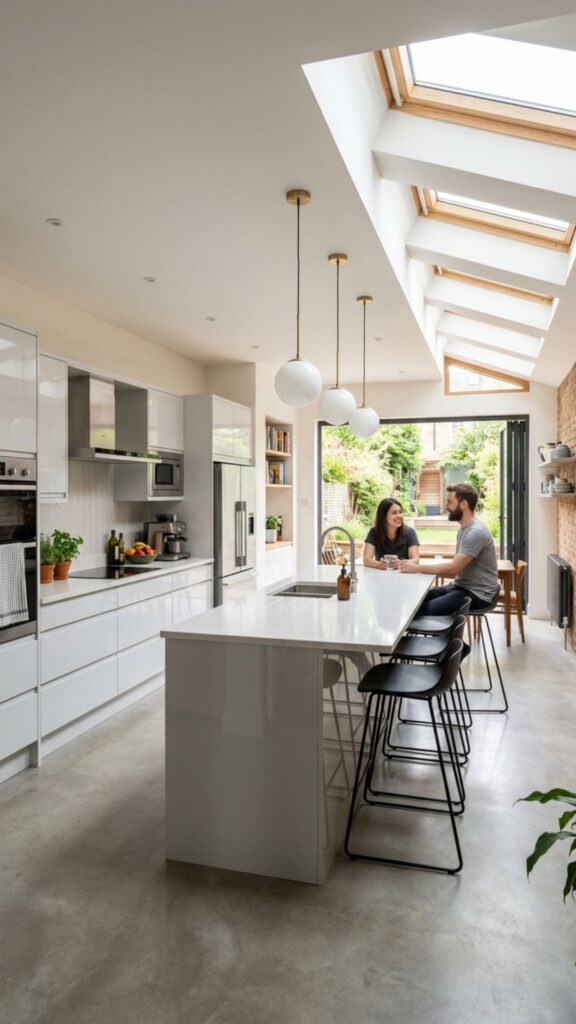
Extending your kitchen toward the garden and creating a visual and physical connection to an outdoor cooking or dining zone effectively doubles your entertaining space during warmer months. A simple covered outdoor area with a BBQ station or outdoor kitchen adjacent to your bi-fold doors gives you cooking-to-garden flow that’s hard to beat.
Even a modest covered patio with string lights and outdoor-rated furniture works well. The key is designing the indoor-outdoor transition thoughtfully — matching materials, maintaining a consistent level threshold, and ensuring doors open wide enough to feel like a genuine extension of the kitchen.
Conclusion: Start Planning Your Kitchen Extension
A small kitchen extension doesn’t have to mean a small result. With the right combination of layout planning, smart glazing, and design details, even a modest extension can genuinely transform how you live in your home.
The 20 ideas here range from high-impact structural changes to subtle design moves — all of them proven to add space, light, and value. Start by identifying your biggest pain points: not enough storage? Too dark? No room to eat? Then work backward to find the extension idea that solves it most efficiently.
Ready to take the next step? Speak to a local architect or design-and-build specialist to get a realistic quote and timeline for your kitchen extension. Many offer free initial consultations, so you have nothing to lose by exploring what’s possible.
Do I need planning permission for a small kitchen extension?
Many small single-storey rear extensions fall under permitted development rights in the UK and don’t require formal planning permission. However, if your home is in a conservation area, is listed, or is a flat, different rules apply. Always check with your local planning authority before starting work.
How long does a kitchen extension take to build?
A typical small kitchen extension takes 8 to 16 weeks from start of construction to completion. This doesn’t include the design, planning, and tender process, which can add several months to the overall timeline. Modular or prefabricated extensions are often quicker to build.
What adds the most value to a kitchen extension?
Natural light, open-plan layouts, quality kitchen fitting, and seamless indoor-outdoor connections tend to have the biggest impact on property value. A well-designed kitchen extension can add 5–15% to your home’s value, depending on local market conditions and the quality of the build.
Can I extend a small kitchen without moving out?
Yes — most homeowners stay in the property during a kitchen extension. The main disruption is during demolition and structural work. Your builder can usually maintain access to a temporary kitchen setup (microwave, kettle, portable hob) and complete the noisiest work in concentrated phases to minimize disruption.