No backyard? No problem. Your balcony can grow more food than you think. I’ve spent years coaxing tomatoes, herbs, and leafy greens out of a space barely bigger than a parking spot, and I’ve learned what actually works.
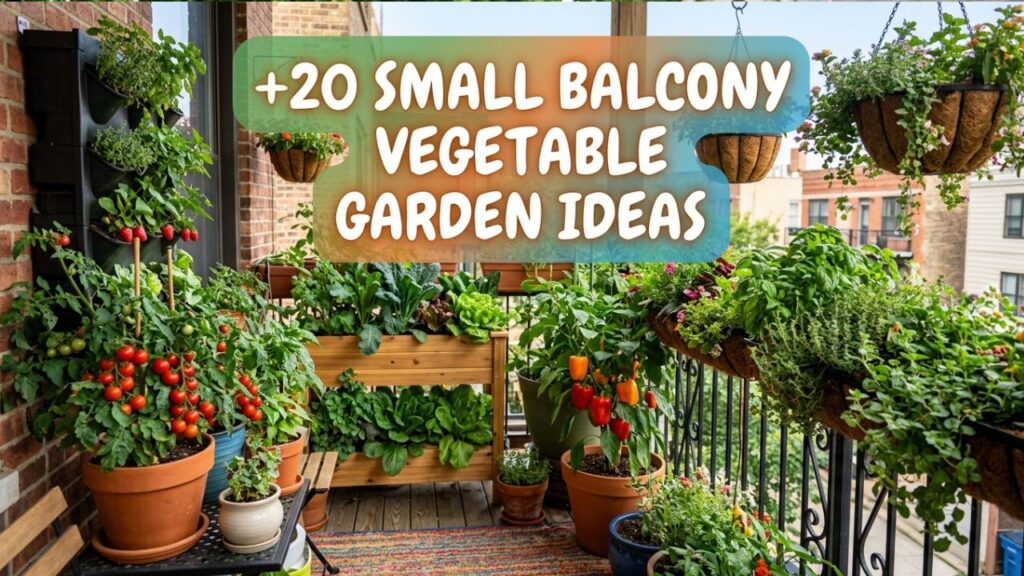
The trick isn’t more room. It’s smarter use of the room you have. Vertical space, hanging containers, and the right plant choices can turn a cramped ledge into a mini farm.
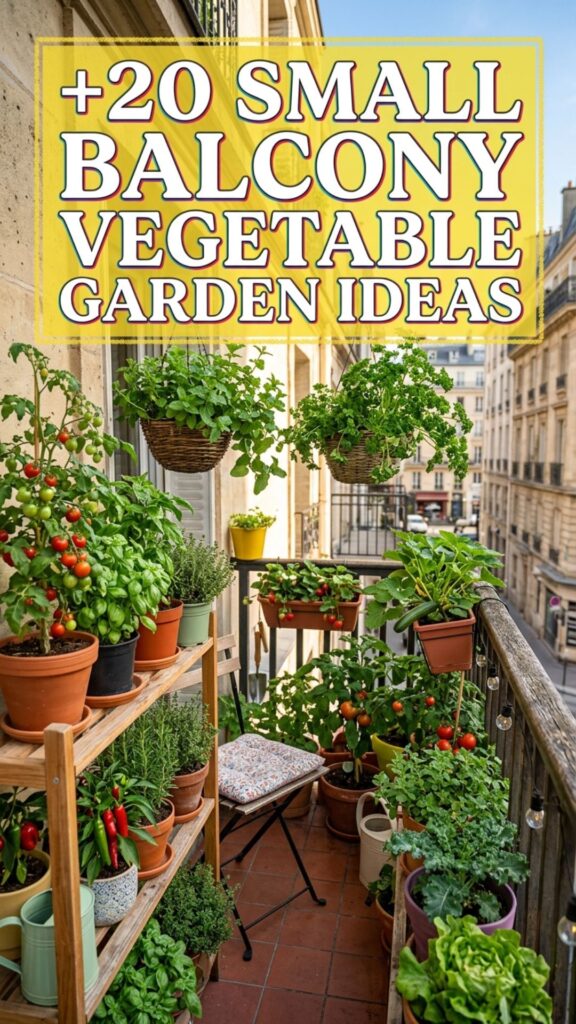
In this guide, you’ll get 20 practical balcony vegetable garden ideas that save space and still deliver real harvests. Each one comes with hands-on tips and examples so you can start today. Whether you have a sunny south-facing balcony or a shaded corner, there’s something here for you.
1. Grow Vertically With a Wall-Mounted Planter
Walls are prime real estate on a balcony. Instead of crowding your floor with pots, hang planters on a bare wall or railing. A pocket-style felt planter can hold a dozen small plants like lettuce, spinach, and herbs in the footprint of a single tile.
I mounted a five-tier wall planter on my east wall and now grow salad greens all season. Just make sure your wall gets a few hours of light and that anchors are rated for the weight when watered. Wet soil is heavier than you expect.
2. Use a Tiered Plant Stand
A tiered stand lets you stack multiple pots in a small footprint. Each level gets its own light exposure, so you can place sun-lovers on top and shade-tolerant greens below.
These stands work beautifully for a mix of peppers, cherry tomatoes, and basil. Look for a weatherproof metal or bamboo model. Rotate the pots weekly so every plant gets even sunlight.
3. Hang Baskets From the Ceiling or Railing
Hanging baskets free up floor space entirely. Trailing crops like cherry tomatoes, strawberries, and cucumbers love to spill over the edges, and the extra airflow reduces disease.
I keep two baskets of tumbling tomatoes hooked to my balcony overhang. They produce dozens of fruits without touching the ground. Use a coco-liner basket for better drainage and water it in the morning, since hanging pots dry out fast.
4. Try a Railing Planter Box
Your balcony railing is one of the most underused spots. A saddle-style planter box hooks right over the rail and holds herbs, radishes, or dwarf lettuce.
These planters keep plants at eye level, making harvesting easy. Choose a box with a built-in water reservoir so you don’t have to water twice a day. Secure it well if you live in a windy high-rise.
5. Build a Vertical Pallet Garden
An upcycled wooden pallet makes a fantastic vertical garden for cheap. Stand it against a wall, line the back with landscape fabric, fill with soil, and plant into the gaps.
Pallets suit shallow-rooted crops like lettuce, arugula, and herbs. Sand it down to avoid splinters and check that it’s untreated wood, marked “HT” for heat-treated. Chemically treated pallets can leach into your soil.
6. Grow Herbs in a Mason Jar Rack
Herbs need very little space and thrive in small containers. A wall-mounted rack of mason jars turns a plain wall into a fragrant, functional display.
Basil, mint, parsley, and chives all do well in jars. Add a layer of pebbles at the bottom for drainage since jars have no holes. Keep them near your kitchen door for quick snips while cooking.
7. Use Stackable Vertical Planters
Stackable planters twist together into a tower, letting you grow 15 or more plants in a two-foot circle. They’re perfect for strawberries, herbs, and small greens.
Water travels from the top down, so it’s efficient too. I grew a full strawberry tower on a corner of my balcony and harvested berries for months. Give the tower a quarter turn every few days for even growth.
8. Repurpose a Shoe Organizer
A hanging fabric shoe organizer is a clever, low-cost planter. Each pocket becomes a mini pot for herbs or leafy greens.
Hang it on a sunny wall or door and fill each pocket with potting mix. It’s ideal for renters since it leaves no marks. Just line pockets with plastic if the fabric drains too fast for your climate.
9. Grow Climbers on a Trellis
Vining vegetables grow up, not out, which is exactly what a small balcony needs. Add a trellis behind a pot and let cucumbers, beans, or peas climb.
A single pole bean plant can yield a steady crop from just one pot. Anchor the trellis firmly and guide young shoots to the support. This trick doubles your growing space without adding floor clutter.
10. Use Grow Bags for Root Crops
Fabric grow bags are lightweight, breathable, and foldable when not in use. They’re great for potatoes, carrots, and beets that need deeper soil.
The breathable fabric prevents roots from circling and encourages healthier growth. I harvested a full bucket of potatoes from a single 10-gallon bag on my balcony. Empty and store them flat in winter to save space.
11. Create a Windowsill Salad Garden
Even a narrow windowsill can feed you. Line up small pots of cut-and-come-again lettuce, microgreens, and radishes for a steady supply.
These crops mature in three to four weeks, so you get fast rewards. Rotate a new pot every week for a continuous harvest. Windowsills near the kitchen also make watering effortless.
12. Hang a Vertical Gutter Garden
Old rain gutters cut into sections make sleek, shallow planters. Mount them in rows on a wall for a modern, space-saving look.
Gutters suit shallow-rooted crops like lettuce, spinach, and herbs. Drill small drainage holes every few inches before filling with soil. Stagger the rows so upper planters don’t shade the ones below.
13. Use a Rolling Cart Garden
A rolling cart or bar cart turns into a mobile garden you can chase the sun with. Move it to the brightest spot in the morning and shift it as shadows change.
This is a game-changer for balconies with patchy light. Load the shelves with pots of peppers, herbs, and greens. The wheels also make it easy to bring plants inside during storms or cold snaps.
14. Plant a Compact Cherry Tomato Pot
Cherry tomatoes are one of the most rewarding balcony crops. A single determinate or dwarf variety in a 5-gallon pot can produce hundreds of fruits.
Choose bush types like ‘Tiny Tim’ or ‘Balcony’ that stay small and need less staking. Give them at least six hours of sun and feed every two weeks. Water consistently to prevent cracked or split fruit.
15. Grow Peppers in Space-Saving Containers
Peppers thrive in containers and love the reflected heat of a balcony. Compact varieties fit in pots as small as three gallons.
Try chili peppers or mini bells for a productive, colorful display. They need warmth and full sun, so a south-facing balcony is ideal. Stake taller plants once they start fruiting to keep them upright.
16. Set Up a Self-Watering Planter System
Busy schedules and drying soil are the top reasons balcony gardens fail. Self-watering planters solve this with a built-in reservoir that keeps roots evenly moist.
These are perfect for thirsty crops like tomatoes and cucumbers. Fill the reservoir once every few days instead of daily watering. They’re a smart choice if you travel or forget to water.
17. Use Vertical Hydroponic Towers
If you want maximum yield in minimal space, a hydroponic tower grows dozens of plants without soil. Water and nutrients circulate through the tower automatically.
Leafy greens and herbs grow faster this way, often ready in weeks. They cost more upfront but save space and water long-term. Place the tower where it gets steady light or add a grow light for shaded balconies.
18. Plant Dwarf and Bush Varieties
Choosing the right variety matters as much as the container. Seed companies now offer dwarf and bush versions of nearly every vegetable, bred for small spaces.
Look for words like “patio,” “bush,” “compact,” or “dwarf” on seed packets. A bush zucchini stays half the size of a sprawling one but still fruits well. These varieties give big harvests without taking over your balcony.
19. Combine Plants With Companion Planting
You can fit more into one pot by pairing plants that help each other. Basil planted with tomatoes improves flavor and repels pests, while lettuce fills the shady space below.
This method boosts yield and saves containers. Avoid crowding, though, since roots still need room. A large pot with tomatoes, basil, and marigolds is a proven, space-smart combo.
20. Add Grow Lights for Shaded Balconies
Not every balcony gets enough sun, but that shouldn’t stop you. Full-spectrum LED grow lights let you grow greens and herbs even in dim corners.
Clip-on or strip lights work well for small setups and use little power. Run them 12 to 14 hours a day for leafy crops. This is how north-facing balcony gardeners still enjoy fresh harvests year-round.
Conclusion
A small balcony is no barrier to growing your own food. With vertical planters, hanging baskets, smart containers, and the right compact varieties, you can harvest fresh vegetables all season long. The best balcony vegetable garden ideas share one theme: they make every inch count.
Start small. Pick two or three ideas from this list that match your light and space, then build from there. Grab a couple of pots this weekend, plant something you love to eat, and watch your balcony transform into a productive little garden. Your first homegrown salad is closer than you think.
What vegetables grow best on a balcony?
The best balcony vegetables are compact, fast-growing crops like lettuce, spinach, cherry tomatoes, peppers, radishes, herbs, and bush beans. These thrive in containers and don’t need much root space.
How much sunlight does a balcony vegetable garden need?
Most vegetables need at least six hours of direct sunlight per day. Leafy greens and herbs tolerate less, around four hours, while fruiting crops like tomatoes and peppers need full sun.
How do I water a balcony garden without making a mess?
Use self-watering planters or pots with drip trays to catch runoff. Water in the early morning, and add mulch on top of the soil to slow evaporation and reduce how often you water.
Can I grow vegetables on a shaded balcony?
Yes. Focus on shade-tolerant crops like lettuce, spinach, kale, and mint. For deeper shade, add full-spectrum LED grow lights and run them 12 to 14 hours a day.
What is the easiest vegetable to grow on a balcony for beginners?
Herbs and leafy greens are the easiest for beginners. Lettuce, basil, and radishes grow quickly, need little space, and forgive common mistakes like uneven watering.