A farm gives you space, fresh air, and a reason to cook where the food actually grows. But turning that open land into a working kitchen takes real planning—not just a grill pushed against a barn wall.
This guide walks through 20 outdoor kitchen ideas in farm areas that hold up to weather, stretch a budget, and fit the way farm life really works. You’ll get material picks, layout tips, and fixes for the problems most people hit halfway through the build.
Here’s what you’ll take away:
- Practical layouts for open, exposed farm plots
- Budget-smart material choices
- Weather-proofing that actually holds
- Storage and prep ideas built for real cooking
1. Reclaimed Barn Wood Cooking Station
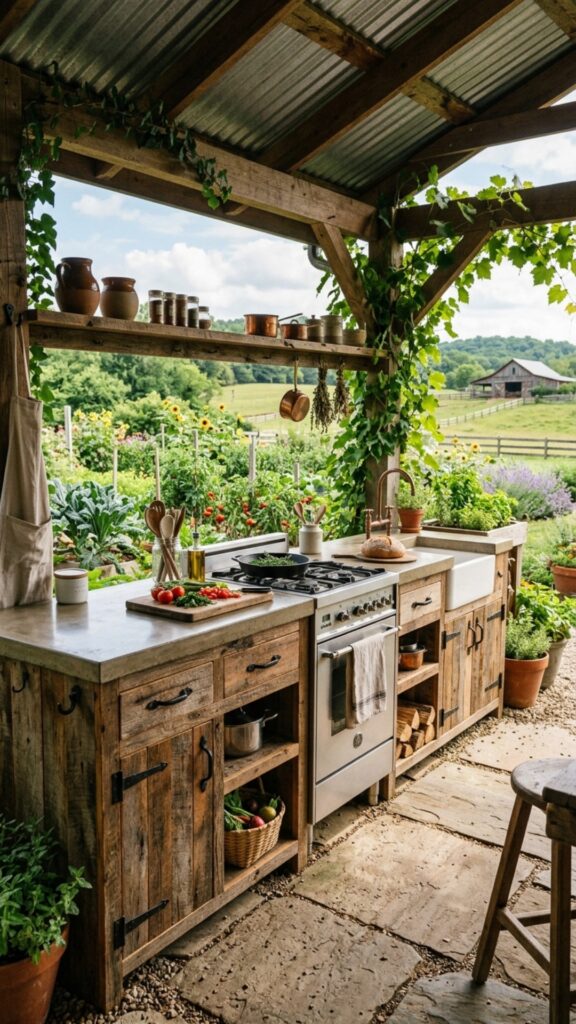
Old barn wood carries a story, and it costs less than new lumber if you salvage from your own property. Use it for counter facing, cabinet doors, or a rustic bar top. Seal it with an exterior-grade finish so rain and sun don’t warp the boards.
The look pairs well with black iron hardware and a simple concrete counter. If your wood came from a working barn, check it for rot and pests before you build—one bad board can spread trouble to the rest.
2. Stone Wood-Fired Pizza Oven
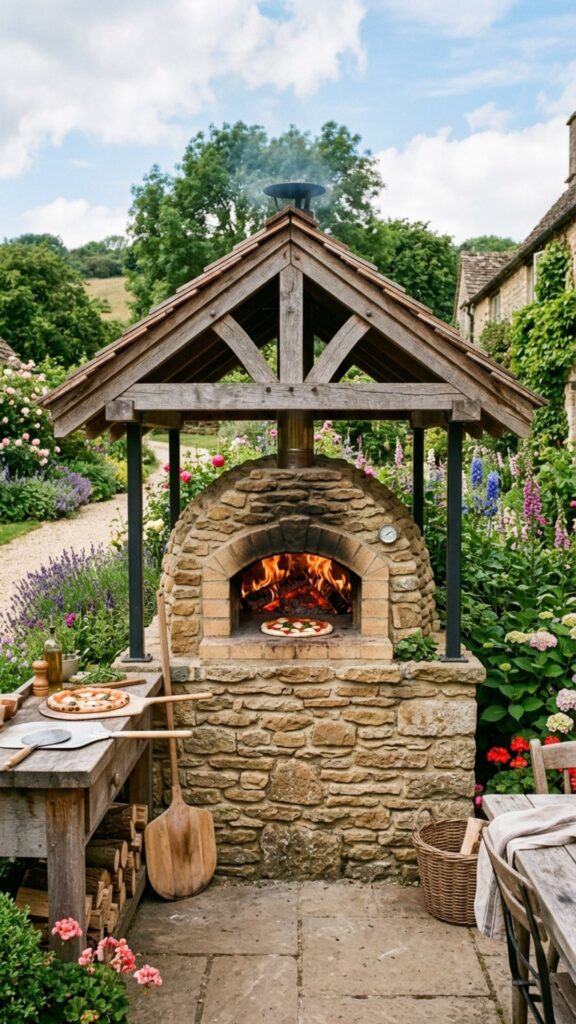
Wood-fired | High-heat | Built to last. A stone pizza oven anchors any farm kitchen and doubles as a bread oven and roaster. Fieldstone gathered from your land keeps costs down and ties the oven to its surroundings.
Budget around a weekend and a helper for a dome build. Line the interior with firebrick—regular brick cracks under repeated high heat. Give the oven a small roof or overhang so you can fire it in light rain.
3. Cinder Block Base with Concrete Countertop
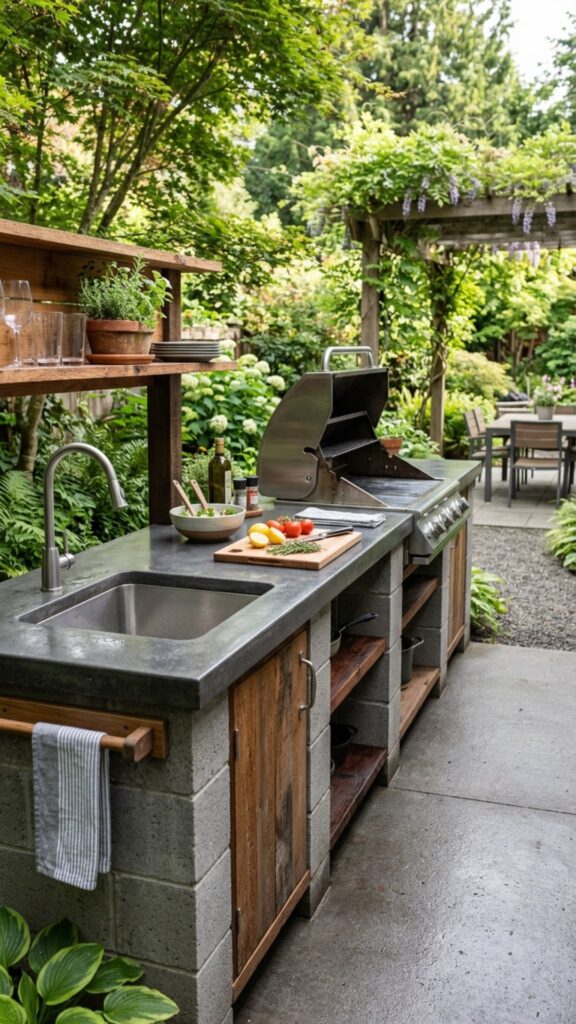
Cinder blocks are the cheapest structural base you’ll find, and they hold up to farm weather without fuss. Stack them dry or mortar them, then cap with a poured concrete counter for a clean, tough surface.
Concrete takes stains from oil and wine, so seal it twice a year. If you want warmth, face the blocks with stone veneer or leftover barn wood. The core stays strong; the facing sets the mood.
4. Repurposed Livestock Trough Sink
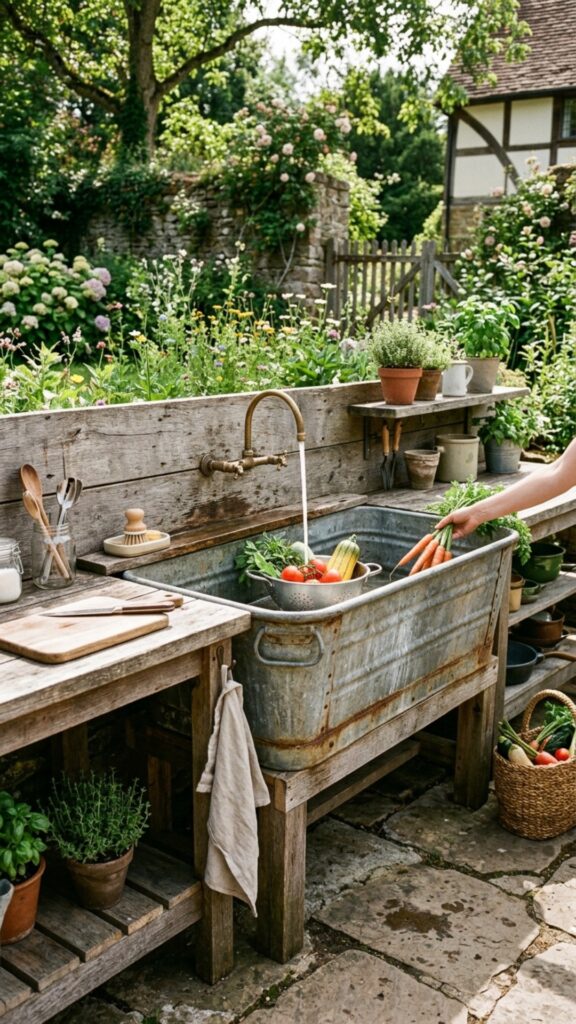
An old galvanized trough makes a deep, wide farmhouse sink at almost no cost. It handles muddy vegetables, big stockpots, and cleanup after a harvest meal.
Drill a drain hole and fit a standard strainer. Run the drain to a gravel pit or garden bed if you’re off grid. The galvanized finish already resists rust, which is exactly what you want in the open air.
5. Covered Pergola Cooking Area
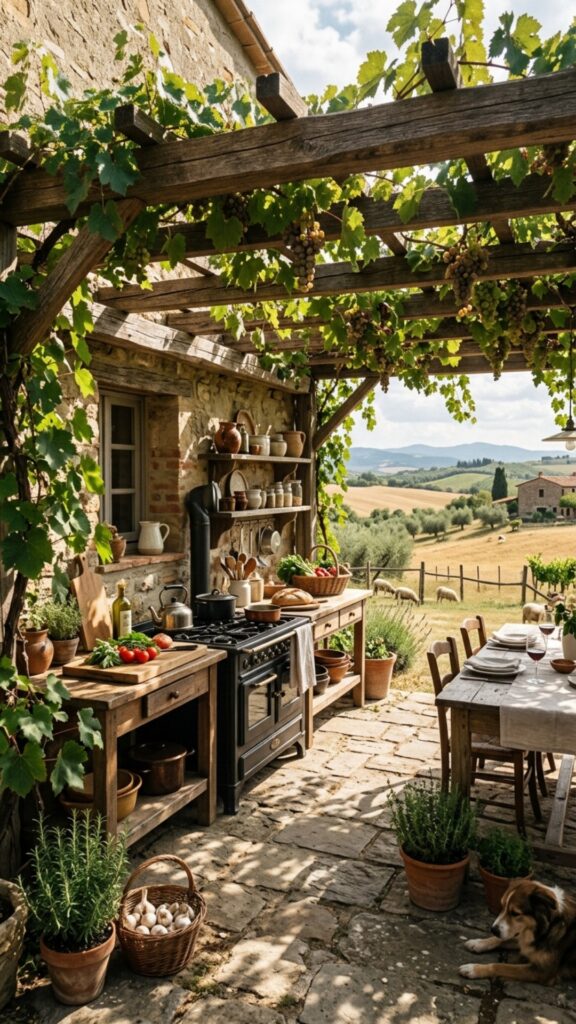
Shade | Rain cover | Open sides. A pergola gives your kitchen a roof without walling it in. Cedar or pressure-treated posts handle farm weather, and a slatted or solid top blocks sun and rain over your prep zone.
Run climbing vines like grape or hops across the top for natural shade that thickens each summer. Anchor the posts in concrete footings below the frost line so wind and freeze-thaw don’t shift them.
6. Fire Pit Grill with Adjustable Grate
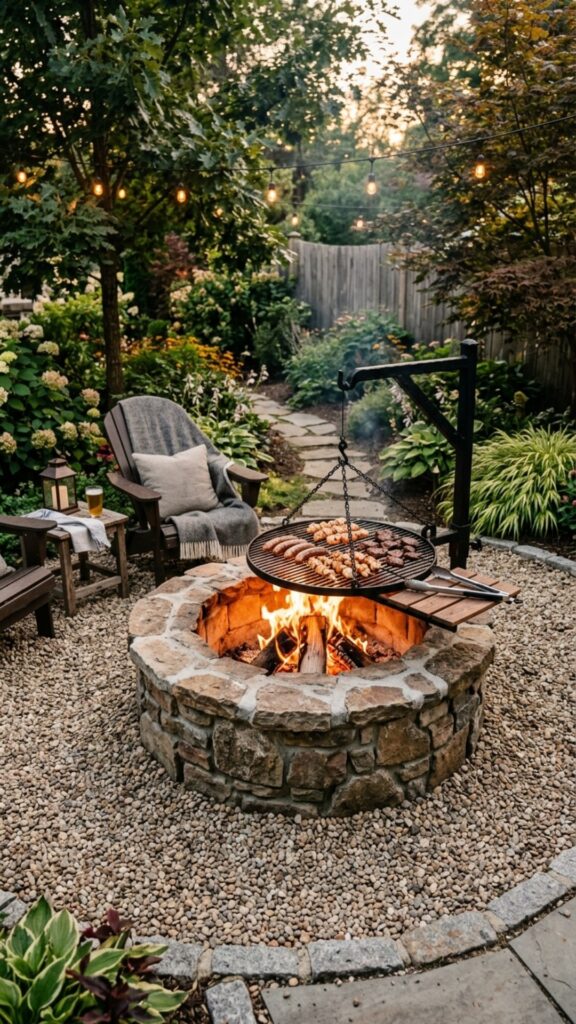
A simple stone fire pit with a swing-arm grate cooks for a crowd and costs little. Raise or lower the grate to control heat—high for searing, low for slow smoking.
Ring the pit with fieldstone or a steel band. Keep a gravel or paver apron around it to stop sparks from catching dry grass, which matters a lot on open farmland in summer.
7. Salvaged Brick Prep Counter
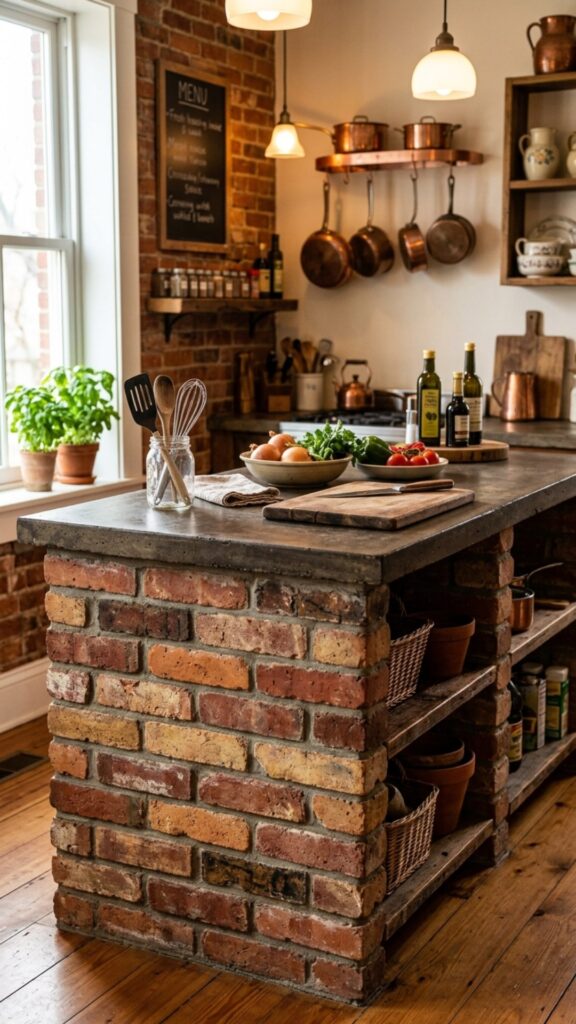
Old bricks from a torn-down chimney or wall build a solid, heat-safe prep counter. Lay them over a block or concrete base for a surface you can set hot pans on without worry.
Brick soaks up stains, so seal it if you cut meat or oil there often. Mismatched, weathered bricks actually look better here—uniformity reads too new for a farm setting.
8. Portable Rolling Cart Kitchen
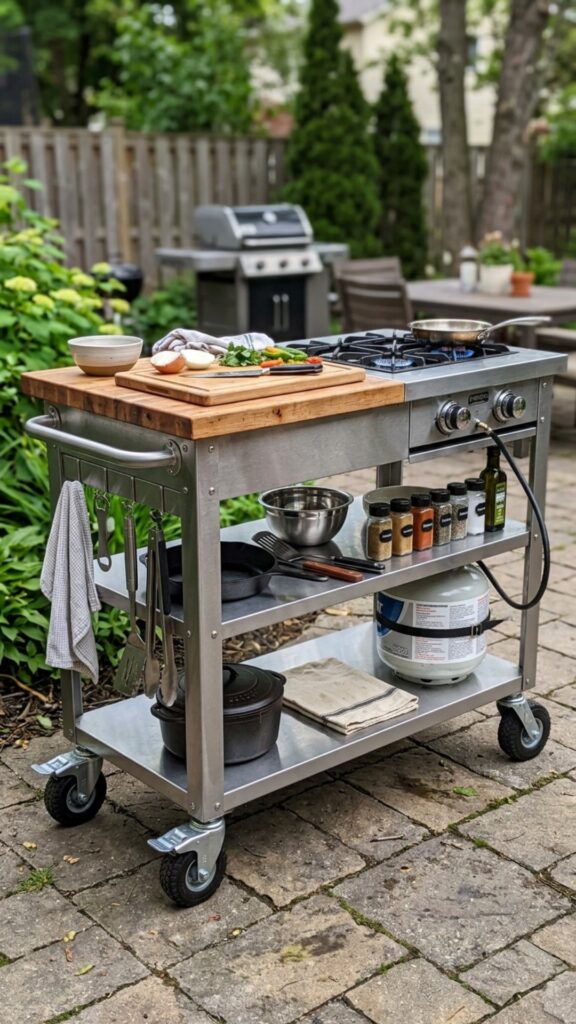
Rolling | Flexible | Store-away. A heavy-duty cart on locking casters lets you move the kitchen to shade, wind cover, or storage. Good for renters or anyone testing a spot before building permanent.
Load it with a two-burner propane stove, a cutting board top, and a lower shelf for pots. Roll it into the barn over winter so weather doesn’t wear it down.
9. Off-Grid Propane Range Setup
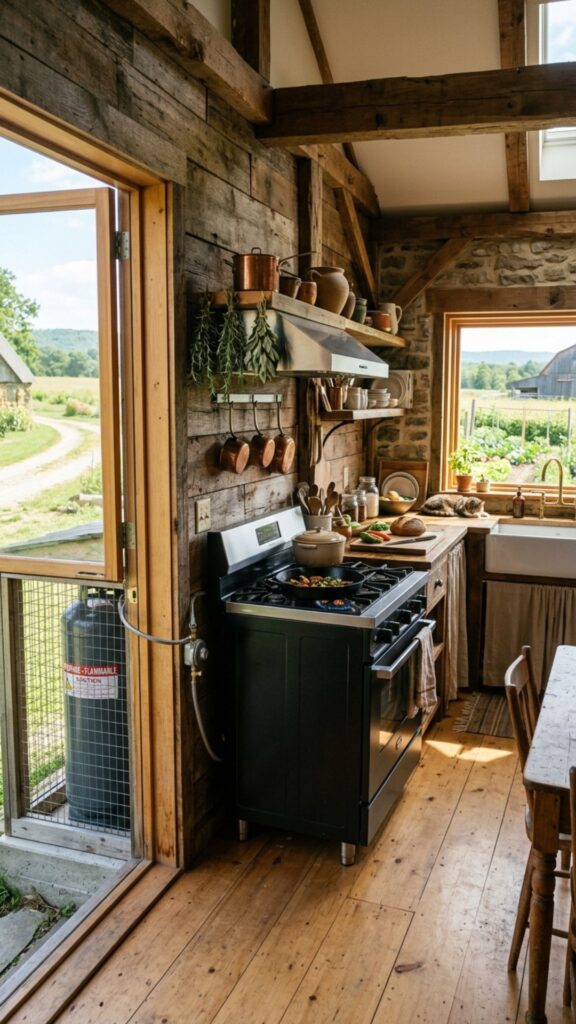
When there’s no gas line to the field, propane fills the gap. A standard tank runs a two- or four-burner range for months of regular cooking, and swapping tanks takes minutes.
Store the tank in a shaded, ventilated spot away from the burners. Check hose connections each season with soapy water—bubbles mean a leak. This setup keeps a working kitchen running far from the house.
10. Herb Garden Integrated Counter
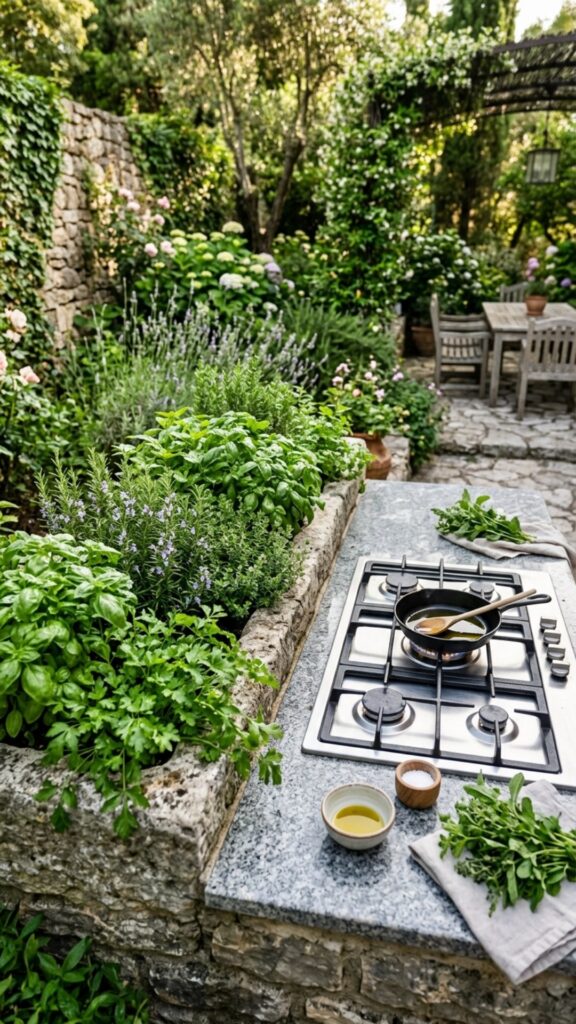
Build a raised planter into one end of your counter run and grow the herbs you cook with most. Basil, rosemary, thyme, and parsley sit an arm’s reach from the stove.
Line the planter with waterproof membrane so runoff doesn’t rot the wood beside it. Fresh herbs steps from the pan turn a good farm meal into a great one, and you save every trip back to the house.
11. Weathered Steel and Timber Combo
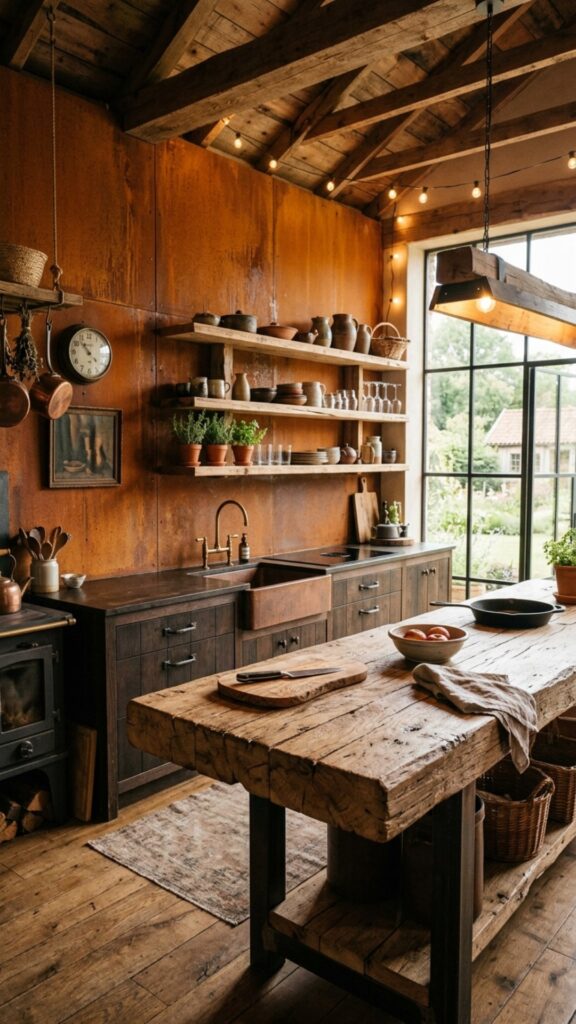
Corten steel rusts to a stable orange-brown crust that protects the metal underneath, and it needs zero upkeep once it settles. Pair it with rough timber for a hard-working, low-maintenance look.
Use the steel for counter frames, a backsplash, or the pizza oven surround. It costs more than block up front but outlasts most alternatives, which pays off on a farm where redoing work is a real hassle.
12. Root Cellar-Style Cold Storage
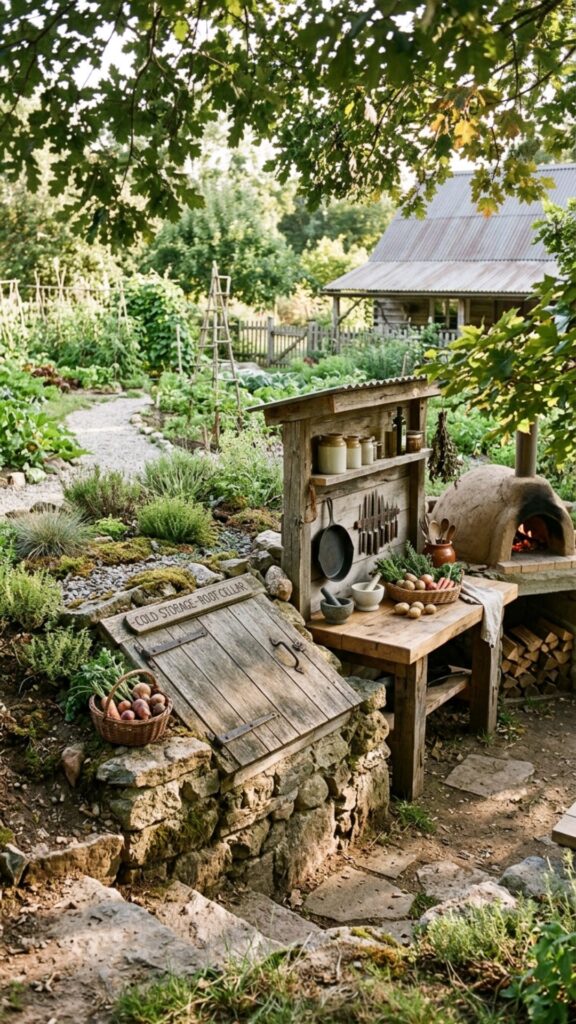
Skip an outdoor fridge and dig a small in-ground cold box near the kitchen. The earth holds a steady cool temperature for produce, drinks, and dairy without any power.
Line it with stone or block and fit an insulated lid. It won’t replace refrigeration for meat, but for a harvest spread it keeps everything crisp. This is off-grid storage that farmers have trusted for generations.
13. Corrugated Metal Roof Shelter
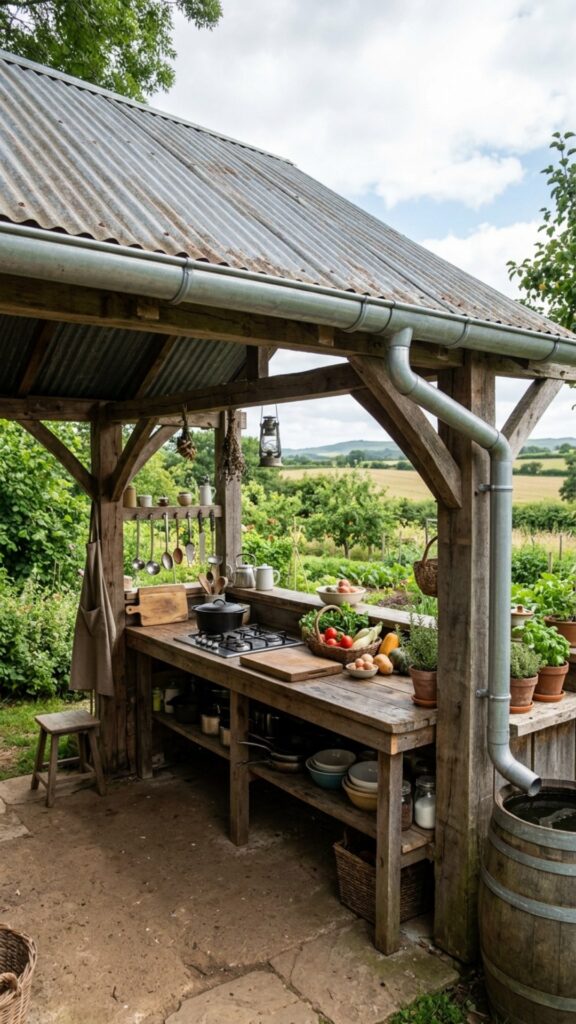
Corrugated metal sheds rain fast and stands up to hail, sun, and wind for decades. Set it over a post frame for a cheap, tough shelter that matches barn and outbuilding roofs.
Slope it enough to drain and add a gutter to catch rainwater for the herb garden or wash-up. In hot months the metal radiates heat, so raise it high and leave the sides open for airflow.
14. Stacked Stone Bar and Seating Wall
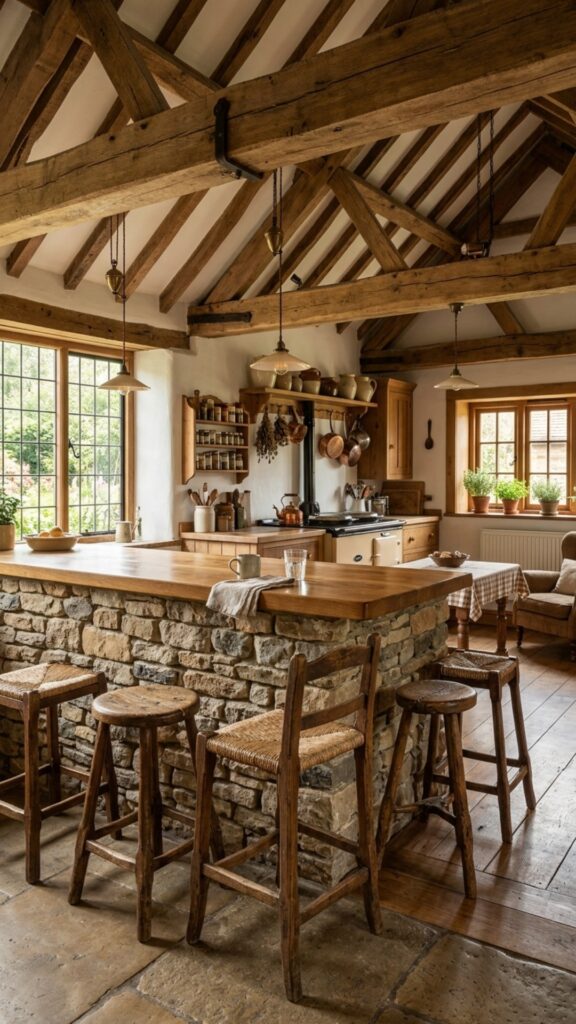
A low stacked-stone wall doubles as a bar top and seating for guests while you cook. It defines the kitchen edge and blocks ground-level wind that can steal grill heat.
Dry-stack fieldstone for a true rustic look or mortar it for extra strength. Cap the top with a smooth stone or timber slab so people have a flat surface for plates and drinks.
15. Vintage Cast Iron Cooking Range
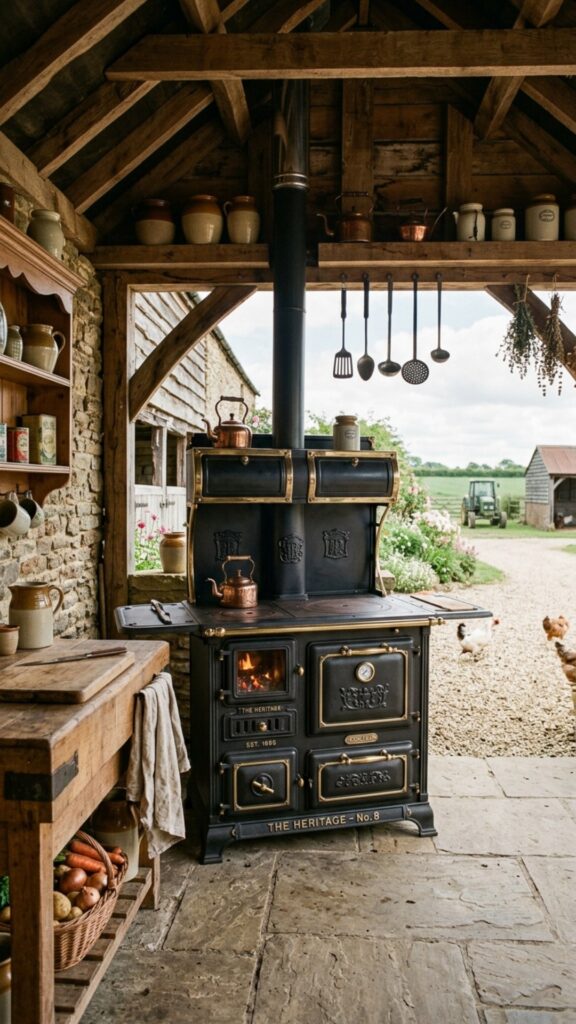
An old cast iron range or stove, restored and set under cover, brings serious cooking power and farmhouse character. These units hold heat and cook evenly better than most new gear.
Source one from a farm auction or salvage yard. Clean off rust, season the surfaces, and shelter it from rain since cast iron rusts fast when wet. It becomes the centerpiece of the whole space.
16. Pallet Wood Storage Shelving
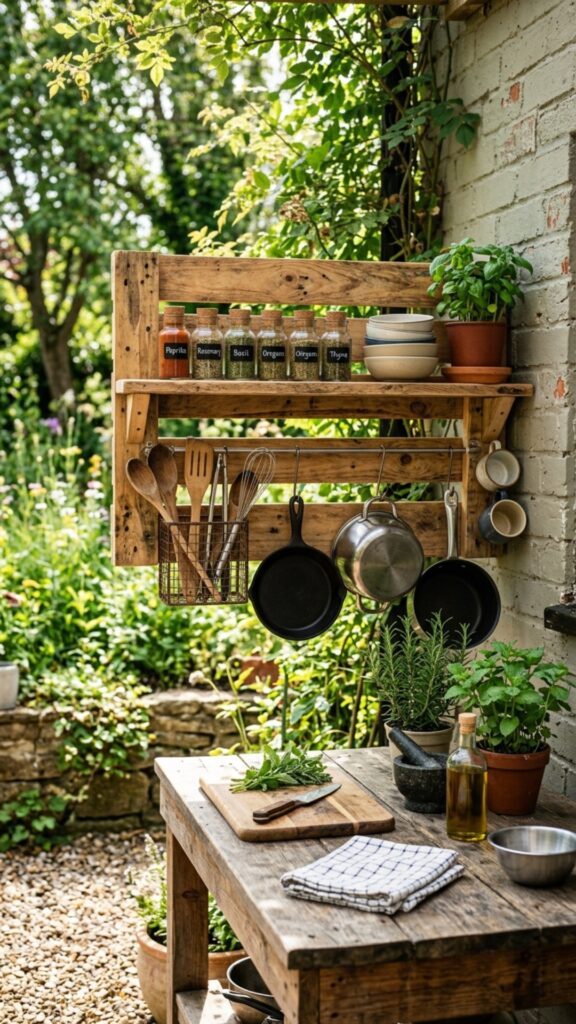
Free pallets break down into shelving, spice racks, and utensil hangers. Sand them smooth, seal against moisture, and mount them on your counter’s back wall.
Keep heavy items low and light gear up high. Pallet wood won’t last forever outdoors, so treat it as budget storage you can replace easily—no loss when a shelf finally gives out.
17. Outdoor Smoker Built from Brick
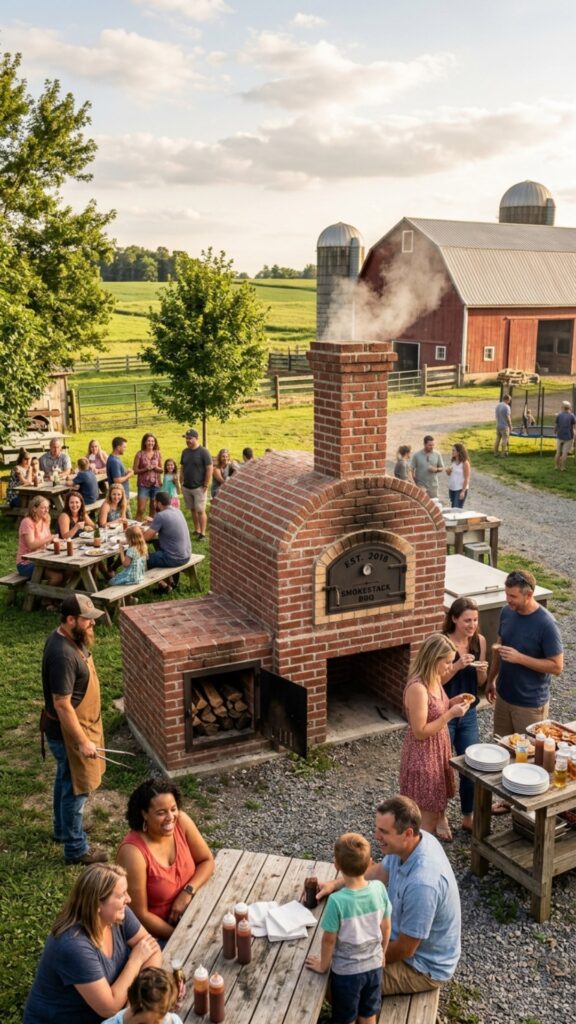
Slow-smoke | High-volume | Set and forget. A brick offset smoker handles briskets, ribs, and whole birds for a farm gathering. The mass of the brick holds temperature steady for hours.
Build a firebox to one side and a cooking chamber beside it, connected by a low opening. It takes more masonry skill than a fire pit, but the payoff is real barbecue with room to spare.
18. Rain Barrel Wash Station
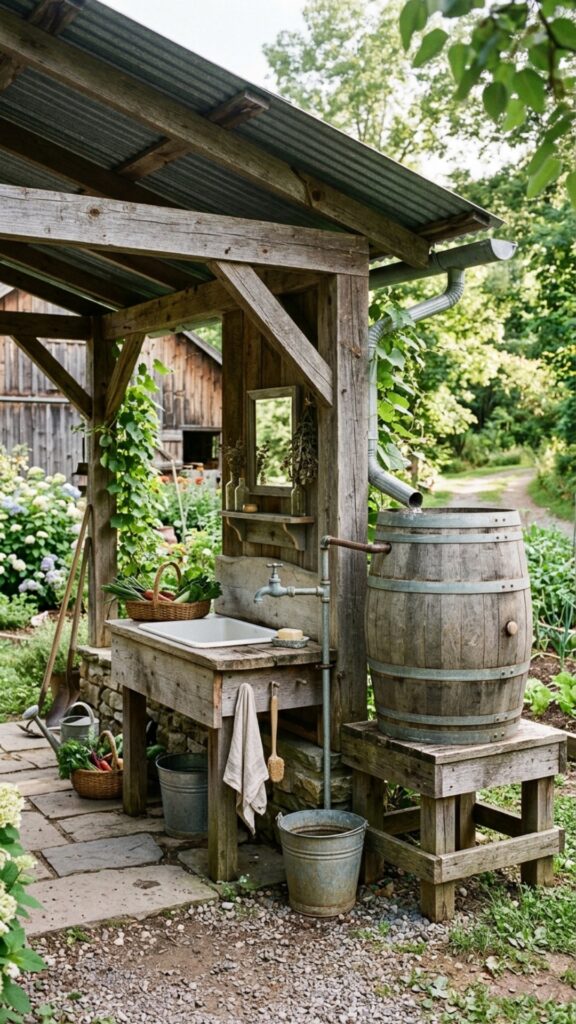
Set a rain barrel above a simple sink and gravity feeds your wash water—no plumbing required. It’s the easiest off-grid cleanup fix for a field kitchen.
Catch runoff from your shelter roof into the barrel and add a spigot at the base. Use this water for rinsing produce and washing hands, not drinking. It cuts your trips to the house to almost none.
19. Sunken Fire Table with Bench Ring
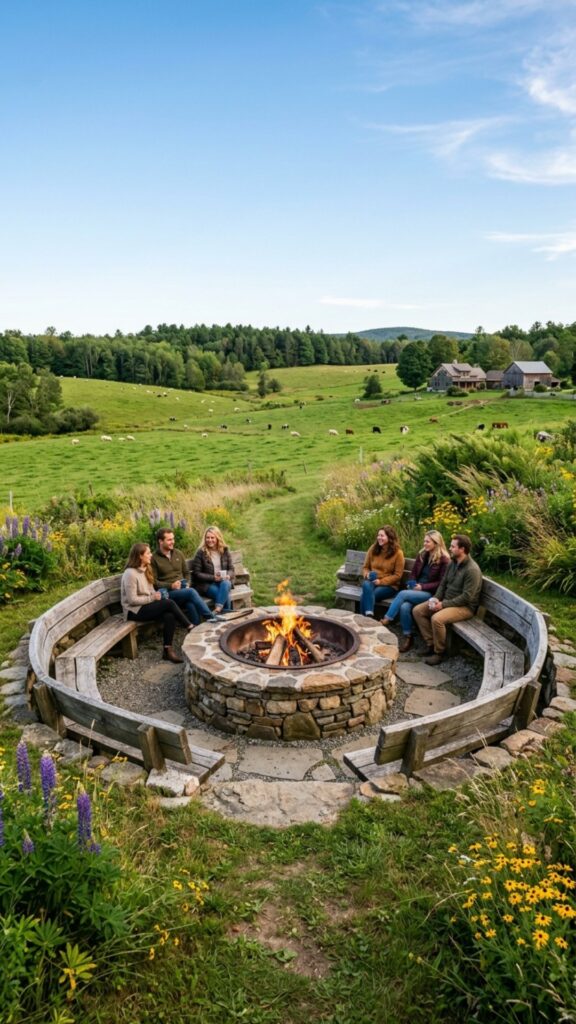
Dig a shallow pit, line it with stone, and ring it with built-in benches for a gathering spot that cooks too. Set a grate over the fire for cooking or keep it clear for warmth after the meal.
Grade the ground so rain drains away from the pit, not into it. This layout pulls the whole group close and turns cooking into the evening’s main event—exactly what farm life is built for.
20. Full Open-Air Kitchen with Zoned Layout
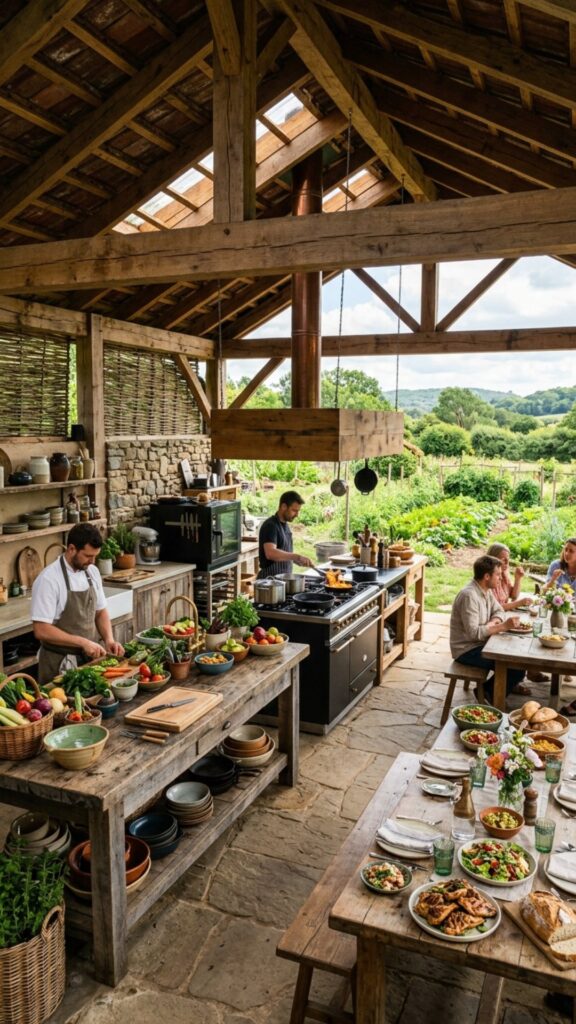
For a permanent setup, plan three zones: prep, cook, and serve. Keep prep by the sink, cook in the center with grill and oven, and serve at a bar facing your guests. The flow saves steps every single meal.
Lay it out on paper first, marking where sun, wind, and rain hit hardest across the day. Put the grill downwind of seating and the prep counter in shade. Good zoning is the difference between a kitchen you use and one you abandon.
Key Takeaways
- Salvaged materials—barn wood, brick, troughs—cut costs and match the farm setting
- Weather-proof everything: seal wood, slope roofs, shelter cast iron
- Off-grid options like propane, rain barrels, and cold cellars work far from the house
- Plan layout around sun, wind, and rain before you build
Build a Farm Kitchen That Works
The best outdoor kitchen ideas in farm areas share one thing: they use what the land already offers and stand up to what the weather throws. Start small—pick one or two ideas that fix your biggest gap, whether that’s shelter, storage, or a real heat source.
This week, walk your plot and mark where the sun sits at dinnertime and where the wind cuts hardest. That single step shapes every choice that follows. Then price out your salvaged materials, sketch a simple zoned layout, and build the piece you’ll use most first.
How much does a farm outdoor kitchen cost to build?
A basic setup with salvaged materials, a fire pit, and a block counter can run under $500. A permanent zoned kitchen with a stone oven, smoker, and shelter typically ranges from $3,000 to $10,000, depending on how much labor and material you supply yourself.
What are the best materials for a rustic farm outdoor kitchen?
Reclaimed barn wood, fieldstone, salvaged brick, concrete, and corten steel hold up best. They resist farm weather, cost little when salvaged, and match the setting. Seal wood and concrete regularly to extend their life.
How do I protect an outdoor kitchen from weather on open farmland?
Build a pergola or corrugated metal roof for rain and sun cover, slope all surfaces to drain, and seal wood and concrete twice a year. Shelter cast iron and store portable gear indoors over winter.
Can I build an outdoor kitchen off the grid on a farm?
Yes. Use a propane range for cooking, a rain barrel for wash water, and a root cellar-style box for cold storage. These trusted, low-tech options run a full working kitchen with no gas line or plumbing.
What's the best layout for a farm outdoor kitchen?
Use three zones—prep, cook, and serve. Place prep by the sink in shade, the grill and oven in the center downwind of seating, and a serving bar facing guests. Map sun and wind before building.