Picture stepping into your courtyard on a warm evening, the smell of woodsmoke drifting from a stone oven while friends gather around a weathered table. That’s the pull of a rustic outdoor kitchen. It turns a plain patch of paving into the heart of your home, blending old-world texture with modern cooking comfort.
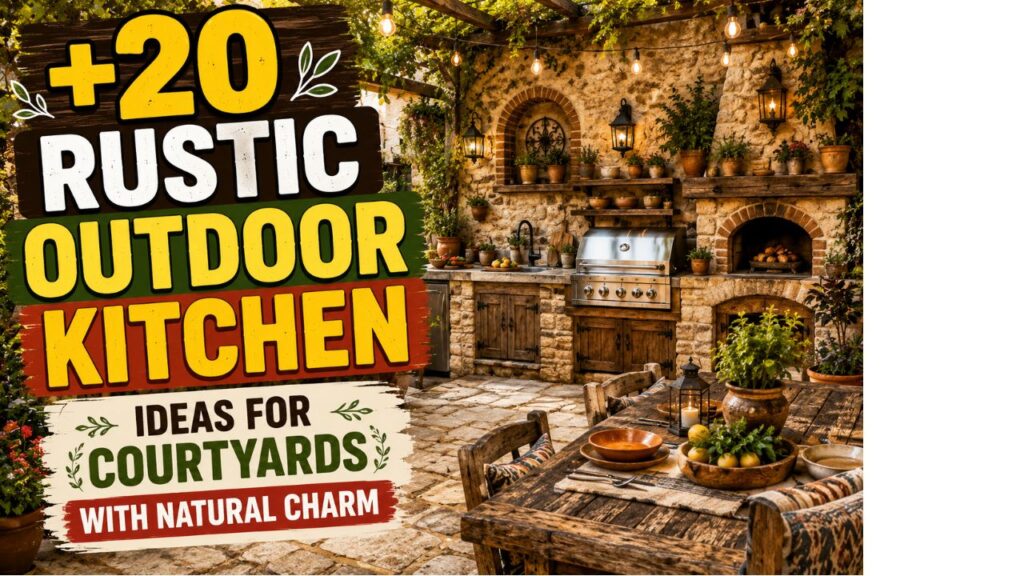
After a decade helping homeowners plan outdoor living spaces, I’ve learned that courtyards reward rustic design. Their enclosed walls trap heat, frame views, and create instant intimacy. In this guide, you’ll find 20 practical outdoor kitchen ideas for courtyards, each with real materials, layout tips, and small details that make a big difference.
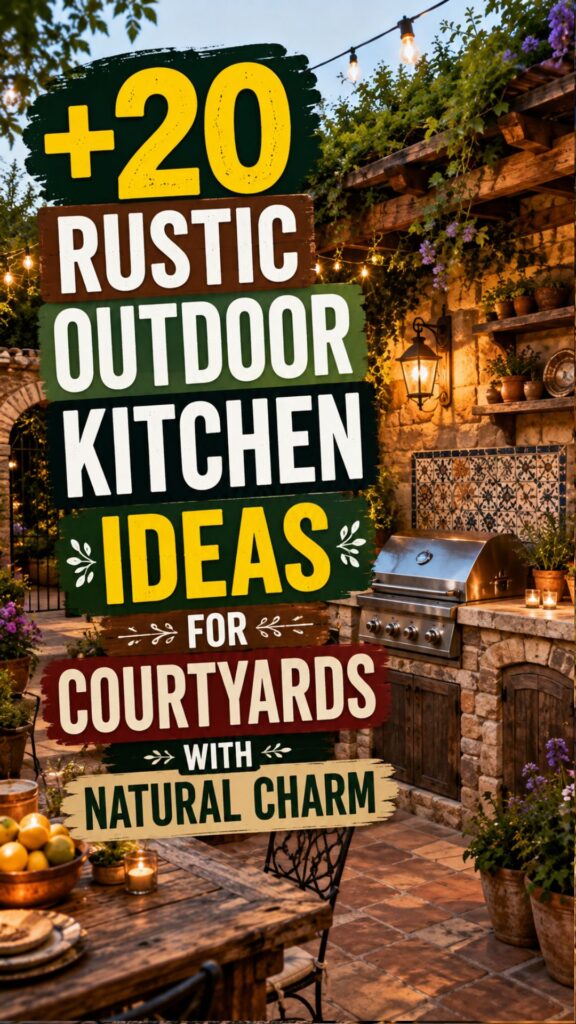
What you’ll get:
- Specific rustic materials and how to use them
- Layout and function tips for tight courtyard spaces
- Answers to the questions people ask most before building
1. Build a Central Stone Pizza Oven
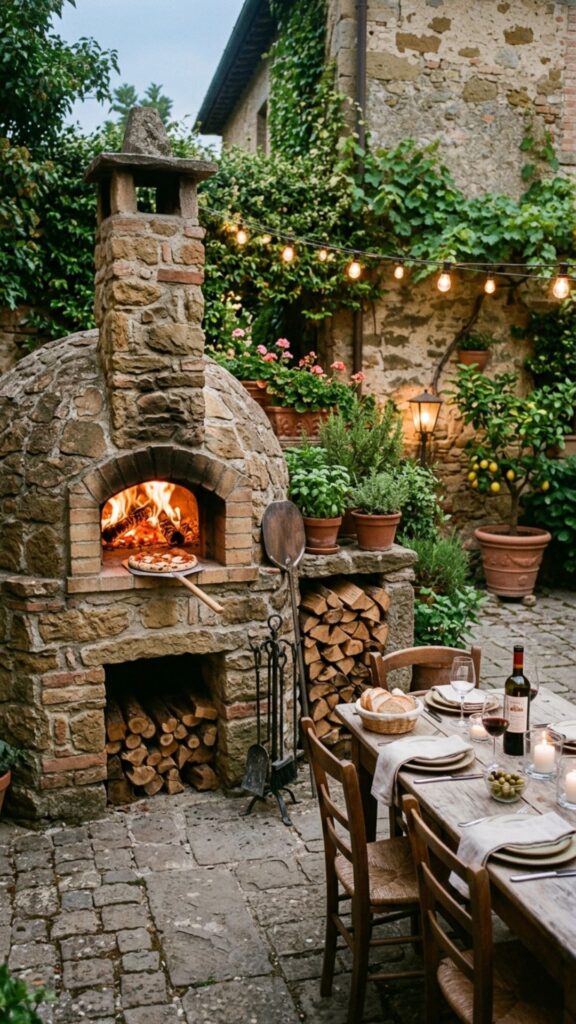
A wood-fired pizza oven is the anchor most rustic courtyards deserve. Built from fieldstone or brick, it radiates warmth long after you finish cooking and doubles as a focal point when it’s just for looks. Position it against a solid wall so smoke drifts up and away from seating.
For a lived-in look, mix reclaimed brick with mortar left slightly rough at the joints. Add a small wood-storage nook in the base so split logs stay dry and stay within arm’s reach. A single oven like this can handle pizza, roasted vegetables, and slow-cooked meats, giving you real range from one build.
2. Use Reclaimed Wood for Counters and Cabinets
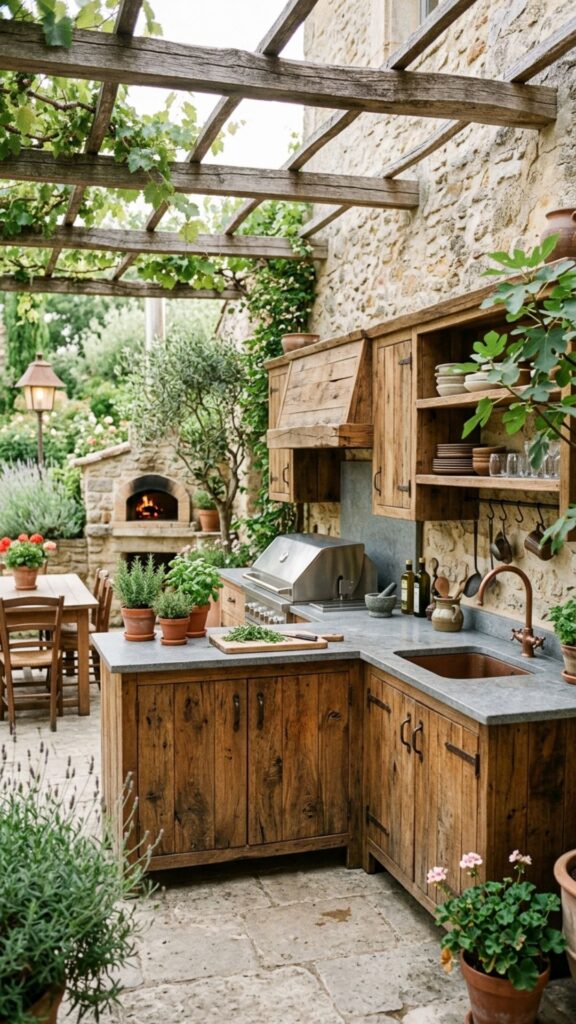
Reclaimed barn wood brings instant age and story to a courtyard kitchen. Old oak or chestnut planks, sealed with a food-safe outdoor oil, resist weather while showing off knots and grain. Use them for cabinet fronts, shelf edges, or a warm counter overhang.
Pair the wood with a stone or concrete work surface for durability where you actually chop and prep. This combination keeps costs down, since you only need premium stone on high-use zones. Sand any splinters, seal twice a year, and the wood will patina beautifully instead of rotting.
3. Install a Natural Stone Countertop
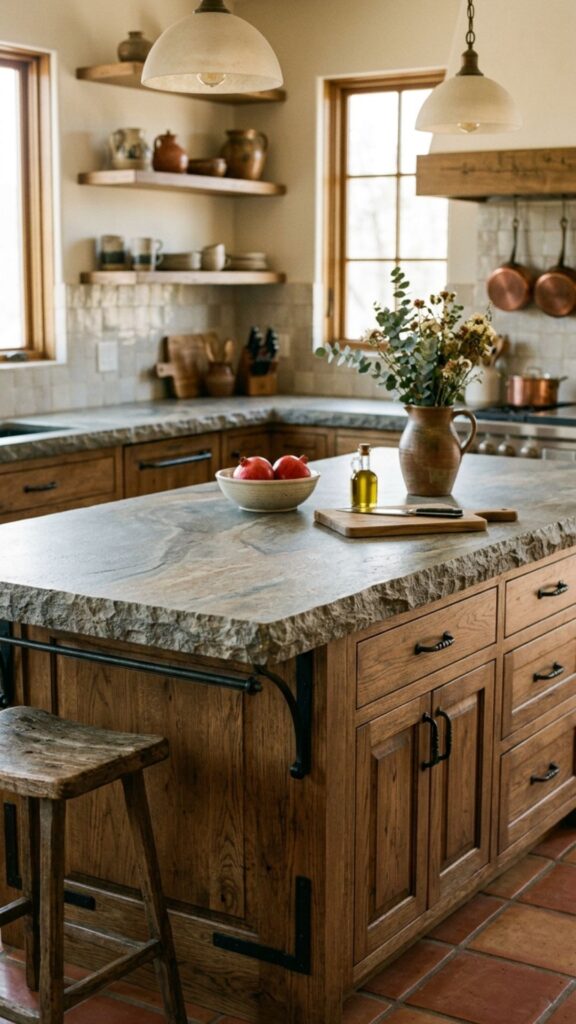
Granite, soapstone, and limestone all shine outdoors, but for rustic charm, choose a honed or leathered finish over a high polish. The matte texture hides scratches and looks like it’s been there for generations. Limestone in particular gives that soft, quarried European feel.
Stone handles heat, spills, and sun without complaint, which is why professional outdoor builders favor it. Seal porous stones like limestone annually to fend off oil stains. A thick slab with a chiseled edge reads far more rustic than a thin, clean-cut one.
4. Add a Rustic Brick Grilling Station
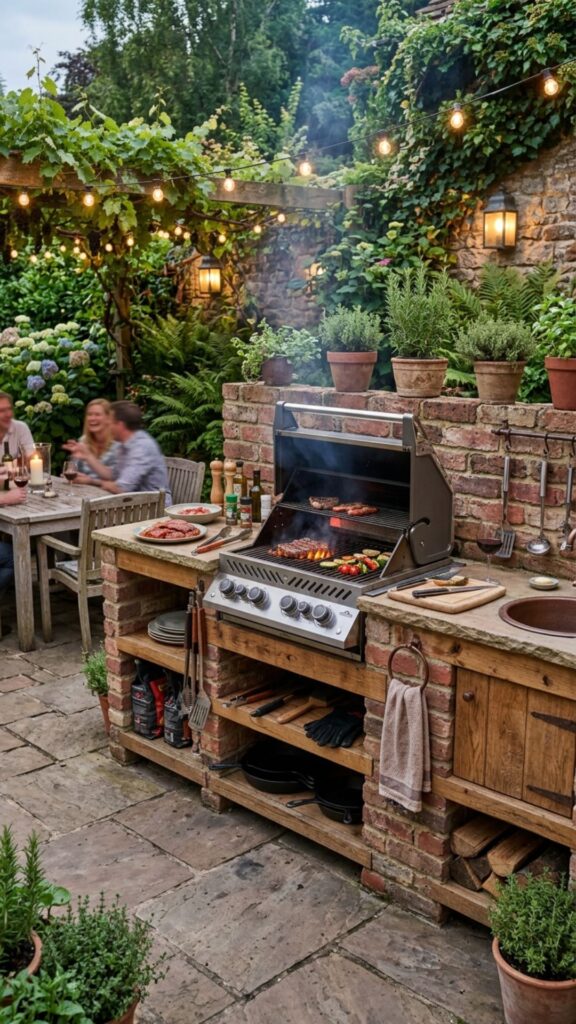
A masonry grill built from aged brick feels rooted and permanent in a way that a rolling steel cart never will. Frame a stainless grill insert with brick walls and a stone cap, then leave a shelf on each side for platters and tongs. It becomes a workstation, not just an appliance.
Brick also stores and reflects heat, helping food cook evenly. Choose salvaged brick with color variation for authenticity, and finish the top with a slab that matches your counters. This is one of the most durable outdoor kitchen ideas for courtyards, since brick easily outlasts most freestanding grills.
5. Hang Wrought-Iron Lighting Fixtures
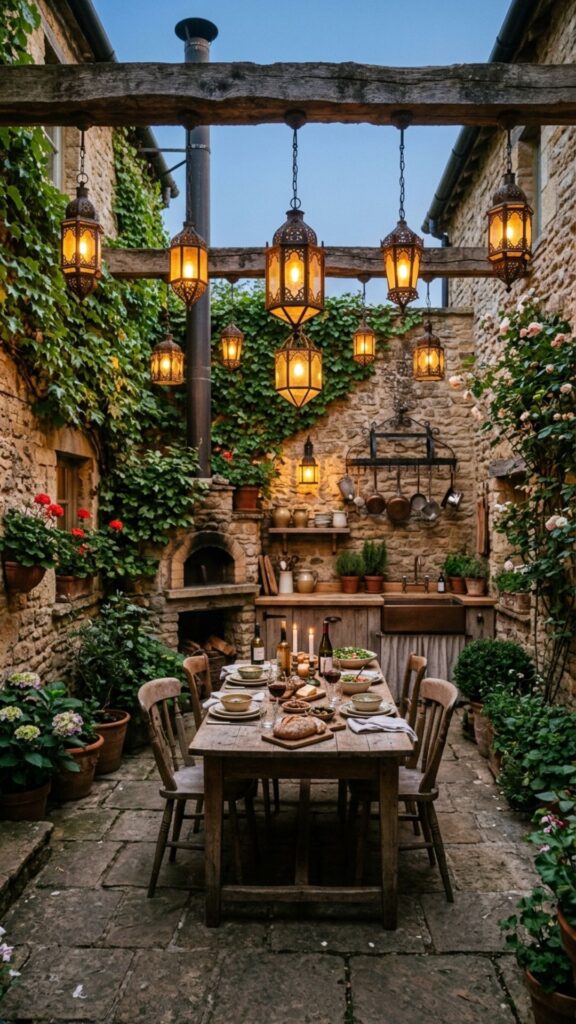
Lighting sets the mood once the sun drops. Wrought-iron lanterns and pendants add hand-forged character that suits stone and timber perfectly. Hang a pendant over the prep counter and mount lanterns on courtyard walls for a warm, layered glow.
Choose warm-white bulbs, around 2700K, to keep the light soft and inviting rather than clinical. Add a dimmer so you can shift from bright cooking light to relaxed dining ambiance. Solar-powered iron sconces are a smart pick where running wiring would be costly.
6. Create a Pergola With Climbing Vines
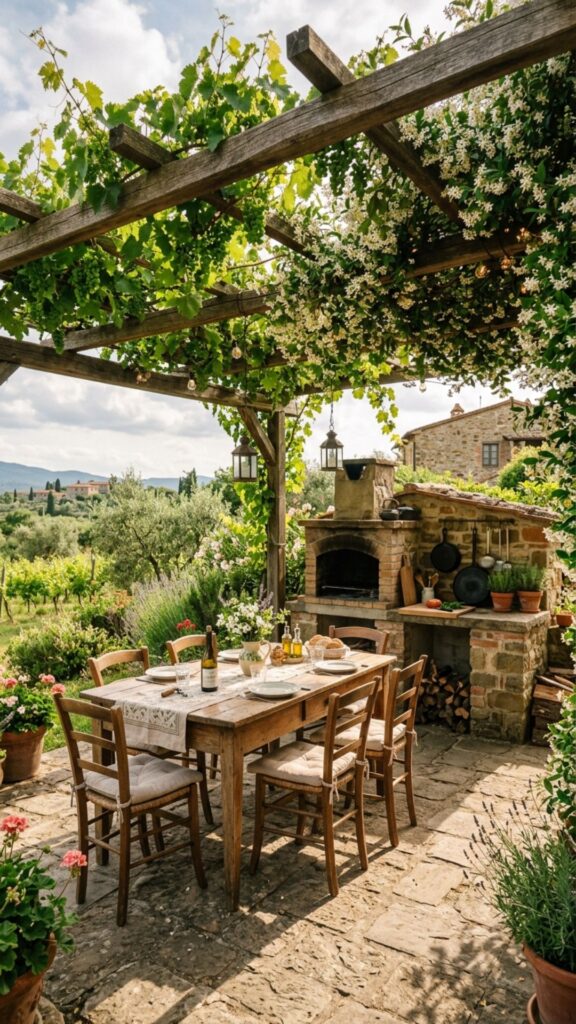
A timber pergola gives your kitchen shade, structure, and a living ceiling. Train grapevines, wisteria, or jasmine up the posts, and within a couple of seasons you’ll have dappled shade and fragrance overhead. It defines the cooking zone without closing it in.
Use rough-sawn cedar or oak beams for that weathered look and natural rot resistance. Space the rafters to let some sun through in cooler months, when the vines drop their leaves. This one addition transforms a hot, exposed courtyard into a comfortable outdoor room.
7. Feature a Farmhouse Apron Sink
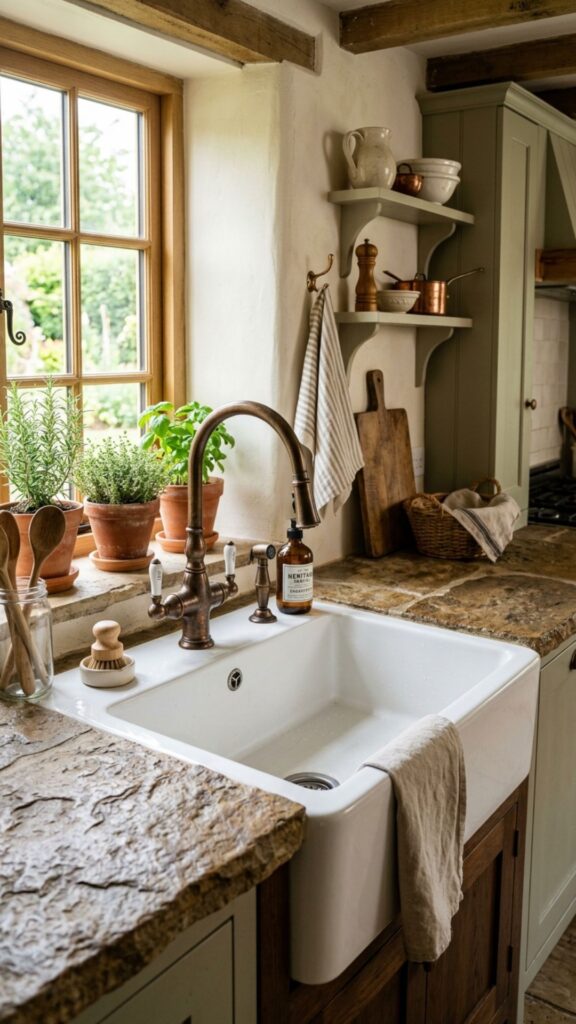
A deep apron-front sink, in fireclay or hammered copper, ties the whole rustic look together. It handles big pots and quick cleanups, and copper develops a rich patina that only improves with age. Set it into a wood or stone counter for contrast.
Run the plumbing to a wall shared with your indoor kitchen to keep costs reasonable. A gooseneck faucet in oil-rubbed bronze completes the vintage feel. If winters freeze where you live, install a shutoff valve so you can drain the line each fall.
8. Lay a Weathered Flagstone Floor
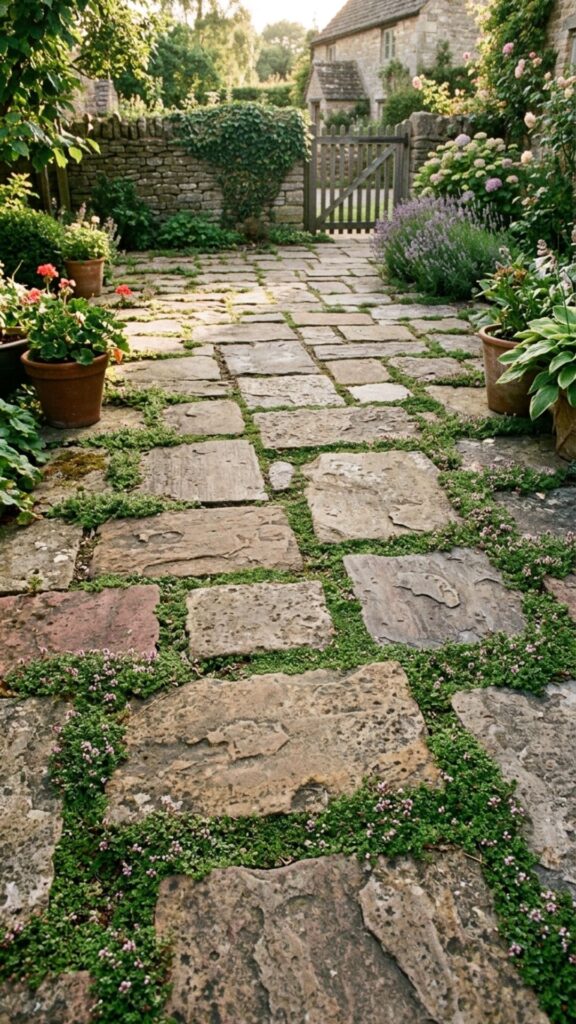
The floor sets the tone underfoot, and irregular flagstone delivers rustic charm the moment you step on it. Its uneven edges and earthy tones feel natural and age gracefully. Wide grout joints filled with fine gravel or creeping thyme soften the look further.
Flagstone grips well when wet, an important safety point around a kitchen. Choose a slip-resistant, unpolished stone and slope the surface slightly for drainage. This flooring pairs beautifully with stone counters and brick walls, keeping your palette earthy and cohesive.
9. Build a Fireplace for Year-Round Use
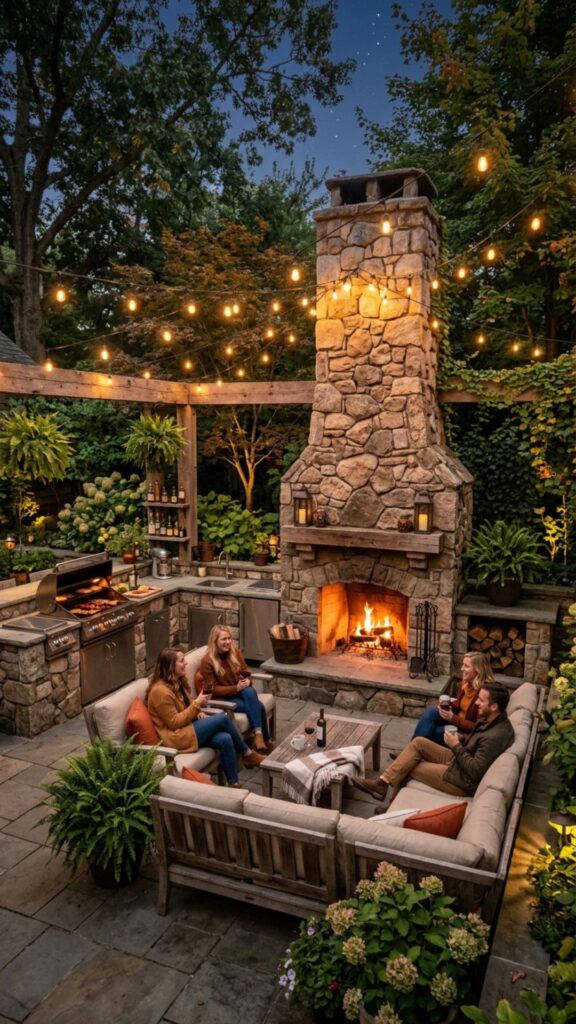
A stone fireplace stretches your courtyard season well past summer. Built tall against a wall, it draws the eye upward and throws heat toward a nearby seating cluster. Cooking grates or a swing-arm hook turn it into a second cooking source too.
Stack local stone in irregular courses for authenticity, and add a raised hearth that doubles as extra seating. A well-designed fireplace becomes the gathering spot after dinner. Just confirm your local codes on clearances and chimney height before you build.
10. Include Open Shelving in Aged Wood
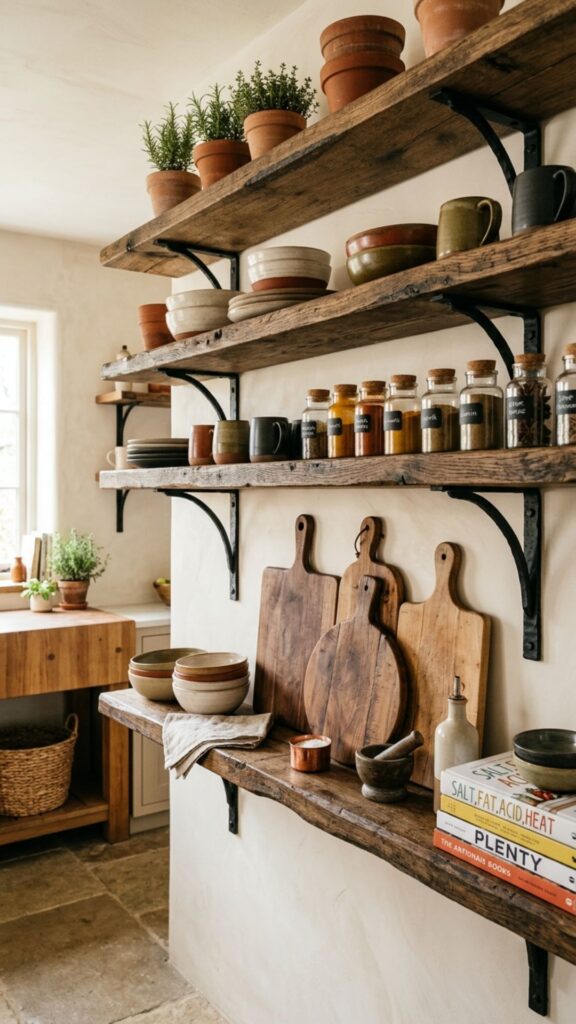
Open shelves keep dishes, spices, and serving boards within reach while showing off rustic materials. Thick planks on iron brackets look intentional and hold up to outdoor conditions. Style them with terracotta pots, stoneware, and a few well-used tools.
Keep everyday items on lower shelves and decorative pieces up high. Weatherproof anything you leave out, or store delicate items indoors between uses. Open shelving suits tight courtyards because it stores gear without the bulk of closed cabinets.
11. Set Up a Terracotta Herb Garden
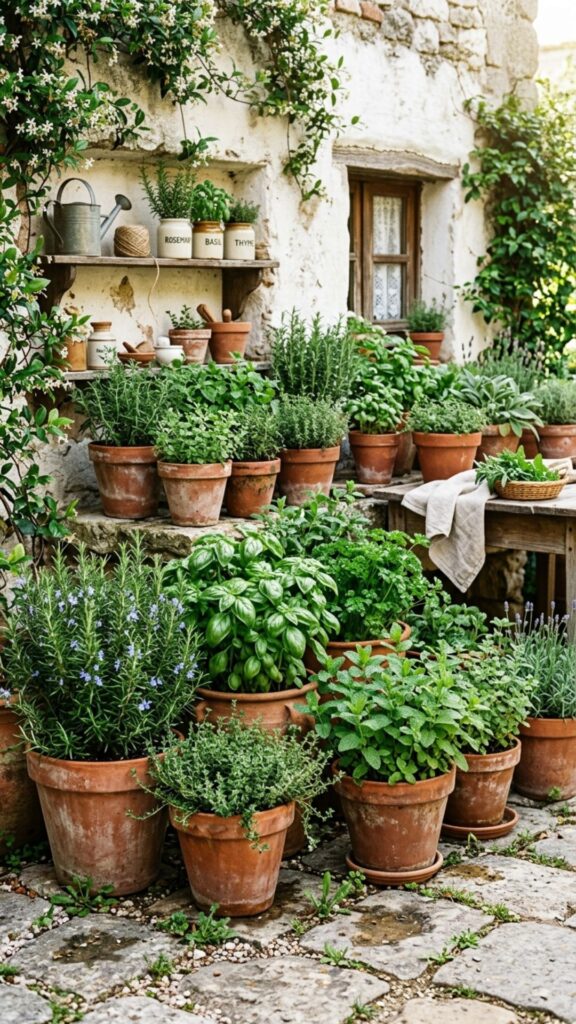
Fresh herbs steps from the grill are a cook’s dream, and terracotta pots deliver rustic warmth with function. Line them along a wall, on shelves, or across a windowsill ledge. Rosemary, thyme, basil, and mint all thrive in courtyard microclimates.
Terracotta breathes, which keeps roots healthy, though it dries faster in heat, so water regularly. Group pots for a lush, layered look and easy watering. Snipping your own herbs mid-cook adds flavor and makes the space feel genuinely lived-in.
12. Add a Copper Range Hood
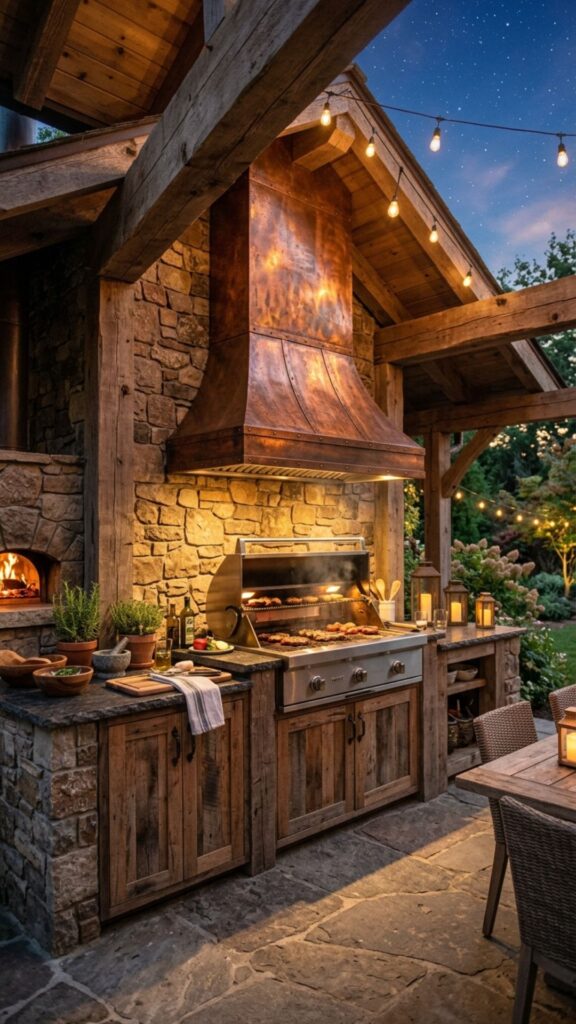
If your courtyard cooking zone sits under cover, a copper range hood adds both style and smart function. It vents smoke and grease while acting as a gleaming, warm-toned centerpiece. Over time the copper darkens into a deep, rich finish.
Choose a hood rated for outdoor use, with the right CFM for your grill or stove. Mount it at the recommended height above the cooktop for effective venting. This is a detail that quietly signals quality craftsmanship to anyone who visits.
13. Design a Rustic Bar With a Live-Edge Top
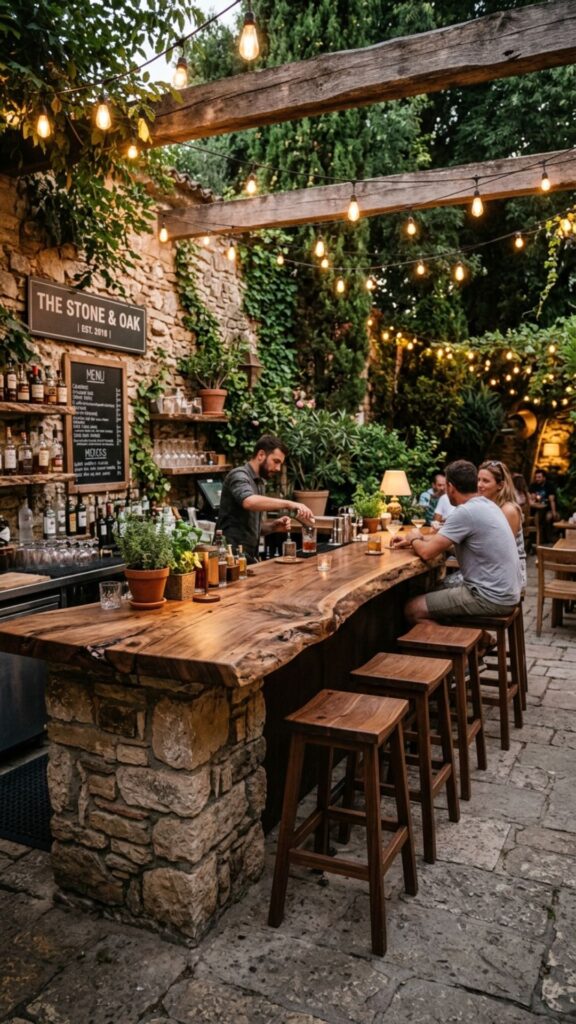
A bar invites people to linger while you cook. A live-edge slab, with its natural bark-line curve, makes an unforgettable counter. Set it on stone or timber supports and add a few stools for casual seating.
Seal the slab well to protect it from rings and weather, and re-oil it yearly. Position the bar so guests face you across the counter, keeping conversation flowing. It’s one of the most social outdoor kitchen ideas for courtyards, turning cooking into an event.
14. Incorporate Vintage Wine Barrels
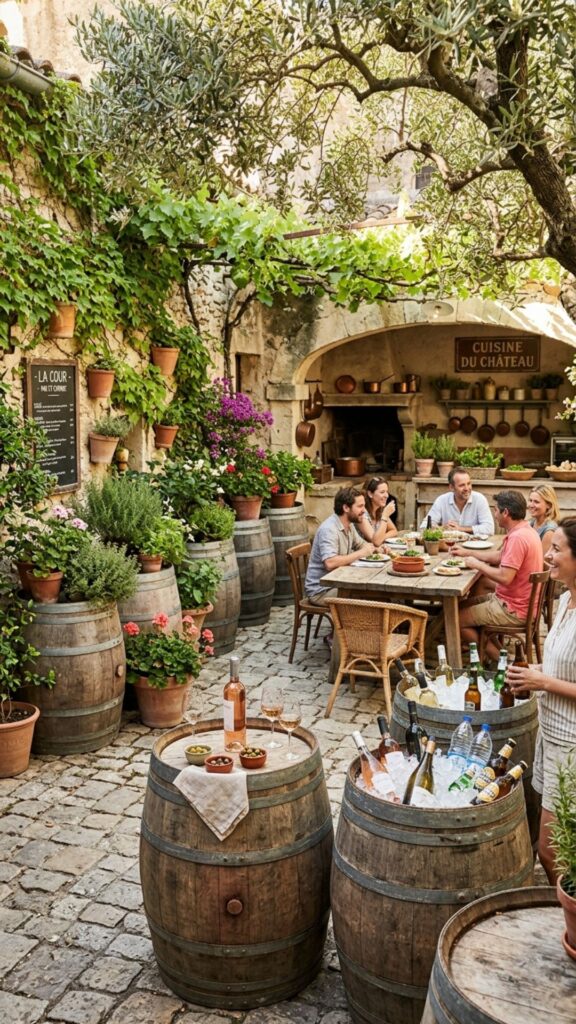
Old oak wine barrels bring instant rustic soul and surprising utility. Cut one in half for planters, use whole barrels as side tables, or convert one into a cooler for chilled drinks. Their curved staves and iron hoops carry real history.
Source genuine used barrels from a local winery when you can, since reproductions rarely match the character. Sand rough spots and seal for outdoor life. A single barrel adds warmth to an empty corner without a big investment.
15. Use Exposed Brick or Stone Walls
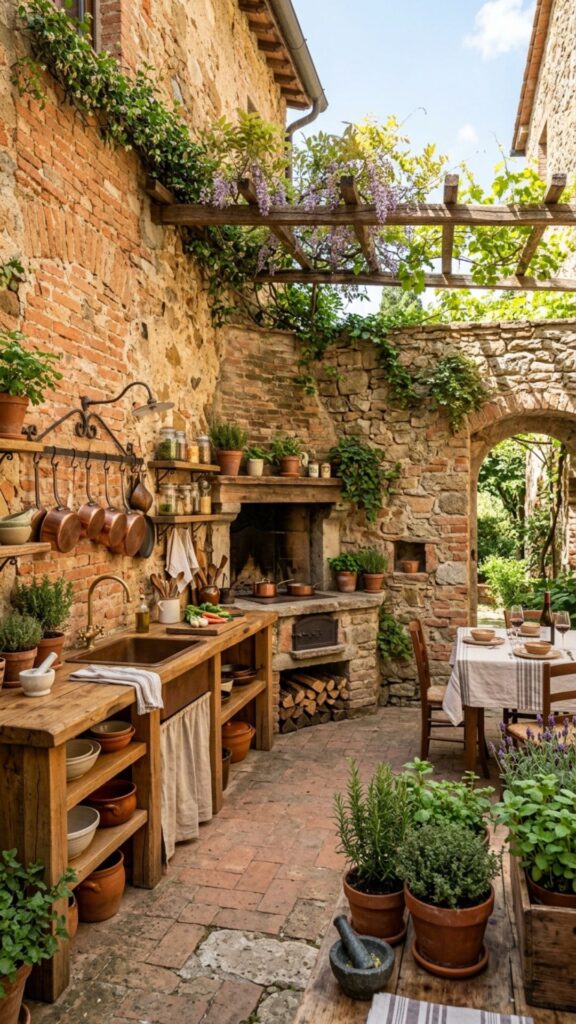
If your courtyard already has masonry walls, let them shine. Strip back paint or render to reveal brick or stone, and you’ve got a rich backdrop for free. These surfaces make every other rustic material look right at home.
Where walls are plain, add a stone or brick veneer to one section behind the cooking zone. It defines the kitchen visually and protects the wall from heat and splatter. Textured walls also help absorb sound, keeping your courtyard pleasantly quiet.
16. Hang String Lights Overhead
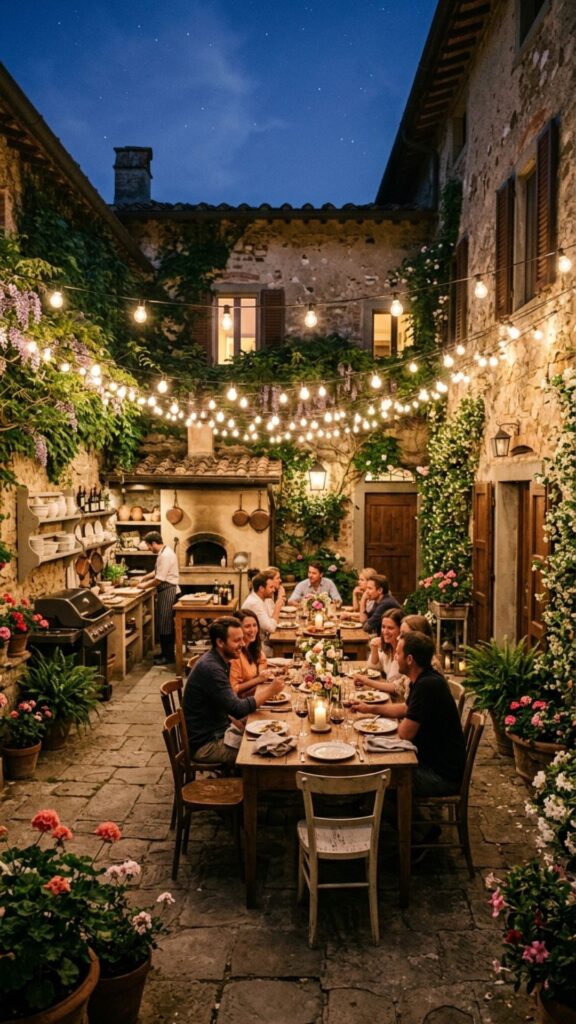
Warm string lights strung across a courtyard create instant magic at night. Drape them between pergola posts, wall hooks, or a central pole for a soft canopy of light. They suit rustic spaces because they feel casual and festive at once.
Choose weatherproof, commercial-grade strands with warm bulbs for longevity. Combine them with your task lighting rather than replacing it. This affordable touch delivers the biggest atmosphere upgrade for the smallest budget.
17. Add a Cast-Iron Cooking Setup
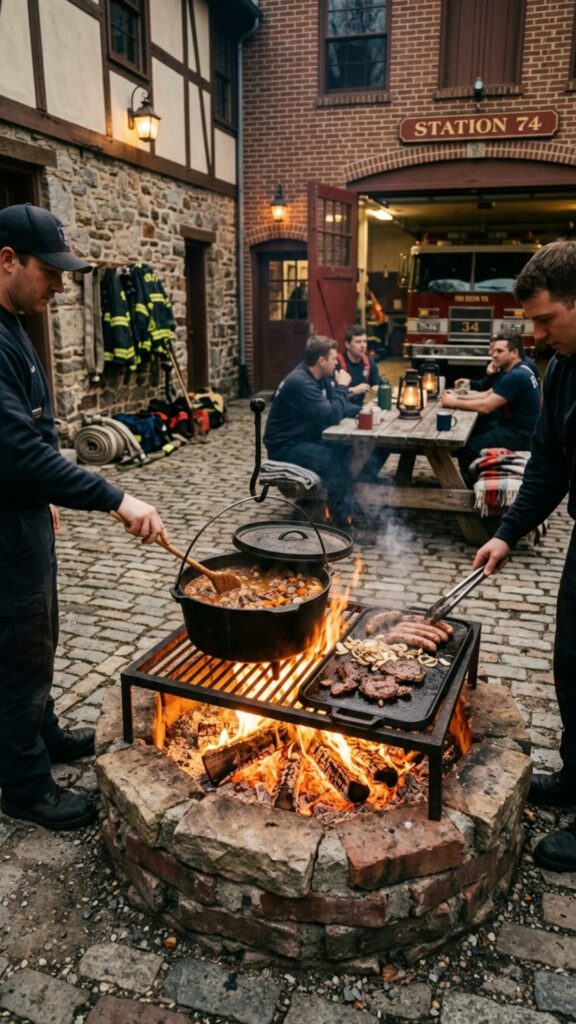
Cast iron and rustic cooking go hand in hand. A tripod dutch oven, a flat griddle, or a Santa Maria-style grill lets you cook over live fire the old-fashioned way. These tools reward patience with deep, smoky flavor.
Store cast iron under cover and season it regularly to prevent rust outdoors. A dedicated fire pit or grill station gives you a safe spot to use it. Guests love watching food cook over open flame, adding a bit of theater to the meal.
18. Create Built-In Bench Seating
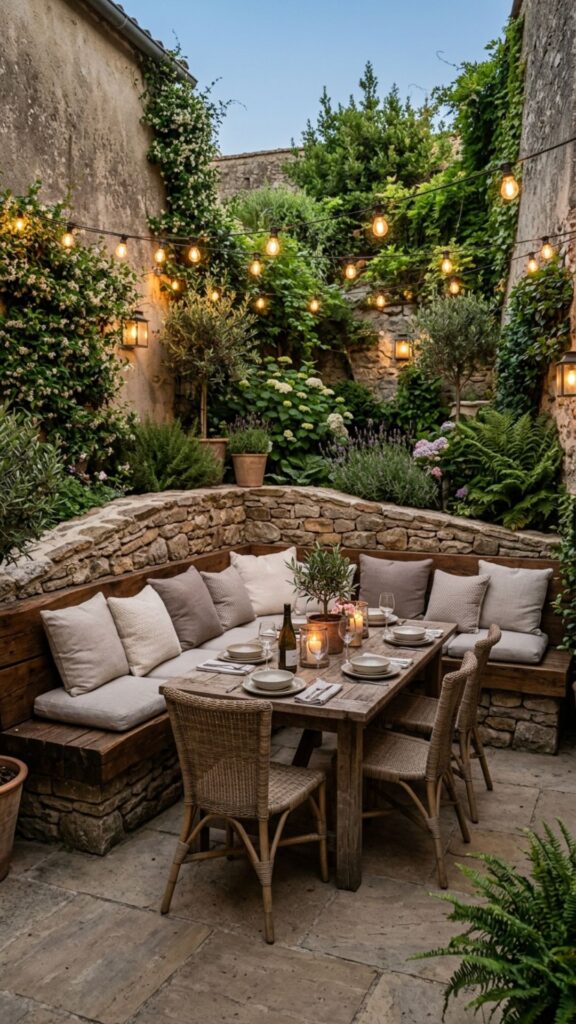
Built-in benches save space and add permanence, both valuable in a compact courtyard. Frame them in stone or timber and top them with weatherproof cushions in natural linen or canvas. Tuck storage inside the base for cushions and tools.
Wrap seating around a corner or fire feature to encourage conversation. Because the benches are fixed, they leave more open floor than scattered chairs. Add a few loose stools for flexibility when the crowd grows.
19. Install a Water Feature for Calm
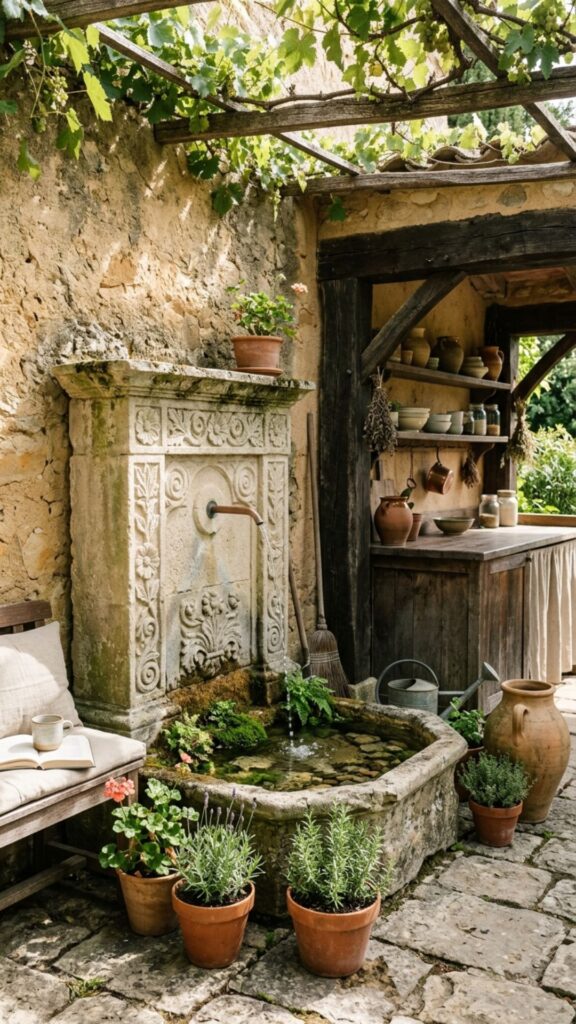
A small fountain or wall spout brings gentle sound that softens the clatter of cooking and street noise. Carved stone or a simple copper spout suits the rustic palette without stealing attention from the kitchen. Tuck it into a corner or against a wall.
Recirculating pumps keep water use low, and a shaded spot slows algae growth. The moving water also cools the air slightly on hot days. It’s a small feature that makes a courtyard feel like a private retreat.
20. Finish With Aged Metal and Weathered Accents
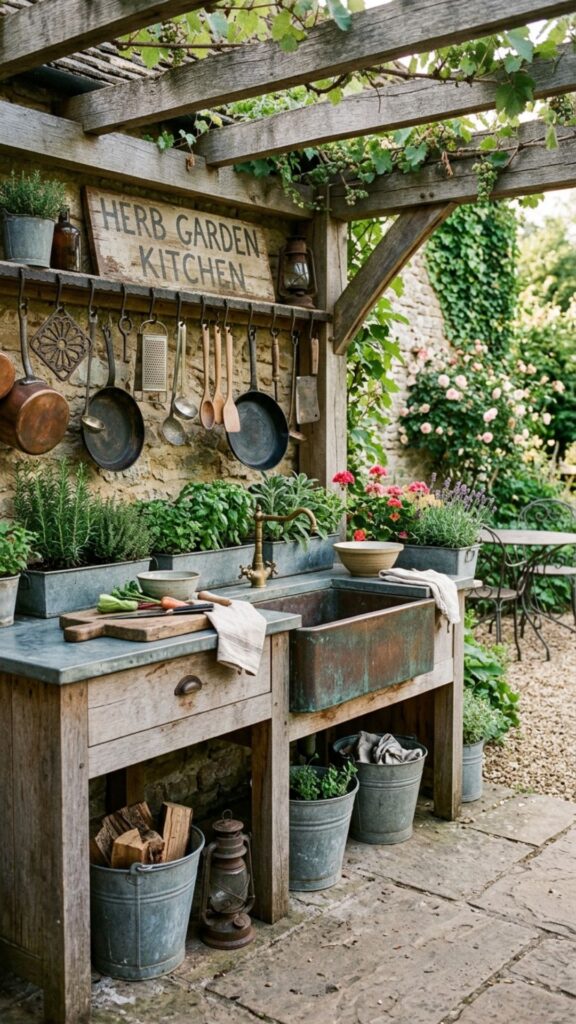
The final layer is in the details. Aged zinc planters, iron hooks, galvanized buckets, and weathered signage tie everything together. These accents look collected over time rather than bought in one shopping trip.
Mix metals deliberately, iron, copper, and zinc, for depth instead of matching everything. Hunt salvage yards and flea markets for one-of-a-kind pieces with genuine wear. These finishing touches are what separate a rustic kitchen from a generic one.
Conclusion
A rustic courtyard kitchen isn’t about spending the most, it’s about choosing materials with texture, history, and honest function. Whether you start with a stone pizza oven, a reclaimed wood bar, or simply string lights and terracotta herbs, each of these outdoor kitchen ideas for courtyards adds warmth and character. The best spaces grow over time, so pick two or three ideas that excite you and build from there.
Ready to get started? Grab a notepad, walk your courtyard, and sketch where your grill, prep, and seating zones would flow best. Then choose one project from this list to tackle first, and you’ll be cooking outdoors sooner than you think.
How much does a rustic outdoor kitchen for a courtyard cost?
A basic setup with a grill station, counter, and seating typically runs $5,000 to $15,000. Adding a stone pizza oven, fireplace, or full plumbing can push a premium build to $30,000 or more. Using reclaimed materials and doing prep work yourself keeps costs down.
What is the best material for a rustic courtyard kitchen?
Natural stone and reclaimed wood are the top choices. Stone handles heat, weather, and daily use while offering timeless texture, and reclaimed wood adds warmth and story. Combining the two, stone for work surfaces and wood for accents, gives you both durability and charm.
Can I build an outdoor kitchen in a small courtyard?
Yes. Small courtyards work well with compact, built-in features like a masonry grill, open shelving, and bench seating. Their enclosing walls also provide structure, shade, and privacy. Focus on one cooking zone and vertical storage to make the most of limited space.
How do I protect a rustic outdoor kitchen from the weather?
Seal wood and porous stone once or twice a year, use covers on grills and appliances, and add a pergola or roof for shade and rain protection. Drain water lines before frost, and store cushions and cast iron under cover when not in use.
Do I need a permit to build an outdoor kitchen?
Often, yes, especially for gas lines, electrical wiring, plumbing, or permanent masonry structures like fireplaces. Rules vary by location, so check with your local building department before you start. A licensed contractor can confirm requirements and handle inspections.