Nothing kills the mood of a relaxing evening outside like feeling your neighbor’s eyes on your every move. Whether your patio sits too close to the house next door or faces a busy street, a lack of privacy can make your outdoor space feel more like a fishbowl than a retreat.
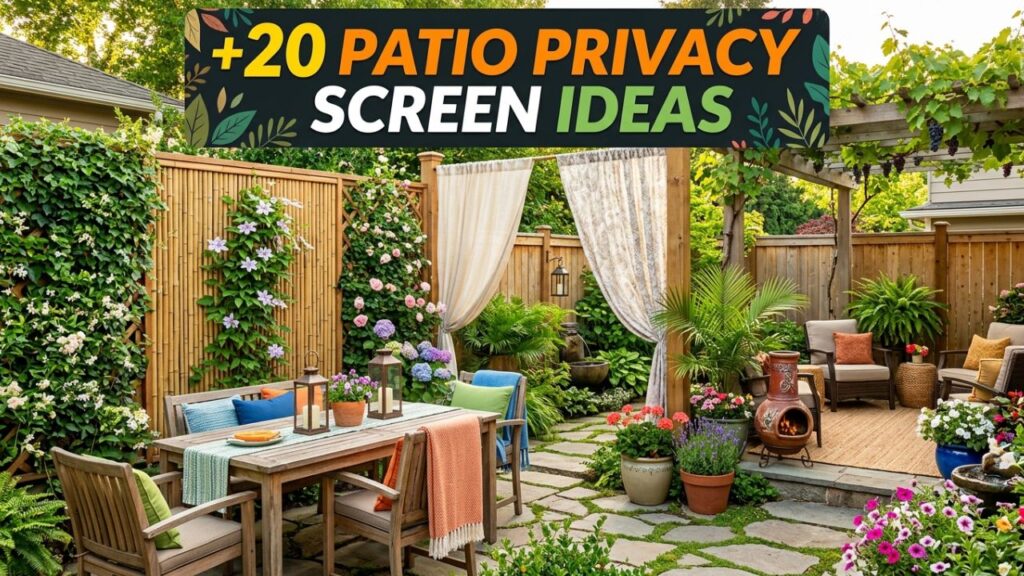
The good news? You don’t need to build a fortress or spend a fortune to fix it. After years of helping homeowners transform their yards, I’ve found that the right screen can turn even the most exposed patio into a snug little getaway.
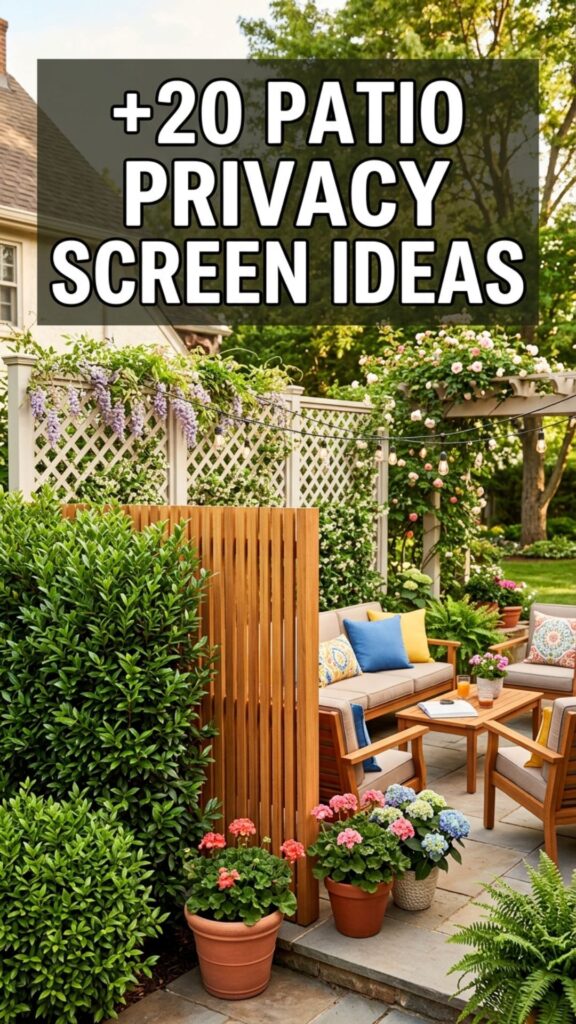
Below, you’ll find 20 patio privacy screen ideas that range from weekend DIY projects to polished, permanent features. Each one includes practical tips so you can pick what actually works for your space, budget, and style.
1. Classic Wood Lattice Panels
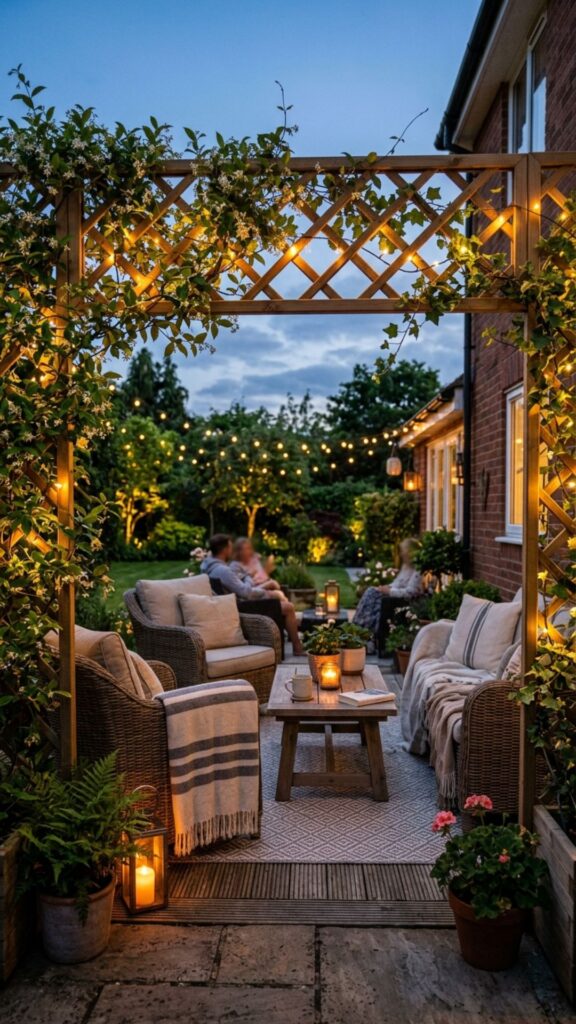
Wood lattice is a tried-and-true favorite for good reason. The crisscross pattern blocks direct sightlines while letting light and air flow through, so your patio never feels boxed in. You can buy pre-made panels at most home stores and mount them to posts in an afternoon.
For a warmer look, stain the wood instead of painting it. Cedar and redwood hold up well against moisture and resist rot, which means less maintenance over the years. If you want extra coverage, weave string lights or vines through the openings for a soft, layered effect.
2. Tall Potted Plants and Planters
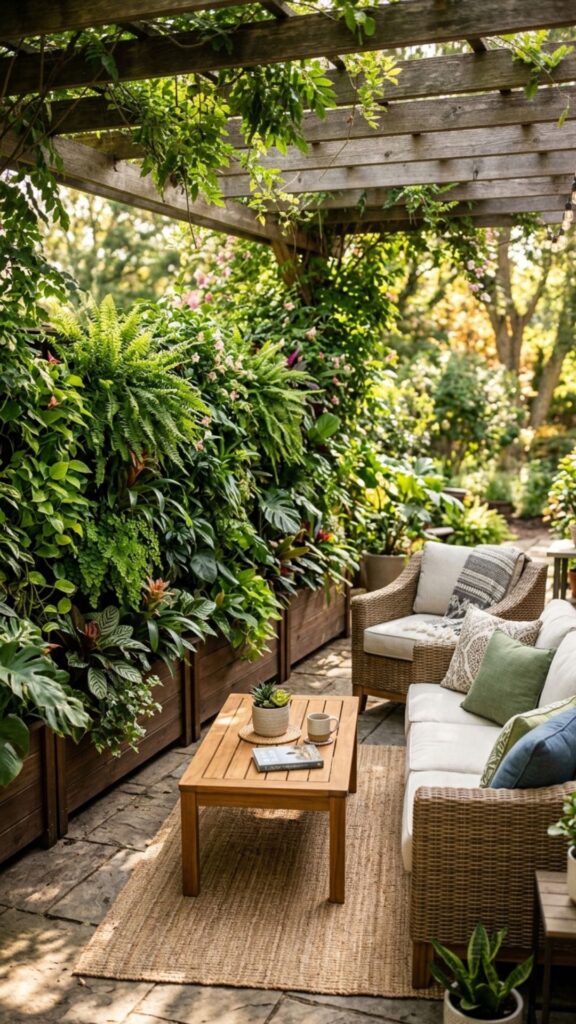
Sometimes the simplest solution is a row of greenery. Tall potted plants like bamboo, arborvitae, or ornamental grasses create a natural barrier that softens hard edges and adds life to your patio. Grouping planters of different heights makes the screen look intentional rather than accidental.
The beauty here is flexibility. You can rearrange pots as the seasons change or move them entirely if you rent your home. Choose containers with wheels for the heaviest plants, and use a quality potting mix so your privacy plants stay healthy and full year after year.
3. Living Green Walls
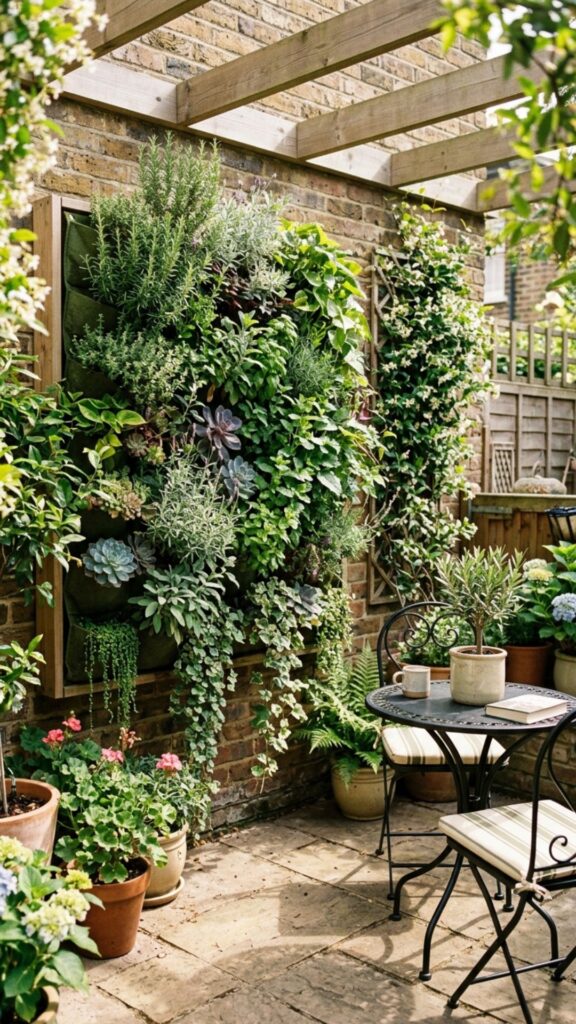
A living green wall packs a lot of privacy into a small footprint. These vertical gardens use mounted panels or pockets to grow plants upward, making them perfect for tight patios where floor space is precious. Herbs, succulents, and trailing vines all thrive in this setup.
Beyond the visual screen, a green wall cools the surrounding air and muffles noise from the street. Install a simple drip irrigation line to keep watering easy, and you’ll have a lush focal point that doubles as a privacy solution.
4. Outdoor Curtains
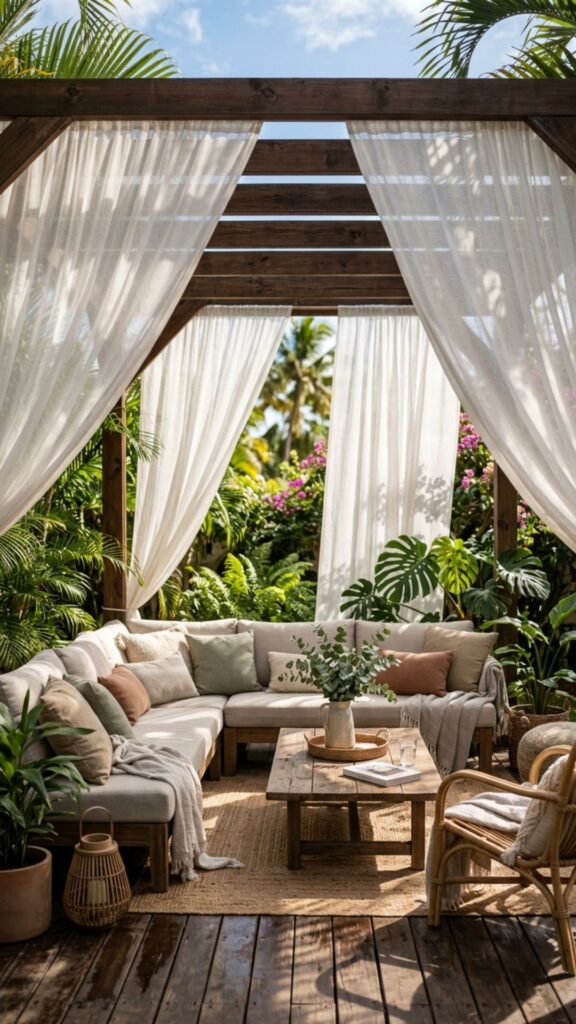
Fabric curtains bring instant softness and a resort-like feel to any patio. Hung from a pergola, rod, or wire, they let you open up the space on calm days and close it off when you want seclusion. Weather-resistant outdoor fabrics resist fading and mildew, so they last through the seasons.
Pick a neutral tone for a timeless look, or go bold with a pattern that matches your cushions. Add weighted hems or tiebacks to keep them from blowing around on windy days. This is one of the easiest patio privacy screen ideas to swap out whenever you want a fresh look.
5. Bamboo Fencing Rolls
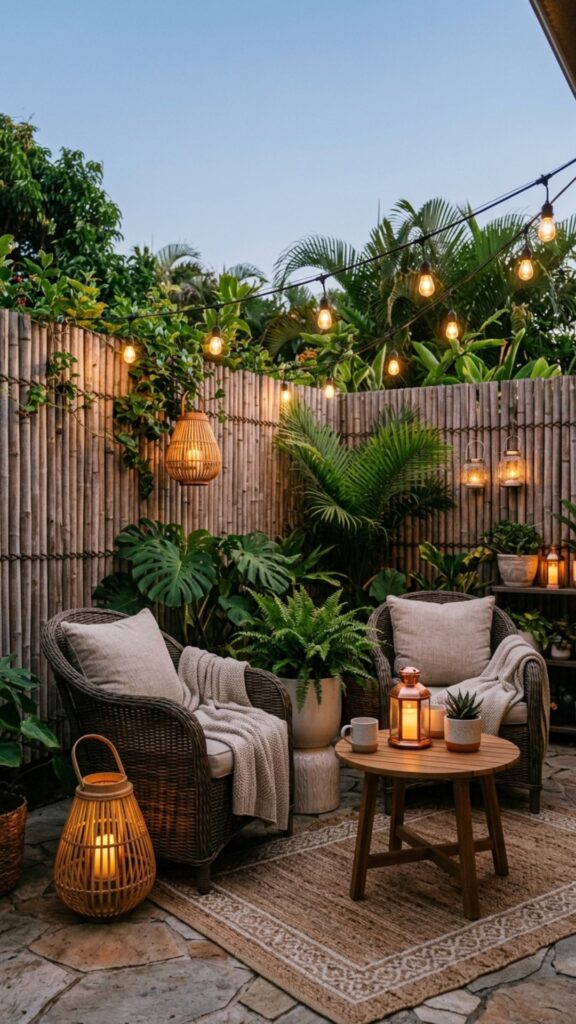
Bamboo rolls are an affordable, eco-friendly way to add quick coverage. You simply unroll the fencing and attach it to an existing fence, railing, or frame with zip ties or staples. In under an hour, you can hide an unsightly view or add height to a short wall.
The natural texture gives your patio a relaxed, tropical vibe that pairs well with wicker furniture and warm lighting. Bamboo does weather over time, turning a silvery gray, but many homeowners love that aged look. Seal it if you prefer to keep the original golden color.
6. Freestanding Room Dividers
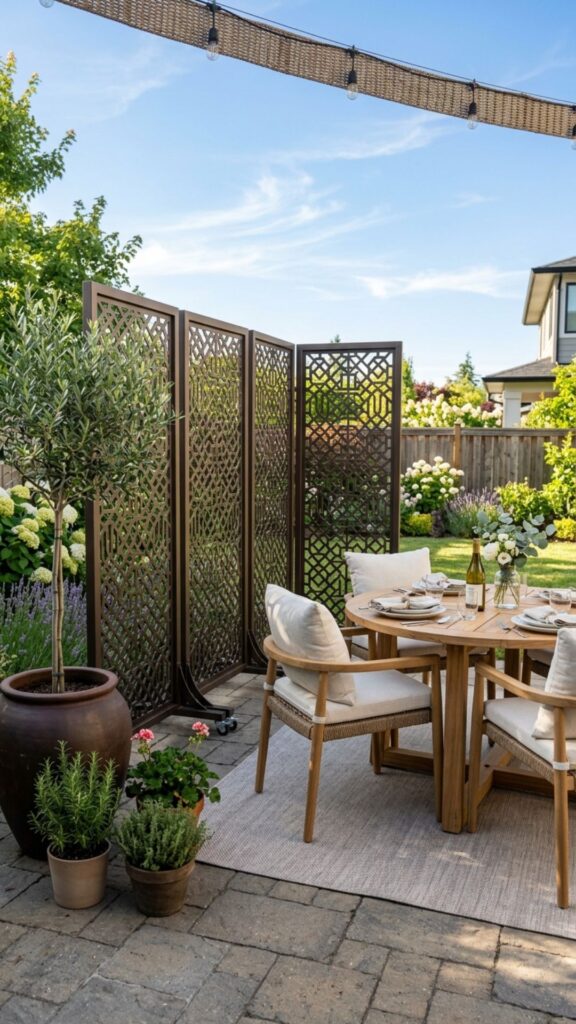
Freestanding dividers are great for renters or anyone who wants a screen without permanent installation. These portable panels come in wood, metal, or woven designs, and you can position them exactly where you need coverage. Move them aside for a party, then slide them back for a quiet dinner.
Look for models with weighted bases or ones you can anchor to a planter for stability. A decorative laser-cut metal divider adds a modern edge, while a slatted wood version feels cozy and traditional. Either way, you get privacy that follows your needs.
7. Pergola with Climbing Vines
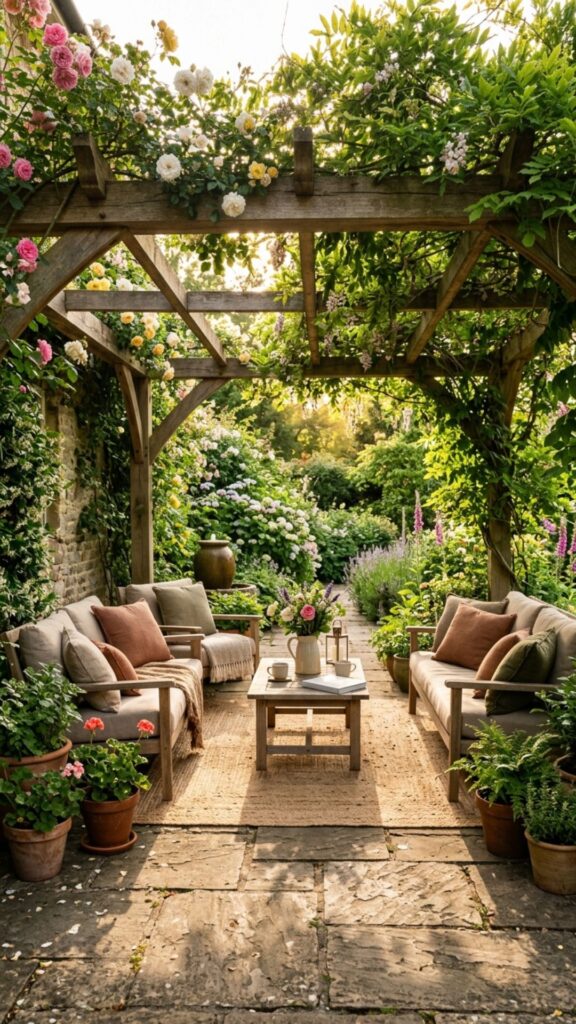
A pergola gives you overhead structure and vertical support for climbing plants. Train wisteria, clematis, or climbing roses up the posts, and within a season or two you’ll have a leafy canopy that shades and screens your patio at the same time.
This approach rewards patience but pays off beautifully. As the vines mature, they create dappled shade and a sense of enclosure that feels completely natural. Prune regularly to keep growth in check and to encourage fuller coverage where you want it most.
8. Corrugated Metal Screens
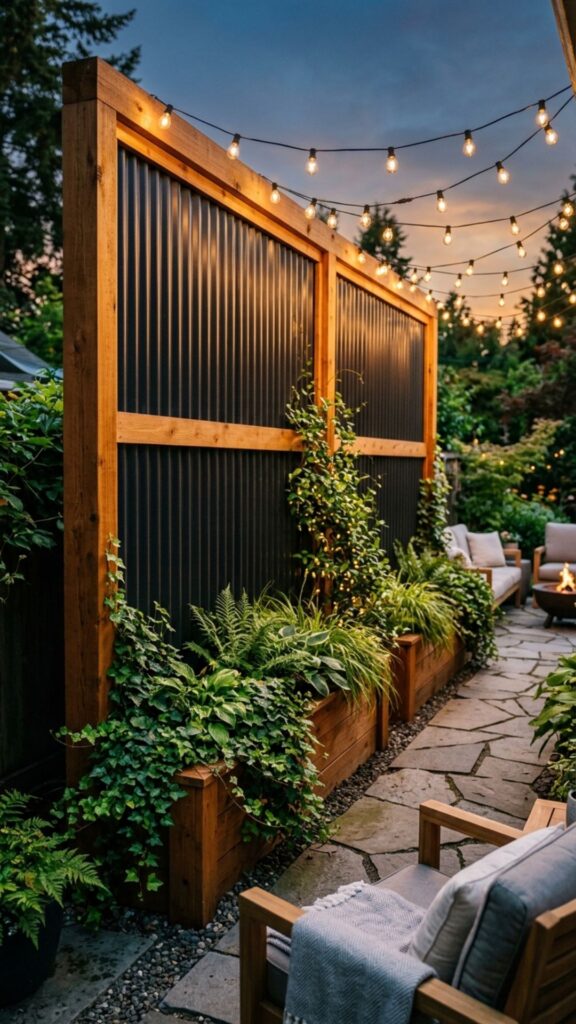
For an industrial or modern farmhouse look, corrugated metal panels deliver solid privacy and serious durability. They block views completely and stand up to wind, rain, and sun without fading. Frame them in wood or steel for a finished, intentional appearance.
Metal reflects heat, so position these screens where they won’t trap warmth against seating areas. Pair them with plants or string lights to soften the look. This is a smart choice for anyone who wants low-maintenance privacy that lasts for decades.
9. Retractable Screens
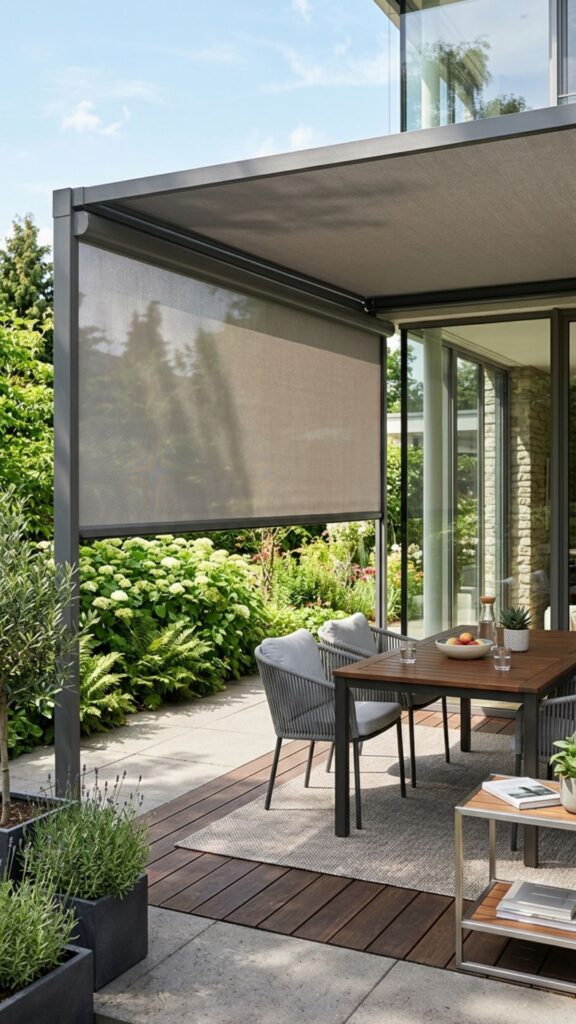
Retractable screens roll out when you need them and disappear when you don’t. Mounted to a wall or pergola, they offer flexible coverage without committing to a permanent structure. Many models come in weather-resistant mesh or solid fabric.
This solution shines on patios that get intense afternoon sun from one direction. Pull the screen out to block glare and prying eyes, then retract it to enjoy an open view in the evening. It’s a clean, tidy option that keeps your space looking uncluttered.
10. Slatted Wood Fence
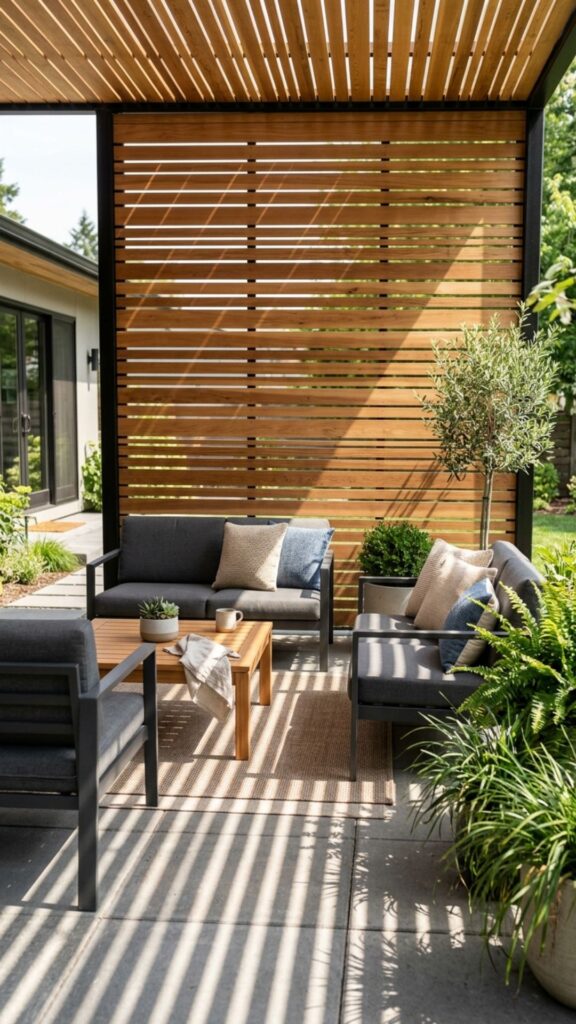
Horizontal wood slats have a modern, upscale feel that instantly elevates a patio. The gaps between boards let breezes pass through while still blocking direct sightlines. You control the privacy level by adjusting how much space you leave between each slat.
Cedar and cypress are popular choices because they resist decay. Finish the wood with a UV-protective sealant to prevent graying, or embrace a natural weathered look. This design works as both a boundary fence and a standalone privacy panel behind seating.
11. Hanging Planters and Cascading Vines
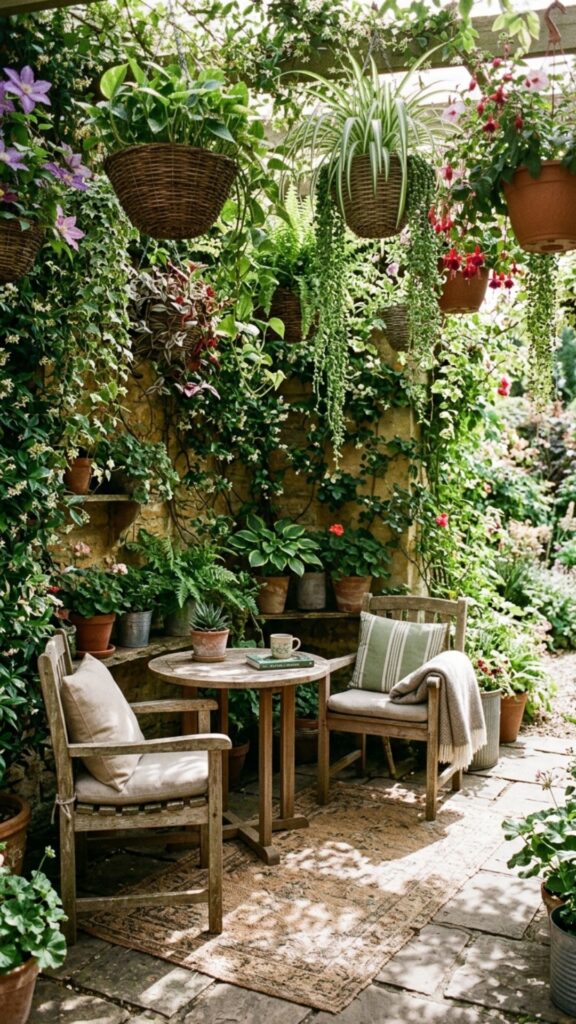
Hanging plants create a curtain of greenery at eye level without taking up floor space. Suspend trailing varieties like ivy, string of pearls, or ferns from a pergola beam or overhead frame. As they grow, they form a soft, living screen.
This idea works especially well on balconies and small patios where every square inch counts. Rotate the pots occasionally so all sides get even sunlight, and choose self-watering hangers to cut down on maintenance during hot stretches.
12. Decorative Screen Panels with Cutout Designs
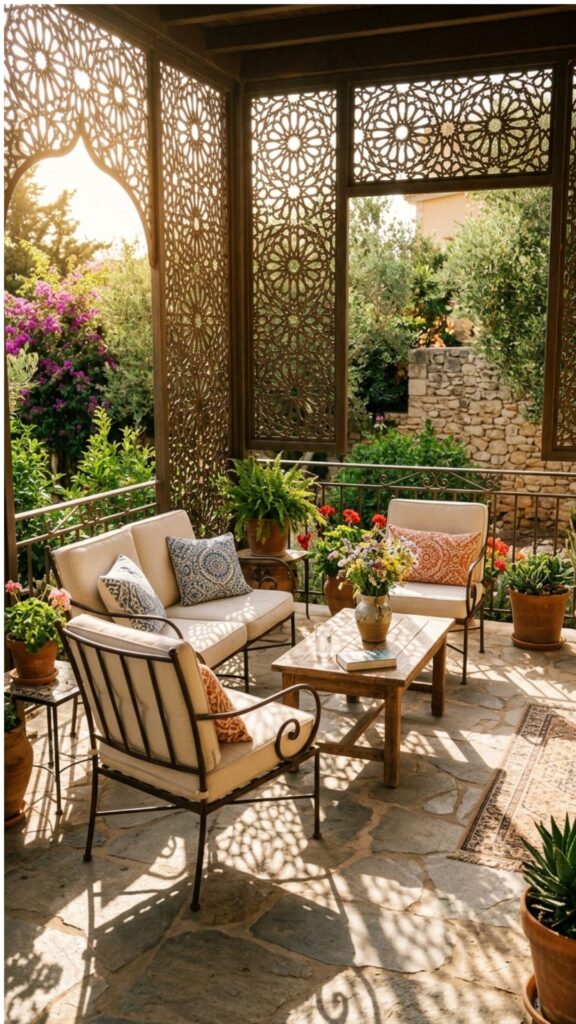
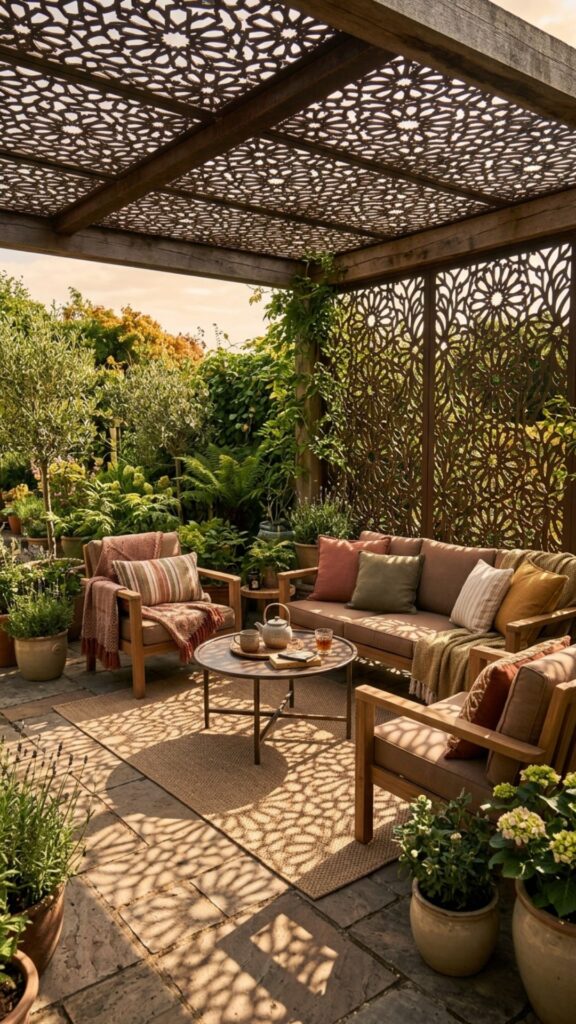
Laser-cut or carved decorative panels bring artistry to your privacy solution. Available in metal, composite, or wood, they feature patterns that cast beautiful shadows as the sun moves across your patio. The design breaks up sightlines without fully sealing the space.
These panels make a statement, so choose a pattern that complements your home’s style. Geometric cutouts suit modern spaces, while floral or filigree designs feel classic. Backlight them at night for a dramatic glow that turns your privacy screen into a piece of art.
13. Tall Ornamental Grasses
Ornamental grasses like miscanthus, feather reed grass, and pampas grow tall and dense, forming a natural screen that sways gently in the wind. They require little care once established and add movement and texture that hard materials can’t match.
Plant them in a row along the edge of your patio for a soft, informal barrier. Most varieties die back in winter, so pair them with an evergreen element if you want year-round coverage. Their feathery plumes also catch the light beautifully at sunset.
14. Outdoor Privacy Blinds
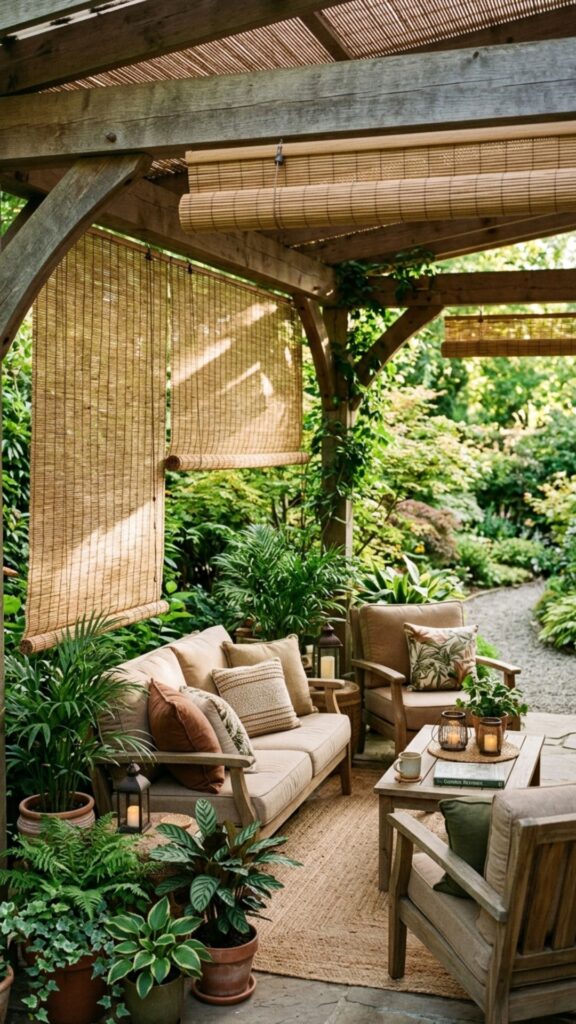
Roller or bamboo blinds mounted under a covered patio give you adjustable control over privacy and light. Lower them fully for complete seclusion or halfway to keep an airy feel. They’re a practical fit for porches and covered patios with overhead beams.
Weather-resistant materials hold up against humidity and sun exposure. This is one of the more budget-friendly patio privacy screen ideas, and installation usually takes just a few screws and a drill. Roll them up when you want an open view and down when you crave a cozy nook.
15. Water Feature with a Screen Backdrop
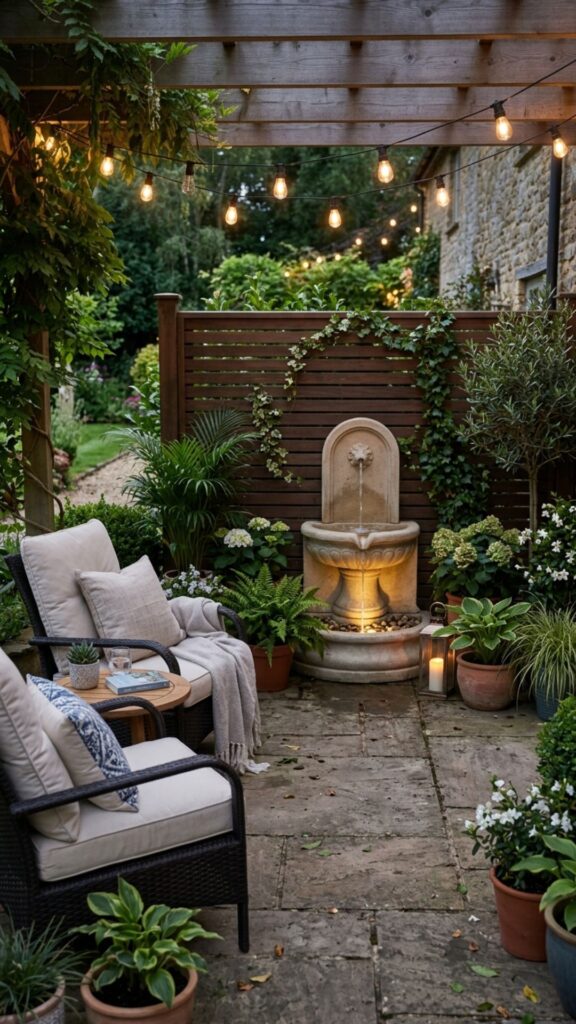
Combining a screen with a water feature adds privacy and soothing sound in one move. A wall-mounted fountain or a freestanding cascade placed against a solid panel masks neighborhood noise while giving your eyes something calming to rest on.
The gentle sound of running water makes conversations harder to overhear from outside, adding a layer of acoustic privacy most screens can’t offer. Position the feature near your seating area so you get the full sensory benefit while enjoying the added seclusion.
16. Repurposed Old Doors or Shutters
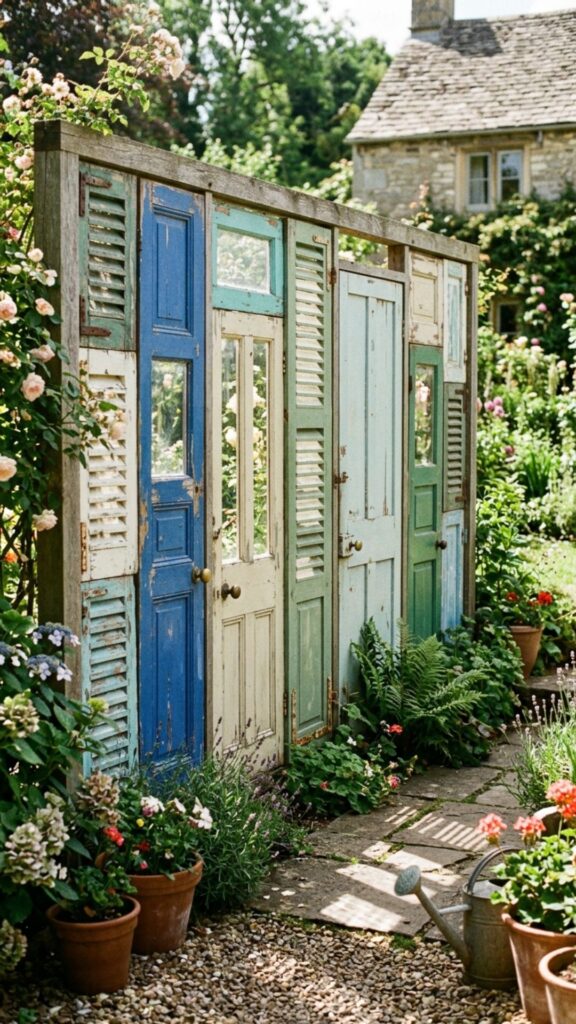
Salvaged doors and shutters bring instant character and a story to your patio. Line up a few vintage doors, secure them to posts, and you’ve got a charming, one-of-a-kind privacy wall. Old shutters can be hinged together for a folding screen effect.
This upcycled approach is easy on the wallet and great for the planet. Check salvage yards, flea markets, and online marketplaces for pieces with patina. A coat of exterior paint or a clear sealant protects them from the elements while preserving their weathered charm.
17. Reed or Willow Fencing
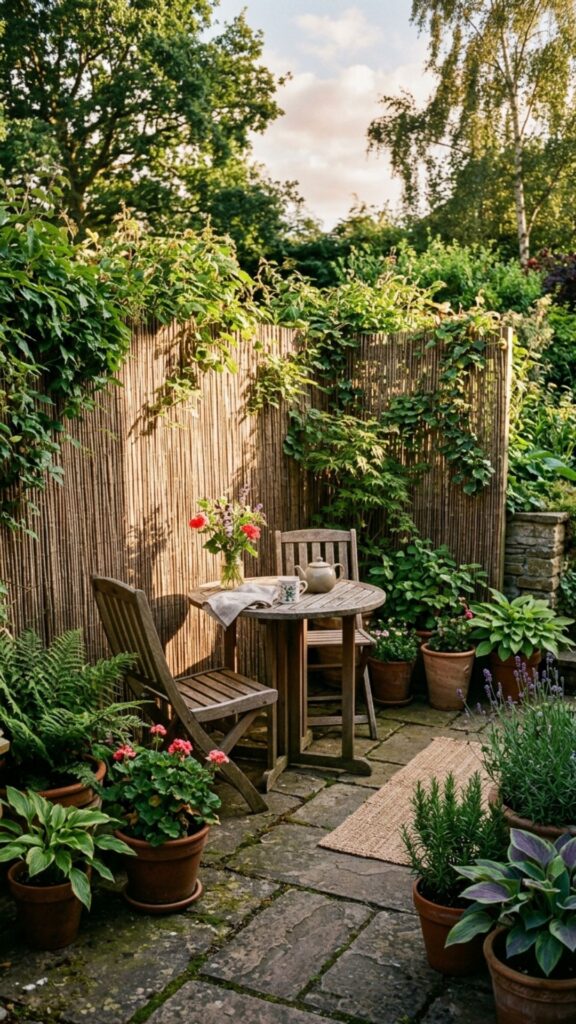
Reed and willow fencing offer a rustic, cottage-garden look at a low cost. Like bamboo rolls, they attach easily to existing fences or frames and provide quick, natural coverage. The dense weave blocks views while letting a little light filter through.
These natural materials blend seamlessly into garden settings and pair well with flowering plants. They typically last a few seasons before needing replacement, making them a good pick if you like refreshing your outdoor look every couple of years.
18. Modular Privacy Screen Systems
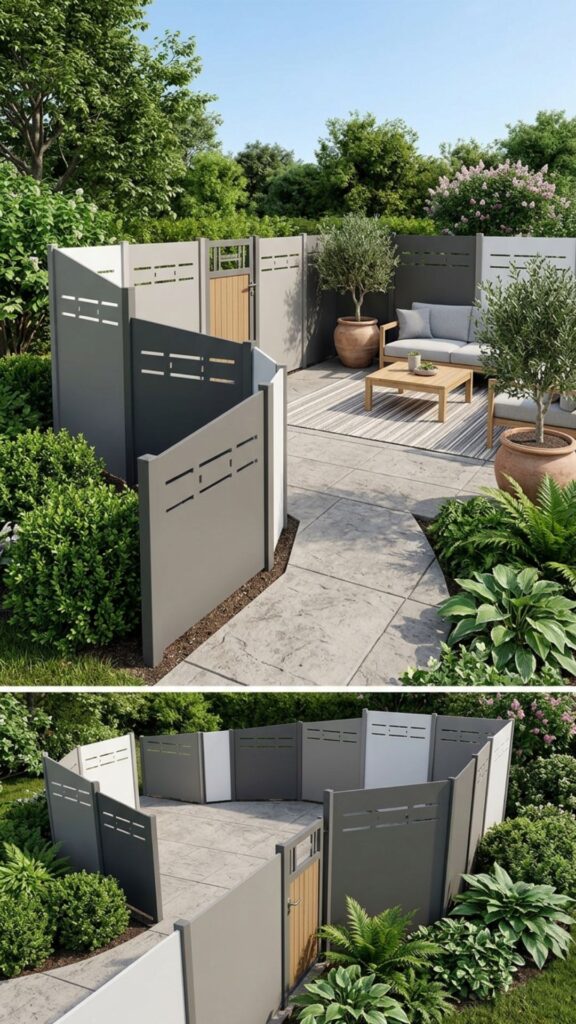
Modular systems let you build custom privacy exactly where you need it. These kits use interlocking posts and panels that snap together, so you can create straight runs, corners, or freestanding sections. Many come in composite materials that never need painting or staining.
The flexibility makes them ideal for oddly shaped patios or evolving layouts. Start with a small section and expand later as your budget allows. Because the pieces are standardized, adding on down the road is simple and looks seamless.
19. Fabric-Draped Pergola Canopy
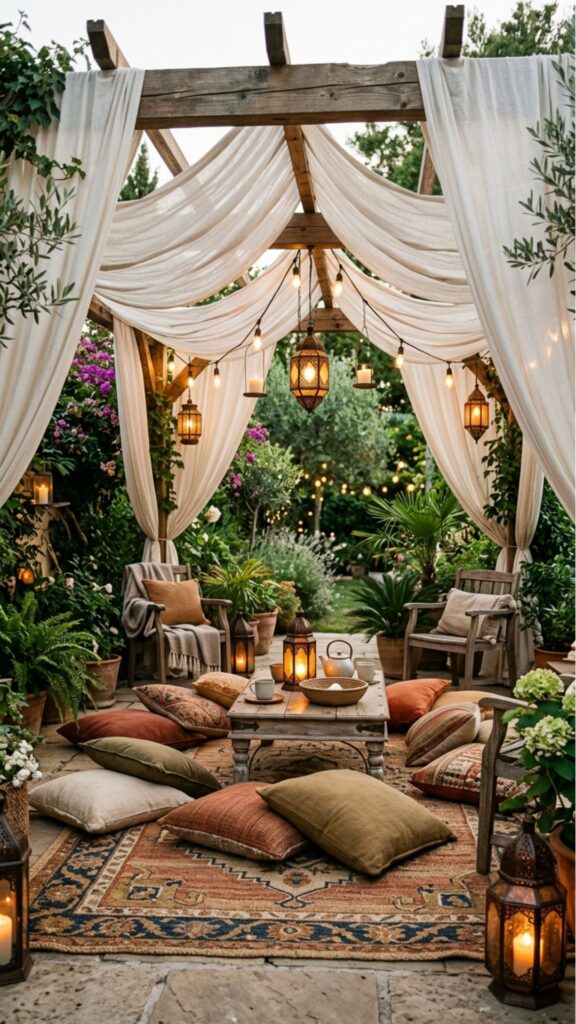
Draping fabric over and around a pergola creates a soft, tented enclosure that feels intimate and luxurious. Use flowing outdoor fabric to wrap the sides and top, transforming an open structure into a private, shaded haven.
This works wonderfully for creating a defined lounge or dining zone within a larger yard. Choose light, breathable fabrics for hot climates and heavier weaves for wind resistance. Add a few lanterns and floor cushions, and you’ve built the coziest corner on the block.
20. Mixed-Material Combination Screen
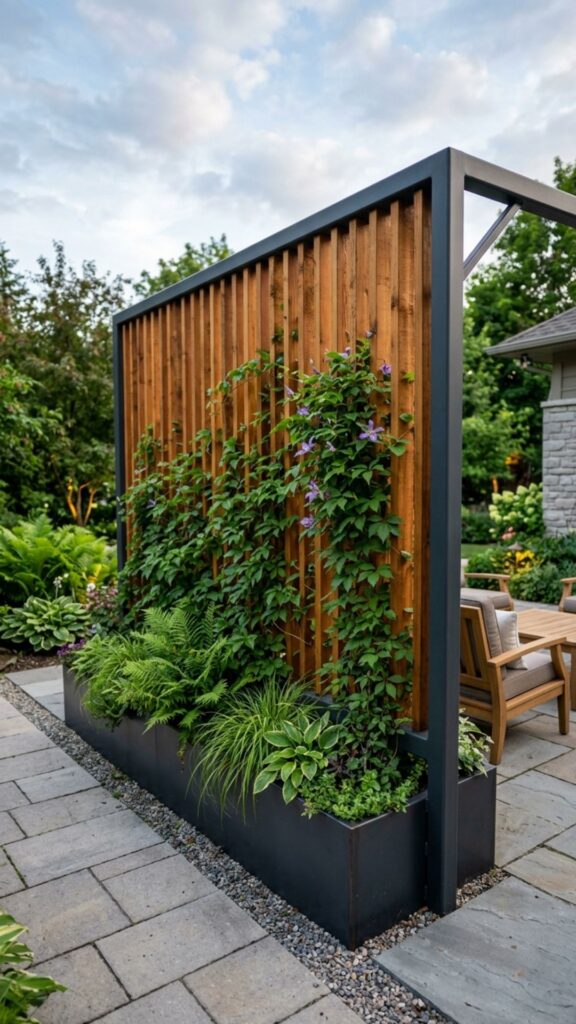
Sometimes the best solution blends several ideas into one. Combine a slatted wood base with a row of planters on top, or mix a metal frame with woven panels and climbing vines. Layering materials adds depth, texture, and personality that a single-material screen can’t achieve.
This custom approach lets you solve multiple problems at once, like blocking a low fence line while adding greenery at eye level. Play with contrasting textures and colors to match your home’s exterior. The result is a privacy screen that feels designed rather than bought off the shelf.
Conclusion
Creating a private patio doesn’t have to mean sacrificing style or breaking the bank. From quick bamboo rolls to lush living walls, these patio privacy screen ideas give you plenty of ways to carve out a cozy, secluded space that feels like your own. The best choice depends on your budget, your climate, and how much maintenance you’re willing to take on.
Start by identifying exactly where you need coverage, then pick one or two ideas that match your style and skill level. Ready to reclaim your outdoor space? Grab a tape measure, choose your favorite option from this list, and start planning your project this weekend. Your perfect backyard retreat is closer than you think.
What is the cheapest way to add privacy to a patio?
Bamboo or reed fencing rolls are the cheapest way to add patio privacy. They cost far less than solid fencing, attach to existing structures in minutes with zip ties, and instantly block unwanted views without any construction.
What is the best plant for patio privacy?
Bamboo and arborvitae are among the best plants for patio privacy because they grow tall and dense quickly. For faster coverage in containers, ornamental grasses and climbing vines like clematis also work well and require minimal care.
How tall should a patio privacy screen be?
A patio privacy screen should be at least 6 feet tall to block sightlines from standing neighbors. If you want privacy while seated, 4 to 5 feet may be enough, though taller screens offer more complete seclusion.
Do I need a permit to install a patio privacy screen?
It depends on your local codes and the screen’s height. Freestanding screens and planters usually don’t require a permit, but permanent structures over a certain height often do. Check with your local building office before installing.
How can I make a privacy screen without building a fence?
You can add privacy without a fence using outdoor curtains, freestanding dividers, tall potted plants, or hanging planters. These flexible, no-build options provide coverage and can be moved or removed whenever your needs change.