There’s something special about cooking outside while the sun sets over your backyard. But if you live in Canada, you know the weather doesn’t always cooperate. One week you’re grilling in shorts, the next you’re scraping frost off the patio. The good news? A well-planned outdoor kitchen can handle all of it.
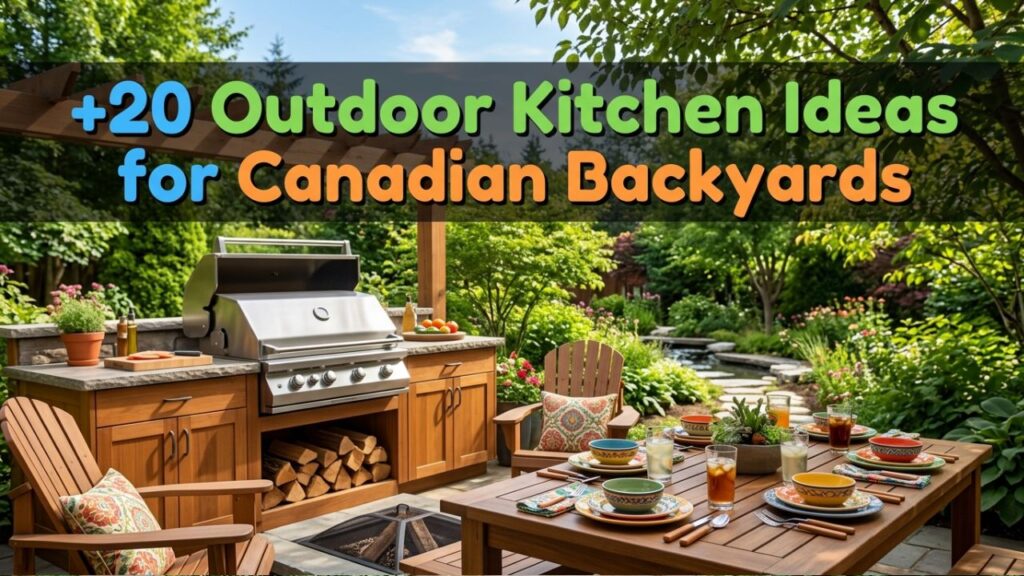
We’ve spent years watching homeowners across the country build spaces that work in real Canadian conditions—not just picture-perfect summer days.
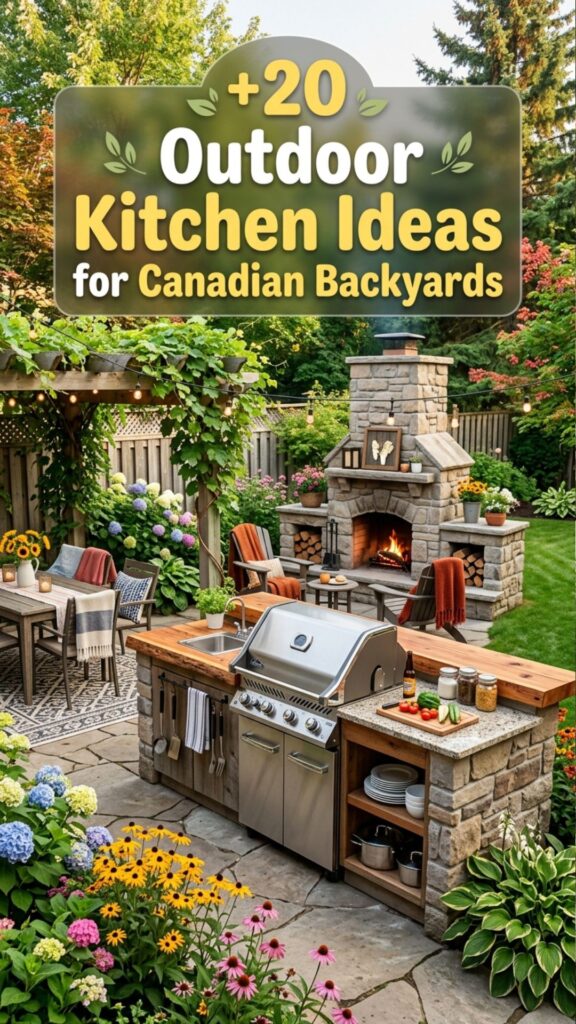
In this guide, you’ll find 20 practical, modern outdoor kitchen ideas Canada homeowners can actually use. We’ll cover materials that survive freeze-thaw cycles, layouts that make sense, and small touches that stretch your outdoor season by weeks. Let’s get into it.
1. Choose Weatherproof Stainless Steel Appliances
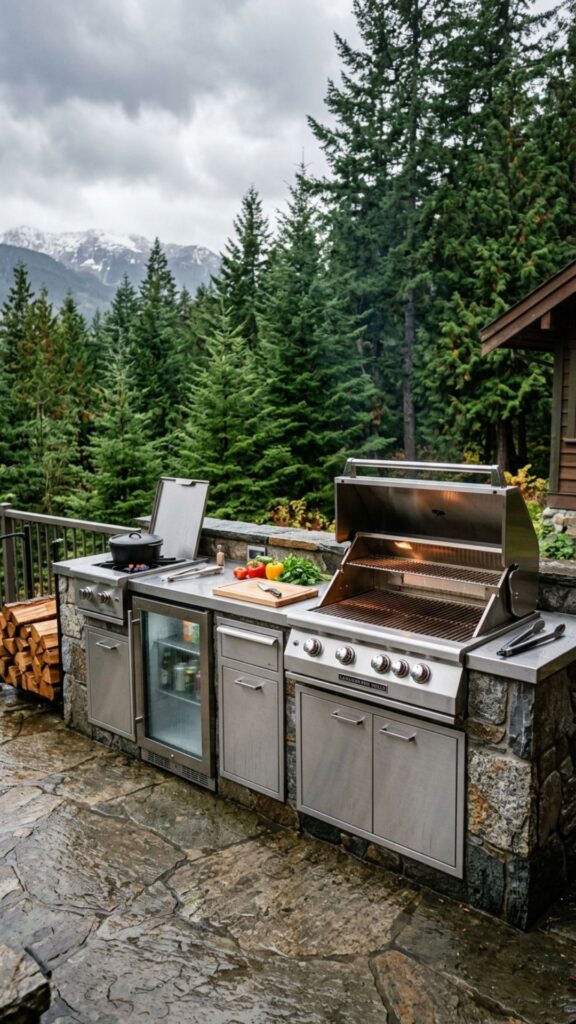
Stainless steel is the workhorse of Canadian outdoor kitchens. It shrugs off rain, resists rust, and cleans up with a quick wipe. Look for marine-grade 316 stainless if you live near the coast in places like Halifax or Vancouver, since salt air is tough on lesser metals.
When you shop, check that grills, side burners, and fridges are rated for outdoor use. Indoor appliances simply won’t survive a Manitoba winter. Cover everything during the coldest months, and your gear will last for years instead of seasons.
2. Build With Freeze-Resistant Stone and Concrete
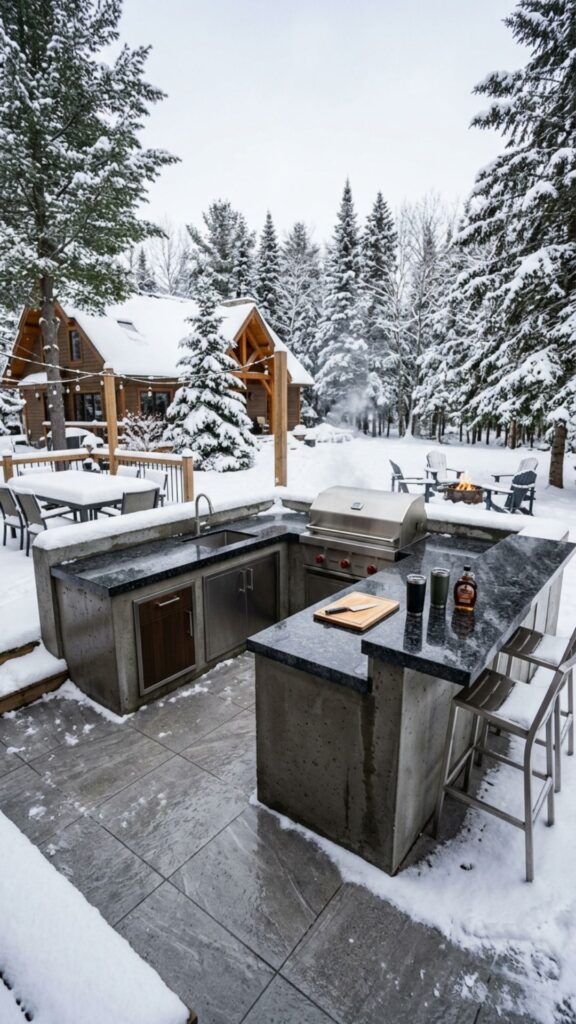
Freeze-thaw cycles crack the wrong materials fast. Natural stone like granite and porcelain pavers handle expansion and contraction far better than softer options. For countertops, sealed granite or dense porcelain stays solid through -30°C nights.
Poured concrete works too, but ask your contractor to add air-entrainment, which creates tiny bubbles that give water somewhere to go when it freezes. This one detail prevents the surface cracking that ruins so many outdoor builds.
3. Add a Covered Roof or Pergola
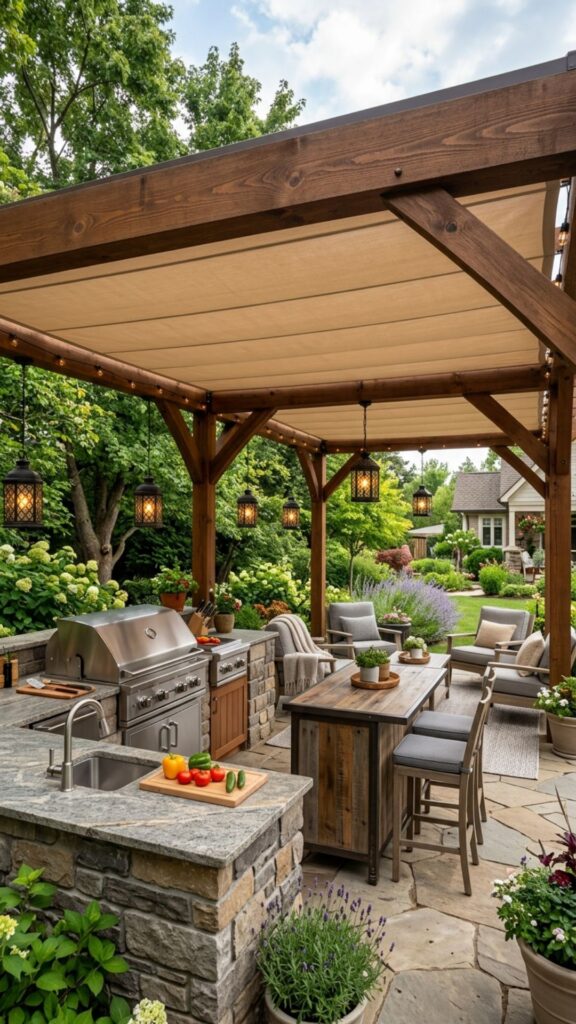
A roof changes everything. It keeps rain off your food, blocks harsh summer sun, and lets you cook even during a light snowfall. Many Canadian families tell us the cover is what turned their kitchen from a summer-only spot into a three-season favourite.
You have options here. A solid roof gives full protection, while a pergola with a retractable canopy lets you open things up on nice days. Either way, make sure the structure can handle a heavy snow load—your local building code will spell out the numbers.
4. Install Built-In Radiant Heaters
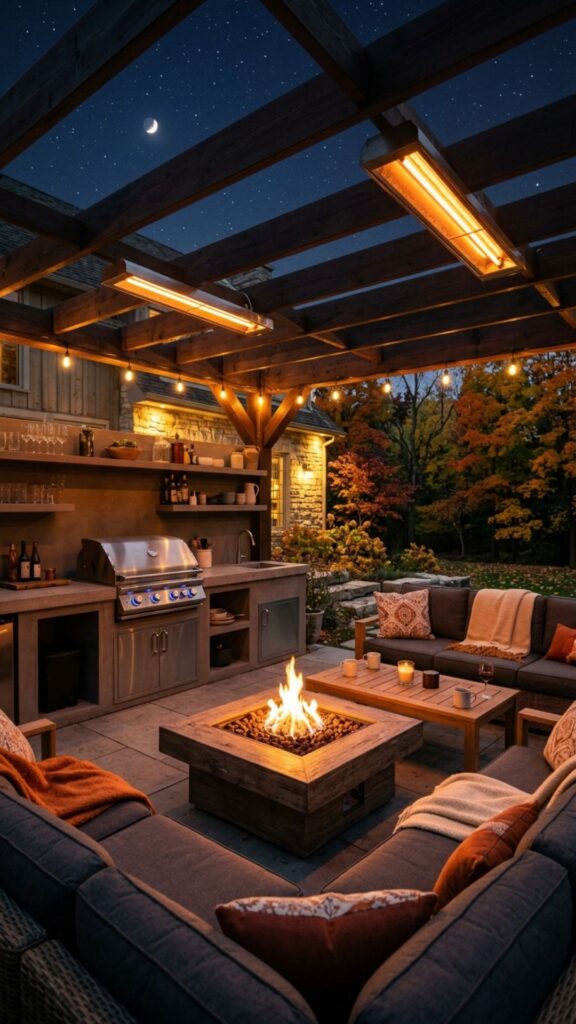
Heat extends your season more than almost anything else. Overhead electric infrared heaters warm people and surfaces directly, so you stay comfortable even when the air is cool. Mount them under your roof or pergola for even coverage.
For a cozier feel, add a natural gas fire table or a built-in fireplace. Nothing pulls guests together like a warm flame on a crisp October evening. Just keep any open flame a safe distance from cooking zones and combustible materials.
5. Pick a Layout That Suits Your Space
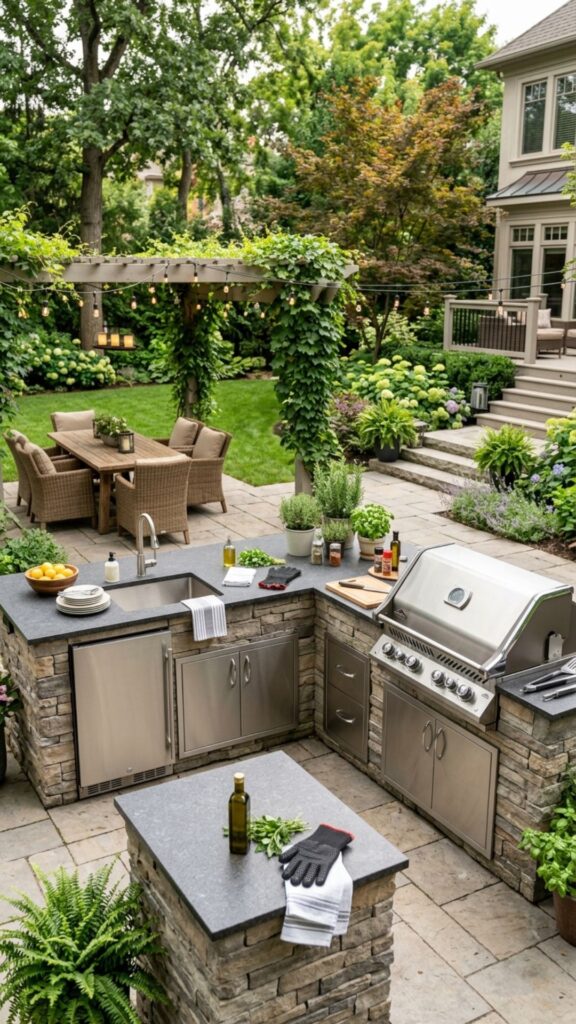
Before you buy a single appliance, plan your layout. The classic work triangle—grill, prep space, and sink—keeps you moving efficiently and cuts down on wasted steps. An L-shape suits larger yards, while a straight galley run fits narrow city lots in Toronto or Montreal.
Think about traffic flow too. You want guests to gather without crowding the cook. Leave at least a metre of walking space around key stations, and position the grill so smoke drifts away from seating rather than toward it.
6. Include Plenty of Sheltered Storage
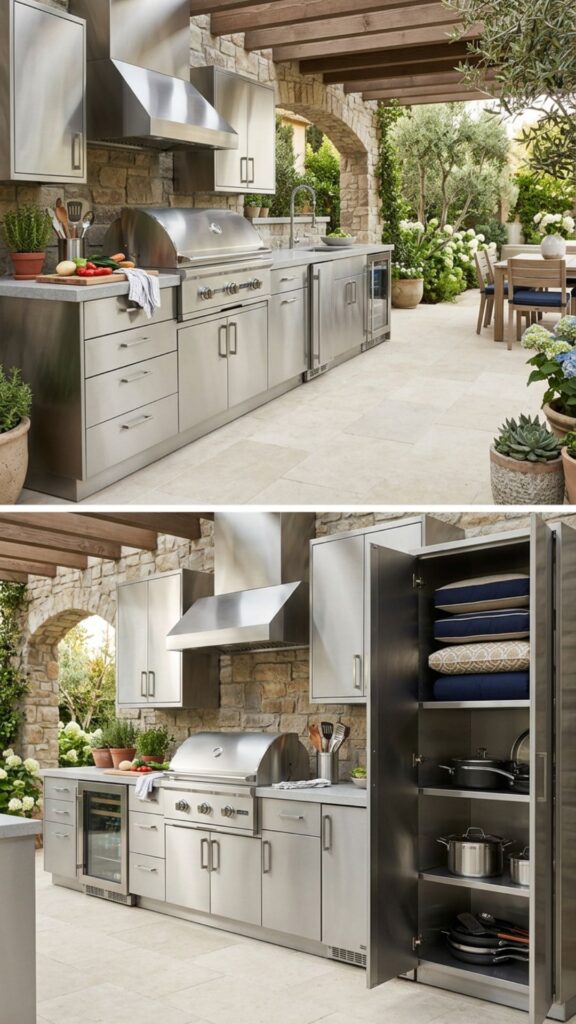
Storage keeps your space tidy and protects your tools from the elements. Weatherproof cabinets and drawers made from stainless steel or marine-grade polymer hold utensils, plates, and cleaning supplies right where you need them.
We always suggest a dedicated spot for cushions and small electronics. When the forecast turns, you can tuck everything away in seconds. Sealed, gasketed doors keep moisture and curious critters out during the off-season.
7. Add a Pizza Oven for Year-Round Fun
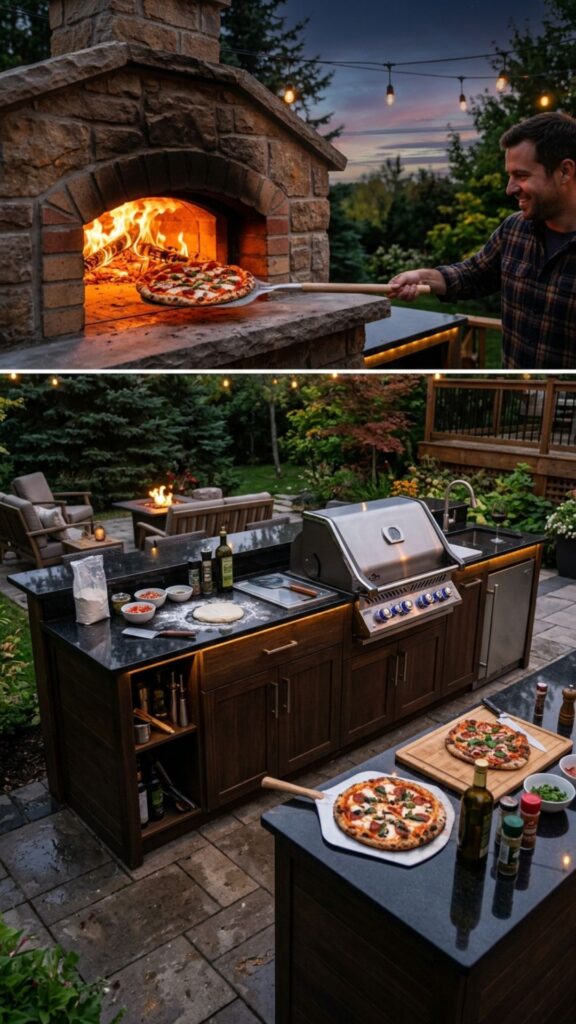
A wood-fired or gas pizza oven brings serious joy to backyard cooking. It reaches high temperatures that a standard grill can’t, giving you crisp crusts in ninety seconds. Beyond pizza, you can roast vegetables, bake bread, and even slow-cook meats.
Pizza ovens hold heat well, which is a bonus in cooler weather. The thermal mass radiates warmth long after you finish cooking, making the oven a natural gathering point on chilly nights.
8. Choose Durable, Slip-Resistant Flooring
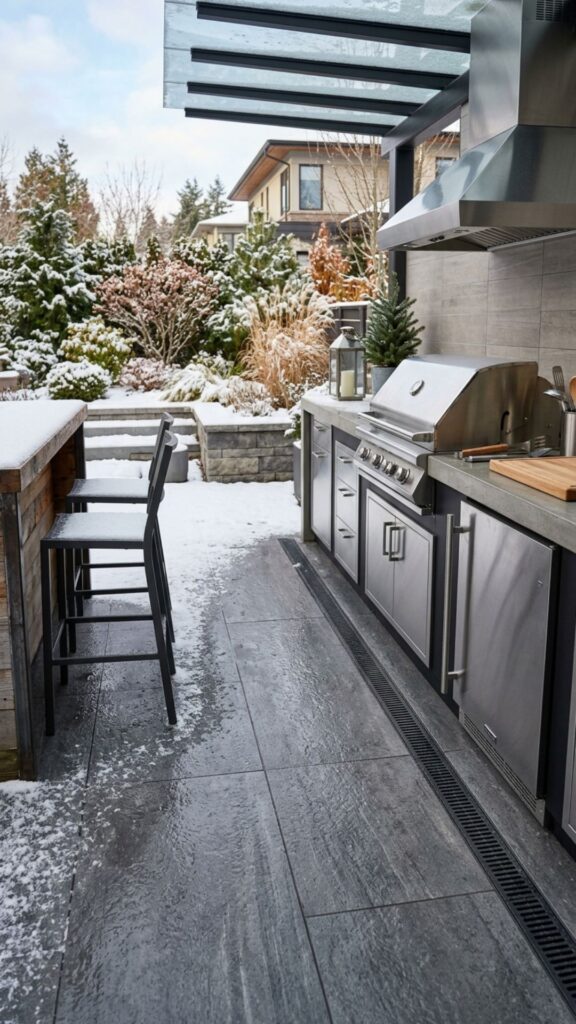
Flooring takes a beating from rain, snow, and salt. Porcelain pavers rated for outdoor use resist stains and stay grippy when wet, which matters when frost forms. Textured concrete and natural stone with a honed finish also perform well.
Avoid smooth, polished surfaces that turn slick in winter. A slight slope in the flooring helps water and snowmelt drain away instead of pooling and refreezing into an ice rink.
9. Wire in Proper Outdoor Lighting
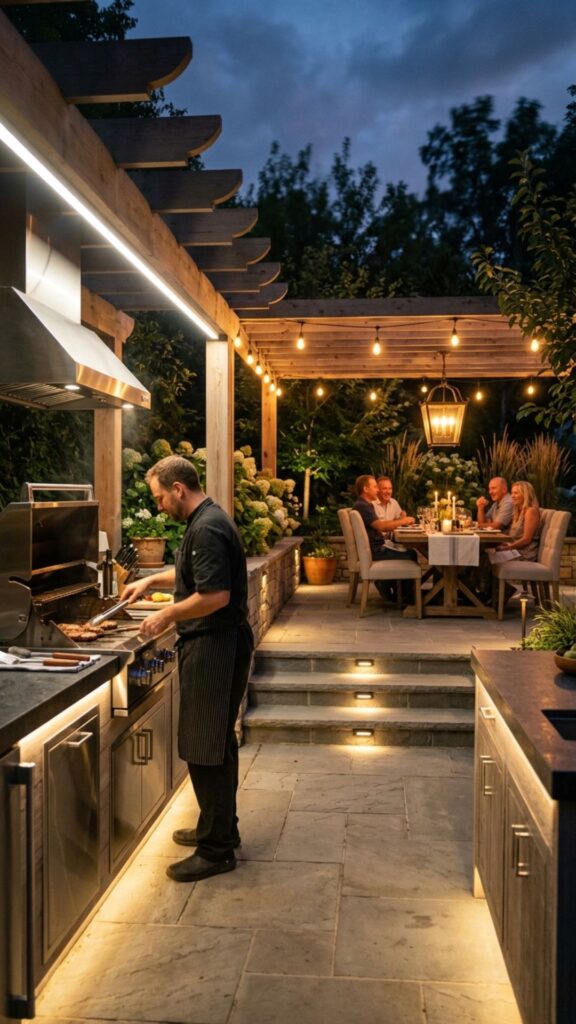
Good lighting lets you cook and entertain long after sunset—which, in a Canadian winter, comes early. Layer your lighting with bright task lights over the grill and prep areas, plus softer ambient lights for the dining zone.
Use fixtures rated for wet locations, and hire a licensed electrician for any hard-wired work. LED strips under counters and along steps add both safety and a modern glow. Dimmers let you shift the mood from dinner prep to relaxed evening chats.
10. Set Up a Dedicated Prep Station
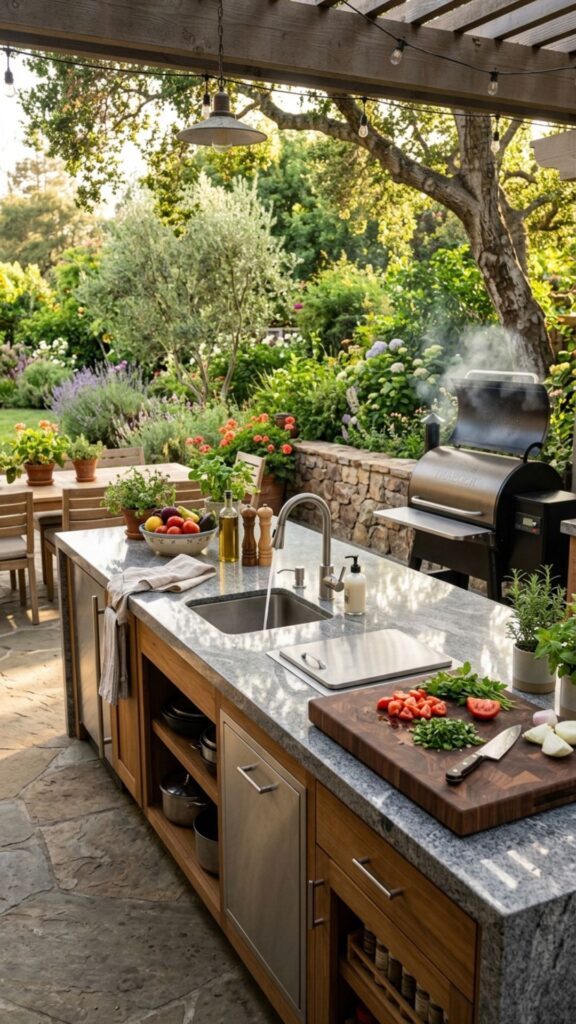
A separate prep area saves your sanity when you’re feeding a crowd. Give yourself generous counter space beside the grill so you can season, plate, and organize without juggling. A prep sink with hot and cold water makes cleanup far easier.
Add a cutting board insert and a built-in bin for scraps to keep things moving. Trust us, once you cook with proper prep space, you’ll wonder how you ever managed with a single flimsy side table.
11. Incorporate a Built-In Beverage Fridge
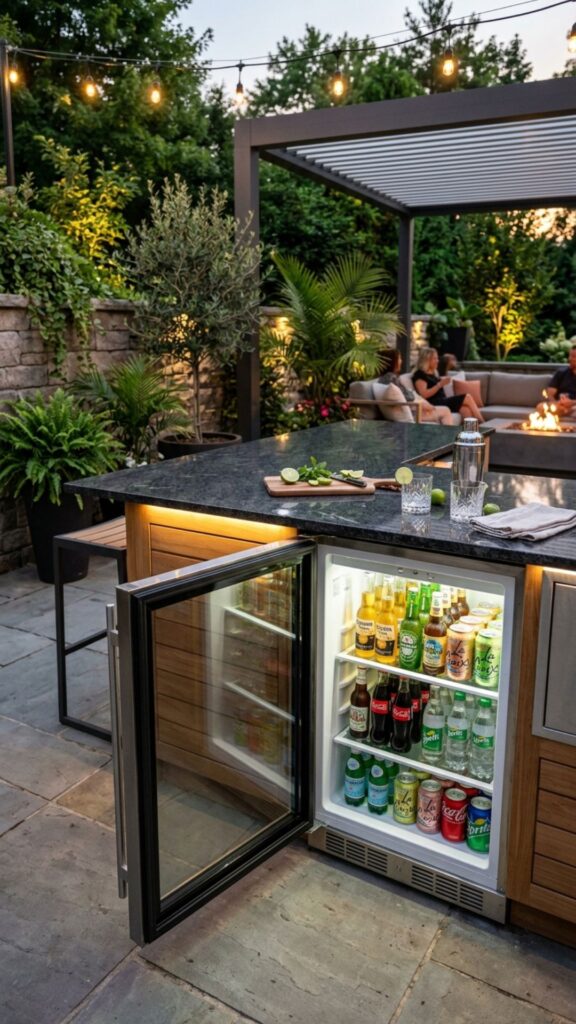
An outdoor-rated fridge keeps drinks and ingredients cold without endless trips inside. Look for a unit built for outdoor temperature swings, since indoor models struggle in heat and can’t handle winter cold.
Position the fridge away from the grill’s heat to help it run efficiently. Many homeowners add a separate ice drawer or a kegerator for gatherings. In winter, drain and power down the unit unless it’s rated for year-round outdoor use.
12. Create a Comfortable Dining Zone
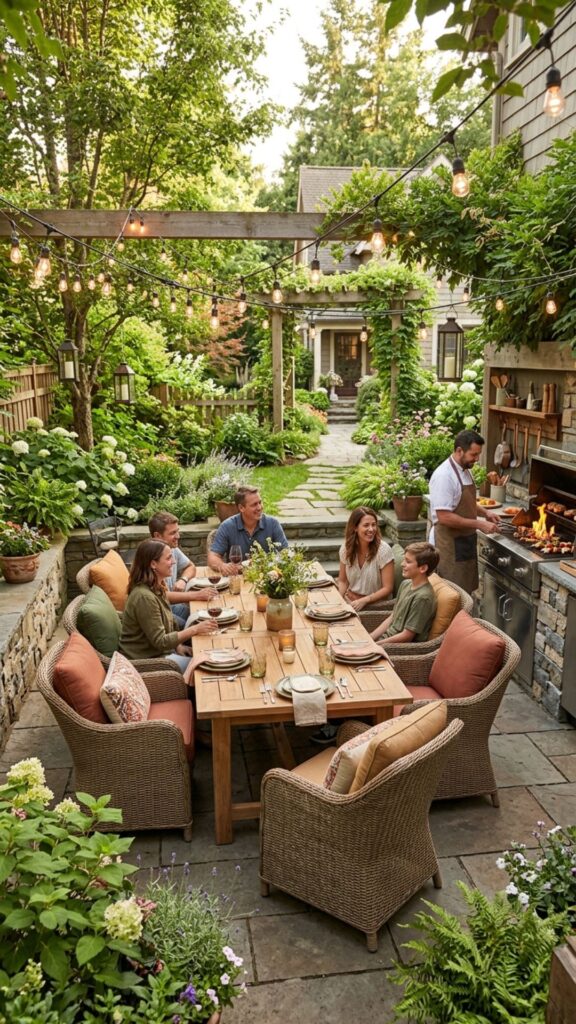
Your kitchen needs a place to actually eat. Whether it’s a built-in bar counter with stools or a full dining table, comfortable seating keeps guests lingering. Choose furniture made from powder-coated aluminum, teak, or all-weather wicker that survives our climate.
Weatherproof cushions in quick-dry foam add comfort without soaking up every rainstorm. Arrange seating so everyone can see the cook and join the conversation—the best meals happen when nobody feels left out.
13. Use Modular Units for Flexibility
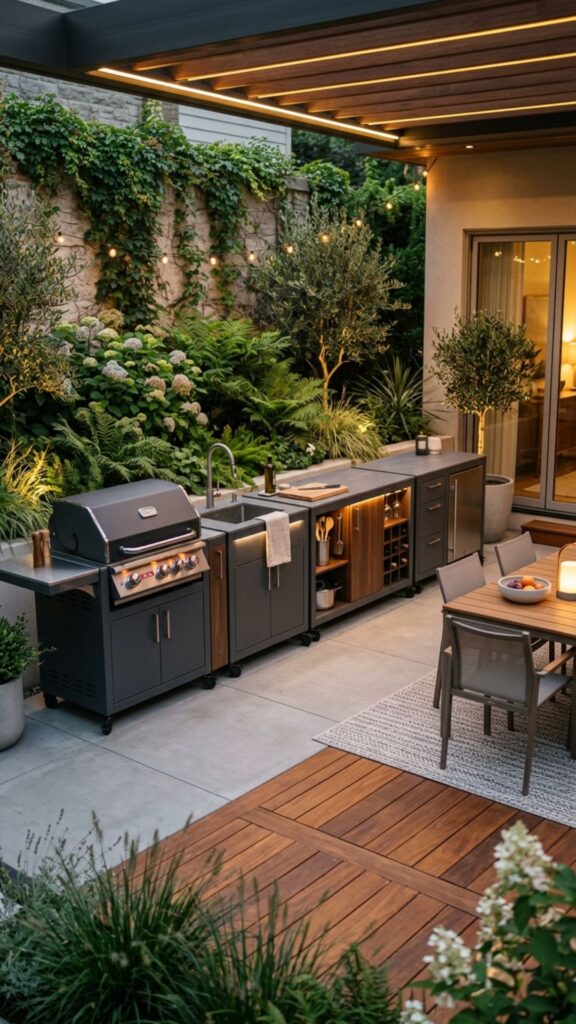
Modular outdoor kitchen components let you start small and grow later. Prefabricated units for grills, sinks, and storage snap together and can be rearranged as your needs change. This approach suits renters and anyone testing the waters before a big build.
Modular setups also make winterizing simpler. You can move certain pieces into a garage or shed, reducing wear during the harshest months. It’s a smart, budget-friendly path into outdoor cooking.
14. Plan for Easy Winterization
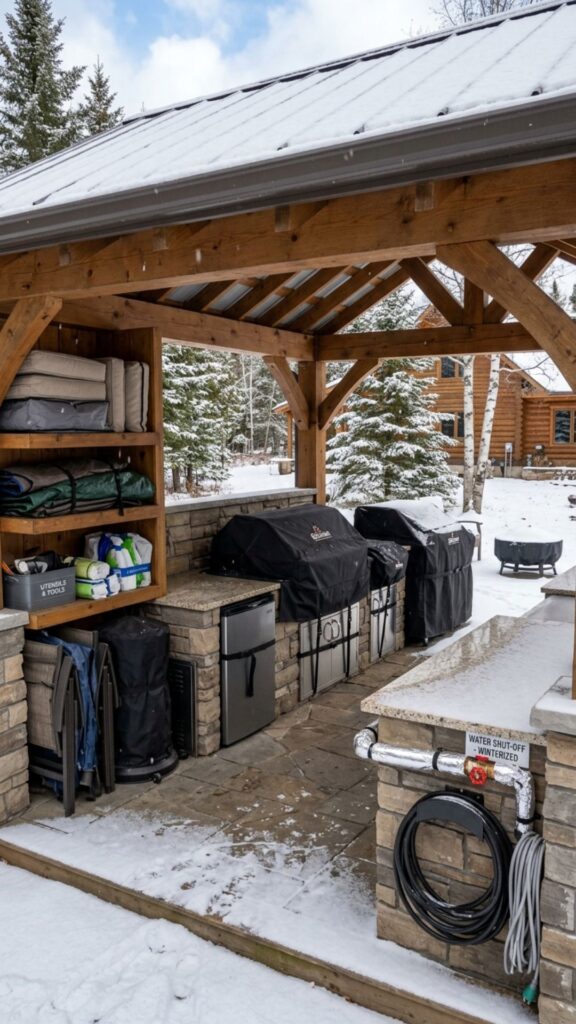
Every Canadian outdoor kitchen needs a shutdown routine. Design your plumbing with shut-off valves and drains so you can blow out the lines before the first freeze. Frozen pipes crack and cause expensive damage.
Choose covers that fit your appliances snugly and store loose items indoors. A little prep in the fall saves a lot of repair in the spring. Build with winter in mind from day one, and the seasonal shutdown becomes a quick afternoon job.
15. Add a Sink With Reliable Plumbing
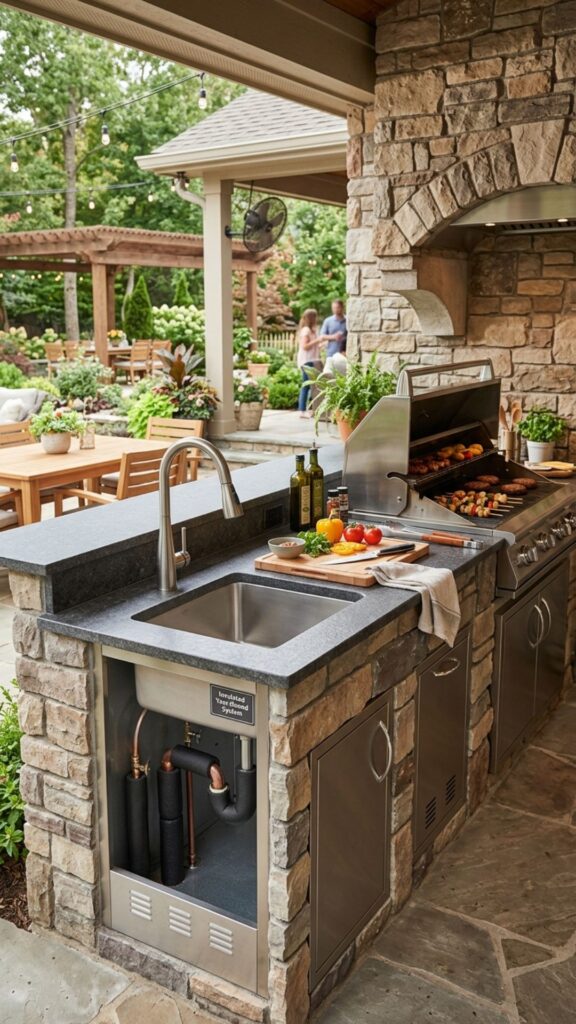
A working sink transforms your outdoor kitchen from a novelty into a genuine cooking space. Rinsing produce, washing hands, and cleaning tools outside means fewer trips through the house with messy plates.
Run both hot and cold water if your budget allows, and slope the drain properly. Because our winters are unforgiving, insulate exposed pipes and install accessible shut-offs so draining the system takes minutes, not hours.
16. Match the Design to Your Home’s Style
Your outdoor kitchen should feel like part of your home, not a bolted-on afterthought. Echo your home’s materials and colours—brick, wood tones, or modern black accents—so the space flows naturally from indoors to out.
A cohesive look also boosts resale value. Buyers notice when an outdoor space feels intentional and well-built. Pick finishes you’ll still love in ten years rather than chasing a trend that fades fast.
17. Include a Grill With a Side Burner
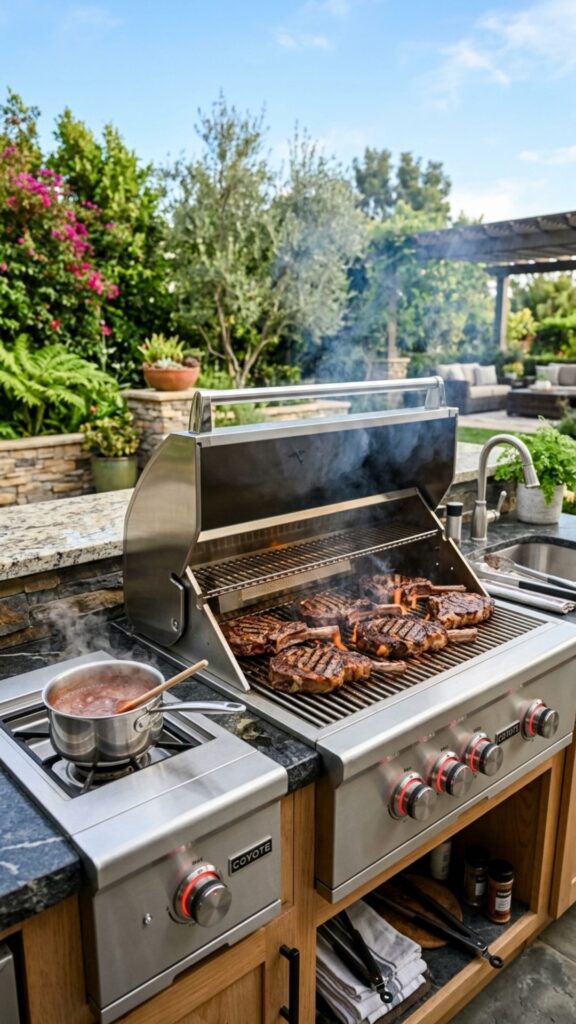
The grill is the heart of the operation, so choose one that fits how you cook. A built-in gas grill with a side burner lets you sear steaks and simmer sauce at the same time. Look for solid grates and even heat distribution.
Natural gas hookups save you from running out of propane mid-cookout, though propane offers flexibility if you can’t run a gas line. Whatever you pick, make sure it’s rated for outdoor installation and easy to clean.
18. Add Greenery and an Herb Garden
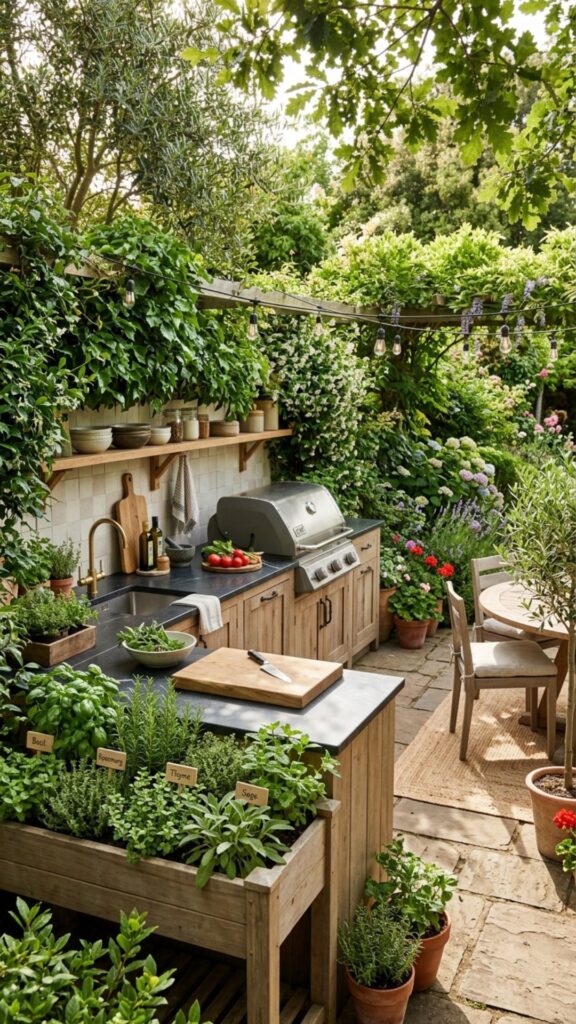
Plants soften the hard surfaces of a kitchen and make the space feel alive. A raised herb garden or a few planters of basil, rosemary, and thyme put fresh flavour within arm’s reach while you cook.
Choose hardy perennials that survive Canadian winters, or grow annuals in pots you bring inside. Even a small vertical garden on a fence adds privacy and greenery without eating up your floor space.
19. Build a Bar Counter for Entertaining
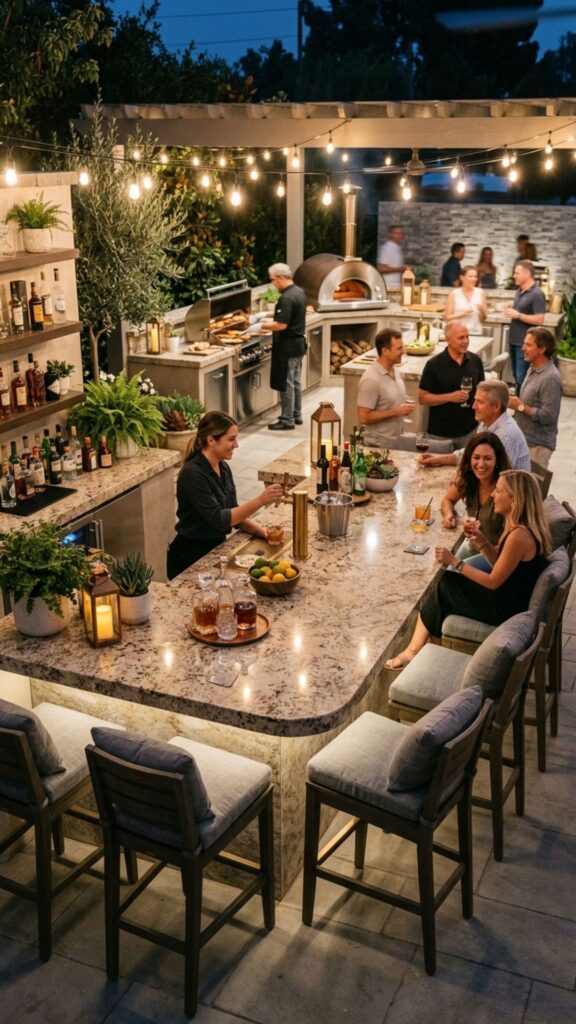
A raised bar counter gives guests a place to perch while you cook. It doubles as a serving surface and creates a natural social hub. Overhang the counter by about 30 centimetres so stools tuck underneath comfortably.
Top it with a durable surface like sealed granite or porcelain that handles spills and weather. Add a couple of weatherproof stools, and you’ve got the kind of spot where people happily spend an entire evening.
20. Invest in Quality Weatherproof Covers
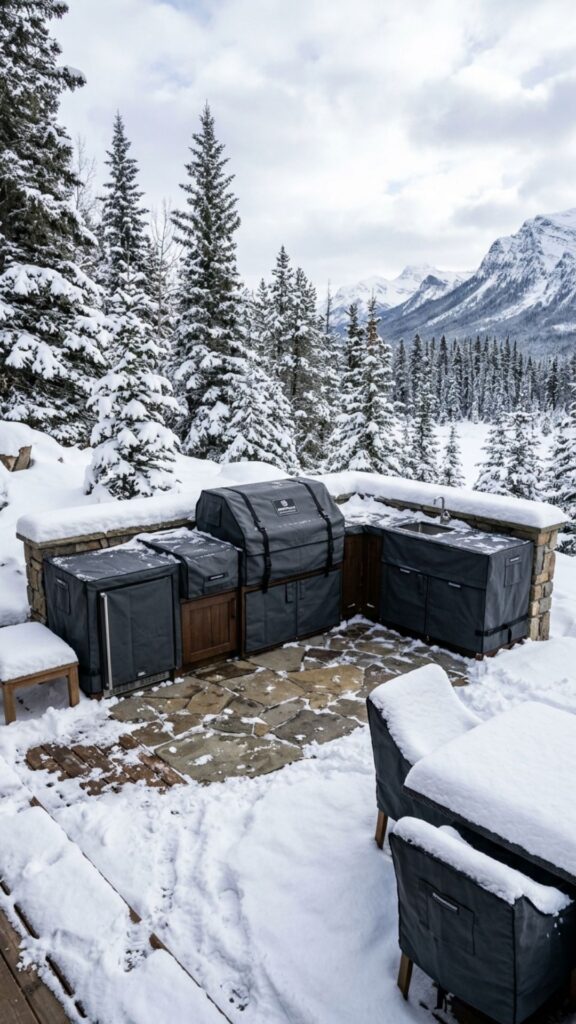
Covers are the cheapest insurance you can buy for an expensive outdoor kitchen. A well-fitted cover keeps rain, snow, UV rays, and grime off your appliances and counters during the off-season.
Choose breathable, waterproof fabric that won’t trap moisture and cause rust. Measure carefully for a snug fit, and secure covers against wind. This small step protects your whole investment and keeps everything looking sharp year after year.
Bringing Your Outdoor Kitchen to Life
A great outdoor kitchen lets you cook more, gather more, and enjoy your backyard for far longer than a single short summer. The key across all these ideas is simple: build for the climate you actually live in. Pick freeze-resistant materials, plan for easy winterizing, and add heat and shelter so you’re not chased indoors at the first cool breeze.
Start with the pieces that matter most to you, then grow the space over time. Whether you dream of a full three-season setup or a smart modular grill station, the right plan makes it possible. Ready to start planning? Sketch your layout, set a budget, and talk to a local contractor who understands Canadian conditions. Your best backyard season is closer than you think.
How much does an outdoor kitchen cost in Canada?
A basic outdoor kitchen starts around $5,000 to $10,000 for a grill, counter, and storage. Mid-range builds run $15,000 to $30,000, while high-end setups with roofs, plumbing, and appliances can exceed $50,000. Your final cost depends on materials, size, and whether you add gas and water lines.
Can you use an outdoor kitchen in winter in Canada?
Yes, with the right setup. Add a covered roof, radiant heaters, and freeze-resistant materials to cook comfortably in cold weather. You’ll need to winterize plumbing by draining the lines and shutting off water to prevent freeze damage during the coldest months.
What are the best materials for a Canadian outdoor kitchen?
Stainless steel, sealed granite, dense porcelain, and freeze-resistant stone perform best. These materials survive freeze-thaw cycles, resist moisture, and hold up to snow and salt. Avoid soft stone and indoor-rated appliances, which crack or fail in harsh Canadian winters.
Do I need a permit to build an outdoor kitchen?
Often, yes. Gas lines, electrical work, plumbing, and permanent structures usually require permits. Rules vary by municipality, so check with your local building department before you start. A licensed contractor can handle permits and make sure your build meets code.
How do I protect an outdoor kitchen over winter?
Drain all water lines, cover appliances with weatherproof covers, and store loose items indoors. Shut off gas and water supplies, and clean surfaces before the first freeze. A quick fall shutdown routine prevents costly cracks and repairs come spring.