Ask any early years teacher about their favorite play area, and the outdoor kitchen usually comes up fast. Kids gather around it. They stir, pour, mix, and chat for ages. That kind of deep, focused play is gold in the Early Years Foundation Stage.
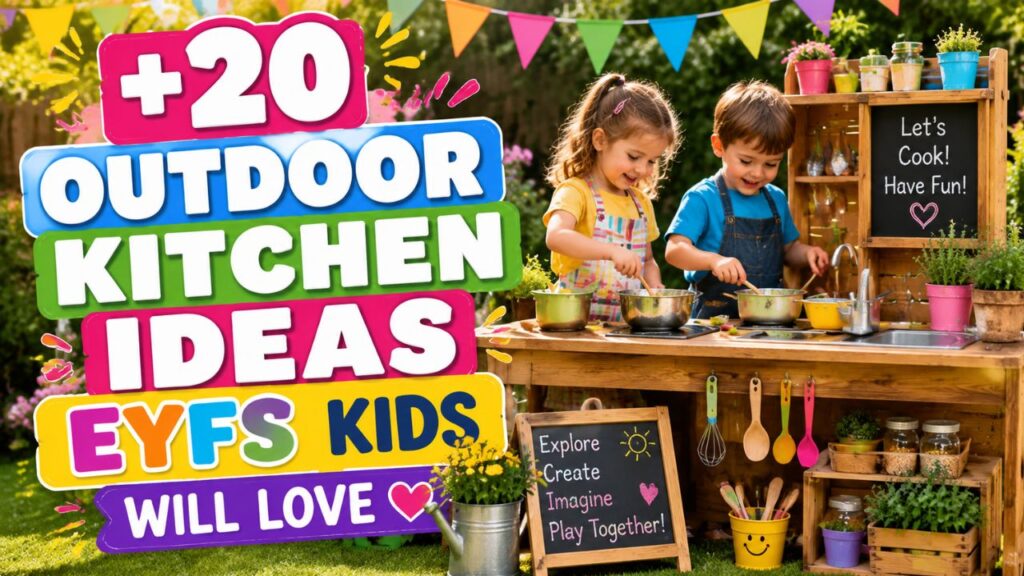
An outdoor kitchen isn’t just about mud pies, though those are a big draw. It builds language, math thinking, fine motor skills, and social confidence, all at once. The best part? You don’t need a big budget or fancy equipment to get started.
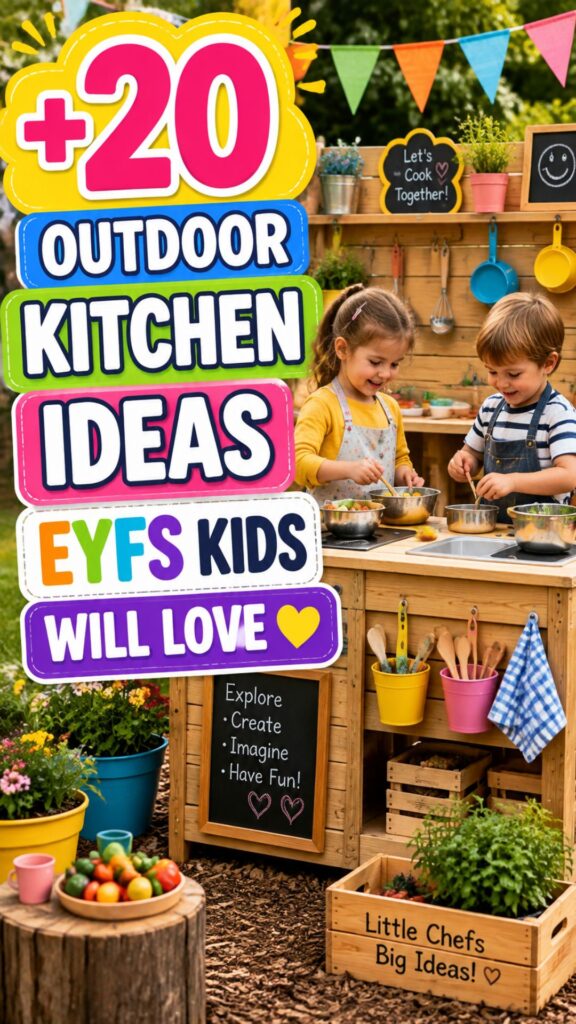
Below you’ll find 20 outdoor kitchen ideas EYFS settings can use straight away. Some cost almost nothing. Others take an afternoon to build. Each one supports real learning while kids think they’re just having fun. Let’s get into it.
1. The Classic Mud Kitchen
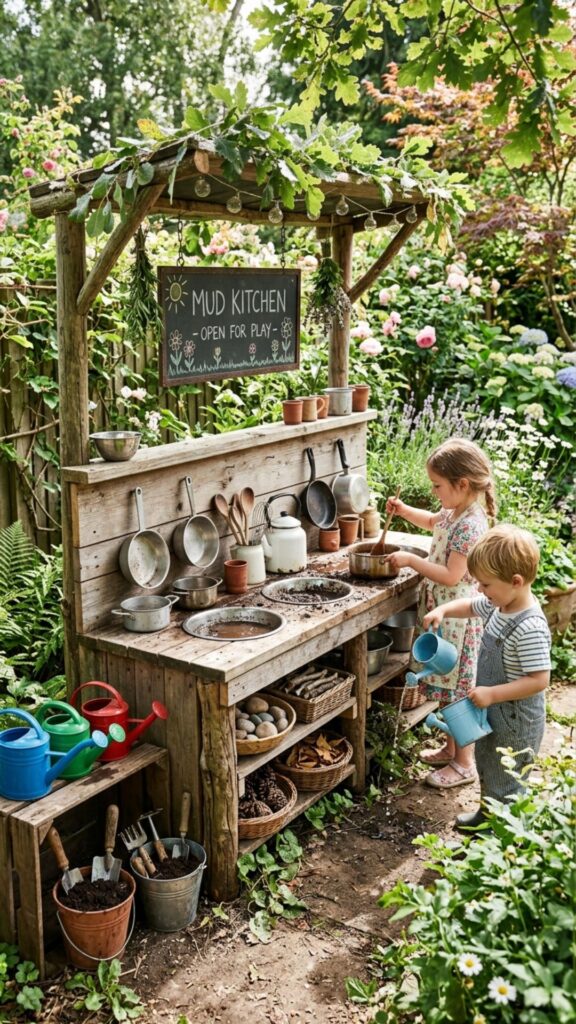
Start with the setup most children recognize instantly. A mud kitchen needs a sturdy surface, a few pots and pans, and access to soil and water. That’s the whole recipe. Kids scoop, squelch, and “cook” for hours, and the mess washes off.
Position it near a tap or water butt so refills are easy. Add a small shelf for ingredients like leaves, petals, and pine cones. This one idea alone covers sensory play, early science, and cooperative sharing without any adult direction.
2. Pallet Kitchen Counters
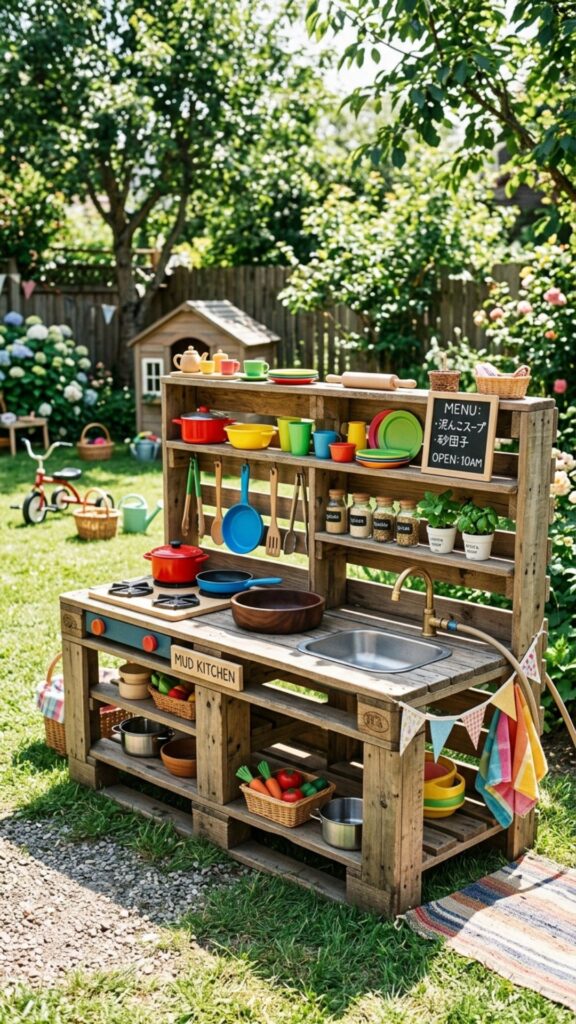
Wooden pallets make brilliant, free counters. Sand them down, check for splinters, and stand them upright for a ready-made frame. Add a plank across the top for a work surface, and you have a kitchen station in an afternoon.
Pallets are chunky and stable, which matters when several toddlers lean on them at once. Paint them a bright color or leave the natural wood. Either way, you get a durable base that survives years of outdoor use.
3. Old Sink Washing Station
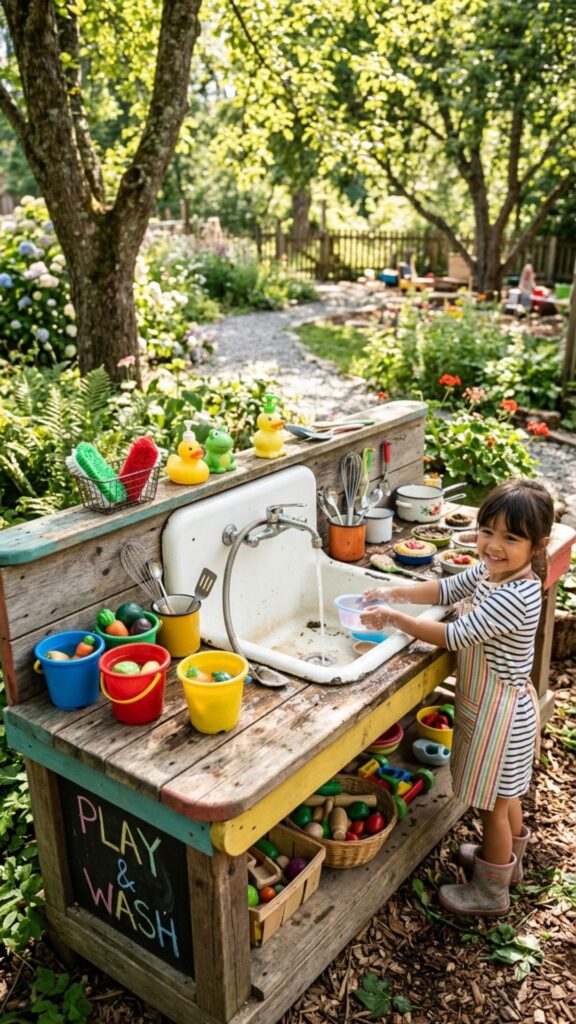
A salvaged kitchen sink turns messy play into a teachable routine. Fit it into a counter, plumb it to a bucket below, and children can rinse their “cooking” tools themselves. This teaches responsibility and hygiene in a hands-on way.
You’ll often find free sinks on local selling groups or at recycling centers. The plughole drains into a container you empty later, so no plumbing skills needed. Kids love the real feel of washing up like grown-ups do at home.
4. Herb Garden Pantry
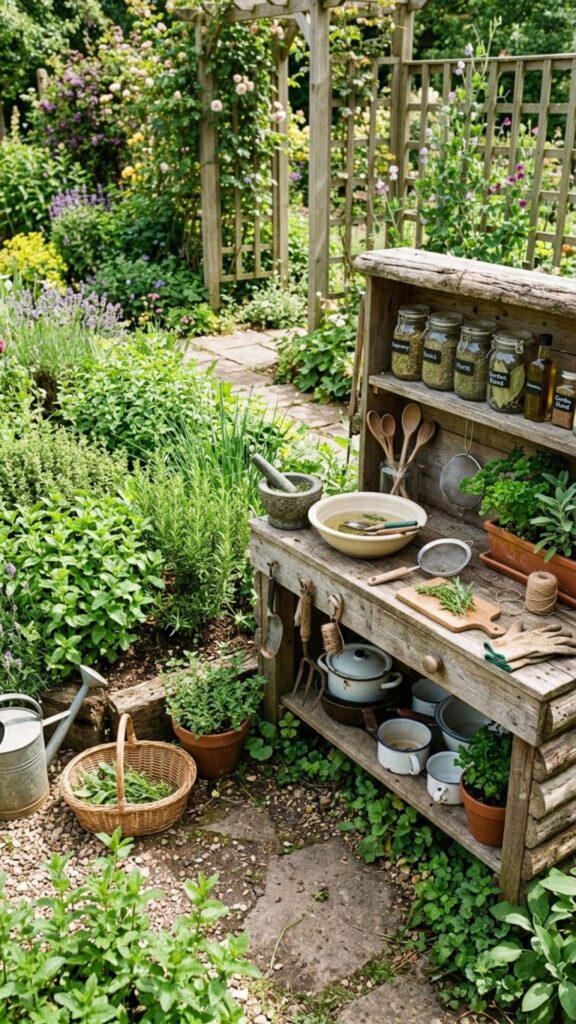
Plant hardy herbs like mint, rosemary, and chives right beside the kitchen. Children pick, smell, and add them to their pretend dishes. This links growing food to cooking it, a connection many kids rarely see.
Herbs are forgiving and grow back quickly, so a bit of enthusiastic picking won’t kill them. The scents also add a rich sensory layer. Ask children to describe what they smell, and watch their vocabulary stretch.
5. Loose Parts Ingredient Trays
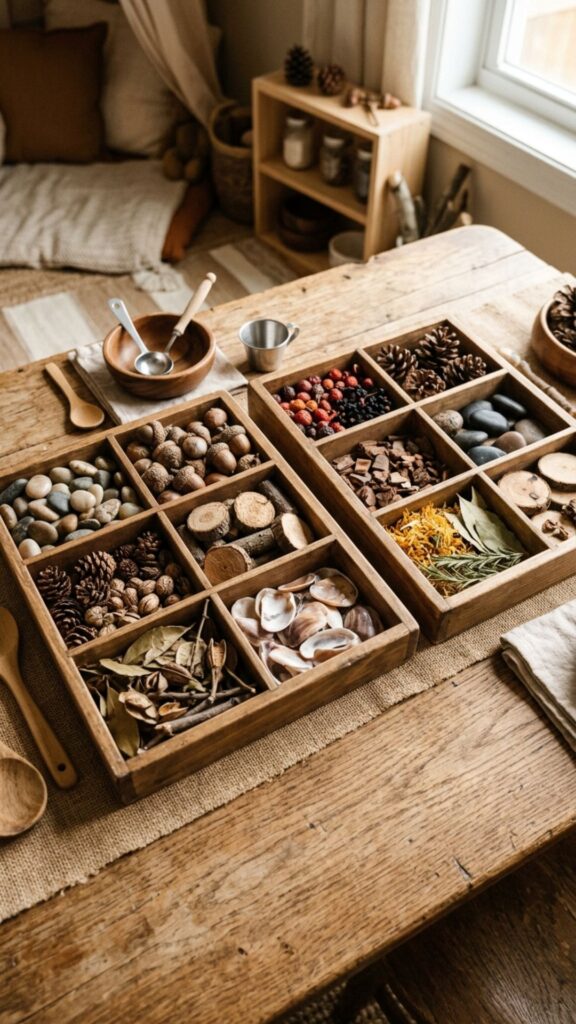
Fill trays with natural loose parts: acorns, pebbles, dried beans, and wood slices. These become the “ingredients” for endless recipes. Loose parts play is a cornerstone of good EYFS practice because it has no fixed outcome.
Store them in labeled containers so children learn to sort and tidy. The open-ended nature means a pebble might be a potato one minute and a coin the next. That flexibility fuels imagination and problem-solving.
6. Weighing and Measuring Corner
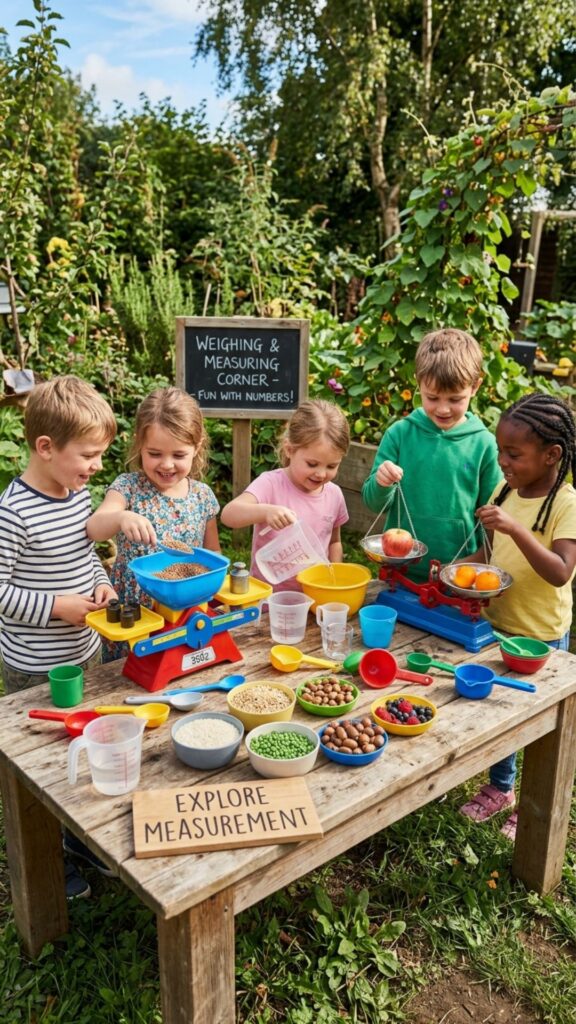
Add a set of kitchen scales and some measuring jugs. Children fill, tip, and compare amounts, building early math skills without a worksheet in sight. Balance scales work especially well for showing “heavier” and “lighter.”
Model the language as they play: “more,” “less,” “full,” “empty.” These words appear again and again in early numeracy goals. A measuring corner turns abstract math into something kids can hold in their hands.
7. Mud Pie Baking Zone
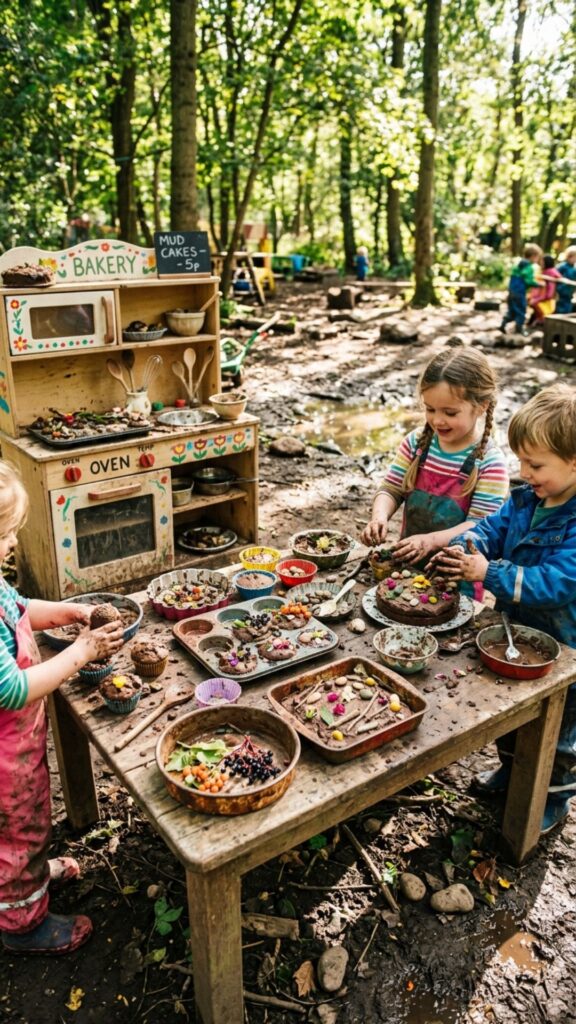
Set aside a dedicated spot for baking mud pies and cakes. Give children old muffin tins, cake molds, and a “oven” made from a crate. The routine of mixing, shaping, and baking mirrors real cooking steps.
This zone encourages sequencing, an important early skill. Children learn that some things come first and others follow. Ask them to explain their recipe, and you’ll hear storytelling and logical order forming naturally.
8. Chalkboard Menu Wall
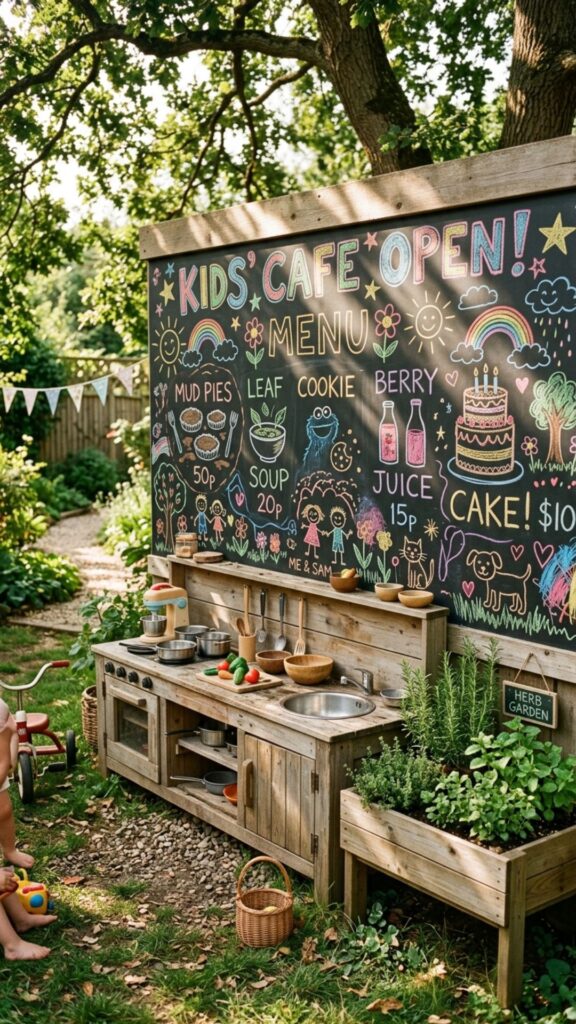
Fix a chalkboard nearby so children can “write” the day’s menu. Even scribbles count as early mark-making, a key step toward writing. Older children may add letters, prices, or drawings of their dishes.
A menu board also sparks role play. One child becomes the chef, another the customer. This back-and-forth builds turn-taking, listening, and speaking, all central to early communication development.
9. Recycled Container Storage
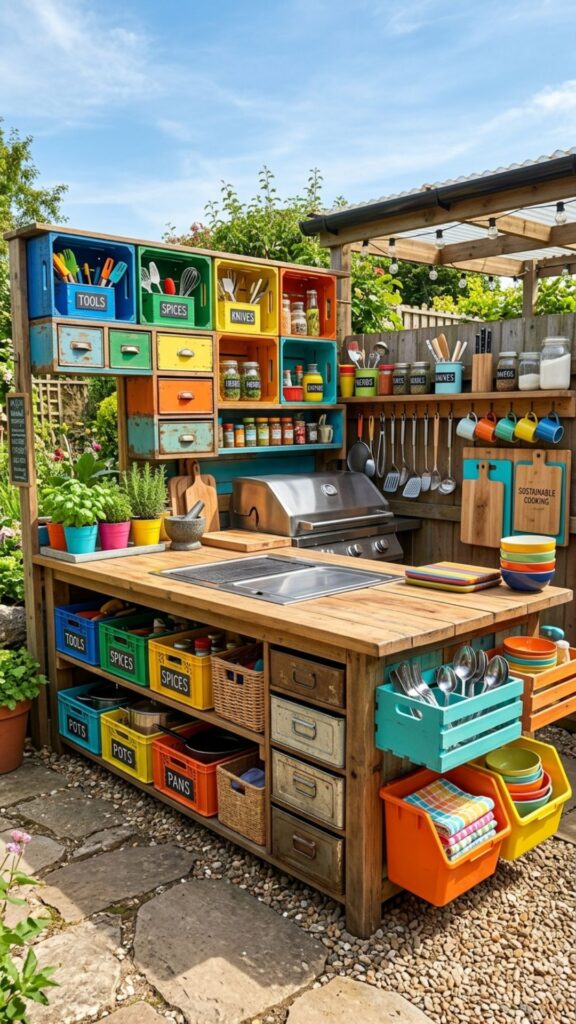
Milk crates, old drawers, and plastic tubs keep utensils organized and reachable. Low, open storage lets children choose their own tools and pack away after. Independence like this is a quiet win for confidence.
Clear or labeled storage also cuts down on lost items and daily setup time for staff. When children know where things belong, tidying becomes part of the play rather than a chore forced on them.
10. Water Pump and Trough
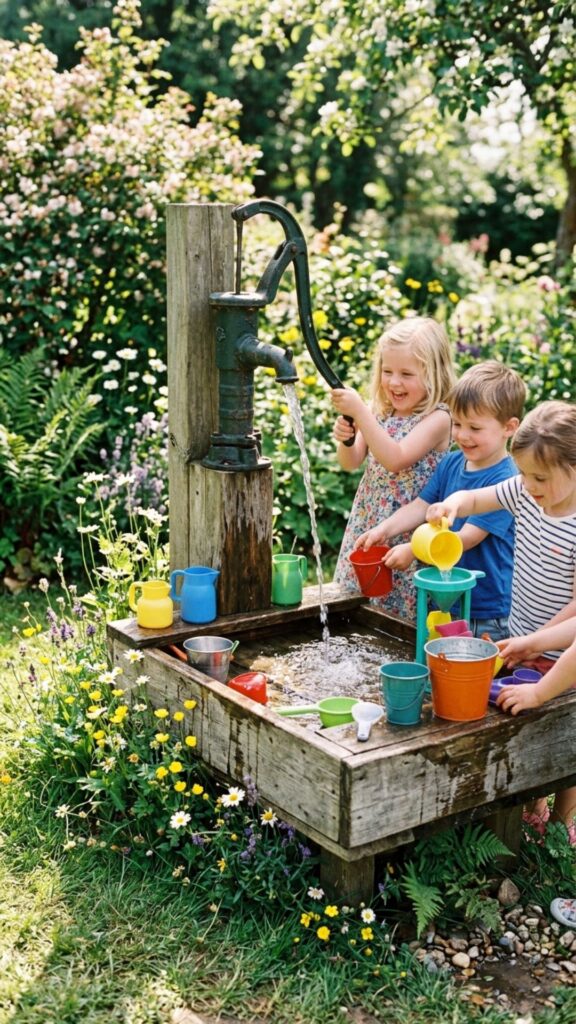
A hand pump connected to a water trough adds movement and cause-and-effect learning. Children pump, watch water flow, and use it in their cooking. The physical effort also supports gross motor development.
Water play calms and focuses many children who struggle to settle. Pair the trough with jugs and funnels for extra pouring practice. Just check depth regularly and supervise around any standing water.
11. Fairy Kitchen Theme
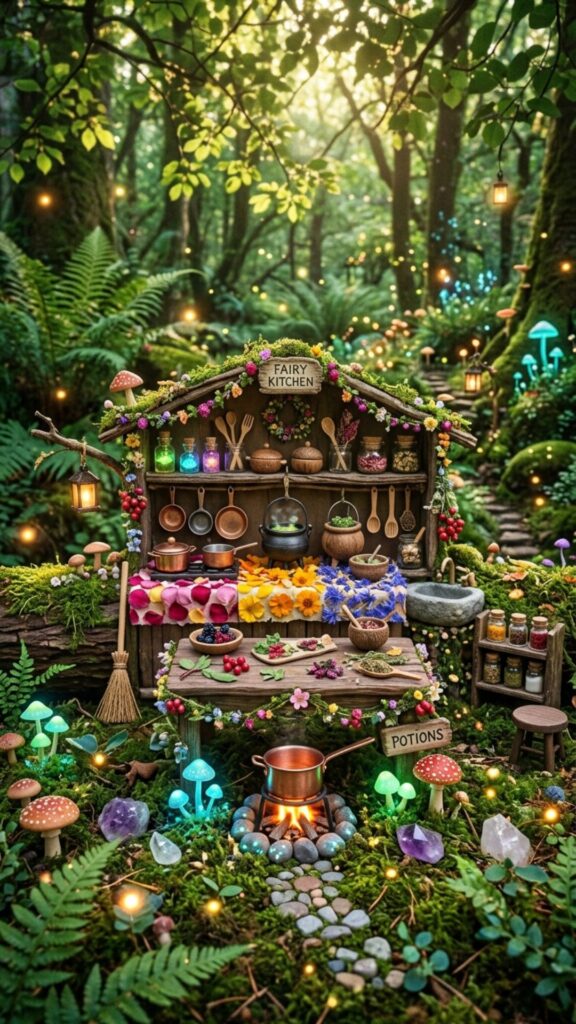
Give one kitchen a magical twist with tiny pots, sparkly stones, and flower petals. A fairy or elf theme pulls in children who might not choose a plain mud kitchen. Story and fantasy deepen their play instantly.
Themes like this widen appeal and support imaginative thinking. Children invent characters, plots, and problems to solve. You can rotate themes through the year to keep interest fresh and tie into your topics.
12. Real Utensil Collection
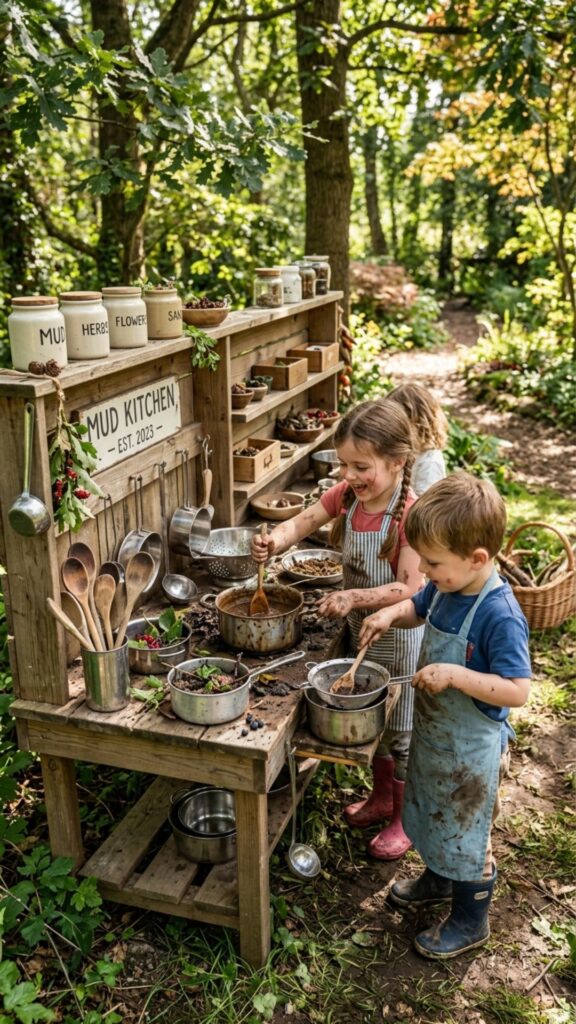
Swap plastic toys for real wooden spoons, metal pots, and sieves. Genuine tools feel weightier and work better, which children notice at once. Real objects also build proper grip and coordination.
Charity shops sell these for pennies, so cost stays low. Check for sharp edges and remove anything risky. Trusting children with real equipment sends a powerful message: we believe you can handle this.
13. Seasonal Ingredient Baskets
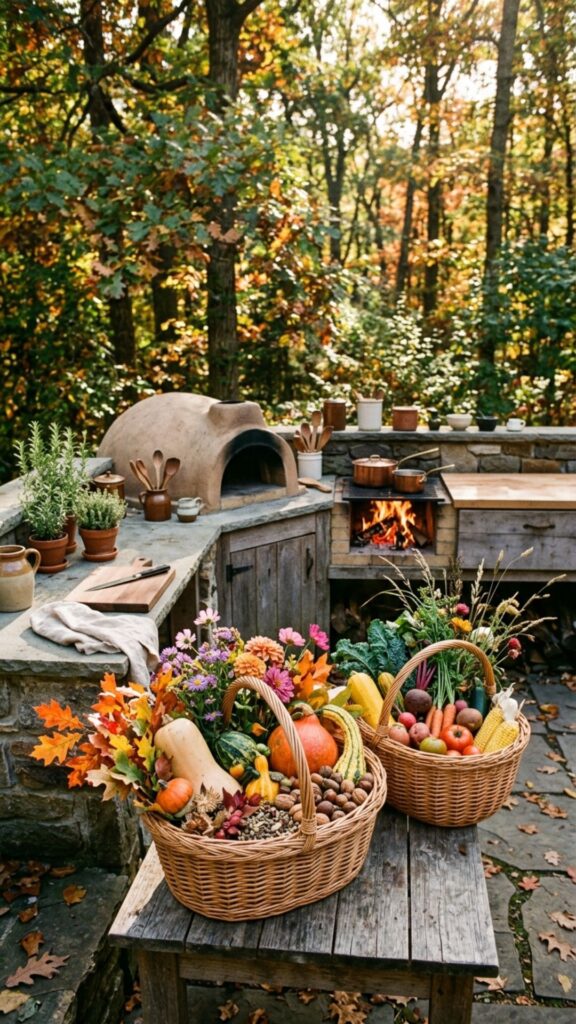
Refresh the kitchen with what each season offers. Autumn brings conkers and leaves; spring brings blossom and fresh grass. This keeps the space alive and connects children to the changing world outside.
Seasonal play also teaches natural cycles in a gentle way. Talk about why leaves fall or where blossom comes from. These small conversations plant early science ideas that grow over time.
14. Cafe Role Play Setup
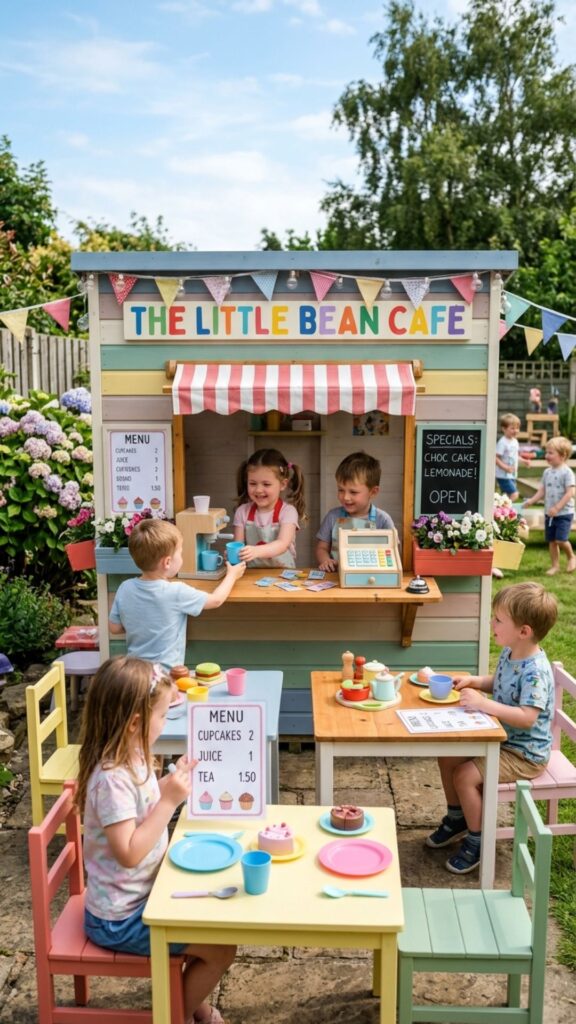
Add a small table, chairs, and a serving hatch to create a cafe. Children take orders, “cook,” and serve customers. This role play is packed with language, math, and social learning.
Include a till, notepad, and pretend money for extra depth. Handling coins introduces number recognition and simple counting. The whole setup mirrors real life, which helps children make sense of their community.
15. Sensory Spice and Scent Jars
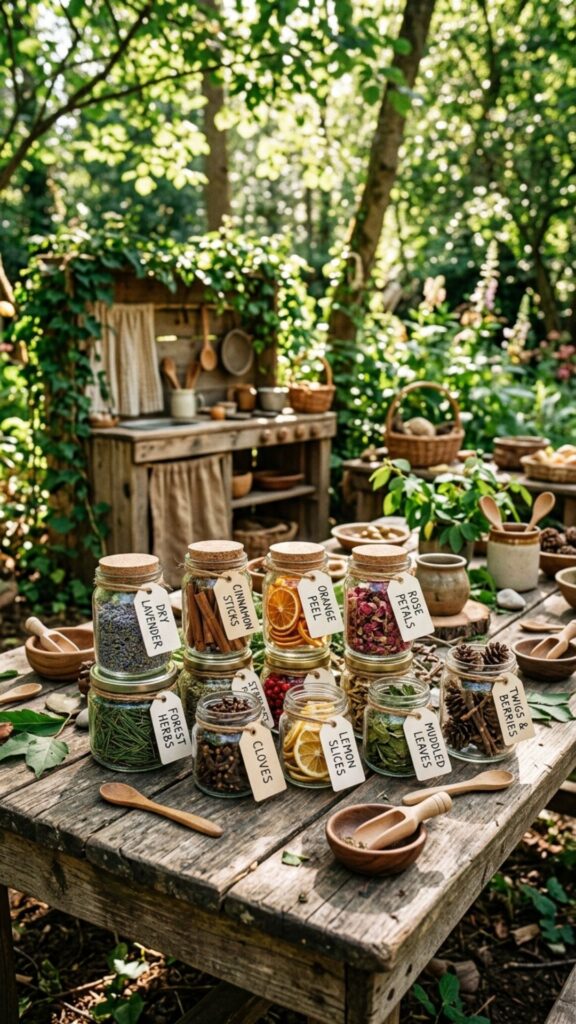
Fill small jars with safe scented items like dried lavender, cinnamon sticks, and citrus peel. Children sniff and add them to recipes, sharpening their sense of smell and their descriptive words.
Always check for allergies before adding new scents. Secure lids with mesh so contents stay put. This simple addition transforms plain play into a rich sensory experience that many children remember and return to.
16. Bug-Friendly Cooking Garden
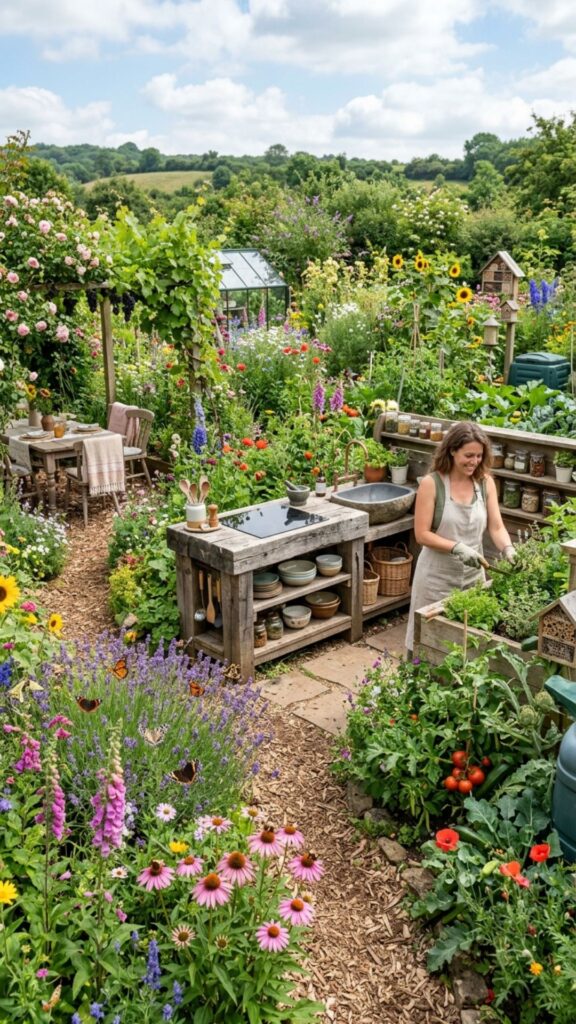
Grow a patch of wildflowers and vegetables beside the kitchen to attract bees and butterflies. Children observe the visitors while they play, blending cooking with nature study.
This idea supports the “understanding the world” area of EYFS beautifully. Kids learn where food comes from and why insects matter. A watering can nearby lets them help care for the plants too.
17. Weatherproof Canopy Cover
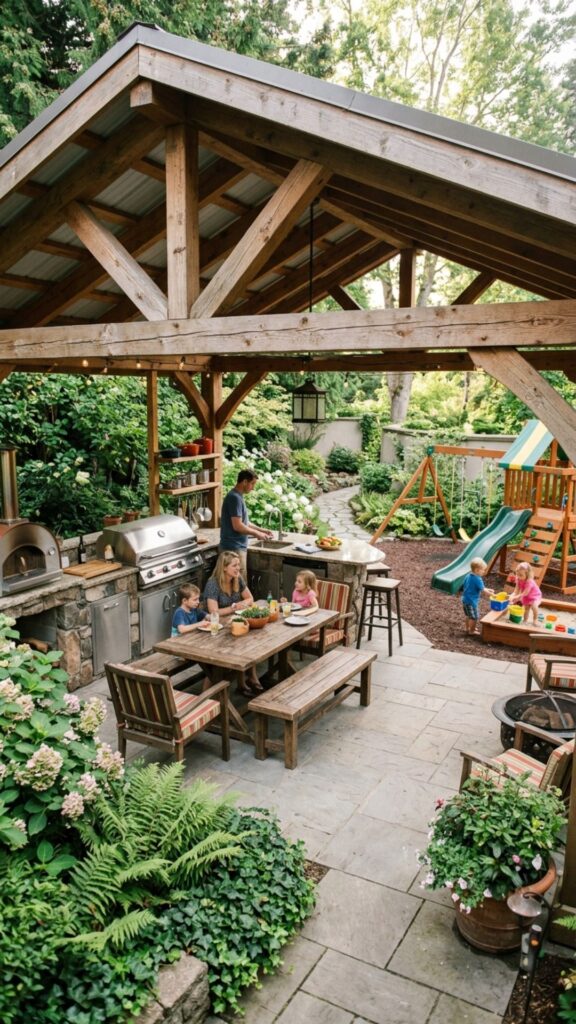
Fit a canopy or gazebo over the kitchen so play continues in rain or strong sun. Outdoor learning shouldn’t stop when the weather turns, and shelter makes year-round use realistic.
A covered space also protects wooden equipment from rot and warping. Children experience different weather safely, which builds resilience. Splashing in the rain from under cover feels like an adventure, not a hardship.
18. Recipe Card Prompts
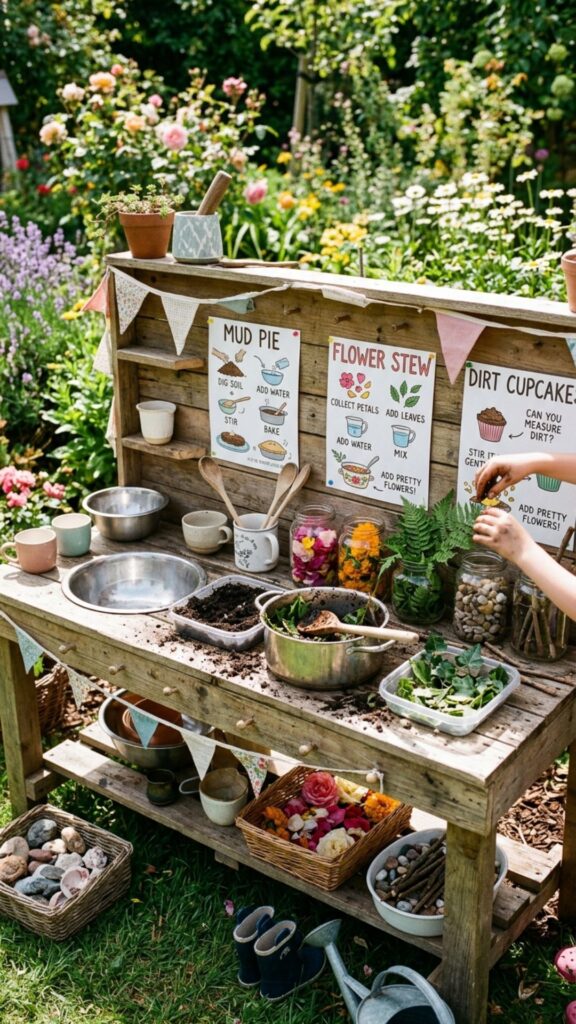
Make simple picture-based recipe cards showing steps like “add three stones” or “pour one jug of water.” These prompts guide play gently and introduce reading pictures for meaning.
Cards support children who like structure while leaving room for free choice. They also sneak in counting and following instructions. Laminate them so they survive muddy hands and the occasional downpour.
19. Team Cooking Challenges
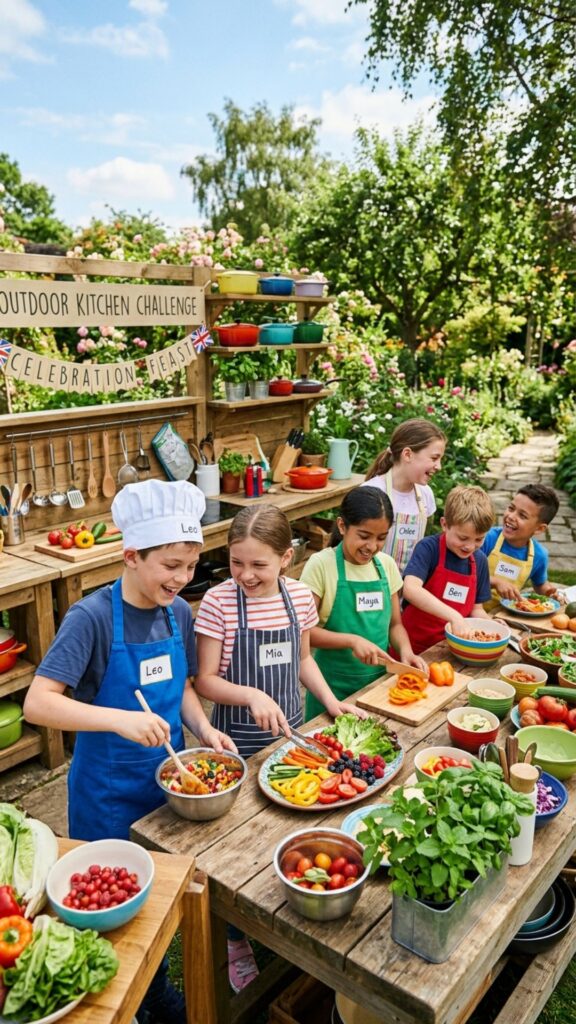
Set small group tasks, such as making a “birthday cake” together. Working as a team builds negotiation, sharing, and patience, skills that matter far beyond the kitchen.
These challenges give quieter children a role and a reason to speak up. Keep goals loose so there’s no wrong answer. The point is the process, not a perfect finished dish.
20. Tidy-Up Routine Station
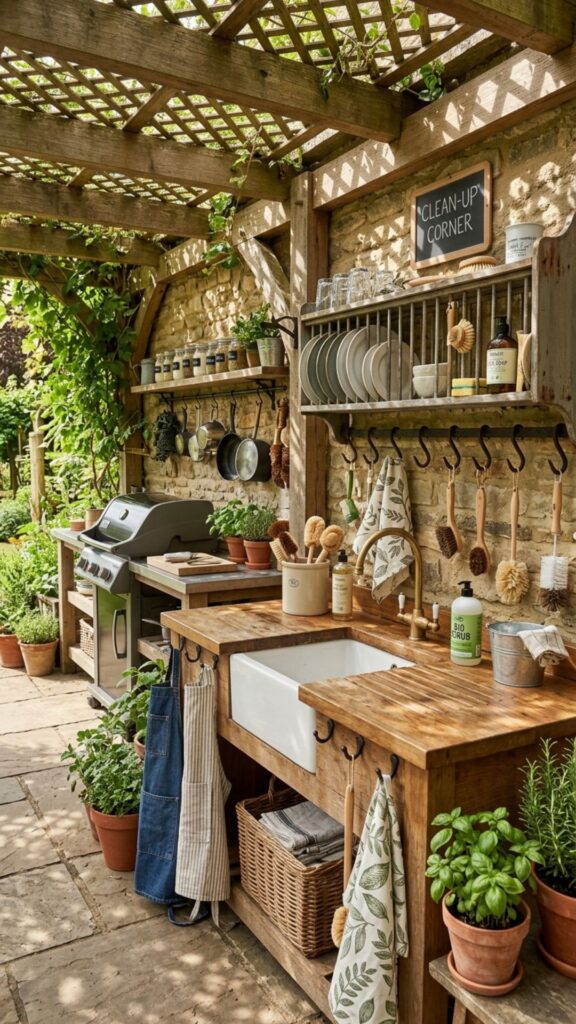
Finish with a clear system for cleaning up: a drying rack, a mud brush, and hooks for aprons. A good routine teaches responsibility and keeps the area ready for the next group.
Turn tidying into a game with songs or timers. Children who help pack away feel ownership of their space. This final touch keeps your outdoor kitchen sustainable and enjoyable day after day.
Bringing It All Together
You don’t need every idea on this list to build a brilliant outdoor kitchen. Pick two or three that fit your space, your budget, and your children’s interests, then grow from there. The best setups start small and change as you learn what your group loves.
Remember why these outdoor kitchen ideas EYFS practitioners rely on work so well: they let children lead their own learning through play they genuinely enjoy. Start with one idea this week. Watch how the children respond, then build on what sparks the most joy and curiosity.
What is an outdoor kitchen in EYFS?
An outdoor kitchen in EYFS is a play area where children cook pretend meals using mud, water, and natural materials. It supports learning across communication, math, physical skills, and social development through open-ended, child-led play.
What age is an outdoor mud kitchen suitable for?
Outdoor mud kitchens suit children from around 18 months up to 5 years and beyond. Younger children explore textures and pouring, while older children take on role play, recipes, and team tasks. Adjust tools and supervision to match each age group.
How do I set up an outdoor kitchen on a small budget?
Use recycled materials like wooden pallets, old sinks, and charity shop utensils. Natural loose parts such as stones, leaves, and pine cones cost nothing. Start with a simple counter and a few pots, then add features over time as funds allow.
Are outdoor kitchens safe for young children?
Yes, when set up thoughtfully. Check equipment for splinters and sharp edges, supervise water play, and confirm any scented items are allergy-safe. Establish clear routines for washing hands and tidying up to keep the space clean and secure.
What skills do children learn at an outdoor kitchen?
Children build language, early math, fine and gross motor skills, and social confidence. They practice measuring, sequencing, sharing, and problem-solving, all while playing. These experiences connect directly to key EYFS learning goals.