Attaching your outdoor kitchen to the house saves money on plumbing, gas, and electrical runs. It also keeps you close to the action and makes cleanup a breeze.
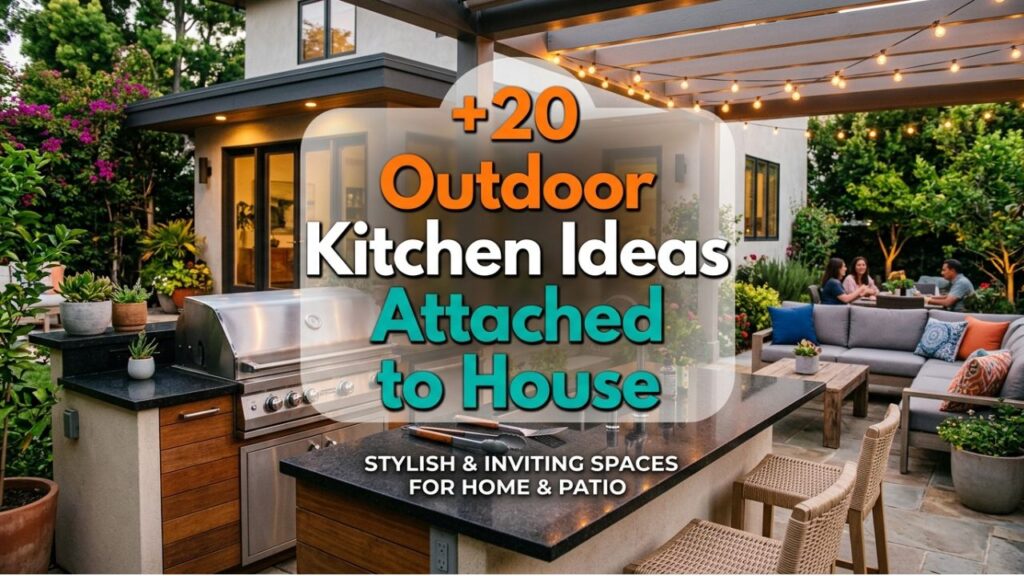
Below, you’ll find 20 practical outdoor kitchen ideas attached to house layouts, from tiny grill stations to full alfresco dining rooms.
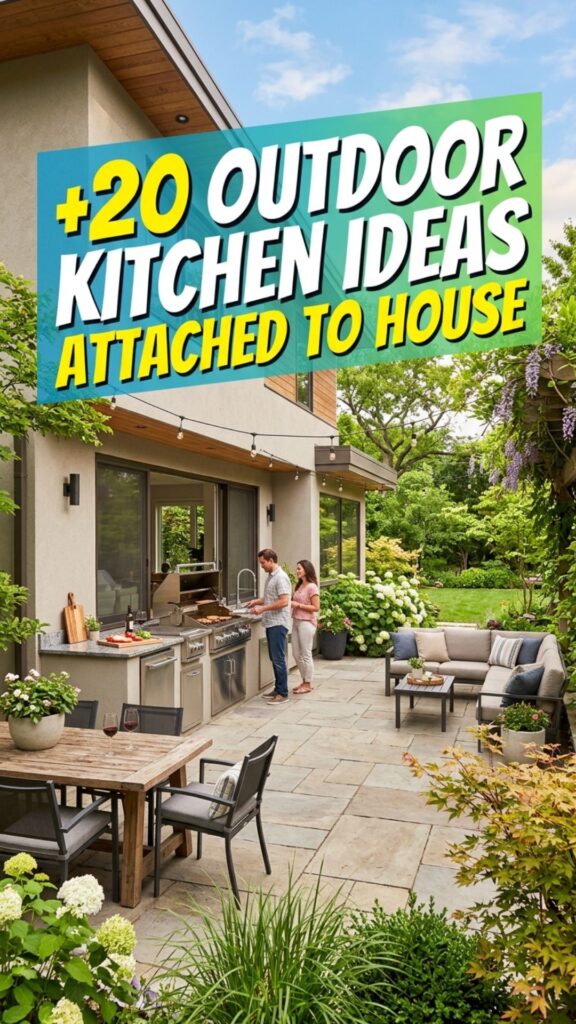
Each one includes real tips you can use, whether you’re working with a small patio or a sprawling backyard.
1. Build a Simple Grill Station Along the Back Wall
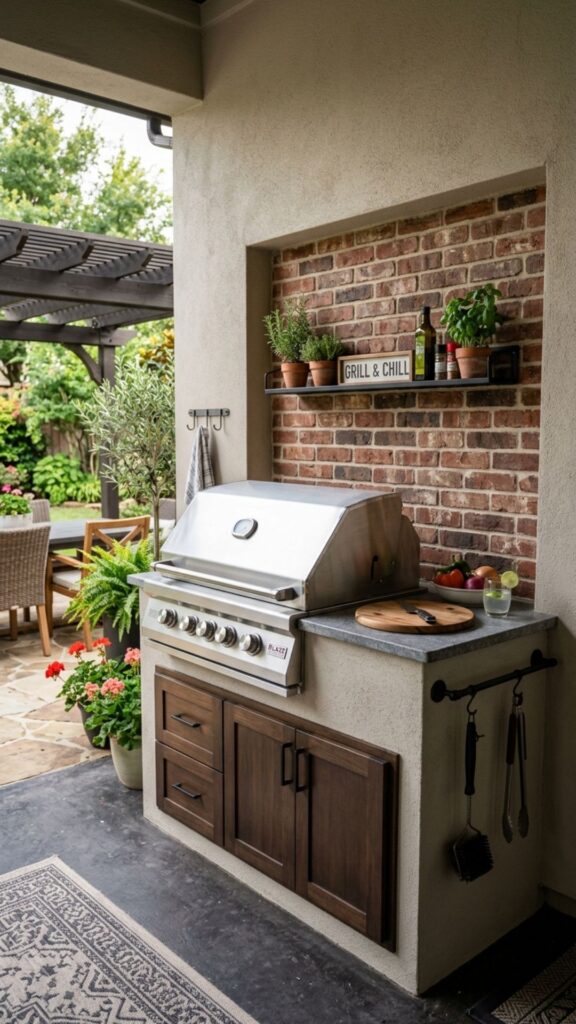
The easiest way to start is a compact grill station tucked against your exterior wall. You mount a built-in grill into a masonry or steel frame, add a small counter beside it, and you’re ready to cook. This works beautifully for narrow patios where floor space is tight.
Keep the grill a safe distance from siding, especially if your walls are vinyl or wood. A stainless steel heat shield or a brick backsplash protects the surface and adds a clean, finished look. This setup costs the least and still gives you plenty of room to prep and serve.
2. Add a Covered Cooking Area Under the Roofline
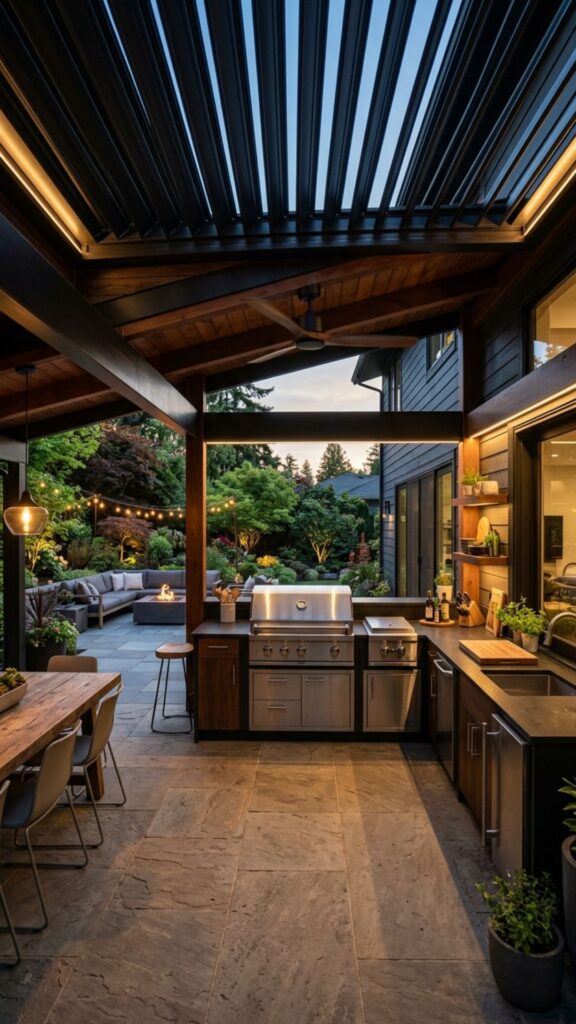
Extending your home’s existing roofline over the cooking zone lets you grill rain or shine. A pergola or solid patio cover attached to the fascia board keeps smoke, heat, and weather in check. You get shade in summer and shelter during light rain.
Make sure your cover has proper ventilation if you’re using a grill or smoker underneath. Vented panels or an open-sided design prevent smoke buildup. Many homeowners pair this with an outdoor ceiling fan to keep the air moving on hot days.
3. Install an L-Shaped Counter Against the House
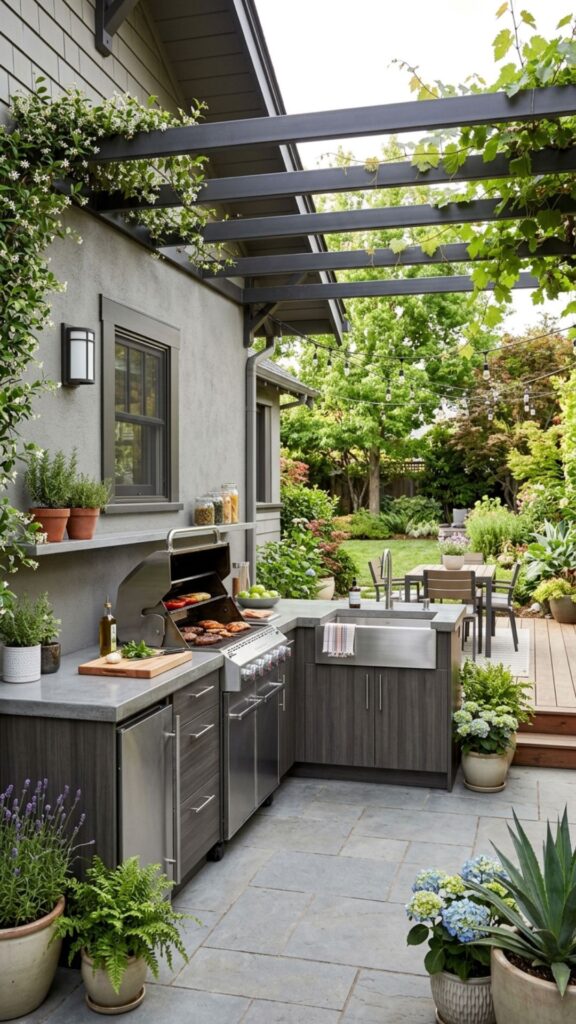
An L-shaped layout uses one wall of your home and wraps around a corner, giving you two work zones. One leg holds the grill and cooking gear, while the other becomes a prep and serving area. This shape naturally guides traffic and keeps guests out of the cook’s way.
The corner offers a smart spot for a sink or a small fridge. Because one full side connects to the house, running water and power lines becomes far simpler and cheaper. It’s a favorite for families who host often.
4. Create a Breakfast Bar Off the Kitchen Window
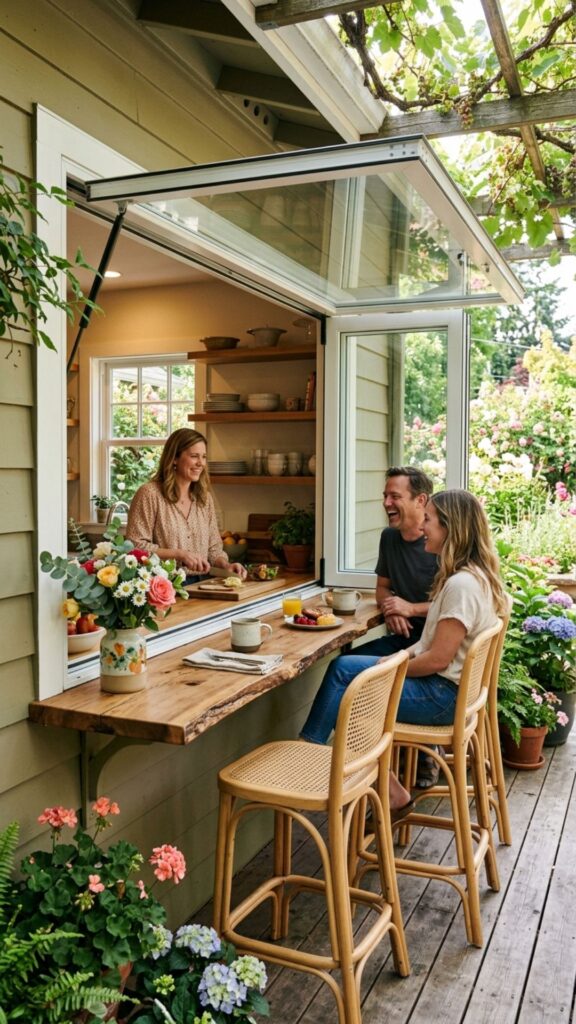
If your indoor kitchen has a window facing the patio, turn it into a pass-through bar. You install a wide counter on the outside sill, add a few stools, and suddenly you have a spot for morning coffee or evening drinks. Food and dishes slide right through the opening.
This idea shines for smaller homes where a full outdoor kitchen isn’t realistic. The window connection means you barely need extra plumbing. Add a folding or awning-style window, and you can close everything up tight when the weather turns.
5. Design a Full Outdoor Kitchen with Matching Cabinetry
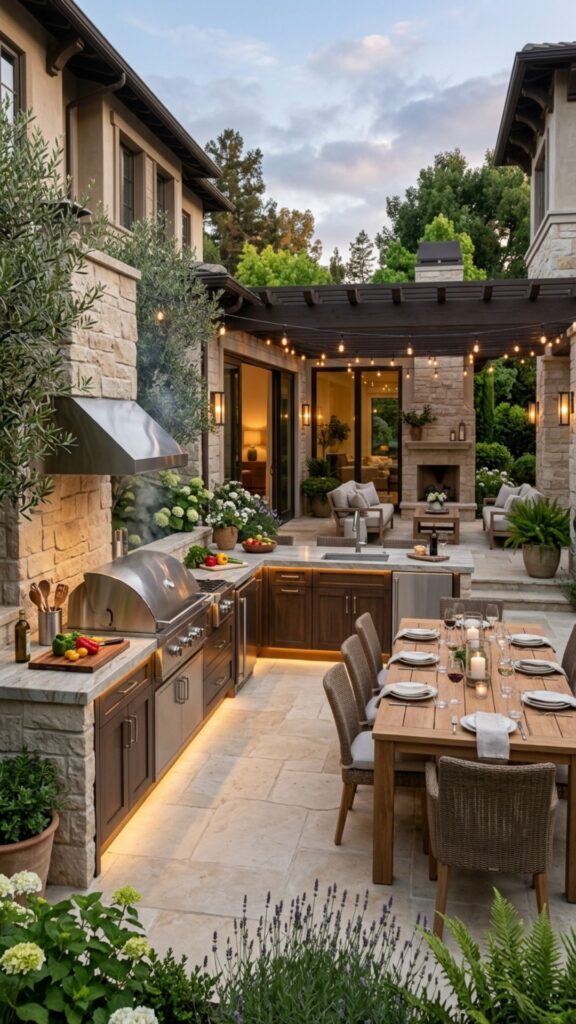
For a seamless look, match your outdoor cabinets to your indoor kitchen style. Marine-grade polymer or powder-coated aluminum cabinets handle rain, sun, and humidity without warping or rusting. Pair them with a stone or concrete countertop for durability.
This approach makes your outdoor space feel like a true extension of your home. Choose colors and hardware that echo your interior design. When done well, the transition from inside to outside feels effortless and intentional.
6. Set Up a Pizza Oven Feature Wall
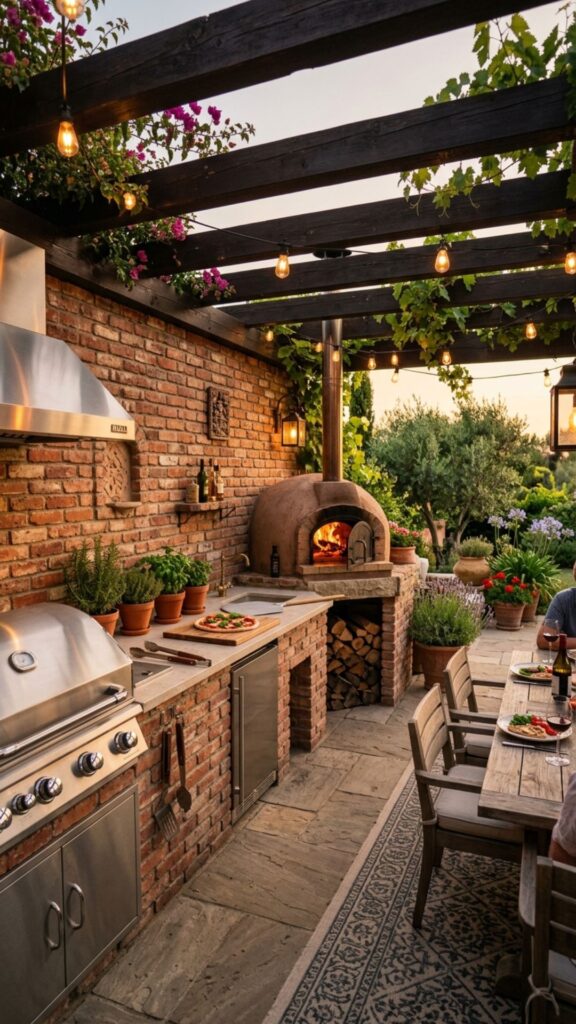
A wood-fired or gas pizza oven built into the wall beside your grill becomes an instant conversation starter. Guests love watching pizzas cook in minutes, and the oven doubles for roasting vegetables or baking bread. Mount it on a sturdy masonry base for safety.
Position the oven where the chimney can vent away from doors and windows. A brick or stucco surround ties it into the home’s exterior and adds visual weight. This feature turns an ordinary cookout into a memorable evening.
7. Use a Peninsula Layout to Separate Cooking and Dining
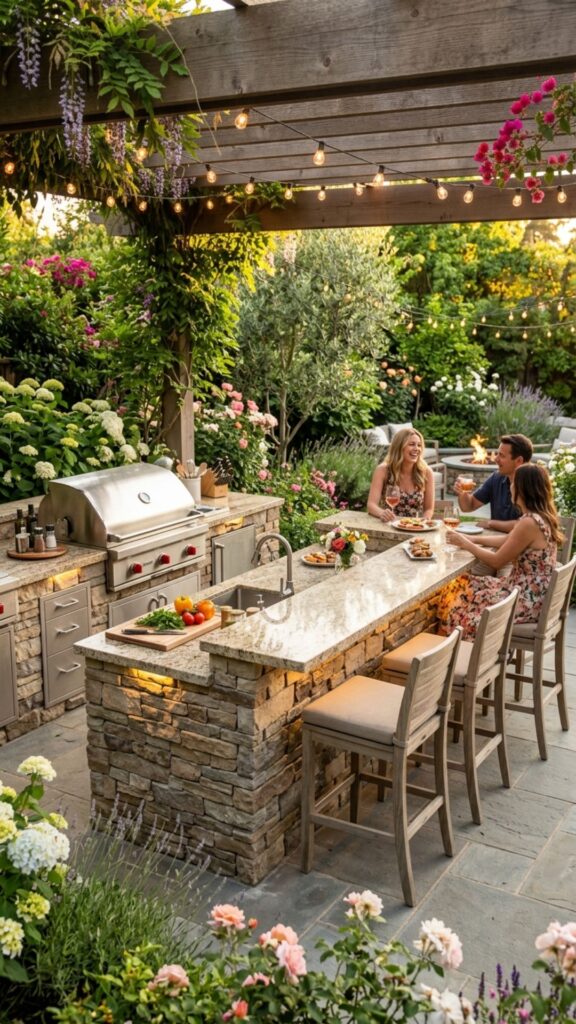
A peninsula counter juts out from the house wall, creating a natural divide between where you cook and where guests gather. One side faces the grill; the other holds bar seating. This keeps hot surfaces away from little hands while still feeling social.
You can run gas and electric lines through the peninsula base since it anchors to the house. Top it with a heat-resistant surface like granite or quartzite. The layout works especially well on rectangular patios.
8. Incorporate a Built-In Sink Near the Back Door
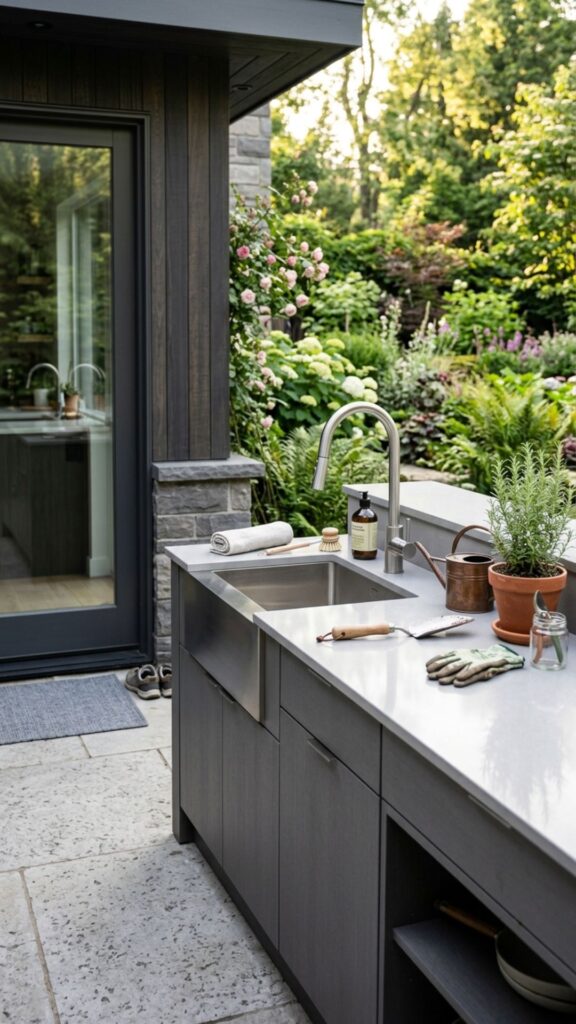
A sink close to your home’s water lines saves you from long, expensive plumbing runs. Placing it near the back door means you can tap into existing supply and drainage with minimal digging. Wash produce, rinse dishes, and fill pots without stepping inside.
Choose a deep, single-basin sink made of stainless steel for easy cleaning. Add a gooseneck faucet with a sprayer for flexibility. In colder climates, install a shutoff valve so you can drain the line before winter.
9. Add a Beverage Station with a Mini Fridge
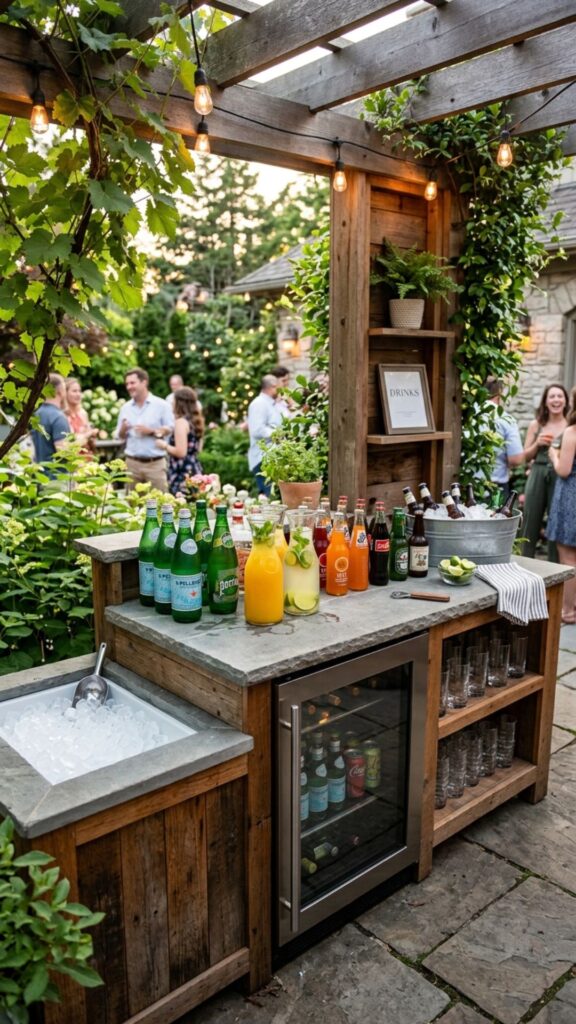
A dedicated drink zone keeps guests happy and out of your cooking space. Slide an outdoor-rated mini fridge into your cabinetry, add a bottle opener, and stock it with cold drinks. Some homeowners include a kegerator or a built-in ice bin.
Locate this station near a wall outlet or run a dedicated GFCI circuit from the house panel. Because it sits against the home, wiring stays short and safe. Guests can grab their own refreshments while you focus on the grill.
10. Build a Cozy Outdoor Kitchen Nook for Small Spaces
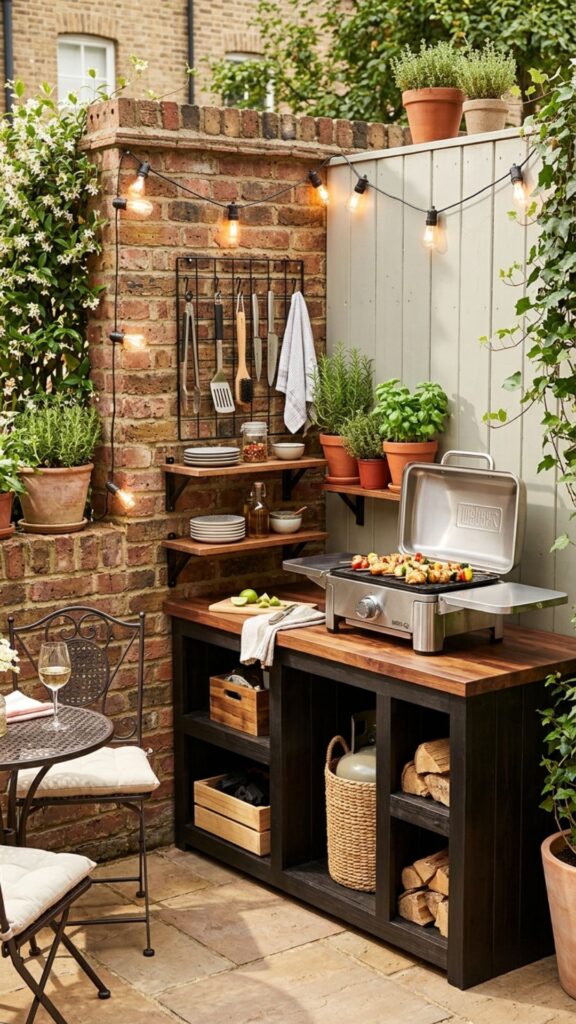
Tight patios still deserve a great cooking setup. A compact nook with a portable grill, a slim counter, and wall-mounted storage fits into corners as small as five feet wide. Vertical storage keeps tools within reach without eating up floor space.
Use fold-down shelves that tuck away when not in use. Hang utensils, towels, and spices on a rail along the wall. Smart planning proves you don’t need a huge yard to enjoy cooking outdoors.
11. Extend Your Patio with a Concrete Countertop Run
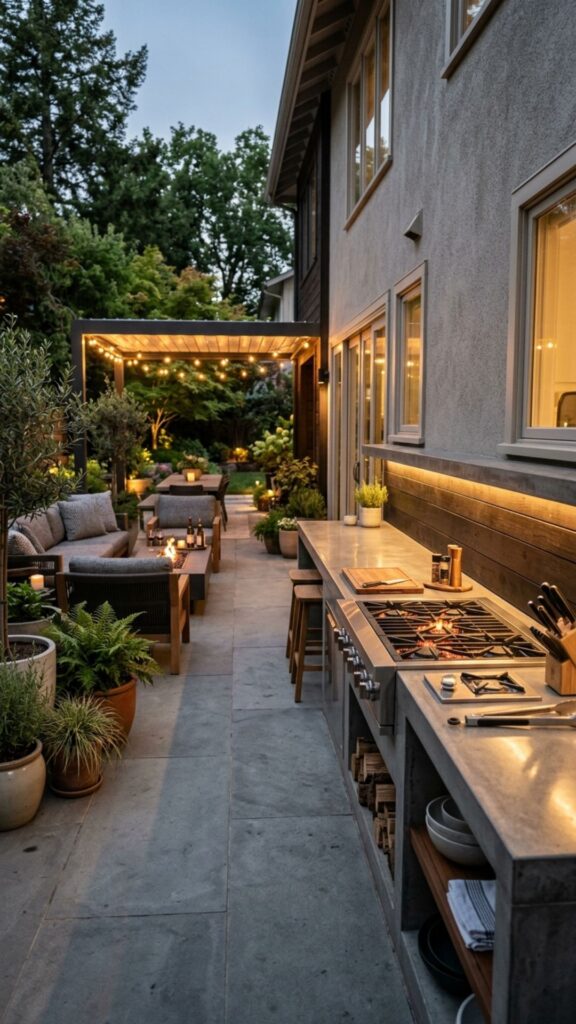
A long, continuous concrete counter along your home’s exterior wall gives you generous prep space and a modern edge. Concrete resists heat, stands up to weather, and can be tinted or stamped to match your style. It’s one of the most durable surfaces available.
Seal the concrete every year or two to guard against stains and cracks. Set your grill, side burner, and prep area along this single run for an efficient workflow. The clean lines suit both contemporary and rustic homes.
12. Install Overhead String Lights and Task Lighting
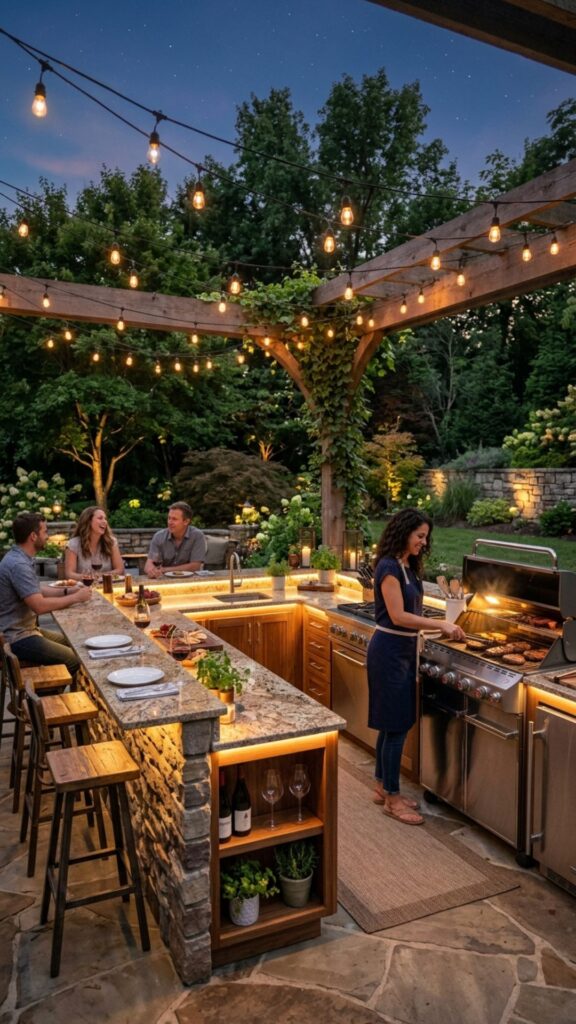
Good lighting turns your attached kitchen into an evening destination. String lights draped from the house to a post create a warm, festive glow. Under-counter LED strips and focused task lights over the grill keep you safe while cooking after dark.
Wire everything to a switch by the back door for easy control. Use outdoor-rated fixtures and weatherproof outlets. Layered lighting lets you shift from bright cooking mode to a relaxed dinner mood in seconds.
13. Create a Dining Zone Right Off the Kitchen
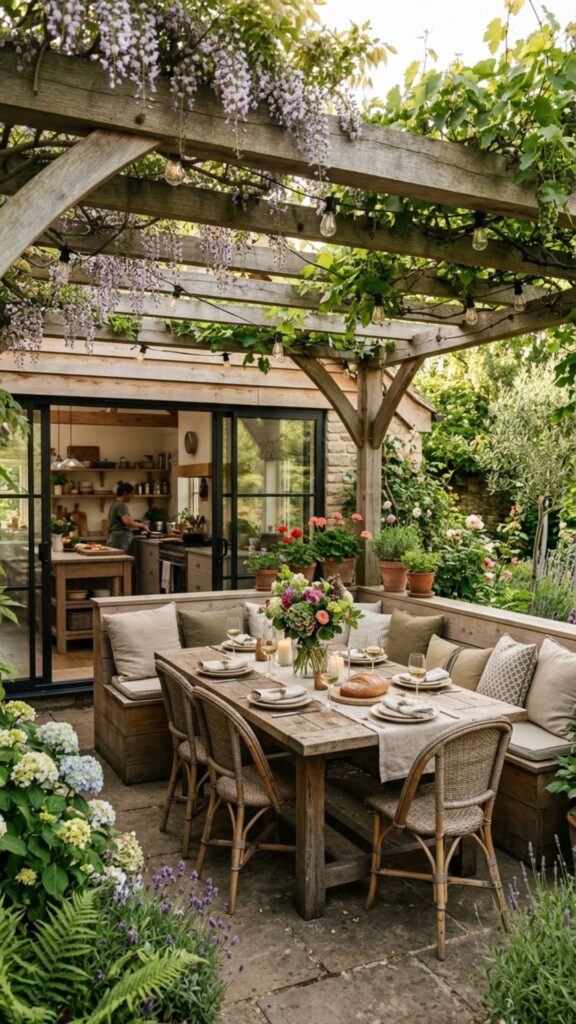
Pair your cooking area with a dining table just steps away. Placing the table near the house keeps meals warm and lets you carry dishes without a long walk. A built-in bench along the wall saves space and adds cozy seating.
Anchor the dining zone with a rug, a shade structure, or a pergola overhead. This defines the area and makes it feel like a room. Your guests can sit and chat while you plate the food nearby.
14. Add a Smoker Cabinet for Low-and-Slow Cooking
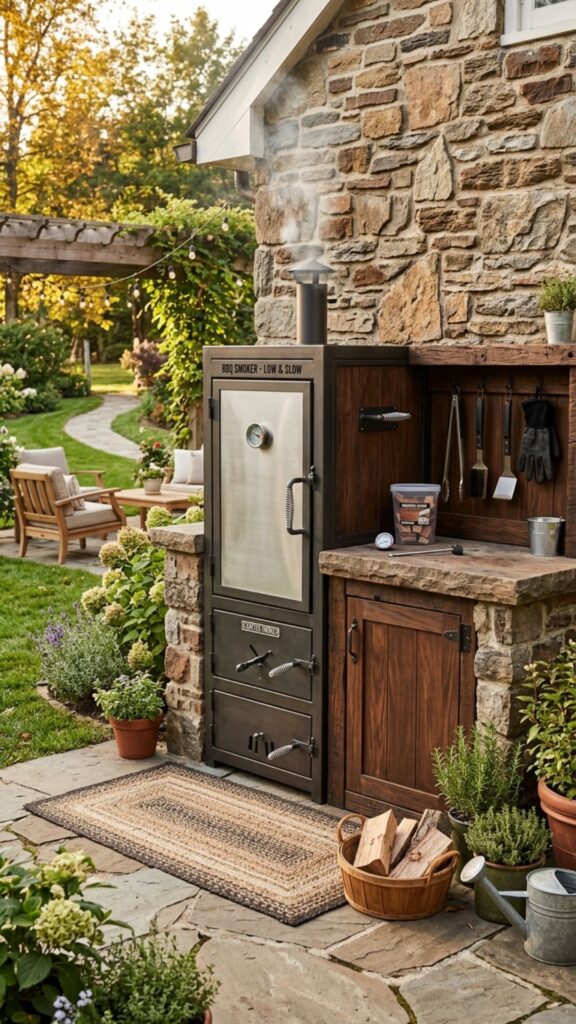
Barbecue fans will love a dedicated smoker built into the outdoor kitchen. A built-in offset or pellet smoker against the wall lets you cook brisket and ribs for hours while you relax. Store wood pellets or chunks in a nearby weatherproof cabinet.
Give the smoker plenty of clearance from siding and overhangs, since it runs for long stretches. A stone or metal backdrop shields the wall from heat and stains. This feature rewards patience with incredible flavor.
15. Use Weather-Resistant Cabinets for Year-Round Storage
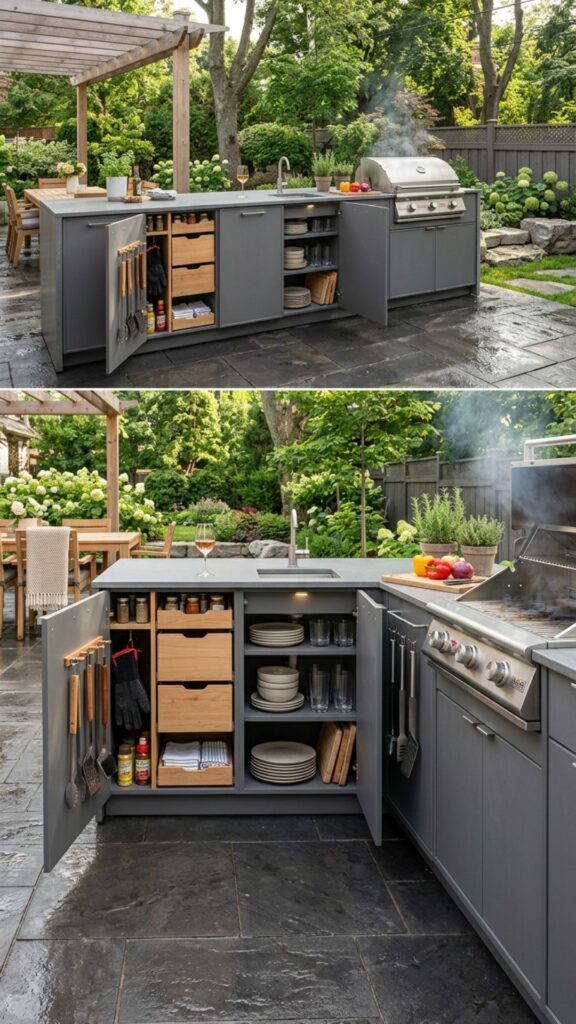
Storage keeps your outdoor kitchen tidy and ready to use. Cabinets made from stainless steel, polymer, or sealed teak survive rain, sun, and freezing temperatures. Store grilling tools, plates, and cleaning supplies right where you need them.
Add soft-close doors and adjustable shelves for a polished, functional feel. Keep a lockable drawer for propane tools or sharp knives. Smart storage means fewer trips inside and a cleaner, safer space.
16. Design a Fireplace or Fire Pit Nearby
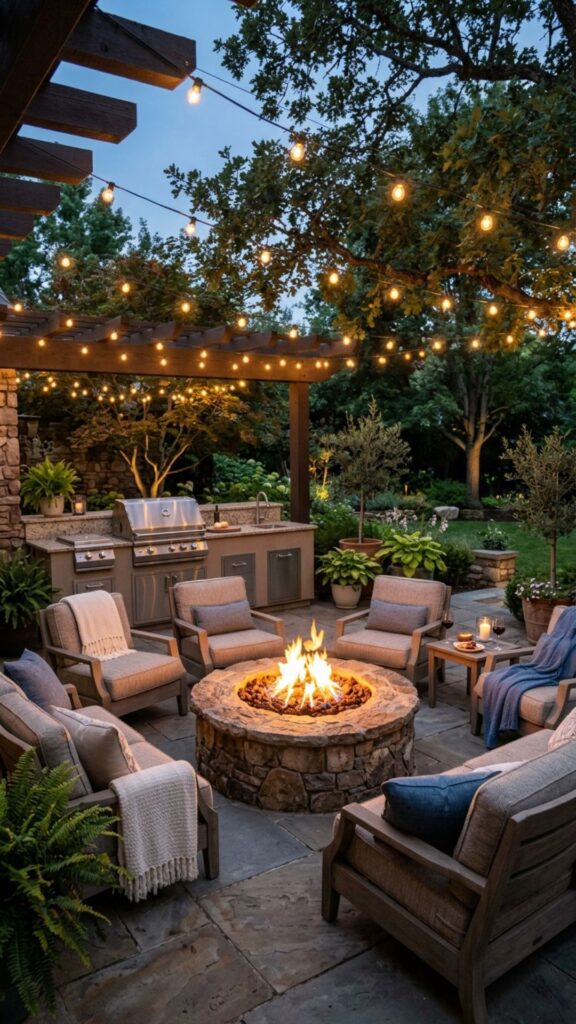
A fireplace built into the house wall extends your entertaining season into cooler months. Guests gather around the warmth while you finish cooking. A gas fire pit offers a lower-cost option with instant flames and no ashes to clean.
Vent any wood-burning fireplace properly and keep it clear of overhanging branches or roofing. Position seating around the fire so conversation flows naturally. This addition transforms your patio into a true gathering spot.
17. Add a Retractable Awning for Flexible Shade
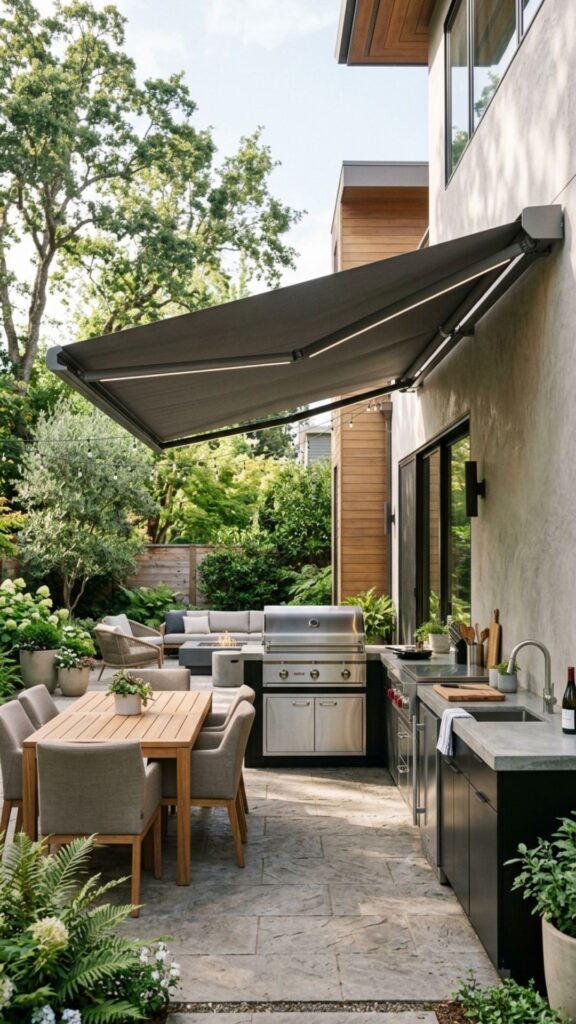
A retractable awning mounted to the house gives you shade on demand. Pull it out on scorching afternoons, then roll it back to enjoy the stars at night. Motorized versions extend at the push of a button.
Choose a fade- and mildew-resistant fabric rated for the outdoors. Mount it securely to the fascia or wall studs. This flexible cover protects both you and your appliances from harsh sun.
18. Include a Prep Island with Extra Counter Space
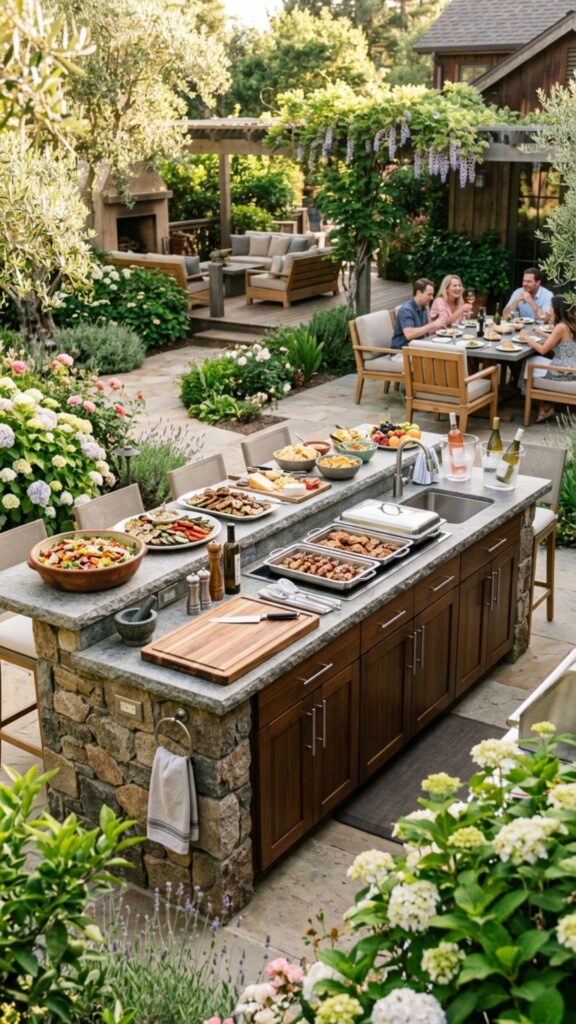
If your patio has room, a freestanding or attached prep island gives cooks more elbow room. Use it for chopping, assembling plates, or setting out a buffet. Storage below keeps bowls, cutting boards, and small appliances handy.
Since the island sits near the house, you can add power outlets for blenders or warming trays. Top it with a stain-resistant surface that wipes clean. Extra counter space makes big gatherings far less stressful.
19. Match Flooring to Blend Indoor and Outdoor Areas
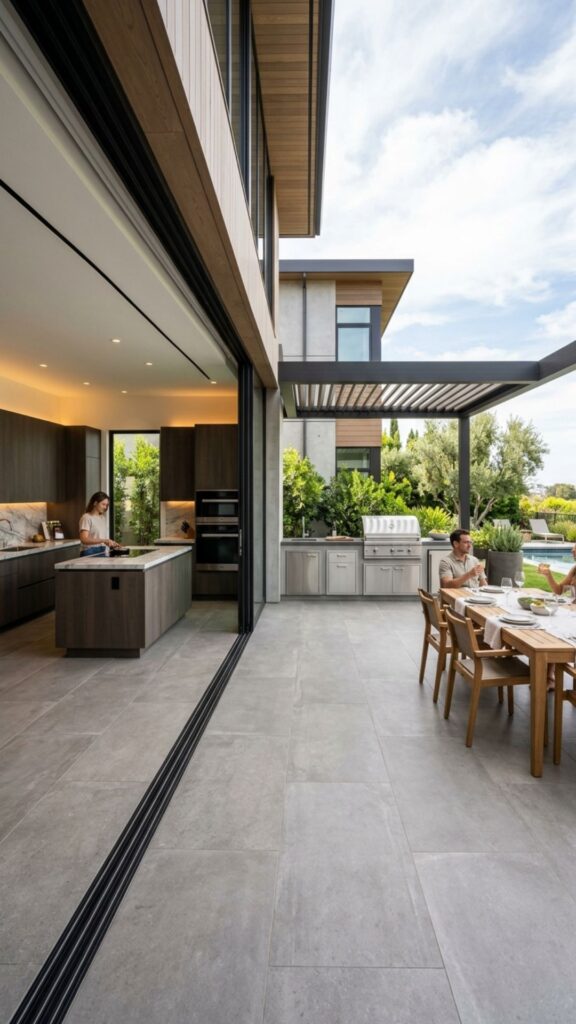
Continuous flooring from inside to out makes your home feel bigger and more connected. Large-format porcelain tiles, stamped concrete, or natural stone create a smooth transition across the threshold. The eye reads both spaces as one.
Pick a slip-resistant surface that handles wet weather and grease splatters. Keep the color and pattern close to your interior floors for a unified look. This small detail makes a surprisingly big impression.
20. Plan for All-Season Use with Heaters and Screens
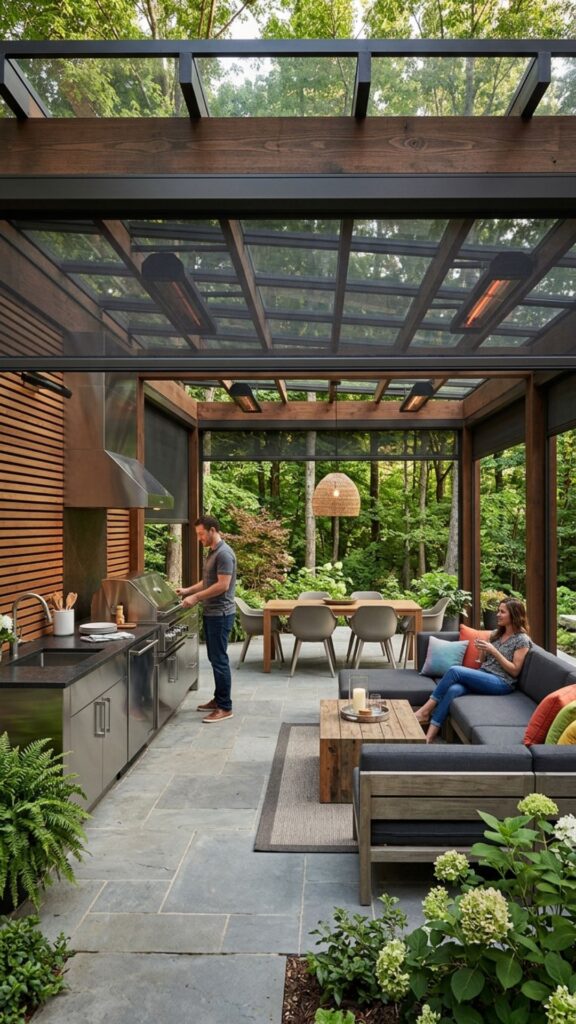
To use your attached kitchen year-round, add overhead or wall-mounted patio heaters. They warm the space on chilly evenings without taking up floor room. Combine them with retractable screens or glass panels to block wind and bugs.
Screens mounted to the house create a comfortable, semi-enclosed room while keeping the open-air feel. Electric heaters wire easily into your home’s panel. With the right features, your outdoor kitchen stays useful in every season.
Bringing Your Outdoor Kitchen to Life
An outdoor kitchen attached to your house does three things well: it saves money, keeps you close to your guests, and stretches your living space into the fresh air. You don’t need a giant budget or a massive yard to start. A simple grill station against the back wall can grow into a full setup over time.
Start by measuring your space, listing what you love to cook, and choosing two or three ideas from this list that fit your lifestyle. Then sketch a rough plan or talk with a local contractor about connecting to your home’s gas, water, and power. Ready to fire up your first backyard feast? Pick one idea, set a budget, and take the first step toward the outdoor kitchen you’ve been dreaming about.
How much does an outdoor kitchen attached to a house cost?
An attached outdoor kitchen typically costs between $5,000 and $20,000, depending on size and materials. Simple grill stations start around $3,000, while full kitchens with cabinets, sinks, and appliances can exceed $30,000. Attaching to your home lowers costs because utility lines run a shorter distance.
Is it safe to build an outdoor kitchen against my house?
Yes, it’s safe when you follow proper clearances and use heat shields. Keep grills and ovens a safe distance from siding, especially vinyl or wood, and add a masonry or stainless steel backsplash. Always vent smokers and fireplaces away from doors, windows, and rooflines.
Do I need a permit to build an outdoor kitchen attached to my house?
In most areas, yes. Permits are usually required when you add gas lines, electrical circuits, plumbing, or permanent roof structures. Check with your local building department before you start, since rules vary by city and county.
What is the best material for outdoor kitchen countertops?
Concrete, granite, and quartzite are the top choices for outdoor countertops. They resist heat, weather, and heavy use. Seal natural stone and concrete regularly to prevent stains and cracks from moisture and sun exposure.
Can I use my indoor appliances in an outdoor kitchen?
No, you should use appliances rated for outdoor use. Indoor refrigerators, grills, and electronics aren’t built to handle rain, humidity, and temperature swings. Outdoor-rated equipment lasts longer and keeps your setup safe.