An open-plan kitchen diner can change the way you use your home. It brings cooking, eating, relaxing, and entertaining into one shared space, which is why it works so well for busy families, couples, and anyone who loves hosting.
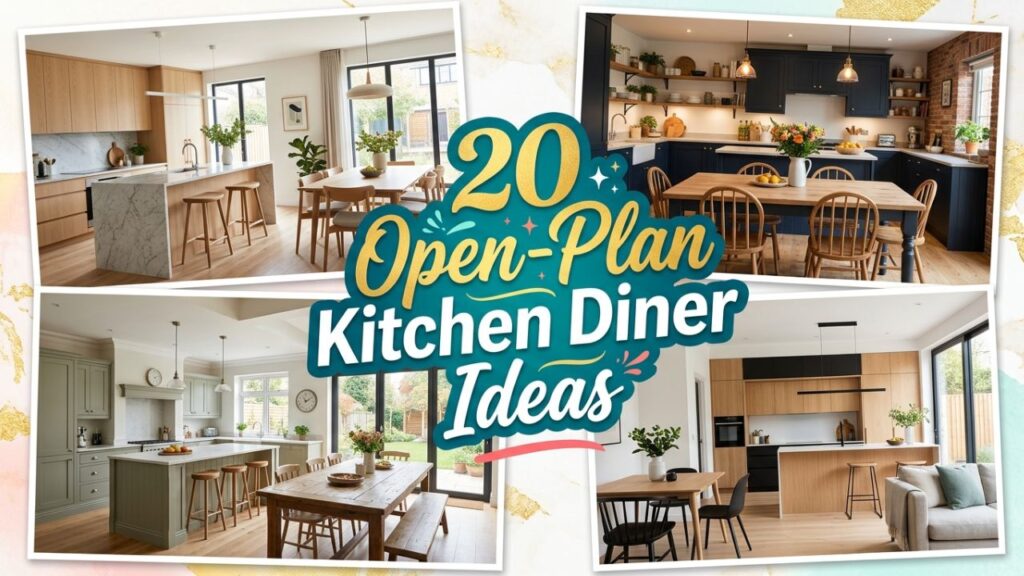
The challenge is making it feel practical, comfortable, and well designed. Without the right layout, an open-plan room can feel noisy, cluttered, or visually messy. The best kitchen diner ideas balance flow, storage, lighting, seating, and style so the space works all day long.
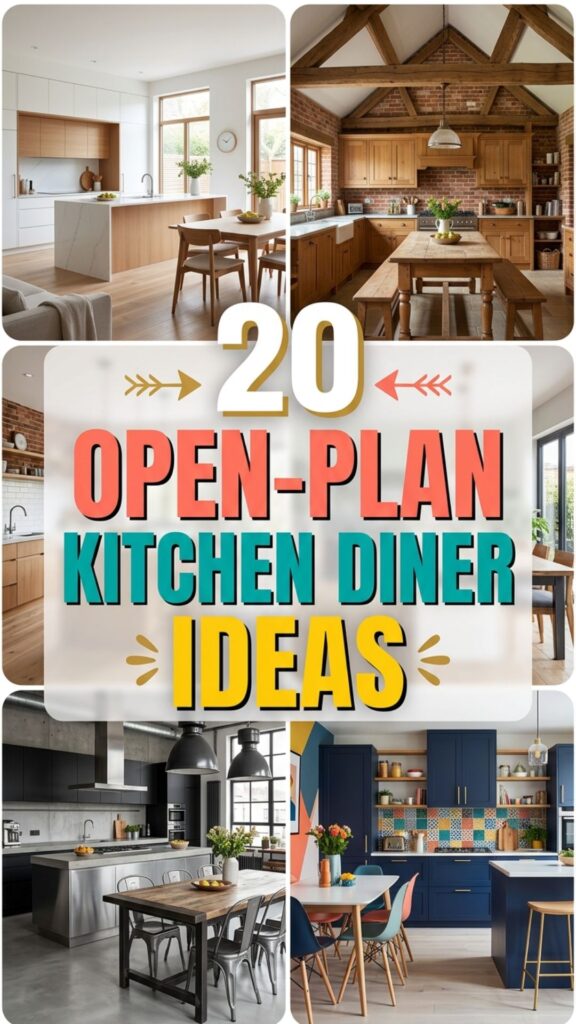
In this guide, you’ll find 20 practical open-plan kitchen diner ideas to help you create a seamless living area that feels bright, welcoming, and easy to use.
What Makes a Great Open-Plan Kitchen Diner?
A great open-plan kitchen diner is a space where cooking, dining, and relaxing work together without feeling cramped or chaotic. The key is to create clear zones while keeping the room visually connected.
The most effective kitchen diner ideas use layout, lighting, flooring, furniture, and storage to define each area. This helps the space feel organized while still keeping the open, social feel that makes kitchen diners so popular.
1. Use a Kitchen Island as the Main Divider
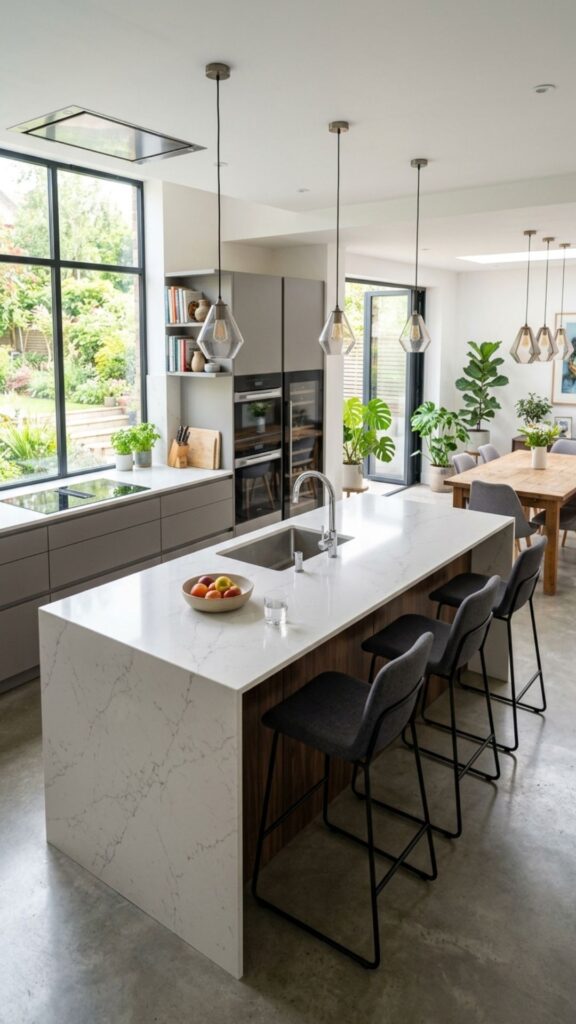
A kitchen island is one of the most useful open-plan kitchen diner ideas because it creates a natural divide between the cooking and dining areas. It gives you extra worktop space, storage, and often a casual seating spot.
For best results, leave enough walkway space around the island so people can move freely. Add stools on the dining side to make it feel sociable, especially when someone is cooking while others chat nearby.
2. Choose a Dining Table That Fits the Flow
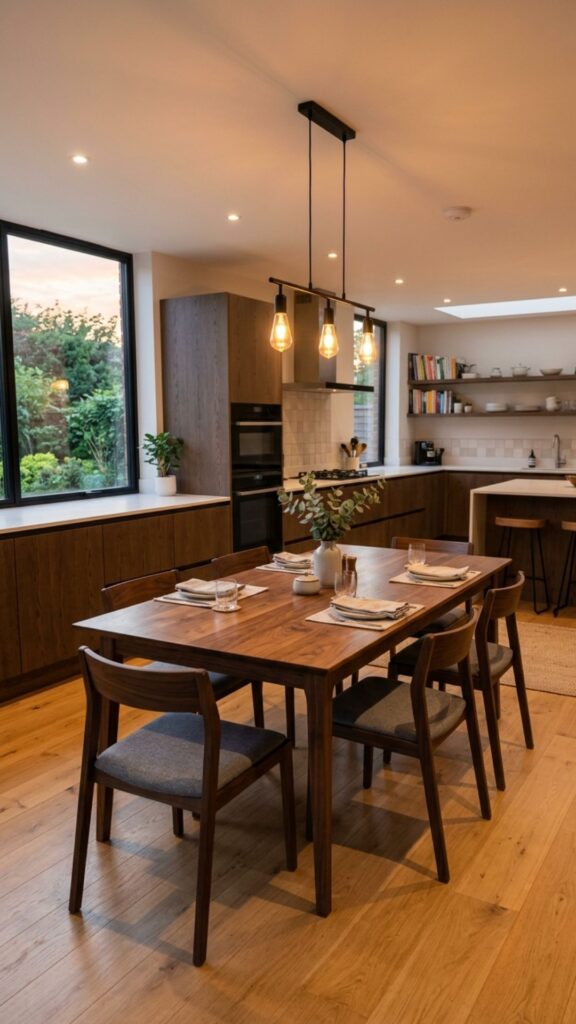
Your dining table should suit the shape and size of the room. A long rectangular table works well in narrow kitchen diners, while a round table can soften a square or compact space.
Think about daily use before choosing the size. If you host often, an extendable table is a smart option. It gives you flexibility without taking up too much room every day.
3. Create Zones With Lighting
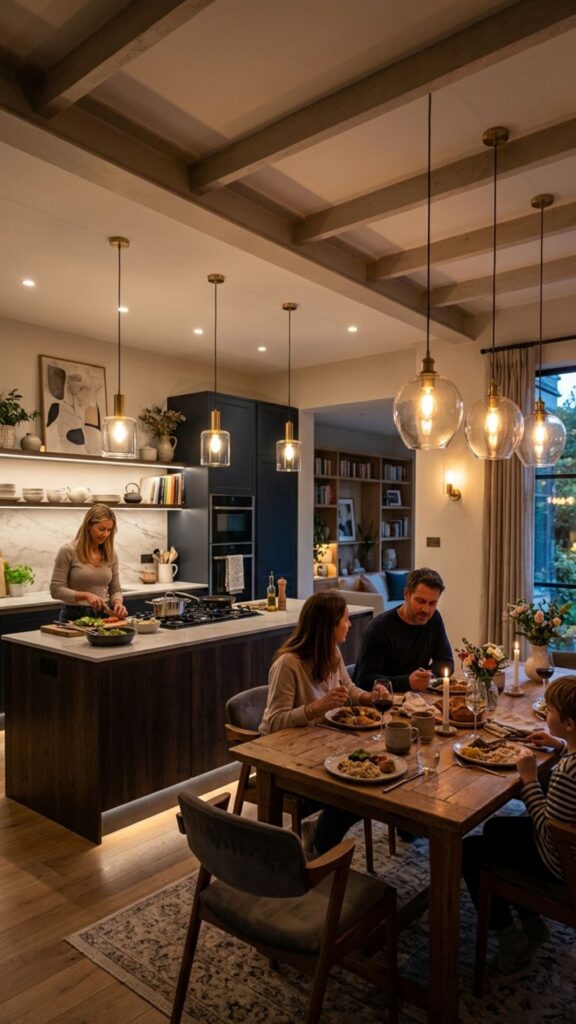
Lighting is one of the simplest ways to separate areas in an open-plan kitchen diner. Use bright task lighting over worktops, pendant lights above the dining table, and softer lamps near any seating area.
Layered lighting helps the room change mood throughout the day. You can cook with clear, practical light, then switch to warmer lighting for dinner or relaxed evenings.
4. Keep Flooring Consistent for a Seamless Look
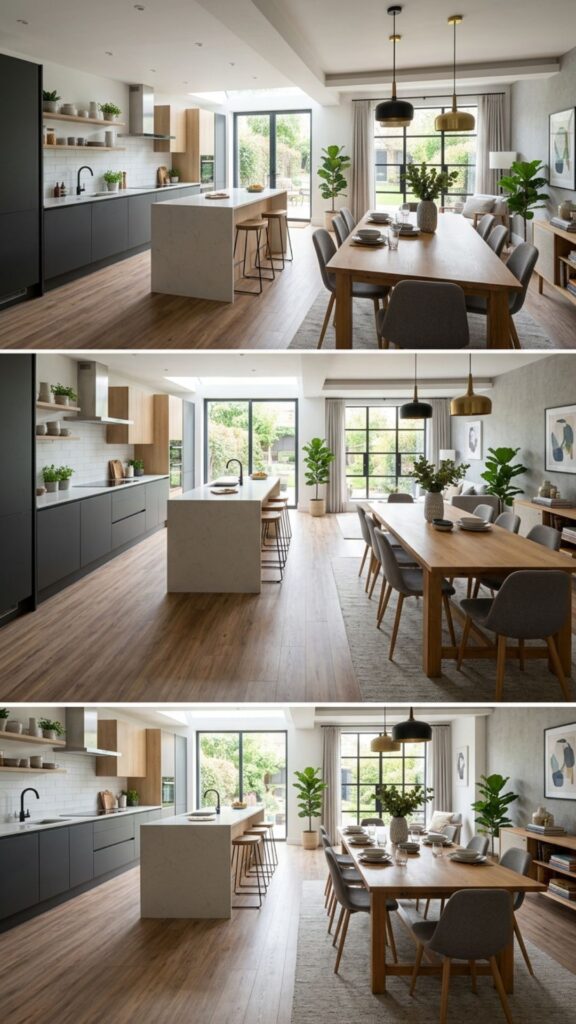
Using the same flooring throughout the kitchen diner can make the space feel larger and more connected. Wood-effect tiles, luxury vinyl, and engineered wood are popular because they look warm but are also practical.
If you want to define zones, use rugs instead of changing the floor material. A rug under the dining table can add comfort and visual separation without breaking up the room.
5. Add a Breakfast Bar for Casual Meals
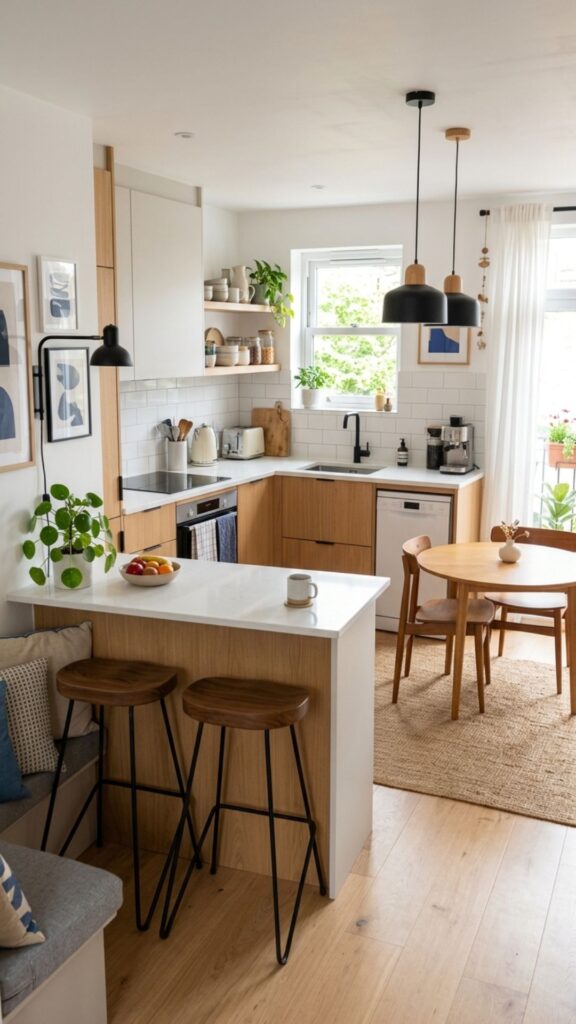
A breakfast bar is ideal for quick meals, coffee, homework, or informal chats. It works especially well if you do not have space for a large island.
This is one of the best kitchen diner ideas for smaller homes because it gives you seating without needing a full dining setup. Pair it with slim stools that tuck underneath to save space.
6. Use Color to Separate Each Area
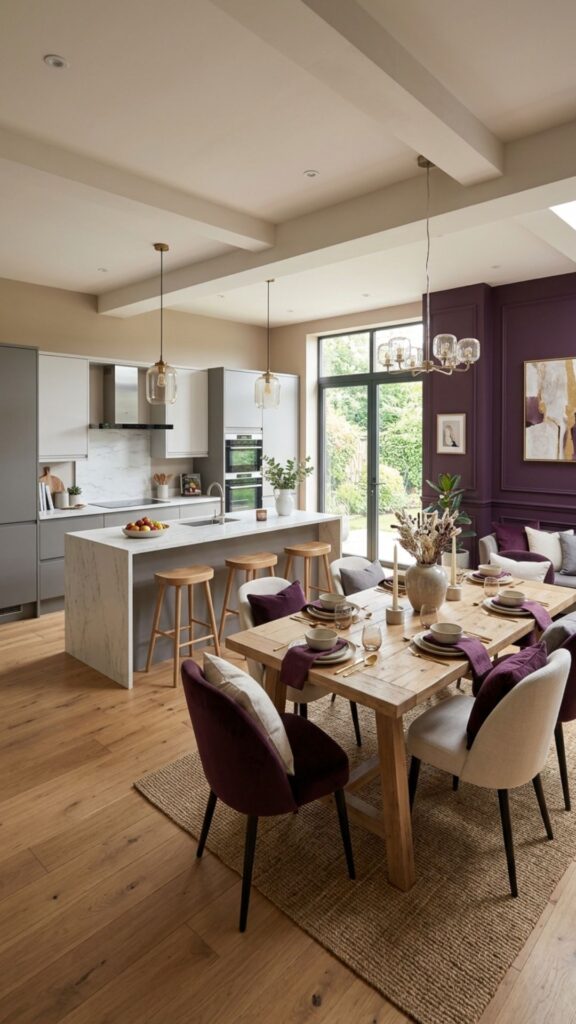
Color can help define spaces without adding walls. You might use a deeper shade behind the dining table, a soft neutral in the kitchen, or a bold color on a feature wall.
Keep the palette connected so the room does not feel disjointed. For example, repeat one accent color in bar stools, artwork, cushions, or tableware.
7. Include Built-In Storage to Reduce Clutter
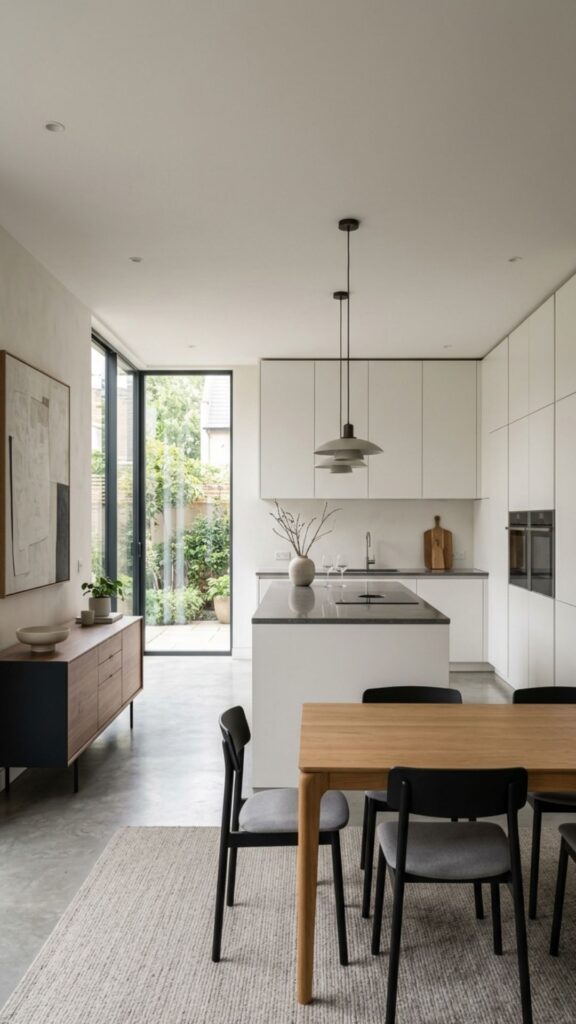
Open-plan rooms need smart storage because everything is on show. Built-in cabinets, pantry cupboards, and hidden drawers help keep surfaces clear and the room calm.
Consider storage in the dining area too. A sideboard can hold placemats, glasses, candles, and serving dishes, making mealtimes easier and more organized.
8. Make the Dining Area Feel Intentional
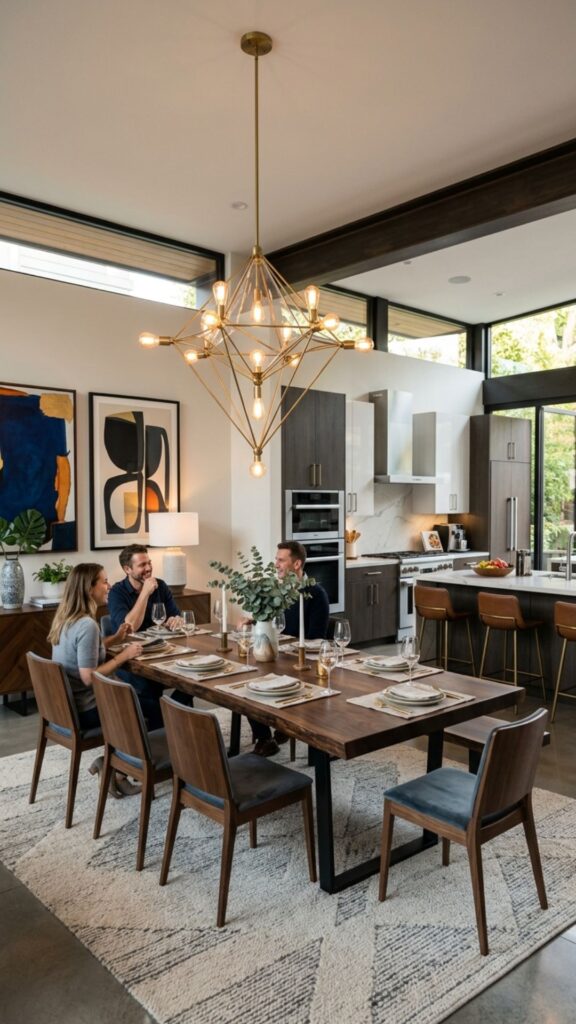
In an open-plan space, the dining area can sometimes feel like an afterthought. Make it stand out with pendant lighting, artwork, a rug, or a statement table.
A clearly styled dining zone makes the whole room feel more polished. It also encourages people to sit down and enjoy meals rather than using the table as a dumping ground.
9. Choose Handleless Cabinets for a Sleek Finish
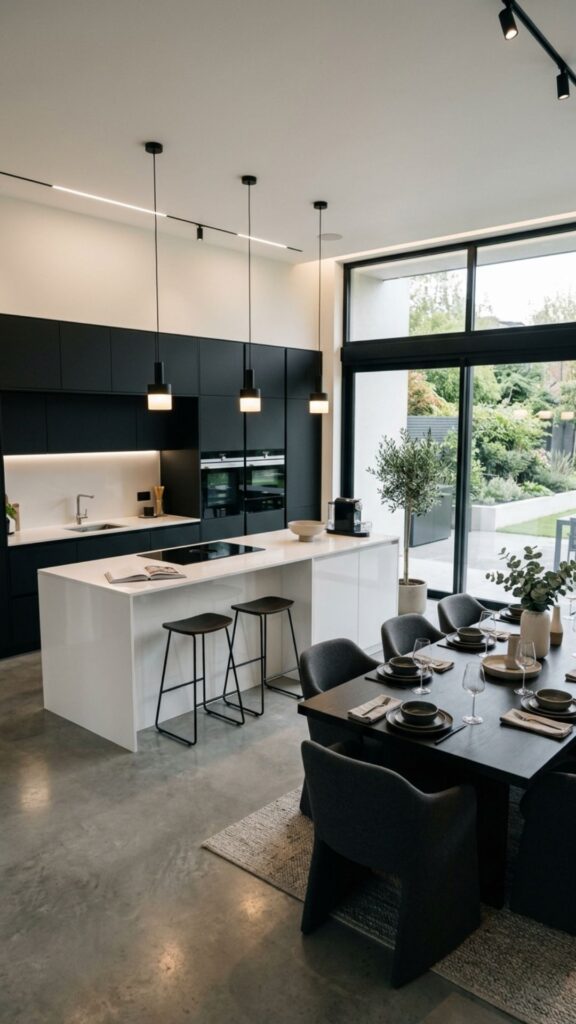
Handleless kitchen cabinets create a clean, modern look that works well in open-plan spaces. They reduce visual clutter and help the kitchen blend into the wider living area.
This style is especially useful if your kitchen diner is visible from the sofa or entrance hall. The smoother the kitchen looks, the less it dominates the room.
10. Add Warmth With Natural Materials
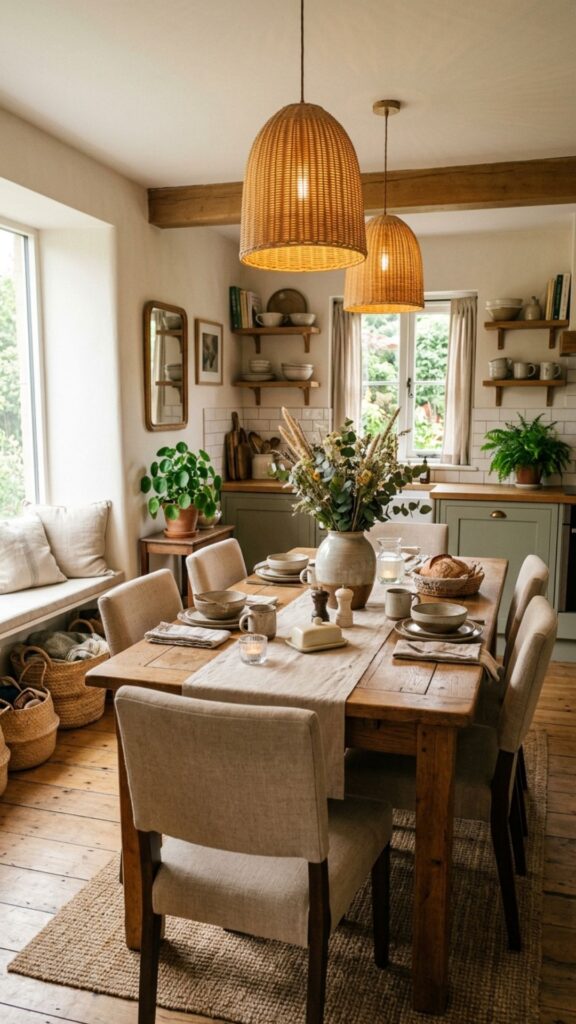
Open-plan kitchens can sometimes feel hard or echoey because they include many solid surfaces. Natural materials like wood, rattan, linen, and stone help soften the look.
Try wooden dining chairs, a timber table, woven pendant lights, or open shelves with ceramic pieces. These details add texture and make the space feel more inviting.
11. Plan Walkways Carefully
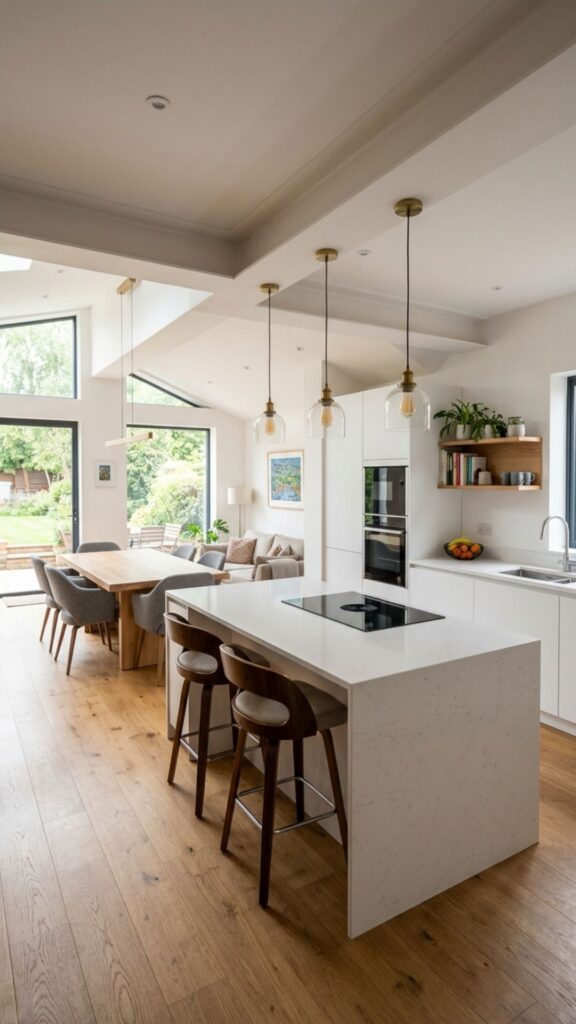
Good flow is essential in any open-plan layout. You should be able to move between the kitchen, table, doors, and seating areas without squeezing past furniture.
As a rule, allow generous space around the dining table and kitchen island. This prevents the room from feeling crowded, especially when several people are using it at once.
12. Use Banquette Seating to Save Space
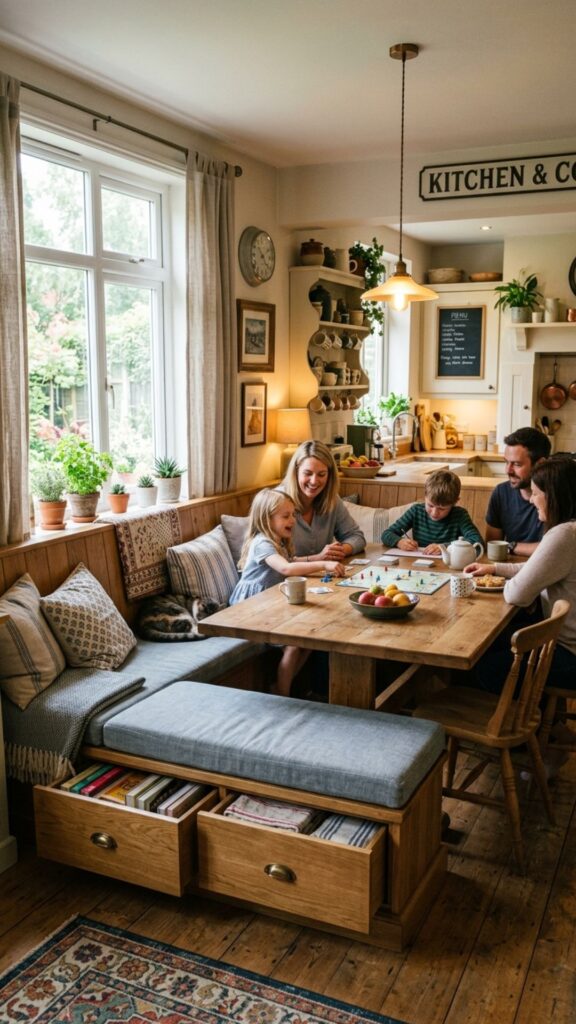
Banquette seating is a clever option for smaller kitchen diners. A built-in bench along a wall or corner can seat more people than separate chairs and often includes hidden storage.
Pair it with a sturdy table and a few movable chairs on the other side. This setup is practical for families and creates a cozy, café-style feel at home.
13. Bring in More Natural Light
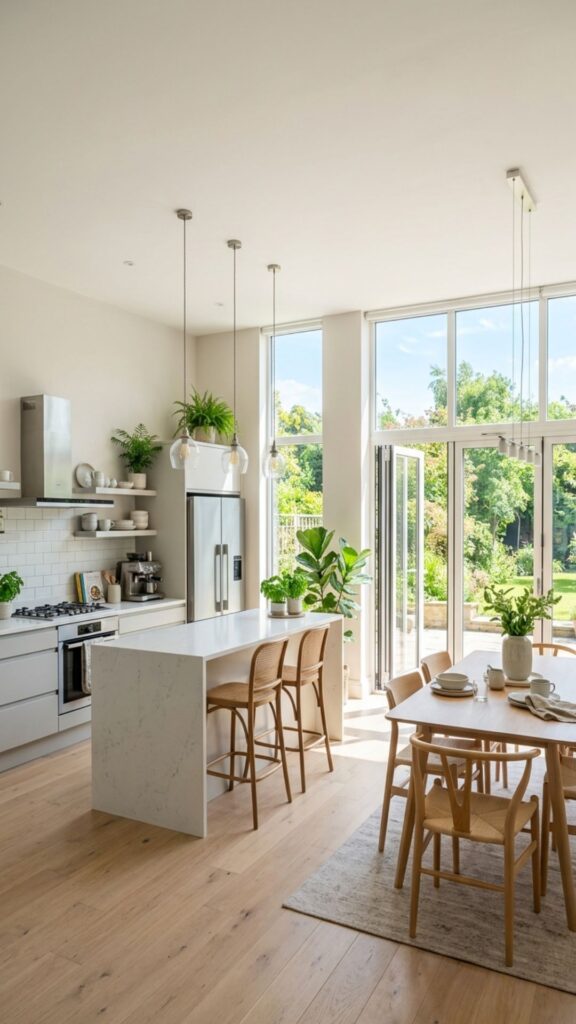
Natural light makes an open-plan kitchen diner feel bigger, brighter, and more enjoyable. Large windows, rooflights, glazed doors, or even internal glass panels can make a huge difference.
If structural changes are not possible, use mirrors, light wall colors, and reflective surfaces to bounce light around. Avoid heavy window treatments that block daylight.
14. Keep Appliances Quiet and Discreet
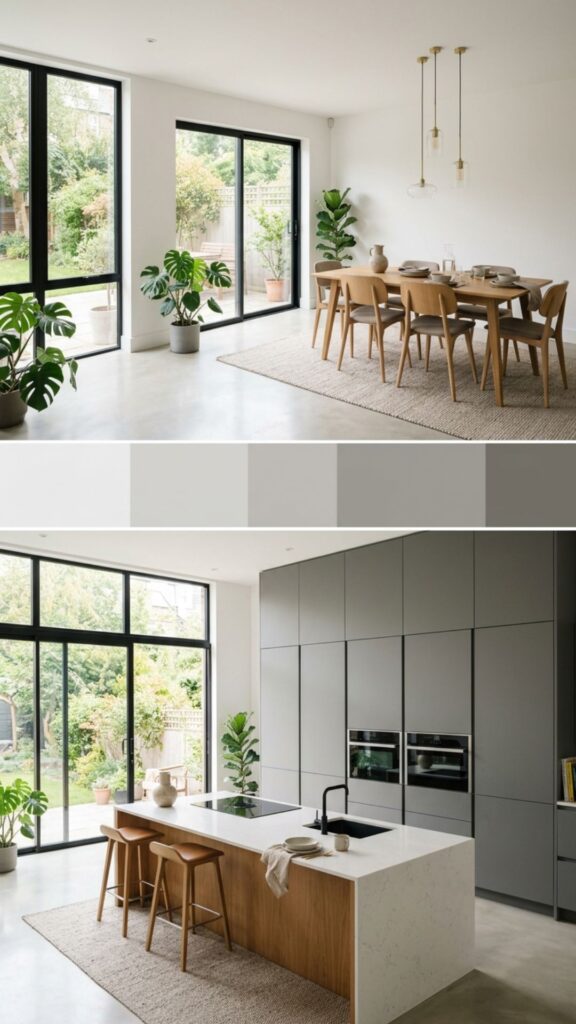
Noise is a common issue in open-plan spaces. Dishwashers, extractors, washing machines, and fridges can disturb conversations or relaxation if they are too loud.
Choose quiet appliances where possible and consider an effective extractor fan. Integrated appliances can also help the kitchen look less busy and more connected to the dining area.
15. Add Open Shelving With Care
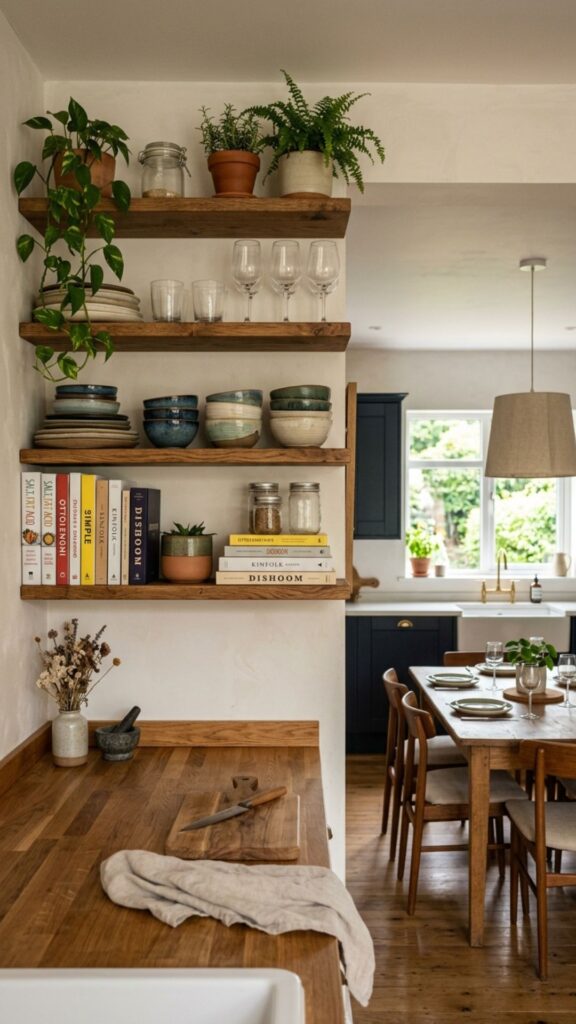
Open shelving can make a kitchen diner feel relaxed and personal. Use it to display attractive plates, glasses, cookbooks, plants, or decorative bowls.
The key is not to overfill the shelves. Keep them neat and balanced, or they may create visual clutter. Mix practical items with a few decorative pieces for a lived-in look.
16. Use a Statement Light Over the Table
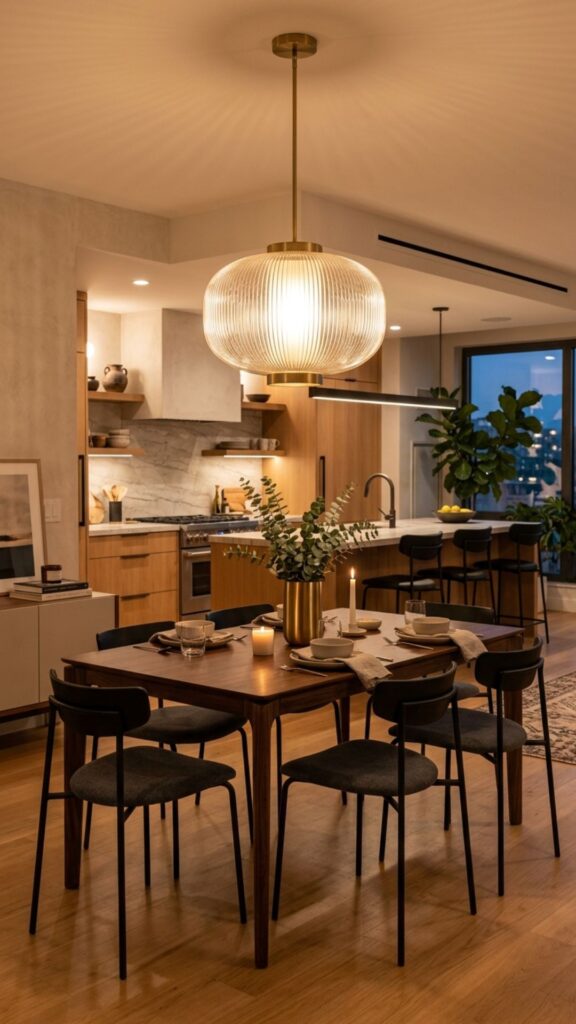
A statement pendant light can anchor the dining area and make it feel separate from the kitchen. It also adds personality without taking up floor space.
Choose a light that suits the scale of your table. A large table may need two or three pendants, while a round table often looks best with one central fitting.
17. Create a Family-Friendly Layout
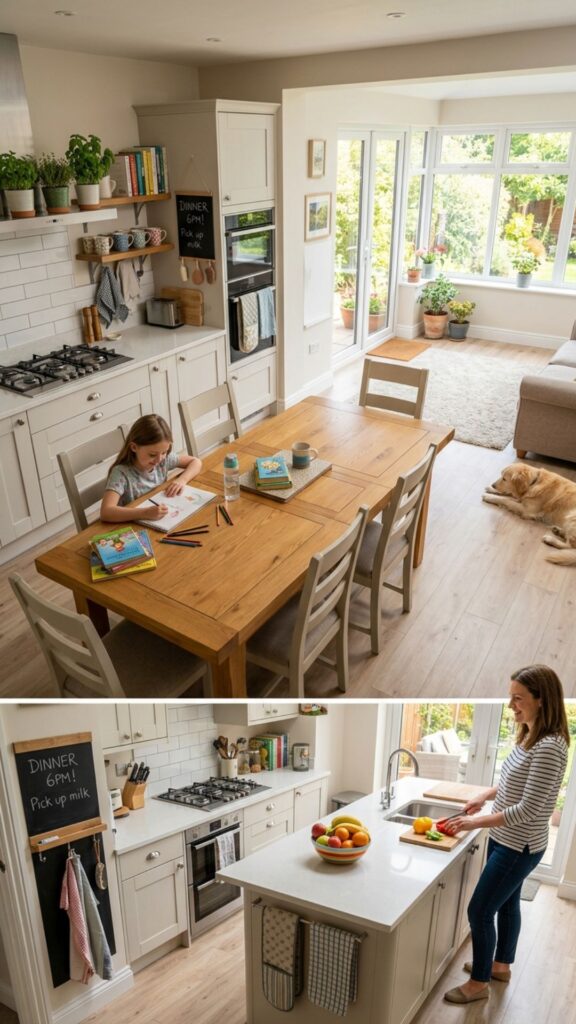
A family kitchen diner needs to handle meals, schoolwork, snacks, toys, and daily mess. Durable worktops, wipeable chairs, easy-clean flooring, and plenty of storage are all important.
Think about sightlines too. Many families prefer layouts where adults can cook while keeping an eye on children at the table or in a nearby seating area.
18. Add a Small Sofa or Lounge Corner
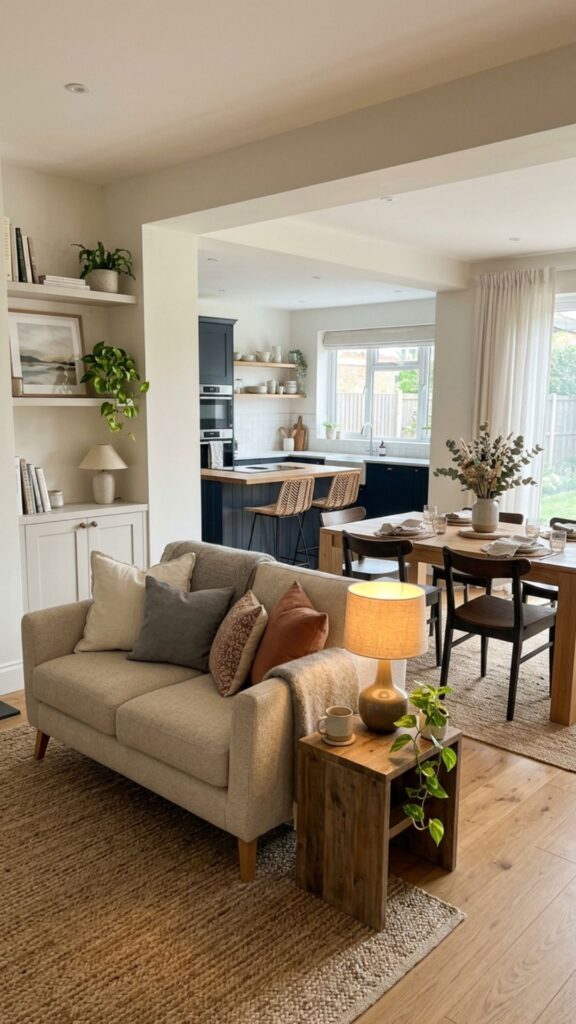
If space allows, a small sofa or armchair can make your kitchen diner feel more relaxed. It turns the room into a true living hub, not just a place to cook and eat.
Place the seating away from the main cooking zone if possible. Add a side table, lamp, or soft rug to make the corner feel comfortable and complete.
19. Mix Practical Surfaces With Stylish Details
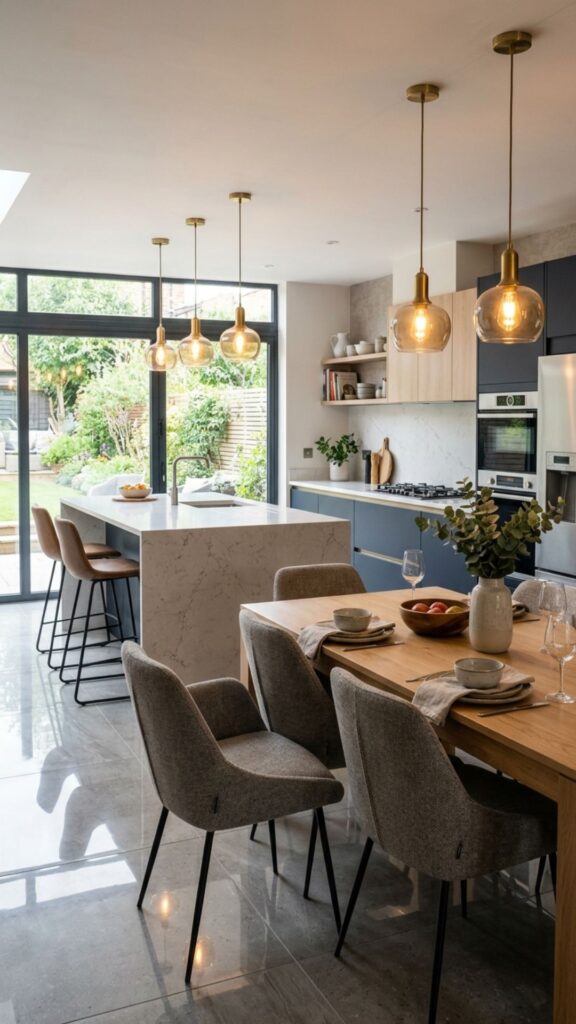
The best kitchen diner ideas combine durability with design. Choose tough surfaces for cooking and cleaning, then add softer details through chairs, lighting, art, and accessories.
For example, quartz worktops, washable paint, and porcelain flooring can handle daily life, while upholstered dining chairs and warm lighting keep the room from feeling too clinical.
20. Keep the Design Cohesive From End to End
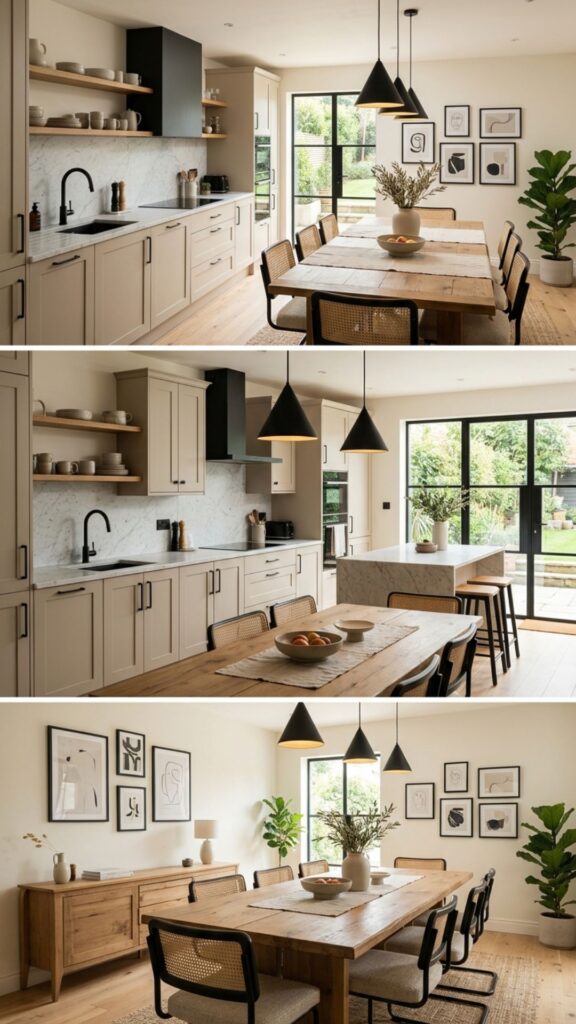
Because everything is visible in an open-plan kitchen diner, the design needs to feel connected. Cabinets, furniture, lighting, and decor should work together rather than compete.
This does not mean everything must match. Instead, repeat colors, materials, or finishes across the space. For example, black cabinet handles can link with black dining chairs, light fittings, or picture frames.
Small Kitchen Diner Ideas for Compact Homes
Small kitchen diners work best when every item has a clear purpose. Choose slim furniture, light colors, reflective surfaces, and storage that reaches upward rather than outward.
One of the most practical small kitchen diner ideas is to use multi-purpose furniture. An extendable table, storage bench, foldaway desk, or movable island can help the room adapt to daily life.
Modern Kitchen Diner Ideas for a Clean Look
Modern kitchen diner ideas often focus on simple lines, hidden storage, and calm color palettes. Handleless cabinets, integrated appliances, and minimal decor can make the room feel spacious and tidy.
To stop a modern space from feeling cold, add warmth through wood, textured fabrics, plants, or soft lighting. A modern kitchen diner should feel clean, but still comfortable enough for everyday living.
How to Make an Open-Plan Kitchen Diner Feel Cozy
To make an open-plan kitchen diner feel cozy, use warm lighting, soft textures, comfortable seating, and natural materials. Rugs, curtains, cushions, wooden furniture, and warm paint colors can all help.
Acoustics matter too. Open rooms can echo, so add fabric wherever you can. Upholstered chairs, rugs, blinds, and wall art can reduce noise and make the space feel softer.
Conclusion: Create a Kitchen Diner That Works for Real Life
The best kitchen diner ideas are not just about style. They are about making your home easier to live in. A well-planned open-plan kitchen diner should support cooking, eating, working, relaxing, and spending time together.
Start with your layout, then think about lighting, storage, seating, and flow. Once the practical details are right, add color, texture, and personal touches to make the space feel like home.
If you are planning a new kitchen diner, use these ideas as a checklist. Pick the features that fit your space, your routine, and your budget, then build a room that feels seamless, social, and ready for everyday life.
What is the best layout for an open-plan kitchen diner?
The best layout creates clear zones for cooking, dining, and relaxing while keeping easy movement between them. Islands, dining tables, lighting, and rugs can help define each area.
How do I make a kitchen diner look bigger?
Use light colors, consistent flooring, simple furniture, mirrors, and good lighting. Keeping surfaces clear and choosing built-in storage also helps the room feel more spacious.
Are kitchen islands worth it in a kitchen diner?
Yes, if you have enough space. A kitchen island adds storage, worktop space, seating, and a natural divide between the kitchen and dining areas.
How can I reduce noise in an open-plan kitchen diner?
Choose quiet appliances and add soft materials such as rugs, curtains, upholstered chairs, and cushions. These absorb sound and make the room feel calmer.
What is the easiest way to update a kitchen diner?
Update the lighting, add a rug under the dining table, repaint a wall, or change dining chairs. Small changes can refresh the space without a full renovation.