A small kitchen doesn’t have to feel like a struggle. Whether you’re working with a narrow galley, a studio apartment layout, or a compact corner kitchen, the right design choices can completely change how the space looks and works.
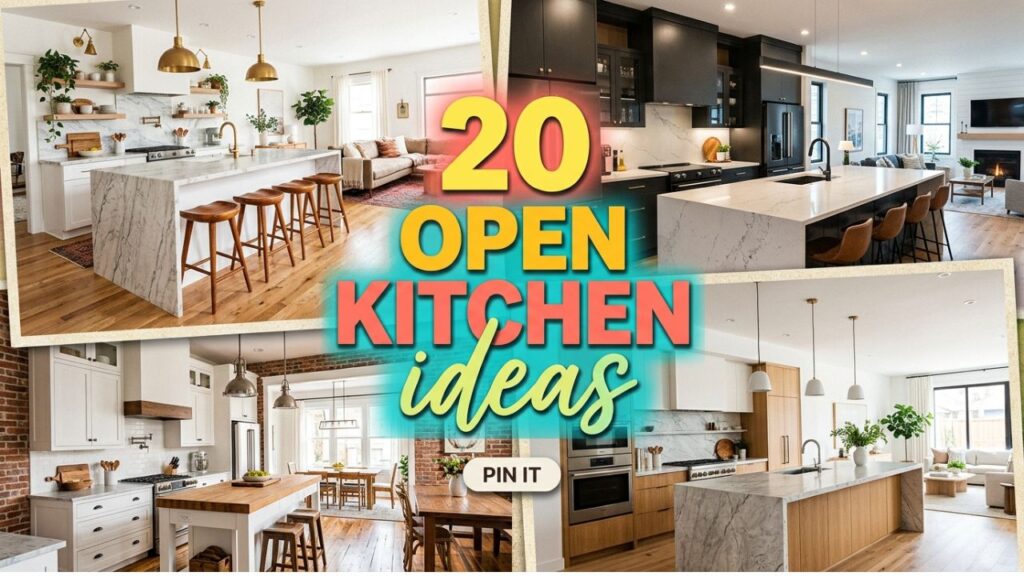
The secret? Embrace an open concept approach — one that removes visual clutter, invites light, and makes every square foot earn its place.
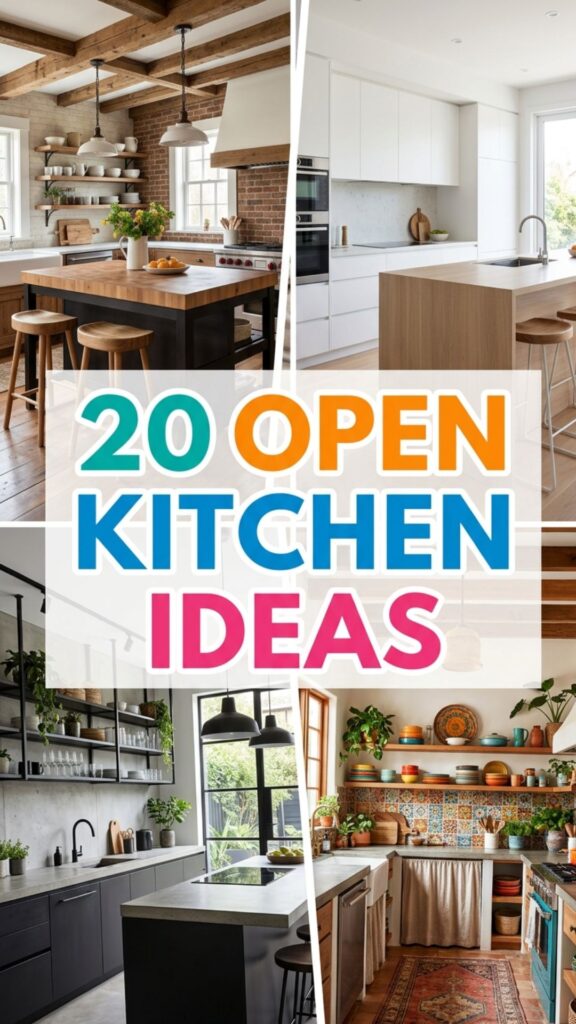
In this guide, you’ll find 20 practical, designer-approved ideas for a kitchen for small spaces. Each one is easy to understand and built around real-world results. No major renovations required — just smart, intentional design.
1. Remove Upper Cabinet Doors for an Airy, Open Feel
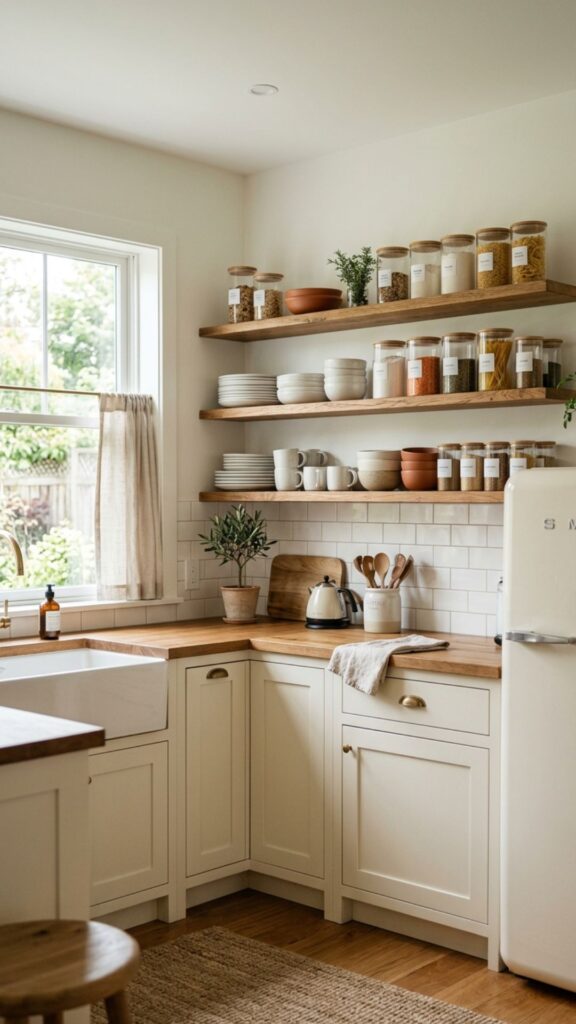
Swapping solid cabinet doors for open shelving — or simply removing them altogether — instantly makes a small kitchen breathe. Your dishes, glasses, and pantry staples become part of the décor rather than something hidden away. The visual line of the room extends further, tricking the eye into perceiving more depth.
Keep things tidy and cohesive by grouping similar items together and sticking to a consistent color palette on your shelves. White plates, clear glass jars, and neutral-toned bowls create a clean, calm display. This is one of the easiest kitchen for small spaces upgrades you can make without touching a single wall.
2. Use a Kitchen Island on Wheels for Flexible Function
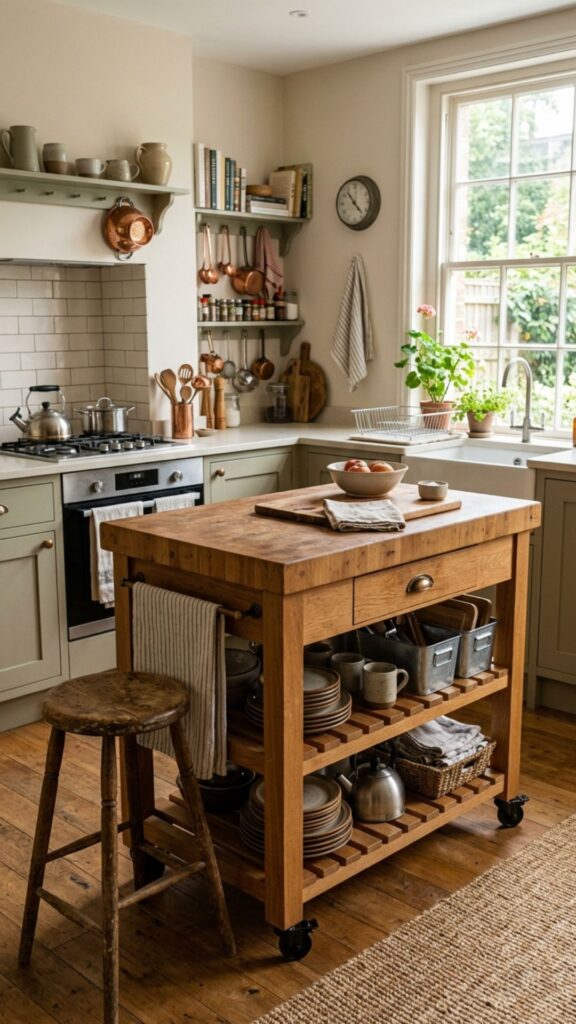
A rolling kitchen island gives you prep space, storage, and a casual dining spot — all in one piece you can move whenever you need to. When you’re cooking, roll it to the center. When you need the floor clear, push it against the wall. This flexibility is invaluable in a tight kitchen.
Look for islands with built-in shelves, hooks, or drawers underneath to squeeze in extra storage. A butcher block top doubles as a cutting board, saving counter space. Many are available for under $300, making this one of the most affordable open kitchen ideas for compact homes.
3. Install Open Floating Shelves Instead of Upper Cabinets
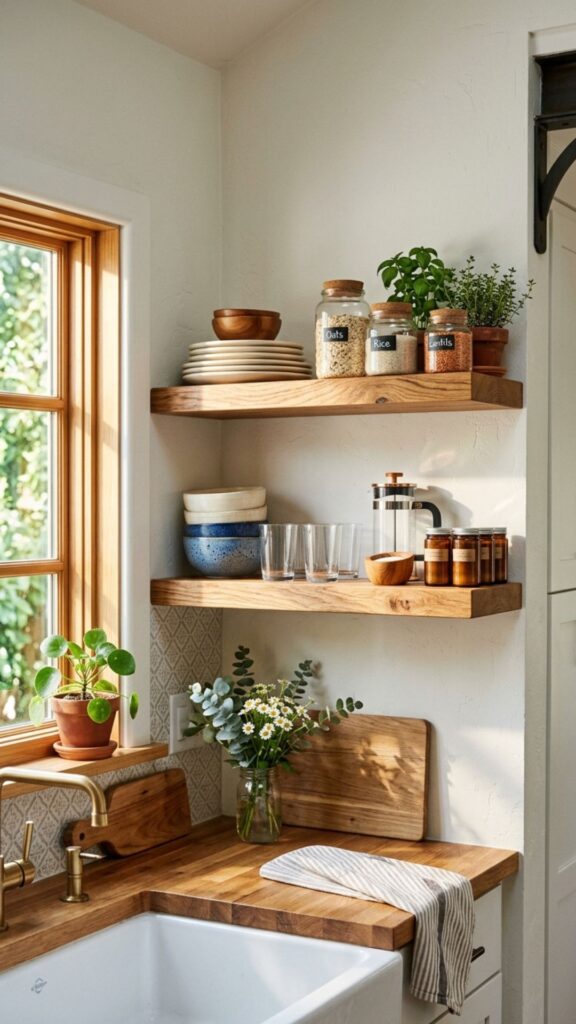
Floating shelves create storage without the visual bulk of traditional upper cabinets. Because they’re open and wall-mounted, they leave space above and below for light to travel freely. This keeps the kitchen feeling expansive rather than boxed in.
Choose wood shelves with a matte finish for a warm, modern look, or go with white-painted MDF for a sleek, minimal aesthetic. Space them 12 to 14 inches apart so you can stack plates and store taller items comfortably. A set of three staggered shelves can replace an entire cabinet run without sacrificing much storage.
4. Choose Light Colors for Walls and Cabinetry
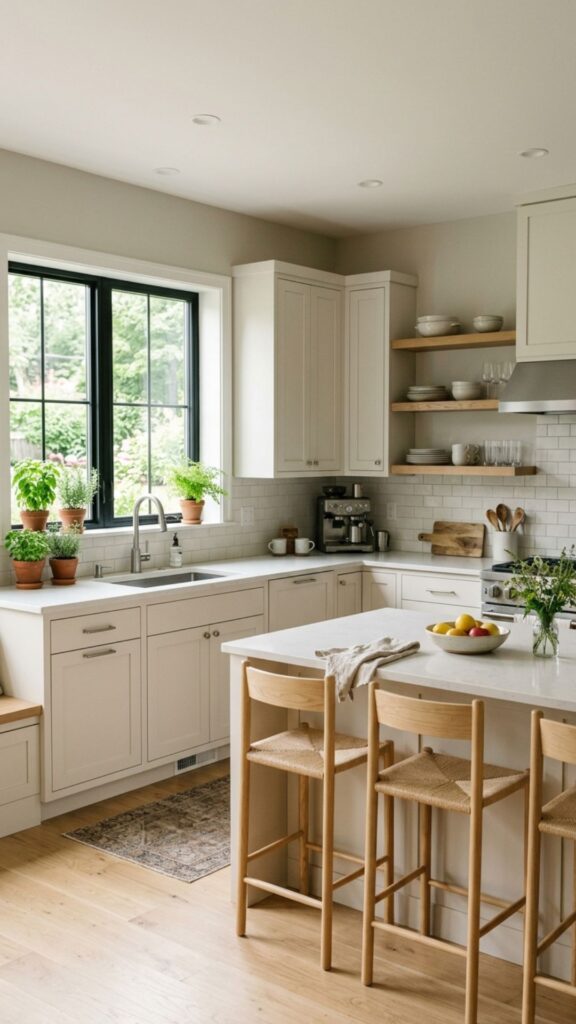
Color does heavy lifting in a kitchen for small spaces. Light shades — soft whites, pale grays, creamy off-whites, and subtle pastels — reflect natural and artificial light, making the room feel twice as large. Darker colors absorb light and can make walls feel like they’re closing in.
Paint your cabinets the same tone as your walls to blur boundaries between surfaces and create a seamless, continuous look. If you crave contrast, introduce one dark accent through hardware or a backsplash rather than large surfaces. The goal is to keep the eye moving without hitting visual stop signs.
5. Add a Fold-Down or Wall-Mounted Dining Table
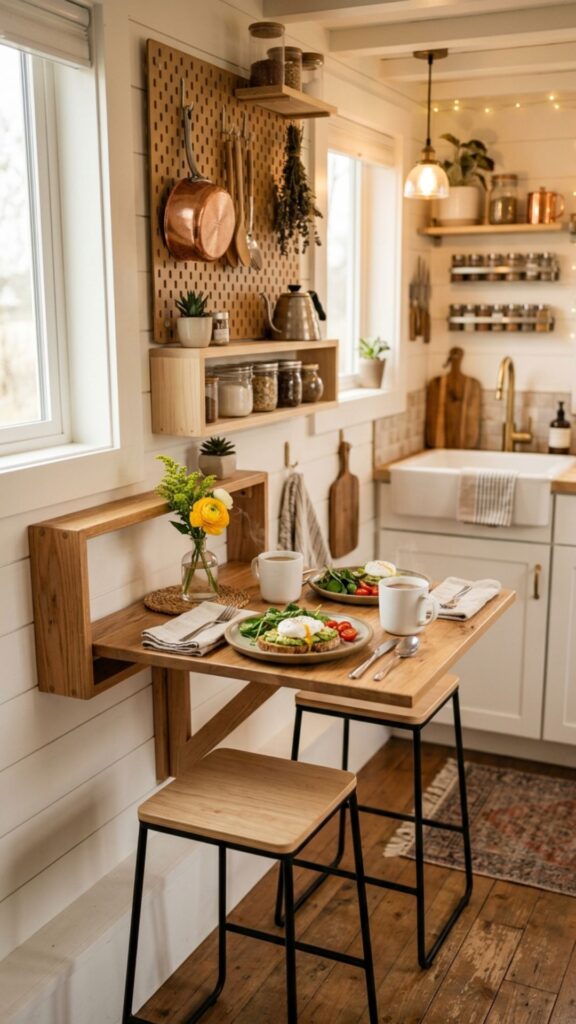
Eating in a small kitchen is totally doable with a fold-down table. Mounted to the wall, it drops flat when not in use and takes up almost no space. When mealtime comes, flip it up and pair it with slim stools or fold-up chairs stored nearby.
This works especially well in studio apartments or kitchens that double as dining rooms. Look for models with built-in storage underneath or side shelves for napkins and condiments. IKEA’s NORBO wall-mounted drop-leaf table is a popular, budget-friendly option that holds up well over years of daily use.
6. Maximize Vertical Space with Tall Storage Units
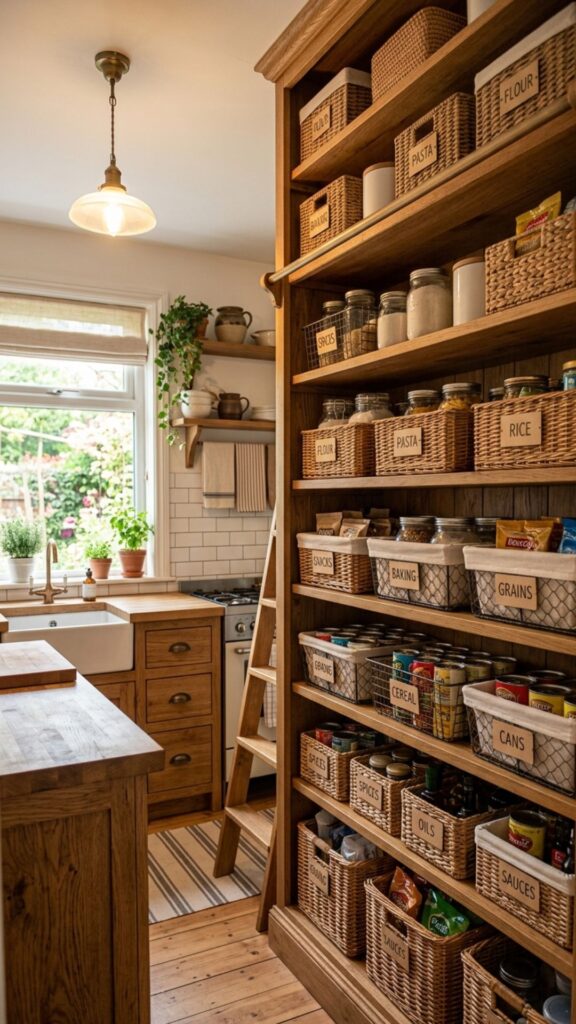
When floor space is limited, go up. Tall pantry-style units, floor-to-ceiling shelving, and extended upper cabinets draw the eye upward, making ceilings feel higher and the room feel larger. Every inch of vertical space becomes a storage opportunity.
Use the highest shelves for things you rarely reach — seasonal baking supplies, specialty appliances, or backup pantry items. Keep everyday essentials at eye level and below. Adding a small step stool with a slim profile means nothing is truly out of reach, even in a tall unit.
7. Opt for a Mirrored or Glass Backsplash
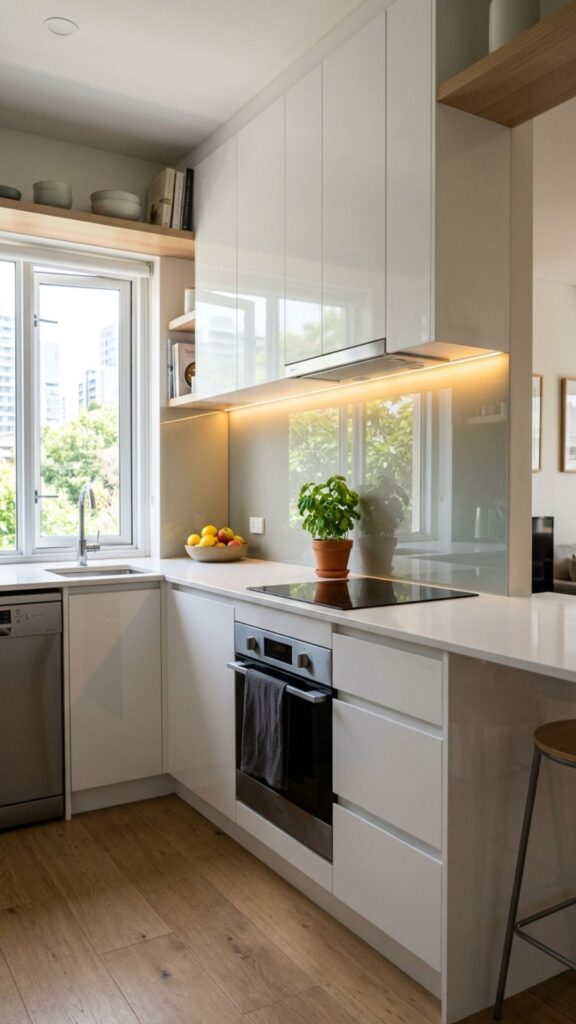
A reflective backsplash bounces light around the kitchen and adds a layer of visual depth that tile or painted walls simply can’t match. Mirrored subway tiles, glossy glass panels, or high-sheen ceramic tile all work beautifully for this purpose.
The effect is subtle but genuinely impactful — especially in kitchens with a single window or limited natural light. Pair a glass backsplash with under-cabinet lighting to amplify the reflection. It keeps the space bright even on cloudy days and adds a polished, high-end finish without a hefty price tag.
8. Use Under-Cabinet Lighting to Brighten Work Areas
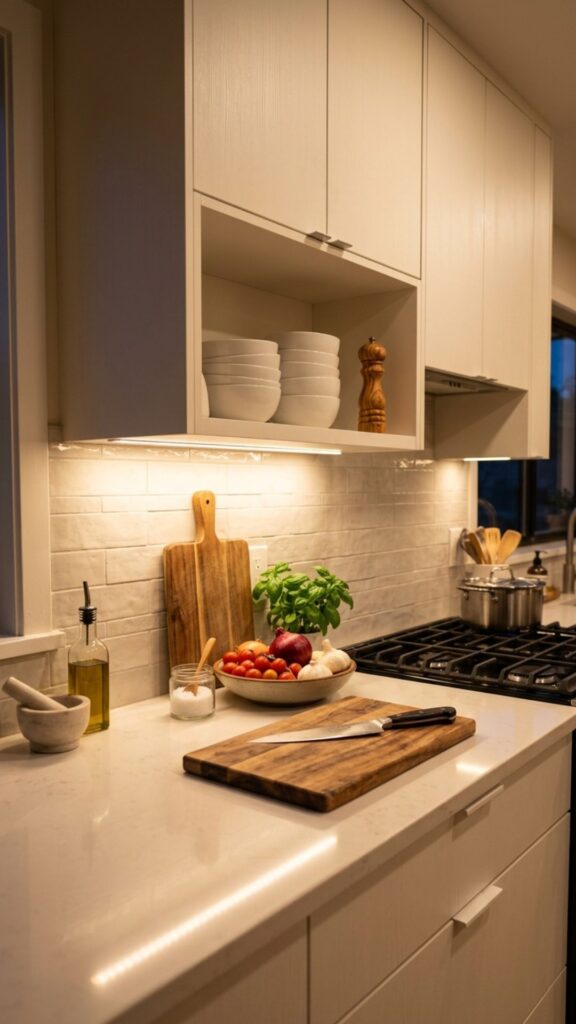
Proper task lighting makes a small kitchen feel more open and functional. Under-cabinet LED strips illuminate your countertops directly, eliminating shadows and making the workspace feel clean and bright. This is especially useful if your overhead lighting leaves dark corners near the stove or prep areas.
Plug-in LED strips are an easy DIY option — no electrician required. Warm white light (around 2700K to 3000K) creates a welcoming glow without feeling clinical. This simple addition can make even the tiniest kitchen for small spaces feel far more polished and usable.
9. Skip the Pantry and Use a Pegboard Wall Instead
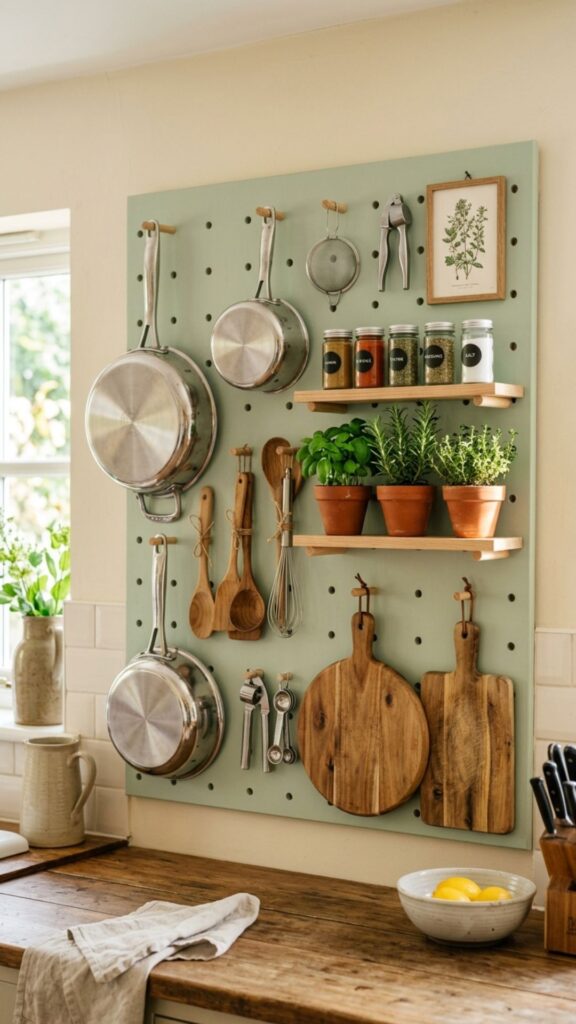
Pegboards aren’t just for garages. Mounted in a kitchen, they hold pots, pans, utensils, cutting boards, and even small shelves — all completely customizable and repositionable. A pegboard wall turns dead vertical space into one of the hardest-working surfaces in your home.
Paint the board to match your wall color so it blends in rather than stands out. Matte black or white pegs create a modern look, while natural wood accents lean more rustic. Start with a 2×4-foot panel, then expand as needed. Everything stays visible and within easy reach — no digging through crowded drawers.
10. Incorporate a Pull-Out Pantry Between Appliances
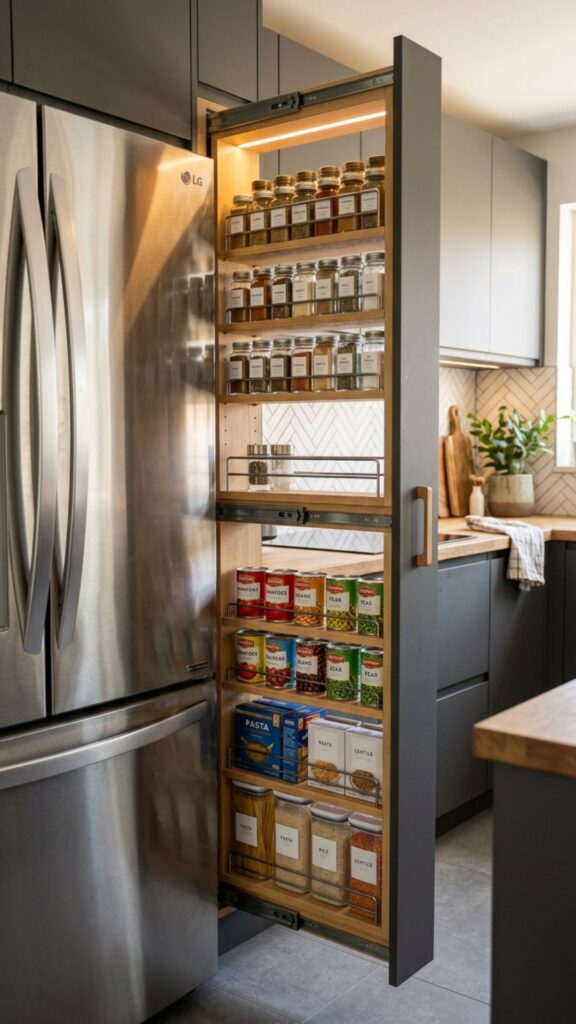
Narrow gaps between appliances — the space between the fridge and the wall, or between the stove and a cabinet — are wasted storage in most small kitchens. A pull-out pantry tower fits into gaps as slim as six inches and provides surprising amounts of organized space for cans, spices, and dry goods.
These pull-out units slide out on smooth gliders and come in standard widths to fit common kitchen gaps. Many can be built as DIY projects using basic lumber and drawer slides. It’s one of the most satisfying kitchen for small spaces projects because the storage gain is immediately visible and genuinely useful every single day.
11. Choose Slim, Integrated Appliances
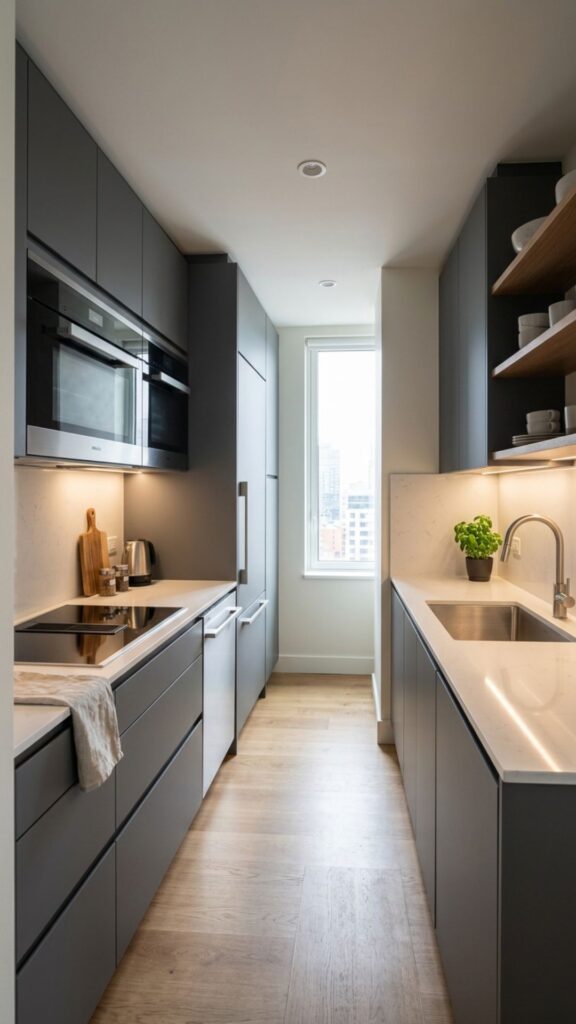
Bulky appliances eat into both counter space and visual calm. Integrated or slim-profile versions of your refrigerator, dishwasher, and stove blend into cabinetry seamlessly and free up room for movement. A 24-inch refrigerator, for example, takes up considerably less floor space than a standard 36-inch model.
Counter-depth refrigerators sit flush with cabinetry, eliminating that awkward jut-out that makes narrow kitchens feel cramped. Compact dishwashers can fit under 18-inch counter runs. These aren’t compromises — modern slim appliances perform just as well as their larger counterparts, often with energy-efficient upgrades built in.
12. Create a Pass-Through Opening to the Living Room
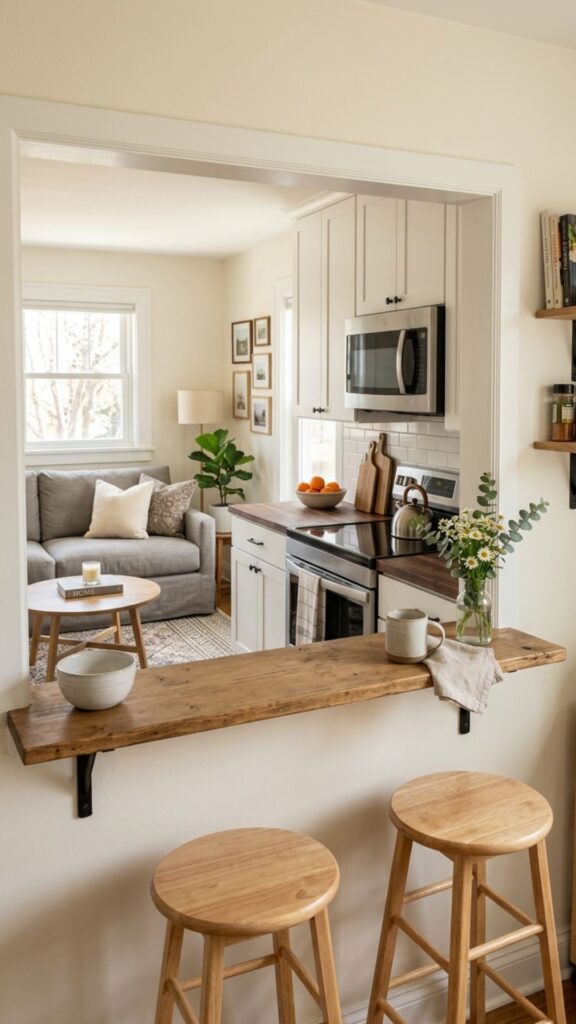
If your kitchen shares a wall with the living room or dining area, knocking out a section to create a pass-through window opens up both spaces dramatically. It allows light to travel between rooms, creates a casual counter for serving food, and makes the cook feel less isolated while preparing meals.
You don’t need to remove an entire wall. A 36-inch-wide, counter-height pass-through is usually enough to make a big difference. Top it with a piece of matching quartz or butcher block to serve as a bar-height ledge. Add a couple of bar stools on the living room side and you have an instant breakfast bar.
13. Use Transparent or Lucite Bar Stools and Chairs
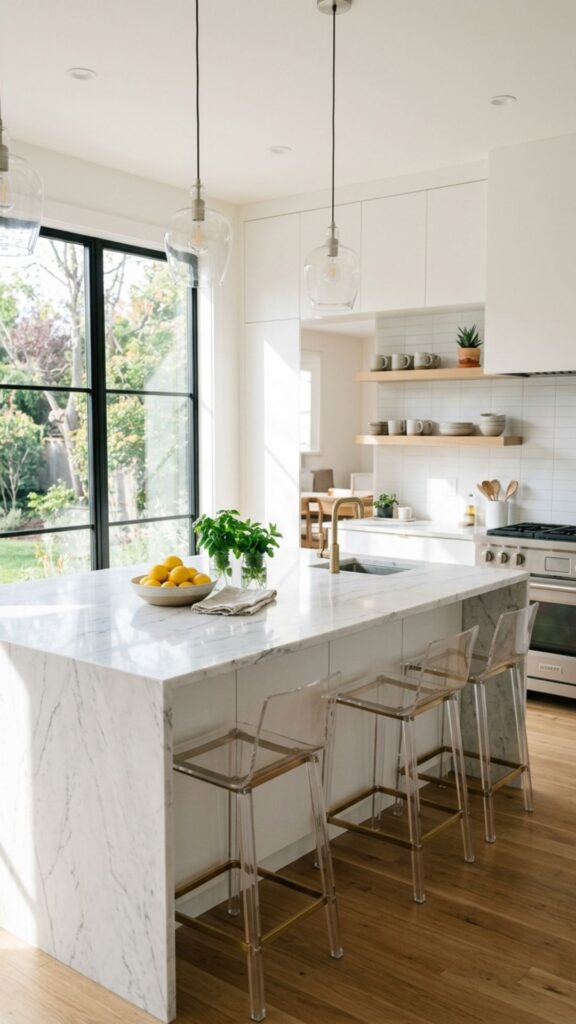
Furniture made from transparent materials — acrylic, lucite, or clear polycarbonate — takes up visual space without weighing it down. Clear bar stools tucked under an island or counter are barely noticeable, making the kitchen feel more open and less cluttered.
This works for dining chairs, side tables, and even small storage carts. Ghost chairs became popular in small spaces for exactly this reason — they’re functional without adding visual noise. Pair them with a light-colored counter or table to maximize the airy effect.
14. Add a Narrow Breakfast Bar Along a Wall or Window
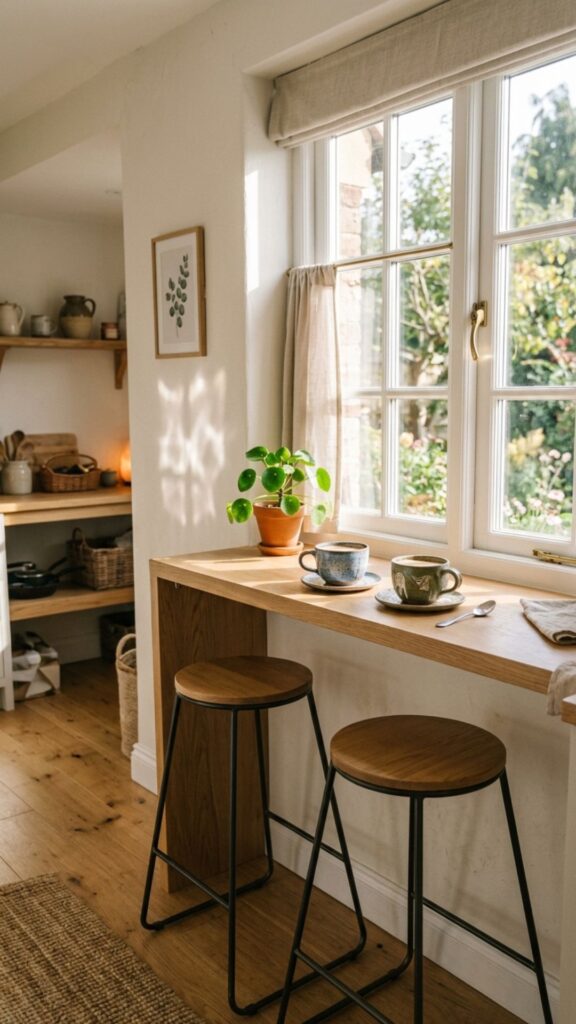
A simple 10- to 12-inch deep shelf mounted at counter height along a wall or window creates an instant breakfast bar or coffee station. It takes up almost no floor space but adds a functional zone that a small kitchen otherwise lacks — a place to eat, work, or simply set your morning coffee down.
Choose a shelf depth that allows knees to clear underneath when seated on a stool. Mount it beneath a window to take advantage of the view and natural light. This is a particularly smart solution in studio apartments where the kitchen and living areas blur together.
15. Keep Countertops Completely Clear
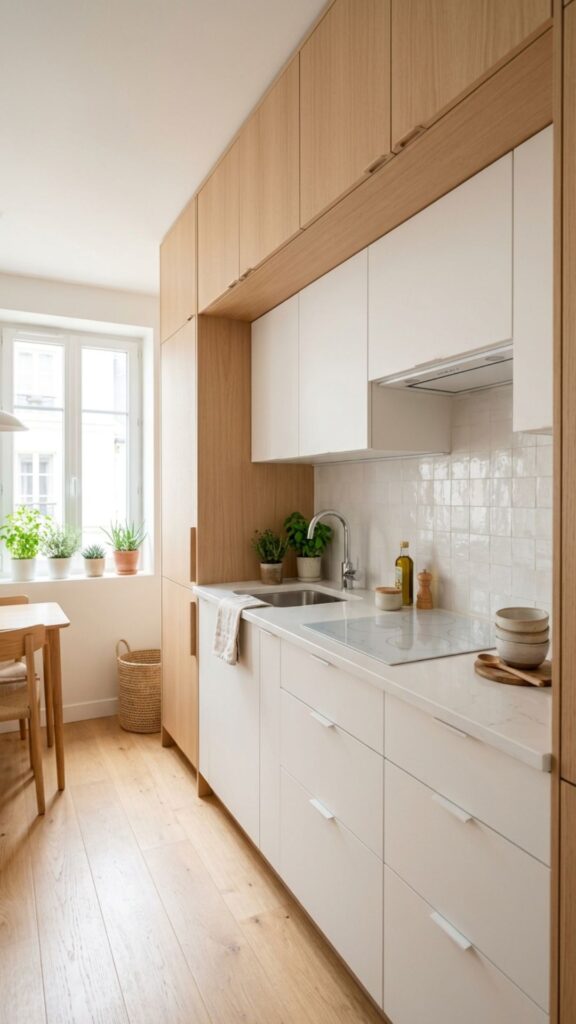
This one sounds simple, but it’s transformative. In a kitchen for small spaces, every appliance sitting on the counter shrinks the visual footprint of the room. Moving toasters, coffee makers, and blenders into cabinets or appliance garages — then pulling them out only when needed — keeps counters clear and open.
The immediate effect is a kitchen that looks twice as big. It also makes cleaning faster and prep easier since there’s nothing to work around. Dedicate one lower cabinet to “daily appliances” so they’re still accessible. The habit of putting things away after each use becomes second nature surprisingly quickly.
16. Install a Ceiling-Mounted Pot Rack
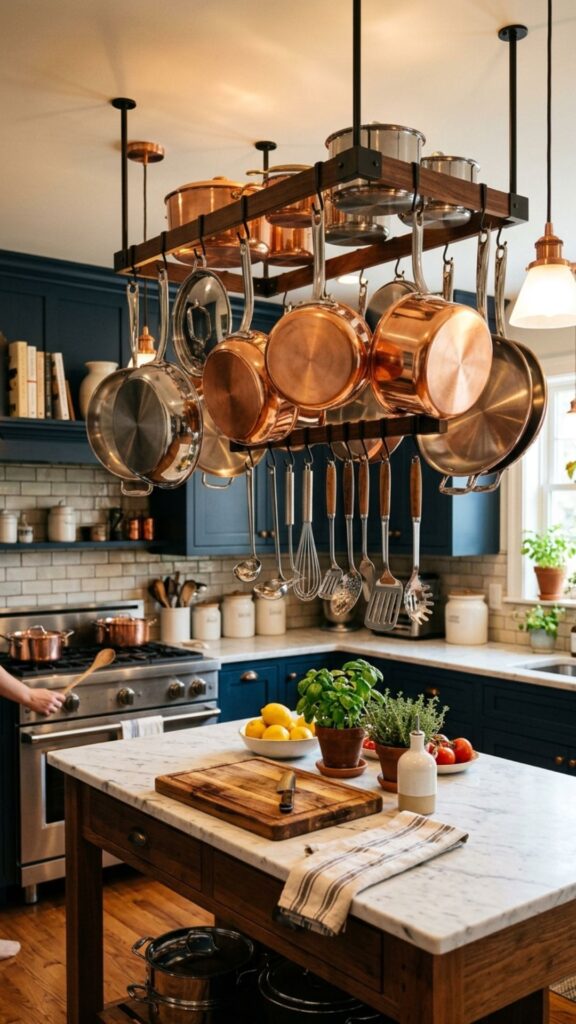
A pot rack suspended from the ceiling does double duty: it frees up cabinet space and becomes a design feature in its own right. Hanging copper pots, cast iron skillets, and stainless pans above the island or stove keeps them close without crowding every drawer and cabinet.
Make sure your ceiling can support the weight and that the rack is positioned high enough — at least 7 feet from the floor — to clear head height comfortably. Industrial pipe-style racks work well in modern and farmhouse kitchens alike. Hook-mounted utensils and small baskets for lids make the entire setup even more efficient.
17. Use One Continuous Countertop Material Throughout
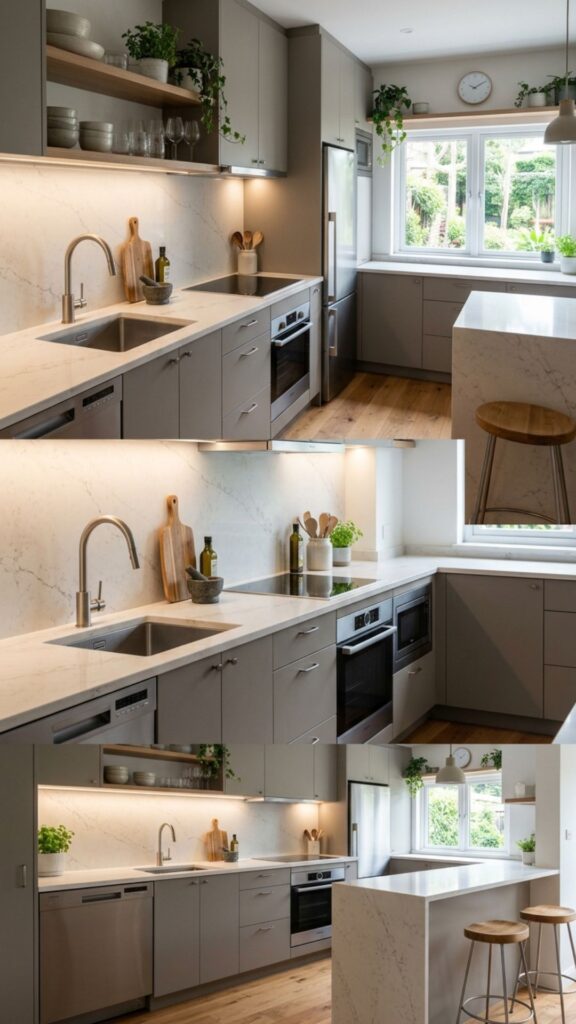
Switching between countertop materials — say, tile on one side and laminate on another — creates visual breaks that chop the kitchen into smaller-feeling pieces. Using a single, continuous material across all counter surfaces creates a unified, uninterrupted line that makes the whole kitchen read as one cohesive space.
Quartz, butcher block, and concrete are all great options that work across varied surfaces. Carry the same material up the backsplash for an even more seamless look — a technique called a “waterfall” or “slab” backsplash. It’s a high-end detail with a significant spatial payoff.
18. Use Magnetic Knife Strips and Wall-Mounted Organizers
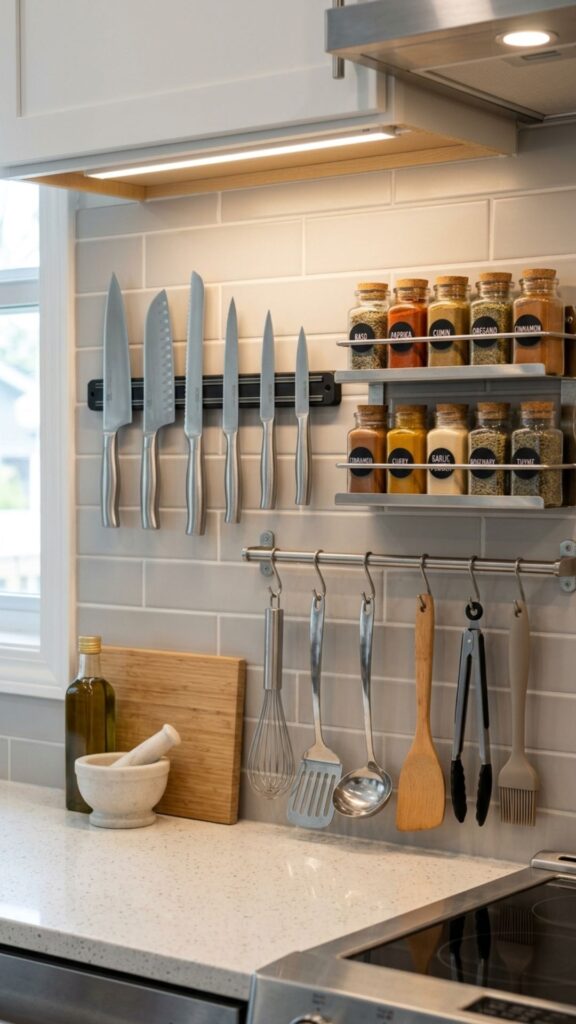
Freeing up drawer space in a small kitchen is always worth the effort. Magnetic knife strips mounted on the backsplash or side of a cabinet keep your knives visible, accessible, and out of the drawer entirely. Wall-mounted spice racks, paper towel holders, and utensil rails work the same way.
These small changes add up. When drawers aren’t stuffed with large tools, they become more organized and easier to navigate. The wall above the stove or the side panel of an island are great spots to mount strips and rails without taking up counter or cabinet space.
19. Paint or Tile the Ceiling for Upward Visual Interest
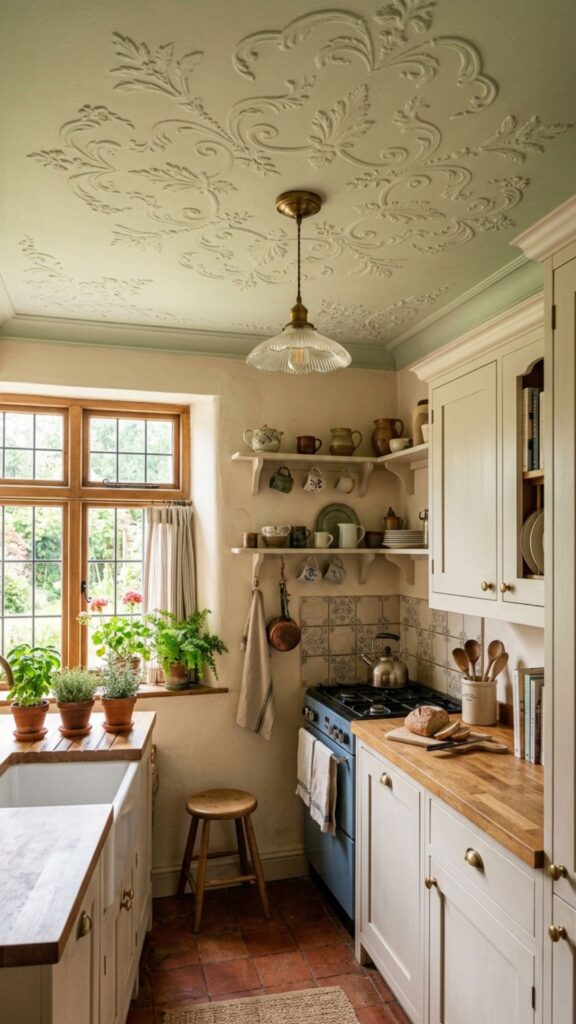
Most small kitchens keep the ceiling plain white and forget about it. But a painted ceiling — even in a slightly deeper tone than the walls — draws the eye upward and gives the room a layered, intentional look. It makes the vertical space feel deliberate rather than accidental.
Try extending your tile backsplash a few inches above the standard stopping point, or add beadboard paneling to the ceiling for texture. These touches give the kitchen design a sense of height and completeness that flat white ceilings never quite achieve.
20. Keep the Layout as Open as Possible
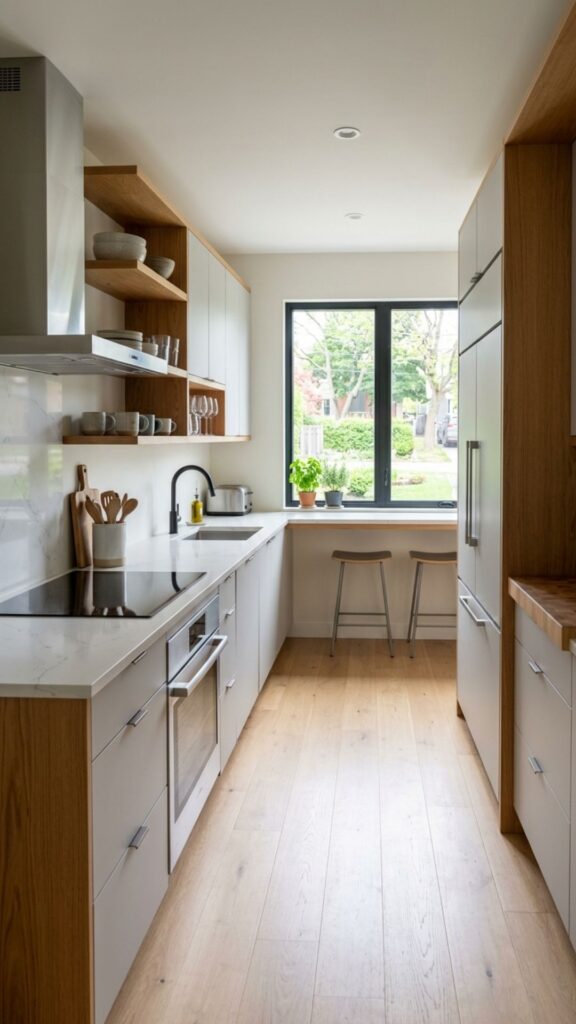
Perhaps the most important idea of all: resist the urge to fill every corner. Open floor plans work precisely because they leave breathing room. In a kitchen for small spaces, keeping pathways clear — at least 42 inches wide for a single-cook kitchen — allows movement to flow naturally.
Avoid over-furnishing. One island is better than two. Three stools beat five. Empty space isn’t wasted space — it’s what makes everything else look intentional. The best small kitchens feel curated, not crammed. Edit ruthlessly, and your kitchen will thank you for it.
Conclusion
A small kitchen is a design opportunity, not a limitation. The 20 ideas above prove that thoughtful choices — in color, materials, storage, and layout — can completely transform how a compact space looks and functions. You don’t need a renovation budget or a larger home. You need the right approach.
Start with one or two ideas that resonate most with your current kitchen. Clear the counters, add a floating shelf, or swap in a rolling island. Small changes build momentum, and before long, your kitchen for small spaces will feel like the most functional room in your home.
Ready to get started? Pick your favorite idea from this list and take one action this week — even something as simple as clearing the countertops or ordering that magnetic knife strip. Share your transformation in the comments below. We’d love to see what you create.
What is the best layout for a kitchen for small spaces?
The galley layout — two parallel counters facing each other — is widely considered the most efficient for small kitchens. It keeps everything within easy reach and minimizes wasted steps. An L-shaped layout is a close second and works well in open-plan homes.
How do I make a small kitchen look bigger without renovating?
Paint walls and cabinets in light, neutral tones. Remove upper cabinet doors or replace them with open shelves. Add under-cabinet lighting. Keep counters clear and use reflective surfaces like glass tile backsplashes. These changes require no structural work but create a noticeably larger feel.
Are open shelves practical in a small kitchen?
Yes — with some organization. Open shelves work best when you keep items consistent in color and height, limit what’s on display to things you use regularly, and wipe them down weekly. They’re not ideal for messy or heavily mixed collections, but for curated essentials, they’re highly functional and visually appealing.
What countertop material works best in a small kitchen?
Quartz is a top choice for small kitchens — it’s low maintenance, comes in light neutral tones, and can span seamlessly across counters and backsplashes. Butcher block adds warmth and is more budget-friendly. Both work well when used consistently across all surfaces.
How much does it cost to redesign a small kitchen on a budget?
Many of the most effective small kitchen upgrades cost very little. A rolling island runs $150–$300. Open shelving materials cost $50–$200. Under-cabinet lighting can be installed for under $50. A full-scale refresh using these strategies is often achievable for $500–$1,500 without touching plumbing or major structure.