A laundry room used to be an afterthought, tucked in a basement corner and forgotten. Not anymore. Today, this hardworking space deserves smart planning, and one feature makes a bigger difference than almost anything else: a sink.
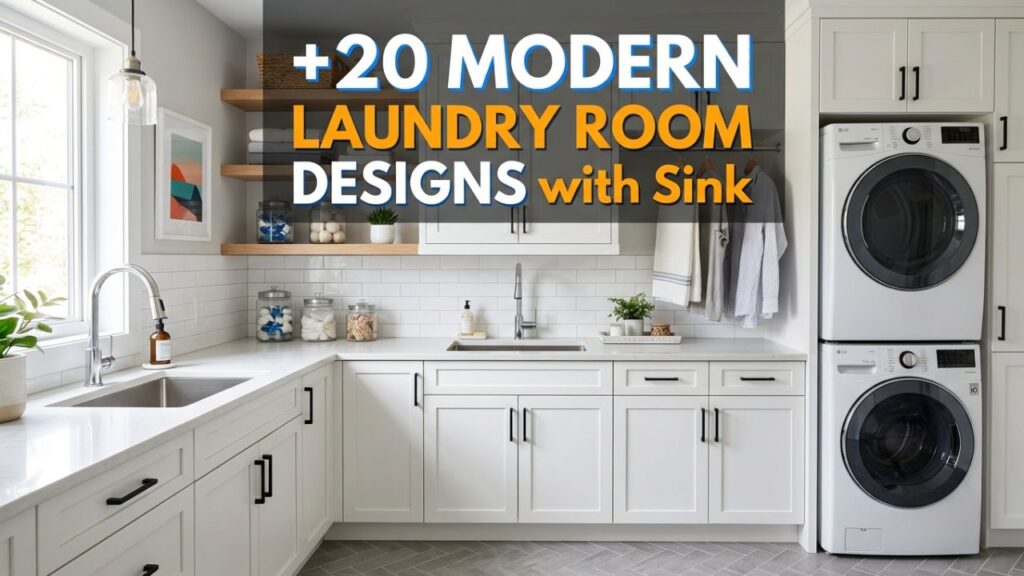
years of helping homeowners rethink their utility spaces, I can tell you that adding a sink transforms how a laundry room functions. You get a spot to pretreat stains, hand-wash delicates, rinse muddy boots, and even fill mop buckets without trekking to the kitchen.

In this guide, you’ll find 20 modern laundry room designs with sink setups that blend beauty and practicality. Whether you have a tiny closet or a spacious dedicated room, there’s an idea here to inspire you. Let’s dig into layouts, materials, and clever tricks that make your laundry area work harder while looking great.
1. Farmhouse Apron-Front Sink Station
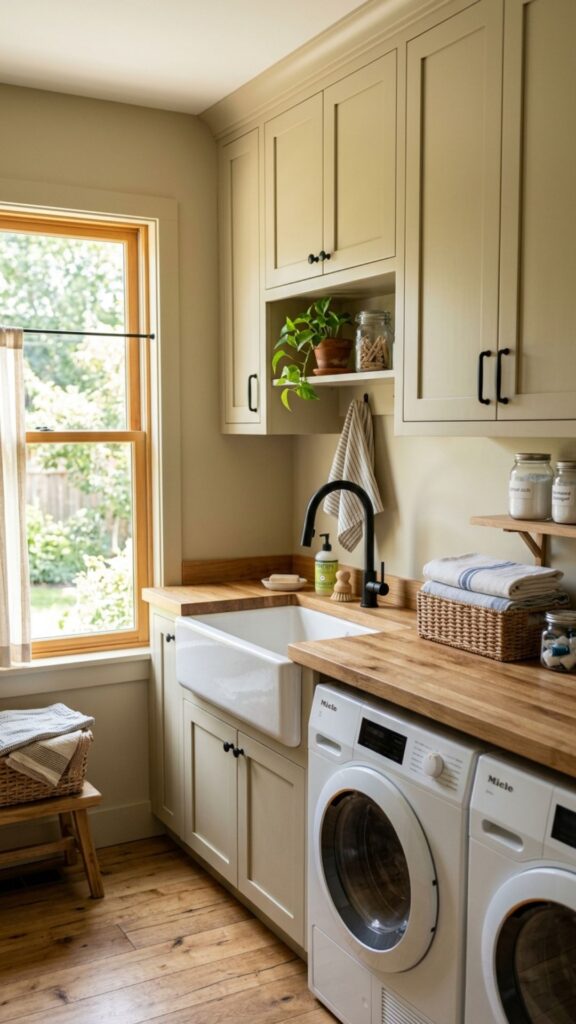
The apron-front sink, also called a farmhouse sink, brings warmth and character to any laundry space. Its deep basin handles bulky items like blankets and pet beds with ease. Pair it with shaker cabinets and a butcher block counter, and you’ve got a room that feels welcoming rather than utilitarian.
I’ve installed several of these for clients, and the deep bowl is always the standout feature. You can soak a whole load of hand-wash sweaters without splashing water everywhere. Add a matte black faucet for contrast, and the look instantly reads as modern country charm.
2. Sleek Undermount Sink with Quartz Counters
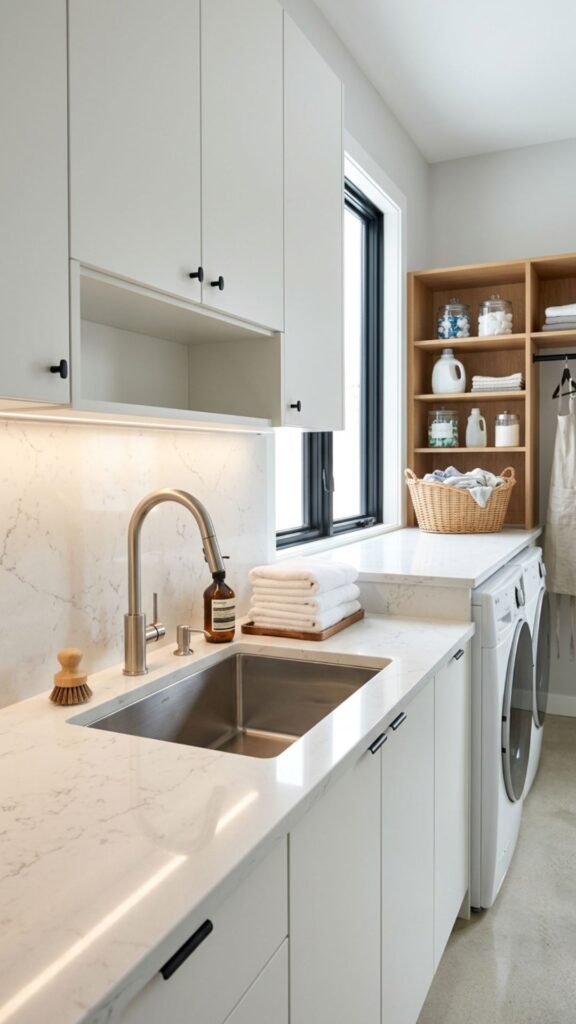
For a clean, contemporary vibe, an undermount sink paired with quartz countertops is hard to beat. Because the sink sits below the counter surface, wiping spills straight into the basin becomes effortless. No lip means no trapped grime.
Quartz resists stains and moisture, which matters in a room full of detergents and bleach. Choose a light gray or white slab to keep the space bright. This combination gives you a polished finish that rivals any high-end kitchen while staying practical for daily chores.
3. Compact Corner Sink for Small Spaces
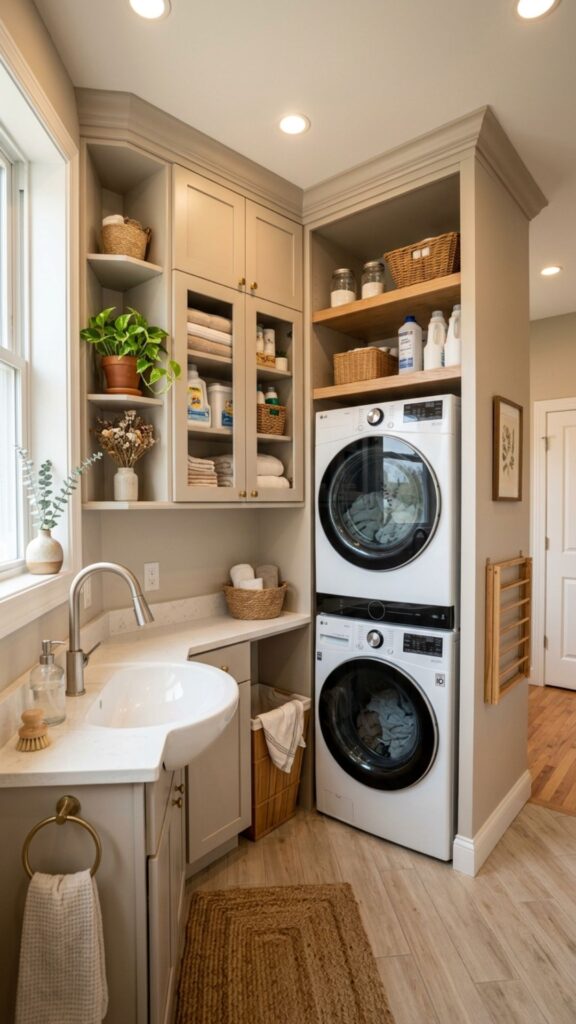
Short on square footage? A corner sink tucks neatly into an unused nook, freeing up valuable wall space for cabinets or a folding counter. This layout proves that even a laundry closet can include a functional wash station.
I often recommend a small round basin here to maximize efficiency. Pair it with a wall-mounted faucet to save counter depth. You still gain the convenience of rinsing and soaking, without sacrificing the room you need for a washer and dryer.
4. Double-Basin Sink for Serious Multitaskers
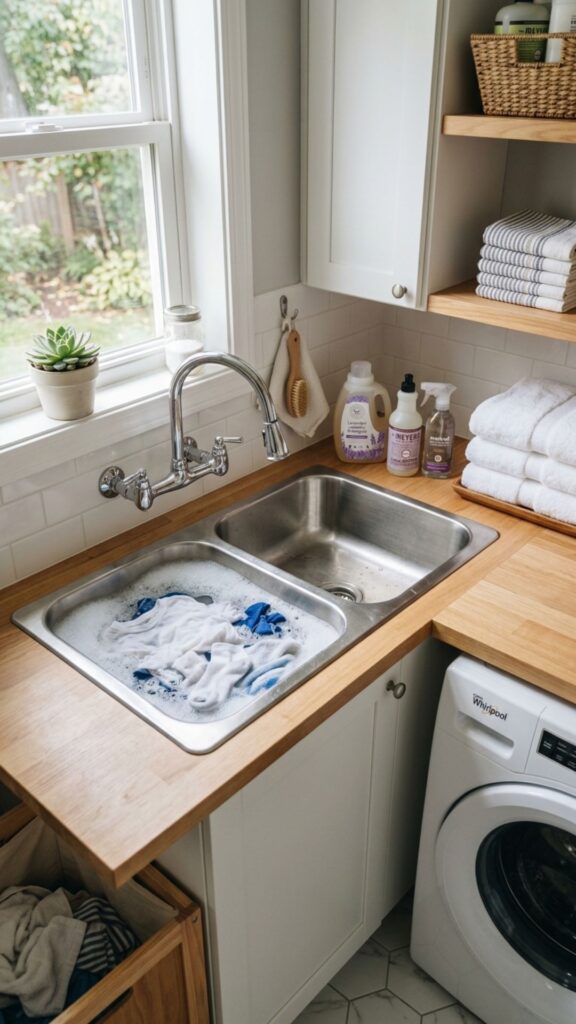
If your household generates mountains of laundry, a double-basin sink is a game changer. Use one side for soaking and the other for rinsing or air-drying delicates. This setup keeps tasks separated and workflow smooth.
Families with kids and pets especially appreciate the flexibility. You can scrub a grass-stained jersey in one bowl while a wool sweater dries on a rack over the other. It’s the kind of thoughtful design detail that pays off every single day.
5. Floating Vanity Sink with Open Shelving
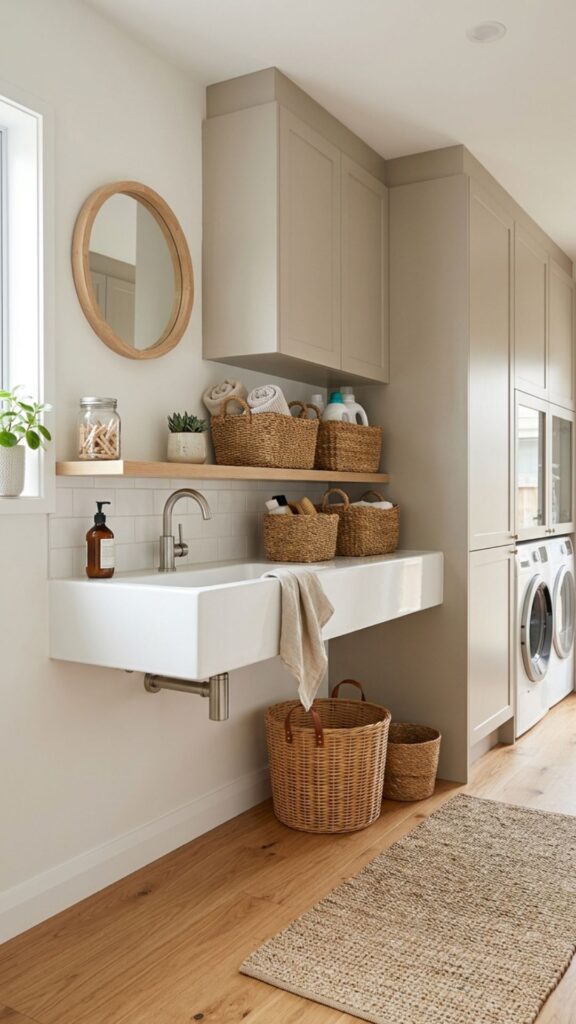
A floating vanity gives your laundry room a light, airy feel. Mounting the sink cabinet to the wall creates open floor space beneath, which makes the room look larger and simplifies cleaning. Open shelves above hold baskets, detergent, and folded towels.
This design works beautifully in modern homes with minimalist leanings. Keep the palette neutral and add a few woven baskets for texture. The result is a laundry space that feels curated instead of cluttered.
6. Utility Sink with Industrial Fixtures
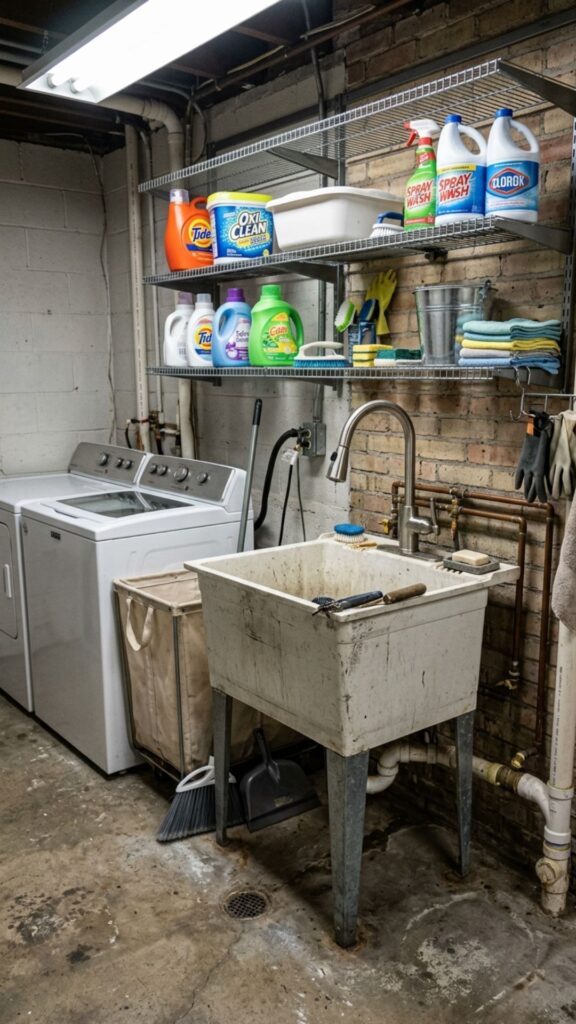
Sometimes you want function first, and an industrial-style utility sink delivers. Stainless steel or heavy-duty resin basins shrug off harsh chemicals and rough treatment. Paired with exposed piping and a gooseneck faucet, the look feels intentional and current.
This style suits garages, mudrooms, and hardworking laundry areas. I’ve seen homeowners embrace the raw aesthetic with concrete floors and metal shelving. It’s durable, honest design that ages gracefully and handles the messiest jobs.
7. Integrated Sink and Folding Counter Combo
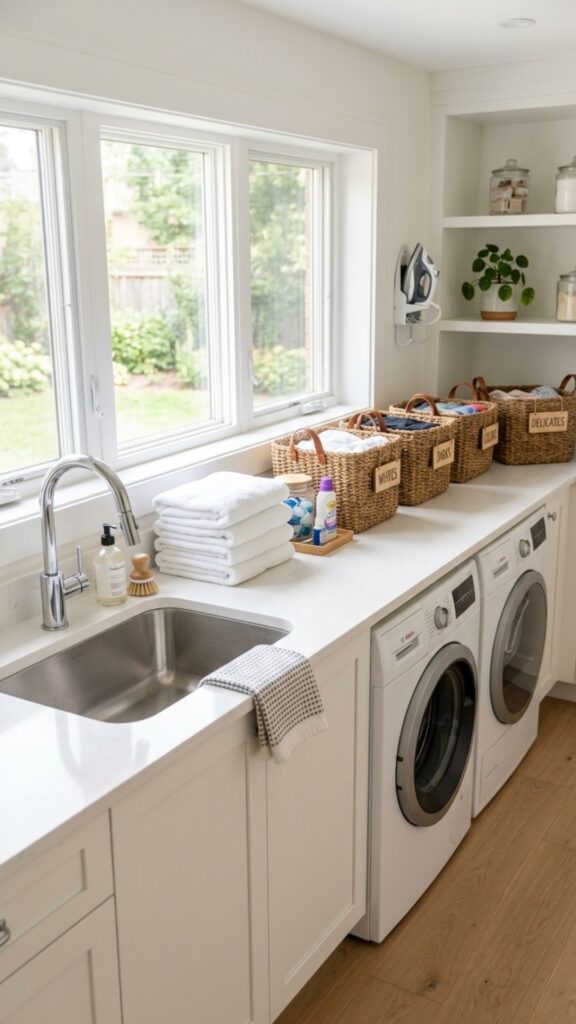
Combining a sink with a generous folding counter creates an all-in-one workstation. You wash, rinse, and fold in the same zone, cutting down on wasted steps. This efficient layout is a favorite among busy households.
Choose a durable, water-resistant countertop so splashes don’t cause damage. Position the sink at one end, leaving plenty of flat space for stacking clean laundry. It’s a simple concept, but it dramatically improves how the room flows.
8. Vintage-Inspired Freestanding Sink
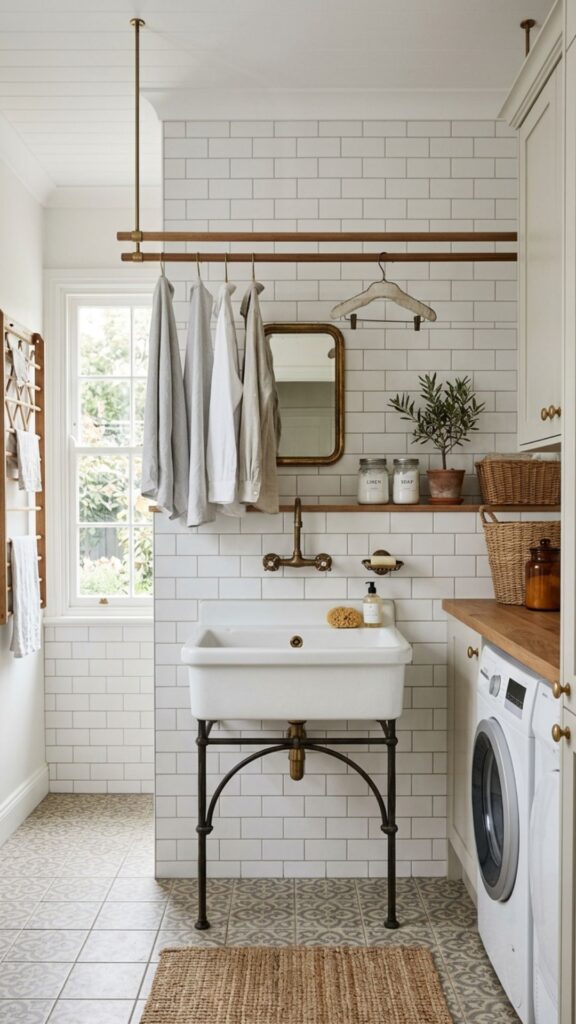
A freestanding sink with exposed legs channels vintage laundry rooms from decades past. This nostalgic look pairs wonderfully with subway tile and antique brass hardware. It adds personality without overwhelming a small room.
Because these sinks stand alone, they’re perfect when cabinetry isn’t in the budget. I’ve helped clients pair a vintage basin with a simple drying rod above it. The effect is charming, timeless, and surprisingly practical.
9. Hidden Sink Behind Cabinet Doors
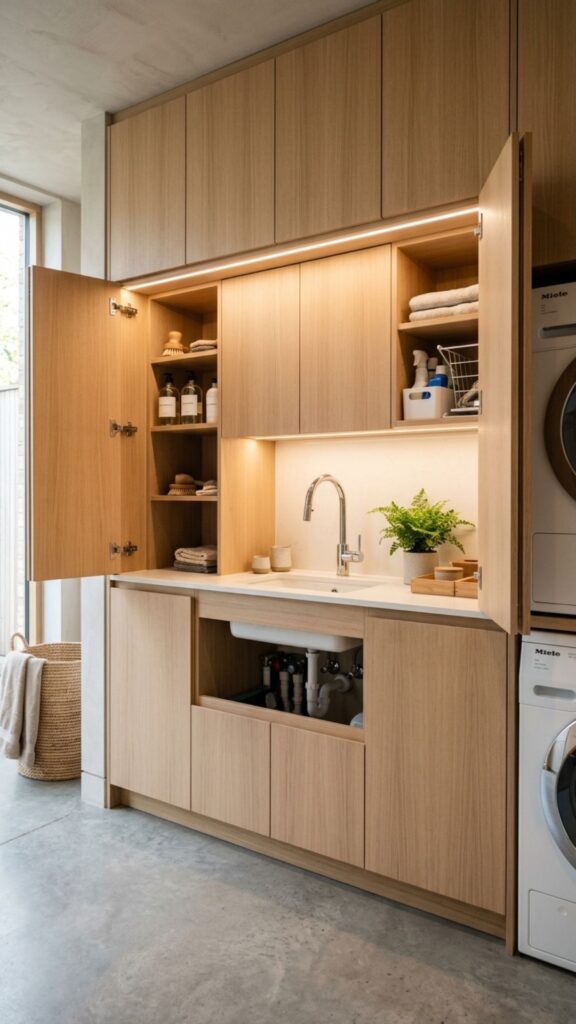
Prefer a seamless look? Concealing the sink behind matching cabinet doors keeps your laundry room looking tidy when the sink isn’t in use. This clever design is ideal for open-concept homes where the laundry area is visible.
Close the doors and the space looks like a run of ordinary cabinetry. Open them, and your wash station is ready. It takes precise planning around plumbing, but the payoff is a clean, uninterrupted visual line.
10. Bold Colored Sink as a Focal Point
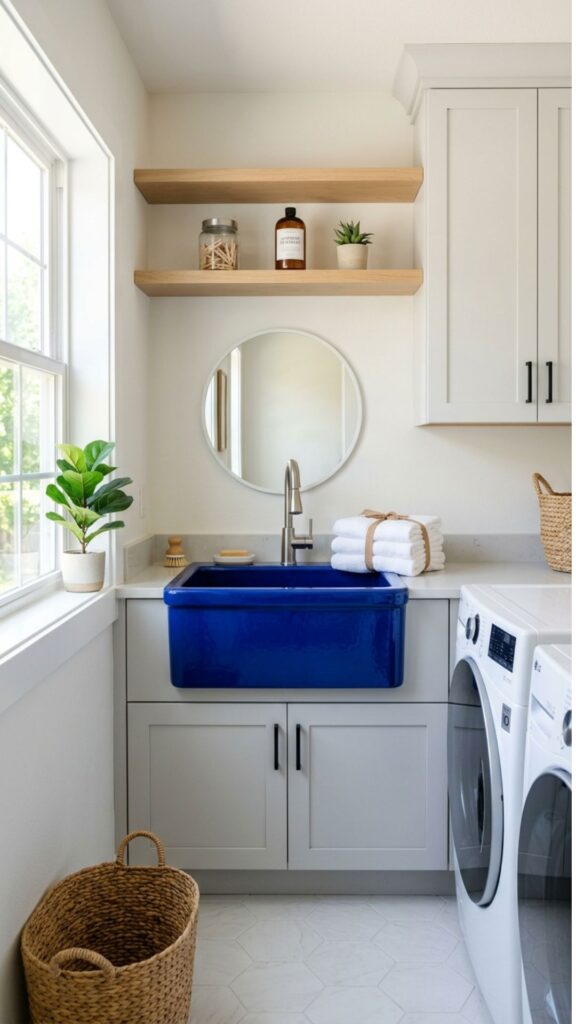
Who says a sink has to be white or steel? A bold-colored basin in navy, sage, or even black turns a functional feature into a design statement. It injects personality into an otherwise practical room.
Pair a colorful sink with neutral cabinets so it truly pops. This is an easy way to make a small laundry room feel intentional and stylish. Trust me, guests always comment on a striking sink.
11. Deep Soaking Sink for Delicates
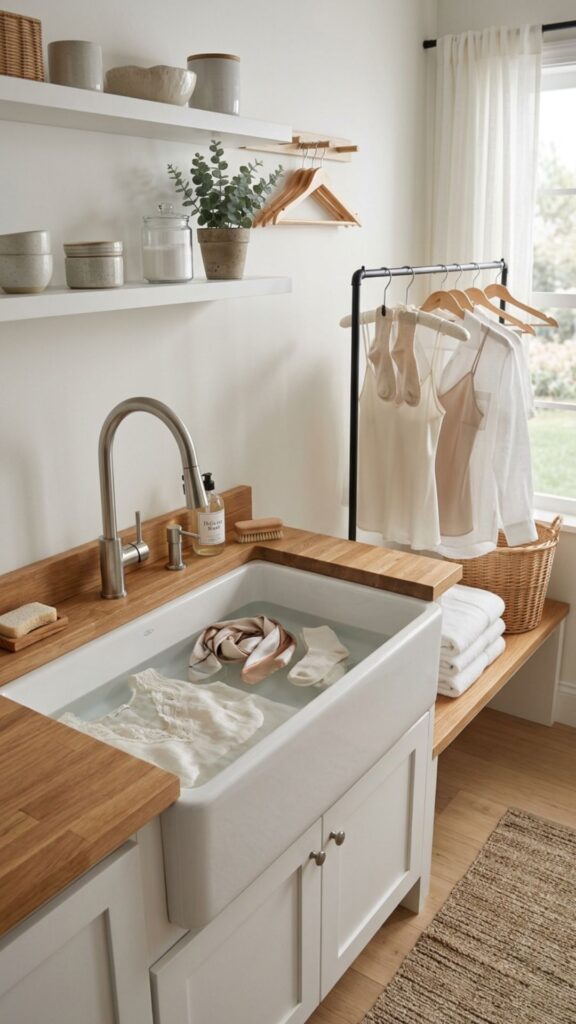
A deep soaking sink is essential if you regularly hand-wash wool, silk, or lingerie. The extra depth lets you fully submerge garments without overflow. This gentle care extends the life of your favorite pieces.
I always suggest a smooth basin surface to protect fabrics from snags. Add a hanging rod nearby for drip-drying, and you’ve created a dedicated delicate-care station. Your clothes will thank you.
12. Sink Nestled Under a Bright Window
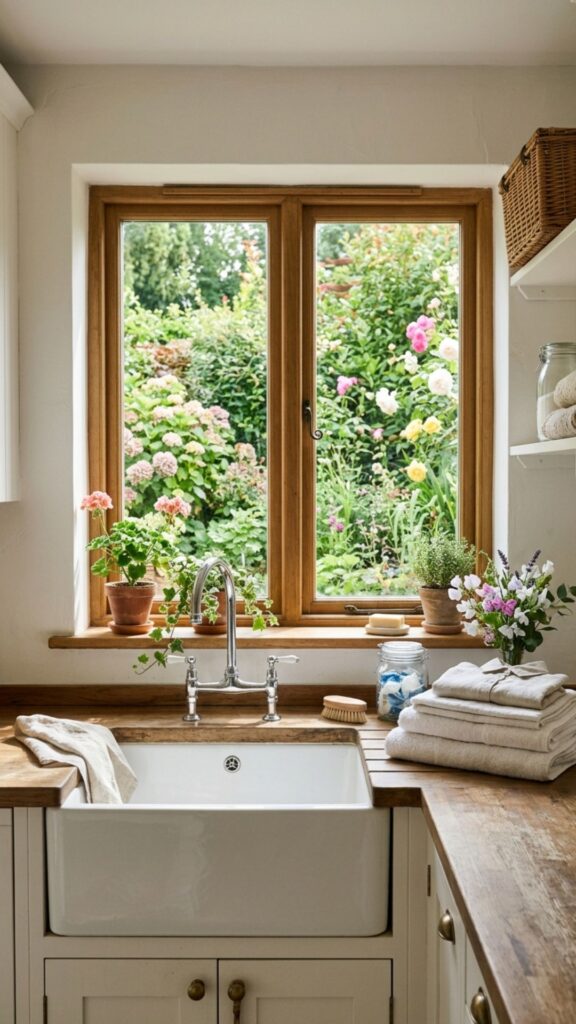
Placing your sink beneath a window brings in natural light and a pleasant view. Washing chores feel less tedious when you’re not staring at a blank wall. Plus, daylight helps you spot lingering stains.
Ventilation is another bonus, since you can crack the window to release humidity. This layout works especially well in laundry rooms with garden or backyard views. It’s a small touch that makes daily tasks more enjoyable.
13. Minimalist Wall-Mounted Sink
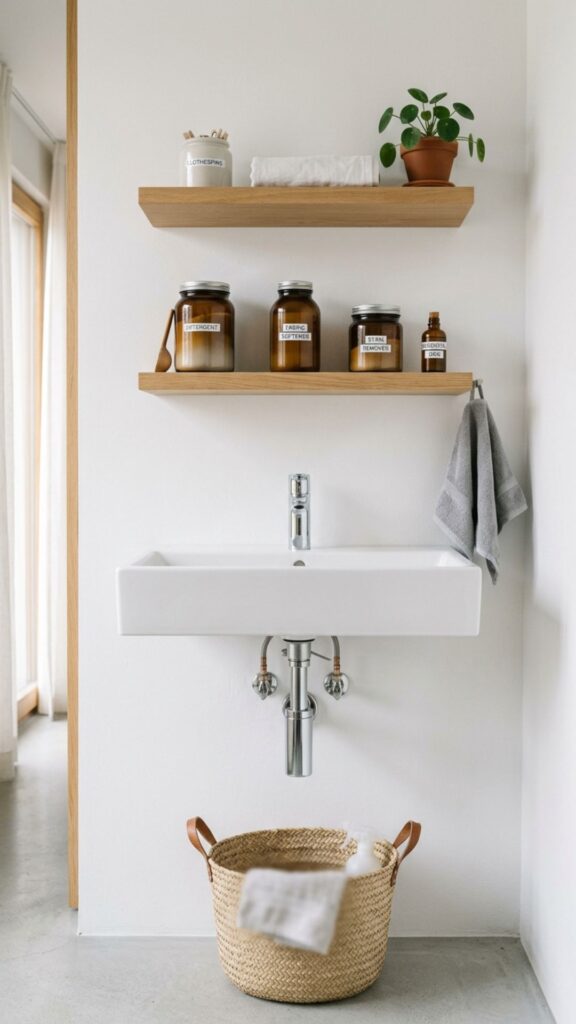
For ultra-modern spaces, a wall-mounted sink offers clean lines and a floating appearance. Without a base cabinet, the room feels open and uncluttered. This suits compact urban homes beautifully.
Keep supplies in nearby drawers or on floating shelves to maintain the minimalist look. The exposed plumbing can be part of the aesthetic when finished in brushed nickel or matte black. Simple, sleek, and space-smart.
14. Rustic Stone Basin Sink
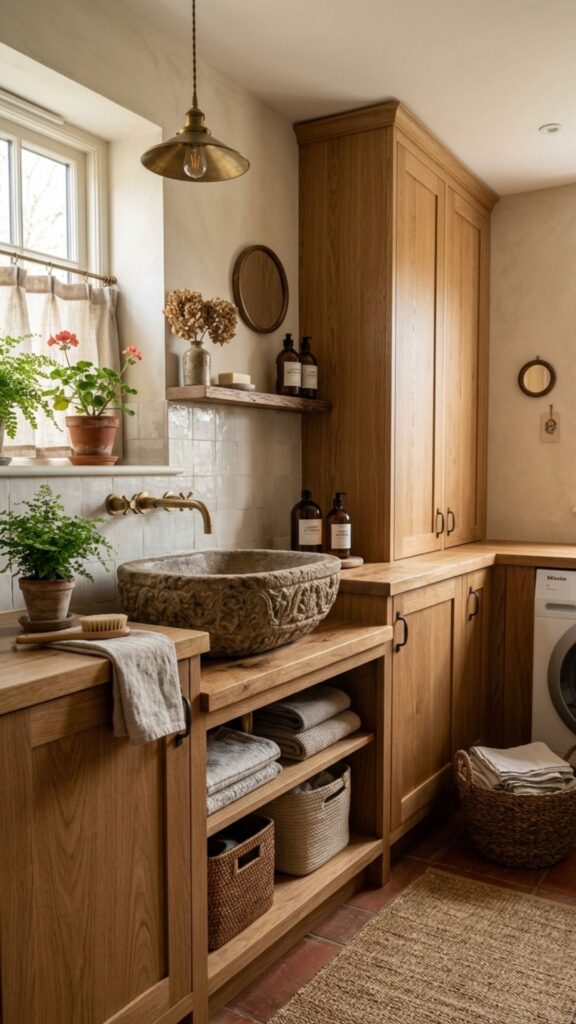
A natural stone sink adds organic texture and a grounded, earthy feel. Carved from granite or soapstone, these basins are incredibly durable and unique. No two look exactly alike.
This style pairs wonderfully with wood cabinetry and warm lighting. It’s an investment, but stone ages beautifully and resists heat and stains. If you love natural materials, this design brings a spa-like calm to laundry day.
15. Sink with Built-In Drying Rack Above
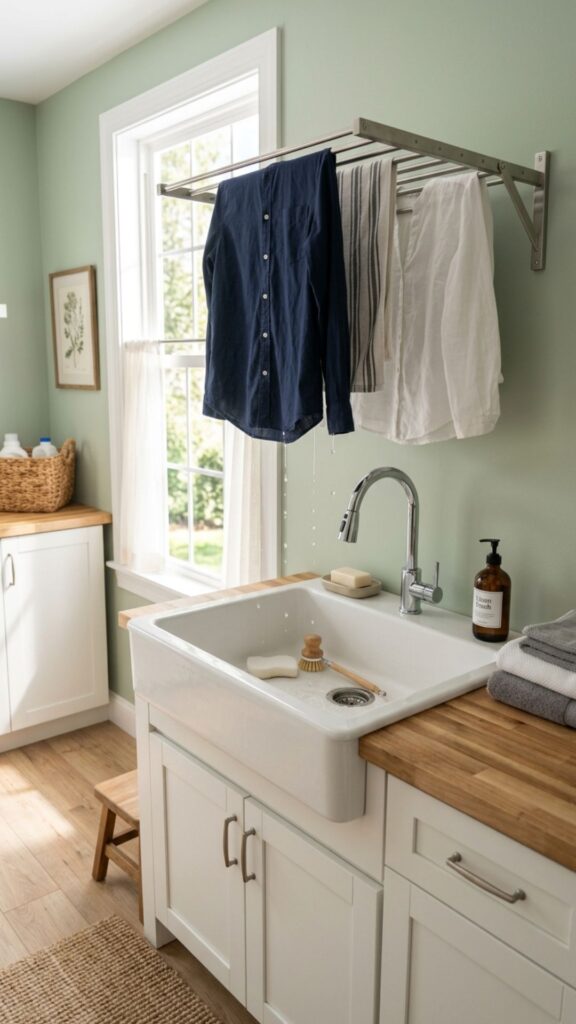
Positioning a pull-down or fixed drying rack above your sink maximizes vertical space. Drips fall straight into the basin, keeping floors dry. It’s an efficient solution for air-drying without a separate rack.
I’ve installed retractable versions that tuck away when not needed. This keeps the room looking neat while giving you drying space on demand. Small footprint, big function.
16. Two-Tone Cabinet Sink Zone
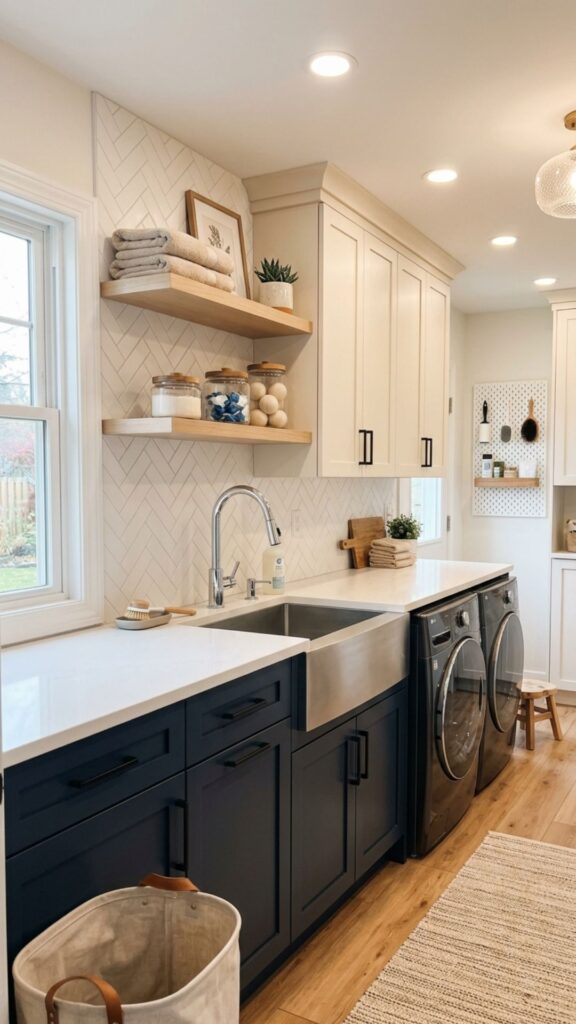
Two-tone cabinetry frames the sink area in a visually interesting way. Try dark lower cabinets with light uppers, or a contrasting island around the sink. This modern approach adds depth and dimension.
Anchor the sink within the darker base cabinets to hide inevitable scuffs and water marks. The contrast draws the eye and makes the space feel designed rather than assembled. It’s a trend that still feels fresh.
17. Sink Paired with a Pull-Out Faucet
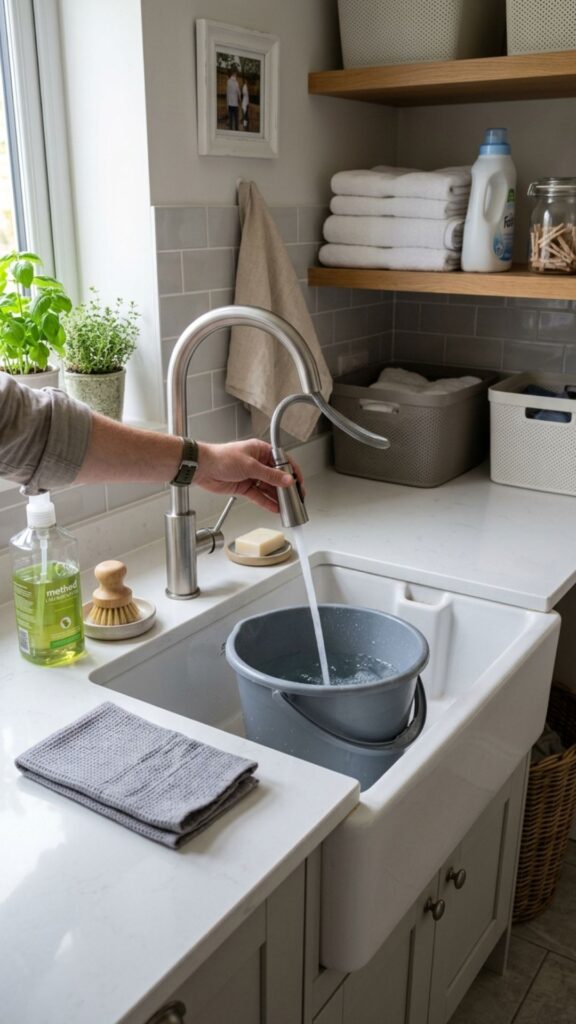
A pull-out or pull-down faucet dramatically boosts a sink’s usefulness. Extend the sprayer to rinse large items, clean the basin, or fill buckets on the floor. This one upgrade improves nearly every laundry task.
Look for a model with a magnetic docking head so it snaps neatly back into place. I recommend spending a little more here, since faucets get heavy daily use. Reliability matters when you’re washing muddy cleats at 9 p.m.
18. Open-Concept Laundry with Central Sink
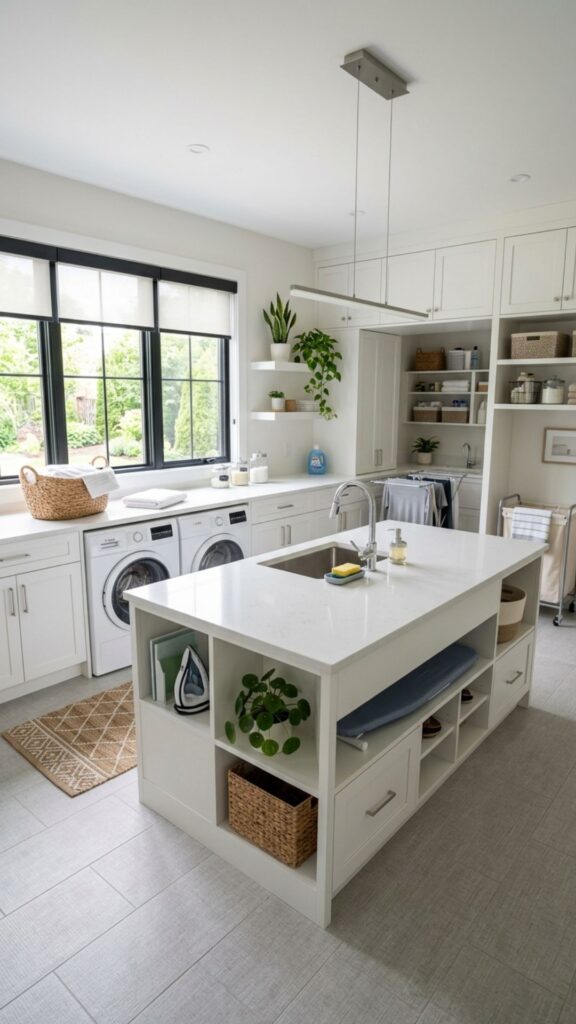
In a large room, placing the sink on a central island creates a hub for all your tasks. You gain 360-degree access and plenty of surrounding counter space. This layout suits spacious homes and multitasking households.
An island sink also lets you face outward while working, rather than toward a wall. Add stools, and the space doubles as a crafting or utility station. It’s flexible design at its best.
19. Sink with Integrated Waste and Recycling Bins
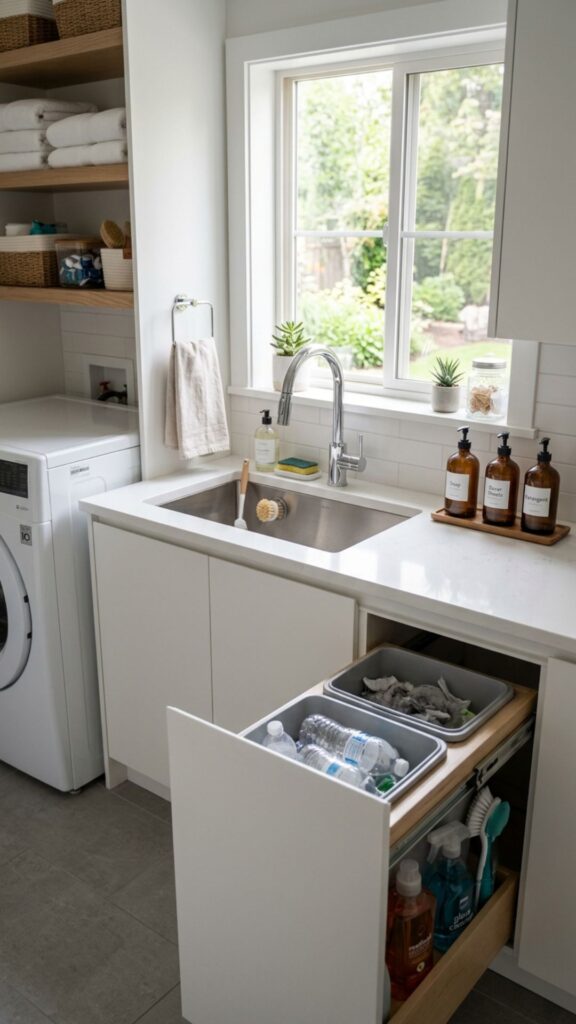
Building pull-out bins beside the sink keeps lint, empty bottles, and dryer sheets out of sight. This tidy detail supports a cleaner, more organized routine. Everything has its place.
I frequently add a slim pull-out beneath the counter next to the basin. Toss trash and recyclables without leaving your workstation. Little conveniences like this make a room feel thoughtfully planned.
20. Luxury Marble-Surround Sink Feature
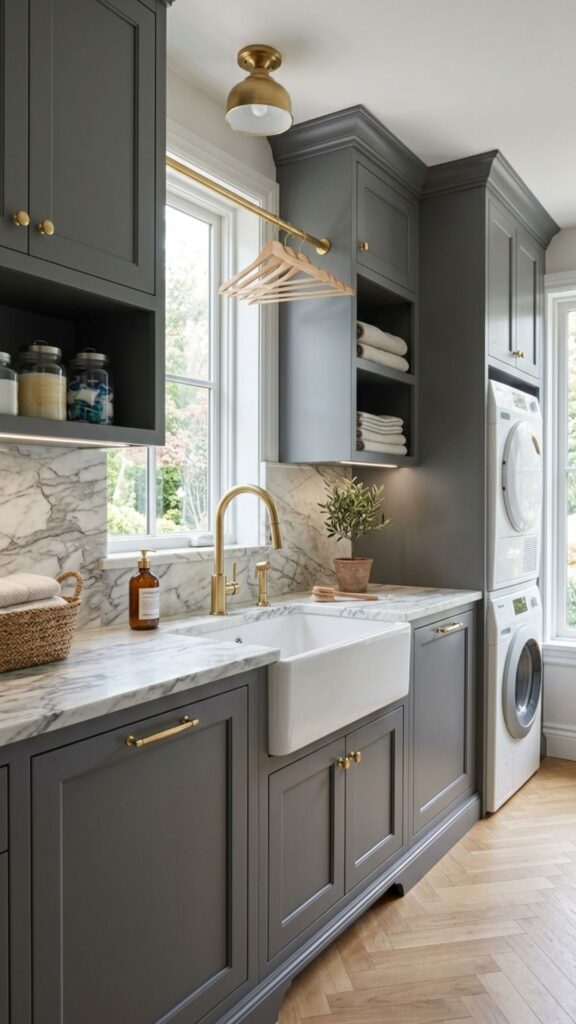
For a truly upscale laundry room, surround your sink with marble countertops and a matching backsplash. The veined stone brings elegance rarely seen in utility spaces. It elevates the entire room.
Seal the marble properly to guard against detergent stains, and you’ll enjoy a stunning, durable surface for years. This design proves that even the most practical room can feel indulgent. Sometimes a little luxury makes chores feel less like work.
Conclusion
A well-planned laundry room with a sink genuinely changes how you tackle everyday chores. From compact corner basins to luxurious marble-surround features, these 20 laundry room designs with sink ideas show there’s a solution for every home and budget. The best design fits your space, your habits, and your style.
Ready to start planning your dream space? Grab a measuring tape, note your must-have features, and sketch out a layout that suits your routine. If you’d like tailored advice, reach out to a local kitchen and bath designer who can turn these ideas into a plan built just for you. Your future self, holding a pretreated shirt over a deep, roomy sink, will be grateful.
Do I really need a sink in my laundry room?
A sink isn’t strictly required, but it adds huge convenience. It lets you pretreat stains, hand-wash delicates, soak soiled items, and fill buckets without using your kitchen or bathroom. If you do laundry often or have kids and pets, a sink quickly earns its keep.
What is the best sink material for a laundry room?
Stainless steel and resin utility sinks offer the best durability and resistance to chemicals. Quartz and stone look upscale and hold up well when sealed. Choose based on your budget and how heavily you’ll use the sink for tough tasks.
How much space do I need to add a sink to a small laundry room?
You can fit a sink in as little as 18 to 24 inches of counter width. Corner sinks and wall-mounted models work well in tight spaces. The key is planning around your washer, dryer, and plumbing lines before you commit.
What size sink works best for laundry rooms?
A deep single-basin sink around 22 to 25 inches wide suits most homes. If you frequently wash bulky items or delicates, consider a deeper or double-basin model for extra flexibility.
Can I install a laundry room sink myself?
Basic installations are doable for confident DIYers, especially if plumbing already exists nearby. However, new water lines or drain connections usually call for a licensed plumber to ensure everything meets code and stays leak-free.