A fireplace in the dining room changes everything. It turns an ordinary meal into an experience, adds a focal point where there wasn’t one, and brings genuine warmth — both physical and visual — to a space that often gets overlooked in home design.
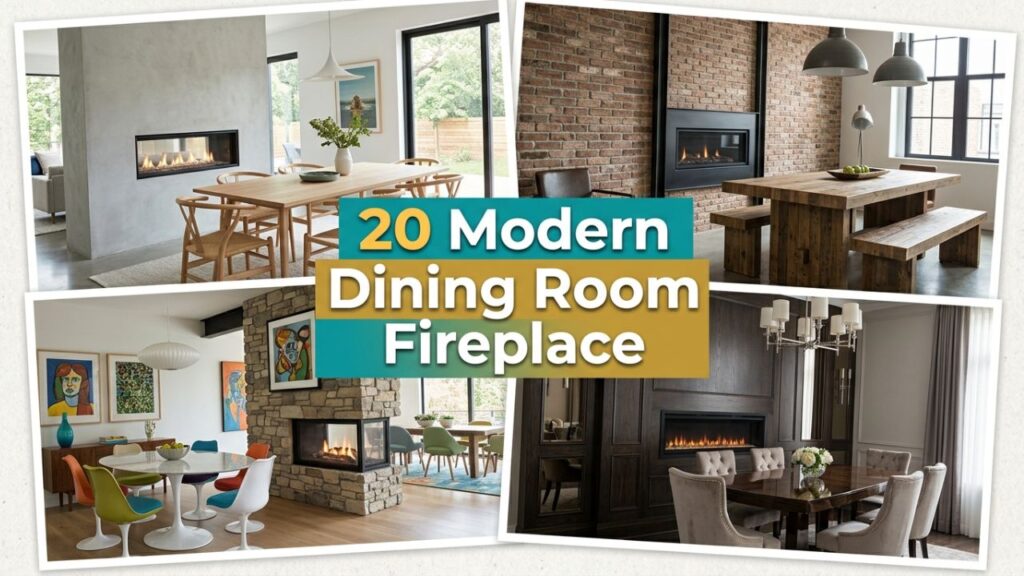
If you’ve been searching for dining room fireplace ideas that feel current rather than traditional, you’re in the right place.
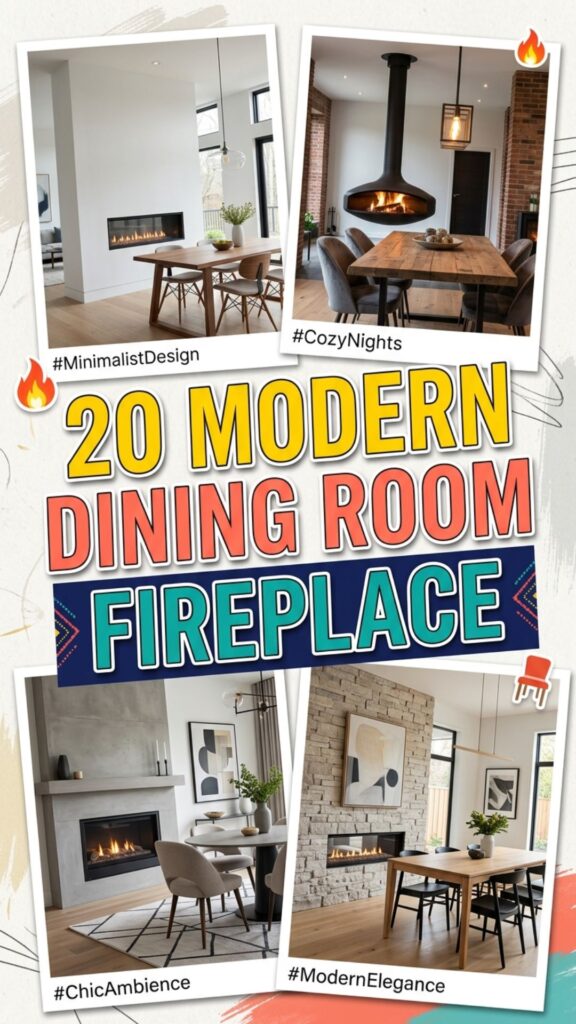
This guide covers 20 modern approaches, from bold architectural statements to subtle, apartment-friendly options. Whether you’re renovating from scratch or just looking for one smart upgrade, there’s something here that fits your space and budget.
1. Go Floor-to-Ceiling With a Built-In Surround
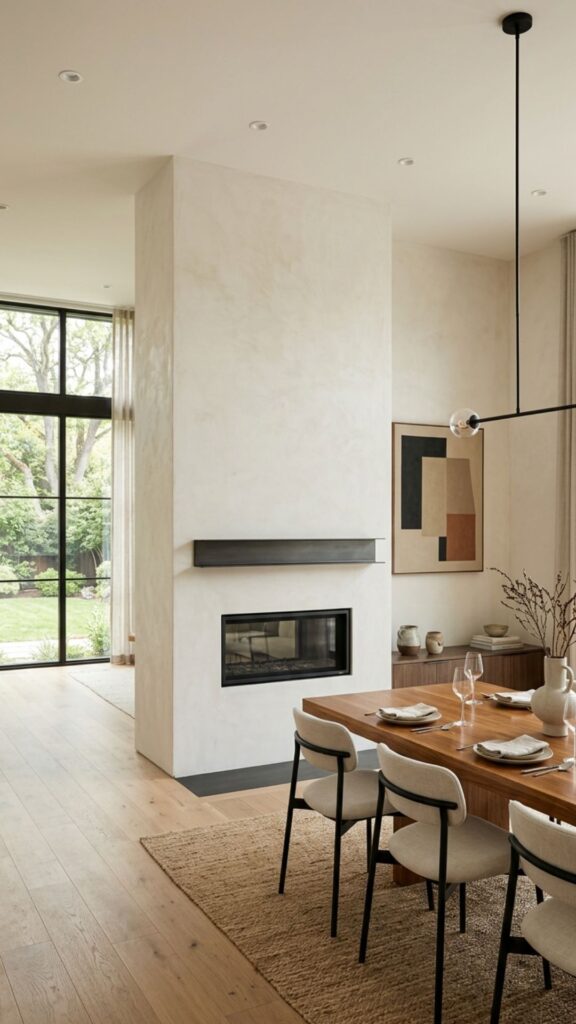
A built-in fireplace that extends from floor to ceiling instantly becomes the dominant feature of your dining room. Frame it in smooth plaster, large-format stone tile, or matte concrete panels for a look that feels architectural rather than decorative.
This approach works especially well in open-plan spaces where the fireplace needs to do visual heavy lifting. Keep the mantel shelf minimal — a single object or a low, horizontal piece of art is all it needs.
2. Choose a Sleek Linear Gas Fireplace
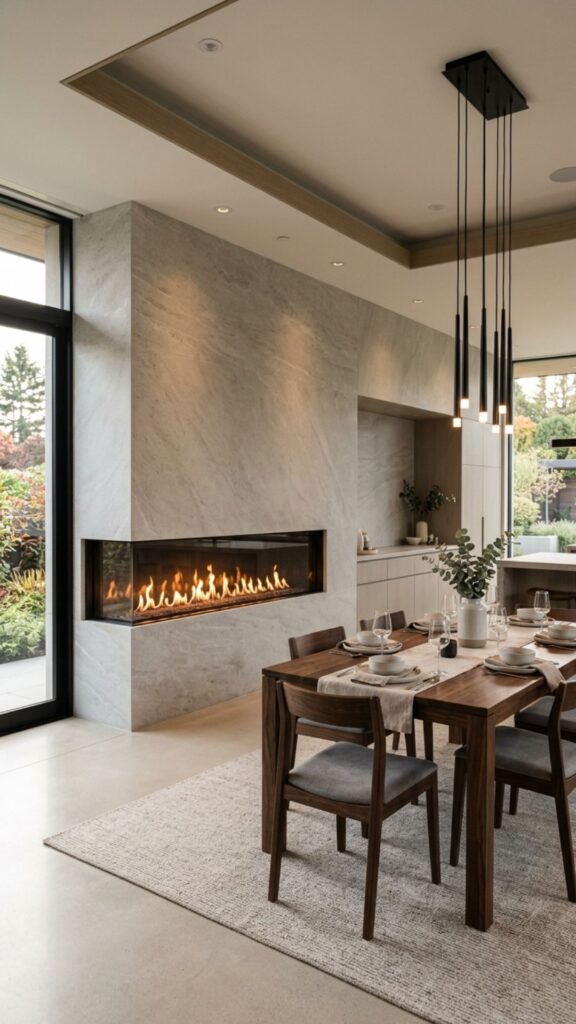
Linear gas fireplaces are a staple of modern interior design for good reason. Their wide, horizontal format suits contemporary dining rooms far better than a traditional square opening, and the clean flame line they produce looks intentional and refined.
Many linear models can be installed with a zero-clearance surround, which means they work in standard walls without major structural changes. Pair one with a flush stone or metal surround to keep the overall aesthetic tight and uncluttered.
3. Install a Double-Sided Fireplace Between Rooms
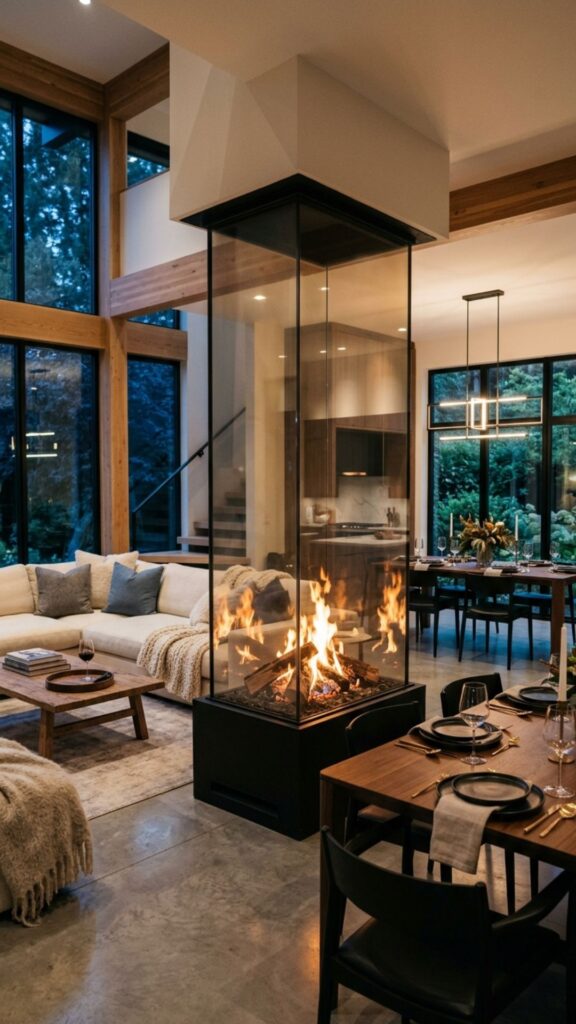
A double-sided fireplace shared between a dining room and an adjacent living space is one of the most elegant dining room fireplace ideas available. It defines each room without fully closing them off, and the floating flame is visible from both sides.
This setup works particularly well in open layouts where you want visual separation without a solid wall. Look for models with frameless glass panels on both sides — they maximize the see-through effect and keep sightlines clean.
4. Use a Wall-Mounted Electric Fireplace
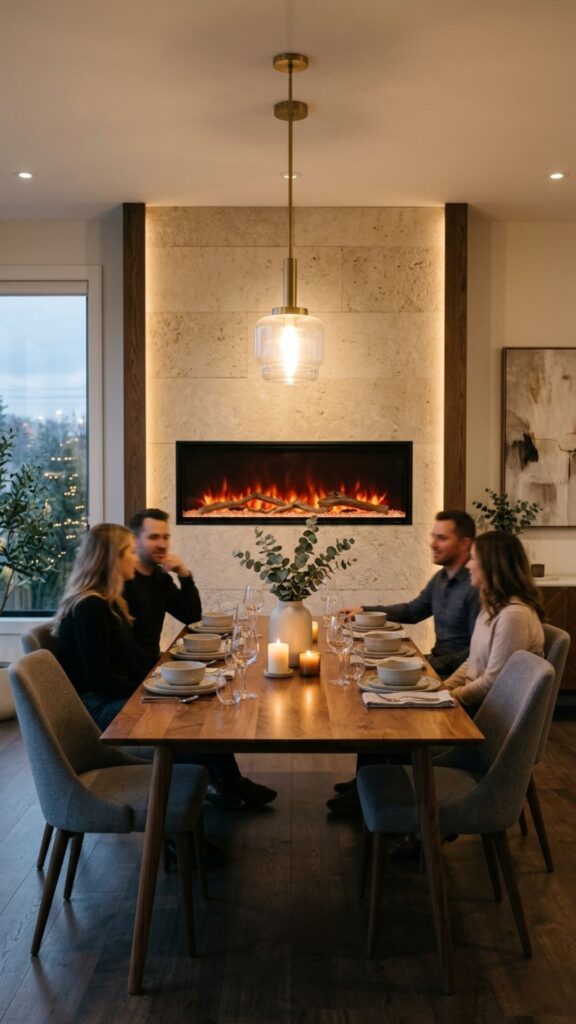
Wall-mounted electric fireplaces have come a long way. Modern versions offer realistic flame simulations, adjustable color temperatures, and a flat-panel profile that looks like it belongs on the wall rather than in front of it.
They’re also the most accessible option for renters or anyone in a home without existing chimney infrastructure. Mount one at eye level on a feature wall behind the head of the dining table for maximum visual impact during meals.
5. Try a Freestanding Bioethanol Fireplace
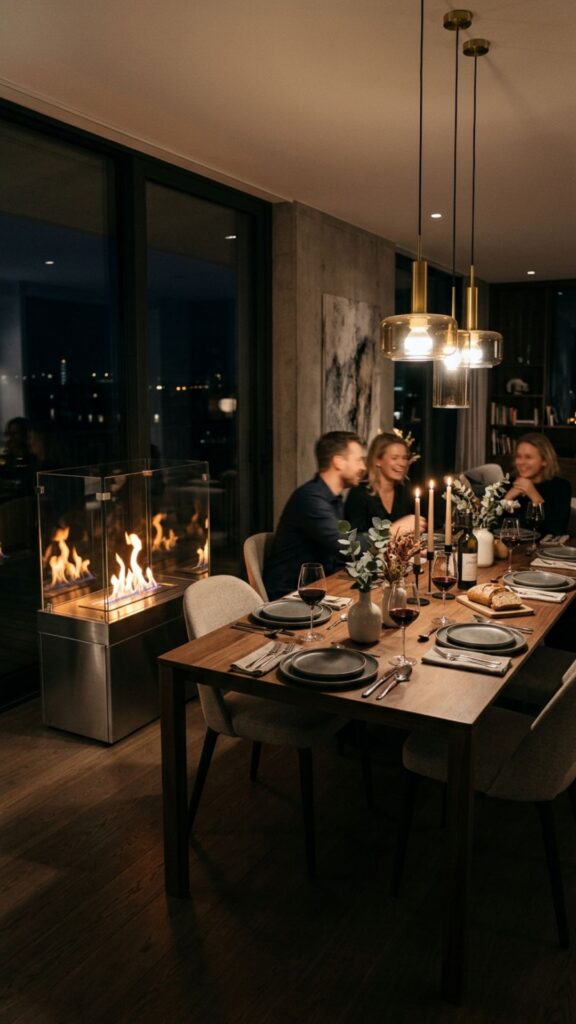
Bioethanol fireplaces burn clean fuel with no flue, no venting, and no installation required. A freestanding model in brushed steel, matte black, or tempered glass can be positioned wherever it works best in the room and moved whenever you need flexibility.
This makes them ideal for dining rooms where permanent installation isn’t an option. Choose a model with a wide, open flame viewing area so the fire remains the focal point even from across a long dining table.
6. Frame It With Full-Height Fluted Panels
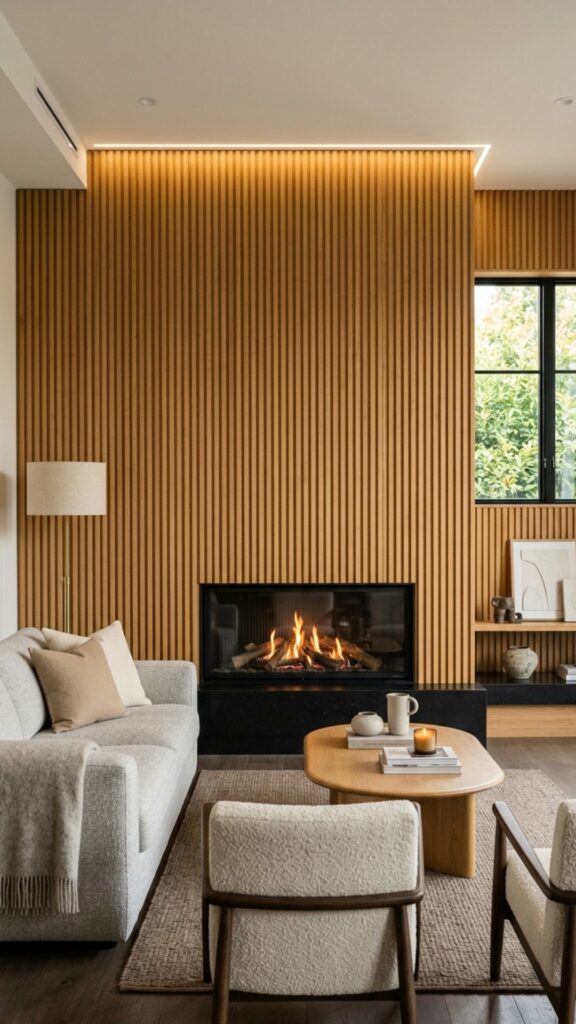
Fluted wall panels flanking a fireplace add texture and depth without competing with the flame. In a modern dining room, vertical fluting in painted MDF, limewashed plaster, or natural oak creates a sense of deliberate craftsmanship around the fireplace opening.
Run the panels from floor to ceiling on either side of the firebox for a cohesive, high-impact look. Keep the fluting profile shallow — deep grooves can feel heavy in smaller rooms.
7. Build In Shelving on Either Side
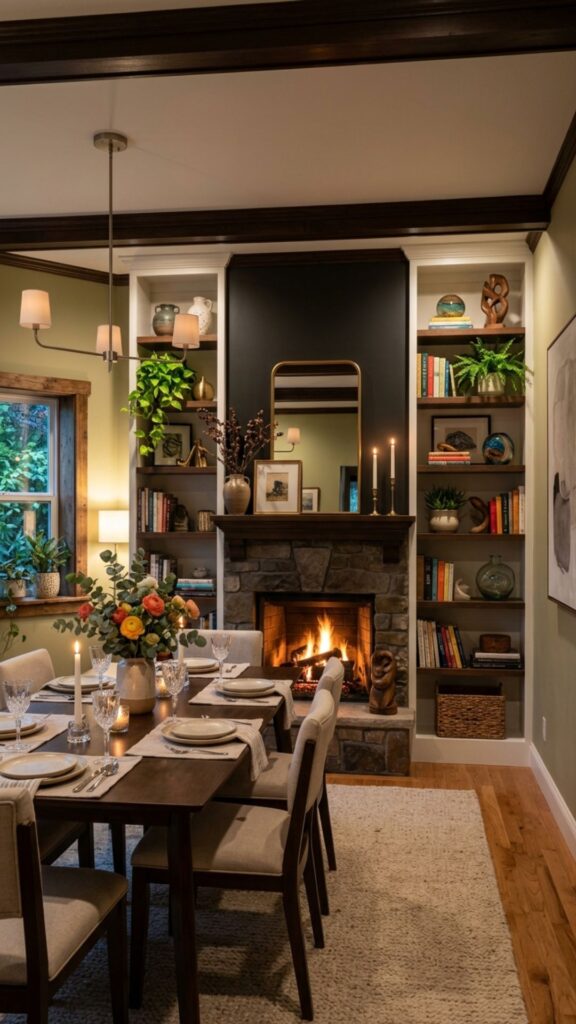
Flanking your dining room fireplace with built-in shelving serves both style and function. It creates a unified wall of storage and display space while anchoring the fireplace as the center of a larger composition.
In a modern dining room, keep shelving simple: open shelves with thin profiles, no doors, and a restrained approach to what you display. A few sculptural objects, a handful of books, and some carefully placed greenery are enough.
8. Choose a Black Steel Surround
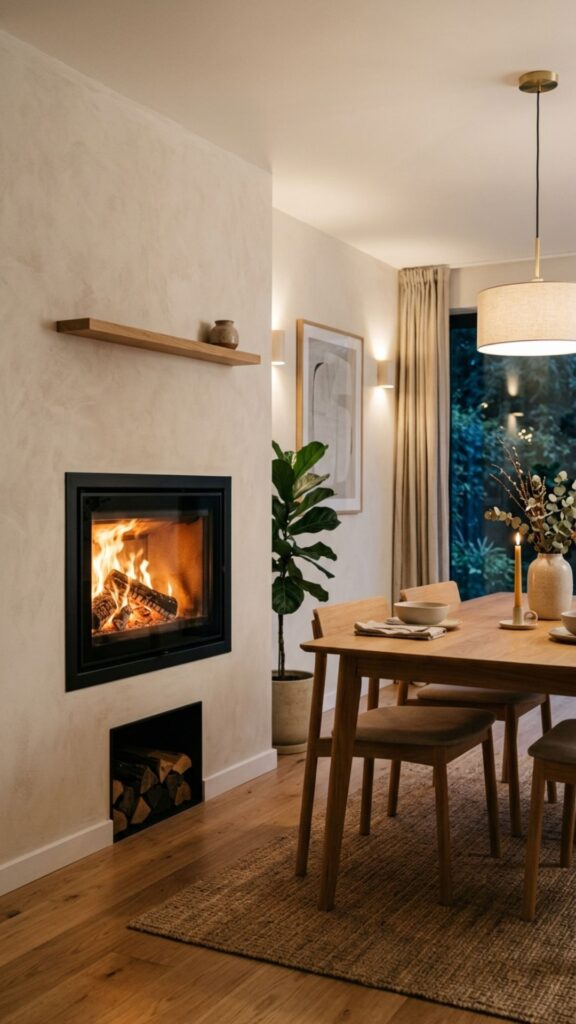
Black steel or blackened iron surrounds are one of the defining finishes of modern fireplace design. The material has an industrial edge that works beautifully against light walls, warm wood tones, and natural stone.
A thin-profile black steel frame around the firebox — with no mantel shelf at all — is particularly effective in dining rooms where you want the fire itself to take center stage. It reads as both minimal and bold at the same time.
9. Embed the Fireplace in a Feature Stone Wall
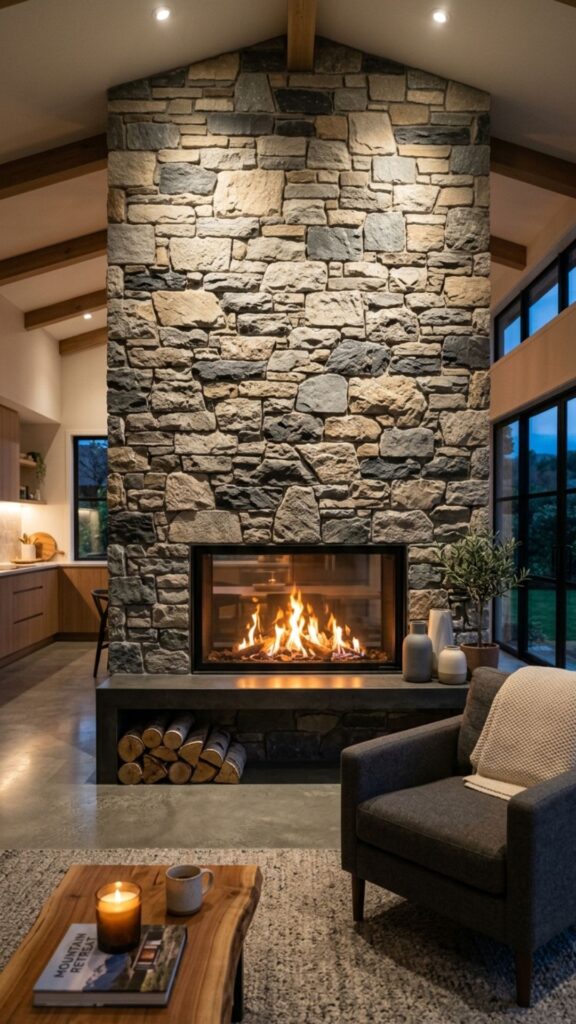
A full stone or large-format tile wall with the fireplace embedded within it creates a dramatic, hotel-quality focal point. Natural stone varieties like basalt, slate, or honed limestone work well in modern spaces without veering into rustic territory.
Keep the stone consistent in color and finish across the entire wall to avoid a patchwork effect. The fireplace opening should sit flush with the stone surface rather than protruding from it — this maintains the flat, cohesive look that defines modern design.
10. Hang a Mirror Above the Firebox
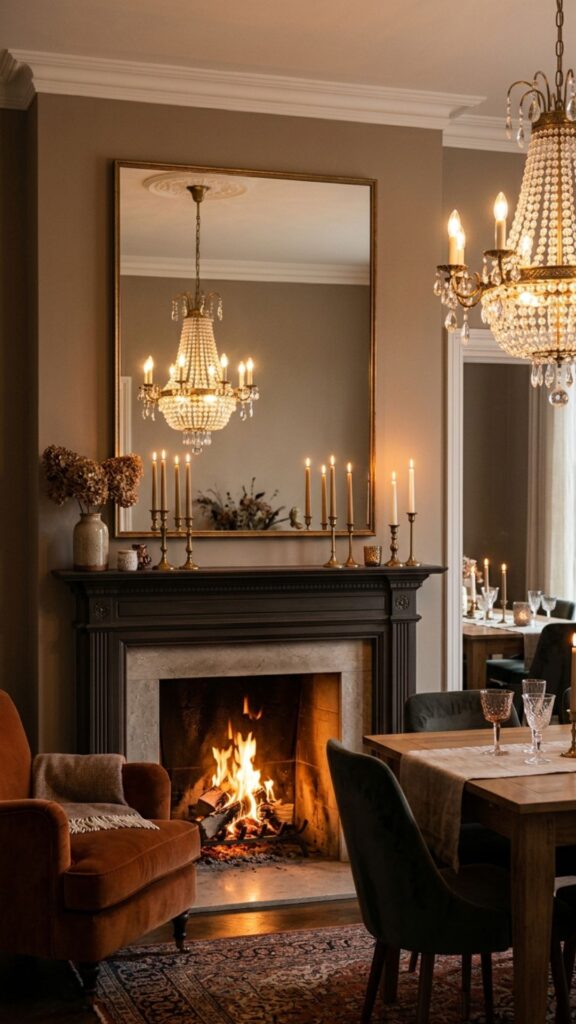
Placing a large, frameless or minimally framed mirror above the fireplace in a dining room doubles the visual depth of the space and reflects both the flame and the light from your chandelier or pendant.
Choose a mirror that spans at least two-thirds of the fireplace width for the proportions to feel intentional. Avoid ornate frames — in a modern dining room, clean edges and simple geometry keep the look current.
11. Match the Fireplace Surround to Your Wall Color
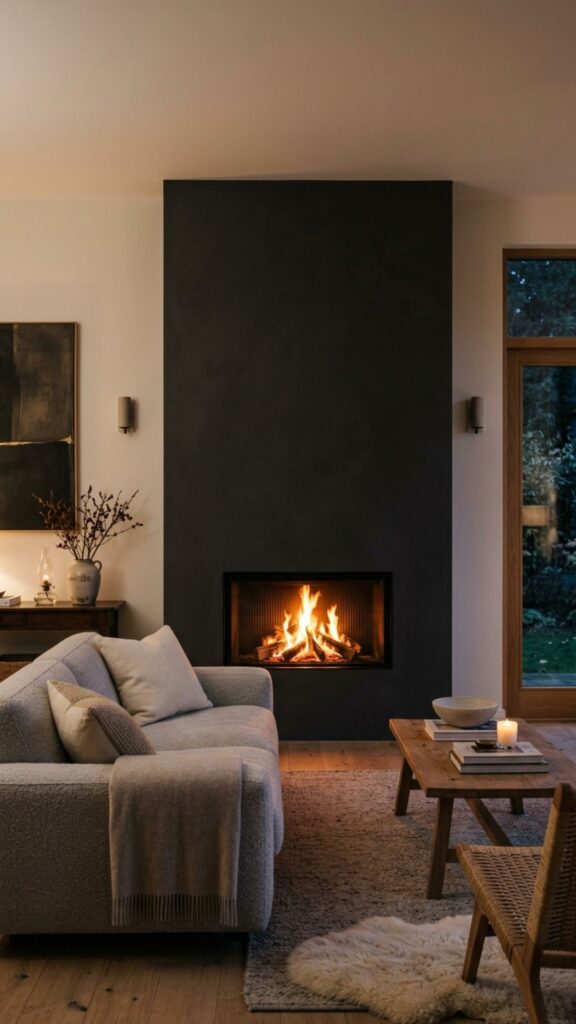
Painting or finishing your fireplace surround in exactly the same color as the surrounding wall creates a seamless, built-in effect. The fireplace becomes part of the wall rather than something placed against it, which suits modern interiors perfectly.
This approach works especially well with deep wall colors — charcoal, forest green, navy — where the tonal unity makes the space feel curated and considered. The flame then becomes the only element that stands out, which is exactly the effect you want.
12. Opt for a Peninsula Fireplace
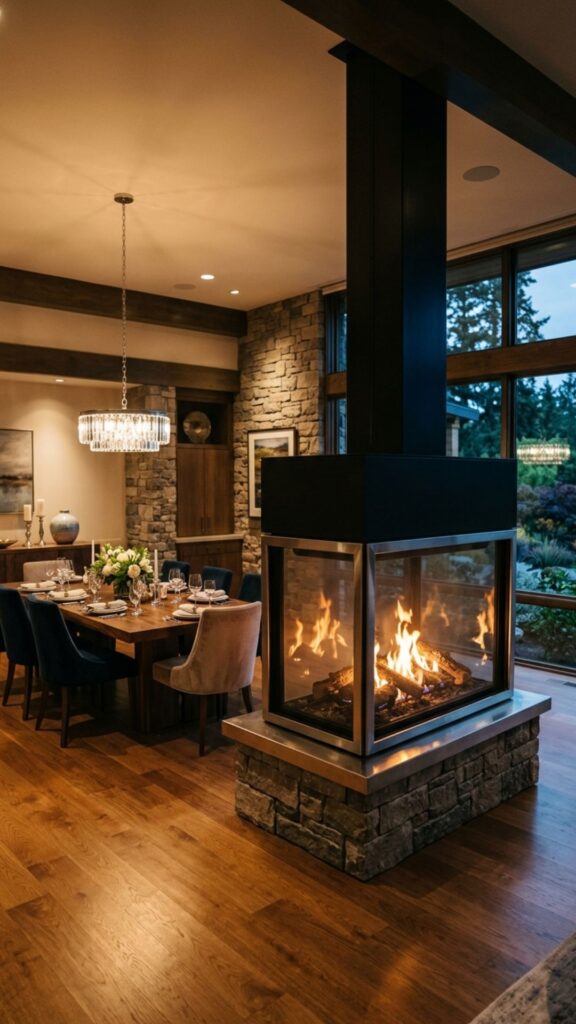
A peninsula fireplace projects from the wall into the room with three open sides, allowing the flame to be seen from multiple angles. It’s a bold, architectural choice that works well in larger dining rooms where the fireplace needs to command the space.
Look for designs with a slim chimney column rather than a bulky hood — this keeps the silhouette light and modern. A peninsula fireplace also works as a natural divider in open-plan layouts without blocking sightlines completely.
13. Install Under-Mantel Lighting
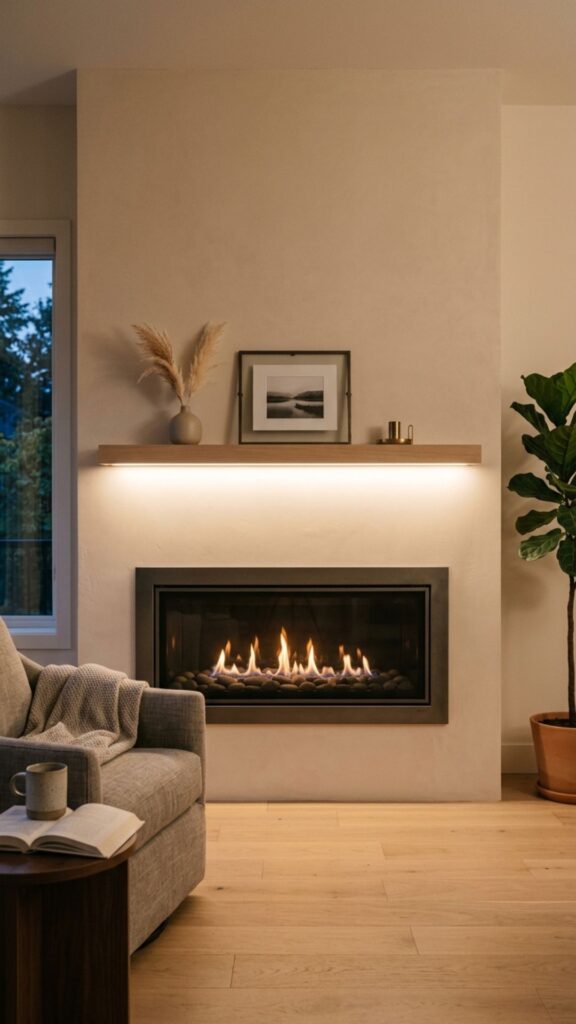
Recessed LED strip lighting installed beneath a mantel shelf or along the base of a fireplace surround adds a subtle glow that reinforces the warmth of the flame. This layered lighting approach is a design detail that distinguishes a well-thought-out room from a basic one.
Use warm white LEDs at a low color temperature (around 2700K) to keep the effect cozy rather than clinical. A dimmer control lets you adjust the intensity depending on the mood you’re after.
14. Use Concrete as the Primary Material
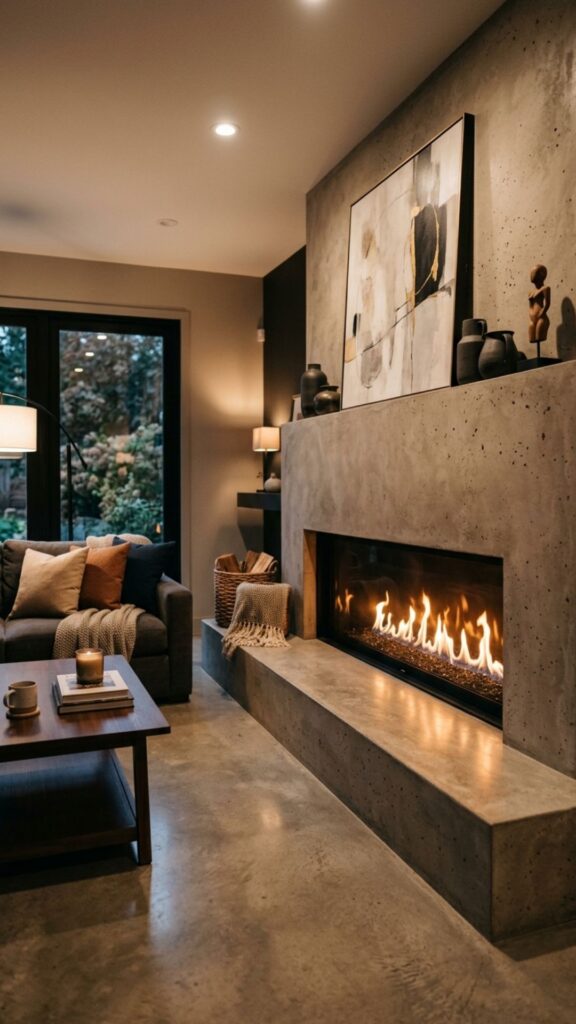
Polished or raw concrete surrounds and hearths have become a hallmark of modern fireplace design. Concrete is versatile, durable, and pairs effortlessly with the kind of neutral, restrained palettes that work in contemporary dining rooms.
A poured concrete firebox surround with a flat, wide hearth slab looks especially strong when combined with a linear gas or bioethanol insert. Keep surrounding finishes simple — concrete does its best work when it isn’t competing with busy patterns or textures.
15. Add a Slim Floating Shelf as a Mantel
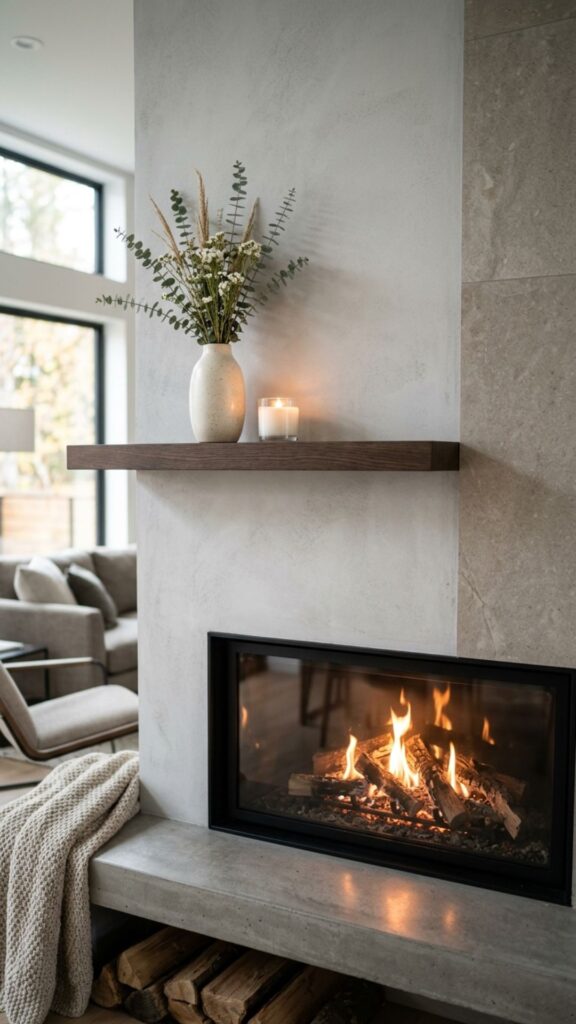
Instead of a traditional chunky mantelpiece, use a single slim floating shelf in wood, stone, or steel. This gives you a surface for a few curated objects without the visual weight of a full mantel surround.
A floating shelf about two inches thick positioned six to eight inches above the firebox opening strikes the right balance between function and restraint. Style it with one or two items only — a vase, a candle, or a small sculptural piece — and resist the urge to fill every inch.
16. Frame the Fireplace With a Backlit Niche
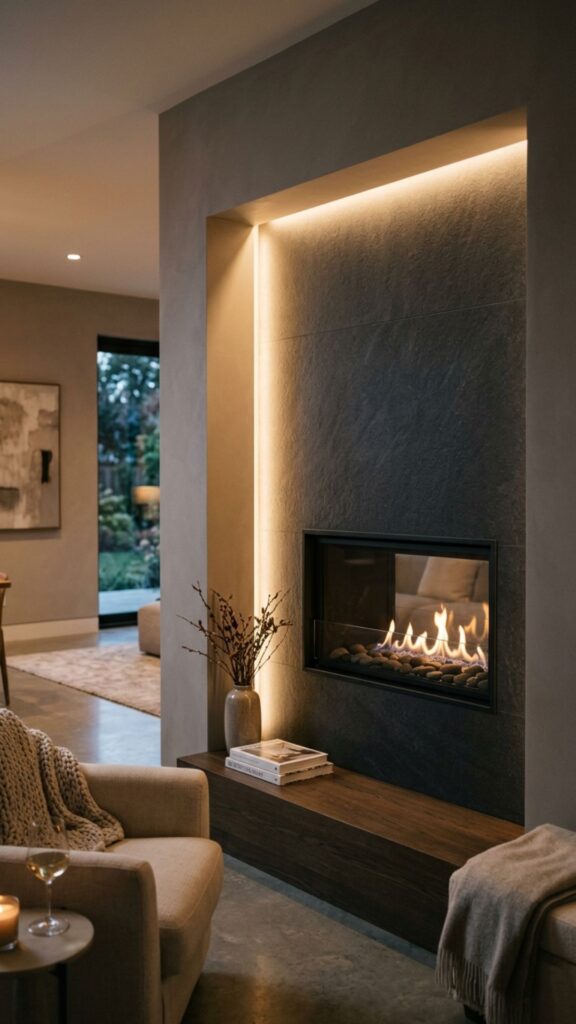
Setting your fireplace inside a backlit recessed niche — where LED lighting illuminates the surrounding wall from behind — creates a soft, glowing halo effect that enhances the fireplace’s presence in the room.
This works particularly well with wall-mounted electric or bioethanol fireplaces, which are thin enough to sit comfortably inside a shallow niche. Choose a warm amber backlight color to complement the flame tones rather than contrast against them.
17. Combine the Fireplace With a Built-In Bench
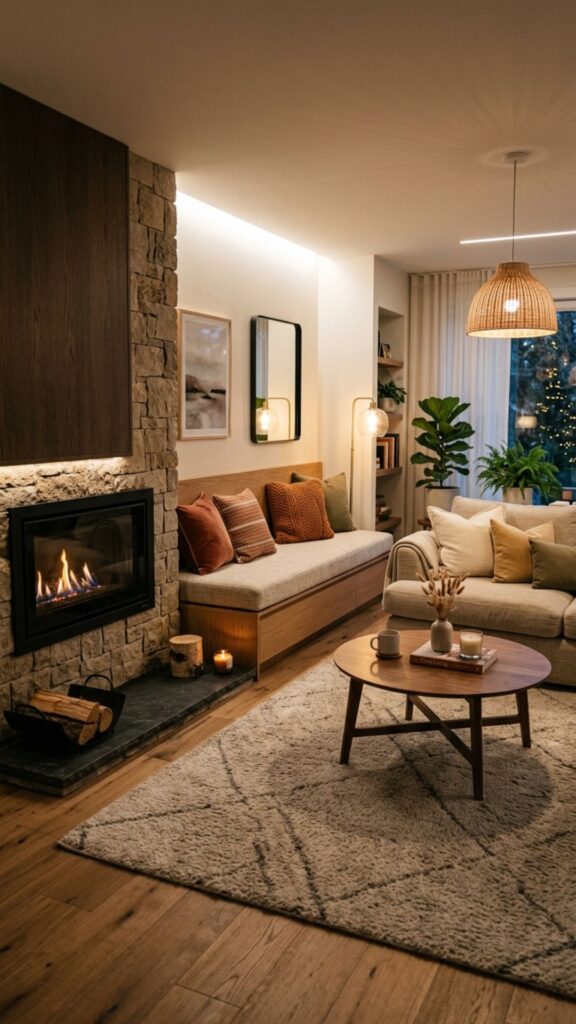
A low built-in bench along the hearth wall serves as occasional seating, a perch for candles or decorative objects, and an architectural device that ties the fireplace into the room’s overall layout.
Keep the bench the same height as a standard window sill — roughly 18 inches — so it doesn’t interrupt sightlines across the room. Upholster the seat pad in a durable, fire-safe fabric, or leave the bench surface in the same material as the hearth for a cleaner look.
18. Go Minimal With a Tunnel Fireplace
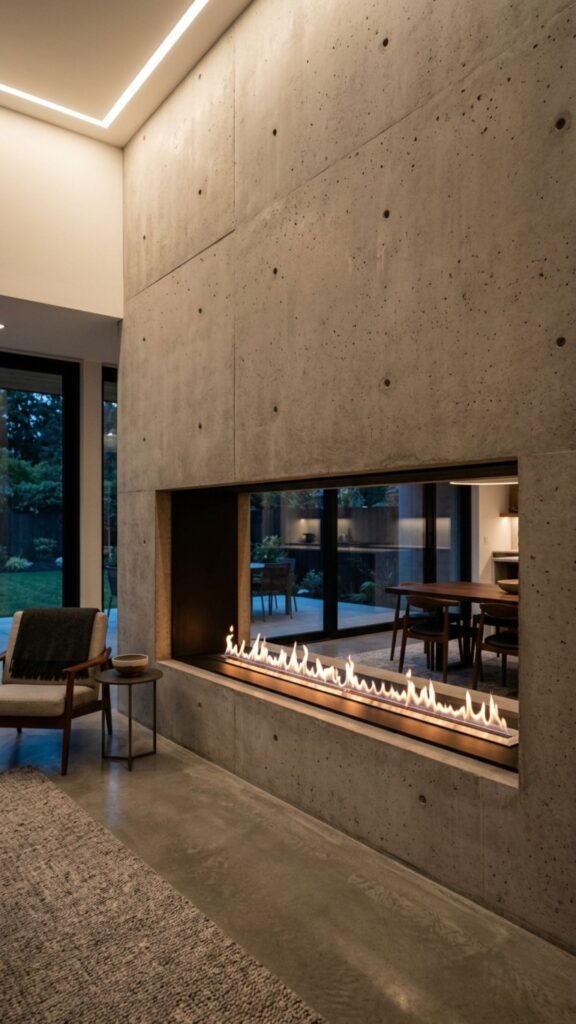
Tunnel fireplaces — also called pass-through fireplaces — are open at both ends and visible from two sides, but unlike double-sided designs, they run parallel to the wall rather than through it. The flame appears to float inside a horizontal void, which is one of the most visually arresting effects in modern fireplace design.
These work best when installed in a low, wide format with a seamless stone or concrete surround. The result is a sculptural element that looks as good when the fire isn’t lit as when it is.
19. Position the Fireplace on a Side Wall
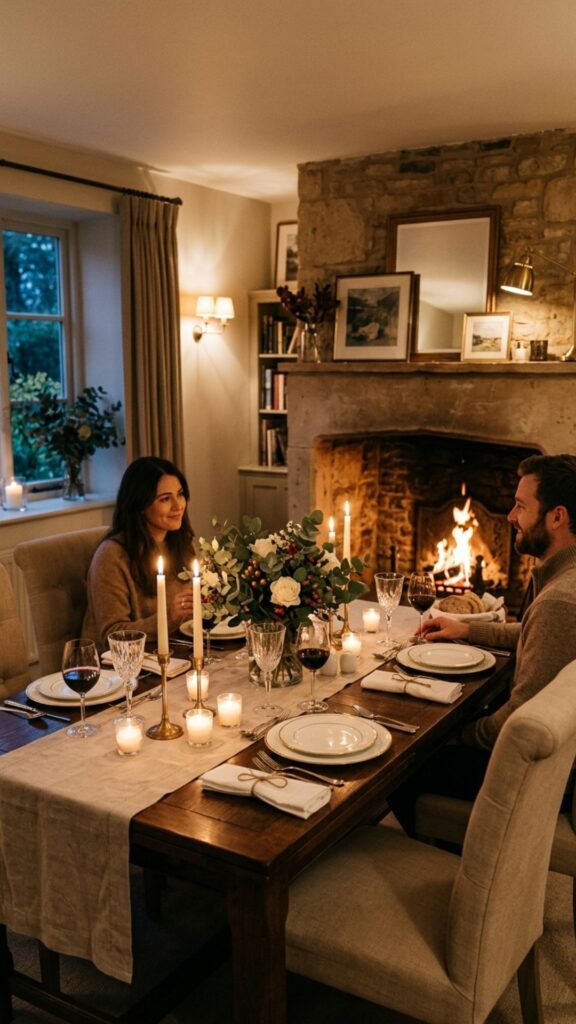
Rather than placing the fireplace directly behind the head of the dining table, consider positioning it on a side wall. This arrangement creates a more intimate, gathered feeling — diners sit facing each other with the fire warmly in their peripheral view rather than as a backdrop.
A side-wall placement also gives you more flexibility with table orientation and lets you treat the main wall differently — perhaps with artwork, a large mirror, or open shelving that balances the fireplace across the room.
20. Keep the Hearth Flush With the Floor
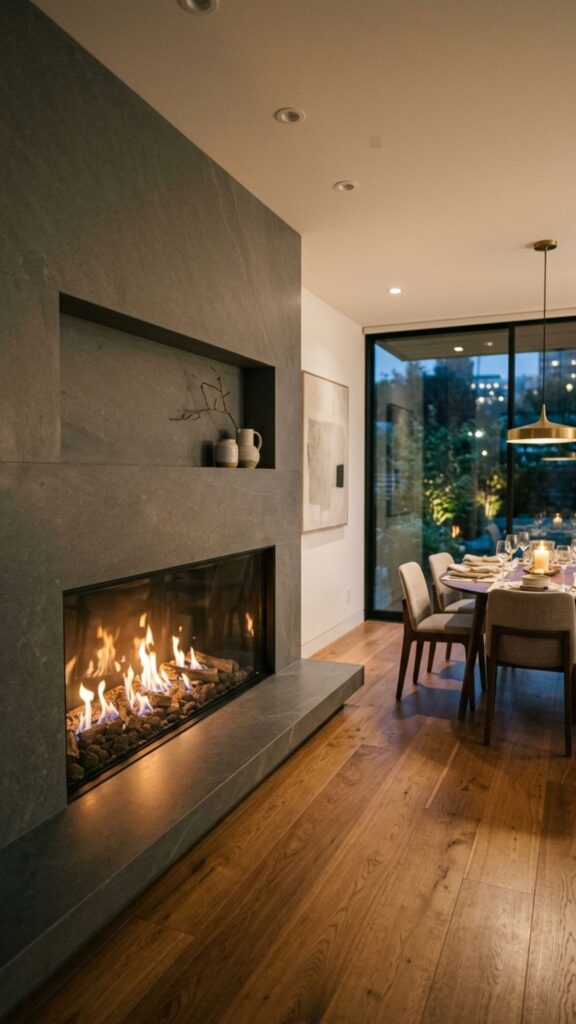
A raised hearth can feel traditional and heavy in a modern space. Opting for a flush hearth — where the firebox base meets the floor at the same level — gives the fireplace a sleeker, more integrated appearance.
Use the same flooring material as the rest of the room, or a complementary tile or stone that sits seamlessly at floor level. This small detail makes a meaningful difference to how modern and intentional the overall fireplace design feels.
Bring It All Together: Your Next Step
The best dining room fireplace ideas don’t just add warmth — they define how the whole room feels. Whether you go for a dramatic built-in statement or a flexible bioethanol option you can move around, the key is choosing a design that fits your space, your lifestyle, and your budget.
Start by identifying what your room actually needs: a focal point, more warmth, better ambiance, or all three. Then pick two or three ideas from this list that align with your constraints — renting versus owning, new build versus renovation — and work from there. Small decisions, made thoughtfully, add up to a dining room that genuinely impresses.
If this guide helped you narrow things down, share it with someone planning a home refresh — and take the next step toward the dining room you’ve been picturing.
What is the best type of fireplace for a modern dining room?
For modern dining rooms, linear gas fireplaces and wall-mounted electric fireplaces are the most popular choices. Gas models offer a real flame with minimal visual clutter, while electric versions require no installation and suit renters or apartments. Bioethanol fireplaces are also widely used for their portability and clean burn.
Can I add a fireplace to a dining room without major renovation?
Yes. Wall-mounted electric fireplaces and freestanding bioethanol models require no structural changes and can be installed or placed without professional help. These are the most practical dining room fireplace ideas for spaces where renovation isn’t feasible.
How do I make a dining room fireplace look modern?
Focus on clean lines, minimal surrounds, and a flush or low-profile hearth. Choose materials like black steel, polished concrete, or large-format stone. Avoid ornate mantels, heavy surrounds, or traditional brick — and keep the styling on the mantel shelf simple and restrained.
Is a dining room fireplace safe?
Yes, when properly installed and maintained. Gas and electric fireplaces are designed with safety features like automatic shut-offs and cool-touch glass. Bioethanol fireplaces are clean-burning but should never be left unattended. Always follow manufacturer guidelines and, for gas models, have installation done by a licensed professional.
How far should a dining table be from a fireplace?
As a general guideline, keep at least 36 inches between the nearest chair and the fireplace opening. This gives enough clearance for comfort and safety while still allowing diners to enjoy the warmth and visual effect of the fire.