Living in an apartment often means getting creative with your space. You want a beautiful place to eat, host friends, and enjoy your morning coffee, but square footage might be tight. If you find yourself eating on the couch more often than you would like, it is time for a change.
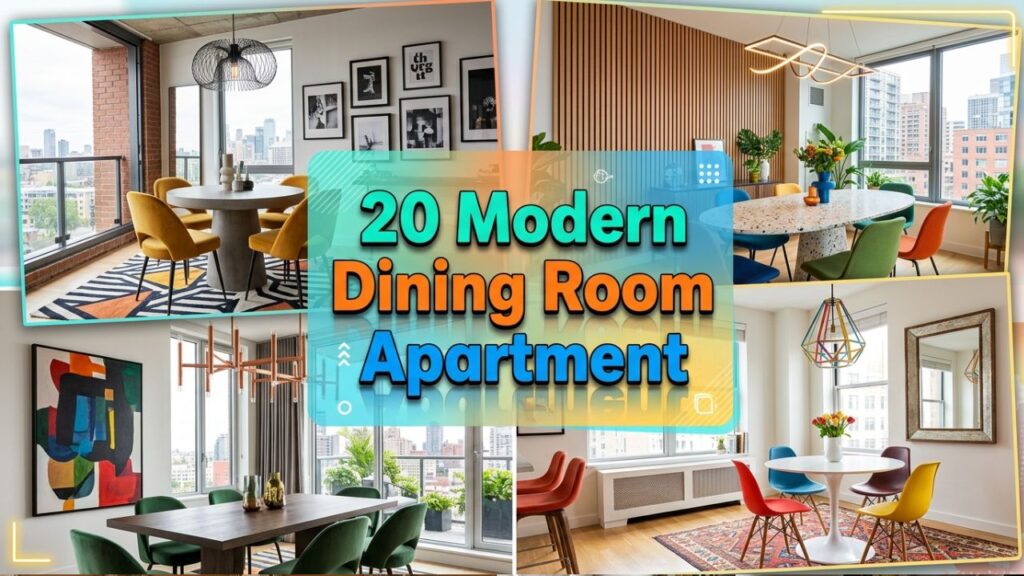
We know how challenging it can be to design a functional eating area when your living room, kitchen, and dining space all share one room. The good news is that you do not need a massive house to create a stunning dining space. With the right dining room apartment ideas, you can build an inviting, stylish area that works perfectly for your lifestyle.
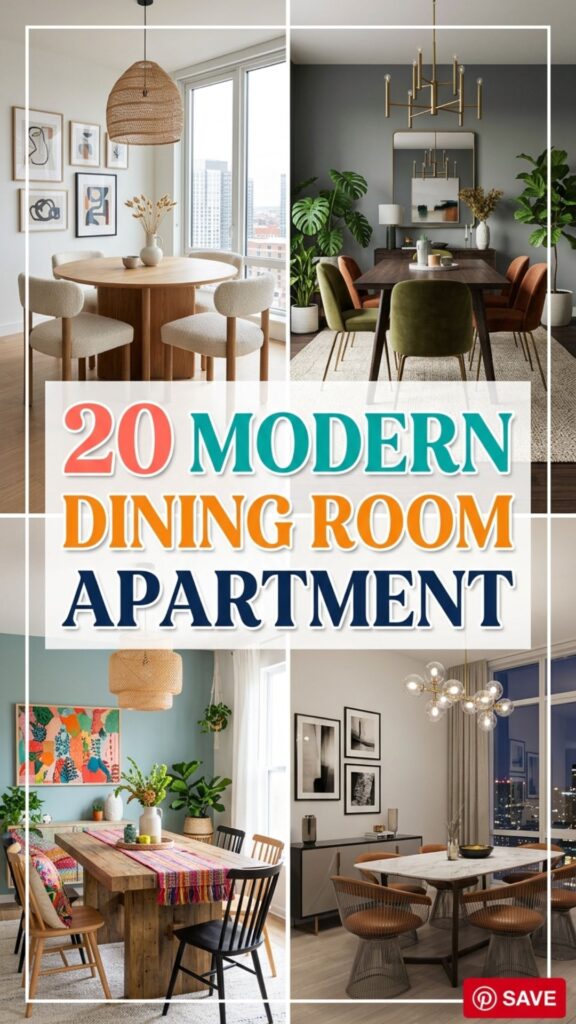
In this guide, you will learn how to maximize your floor plan, choose the right furniture, and use clever design tricks to elevate your home. Here are 20 modern designs to inspire your next apartment update.
1. Embrace the Classic Round Table
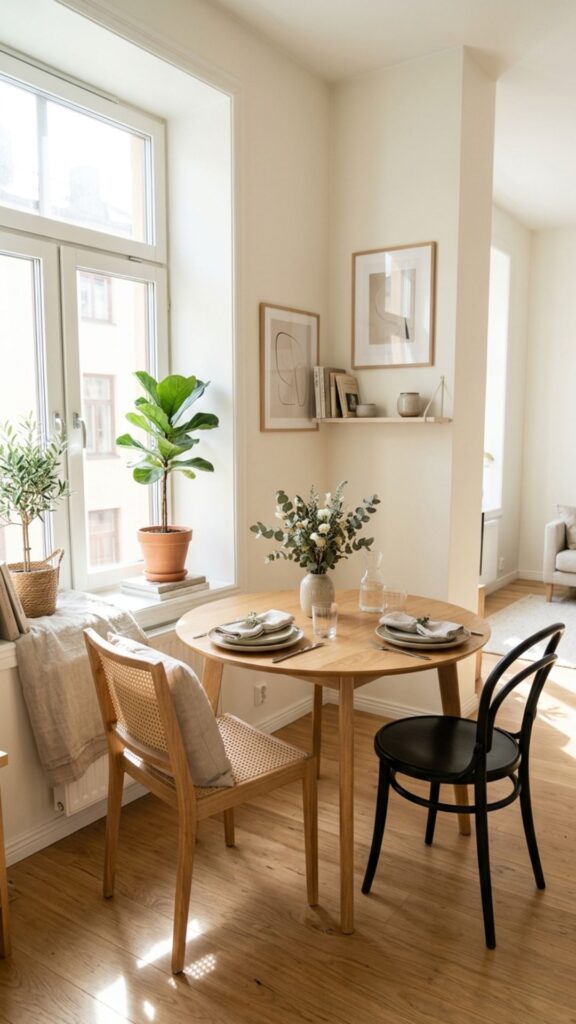
Round tables are a small apartment’s best friend. Without sharp corners, they allow better traffic flow and fit easily into awkward nooks or tight corners. You can easily squeeze in an extra chair when unexpected guests drop by for dinner.
To make this work, choose a pedestal base rather than four legs. A single center support gives you more legroom and makes the area feel less cluttered. Pair it with low-profile chairs to keep the visual weight light and airy.
2. Install a Built-In Banquette
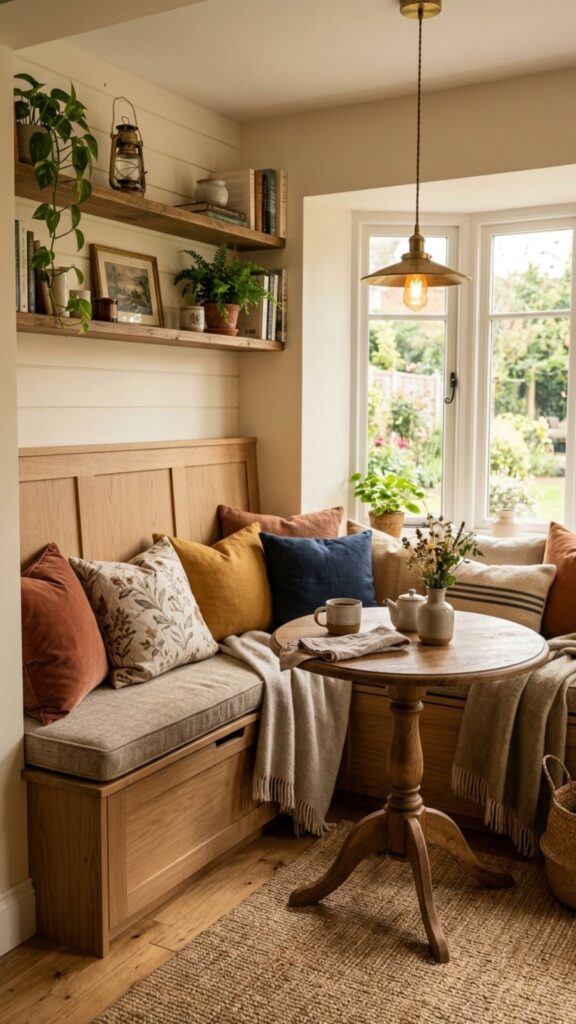
Banquette seating maximizes corners that usually go unused. By pushing seating directly against the wall, you open up valuable floor space in the center of the room. It also brings a cozy, restaurant-booth vibe right into your home.
You can take this a step further by choosing a bench with hidden storage underneath. This gives you a secret spot to keep extra table linens, rarely used kitchen gadgets, or bulky winter coats. Add a few throw pillows to make the setup comfortable and inviting.
3. Opt for Clear Acrylic Furniture
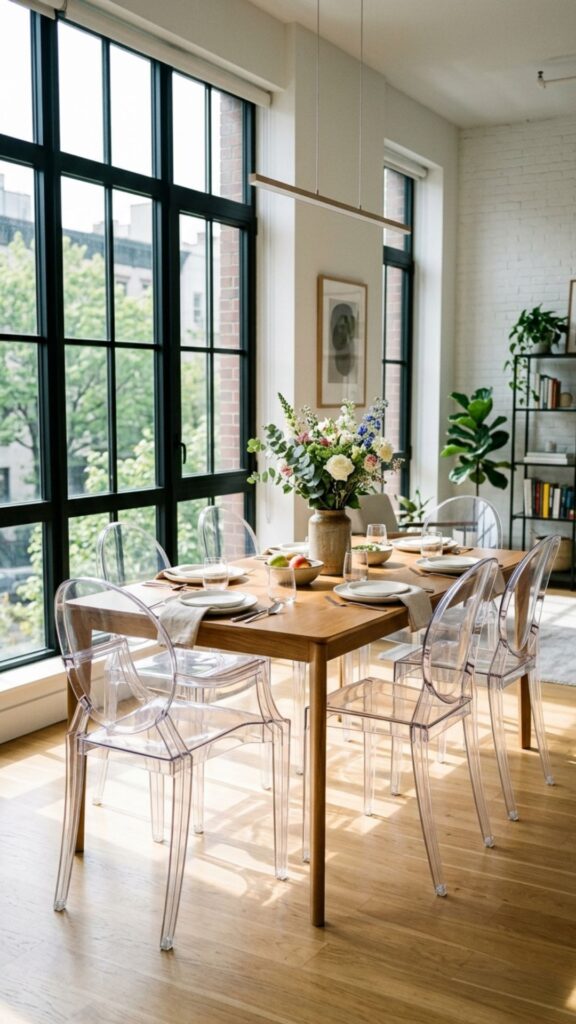
Visual clutter can make a small apartment feel cramped. Clear acrylic chairs, often called “ghost chairs,” provide functional seating without taking up any visual space. They trick the eye into thinking the room is much larger than it actually is.
These chairs pair beautifully with almost any table material, from rustic wood to sleek glass. Because they are transparent, they allow natural light to flow uninterrupted through your dining zone, keeping the space bright and open.
4. Define the Space with an Area Rug
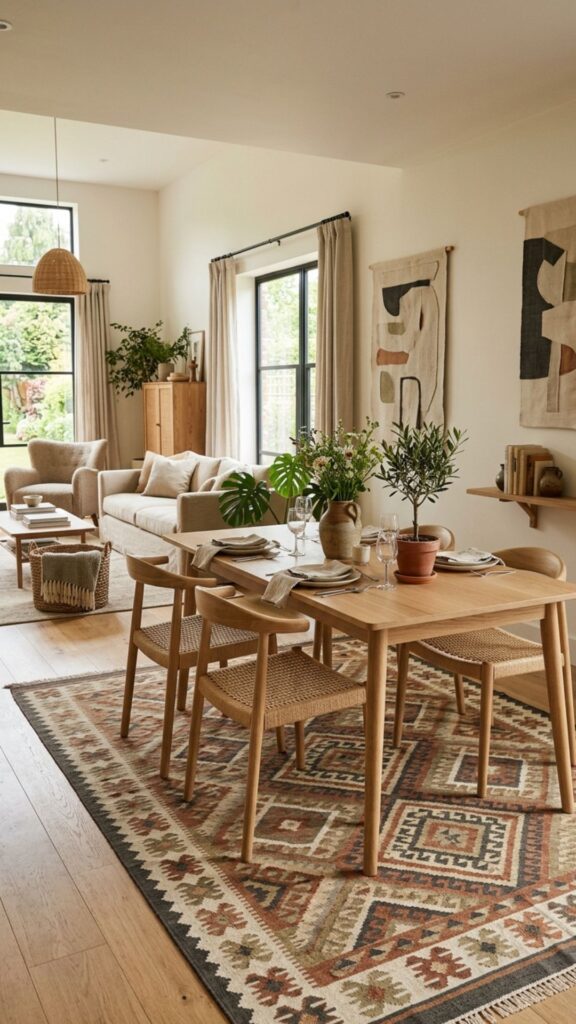
When you have an open-concept layout, you need to establish clear zones. An area rug acts as a visual boundary, grounding your dining furniture and separating it from the living room or kitchen. It instantly makes the dining area feel intentional.
Make sure the rug is large enough to hold all the chair legs, even when pulled out. A flat-weave or low-pile rug is usually the best choice, as it makes sliding chairs easy and allows for quick cleanup after accidental spills.
5. Hang a Statement Light Fixture
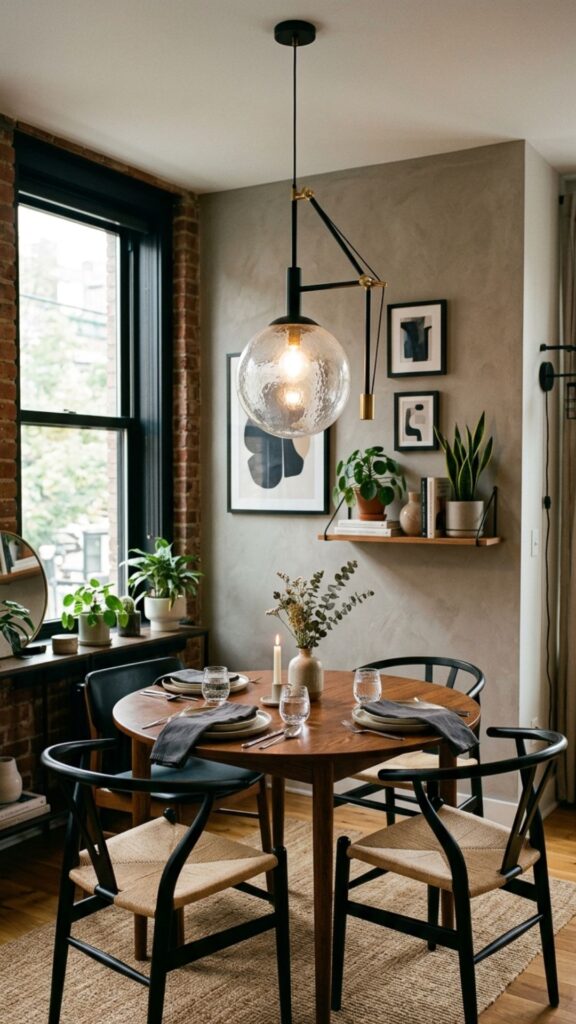
Lighting does more than just brighten a room; it acts as an anchor for your dining space. Hanging a striking pendant light or modern chandelier directly above your table instantly designates that specific area for dining.
If your apartment does not have hardwiring in the right spot, do not worry. You can use a plug-in pendant light with an extra-long cord and an elegant ceiling hook. Swag the cord over the table for a chic, industrial look that requires no electrical work.
6. Invest in an Extendable Table
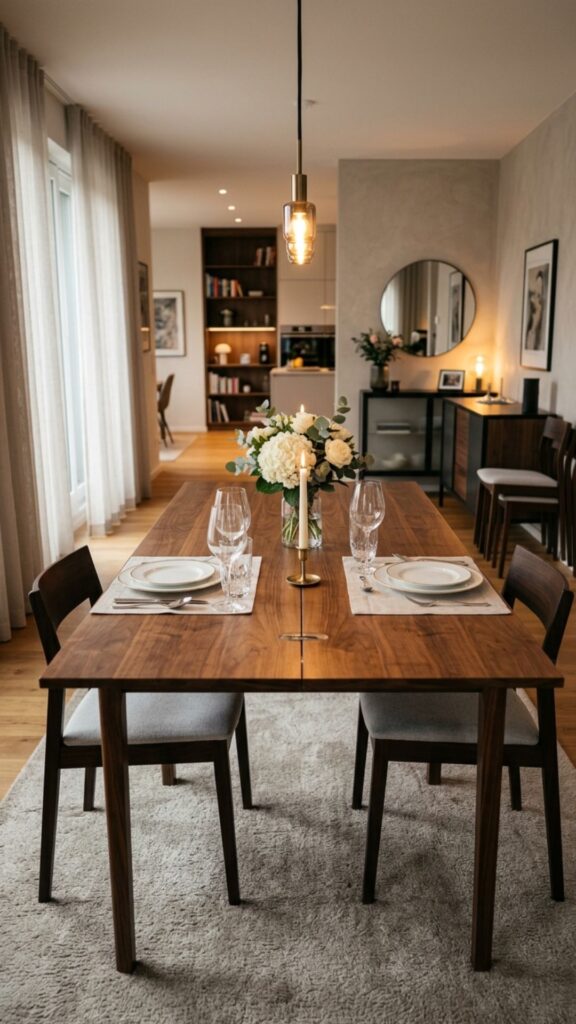
Flexibility is crucial when decorating an apartment. An extendable table stays compact for your everyday meals but expands quickly when you want to host a dinner party. It gives you the best of both worlds without permanently sacrificing floor space.
Look for a table with a butterfly leaf that stores inside the table itself. This prevents you from having to find closet space for a heavy, awkward table extension. Keep a few folding chairs stashed away to accommodate the extra seating.
7. Create a Window Nook
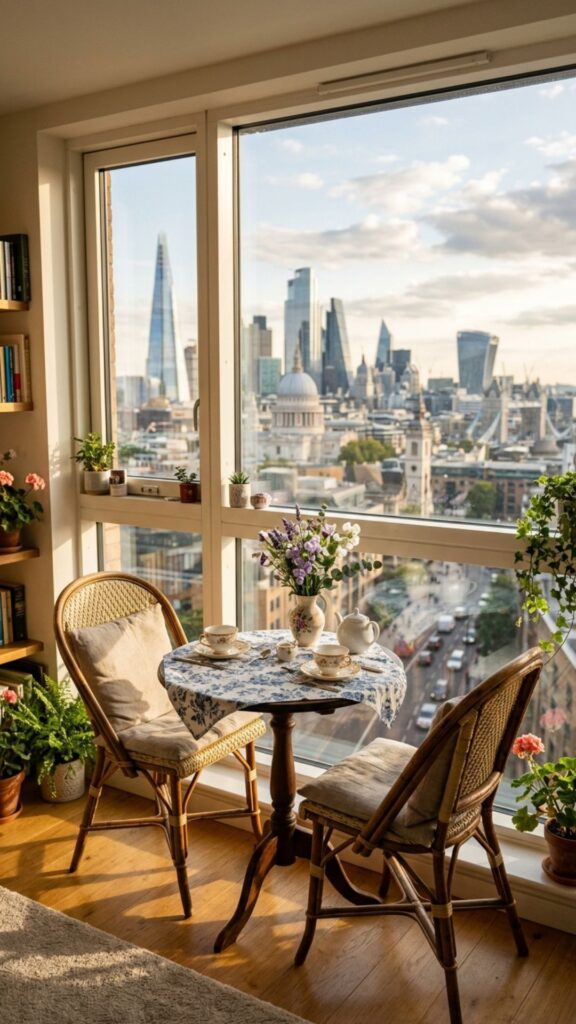
If you are lucky enough to have a large window, use it to your advantage. Setting up your dining area right next to the window provides beautiful natural light for daytime meals. It also offers a great view that makes the space feel expansive.
A small bistro table and two chairs fit perfectly into most window alcoves. This setup works exceptionally well for morning coffee or casual weeknight dinners, giving your apartment the feel of a trendy sidewalk cafe.
8. Utilize a Kitchen Island
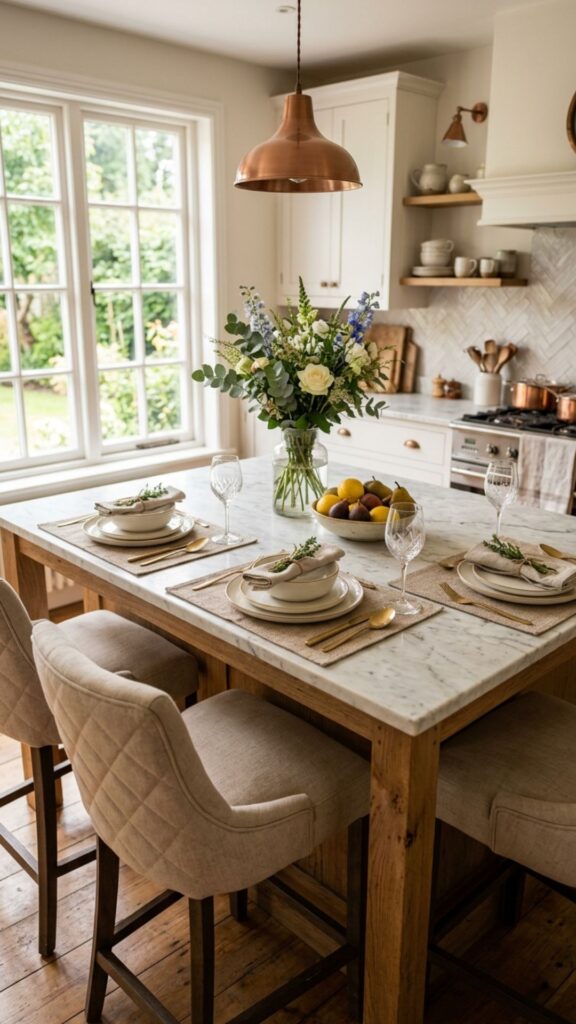
Many modern apartments feature a kitchen island, which can easily double as your main dining space. Instead of buying a separate table, focus on upgrading your island seating. This keeps your floor plan wide open and reduces furniture costs.
Choose comfortable, supportive bar stools that encourage lingering. Look for options with padded seats and footrests. You can set the island with placemats, cloth napkins, and a small centerpiece to make it feel like a true dining destination.
9. Hang a Large Mirror
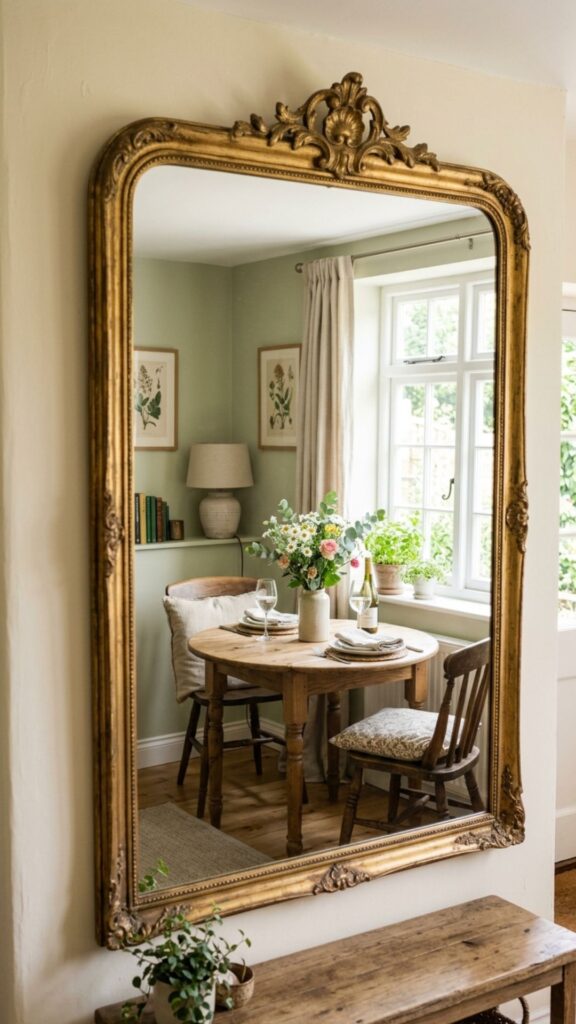
Mirrors are the oldest trick in the interior design book for a reason. By reflecting both light and the room itself, a large mirror instantly doubles the perceived size of your dining area. It makes tight walls feel far less restrictive.
Position the mirror on the wall closest to your dining table, ideally facing a window. A sleek, modern frame or a frameless design works best to maintain a clean, contemporary aesthetic that does not overwhelm the wall.
10. Bring in Natural Elements
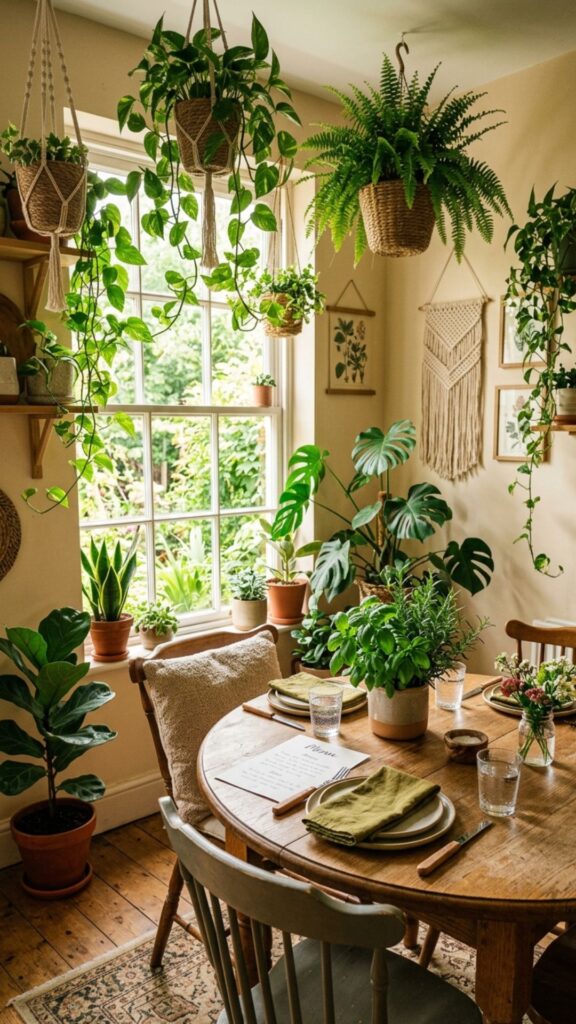
Adding plants to your dining area breathes life into a sterile apartment. Greenery softens harsh architectural lines and adds a pop of vibrant color. It makes the eating area feel fresh, welcoming, and relaxed.
If floor space is limited, try a hanging planter or place a low-maintenance pothos plant on a floating shelf. You can also use a small, rotating collection of fresh herbs as a functional and fragrant table centerpiece.
11. Choose a Drop-Leaf Table
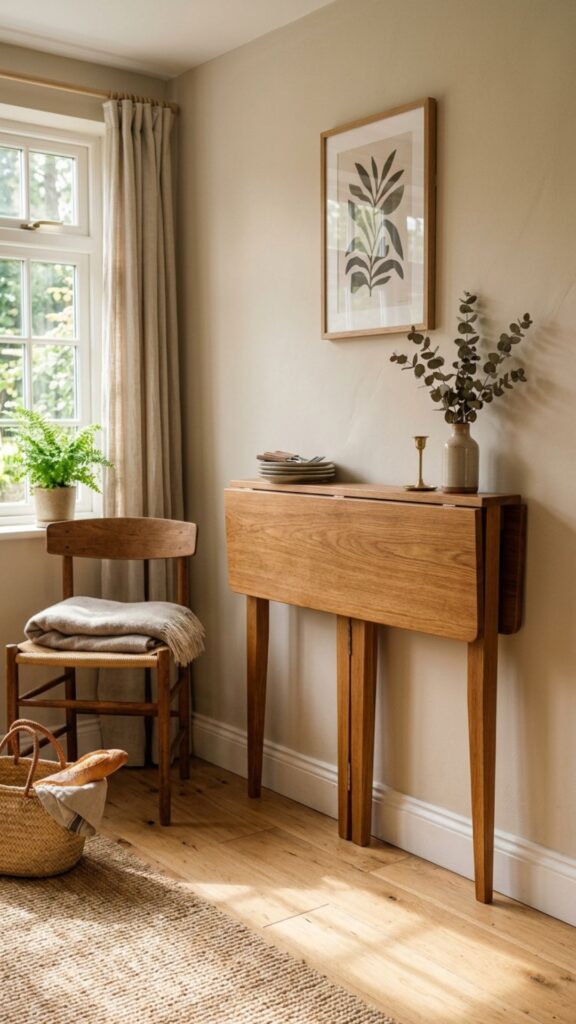
Drop-leaf tables are perfect for incredibly narrow spaces. When not in use, you can fold one or both sides down and push the table flush against a wall. It transforms into a slim console table in seconds.
When it is time to eat, simply pull it out and lift the leaves. This is a highly practical solution for studio apartments or layouts where your entryway and dining room share the same small footprint.
12. Try a Monochromatic Color Scheme
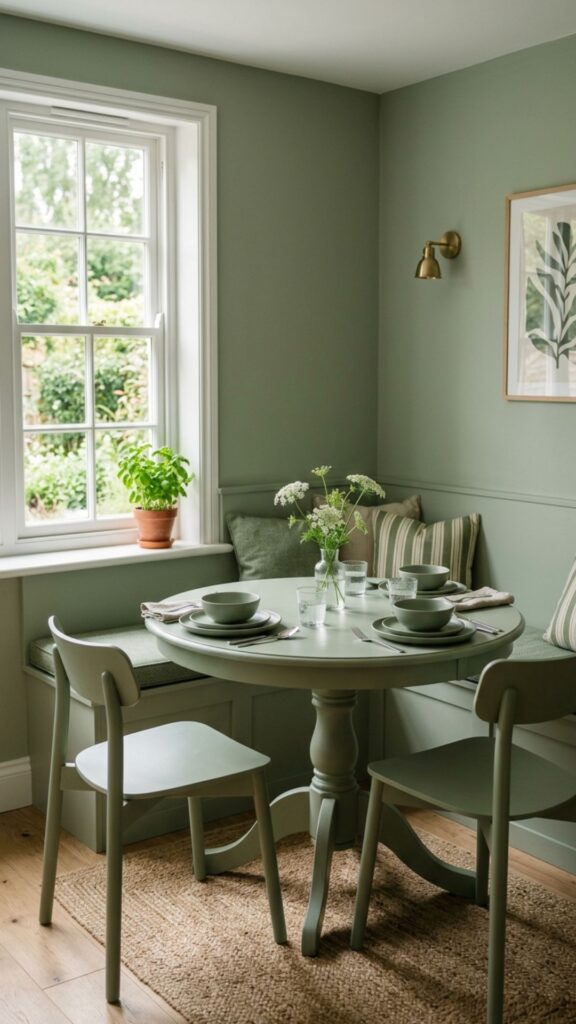
Using a single color palette for your dining furniture and surrounding walls creates a seamless look. Monochromatic design reduces visual interruptions, making the dining zone feel like a natural, integrated part of the apartment.
You do not have to stick to just white or beige. A moody, dark blue or forest green can create a highly sophisticated, intimate dining experience. Just ensure you use various textures to keep the single-color look from feeling flat.
13. Mount a Floating Desk or Table
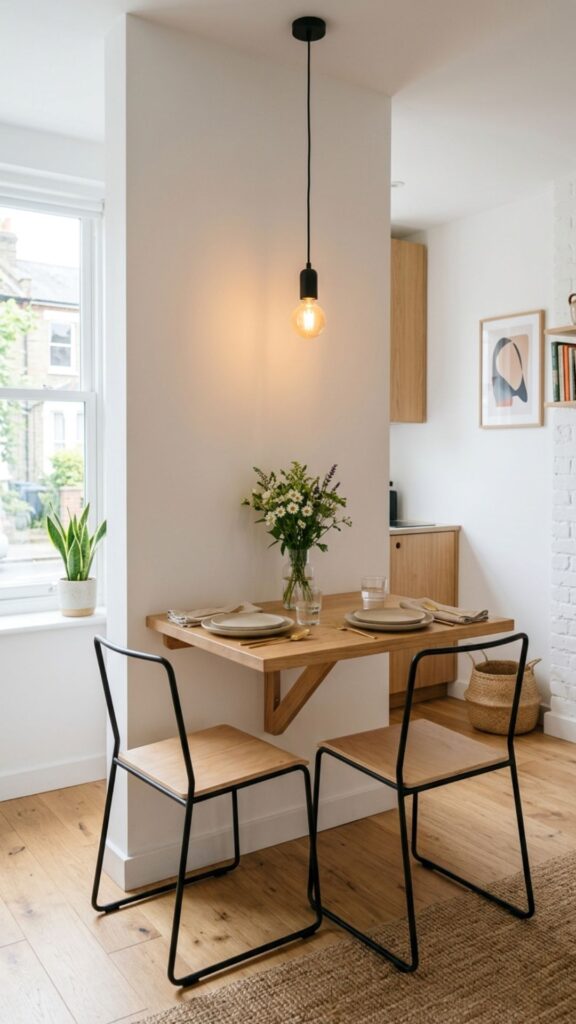
When square footage is at an absolute premium, look to your walls. A wall-mounted, floating table provides a sturdy surface for eating without taking up any floor space with bulky legs. It offers a clean, ultra-modern look.
Some floating tables even fold flat against the wall when you finish eating. Pair this setup with lightweight stacking chairs that you can easily move to another room or hide in a closet when you need more walking room.
14. Add a Bar Cart for Side Storage
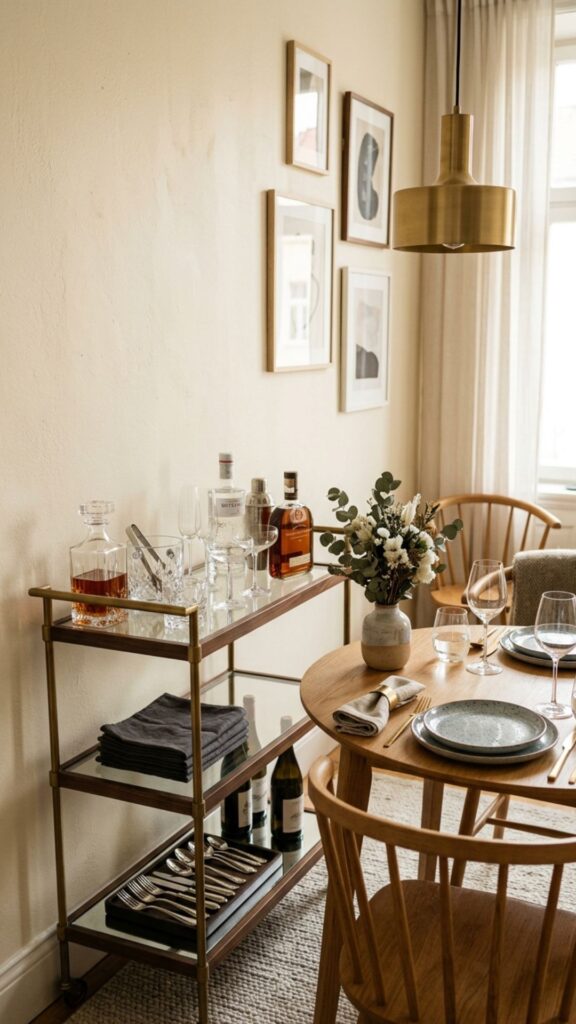
A small dining table rarely has room for serving dishes or extra drinks. A narrow bar cart positioned near the table provides essential secondary storage. It holds your wine glasses, napkins, and salt shakers, keeping your main table clear.
Bar carts on wheels offer ultimate flexibility. You can roll it into the kitchen to load it up with dinner supplies, park it next to the table for the meal, and roll it out of the way when the night is over.
15. Create an Accent Wall
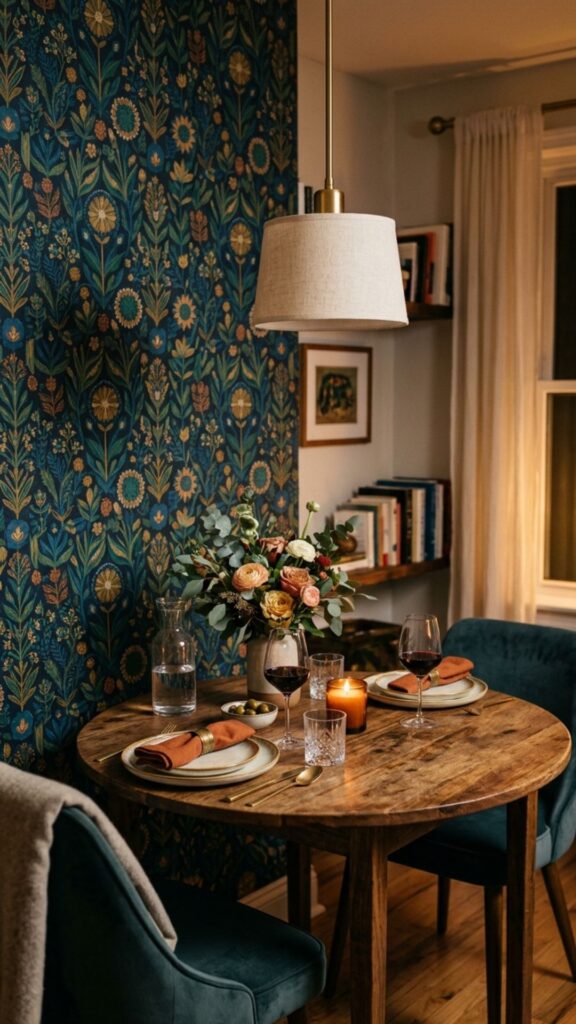
If you cannot use a rug or lighting to define your space, paint can do the trick. Painting just the wall behind your dining table a different color immediately carves out a specific zone. It gives the area its own distinct personality.
If your landlord does not allow painting, try peel-and-stick wallpaper. A bold geometric pattern or a subtle textured linen look provides a great backdrop for your meals and removes easily when your lease ends.
16. Opt for Bench Seating
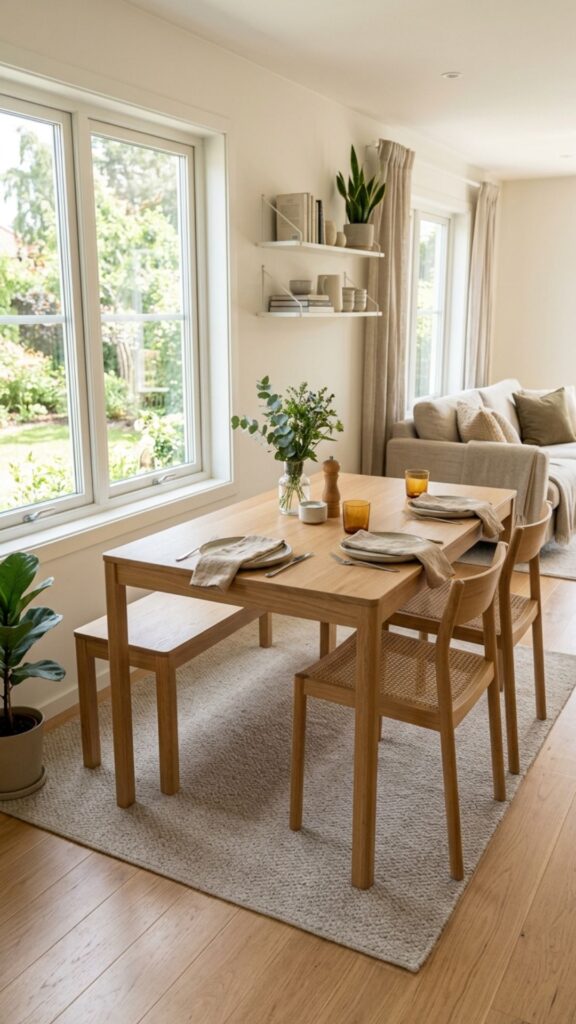
Chairs take up a surprising amount of room because they need space to pull out and push in. A dining bench offers a streamlined alternative. You can seat multiple people on one side without the visual clutter of multiple chair backs.
When the meal is over, a backless bench tucks completely under the table, freeing up your walkway. This makes it a highly efficient choice for dining areas located in high-traffic apartment hallways or tight galley kitchens.
17. Use Dual-Purpose Furniture
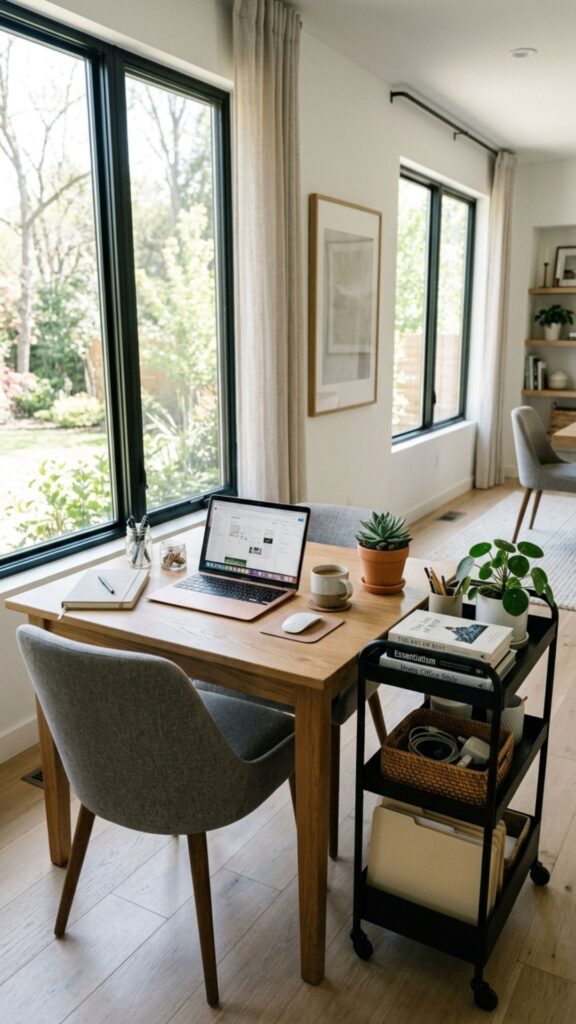
In a small apartment, every piece of furniture should earn its keep by doing two jobs. A dining table can easily double as your home office desk during the day. This prevents you from needing to cram a separate desk into your bedroom.
To make this transition smooth, keep a rolling storage cart nearby for your work supplies. When 5:00 PM rolls around, pack away your laptop, roll the cart out of sight, and set the table for a relaxing dinner.
18. Keep the Profile Low
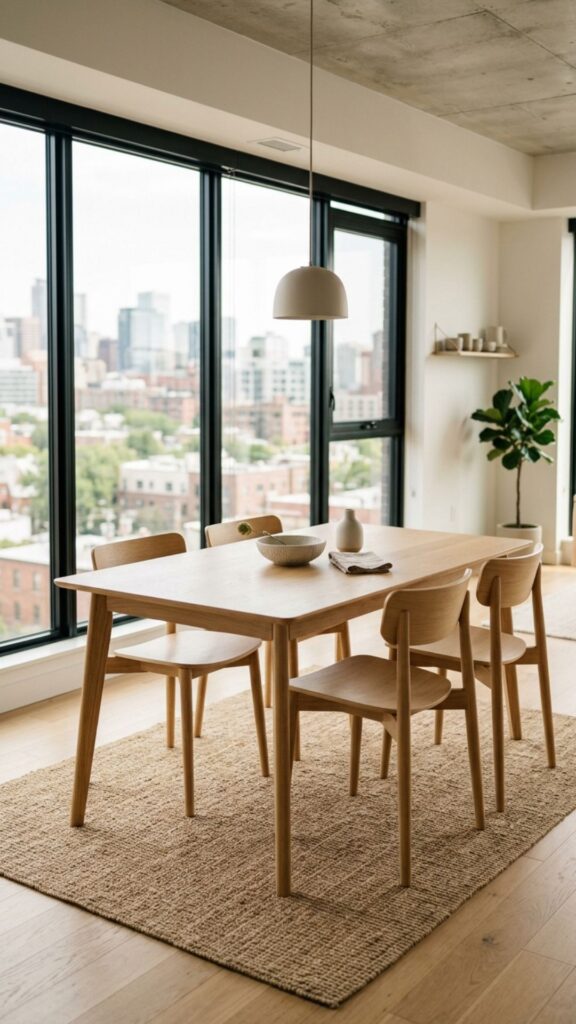
Tall, bulky furniture can overwhelm a modest apartment. Choosing tables and chairs with a low profile keeps the sightlines across your room open. This makes the ceiling feel taller and the room feel grander.
Mid-century modern furniture is excellent for this approach. The tapered legs and slim designs offer plenty of support without the heavy, blocky appearance of traditional dining sets.
19. Install Floating Shelves
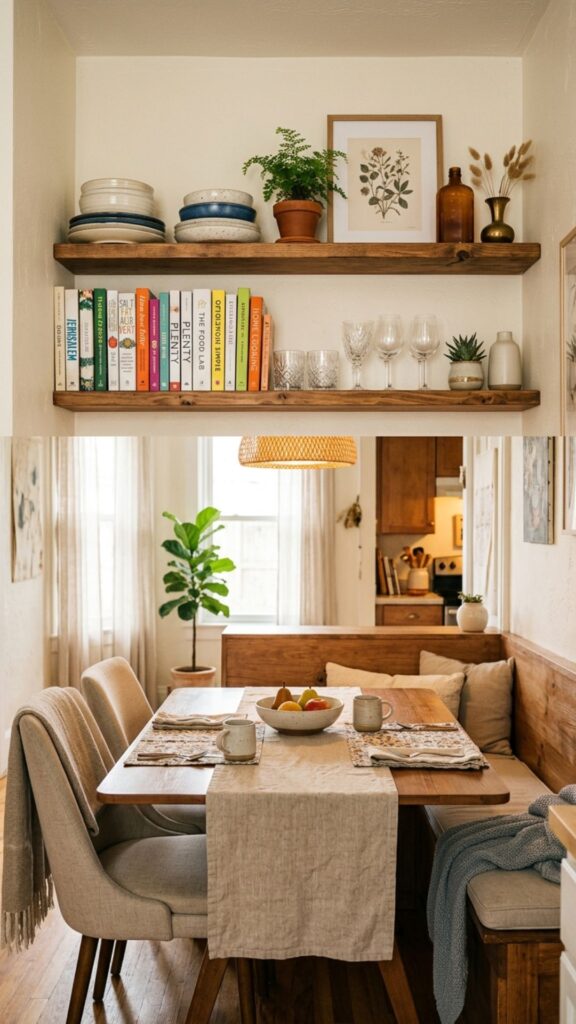
You need a place to store plates and glasses, but a traditional china cabinet will consume too much space. Floating shelves offer vertical storage that looks modern and keeps your floor entirely clear.
Display your most attractive dishes, a few cookbooks, and some decorative glassware. This approach turns your everyday kitchen items into functional dining room decor, saving cabinet space in your kitchen.
20. Embrace Asymmetry
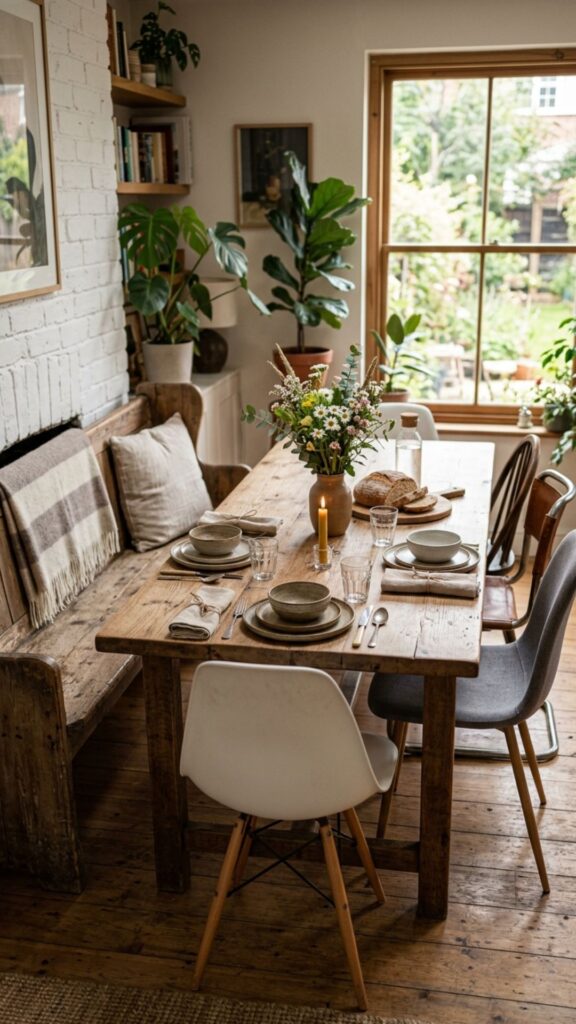
You do not need a perfectly matched dining set to have a stylish apartment. Mixing and matching different styles of chairs around a simple table adds character and a relaxed, eclectic vibe.
Try pairing a rustic wooden bench on one side with two modern metal chairs on the other. This mix-and-match approach is also budget-friendly, as you can easily hunt for affordable single chairs at vintage shops or online marketplaces.
Conclusion
Creating a beautiful dining area in an apartment requires smart choices, not endless square footage. By using multi-functional furniture, clever visual tricks, and clearly defined zones, you can build a space that feels both stylish and practical. Whether you choose an extendable table for hosting or a sleek window nook for your morning coffee, these dining room apartment ideas will help you maximize your home.
Ready to transform your space? Start by measuring your available area today, pick your favorite layout from this list, and take the first step toward building the dining room you deserve.
How can I fit a dining table in a small apartment?
To fit a dining table in a small apartment, choose space-saving furniture like round tables, drop-leaf tables, or wall-mounted desks. Push your table against a wall or into an unused corner, and use benches or stools that tuck completely underneath when not in use.
What is the best shape for a small dining table?
A round table is generally the best shape for a small space. The lack of sharp corners improves traffic flow and allows you to fit more chairs around the perimeter when needed.
How do you separate a living room and dining room in an apartment?
You can separate an open-concept living and dining room by using visual anchors. Place a large area rug specifically under the dining table, hang a statement pendant light directly above the eating area, or use the back of your living room sofa as a physical divider between the two zones.