Sharing a bedroom means blending two personalities, two sleep styles, and two ideas of what “relaxing” actually looks like. It’s not always easy.

One person wants minimalist white walls, the other loves bold color and a pile of throw pillows. The good news? You can design a space that feels balanced, modern, and genuinely peaceful for both of you.

After years of helping couples rethink their shared spaces, I’ve learned that the best bedrooms aren’t about expensive furniture. They’re about smart choices that reduce stress and invite rest. Below you’ll find 20 practical ideas, from layout tricks to lighting tips, that turn an ordinary room into a retreat. Let’s get into it.
1. Start With a Calming Color Palette
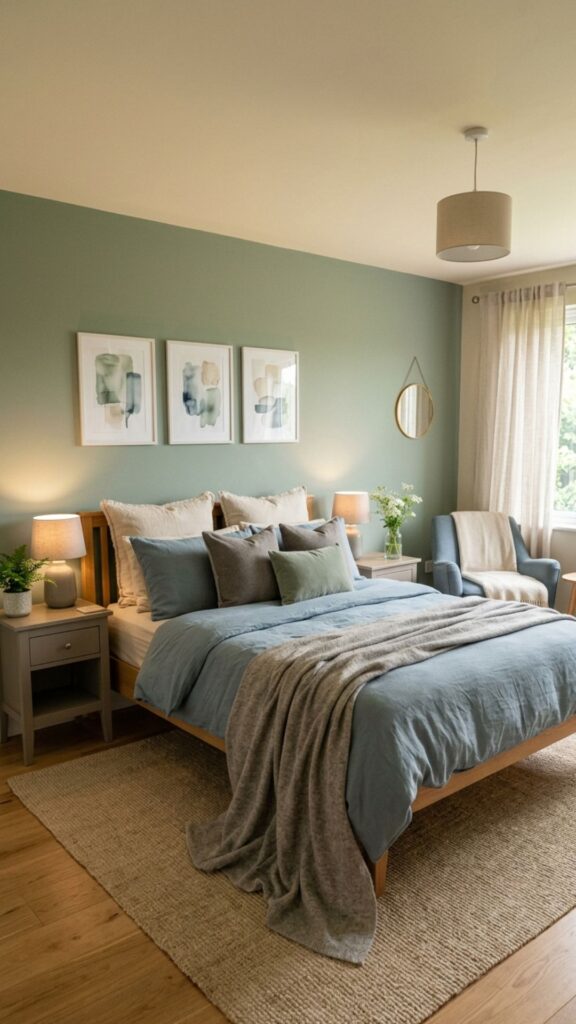
Color sets the mood before you even step inside. Soft, muted tones like warm grey, sage green, dusty blue, and creamy beige help your nervous system slow down. These shades work especially well in a bedroom for couples because they feel neutral enough to satisfy two sets of taste without anyone feeling overruled.
If one of you loves bolder color, use it in small doses. A deep navy accent wall behind the bed or a terracotta throw blanket adds personality without overwhelming the room. The trick is keeping 70% of the space calm and saving the drama for the details.
2. Invest in a Quality Mattress You Both Love
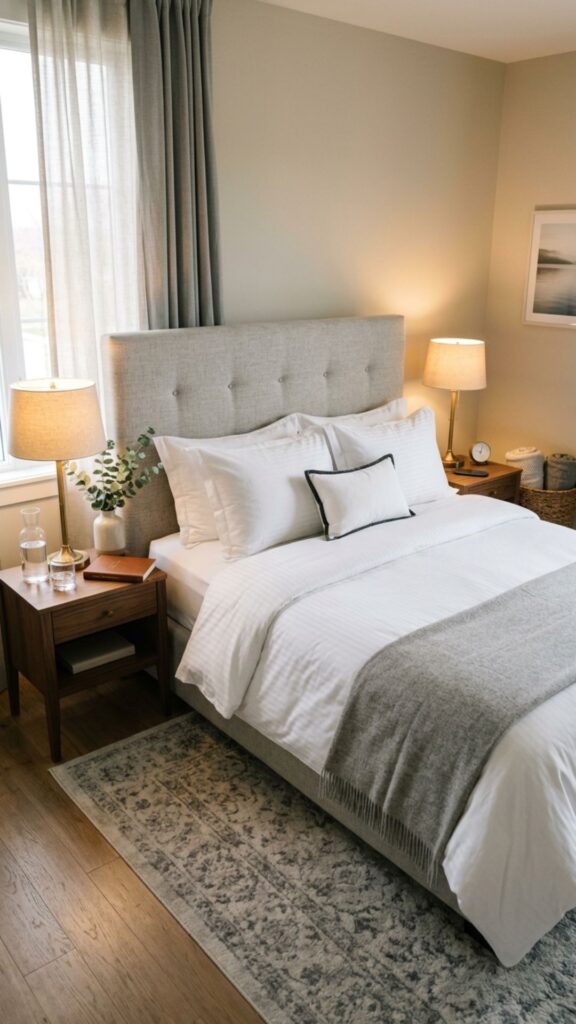
Nothing matters more for shared sleep than the mattress. Couples often have different needs, so look for a medium-firm hybrid or a mattress with motion isolation. This stops one person’s tossing and turning from waking the other.
If you can’t agree, split-firmness or “dual comfort” mattresses let each side feel different. It sounds like a small thing, but better sleep improves moods, patience, and the relationship itself. Test mattresses together in person whenever possible.
3. Create Symmetry With Matching Nightstands
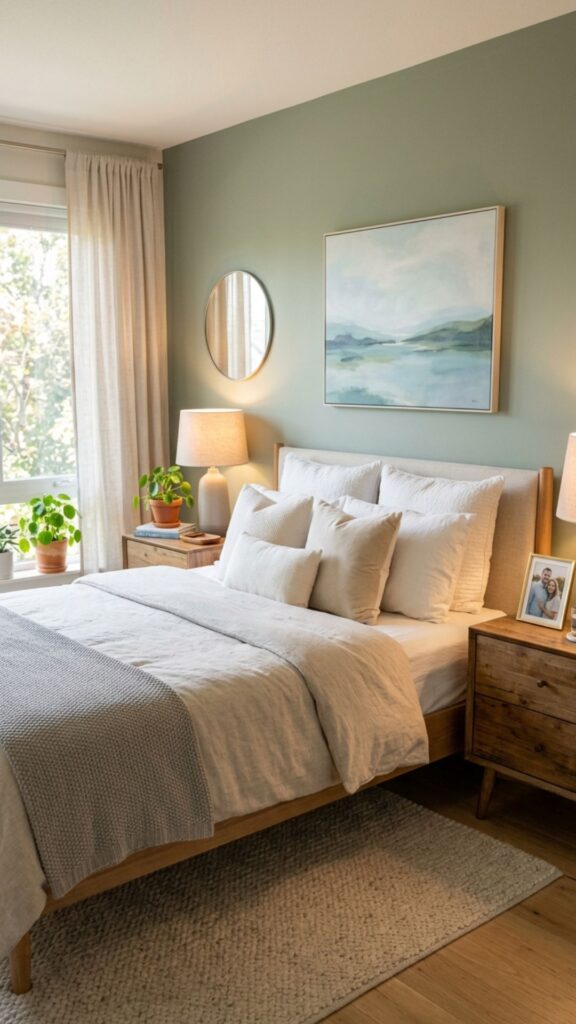
Symmetry signals balance, and balance feels calming. Place a nightstand on each side of the bed so both partners have their own spot for a lamp, book, or glass of water. This simple move prevents the “whose side is whose” tension that creeps into shared rooms.
The nightstands don’t have to be identical. Choose two that share a similar height and finish but differ slightly in style. This keeps the look modern and personal rather than overly matched.
4. Layer Your Lighting for Every Mood
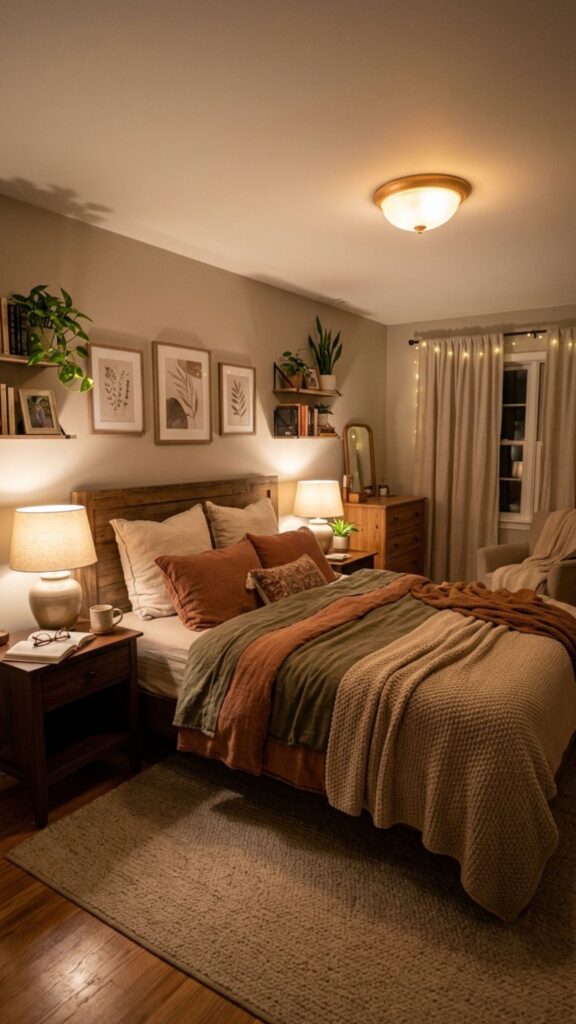
A single overhead light rarely works for two people. One wants to read, the other wants to sleep. Layered lighting solves this. Combine a soft ceiling fixture, bedside lamps, and a dimmer switch so you can shift from bright to cozy in seconds.
Warm bulbs around 2700K feel relaxing, while dimmers let you control intensity. Add a small reading light on each side so one partner can stay up without flooding the whole room. Good lighting is one of the cheapest upgrades with the biggest impact.
5. Choose a Statement Headboard
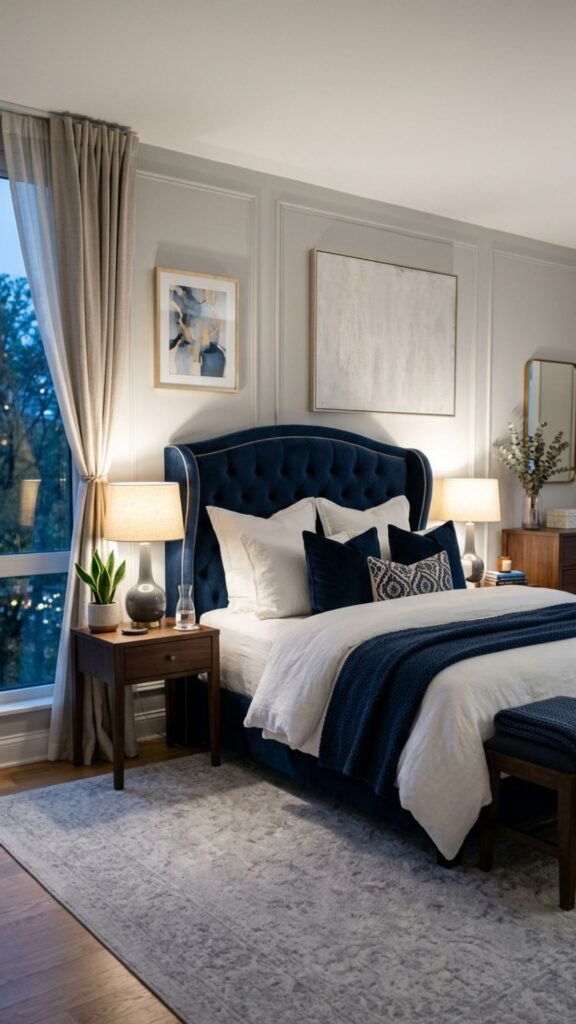
A headboard anchors the room and instantly makes the bed feel intentional. Upholstered fabric headboards add softness and texture, while wood or rattan brings warmth and a modern-organic vibe. Pick one that reflects both of your styles.
Beyond looks, a tall padded headboard is practical for couples who like to sit up and read or watch shows in bed. It’s comfortable, supportive, and ties the whole design together.
6. Maximize Storage to Cut the Clutter
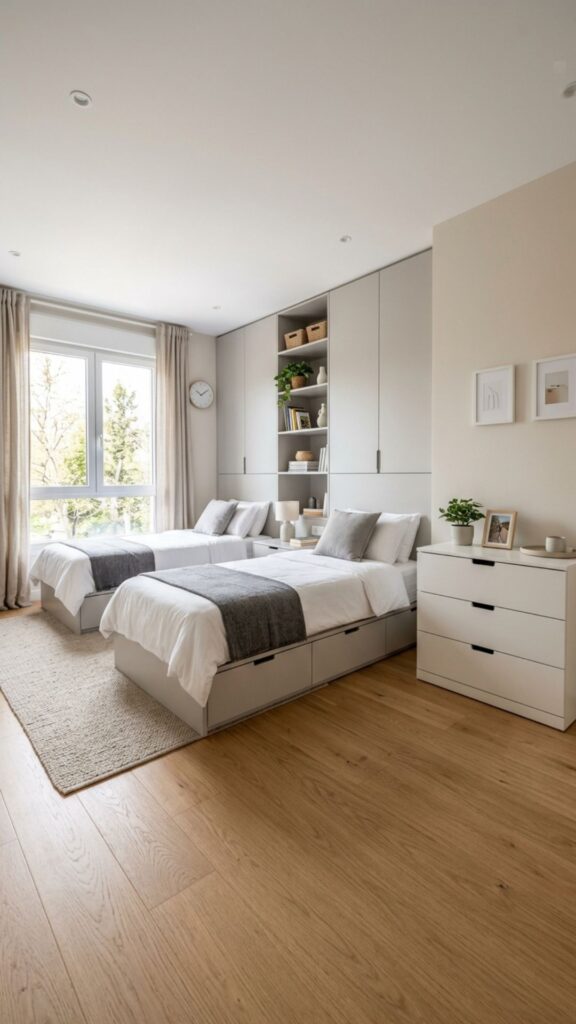
Clutter is the enemy of peace. When two people share a space, belongings double fast. Built-in wardrobes, under-bed storage drawers, and a shared dresser keep everything tidy and out of sight.
Aim to give each person a clearly defined zone. His-and-hers drawers or a divided closet prevent daily friction over space. A clean, organized bedroom for couples simply feels calmer the moment you walk in.
7. Add Soft Textures and Layered Bedding
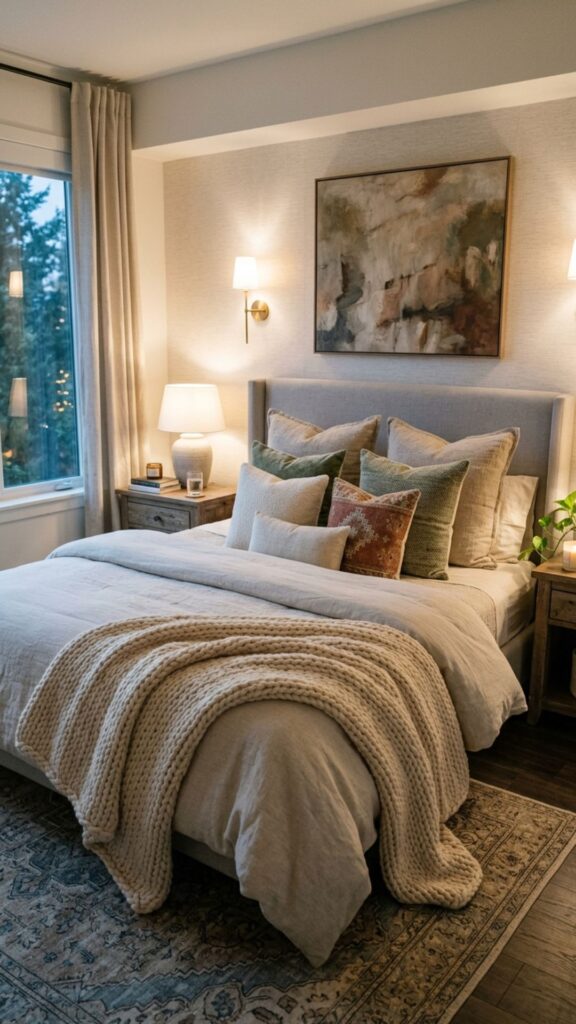
Texture invites you to relax. Mix a cozy duvet, a chunky knit throw, and pillows in different fabrics to make the bed look inviting and feel luxurious. Layering creates that hotel-style comfort everyone craves.
Stick to two or three coordinating colors so it looks curated, not chaotic. Natural materials like linen and cotton breathe well and stay comfortable across seasons, which matters when two body temperatures share one bed.
8. Keep Technology Out of the Bedroom
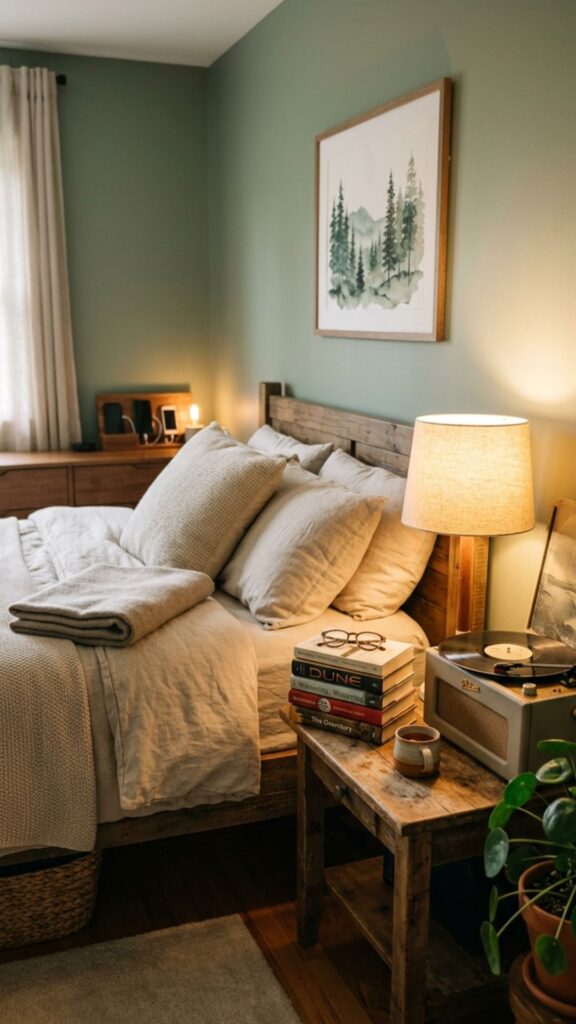
Screens steal sleep and connection. Designate the bedroom as a low-tech zone by skipping the TV or hiding it inside a cabinet. Charge phones away from the bed using a single station on a dresser.
This one change helps couples wind down together instead of scrolling separately. Replace screen time with a book, soft music, or simple conversation. Your sleep quality and your relationship both benefit.
9. Bring in Plants for Fresh, Calming Energy
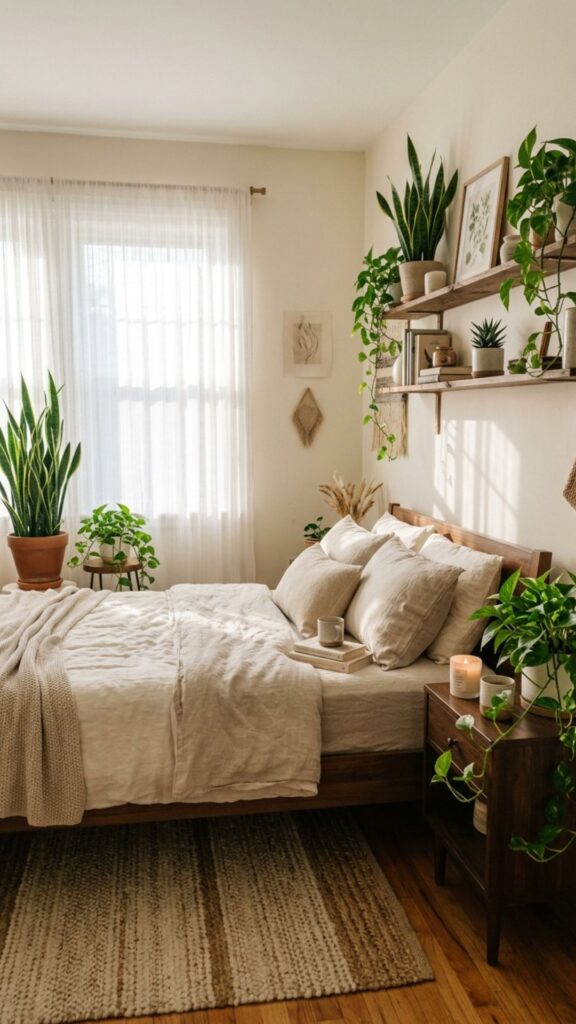
Greenery softens a room and improves air quality. Low-maintenance plants like snake plants, pothos, and peace lilies thrive in bedrooms and need little attention. They add life without demanding much from busy couples.
Place a plant on a nightstand, a shelf, or a corner stand to introduce natural texture. Studies link indoor plants to lower stress, making them a quietly powerful addition to a peaceful bedroom.
10. Use a Cozy Area Rug Underfoot
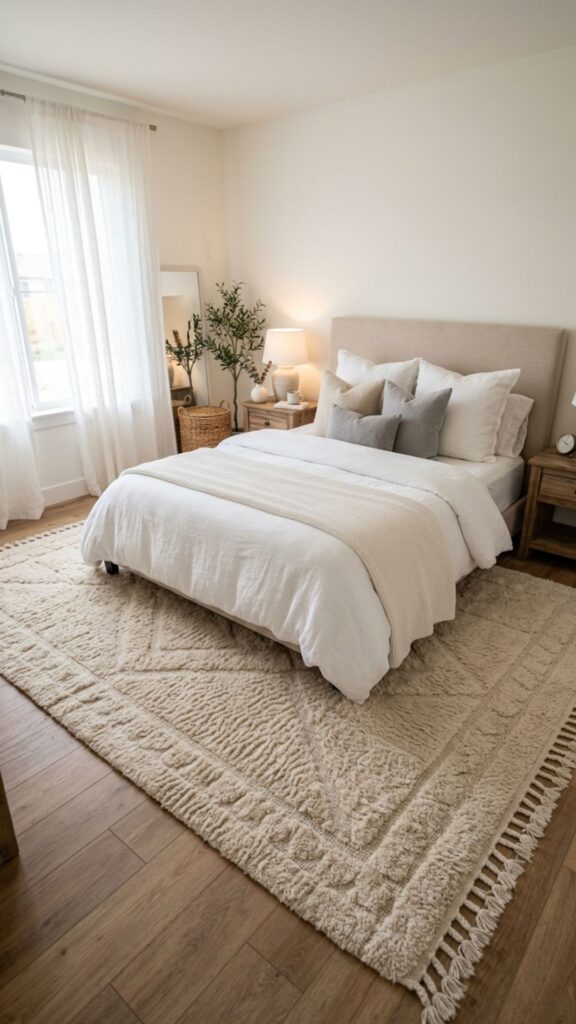
A soft rug warms cold floors and grounds the whole room. For a shared bedroom, choose a large rug that extends beyond both sides of the bed so each partner steps onto something soft in the morning.
Neutral tones with subtle patterns work best for keeping the space serene. A plush rug also absorbs sound, making the room feel quieter and more intimate.
11. Design a Cozy Reading Nook
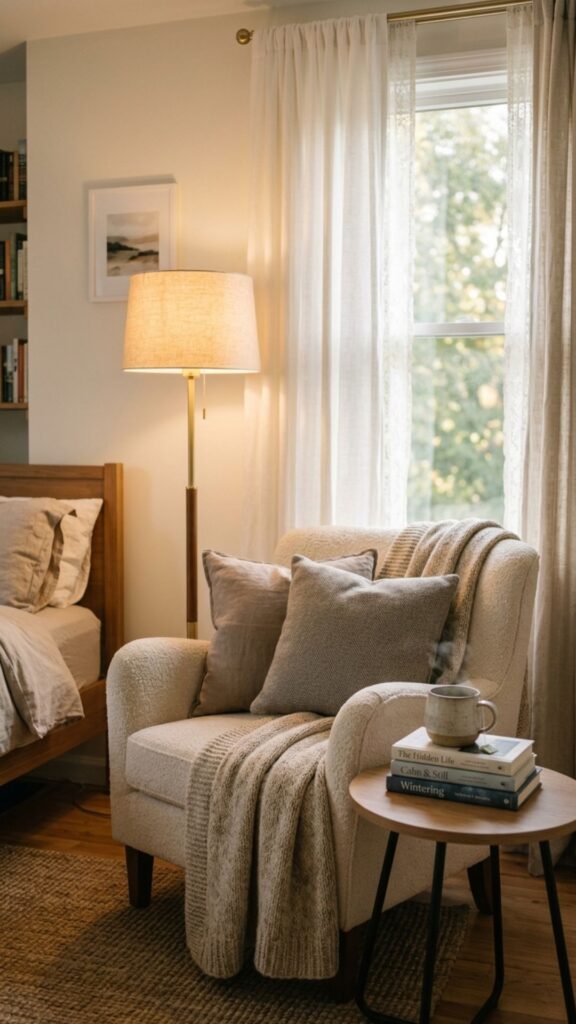
If you have extra space, a small corner with a chair, a floor lamp, and a side table gives couples a spot to unwind separately while staying close. It’s perfect when one of you wants quiet time.
Add a soft throw and a couple of cushions to make it inviting. This little zone reduces tension by giving each person room to breathe within the same space.
12. Hang Mirrors to Open Up the Space
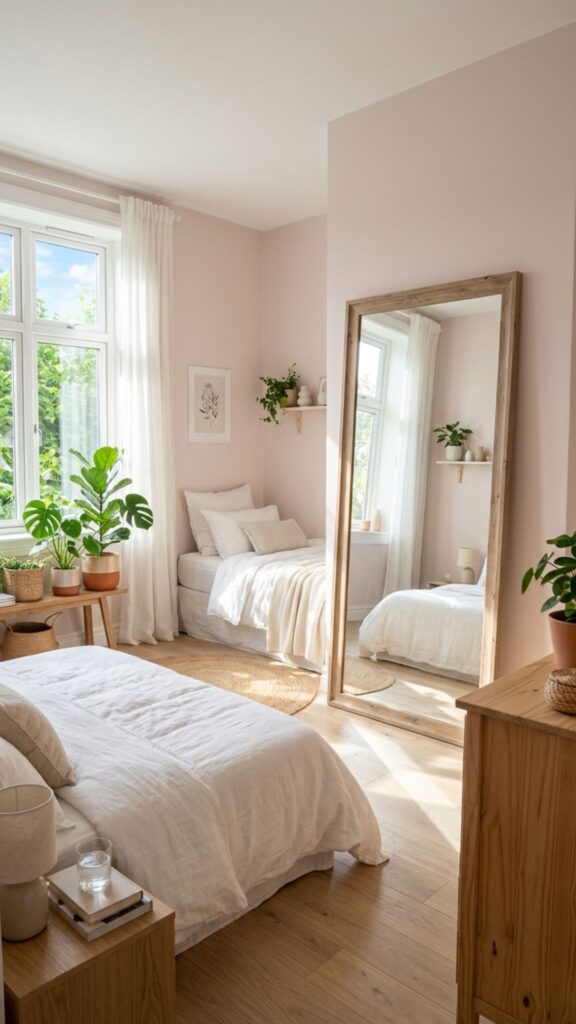
Mirrors reflect light and make small bedrooms feel larger and brighter. Position a large mirror across from a window to bounce natural light around the room. The effect is instant and airy.
A full-length mirror also serves a practical purpose for getting ready. Choose a frame that matches your style, whether that’s sleek black metal or warm natural wood.
13. Add Blackout Curtains for Better Sleep
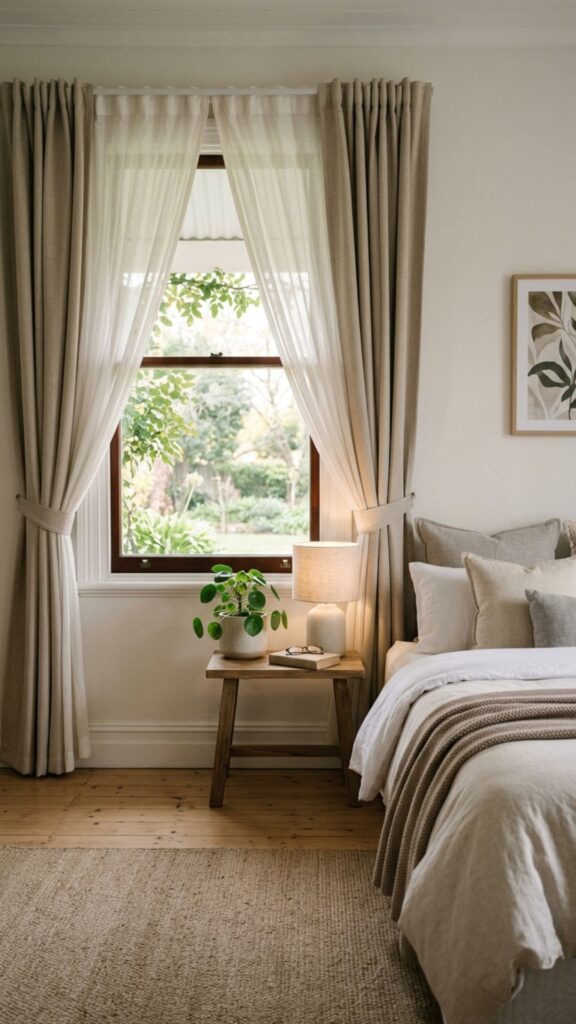
Light control is essential, especially when partners have different schedules. Blackout curtains block streetlights and early sunrise, helping you both sleep deeper and longer.
Layer them with sheer curtains for daytime softness. During the day you get gentle filtered light; at night you get total darkness. This flexibility suits couples who don’t always wake at the same time.
14. Personalize With Meaningful Wall Art
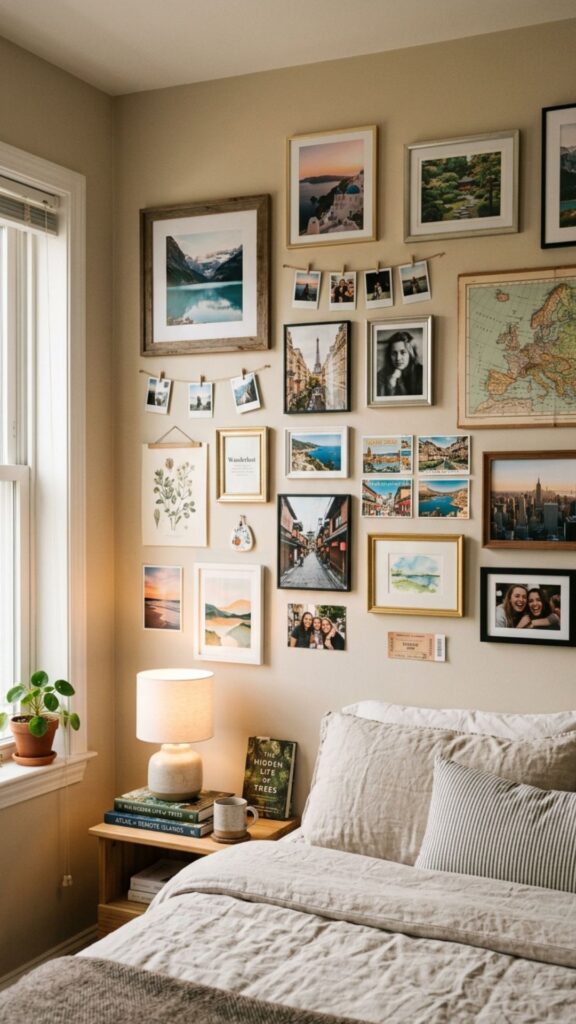
Art makes a bedroom feel like yours. Hang pieces that mean something to both of you, like travel photos, a favorite print, or a gallery wall of shared memories. It adds warmth and personality.
Keep the scale balanced above the bed and avoid overcrowding the walls. A few well-chosen pieces feel more peaceful than a cluttered display. Choose calming subjects over busy, high-energy images.
15. Define His-and-Hers Zones
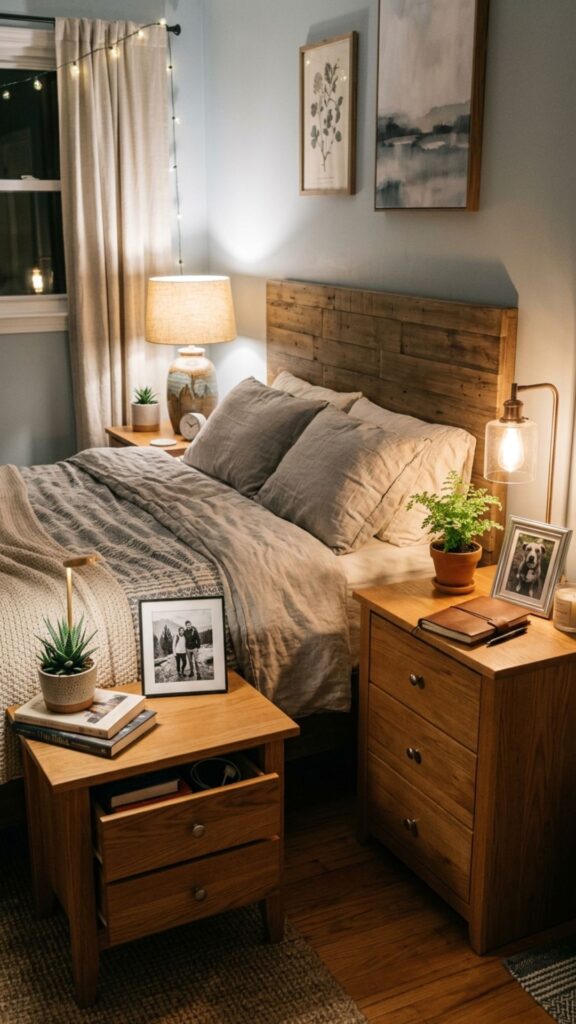
Even in a shared room, everyone needs a sense of personal space. Give each partner their own nightstand, lamp, and a drawer or shelf. This small structure prevents friction and respects individuality.
These zones don’t divide the room emotionally; they actually reduce arguments over space and belongings. A bedroom for couples works best when both people feel equally at home in it.
16. Incorporate a Soothing Scent
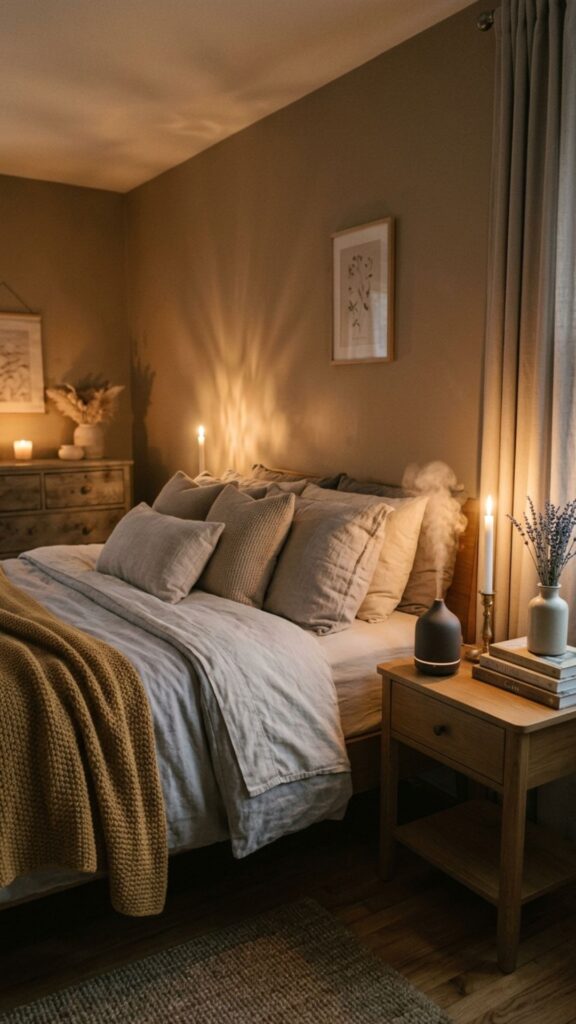
Scent shapes mood more than people realize. A diffuser with lavender, chamomile, or sandalwood creates a calming atmosphere that signals it’s time to relax. Keep fragrances subtle so neither partner feels overwhelmed.
Choose a scent you both enjoy to make it a shared ritual. Lighting a candle or starting the diffuser at night becomes a gentle cue that the day is winding down.
17. Float the Bed for a Modern Layout
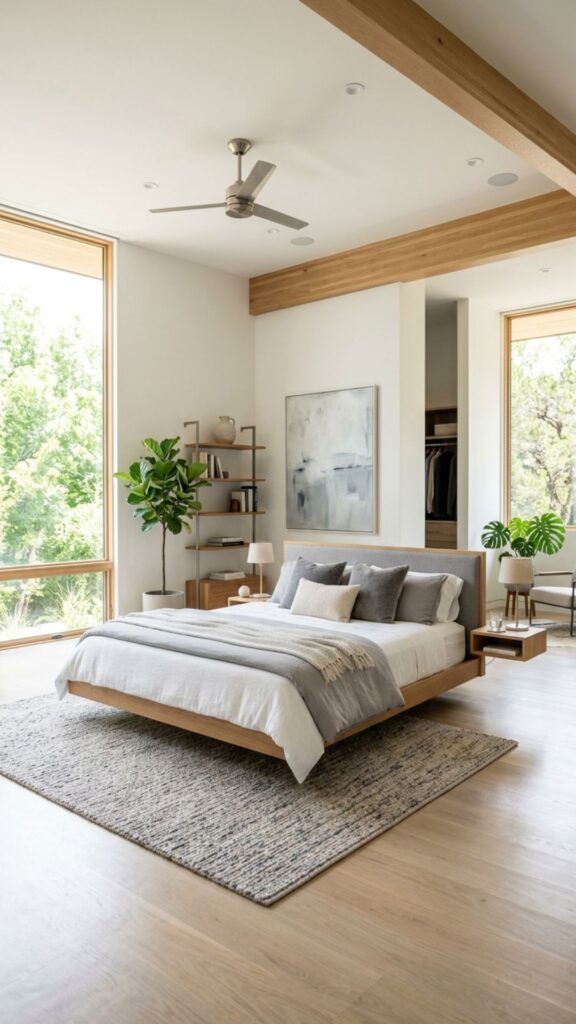
Pushing the bed against a wall isn’t your only option. In larger rooms, floating the bed away from the wall creates a sleek, hotel-inspired feel and improves flow around both sides.
This layout makes getting in and out easier for both partners and gives the room a more open, intentional look. Add a slim console or bench behind the headboard to use the extra space wisely.
18. Keep the Furniture Minimal and Functional
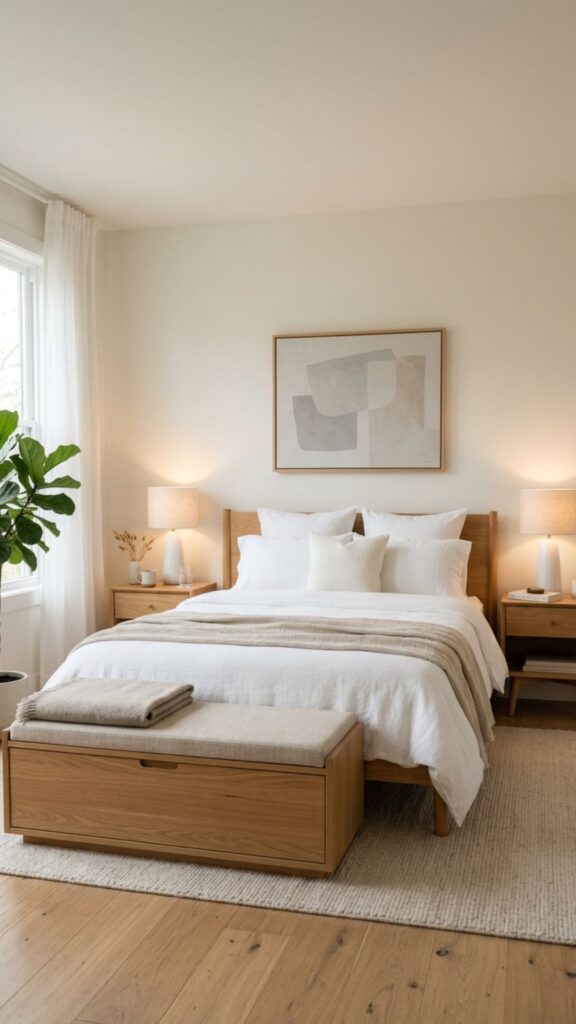
Less furniture means more room to breathe. Stick to the essentials: a bed, two nightstands, and storage. Overcrowding a bedroom makes it feel busy and stressful rather than restful.
Choose pieces with clean lines and dual functions, like a storage bench at the foot of the bed. Minimalism isn’t about empty rooms; it’s about keeping only what adds comfort and purpose.
19. Choose Warm, Natural Materials
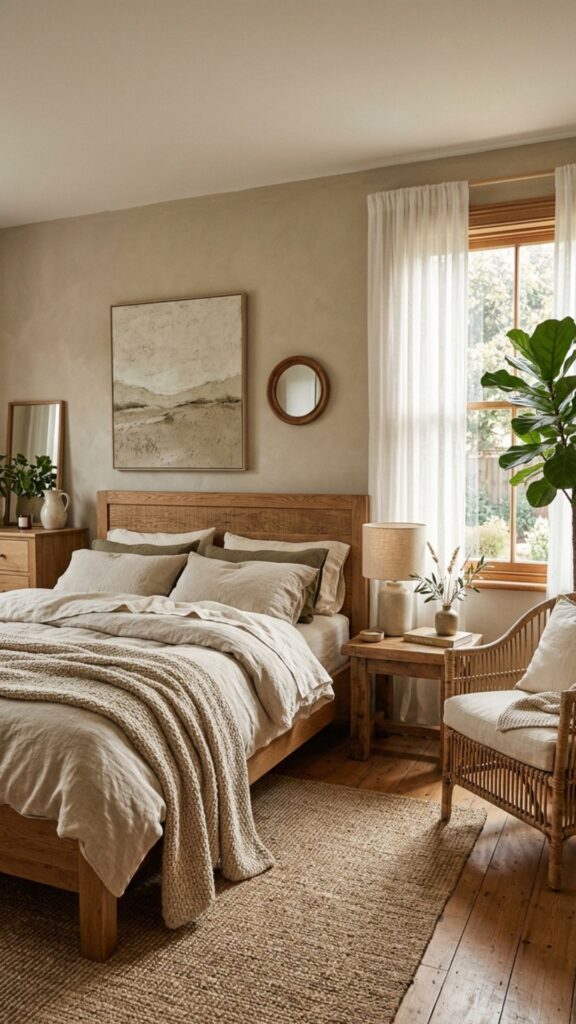
Modern doesn’t have to mean cold. Wood, rattan, linen, and wool bring warmth and texture that make a space feel grounded and inviting. These materials age beautifully and suit almost any style.
Mix a wooden bed frame with linen bedding and a wool throw for a layered, organic look. Natural materials create a calm, timeless bedroom that both partners can enjoy for years.
20. End the Day With a Shared Ritual
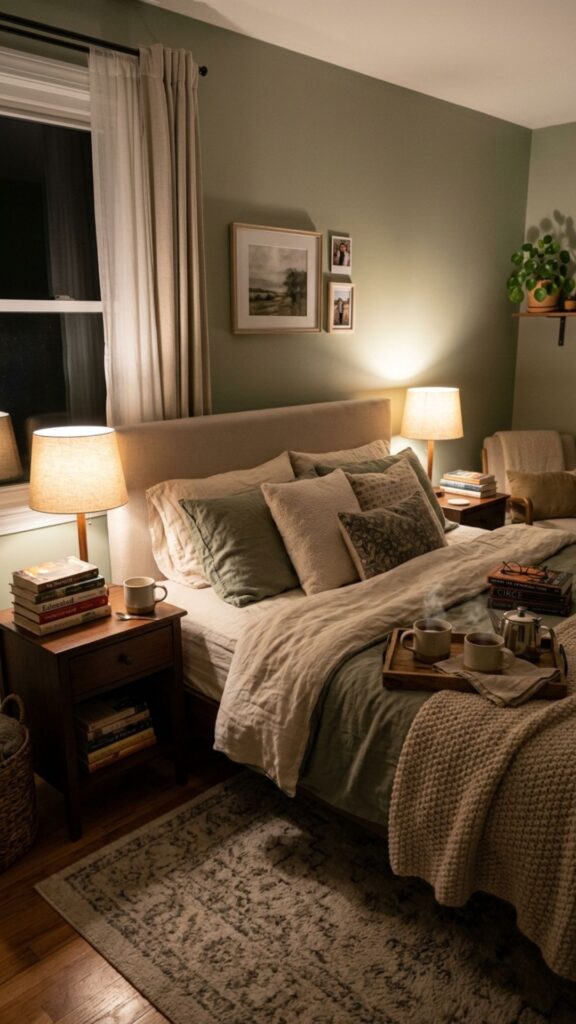
Design supports habits, and habits build connection. Set up your bedroom to encourage a nightly wind-down, like reading together, chatting without phones, or simply dimming the lights at the same time.
A small tea station, a stack of books, or a cozy chair can prompt these routines. The most peaceful bedroom for couples isn’t just well-decorated; it’s a place that brings you closer every night.
Conclusion
A peaceful bedroom doesn’t happen by accident. It comes from thoughtful choices that respect both partners, from a calming color palette to better lighting, smart storage, and shared rituals. You don’t need to do all 20 ideas at once. Pick two or three that excite you most and start there.
Ready to transform your space? Choose one idea from this list and put it into action this week. Small changes add up fast, and before long you’ll have a bedroom that feels like the calm, connected retreat you both deserve.
What colors are best for a couples’ bedroom?
Soft, muted tones like warm grey, sage green, dusty blue, and beige are best for a couples’ bedroom. These calming colors reduce stress, feel neutral enough for two tastes, and promote better rest.
How can couples with different sleep styles share a bed?
Choose a medium-firm hybrid mattress with strong motion isolation, or a dual-firmness mattress that feels different on each side. Add individual reading lights and blackout curtains to handle different schedules.
How do you make a small bedroom feel bigger for two people?
Use mirrors to reflect light, keep furniture minimal, pick light wall colors, and add under-bed storage to cut clutter. Floating the bed or using vertical storage also helps a small room feel more open.
What is the best lighting for a couples’ bedroom?
Layered lighting works best. Combine a soft overhead light, bedside lamps, and a dimmer switch. Use warm bulbs around 2700K and add individual reading lights so one partner can stay up without disturbing the other.
How can couples reduce clutter in a shared bedroom?
Give each partner defined storage zones, use built-in wardrobes and under-bed drawers, and keep only essential furniture. A clear, organized bedroom feels instantly calmer and reduces daily friction.