A productive home office doesn’t need a wall of storage, an oversized desk, or shelves filled with décor. In fact, the more visual noise you remove, the easier it can be to focus on what actually matters.
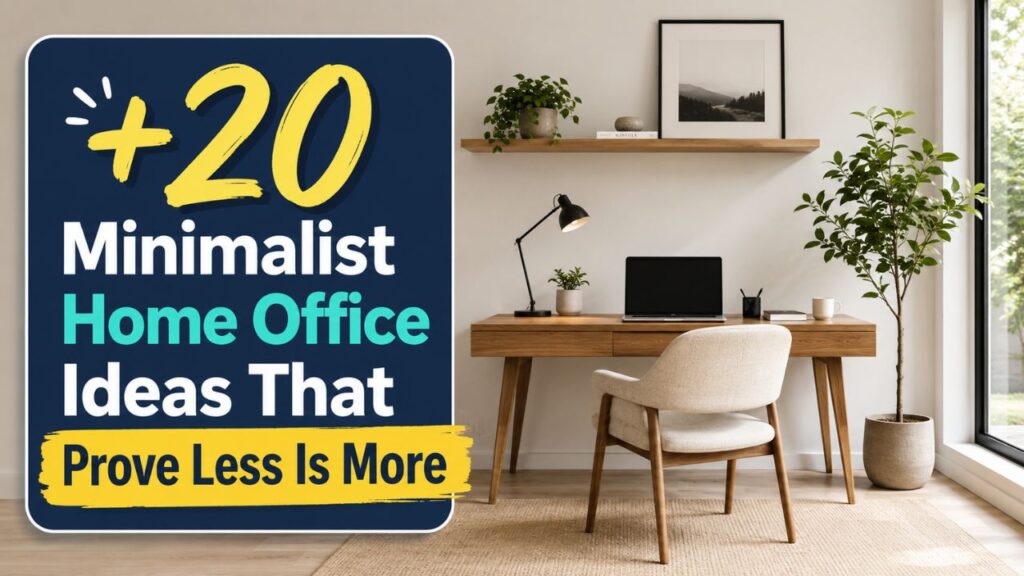
Minimalist home offices are built around a simple idea: keep what supports your work and remove what competes for your attention. That doesn’t mean creating a cold, empty room. The best minimalist workspaces still feel warm, personal, and comfortable—they simply make every item earn its place.
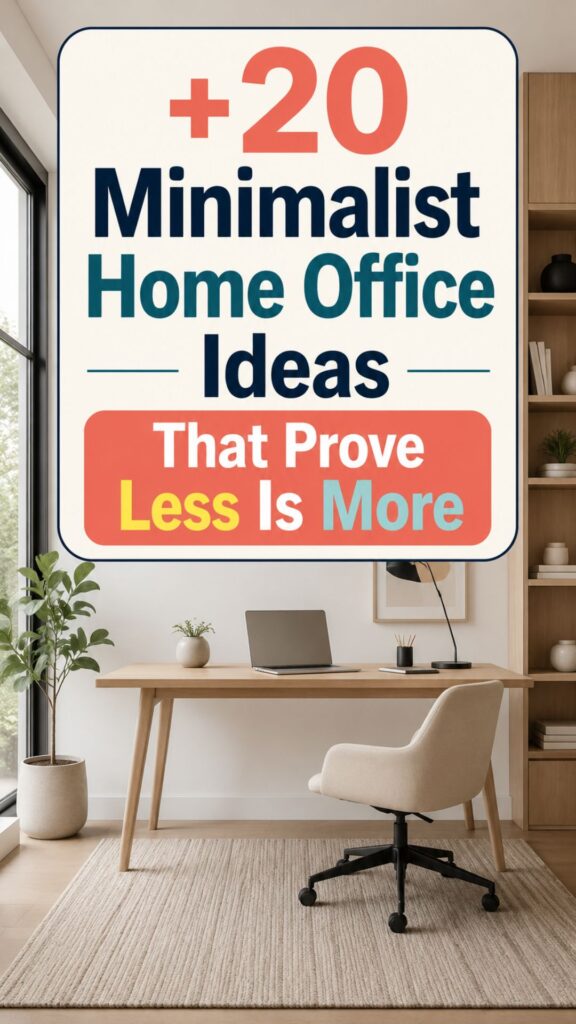
Whether you have an entire room, a quiet corner of the bedroom, or only enough space for a compact desk, these 20 minimalist home office ideas will help you create a workspace that feels calm, intentional, and surprisingly inviting.
1. Start With a Clean, Simple Desk
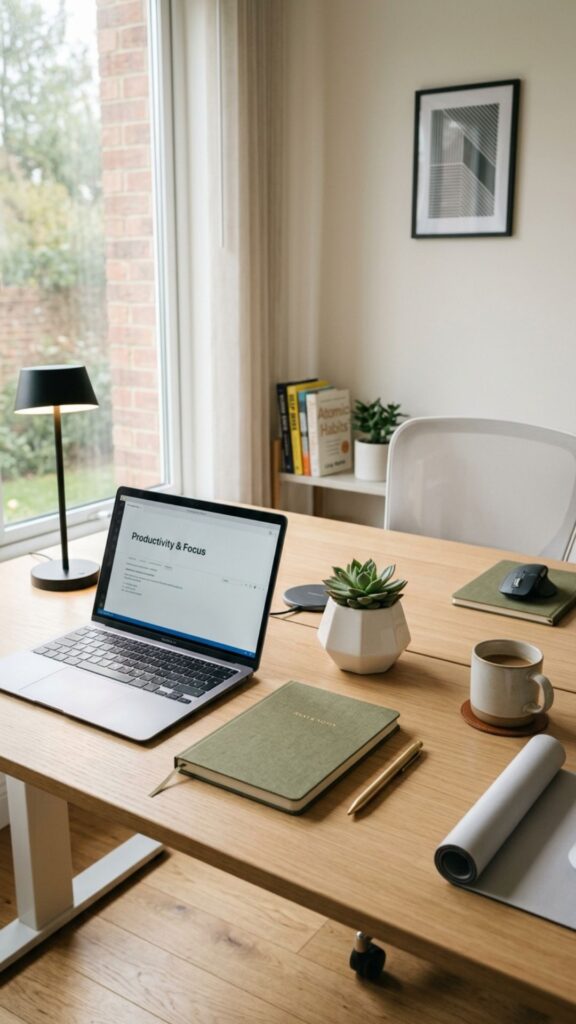
The desk is the visual anchor of your home office, so choose one with a simple silhouette and minimal detailing.
A slim wooden desk, white writing table, or streamlined metal-frame design can provide plenty of workspace without making the room feel heavy. Avoid unnecessary drawers and bulky attachments if you don’t genuinely need them.
Keep the surface equally simple. A laptop, lamp, notebook, and perhaps one decorative object may be all you need.
The goal isn’t an empty desk. It’s a desk where everything has a reason to be there.
2. Build Around a Neutral Color Palette
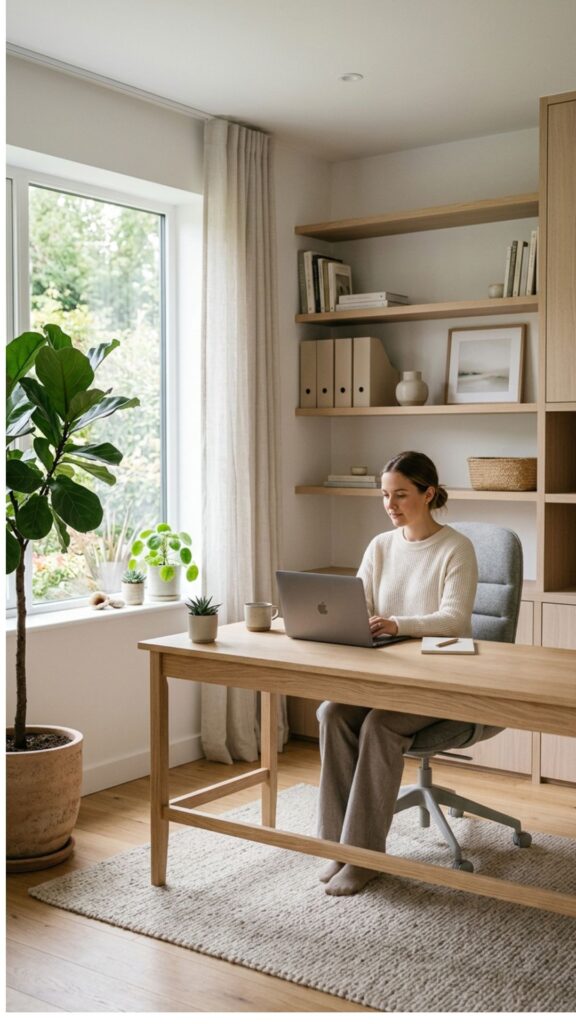
Minimalist offices often feel peaceful because they rely on restrained colors.
Soft white, warm beige, pale gray, muted taupe, and natural wood tones create a quiet backdrop that allows you to concentrate. Instead of filling the room with competing colors, choose two or three complementary shades and repeat them throughout the space.
For a warmer minimalist look, combine creamy walls with oak or walnut furniture.
Prefer something more modern? Crisp white, charcoal, and black accents can create a sharper aesthetic.
3. Let Natural Light Become Part of the Design
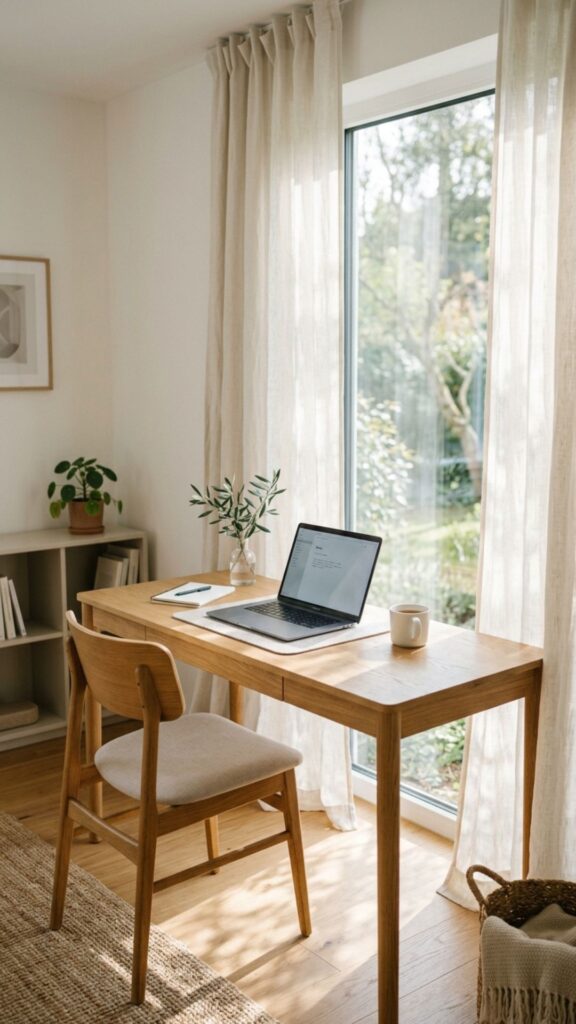
Before adding more lamps, shelves, or décor, look at the light already available.
Positioning your desk near a window can instantly make a small home office feel larger and more energizing. Natural light also reduces the need for additional visual elements because the changing daylight becomes part of the atmosphere.
Keep window treatments uncomplicated. Linen curtains, light-filtering shades, or simple blinds provide privacy without overwhelming the room.
Whenever possible, arrange your monitor so direct sunlight doesn’t create distracting screen glare.
4. Choose One Comfortable Statement Chair
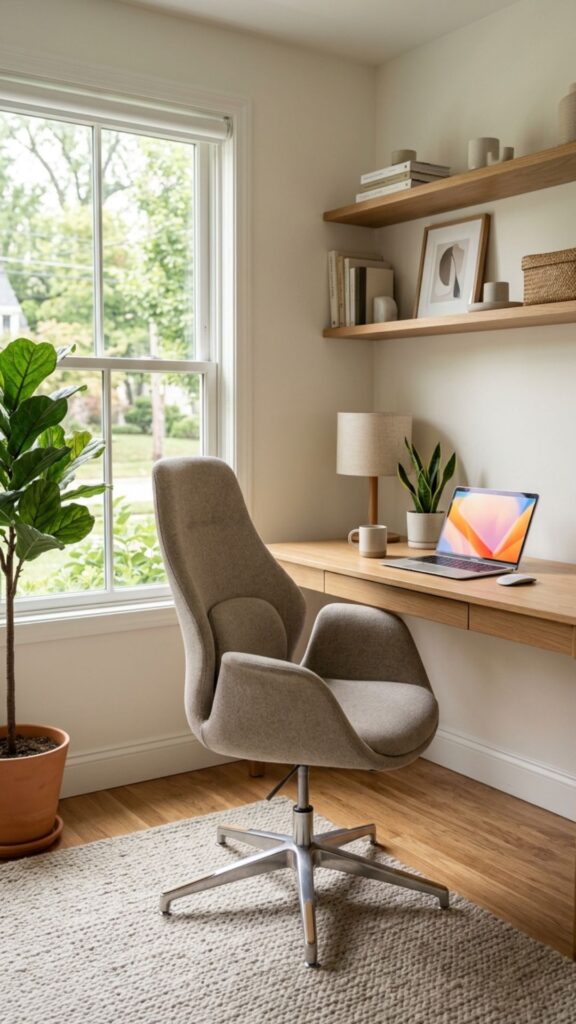
Minimalism doesn’t mean sacrificing comfort.
Instead of filling your office with several pieces of furniture, invest in one supportive chair you actually enjoy using. A beautifully shaped ergonomic chair can serve as both a practical necessity and a subtle design feature.
Choose upholstery or finishes that coordinate with the surrounding palette.
Because the room contains fewer objects, even a simple chair can make a stronger visual impact.
5. Hide Cables Whenever Possible
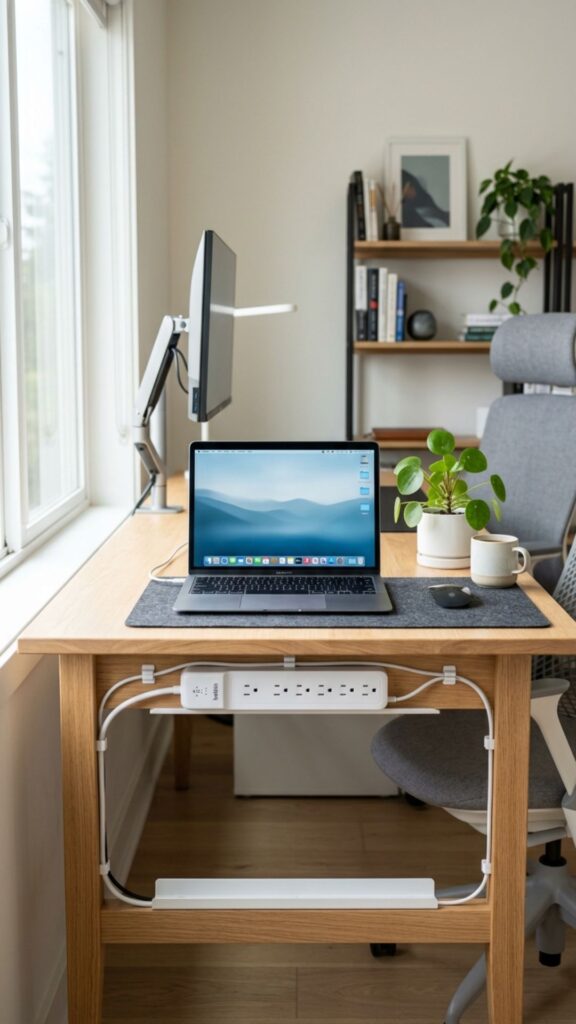
Few things disrupt a minimalist workspace faster than a collection of tangled charging cables.
Use cable clips beneath the desk, cord sleeves, cable boxes, or adhesive organizers to keep wires out of sight. Mounting a power strip underneath the desktop can also dramatically reduce clutter around the floor.
If you regularly charge several devices, consider creating one dedicated charging area rather than scattering chargers across the desk.
It’s a small detail that can make the entire office look noticeably more polished.
6. Use Floating Shelves Instead of Heavy Cabinets
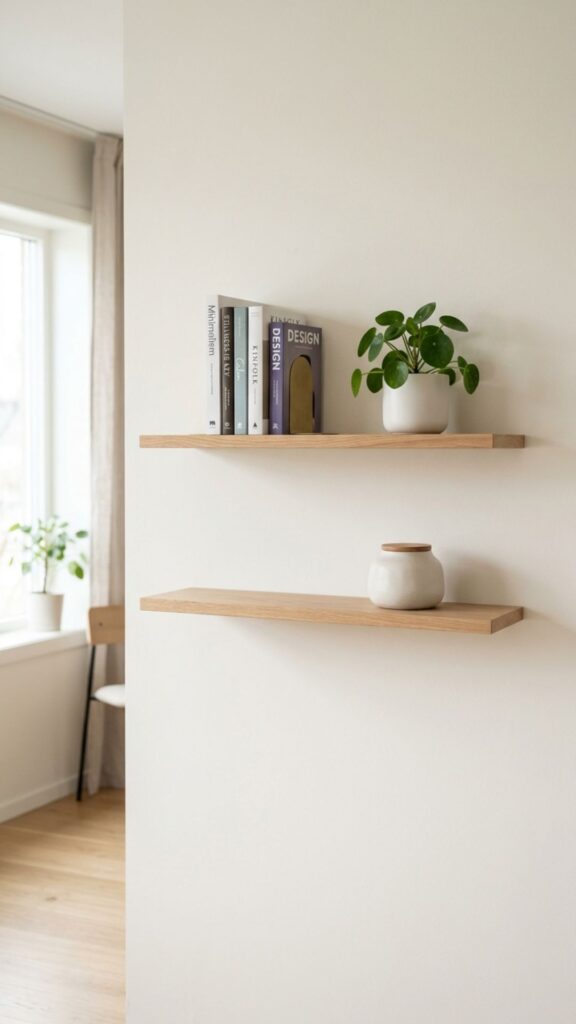
Storage is necessary, but it doesn’t have to dominate the room.
One or two floating shelves provide space for books, office supplies, or decorative objects while keeping the floor visually open.
The secret is resisting the temptation to fill every inch.
Leave some empty space between objects so the shelves feel intentionally styled rather than overloaded. A few stacked books, a small plant, and a ceramic container often look better than rows of miscellaneous items.
7. Keep Only Everyday Essentials Within Reach

Take a look at everything currently sitting on your desk.
How much of it do you actually use every day?
Minimalist organization works best when frequently used items remain accessible and everything else is stored elsewhere. Your favorite pen can stay on the desk. The fifteen spare pens probably don’t need to.
Create a small collection of true daily essentials and give each item a permanent place.
Removing rarely used objects makes resetting your workspace at the end of the day much easier.
8. Bring in One Touch of Greenery
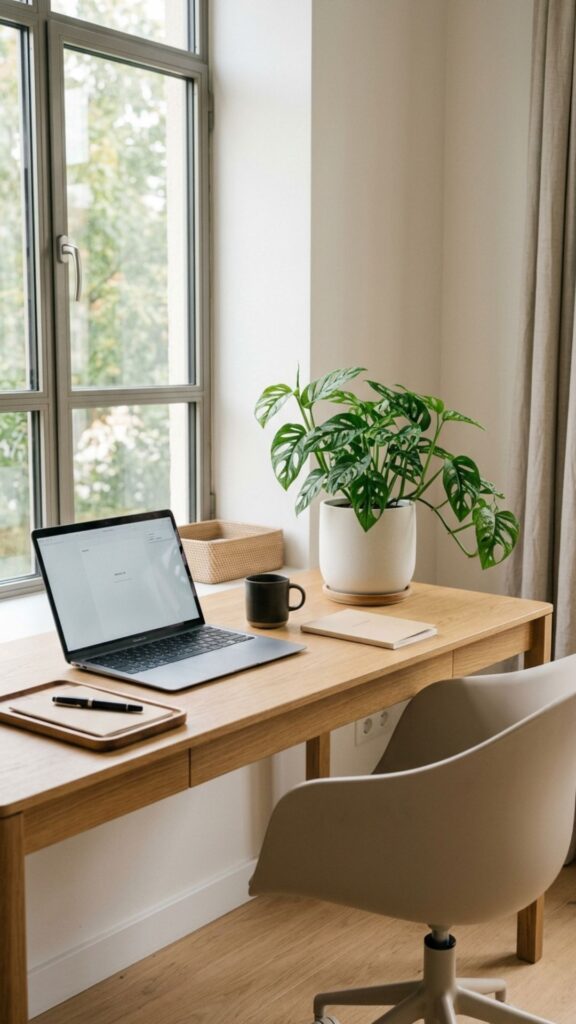
Plants can soften a minimalist office without making it feel busy.
Rather than creating an indoor jungle, choose one plant with a strong shape. A snake plant, rubber plant, pothos, or small olive tree can introduce natural color and texture.
If your office receives little sunlight, a realistic artificial plant can create a similar effect with virtually no maintenance.
Choose a simple planter in ceramic, stone, or another understated material to maintain the uncluttered look.
9. Create a Monochromatic Workspace
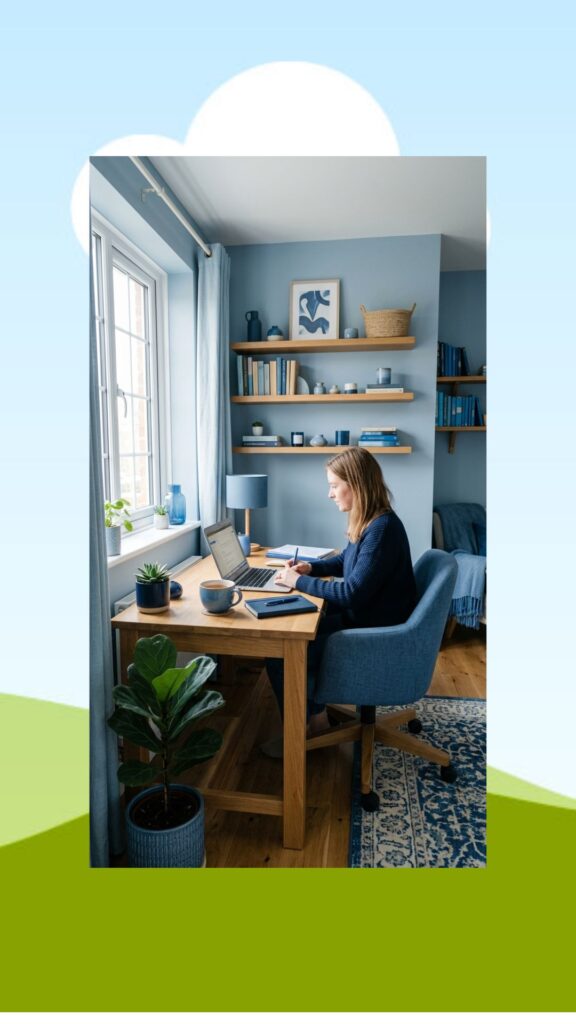
Want your office to feel especially cohesive? Try designing around different shades of one color.
An all-white office can feel bright and airy, while layered beige tones create a softer atmosphere. For something moodier, combine charcoal walls, a black desk, and dark accessories.
The key is using texture to keep the room from appearing flat.
Wood grain, linen, matte metal, woven materials, and soft upholstery can add depth even when the color palette remains extremely limited.
10. Use Wall Space Strategically
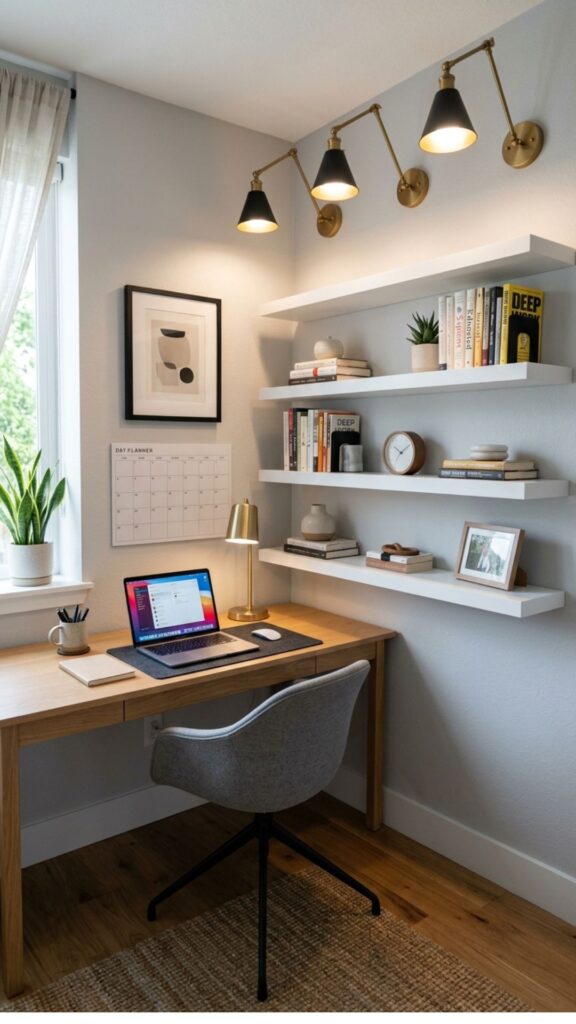
When floor space is limited, the walls become valuable.
Wall-mounted lighting, pegboards, shelves, and compact storage systems can keep necessities nearby without crowding your desk.
But minimalist wall storage should still feel selective.
Instead of covering an entire wall with organizers, create one concentrated storage zone. Keeping the remaining walls relatively open helps the room maintain its calm appearance.
11. Replace Multiple Decorations With One Large Artwork
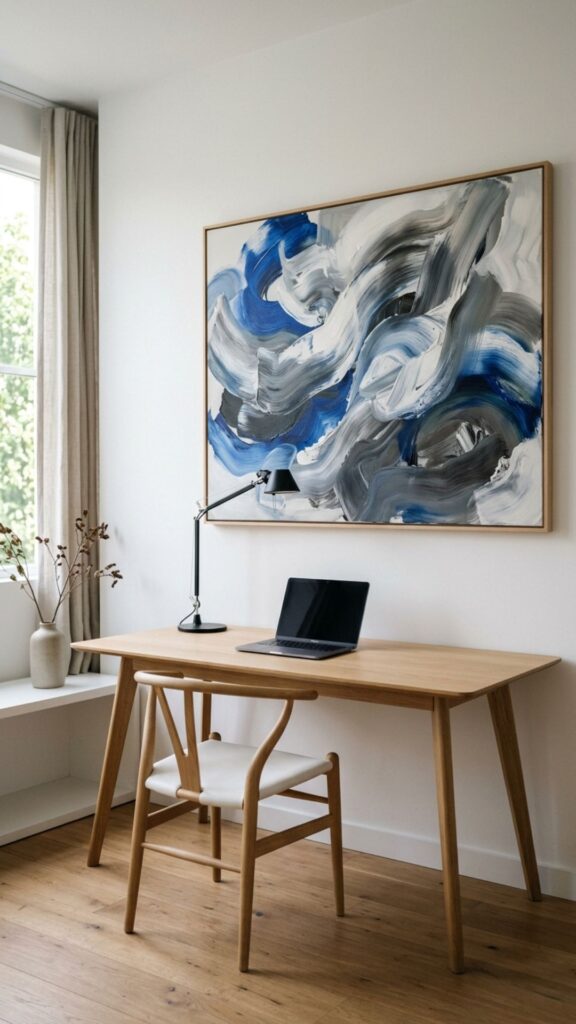
A collection of small prints can easily make an office wall feel crowded.
For a cleaner alternative, choose one oversized piece of artwork.
A simple abstract print, black-and-white photograph, textured canvas, or subtle landscape can create personality without overwhelming the room.
The larger scale creates a focal point while allowing the surrounding wall to remain uncluttered.
It’s a perfect example of how minimalist decorating often involves choosing fewer, stronger pieces.
12. Try a Desk With Built-In Storage
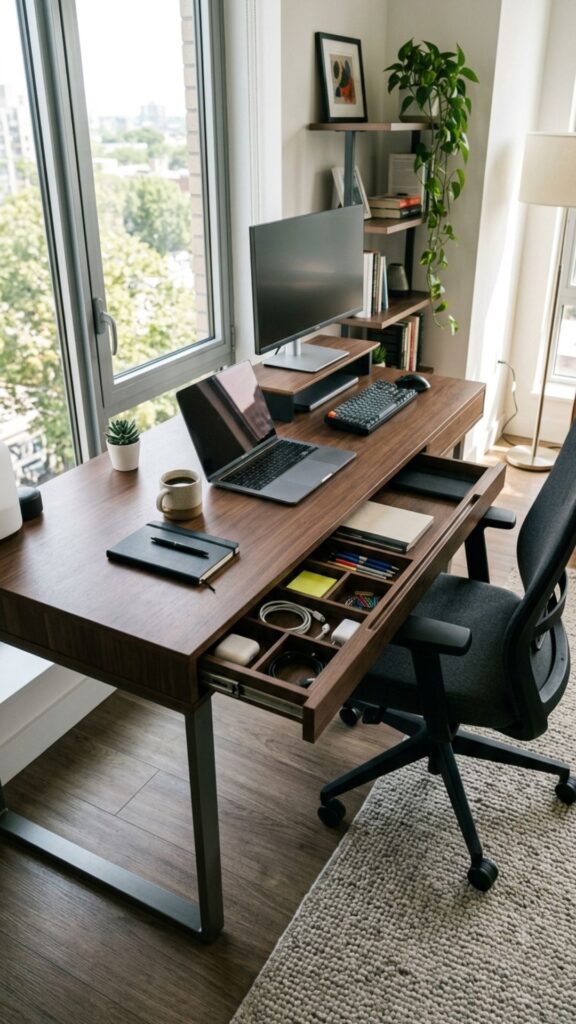
If you need storage but prefer a visually clean room, furniture that performs multiple functions can help.
A desk with one slim drawer or concealed compartment allows you to store pens, chargers, paperwork, and other small supplies without adding another cabinet.
Look for designs with flush drawer fronts and minimal hardware.
Hidden storage works especially well in offices that share space with bedrooms or living rooms because work-related clutter can disappear once the workday ends.
13. Make a Small Corner Feel Intentional
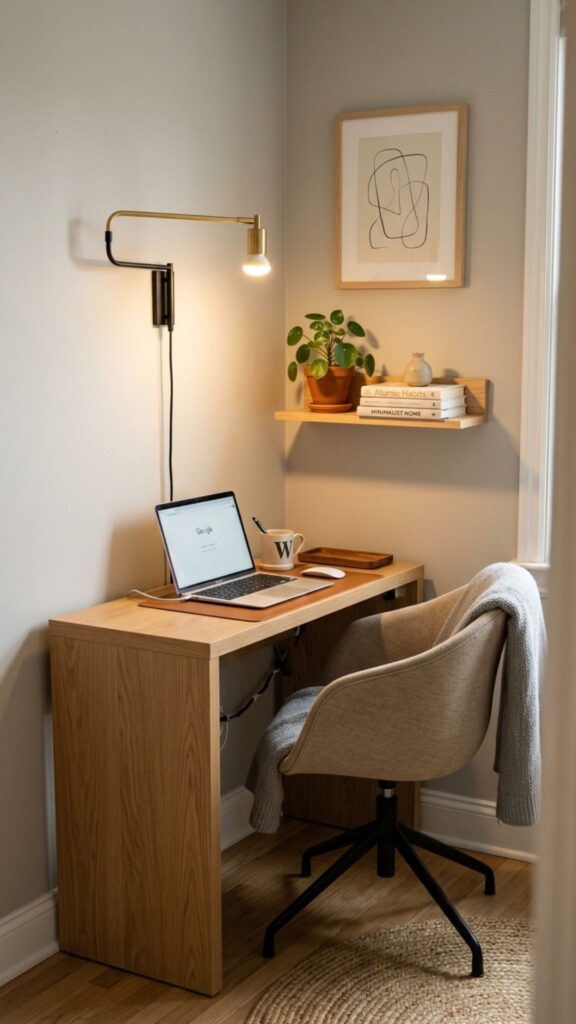
You don’t need a dedicated room to create a minimalist office.
An unused corner can become a surprisingly functional workspace with a narrow desk, compact chair, and wall-mounted light.
The trick is treating the area like a deliberate design feature rather than somewhere furniture happened to fit.
Choose materials that coordinate with the rest of the room, and keep accessories limited.
When the work zone visually blends with its surroundings, even a tiny office can feel sophisticated.
14. Choose Closed Storage for Visual Calm
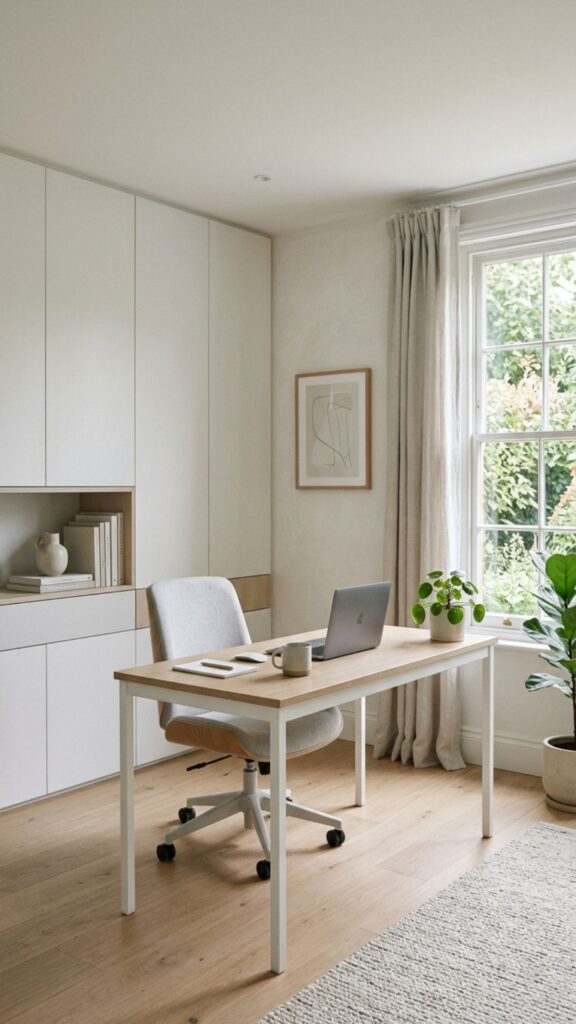
Open storage is convenient, but not everything needs to be displayed.
Closed cabinets and drawers can instantly reduce visual clutter by hiding paperwork, electronics, extra stationery, and miscellaneous supplies.
For a minimalist appearance, choose storage with flat fronts, subtle handles, or push-to-open doors.
Once everything is behind closed doors, the office can remain peaceful without requiring every stored item to look perfectly arranged.
Sometimes the easiest way to create minimalism is simply to put clutter somewhere you can’t see it.
15. Add Warmth Through Natural Materials
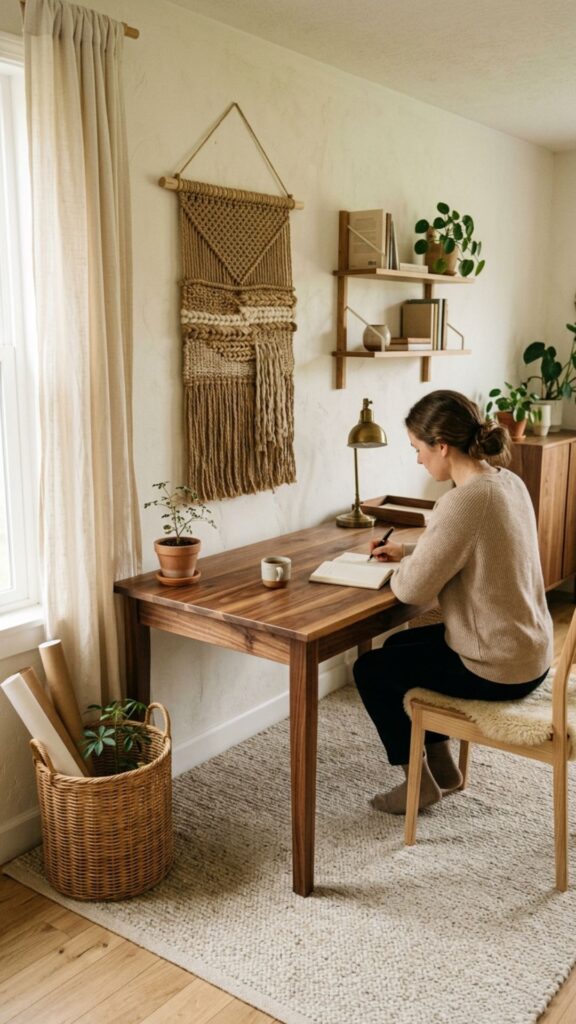
Minimalist rooms can feel sterile when every surface is glossy white or metal.
Natural materials solve that problem.
Introduce wood through the desk, woven fibers through a small basket, linen through curtains, or wool through a simple rug.
These textures create warmth while preserving the restrained aesthetic.
You don’t need many different materials. Two or three thoughtfully repeated finishes are usually enough to make the room feel layered and welcoming.
16. Use a Simple Desk Lamp as Functional Décor
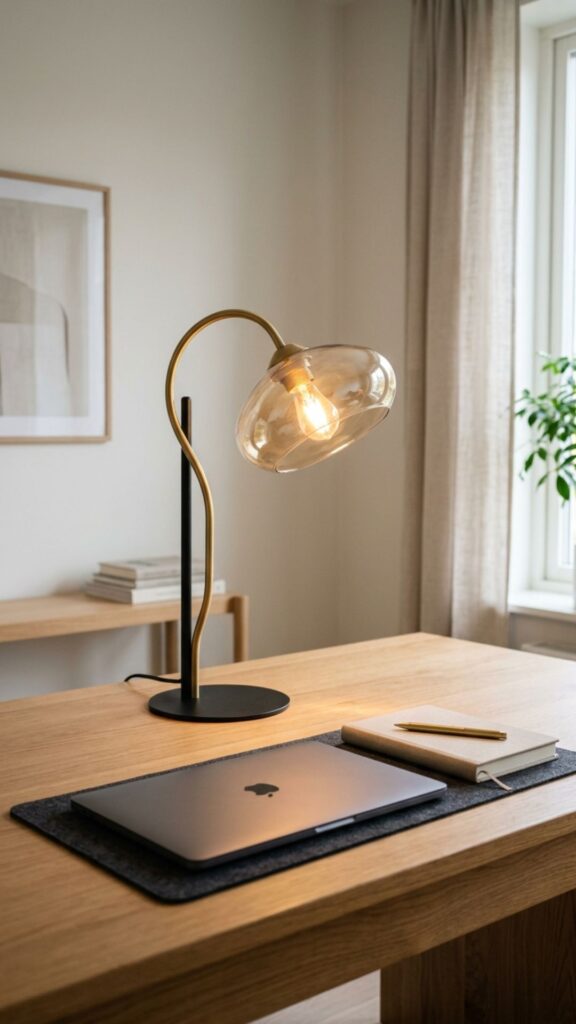
In minimalist spaces, practical objects can become decoration.
Instead of adding accessories purely for appearance, choose everyday essentials that are attractive enough to display.
A sculptural desk lamp is a perfect example.
An arched metal lamp, small mushroom-style light, or clean architectural design can add character while performing an essential function.
This approach reduces the number of objects you need without making the room feel unfinished.
17. Keep Your Desktop Storage Uniform
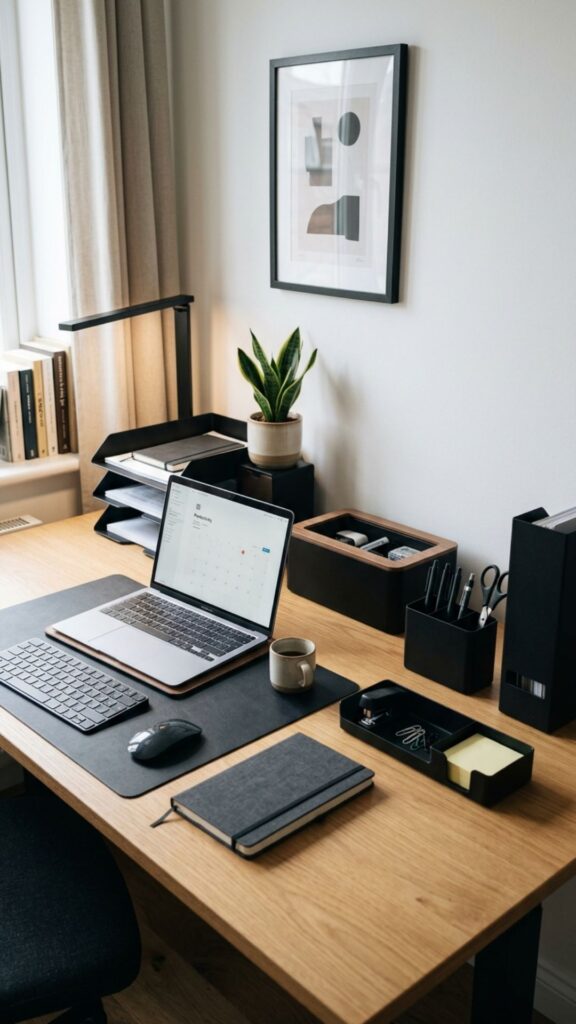
Even necessary organizers can create clutter when every container looks different.
Try matching your desktop accessories instead.
A coordinated tray, pen holder, document box, and storage container can make practical items feel like part of the design rather than random additions.
You don’t necessarily need to buy a complete matching set. Simply choosing pieces in the same material or color family can produce a cohesive result.
Consistency creates visual order—and visual order is one of the foundations of minimalist design.
18. Leave Some Walls Completely Empty
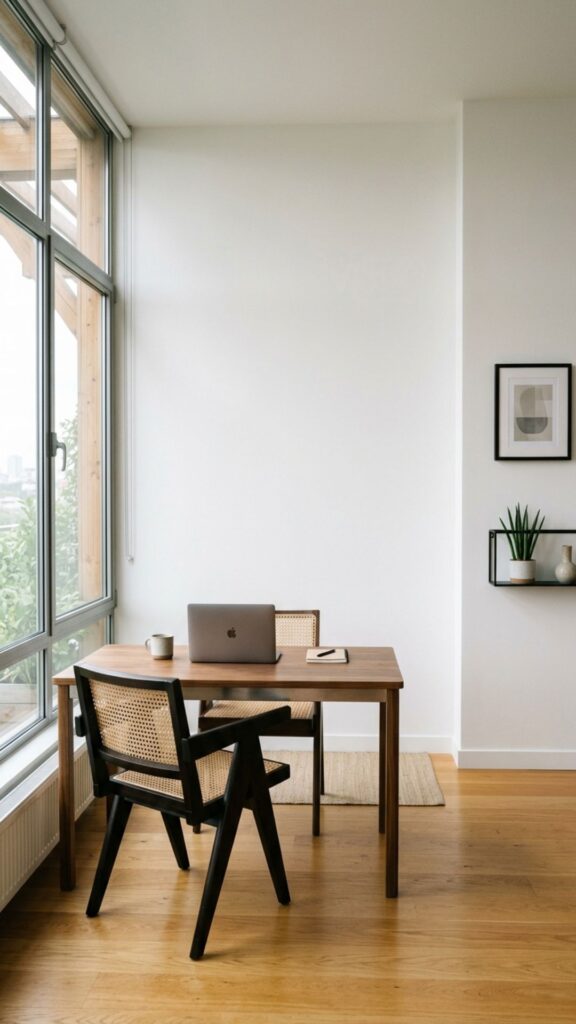
Not every blank wall needs artwork.
Empty space gives the eye somewhere to rest and allows the furniture and objects you do choose to stand out.
If your office already contains a desk, shelving, lighting, and one focal feature, consider leaving another wall untouched.
It may initially feel unfinished, especially if you’re accustomed to decorating every surface. Give it time.
That openness often becomes one of the reasons the room feels so calm.
19. Create a Simple End-of-Day Reset Routine
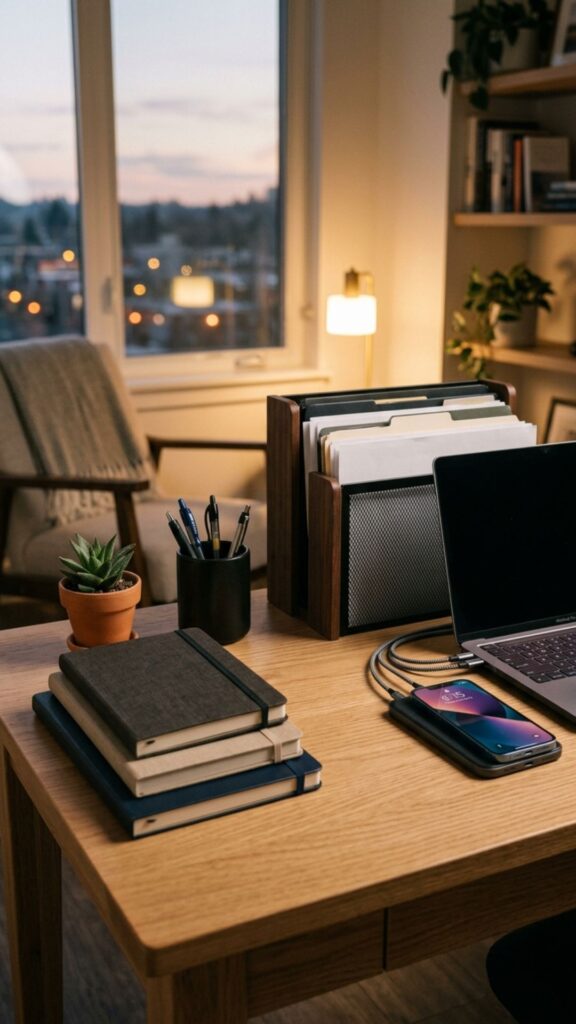
A minimalist home office isn’t only about furniture and decorating. It’s also about habits.
Spend two minutes at the end of each workday returning the office to neutral.
Close notebooks. Put pens away. Remove coffee cups. File loose papers. Plug devices into their designated charging area.
Starting the next morning with a clear desk eliminates one small source of mental friction.
Minimalism becomes much easier to maintain when resetting the room is part of your routine rather than a major weekend cleaning project.
20. Personalize the Space—But Edit Ruthlessly
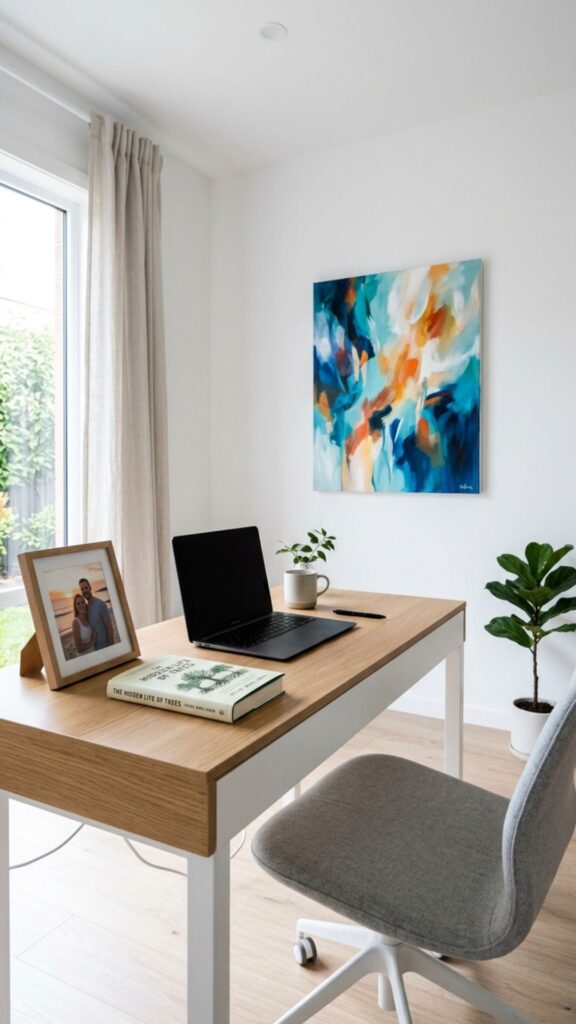
A minimalist home office should still feel like yours.
Keep a framed photo, meaningful book, handmade object, travel souvenir, or favorite piece of artwork if it makes the space more enjoyable.
The difference is quantity.
Instead of displaying every meaningful possession at once, select a few objects that deserve attention. You can even rotate them occasionally to refresh the room without accumulating more décor.
Minimalism works best when it reflects your personality rather than erasing it.
Conclusion
Creating a minimalist home office isn’t about stripping a room until nothing remains. It’s about becoming more intentional about what stays.
A comfortable chair stays because it supports you. A lamp stays because you need focused light. A plant stays because it makes the room feel alive. Everything else gets evaluated according to whether it contributes to your work, comfort, or enjoyment.
That’s what makes the “less is more” philosophy so powerful.
With fewer distractions competing for your attention, the details that remain become more useful—and often more beautiful.
Start small. Clear your desktop, hide the cables, remove a few unnecessary objects, and give yourself room to breathe. You may discover that your ideal home office doesn’t need more furniture, more storage, or more decoration.
It simply needs less of what you don’t use and more space for what matters.
What should a minimalist home office include?
A minimalist office typically needs a functional desk, comfortable chair, good lighting, essential technology, and only the storage you regularly use.
Which colors work best for a minimalist office?
White, beige, gray, taupe, black, and natural wood tones are popular because they create a calm, cohesive appearance.
How can I make a small home office look less cluttered?
Use compact furniture, concealed storage, wall-mounted organization, cable management, and fewer decorative objects.
Can a minimalist office still feel cozy?
Absolutely. Add warmth with wood, soft textiles, natural light, greenery, and a few meaningful personal objects.
How do I keep my home office minimalist?
Give every item a designated place and create a short daily routine for clearing the desk and putting supplies away after work.