Living in an apartment means every square foot counts. When your living room doubles as a lounge, workspace, and sometimes a guest bedroom, clutter can quickly take over. The good news? A minimal approach turns those tight quarters into calm, breathable spaces you actually enjoy.
I’ve spent years helping renters and small-space dwellers rethink their layouts, and the same truth pops up every time: less really is more.
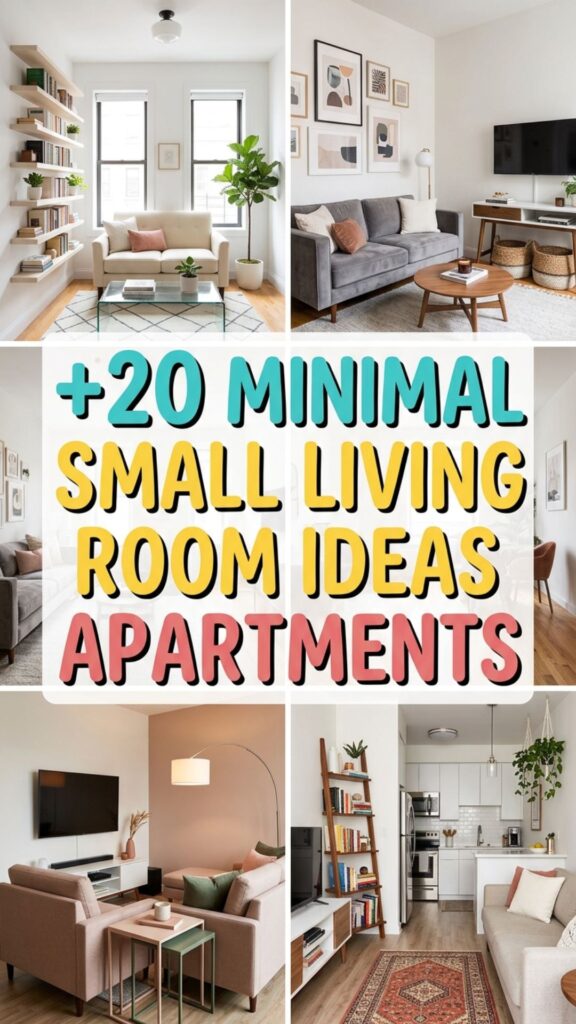
Below are 20 minimal small living room decor ideas that work in real apartments, not just glossy magazine spreads. You’ll learn practical ways to open up your space, choose smart furniture, and create a room that feels both stylish and functional.
1. Stick to a Neutral Color Palette
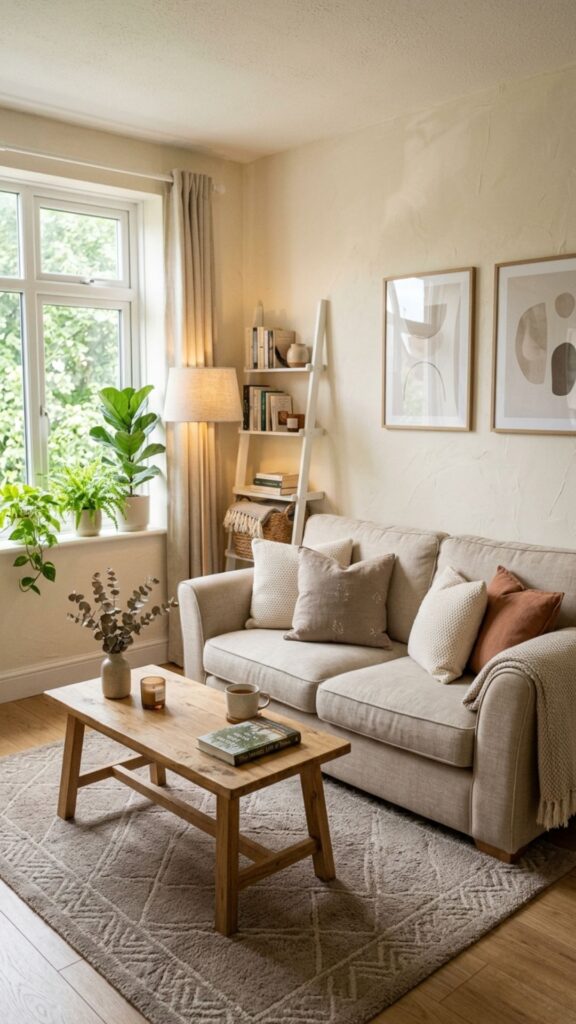
Neutral tones do wonders in a small room. Soft whites, warm greys, and gentle beiges reflect light and make walls seem to recede, which tricks the eye into seeing more space. When your palette stays quiet, the whole room feels cohesive rather than chopped up.
That doesn’t mean everything has to be plain. Layer different shades of the same color family for depth. Think cream walls, an oatmeal sofa, and a light taupe rug. This subtle contrast keeps the space interesting without adding visual noise.
2. Choose a Low-Profile Sofa
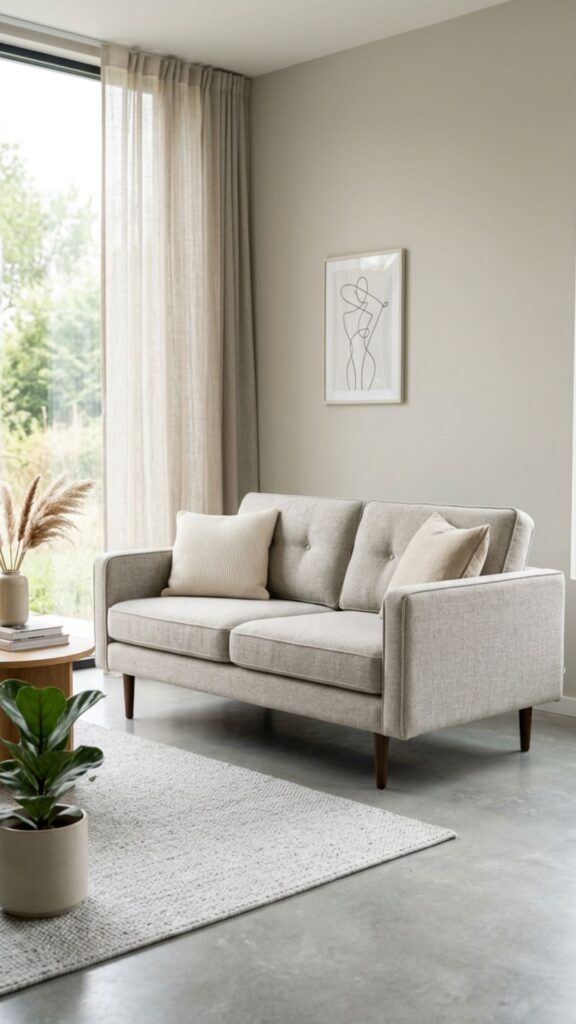
A bulky couch eats up floor space and blocks sightlines. A low-profile sofa with slim arms and exposed legs keeps things airy. When you can see the floor beneath your furniture, the room instantly feels larger.
Look for a two-seater or compact three-seater that fits your proportions. A sofa in a light fabric with clean lines works beautifully in minimal settings. Bonus points if it has a shallow depth, since deep couches can overwhelm a small footprint.
3. Embrace Multifunctional Furniture
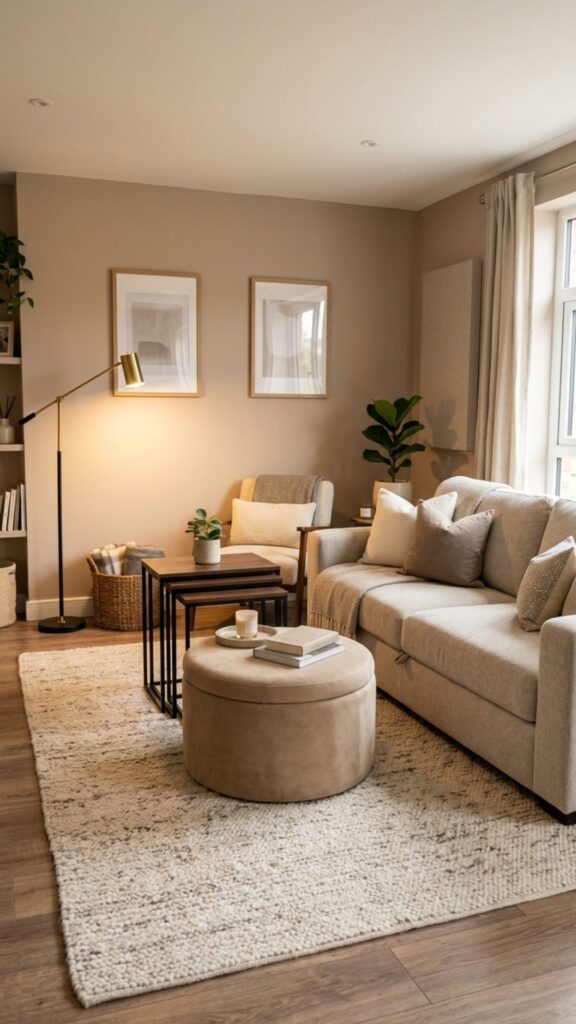
Every piece in a small living room should earn its keep. A storage ottoman gives you a footrest, extra seating, and a spot to hide blankets. A nesting coffee table can spread out when guests arrive and tuck away when they leave.
I always recommend a sofa bed for apartments where the living room hosts overnight guests. Fold-out designs have come a long way and now look sleek rather than clunky. The point is simple: one item, several jobs, less overall clutter.
4. Float Your Furniture Off the Walls
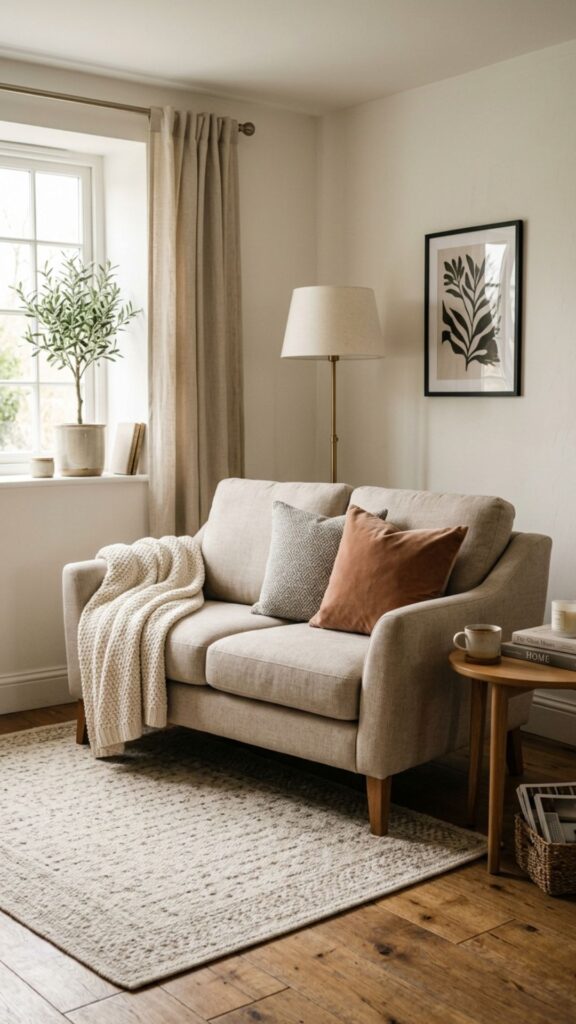
It sounds counterintuitive, but pushing everything against the walls doesn’t always make a room bigger. Pulling a sofa a few inches forward creates breathing room and defines a cozy seating zone. This trick works especially well in open-plan apartments.
Even a small gap changes how the space reads. You get a sense of intentional arrangement rather than furniture crammed into corners. Try it and see how the room suddenly feels more balanced.
5. Hang Mirrors to Amplify Light
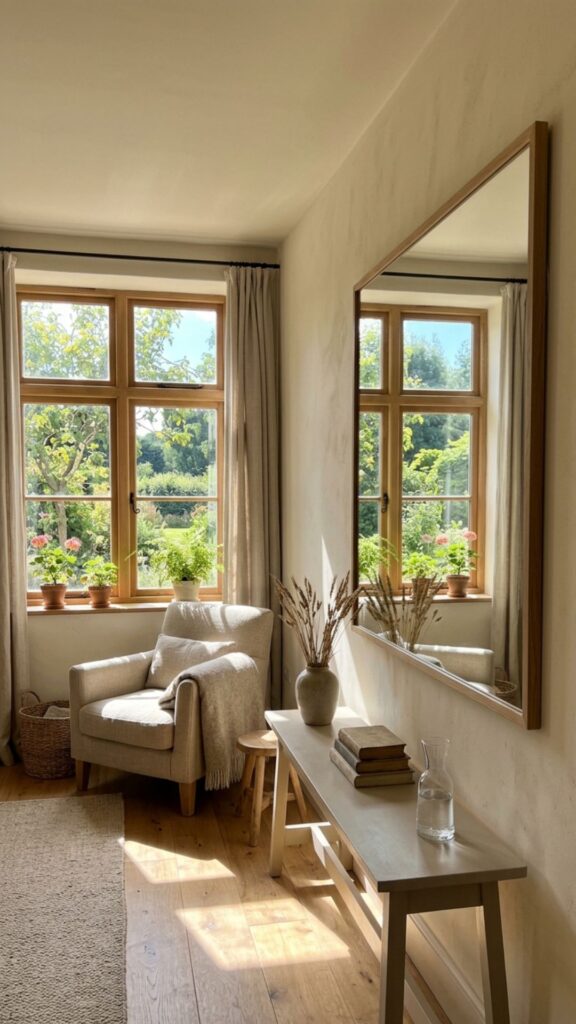
Mirrors are a minimalist’s best friend. A large mirror reflects natural light and bounces it around the room, effectively doubling the brightness. Place one opposite a window for the strongest effect.
You don’t need an ornate frame. A simple leaning floor mirror or a frameless wall mirror keeps the look clean while adding function. The reflection also creates the illusion of a second window, making the whole room feel more open.
6. Go Vertical With Storage
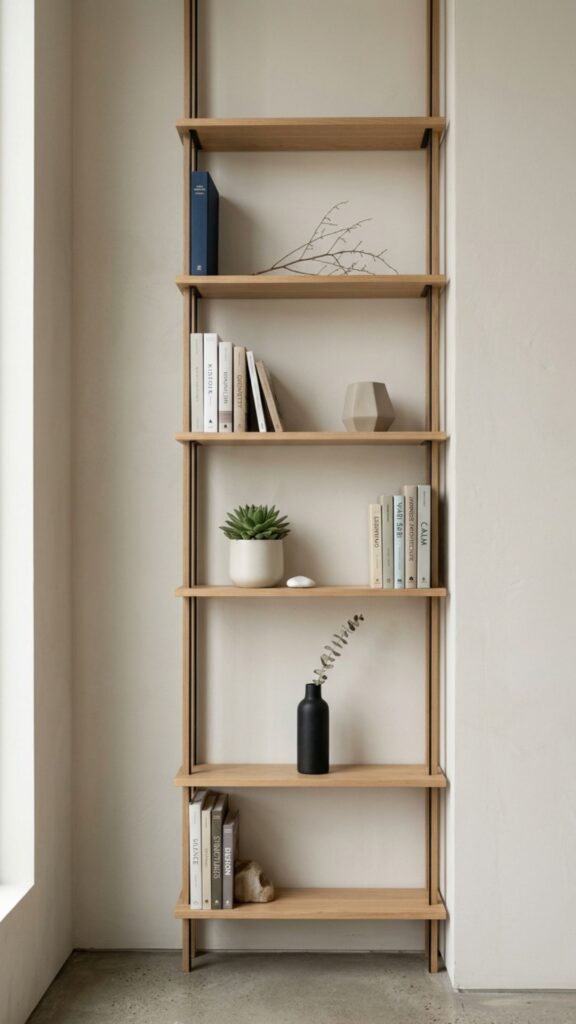
When floor space runs out, look up. Tall, narrow shelving units draw the eye upward and make ceilings feel higher. Wall-mounted shelves free up the floor entirely, which is exactly what a minimal room needs.
Keep these shelves mostly clear, though. The goal isn’t to fill every inch but to store essentials and display just a few favorite objects. A single row of books, a plant, and one piece of art beats a crowded shelf every time.
7. Pick a Slim-Line Coffee Table
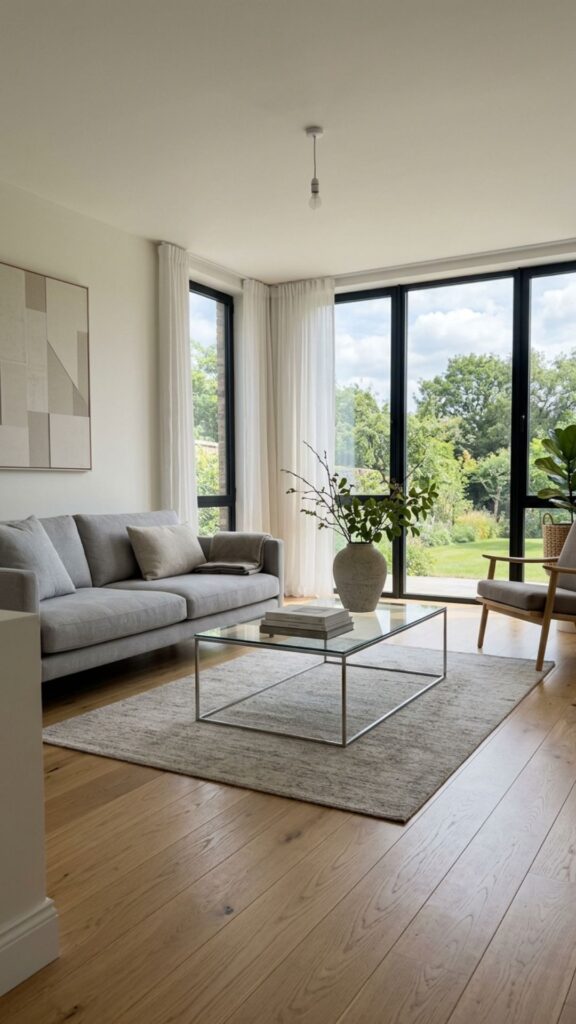
A heavy, oversized coffee table dominates a small living room. Swap it for a slim design with thin legs and a compact surface. Glass or acrylic tops work well since they nearly disappear, keeping sightlines open.
If you rarely use a full table, consider a small side table instead. It holds a drink and a book without hogging the center of the room. Less bulk in the middle means more usable walking space.
8. Use Light and Airy Curtains
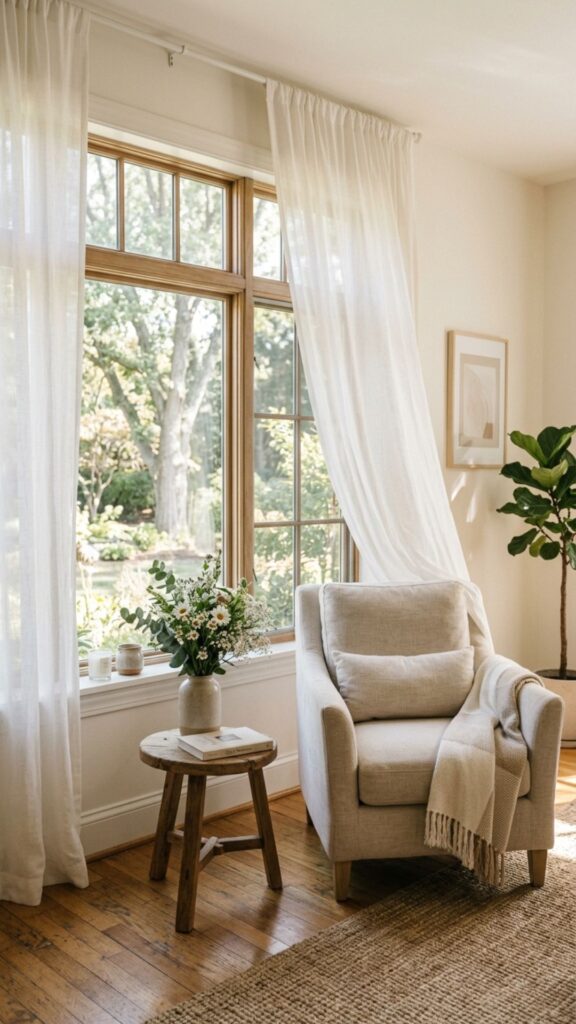
Heavy drapes weigh a room down and block precious light. Sheer or lightweight curtains let sunshine pour in while softening the windows. This keeps your minimal small living room decor ideas feeling fresh and open.
Hang the curtain rod higher and wider than the window frame. This makes windows look taller and pulls the eye upward. Choose a fabric that matches your wall color so the drapes blend in rather than break up the space.
9. Add Greenery Without Clutter
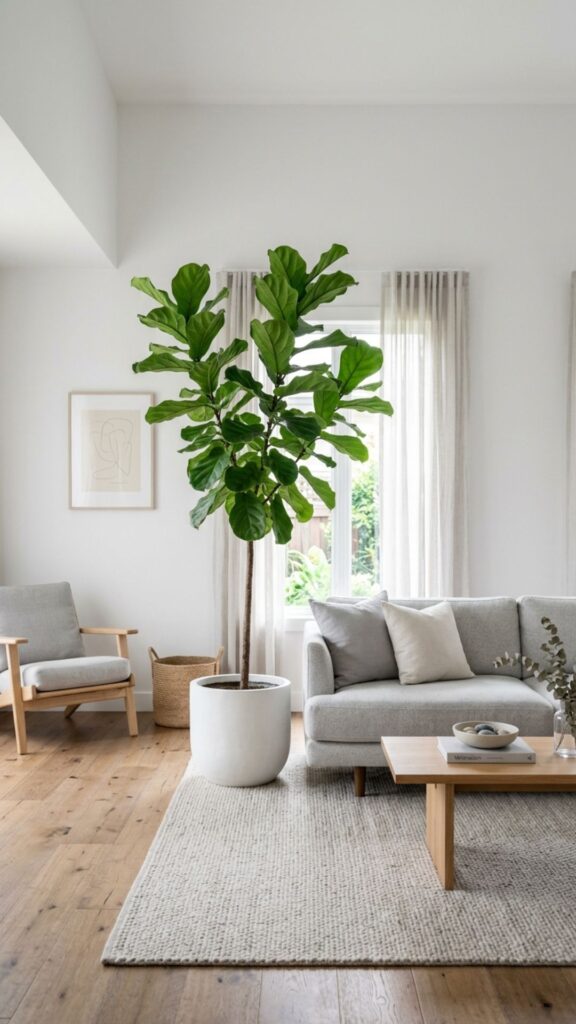
Plants bring life and color to a neutral room, but too many turn into clutter. Stick to one or two statement plants rather than a scattered collection. A tall fiddle-leaf fig or a trailing pothos adds personality without crowding surfaces.
Choose planters in simple shapes and muted tones. A single ceramic pot in white or terracotta keeps the look intentional. Greenery also improves air quality, which is a nice bonus in a compact apartment.
10. Keep Decor Minimal and Meaningful
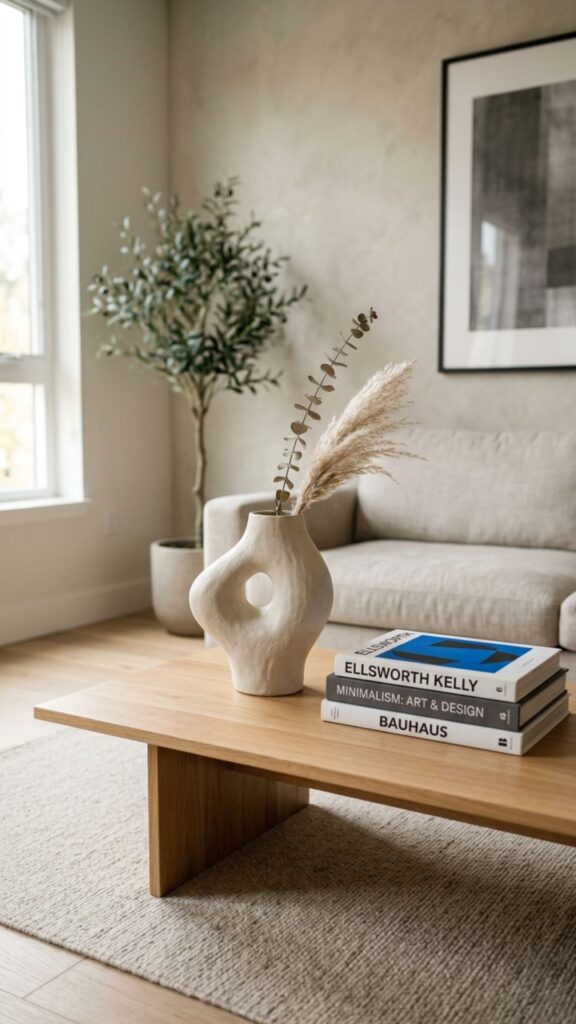
Minimalism isn’t about empty rooms. It’s about choosing pieces that matter. Instead of dozens of trinkets, display a few items you genuinely love. One striking vase or a small stack of art books says more than a shelf full of odds and ends.
When every object has purpose, the room feels curated rather than sparse. Rotate seasonal pieces if you like variety, but always edit ruthlessly. If something doesn’t add joy or function, it probably doesn’t belong.
11. Define Zones With a Rug
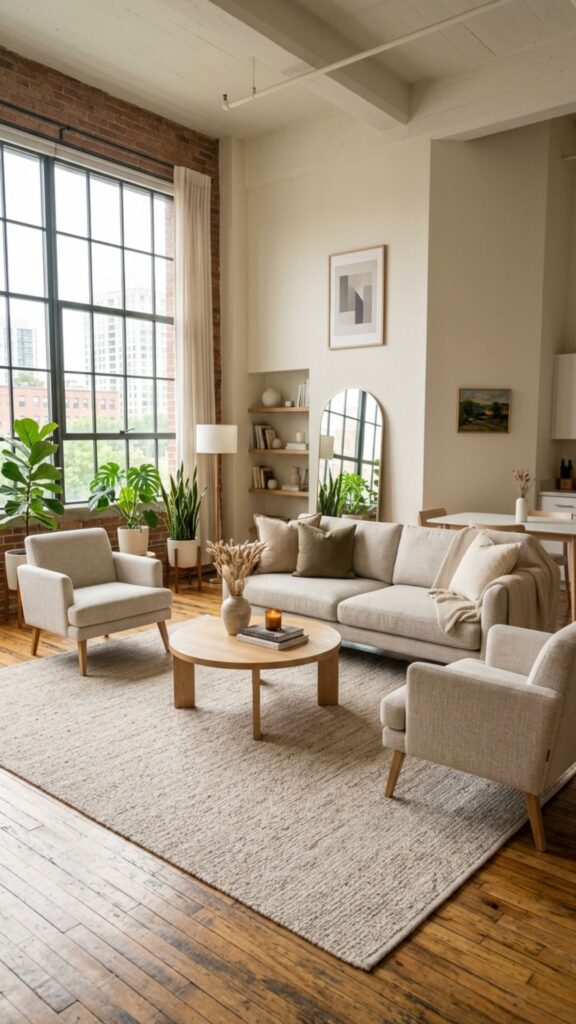
In studio apartments, a rug does the heavy lifting of separating areas. It anchors your seating zone and signals where the living room begins and ends. This gives structure to an open space without adding walls or dividers.
Choose a rug large enough that at least the front legs of your furniture sit on it. A too-small rug makes the room look disjointed. Stick to a low pile in a neutral shade to keep the minimal vibe intact.
12. Opt for Wall-Mounted Lighting
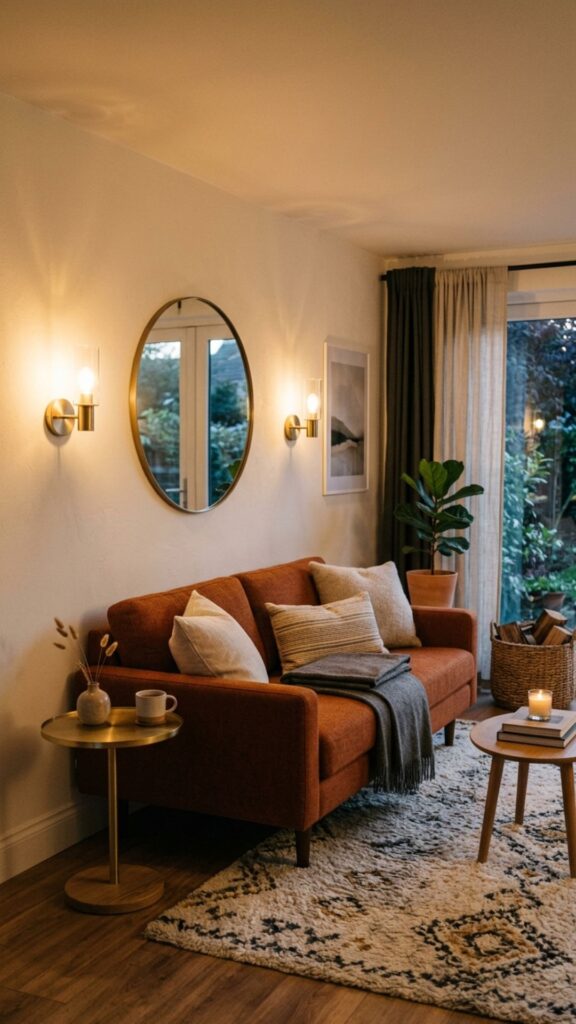
Table and floor lamps take up valuable surface and floor space. Wall sconces and pendant lights deliver the same warmth without the footprint. They also free up your side tables for actual use.
Layered lighting matters in a small room. Combine a soft overhead fixture with a couple of sconces for reading. Warm bulbs create a cozy glow that makes even a tiny space feel inviting after dark.
13. Choose Furniture With Legs
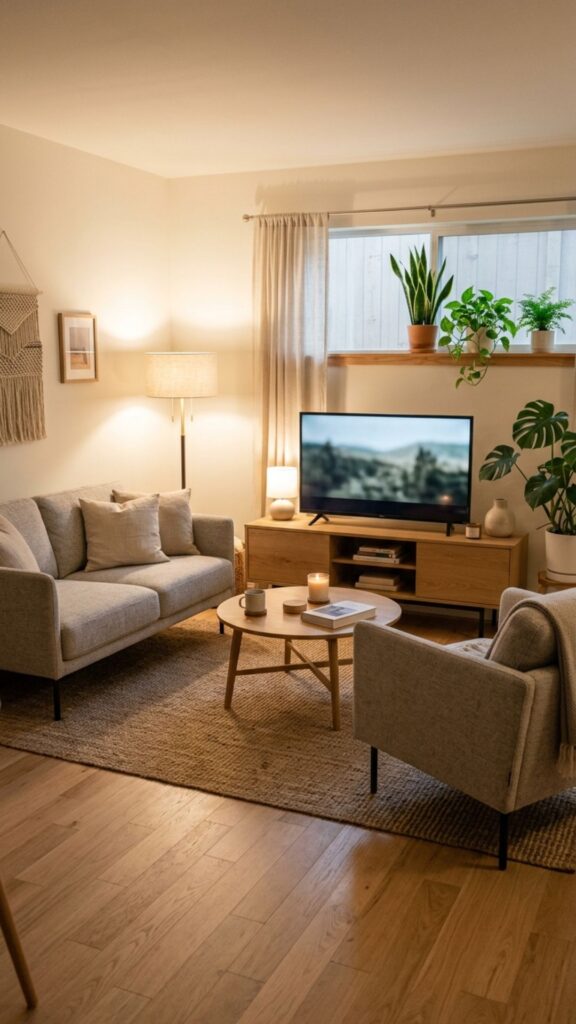
Furniture that sits directly on the floor looks heavy and blocks light. Pieces raised on legs let air and light flow underneath, which visually expands the room. This applies to sofas, chairs, and even media consoles.
The exposed floor beneath creates a sense of openness. It’s a subtle detail, but it makes a real difference in tight quarters. Wooden or metal legs both work, so pick whatever suits your style.
14. Mount Your TV on the Wall
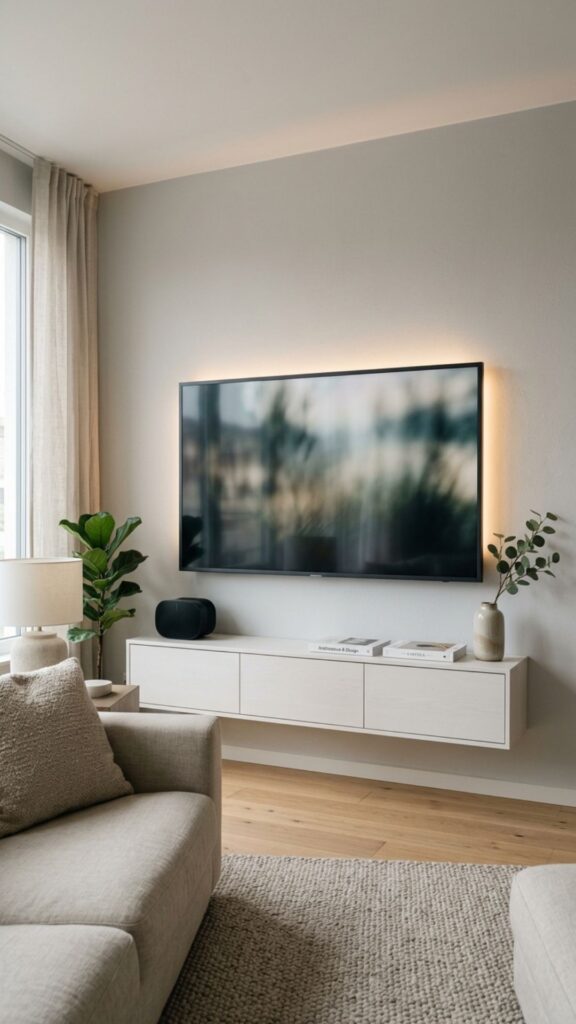
A TV stand takes up floor space you probably can’t spare. Mounting your television on the wall clears the clutter and gives the room a clean, modern edge. Route the cables through a cord cover for a tidy finish.
If you need storage below, choose a slim floating console rather than a bulky cabinet. This keeps the floor visible and the room feeling light. A wall-mounted setup also lets you adjust viewing height for comfort.
15. Use a Monochromatic Scheme
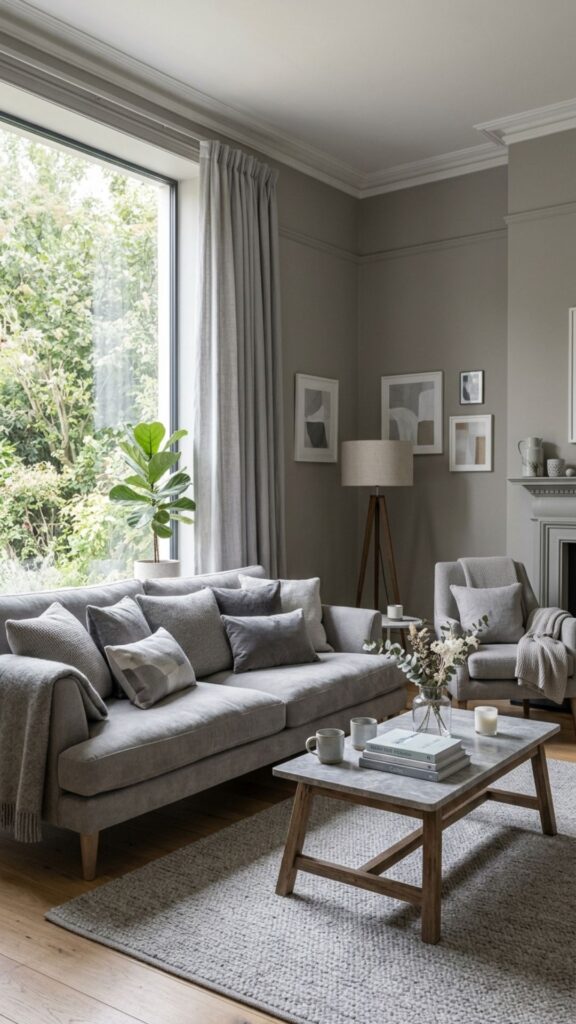
Sticking to one color throughout the room removes visual breaks and makes the space feel seamless. Different textures in the same shade add richness without clutter. Think a grey sofa, grey walls, and grey cushions in varied fabrics.
This approach is one of the easiest minimal small living room decor ideas to pull off. Because there’s no jarring contrast, the eye glides across the room uninterrupted. The result feels calm, sophisticated, and surprisingly spacious.
16. Invest in Built-In Storage
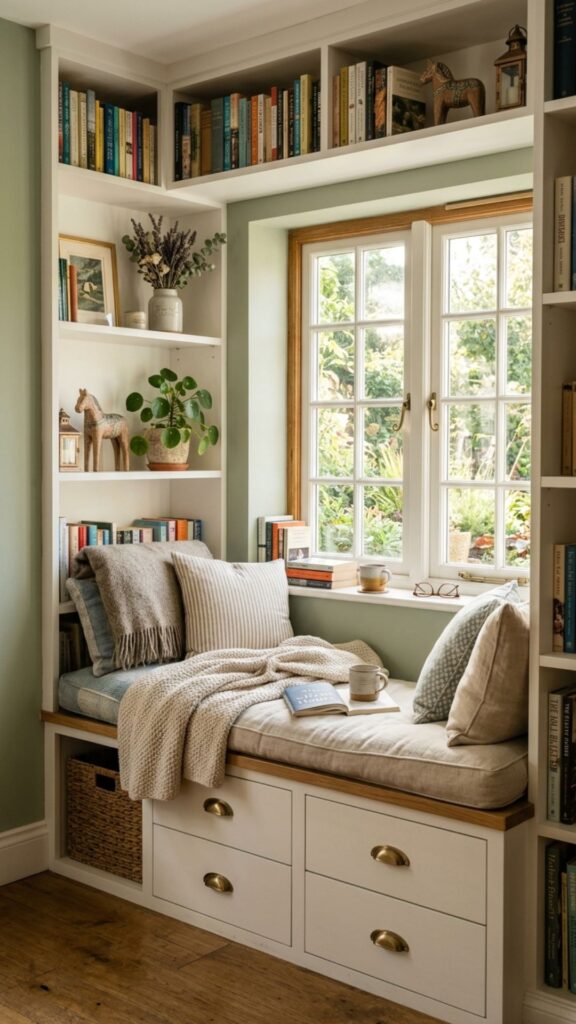
Custom built-ins use awkward corners and alcoves that would otherwise go to waste. A window seat with drawers underneath or shelving that wraps around a doorway maximizes every inch. In rentals, freestanding units styled to look built-in achieve a similar effect.
Hidden storage keeps everyday clutter out of sight, which is the heart of minimal living. When your remotes, chargers, and blankets have a home, surfaces stay clear. A clear room always reads as a bigger room.
17. Let in Natural Light
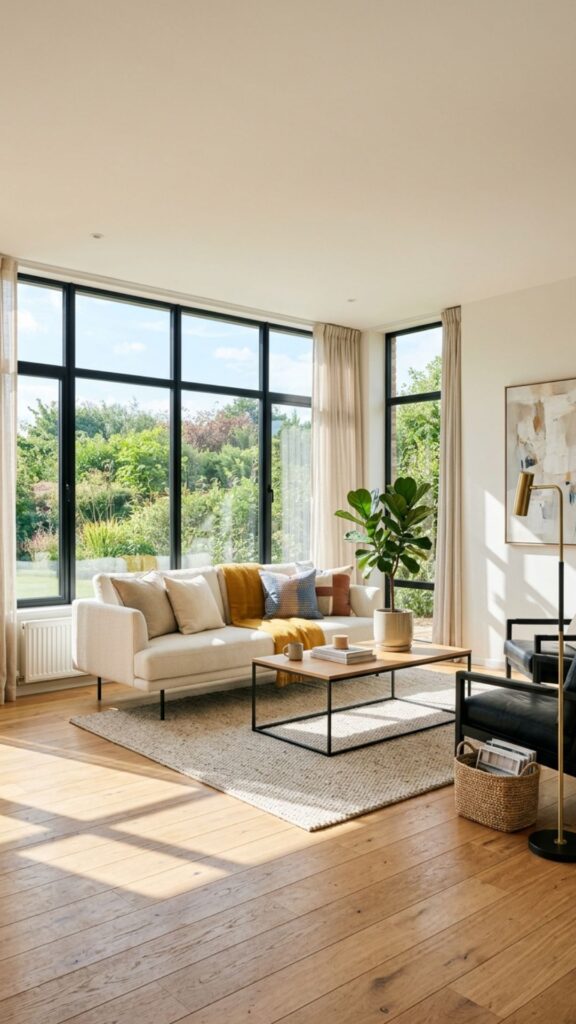
Nothing opens up a small space like sunlight. Keep windows unobstructed and avoid blocking them with tall furniture. If privacy is a concern, use light-filtering shades instead of heavy blinds.
Position your seating to make the most of the daylight. A sofa facing or beside a window feels brighter and more welcoming. Natural light also reduces the need for lamps during the day, keeping surfaces uncluttered.
18. Add Texture for Warmth
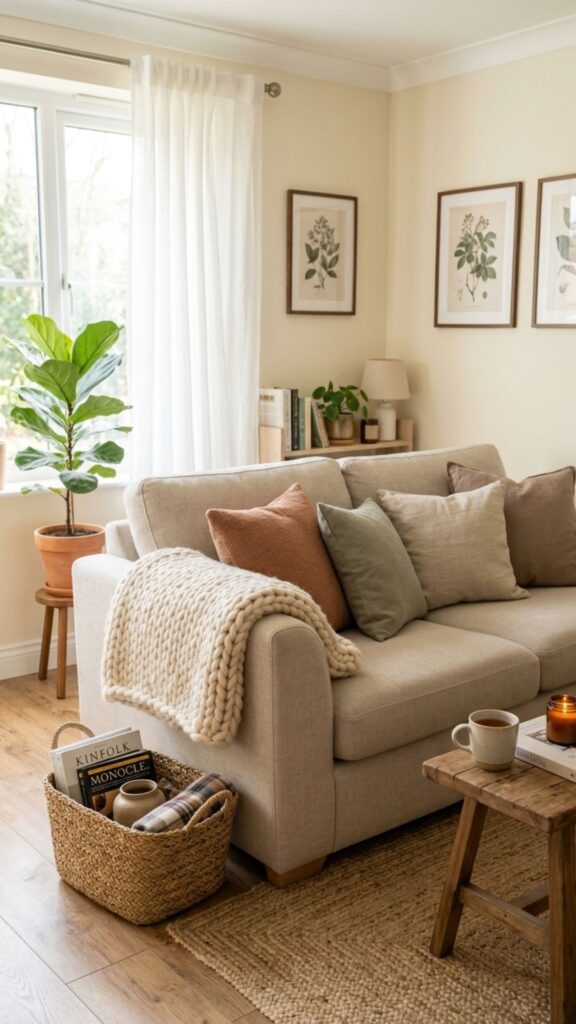
Minimal doesn’t have to mean cold. Layering textures brings warmth and depth to a neutral room. Think a chunky knit throw, a linen cushion, and a woven basket. These small touches make the space feel lived-in and cozy.
Texture keeps a monochromatic room from feeling flat. It rewards a second look without adding busy patterns or bright colors. A few tactile pieces go a long way in a compact living room.
19. Keep Walkways Clear
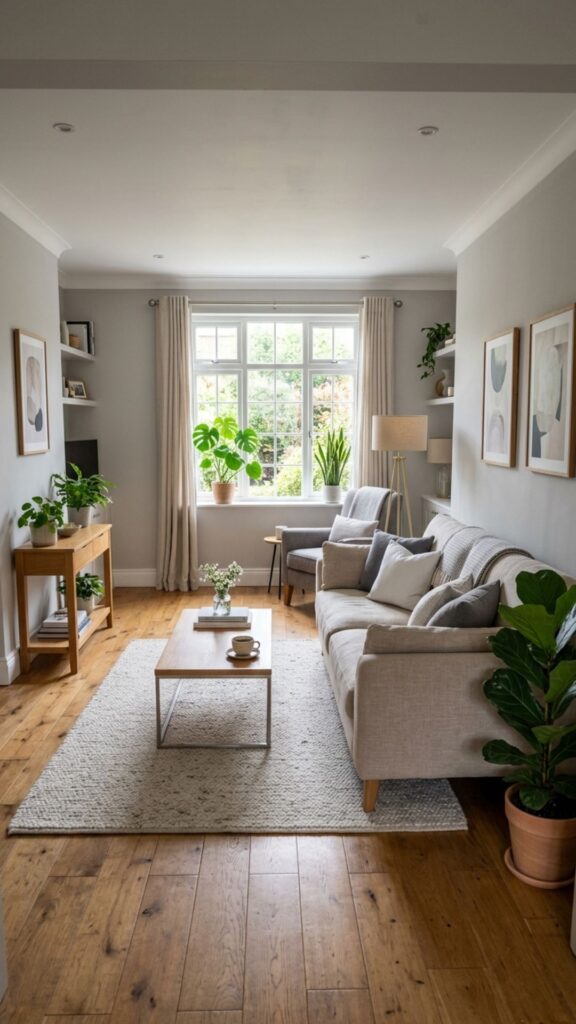
Good flow makes a small room function well. Leave clear paths between furniture so you can move around easily. Cramped walkways make a space feel smaller and more chaotic than it really is.
Aim for at least a couple of feet of clearance in main pathways. If you’re constantly squeezing past a chair, it’s in the wrong spot. Rearranging for better flow often reveals space you didn’t know you had.
20. Declutter Regularly
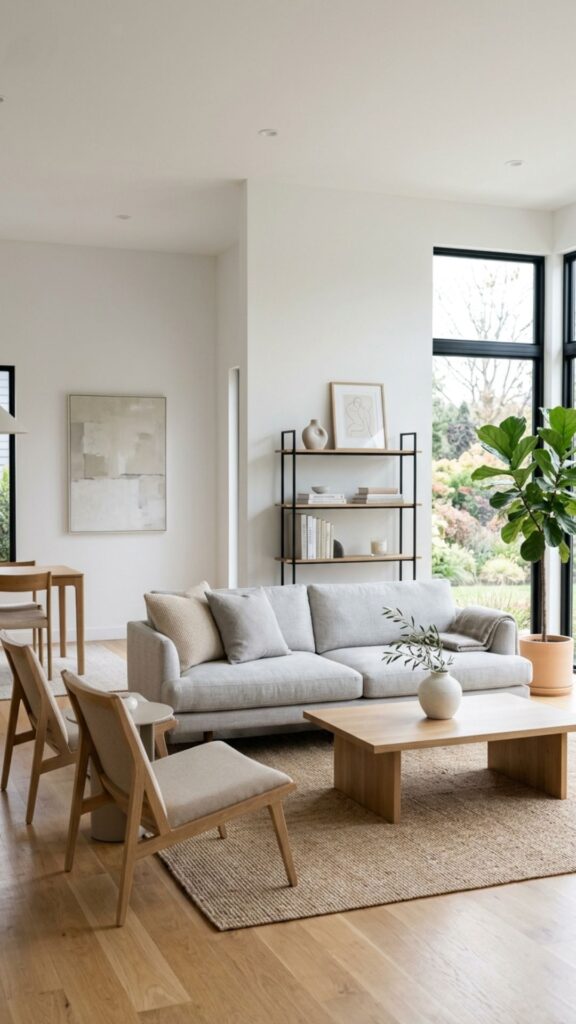
The most powerful minimal habit costs nothing. Regular decluttering keeps your living room feeling open and calm. Set aside time each month to clear out things that have crept in and no longer serve you.
A quick reset makes a huge difference. Return items to their homes, remove anything that doesn’t belong, and wipe down surfaces. This ongoing edit is what keeps a small space feeling fresh year-round.
Conclusion
Creating a minimal small living room in an apartment comes down to intention. Every piece you choose, from a low sofa to a single well-placed mirror, should serve a purpose and open up the space. When you strip away the excess, what’s left feels calm, functional, and genuinely yours.
Ready to transform your space? Pick two or three of these ideas and start this weekend. Begin with a good declutter, then tackle one furniture swap or lighting change. Small steps add up fast, and before long you’ll have a living room that feels twice its size.
How do I make a small living room look bigger?
Use light, neutral colors, add mirrors to reflect light, choose furniture with visible legs, and keep clutter to a minimum. Maximizing natural light and clear walkways also makes any small space feel larger.
What furniture works best in a minimal small living room?
Multifunctional and low-profile pieces work best. Look for a compact sofa, a slim coffee table, a storage ottoman, and wall-mounted or floating storage. These options save floor space while covering all your needs.
What colors are best for a minimal small living room?
Soft neutrals like white, beige, warm grey, and taupe are ideal. They reflect light and create a calm, open feel. A monochromatic scheme with varied textures adds depth without visual clutter.
Can a minimal living room still feel cozy?
Yes. Layer textures like knit throws, linen cushions, and woven baskets, and use warm lighting. Cozy comes from tactile materials and soft light, not from filling the room with stuff.
How often should I declutter a small living room?
A quick monthly reset works well for most people. Return stray items to their homes, remove anything you no longer need, and clear surfaces. Regular editing keeps the space open and stress-free.