A home office should do more than hold a desk and a laptop. It should be a place that helps you focus, feels comfortable for long workdays, and still looks beautiful when work is over. That is exactly why mid century modern home office design continues to feel so relevant.
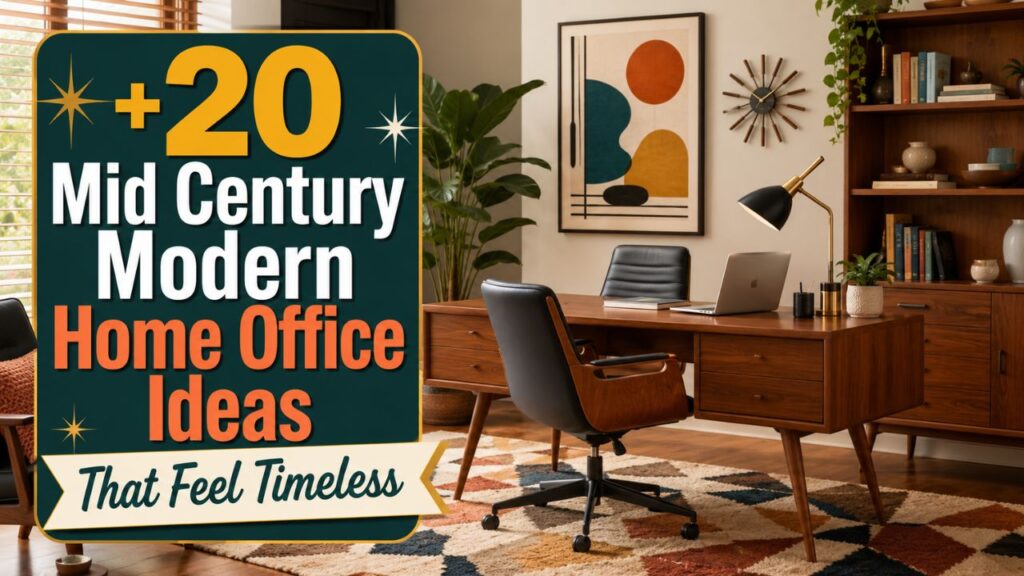
With its warm woods, sculptural furniture, clean lines, and practical approach to decorating, mid century modern style creates workspaces that feel sophisticated without becoming stiff. It also has a rare ability to look nostalgic and fresh at the same time.
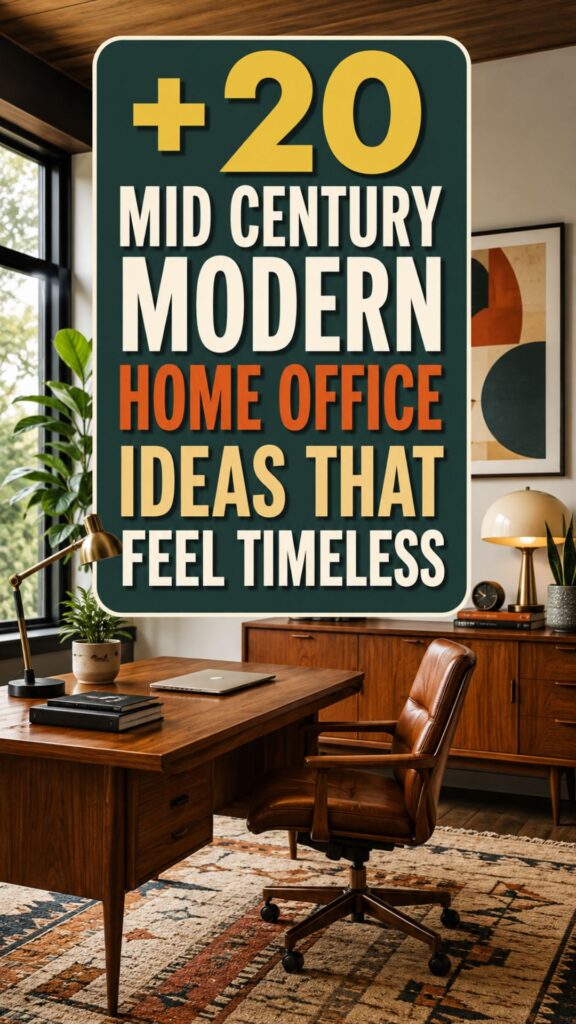
Whether you have an entire room to transform or just a quiet corner beside a window, these 20 mid century modern home office ideas can help you create a workspace that feels collected, functional, and effortlessly timeless.
1. Start With a Warm Wood Desk
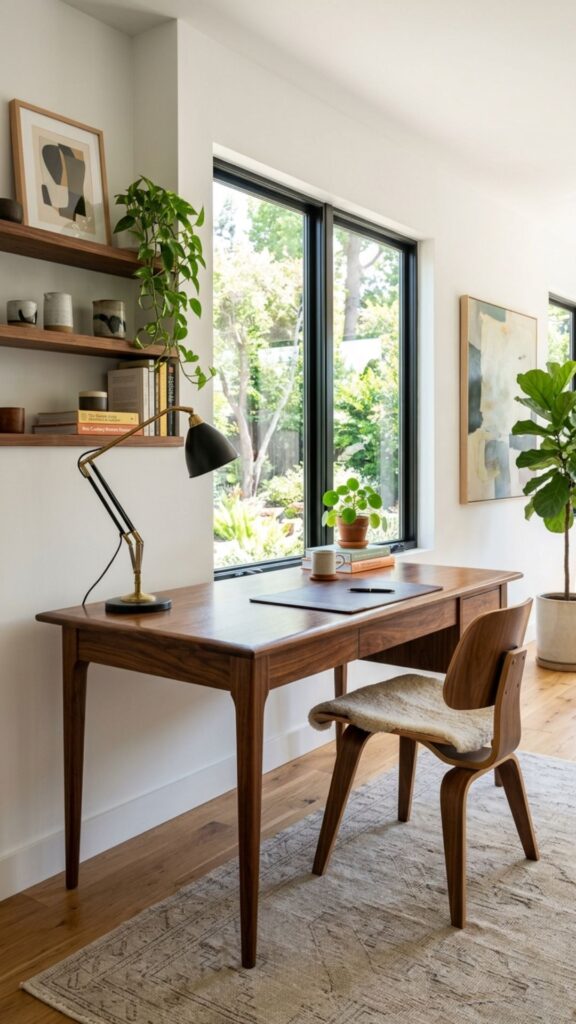
Nothing establishes mid century character faster than a beautiful wood desk.
Look for walnut, teak, oak, or other warm-toned woods with visible grain. A desk with tapered legs and a slim profile feels especially authentic to the era without making the room feel dated.
For a smaller office, skip oversized executive desks and choose a streamlined writing desk instead. The open space underneath keeps the room visually light while still giving you plenty of room to work.
2. Choose an Iconic-Looking Desk Chair
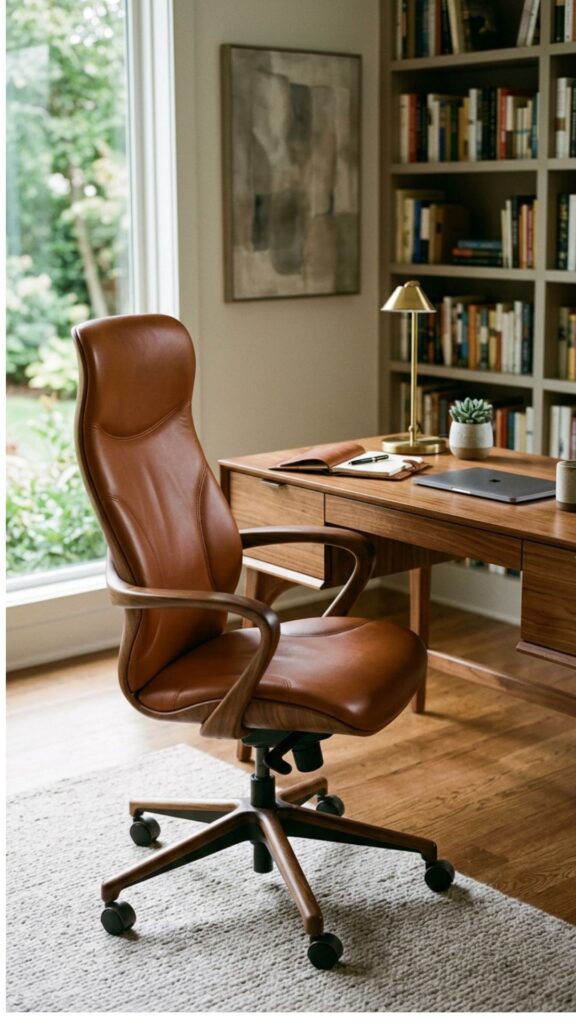
Your office chair can be practical without looking purely utilitarian.
A leather, faux-leather, molded wood, or upholstered chair with a curved silhouette works beautifully in a mid century office. Look for details such as walnut arms, slim metal legs, channel stitching, or a gently sculpted back.
Comfort should still come first, especially if you work from home daily. The goal is to find ergonomic support wrapped in a more refined design.
3. Create a Walnut Feature Wall
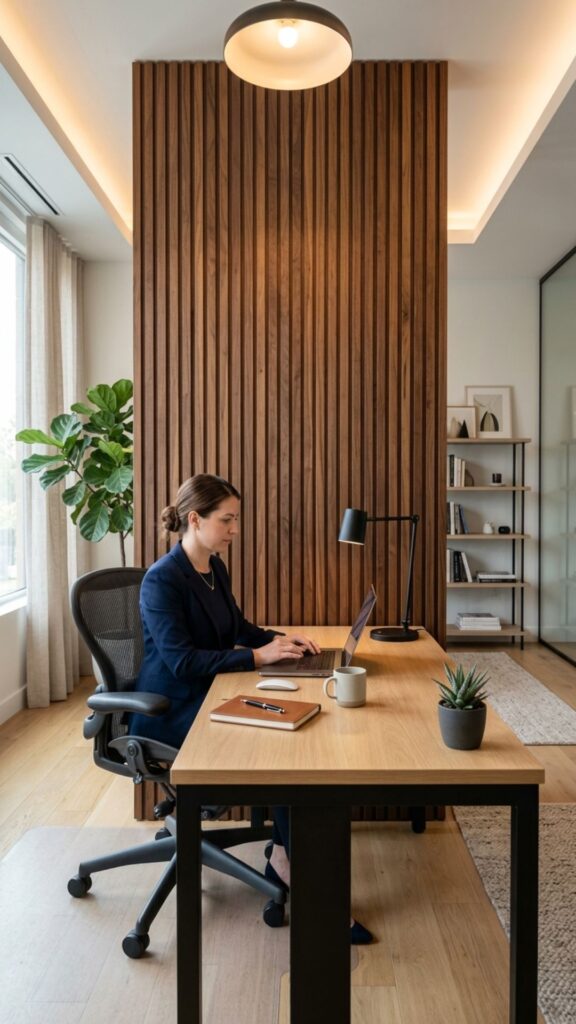
If you want your office to make a statement, introduce walnut on a larger scale.
Wood wall panels, vertical slats, or built-in walnut cabinetry can instantly make a basic room feel warmer and more architectural. You do not need to cover every wall. Even one wood-clad section behind the desk can become the visual anchor of the room.
Balance all that warmth with a light ceiling, neutral rug, or soft-colored walls.
4. Bring In an Olive Green Accent
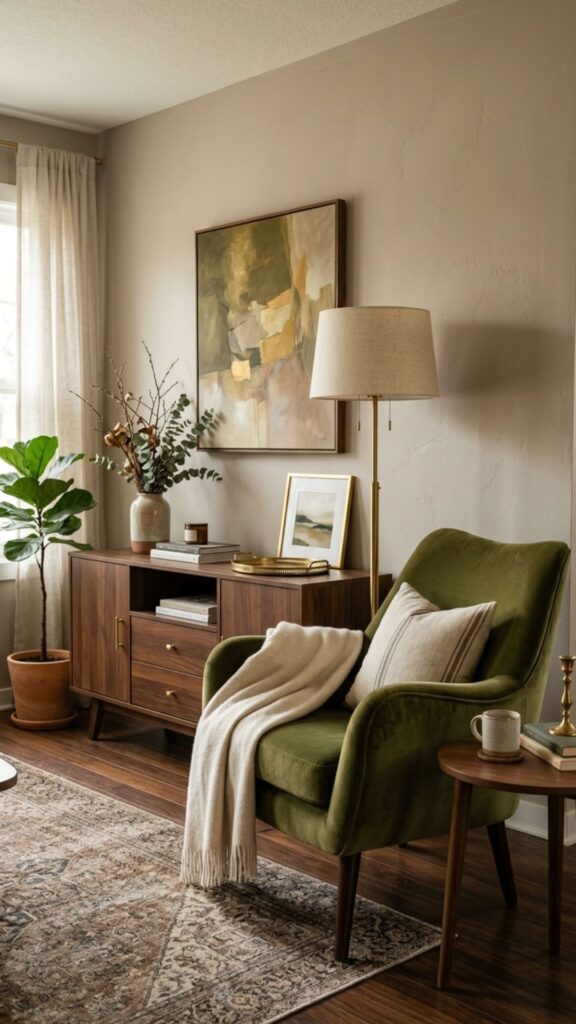
Olive green and mid century modern design are natural companions.
Try an olive desk chair, area rug, painted wall, storage cabinet, or pair of curtains. The muted green feels earthy and calming while pairing beautifully with walnut and brass.
For a subtler look, bring the color in through accessories such as a ceramic vase, desk organizer, or framed artwork.
5. Add a Sculptural Table Lamp
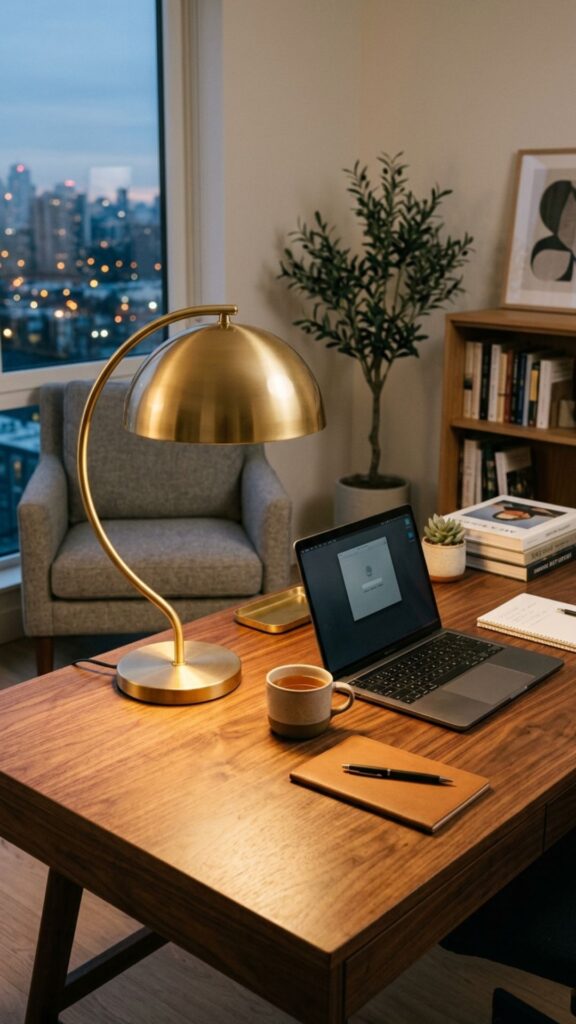
Mid century lighting often feels like functional artwork.
Instead of settling for a basic office lamp, choose something with personality. A dome shade, globe light, cone-shaped shade, arched neck, or brass finish can add instant character to your desk.
A well-chosen lamp also creates warmer evening lighting than relying only on bright overhead fixtures.
6. Keep the Color Palette Warm and Restrained
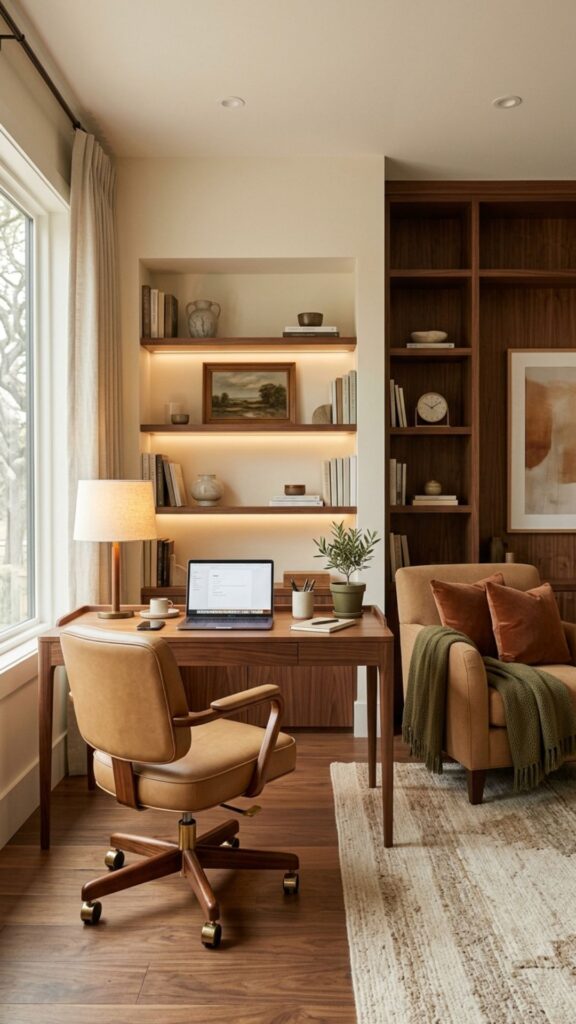
Mid century modern rooms can include bold colors, but they usually work best when the palette feels intentional.
Begin with warm neutrals such as:
- Cream
- Camel
- Tan
- Walnut brown
- Warm white
- Soft gray
Then introduce one or two accent colors such as rust, mustard yellow, olive green, burnt orange, or deep blue.
Restricting the palette keeps the office sophisticated rather than overly retro.
7. Install Floating Wood Shelves
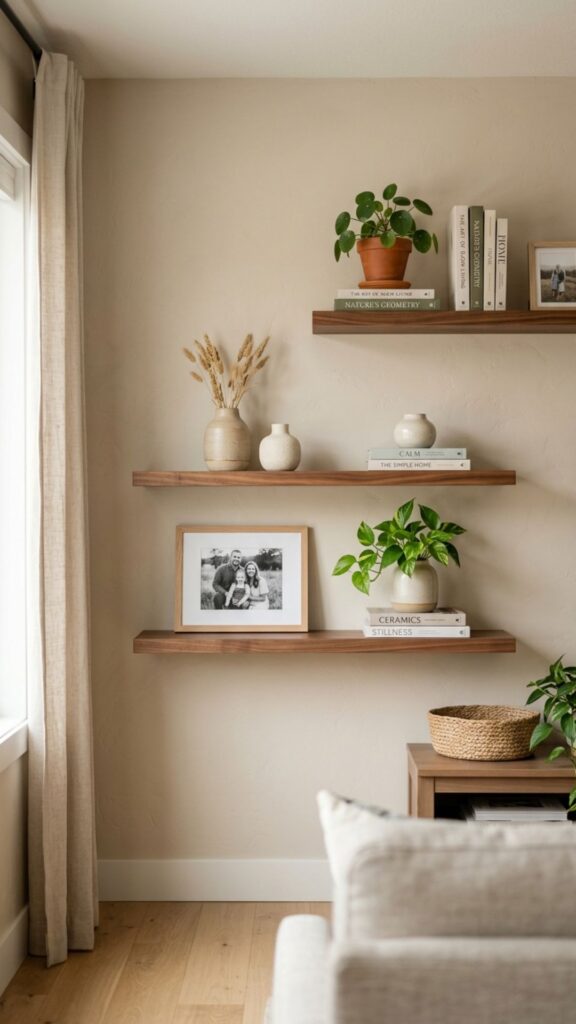
Floating shelves are perfect when you need storage without visually crowding the room.
Choose simple wooden shelves and style them with a mixture of practical and decorative pieces. Books, ceramic objects, framed photos, plants, and small storage boxes can make the shelves interesting while keeping everyday supplies close at hand.
Leave some empty space between objects. Mid century styling tends to feel strongest when every surface is not completely filled.
8. Use Geometric Artwork
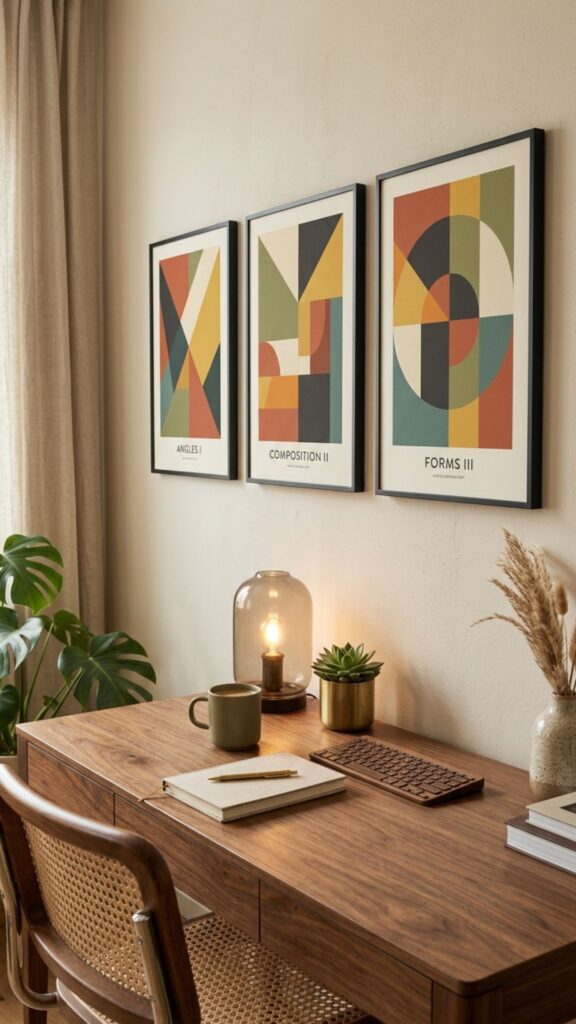
Artwork gives you an easy way to reference mid century style without changing your furniture.
Look for abstract prints featuring geometric shapes, sweeping lines, organic forms, or muted retro colors. Large artwork above the desk can create a strong focal point, while a gallery wall works well in more relaxed spaces.
Black, walnut, or slim brass frames complement the aesthetic particularly well.
9. Introduce a Vintage-Inspired Rug
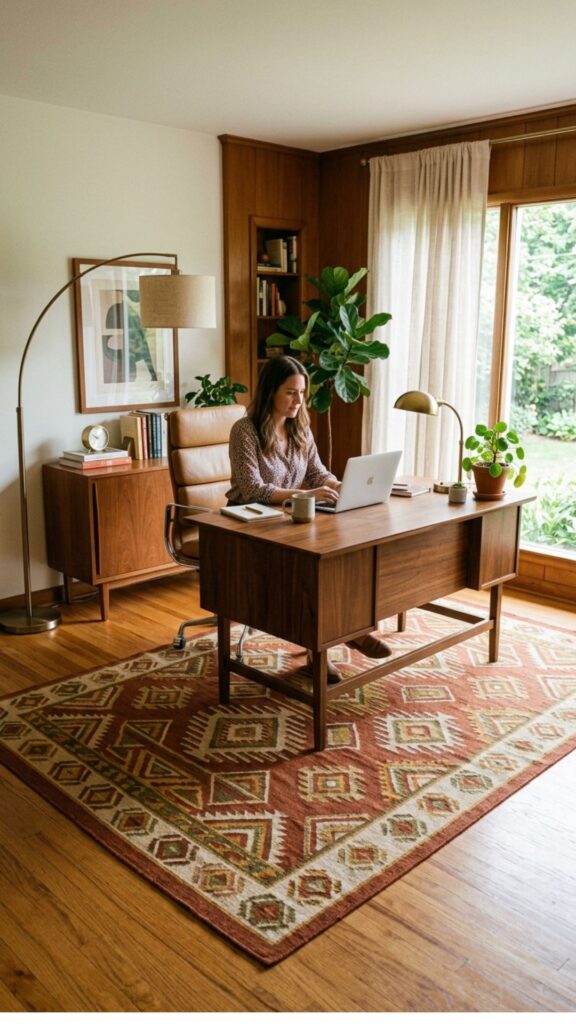
A rug can instantly make an office feel more finished.
Choose a low-pile rug with subtle geometric patterns, faded colors, or simple abstract forms. Rust, beige, mustard, blue, brown, and olive tones work especially well with mid century furniture.
Besides adding visual interest, a rug softens sound and makes a home office feel more comfortable and residential.
10. Mix Wood With Black Details
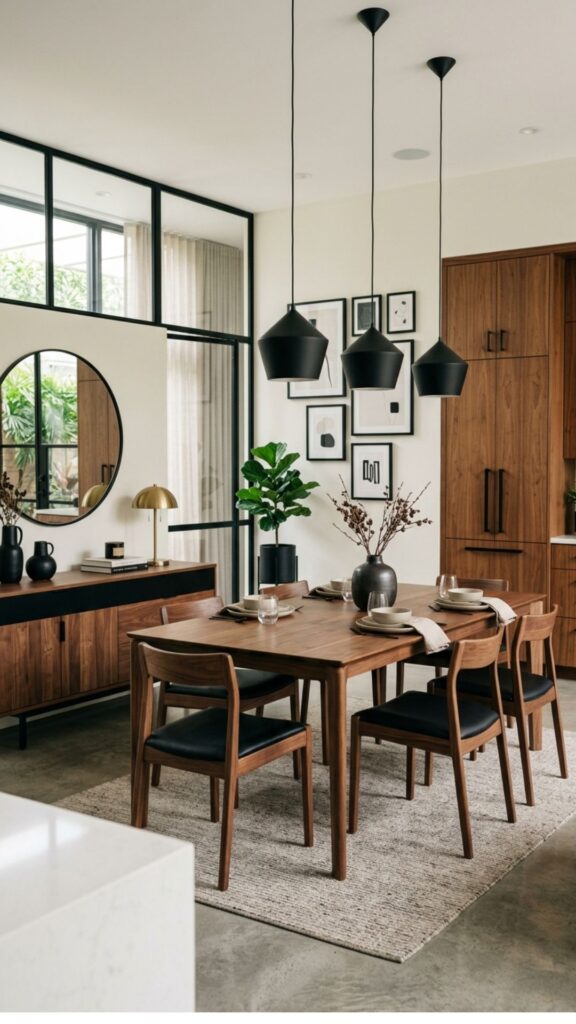
Too much wood can occasionally make a mid century room feel heavy. Black accents create just enough contrast.
A black desk lamp, picture frame, chair base, curtain rod, cabinet handle, or shelving bracket can sharpen the entire space.
The combination of walnut and matte black is particularly effective because it feels rooted in classic mid century design while still looking contemporary.
11. Add a Statement Lounge Chair
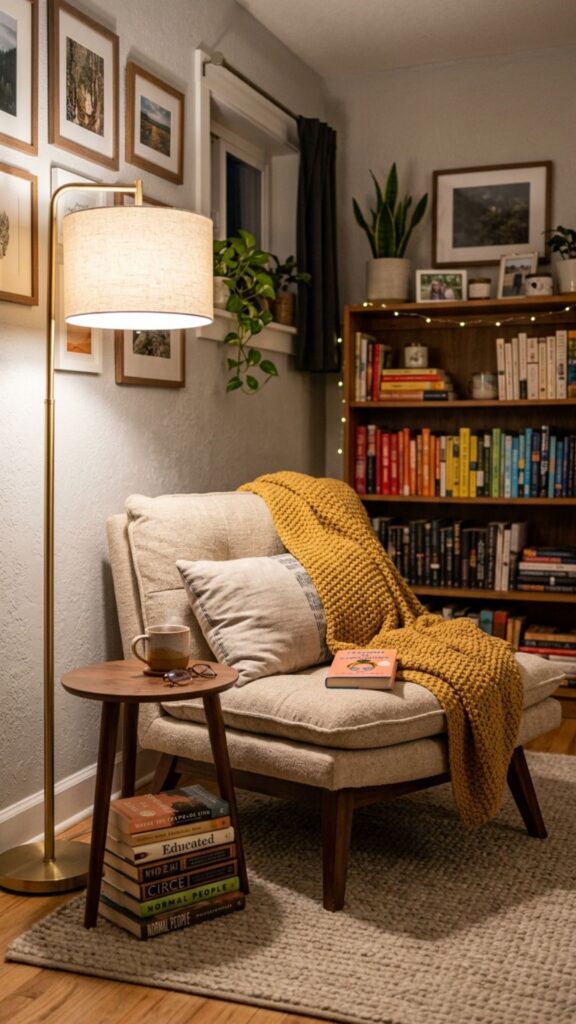
If space allows, give your office somewhere to sit that is not your desk.
A low lounge chair with wooden arms, angled legs, or textured upholstery creates a relaxed reading corner. Add a small side table and floor lamp, and suddenly your office becomes useful for brainstorming, reading, or taking a coffee break.
It also makes the room feel more like a thoughtfully designed living space than a purely functional workspace.
12. Incorporate a Mid Century Credenza
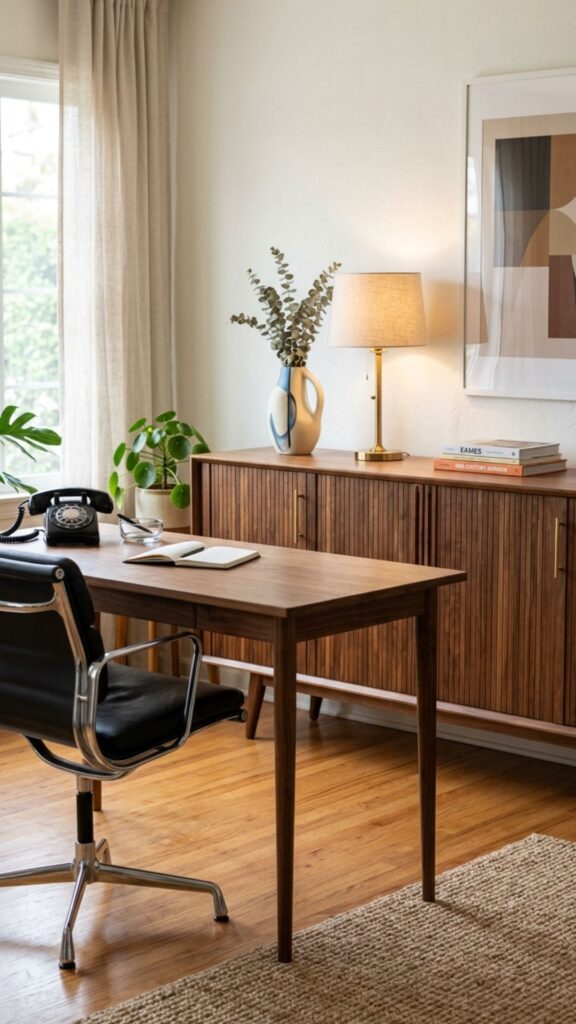
A credenza is one of the most useful pieces you can add to a home office.
Place one behind or beside your desk for storing paperwork, electronics, office supplies, and miscellaneous clutter. Choose a design with sliding doors, tapered legs, or minimal hardware to reinforce the mid century look.
Style the top with a lamp, artwork, record player, books, or a few decorative objects rather than turning it into another crowded storage surface.
13. Let Natural Light Become Part of the Design
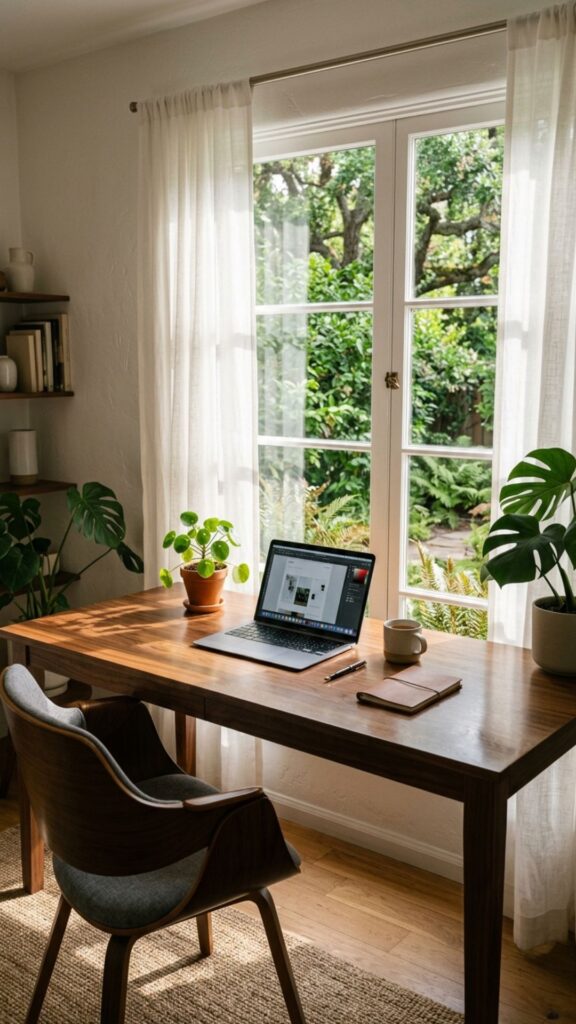
Mid century interiors often emphasize a strong connection between indoor and outdoor spaces.
If possible, position your desk near a window and take advantage of natural daylight. Keep window treatments simple so the room remains bright and open.
Sheer curtains, woven shades, or understated drapes work better than overly ornate treatments.
A view of trees or greenery can become part of the room’s visual palette.
14. Bring In Large Leafy Plants
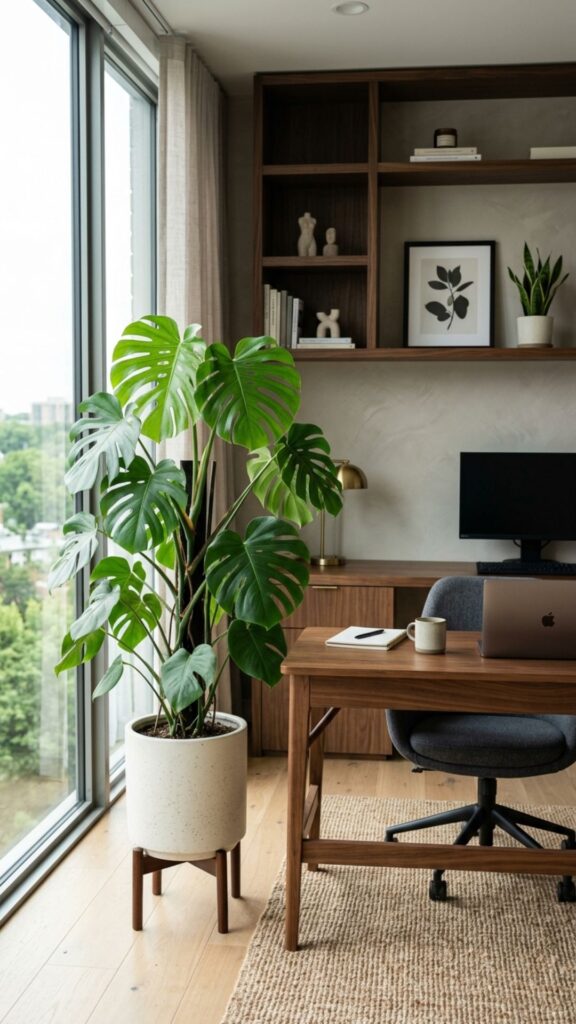
Plants soften the straight lines found in many mid century furniture pieces.
Try a rubber plant, monstera, fiddle-leaf fig, snake plant, or tall indoor tree in an uncluttered ceramic or wood planter.
One substantial plant often looks more intentional than scattering numerous tiny plants around the office.
If natural light is limited, choose low-maintenance varieties that tolerate lower-light conditions.
15. Try a Mustard or Rust Accent Chair
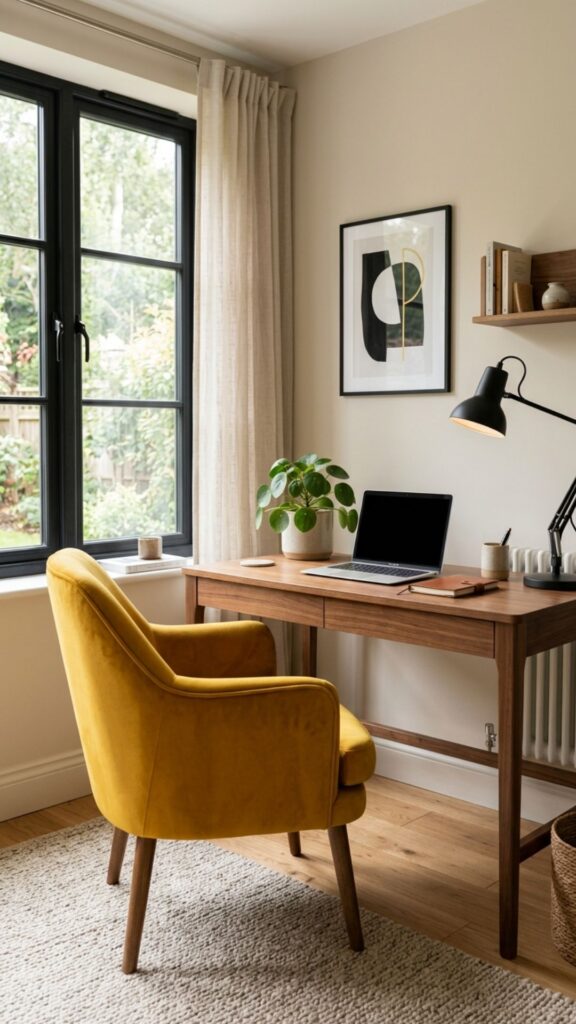
If your office is mostly neutral, one saturated piece can completely change its personality.
A mustard yellow, burnt orange, terracotta, or rust-colored chair brings unmistakable mid century warmth without requiring you to commit to a colorful room.
Keep surrounding elements quieter so the chair feels like a deliberate focal point rather than one color competing with several others.
16. Choose Storage That Looks Like Furniture
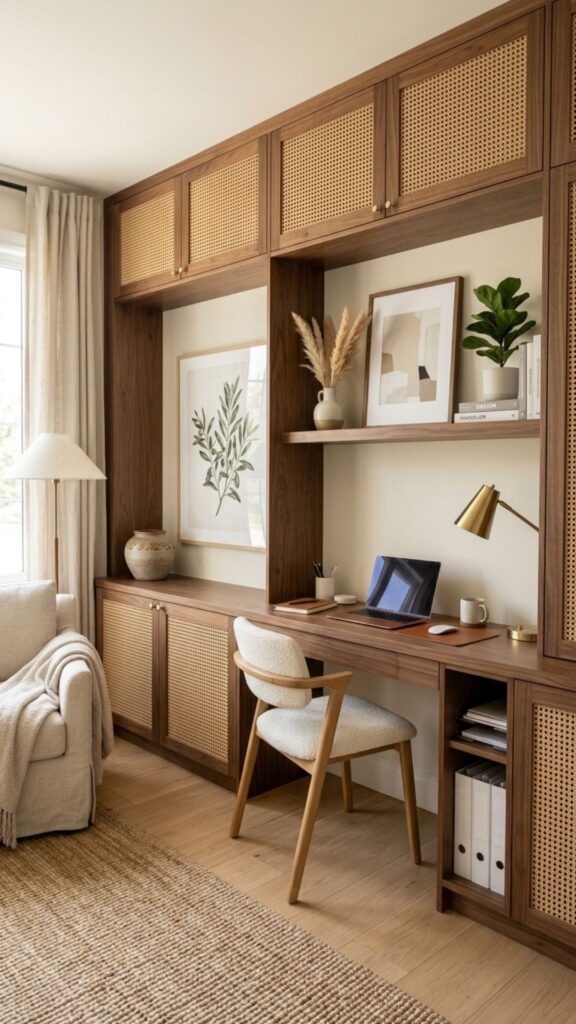
Plastic drawers and bulky filing systems may be practical, but they can disrupt an otherwise beautiful office.
Instead, choose storage cabinets that look like intentional furniture. Walnut drawers, low cabinets, cane-front units, or streamlined bookcases can hide work supplies while supporting the design.
Closed storage is especially useful in a home office because eliminating visible clutter helps preserve the clean lines associated with mid century modern interiors.
17. Add Brass in Small Doses
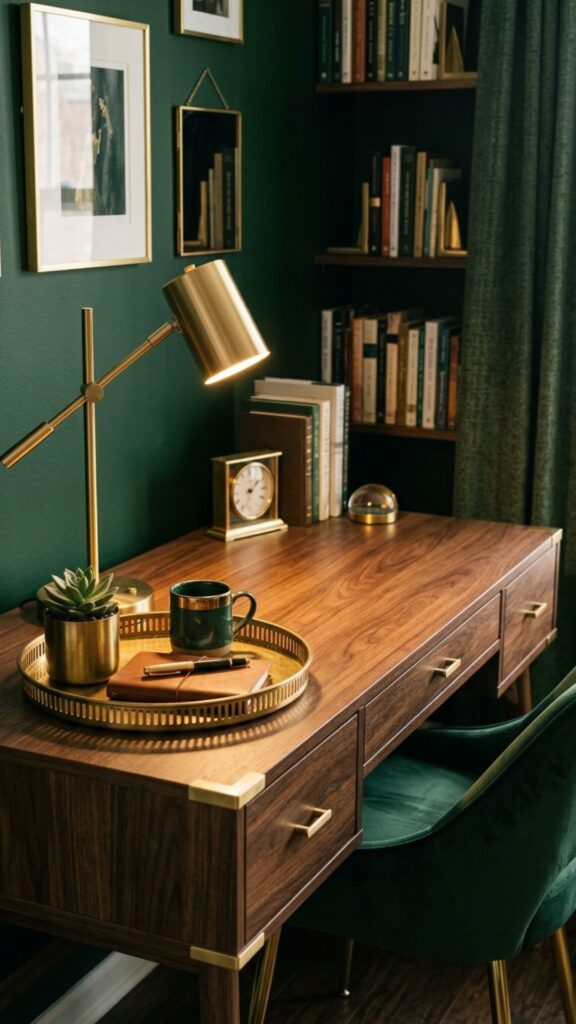
Brass introduces warmth and polish without making the room overly glamorous.
Use it selectively through a desk lamp, cabinet hardware, clock, picture frame, planter, or decorative tray.
A few brass touches pair beautifully with walnut, black accents, and deep green tones. Too much can shift the room toward a more luxurious Art Deco look, so restraint is key.
18. Create a Compact Mid Century Office Nook
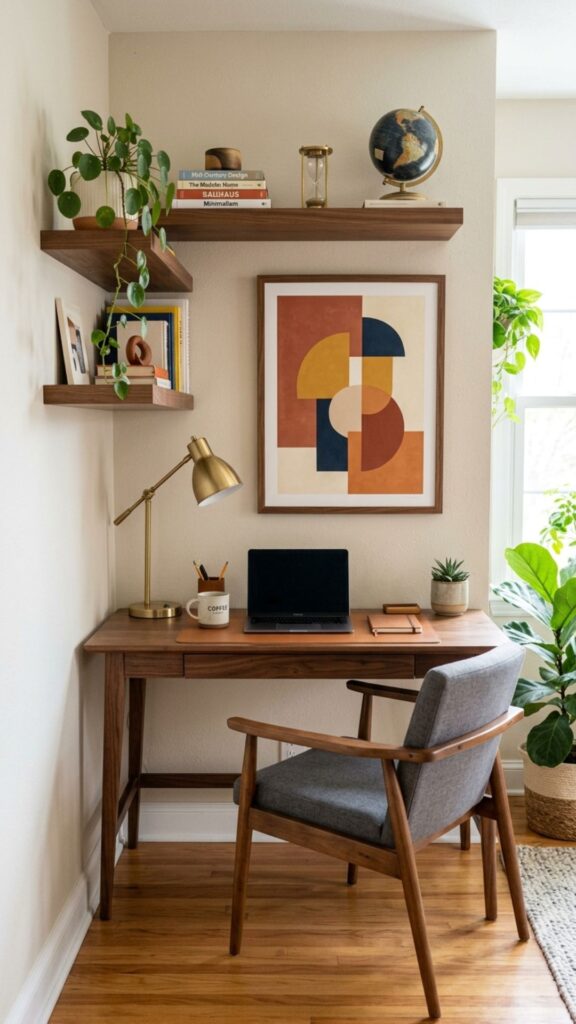
You do not need a spare room to achieve the look.
A bedroom corner, hallway alcove, living room wall, or space beneath the stairs can become an attractive workstation with a slim wood desk and compact chair.
Hang one piece of abstract art above the desk, add a small lamp, and install floating shelves for storage.
Keeping the furniture proportional to the space prevents a small office setup from feeling cramped.
19. Layer Your Lighting
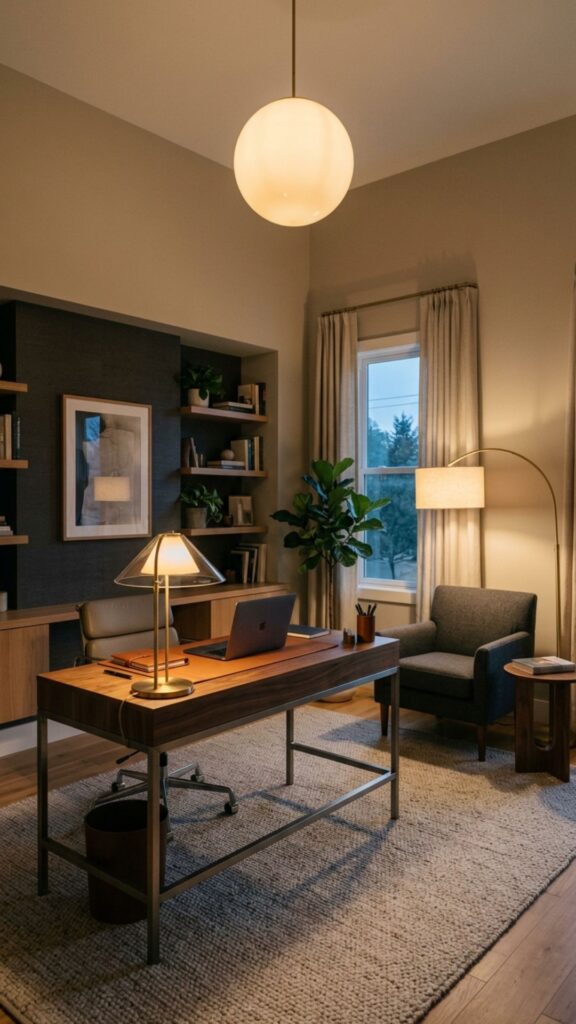
A timeless office should look good at every hour of the day.
Instead of depending on one ceiling fixture, combine several lighting sources. You might use an overhead globe fixture, focused desk lamp, and warm floor lamp in a reading corner.
Layered lighting makes the room feel softer in the evening and allows you to adjust brightness depending on what you are doing.
Choose bulbs with a comfortable warm tone rather than harsh, overly cool light whenever practical.
20. Blend Vintage Pieces With Modern Technology
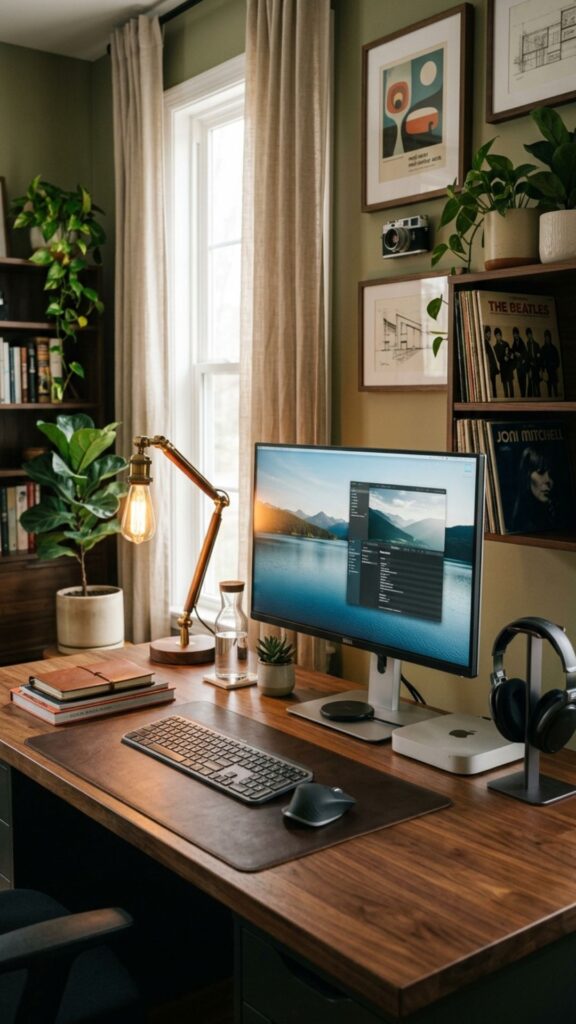
The most successful mid century modern home offices do not look like museum sets.
Your monitor, keyboard, speakers, chargers, and other technology are part of modern life, so allow old and new elements to coexist.
Place a contemporary monitor on a walnut desk. Hide cables in discreet organizers. Pair modern speakers with vintage-inspired lighting. Use a streamlined charging station instead of leaving cords scattered across the workspace.
This balance is what makes the style feel timeless rather than trapped in another decade.
How to Make a Mid Century Modern Home Office Feel Current
The secret is avoiding the temptation to make every object look vintage.
Choose a few unmistakably mid century elements—perhaps a walnut desk, sculptural chair, globe lamp, and geometric artwork—and combine them with simpler contemporary pieces.
Texture also makes a difference. Wood, leather, wool, linen, ceramic, metal, and greenery create depth without requiring excessive decoration.
Above all, prioritize functionality. Mid century modern design became influential partly because it paired attractive forms with practical everyday living. Your home office should follow the same principle.
Conclusion
A beautiful home office does not need to chase every new design trend. Sometimes the most inspiring spaces come from ideas that have already proven their staying power.
Mid century modern style offers exactly that balance. Warm woods, clean silhouettes, thoughtful storage, sculptural lighting, earthy colors, and carefully chosen accents can create a workspace that feels inviting today and still looks stylish years from now.
You also do not need to redesign your entire office at once. Start with one defining element—a walnut desk, a vintage-inspired chair, a globe lamp, or a piece of abstract artwork—and build around it gradually.
When every piece serves a purpose and contributes to the atmosphere, your home office becomes more than a place to answer emails. It becomes a space you genuinely enjoy spending time in.
What colors work best in a mid century modern home office?
Warm neutrals, olive green, mustard yellow, burnt orange, rust, brown, and muted blue all work beautifully.
What wood is best for mid century modern furniture?
Walnut is especially popular, although teak, oak, and other warm-toned woods can also achieve the look.
Can a small home office use mid century modern style?
Yes. Slim desks, tapered legs, floating shelves, and compact storage make the style particularly suitable for small spaces.
How can I make my office look mid century without replacing everything?
Add a few key elements such as geometric art, a retro-inspired lamp, walnut accessories, an area rug, or an accent chair.
Is mid century modern home office design still in style?
Yes. Its simple forms, practical furniture, natural materials, and warm colors allow it to blend easily with contemporary interiors, giving it lasting appeal.