Living in Florida means you get to enjoy your backyard almost year-round. Warm evenings, sunny weekends, and long stretches of good weather practically beg you to cook and gather outside.

But building an outdoor kitchen here isn’t quite like building one in a milder climate. Humidity, salt air, sudden downpours, and relentless heat all shape what works and what falls apart in a season.

We’ve gathered 20 outdoor kitchen ideas Florida homeowners can actually use. Each one balances beauty with practicality, because we believe your outdoor space should feel good, look good, and hold up for years. Whether you’re planning a full build or a simple upgrade, these ideas will help you make smart choices. Let’s dig in.
1. Choose Marine-Grade Stainless Steel Appliances
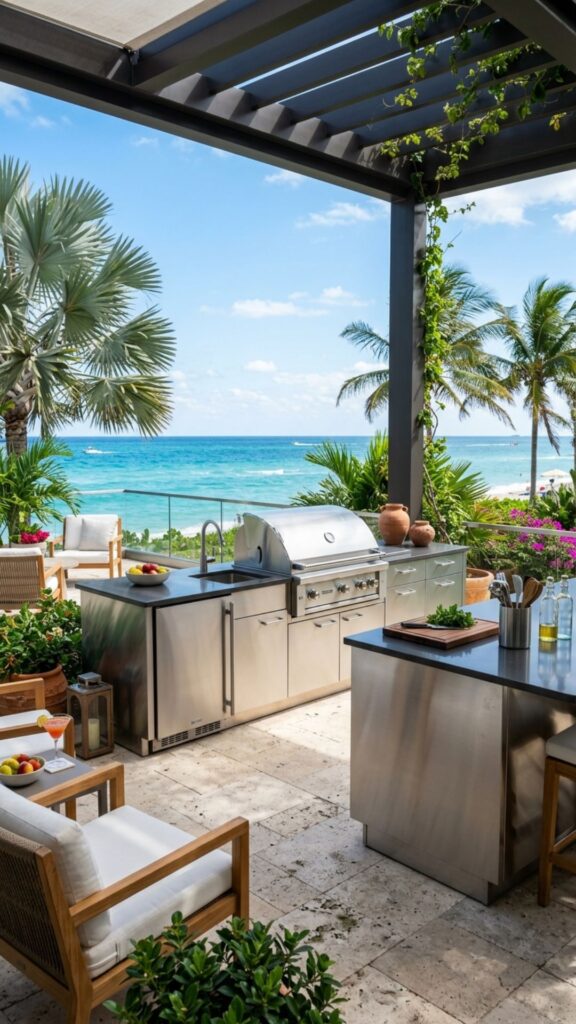
Florida’s salty coastal air corrodes cheap metal fast. Marine-grade stainless steel, often labeled 316-grade, resists rust and pitting far better than the standard 304 you’ll find in many kitchens. If you live anywhere near the coast, this upgrade pays for itself by outlasting the elements.
We recommend checking the grade before you buy anything. A grill or refrigerator might look identical on the showroom floor, but the wrong metal will show corrosion within a year or two. Ask your supplier directly, and don’t settle for vague answers.
2. Build a Covered Pergola or Roof Structure
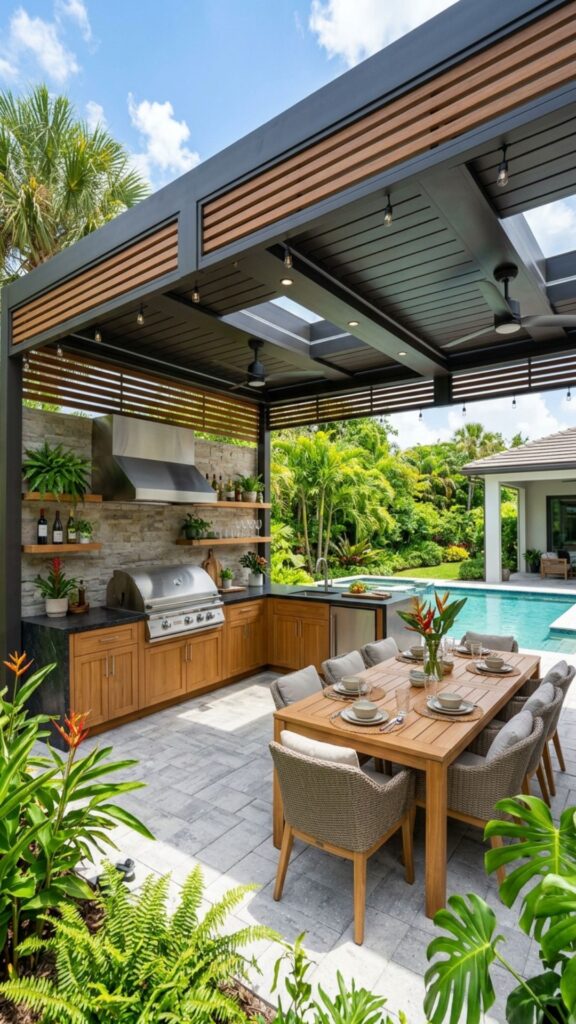
Shade is not optional in Florida. A covered structure protects you, your guests, and your appliances from harsh sun and sudden rain. It also extends how many hours a day you can comfortably use the space.
We suggest a solid roof or an aluminum pergola with a retractable canopy. Wood pergolas look lovely but demand constant upkeep in this humidity. A well-designed cover turns a fair-weather kitchen into an everyday one.
3. Install Ceiling Fans to Beat the Humidity
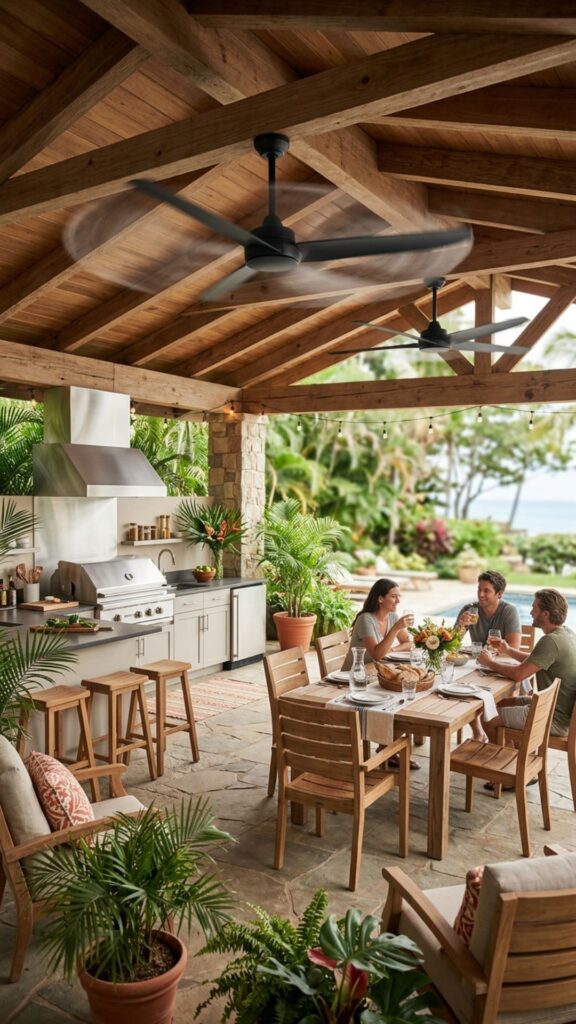
Still, heavy air makes cooking miserable. Outdoor-rated ceiling fans keep the breeze moving and make a real difference on sticky August afternoons. They also help keep bugs away, which is a quiet bonus.
Look for fans marked “wet-rated,” not just “damp-rated.” Wet-rated fans handle direct moisture and rain, so they survive our storm season without warping or shorting out. Mount them under your covered area for the best effect.
4. Pick Weather-Resistant Countertops
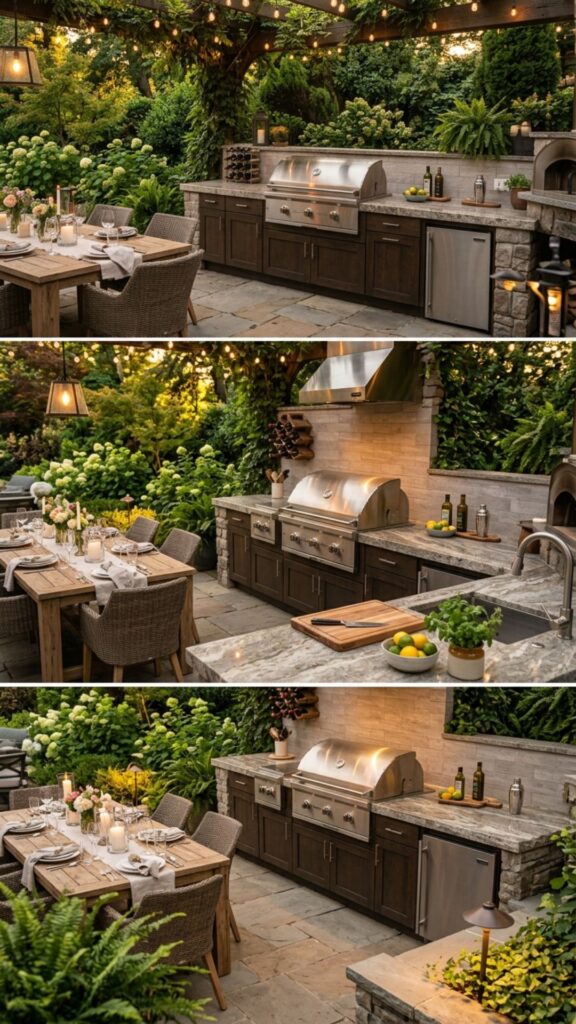
Granite and quartzite are two of the best countertop choices for Florida kitchens. They shrug off heat, resist stains, and stand up to sun exposure without fading. Concrete works too, though it needs sealing to keep moisture out.
We’d steer you away from butcher block and most quartz for outdoor use. Wood swells and cracks in humidity, and many manufactured quartz products yellow under UV light. Stick with natural stone rated for the outdoors and you’ll thank yourself later.
5. Add a Built-In Ice Maker and Refrigerator
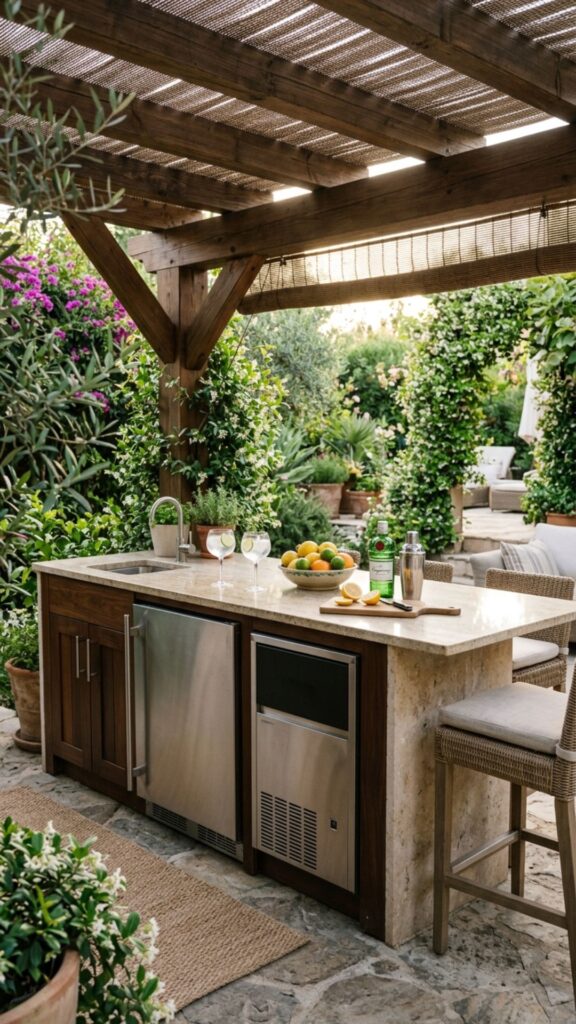
Nobody wants to run inside for cold drinks in the middle of a party. A built-in fridge and ice maker keep everything you need within reach. In Florida’s heat, cold storage is more than a convenience, it’s a must.
Choose units rated for outdoor use, since indoor models struggle to stay cold when the air around them is 95 degrees. Outdoor-rated appliances have stronger compressors built for the job. Place them in shade to help them run efficiently.
6. Design a Layout That Handles Rain Runoff
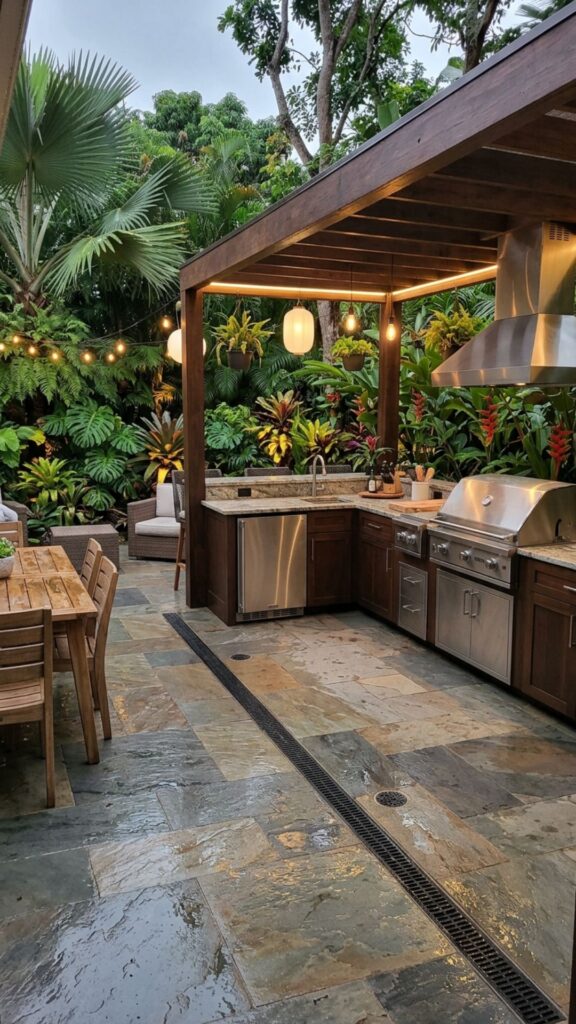
Florida rain arrives fast and heavy. A smart layout slopes surfaces slightly so water drains away from your appliances and seating. Poor drainage leads to pooling, mold, and slippery floors.
We suggest talking to your contractor about grading and drainage early in the design. It’s far cheaper to plan for water now than to fix flooding later. Little details like this separate a kitchen that lasts from one that struggles.
7. Use Porcelain Pavers for Flooring
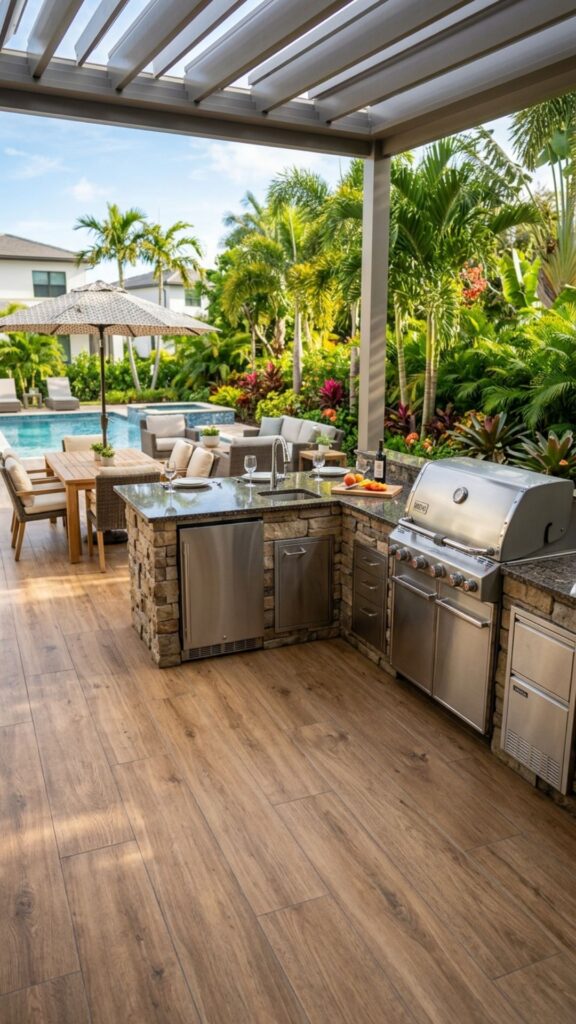
Porcelain pavers stay cooler underfoot than many materials and resist mold, stains, and fading. They handle rain well and give great traction, which matters when the deck gets wet. They also come in styles that mimic wood or stone without the maintenance.
We love porcelain because it looks refined while doing the hard work of surviving Florida weather. It won’t crack in the heat or grow slick with algae the way some natural stones do. It’s a practical choice that never looks like a compromise.
8. Include a Pizza Oven for Entertaining
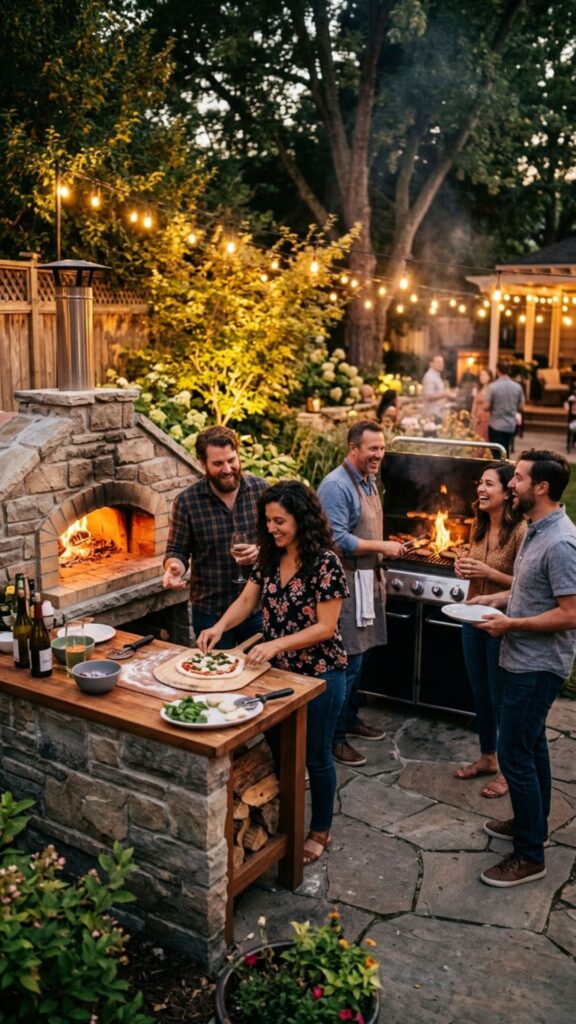
A wood-fired or gas pizza oven turns an ordinary cookout into an event. Guests love watching pizzas cook, and it gives you a fun way to feed a crowd. It becomes the natural gathering spot in any backyard.
Position it under your covered area with good ventilation. In our humid climate, a well-placed oven also adds a cozy warmth to those rare cool evenings. Just keep it clear of low-hanging branches and flammable materials.
9. Plan for Plenty of Shade Beyond the Roof
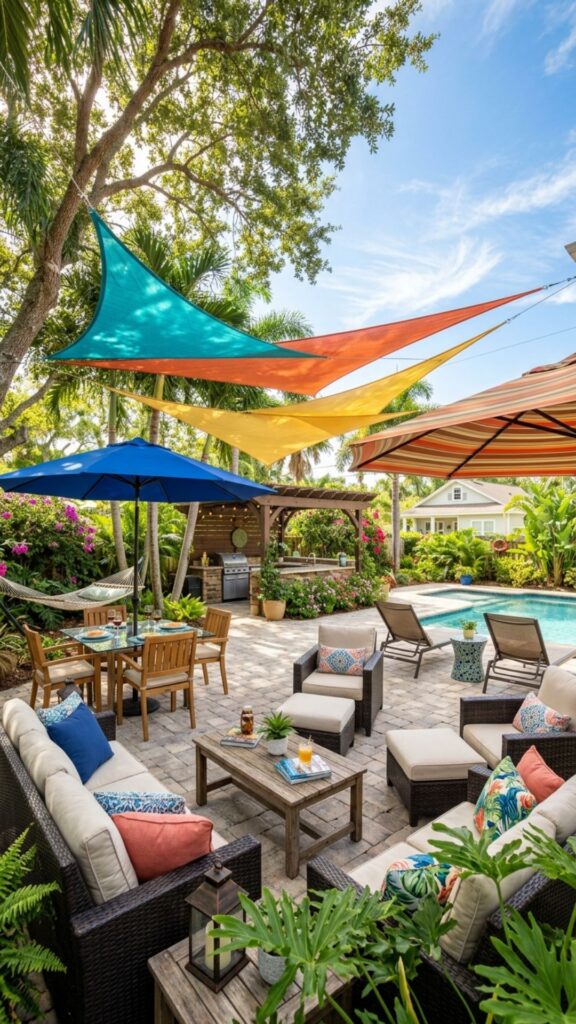
Even with a covered kitchen, the surrounding patio bakes in the sun. Adding shade sails, umbrellas, or strategically placed trees keeps the whole area usable. Comfort spreads beyond the grill.
We think about the path of the sun across the day when placing shade. Afternoon sun in Florida is brutal, so extra coverage on the west side pays off. Your guests will linger longer when they’re not squinting or sweating.
10. Add an Outdoor Bar with Seating
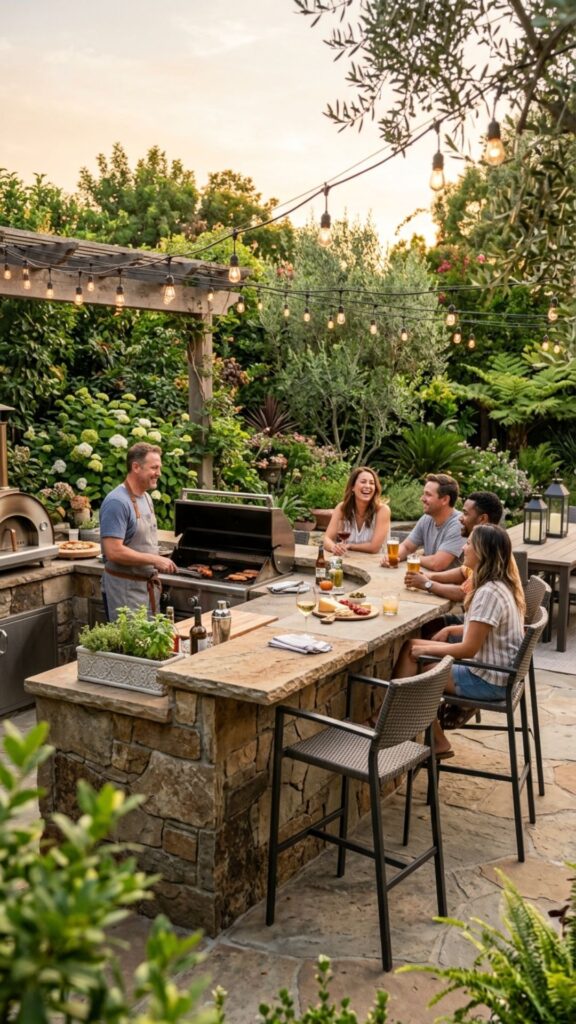
A bar counter with stools invites people to sit and chat while you cook. It defines the space and gives everyone a place to land. Social by design, it keeps the party flowing around you.
We suggest overhangs deep enough for real legroom, around twelve inches. Pair the bar with weatherproof stools made of powder-coated aluminum or teak. Both materials handle sun and rain without falling apart.
11. Install Proper Ventilation for Covered Grills
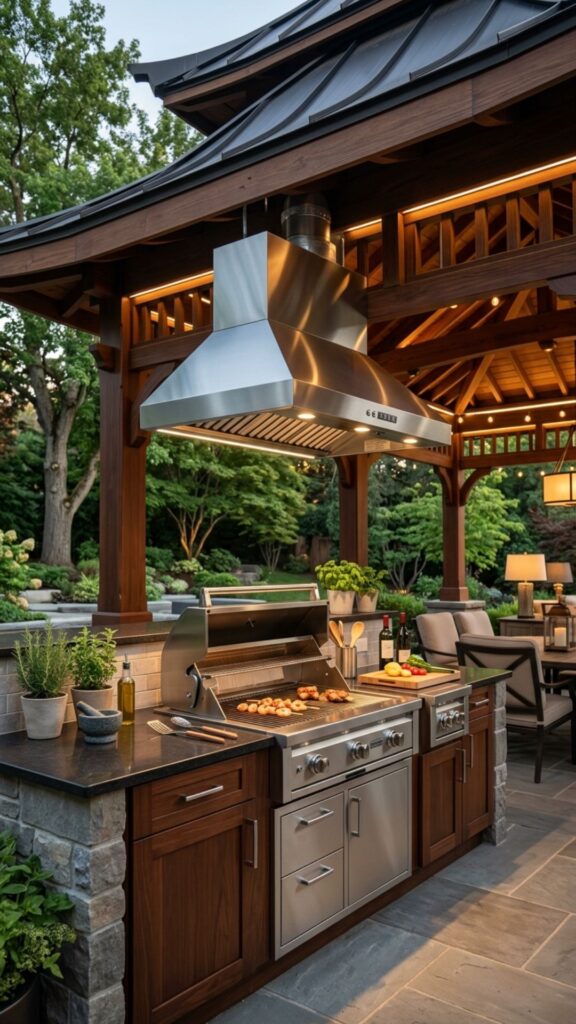
Grilling under a roof requires serious ventilation. Without it, smoke and grease build up, and heat gets trapped. A vent hood pulls smoke away and protects your ceiling from staining.
Match the hood’s power to your grill’s output, since a big grill needs stronger airflow. This is one area where we’d never cut corners. Good ventilation keeps the air clear and your covered kitchen pleasant to use.
12. Choose Sealed Cabinetry That Resists Moisture
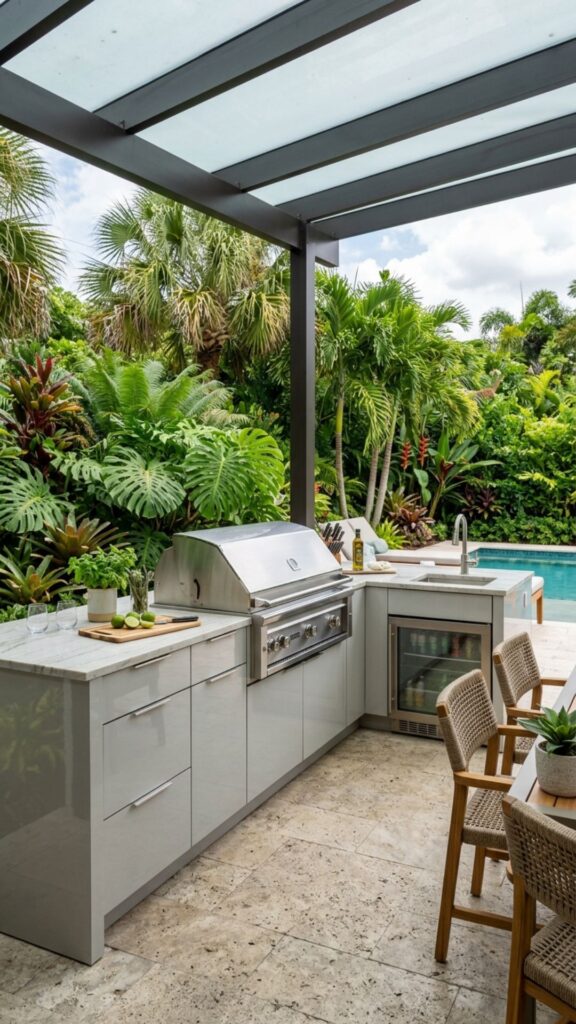
Cabinets take a beating in Florida. Marine-grade polymer and powder-coated stainless steel resist swelling, rust, and mold. They handle humidity, salt, and rain without breaking down.
Skip wood cabinets outdoors, no matter how they’re treated. They warp and rot faster than you’d expect here. Sealed, weatherproof materials keep your storage dry and your kitchen looking sharp for years.
13. Add Misting Systems for Extra Cooling
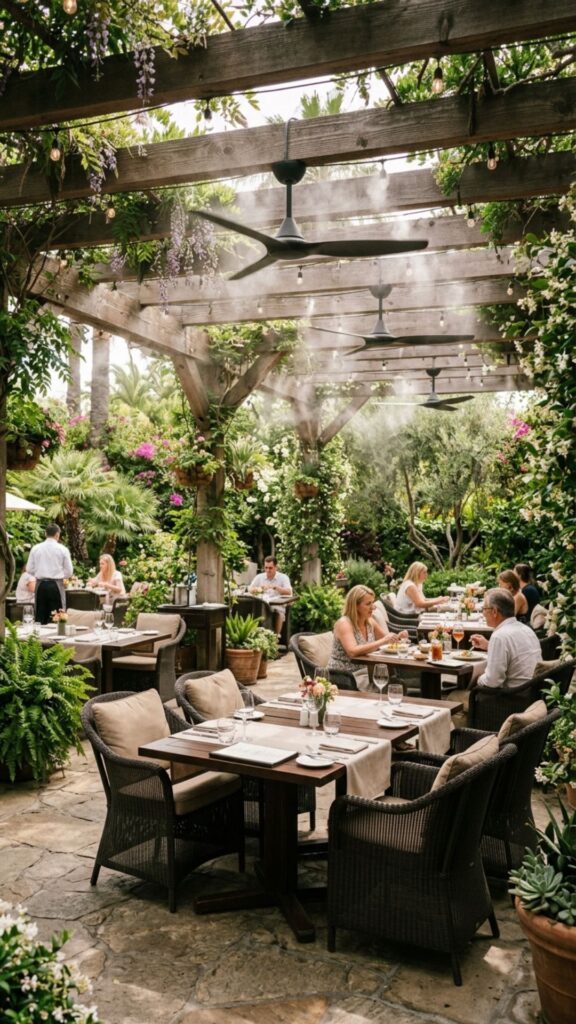
A misting system sprays a fine cloud that cools the surrounding air by several degrees. On the hottest days, it’s the difference between comfort and giving up early. Paired with fans, it works wonders.
We recommend a high-pressure system, since low-pressure ones leave surfaces wet. Position the nozzles around seating areas rather than over food. Your guests stay cool without their plates getting soggy.
14. Incorporate a Sink with Hot and Cold Water
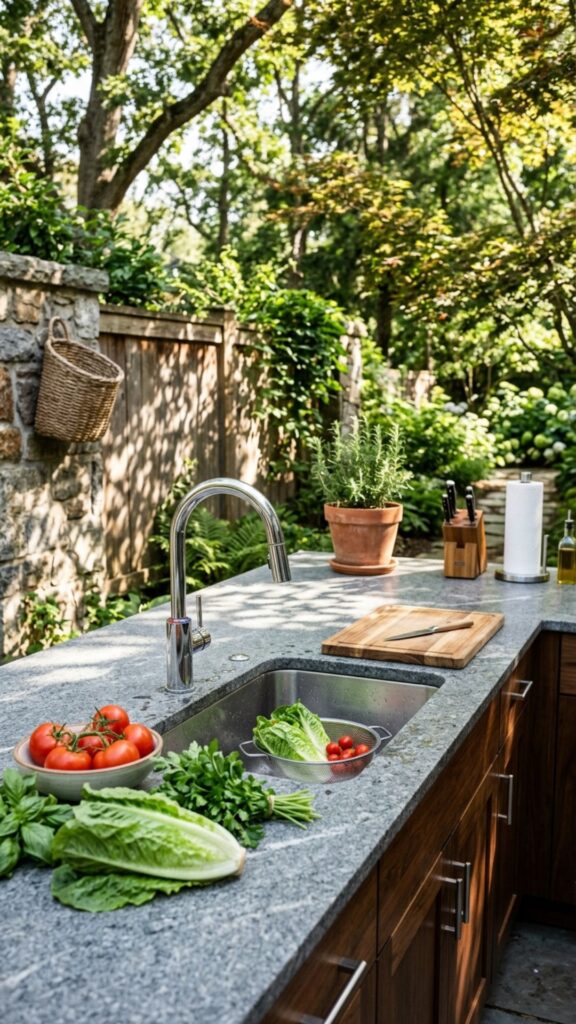
An outdoor sink saves countless trips inside. Rinsing hands, washing produce, and cleaning up all happen right where you’re working. It makes the whole space genuinely functional.
Run both hot and cold lines, and plan for proper drainage into your home’s system or a dedicated line. In Florida’s climate, a sink also helps you keep surfaces clean and mold-free. Little conveniences like this make a kitchen worth using daily.
15. Light It Up for Evening Gatherings
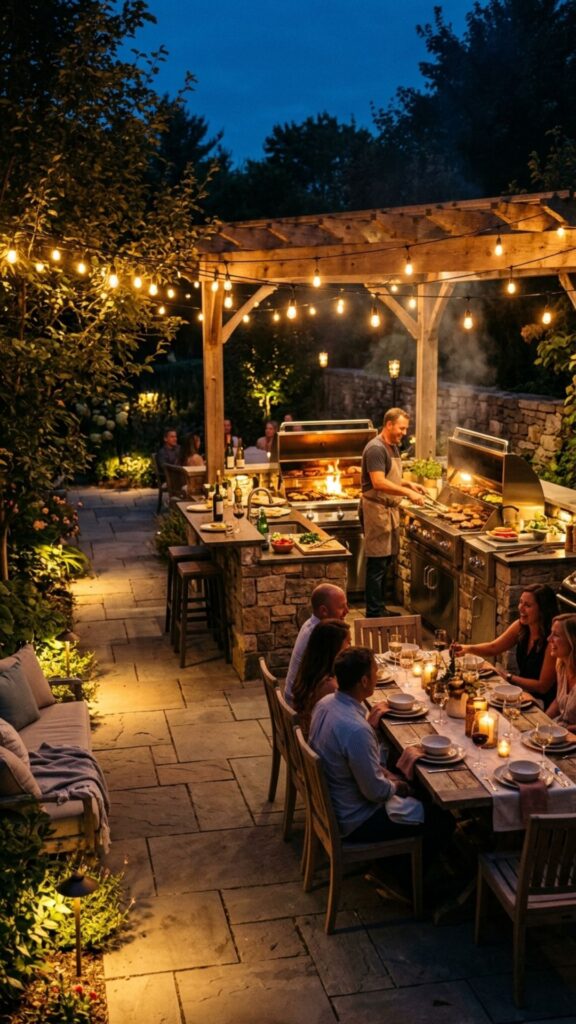
Florida evenings are made for outdoor dining. Layered lighting, task lights over the grill, ambient string lights, and soft path lights, keeps the space usable after dark. Good lighting sets the mood and keeps things safe.
Choose fixtures rated for wet locations and LED bulbs that resist heat and humidity. We like warm tones that feel welcoming rather than harsh. The right lighting turns your kitchen into a place people don’t want to leave.
16. Build in a Beverage Station or Kegerator
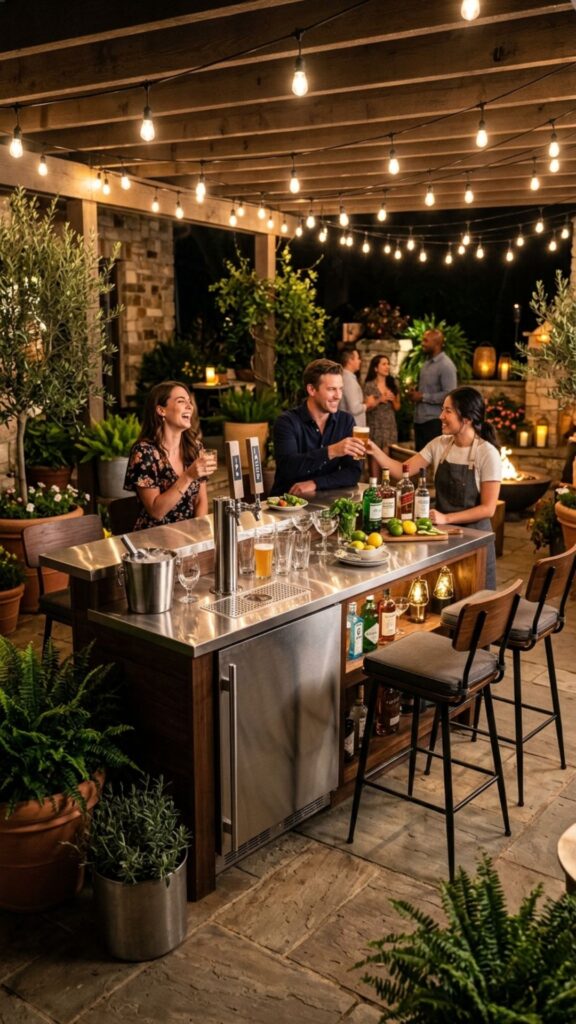
A dedicated drink station keeps guests happy and keeps you out of the drink-fetching business. Kegerators, wine coolers, and tap systems all fit naturally into an outdoor setup. Everyone serves themselves.
Choose outdoor-rated units, since indoor models can’t fight Florida’s heat. Tuck the station near the seating area so it becomes a social hub. It’s a small addition that makes hosting effortless.
17. Add Mosquito Control Features
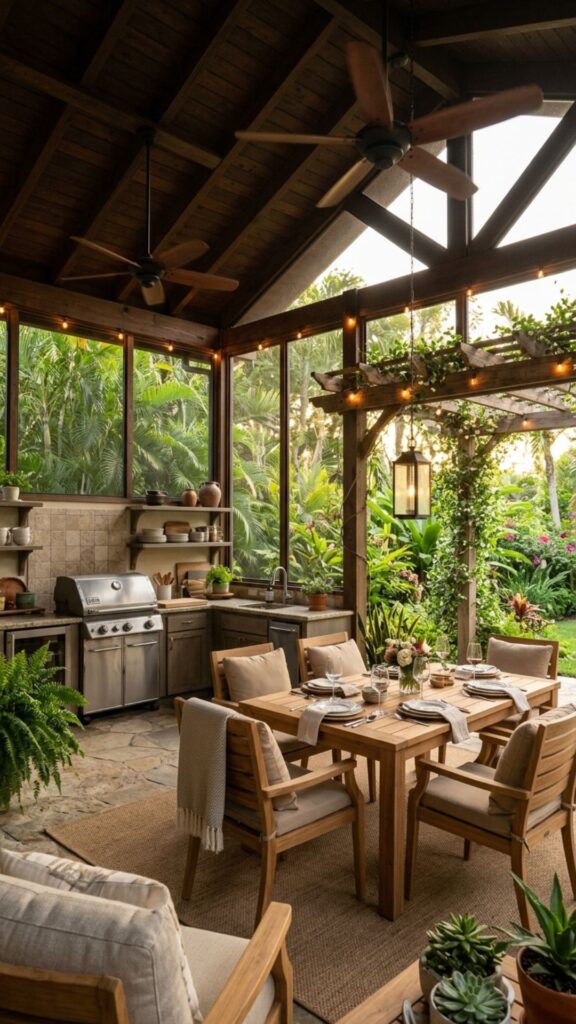
Florida bugs are relentless, especially near water. Built-in mosquito misting systems, screened enclosures, or well-placed fans keep the pests at bay. Comfort matters as much as style.
We suggest combining methods, since no single trick works alone here. A fan plus a screen plus smart plant choices makes a real difference. Your guests will stay longer when they’re not swatting all night.
18. Design a Poolside Kitchen Setup
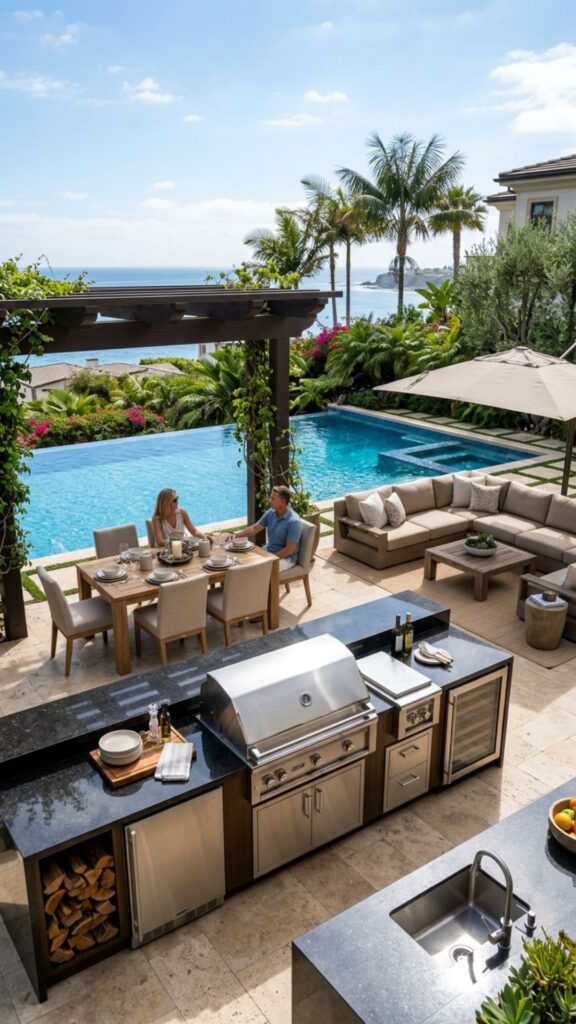
Many Florida homes have pools, and pairing your kitchen with the pool area is a natural move. Cooking, swimming, and lounging all happen in one connected space. It’s the heart of outdoor living here.
Keep raw food prep a safe distance from the water and use slip-resistant flooring around wet zones. We also suggest towel storage and a rinse station nearby. Thoughtful placement makes the whole area flow.
19. Use Landscaping to Create Privacy and Beauty
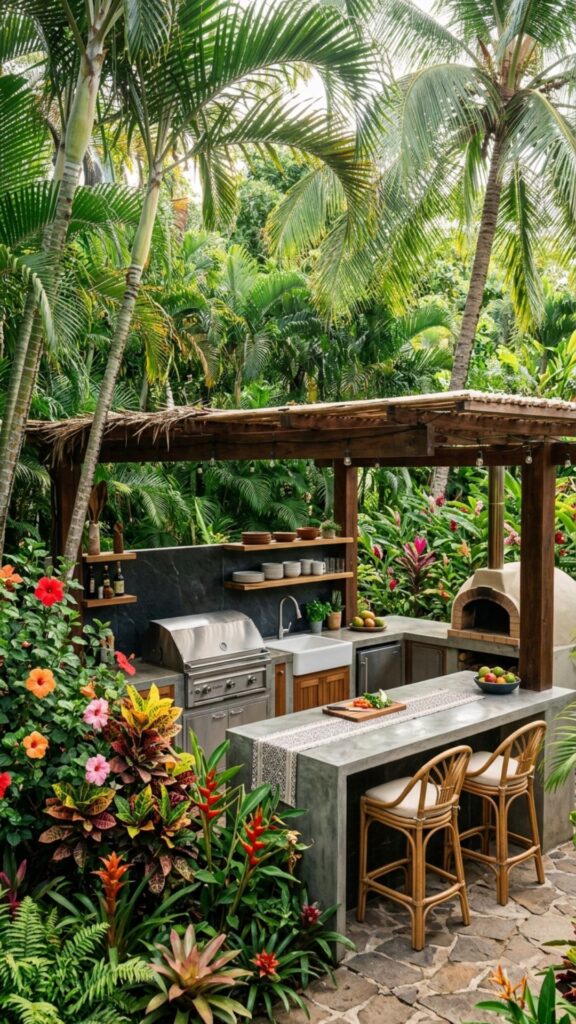
Tropical plants like palms, crotons, and hibiscus thrive in Florida and add natural beauty around your kitchen. They also create privacy from neighbors without walls. Greenery softens the space and makes it feel like a retreat.
Choose native plants that handle heat and humidity with little fuss. We favor low-maintenance options that won’t demand constant watering or trimming. A good landscape frames your kitchen and ties the whole yard together.
20. Invest in Weatherproof Furniture and Cushions
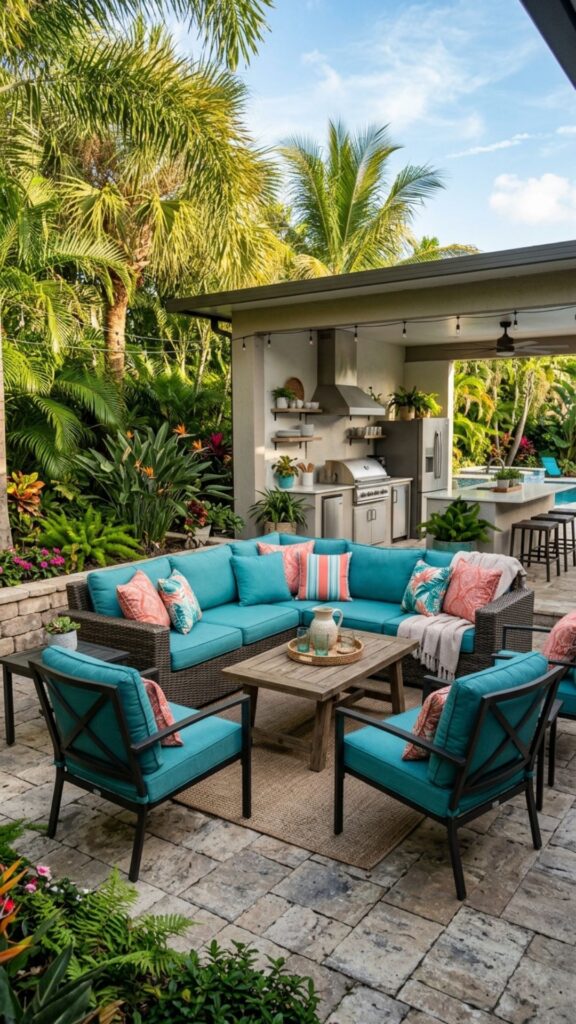
Furniture takes the same beating as everything else outside. Powder-coated aluminum, teak, and all-weather wicker survive our climate beautifully. Pair them with quick-dry, fade-resistant cushions.
Look for cushions made with solution-dyed acrylic fabric, which shrugs off sun and rain. We think comfortable seating is just as important as the grill itself. People gather where they feel relaxed, so make your space one they never want to leave.
Bringing Your Florida Outdoor Kitchen to Life
Building an outdoor kitchen in Florida takes a little extra planning, but the payoff is huge. When you choose the right materials, plan for the heat and rain, and design with comfort in mind, you create a space that works hard and looks great for years. Every idea here helps you cook good food, host with ease, and enjoy your backyard the way Florida living intended.
Ready to start planning your dream setup? Talk with a local outdoor kitchen specialist who understands our climate firsthand. We’d encourage you to gather your favorite ideas, set a budget, and reach out to a trusted contractor who can bring your vision to life. Your perfect backyard kitchen is closer than you think.
What is the best material for an outdoor kitchen in Florida?
Marine-grade stainless steel (316-grade) for appliances, natural stone like granite or quartzite for countertops, and porcelain pavers for flooring are the best choices. These materials resist Florida’s humidity, salt air, and intense sun far better than wood or standard steel.
How do I protect my outdoor kitchen from Florida humidity?
Use weatherproof materials, add a covered roof structure, install proper ventilation and wet-rated fans, and choose sealed polymer or stainless cabinetry. Good drainage and regular cleaning also prevent mold and corrosion.
How much does an outdoor kitchen cost in Florida?
A basic outdoor kitchen starts around $5,000 to $10,000, while mid-range builds run $15,000 to $30,000. High-end kitchens with premium appliances, covered structures, and stone finishes can exceed $50,000, depending on size and features.
Do outdoor kitchens hold up in Florida's rainy season?
Yes, when built correctly. A covered structure, sloped surfaces for drainage, weatherproof appliances, and rust-resistant materials all help your kitchen survive heavy rain and storm season without damage.
Can I use my outdoor kitchen year-round in Florida?
Absolutely. With shade, fans, misting systems, and a covered roof, most Florida homeowners use their outdoor kitchens comfortably throughout the year, including the hot summer months.