Brown cabinets bring warmth and character to a kitchen, but the right island can turn a nice space into a showstopper. If you’ve been staring at your brown cabinetry wondering how to make it feel fresh, you’re in the right place.
After years of helping homeowners rework their kitchens, I’ve seen how one thoughtful island choice can completely shift the mood of a room.
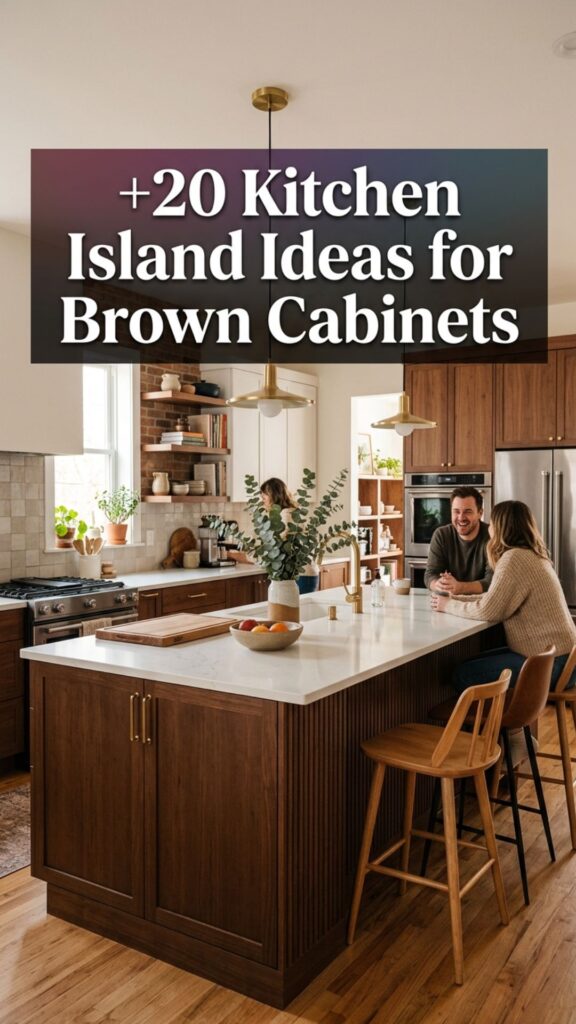
In this guide, you’ll find 20 practical kitchen island ideas for brown cabinets. Each one covers color pairings, materials, lighting, and layout tips you can actually use. Whether you own light oak, rich walnut, or deep espresso cabinets, there’s something here that fits. Let’s get into it.
1. Pair Brown Cabinets With a Crisp White Island
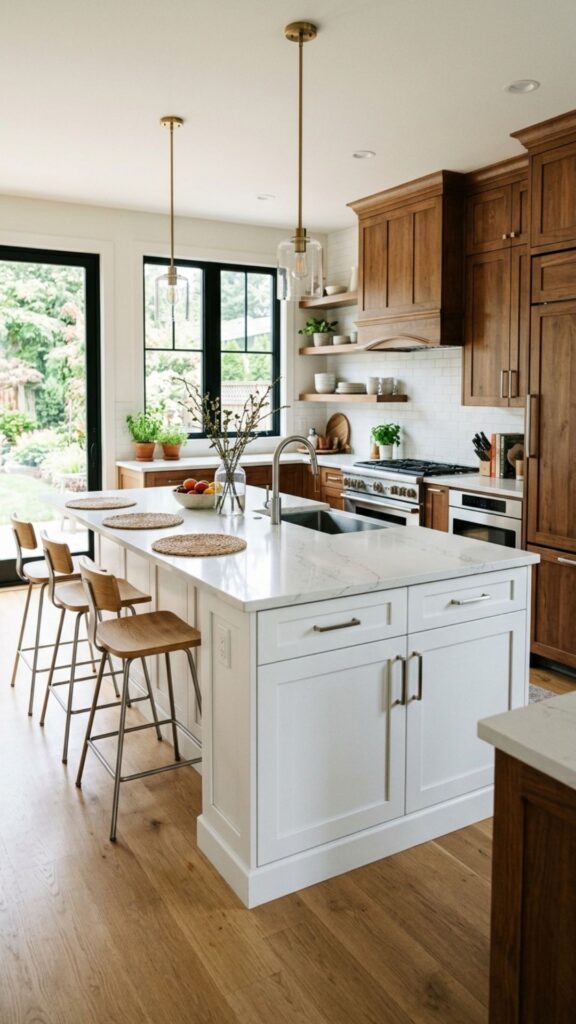
A white island against brown cabinets creates instant contrast that feels clean and modern. The lightness balances the depth of the wood, so the room never feels heavy. This works especially well in smaller kitchens where you want to keep things feeling open.
For the best result, match the white to any trim or ceiling details already in the room. A shaker-style white island with brushed nickel hardware pairs beautifully with medium brown cabinetry. Add a white quartz top to tie everything together.
2. Go Bold With a Navy Blue Island
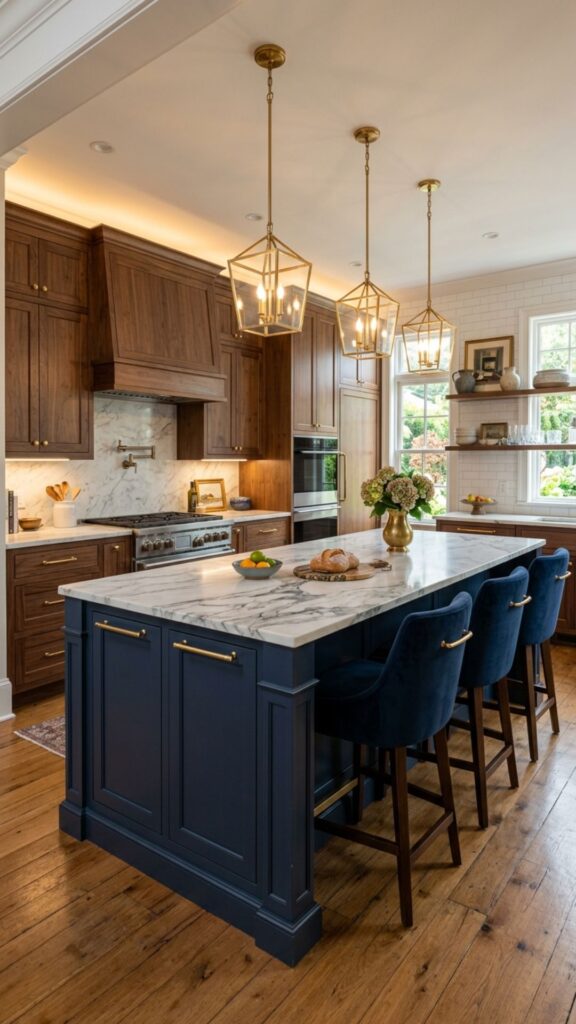
Navy and brown are a classic pairing that never gets old. The deep blue adds richness without competing with your cabinets, and it grounds the space with a touch of drama. Think of it as the design equivalent of a good pair of jeans with a leather jacket.
Navy works with nearly every brown shade, from honey oak to dark walnut. Finish it off with gold or brass hardware for a warm, upscale feel. A white or marble-look countertop keeps the look from feeling too dark.
3. Match Your Island to Your Brown Cabinets
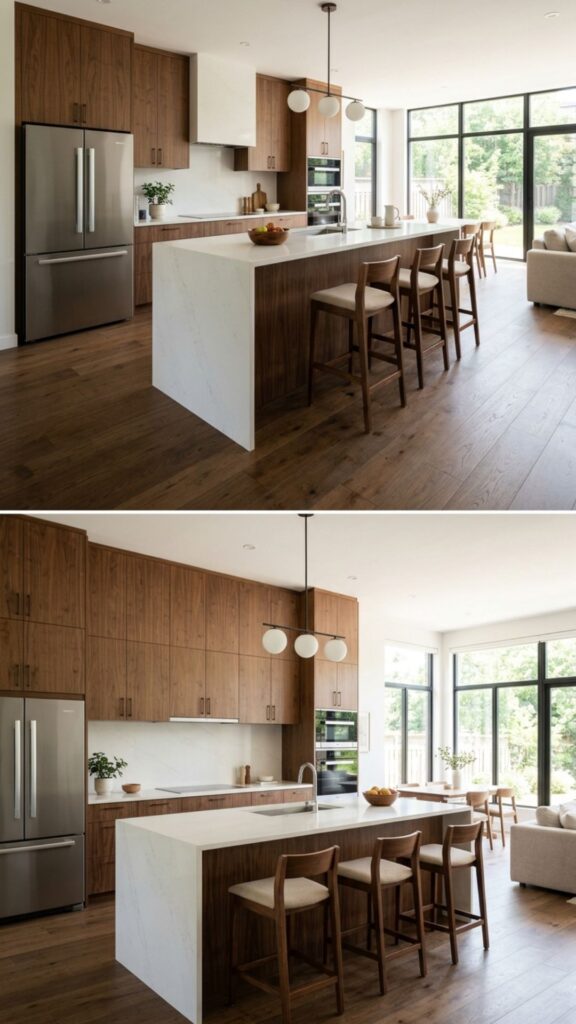
Sometimes the cleanest look is a fully coordinated one. Using the same brown finish on your island creates a seamless, built-in feel that reads as intentional and high-end. This is a smart choice for open-concept homes where the kitchen flows into living areas.
To keep it from feeling flat, vary the texture or countertop. Try a contrasting stone top or a different hardware finish on the island. A waterfall edge in white stone adds a modern twist while keeping the wood tones consistent.
4. Add Warmth With a Wood-Tone Island in a Different Shade
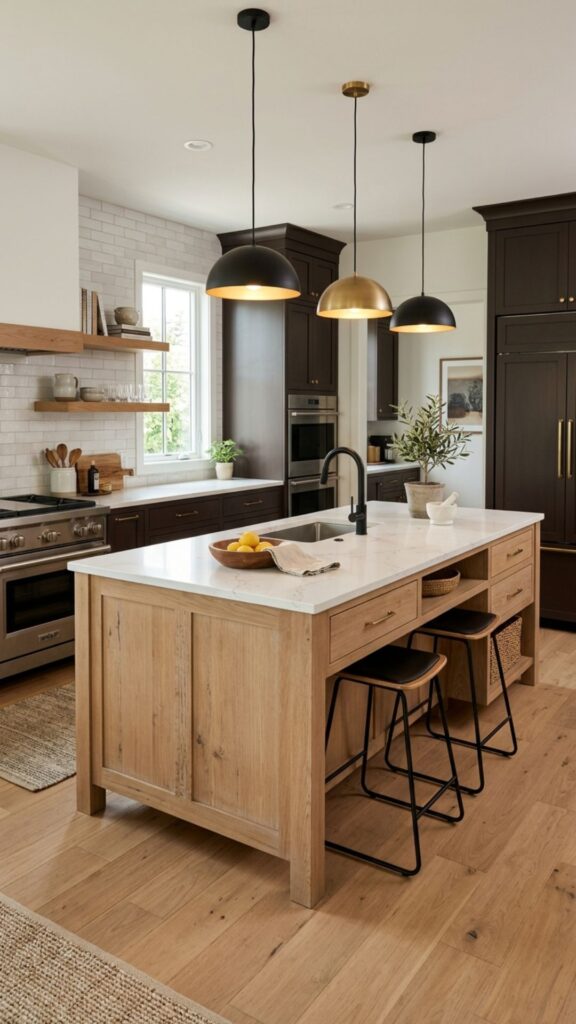
You don’t have to match your cabinets exactly. Layering two complementary wood tones adds depth and a curated, collected-over-time feel. Pair espresso cabinets with a lighter oak island, or reverse it for a fresh contrast.
The key is keeping the undertones in the same family. Cool browns pair with cool browns, warm with warm. Mixing a gray-brown island with a red-toned cabinet can clash, so grab samples and check them in your actual lighting first.
5. Create Contrast With a Black Island
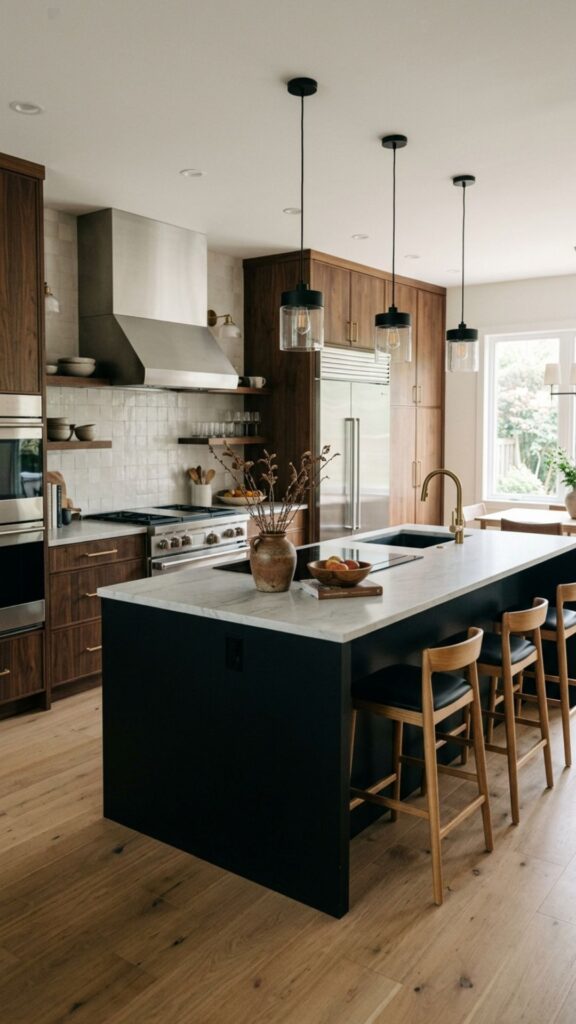
A black island brings a sophisticated, grounding presence that makes brown cabinets look even richer. The dark base anchors the kitchen and pairs perfectly with modern or farmhouse styles alike. It’s a fearless choice that pays off.
Balance the boldness with lighter surroundings, like a pale backsplash or white walls. A butcher block or white marble countertop softens the black beautifully. Matte black finishes feel current, while glossy black leans more dramatic.
6. Try a Gray Island for a Neutral Balance
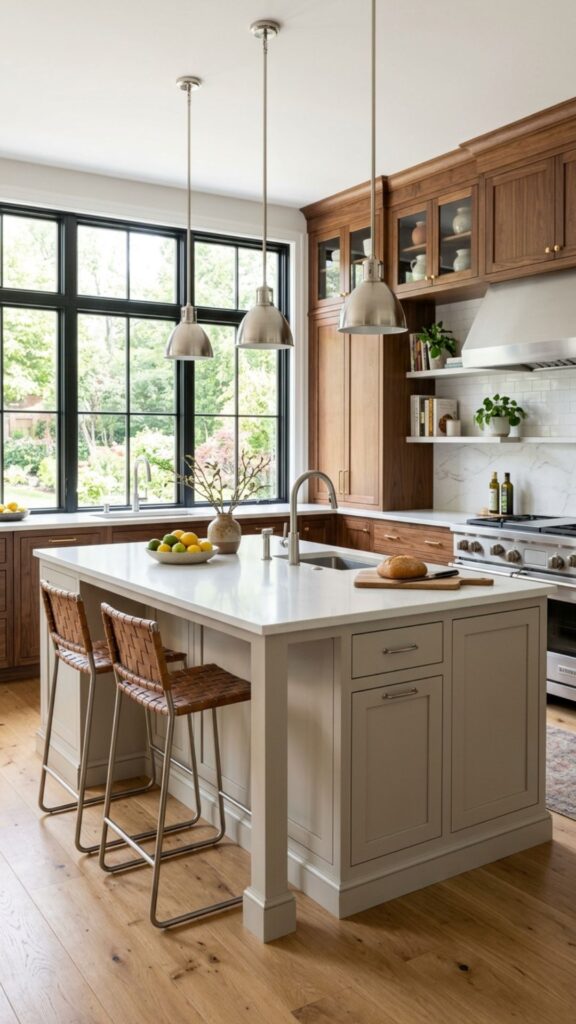
Gray sits comfortably between brown’s warmth and cooler design elements. A soft greige or charcoal island keeps things calm and flexible, making it easy to change your decor down the road. Neutrals like this age well.
Lighter grays brighten a room, while deeper charcoals add cozy contrast. Pair a gray island with brown cabinets and stainless steel appliances for a balanced, timeless look. This combination suits busy family kitchens that need to hide everyday wear.
7. Use a Butcher Block Countertop on Your Island
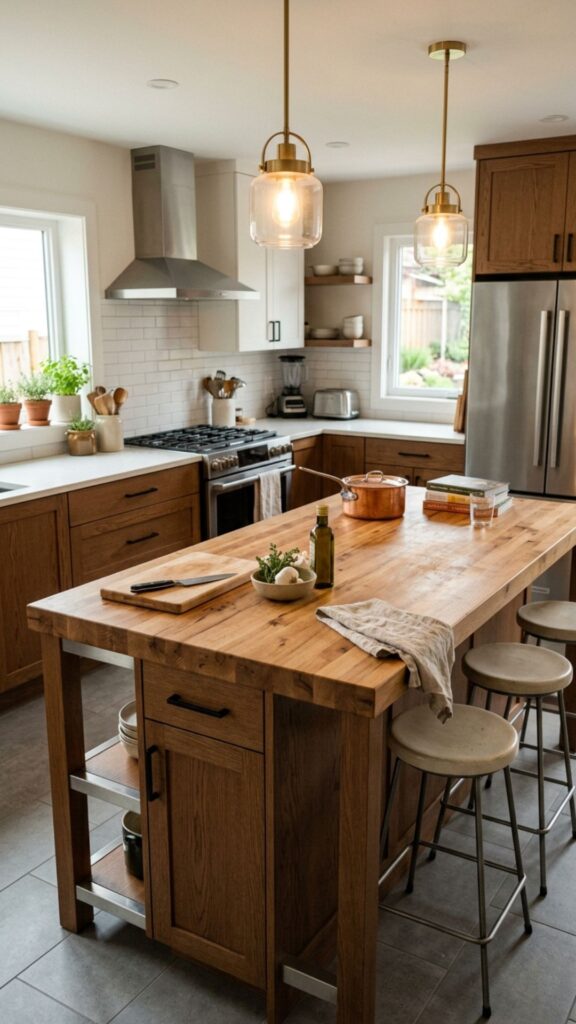
A butcher block top adds warmth and a hands-on, functional charm. It’s a favorite among home cooks because it’s practical for prep and easy to refinish. The wood tones echo your cabinets without matching them exactly.
Choose a species that complements your cabinet color, such as maple with honey oak or walnut with lighter browns. Seal it well and oil it regularly to keep it in great shape. This look leans rustic, farmhouse, or cottage-style.
8. Install a Marble or Quartz Waterfall Island
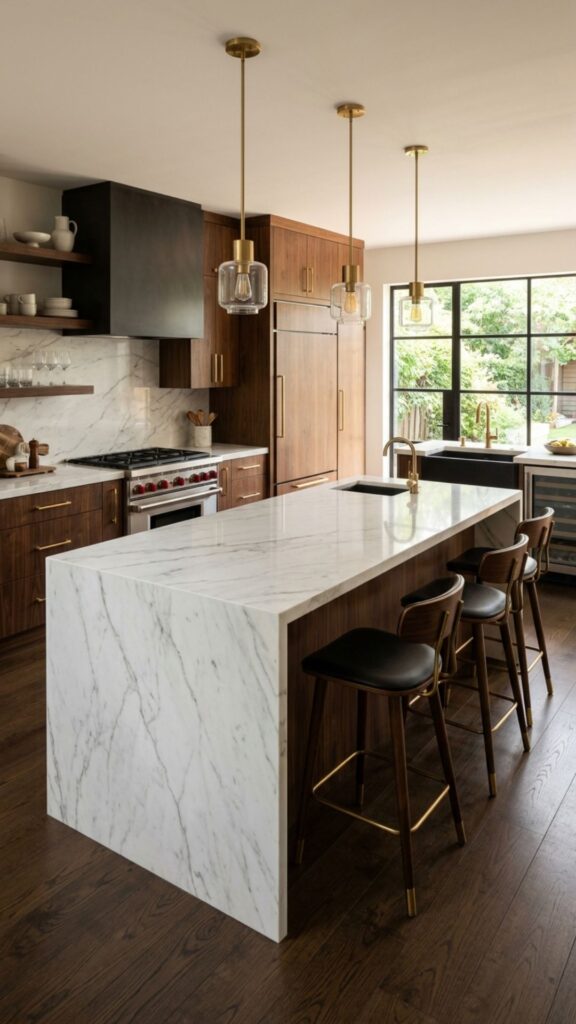
A waterfall countertop, where the stone flows down the sides, gives your island a sleek, luxurious edge. Against brown cabinets, the effect is striking and modern. It’s one of the fastest ways to make a kitchen feel high-end.
White marble-look quartz is a popular pick because it’s durable and low-maintenance. The bright stone lifts the whole space and highlights the wood grain around it. Keep the rest of the island simple so the countertop stays the star.
9. Add Open Shelving to the Island Base
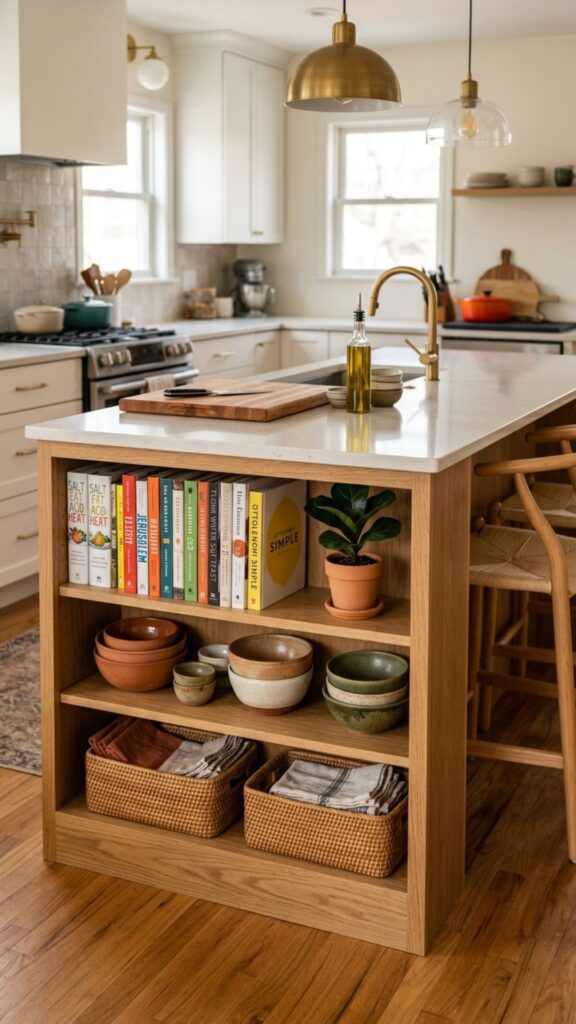
Open shelving on the side or end of your island offers storage and a spot to display cookbooks, baskets, or greenery. It breaks up solid cabinetry and adds a personal touch. This works well when you want function and style in equal measure.
Style the shelves sparingly to avoid clutter. A few ceramic bowls, a stack of plates, and a plant go a long way. Painted shelves in a contrasting color can double as a design feature.
10. Light It Up With Statement Pendant Lighting
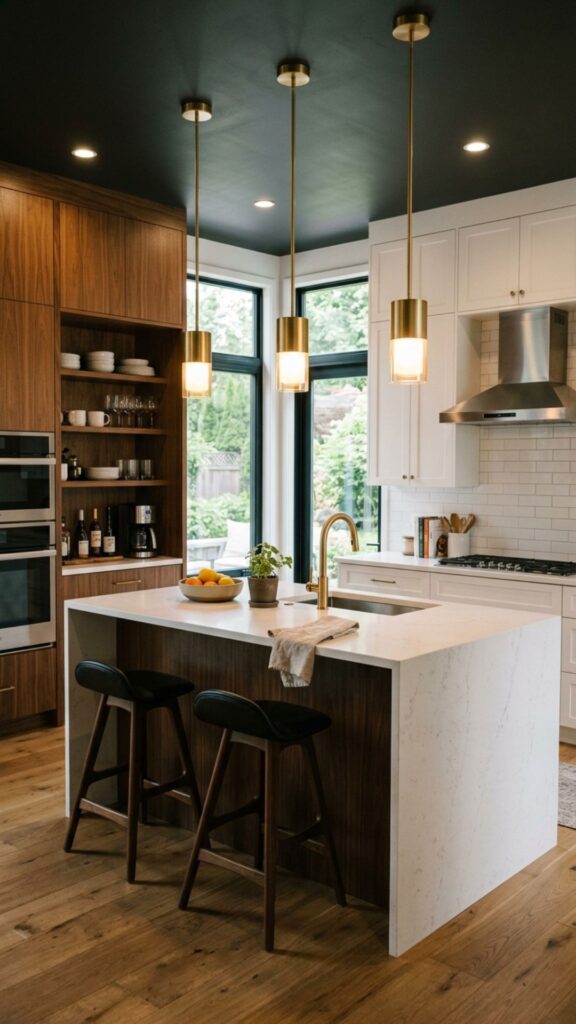
Pendant lights are the jewelry of your kitchen island. The right fixtures draw the eye and set the tone for the whole space. Over brown cabinets, warm metals like brass and copper feel especially inviting.
Hang two or three pendants depending on your island’s length, spaced evenly for balance. Aim for about 30 to 36 inches between the countertop and the bottom of the fixture. Glass, woven rattan, and matte black shades all pair nicely with brown tones.
11. Choose a Rustic Reclaimed Wood Island
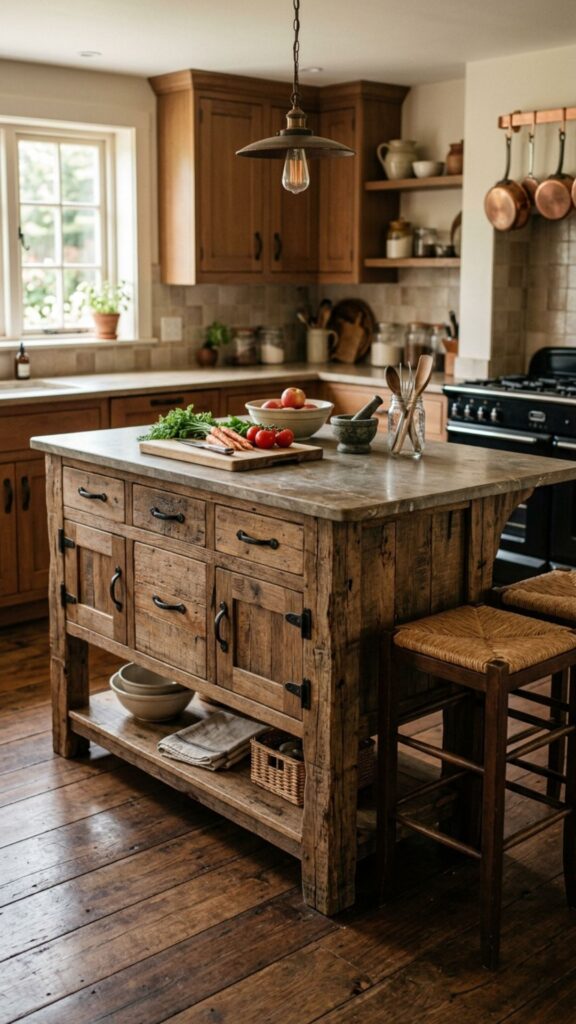
For a warm, textured look, a reclaimed wood island adds instant character. The weathered grain tells a story and brings an earthy quality that complements brown cabinets naturally. It’s ideal for farmhouse and rustic kitchens.
Because reclaimed wood varies, embrace the imperfections rather than fighting them. Pair it with iron hardware and a simple stone top. A little variation in tone between the island and cabinets actually strengthens the look.
12. Go Green for a Nature-Inspired Island
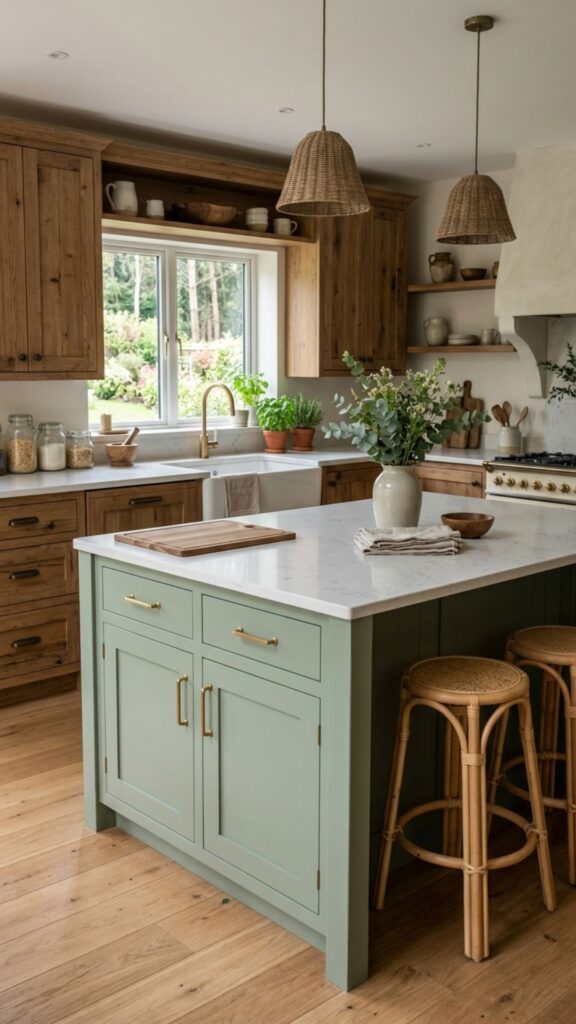
Sage, olive, and forest green islands have surged in popularity, and for good reason. Green pairs with brown the same way it does in nature, creating a grounded, restful feel. It brings life to the room without overwhelming it.
Softer sage greens feel airy and fresh, while deeper greens add moody sophistication. Combine a green island with brass hardware and a light countertop for balance. This pairing suits both traditional and modern kitchens.
13. Maximize Space With a Two-Tier Island
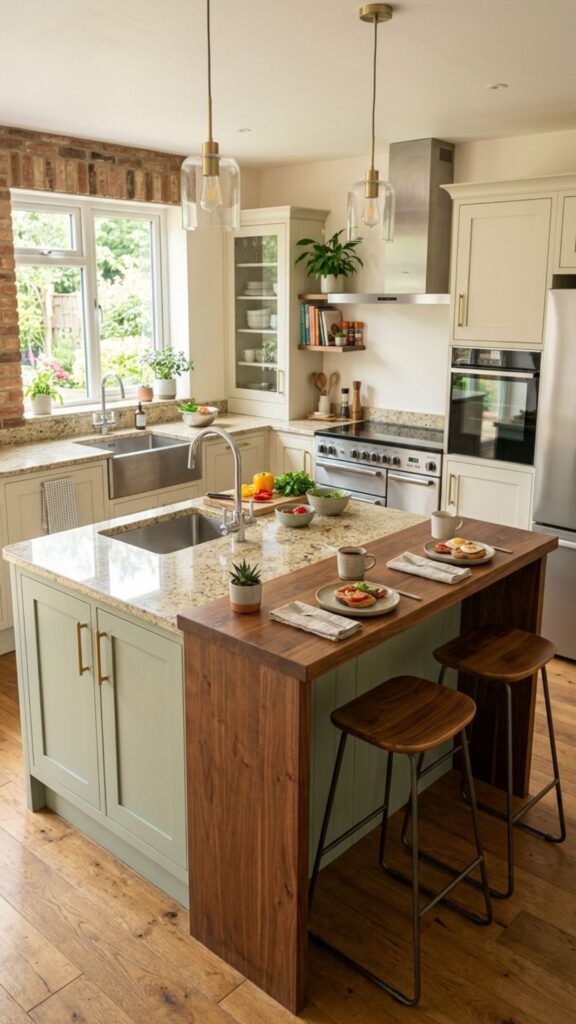
A two-tier island separates prep space from seating, which keeps meal messes out of sight. The raised bar area is perfect for stools, casual breakfasts, or homework sessions. It’s a smart layout for households that gather in the kitchen.
Use the height difference to introduce a second material or color. A raised wood counter over a lower stone surface adds visual interest. Just make sure you have enough overall space, since two tiers need more room to feel comfortable.
14. Add Seating for a Functional Gathering Spot
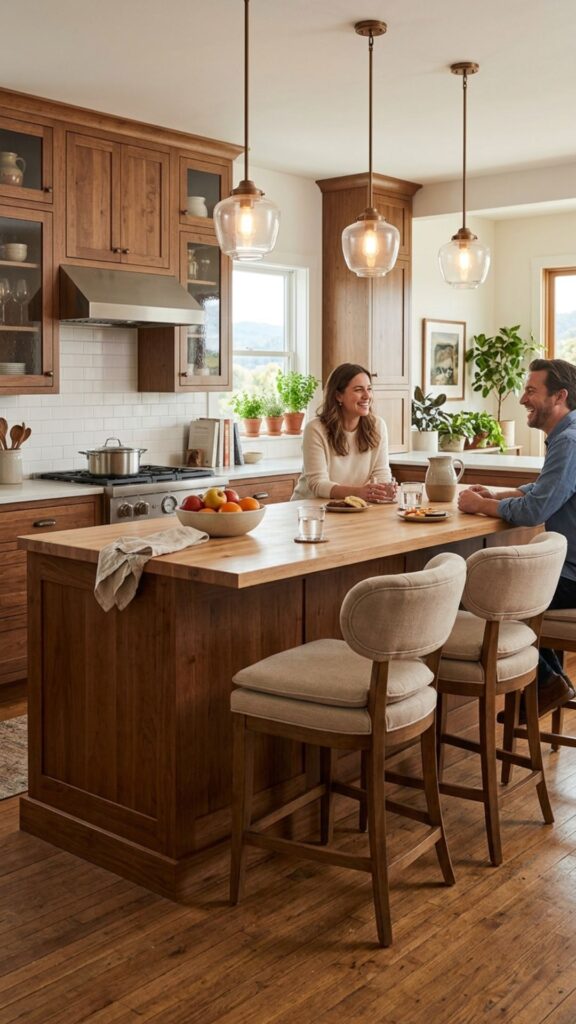
Built-in seating turns your island into the heart of the home. Whether it’s a few stools or a full breakfast bar, seating makes the space more social and useful. Plan for about 24 inches of width per seat.
Choose stools that complement your cabinets and island color. Upholstered seats add comfort, while wood or metal stools keep it casual. Leave enough legroom, roughly 12 inches of overhang, so guests can sit comfortably.
15. Incorporate a Farmhouse Apron Sink
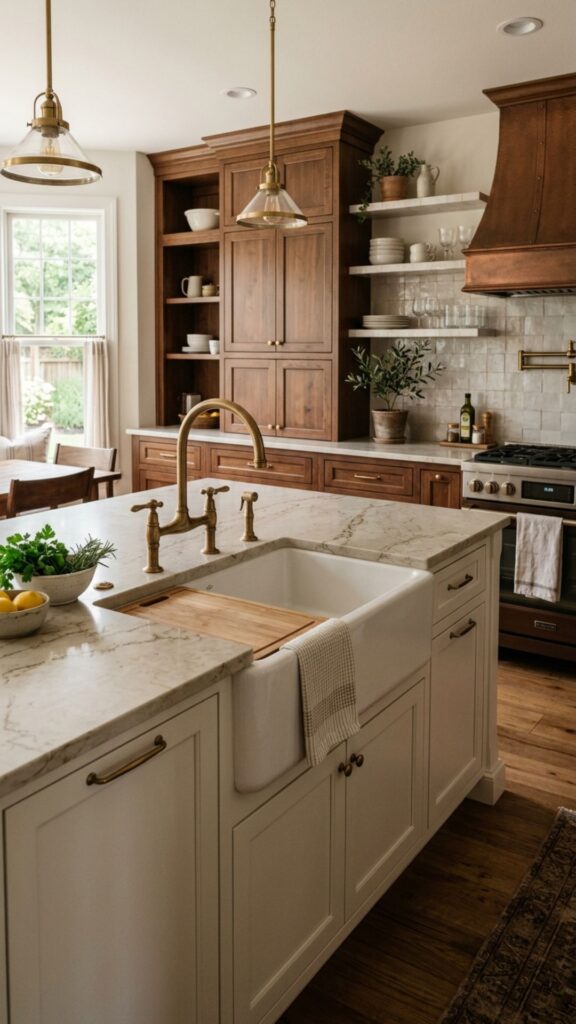
An apron-front sink built into the island brings both charm and function. It creates a natural work zone and makes cleanup easier while you chat with family. White apron sinks pop beautifully against brown cabinetry.
Pair the sink with a bridge or gooseneck faucet in brass or matte black. Add a small ledge or soap tray to keep things tidy. This feature is a favorite in farmhouse and transitional kitchens.
16. Warm It Up With Brass or Gold Hardware
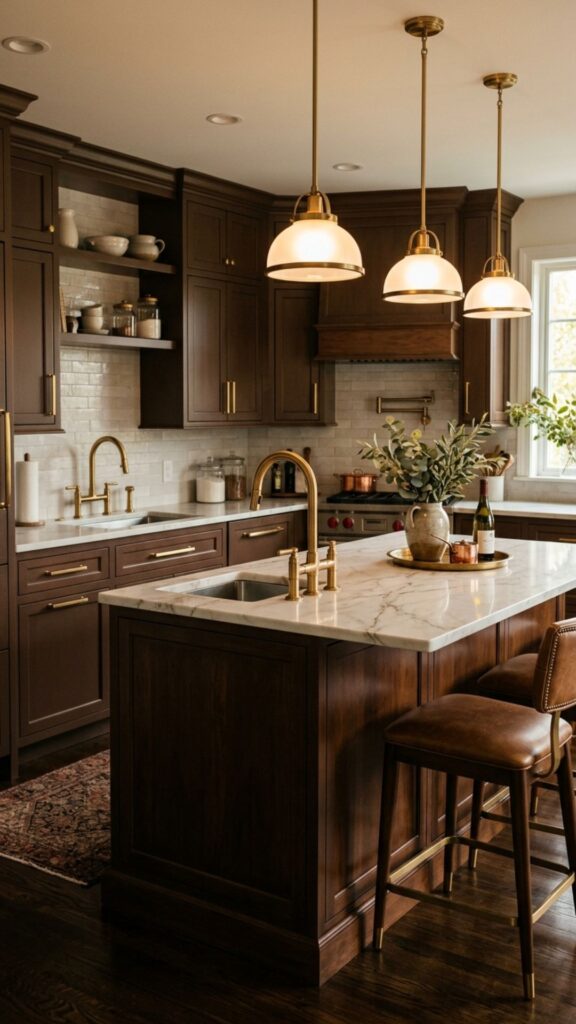
Hardware is a small detail with a big impact. Brass and gold finishes bring out the warm undertones in brown cabinets and instantly elevate the look. Even swapping just the island hardware can refresh the space.
Choose a finish that coordinates with your faucet and lighting for a pulled-together feel. Brushed brass reads modern, while antique brass feels traditional. Mixing metals is fine as long as you keep it intentional.
17. Try a Concrete Countertop for an Industrial Edge
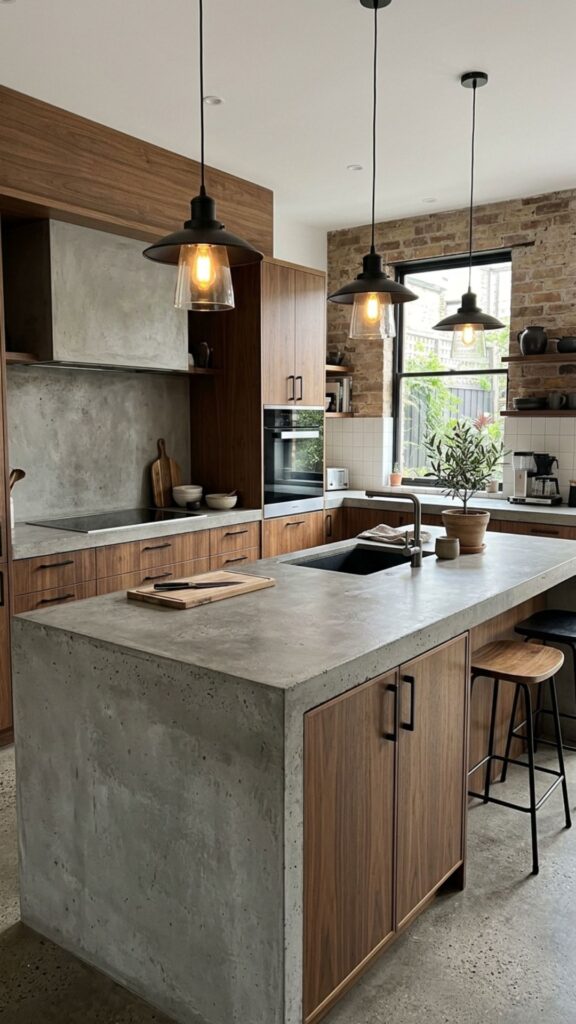
Concrete countertops offer a raw, modern contrast to warm brown wood. The gray, matte surface feels grounded and durable, and it fits industrial or minimalist kitchens perfectly. Each pour is slightly unique, which adds character.
Seal concrete well to protect against stains and moisture. Pair it with black hardware and Edison-style pendant lights to lean into the industrial vibe. The cool tone balances the warmth of your cabinets nicely.
18. Design a Compact Island for Small Kitchens
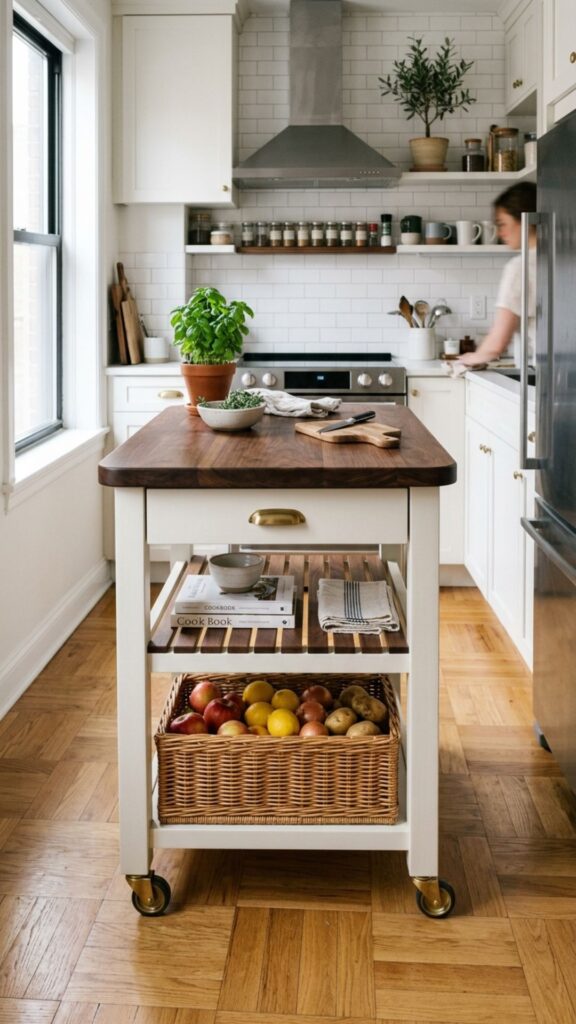
Not every kitchen has room for a sprawling island, and that’s okay. A compact or mobile island offers extra prep space and storage without crowding the room. Rolling carts and slim designs work well in tight layouts.
Keep the footprint proportional and leave at least 36 inches of walkway around it. A small island in a contrasting color still makes a statement. Add a lower shelf for baskets to stretch your storage.
19. Build In Wine Storage or a Beverage Station
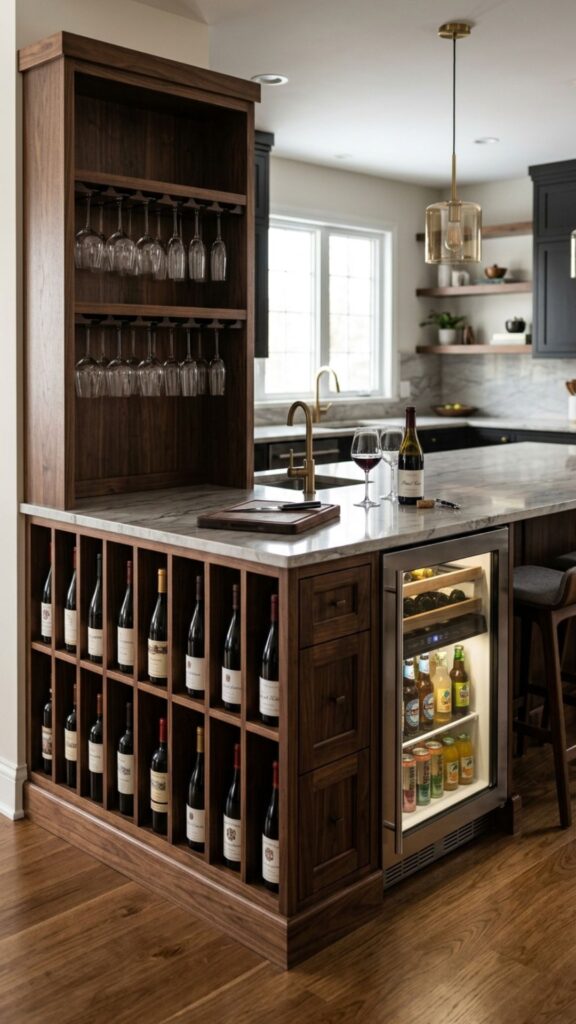
Turning part of your island into a wine rack or beverage station adds function and a touch of luxury. It keeps drinks organized and frees up cabinet space elsewhere. This is a great feature for those who love to entertain.
Built-in wine cubbies, a small fridge, or open cubbies for glasses all work well. Position it away from the cooking zone so guests can help themselves. It’s a subtle upgrade that makes daily life easier.
20. Add Color With a Painted Accent Island
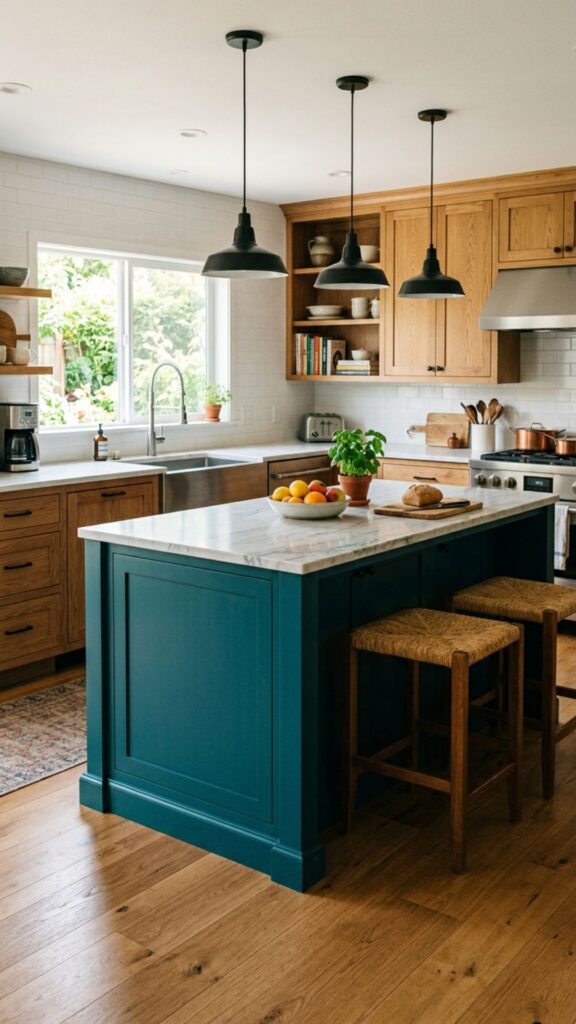
If you want personality, a boldly painted island is the way to go. Terracotta, deep teal, mustard, or burgundy can turn your island into a true focal point. Against brown cabinets, warm accent colors feel especially cohesive.
Test paint samples on a board and view them in different lighting before committing. Keep the rest of the kitchen neutral so the color shines. This is an easy, affordable update you can repaint later if your style changes.
Conclusion
Your kitchen island is more than a counter, it’s a chance to show off your style and make your space work harder for you. From crisp white contrasts to bold navy, warm wood layers, and functional seating, there’s a look here for every brown cabinet kitchen. The best choice is the one that fits your daily life and makes you happy to walk into the room.
Ready to transform your space? Pick two or three ideas from this list, grab some samples, and see how they look in your own kitchen light. Start small if you need to, even a hardware swap or new pendant lights can make a big difference.
What color island goes best with brown cabinets?
White, navy blue, gray, and green islands all pair beautifully with brown cabinets. White adds bright contrast, navy brings richness, gray offers a neutral balance, and green creates a natural, grounded feel. Match undertones for the most cohesive look.
Should my kitchen island match my brown cabinets?
Your island doesn’t have to match your cabinets. Matching creates a seamless, built-in look, while a contrasting color adds depth and visual interest. Both work well, so choose based on the style and mood you want.
What countertop looks best on an island with brown cabinets?
White quartz, marble-look surfaces, butcher block, and concrete all look great with brown cabinets. Light stone brightens the space and highlights the wood grain, while wood or concrete adds warmth and texture depending on your style.
What hardware works best with brown cabinets and an island?
Brass and gold hardware enhance the warm undertones in brown cabinets, while matte black adds a bold, modern contrast. Coordinate your island hardware with your faucet and lighting for a pulled-together look.
How much space do I need around a kitchen island?
Leave at least 36 inches of walkway around your island, and 42 to 48 inches in high-traffic or multi-cook kitchens. For seating, plan about 24 inches of width per stool with a 12-inch overhang for legroom.