Open kitchens are the heart of modern homes. They connect cooking, dining, and living spaces into one fluid area — but that openness comes with a real challenge: making everything look intentional, cohesive, and beautiful from every angle.
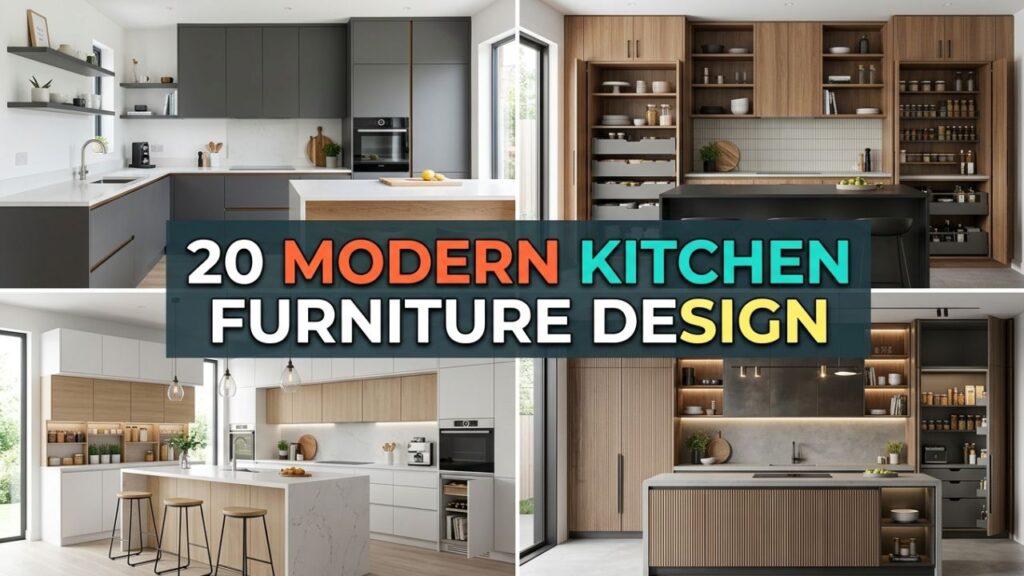
If you’ve ever stood in your open kitchen wondering why it feels cluttered despite being spacious, or why the furniture seems to clash instead of connect, you’re not alone. The secret often comes down to thoughtful kitchen furniture design. Modern approaches prioritize clean lines, smart storage, and furniture that does double duty without sacrificing style.
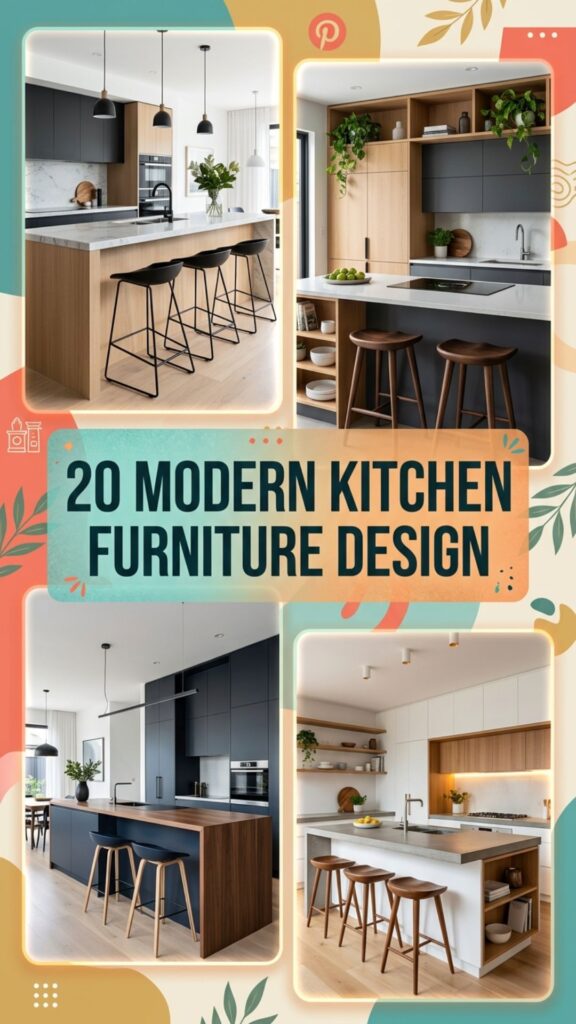
In this guide, you’ll discover 20 practical, design-forward ideas specifically tailored for open kitchens — from choosing the right island configuration to picking seating that transitions seamlessly from cooking to entertaining. Whether you’re renovating or simply refreshing, these ideas will help you build a space that works harder and looks better.
1. Choose a Waterfall Island as Your Centerpiece
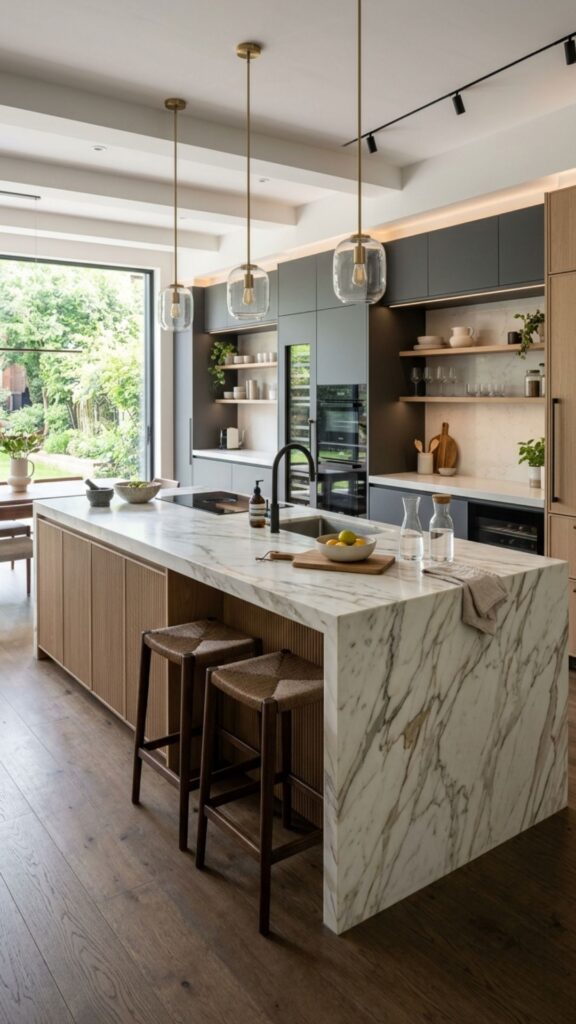
A waterfall island — where the countertop material flows down the sides to the floor — instantly anchors an open kitchen with a sculptural, high-end look. It creates a visual boundary between your cooking zone and the living area without using walls or dividers.
For practicality, pair your waterfall island with built-in storage on the kitchen-facing side. Deep drawers for pots, pull-out shelves for small appliances, and a pop-up power strip make it as functional as it is beautiful. Quartz and marble-look porcelain are popular material choices because they’re durable and easy to clean.
2. Opt for Handle-Free Cabinetry
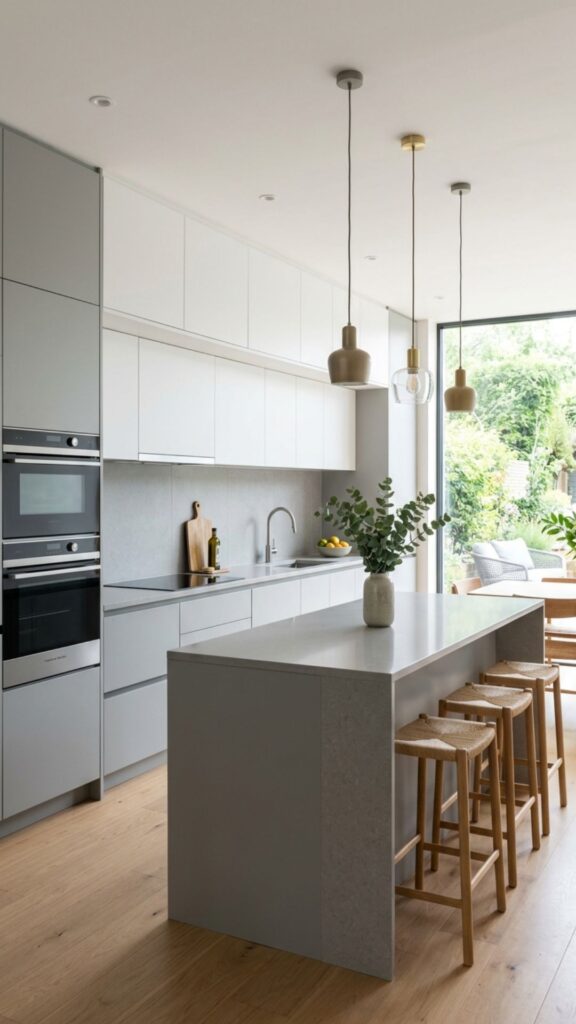
Handle-free or push-to-open cabinetry gives your kitchen a seamless, uncluttered facade — a hallmark of kitchen furniture design modern homeowners love. Without protruding hardware, the eye travels smoothly across the surface, making even compact kitchens feel more open.
This style works especially well in open-plan spaces where kitchen cabinets are visible from the living room. Choose integrated J-pull edges or touch-latch mechanisms for a truly sleek finish. Matte lacquer finishes in white, charcoal, or warm taupe are particularly popular choices right now.
3. Install a Multi-Level Kitchen Island
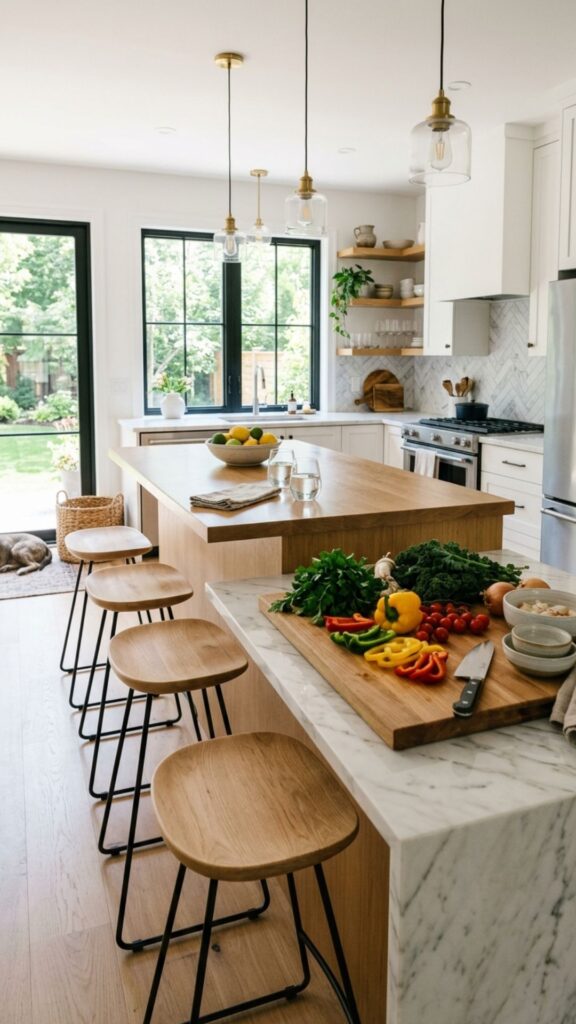
A two-tiered island solves one of the biggest challenges in open kitchens: hiding prep mess from guests. The lower level acts as your workspace, while the raised section creates a natural bar-style eating area and subtly screens the countertop below.
This layout also defines zones without walls. Guests can sit at the raised counter and chat while you cook, making the space feel connected yet organized. Add bar stools with low backs to keep sightlines open across the room.
4. Use Open Shelving Strategically
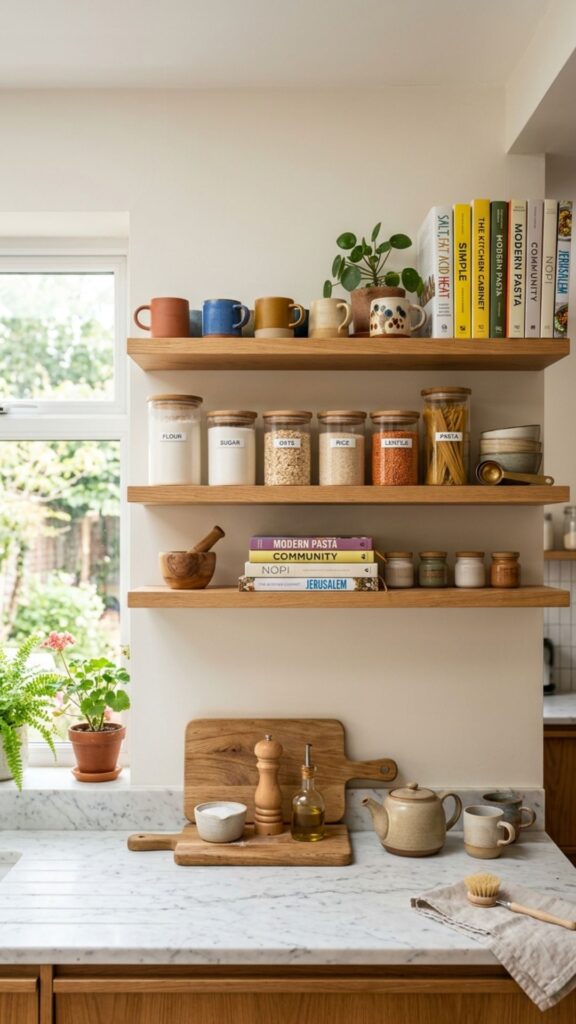
Open shelves give open kitchens an airy, curated feel — but only when done right. Limit open shelving to one or two sections rather than replacing all upper cabinets. Use them to display everyday items like mugs, cookbooks, or attractive jars that add warmth and personality.
The key is editing. Only display items you actually use, and keep the palette consistent. Mixing wood shelves with metal brackets is a classic combination that works across modern, industrial, and Scandinavian-inspired kitchens.
5. Incorporate a Built-In Banquette
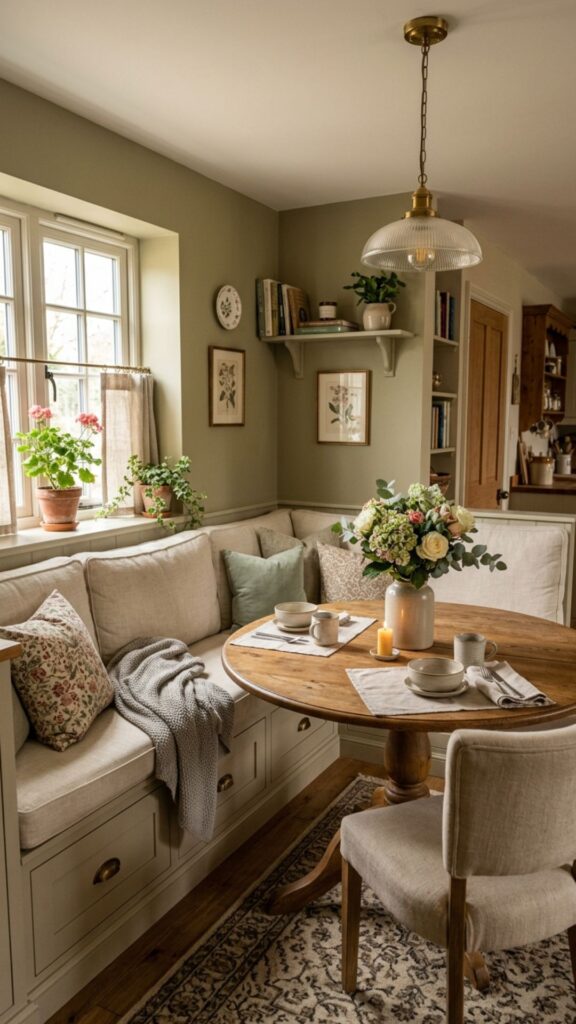
A built-in banquette along one wall creates a dedicated dining nook that feels custom and intentional. Unlike freestanding chairs, it hugs the space efficiently and often provides hidden storage beneath the seating — a genuine win for open-plan living.
Choose upholstery in a performance fabric that can handle daily wear, spills, and easy cleaning. A banquette paired with a round or oval table softens the geometry of a modern kitchen and makes the dining area feel warmer and more intimate.
6. Select Furniture with Slim, Tapered Legs
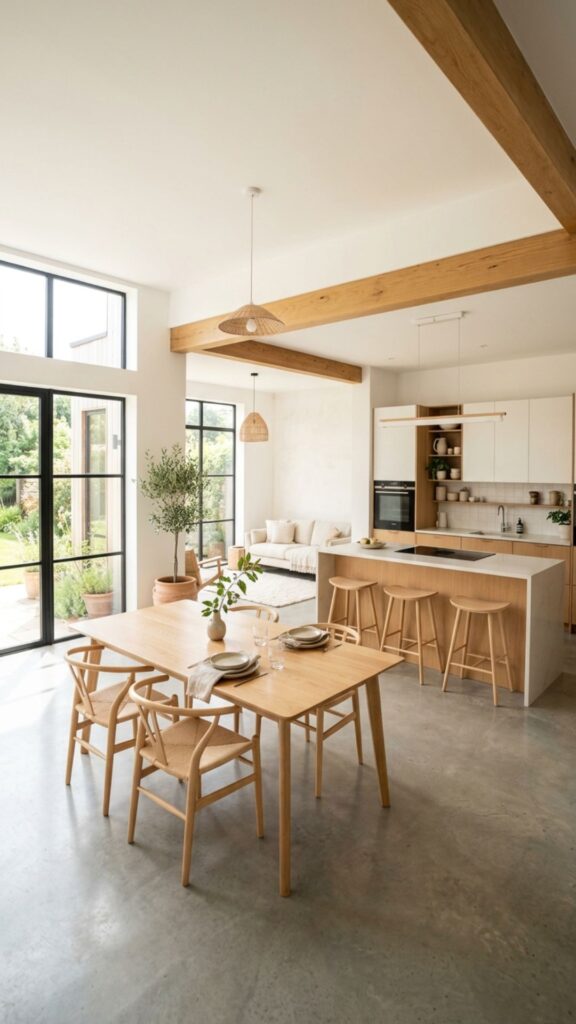
In an open kitchen, furniture that sits on slim, tapered legs creates a lighter visual footprint. You can see the floor beneath dining chairs, stools, and side tables, which makes the entire space feel less crowded and more breathable.
This is especially useful when your kitchen flows into a smaller living area. A dining table with tapered wooden legs paired with upholstered chairs on hairpin legs creates an eclectic yet cohesive modern look that doesn’t feel heavy or blocky.
7. Go for Floor-to-Ceiling Cabinetry
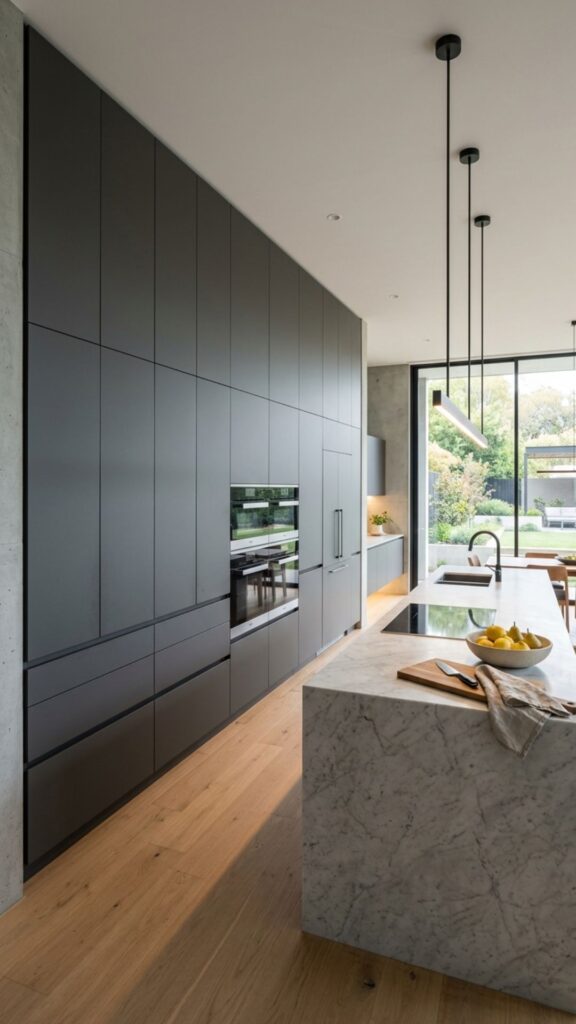
Floor-to-ceiling cabinetry maximizes vertical storage and creates a dramatic, unified wall of furniture that feels intentional rather than piecemeal. It eliminates the awkward gap above standard-height cabinets where dust collects and clutter hides.
In open kitchens, a full-height cabinet wall on one side visually anchors the space. Use it to house a built-in fridge, oven, and pantry storage behind uniform doors, so the entire wall reads as one cohesive piece of furniture rather than a mix of appliances and cabinets.
8. Add a Freestanding Kitchen Cart
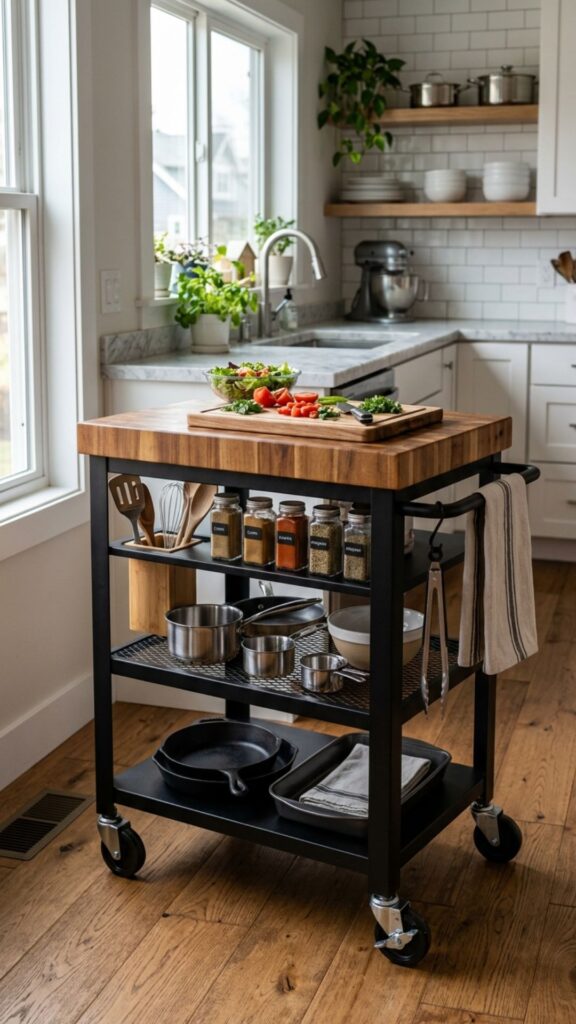
A freestanding kitchen cart gives you flexibility that fixed cabinetry can’t. Roll it to wherever you need extra prep space, use it as a serving station during parties, or tuck it away when the kitchen is quiet. It’s a smart piece of kitchen furniture for modern open layouts where needs change daily.
Look for carts with butcher block tops, lower shelves for storage, and locking casters. Stainless steel or painted wood options both work well, depending on whether your kitchen leans industrial or Scandinavian.
9. Choose an Extendable Dining Table
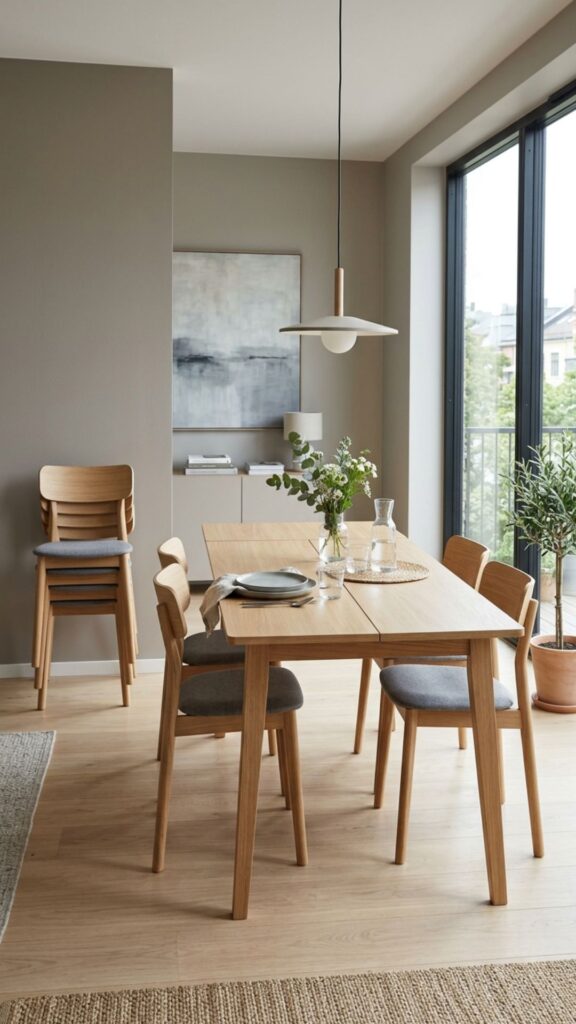
An extendable dining table is one of the most practical investments for an open kitchen. Day-to-day, keep it compact to preserve visual breathing room. When guests arrive, slide in a leaf and seat twice as many people without buying extra furniture.
Modern extendable tables are engineered to be smooth to operate and virtually invisible in their closed position. Solid wood, lacquered MDF, and glass options all work well in contemporary spaces. Pair with stacking or folding chairs that store easily when not in use.
10. Use a Kitchen Peninsula Instead of an Island
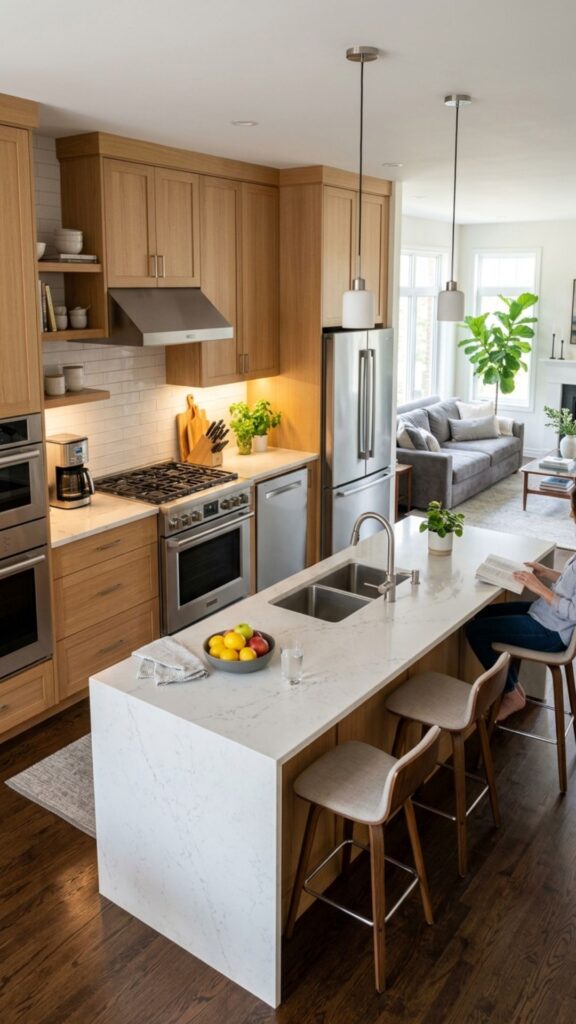
If your open kitchen doesn’t have the floor space for a freestanding island, a peninsula — attached to one wall or cabinet run — gives you similar benefits. It creates a natural division between cooking and living areas and provides extra counter space, seating, and storage.
Peninsulas work especially well in L-shaped kitchens. Place bar stools on the living-room-facing side to create an informal breakfast bar. This encourages conversation between the kitchen and the rest of the open space without any structural changes.
11. Mix Materials for Visual Depth
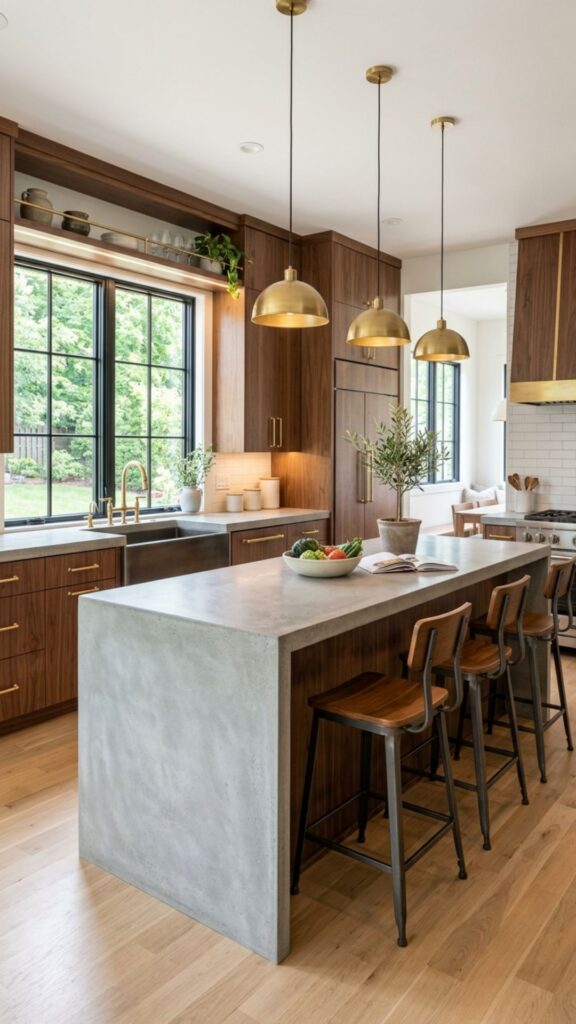
One-note kitchens can feel flat. Mixing materials — say, wood cabinets with a concrete countertop and metal bar stools — adds depth and personality that makes a kitchen furniture design modern and visually compelling.
The trick is limiting your palette to two or three complementary materials and repeating them intentionally. If you use brass hardware on the kitchen cabinets, echo it in the pendant lights above the island. That repetition ties everything together and makes the mix feel curated rather than chaotic.
12. Install Pendant Lights Over the Island
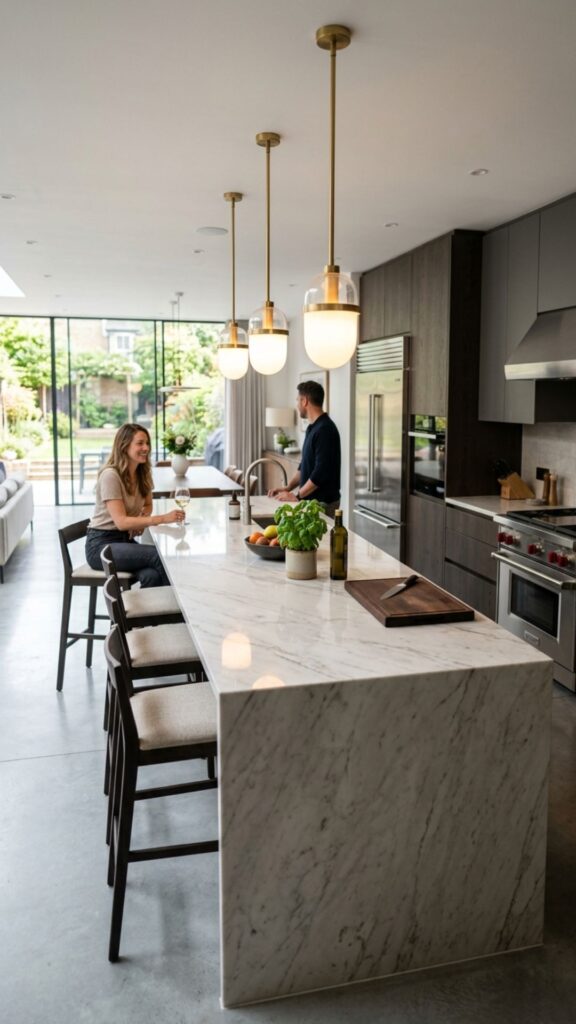
Pendant lights do double duty: they provide task lighting for the island and serve as decorative furniture-adjacent elements that define the kitchen zone within the open plan. Choose pendants that complement your cabinet style — rattan for warmth, glass globes for modern minimalism, or industrial metal shades for an urban edge.
Hang them at roughly 30 to 36 inches above the countertop for the right balance of light and clearance. Group three pendants over a long island, or use two larger pendants for a bolder statement.
13. Try a Contrasting Island Color
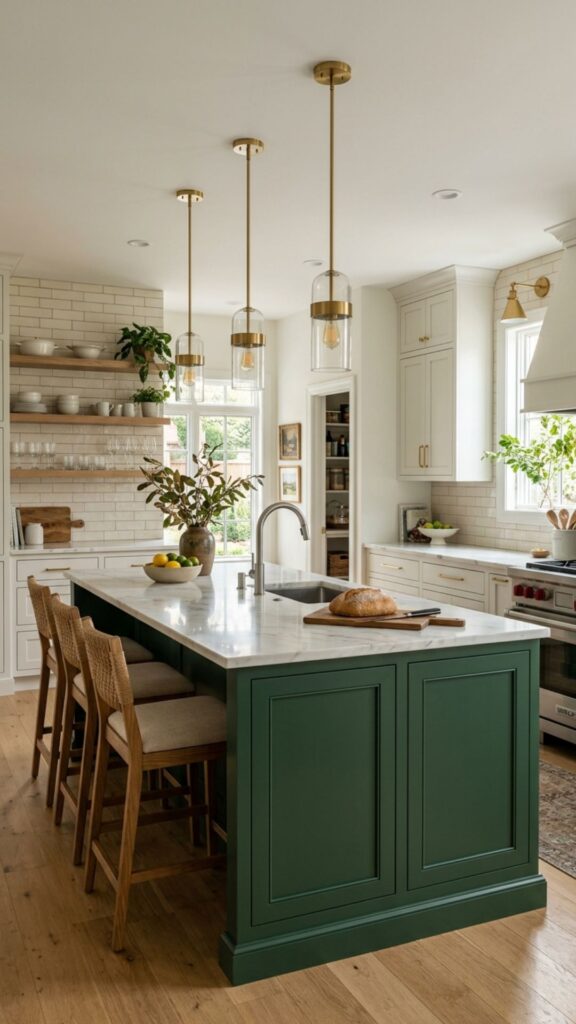
Painting or finishing your kitchen island in a different color from your perimeter cabinets is one of the most effective ways to create a focal point in an open kitchen. A navy island against white cabinets, or a forest green island against natural wood, creates immediate visual interest.
This technique also makes the island feel more like a piece of furniture than a built-in fixture — which is exactly the goal in modern kitchen design. Use the same hardware finish throughout to keep the contrast intentional rather than disjointed.
14. Incorporate Pull-Out Pantry Storage
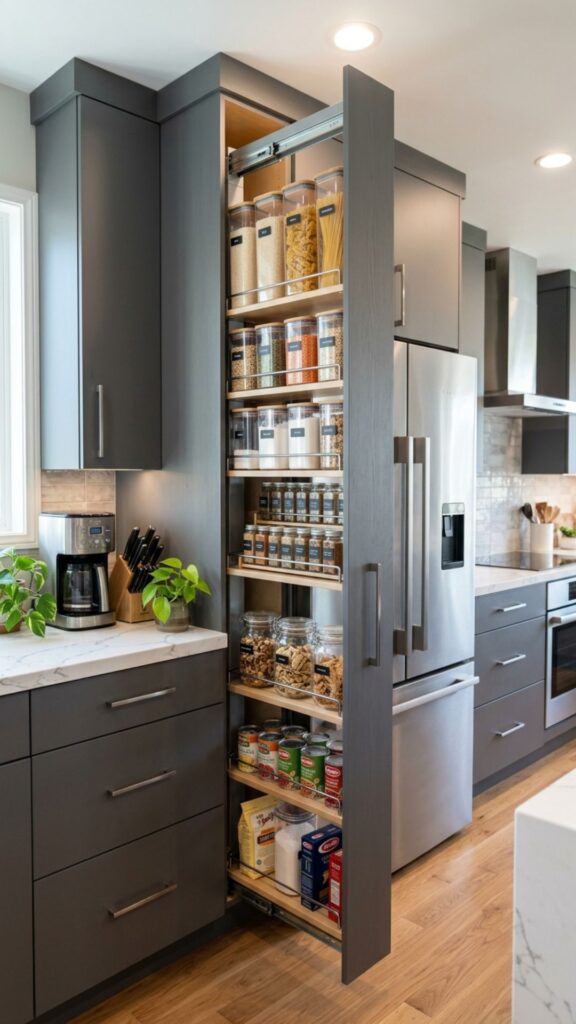
Pull-out pantry columns are a game-changer for open kitchens where visible clutter is a constant concern. A tall, narrow pull-out pantry beside the fridge or oven keeps dry goods, spices, and snacks completely hidden behind a door that blends seamlessly with surrounding cabinetry.
Modern pull-out systems use full-extension slides that give you full access to the back of each shelf — no more forgotten items buried in the dark. Wire baskets, adjustable shelves, and door-mounted racks maximize every inch.
15. Choose Bar Stools That Match the Island Height
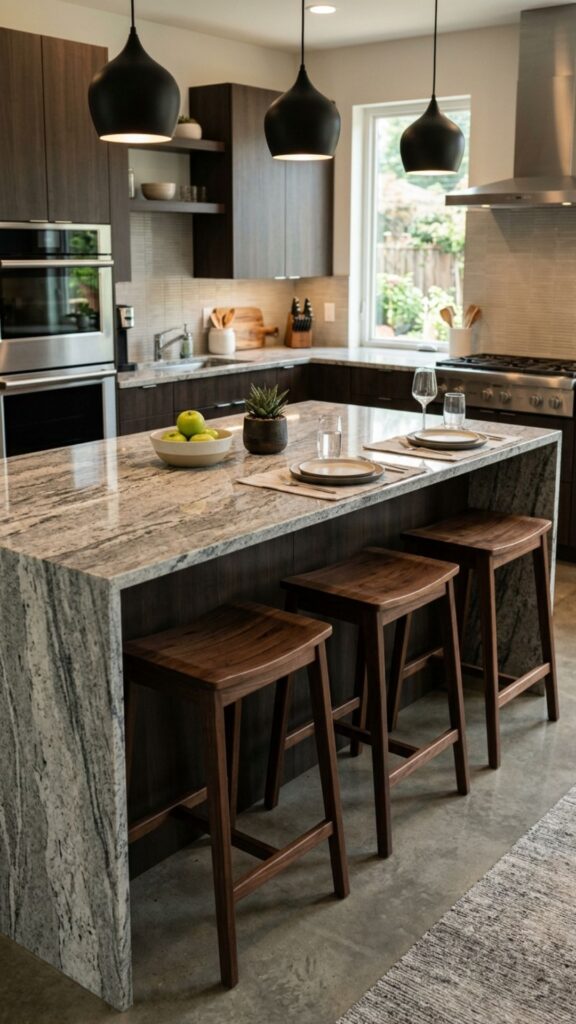
Getting bar stool height right is a surprisingly common pain point. Counter-height stools (24 to 26 inches) work for standard 36-inch countertops, while bar-height stools (28 to 30 inches) suit a raised island bar at 42 inches. Getting this wrong makes seating uncomfortable and visually awkward.
Beyond height, choose stools with backs and footrests if they’ll be used for meals. Backless stools look sleeker but get uncomfortable quickly. For open kitchens, low-profile stools that don’t block sightlines when occupied tend to work best.
16. Use a Kitchen Hutch or Sideboard in the Dining Zone
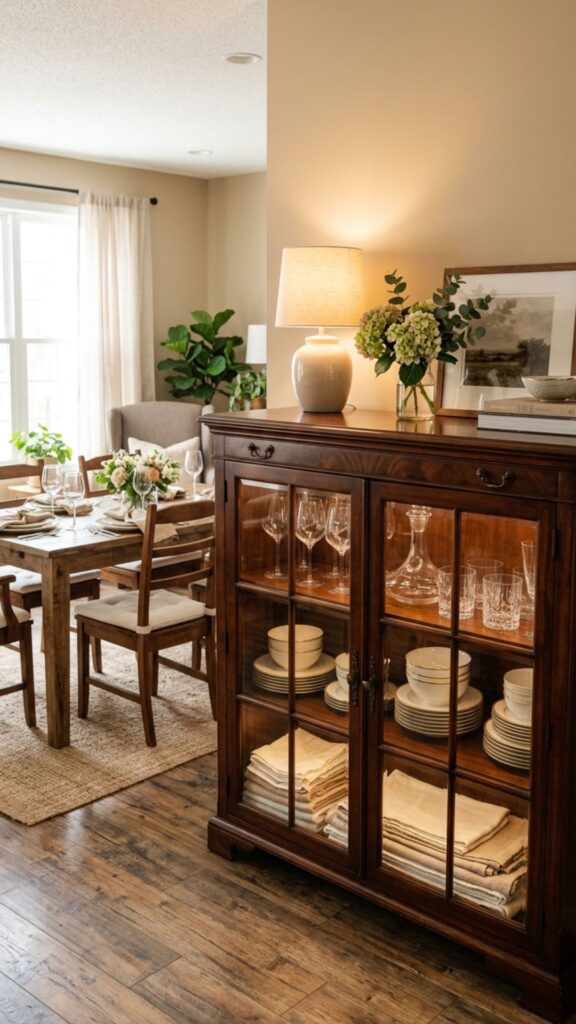
In an open kitchen-dining space, a hutch or sideboard along one wall serves as a natural bridge between the two areas. Use it to store table linens, extra dinnerware, and serving pieces. Its top surface becomes extra counter space during dinner parties.
A sideboard with glass-front doors keeps things organized while adding visual warmth. Choose a finish that ties into your kitchen cabinetry — matching the wood tone or hardware — so the piece feels like a deliberate extension of the kitchen furniture design rather than a furniture afterthought.
17. Add a Dedicated Coffee Station
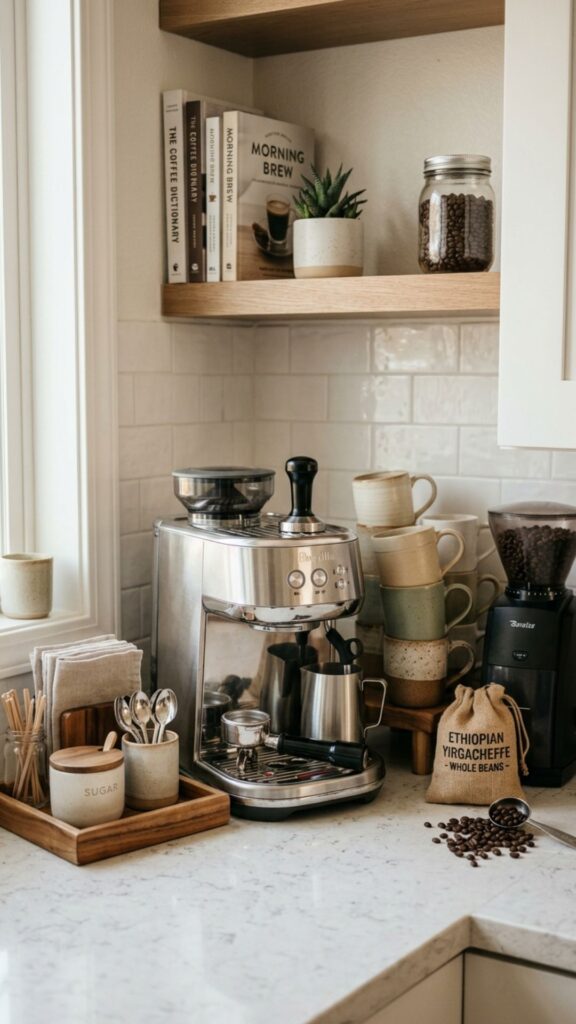
A built-in or freestanding coffee station carves out a purposeful zone within your open kitchen, which helps reduce countertop chaos. It gives coffee makers, grinders, cups, and pods a permanent home — and signals that this kitchen has been thoughtfully organized.
Built-in versions sit within a cabinet run with a low-voltage outlet installed inside. Freestanding versions can be a compact console table, a repurposed dresser, or a purpose-built coffee cabinet. Either way, keeping it stocked and styled makes the open kitchen feel curated and intentional.
18. Incorporate Hidden Appliance Garages
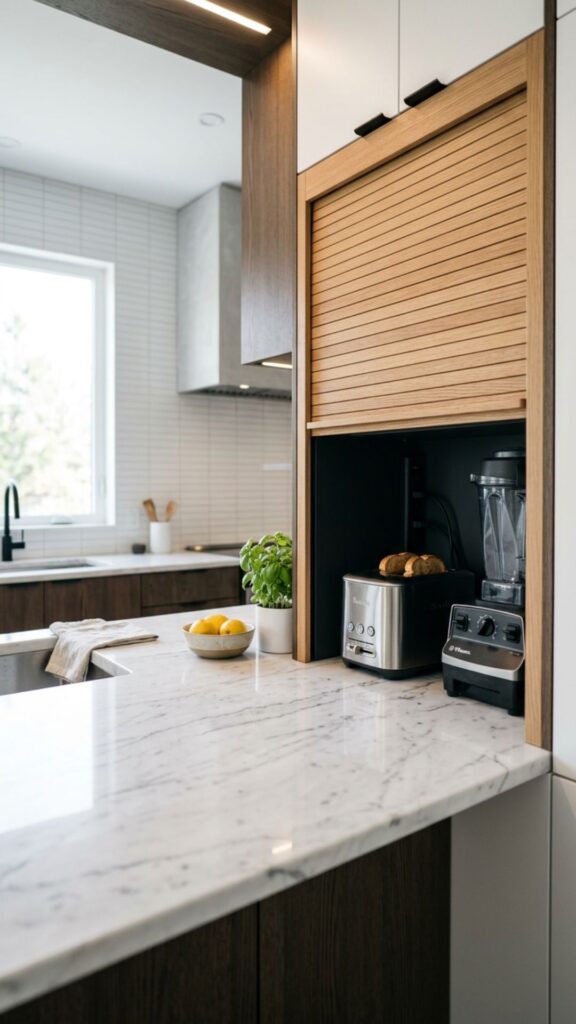
An appliance garage is a cabinet section with a roll-up or pocket door that hides toasters, blenders, and other countertop appliances when not in use. In an open kitchen, where the countertop is visible from the living room, this keeps things looking clean without requiring you to put everything away after each use.
Position the garage on a section of countertop near an outlet. Tambour-style roll-up doors are the most seamless option. This simple addition dramatically reduces visual noise — one of the biggest complaints about open-plan kitchens.
19. Use Consistent Flooring Throughout
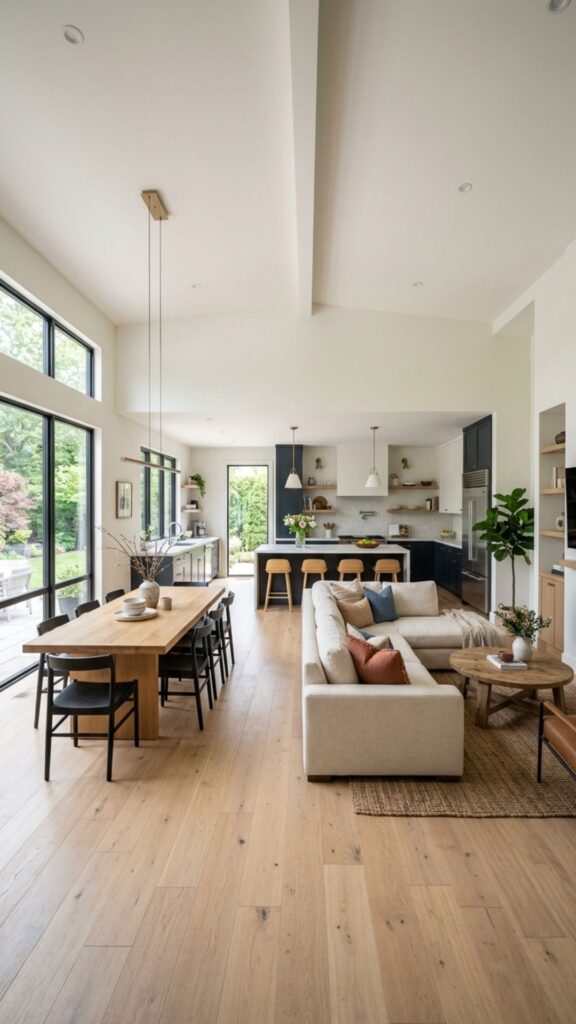
Flooring isn’t furniture, but your choice of flooring profoundly affects how furniture sits and reads in an open kitchen. Running the same floor material from the kitchen through to the dining and living area creates a unified, expansive feel that makes the whole space seem larger.
Large-format tiles, wide-plank hardwood, and luxury vinyl plank are all popular choices for this reason. They eliminate the visual interruption of a threshold or floor change, which can make an open kitchen feel cut off rather than connected.
20. Keep the Color Palette Cohesive Across Zones
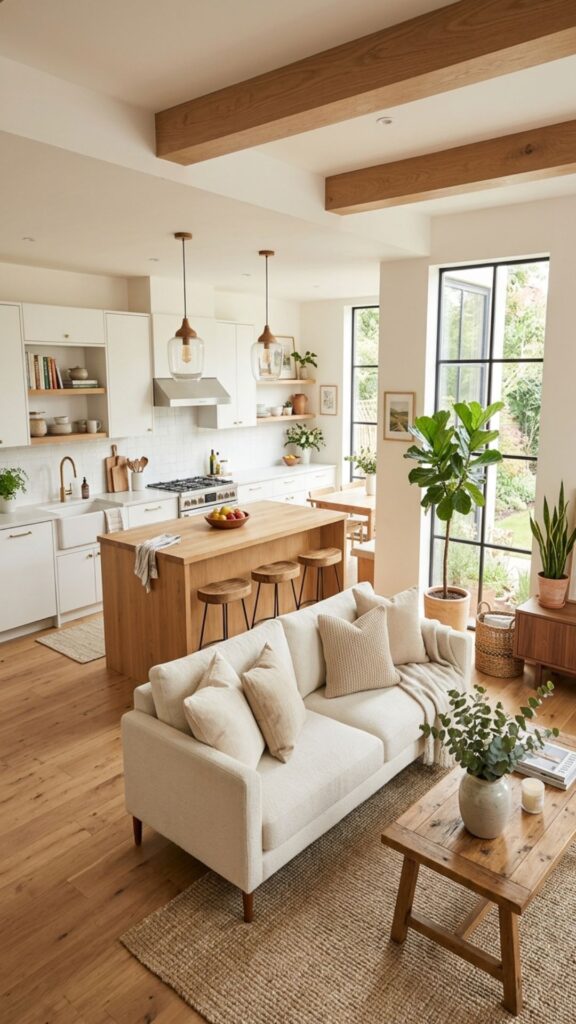
In an open kitchen, your furniture and finishes don’t exist in isolation — they’re seen alongside living room sofas, dining chairs, and décor all at once. Choosing a cohesive color palette across all zones is what makes the space feel designed rather than assembled.
Pick two or three anchor colors and use them consistently. If your kitchen cabinets are warm white with wood accents, carry those tones into the dining furniture and living area. This doesn’t mean everything has to match — variety in texture and scale keeps things interesting — but the overall palette should feel harmonious.
Conclusion
Designing an open kitchen is about more than choosing beautiful cabinets or a stylish island. It’s about creating a space where form and function work together seamlessly — where every piece of furniture pulls its weight and the whole room feels considered from every angle.
These 20 kitchen furniture design modern ideas give you a solid foundation to work from, whether you’re doing a full renovation or making targeted upgrades. Start with the changes that address your biggest pain points first — whether that’s storage, seating, or visual cohesion — and build from there.
Ready to transform your open kitchen? Start by picking three ideas from this list that speak to your space and lifestyle, then map out a realistic plan. Small, intentional changes add up quickly, and the result is a kitchen that genuinely reflects how you live.
What is the best kitchen furniture for an open-plan kitchen?
The best furniture for an open-plan kitchen combines visual lightness with practical function. Multi-use islands, extendable dining tables, slim-legged chairs, and built-in storage solutions work especially well because they help define zones without adding visual bulk or blocking sightlines.
How do I make my open kitchen look more modern?
Focus on clean lines, handle-free cabinetry, a cohesive color palette, and consistent materials across the space. Modern kitchen furniture design typically avoids ornate details in favor of simple, purposeful forms. Mixing two or three complementary materials — like wood, metal, and stone — adds depth without clutter.
What size kitchen island works best for an open kitchen?
A standard kitchen island should have at least 42 inches of clearance on all walkable sides — ideally 48 inches if multiple people use the kitchen simultaneously. For seating, allow 24 inches of counter width per person and at least 15 inches of knee clearance below the overhang.
How do I prevent an open kitchen from looking cluttered?
Invest in hidden storage solutions — pull-out pantries, appliance garages, and floor-to-ceiling cabinetry — so everyday items have a dedicated home out of sight. Keep countertops as clear as possible and limit open display shelving to well-edited, intentional arrangements. A cohesive color palette across all zones also reduces visual noise significantly.