Your kitchen floor takes a beating every single day. Spilled coffee, dropped pots, muddy shoes, and constant foot traffic — it handles all of it without complaint. So when it comes time to choose a new floor, you want something that looks great and holds up over time.
The good news? You don’t have to sacrifice style for durability. Today’s kitchen flooring ideas span a wide range of materials, price points, and aesthetics — whether you’re renovating a farmhouse kitchen, modernizing a small apartment, or upgrading a busy family home.
In this guide, you’ll find 20 practical, proven options with honest advice on benefits, drawbacks, and which spaces they suit best.
1. Hardwood Flooring
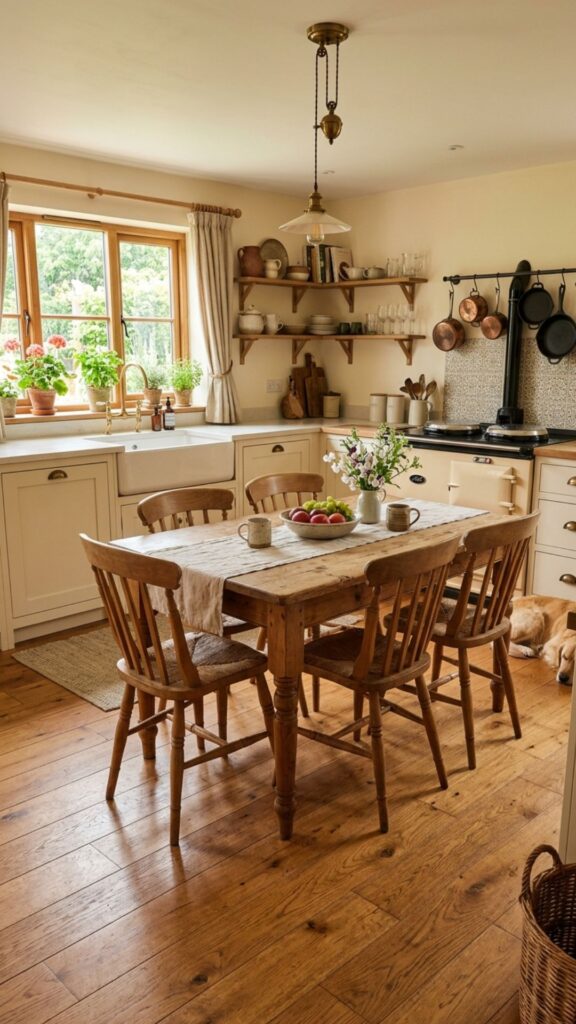
Hardwood brings warmth and timeless character to any kitchen. Oak, maple, and walnut are popular choices because they’re dense, sand-able, and can be refinished multiple times to remove scratches or stains. A well-maintained hardwood floor can last 50 years or more.
The main drawback is sensitivity to moisture. Standing water near the sink or dishwasher can cause warping over time. Use area rugs near water-prone zones and wipe up spills quickly. Hardwood works best in low-to-medium humidity climates and kitchens that aren’t prone to flooding or heavy wet cooking.
2. Engineered Hardwood
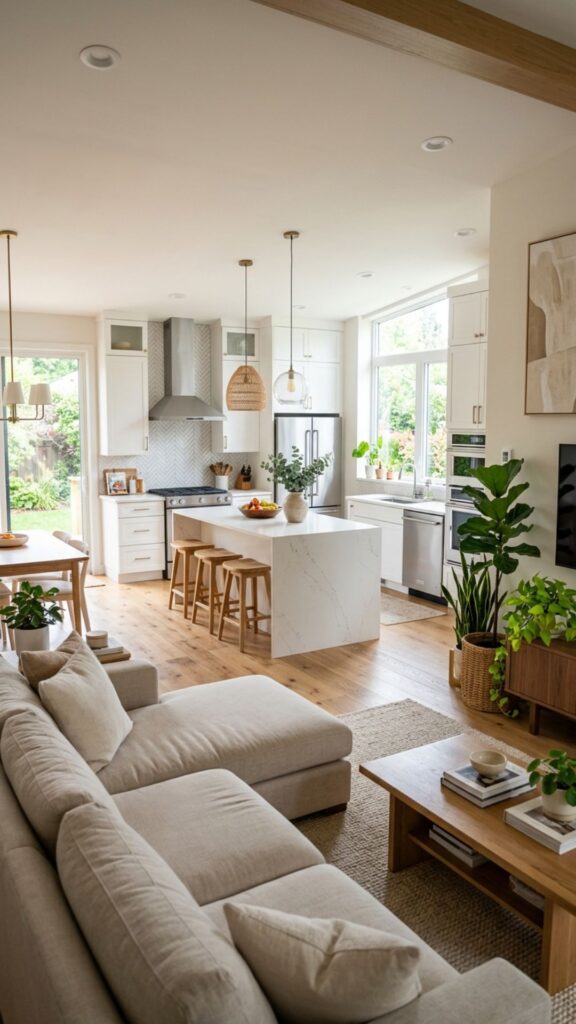
Engineered hardwood gives you the look of real wood with better moisture resistance. It’s made with a thin hardwood veneer bonded over a plywood core, which makes it more dimensionally stable than solid wood. You get the same warm tones and grain patterns at a lower price point.
It can’t be refinished as many times as solid hardwood, but it’s a smart middle ground for kitchens with moderate moisture exposure. It’s particularly well-suited to homes with radiant floor heating or open-plan spaces where the kitchen connects to a living area.
3. Porcelain Tile
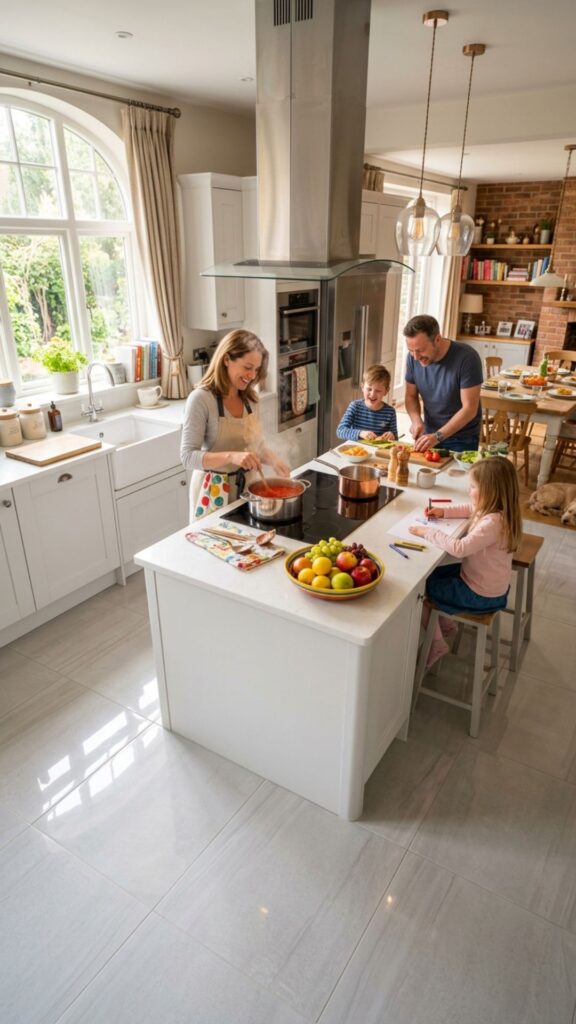
Porcelain tile is one of the most durable kitchen flooring ideas available. It’s scratch-resistant, waterproof, and handles heavy foot traffic without showing wear. You’ll find it in nearly every finish — matte, glossy, textured, and wood-look planks that mimic real hardwood convincingly.
The downside is that it’s hard underfoot and cold in winter without radiant heating beneath it. Grout lines also require periodic cleaning to prevent discoloration. That said, for busy households, renters worried about damage deposits, or kitchens prone to spills, porcelain is hard to beat.
4. Ceramic Tile
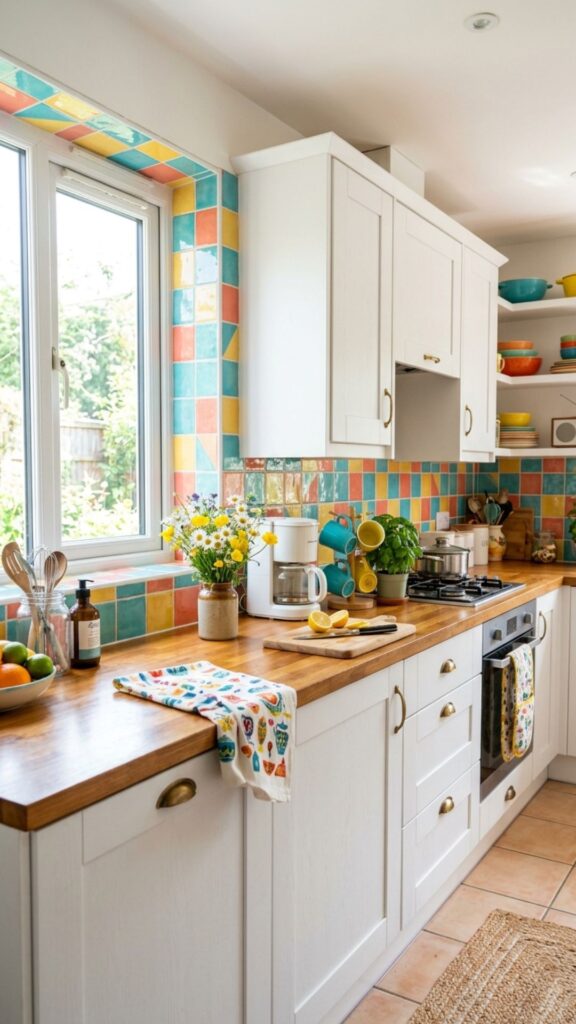
Ceramic tile is a budget-friendly cousin of porcelain. It’s slightly less dense and more porous, which means it’s not quite as tough, but it’s still a solid performer for most residential kitchens. It comes in an enormous range of colors, patterns, and sizes.
Because ceramic is easier to cut and work with, installation costs tend to be lower. It’s a great choice for DIYers looking to save on labor. Use a glazed ceramic tile in the kitchen — unglazed versions absorb stains and are harder to keep clean.
5. Luxury Vinyl Plank (LVP)
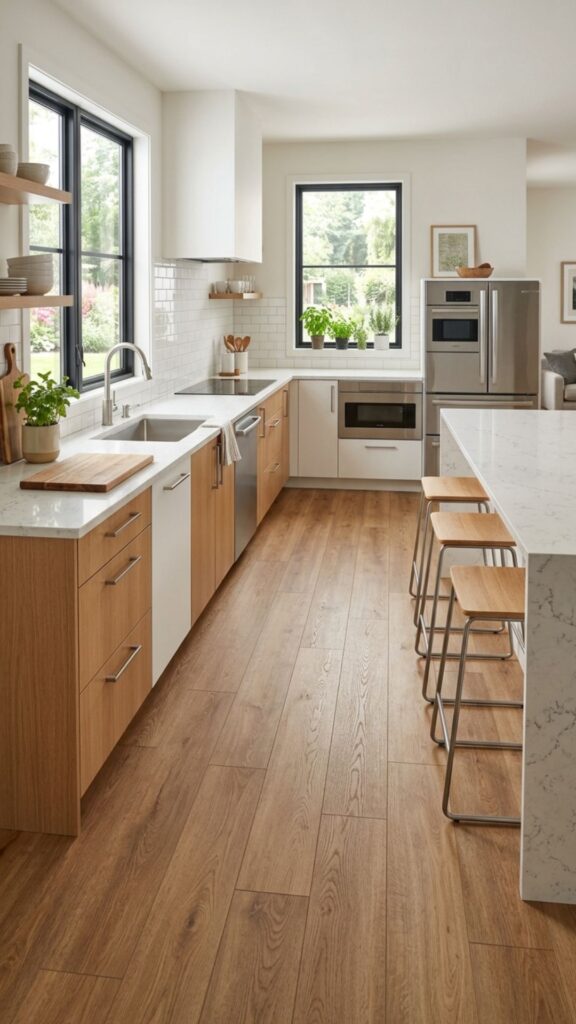
Luxury vinyl plank has become one of the most popular kitchen flooring ideas in recent years, and it’s easy to see why. It’s 100% waterproof, soft underfoot, affordable, and available in realistic wood and stone looks. Most products click together without glue, making DIY installation straightforward.
LVP holds up well to pets, kids, and heavy use. The trade-off is that it can be damaged by heavy appliances dragged across it and can fade in intense sunlight. Still, for renters, families, or anyone on a budget, it offers exceptional value.
6. Luxury Vinyl Tile (LVT)
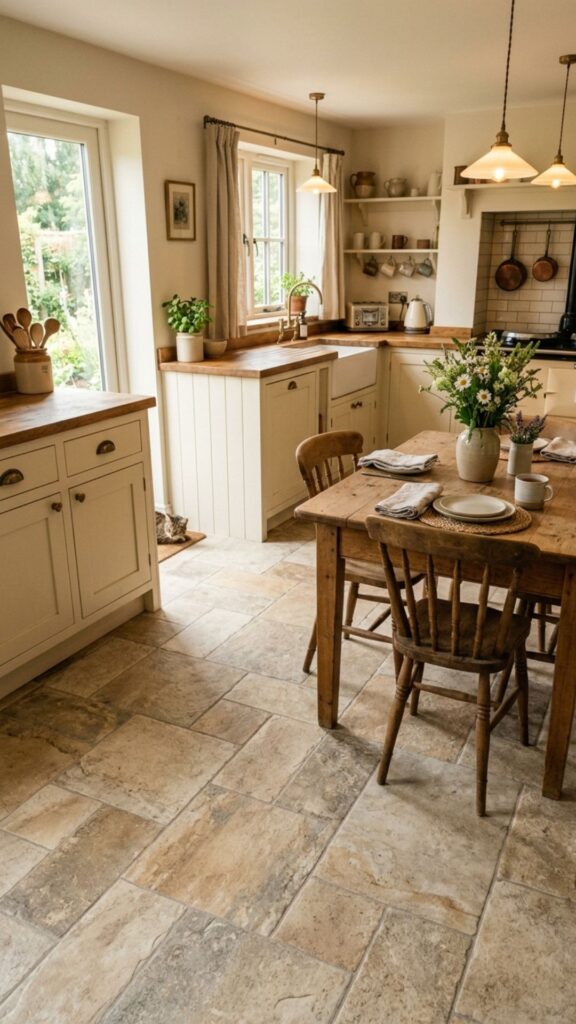
Luxury vinyl tile mimics ceramic or stone tile in appearance but offers the same waterproof, comfortable properties as LVP. It’s a warmer, quieter surface than real tile, which many homeowners appreciate in a kitchen where you spend a lot of time standing.
LVT is available in peel-and-stick or click-lock formats. The peel-and-stick version is ultra-budget-friendly but may lift over time. Click-lock LVT is more secure and performs better in busy kitchens. Both options work well in apartments and rental properties.
7. Laminate Flooring
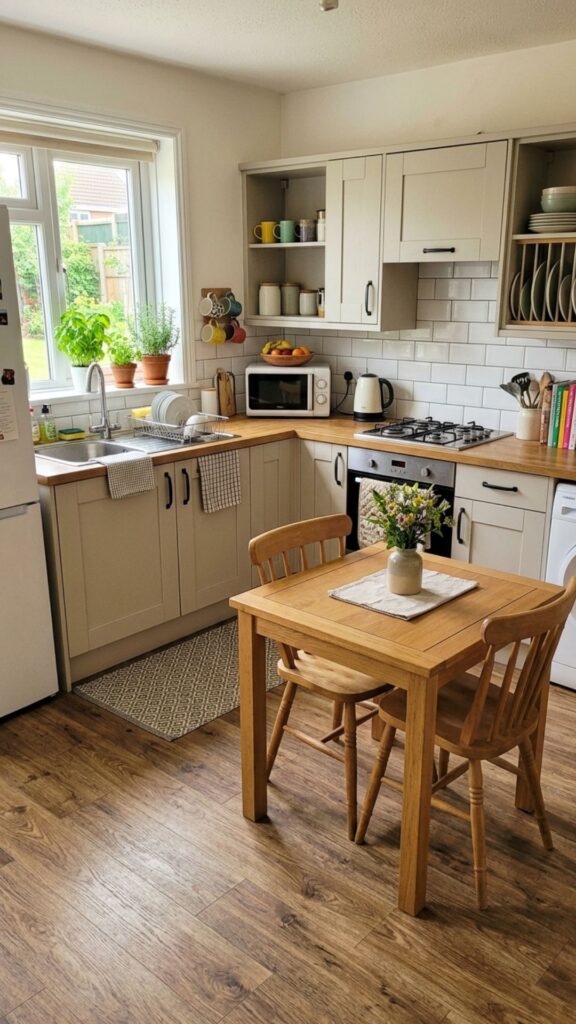
Laminate offers the look of hardwood or tile at a fraction of the cost. Modern laminate products have improved significantly — they’re more scratch-resistant and come in realistic textures that feel close to the real thing underfoot.
The key limitation is water. Traditional laminate swells when moisture seeps into the seams. If you’re set on laminate, look for waterproof laminate specifically designed for kitchens and bathrooms. It’s best used in low-to-moderate traffic kitchens where spills are managed quickly.
8. Natural Stone Tile
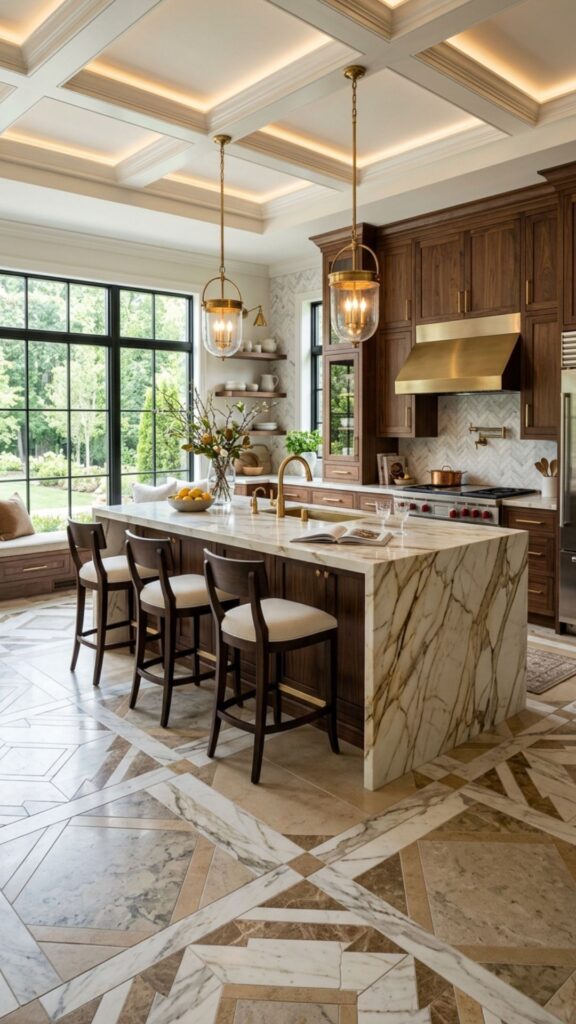
Natural stone — marble, travertine, slate, or limestone — creates a truly luxurious kitchen floor. Each tile is unique, giving the space a one-of-a-kind look that synthetic materials can’t fully replicate. Stone floors can last a lifetime with proper care.
The drawbacks are real: stone is expensive, requires sealing to prevent staining, and some varieties like marble are prone to scratching. It’s also heavy, which may require floor reinforcement. Best suited for high-end kitchen renovations where longevity and aesthetics are the priority.
9. Slate Tile
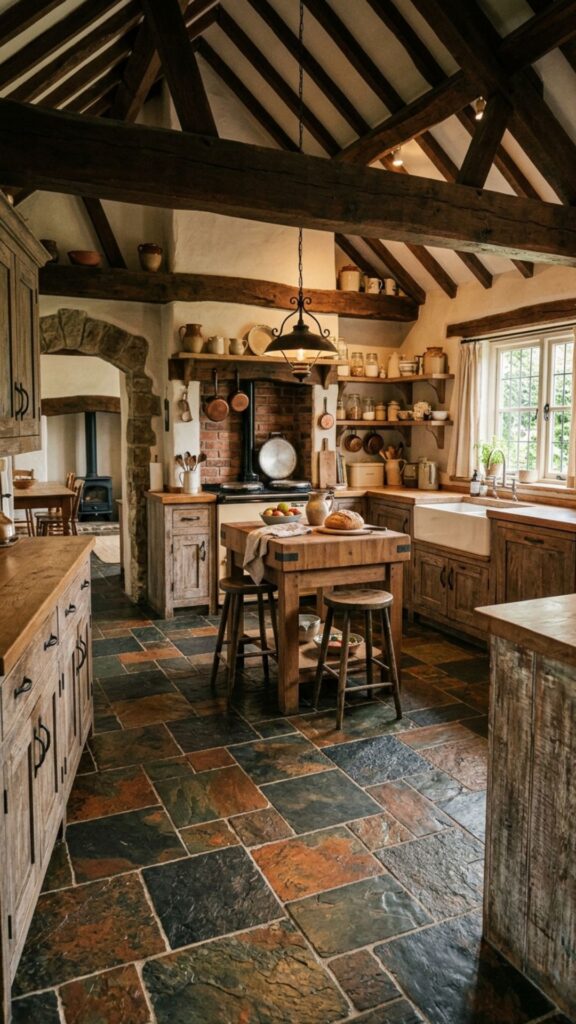
Slate deserves its own spotlight. It’s tougher than marble or travertine and has a naturally textured surface that provides excellent slip resistance — a genuine safety advantage in the kitchen. Its earthy charcoal, rust, and green tones add a rustic, grounded feel.
Slate needs sealing every few years but is otherwise low-maintenance. It chips less easily than softer stones. It pairs beautifully with farmhouse, industrial, or cabin-style kitchens.
10. Concrete Flooring
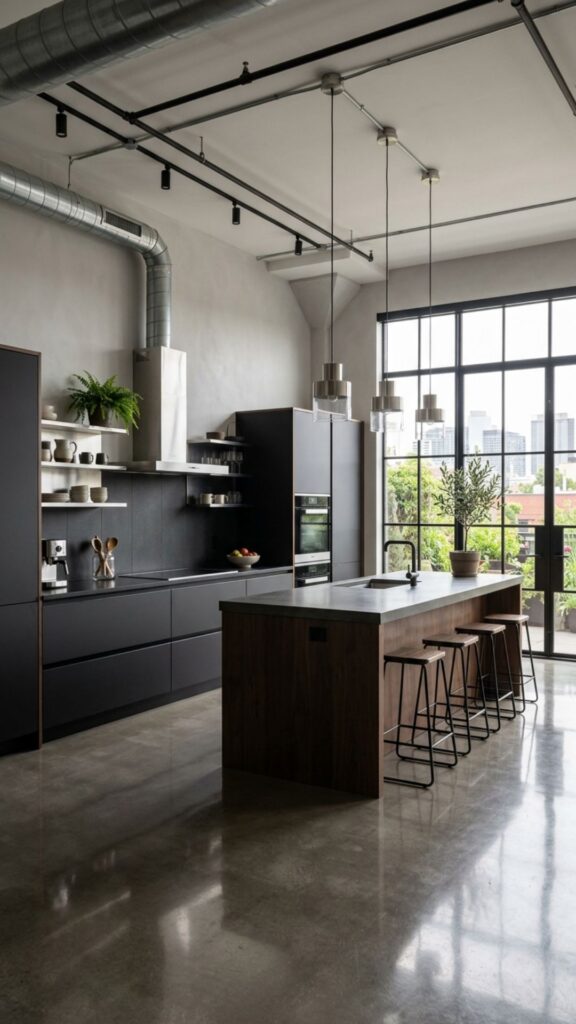
Polished or stained concrete is a sleek, industrial-chic option that’s incredibly durable. It resists moisture when properly sealed, handles heavy appliances with ease, and can be tinted in dozens of colors to match any aesthetic.
Concrete is hard and cold, so pairing it with a radiant heating system dramatically improves comfort. It’s also prone to cracking over time without proper installation and sealing. Best for modern, minimalist, or open-plan kitchens where the aesthetic is a central design statement.
11. Bamboo Flooring
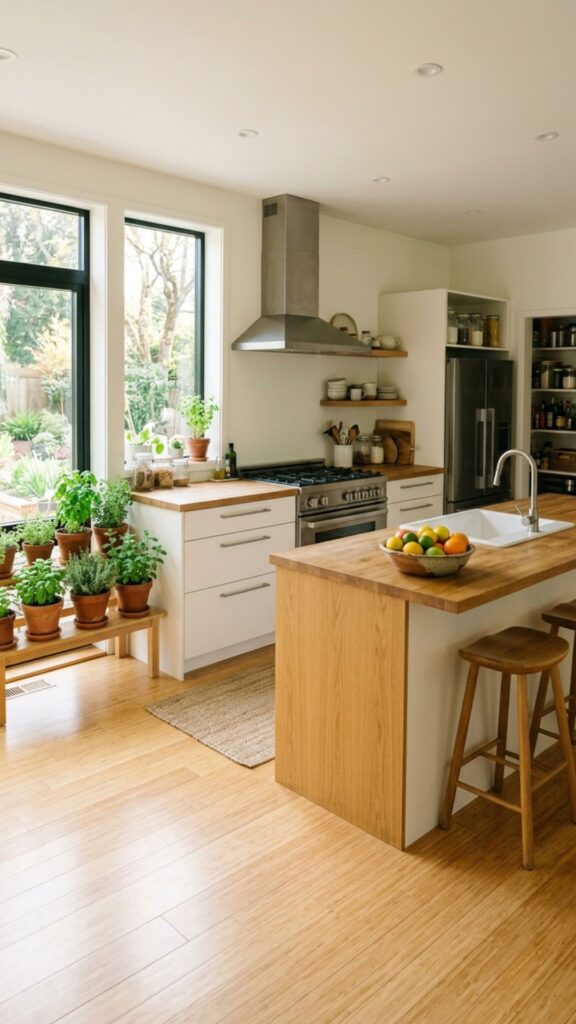
Bamboo is a fast-growing, renewable resource that performs comparably to hardwood in density and durability. It’s slightly harder than red oak, resists light moisture reasonably well, and comes in natural blonde or darker carbonized tones.
Choose strand-woven bamboo for maximum hardness and durability. Avoid standard bamboo in very humid climates or kitchens with significant moisture. It’s a solid eco-friendly option for homeowners prioritizing sustainability without sacrificing style.
12. Cork Flooring
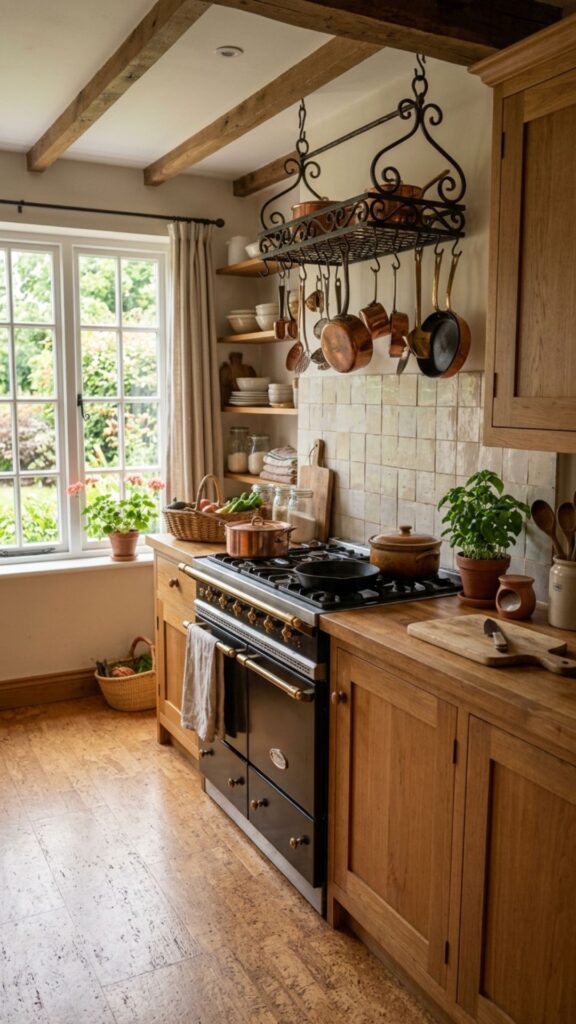
Cork is soft, warm, and naturally cushioned underfoot — which makes long cooking sessions much more comfortable. It also has natural antimicrobial properties and acts as a mild sound insulator, which helps in open-plan homes.
The catch is that cork can dent under heavy furniture and fade in direct sunlight. It needs sealing to resist moisture. Cork works best in smaller kitchens with limited heavy appliances and where comfort underfoot is the top priority.
13. Linoleum Flooring
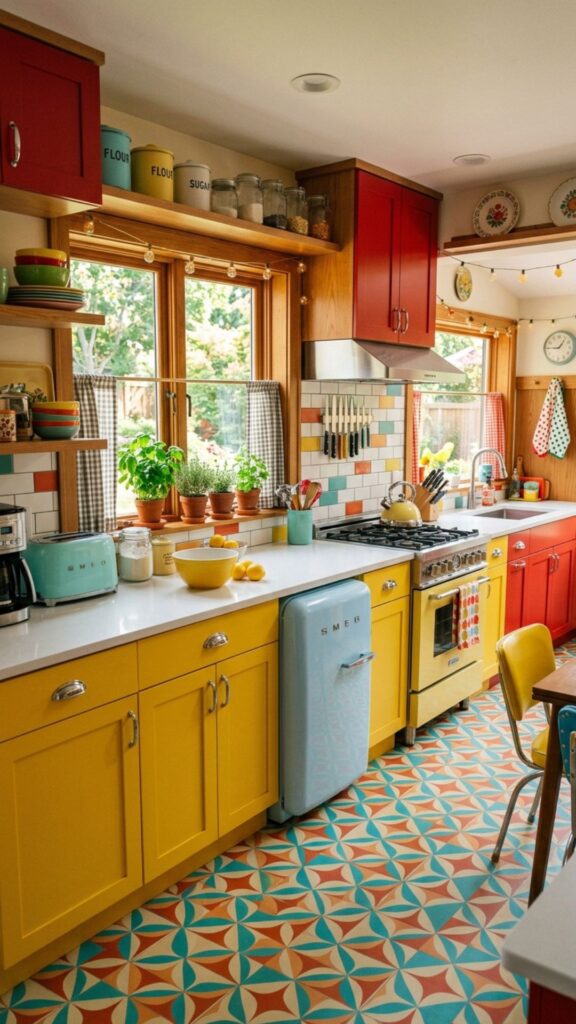
Linoleum has made a serious comeback. Made from natural materials like linseed oil and cork powder, it’s eco-friendly, durable, and available in a huge range of colors and patterns. Quality linoleum can last 25 to 40 years with proper care.
It’s naturally antibacterial and easy to clean. Unlike vinyl, linoleum is biodegradable. It’s softer than tile and warmer than stone. A great mid-range option for eco-conscious homeowners who want a practical, long-lasting floor.
14. Terrazzo
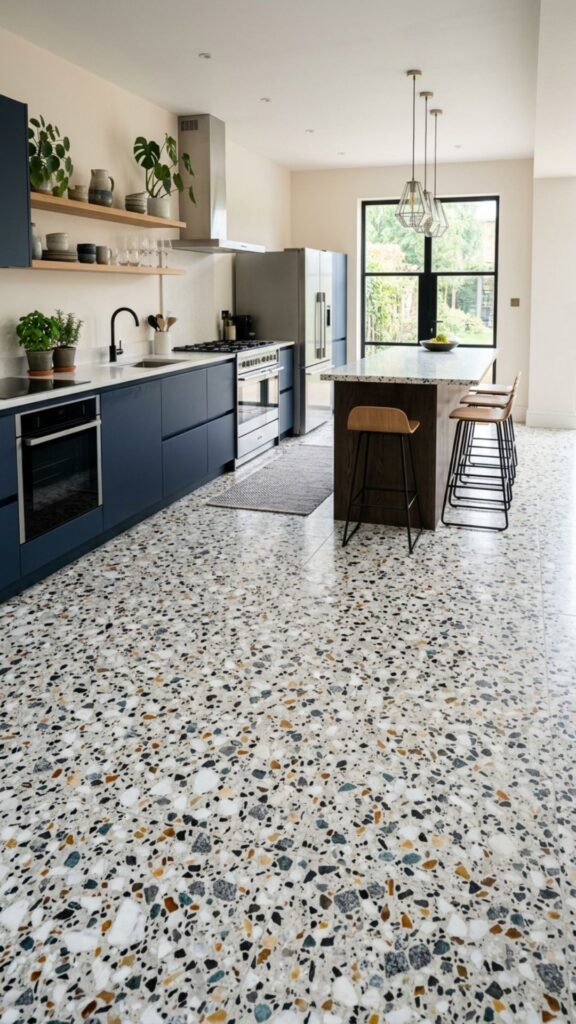
Terrazzo is having a major design moment. Made from chips of marble, glass, or granite set in cement or epoxy, it creates stunning speckled patterns that feel both retro and contemporary. It’s extremely durable and, once sealed, very easy to maintain.
Custom terrazzo is expensive and requires professional installation. Pre-made terrazzo tiles offer a more accessible entry point. It’s ideal for design-forward kitchens where the floor is meant to be a focal point.
15. Patterned Encaustic Tile
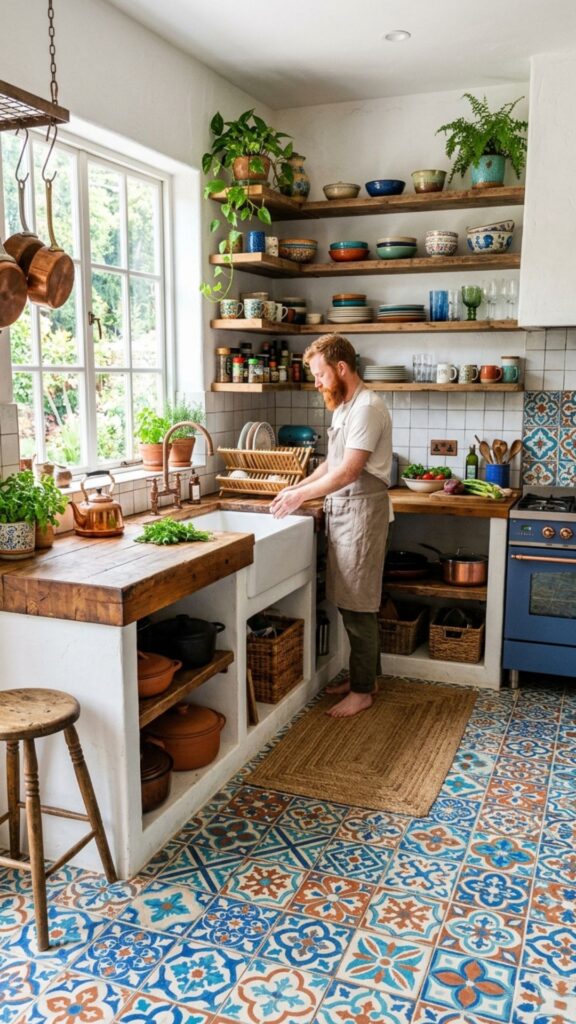
Encaustic cement tiles feature bold geometric or floral patterns that add serious personality to a kitchen. They’re handmade, which gives each tile slight variation — a feature that adds to their charm. They’re durable and cool underfoot in warm climates.
These tiles are porous and must be sealed regularly to resist staining. They’re not ideal for kitchens that deal with heavy oil splatter or red wine spills unless maintenance is a priority. Perfect for Mediterranean, Moroccan, or boho-style kitchens.
16. Reclaimed Wood
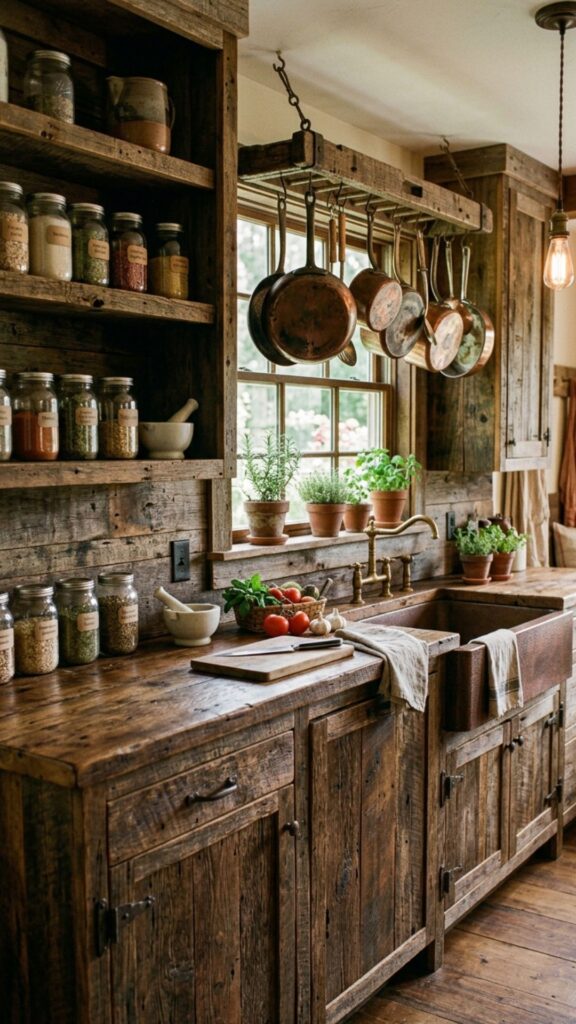
Reclaimed wood floors carry history. Sourced from old barns, factories, or warehouses, each plank has unique character — knots, nail holes, saw marks — that new wood simply doesn’t have. They’re also a sustainable choice that gives old material a new life.
Reclaimed wood requires thorough treatment and sealing before installation to ensure it’s stable and free from pests. It’s more expensive than new hardwood in many cases. Best for rustic, vintage, or character-driven kitchen designs.
17. Rubber Flooring
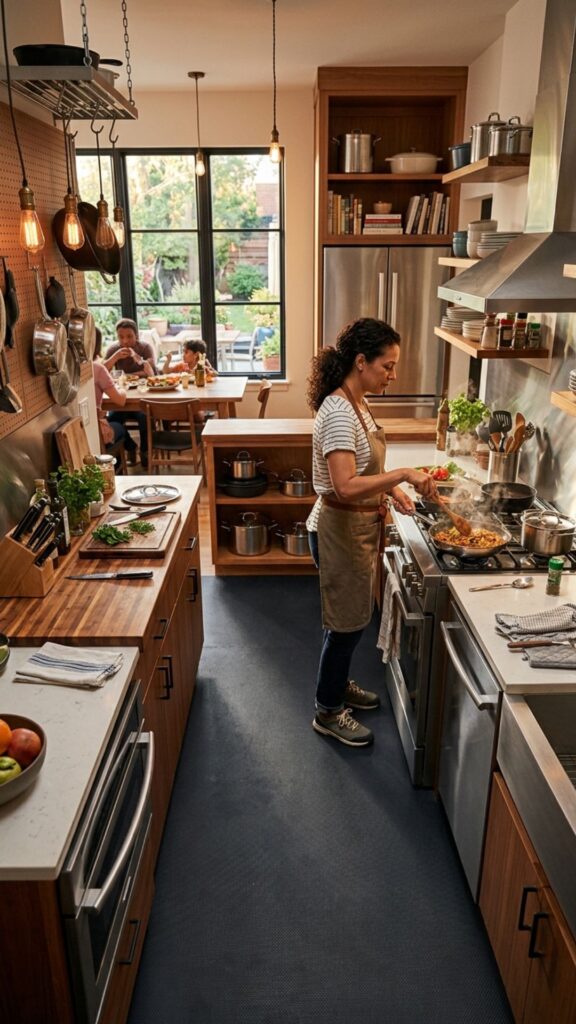
Rubber flooring is common in commercial kitchens for good reason — it’s slip-resistant, shock-absorbing, waterproof, and exceptionally durable. Residential rubber tiles and rolls have improved significantly in appearance and are now available in a variety of colors and textures.
It’s easy on your feet and joints during long cooking sessions. The smell when first installed can be strong and may linger for a few weeks. Best for practical, high-use kitchens where safety and durability outrank aesthetics.
18. Glass Tile
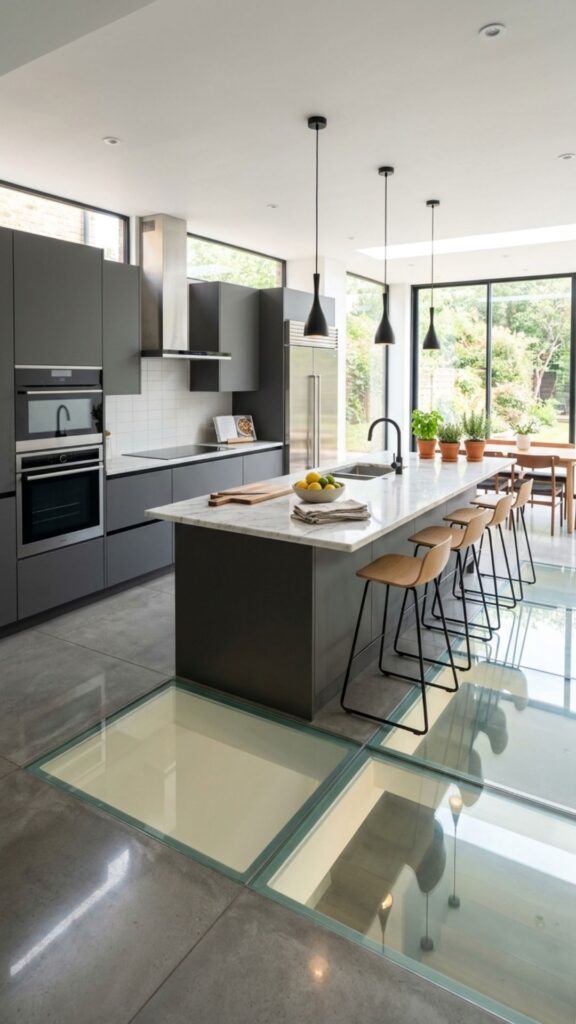
Glass tile is typically used as a backsplash, but large-format glass floor tiles are a striking choice in contemporary kitchens. They reflect light beautifully, making small kitchens feel larger and brighter. They’re waterproof and easy to clean.
Glass tile is slippery when wet unless you choose textured anti-slip versions, making the finish selection critical. It’s also fragile under impact — dropping a cast iron pan could chip or crack a tile. Best used as an accent rather than a full-floor application in most homes.
19. Brick Pavers
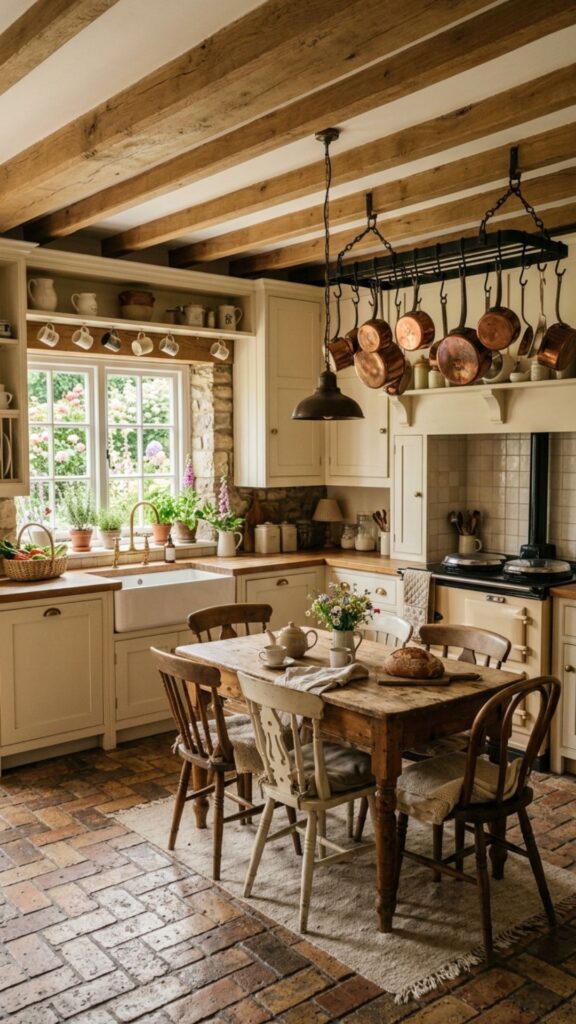
Brick pavers bring old-world charm and incredible durability to kitchen floors. They’re used in cottage, farmhouse, and Tuscan-style kitchens to create a lived-in, character-rich atmosphere. Real brick is dense and handles heavy foot traffic well.
Brick is rough-textured and porous, so it needs sealing and isn’t the easiest surface to clean. It’s also heavy — your subfloor needs to be able to handle the load. For the right aesthetic, though, brick adds something no modern flooring material quite matches.
20. Heated Tile Systems
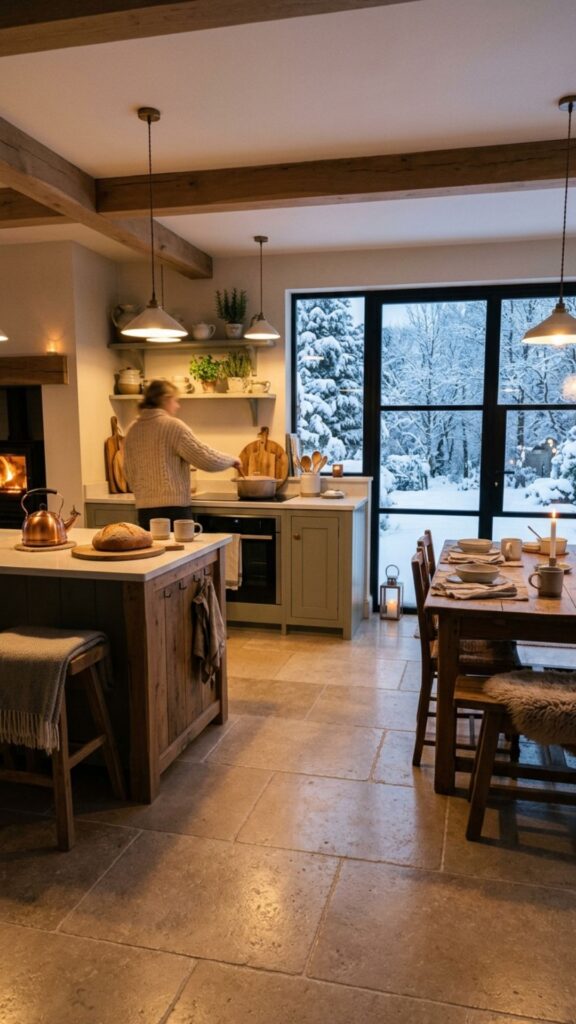
Radiant floor heating paired with tile — porcelain, ceramic, or stone — transforms cold floors into a genuine comfort feature. Electric mats or hydronic systems are installed beneath the tile to warm it from below, making winter mornings in the kitchen far more enjoyable.
The installation cost is higher, but running costs for electric systems in small kitchens can be quite manageable. It’s worth considering during any major kitchen renovation, especially if you’re already laying new tile. Best paired with porcelain or stone tile in colder climates.
Conclusion
Choosing the right kitchen floor comes down to three things: how you live, what you love, and how much you want to spend. Whether you’re drawn to the warmth of hardwood, the resilience of porcelain tile, or the budget-friendliness of luxury vinyl plank, there’s a floor that fits your life.
Start by identifying your priorities — waterproofing, comfort, aesthetics, maintenance, or budget — and let those guide your decision. If you’re ready to transform your kitchen, take these kitchen flooring ideas to a local tile or flooring showroom to see samples in person before committing. The floor that looks best online isn’t always the one that looks best in your actual kitchen.
What is the most durable kitchen flooring?
Porcelain tile is widely considered the most durable option for kitchen floors. It’s waterproof, scratch-resistant, and can last decades with minimal maintenance. Concrete and natural stone are also highly durable when properly sealed.
What kitchen flooring is easiest to maintain?
Luxury vinyl plank and porcelain tile are the easiest kitchen floors to maintain. Both are waterproof, resistant to stains, and require only regular sweeping and occasional mopping to stay clean.
What is the best kitchen flooring for a tight budget?
Luxury vinyl plank, ceramic tile, and laminate are the most budget-friendly kitchen flooring ideas. LVP typically offers the best combination of low cost, durability, and easy DIY installation.
Is hardwood flooring a good idea in a kitchen?
Yes, hardwood can work well in kitchens as long as spills are wiped up promptly and the humidity is controlled. Engineered hardwood is a more moisture-tolerant alternative that still gives you the warmth and character of real wood.