Your kitchen might be one of the hardest-working rooms in your home. But if the layout isn’t right, even a large kitchen can feel cramped, cluttered, and frustrating to cook in.
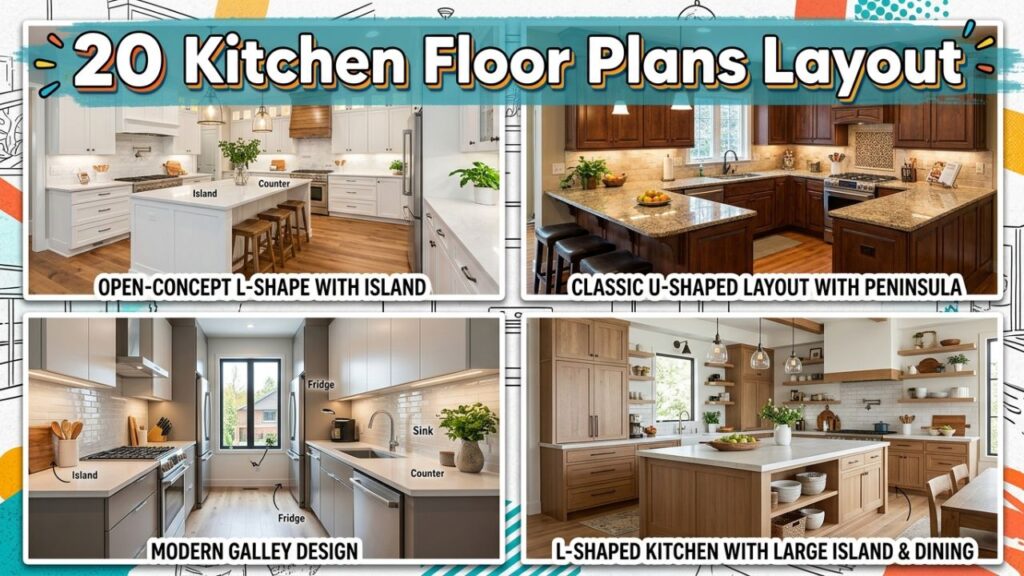
The good news? A well-planned kitchen floor plans layout can completely transform how the space feels and functions — without a full gut renovation.
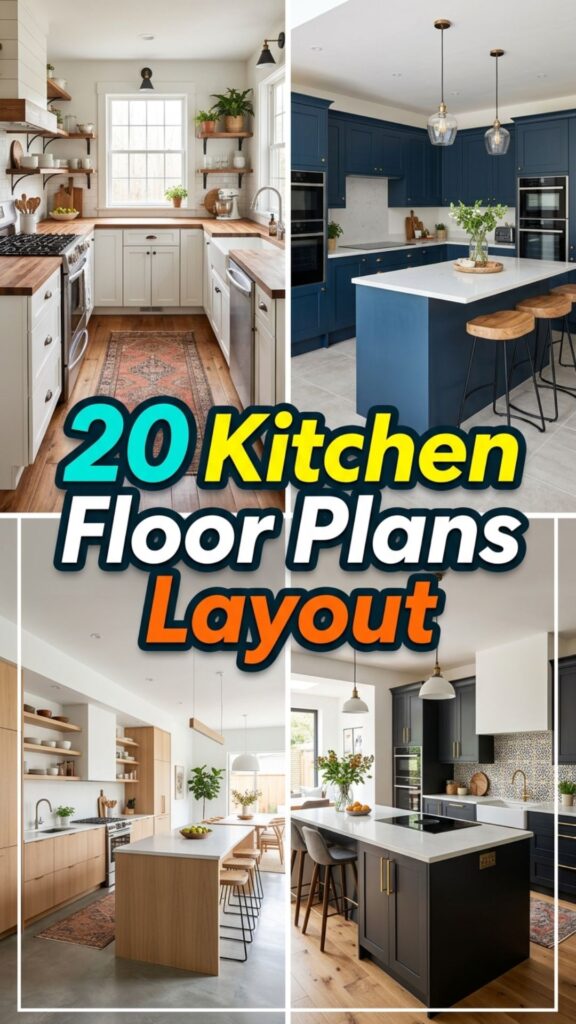
Whether you’re designing from scratch, remodeling, or just rethinking your current setup, this guide covers 20 practical layout ideas that make the most of whatever square footage you have. You’ll find options for small apartments, family homes, open-concept spaces, and everything in between.
What Is a Kitchen Floor Plans Layout — and How Do You Choose One?
A kitchen floor plans layout refers to how the key work zones — cooking, prep, cleaning, and storage — are arranged within the space. The right layout depends on three things: the room’s shape and size, how many people use the kitchen at once, and how it connects to adjacent living areas.
As a general rule, the best layouts keep the “work triangle” — the path between the stove, sink, and refrigerator — short and unobstructed. Beyond that, it’s about maximizing storage, maintaining clear traffic flow, and matching the layout to your actual cooking habits.
1. The Classic L-Shape Layout
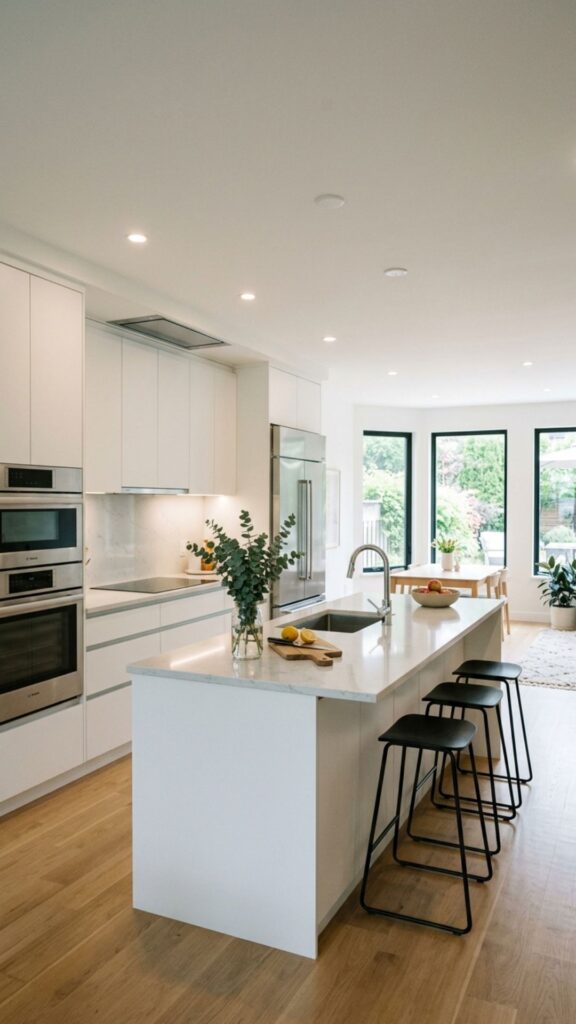
The L-shape places cabinets and appliances along two adjoining walls, forming a natural corner workspace. It works well in medium-sized kitchens and leaves the center open for an island or a breakfast table. This layout is one of the most versatile because it suits both open-plan and closed kitchen setups.
2. The Efficient Galley Kitchen Layout
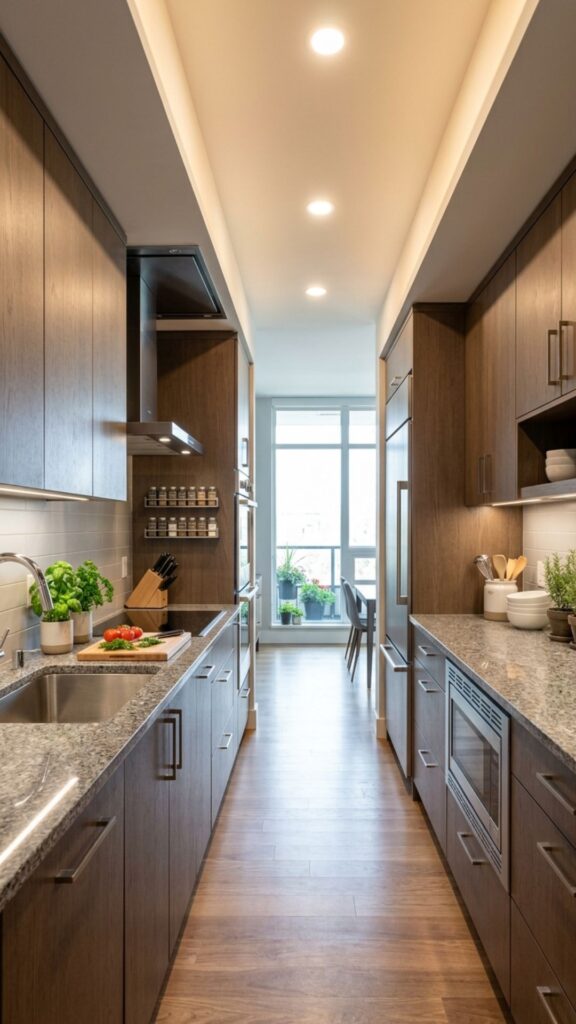
Two parallel walls face each other, creating a corridor-style kitchen. It’s compact, efficient, and ideal for single cooks who want everything within arm’s reach. Professional kitchens often use this design because it minimizes wasted movement. Keep the aisle at least 42 inches wide to avoid feeling boxed in.
3. The U-Shape Layout for Maximum Storage
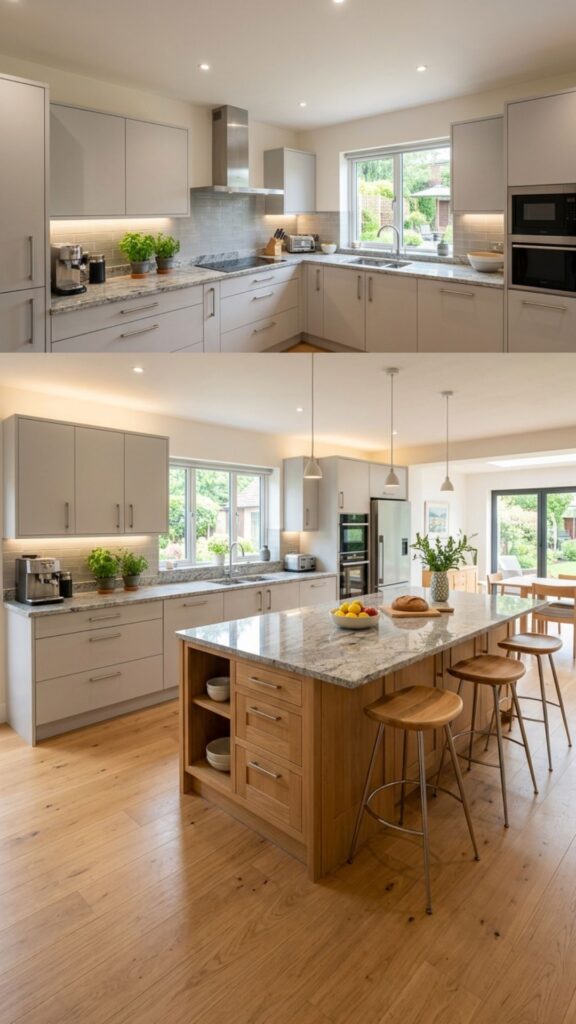
Three walls of cabinetry wrap around the cook, offering the most counter and storage space of any standard floor plan. It works best in larger kitchens, where the extra wall space doesn’t create a closed-off feel. A U-shape is especially practical for households that cook elaborate meals and need room to spread out.
4. The Open-Concept Kitchen Layout
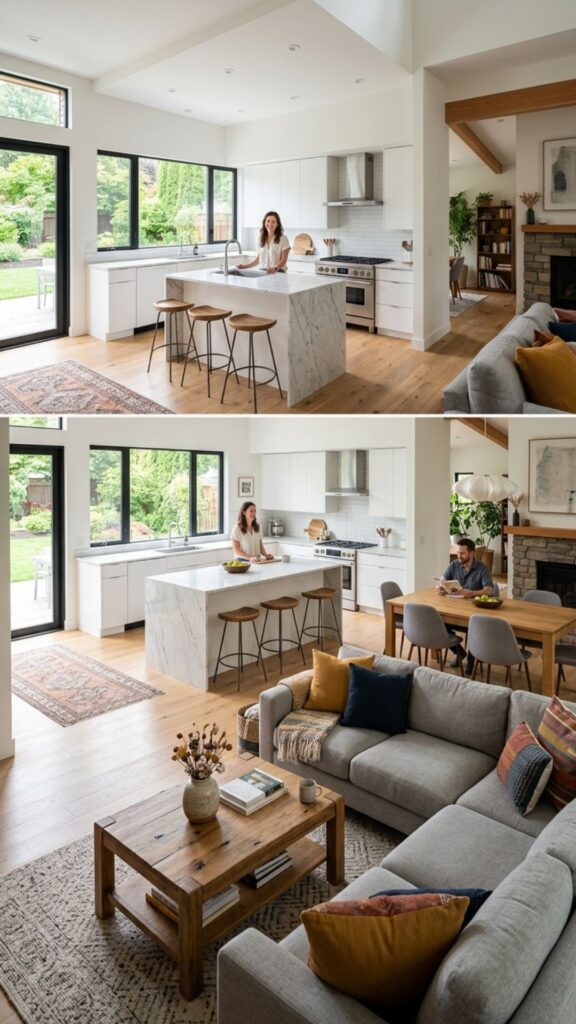
Removing the wall between the kitchen and living or dining room creates an open, airy feel that’s perfect for entertaining. This layout encourages conversation while cooking and makes smaller homes feel much larger. The key challenge is managing sightlines — visible clutter from the living room can feel more disruptive than in a closed kitchen.
5. The Single-Wall Kitchen Layout
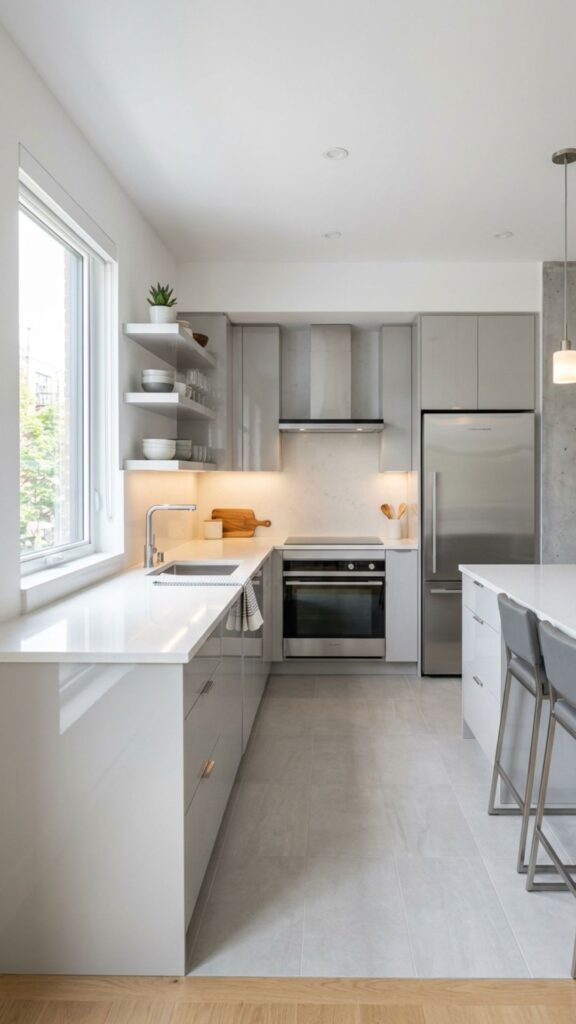
All appliances and cabinets line up along a single wall, making this the most space-efficient option for studio apartments or very small homes. It won’t work for large families, but for one or two people, it keeps things simple and tidy. Add a fold-down counter or a rolling cart to expand prep space when needed.
6. The Island-Centered Kitchen Layout
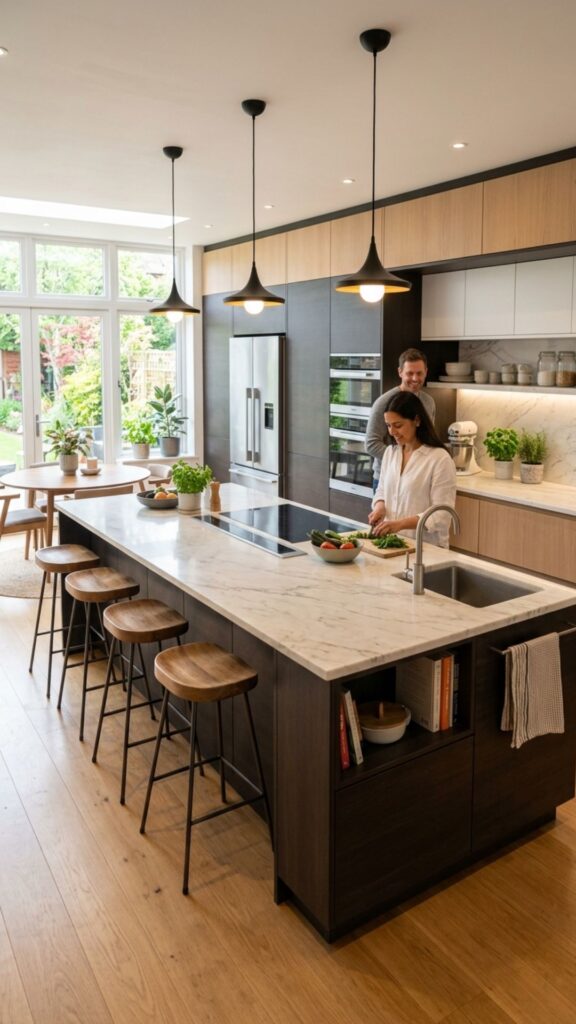
A central island becomes the heart of the kitchen — offering extra prep space, seating, and storage all in one. This works best in kitchens with at least 8 feet of width, so there’s enough clearance to move comfortably around all sides. Islands are especially popular in L-shape and open-concept layouts where the floor plan can support the footprint.
7. The Peninsula Layout
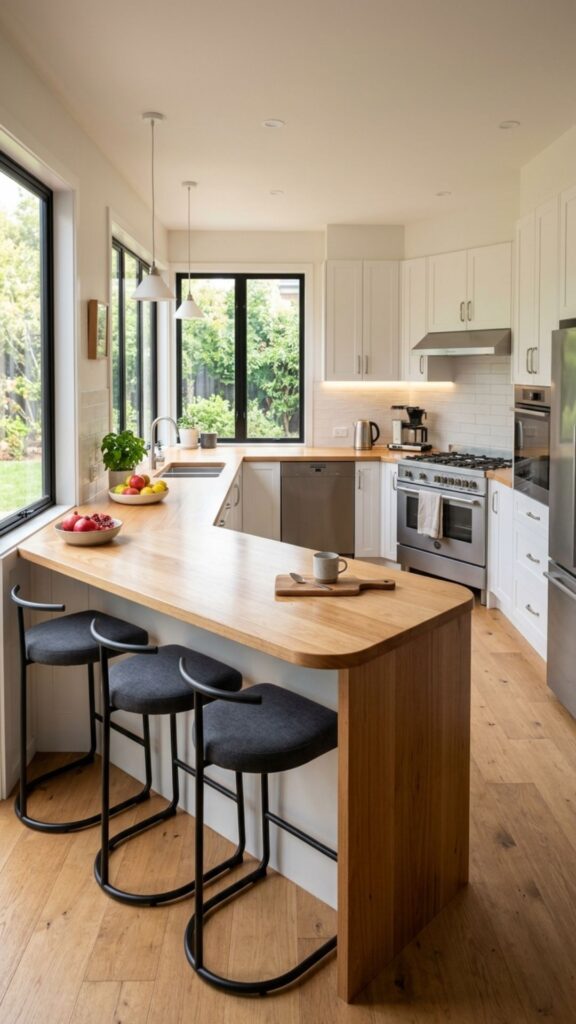
Think of a peninsula as a connected island — it’s attached to a wall or counter on one side instead of floating freely. This layout adds workspace and can double as a breakfast bar without requiring as much floor space as a full island. It’s a smart compromise for kitchens that are almost — but not quite — large enough for an island.
8. The Two-Island Kitchen Layout
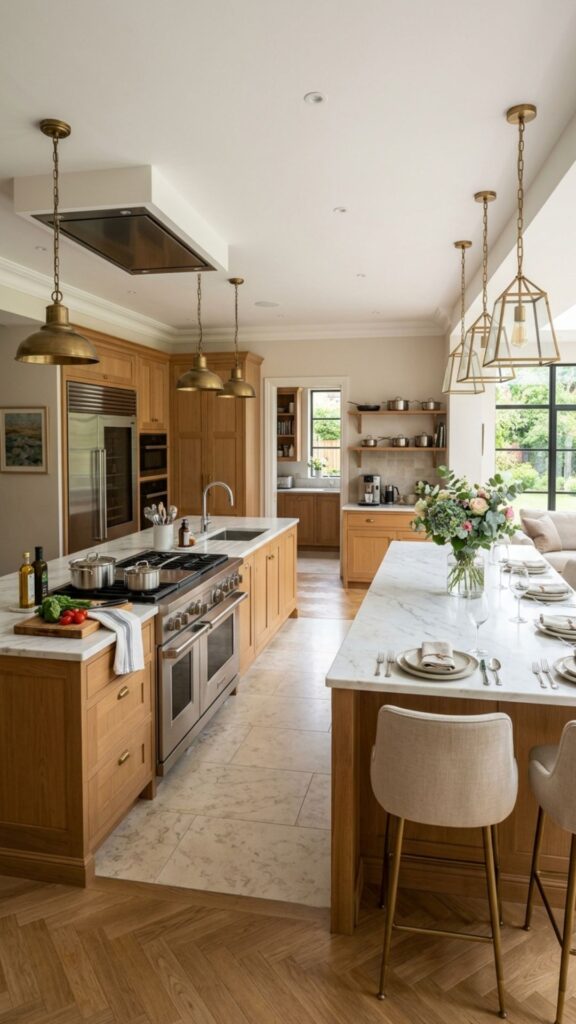
For large, open kitchens, two islands create distinct zones: one for prep and cooking, one for casual dining or serving. This layout suits open-plan homes where the kitchen flows into a great room. It’s a bold choice that works beautifully when the square footage actually supports it — cramming two islands into a tight space will backfire quickly.
9. The Kitchen With Dining Nook Layout
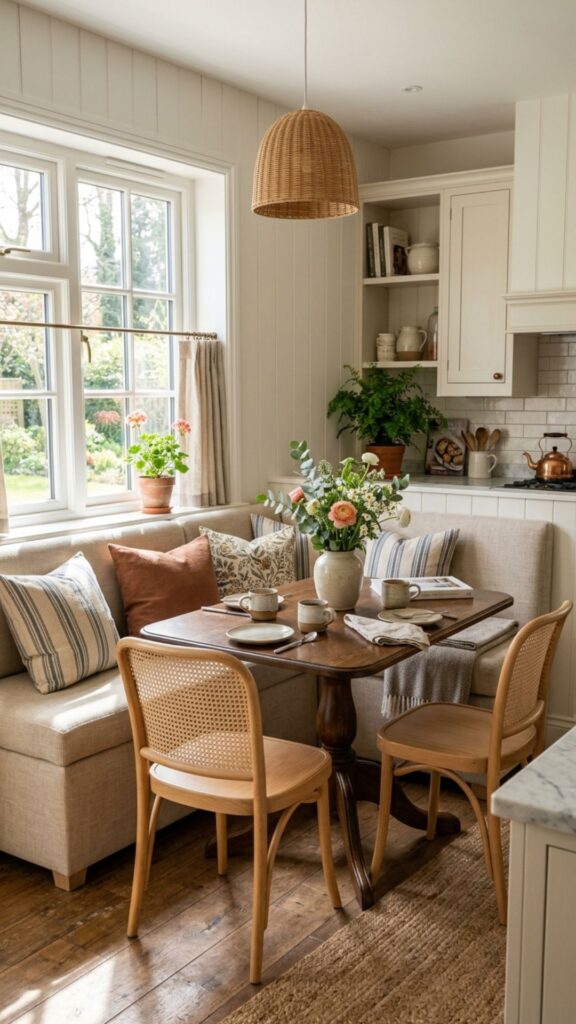
Tucking a built-in banquette or breakfast nook into a corner of the kitchen saves space while adding a cozy, functional dining spot. This layout is popular in family homes where everyday meals happen in the kitchen rather than a formal dining room. The nook uses wall space that might otherwise be wasted.
10. The Corridor Kitchen With an Eat-In Bar
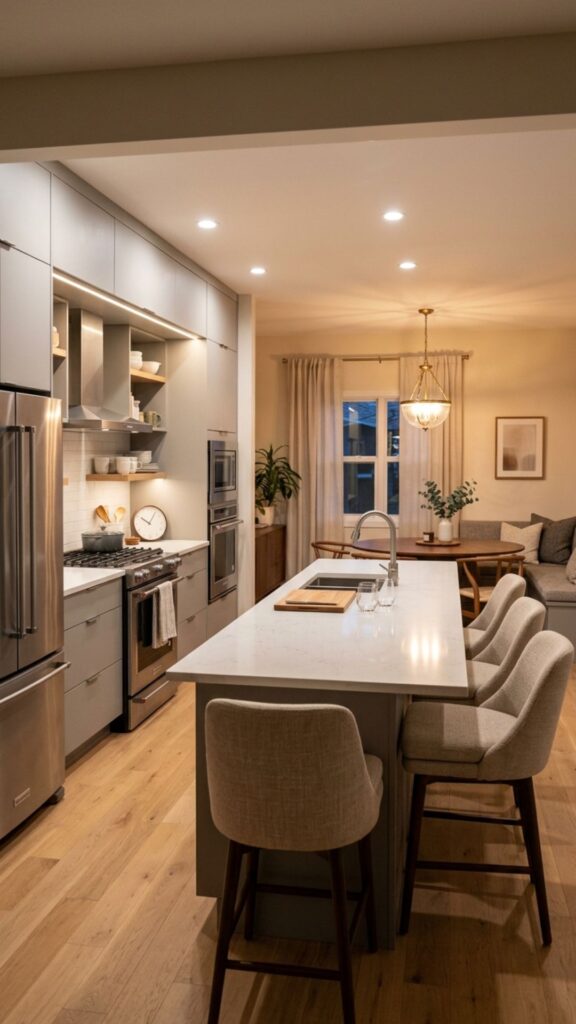
A galley-style kitchen can be opened up by removing one wall and replacing it with a raised counter or bar. This creates natural separation between cooking and dining while keeping the efficient linear layout intact. It’s a popular remodel choice for older homes where the galley was originally fully enclosed.
11. The L-Shape With Pantry Alcove
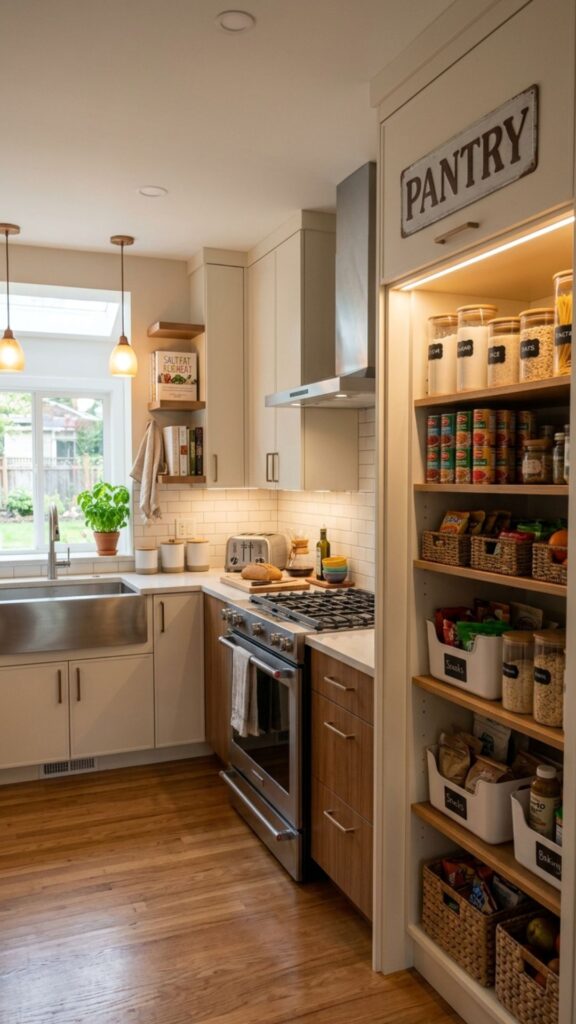
Adding a dedicated pantry alcove off one arm of the L creates a mini walk-in pantry without building a separate room. This is ideal for families who buy in bulk or want to keep dry goods out of main cabinetry. Even a 2-foot-deep alcove can hold a surprising amount of storage when fitted with adjustable shelving.
12. The Wraparound Counter Layout
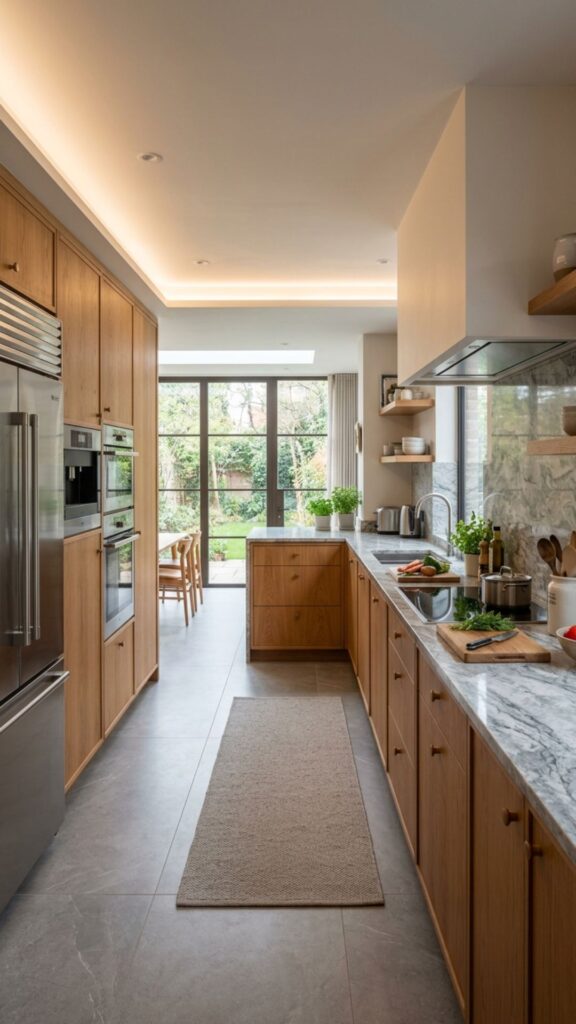
This variation extends countertops continuously around three or more walls without interruption, prioritizing prep space over everything else. Bakers and meal preppers especially love this layout. It requires thoughtful placement of the sink and stove so neither becomes an island surrounded by countertop — but when done well, it’s extremely functional.
13. The Split-Level Kitchen Layout
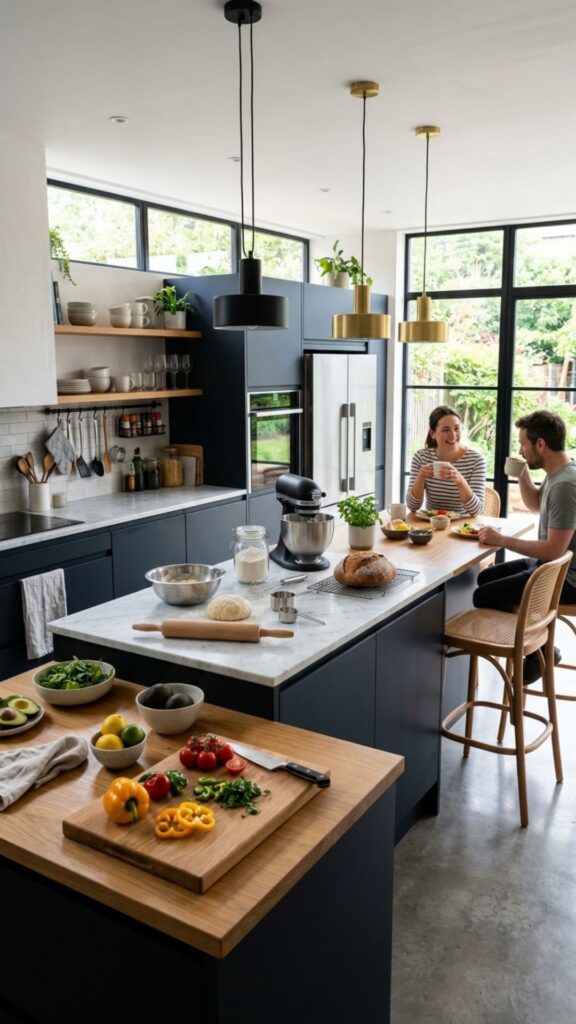
Upper and lower counter heights in the same kitchen serve different purposes — standard height for prep, lower sections for baking or wheelchair accessibility, higher sections as breakfast bars. This layout works best in spacious kitchens where the variation adds function rather than visual chaos. It’s also a practical solution for households with mixed mobility needs.
14. The Outdoor-Connected Kitchen Layout
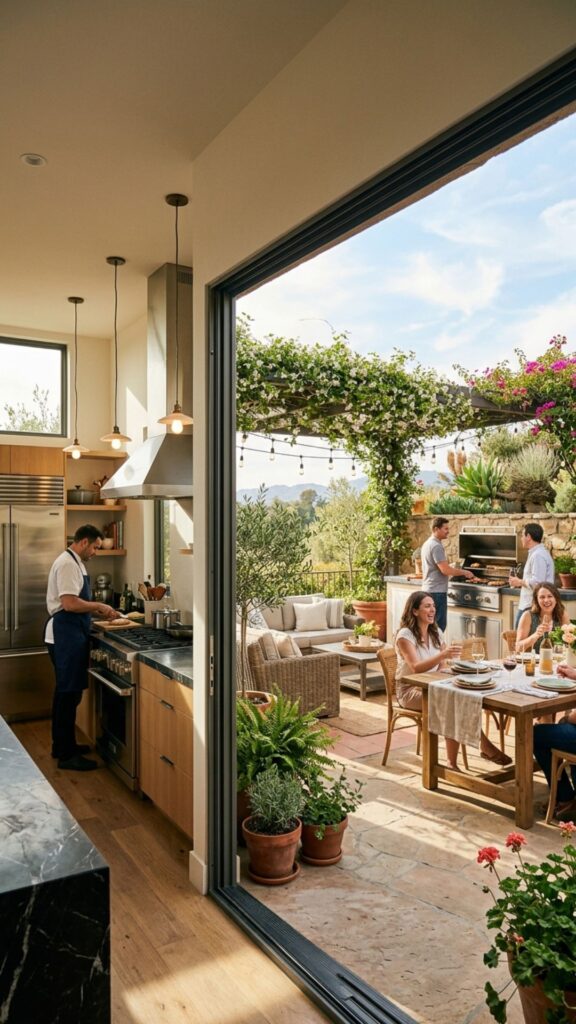
A kitchen designed to flow directly onto a deck, patio, or outdoor cooking area effectively doubles the functional space. Large sliding or folding doors blur the boundary between inside and outside. This layout requires careful planning around weather exposure and ventilation, but for those who love to entertain outdoors, it’s hard to beat.
15. The Hidden Appliance Kitchen Layout
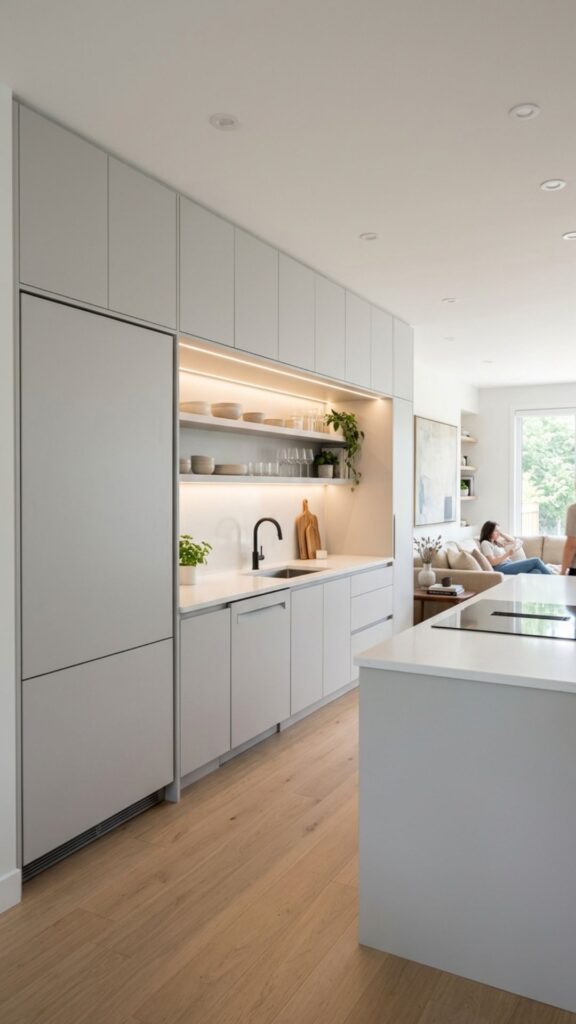
Integrating the refrigerator, dishwasher, and microwave behind cabinet panels creates a sleek, seamless look where appliances essentially disappear. This layout is popular in minimalist and Scandinavian-inspired kitchens. Beyond aesthetics, it also makes the kitchen feel less busy and more like a living space.
16. The Galley Kitchen With Skylight
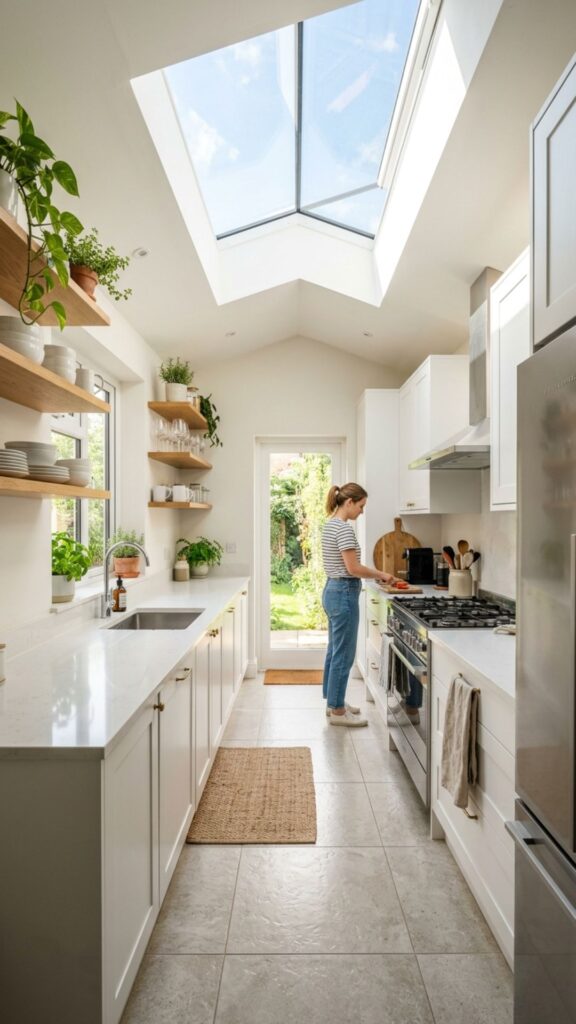
A galley kitchen can feel tunnel-like without enough natural light. Adding a skylight or enlarging a window at one end opens up the space visually without changing the footprint. Light dramatically affects how spacious a kitchen feels — and this is one of the most cost-effective ways to improve a galley’s atmosphere.
17. The Kitchen With a Command Center
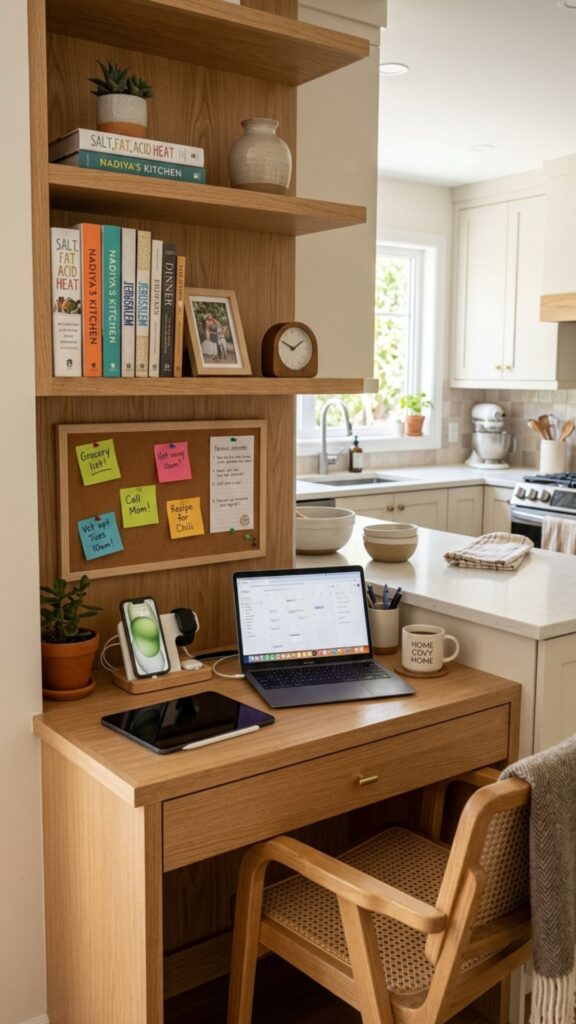
Dedicating a small section of the kitchen to a built-in desk, charging station, or message center keeps household administration out of the main workflow. This is especially useful in family homes where the kitchen doubles as a hub for homework, grocery lists, and schedules. A 24-inch stretch of counter with a few shelves above is often enough.
18. The Butler’s Pantry Extension
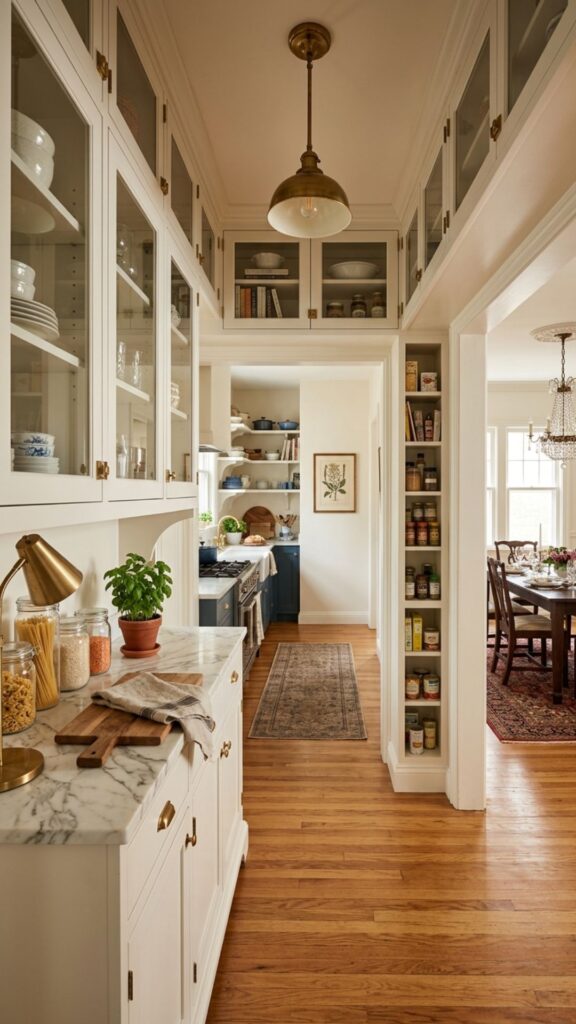
A butler’s pantry is a secondary prep and storage room positioned between the kitchen and dining room. It keeps catering supplies, fine china, and extra appliances out of the main kitchen while providing valuable overflow workspace during entertaining. Even a narrow 4-foot-wide pass-through room significantly expands the kitchen’s capacity.
19. The Compact Kitchen With Pull-Out Everything
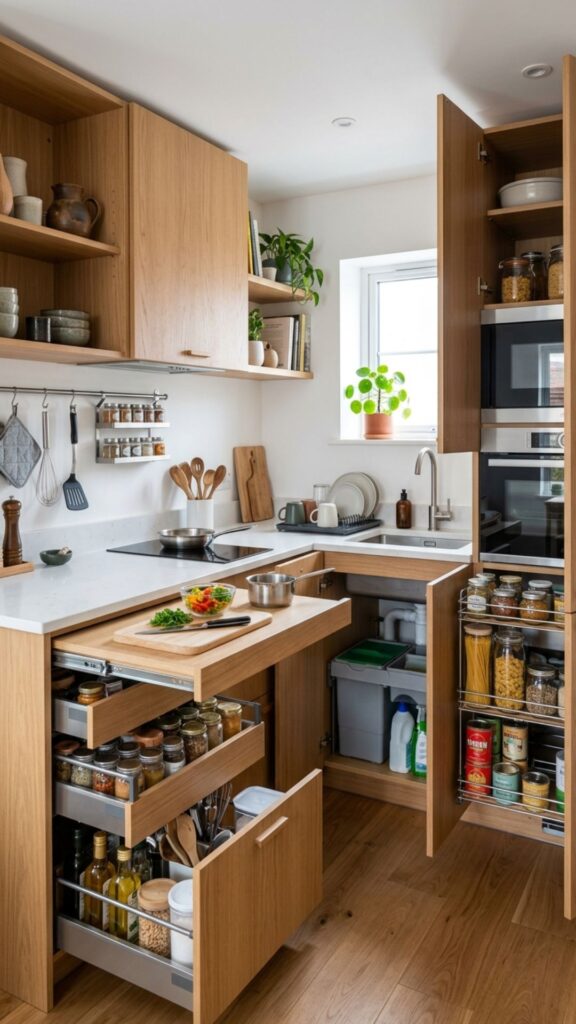
In very small kitchens, pull-out shelves, appliance garages, and retractable counters make every inch count. This isn’t just about clever gadgets — it’s a deliberate layout strategy where nothing is fixed unless it has to be. IKEA’s SEKTION system and custom cabinetry brands both offer modular pull-out solutions designed specifically for compact spaces.
20. The Zoned Kitchen Layout
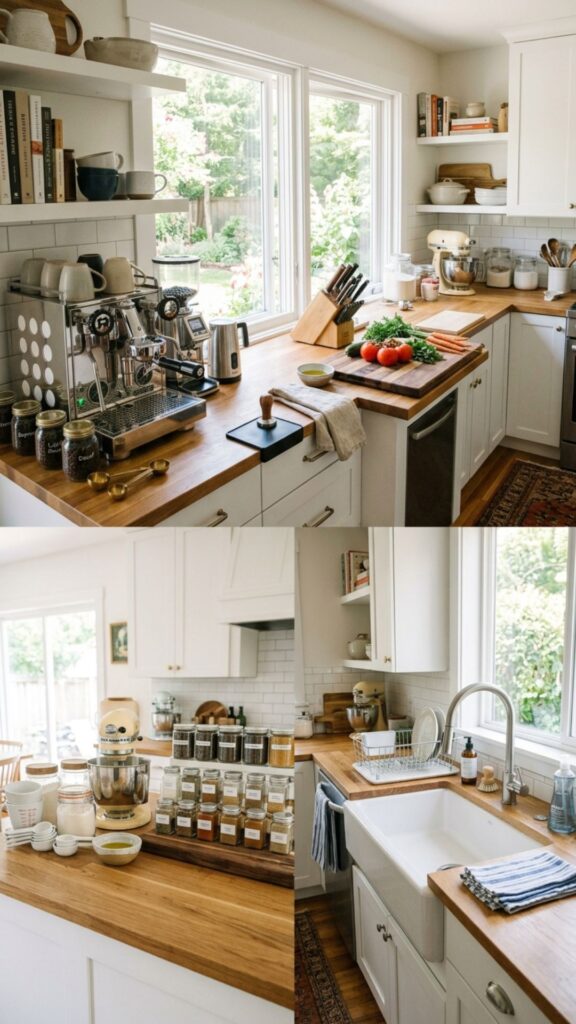
Rather than organizing the kitchen around the traditional work triangle, a zoned layout creates distinct areas for specific tasks: a baking zone, a coffee station, a prep zone, a cleanup zone. Each area has its own tools and storage within reach. This approach works especially well for households where multiple people cook at the same time and need their own clearly defined workspace.
Conclusion
The right kitchen floor plans layout can turn a frustrating space into one of the most enjoyable rooms in your home. Whether you’re working with a narrow galley, a generous open-plan area, or something in between, there’s a layout strategy here that can work for you.
Start by identifying your biggest pain point — not enough storage, poor traffic flow, limited counter space — and use that as your anchor when evaluating which ideas apply to your situation. Small changes, like adding a peninsula or introducing a zoned approach, often deliver big results without requiring a full redesign.
Ready to take the next step? Sketch your current layout on graph paper, mark where your work triangle falls, and compare it to the ideas in this guide. Even one or two changes can make a meaningful difference.
What is the most efficient kitchen floor plan layout?
The galley kitchen is widely considered the most efficient for a single cook because it keeps the stove, sink, and refrigerator in close proximity with minimal steps between them. For larger households or open-plan living, the L-shape or U-shape layouts offer a strong balance of efficiency and flexibility.
How much space do I need between kitchen counters?
A minimum of 42 inches is recommended for a one-cook kitchen; 48 inches or more is better if two people cook at the same time. This allows cabinet doors and appliances to open fully without blocking traffic flow.
Can I add an island to a small kitchen?
Only if the kitchen is at least 8 feet wide with enough clearance on all sides. In tighter spaces, a peninsula or a rolling butcher-block cart gives you similar functionality without consuming as much floor space.
Does kitchen layout affect home resale value?
Yes. Buyers consistently rank the kitchen as one of the most important rooms when evaluating a home. A functional, well-designed layout — particularly one that connects to a dining or living area — tends to increase perceived value and appeal to a broader pool of buyers.