Opening up your kitchen with an extension is one of the most rewarding home improvements you can make. But staring at a blank floor plan — or worse, a cramped, dark kitchen — and trying to picture something better? That’s where most people get stuck.
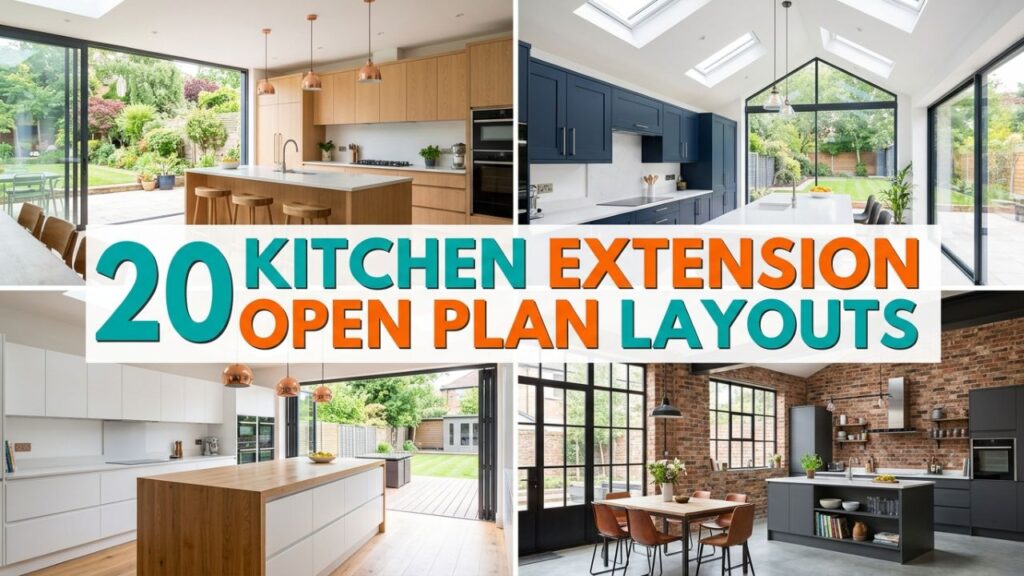
This guide cuts through the overwhelm. You’ll find 20 kitchen extension open plan layouts that actually work, grouped by style and situation, so you can spot what fits your home and your life.
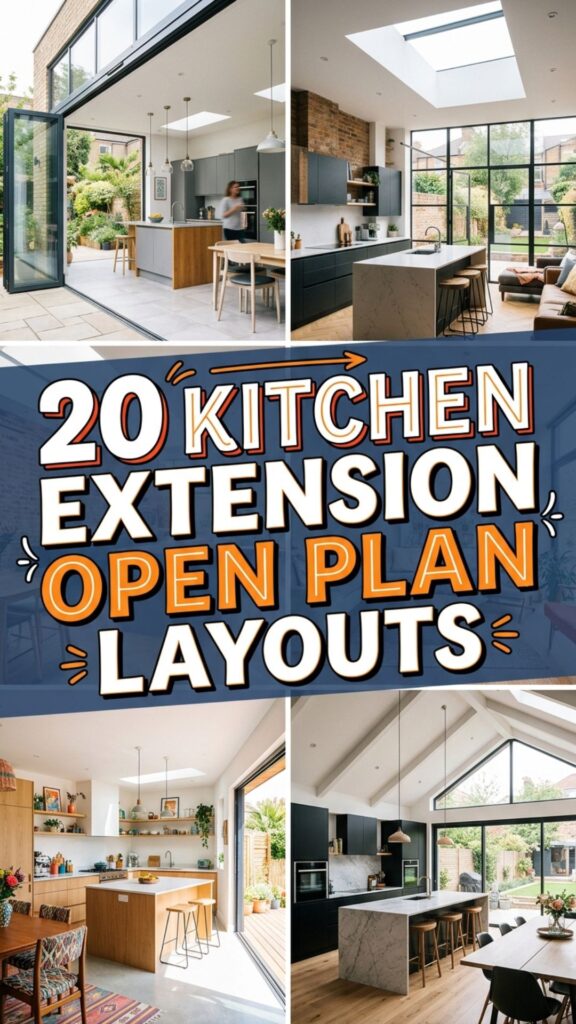
Whether you’re working with a narrow terraced house or a wide detached property, there’s a layout here worth borrowing.
Why Open Plan Kitchen Extensions Change How You Live
Before diving into the layouts, it helps to understand what makes an open plan kitchen extension so effective. It’s not just about more square footage — it’s about how space flows.
A well-designed kitchen extension open plan removes the walls that isolate cooking from the rest of family life. You can supervise kids, chat with guests, and keep an eye on the garden all from the same spot. Natural light floods deeper into the house. Rooms feel bigger without a single extra brick being laid.
The challenge? Open plan spaces need careful zoning. Without walls, you rely on layout, furniture, and lighting to define where cooking ends and living begins.
Layouts for Small or Narrow Kitchens
Not every home has acres of space to work with. These layouts prove that smaller footprints can still deliver big results.
1. The Single-Storey Rear Extension With Galley Kitchen
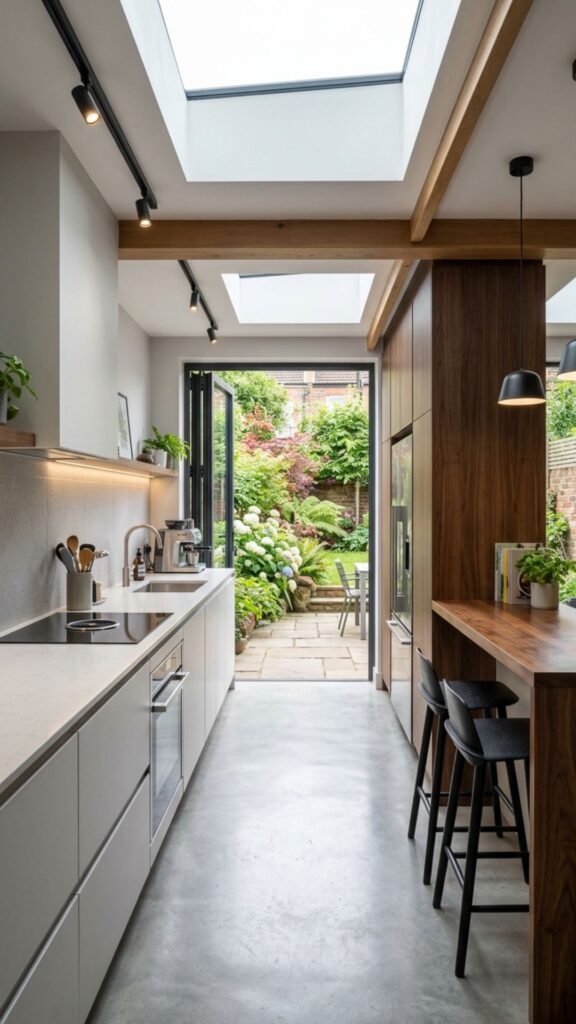
A galley layout — two parallel runs of cabinets — works brilliantly in a narrow single-storey extension. Keep one wall for cooking and prep, the other for storage and a breakfast bar. Add a set of bifold doors at the rear and the space feels twice as large as it is.
Best for: Terraced houses with narrow plots.
2. The L-Shaped Corner Extension
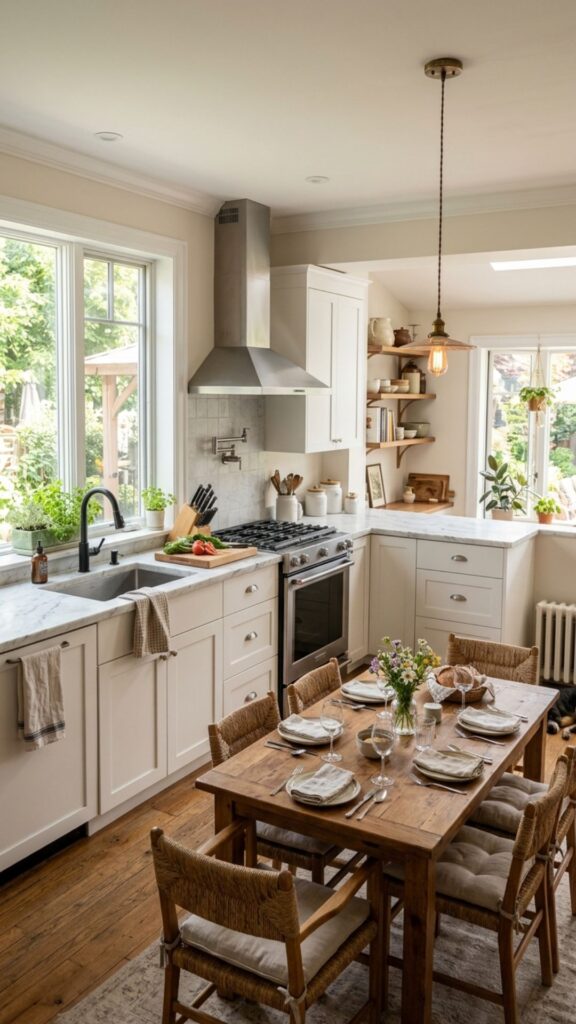
Wrap the extension around one corner of the house to gain an L-shaped kitchen. The corner becomes a natural zone break: cooking on one arm, dining on the other. It’s compact but surprisingly functional.
Best for: Semi-detached homes with side return space.
3. The Side Return Conversion
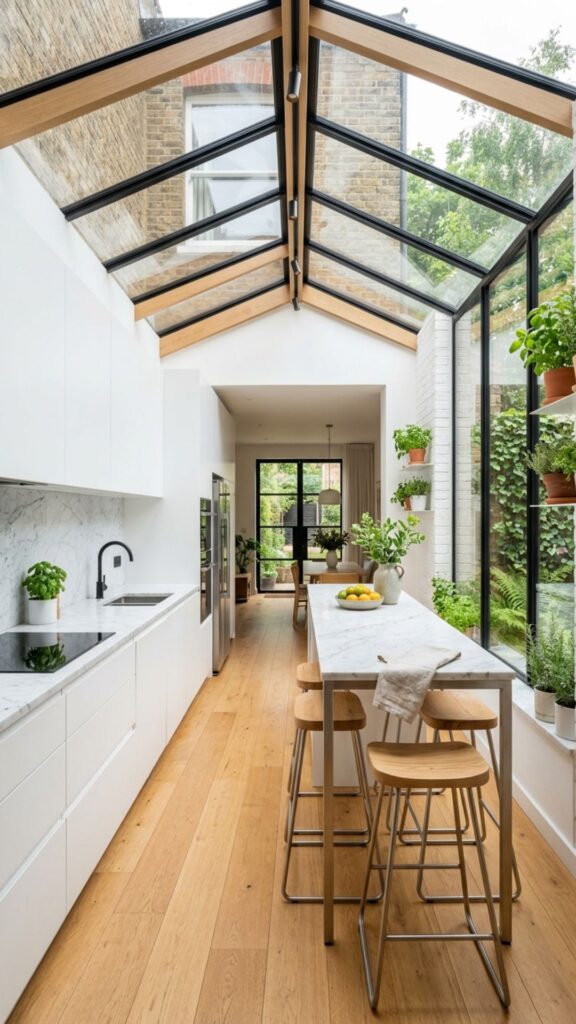
Many Victorian and Edwardian terraced houses have a narrow side return — a wasted alleyway beside the kitchen. Infilling it and glazing the roof transforms a dark, cramped kitchen into a bright, open plan space without a major structural build.
Best for: Period terraced houses with an unused side passage.
4. The Galley-to-Island Flip
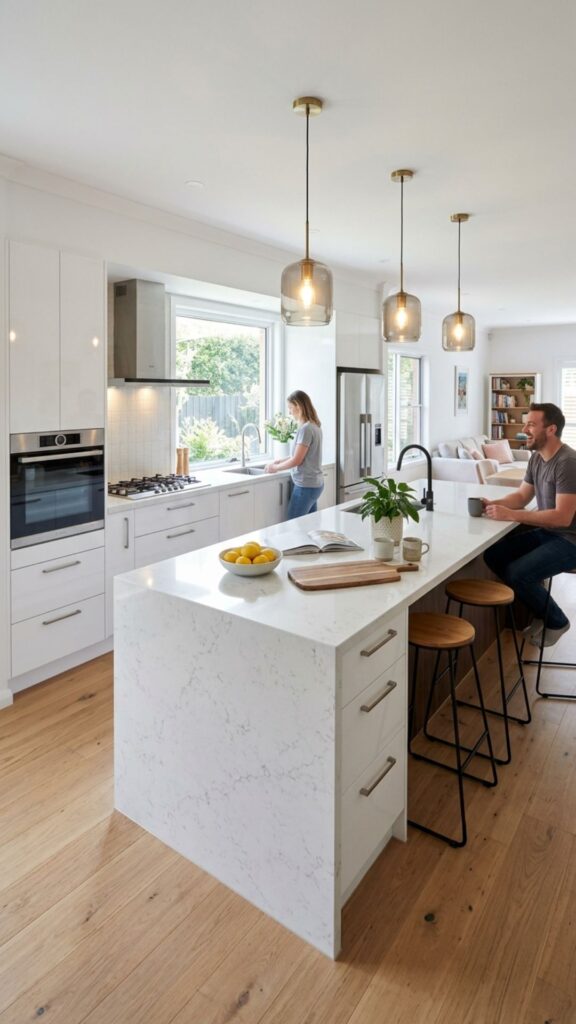
Take a galley kitchen and, once the extension is built, remove one run of units and replace it with a freestanding island. You gain a social hub and clear sightlines through to the living area. Keep the working wall tight and efficient.
Best for: Homeowners who love to cook and entertain simultaneously.
5. The Compact Kitchen-Diner Combo
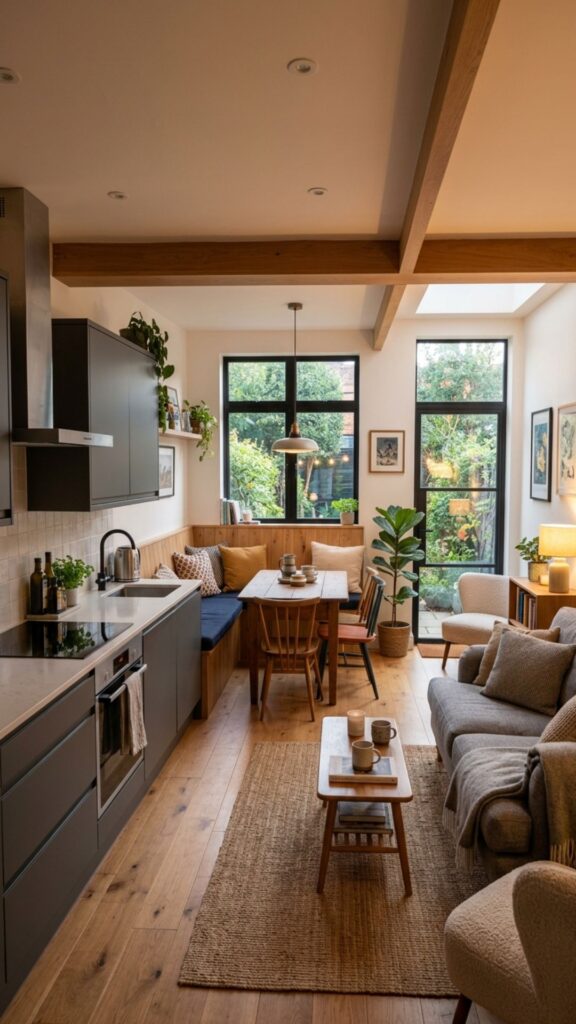
In a small extension, resist the urge to separate kitchen and dining. Push them together — kitchen along one wall, a banquette dining nook in the corner — and use the remaining space as a living zone. The result is cozy, not cramped.
Best for: Couples or small families on a tighter budget.
Open Plan Layouts for Family Homes
Families need layouts that survive real life: school bags, homework, cooking dinner while everyone else is doing something else entirely.
6. The Kitchen-Dining-Living Triple Zone
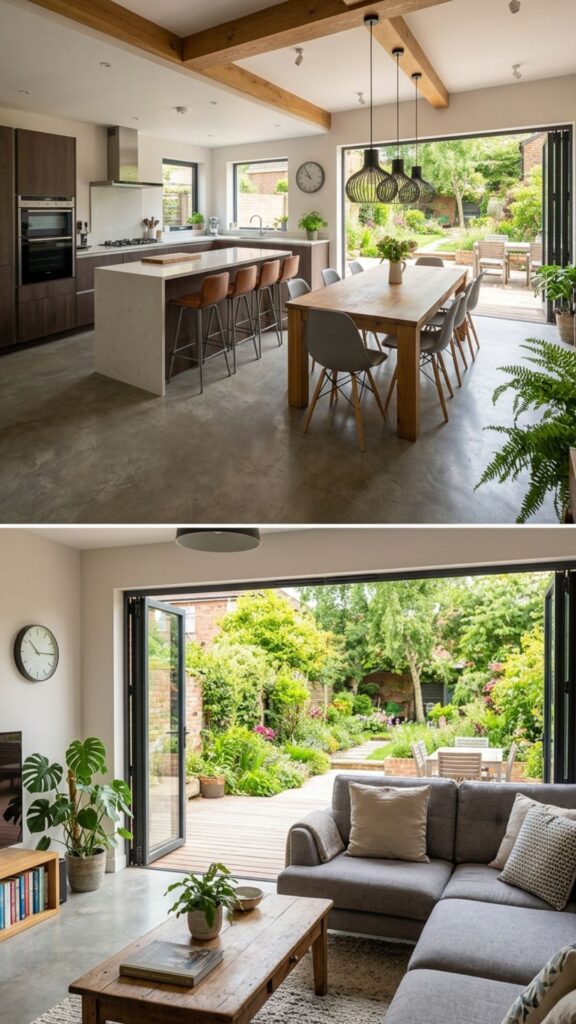
The most popular kitchen extension open plan layout right now. The kitchen sits at the rear of the extension, dining in the middle, and a soft seating area leads out to the garden. Bifold or sliding doors blur the boundary between inside and outside.
Best for: Families who want one room that does everything.
7. The Island as a Zoning Tool
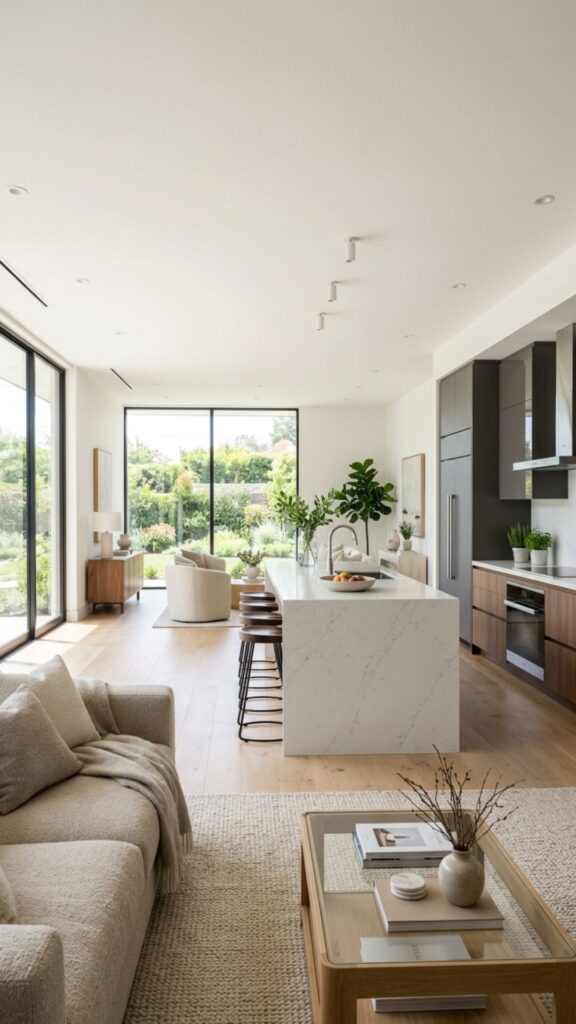
In a large open plan extension, a kitchen island does more than provide extra worktop space. Position it perpendicular to the main kitchen run and it becomes a natural room divider — kitchen on one side, living space on the other — without blocking sightlines.
Best for: Larger extensions where the kitchen risks feeling disconnected.
8. The Snug Pocket Extension
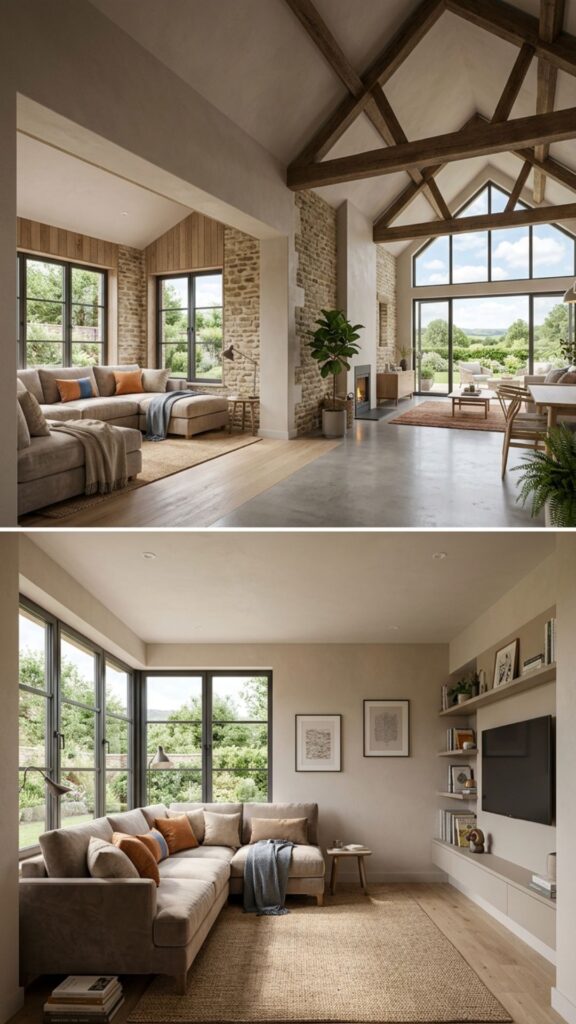
Add a small extension off the main open plan space to create a snug or TV room. The main area stays airy and social; the snug gives kids (and adults) somewhere to retreat. Connected but separate.
Best for: Families with older children who need their own space.
9. The Wrap-Around Extension
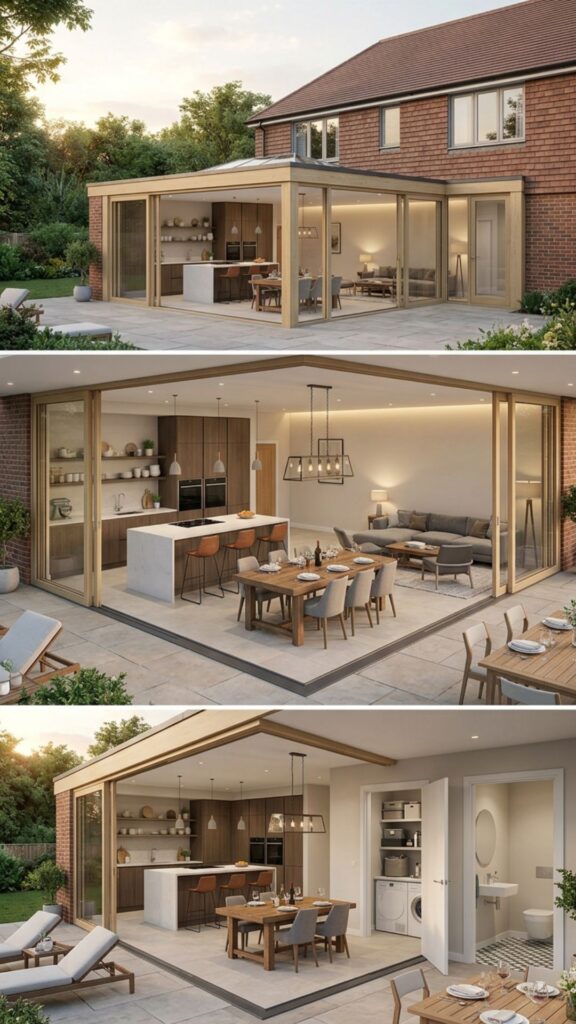
Extend across the rear and down one side of the house for a wrap-around layout. The extra floor area allows a proper utility room, a downstairs WC, and still enough kitchen-diner space to feel genuinely open plan.
Best for: Growing families who need function as well as space.
10. The Garden Room Kitchen
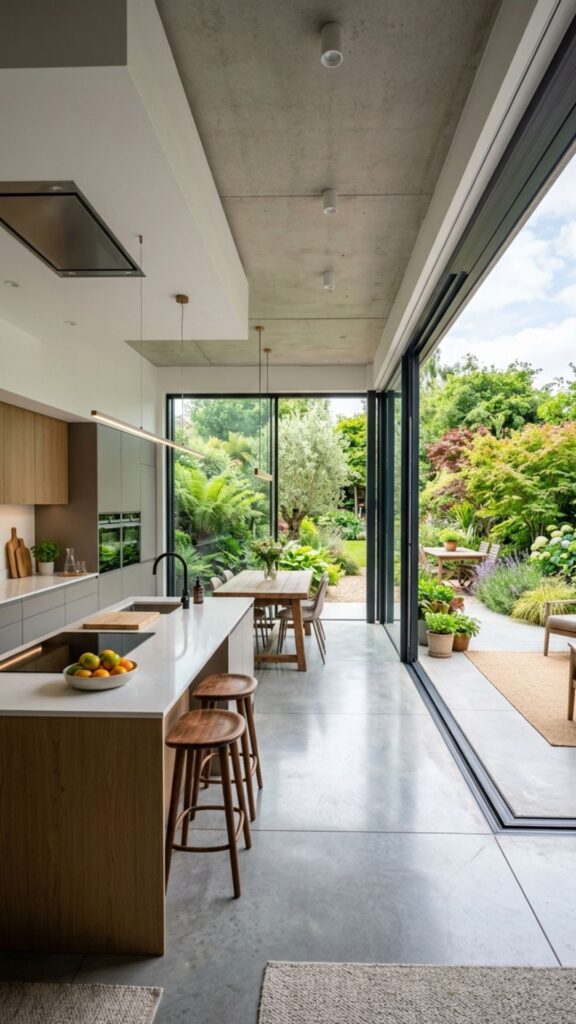
Design the extension so the kitchen faces directly onto the garden through full-height glazing. The visual connection makes even a modest kitchen feel expansive. Use the same flooring inside and out to reinforce the link.
Best for: Homes with south- or west-facing gardens.
Contemporary and Design-Led Open Plan Ideas
If aesthetics matter as much as practicality, these layouts balance both.
11. The Monochrome Handleless Kitchen in a Box Extension
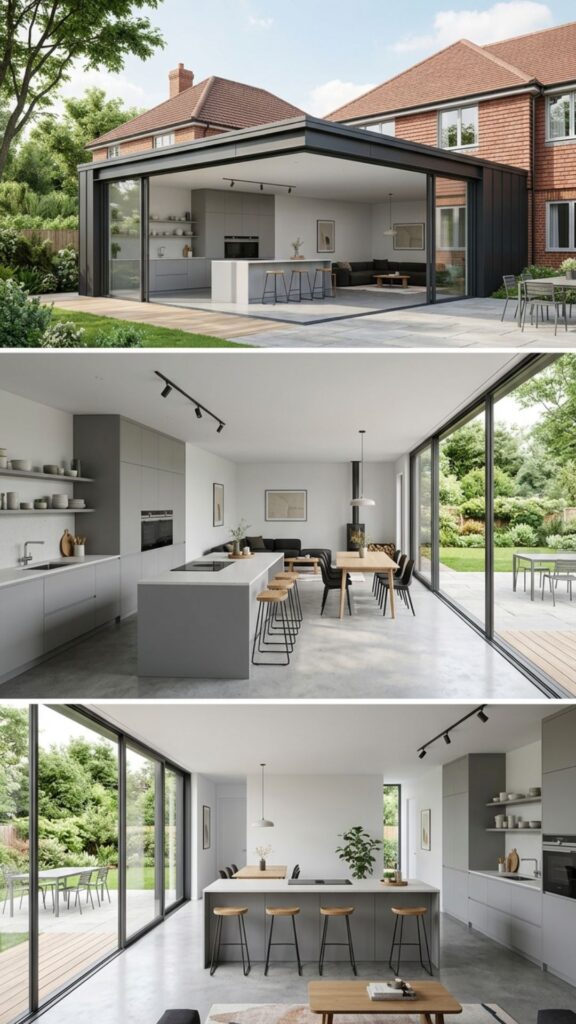
A flat-roofed, box-style extension with handleless cabinets in a single tone creates a clean, architectural feel. The open plan layout lets the design speak without clutter. Choose large-format flooring tiles to keep the visual language minimal.
12. The Industrial Loft-Style Layout
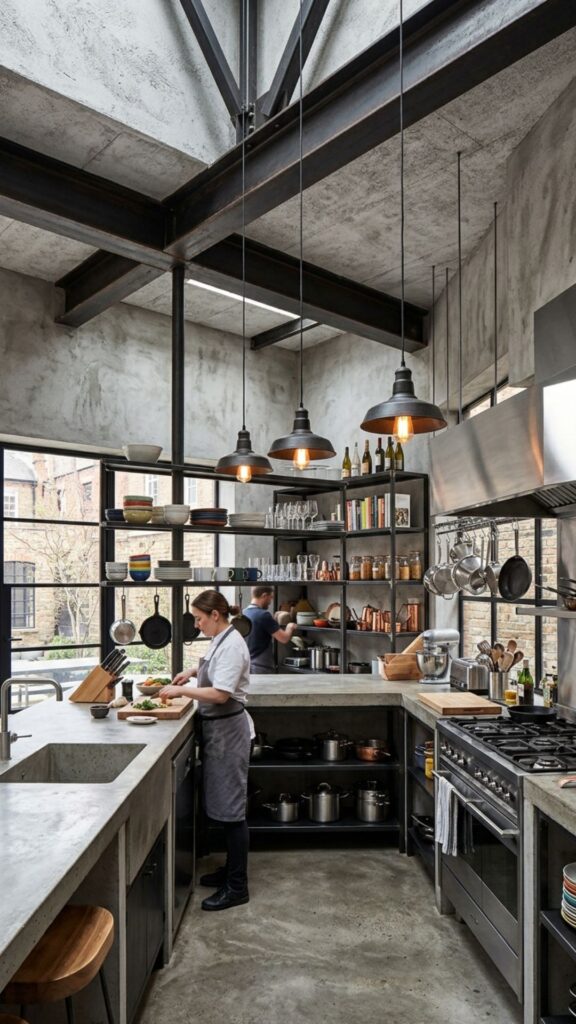
Expose the structural steel that often comes with rear extensions. Pair it with concrete-effect surfaces, pendant lighting, and open shelving for an industrial-chic kitchen extension open plan that works equally well for cooking and entertaining.
13. The Timber-Frame Glazed Extension
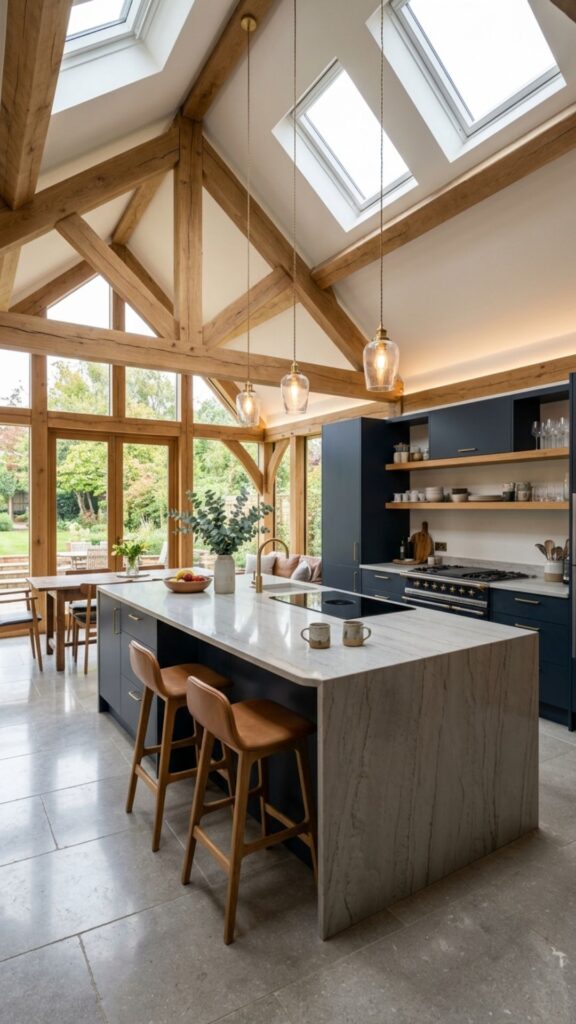
A timber-framed glazed structure — think Crittall-style steel windows or oak frames — gives an extension warmth and character. Inside, keep the kitchen layout simple so the architecture takes center stage. An island with seating is all you need.
14. The Split-Level Kitchen-Diner
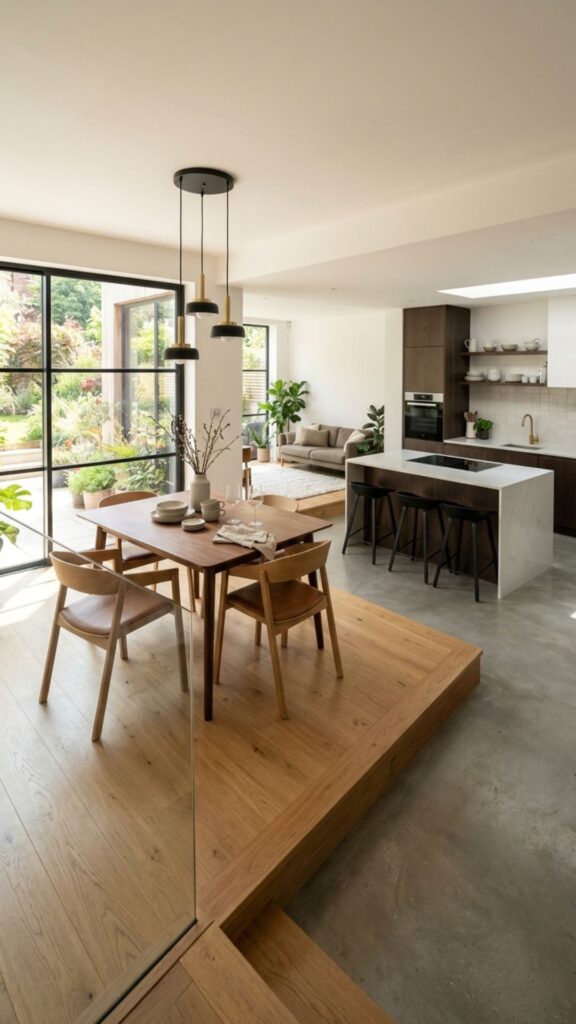
If there’s a change in floor level between old and new parts of the house, use it. A raised dining area separated from a lower kitchen by a half step creates definition without walls. It’s a clever trick in modest-sized extensions.
15. The Concealed Kitchen Layout
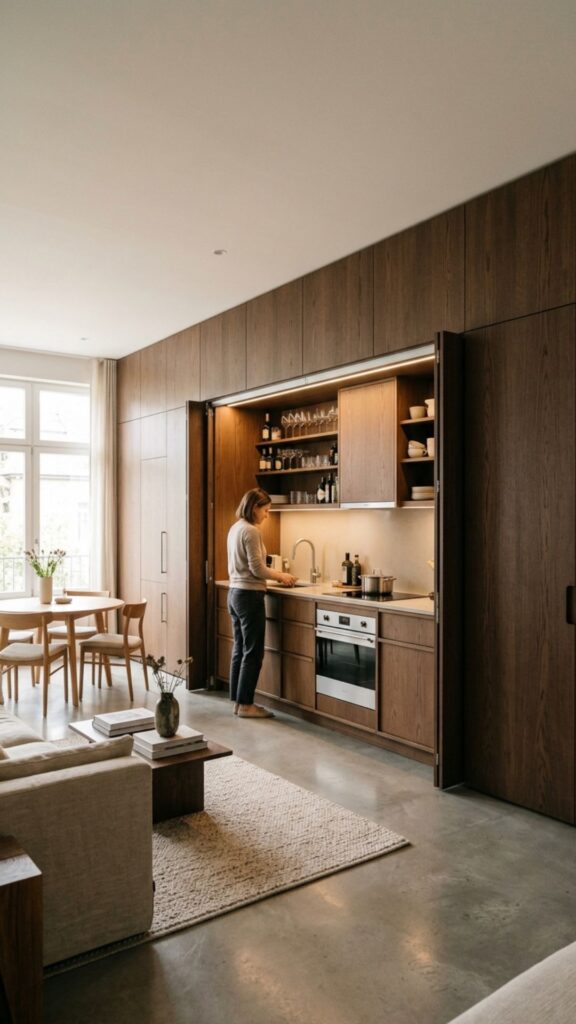
In an open plan space, hide the kitchen behind floor-to-ceiling joinery. Closed, it looks like a living room. Open the doors and the full kitchen is revealed. This works particularly well in conversions and listed buildings.
Budget-Conscious Open Plan Extension Layouts
A smaller budget doesn’t mean a smaller vision. These layouts deliver impact without overspending.
16. The Single-Storey Lean-To Conversion
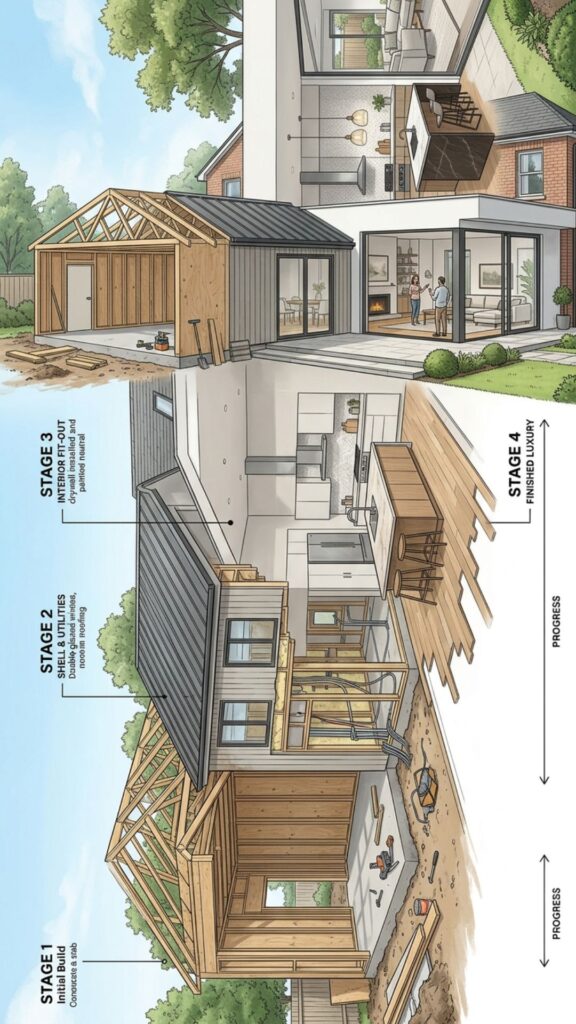
Convert an existing lean-to or conservatory into a proper kitchen extension. Upgrade the glazing, insulate the floor and walls, and you have a light-filled kitchen extension open plan space at a fraction of a full build cost.
17. The Knocked-Through Kitchen
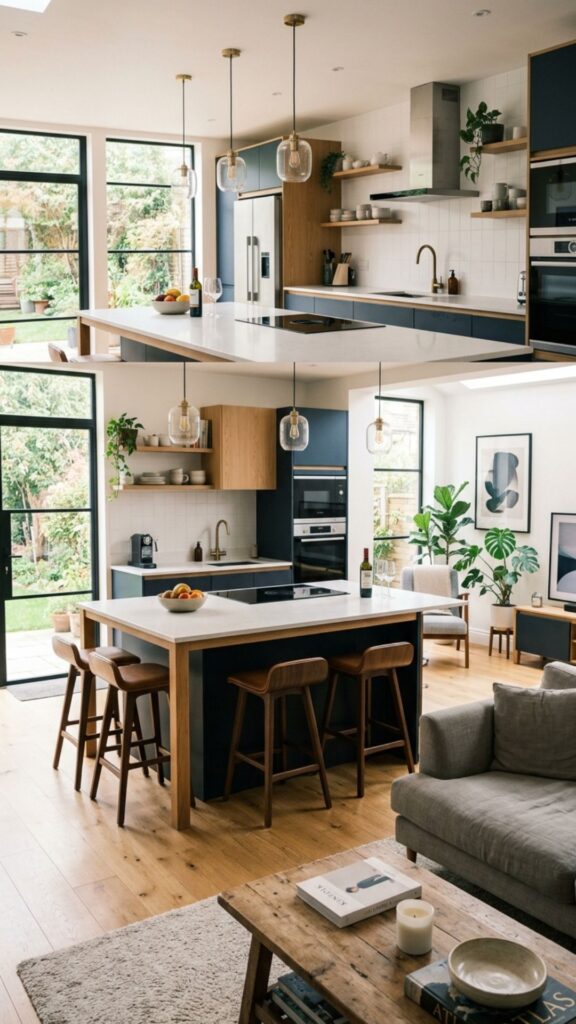
Sometimes no extension is needed at all. Knock through the wall between the kitchen and the adjoining reception room. You gain an open plan layout for the cost of a structural opening — dramatically cheaper than building outward.
18. The Bi-Fold Door Upgrade
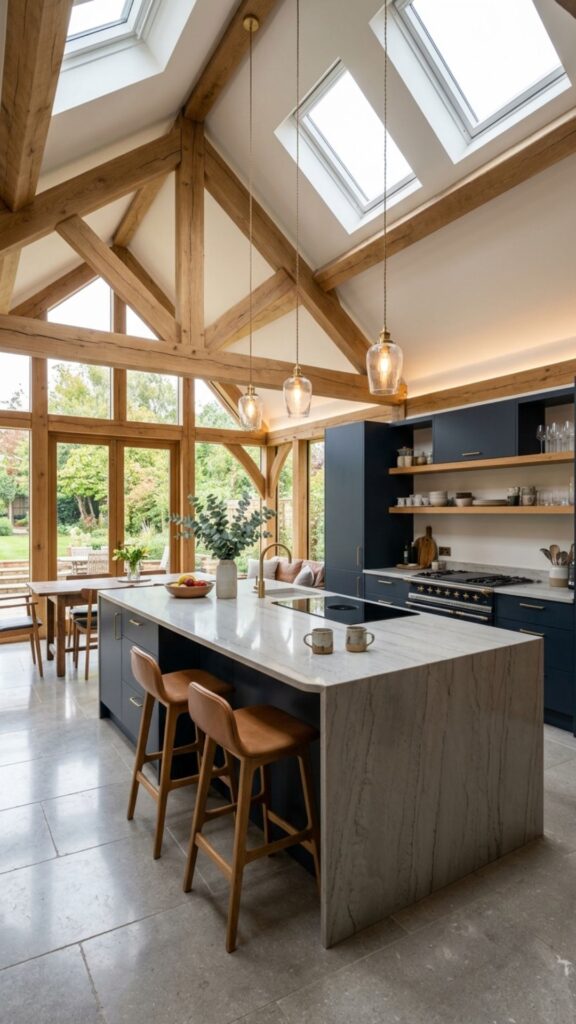
If budget is tight, keep the existing footprint but invest in bifold or sliding doors to the garden. Opening up that rear wall transforms how the space feels and functions, even without adding square footage.
19. The Flat-Pack Kitchen in an Extension Shell
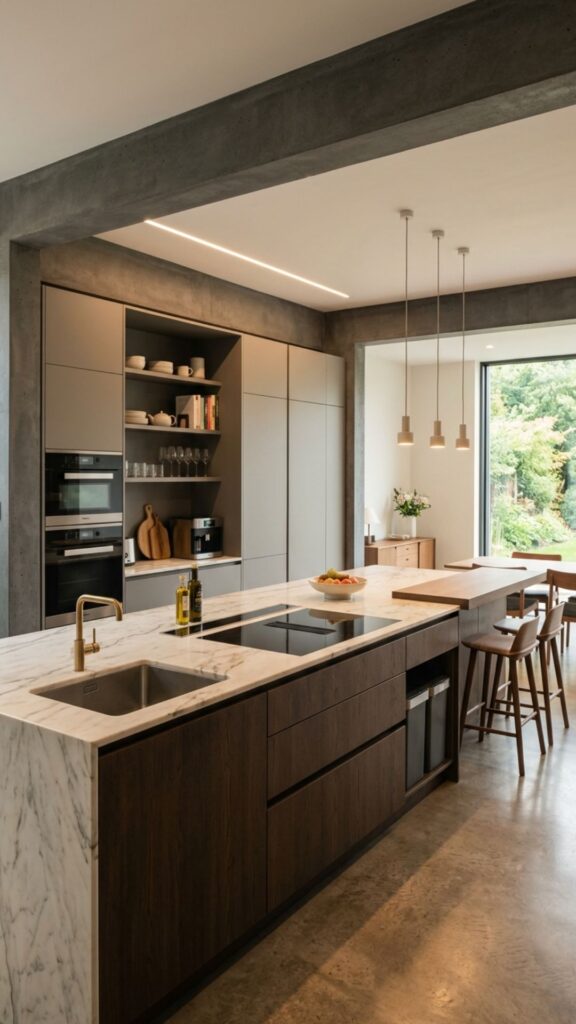
Build the structural shell and fit it out with flat-pack cabinetry. The savings on units can fund a better extension. The result looks identical to a bespoke kitchen if you invest in quality worktops and hardware.
20. The Phased Extension Plan
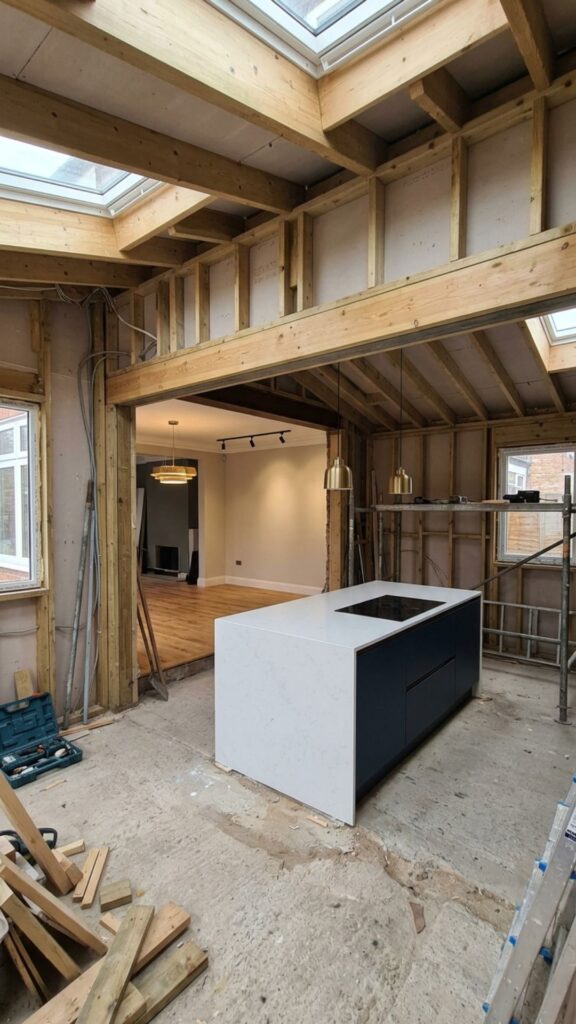
Do the structural work now, fit out minimally, and upgrade in phases. Many homeowners build the shell in year one and add the island, better appliances, and premium finishes in year two or three. The open plan layout works from day one.
Conclusion: Find the Layout That Fits Your Life
The best kitchen extension open plan layout isn’t the most expensive or the most dramatic — it’s the one that matches how you actually live. A family of five needs different things from a couple who loves to entertain.
Use this list as a starting point, not a prescription. Mix ideas from different layouts. Talk to an architect or designer who can look at your specific plot, orientation, and budget before committing.
Your next step: Sketch out your current floor plan, note where the natural light comes from, and mark where you spend most of your time. That three-minute exercise will tell you more about the right layout than any mood board.
What is a kitchen extension open plan layout?
It’s a design that removes internal walls to combine the kitchen with dining and living areas, usually by extending the rear or side of the house. The goal is to create a connected, light-filled space that flows well.
How much does a kitchen extension open plan cost in the UK?
A single-storey rear extension typically costs between £30,000 and £80,000 depending on size, spec, and location. The kitchen fit-out adds another £10,000–£30,000 on average.
Do I need planning permission for a kitchen extension?
Most single-storey rear extensions fall under Permitted Development rights in England, meaning no planning permission is required — as long as they meet size and siting rules. Always check with your local planning authority before starting.
What’s the best layout for a small kitchen extension?
A galley layout or L-shape tends to work best in smaller footprints. Keep the working kitchen tight and efficient, then use the remaining space for dining. Large windows or a glazed roof make the space feel bigger than it is.
How do I zone an open plan kitchen without walls?
Use a kitchen island, changes in flooring material, pendant lighting over the dining table, and a sofa or rug to anchor the living zone. These visual cues tell people — and your brain — where each area begins and ends.