There’s a quiet magic to Japanese kitchen design. It’s calm, uncluttered, and warm all at once. The island often becomes the heart of that space, pulling together clean lines, natural materials, and smart storage into one gorgeous centerpiece. If you’ve ever felt like your kitchen is too busy or too cold, the Japanese approach might be exactly what you need.
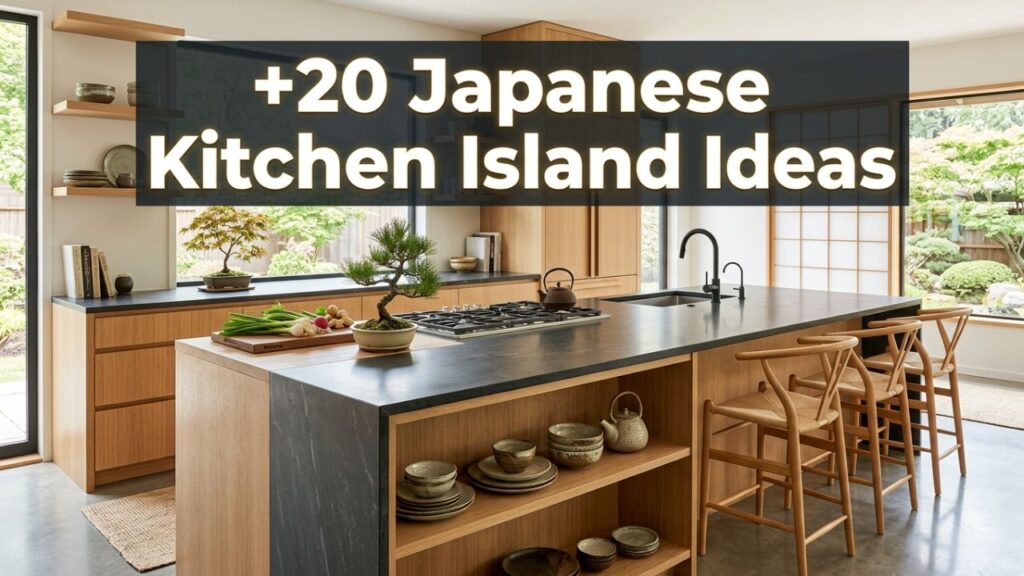
I’ve spent years helping homeowners rethink their kitchens, and the islands inspired by Japanese design tend to be the ones people love most. They feel intentional. Nothing is wasted, and everything has a purpose.
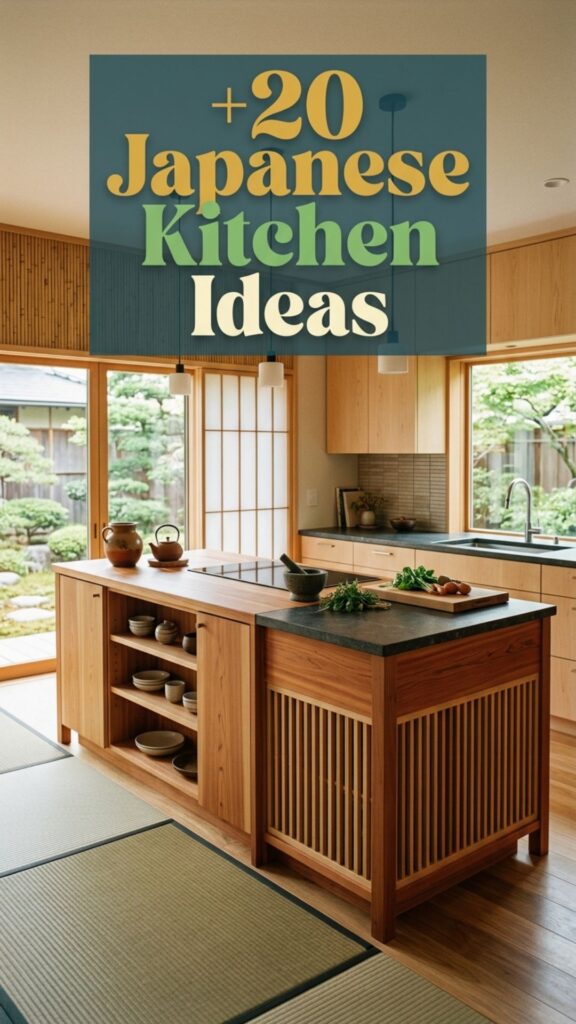
Below, you’ll find 20 kitchen island ideas Japanese homes and Japandi-lovers swear by. Each one comes with practical tips you can actually use, whether you’re working with a tiny apartment or a wide open floor plan. Let’s dig in.
1. Choose Warm, Light Wood as Your Base
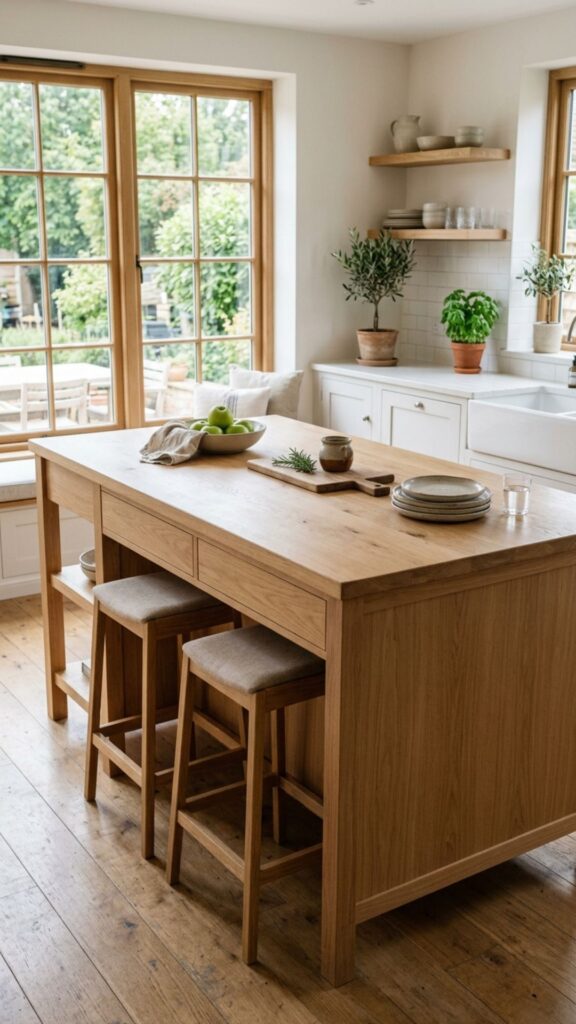
Wood is the soul of Japanese kitchen island ideas. Light species like ash, oak, or beech bring warmth without feeling heavy. They reflect natural light beautifully and pair well with almost any wall color. The grain adds texture, so even a simple rectangular island feels rich and grounded.
If your budget is tight, consider a wood-veneer finish over engineered panels. It gives you that same soft glow at a fraction of the cost. Just seal it properly so spills and steam don’t warp the surface over time. A quality water-based sealant works wonders and keeps the wood looking honest.
2. Keep the Lines Clean and Low
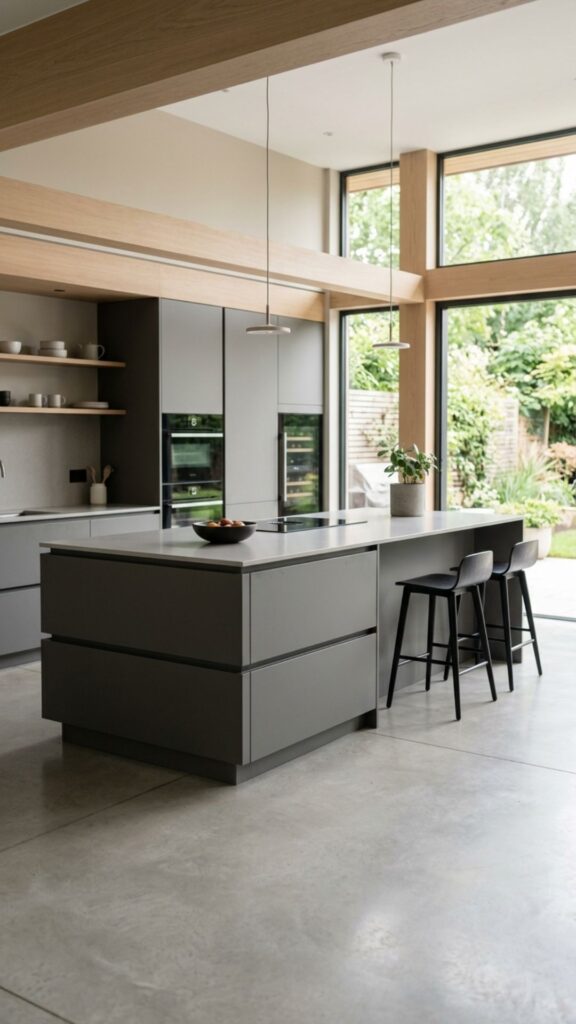
Japanese design loves horizontal lines and lower profiles. A slightly lower island height can make a room feel more open and relaxed. It also nods to the traditional preference for sitting closer to the floor and keeping sightlines uncluttered.
To pull this off, skip bulky ornamentation. Flat cabinet fronts, hidden hinges, and slim countertops do the heavy lifting. The goal is an island that looks calm from every angle, so avoid anything that draws the eye to hardware or fussy details.
3. Hide Storage Behind Flush Cabinet Fronts
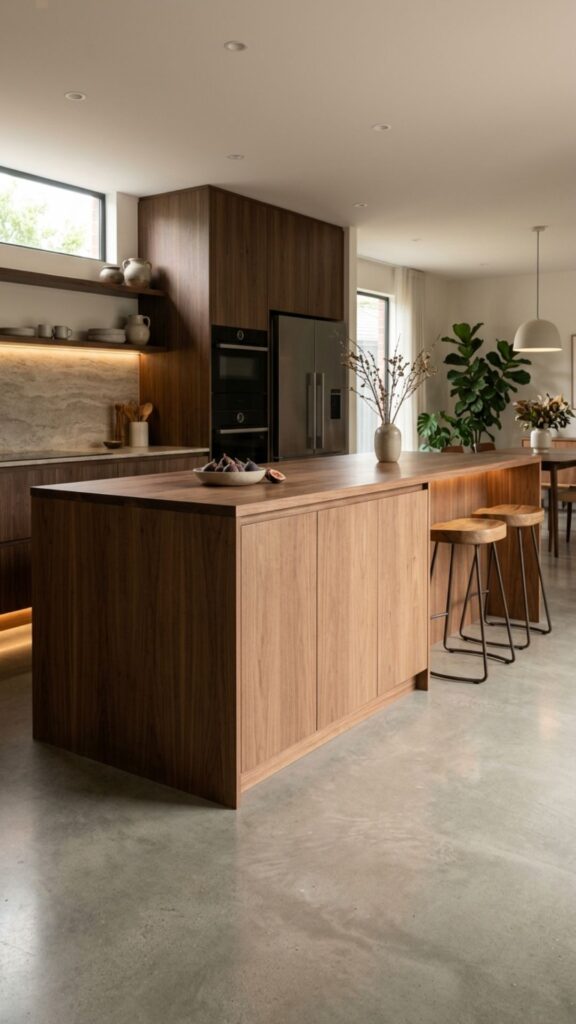
Clutter is the enemy of a peaceful kitchen. Push-to-open cabinets and drawers with no visible handles keep your island looking seamless. This trick makes the whole piece feel like a single sculpted block of wood rather than a busy set of doors.
Inside, use dividers and trays to organize everything from utensils to small appliances. When storage is tidy behind clean fronts, you get that signature serene look without giving up any function. It’s a small change that transforms daily cooking.
4. Add a Butcher Block Prep Zone
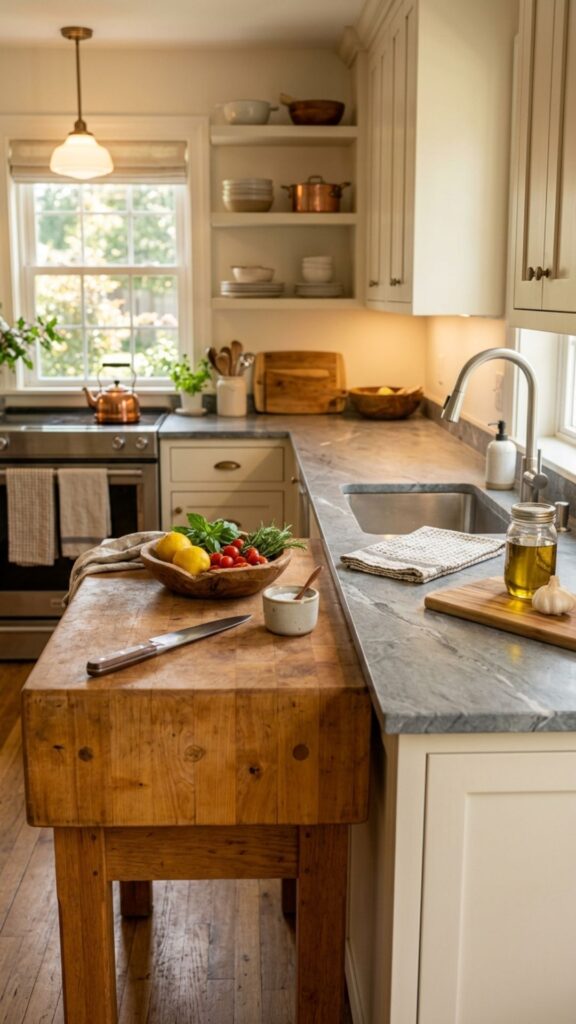
A dedicated wood prep surface honors the Japanese respect for craft and food. Butcher block feels warm under your hands and is gentle on knives, which matters if you own quality Japanese blades. It also ages gracefully, developing character with each meal.
Pair it with a contrasting stone counter on the rest of the island for practicality. Use the wood for chopping vegetables and the stone for hot pots or rolling dough. Oil the wood monthly to protect it, and it’ll serve you for decades.
5. Build in a Bamboo Accent
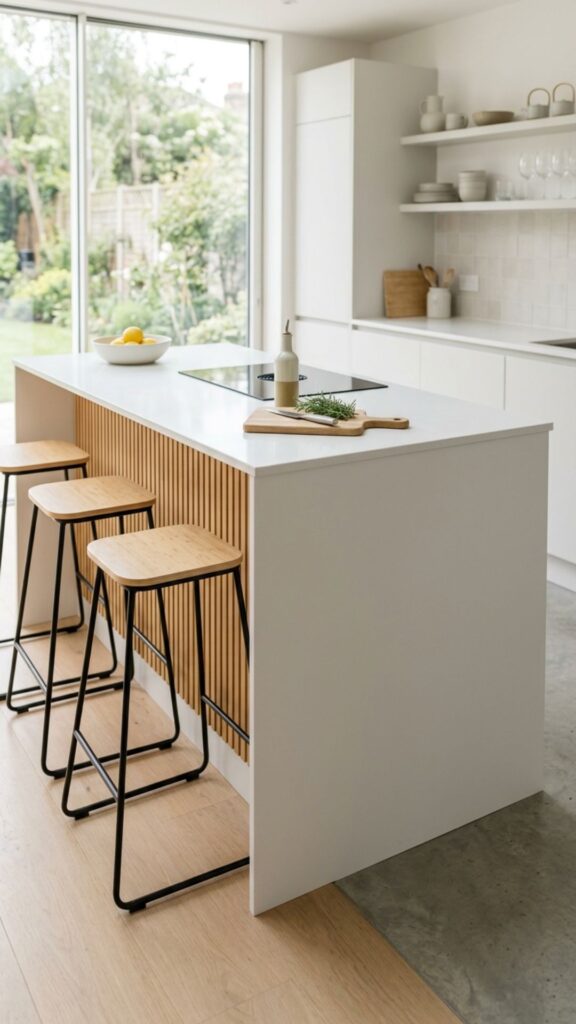
Bamboo brings instant Japanese character and it’s remarkably sustainable. Use it as a side panel, a drawer front, or a slatted detail along the base of your island. Its subtle vertical lines add rhythm without shouting for attention.
Because bamboo grows fast and hardens well, it’s both eco-friendly and durable. Just keep it away from constant moisture and it holds up beautifully. Even a small bamboo touch signals that thoughtful, nature-first spirit at the core of Japanese design.
6. Integrate a Sunken Sink for Seamless Prep
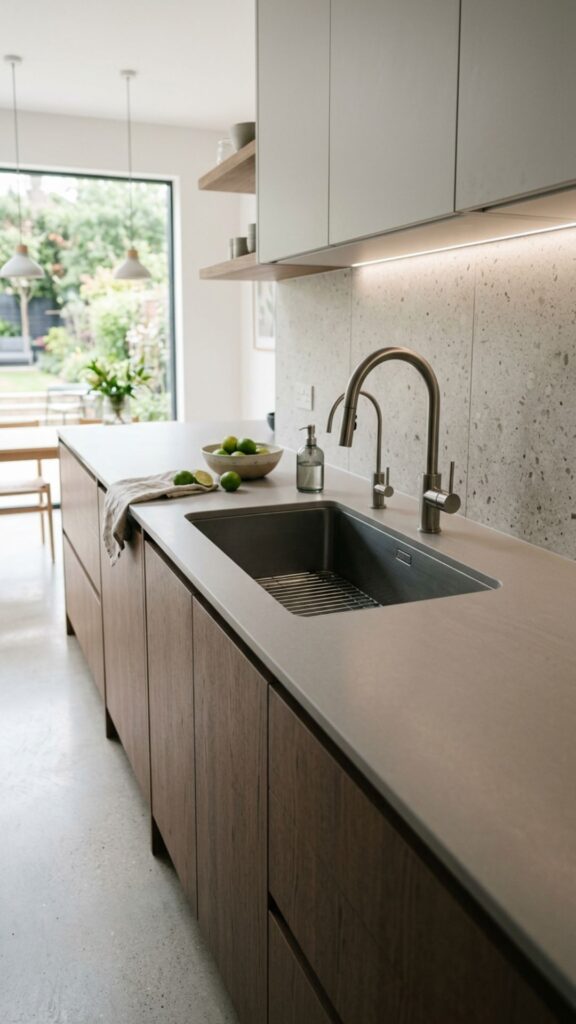
A flush or undermount sink keeps the countertop looking like one unbroken plane. This matters in Japanese kitchens where continuity creates calm. Wiping crumbs straight into the basin feels effortless when there’s no raised rim in the way.
Choose a matte stainless or stone composite basin for a muted look. Pair it with a slim, arching faucet in brushed black or bronze. The result is a workspace that feels quiet and efficient, exactly what you want when you cook daily.
7. Use Natural Stone with a Honed Finish
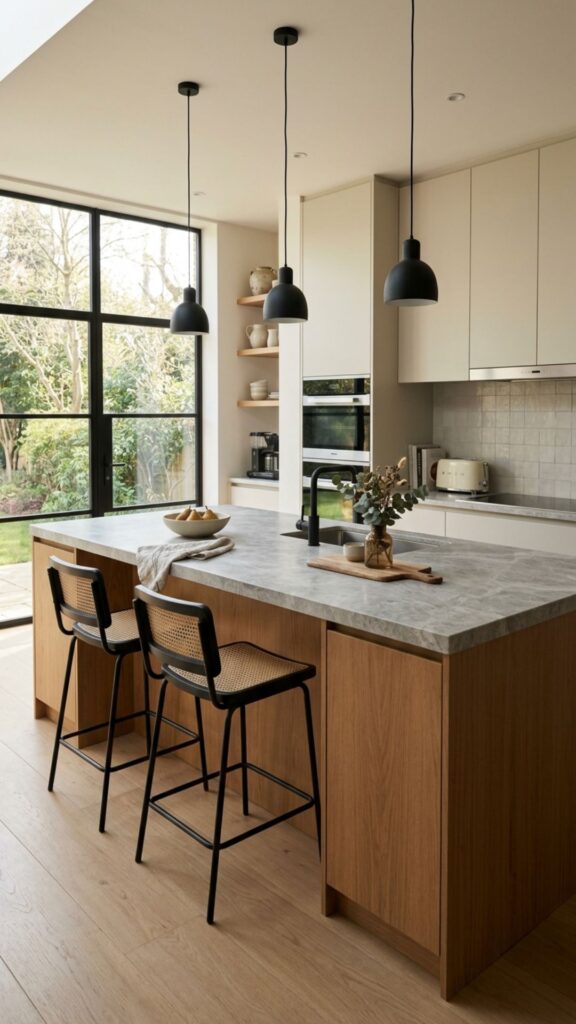
Polished stone can feel flashy, so go honed or matte instead. A soft gray granite or a pale limestone-look quartz gives depth without glare. It reads as understated luxury, which fits the Japanese ideal of quiet quality.
Honed surfaces also hide fingerprints and water spots better than glossy ones. For a family kitchen, that’s a real everyday win. Seal natural stone regularly to guard against stains from soy sauce, oils, and other kitchen staples.
8. Create a Tatami-Inspired Seating Nook
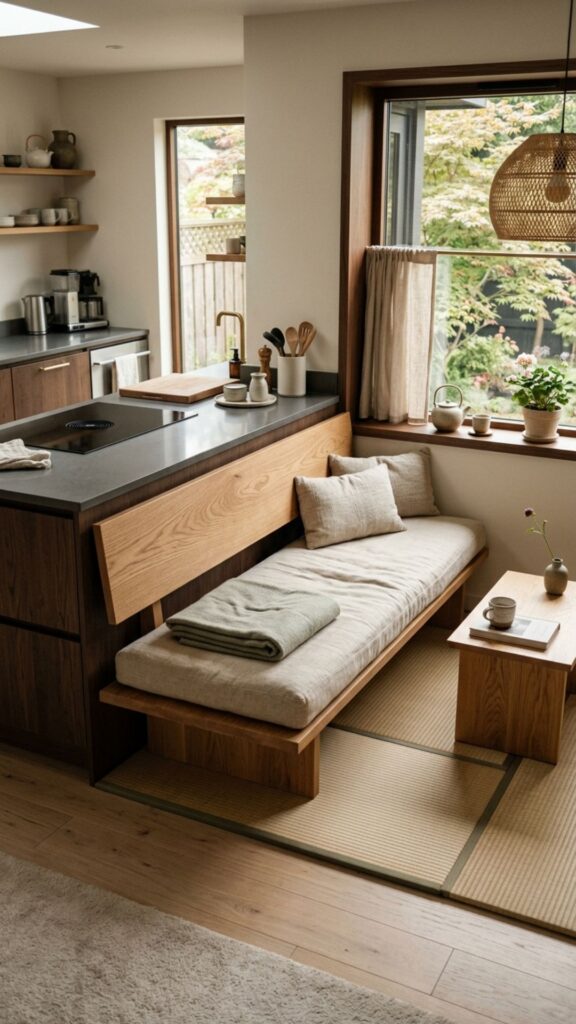
If you have space, attach a low platform or bench beside your island, echoing the feel of a tatami room. It invites people to gather, sip tea, or watch you cook. This blend of kitchen and living space is deeply Japanese.
Soften the bench with a simple linen cushion in a neutral tone. Add a hidden storage compartment underneath for extra dishware or cookbooks. It’s cozy, practical, and turns your island into a genuine social hub.
9. Let a Single Pendant Light Set the Mood
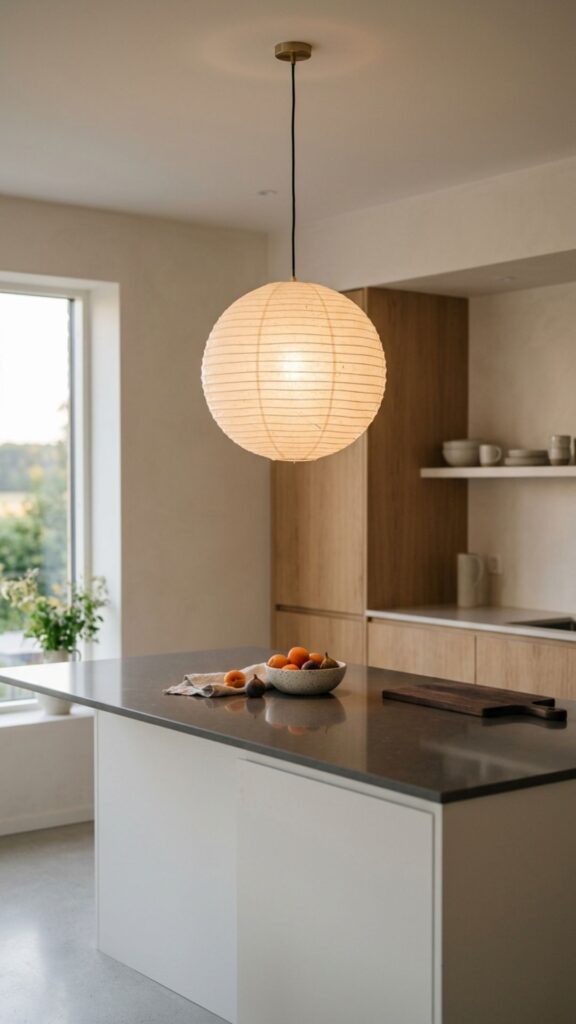
Lighting shapes the mood of any kitchen island. A single paper or rice-lantern-style pendant casts a soft, diffused glow that feels warm and inviting. It also references the beloved washi lanterns found in traditional homes.
Hang it low enough to feel intimate but high enough to clear sightlines. Warm-toned bulbs around 2700K keep the light gentle. One well-chosen fixture often beats a cluster of harsh spotlights for that peaceful evening atmosphere.
10. Embrace Wabi-Sabi with Imperfect Textures
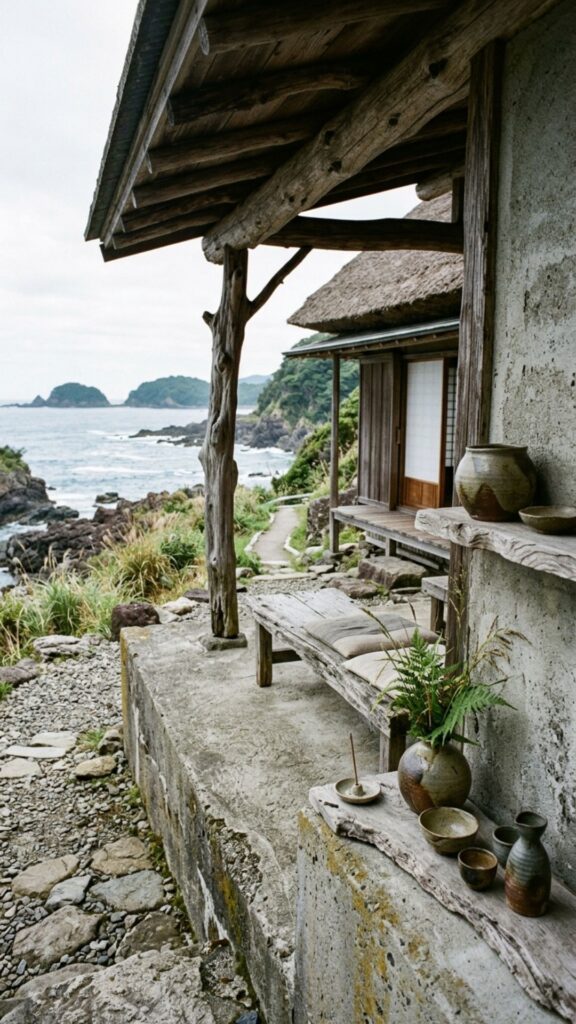
Wabi-sabi celebrates the beauty of imperfection. A slightly rough concrete top, a hand-finished wood edge, or a ceramic tile with visible variation adds soul to your island. These honest textures feel lived-in and real.
Don’t chase flawless perfection. A few natural knots in the wood or subtle tonal shifts in stone make the space feel human. This mindset takes pressure off you too, since minor wear becomes part of the charm rather than a flaw.
11. Add Open Shelving for Everyday Dishware
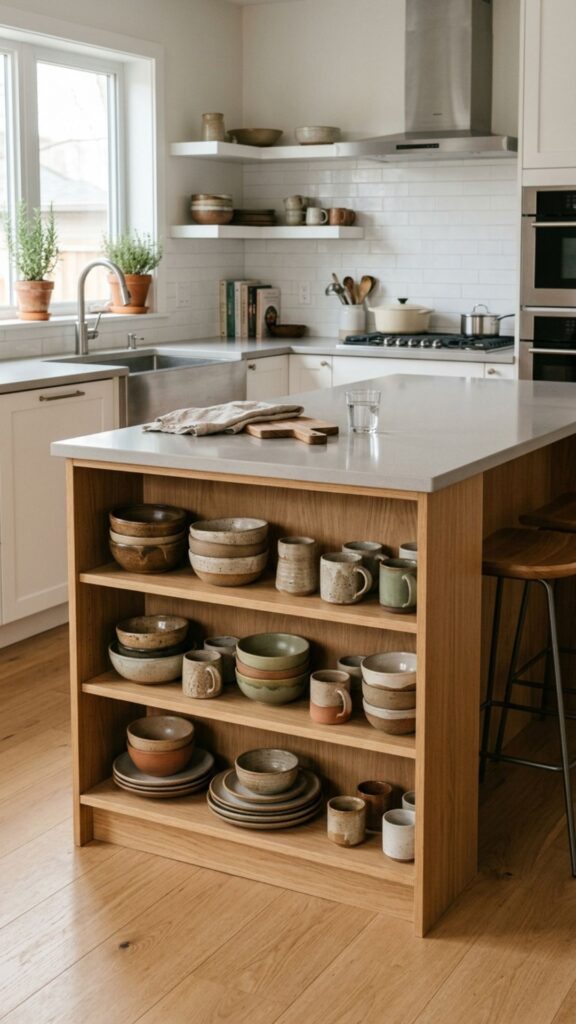
Open shelves on one end of your island keep beautiful bowls and cups within reach. Display simple ceramics in earthy glazes for that authentic Japanese feel. It’s practical storage that doubles as quiet decoration.
Keep the shelving minimal and don’t overfill it. A few carefully chosen pieces look far better than crammed rows. Rotate seasonal items to keep the display fresh and to reflect the changing seasons, a value close to Japanese hearts.
12. Choose a Matte Black Contrast Base
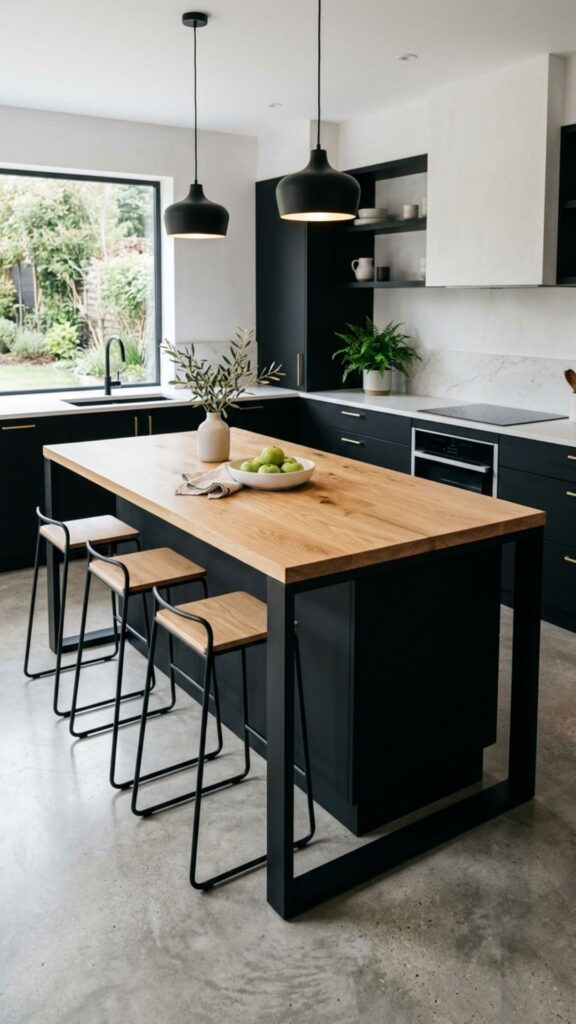
For a modern Japandi twist, pair light wood with a matte black base or steel legs. The contrast is striking yet still restrained. Black grounds the island visually and makes the warm wood pop even more.
Keep the black finish flat, never glossy, to maintain that soft, muted aesthetic. This combination works especially well in urban apartments where you want a design that feels both current and calming. It photographs beautifully too.
13. Install a Hidden Induction Cooktop
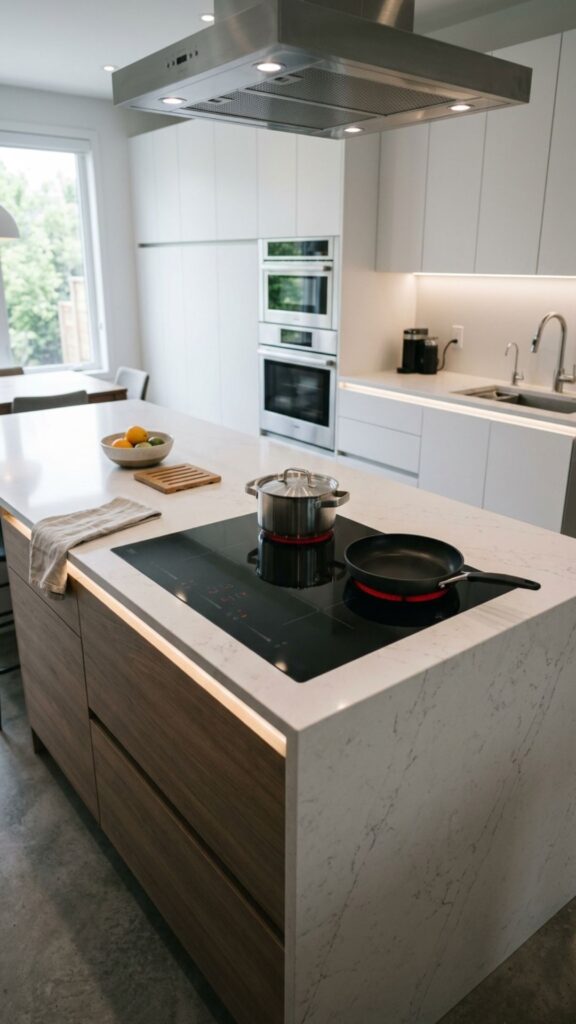
An induction cooktop flush with the counter keeps the surface clean and multi-purpose. When you’re not cooking, the island becomes a full prep or dining space. This flexibility is gold in smaller Japanese-style homes.
Induction is also energy efficient and cools quickly, which makes it safer around kids. Choose a model with a sleek black glass top so it blends into a dark counter or disappears against a stone surface. Fewer visible appliances mean a calmer room.
14. Fit a Slim Island for Compact Kitchens
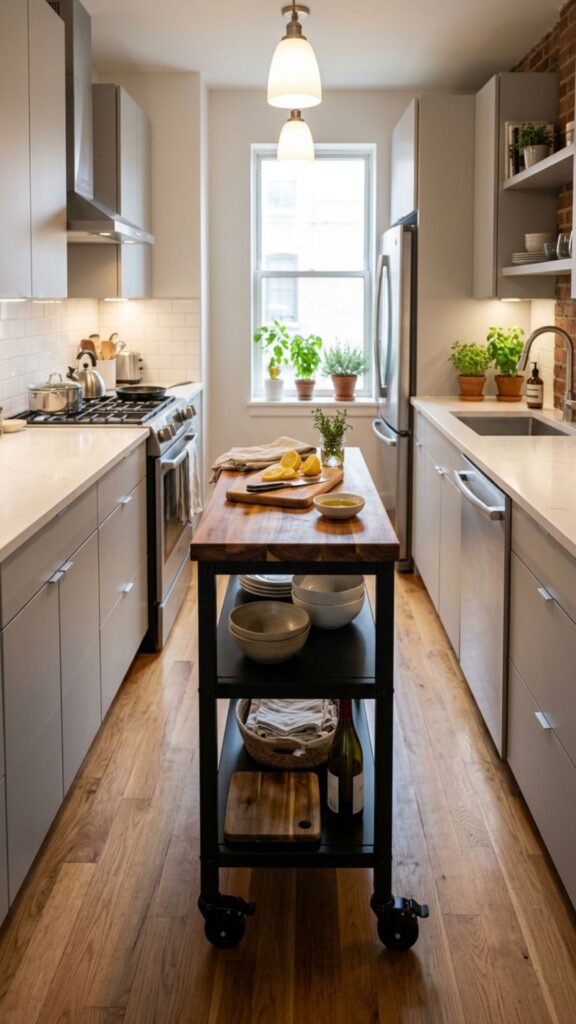
Not everyone has a sprawling kitchen, and that’s fine. A narrow, elongated island fits tight galley layouts while still offering prep space and storage. Japanese design excels at making small spaces work hard.
Add wheels for a mobile version you can tuck away or reposition. Even a 12-inch-deep island can hold a butcher block top and a couple of shallow drawers. Smart planning beats square footage every single time.
15. Feature Shoji-Style Screen Details
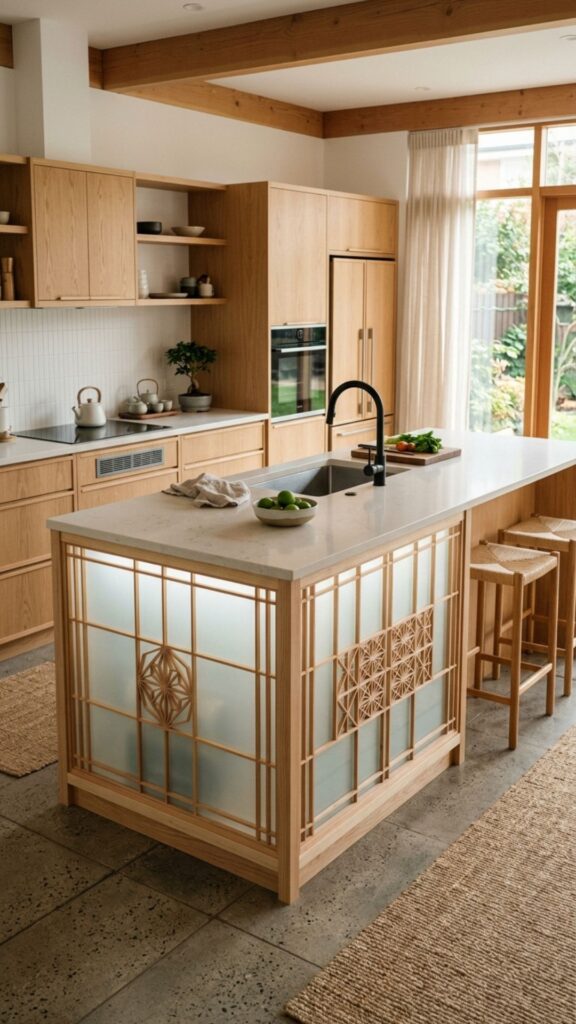
Shoji screens, with their lattice grids and translucent panels, are a signature Japanese element. Echo them on your island with a slatted wood panel or a frosted-glass insert. It adds gentle pattern and filters light softly.
You can use this detail on the seating side to hide storage while still feeling airy. The grid lines bring subtle structure to an otherwise plain surface. It’s a refined nod to tradition that instantly reads as Japanese.
16. Blend in Greenery with a Built-In Planter
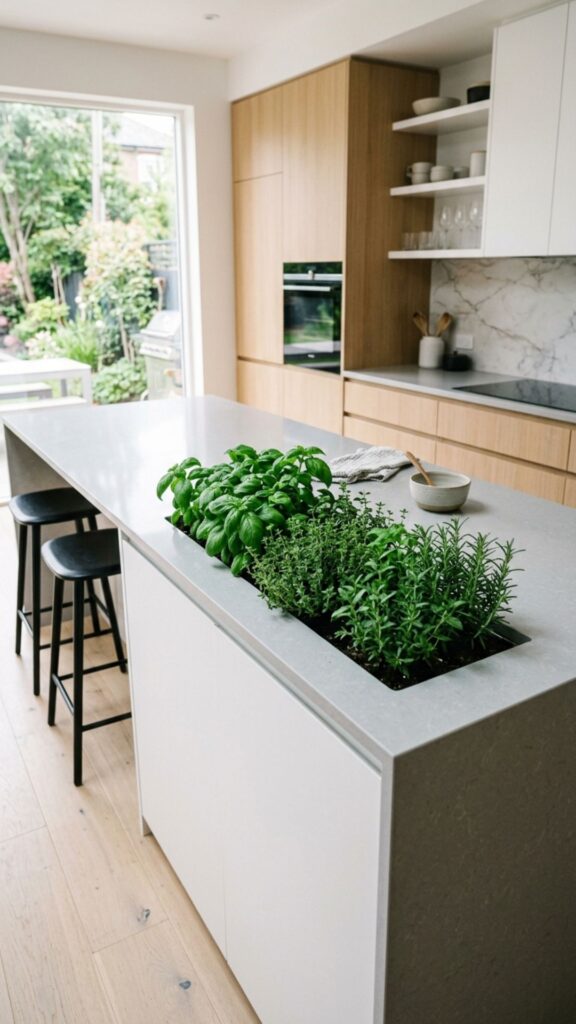
A small recessed planter or a spot for a bonsai brings life to your island. Plants connect the kitchen to nature, a core Japanese value. Fresh herbs in a slim trough are both pretty and useful for cooking.
Keep the planter simple and low so it doesn’t block conversation. Choose hardy greens that tolerate kitchen humidity and variable light. This little green touch softens the hard surfaces and makes the whole space feel alive.
17. Pick Muted, Earthy Color Palettes

Color choices matter as much as materials. Stick to soft grays, warm beiges, muted greens, and natural wood tones. These earthy hues create the serene backdrop Japanese kitchens are known for.
Avoid bold, saturated colors that fight for attention. Instead, let texture and material do the talking. A restrained palette makes your island feel timeless, so you won’t tire of it in a few years. It’s a decision your future self will thank you for.
18. Add Deep Drawers Instead of Cabinets
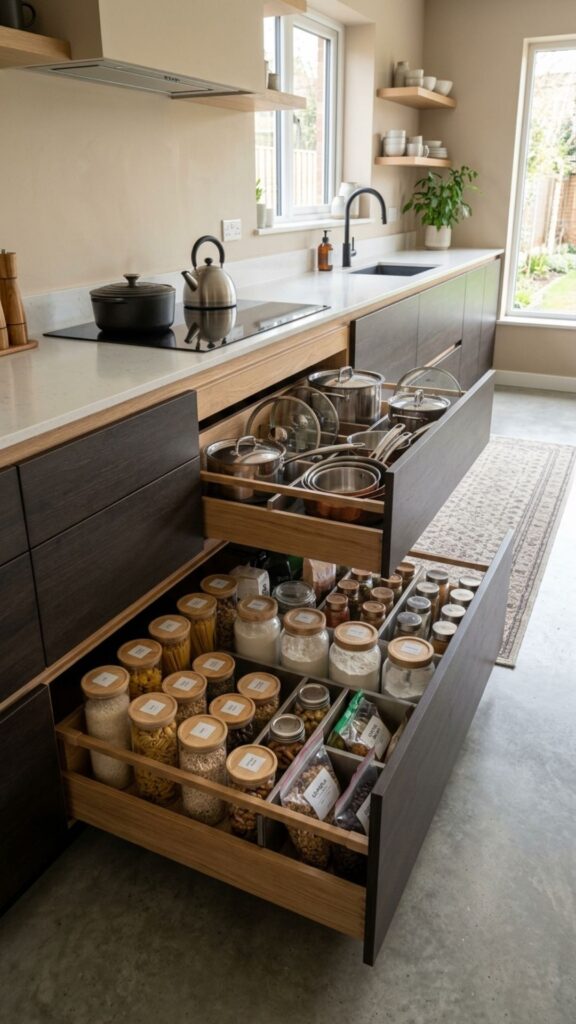
Deep drawers beat traditional cabinets for both access and order. You can see everything at a glance and reach the back without crouching. This practical mindset fits the Japanese love of efficiency.
Use adjustable dividers to keep pots, lids, and pantry items neatly separated. Soft-close runners prevent slamming and add a quiet, premium feel. Once you cook with deep drawers, you’ll wonder how you managed without them.
19. Incorporate a Tea or Coffee Station
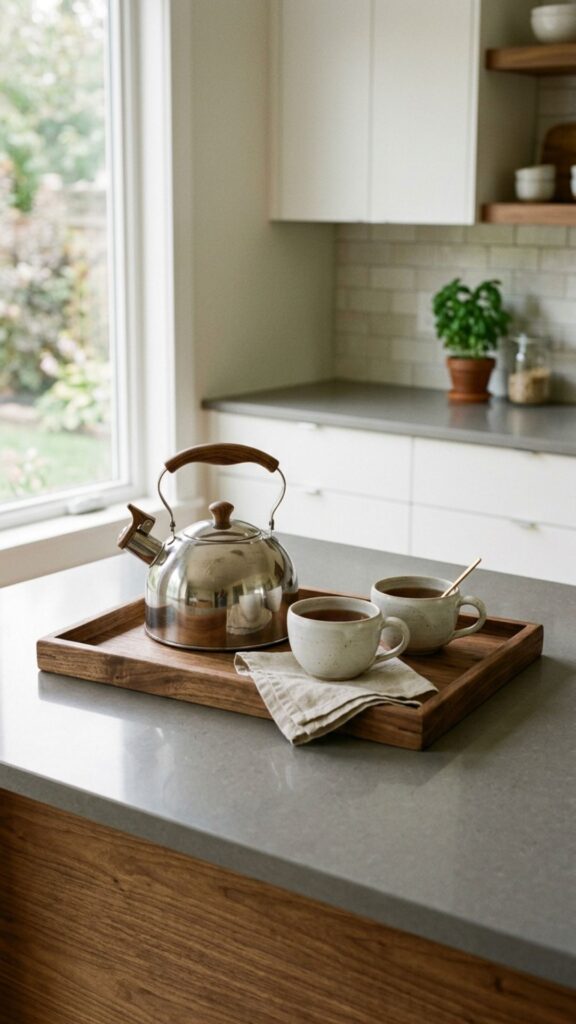
Carve out a dedicated corner of your island for tea or coffee. A small tray with a kettle, cups, and your favorite leaves turns a daily ritual into something special. Tea culture runs deep in Japan, and this honors it.
Keep supplies in a nearby drawer so the surface stays clear. A simple wooden tray defines the zone without any permanent build. It’s a low-cost idea that adds real warmth and personality to your kitchen.
20. Finish with Natural, Low-Sheen Surfaces
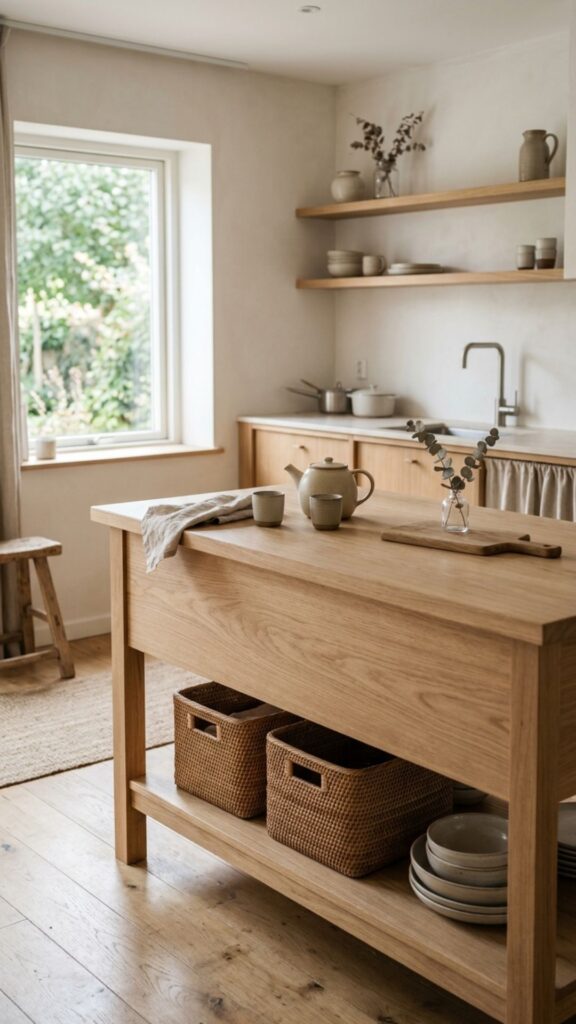
The final touch is all about finish. Choose oils, matte sealants, and low-sheen coatings over glossy varnishes. These finishes feel soft to the touch and reflect light gently, keeping the whole island calm.
Low-sheen surfaces also age more gracefully and hide everyday marks. Reapply oil or sealant as needed to protect your investment. This quiet attention to care is exactly what makes Japanese kitchen design feel so intentional and lasting.
Bringing It All Together
A great island doesn’t need to shout to be beautiful. The best kitchen island ideas Japanese homes rely on prove that warmth, simplicity, and smart function can live in perfect harmony. Whether you start with light wood, add clever storage, or simply swap to a matte finish, each small choice moves you closer to a calmer, more welcoming kitchen.
You don’t have to tackle all 20 ideas at once. Pick two or three that speak to you and build from there. Ready to start? Sketch your dream island this week, gather a few material samples, and take that first step toward a kitchen you’ll genuinely love spending time in.
What makes a kitchen island Japanese in style?
A Japanese-style island focuses on natural materials, clean horizontal lines, muted earthy colors, and hidden storage. Warm woods like ash and oak, matte finishes, and clutter-free surfaces are the core signatures. The goal is a calm, functional centerpiece with nothing wasted.
Can I create a Japanese kitchen island in a small space?
Absolutely. Choose a slim or mobile island that fits narrow layouts, and use deep drawers or push-to-open cabinets to maximize storage. Japanese design is famous for making compact spaces feel open and efficient, so small kitchens are a natural fit.
Which materials work best for a Japanese-style island?
Light woods, bamboo accents, honed natural stone, and matte composite surfaces all work beautifully. Pair them with low-sheen finishes and neutral tones. These materials bring warmth and durability while keeping that quiet, understated look intact.
How do I keep a Japanese kitchen island looking clean and calm?
Prioritize hidden storage, minimal decoration, and a muted color palette. Use flush cabinet fronts and organized drawers so nothing spills into view. Regularly tidy the surface and display only a few beautiful pieces, like ceramics or a small plant.
Is Japandi the same as Japanese kitchen island design?
They overlap but aren’t identical. Japandi blends Japanese minimalism with Scandinavian coziness, often mixing light wood with matte black accents. Traditional Japanese design leans more on natural materials and subtle craft, though both share a love of clean, calm spaces.