A home office should help you focus without making you feel like you are sitting inside a cold, corporate cubicle. That is exactly where Japandi design shines.

Blending the calm simplicity of Japanese interiors with the cozy functionality of Scandinavian style, Japandi creates workspaces that feel clean, natural, and quietly inviting. Think warm wood, soft neutrals, thoughtful storage, organic textures, and just enough decoration to give the room personality without creating visual clutter.
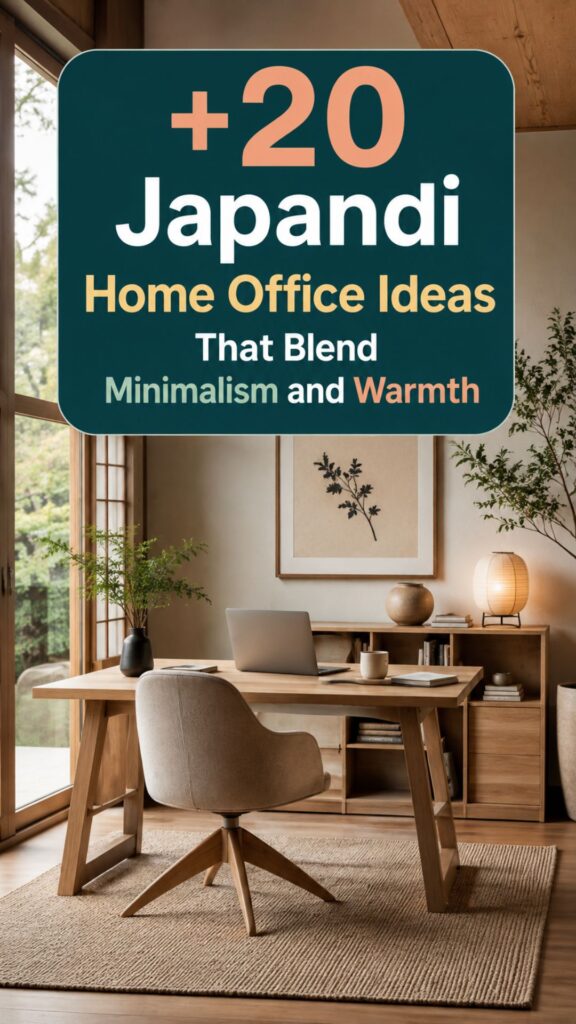
The best part? You do not need a huge room or an expensive renovation to achieve the look. Whether you have a dedicated office, a small bedroom corner, or a compact desk by the window, these 20 Japandi home office ideas can help you create a workspace that feels peaceful, productive, and effortlessly warm.
1. Start With a Warm Neutral Color Palette
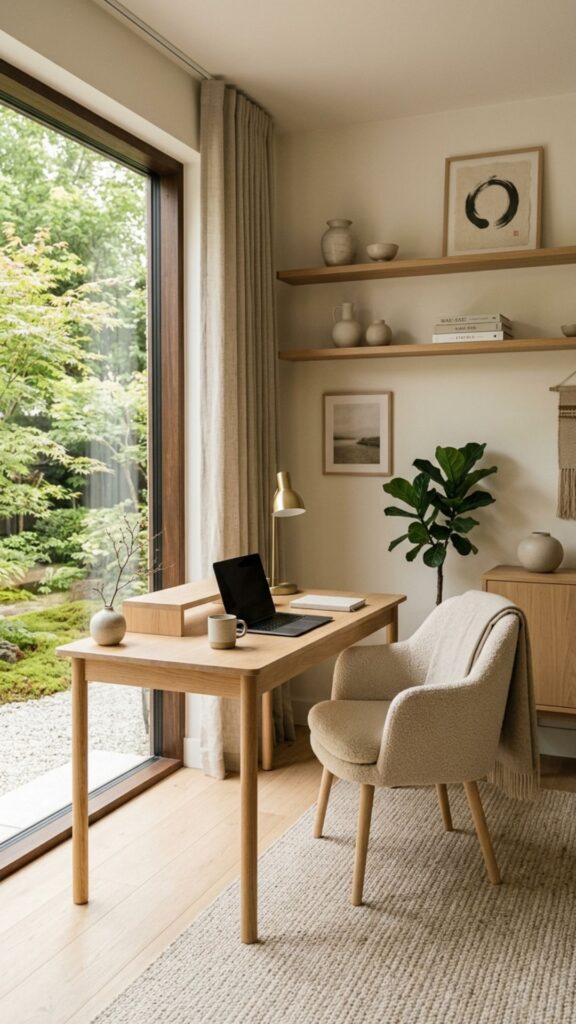
Japandi interiors rarely rely on stark white alone. Instead, build your home office around softer shades such as warm white, oatmeal, sand, beige, taupe, mushroom, and light gray.
These colors create a calm backdrop while allowing natural materials to stand out.
For extra warmth, introduce muted earthy tones like clay, olive, caramel, or soft brown through small accessories. Keeping the palette restrained helps the space feel cohesive rather than busy.
2. Choose a Simple Natural Wood Desk
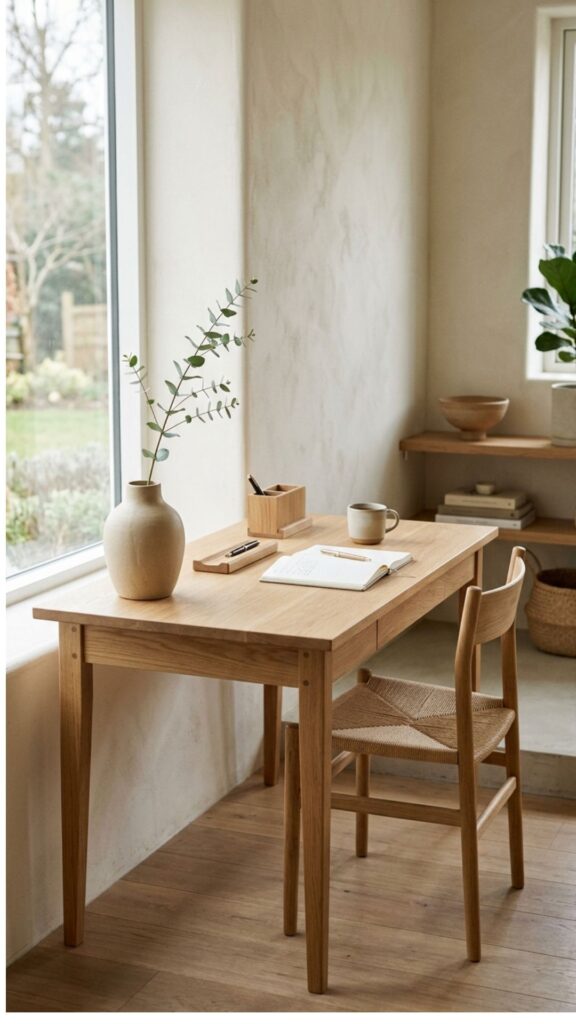
A beautiful wooden desk can instantly establish the Japandi aesthetic.
Look for streamlined designs made from oak, ash, walnut, bamboo, or other natural-looking woods. A desk with clean lines and minimal detailing feels especially appropriate.
Avoid overly bulky furniture when possible. Japandi spaces tend to celebrate craftsmanship without unnecessary ornamentation.
A simple wood desk also brings visual warmth to an otherwise minimal room.
3. Keep Your Desktop Almost Clutter-Free
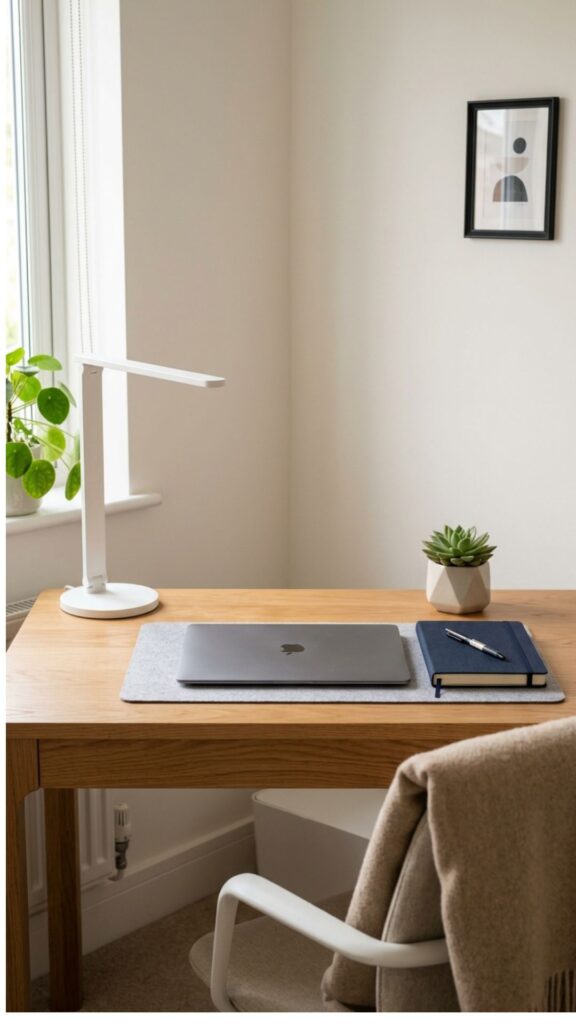
A clear workspace can make your entire home office feel calmer.
Instead of covering the desk with supplies, keep only the items you use regularly, such as your computer, notebook, lamp, and perhaps one decorative object.
Pens, chargers, documents, and accessories can be stored inside drawers, baskets, or cabinets.
The goal is not to create an empty desk. It is to make every visible item feel intentional.
4. Add a Comfortable Chair With Soft Texture
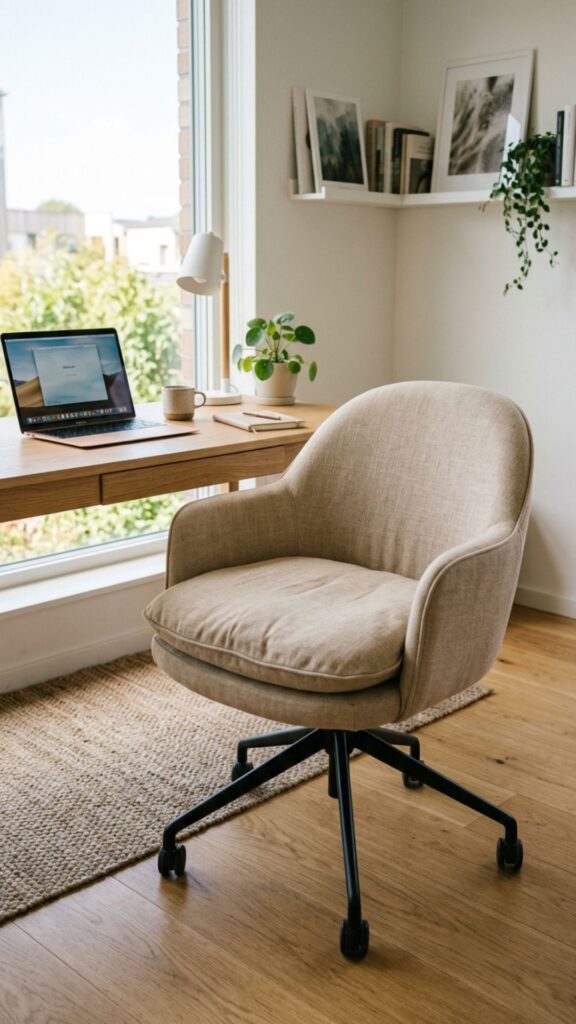
Minimalism should never come at the expense of comfort.
Choose an ergonomic office chair with a simple silhouette, then soften the look with natural or tactile materials. Upholstery in beige, cream, gray, or muted brown works beautifully.
If your chair feels too corporate, add a linen or wool cushion to visually connect it with the rest of the room.
A comfortable chair also makes the workspace feel more welcoming during long workdays.
5. Bring in Plenty of Natural Light
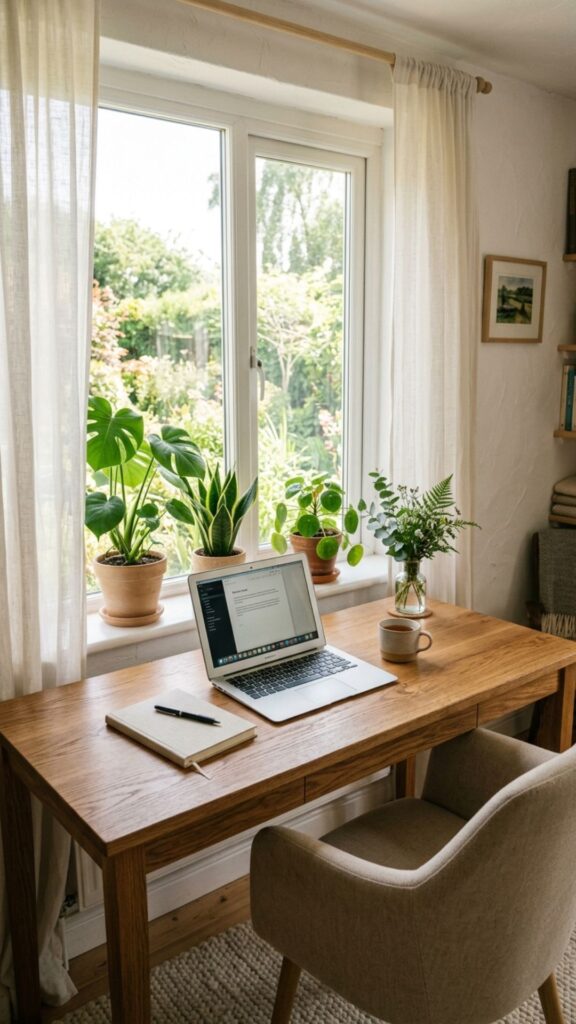
Natural light is one of the easiest ways to make a Japandi office feel fresh and peaceful.
Position your desk near a window whenever the layout allows. Instead of heavy curtains, consider linen panels, lightweight blinds, or sheer window treatments that gently filter sunlight.
Natural light highlights wood grain, textured fabrics, and earthy colors while making even a small office feel more open.
Just position your computer carefully to reduce screen glare.
6. Use Linen Curtains for Softness
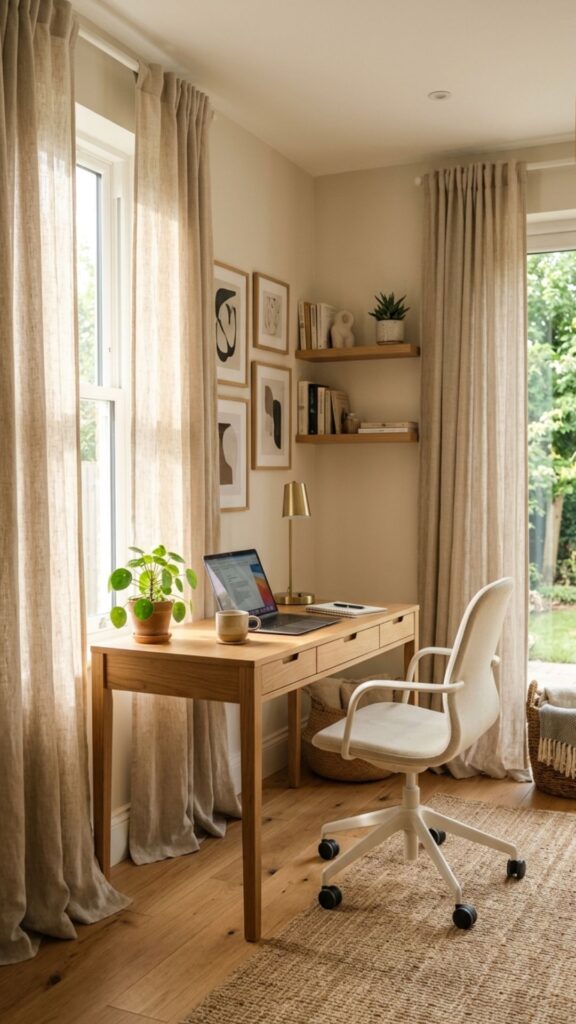
Japandi rooms often combine hard surfaces with soft, natural fabrics.
Linen curtains are ideal because their slightly imperfect texture keeps the room from looking overly polished or sterile.
Choose ivory, flax, oatmeal, beige, or muted gray curtains that complement the wall color.
Floor-length curtains can also make a small home office look taller and more elegant without adding unnecessary decoration.
7. Add One Sculptural Desk Lamp
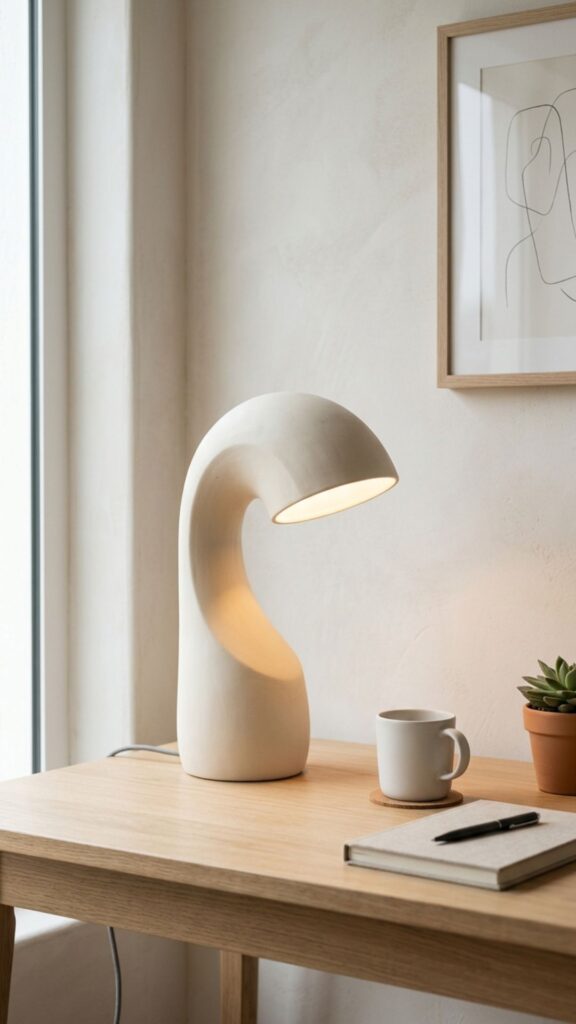
Lighting offers an opportunity to add personality while maintaining simplicity.
Instead of filling the office with decorative accessories, choose one beautiful desk lamp with an interesting yet understated form.
A lamp made from metal, wood, ceramic, paper, or frosted glass can work well.
Look for curved or geometric silhouettes that feel sculptural even when the light is switched off.
8. Introduce Greenery Sparingly
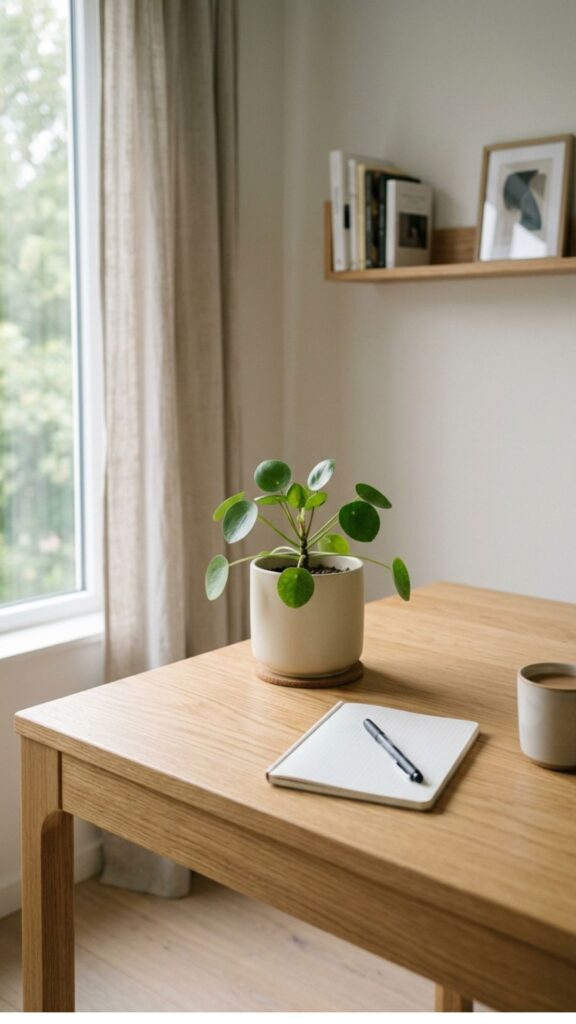
Plants bring life and softness to a minimalist workspace, but you do not need to create an indoor jungle.
One or two carefully selected plants can make a stronger impact.
Try a small bonsai, rubber plant, olive tree, snake plant, or simple leafy branch in a ceramic vase.
Choose planters in neutral finishes such as matte white, stone, charcoal, or natural terracotta to maintain the understated Japandi mood.
9. Incorporate Handmade Ceramics
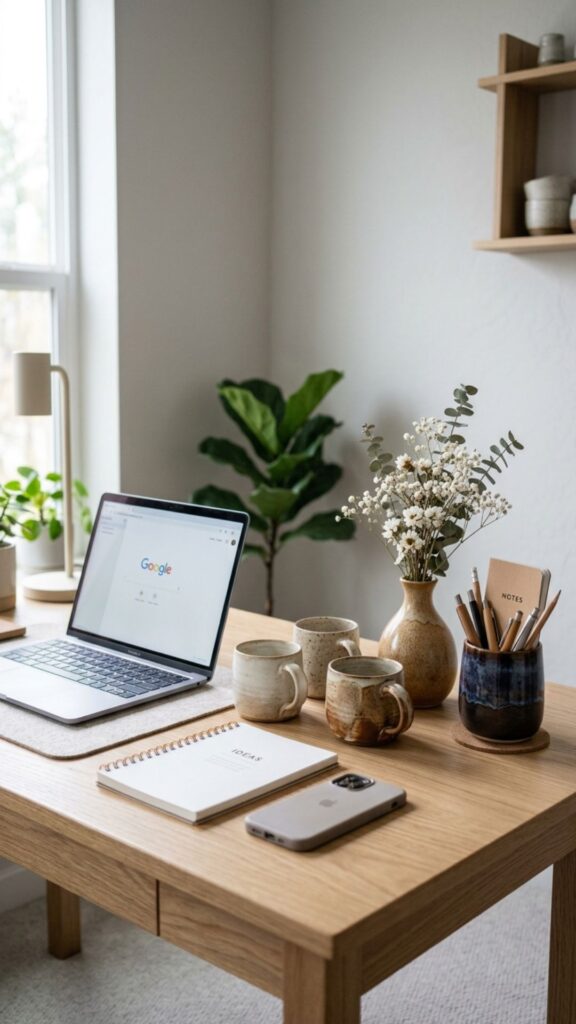
Japandi design celebrates craftsmanship and the beauty of objects that feel human rather than mass-produced.
Use a handmade ceramic cup as a pen holder, place a small pottery vase on a shelf, or keep your coffee in a textured stoneware mug.
Slight irregularities can actually make these pieces more appealing.
A few handcrafted objects add personality without overwhelming the minimalist aesthetic.
10. Install Floating Wood Shelves
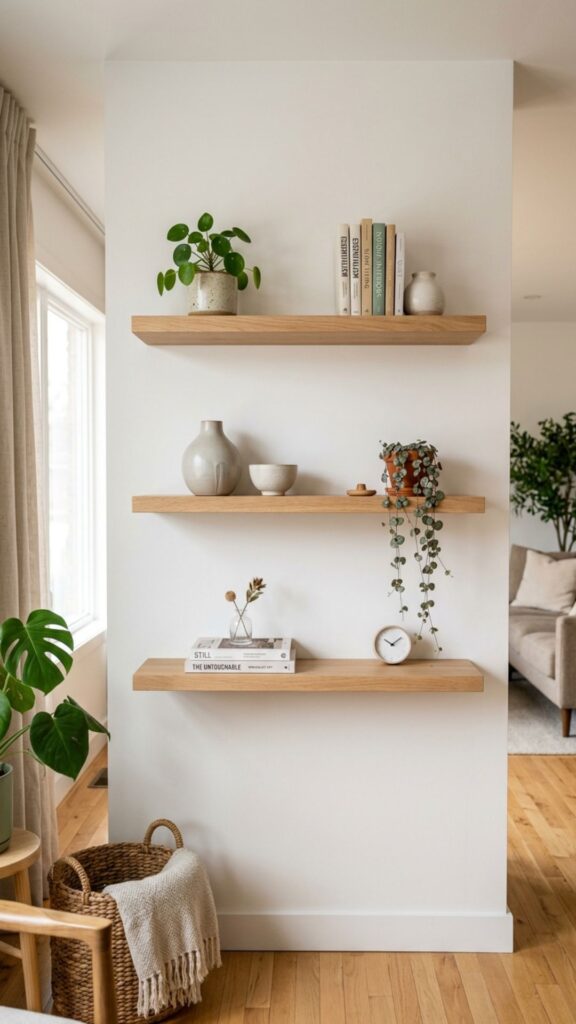
When floor space is limited, look upward.
Floating wooden shelves provide practical storage while keeping the room feeling visually light.
Use them to display a carefully edited collection of books, storage boxes, pottery, or small plants.
Avoid filling every inch of shelf space. Leaving some empty areas gives objects room to breathe and reinforces the uncluttered Japandi look.
11. Hide Office Supplies in Woven Baskets
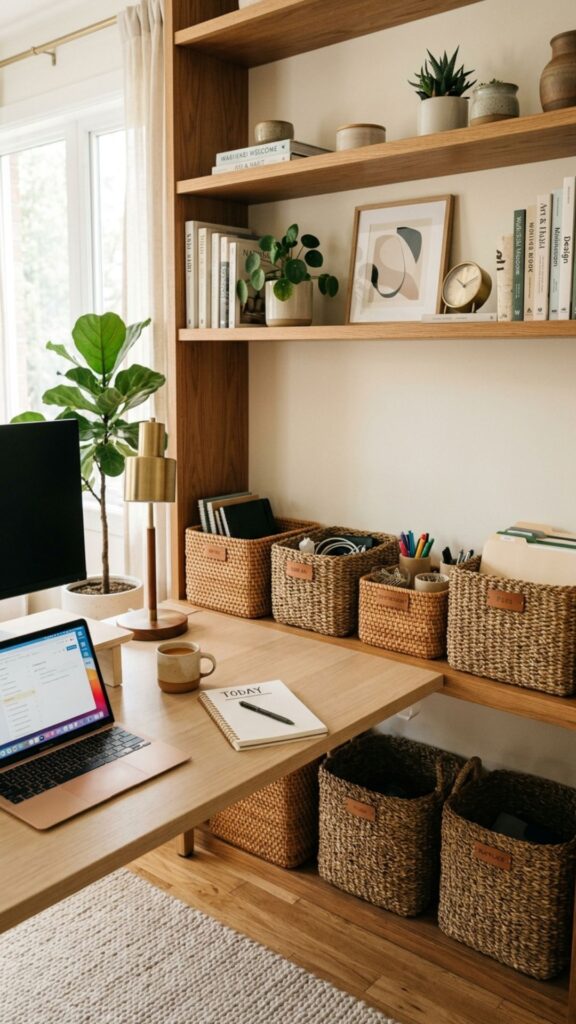
Even a beautifully designed office needs storage.
Woven baskets provide a warm alternative to plastic containers and help conceal cables, notebooks, paperwork, and miscellaneous supplies.
Materials such as rattan, jute, seagrass, and natural fiber blends work especially well.
Place baskets beneath your desk, inside open shelving, or on top of cabinets to combine function with texture.
12. Add a Textured Neutral Rug
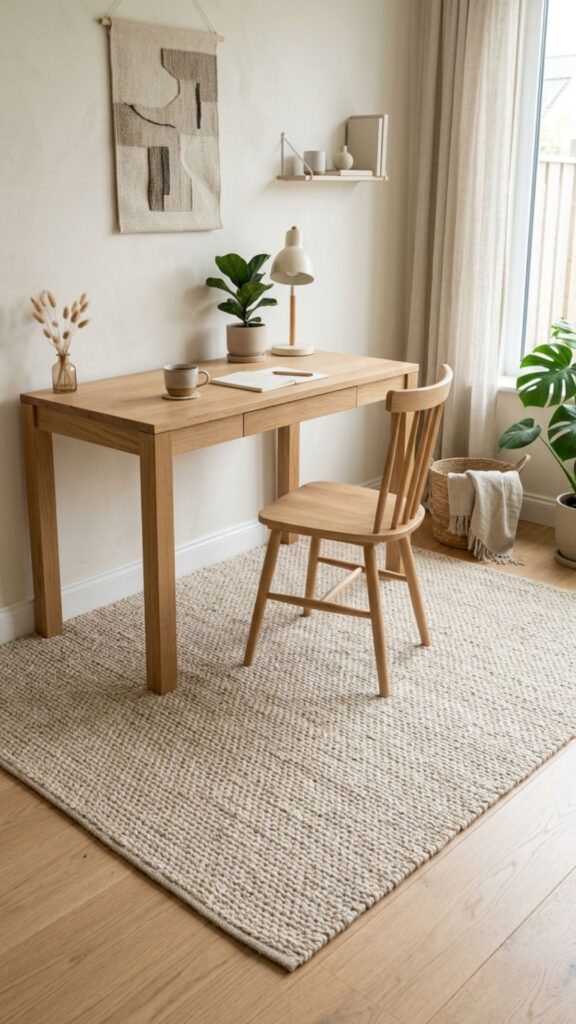
A rug can soften the appearance of a workspace, especially when the room has wood, concrete, or tile flooring.
Choose a low-pile wool, jute, cotton, or woven rug in a quiet neutral shade.
Subtle patterns can work, but dramatic prints may compete with Japandi’s peaceful simplicity.
A rug also helps visually define a work zone when your office shares space with a bedroom or living room.
13. Create a Small Zen-Inspired Corner
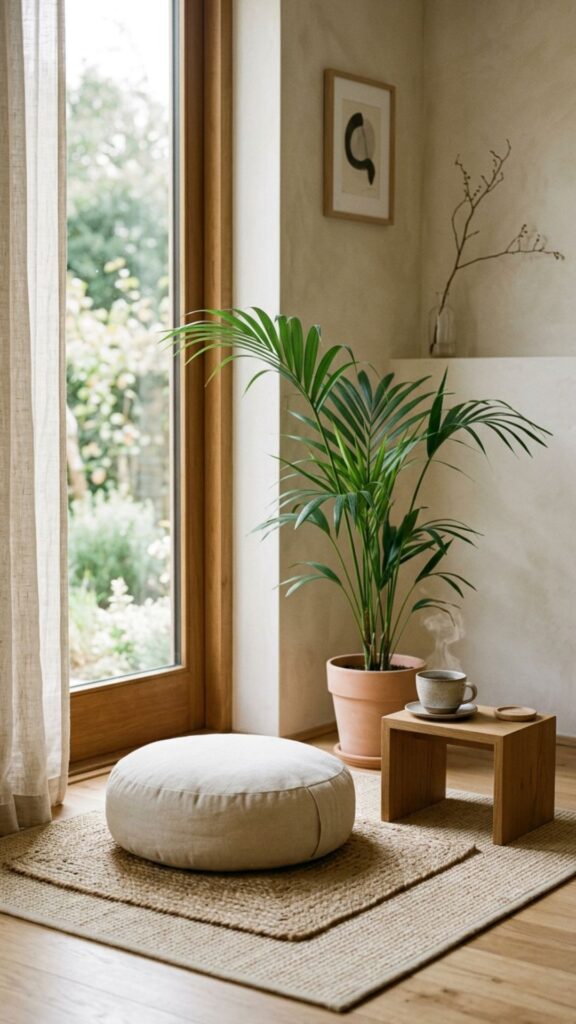
If space allows, create a tiny area dedicated to taking short breaks.
A comfortable floor cushion, compact armchair, small side table, or simple bench can turn an unused corner into a calming retreat.
Add one plant, a book, or a cup of tea rather than numerous decorative pieces.
Having somewhere to step away from your screen can make your office feel more balanced and restorative.
14. Choose Closed Storage for Visual Calm
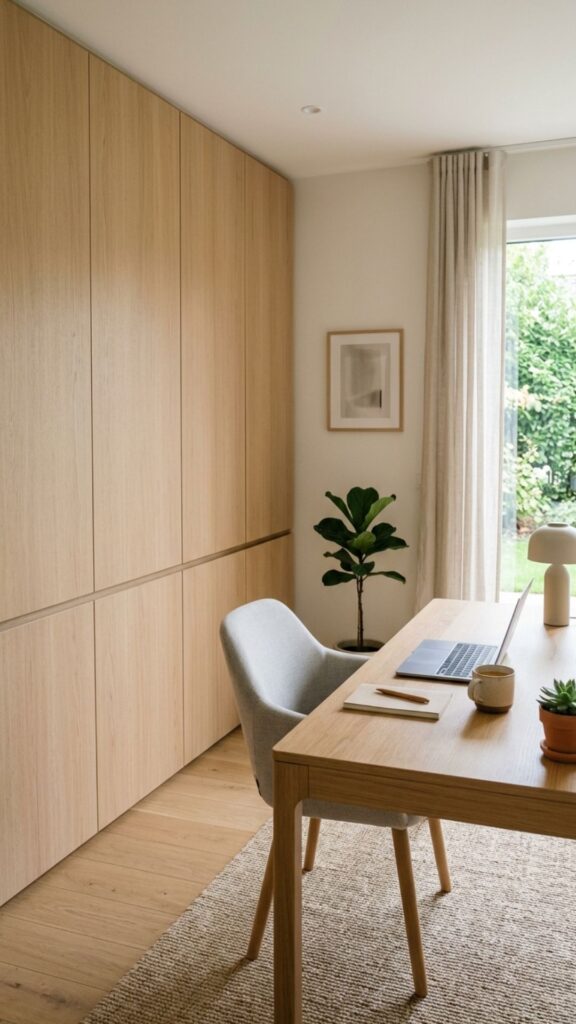
Open shelving looks beautiful when styled carefully, but everyday office supplies can quickly create clutter.
Closed cabinets and drawers make it easier to maintain a clean environment.
Choose storage furniture with flat fronts, subtle handles, or handle-free designs.
Wood finishes, warm white, beige, and muted gray work especially well.
The less visual noise surrounding your desk, the easier it can be to create a focused atmosphere.
15. Hang Simple Nature-Inspired Artwork
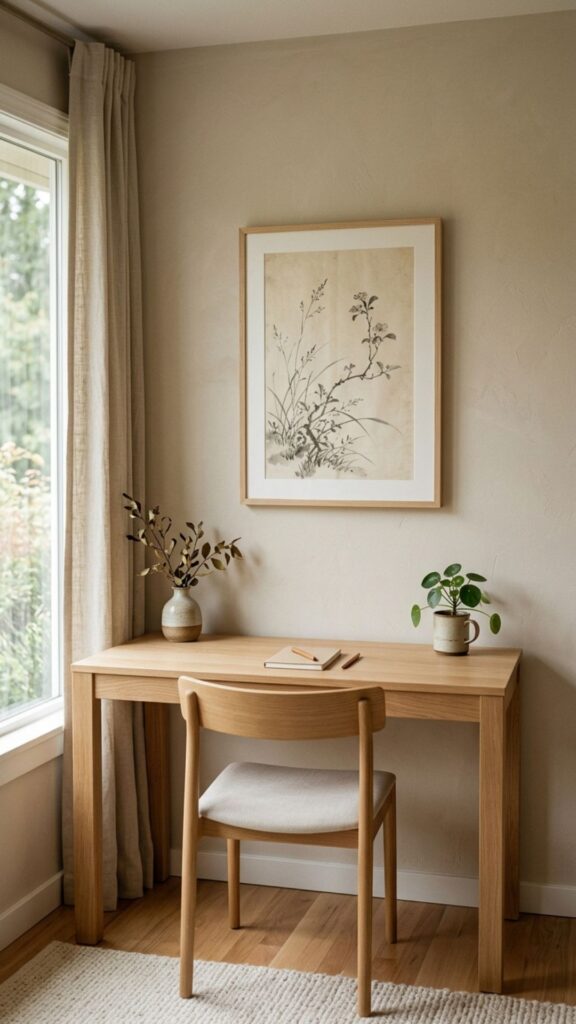
Wall art can make a minimalist office feel personal without sacrificing serenity.
Consider abstract landscapes, botanical sketches, Japanese-inspired ink drawings, minimalist photography, or simple geometric prints.
Stick to a limited color palette and avoid overcrowding the walls.
One larger artwork can often feel more sophisticated than several small pieces competing for attention.
16. Mix Light and Dark Wood Tones
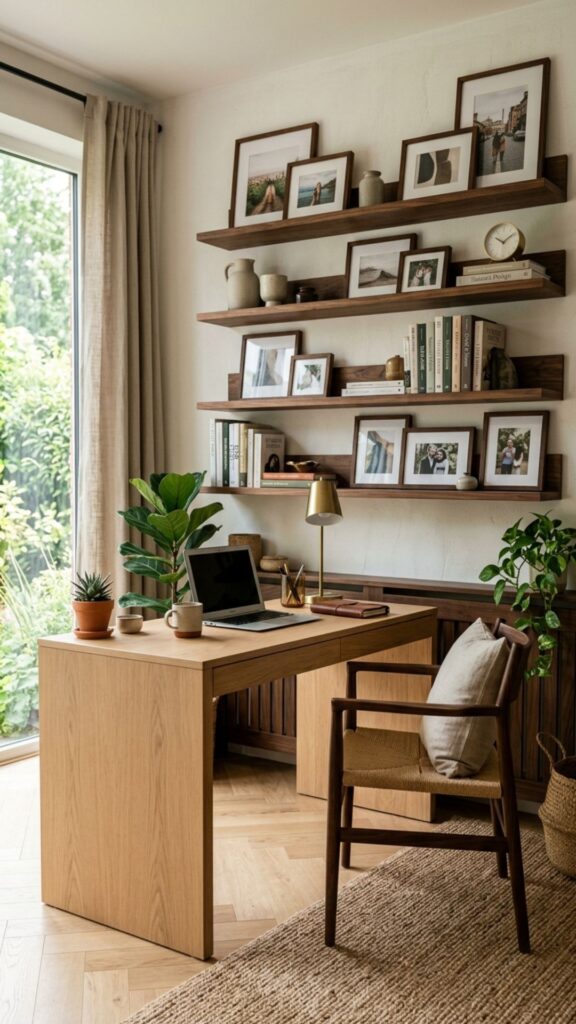
Japandi interiors do not always have to feature pale Scandinavian wood.
Combining lighter woods with darker brown or walnut finishes can add depth and sophistication.
For example, pair a light oak desk with a walnut shelf or introduce dark wooden picture frames against warm neutral walls.
The contrast creates visual interest while keeping the overall palette grounded in nature.
17. Add Black Accents for Gentle Contrast
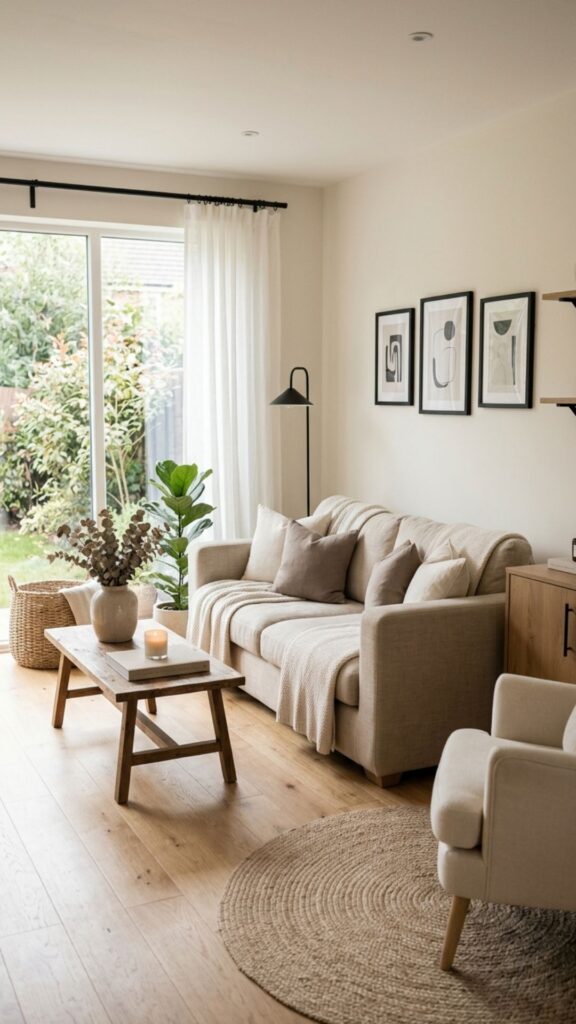
Small black details can give a soft Japandi office more structure.
Try a thin black desk lamp, minimalist picture frames, cabinet handles, chair legs, or a simple wall clock.
The key is restraint.
Rather than making black the dominant color, use it to outline and anchor the lighter materials throughout the room.
18. Make Cable Management Part of the Design
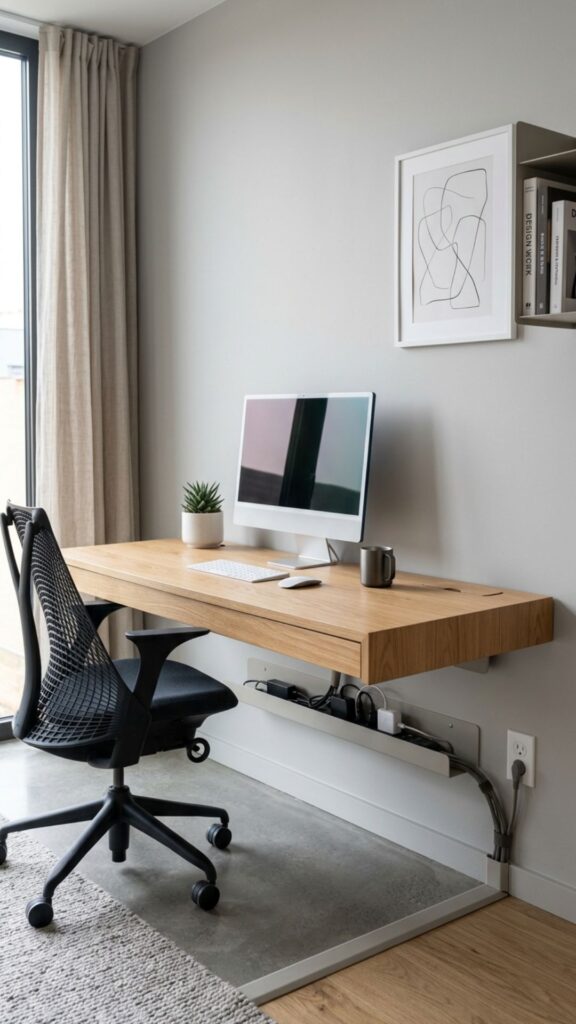
Nothing disrupts a peaceful minimalist office faster than tangled cables.
Use cable trays beneath the desk, clips along furniture edges, wireless accessories, or simple cable boxes to keep technology organized.
Whenever possible, position power strips somewhere discreet.
Thoughtful cable management may seem like a small detail, but it can dramatically improve the clean, intentional character of a Japandi workspace.
19. Embrace Imperfect Natural Textures
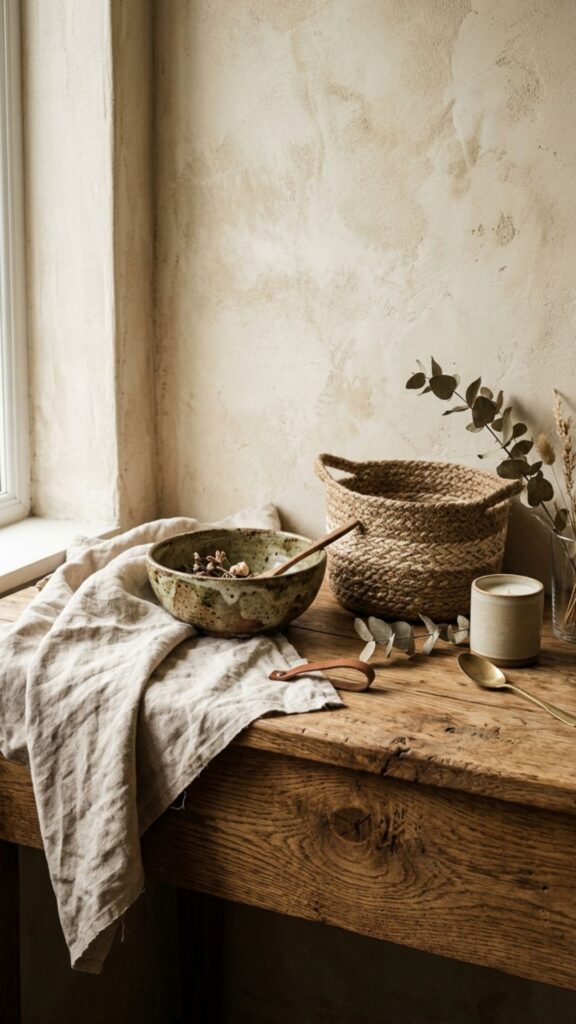
One of the most appealing aspects of Japandi style is its appreciation for natural imperfection.
Look for wood with visible grain, slightly irregular pottery, textured plaster walls, woven fibers, handmade paper, and linen with gentle creases.
These elements prevent minimalism from feeling flat or clinical.
Instead of aiming for flawless uniformity, allow natural materials to give the room depth and character.
20. Leave Some Space Empty
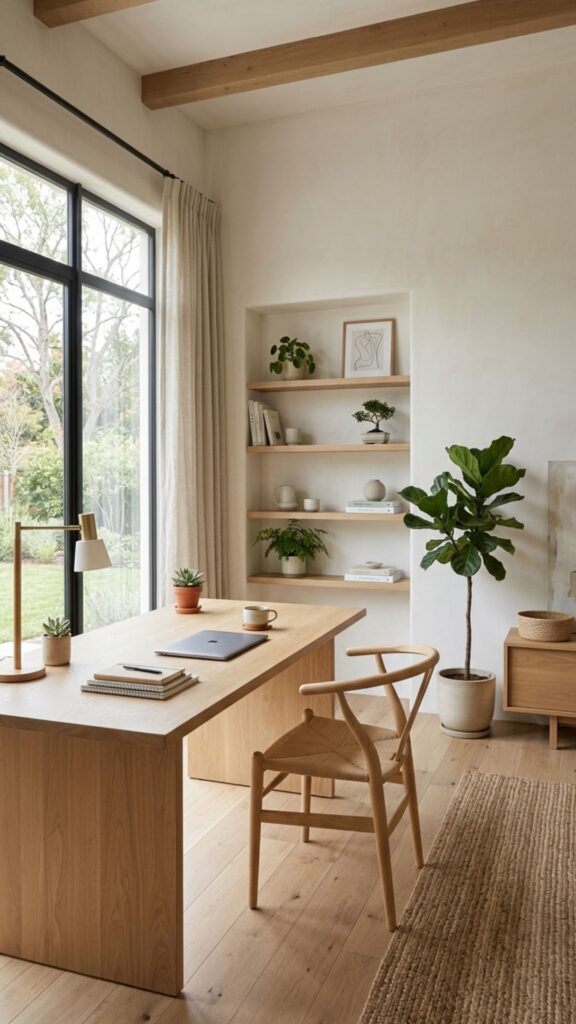
Perhaps the most important Japandi decorating idea is knowing when to stop.
Not every wall needs artwork. Not every shelf needs accessories. Not every corner requires furniture.
Intentional empty space creates visual breathing room and helps the pieces you have chosen feel more meaningful.
Once your office contains everything you genuinely need, resist the temptation to continue decorating simply because space remains.
In Japandi design, emptiness is part of the composition.
Conclusion
Creating a Japandi home office is less about following strict decorating rules and more about finding the right balance between simplicity and comfort.
Start with practical essentials, introduce natural wood and soft neutral colors, then layer in warmth through linen, ceramics, woven textures, plants, and thoughtful lighting. At the same time, keep clutter under control and allow plenty of open space.
The result should not feel like a perfectly staged showroom. It should feel calm, functional, and personal—a workspace where everything has a purpose and nothing fights for your attention.
Whether you completely redesign your office or simply clear your desk, add a wooden shelf, and introduce a little greenery, small changes can bring the soothing Japandi atmosphere into your everyday work routine.
What colors work best in a Japandi home office?
Warm white, beige, taupe, gray, brown, cream, and muted earthy shades work especially well.
Can Japandi style work in a small home office?
Yes. Its emphasis on minimal furniture, smart storage, and uncluttered surfaces makes Japandi ideal for small spaces.
What type of wood is best for Japandi furniture?
Oak, ash, walnut, bamboo, and other natural wood finishes can all complement the Japandi aesthetic.
How can I make a minimalist office feel warmer?
Add natural wood, linen fabrics, woven textures, warm lighting, ceramics, and a small amount of greenery.
Is Japandi home office decor expensive?
Not necessarily. You can achieve the look affordably by decluttering, using neutral colors, choosing a few natural accessories, and repurposing simple wooden furniture.