Indian weddings are rarely just one celebration. There is the haldi where everyone is trying to protect their outfit from turmeric, a mehendi filled with colour and dancing, a glamorous sangeet, the main wedding ceremony, and often a reception where the dress code becomes noticeably more polished. For a wedding guest, that means one outfit cannot realistically do everything.
The good news is that dressing well for an Indian wedding does not require wearing the heaviest lehenga in the room. In fact, some of the most memorable wedding guest looks are the ones that feel effortless: a beautifully draped saree, an interesting blouse, an elegant sharara, or a simple kurta set elevated with great jewellery.

The key is to dress for the function, time of day, venue, and your own comfort. Below are 20 Indian wedding guest outfit ideas covering everything from intimate pre-wedding festivities to grand reception nights, along with practical styling ideas for making every look feel complete.
1. Yellow Organza Saree for the Haldi Ceremony

A yellow saree may be an obvious choice for haldi, but that does not make it boring. Instead of a heavily embroidered version, try a lightweight organza saree in mustard, marigold, lemon, or sunflower yellow. The translucent texture gives the outfit a festive softness without making it feel overly formal.
I particularly like organza for daytime celebrations because it photographs beautifully in natural light while still being relatively easy to style. A floral or printed blouse can also prevent an all-yellow outfit from looking too predictable.
Styling guide:
- Pair it with a sleeveless floral, mirror-work, or contrasting blouse.
- Choose floral jewellery or small jhumkas instead of heavy sets.
- Wear comfortable juttis or embroidered flats.
- Keep your makeup fresh with peachy cheeks and a soft lip.
- A loose braid or low bun works beautifully for an outdoor haldi.
2. Floral Anarkali for a Daytime Mehendi
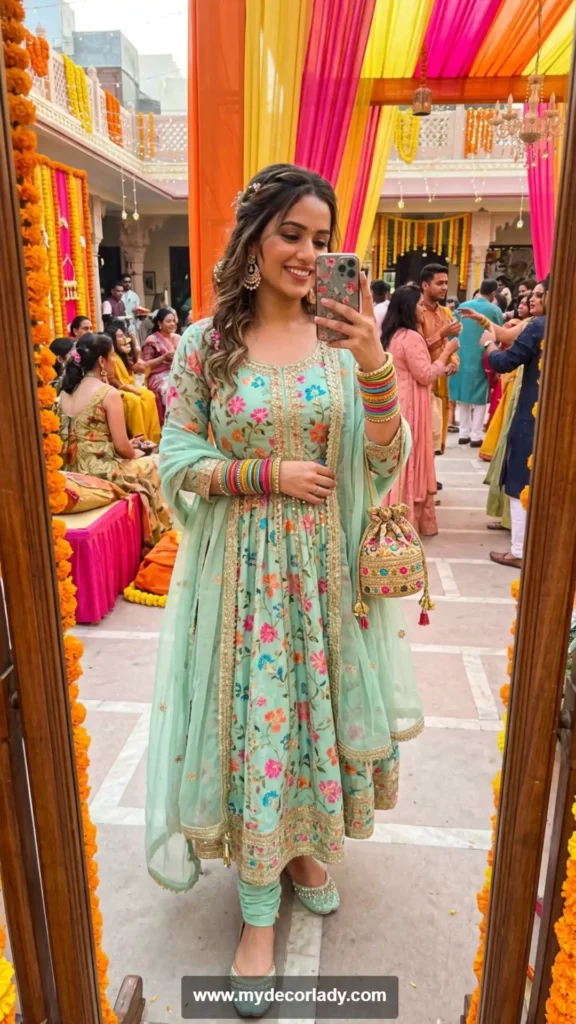
Mehendi celebrations give guests permission to have more fun with prints and colours. A floral Anarkali in mint green, coral, lavender, peach, or pink feels cheerful without competing with the bride’s usually more elaborate mehendi outfit.
Look for breathable fabrics and a silhouette that gives you enough movement. You may spend several hours sitting, taking photographs and dancing, so this is one function where comfort should genuinely influence your choice.
Styling guide:
- Pick block prints, delicate florals or botanical motifs.
- Add colourful bangles instead of one large statement cuff.
- Choose chandbalis or lightweight earrings.
- Carry a small potli bag for your essentials.
- Finish with wedges or embellished flats if the event is outdoors.
3. Mirror-Work Sharara Set for Mehendi

If you want something more contemporary than an Anarkali, a sharara set is a great alternative. The wide-legged silhouette has plenty of movement, while small mirror embellishments catch the light and instantly make the outfit wedding-ready.
A short kurti with a high-waisted sharara also creates a flattering proportion without requiring complicated draping. I would keep the embellishment concentrated around the neckline or hem rather than choosing mirror work from head to toe.
Styling guide:
- Try lime, fuchsia, turquoise, orange or emerald green.
- Wear statement earrings and skip the necklace.
- Add a lightweight dupatta if the kurti is heavily embellished.
- Try a braided ponytail or soft waves.
- Choose block heels if you plan to dance.
4. Bandhani Lehenga for a Traditional Pre-Wedding Function

Bandhani brings colour, craftsmanship and unmistakably Indian character to a wedding guest outfit. A Bandhani lehenga works especially well for mehendi, mata ki chowki, garba or other traditional family celebrations.
Instead of styling it exactly like a bridal lehenga, keep the blouse simpler and let the textile become the hero. Red and pink are classics, but green, mustard, purple and multi-coloured Bandhani can feel much fresher on a guest.
Styling guide:
- Contrast the Bandhani skirt with a solid-coloured blouse.
- Add oxidised silver or traditional gold-toned jewellery.
- Try a simple half-up hairstyle.
- Carry a small embroidered potli.
- Avoid excessively heavy bridal-style jewellery.
5. Pastel Chikankari Kurta Set for an Intimate Function

Not every wedding event requires sequins. For an intimate roka, morning ceremony or relaxed family gathering, a beautifully made Chikankari kurta set can look far more sophisticated than an unnecessarily heavy ensemble.
Ivory, blush pink, powder blue, sage and pale yellow are particularly elegant choices. The secret is in the finishing: a good fit, delicate jewellery and an interesting dupatta can transform a relatively simple kurta into a polished wedding look.
Styling guide:
- Choose pearl, kundan or polki-inspired earrings.
- Add an organza or embellished dupatta for extra formality.
- Keep footwear traditional with neutral juttis.
- Opt for luminous rather than dramatic makeup.
- Add fresh flowers to a bun for a romantic finish.
6. Colourful Co-Ord Set for a Poolside Mehendi

Modern destination weddings often include relaxed poolside mehendi parties where a traditional floor-length outfit can feel cumbersome. This is where an Indo-western co-ord set becomes particularly useful.
Try a cropped blouse with high-waisted palazzo pants and a lightweight cape or jacket. It still feels celebratory, but you can walk, sit and dance comfortably without constantly managing a dupatta.
Styling guide:
- Experiment with tropical prints or jewel-toned colour blocking.
- Wear oversized earrings for instant impact.
- Skip heavy neck jewellery.
- Choose platform sandals or flats.
- Keep hair in a ponytail or loose waves for a relaxed finish.
7. Embroidered Cape and Palazzo Set for the Cocktail Party
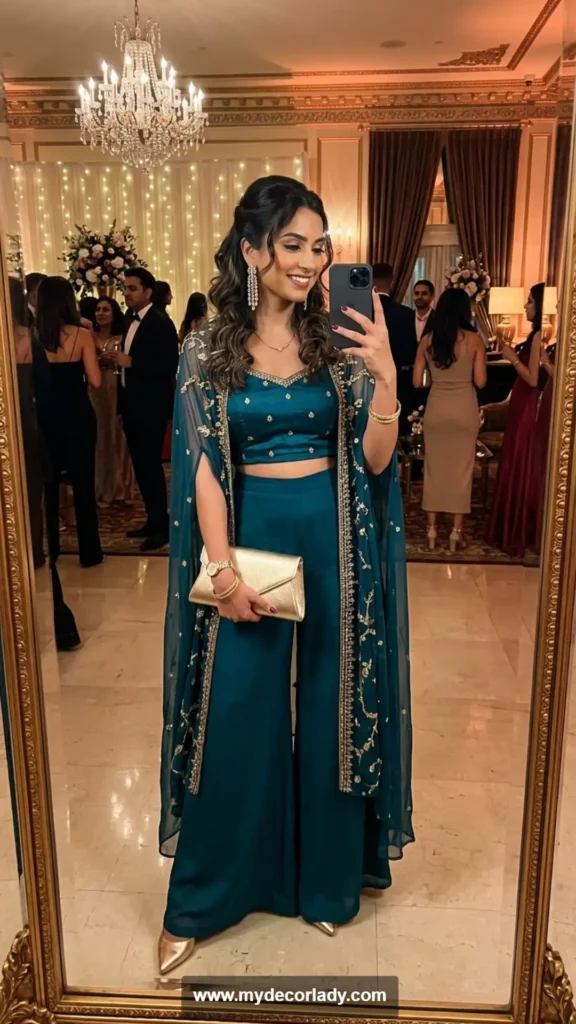
A cocktail function calls for something sleeker than traditional daytime attire. An embroidered cape worn over a fitted blouse and fluid palazzo pants gives you drama without relying on a gown.
The cape also creates movement in photographs, especially when embellished with sequins, beads or delicate metallic embroidery. Black, navy, wine, deep teal and champagne are strong evening choices.
Styling guide:
- Keep the blouse relatively fitted to balance the cape.
- Add long earrings or ear cuffs.
- Carry a structured metallic clutch.
- Try smoky eyes with otherwise restrained makeup.
- Choose heels that disappear beneath the palazzo hem.
8. Sequin Saree for the Cocktail Night
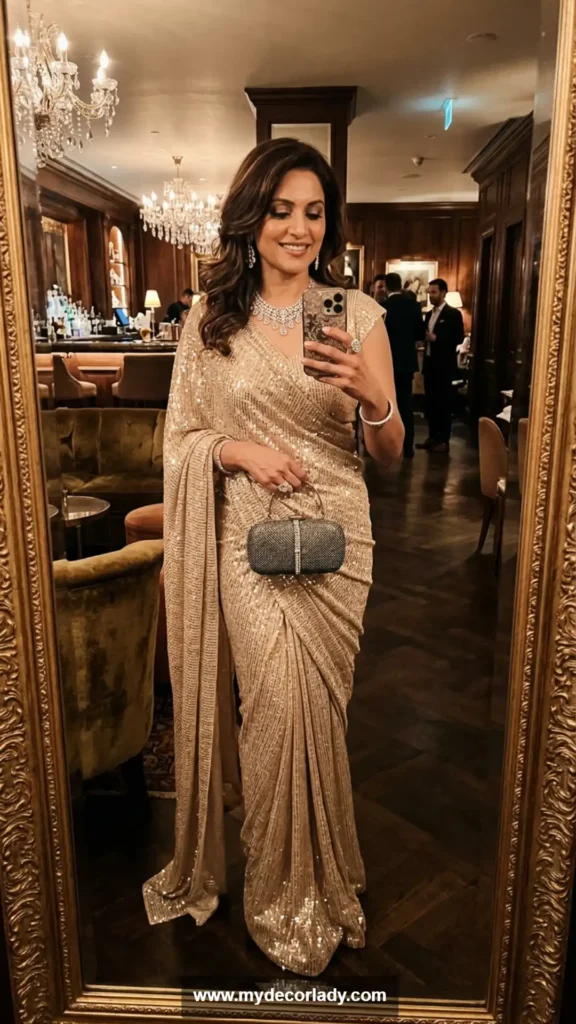
There is a reason the sequin saree keeps returning to Indian wedding wardrobes: under evening lighting, it simply works. It provides glamour without the bulk of a heavily embroidered lehenga and looks equally appropriate at a cocktail night or glamorous reception.
The important part is restraint. If the saree is covered in sequins, you really do not need an equally elaborate blouse, oversized necklace, dramatic earrings and glitter makeup all at once.
Styling guide:
- Choose champagne, gunmetal, emerald, navy or wine.
- Pair it with a clean, fitted blouse.
- Wear one statement piece of jewellery.
- Carry a small clutch rather than a large handbag.
- Style hair in sleek waves or a clean bun.
9. Pre-Draped Saree for the Sangeet

A pre-draped saree is one of the smartest options for guests who know they will spend half the sangeet on the dance floor. You get the elegance of a saree without repeatedly checking whether your pleats have survived the evening.
Modern versions often incorporate belts, ruffles, asymmetric pallus or structured blouses. I prefer versions that retain some traditional saree character rather than looking completely like evening gowns.
Styling guide:
- Choose stretch-friendly fabrics for easier movement.
- Add a statement blouse with an interesting neckline.
- Secure the pallu properly before dancing.
- Wear comfortable block heels.
- Try a sleek ponytail to complement the modern silhouette.
10. Jewel-Toned Lehenga for the Sangeet
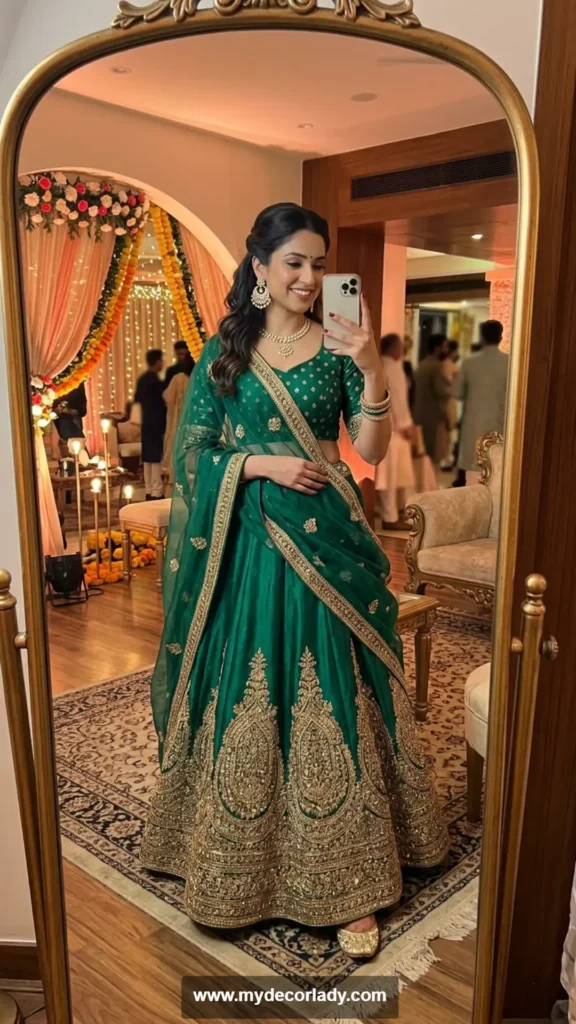
If there is one event where a wedding guest can embrace a little drama, it is the sangeet. Jewel tones such as emerald, sapphire blue, ruby, plum and deep teal look especially rich under stage and evening lighting.
Instead of copying heavily embellished bridal designs, choose a lehenga where either the skirt or blouse carries most of the detailing. This creates a luxurious appearance while maintaining the distinction between bridal and guest dressing.
Styling guide:
- Pair an embroidered skirt with a relatively simple blouse.
- Choose chandbalis or a choker, rather than piling on both.
- Add a lightweight dupatta that will not restrict dancing.
- Try soft curls or a textured ponytail.
- Finish with comfortable heels or embellished wedges.
11. Contemporary Lehenga With a Statement Blouse

A lehenga does not need dense embroidery to make an impression. A solid or lightly embellished skirt paired with an architectural, corset-inspired, halter, one-shoulder or draped blouse can create a much more contemporary wedding guest look.
This combination is especially useful if your wardrobe leans modern. You can often restyle the skirt or blouse separately for future occasions, which makes the outfit far more practical than a highly coordinated three-piece set.
Styling guide:
- Keep the skirt fluid if the blouse is highly structured.
- Add minimal jewellery around an interesting neckline.
- Consider skipping the dupatta for suitable modern functions.
- Carry a compact statement clutch.
- Choose clean, luminous makeup.
12. Banarasi Silk Saree for the Wedding Ceremony

Few outfits feel as timeless at an Indian wedding as a Banarasi silk saree. The fabric already has richness, so it does not need excessive styling to look special.
Deep green, royal blue, rust, magenta and mustard are excellent guest colours, while softer shades can work beautifully for daytime weddings. Personally, I think Banarasi sarees look best when styled confidently rather than overloaded with accessories.
Styling guide:
- Pair the saree with a contrasting or tonal blouse.
- Add traditional jhumkas, a choker or temple-inspired jewellery.
- Wear a neat bun decorated with flowers.
- Add a small bindi for a classic finish.
- Choose a potli or compact embroidered handbag.
13. Kanjeevaram Saree for a Traditional Wedding

For a South Indian wedding or a ceremony with a traditional dress code, a Kanjeevaram saree is an elegant choice that rarely feels out of place. Its structured silk and contrasting borders naturally create a regal appearance.
Rather than chasing trends, let the saree’s weave and colour combination lead the styling. A beautifully draped silk saree with thoughtful jewellery can look far more luxurious than an outfit covered in surface embellishment.
Styling guide:
- Choose traditional gold-toned or temple-style jewellery.
- Try a contrasting blouse to highlight the saree border.
- Wear jasmine or other fresh flowers around a bun.
- Add bangles that echo the saree colours.
- Keep the drape neat and structured.
14. Velvet Lehenga for a Winter Wedding

Winter weddings allow you to wear fabrics that would be uncomfortable during the rest of the year, and velvet is one of the best examples. It has depth and richness even before embroidery is added.
Burgundy, bottle green, midnight blue and deep plum look especially beautiful in velvet. Since the fabric itself is visually heavy, choose strategic embroidery rather than embellishing every inch.
Styling guide:
- Choose antique gold embroidery for a classic combination.
- Add a lightweight dupatta to balance the heavy fabric.
- Wear a choker or statement earrings.
- Try deeper lipstick shades for an evening ceremony.
- Avoid too many velvet layers if the venue is indoors.
15. Angrakha Anarkali for the Wedding Ceremony

An Angrakha-style Anarkali brings a slightly old-world quality to wedding dressing. The overlapping neckline and flowing skirt create graceful movement while remaining much easier to manage than a lehenga.
It is also an excellent option if you prefer more coverage without sacrificing elegance. Look for gota work, delicate embroidery or traditional prints rather than extremely heavy embellishment.
Styling guide:
- Choose longer earrings to complement the neckline.
- Drape the dupatta over one shoulder for a clean silhouette.
- Wear embroidered juttis or low heels.
- Add bangles for a more traditional finish.
- Style hair in soft curls or a low bun.
16. Ivory Lehenga With Colourful Accessories
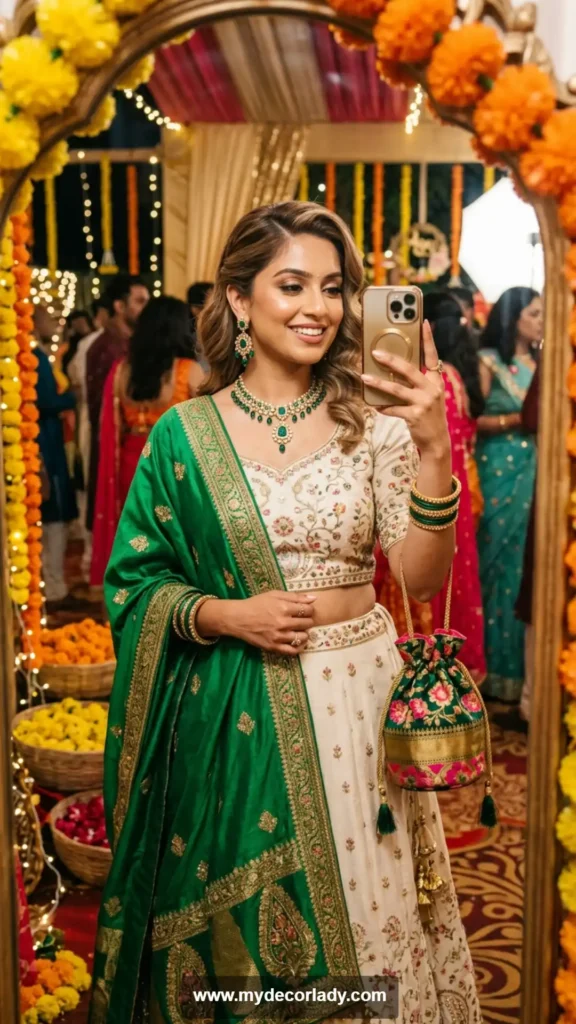
Ivory can look incredibly sophisticated at an Indian wedding when the event’s customs and dress expectations make the colour appropriate. The neutral base also gives you freedom to introduce personality through accessories.
An ivory lehenga with multicoloured embroidery, a bright dupatta or emerald jewellery feels particularly fresh. The idea is to avoid an overly bridal monochromatic treatment and create clear visual contrast.
Styling guide:
- Introduce colour through a pink, green or orange dupatta.
- Try emerald or multicoloured jewellery.
- Add a bright potli bag.
- Keep makeup warm rather than completely neutral.
- Check the couple’s dress guidance if you are unsure about pale colours.
17. Ruffle Saree for the Reception

A ruffle saree sits comfortably between traditional Indian dressing and contemporary eveningwear, making it particularly suitable for receptions. It has enough drama for photographs while usually feeling lighter than embroidered silk.
Because ruffles already create volume, keep the rest of the outfit relatively streamlined. A fitted blouse and carefully chosen jewellery will prevent the look from becoming visually crowded.
Styling guide:
- Try wine, navy, black, metallic grey or muted rose.
- Pair with a structured or sleeveless blouse.
- Add a slim waist belt if the drape suits one.
- Wear statement earrings rather than layered jewellery.
- Finish with polished waves or a sleek ponytail.
18. Indo-Western Gown for the Reception
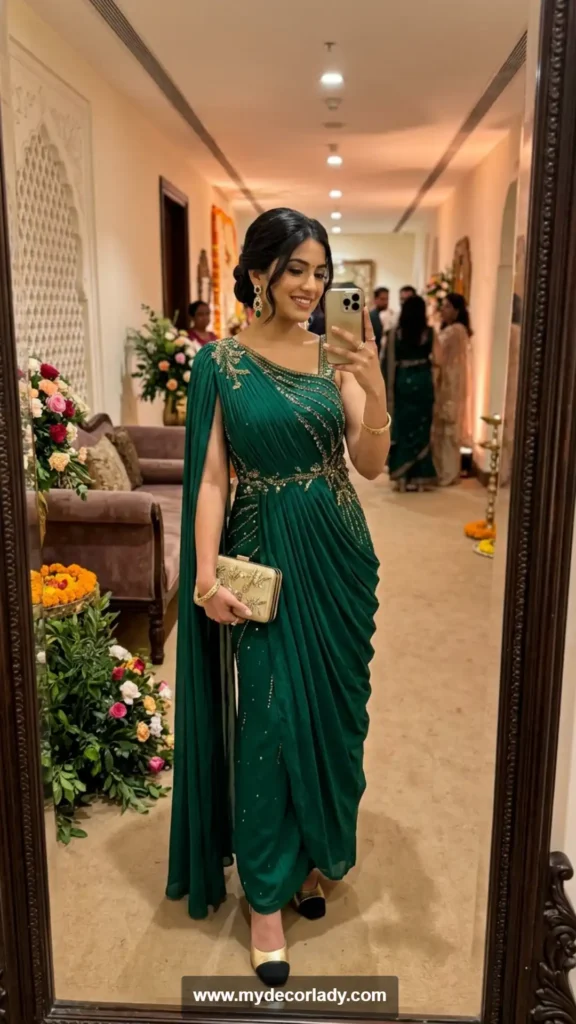
If sarees and lehengas are not your thing, an Indo-western gown offers an elegant alternative. Look for Indian elements such as zari, draping, embroidery, beadwork or a cape so the outfit still feels connected to the occasion.
This is one of my favourite choices for formal hotel receptions because it combines the ease of a one-piece outfit with the visual impact expected at a wedding celebration.
Styling guide:
- Choose emerald, navy, burgundy, champagne or dusty rose.
- Wear delicate drop earrings or a single statement piece.
- Carry a metallic box clutch.
- Add heels according to the gown length.
- Keep your hairstyle polished and evening-appropriate.
19. Classic Black Saree for a Glamorous Reception
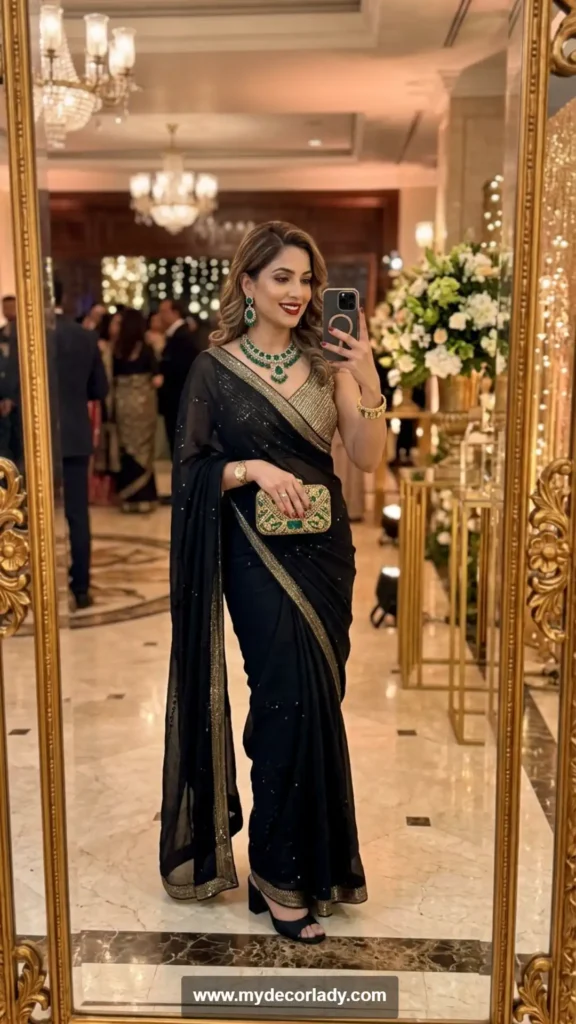
Where culturally appropriate and welcomed by the hosts, a black saree can be one of the most striking reception outfits. Instead of treating black as plain, use texture to make it interesting: sequins, satin borders, delicate embroidery or sheer detailing all work beautifully.
Black also provides the perfect backdrop for emeralds, diamonds, pearls or colourful statement jewellery. The overall result can feel glamorous without requiring an extremely ornate outfit.
Styling guide:
- Pair it with a metallic, embroidered or tonal blouse.
- Add emerald or crystal-style statement jewellery.
- Try winged liner or a bold lip.
- Carry a metallic or embellished clutch.
- Keep the saree drape sharp and elegant.
20. Handloom Saree With a Modern Blouse
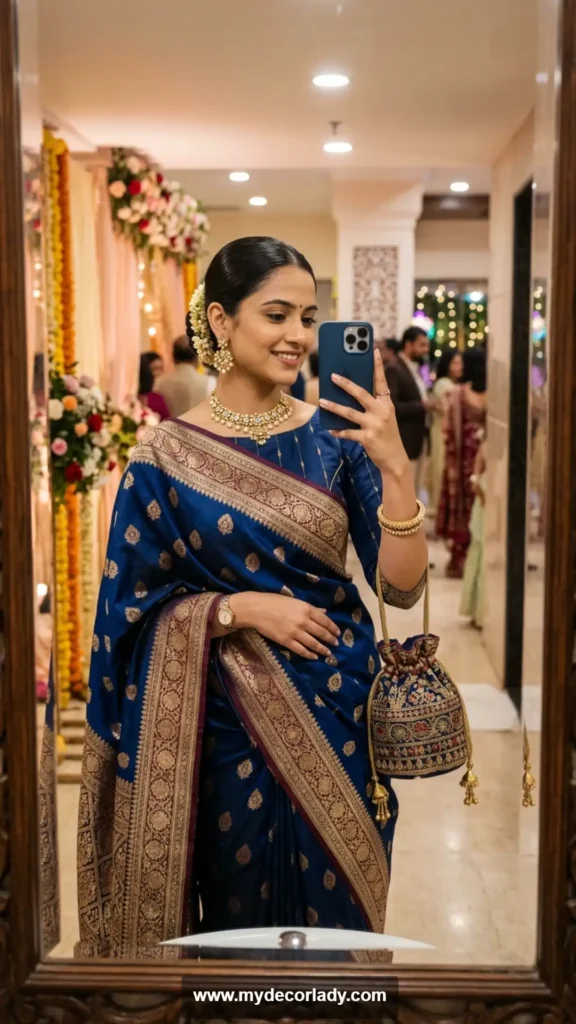
For guests who prefer understated fashion, a handloom saree paired with an unexpected blouse can be one of the most distinctive outfits at the wedding. Linen-silk, Chanderi, Maheshwari, Jamdani and other woven textiles offer character without needing excessive embellishment.
What makes this combination particularly appealing is its longevity. Long after trend-driven wedding outfits start looking dated, a good handloom saree can remain part of your wardrobe. Change the blouse, jewellery and draping style, and the same saree can create an entirely different look.
Styling guide:
- Experiment with halter, boat-neck or structured blouses.
- Add handcrafted silver, gold-toned or contemporary jewellery.
- Try a sleek bun for a sophisticated look.
- Carry a handcrafted clutch or potli.
- Let the textile remain visible instead of covering it with too many accessories.
Conclusion
The best Indian wedding guest outfit is not necessarily the most expensive, heavily embroidered or trend-driven one. It is the outfit that feels appropriate for the occasion while allowing you to actually enjoy it. A stunning lehenga becomes considerably less appealing when you cannot dance in it, and an elaborate saree loses its charm if you spend the entire evening adjusting the drape.
Think of your wedding wardrobe as a progression. Keep haldi and daytime functions light and colourful, experiment with playful silhouettes for the mehendi, introduce sparkle and richer colours for the sangeet and cocktail night, embrace traditional textiles for the wedding ceremony, and save your sleekest, most glamorous look for the reception.
Most importantly, do not underestimate styling. The same saree can look traditional with a classic blouse and jhumkas, contemporary with a corset-style blouse and belt, or minimalist with barely-there jewellery. Instead of buying the heaviest outfit you can find, focus on fit, fabric, accessories, footwear and thoughtful styling. That is usually what turns a good wedding guest outfit into one people actually remember.