Working from home sounds comfortable—until you realize you have been squinting at your screen for three hours under a single ceiling light.

Good home office lighting does more than make a room look attractive. It can help reduce eye strain, improve concentration, make video calls look more professional, and create a workspace that feels energizing rather than dull. The best setup usually combines natural light with several artificial light sources, allowing you to adjust the atmosphere as your workday changes.

Whether your office occupies an entire room, a bedroom corner, or a compact desk beside the sofa, these 20 home office lighting ideas can help you create a brighter, more comfortable place to work.
1. Position Your Desk Near a Window
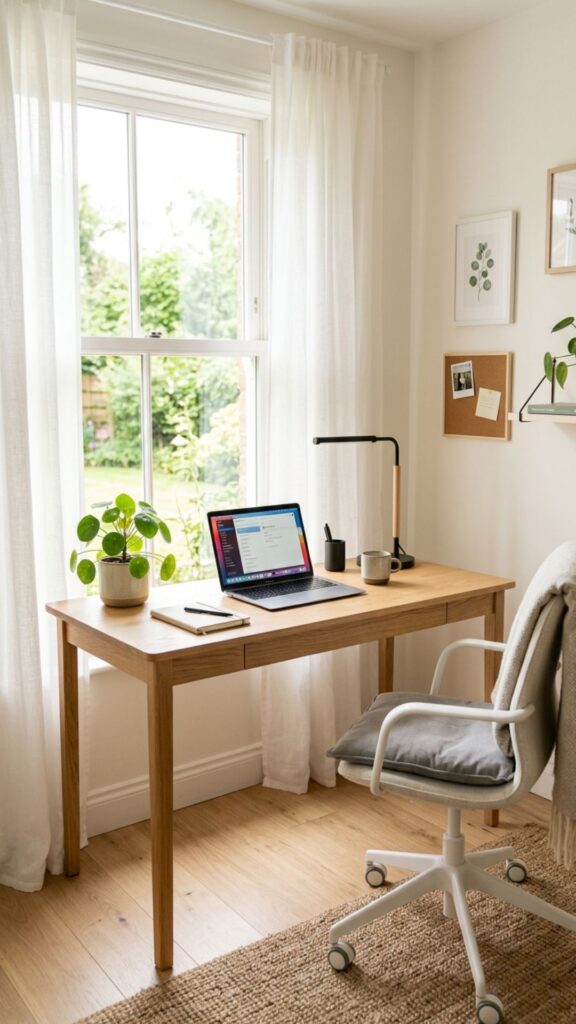
Natural daylight is one of the easiest ways to brighten a home office. Positioning your desk close to a window can make the space feel open, fresh, and more inviting.
Instead of sitting directly in front of or behind the window, try placing your desk perpendicular to it. This arrangement allows daylight to reach your workspace while helping reduce glare on your computer screen.
Sheer curtains can also soften strong afternoon sunlight without making the room feel dark.
2. Add an Adjustable Desk Lamp
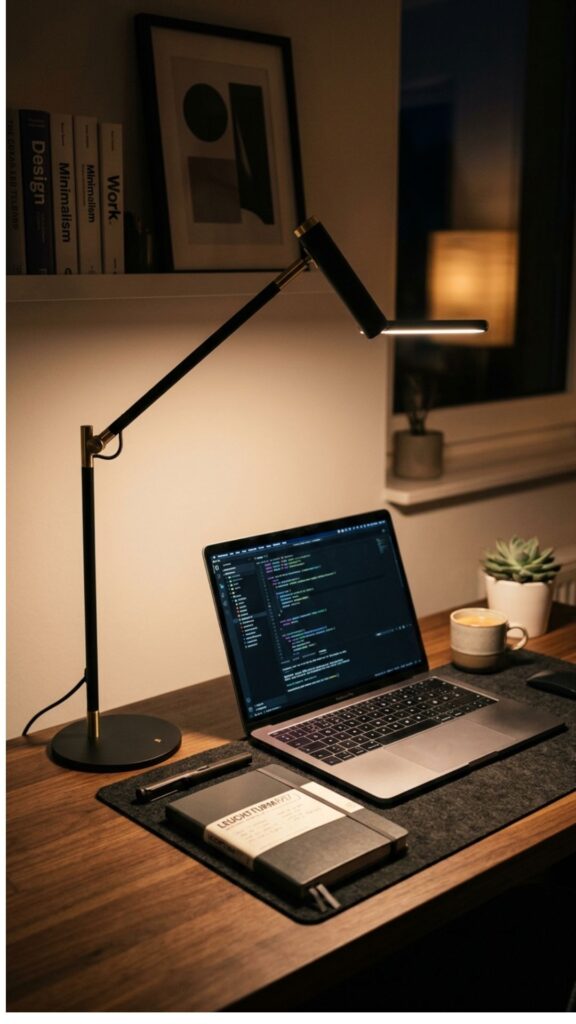
A desk lamp is one of the most practical additions to any home office.
Choose a lamp with an adjustable arm or rotating head so you can direct light exactly where you need it. Focused lighting is especially helpful when reading paperwork, sketching, writing notes, or working on detailed projects.
A slim lamp can work particularly well on smaller desks because it provides useful illumination without occupying too much surface space.
3. Layer Different Types of Lighting
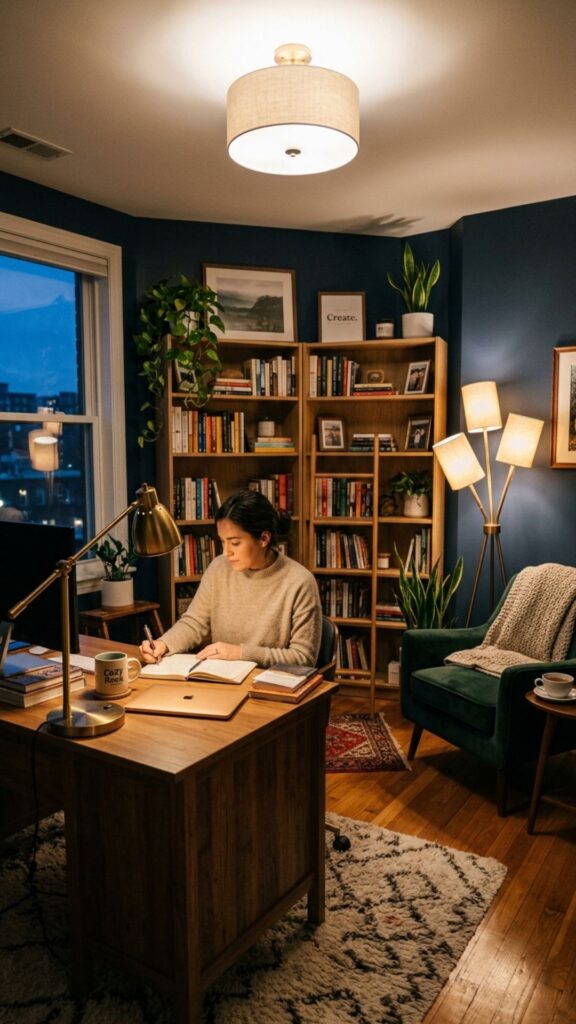
Relying on one ceiling fixture often creates uneven lighting.
Instead, use a layered approach that combines:
- Ambient lighting for general brightness
- Task lighting for focused work
- Accent lighting for atmosphere
For example, you might pair a ceiling fixture with a desk lamp and a small floor lamp. The result feels warmer, more balanced, and far more flexible throughout the day.
4. Choose a Statement Pendant Light
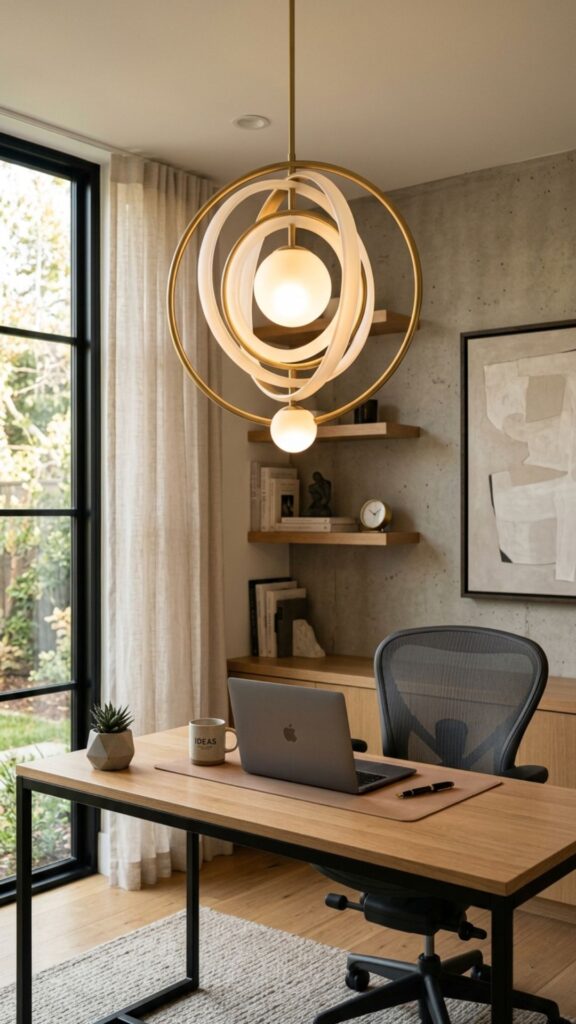
Lighting can be practical and decorative at the same time.
A pendant light positioned above the center of your office can become an attractive focal point while providing general illumination. Sculptural, glass, woven, metal, and minimalist pendant designs can all add personality.
Just make sure the fixture hangs high enough that it does not interfere with movement or create distracting shadows over your desk.
5. Install Wall Sconces to Save Desk Space
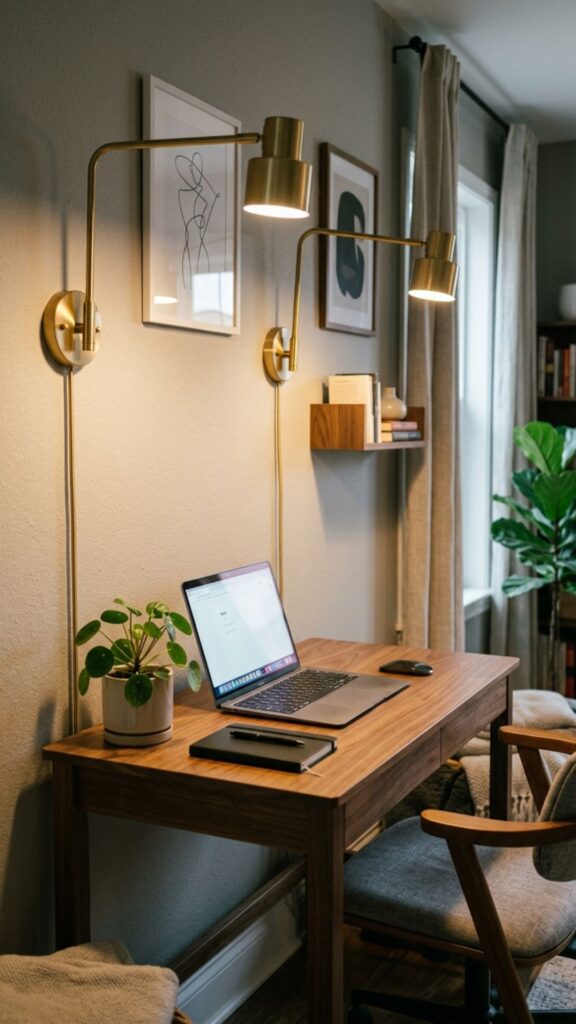
When your desk is small, every inch matters.
Wall sconces provide useful lighting without taking up valuable desktop space. Adjustable sconces installed beside or above the desk can function much like traditional task lamps.
They are particularly effective in compact offices, built-in workstations, and narrow desk niches.
6. Use LED Light Strips Under Shelves
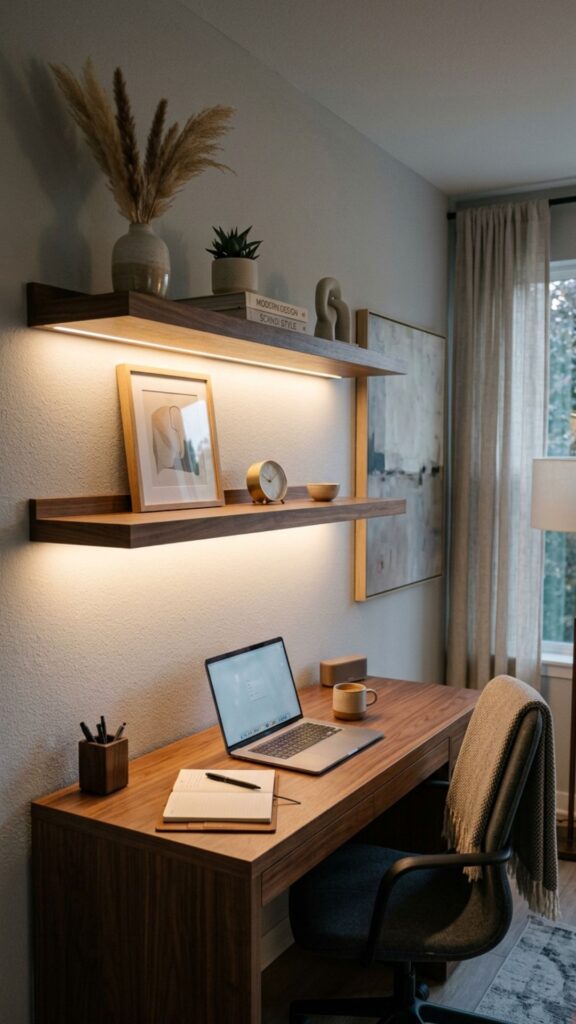
Under-shelf LED lighting can instantly brighten dark areas above a desk.
Install strips beneath floating shelves or cabinets to provide soft illumination across your work surface. Because the light source is mostly hidden, the result feels clean and modern.
LED strips can also work well behind monitors or furniture if you want subtle background lighting rather than direct task illumination.
7. Brighten Dark Corners With a Floor Lamp
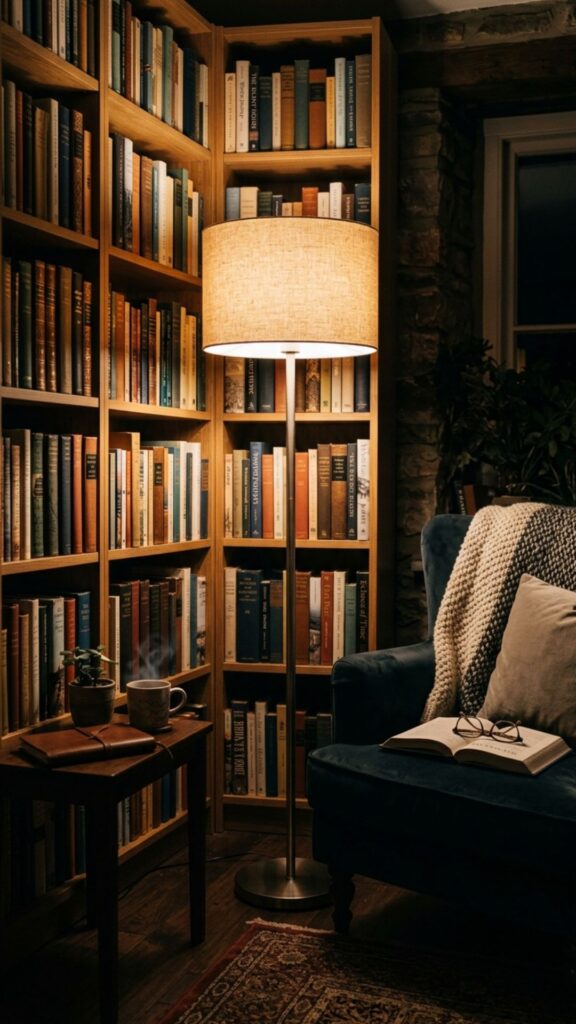
Home offices often contain corners that overhead lighting fails to reach.
A floor lamp can brighten these areas while giving the room a more comfortable, finished appearance. Place one beside a reading chair, bookshelf, storage cabinet, or unused corner.
A lamp with an adjustable head gives you even more control over where the light falls.
8. Consider a Swing-Arm Lamp
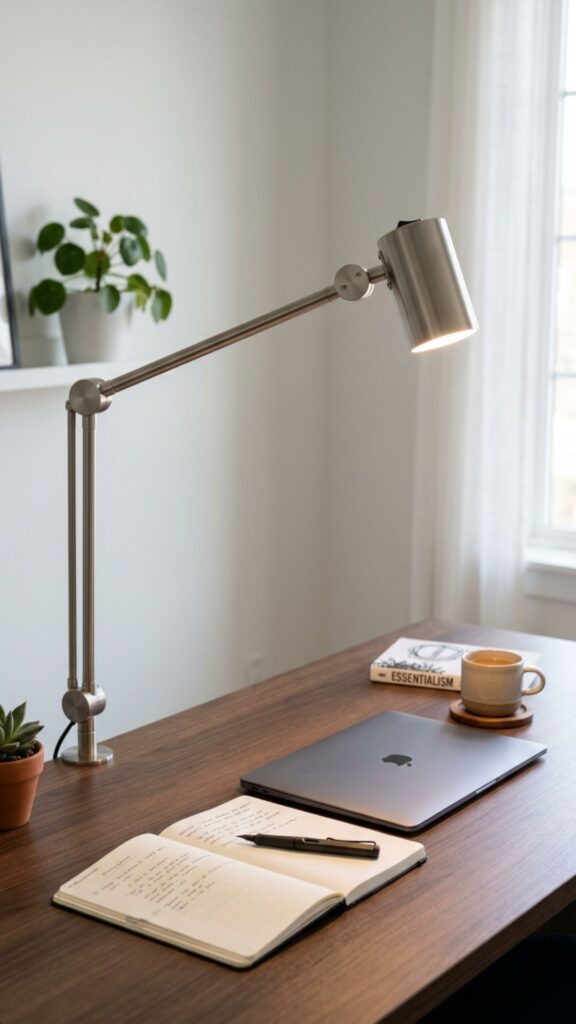
Swing-arm lamps are ideal when you frequently switch between different tasks.
You can pull the lamp closer when reading small print and move it away when you need a wider workspace. Wall-mounted versions are particularly useful when you want maximum flexibility without cluttering your desk.
Their practical design also works beautifully in industrial, traditional, and contemporary offices.
9. Use Warm Lighting for a Cozy Office
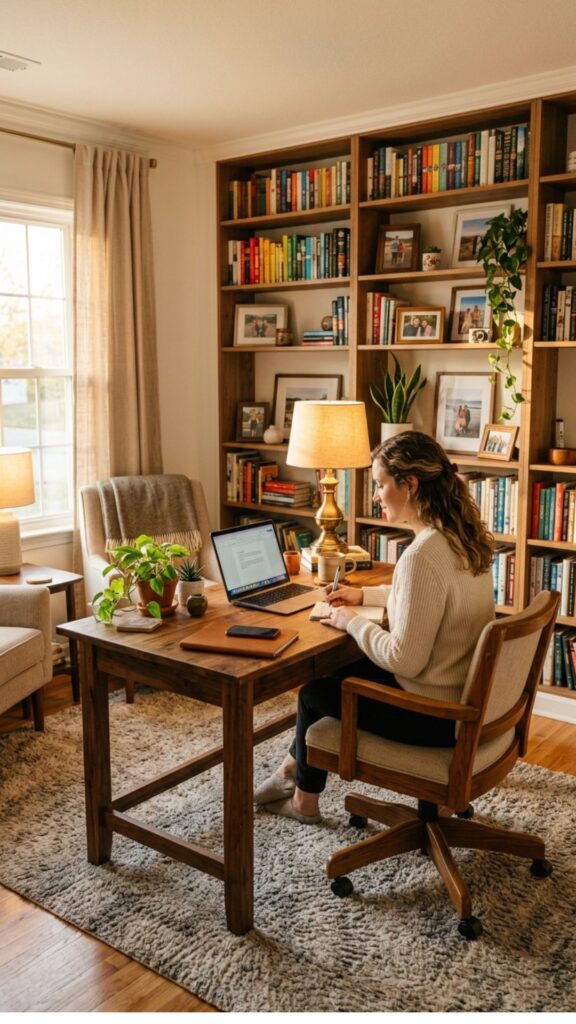
Not every home office needs to look bright white and ultra-modern.
Warm lighting can make your workspace feel relaxing and welcoming, especially if your office contains wood furniture, beige walls, textured fabrics, or earthy colors.
It can be particularly pleasant during early mornings and evening work sessions when intense lighting may feel uncomfortable.
10. Try Cooler Light for Detail-Focused Tasks
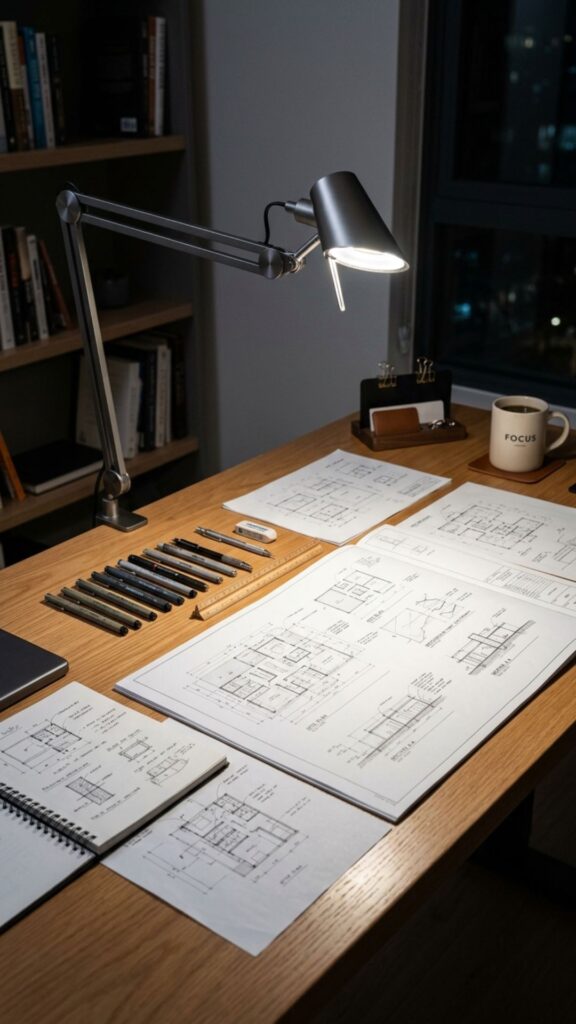
Cooler, crisp lighting can help create a more energetic work environment.
It is especially useful for tasks requiring concentration, such as drawing, designing, proofreading, crafting, or examining fine details.
Rather than using cool lighting everywhere, consider incorporating it into your task lamp while keeping the room’s general lighting slightly warmer for balance.
11. Add Dimmable Lighting
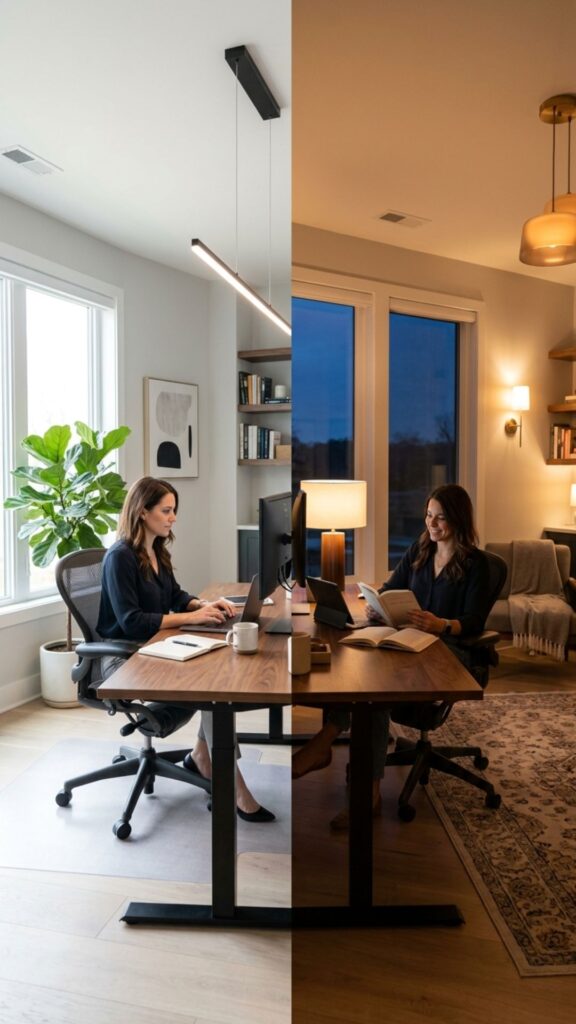
Your ideal lighting at 9 a.m. may feel completely different at 7 p.m.
Dimmable fixtures allow you to adjust brightness according to the time of day, available sunlight, and type of work you are doing.
Bright illumination may help during focused daytime tasks, while softer lighting can make late-afternoon administrative work or reading feel more comfortable.
12. Use Smart Bulbs for Greater Flexibility
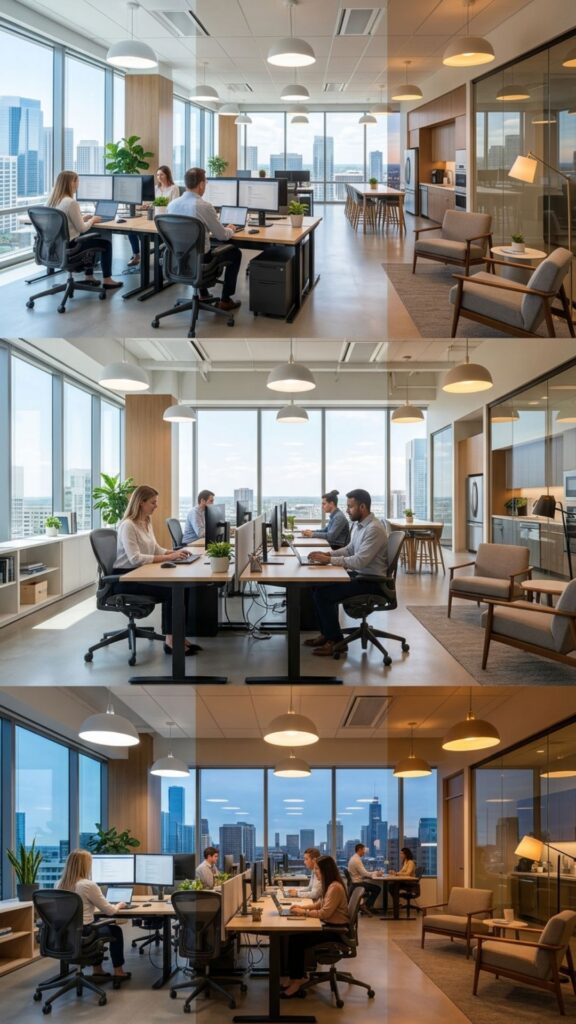
Smart bulbs make it easy to customize your workspace without replacing entire fixtures.
Depending on the bulb, you may be able to adjust brightness, color temperature, schedules, and lighting scenes from an app or smart-home system.
You could create a bright setting for focused work, a softer setting for video meetings, and a warmer setting for the end of the day.
13. Light Your Bookshelves
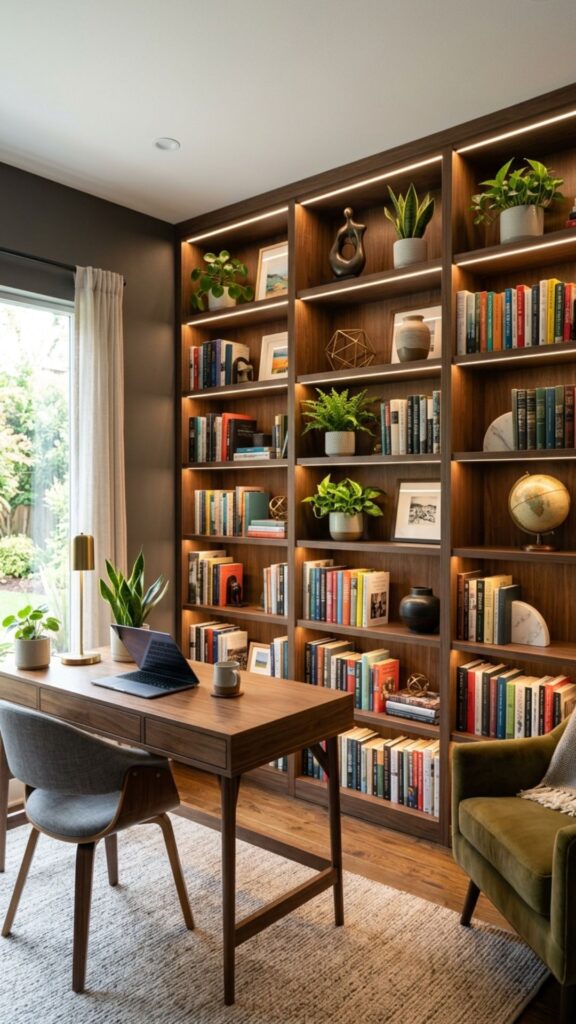
Bookshelves can become surprisingly dark, particularly when they are positioned far from windows.
Small shelf lights, picture lights, or discreet LED strips can highlight books, artwork, plants, and decorative objects.
This adds depth to the room while preventing the office from feeling like one brightly illuminated desk surrounded by shadows.
14. Improve Your Video Call Lighting
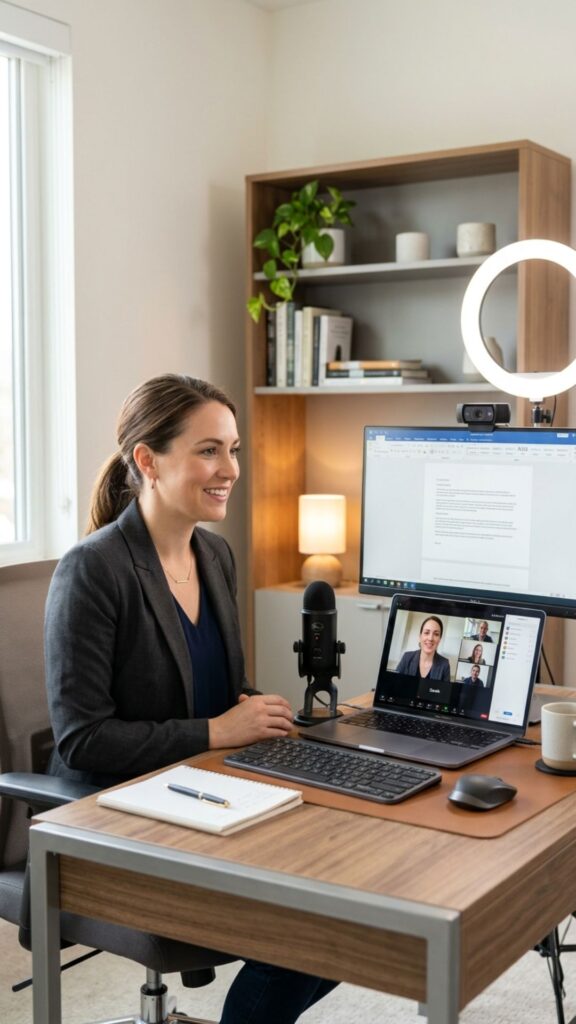
Your everyday desk lighting may not always be flattering on camera.
For clearer video calls, position a soft light in front of you rather than relying entirely on a ceiling fixture. Light coming from above can create strong facial shadows, while a light behind you can leave your face looking dark.
Natural window light can work beautifully when you face toward the window instead of sitting with it directly behind you.
15. Add a Small Lamp for Soft Background Light
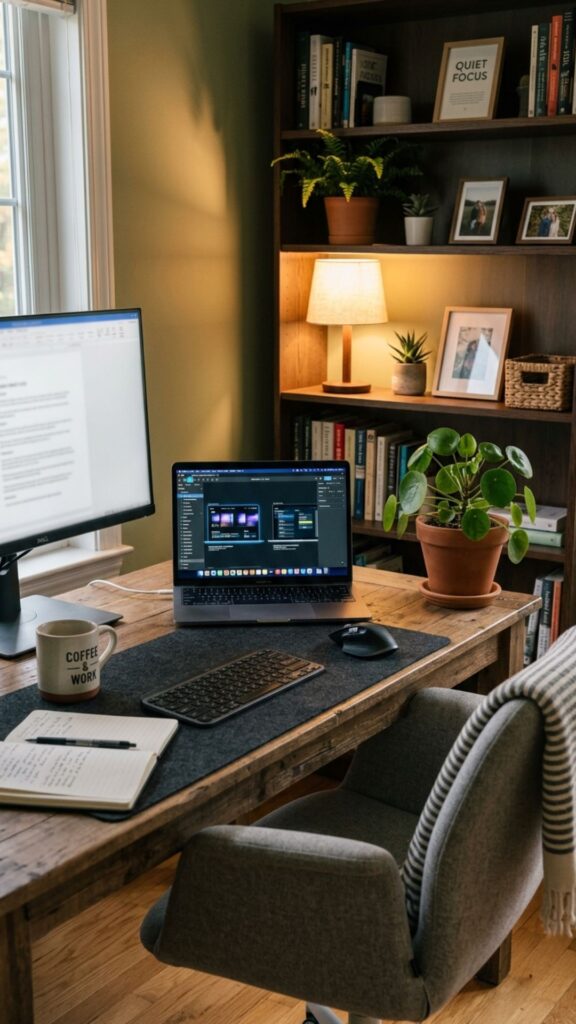
A small table lamp can make a home office feel much more inviting.
Place one on a bookshelf, side cabinet, console, or filing unit. It does not need to illuminate your entire workspace—the purpose is to create a gentle secondary glow.
This simple layer of light can make the office look especially appealing during cloudy days or evening work.
16. Use Lighting to Highlight Artwork
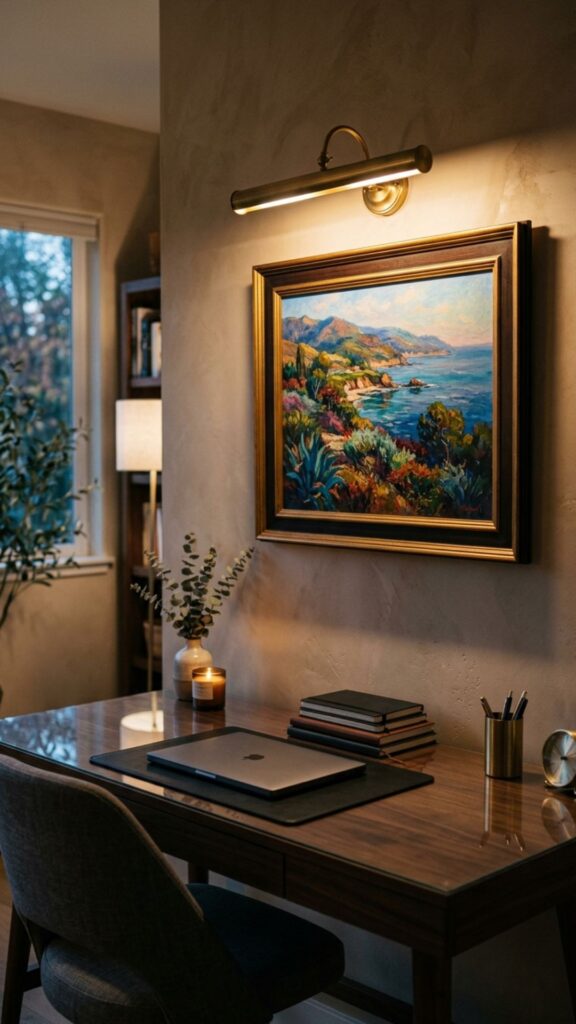
Your office should feel inspiring, not purely functional.
A picture light or adjustable spotlight can highlight artwork, photographs, certificates, or a decorative wall behind your desk.
This technique creates visual interest while helping your workspace feel more thoughtfully designed.
It can also improve the appearance of your background during online meetings.
17. Choose a Flush-Mount Fixture for Low Ceilings
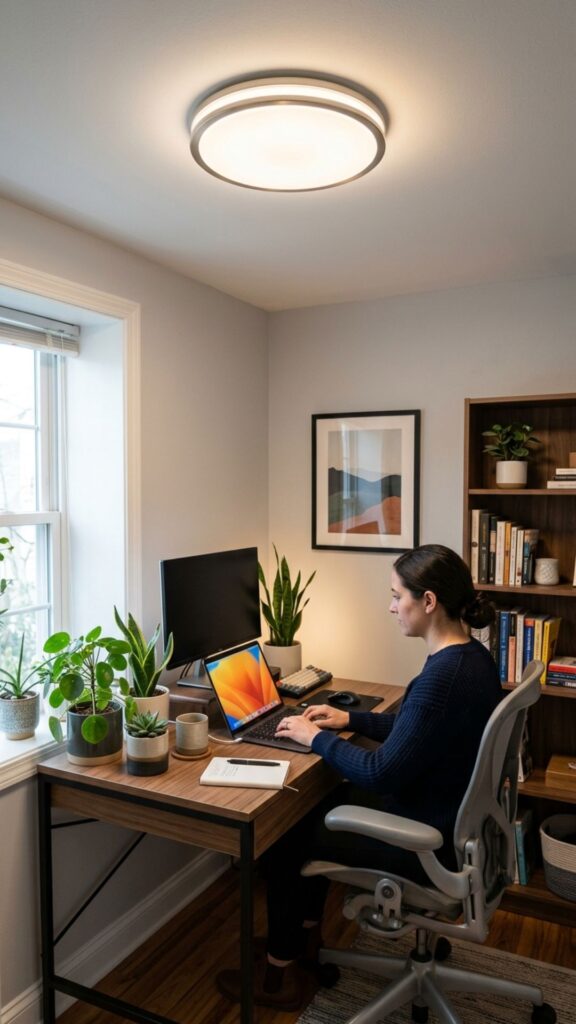
Pendant lights are not always practical in rooms with low ceilings.
A flush-mount or semi-flush ceiling fixture can provide excellent general illumination without making the room feel crowded. Look for designs that spread light widely instead of concentrating it in one small area.
This solution works especially well in converted bedrooms, basement offices, and compact apartments.
18. Reduce Screen Glare With Indirect Lighting
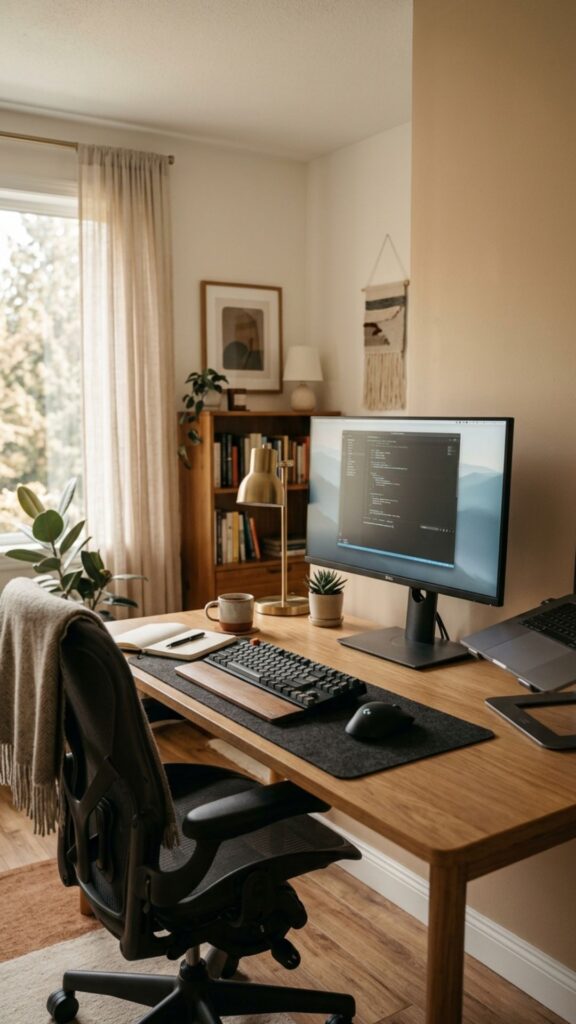
More light does not automatically mean better lighting.
If a lamp or window reflects directly on your screen, it can make computer work uncomfortable. Try placing lights slightly to the side of your monitor or directing illumination toward a wall or ceiling for a softer effect.
Repositioning your monitor can sometimes solve glare problems without requiring any additional lighting at all.
19. Combine Lighting With Reflective Surfaces
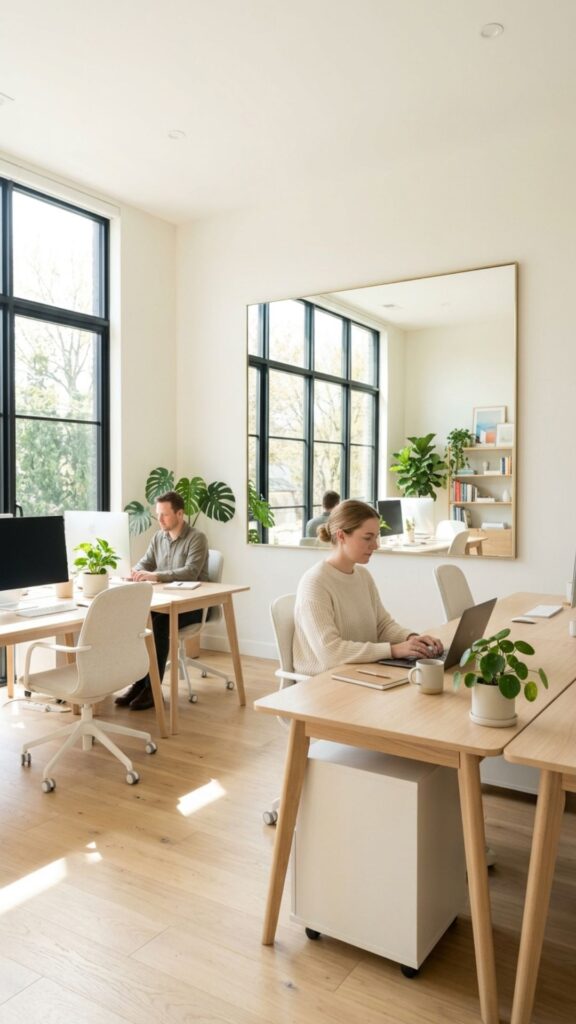
You can make existing light work harder by choosing surfaces that help distribute it.
Light-colored walls, mirrors, glass accessories, and pale furniture can reflect illumination around the room, making a small or dark office feel brighter.
You do not need to create an all-white workspace. Even a strategically positioned mirror or light-colored desktop can improve the sense of brightness.
20. Create Different Lighting Zones
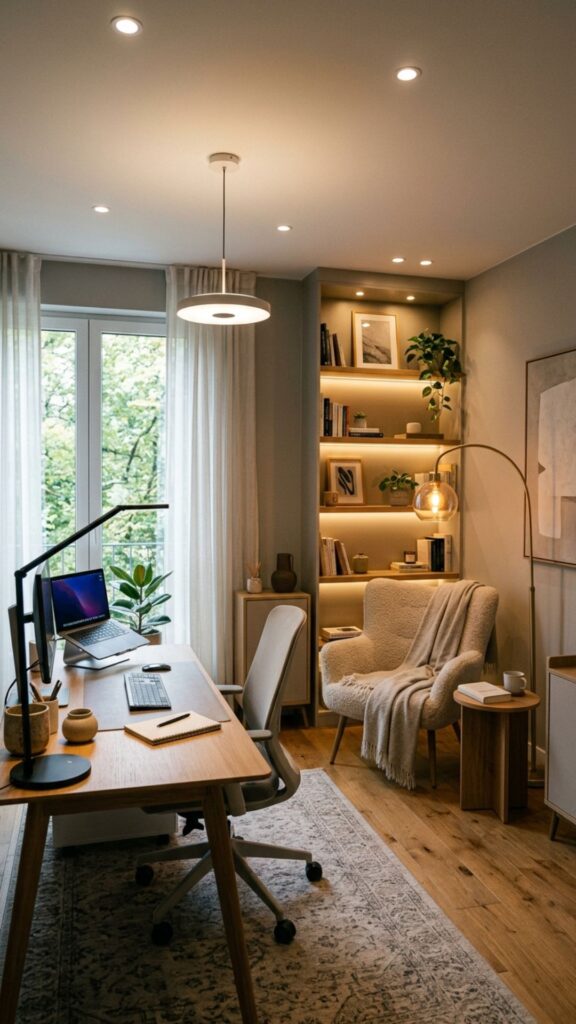
If your home office includes several activities, give each area its own lighting.
Your desk might need a focused task lamp, while a reading chair could benefit from a floor lamp. Shelving might receive subtle accent lighting, and the center of the room could rely on a ceiling fixture.
Creating separate lighting zones gives you greater control and prevents you from illuminating the entire room at full brightness when you only need one section.
Conclusion
A brighter home office is not necessarily about installing more lights. It is about placing the right light in the right places.
Start with natural daylight whenever possible, then build your setup with task, ambient, and accent lighting. A well-positioned desk lamp can improve focused work, while floor lamps, sconces, shelf lights, and dimmable fixtures can eliminate shadows and create a more comfortable atmosphere.
Most importantly, design your lighting around the way you actually work. When you can easily adjust brightness throughout the day, reduce screen glare, and illuminate the areas you use most, even a simple home office can become a more pleasant and productive place to spend your workday.
What type of lighting is best for a home office?
A combination of natural light, ambient lighting, and focused task lighting usually provides the most comfortable setup.
Where should I place a desk lamp?
Place it beside your primary working area so it illuminates your desk without creating glare on your computer screen.
Is warm or cool lighting better for working?
Cooler light can support focused tasks, while warmer light creates a softer atmosphere. Adjustable lighting offers the most flexibility.
How can I brighten a dark home office?
Use layered lighting, light-colored surfaces, floor lamps, wall sconces, and under-shelf lights to brighten shadowy areas.
How can I improve lighting for video calls?
Position a soft light or window in front of you and avoid having a bright window or strong lamp directly behind you.