Working from home together can be convenient, but sharing one office is not always easy. Different schedules, video meetings, storage needs, work habits, and noise levels can quickly turn a practical room into a frustrating space.
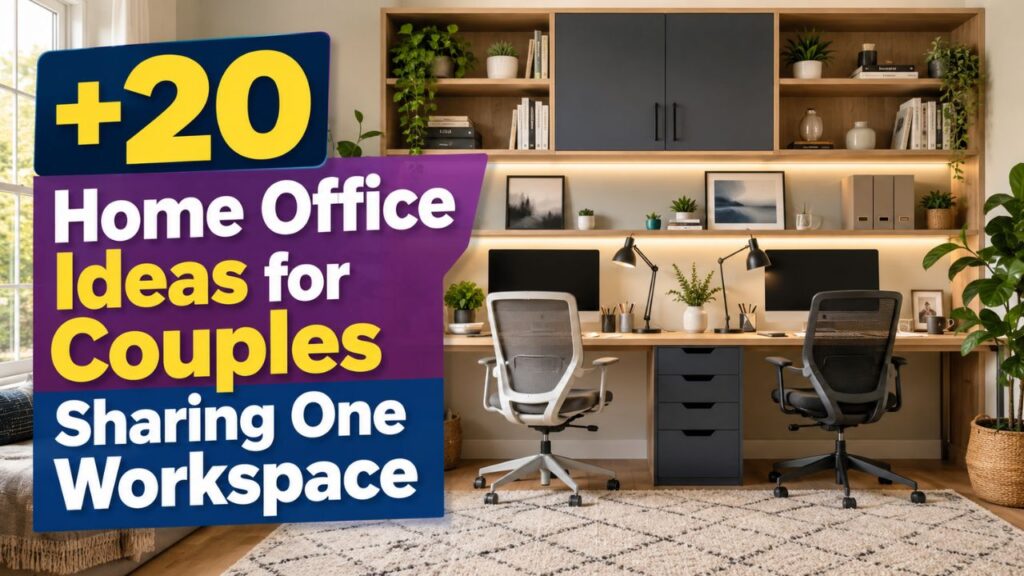
The best home office ideas couple setups balance shared space with personal comfort. Each person needs enough room to concentrate, organize their work, and move around without constantly interrupting the other.
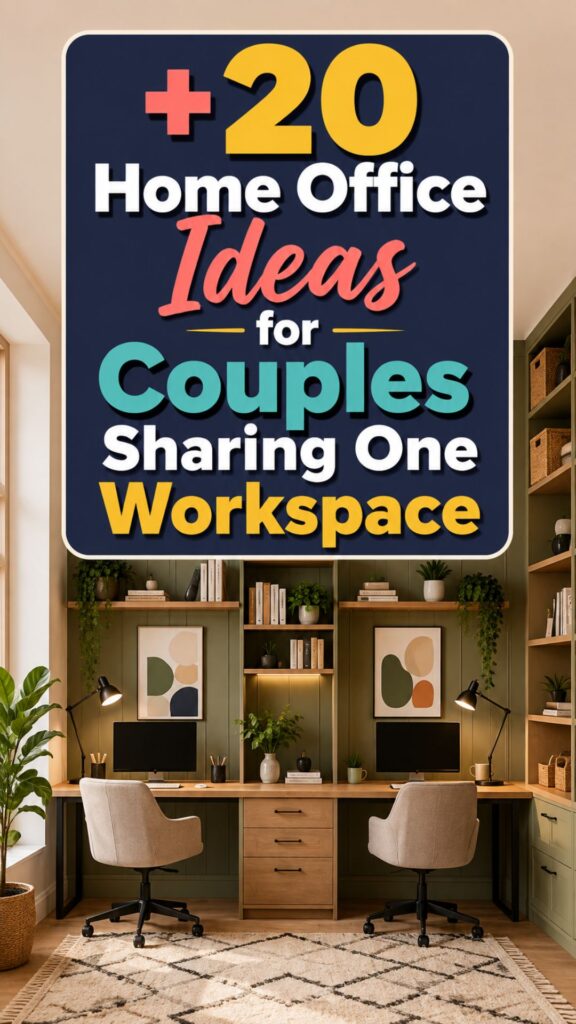
Fortunately, you do not need an oversized room to make it work. Smart desk placement, better storage, flexible lighting, and a few simple boundaries can transform even a small office into a productive two-person workspace.
Here are 20 practical ideas for creating a home office that works comfortably for both of you.
1. Create a Long Two-Person Desk
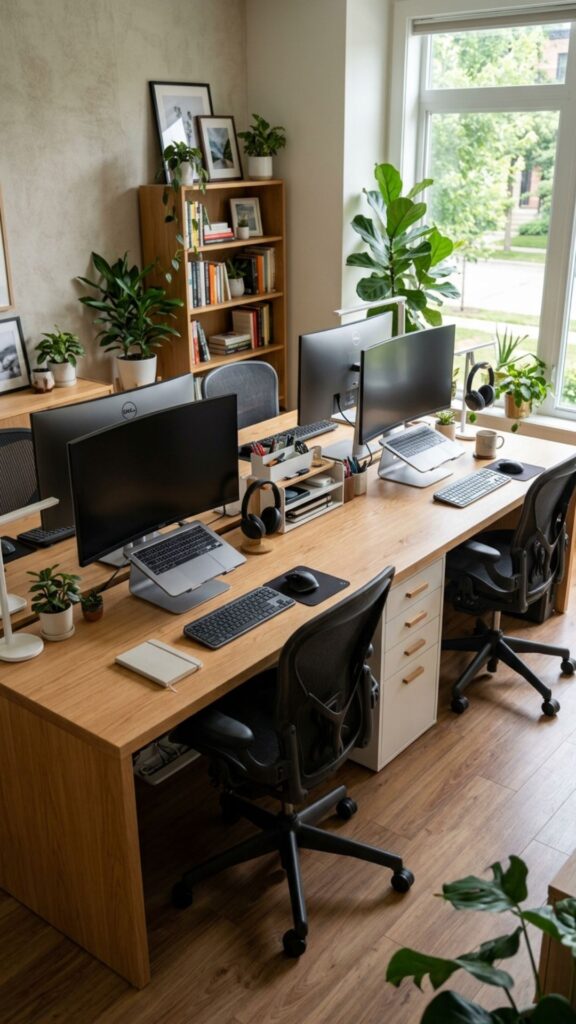
A long desk is one of the simplest solutions when two people need to work in the same room. Place two chairs side by side and give each person a clearly defined section for a monitor, laptop, keyboard, notebook, and other everyday essentials.
Choose a desk wide enough that neither person feels crowded. If you cannot find the right size, consider using a solid countertop over two or three drawer units. This creates plenty of surface space while adding useful storage underneath.
2. Place Two Desks on Opposite Walls
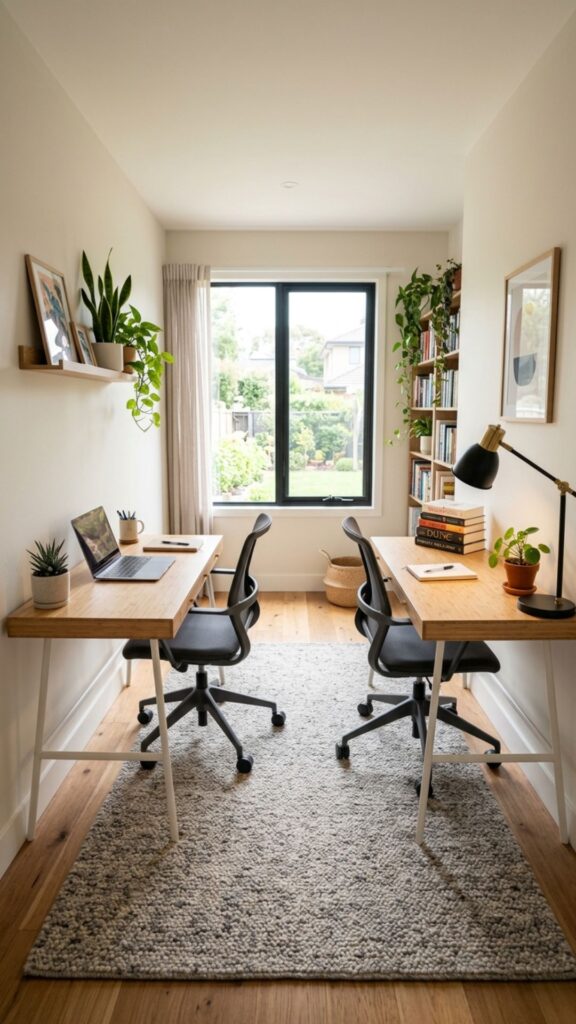
Sitting directly beside your partner is not always ideal, especially when both of you attend calls throughout the day. Placing desks against opposite walls creates greater separation without requiring another room.
This arrangement also gives each person an individual background for video meetings. Among practical home office ideas couple layouts, opposite desks work particularly well in rectangular rooms where wall space is available on both sides.
3. Use an L-Shaped Desk Layout
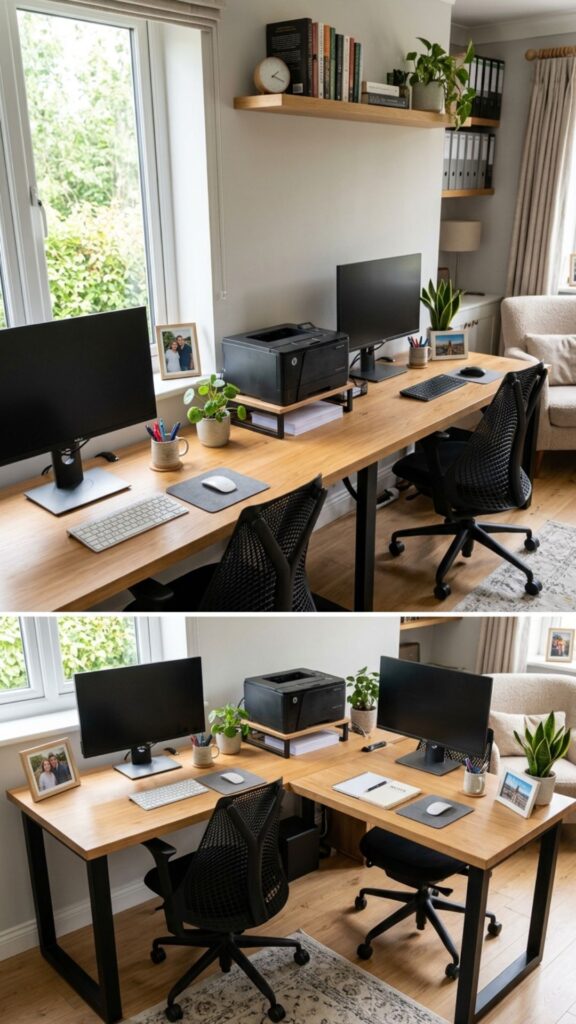
An L-shaped layout gives each person a separate working direction while keeping both workstations connected. You can use one large corner desk or position two standard desks together to form the shape.
This setup is useful when one person needs more equipment or paperwork than the other. The corner can also become a shared space for a printer, charging station, document tray, or office supplies that both people regularly use.
4. Position Desks Back-to-Back
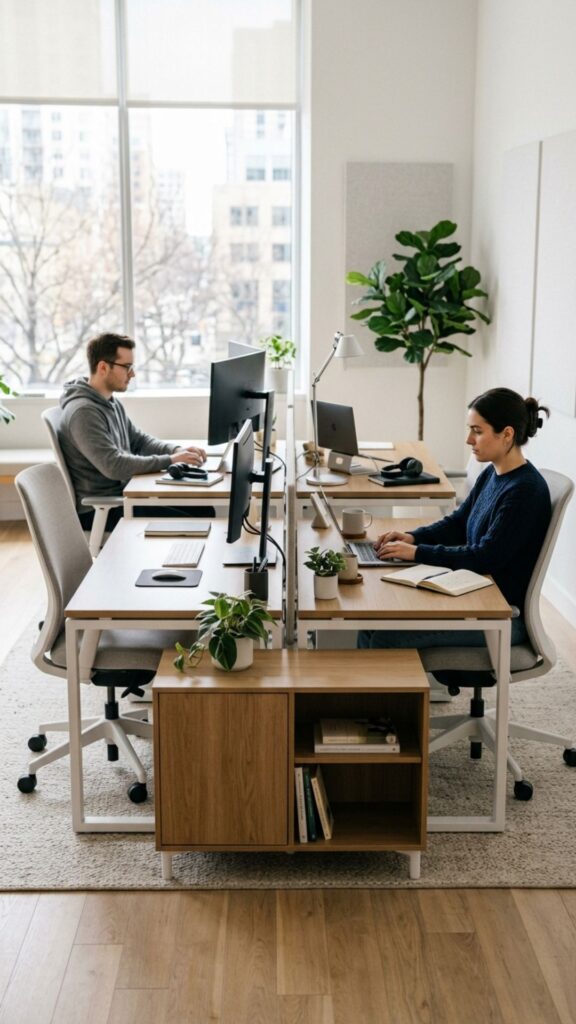
Back-to-back desks create individual working zones while allowing both people to remain in the same room. Because you are not constantly facing each other, visual distractions are naturally reduced.
Leave enough room between chairs so both people can move comfortably. A low bookcase, storage cabinet, or narrow divider between the desks can provide extra privacy while giving you another place to store office essentials.
5. Give Each Person Personal Storage
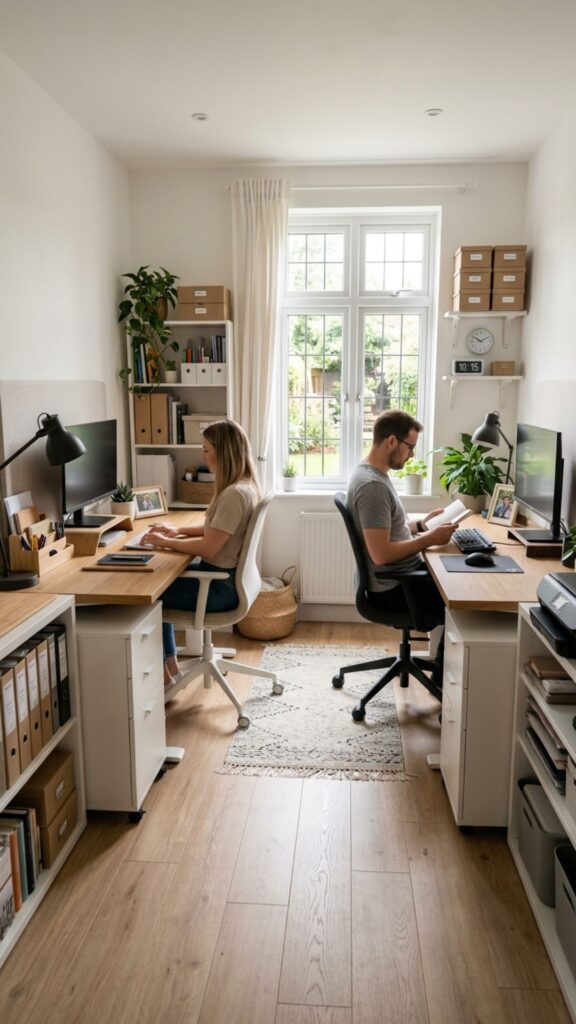
Shared offices become messy quickly when documents, chargers, notebooks, and work supplies have no assigned location. Give each person their own drawers, shelves, filing boxes, or storage cabinet.
Using separate storage also prevents everyday confusion. You immediately know where your things belong without searching through your partner’s paperwork. Shared supplies can still be kept in one central cabinet that is easy for both people to reach.
6. Create Individual Work Zones
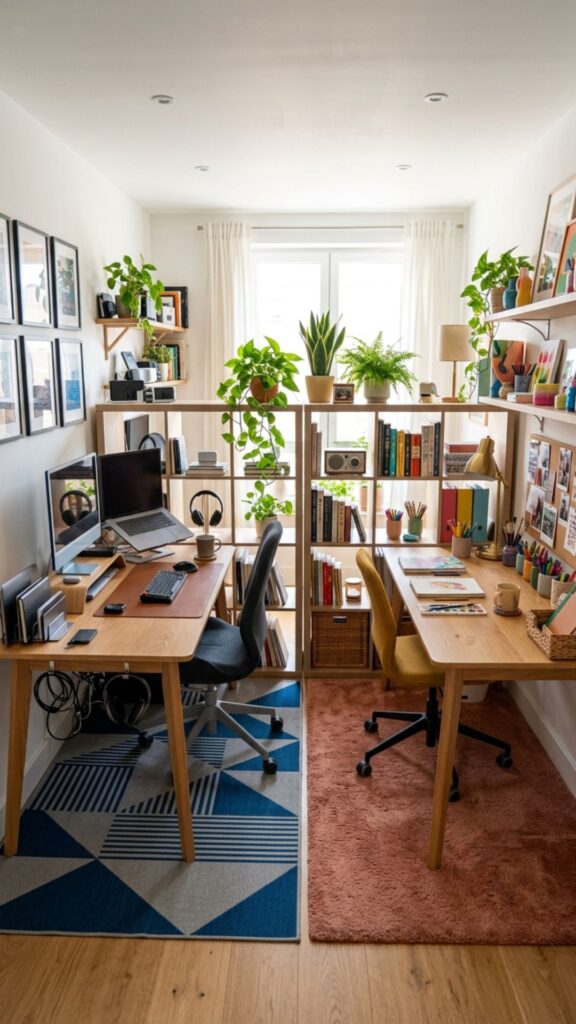
One of the most effective home office ideas couple strategies is to visually divide the room into two zones. You do not need to build walls. Furniture placement, rugs, shelving, or different desk accessories can create enough distinction.
Allow each person to personalize their section according to their working style. One side might have a minimalist setup, while the other includes books, photographs, plants, or additional storage. The room can still look coordinated without making both workstations identical.
7. Add a Room Divider for Privacy
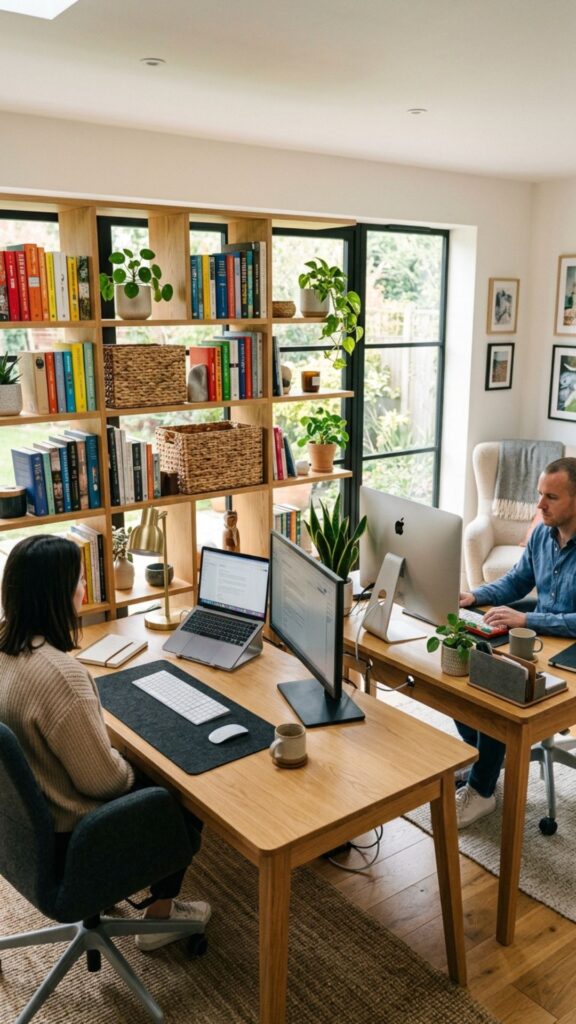
When privacy is important, use a folding screen, open bookshelf, acoustic panel, or lightweight divider between the two work areas. This can be especially valuable when both people regularly attend meetings.
A divider does not need to extend from floor to ceiling. Even partial visual separation can make concentration easier. Open shelving works particularly well because it divides the room while providing practical storage for books, baskets, and office accessories.
8. Choose Comfortable Ergonomic Chairs
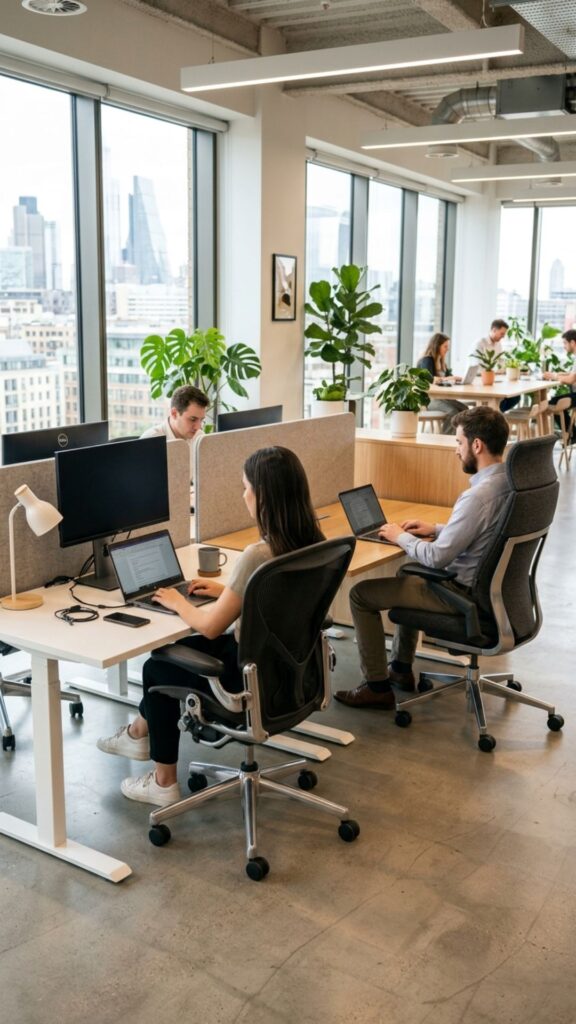
A stylish shared office means little if your chairs become uncomfortable after two hours. Each person should have a chair suited to their body, desk height, and preferred sitting position.
Do not assume you need matching chairs. One person may need stronger lumbar support, while another prefers adjustable armrests or a deeper seat. Comfort and posture should come before creating a perfectly symmetrical room.
9. Use Separate Task Lighting
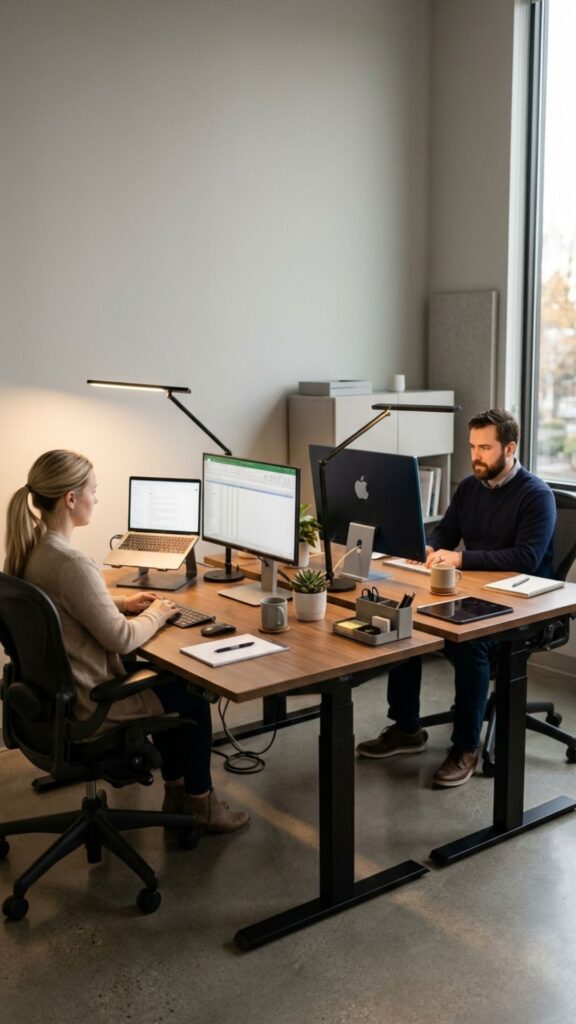
One overhead light rarely provides the right conditions for two people. Add an individual desk lamp or adjustable task light to each workstation so both people can control their own lighting.
Separate lighting becomes especially useful when your working schedules differ. One person can continue working in the evening without making the entire room excessively bright. Warm ambient lighting can then help keep the shared office comfortable.
10. Take Advantage of Natural Light
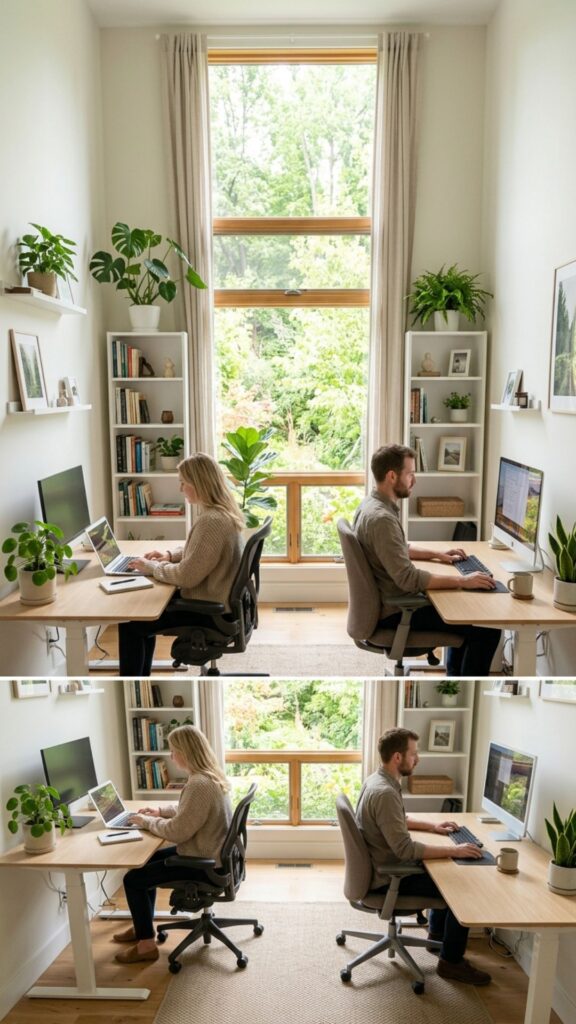
If possible, position both desks where natural daylight reaches the work surface without creating glare on your screens. Working near a window can make a shared office feel brighter and more spacious.
Avoid placing monitors directly opposite strong sunlight. Position desks perpendicular to the window or use adjustable blinds to control glare. Good natural lighting is one of the easiest home office ideas couple improvements because it benefits comfort and visibility without taking up additional space.
11. Install Floating Shelves Above the Desks
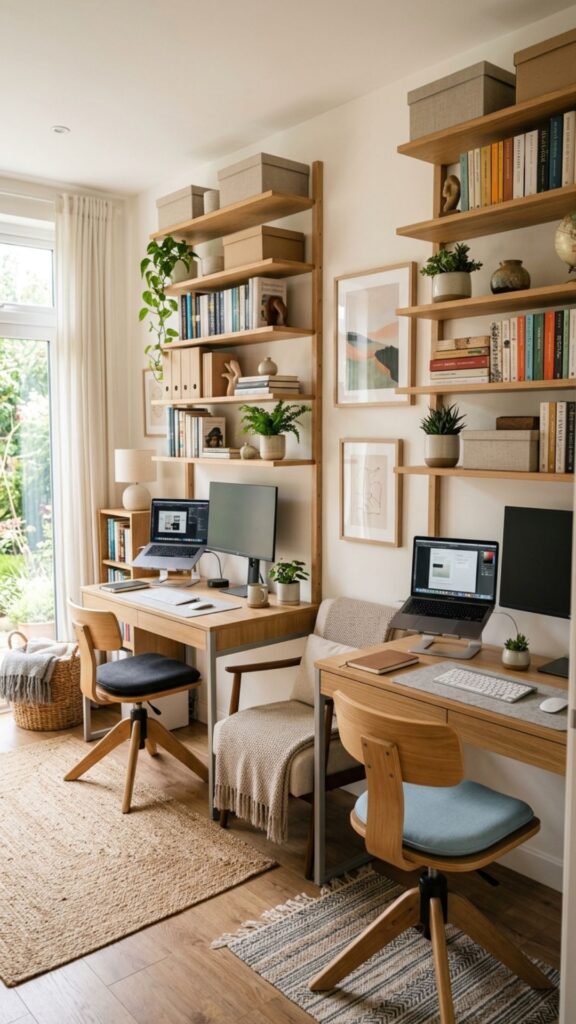
When floor space is limited, make better use of your walls. Floating shelves above the desks can hold books, document boxes, decorative pieces, small plants, and supplies that would otherwise clutter the work surface.
Keep frequently used items within comfortable reach and place decorative pieces higher. If both workstations share one wall, matching shelves can create visual consistency while still allowing each person to organize their section differently.
12. Add Acoustic Materials to Reduce Noise
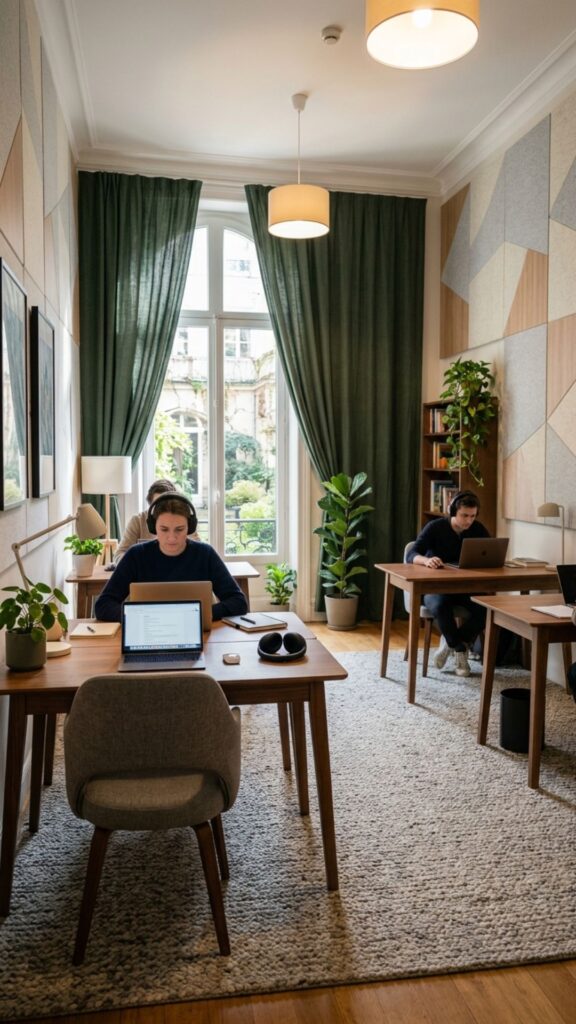
Noise is one of the biggest challenges when couples work together. Soft furnishings such as rugs, curtains, fabric chairs, upholstered panels, and acoustic wall treatments can reduce echoes and make conversations less distracting.
Headphones are also useful when one person needs complete concentration. If frequent meetings are part of both jobs, agreeing on headphone use and call schedules can prevent small interruptions from becoming daily frustrations.
13. Create a Shared Printer and Supply Station
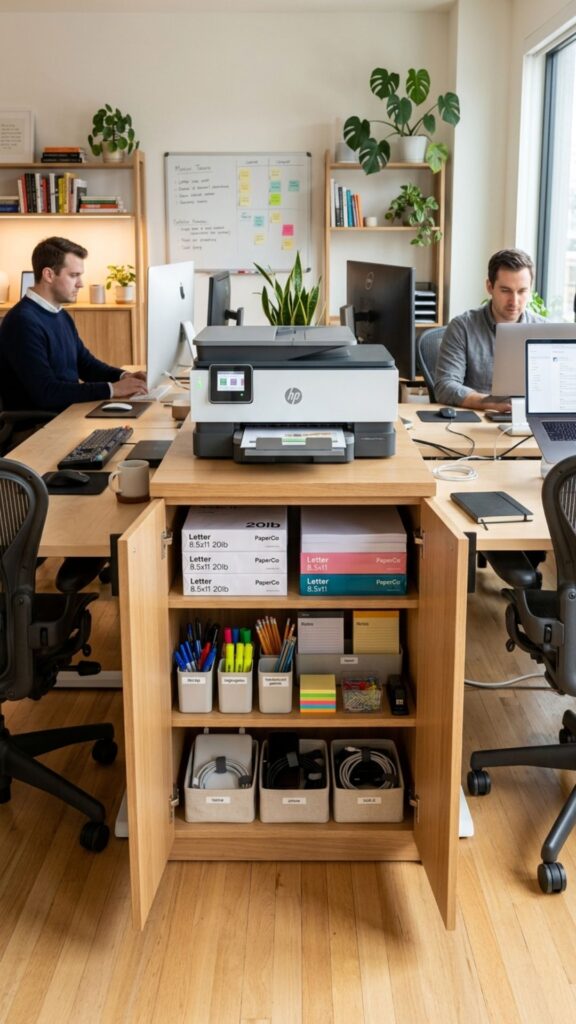
Instead of placing duplicate equipment on both desks, create one shared office station. A small cabinet can hold the printer, paper, chargers, stationery, envelopes, and other items that both people need.
Keeping shared equipment away from the main work surfaces also reduces clutter. Place the station somewhere accessible without forcing one person to repeatedly walk behind the other’s chair during working hours.
14. Use Matching Furniture Without Making Everything Identical
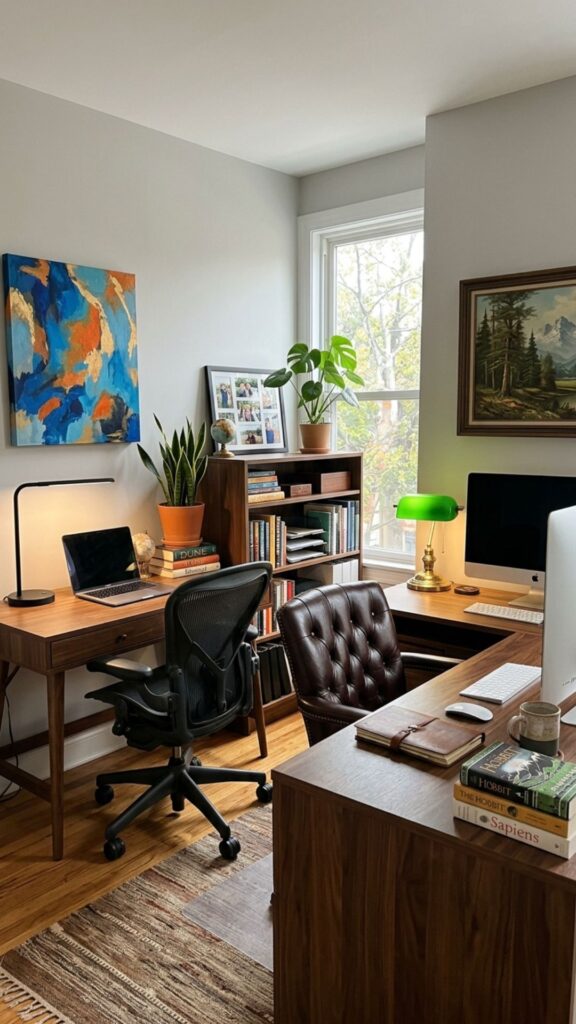
Matching desks or storage units can make a shared office look more organized, particularly when both workstations are visible from the doorway. However, you do not need to duplicate every detail.
Allow individual chairs, lamps, artwork, or accessories to reflect each person’s preferences. The strongest home office ideas couple spaces usually feel connected without becoming overly uniform or impersonal.
15. Create a Video Meeting-Friendly Background
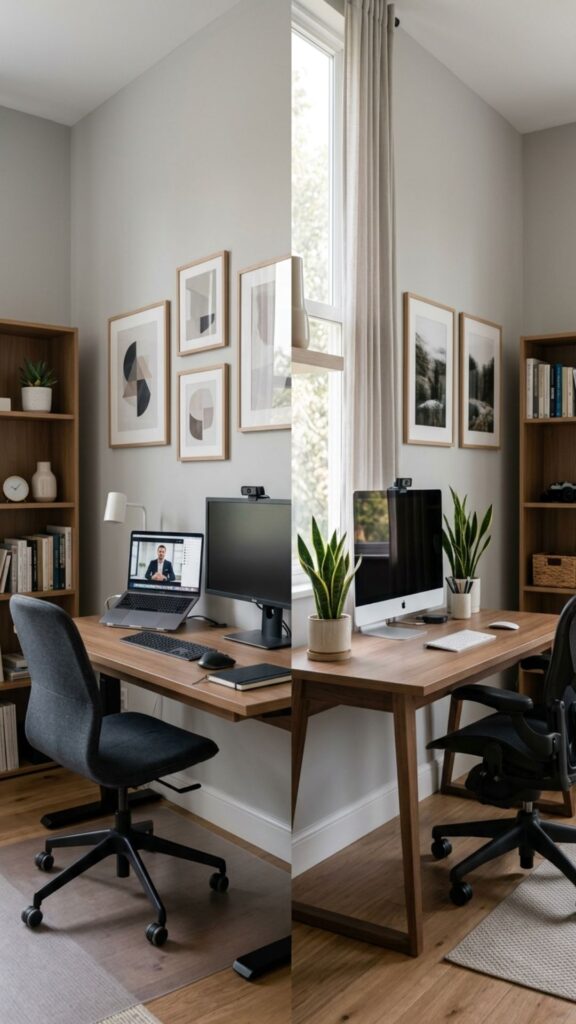
Think carefully about what appears behind each person during online meetings. A tidy bookshelf, neutral wall, framed artwork, or simple storage unit can create a more professional background.
Avoid placing one person’s desk directly behind the other person’s video-call position. Otherwise, movement can become distracting during meetings. Test your camera angles before finalizing the furniture arrangement to identify any potential problems.
16. Choose Furniture That Fits the Room
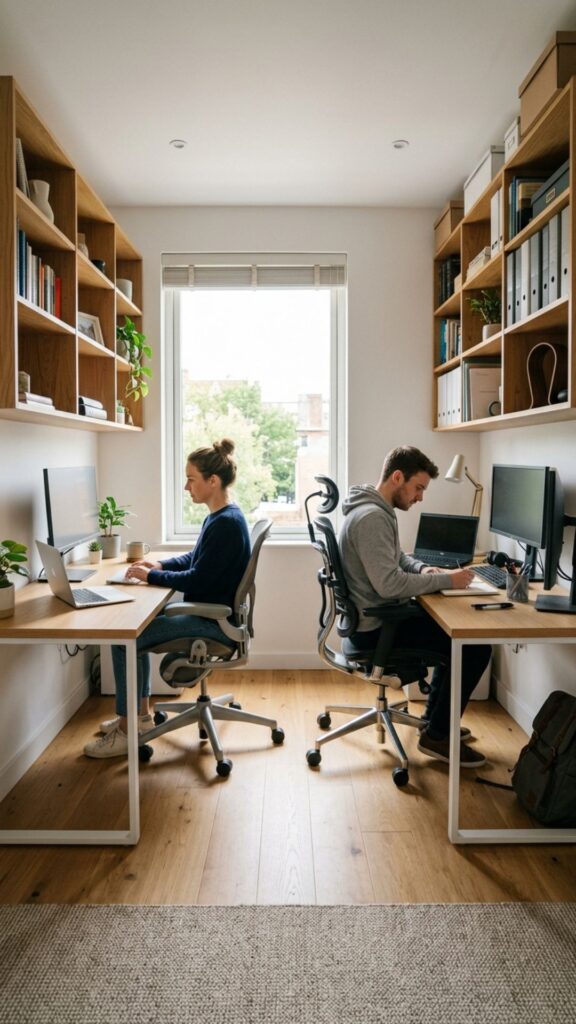
Oversized desks can make a two-person office feel cramped very quickly. Measure the room before purchasing furniture and account for chairs, drawers, doors, cabinets, and walking space.
In a small room, slim desks with wall-mounted shelves may work better than traditional executive desks. Good home office ideas couple layouts focus on usable space rather than simply fitting as much furniture as possible into the room.
17. Add Closed Storage for Visual Calm
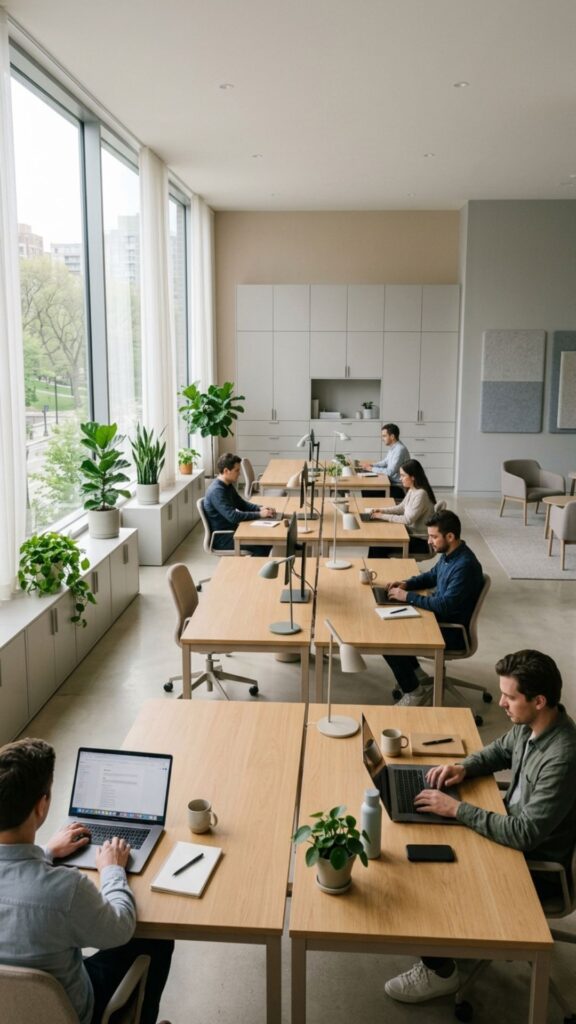
Open shelving looks attractive, but too many visible office supplies can make a shared workspace feel chaotic. Incorporate closed cabinets, drawers, storage boxes, or cupboards for less attractive everyday items.
A cleaner visual environment can also make it easier to switch off after work. At the end of the day, paperwork, chargers, and equipment can be stored away instead of constantly reminding you about unfinished tasks.
18. Include Plants Without Crowding the Desks
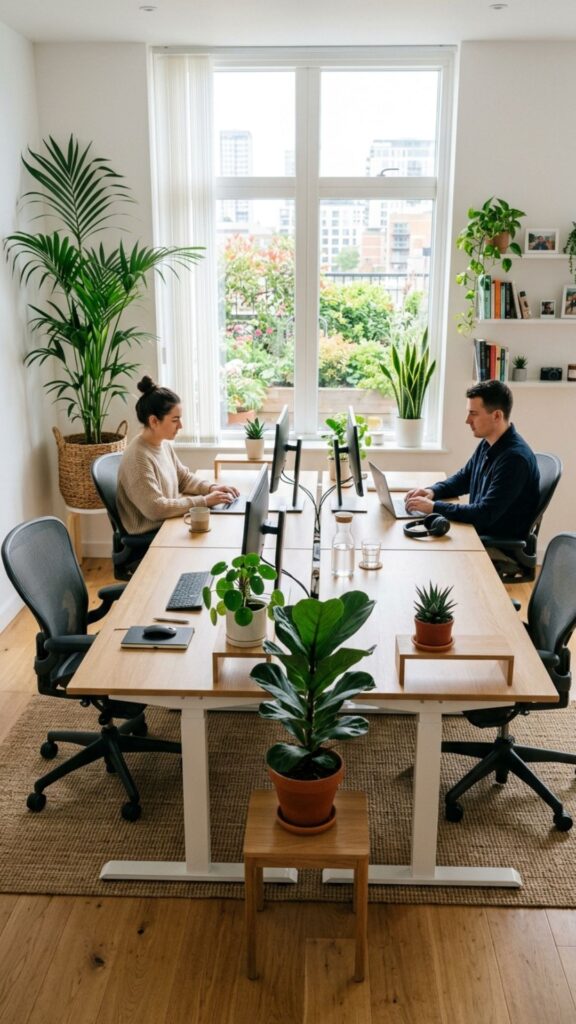
Indoor plants can soften the appearance of monitors, cables, and office furniture. Use a few carefully placed plants instead of filling every available surface.
Try a floor plant in an empty corner, a small plant on a shelf, or one shared plant between workstations. Choose varieties suited to the amount of natural light in the room and avoid large plants that interfere with movement.
19. Establish Simple Workspace Boundaries
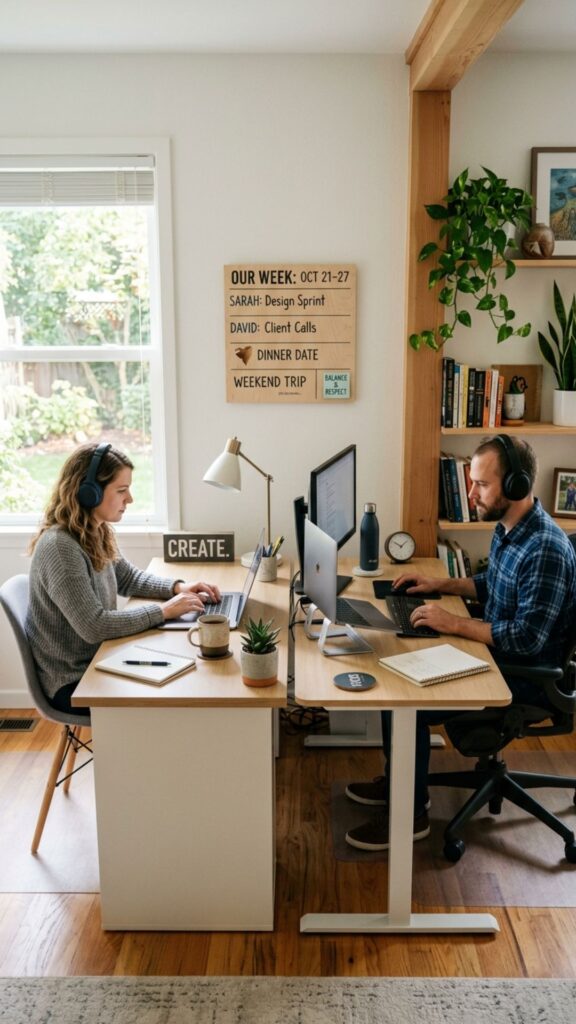
Furniture alone cannot solve every shared-office challenge. Agree on a few practical rules covering calls, music, desk borrowing, interruptions, and shared equipment.
For example, headphones might signal that someone should not be disturbed. You could also use a shared calendar to identify important meetings. These simple habits make many home office ideas couple arrangements far more successful in everyday life.
20. Design the Office for Life After Work
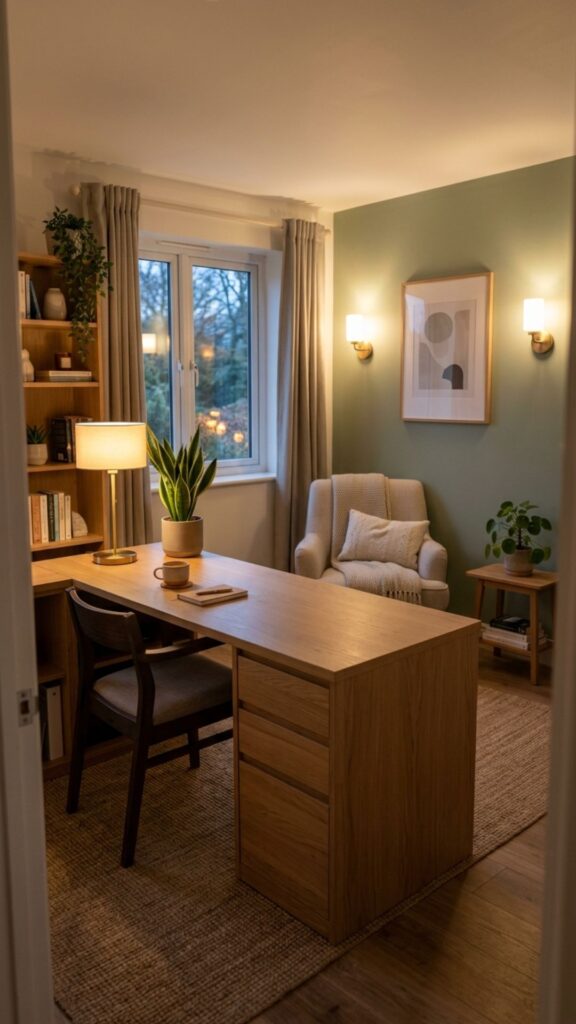
A home office should not dominate your relationship after the working day ends. Create a simple routine for putting laptops away, clearing paperwork, turning off task lights, and leaving the office when work is finished.
If the workspace is inside a bedroom or living area, closed storage becomes even more valuable. Being able to hide work equipment helps the room return to its personal purpose instead of feeling like an office around the clock.
How to Make a Shared Home Office Work Better
Successful shared offices are usually built around function first. Start by considering how many hours each person works, how often you have meetings, what equipment you use, and how much storage you genuinely need.
Then design the room around those habits. Someone taking frequent calls may need greater acoustic separation, while someone working with multiple monitors may need more desk depth. The right solution is rarely about making both sides identical. It is about giving both people what they need to work comfortably.
Conclusion
Sharing a workspace with your partner does not mean sacrificing privacy, organization, or personal style. The most practical home office ideas couple setups create clear individual work zones while making smart use of the space you share.
Start with the biggest issue in your current office. It might be desk placement, storage, noise, lighting, or simply a lack of boundaries. Improve that first, then adjust the remaining details gradually.
Take a few measurements, discuss how each of you prefers to work, and choose a layout that supports both routines. A thoughtfully planned two-person home office can make working together considerably easier and more enjoyable.
How do you set up a home office for two people?
Give each person a defined workstation with enough desk space, comfortable seating, lighting, and personal storage. Position desks according to your available room and consider opposite-wall, side-by-side, L-shaped, or back-to-back arrangements.
What is the best desk arrangement for couples working from home?
The best arrangement depends on working habits. Side-by-side desks are good for collaborative work, while opposite or back-to-back desks provide more privacy. Couples who attend frequent video calls usually benefit from greater separation between workstations.
How can two people work from home in a small room?
Use slim desks, vertical shelving, wall-mounted storage, compact chairs, and shared equipment stations. Keeping the floor clear and using walls for storage can make a small two-person office considerably more functional.
How can couples reduce distractions while sharing an office?
Use headphones, acoustic furnishings, visual dividers, agreed meeting schedules, and clear signals for focused work. Simple boundaries around interruptions and noise are often just as important as the physical office layout.
Do matching desks make a shared office look better?
Matching desks can create a cleaner, more coordinated appearance, but they are not essential. Prioritize suitable dimensions and functionality first. You can create a cohesive look through similar finishes, storage, lighting, or accessories even when the desks are different.