No spare bedroom for a home office? That narrow, overlooked hallway might be all the space you need.
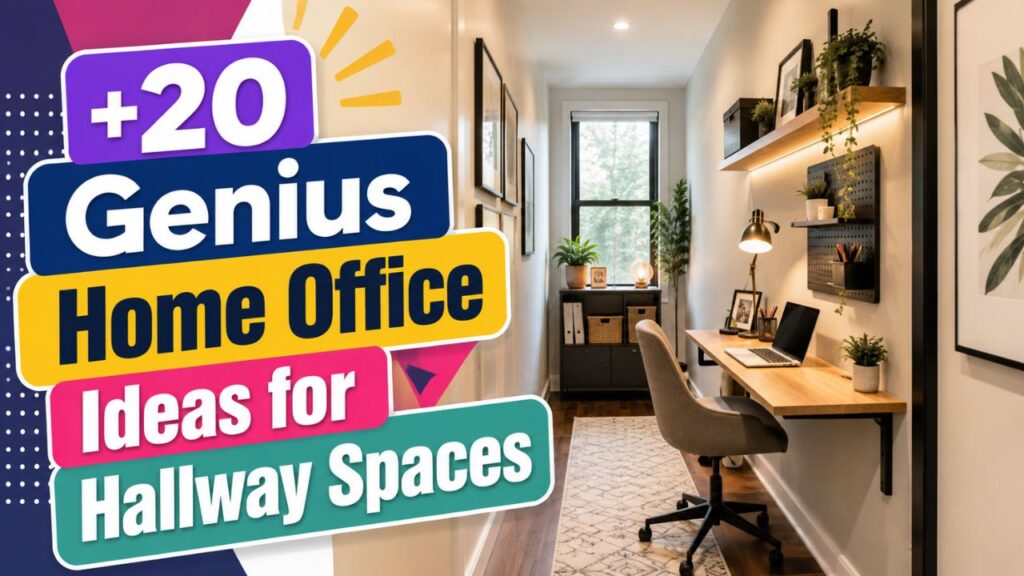
Hallways are usually treated as pass-through zones, but with the right layout, even a slim corridor, upstairs landing, or empty stretch between rooms can become a surprisingly functional workspace. A floating desk, clever shelving, compact storage, and good lighting can transform a few unused feet into a comfortable place for answering emails, studying, managing household paperwork, or working from home.
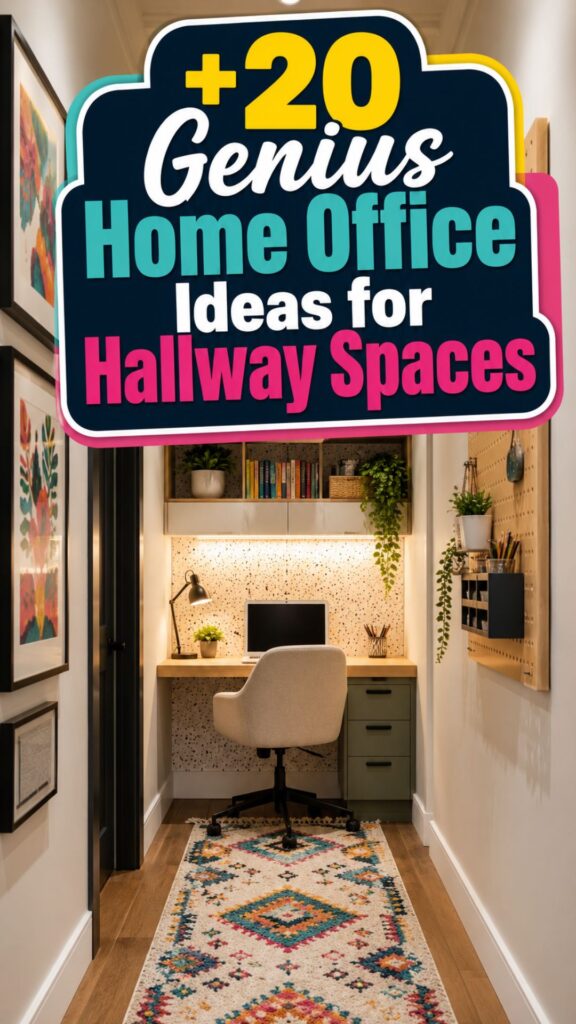
The key is designing an office that works with the hallway rather than against it. You want enough workspace to be productive without blocking traffic or making the area feel crowded.
Whether your hallway is wide, narrow, bright, dark, modern, or awkwardly shaped, these 20 genius home office ideas for hallway spaces will help you turn wasted square footage into a stylish and practical work zone.
1. Install a Slim Floating Desk
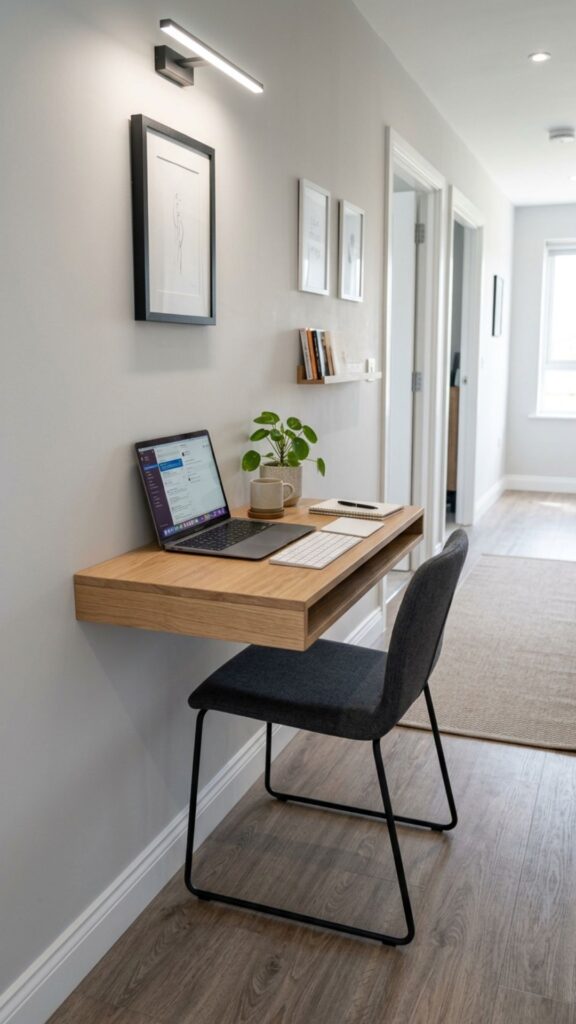
A floating desk is one of the easiest ways to create a hallway office without sacrificing valuable floor space.
Choose a narrow desktop that attaches directly to the wall and provides enough room for a laptop, notebook, and a few essentials. Because there are no bulky desk legs underneath, the hallway remains visually open.
Pair it with a lightweight chair or stool that can slide completely beneath the desk when you’re finished working.
2. Turn a Hallway Nook Into a Mini Office
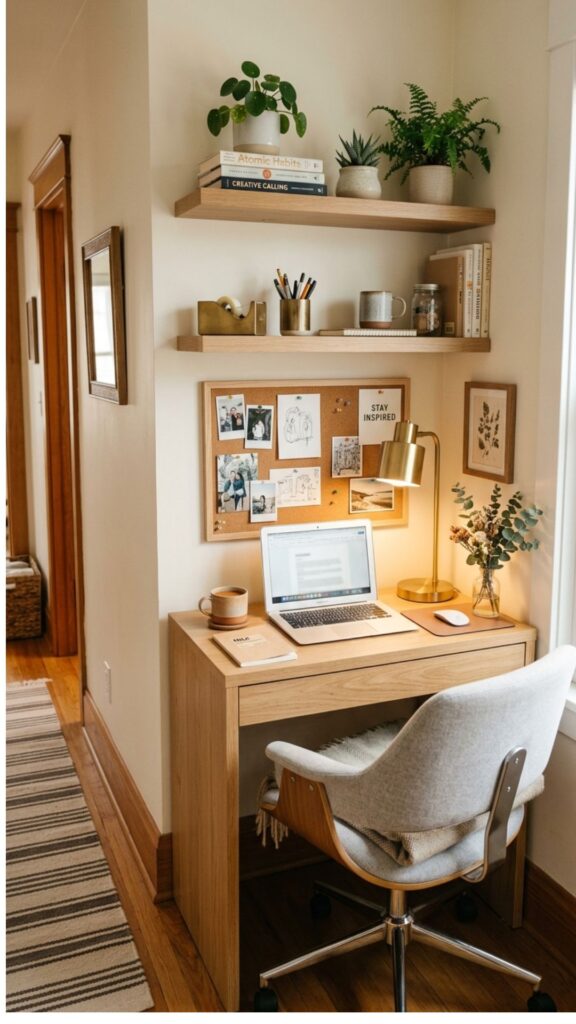
If your hallway has an alcove, recessed wall, or awkward little nook, you already have the perfect foundation for a compact home office.
Measure the available space and install a desk that fits neatly from wall to wall. Adding shelves above the desk can make the area feel intentionally designed rather than improvised.
A nook office also keeps the workspace slightly separated from the main walking path.
3. Build a Wall-to-Wall Desk
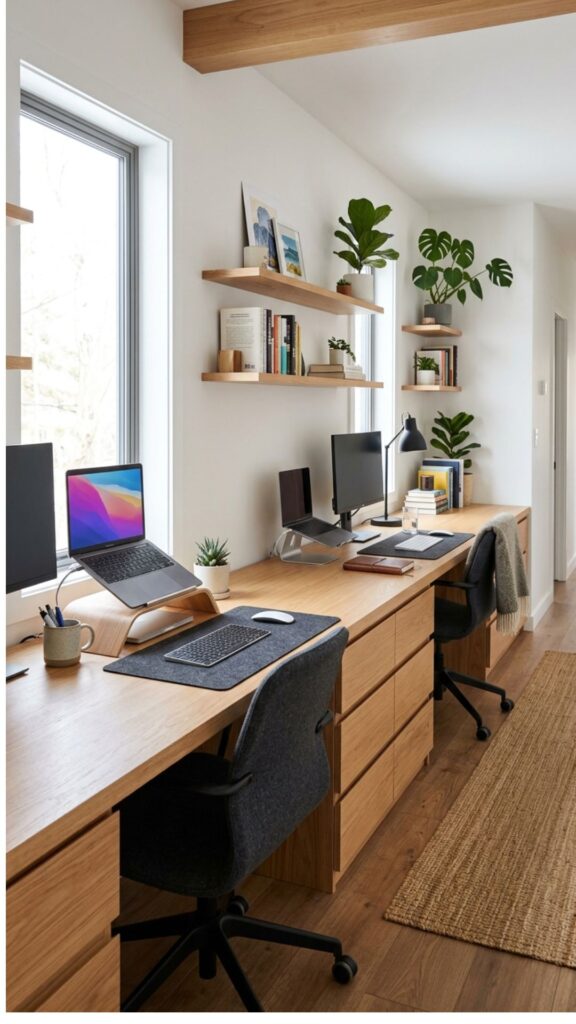
For wider hallways or upstairs landings, consider creating a custom wall-to-wall desk.
A long work surface provides plenty of room for a computer, paperwork, office supplies, and decorative accessories. You can even create two workstations if more than one family member needs a place to work or study.
Built-in drawers underneath will help keep clutter out of sight.
4. Add Floating Shelves Above the Desk
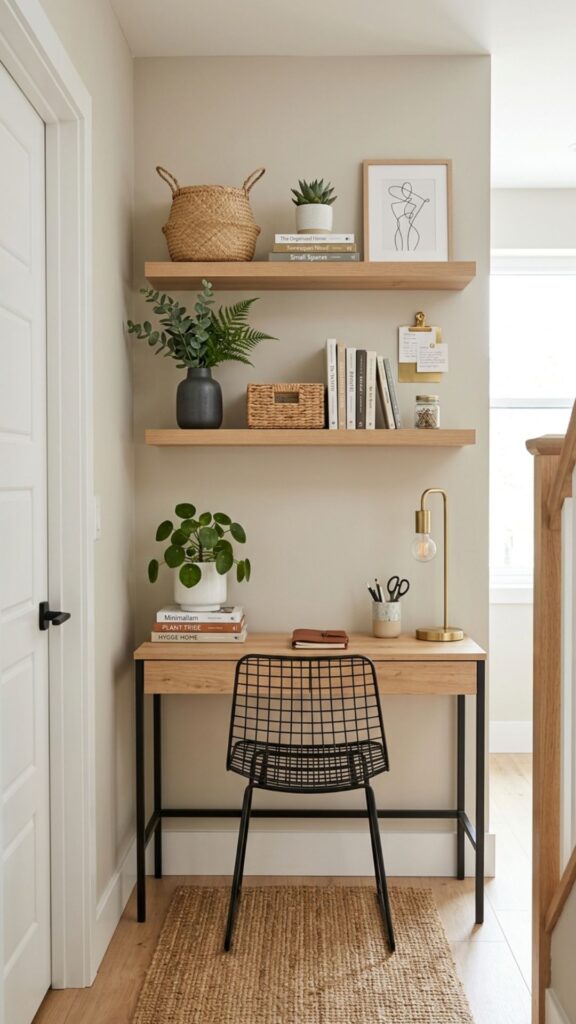
When floor space is limited, look upward.
Floating shelves are ideal for storing books, baskets, stationery, small plants, and office accessories without adding bulky furniture to the hallway.
Keep frequently used supplies on lower shelves and decorative items higher up. Matching the shelves to the desktop can also create a polished built-in appearance.
5. Choose a Fold-Down Wall Desk
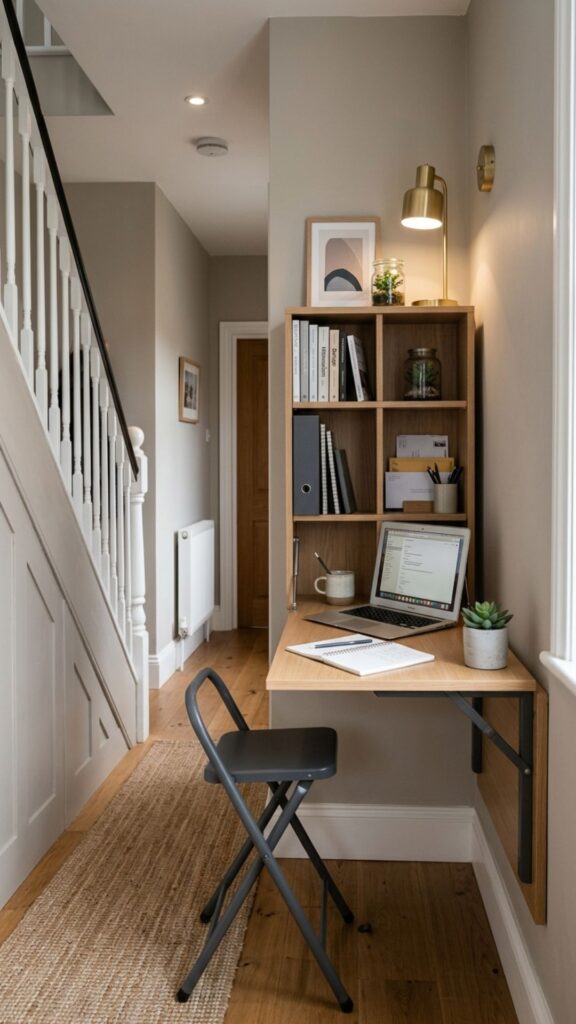
A fold-down desk is especially useful in extremely narrow hallways.
The desktop stays folded against the wall when you’re not working and opens only when needed. Some designs even include built-in cubbies for storing pens, chargers, notebooks, and paperwork.
Once the workday is finished, simply fold everything away and reclaim your hallway.
6. Use a Console Table as a Desk
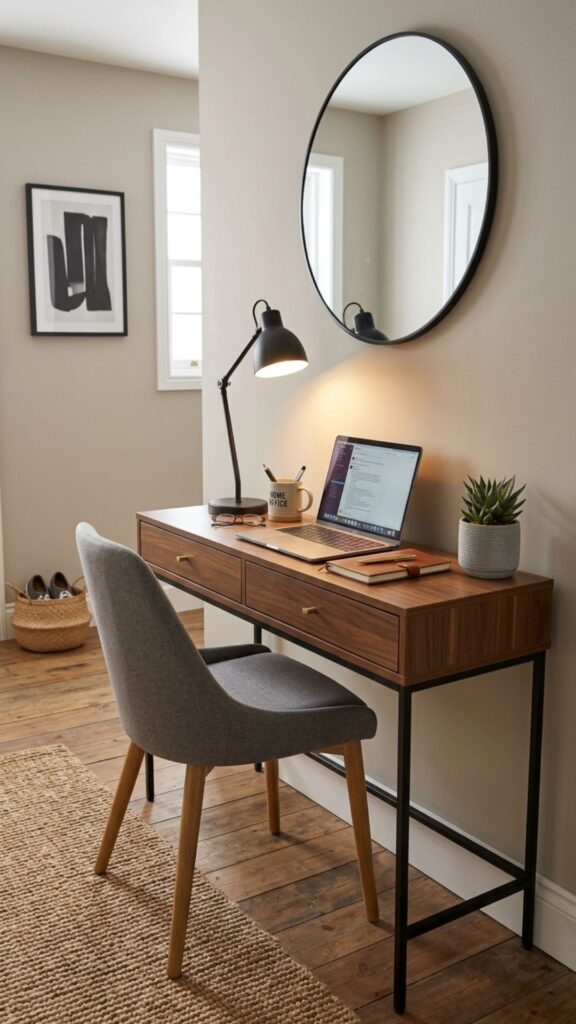
A slim console table can easily double as a hallway home office.
Console tables are naturally designed for narrow spaces, making them ideal when a traditional desk feels too deep or bulky. Look for one with drawers so you can store small office essentials.
When you’re not working, style the surface with a lamp, artwork, or decorative objects and it will blend seamlessly into the rest of your home.
7. Create a Built-In Office Under the Stairs
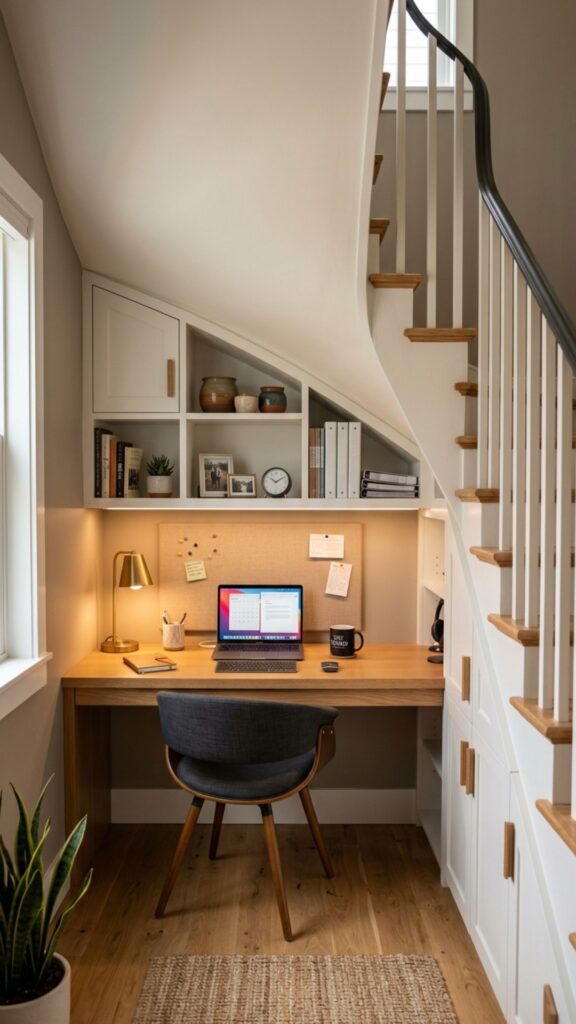
If your hallway runs alongside or underneath a staircase, the unused area beneath the stairs can become an excellent workspace.
Install a custom desk along the wall and use the sloping space above it for shelving or cabinets.
This approach makes use of an area that often goes unused while creating a cozy, tucked-away office that feels separate from surrounding living spaces.
8. Keep the Color Palette Light
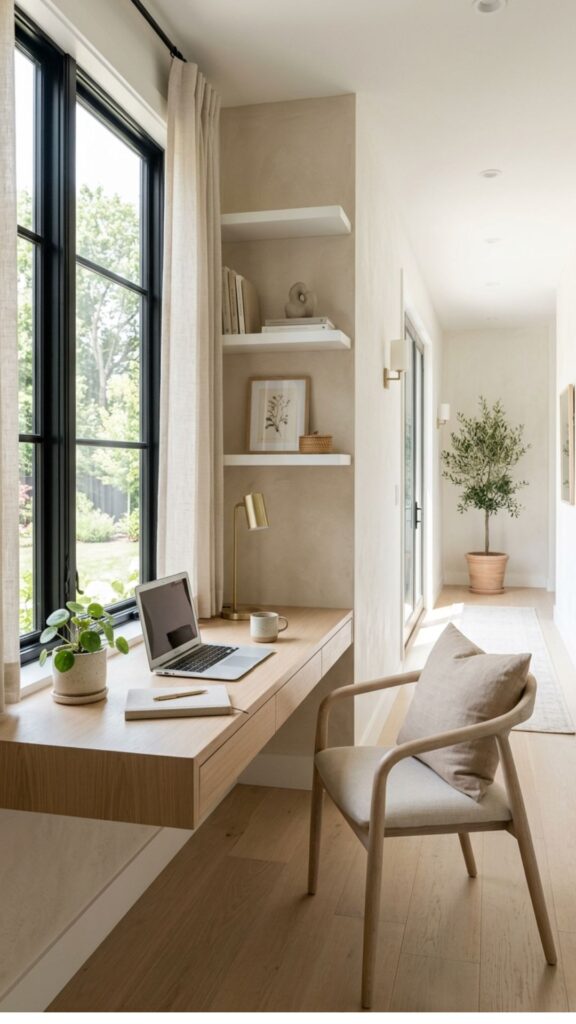
Hallways don’t always receive much natural light, so your color choices can make a major difference.
White, cream, pale gray, beige, or soft pastel walls can make a hallway office feel brighter and more spacious.
Continue the same light colors across the desk and shelving for a clean, streamlined effect. You can always bring in personality through artwork, accessories, and plants.
9. Add a Statement Desk Lamp
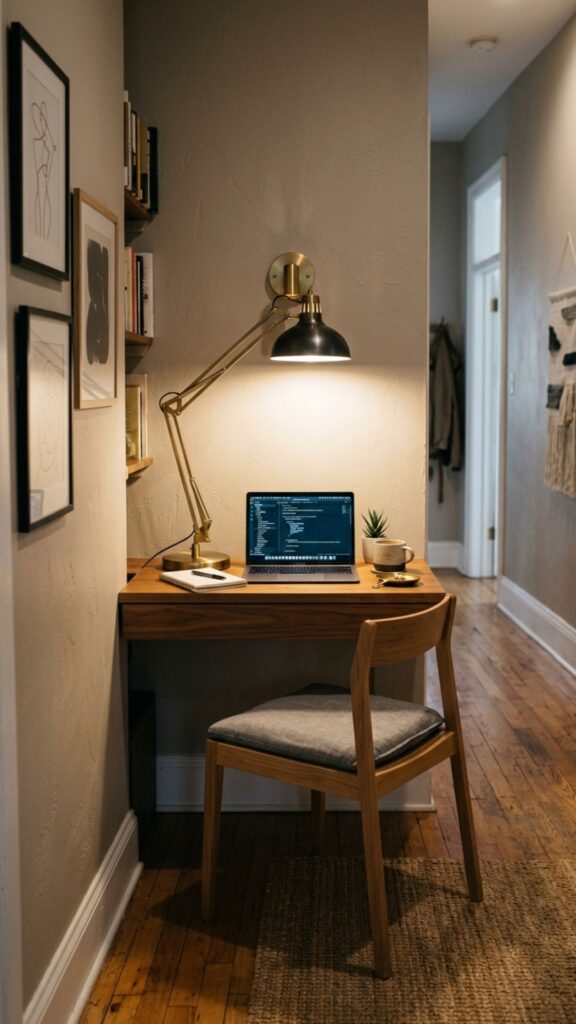
A hallway office needs good task lighting, particularly if you’re working away from a window.
A stylish desk lamp provides focused lighting while doubling as decoration. Adjustable lamps are particularly useful because you can direct the light exactly where it’s needed.
For an even more space-saving option, install a wall-mounted sconce above the desk.
10. Make Use of an Upstairs Landing
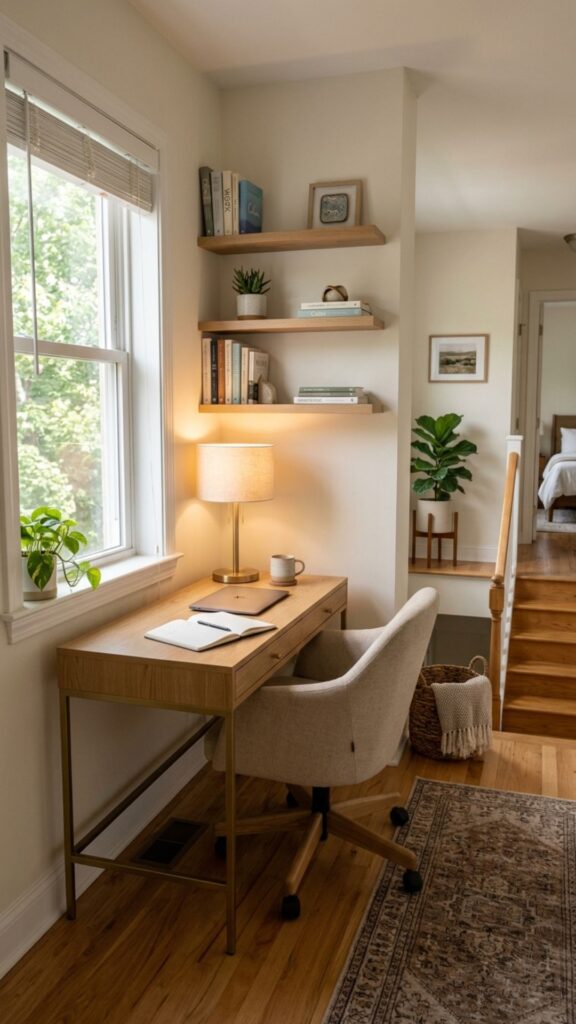
An upstairs landing can often accommodate a workspace without interfering with the rest of the house.
Place a slim desk against an unused wall and add a comfortable chair, lamp, and a few floating shelves.
Because landings tend to be quieter than ground-floor hallways, they can be especially suitable for focused work, reading, studying, or completing occasional administrative tasks.
11. Add Pegboard Storage
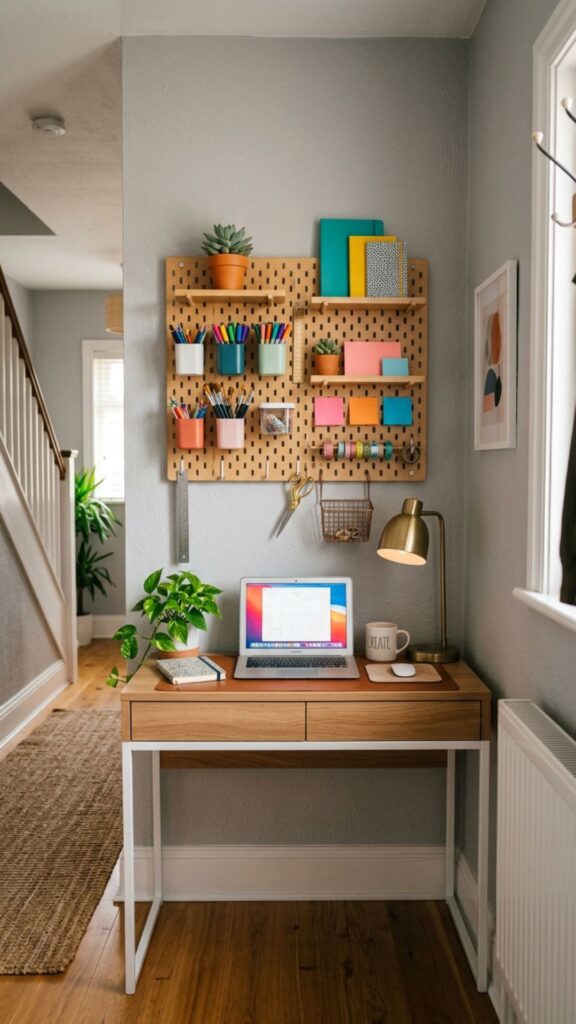
Pegboards offer customizable storage while using almost no floor space.
Install one above your hallway desk and use hooks, cups, mini shelves, and organizers to hold stationery, headphones, scissors, notes, and other supplies.
The biggest advantage is flexibility. You can rearrange the storage whenever your work needs change.
12. Hide the Office Behind Cabinet Doors
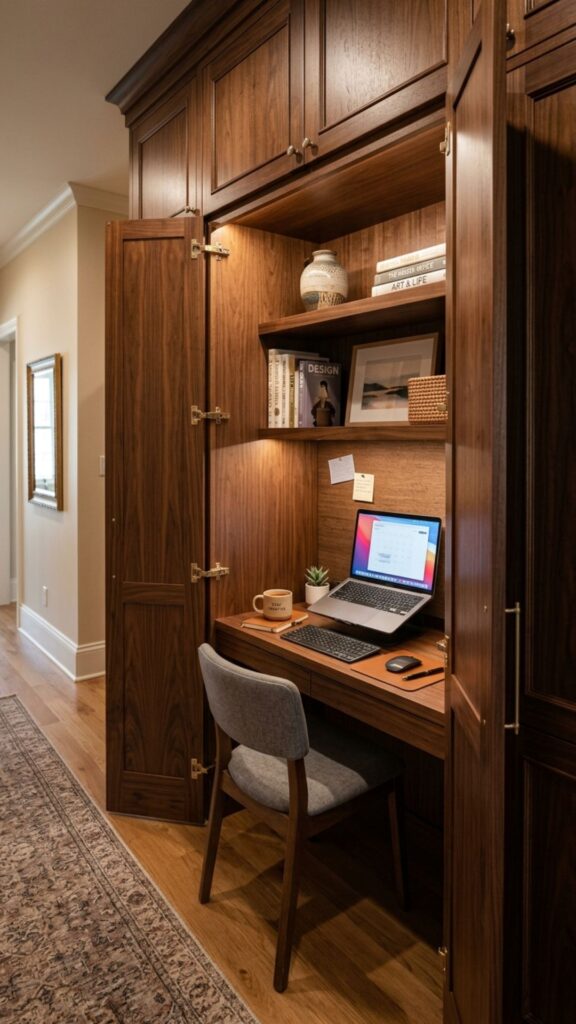
If you want your hallway to look completely tidy outside working hours, create a concealed office inside cabinetry.
A built-in cabinet can contain a small desktop, shelves, lighting, and charging points. Open the doors when you’re ready to work and close them afterward.
This solution works particularly well in homes where the hallway is highly visible from the living or dining areas.
13. Incorporate Vertical Filing Storage
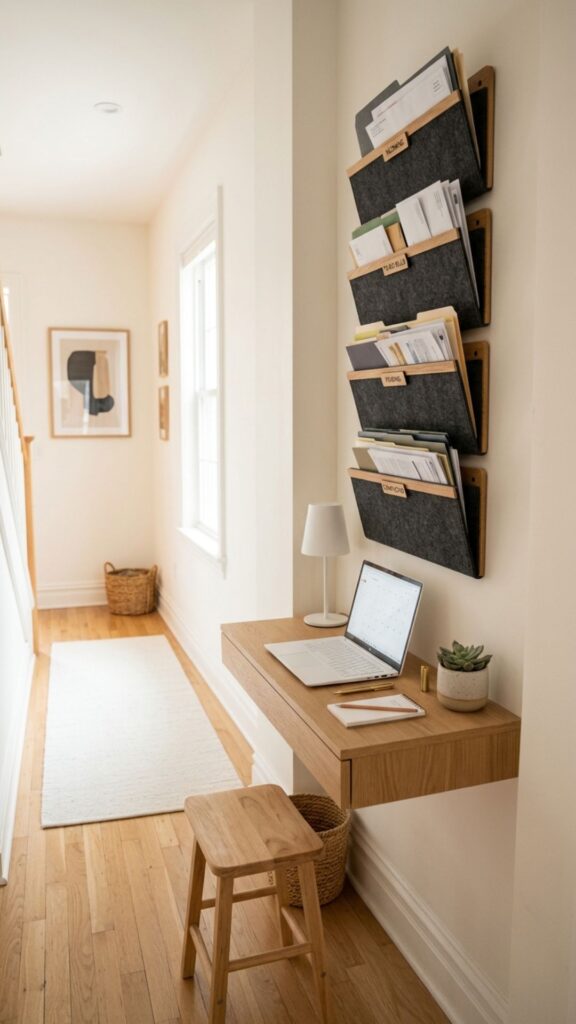
Paperwork can quickly overwhelm a small workspace, so avoid spreading files across the desktop.
Instead, use wall-mounted magazine holders, slim filing pockets, or narrow vertical organizers.
Keeping documents upright rather than stacked frees up valuable desk space while making frequently used papers easier to access.
14. Select a Chair That Tucks Away Completely
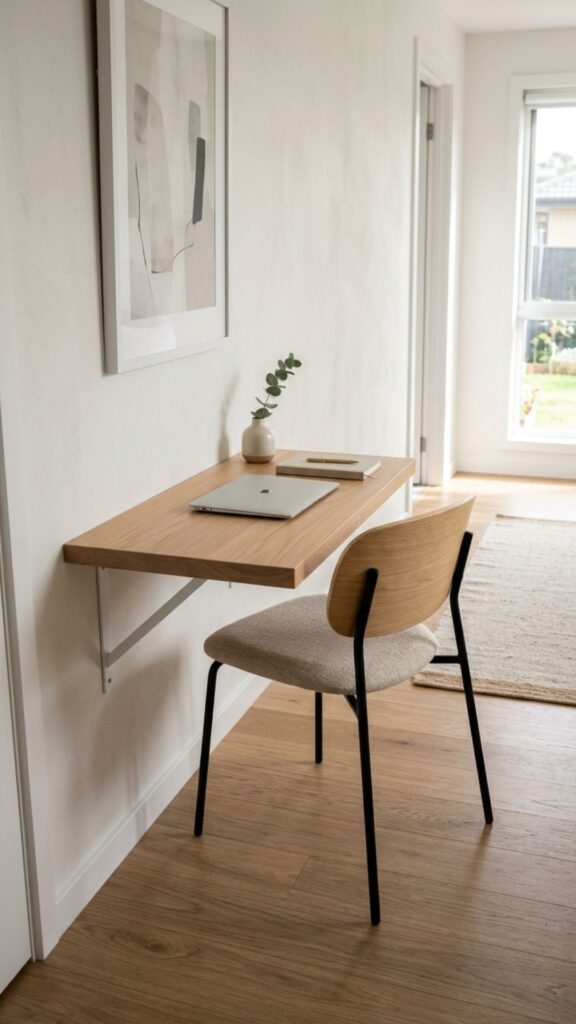
The chair you choose is just as important as the desk.
In a hallway workspace, bulky office chairs can obstruct the walking path. Choose a compact chair, stool, or armless office chair that fits entirely underneath the desk.
If you’ll be working for long periods, prioritize proper back support while still selecting a streamlined design.
15. Create a Monochrome Workspace
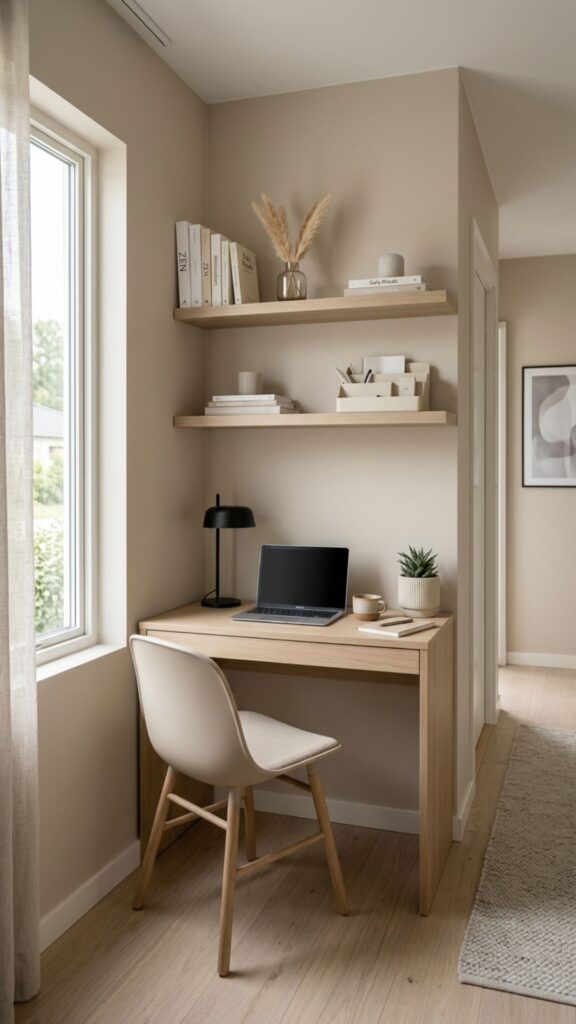
Using one main color throughout your hallway office can help the workspace visually disappear into the surrounding architecture.
For example, paint the wall, shelving, and desk in similar shades of white, beige, gray, or another color already used in the hallway.
The result feels calmer and less cluttered—an important advantage when fitting furniture into a narrow area.
16. Position the Desk Near a Window
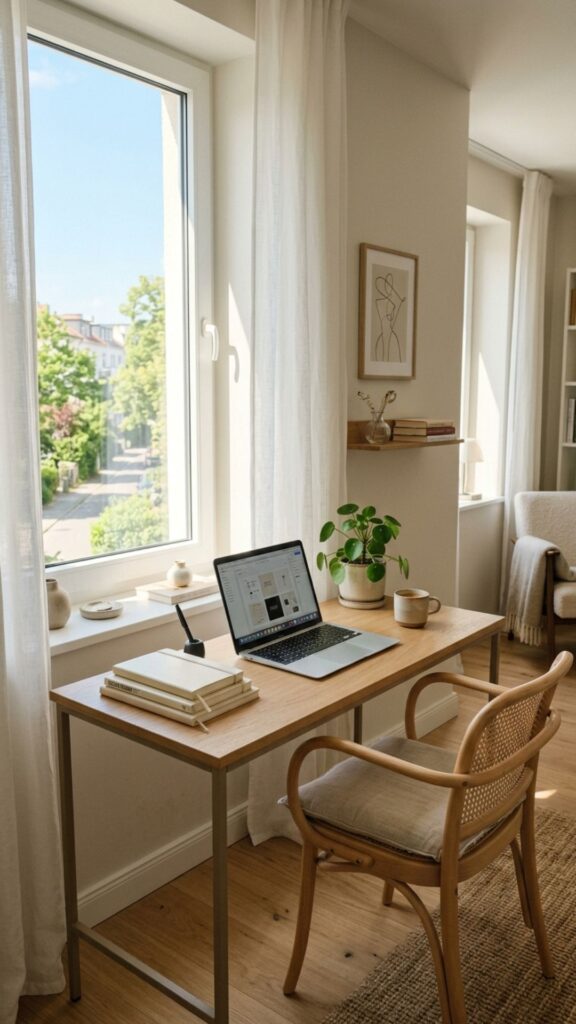
If your hallway has a window, take advantage of the natural light.
Positioning your desk nearby can make a compact workspace feel significantly more comfortable and inviting. Natural light can also reduce your reliance on artificial lighting during the day.
Just avoid placing your computer screen directly opposite a strong window if glare becomes distracting.
17. Add a Corkboard or Pinboard
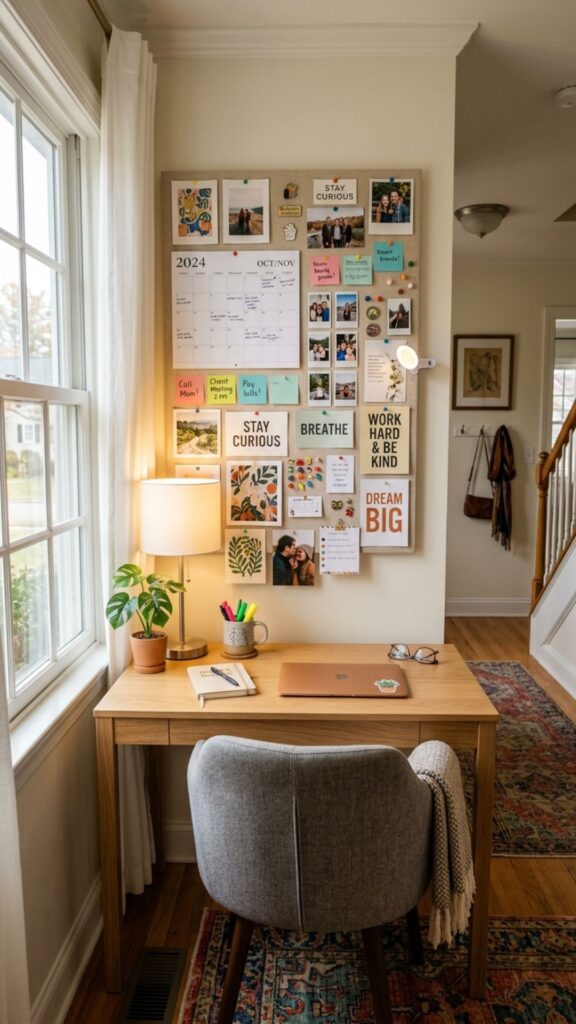
Turn the wall above your desk into a practical organization center.
A corkboard or fabric pinboard can hold calendars, reminders, photographs, inspiration, schedules, and important notes.
Choose a board that complements the surrounding decor so it feels like part of the hallway design rather than something you’d normally find in a corporate office.
18. Use Storage Baskets to Control Clutter
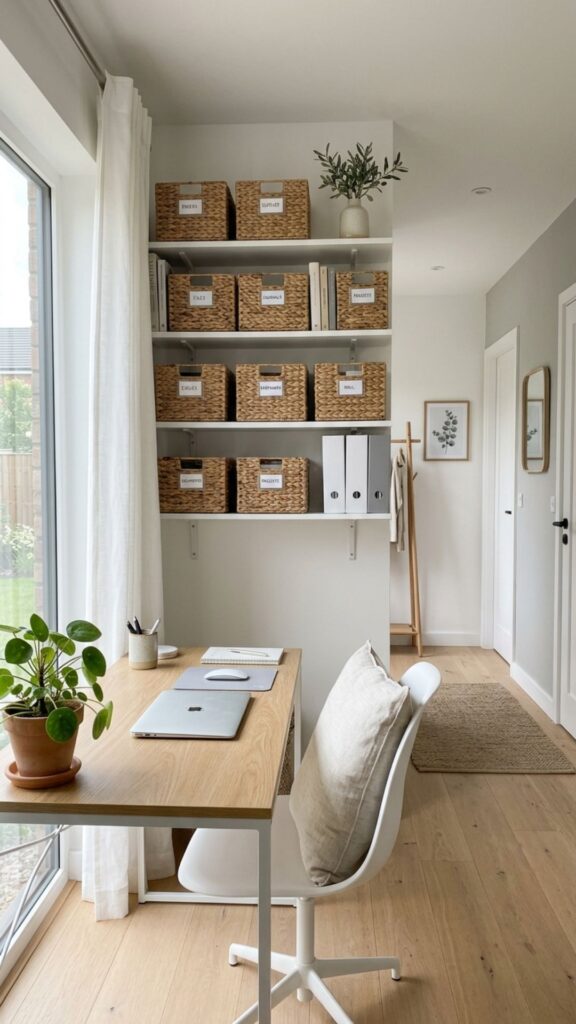
Small hallway offices look best when surfaces remain relatively clear.
Place attractive baskets or boxes on shelves to organize cables, chargers, stationery, paperwork, and miscellaneous accessories.
Using matching containers creates a more cohesive look and prevents everyday office supplies from making the hallway feel messy.
19. Turn the End of a Hallway Into an Office
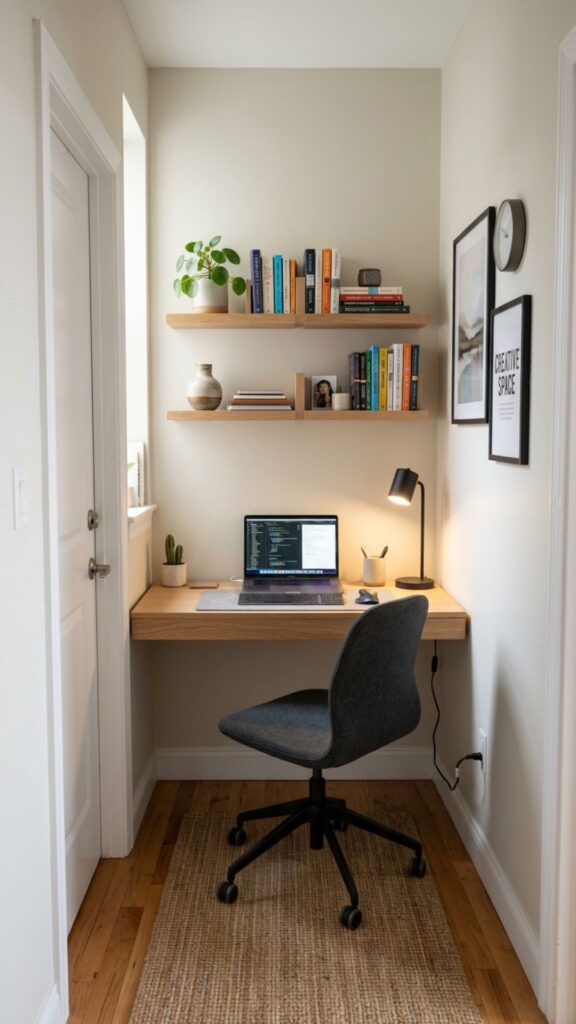
The blank wall at the end of a hallway is often wasted space.
If there’s enough room, position a narrow desk against it and use the wall above for shelving or artwork.
This arrangement can be particularly effective because the workspace sits outside the main flow of foot traffic while still taking advantage of otherwise unused square footage.
20. Make the Workspace Feel Like Part of the Decor
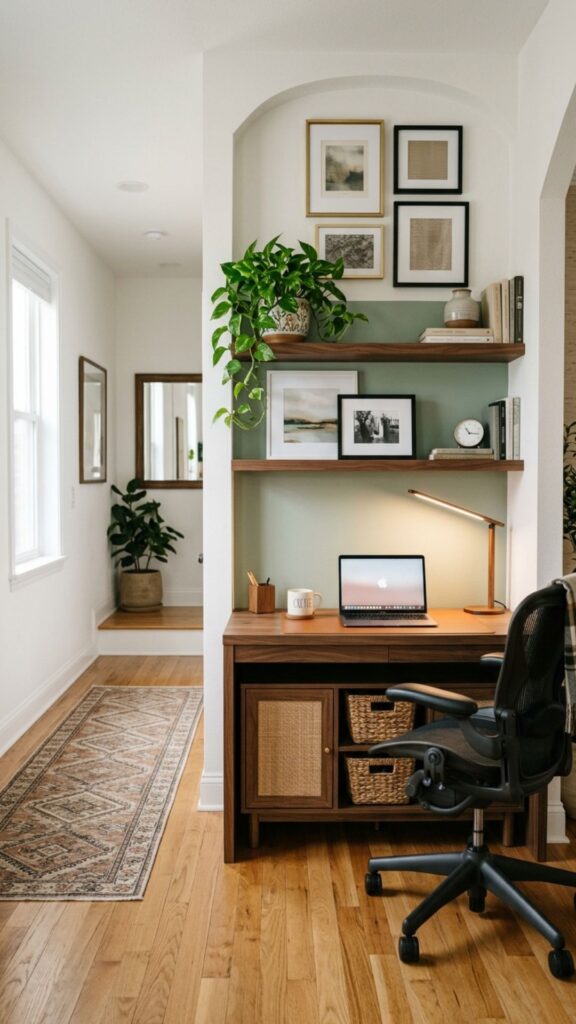
The best hallway offices don’t look like desks that were squeezed into leftover space.
Instead, make your office feel like an intentional extension of your home’s interior design. Repeat colors, materials, wood tones, metals, and decorative details already found nearby.
Add framed artwork, a small plant, an attractive lamp, or stylish storage boxes. When everything coordinates, your hallway office can become one of the most interesting design features in the home.
Conclusion
A functional home office doesn’t require an entire room. Sometimes, all you need is an unused wall, a quiet landing, or a forgotten corner of the hallway.
From floating desks and fold-down workstations to built-in shelving and concealed office cabinets, there are plenty of ways to create a productive workspace without making your hallway feel cramped. Focus on slim furniture, vertical storage, good lighting, and clutter control, and even a surprisingly small area can work beautifully.
Most importantly, design your hallway office so it fits naturally into your home. When the workspace is practical enough for everyday tasks and stylish enough to complement its surroundings, that once-empty hallway can become some of the hardest-working square footage in the house.
Can you put a home office in a hallway?
Yes. A wide hallway, landing, nook, or unused end wall can accommodate a compact desk and storage without requiring a separate room.
What type of desk is best for a narrow hallway?
A slim floating desk, fold-down desk, or narrow console-style desk is usually best because it takes up less floor space.
How deep should a hallway desk be?
A compact desk around 16–20 inches deep can work well for laptop-based tasks, depending on your available space and walking clearance.
How can I make a hallway office look less cluttered?
Use floating shelves, closed storage, baskets, cable organizers, and a chair that tucks underneath the desk.
How do I make a dark hallway office brighter?
Choose light wall colors, add a strong desk lamp or wall sconce, use reflective finishes where appropriate, and take advantage of any nearby natural light.