An outdoor kitchen placed just off the house can make backyard cooking much easier. You stay close to your indoor kitchen, utilities, dining area, and storage while still enjoying the fresh air and open space.
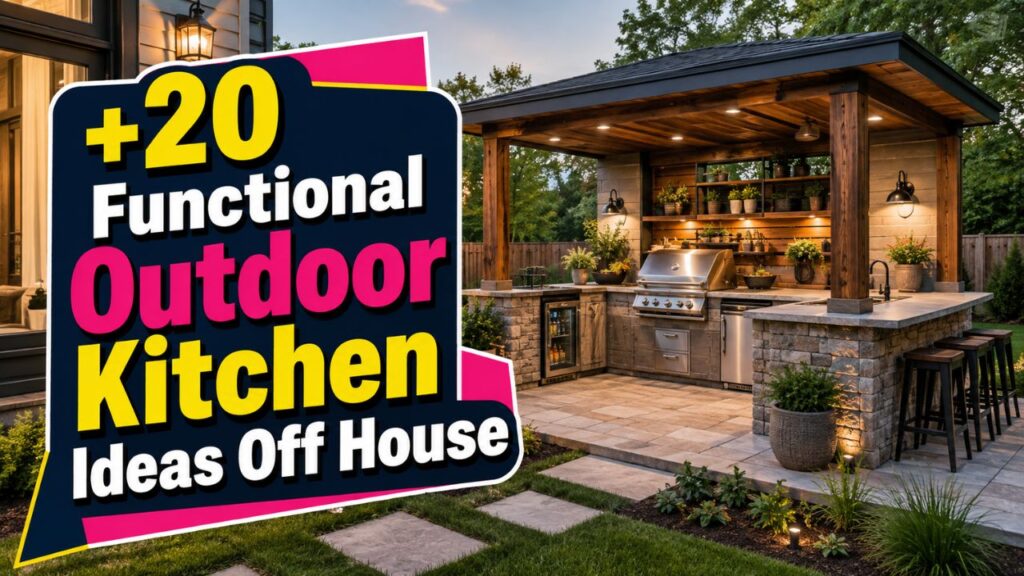
The best outdoor kitchen ideas off house balance convenience with safety and comfort. A good layout should give you enough room to prepare food, cook, serve, and move around without making the patio feel crowded.
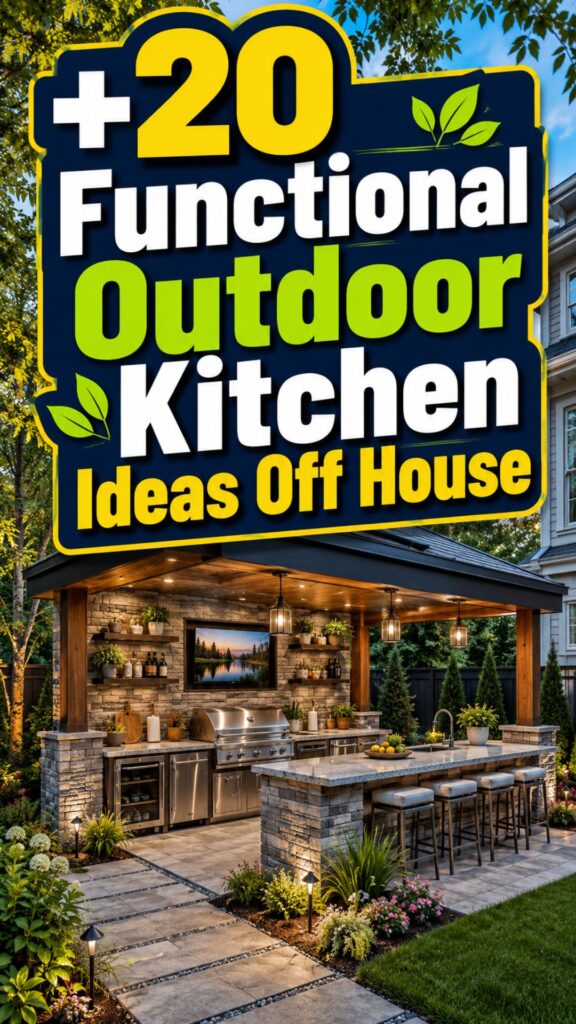
Before building, consider available space, drainage, ventilation, weather exposure, utility connections, and how people move between indoors and outdoors. These 20 practical ideas can help you create an outdoor kitchen that feels like a natural extension of your home.
1. Build a Straight Kitchen Along the Exterior Wall
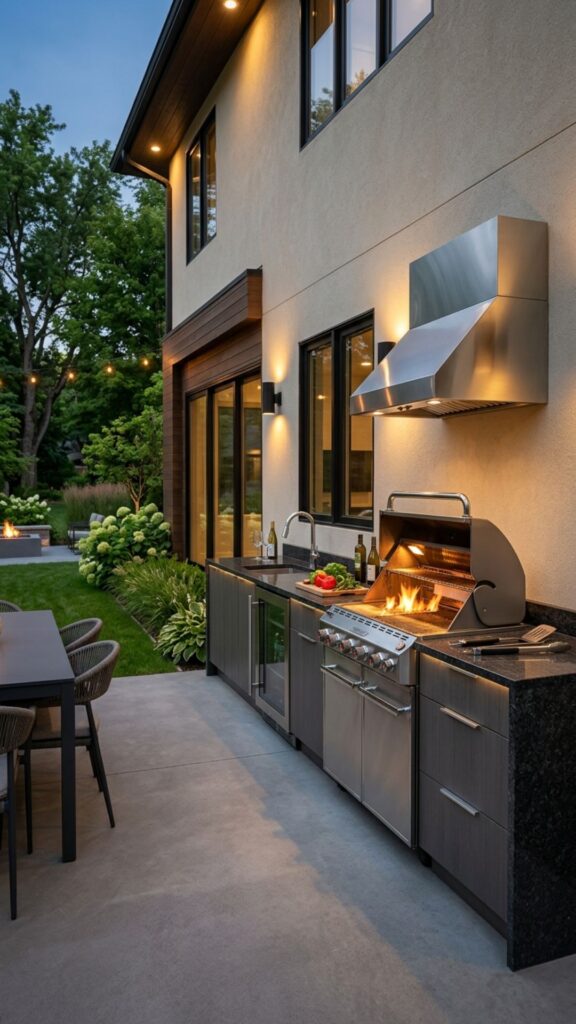
A straight-line kitchen works especially well on narrow patios. Place the grill, counter, storage, and small refrigerator along one exterior wall to keep the remaining outdoor area open.
Leave useful landing space on both sides of the grill. This gives you somewhere to place trays, utensils, ingredients, and cooked food without constantly moving between the indoor and outdoor kitchens.
2. Create an L-Shaped Outdoor Kitchen
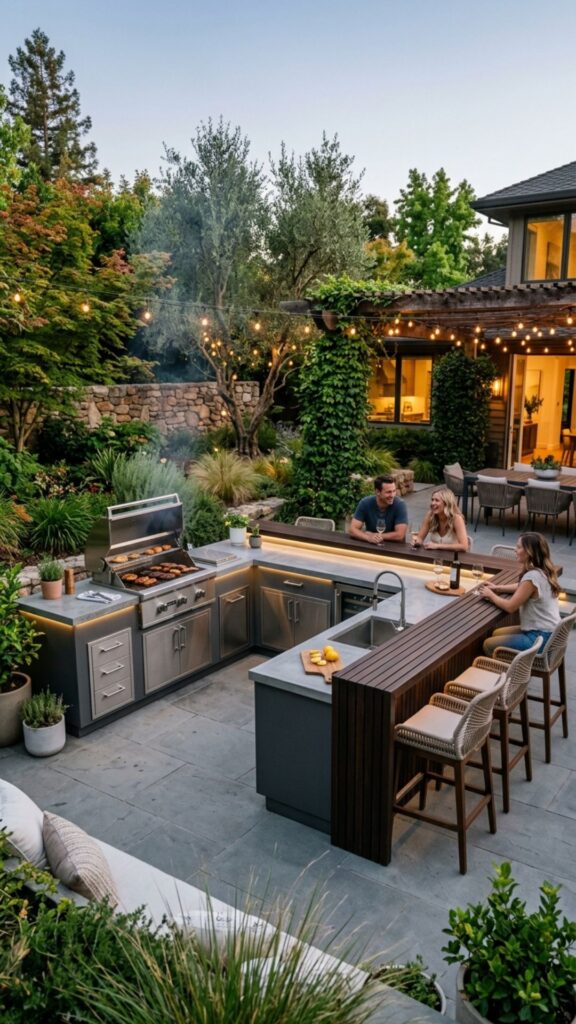
An L-shaped layout makes good use of a patio corner while giving you more preparation space. One side can contain cooking equipment, while the second side holds storage, a sink, or serving space.
Among practical outdoor kitchen ideas off house, this layout works particularly well for entertaining. The outer counter can even become casual seating when you add a few stools away from the cooking zone.
3. Keep the Kitchen Close to the Back Door
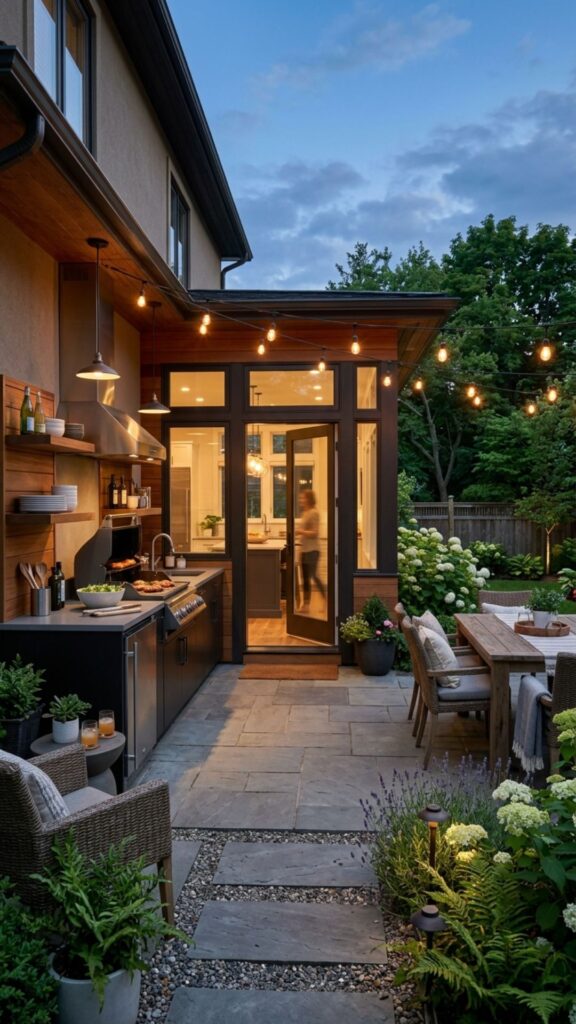
Positioning the outdoor kitchen near your back door reduces the distance between indoor food storage and outdoor cooking. It is especially useful when you do not plan to install every indoor appliance outside.
Keep the doorway and main walkway clear. People should be able to enter and leave the house without squeezing past stools, hot grills, open cabinets, or someone preparing food.
4. Add a Compact Grill and Prep Station
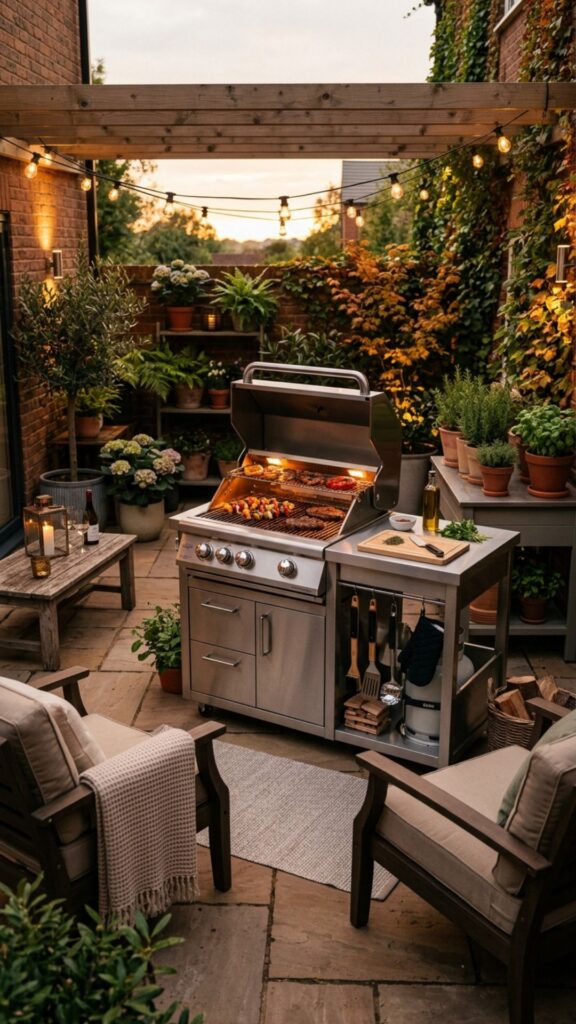
Not every backyard needs a large outdoor kitchen. A built-in grill paired with a durable preparation counter may provide everything you need for simple family meals.
Include storage underneath for grilling tools, pans, cleaning supplies, and serving pieces. A compact setup also leaves more room for a dining table, fire pit, garden, or children’s play area.
5. Install a Small Outdoor Refrigerator
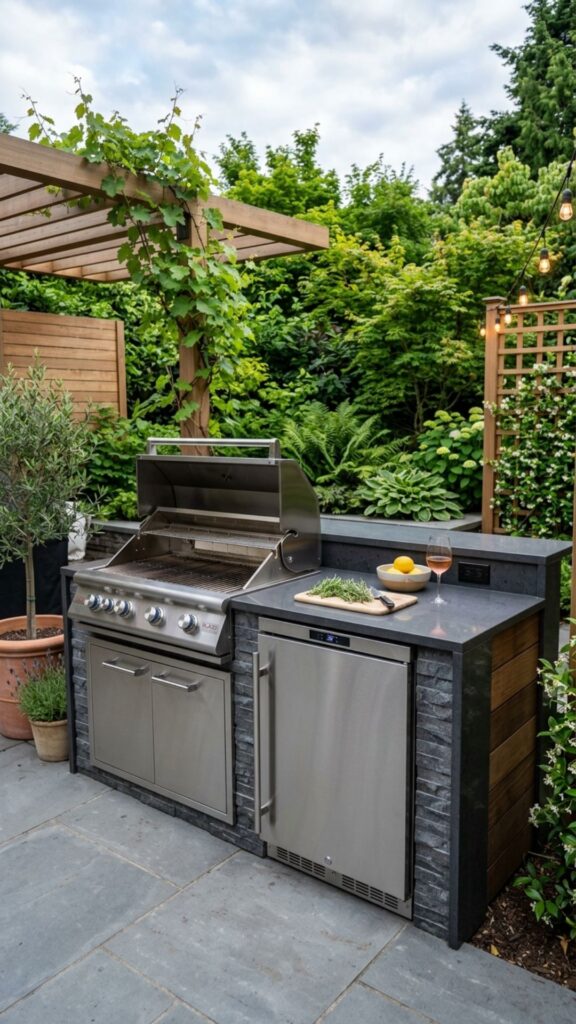
A weather-rated refrigerator can reduce unnecessary trips inside for drinks, sauces, vegetables, and chilled ingredients. Place it under the counter to preserve valuable preparation space.
Choose an appliance specifically designed for outdoor use rather than moving a standard indoor refrigerator outside. Outdoor models are built to handle greater temperature and moisture changes.
6. Use a Galley-Style Layout on a Long Patio
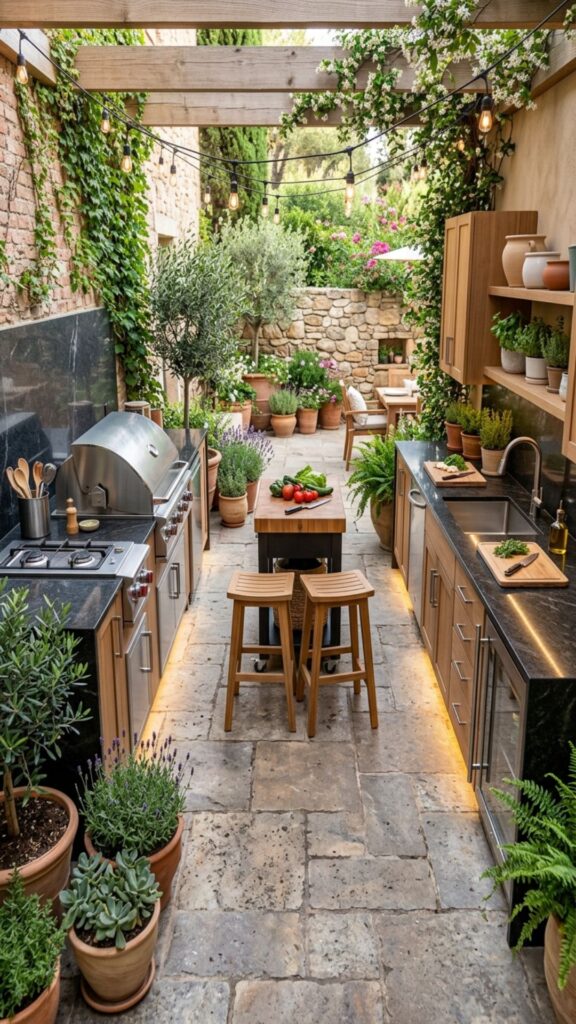
A galley layout uses two parallel work areas. For example, the grill and sink might sit against the house while an island opposite provides preparation space and seating.
This design can provide plenty of workspace, but walkway width matters. Make sure cabinet doors, refrigerator doors, and stools can be used without blocking people moving through the kitchen.
7. Add an Island Facing the Backyard
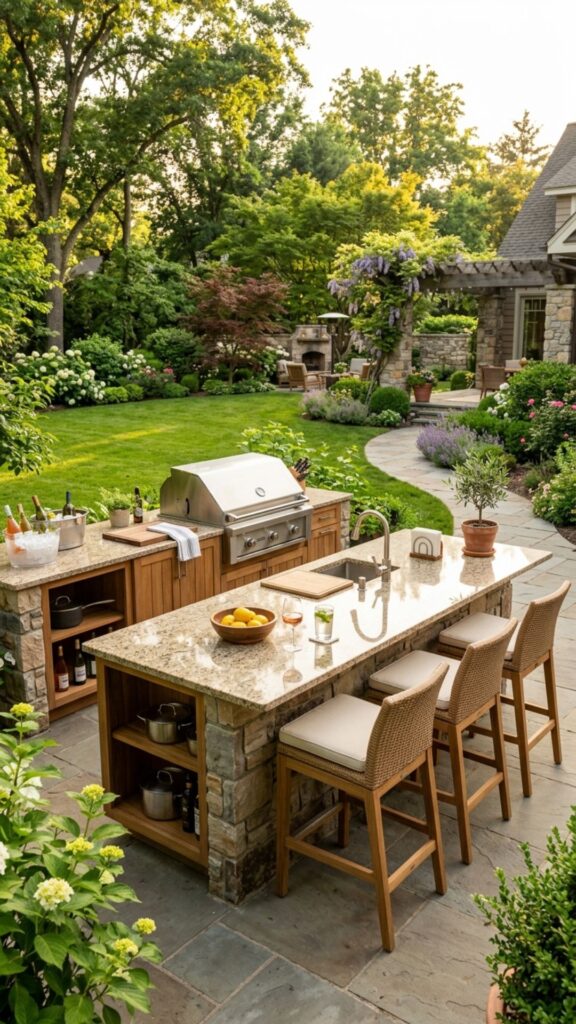
An island can turn a simple wall kitchen into a more social outdoor space. Use the island for serving food, preparing ingredients, storing supplies, or seating guests.
This arrangement keeps visitors facing the cook without placing them beside the grill. It is one of the more versatile outdoor kitchen ideas off house for homeowners who regularly entertain family and friends.
8. Create a Covered Outdoor Kitchen
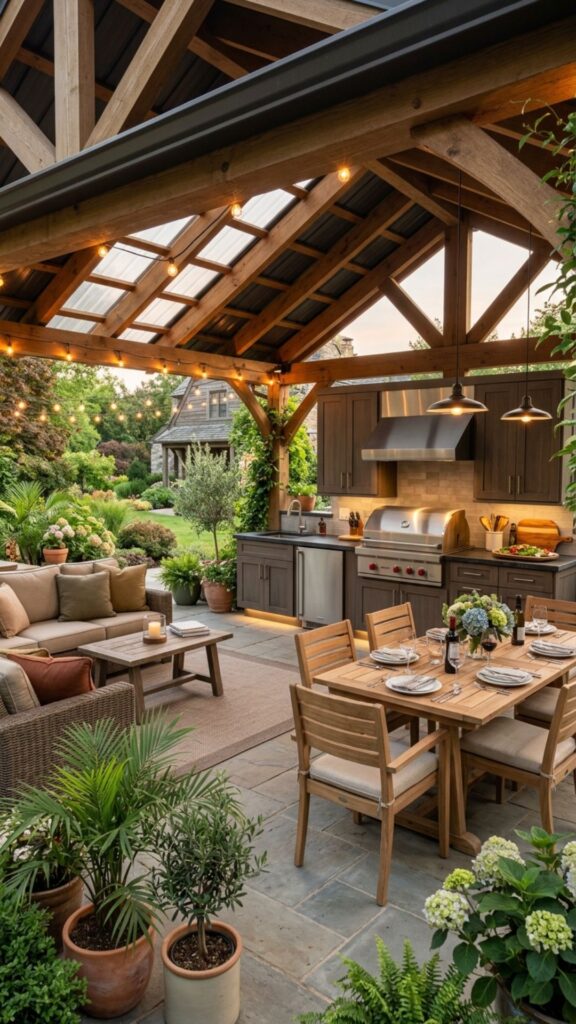
A roof, pergola, or covered patio can make your kitchen more comfortable during strong sunshine and light rain. Shade also helps protect countertops, furniture, and certain appliances.
However, covering the kitchen does not remove ventilation requirements. Follow appliance instructions for overhead clearance, surrounding materials, and airflow before deciding where grills or other heat-producing equipment should sit.
9. Use a Pergola for Partial Shade
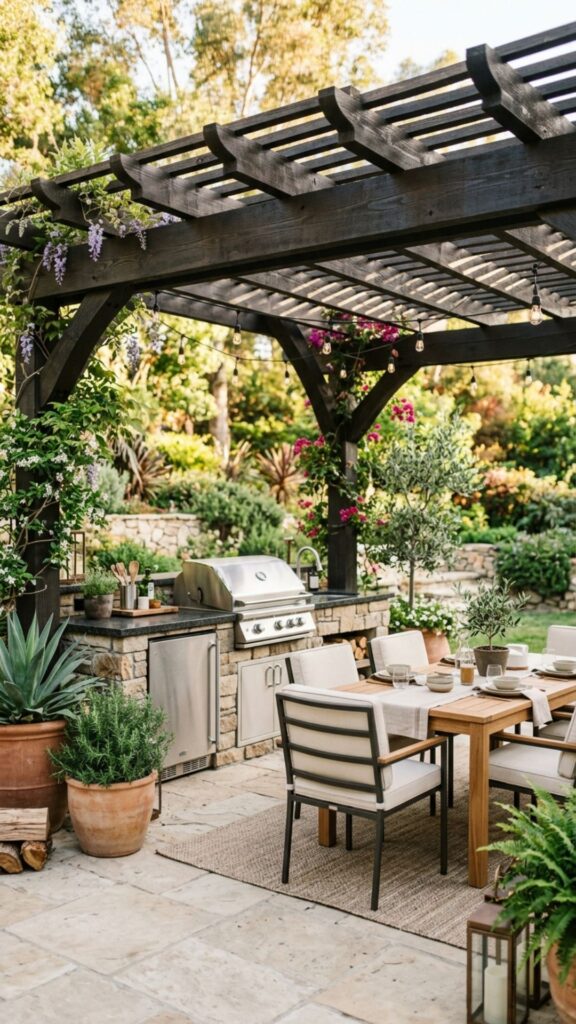
If you do not want a completely covered kitchen, consider adding a pergola. It visually defines the cooking area while keeping the backyard feeling open.
Retractable fabric or adjustable louvers can provide additional shade where suitable. Keep combustible materials safely separated from cooking equipment and use products intended for exterior conditions.
10. Include a Small Sink for Easier Preparation
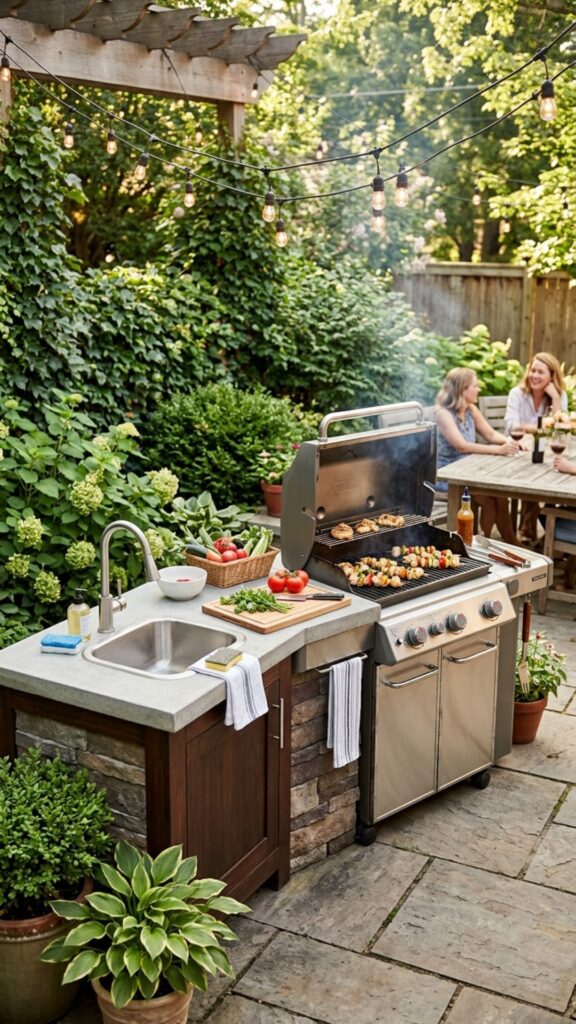
A sink makes rinsing vegetables, washing hands, filling pots, and cleaning preparation tools much easier. It can be particularly valuable when the outdoor kitchen is used frequently.
Installing plumbing is easiest when the kitchen sits near existing household water and drainage lines. Have the layout assessed properly before construction so water does not create drainage or freezing problems later.
11. Extend the Counter Into a Dining Bar
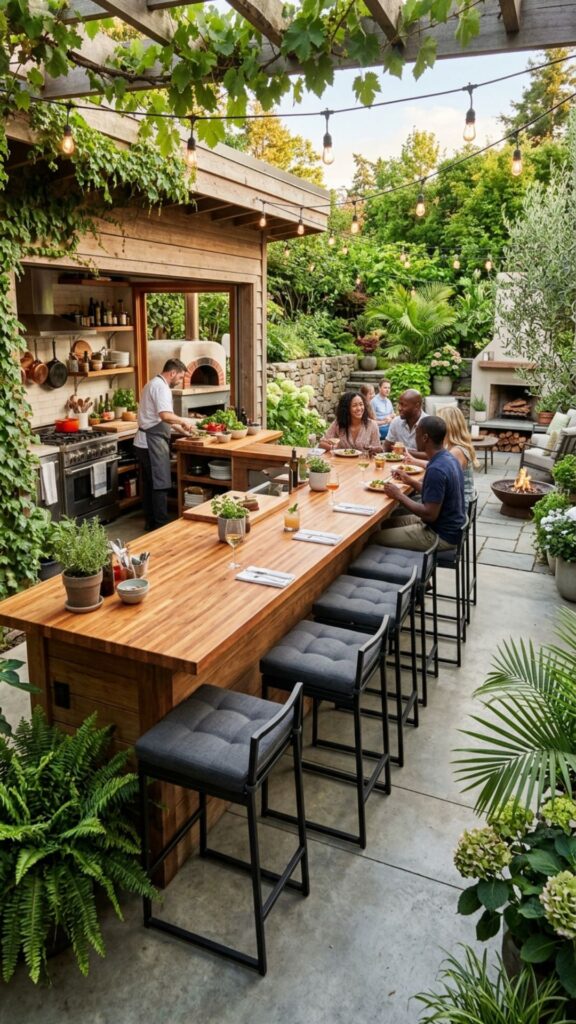
A raised or extended countertop can double as a casual eating space. Add two or three stools, and you may not need another dining table on a smaller patio.
Leave sufficient knee room beneath the counter and space behind each stool. Comfortable circulation is an important part of successful outdoor kitchen ideas off house, especially in compact backyards.
12. Add Closed Storage Under the Counter
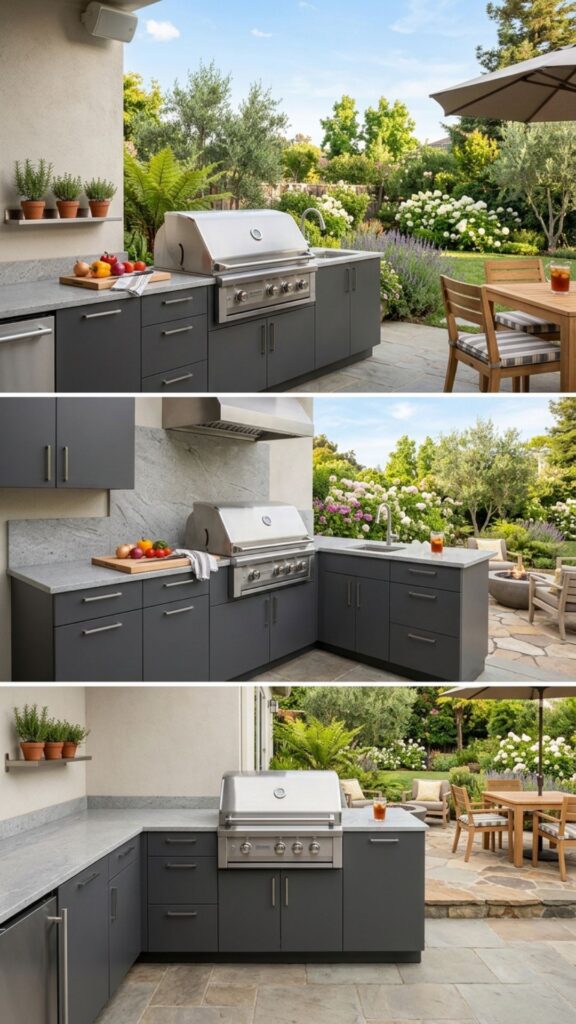
Outdoor kitchens quickly become frustrating when every utensil must be carried outside before cooking. Cabinets give you dedicated storage for items you regularly use outdoors.
Choose materials designed to tolerate exterior conditions. Stainless steel, marine-grade materials, masonry systems, and suitable weather-resistant cabinetry can perform better than ordinary indoor cabinets when exposed to moisture and temperature changes.
13. Choose a Smaller Built-In Grill
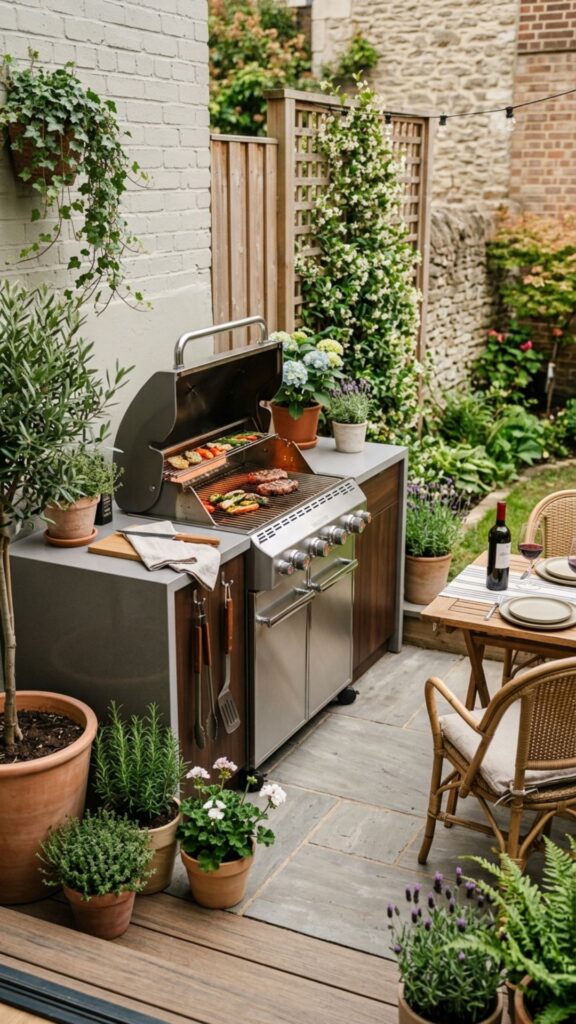
A huge grill can overwhelm a modest patio. Instead, choose a built-in model sized around the number of people you normally cook for.
A smaller grill can leave room for features that may be more useful every day, including preparation counters, drawers, rubbish storage, a sink, or refrigeration. Bigger equipment does not automatically create a better kitchen.
14. Create Separate Cooking and Serving Zones
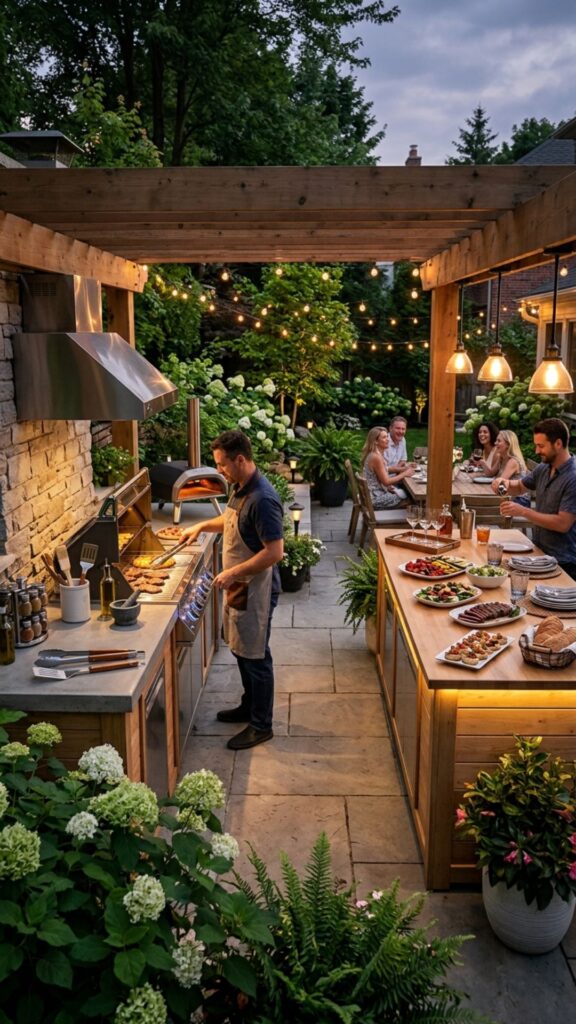
Keep your primary cooking surface in one area and your serving space slightly farther away. This simple separation reduces congestion around the grill when food is being prepared.
Guests can collect plates, drinks, and condiments without entering the hottest part of the kitchen. This is especially helpful during parties, when several people may be moving around the patio at once.
15. Use a Corner That Normally Goes Unused
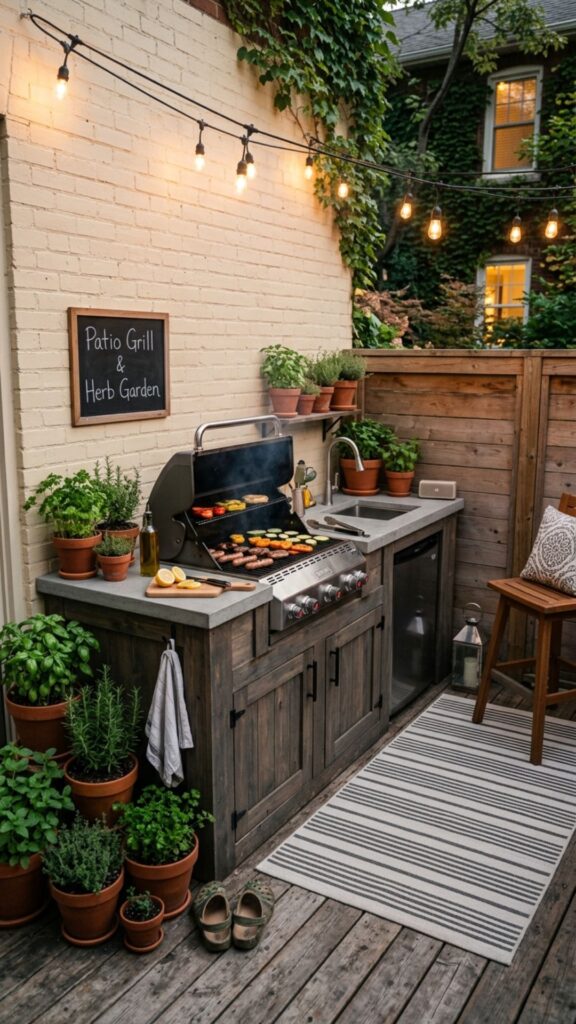
An empty patio corner can become a surprisingly useful cooking area. A compact grill, short countertop, and base cabinet may be enough to transform wasted space.
Check nearby windows, doors, roof overhangs, siding, and ventilation before installing anything. Functional outdoor kitchen ideas off house should work with the existing structure rather than creating new safety or movement problems.
16. Add Task Lighting for Evening Cooking
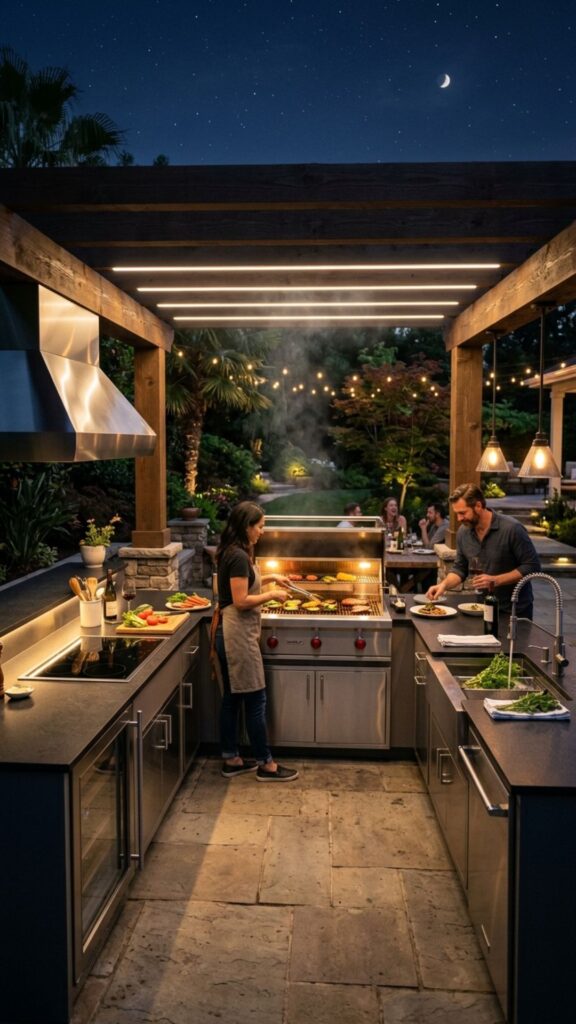
Outdoor cooking often continues after sunset. Install focused lighting over preparation surfaces and general lighting around walkways so you can cook and move safely.
Avoid relying only on decorative string lights. They can create atmosphere, but brighter task lighting makes chopping ingredients, checking food, cleaning counters, and handling hot equipment much easier.
17. Match Materials With the House Exterior
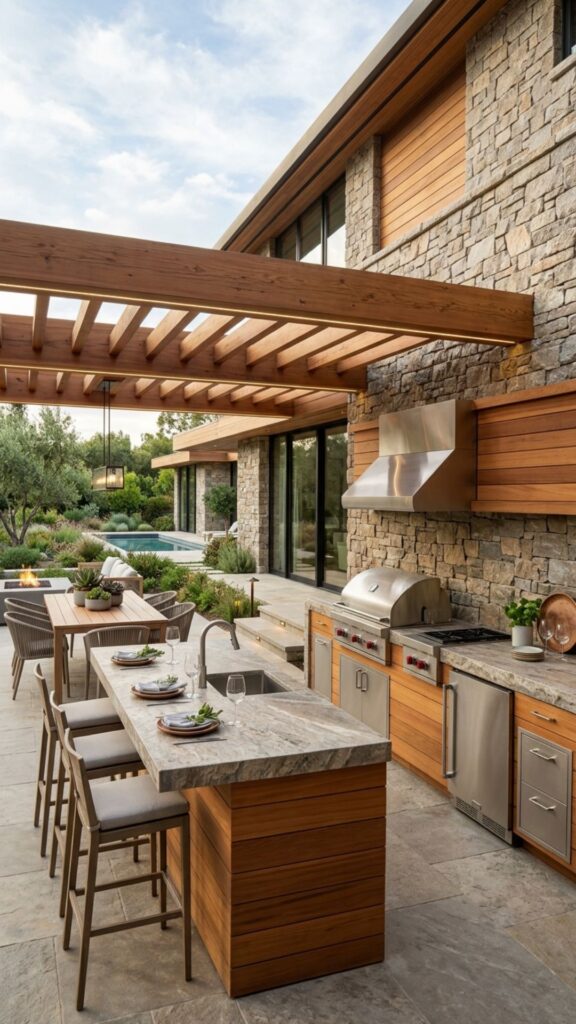
Using materials that relate to your home’s architecture can make the outdoor kitchen feel intentional. Consider repeating similar stone, brick, stucco, wood tones, or countertop colours.
You do not need an exact match. Using one or two finishes already present on the house is often enough to visually connect the kitchen with the surrounding patio and exterior.
18. Add a Pizza Oven Beside the Main Cooking Zone
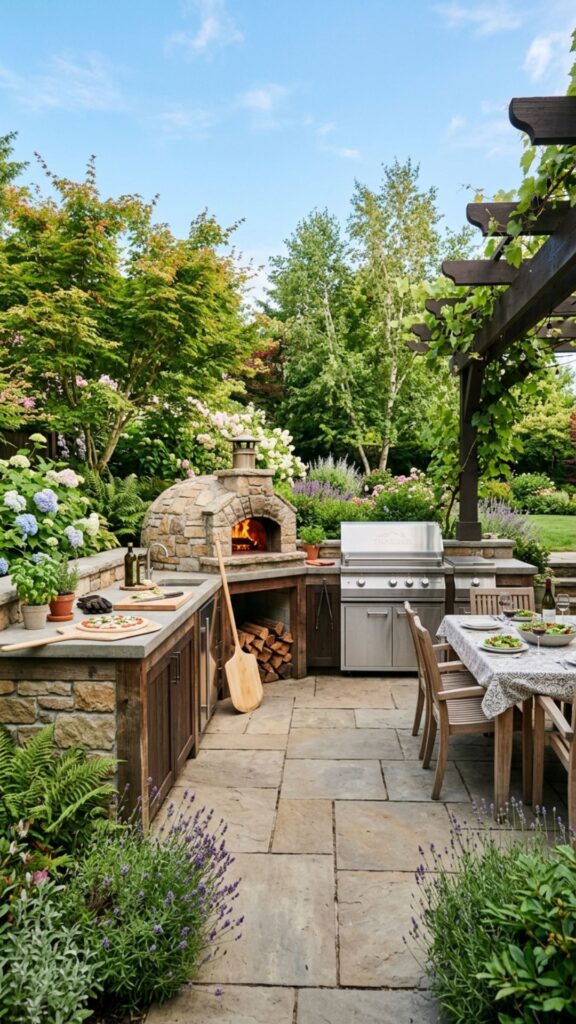
Homeowners who regularly make pizza, flatbreads, or roasted dishes may want a dedicated outdoor oven. Position it where it does not interfere with the primary grill or preparation area.
Because pizza ovens can produce significant heat, clearance requirements are important. Follow the manufacturer’s installation instructions and use appropriate non-combustible materials around the unit.
19. Include a Pull-Out Waste Bin
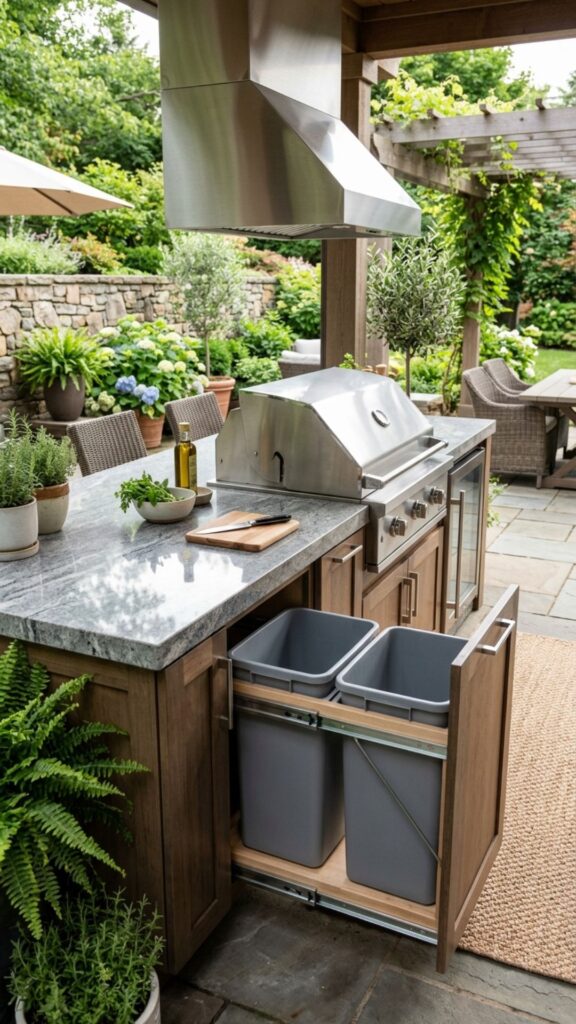
A pull-out waste bin seems like a small detail, but it makes outdoor cooking noticeably easier. Position it beneath the preparation counter so food scraps and packaging can be discarded quickly.
Keeping rubbish enclosed also creates a cleaner appearance. Empty it after cooking rather than leaving food waste outside, particularly in areas where insects or animals may be attracted to it.
20. Design the Kitchen Around Everyday Use
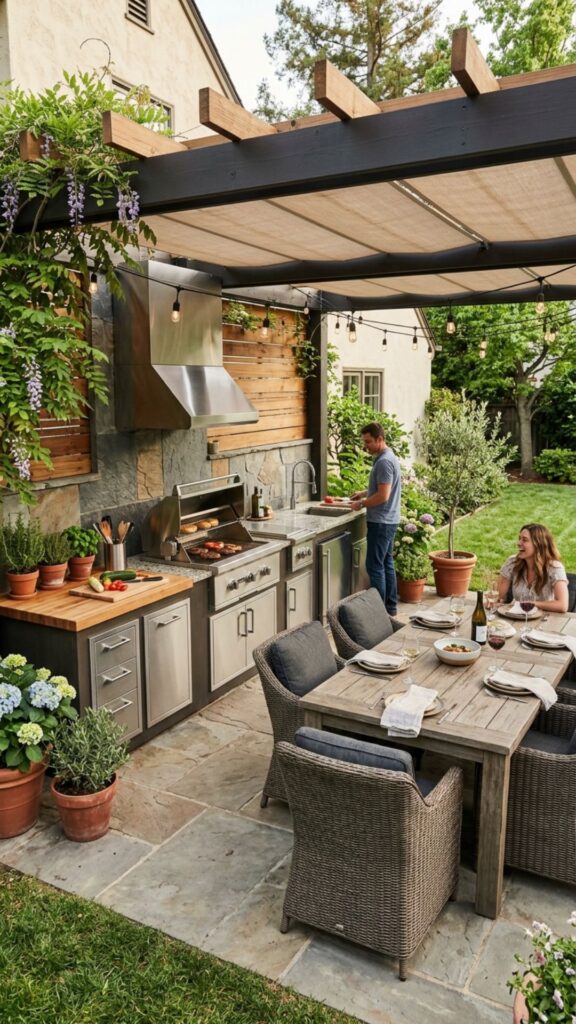
The most successful outdoor kitchen ideas off house are based on how the homeowner actually cooks. Someone who grills twice a week needs a different layout from someone who hosts large parties several times each summer.
Start with your essential features and add extras only when they improve how you will use the space. Good workflow, sufficient preparation room, safe equipment placement, and comfortable seating usually matter more than filling the kitchen with appliances.
How to Plan an Outdoor Kitchen Off the House
A functional outdoor kitchen should make cooking easier, not simply fill unused patio space. Start by measuring the available area and marking doors, windows, steps, utilities, walkways, and existing furniture.
Then decide which appliances you will genuinely use. Position preparation space near the cooking surface, maintain suitable heat clearances, and keep major traffic routes away from the grill. Professional advice may be necessary for gas, electrical, plumbing, structural, and ventilation work.
Planning these details before construction can prevent expensive changes after cabinets, countertops, and appliances have already been installed.
Conclusion
The right outdoor kitchen ideas off house can turn an ordinary patio into a practical extension of your indoor living space. You do not need an oversized kitchen to make outdoor cooking convenient. A well-positioned grill, useful countertop, durable storage, good lighting, and comfortable circulation can make a major difference.
Choose a layout based on your available space, cooking habits, climate, and entertaining needs. Prioritise safety and everyday usability before decorative extras.
Ready to start planning? Measure the area directly off your house, list the features you will use most often, and build your outdoor kitchen around those priorities.
How close can an outdoor kitchen be to the house?
An outdoor kitchen can be positioned close to a house, but the safe distance depends on the grill, oven, surrounding materials, ventilation, and manufacturer requirements. Always follow appliance clearances and applicable local building or fire rules.
What is the best layout for an outdoor kitchen off the house?
Straight-line and L-shaped layouts are often practical because they use exterior walls and patio corners efficiently. Larger patios may also accommodate islands or galley-style kitchens without restricting movement.
Does an outdoor kitchen need a roof?
No. An outdoor kitchen can be completely open, partially shaded, or fully covered. A roof provides weather protection, but cooking equipment still needs suitable ventilation and heat clearance.
What should every outdoor kitchen include?
At minimum, most useful outdoor kitchens need a cooking surface, preparation counter, safe landing areas, storage, and appropriate lighting. Refrigerators, sinks, bars, and pizza ovens can be added based on available space and cooking habits.
Does an outdoor kitchen add value to a backyard?
A thoughtfully designed outdoor kitchen can improve how useful and enjoyable a backyard feels. Its practical value is usually strongest when the layout matches the home, climate, available patio space, and the owner’s actual cooking habits.