Your front porch is the first thing guests see when they walk up to your home. A few well-placed plants can turn a plain entryway into a warm, welcoming space that people remember. And you don’t need a green thumb or a big budget to pull it off.
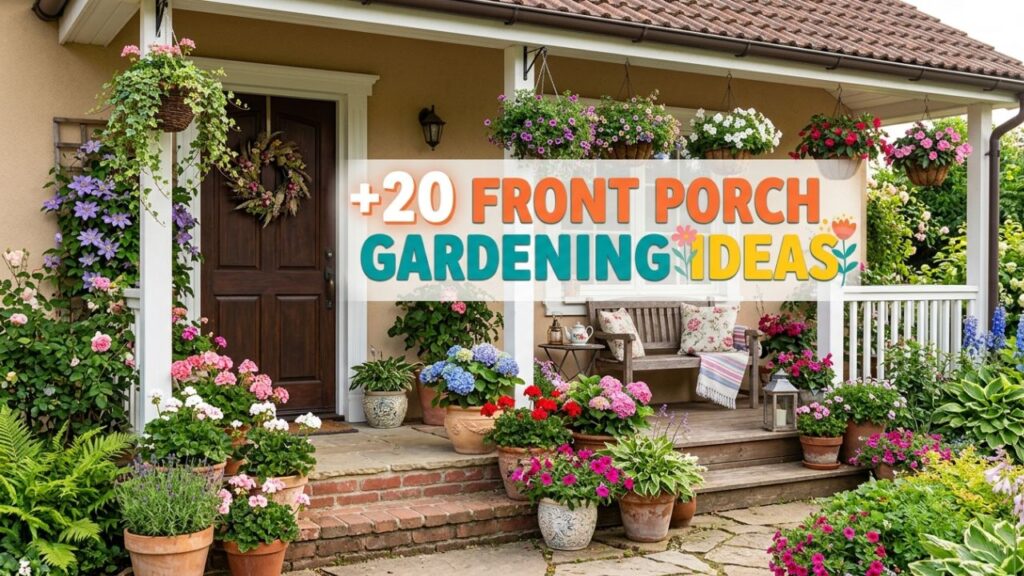
I’ve spent years experimenting with porch plantings, killing a few ferns along the way, and figuring out what actually works.
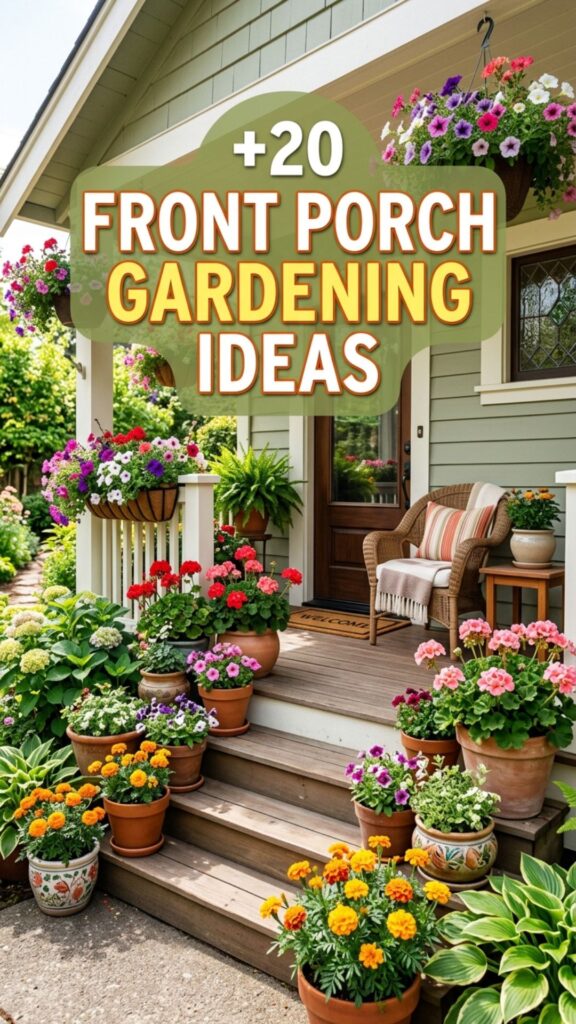
Below you’ll find 20 front porch ideas gardening lovers and total beginners can use to add color, texture, and personality. Whether you have a wide wraparound deck or a narrow stoop, there’s something here for you. Let’s dig in.
1. Frame Your Door with Matching Planters
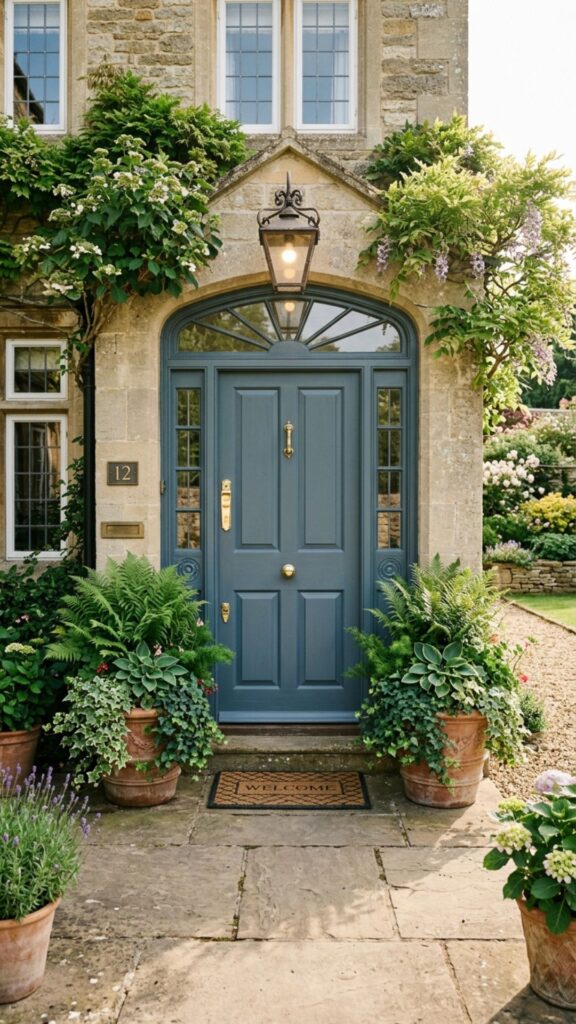
Nothing says “welcome” quite like a pair of matching planters flanking your front door. This classic look creates instant symmetry and draws the eye straight to your entrance. Choose containers that suit your home’s style, terracotta for a cottage feel, or sleek metal for something modern.
Fill each planter with the same plant for a clean, balanced look. Boxwoods, ornamental grasses, or a small evergreen shrub all work beautifully year-round. If you want more color, plant seasonal bloomers like geraniums in summer and swap in mums for fall.
2. Hang Ferns for Lush, Layered Greenery
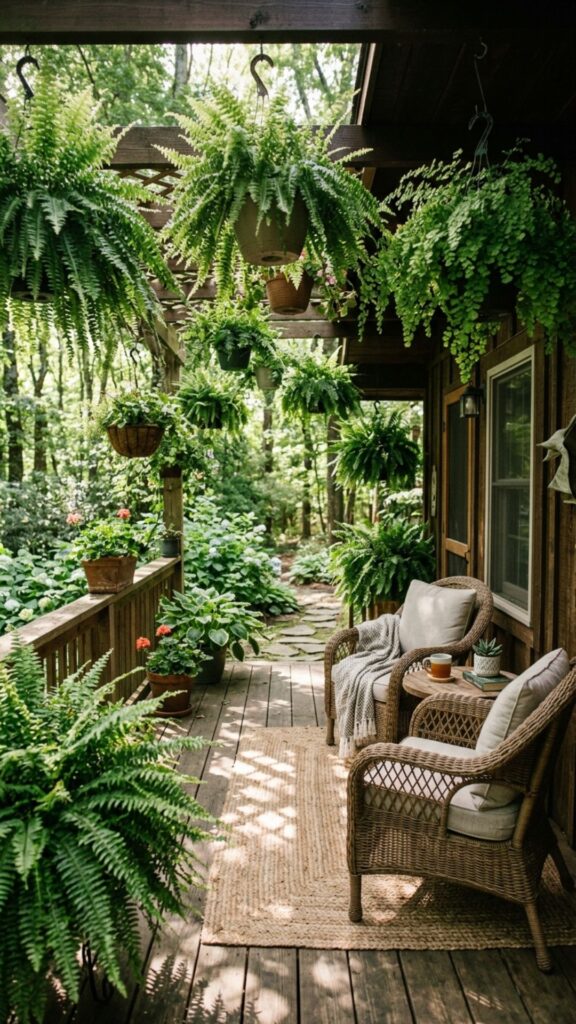
Hanging ferns bring softness and movement to a porch without taking up floor space. Boston ferns are the go-to choice because they thrive in the shade most porches provide. Their arching fronds add a lush, cascading effect that feels instantly cozy.
Water them a few times a week, especially in hot weather, since hanging plants dry out fast. Mist the fronds on dry days to keep them from browning at the tips. Come autumn, you can move them indoors and enjoy them all winter.
3. Build a Vertical Garden on a Blank Wall
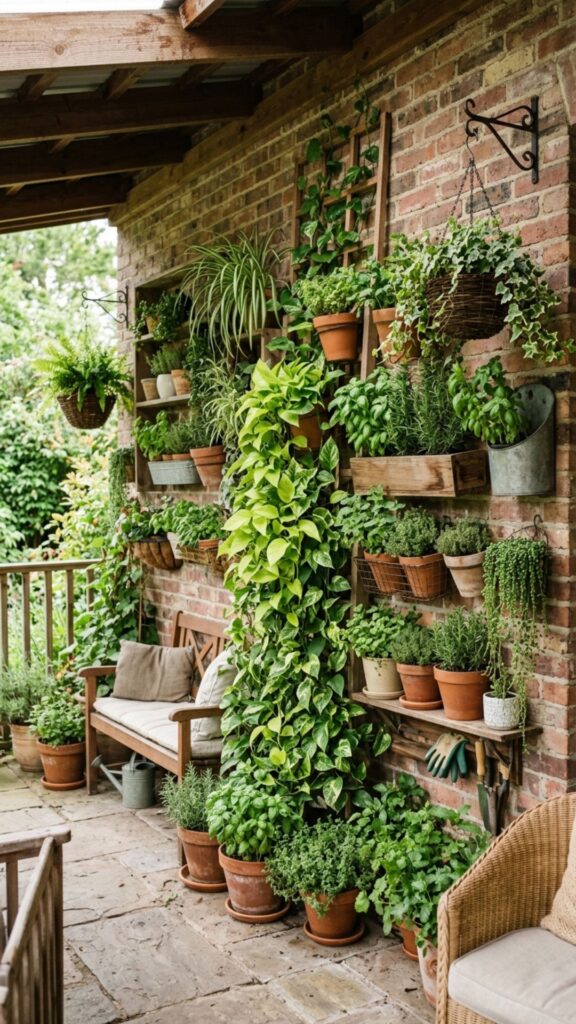
If floor space is tight, look up. A vertical garden turns an empty porch wall into a living display of herbs, succulents, or trailing flowers. Wall-mounted pockets, tiered shelves, or a repurposed pallet all do the trick.
Group plants with similar light and water needs together so care stays simple. Herbs like basil, thyme, and parsley are a smart pick, they look great and give you fresh seasoning steps from the kitchen. This idea works especially well for small porches and apartment balconies.
4. Add Color with Seasonal Flower Pots
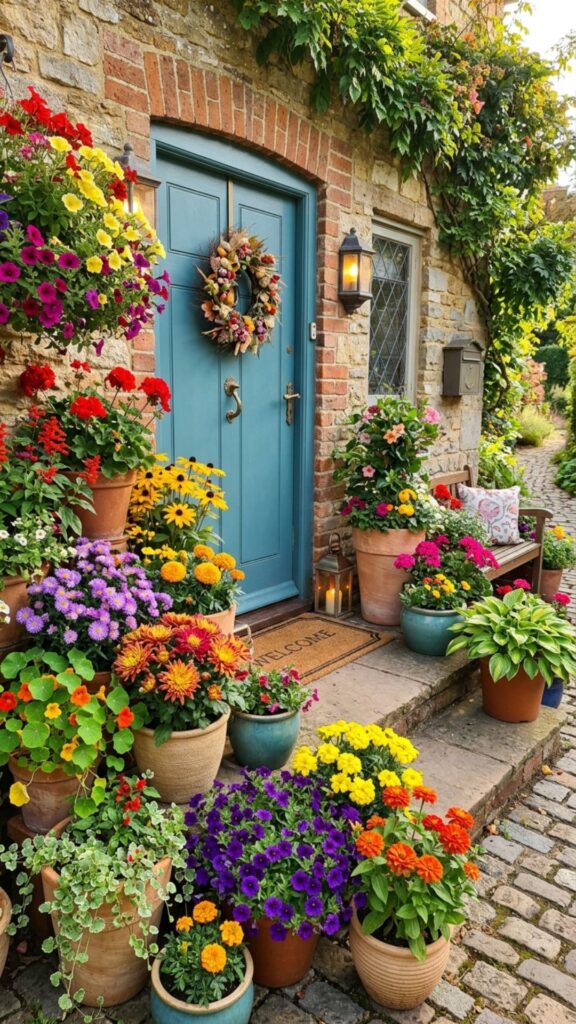
Seasonal flowers keep your porch looking fresh all year. Rotate your pots to match the calendar: pansies in spring, petunias in summer, mums in fall, and ornamental cabbage in winter. This simple habit keeps your entryway looking intentional.
Pick a color scheme and stick with it for a polished feel. Two or three shades that complement your front door work better than a random mix. Group pots in odd numbers, threes and fives look more natural than pairs.
5. Grow a Container Herb Garden
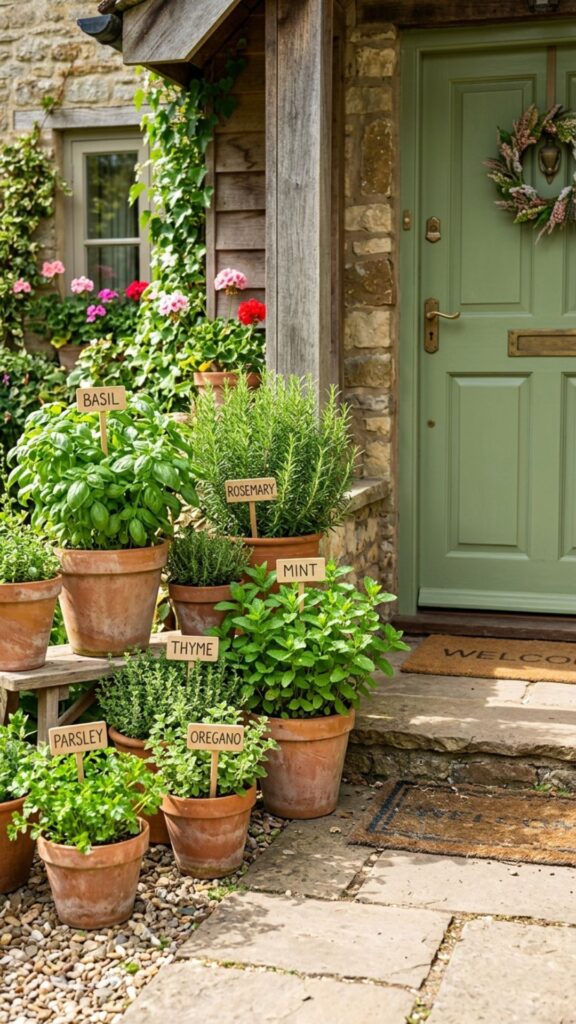
A container herb garden is both beautiful and useful. Rosemary, mint, chives, and oregano thrive in pots and release a lovely scent when you brush past them. It’s a practical front porch gardening choice for anyone who loves to cook.
Use a good-quality potting mix and make sure your containers have drainage holes. Most herbs want at least six hours of sun, so place them in your porch’s brightest spot. Snip regularly to keep the plants bushy and producing.
6. Install Window Boxes Under Porch Windows
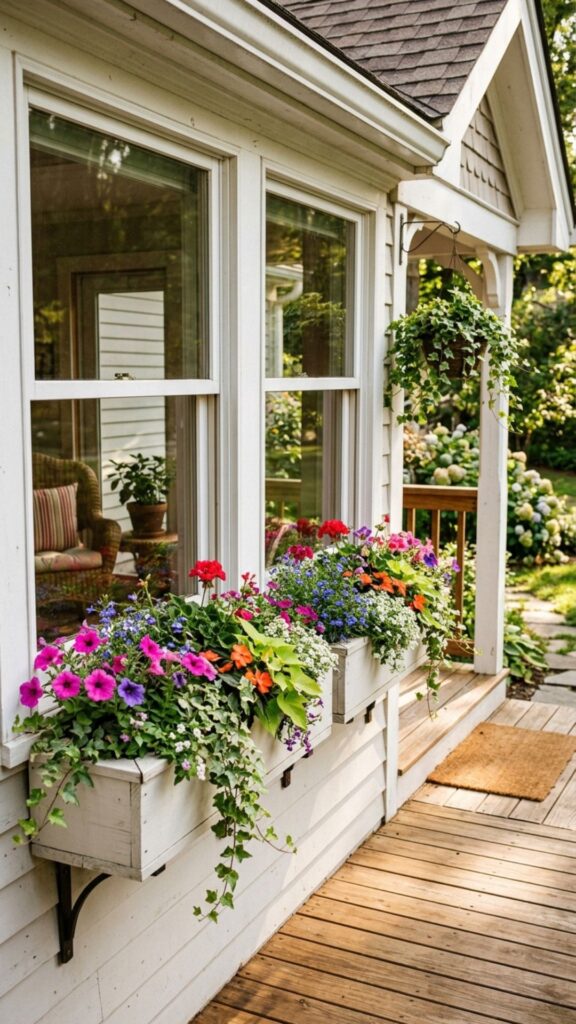
Window boxes add charm and dimension, especially on porches with front-facing windows. They soften hard architectural lines and give you another surface to plant on. Trailing varieties like ivy or sweet potato vine spill over the edges for a storybook effect.
Choose boxes that match your railing or trim color for a cohesive look. Mix upright plants in the back with cascading ones in the front to create depth. Water them often, since shallow boxes dry out quickly in the sun.
7. Create a Cozy Reading Nook Surrounded by Plants
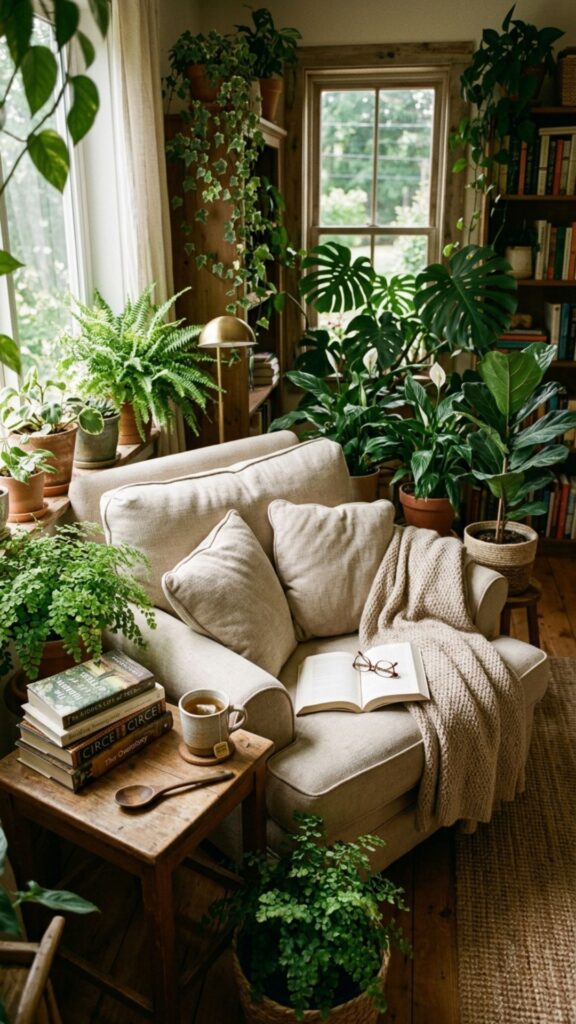
Turn a corner of your porch into a plant-filled retreat. Set a comfy chair beside a cluster of leafy potted plants, and you’ve got the perfect spot to unwind with a book. The greenery creates a natural sense of privacy and calm.
Choose low-maintenance plants like snake plants or pothos that tolerate a range of light. Add a small side table for your coffee, and you’ll want to spend every morning out there. This is one of my favorite ways to make a porch feel like an outdoor room.
8. Use Climbing Plants on a Trellis
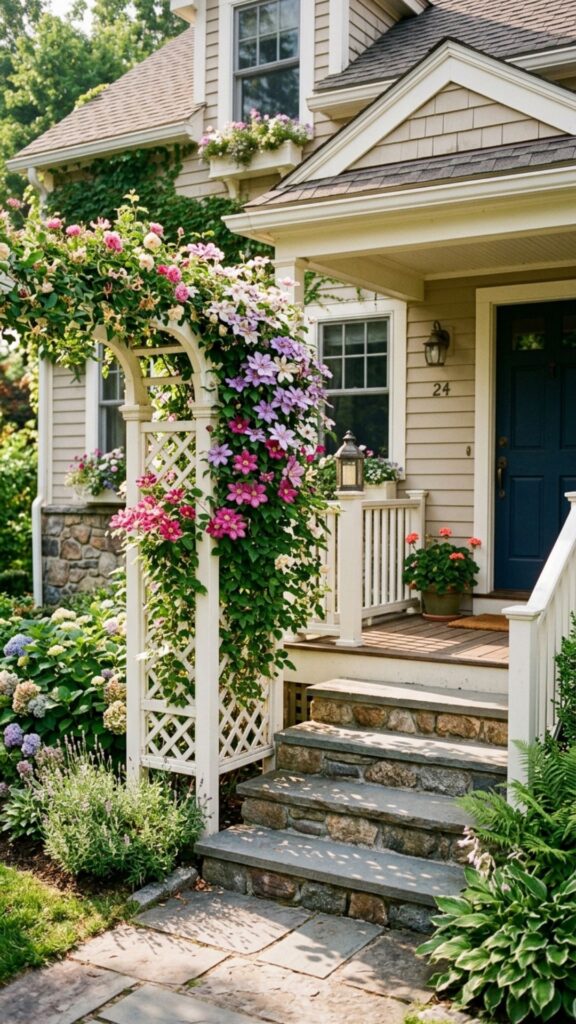
A trellis with climbing plants adds vertical interest and a touch of romance. Clematis, jasmine, and climbing roses reward you with blooms and fragrance through the growing season. Position the trellis against a wall or beside your porch steps.
Guide the vines gently as they grow, tucking new shoots into the trellis. Most climbers need a full season or two to fill in, so be patient. Once established, they provide shade and beauty with very little effort.
9. Light Up Planters with Solar Fairy Lights
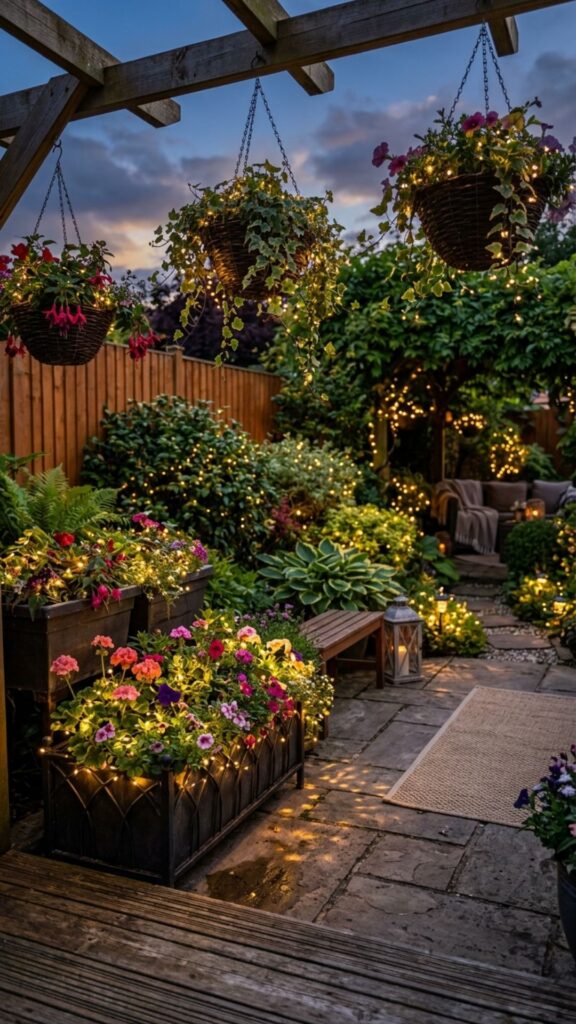
Weave solar fairy lights through your planters and hanging baskets for a magical evening glow. The soft light highlights your plants after dark and makes the porch feel inviting. Solar options need no wiring and charge themselves during the day.
Wrap the lights loosely so you don’t damage delicate stems. Warm-white bulbs give a cozy feel, while cool-white ones look crisp and modern. This budget-friendly trick delivers a big impact for just a few dollars.
10. Plant a Dwarf Citrus Tree in a Pot
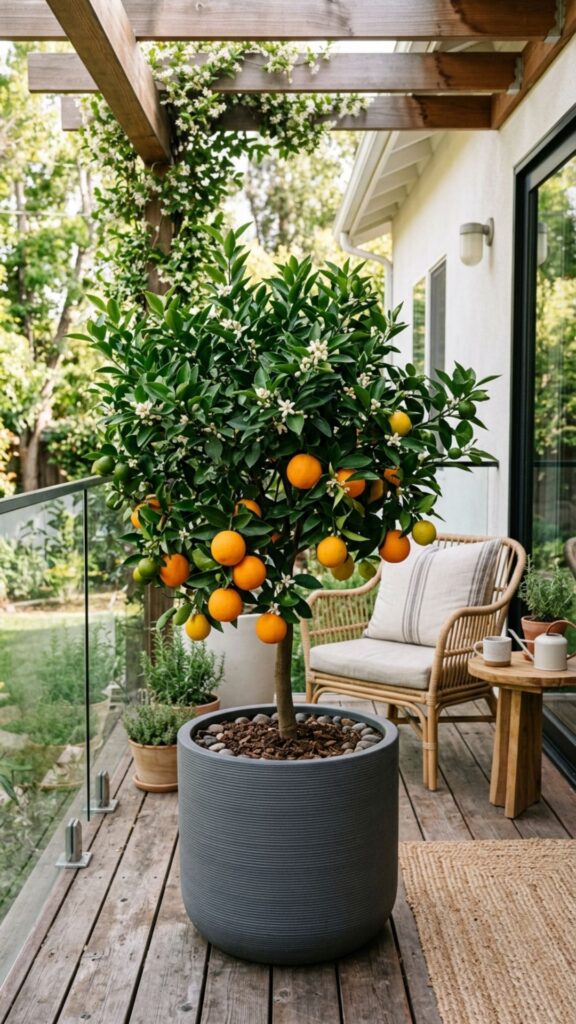
A potted dwarf citrus tree brings a resort-like vibe to any porch. Lemon, lime, and kumquat varieties stay compact and produce fragrant blossoms followed by real fruit. They’re a showstopping centerpiece for sunny porches.
Citrus trees love warmth and full sun, so give them the brightest spot you have. In colder climates, move the pot indoors before the first frost. Feed them a citrus-specific fertilizer during the growing season for the best harvest.
11. Design a Monochrome Green Display
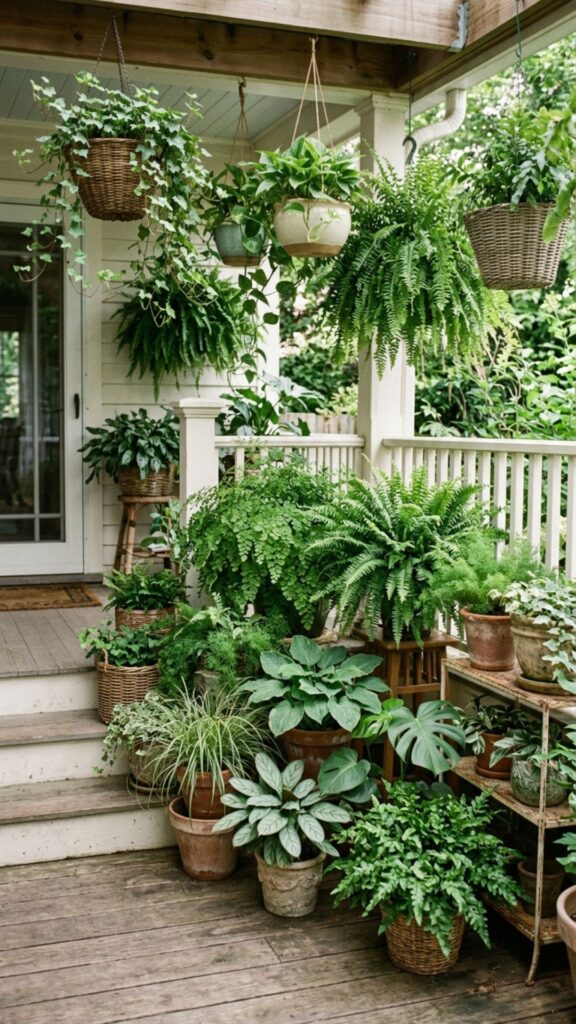
Sometimes flowers steal the show, but an all-green display feels effortlessly elegant. Mix ferns, hostas, ivy, and ornamental grasses in varying shades and textures. The result is calming, timeless, and never goes out of style.
Play with leaf shapes and heights to keep things interesting. Pair fine, feathery foliage with broad, bold leaves for contrast. This look pairs well with almost any home color and requires little seasonal swapping.
12. Repurpose Vintage Containers as Planters
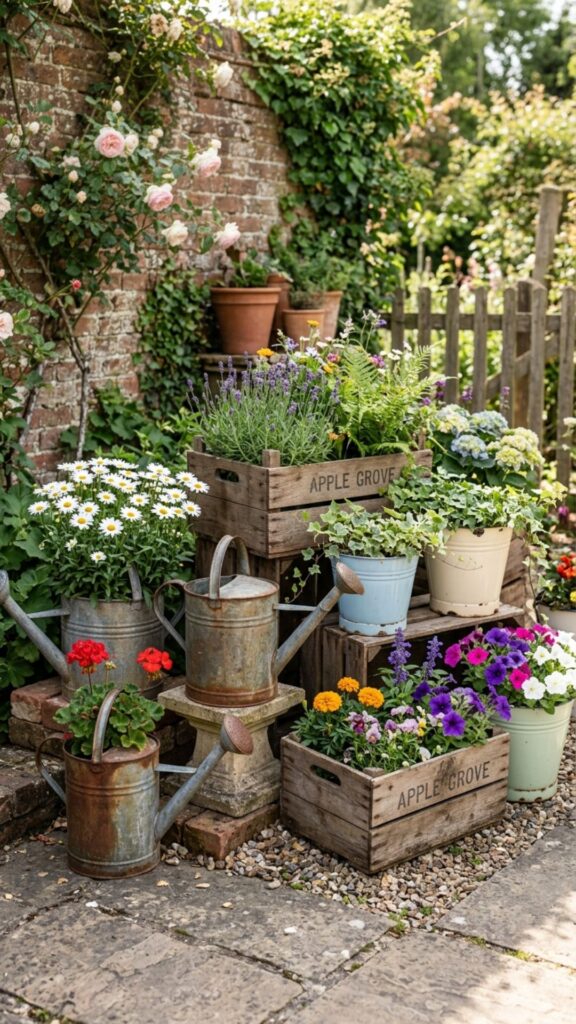
Old watering cans, wooden crates, and enamel buckets make charming, one-of-a-kind planters. Repurposing containers adds personality and a sense of history to your porch. It’s also an eco-friendly way to garden on a budget.
Just drill drainage holes in the bottom before planting so roots don’t rot. Cluster a few mismatched pieces together for a curated, collected-over-time look. Flea markets and garage sales are goldmines for these treasures.
13. Add a Tiered Plant Stand for Height
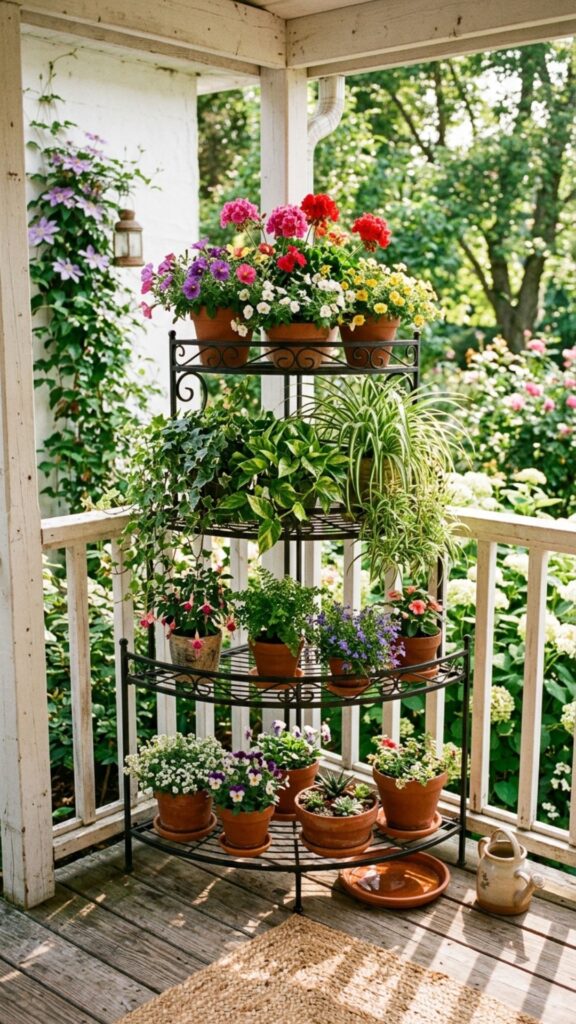
A tiered plant stand lets you display several pots in a small footprint. The stacked levels add height and draw the eye upward, making your porch feel fuller and more layered. It’s an easy fix for corners that feel empty.
Place taller, trailing plants on top and compact ones below. Mix flowering and foliage plants for variety. Metal and wood stands both work, so pick one that matches your porch’s overall style.
14. Grow Fragrant Flowers Near Seating
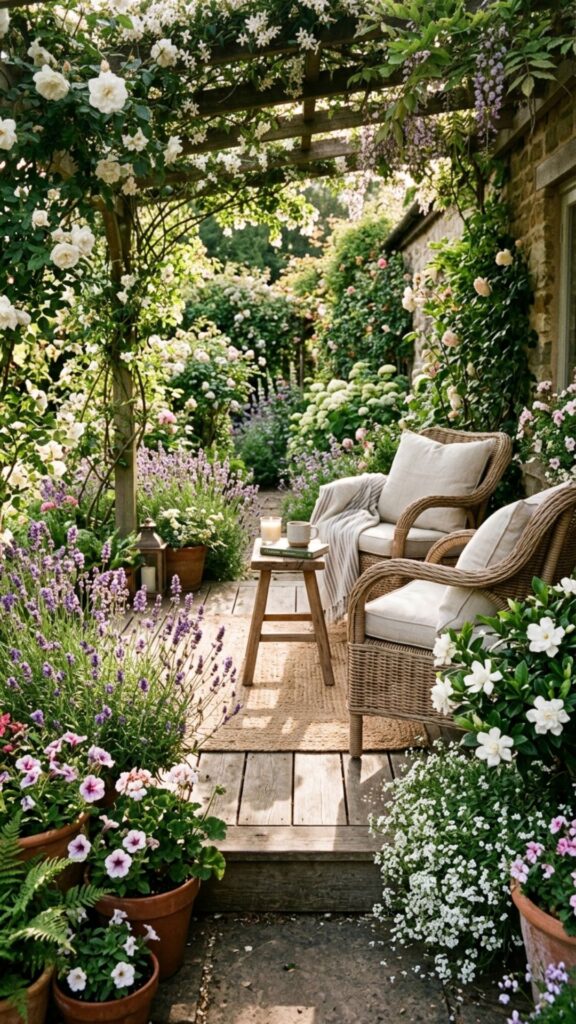
Position scented plants where you sit so you can enjoy their perfume. Lavender, gardenia, and sweet alyssum fill the air with gentle fragrance on warm days. It’s a small detail that makes a big difference in how your porch feels.
Keep these plants deadheaded to encourage more blooms and stronger scent. Lavender in particular loves sun and well-drained soil, so don’t overwater it. The bonus? Many fragrant flowers also attract butterflies and bees.
15. Create a Shade Garden for Low-Light Porches
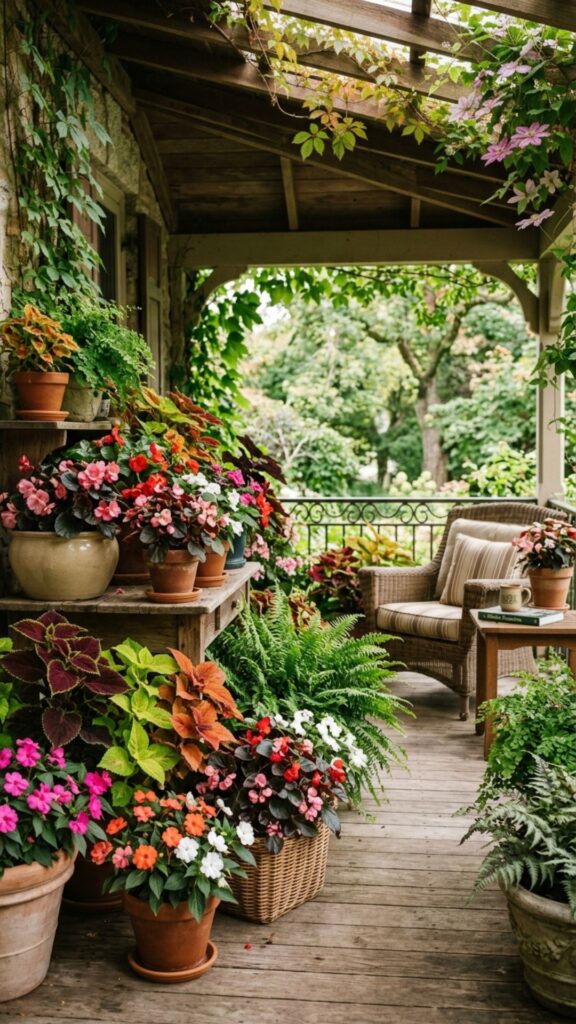
Not every porch gets full sun, and that’s perfectly fine. Shade-loving plants like impatiens, begonias, coleus, and ferns thrive in low light. You can build a vibrant garden even on a north-facing porch.
Coleus especially shines here, its colorful leaves rival any flower. Group several varieties for a rich tapestry of color and texture. Keep the soil consistently moist, since shady spots still dry out during heat waves.
16. Use Ornamental Grasses for Movement
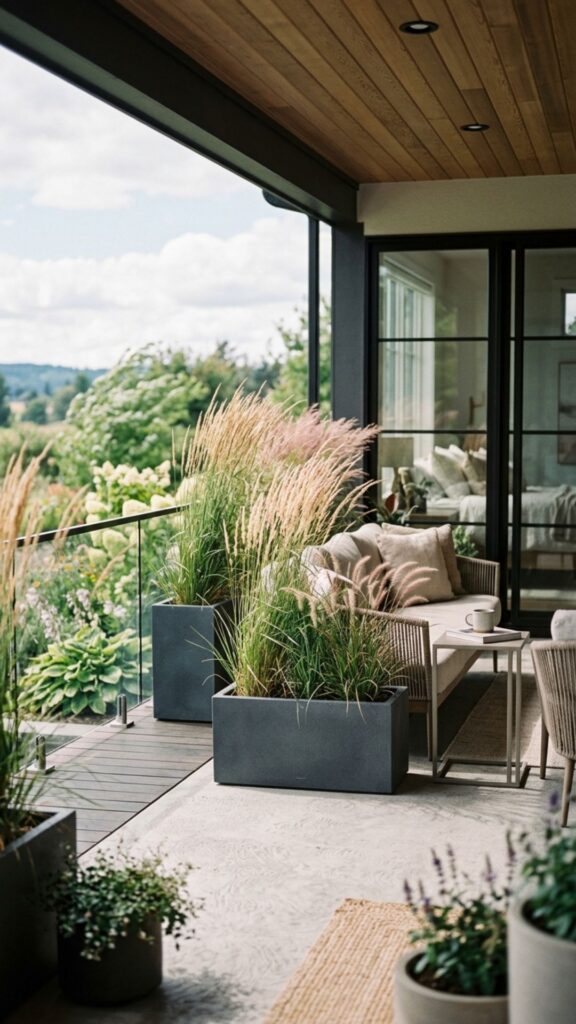
Ornamental grasses add graceful movement as they sway in the breeze. Varieties like fountain grass and blue fescue bring texture and a soft, natural feel to porch containers. They’re tough, drought-tolerant, and low-maintenance.
Plant them in tall pots so their arching blades have room to show off. They look striking against a solid wall or railing. Trim them back once a year, and they’ll return fuller each season.
17. Add a Water Feature with Aquatic Plants
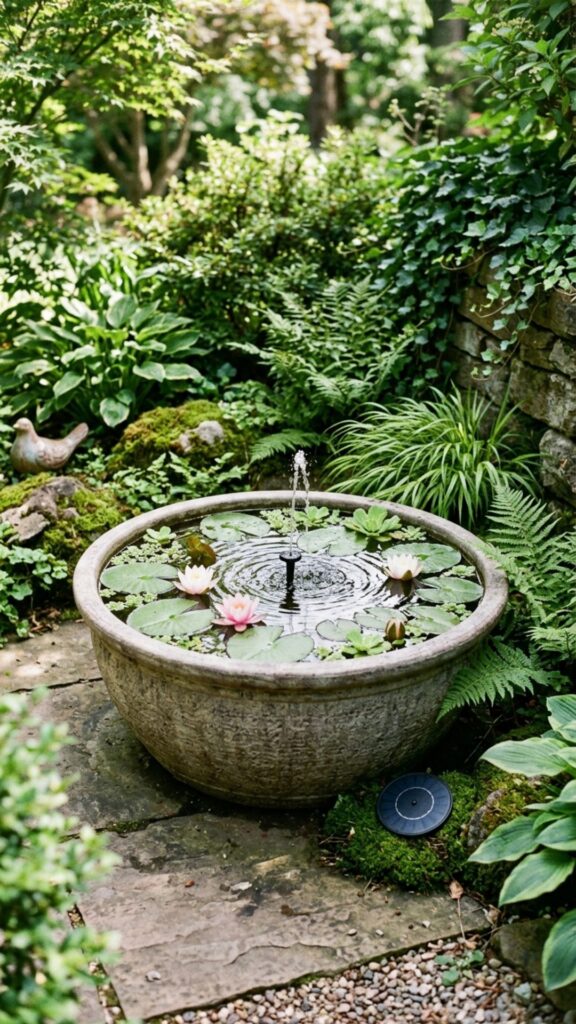
A small container water garden brings a soothing, unexpected element to your porch. Fill a watertight pot with water and add aquatic plants like water lettuce or a miniature lotus. The gentle presence of water instantly relaxes the space.
Choose a container without drainage holes, or seal one shut. Keep it in a spot with a few hours of sun daily. If mosquitoes become an issue, add a small solar fountain to keep the water moving.
18. Plant a Pollinator-Friendly Garden
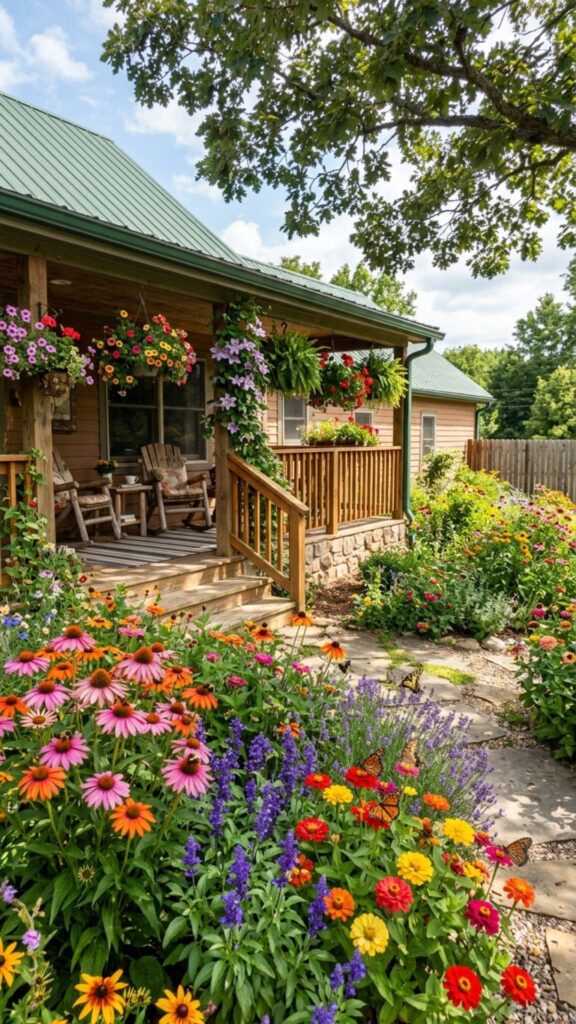
Support local bees and butterflies with pollinator-friendly blooms. Coneflowers, salvia, and zinnias attract beneficial insects while adding cheerful color. It’s a rewarding way to garden that helps the environment.
Choose native plants when possible, since they’re best suited to your climate and local pollinators. Avoid pesticides that harm the very insects you’re trying to attract. Watching butterflies visit your porch is a simple daily joy.
19. Layer Rugs and Plants for a Styled Look
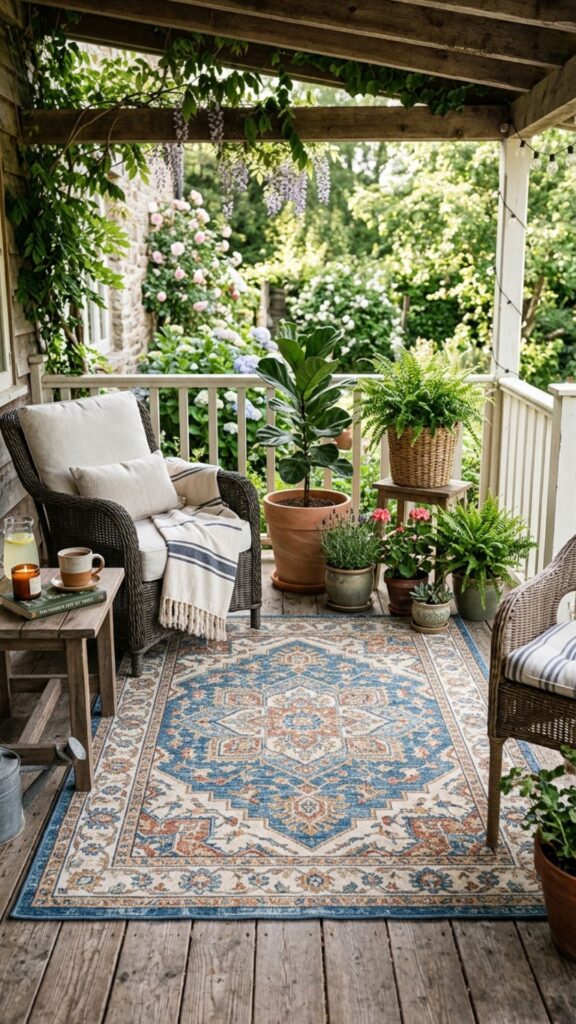
Blend gardening with décor by pairing potted plants with an outdoor rug. A rug grounds your seating area and makes the porch feel like a finished room. Surround the space with plants of varying heights for a lush, layered effect.
Choose a weather-resistant rug that holds up to sun and rain. Echo the rug’s colors in your flower choices to tie everything together. This styling trick makes even a simple porch look designed and intentional.
20. Go Seasonal with a Rotating Display
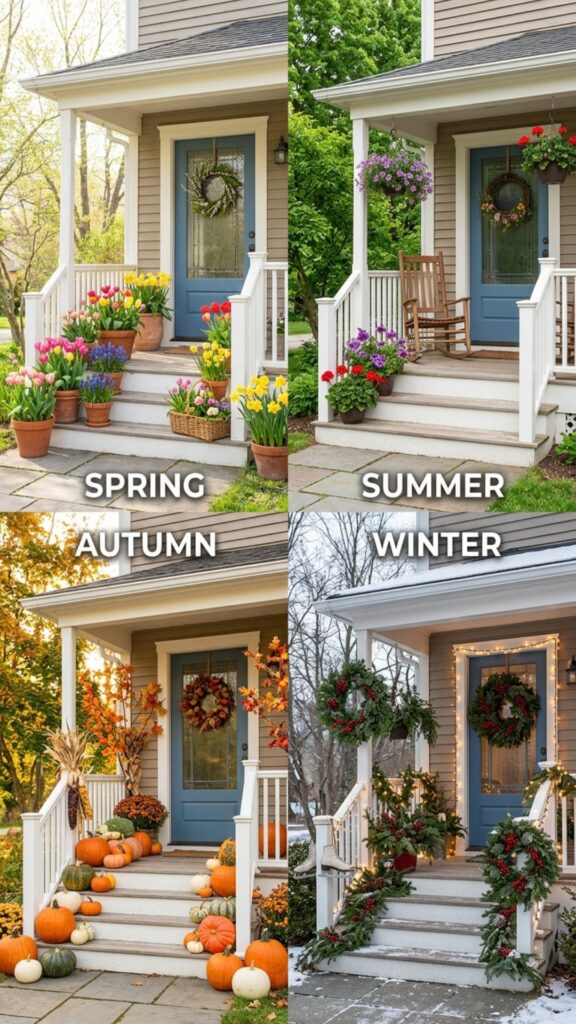
Keep your porch feeling fresh by planning a display that changes with the seasons. Tulips and daffodils in spring, bright annuals in summer, mums and pumpkins in fall, and evergreens with berries in winter. A rotating plan keeps curb appeal high all year.
Store your empty containers and stands during off-seasons so they’re ready to refill. Jot down what worked each year to refine your plan over time. This approach turns porch gardening into a fun, ongoing project.
Conclusion: Start Building Your Dream Porch Garden Today
Your front porch has huge potential, and a little greenery goes a long way. From matching planters and hanging ferns to vertical gardens and seasonal displays, these front porch gardening ideas prove you don’t need much space to make a big impression. Start with one or two projects that excite you, then build from there.
The best part of porch gardening is that it grows with you, literally and creatively. So grab a pot, pick a plant, and get started this weekend. Your future self, and every guest who walks up your steps, will thank you.
What plants are best for a front porch garden?
The best plants depend on your light. For sunny porches, try geraniums, petunias, and dwarf citrus trees. For shady porches, choose ferns, hostas, begonias, and coleus. Low-maintenance options like snake plants and ornamental grasses work well in almost any condition.
How do I start front porch gardening with a small space?
Start with vertical solutions like wall planters, hanging baskets, and tiered plant stands. These add greenery without taking up floor space. A few well-chosen containers by your door can transform even the smallest stoop.
How often should I water porch plants?
Most container plants need watering every one to three days, especially in summer. Hanging baskets and small pots dry out fastest and may need daily attention. Always check the soil, water when the top inch feels dry.
What's the easiest way to boost curb appeal with plants?
Place a pair of matching planters on either side of your front door. This simple, symmetrical touch instantly makes your entrance look polished and welcoming. Fill them with seasonal flowers or a low-maintenance evergreen.
Can I garden on a porch that gets no direct sun?
Yes. Shade-loving plants like ferns, impatiens, begonias, and pothos thrive in low light. Focus on foliage variety and texture to add interest without relying on sun-hungry flowers.